
A growing share of SaaS buyers now open ChatGPT or Perplexity before they open Google. They ask for the best tool in a category, the closest alternative to a competitor, or which product fits a specific team size, and they treat the synthesized answer as a shortlist. If your product is not in that answer, you are not on the shortlist, and you never find out why. This is the channel generative engine optimization exists to win, and for a SaaS company it is winnable faster than almost any other acquisition surface in 2026.
Generative engine optimization, or GEO, is the practice of structuring your site so AI engines cite it inside the answers they generate. It is the answer to a question most founders have started asking out loud: a prospect mentions on a discovery call that they found you through an AI tool, and the growth lead realizes there is an entire acquisition channel with no playbook attached to it. This guide is that playbook, written for a SaaS product with real surfaces to optimize: product pages, a pricing page, docs, a changelog, and comparison pages, each of which behaves differently in the eyes of a citation engine.
FORKOFF runs this engine for SaaS founders as a managed GEO program for SaaS companies, and the numbers in this guide come from that work plus the public GEO citation lab rerun, which put the average cite rate at 34 percent across audited surfaces. What follows is the surface-by-surface system, the schema stack, the measurement loop, and the prioritization a small marketing team needs to ship it without a content sprint.
The 30-second answer to GEO for SaaS
Generative engine optimization (GEO) is the practice of structuring a SaaS site so AI engines cite it inside generated answers, not just rank it in a list of blue links. The signals differ from SEO: structured data over raw domain authority, quote-ready sentences over keyword density, factual completeness over page length. For a SaaS product, the highest-ROI surfaces are comparison and alternatives pages, pricing pages, FAQ-format blog posts, and product docs, in that order. Princeton researchers found comparison- structured content earns roughly 33 percent more AI citations than narrative prose of the same length. The five-schema stack (FAQPage, HowTo, SoftwareApplication, Article with Person markup, BreadcrumbList) is a single developer afternoon. FORKOFF runs this playbook for SaaS founders, and the public GEO citation lab rerun put the average cite rate at 34 percent across audited surfaces.
Citation selection is a different game than ranking
A blue-link result wins by sitting higher in a list. A citation wins by being the cleanest, most quotable, most verifiable sentence an engine can lift into a synthesized answer. Those are different jobs. Google documents that its AI surfaces draw from content it can parse and trust, and the practical effect is that a smaller SaaS site with dense structured data and explicit comparison framing routinely gets cited over a larger site whose pages read like brochures. The ranking advantage compounds slowly through links and authority. The citation advantage compounds quickly through structure, which is why GEO is the rare channel where a five-person marketing team can out-execute an incumbent.
Source: Google Search Central, AI Overviews documentation, 2026
Why SaaS companies need a GEO strategy now
The shift is not theoretical, and it is not five years out. SaaS founders are already attributing trials and demos to AI search citations, often by accident, when a prospect names the channel on a call. The pattern showing up across founder communities is consistent: a meaningful slice of new pipeline now arrives from people who asked an AI engine for a recommendation and acted on the answer.
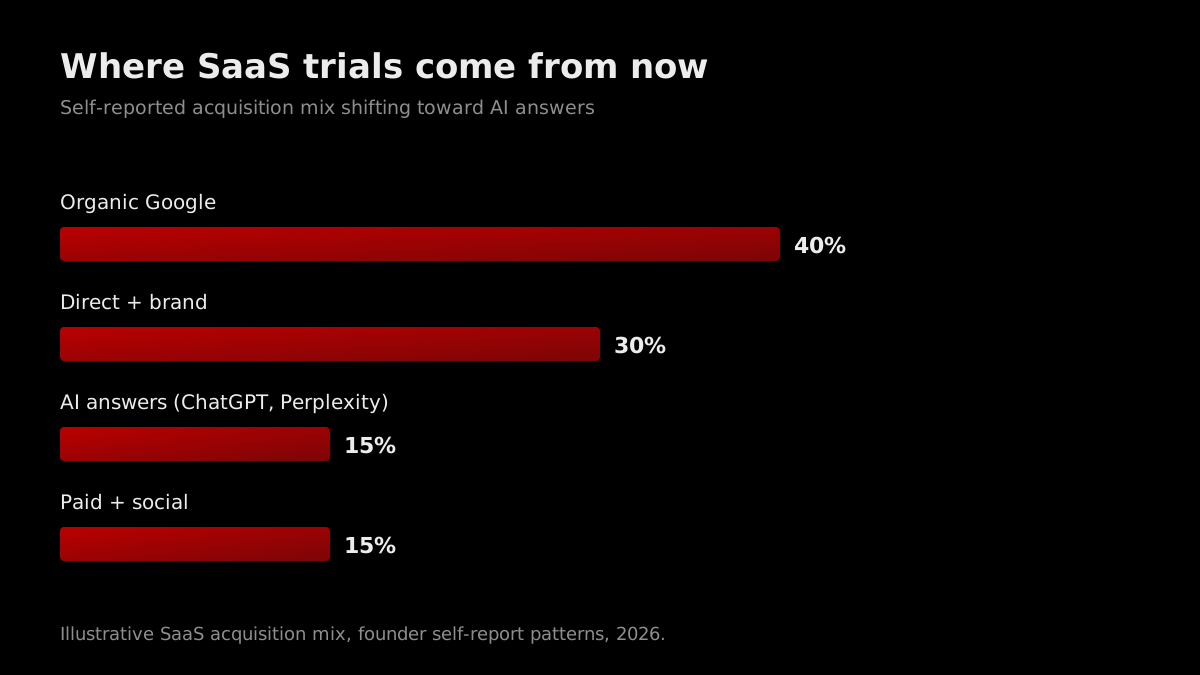
The urgency is structural, not hype. AI search is a winner-takes-the-citation surface. When an engine synthesizes an answer about "the best project management tool for remote teams," it does not return ten links the buyer browses. It returns a paragraph that names two or three products. Being one of those named products is worth far more than ranking fourth on a Google results page, because the buyer never scrolls a list. The citation is the entire impression. That concentration is why early movers compound: the first SaaS company in a category to structure its site for citation gets named while competitors are still arguing about whether the channel is real.
There is also a defensive case. A founder posted in r/SaaS about building a new product after watching their original business disappear from AI search, a concrete version of the risk every SaaS company now carries. If a competitor structures their comparison pages for citation and you do not, the engine starts naming them in answers where you used to appear. GEO is not only an acquisition play. It is how a SaaS brand defends its category language before the answers harden around someone else.
I built my SaaS because my own business disappeared from AI search
A founder describes watching their company vanish from AI-generated answers and reverse-engineering what put competitors in the citation set instead, turning the experience into a concrete lead-attribution story for the AI search channel.
The good news for a small team is that the work is tractable. Unlike traditional SEO, where domain authority takes years to build, the citation signals are largely structural and can be shipped in weeks. A SaaS company that has been publishing competent content for a year is usually sitting on most of the raw material it needs. The job is to make that material legible to the engines, and that is a finite, scoped project rather than an open-ended grind. For an AI-native company specifically, the GEO surface overlaps with the broader marketing motion for AI startups.
Operator noteRank your SaaS pages by Search Console impressions first, then optimize the top 5 for GEO. Effort follows signal., FORKOFF SaaS GEO playbook, 2026
GEO vs SEO for SaaS: what actually changed
The single most common mistake is treating GEO as SEO with a new name. The acronym debate is genuinely a distraction, and practitioners who do this work for a living say so directly. What matters is that the underlying signals an engine uses to cite a source differ from the signals a search index uses to rank a page, and a SaaS team that ignores the difference optimizes for the wrong thing.
In practice, I don't really care what optimizing for AI Search is called: SEO, AI Search Optimization, AEO, GEO, or whatever the new acronym ends up being. I adapt to the terminology that helps clients understand the opportunity and get internal buy-in.

Aleyda Solis
@aleyda
In practice, I don't really care what optimizing for AI Search is called: SEO, AI Search Optimization, AEO, GEO, or whatever the new acronym ends up being. I'm the first one to adapt to the terminology clients use if it helps them understand the opportunity and get internal buy-i… Show more
Traditional SEO rewards domain authority, backlink volume, keyword coverage, and click-through rate. Those signals answer the question "which page deserves to rank for this query." GEO rewards a different set: structured data the engine can parse, sentences that are quotable without rewriting, factual completeness so the engine does not have to stitch together multiple sources, and comparison framing that maps cleanly to the question being asked. Those signals answer a different question entirely: "which source can I lift into this answer with the least risk."
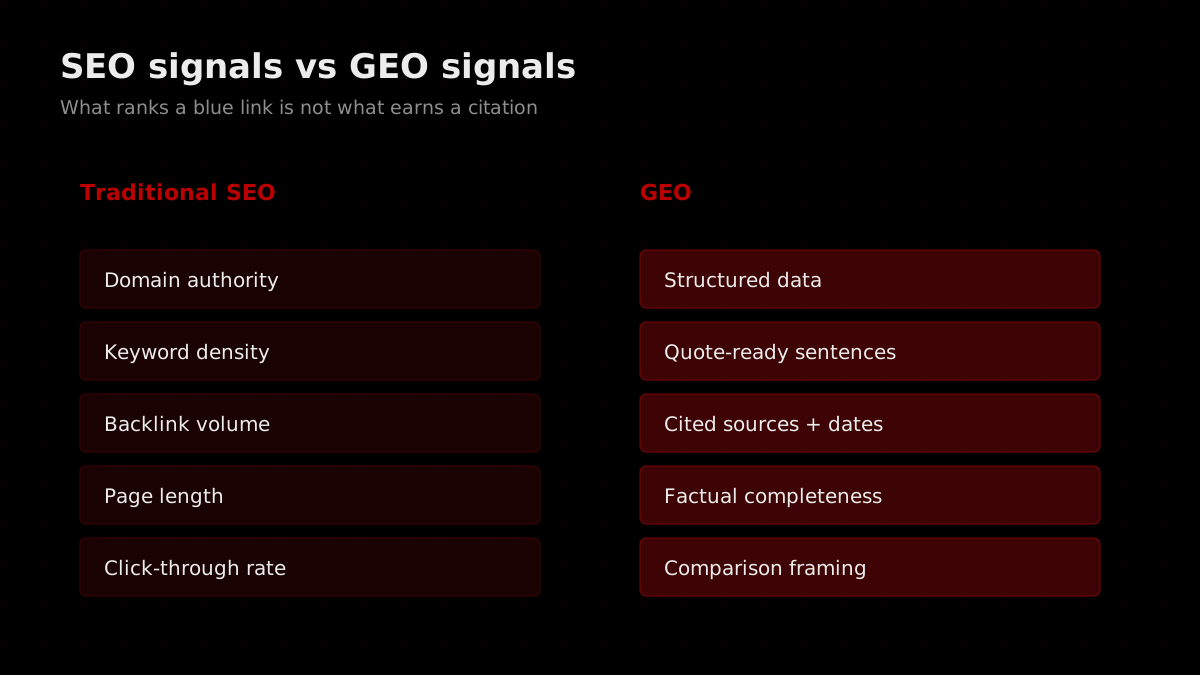
The contrast matters most on a SaaS site because the page types are distinct. A pricing page that ranks fine in Google can be useless for citation if its feature differences are buried in prose instead of a table an engine can read. A blog post that earns links can still be skipped by an engine if it argues its point across 2,000 words of narrative without a single quotable, self-contained claim. The fix is rarely more content. The fix is restructuring what exists so the engine can extract it.
GEO signals vs SEO signals for a SaaS site
| Dimension | Traditional SEO optimizes for | GEO optimizes for |
|---|---|---|
| Primary outcome | Rank position in blue links | Inclusion in a synthesized answer |
| Trust signal | Domain authority and backlinks | Structured data and cited sources |
| Prose style | Keyword density and length | Quote-ready, factually complete sentences |
| Winning format | Long-form pillar pages | Comparison tables and FAQ blocks |
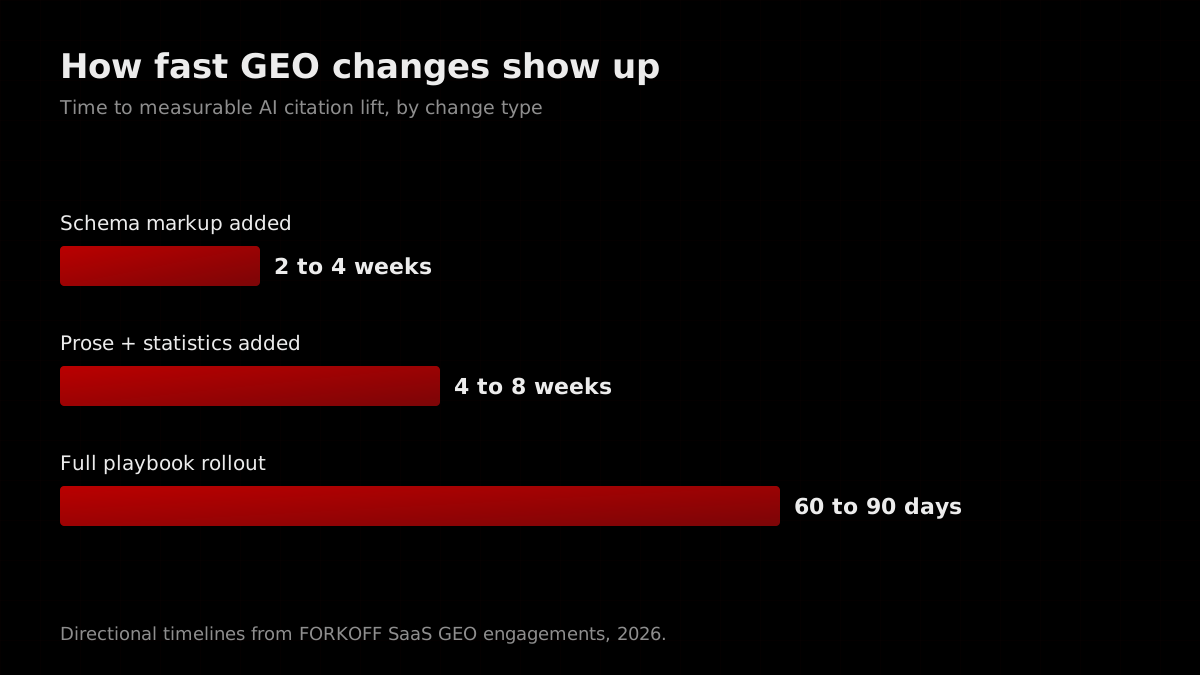
| Time to result | 3 to 9 months | 2 to 4 weeks for schema, 60 to 90 days full |
Directional contrast from FORKOFF SaaS GEO engagements and the Princeton GEO study, 2026.
This is also why the GEO-versus-SEO question is the wrong frame. The two are complementary. SEO gets the page crawled, indexed, and trusted, which is a precondition for citation. GEO then determines whether the trusted page actually gets pulled into a generated answer. A SaaS team that has done the SEO work has built the foundation; GEO is the layer on top that converts ranking into citation. The mechanics of how the engines weigh a brand once a page is eligible are covered in how AI Overviews rank brands, and the broader practice fits inside agentic SEO as the engines themselves become readers.
The skepticism is healthy and worth engaging. The recurring debate in SEO communities is whether GEO is a real discipline or a rebrand of good content practice, and the honest answer is that good content is necessary but not sufficient. A factually rich, well-sourced page that lacks structured data and quote-ready framing still loses citations to a thinner page that has them. That gap, between good content and cited content, is the entire reason GEO is a discipline rather than a slogan.
Do you buy into Generative Search Engine Optimization? Or is it just snake oil?
An SEO practitioner opens a debate thread asking whether GEO is a distinct discipline worth investing client hours in or a rebrand of good content practice, with replies splitting between skeptics who want mechanical specifics and operators reporting real AI citation lift.
The five SaaS surfaces that drive the most AI citations
A SaaS site is not one optimization target. It is a set of distinct surfaces, each with a different citation profile, and treating them as one undifferentiated blob is why generic GEO advice underperforms on SaaS specifically. The five surfaces that matter, in priority order by citation ROI, are comparison and alternatives pages, pricing pages, blog posts, product documentation, and use-case pages.
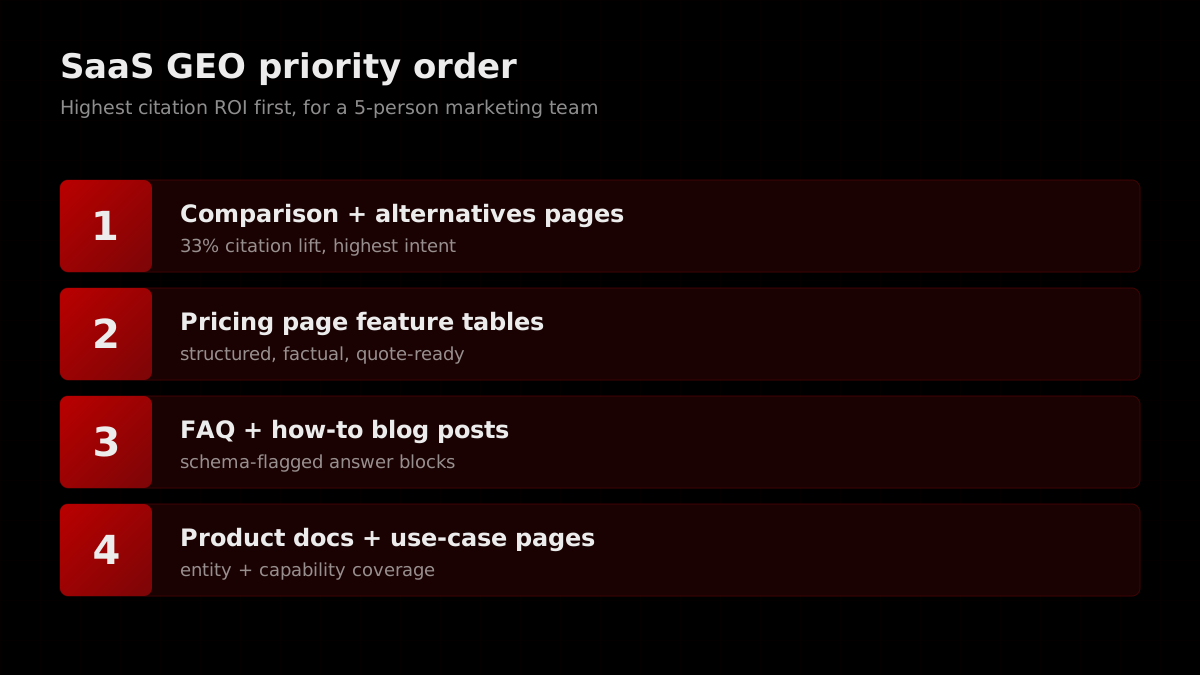
Priority order is the whole game for a small team. A five-person marketing function cannot optimize everything at once, so it has to spend its hours where citations are most likely. The Princeton research points the way: comparison-structured content earns roughly a third more citations than narrative prose, which puts comparison and alternatives pages at the top of the list. Pricing pages come next because they are factual, structured, and exactly what a buyer asks an engine to summarize. Blog posts, docs, and use-case pages follow, each earning citations for narrower query clusters.
SaaS GEO surface priority, by citation ROI
| Priority | Surface | Why it earns citations | Effort |
|---|---|---|---|
| 1 | Comparison and alternatives pages | Comparison content cited ~33% more (Princeton) | Medium |
| 2 | Pricing pages with feature tables | Structured, factual, quote-ready | Low |
| 3 | FAQ and how-to blog posts | Schema-flagged answer blocks | Low to medium |
| 4 | Product docs and use-case pages | Entity and capability coverage | Medium |
Start with whichever of these already appears in your top-100 Search Console impressions.
The practical starting point is your own Google Search Console. Pull the pages already sitting in your top-100 organic impressions, because those are crawled, indexed, and trusted, which means they are eligible for citation today with only structural changes. Optimizing a page the engines already see is far faster than trying to earn citations on a page that has no crawl history. Effort should follow signal, not ambition.
Operator noteAn honest comparison that names a real weakness gets cited more than a one-sided sell. Engines reward balance.
Surface one: comparison and alternatives pages
Comparison and alternatives pages are the highest-leverage GEO surface for a SaaS company, full stop. When a buyer asks an AI engine "what are the best alternatives to a given tool for mid-market teams," the engine wants a structured, balanced comparison it can lift directly. The page that supplies one gets cited. The page that reads like a sales pitch gets skipped, because the engine cannot trust a one-sided source to answer a comparison query.
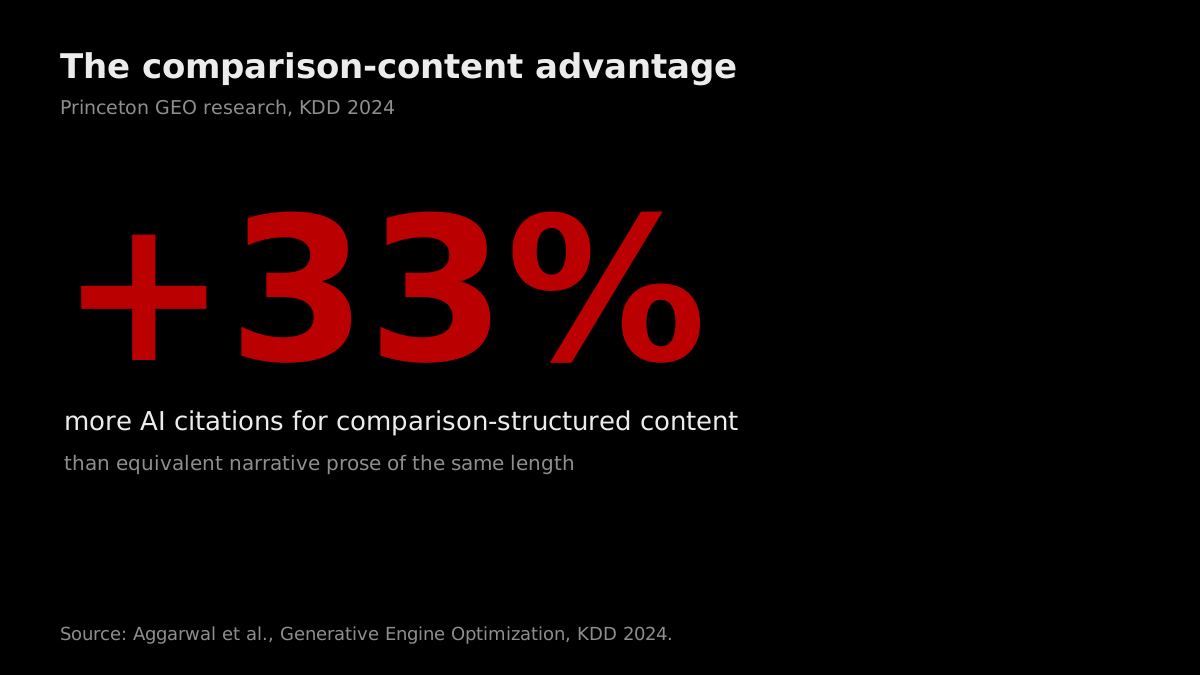
The mechanics are specific. A comparison page that earns citations leads with a structured table mapping each option against the criteria a buyer cares about, names real strengths and real weaknesses for each option including your own product, and cites verifiable facts rather than adjectives. The honesty is not a moral choice; it is a citation strategy. Engines reward balance because a balanced source is safer to quote, and a comparison that names your product's genuine weakness alongside its strength reads as more trustworthy than one that does not.
The easiest and most reliable way to get your products cited in AI is by being mentioned in "Best X" listicles. If you publish the listicle on your own site and rank yourself number one, AI Overviews have begun pulling it.
There is a tactical wrinkle worth naming. Practitioners have observed that self-published "best in category" listicles, where a SaaS company publishes the comparison on its own domain and ranks itself first, have started getting pulled into AI Overviews. This is a gray area, and it works best when the comparison is genuinely useful rather than a thinly disguised ad. The durable version is an honest comparison that happens to favor your product on the criteria where it actually wins, not a fabricated ranking. FORKOFF builds these as part of the GEO program for SaaS, and the broader comparison-page craft sits alongside the AEO checklist for B2B.

Keval Shah | Ecom SEO + AI SEO
@SEOKeval
More evidence that the easiest and most reliable way to get your products cited in AI is by being mentioned in "Best X" listicles. FYI something that's changed recently: If you publish the "Best X" listicle on your site and rank yourself #1, AI Overviews and AI Mode have begun pu… Show more
One more discipline separates a cited comparison page from an ignored one: structure the criteria as an explicit table, not as flowing paragraphs. An engine answering a comparison query is essentially looking for a table to read, and a page that hands it one in machine-readable form is dramatically easier to cite than a page that buries the same information in prose. The comparison page is where structure and honesty compound into the highest citation rate on the entire site.
Surface two: pricing pages and feature tables
Pricing pages are the most underrated GEO surface on a SaaS site. Buyers constantly ask AI engines to summarize what a product costs and what each tier includes, and the engine answers from whatever it can parse. A pricing page that lays out tiers, prices, and feature differences in an explicit, structured table is exactly what the engine wants. A pricing page that hides the same information behind a "contact sales" button or scatters it across marketing copy gives the engine nothing to cite.
The optimization is mostly structural. Present each tier with a clear name, a clear price or a clear pricing model when the price is custom, and a feature table that an engine can read row by row. Avoid the common pattern of describing features in prose paragraphs above the table, because the engine will cite the table and ignore the prose. The pricing page is the cleanest example of the GEO principle that structure beats persuasion: the buyer asking an engine about your pricing does not want your value proposition, they want the facts, and the page that supplies the facts cleanly wins the citation.
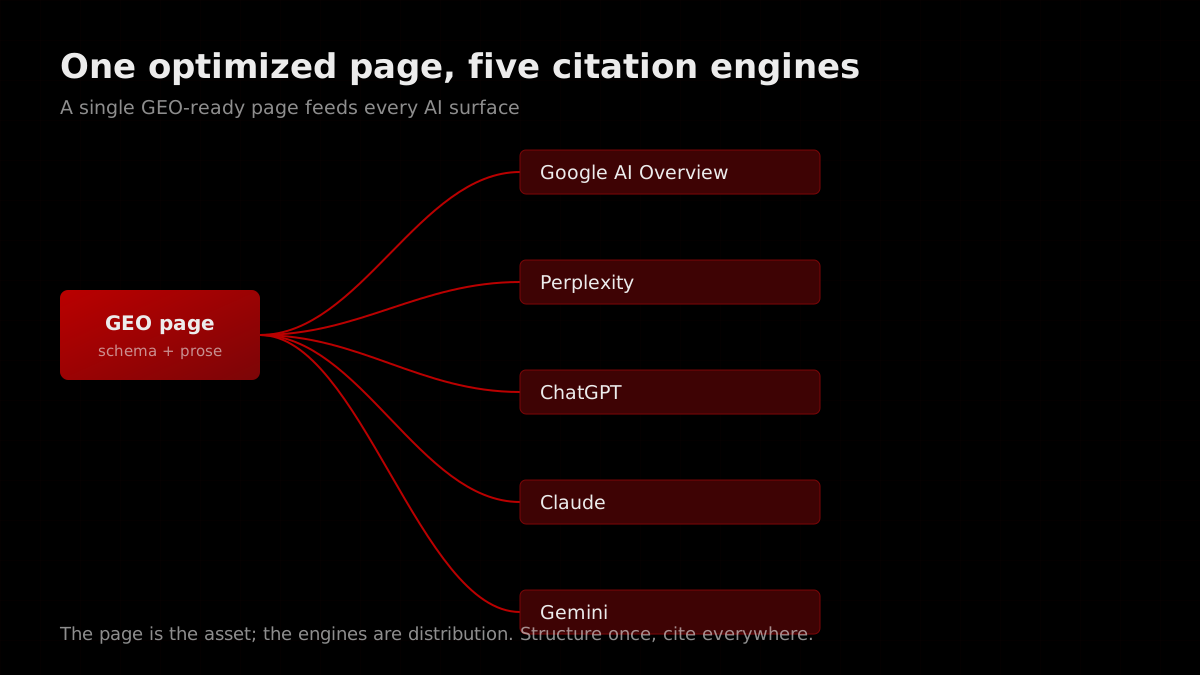
A pricing page also benefits more than any other surface from SoftwareApplication schema, which establishes the product as a defined entity with an offer attached. When the engine understands that the page describes a specific software product with specific pricing, it can answer pricing queries with confidence and attribute the answer to you. That single schema addition, covered in the stack below, often moves pricing-query citations within a single re-crawl cycle.
There is a counterintuitive lesson here that trips up most SaaS marketing teams. The pricing page is usually the most heavily designed page on the site, loaded with persuasion: testimonials, urgency banners, comparison toggles, and benefit copy engineered to push a buyer toward the higher tier. None of that helps citation, and some of it actively hurts, because it pushes the actual facts further from the top of the document and wraps them in language the engine has to discount. The version that wins citations is almost austere by comparison: tier name, price or pricing model, and a clean feature table, with the persuasion living below the fold where it can convert the human without confusing the engine. The page can serve both readers, but only if the facts come first and the selling comes second.
The same discipline applies to the "contact us for pricing" pattern that enterprise SaaS companies default to. When the price is genuinely custom, the engine still needs something to cite, so the page should state the pricing model explicitly: that pricing is usage-based, or seat-based, or scoped to deployment size, even when the exact number is custom. An engine that can tell a buyer "pricing is custom and based on seat count, contact sales for a quote" is citing you. An engine that finds a bare "contact sales" button with no model attached has nothing to say about your pricing and cites a competitor who explained theirs.
How to Dominate AI Search Results in 2026 (ChatGPT, AI Overviews & More)
Surfer Academy
A walkthrough of optimizing for ChatGPT, AI Overviews, and other AI search surfaces in 2026.
Surface three: blog posts and the prose architecture that gets cited
Blog posts are where most SaaS teams already invest, and where the gap between good content and cited content is widest. The pattern practitioners report is consistent: posts with numbered lists, explicit how-to headers, and inline data points get cited several times more often than narrative prose posts of the same length and quality. The content is not better. The structure is more extractable.
5 Steps to Get Cited in ChatGPT & Rank in AI Overviews (What Actually Works)
A SaaS operator shares a five-step field playbook for getting a product cited in ChatGPT and AI Overviews, leading with structured data and comparison content rather than generic authority advice, with commenters confirming which steps moved citations.
The prose architecture that earns citations has a recognizable shape. Each section answers a specific question in its first sentence, then supports it, rather than building to a conclusion the engine has to infer. Claims are self-contained, so a single sentence can be lifted into an answer without losing meaning. Statistics carry dates and sources, because a dated, sourced number is far safer for an engine to quote than a vague assertion. And the post uses explicit headers that match the questions buyers ask, so the engine can map a query to a section.
This is also where FAQPage and HowTo schema earn their place. A how-to post marked up with HowTo schema flags its steps as discrete, citable units. A post with an FAQ section marked up with FAQPage schema flags each question-and-answer pair as a self-contained block the engine can lift. The schema does not change the content; it changes how legible the content is to the systems deciding what to cite. The same content marked up correctly can move from invisible to cited without a single new word.
Operator noteSchema-only changes showed citation lift in 2 to 4 weeks after Google re-crawled the page in 2026 engagements., FORKOFF engagement notes, 2026
The practical move for a SaaS blog is to audit the top five posts by traffic and restructure them for extraction: add an FAQ section with schema, break narrative sections into question-led blocks, add dated statistics where claims currently float unsupported, and add an authoritative sources section. This is the content refresh pattern applied with citation as the goal rather than rank, and it is the highest-ROI use of an existing content library.
Surface four: product documentation and use-case pages
Product documentation is a quietly powerful GEO surface because it is dense with the factual, capability-level detail that engines need to answer "can this product do X" queries. A buyer asking an AI engine whether a tool supports a specific integration, workflow, or compliance requirement is asking a question the docs answer directly. Documentation structured with clear headers, explicit capability statements, and HowTo schema on procedural pages becomes a citation source for the entire long tail of capability queries that comparison and pricing pages do not cover.
Use-case pages extend the same logic to buyer intent. A page that explains how a specific persona uses the product for a specific job maps cleanly to the "best tool for [persona] doing [job]" queries that buyers increasingly ask engines. The optimization is to make the persona and the job explicit in the page structure, name the concrete capabilities that serve them, and avoid burying the specifics under generic benefit language. Use-case pages are where a SaaS company defends the narrow, high-intent queries that convert best.
Both surfaces benefit from a structural discipline most SaaS teams skip: internal linking that establishes the topic hierarchy. When docs and use-case pages link consistently to the relevant comparison, pricing, and blog content, and carry BreadcrumbList schema that signals where each page sits in the hierarchy, the engine can understand the site as a coherent body of knowledge on a topic rather than a set of disconnected pages. Topic coherence is itself a citation signal, because an engine prefers to cite a source that demonstrably owns a subject. The agency-side execution of this lives in the agentic SEO audit work.
GEO Masterclass with LLMRef Founder James Berry (Generative Engine Optimization)
Patrick Rice
A GEO masterclass on how generative engines select and cite sources.
The GEO schema stack for SaaS: five types, step by step
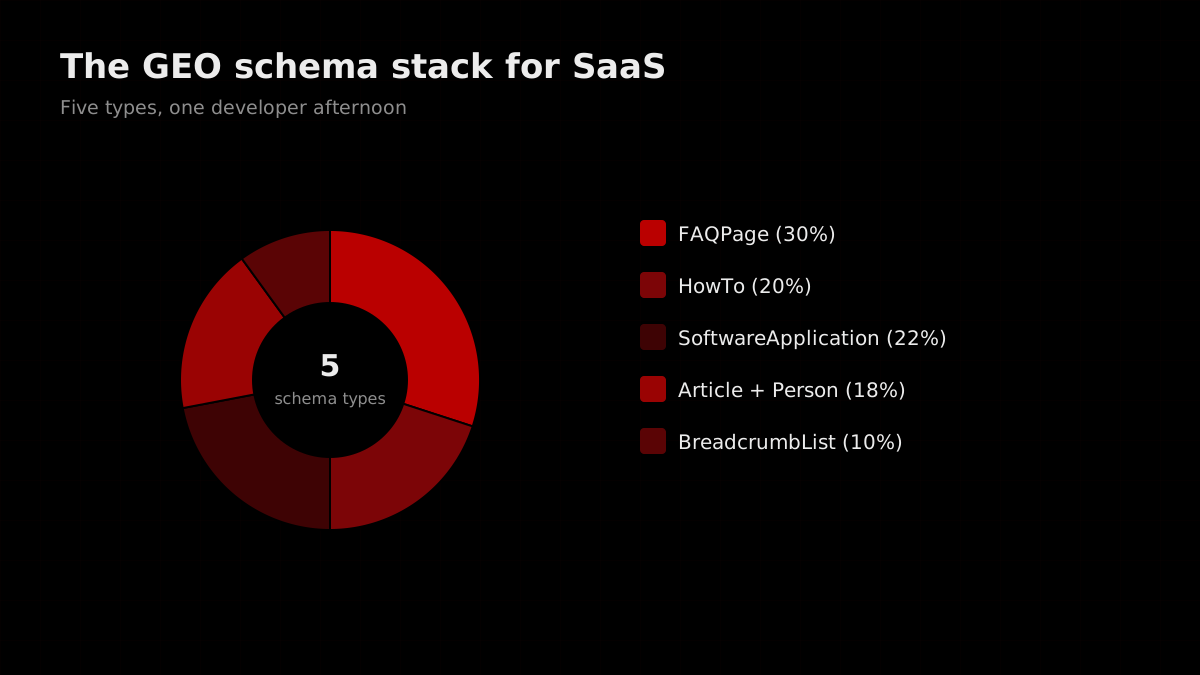
Schema markup is the single highest-ROI GEO intervention because it requires no new content and ships in hours. Five types carry the strongest citation correlation for a SaaS site, and all five together are a 4-to-6-hour developer task rather than a project.
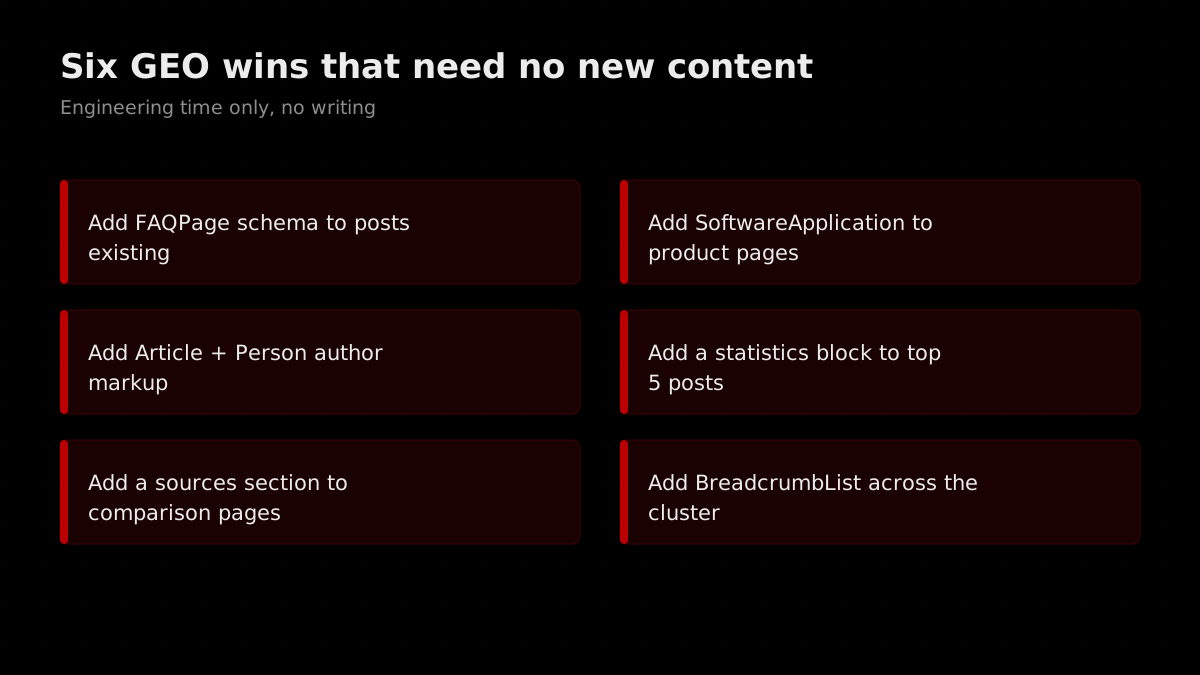
The five types, in the order most SaaS teams should implement them: FAQPage, which Google's documentation flags as a high-impact rich result and which lets an engine lift question-answer pairs directly; HowTo, which marks procedural steps as discrete citable units on tutorial and docs pages; SoftwareApplication, which establishes the product as a defined entity so the engine knows what it is citing; Article with Person author markup, which signals E-E-A-T by attaching a real, credentialed author to the content; and BreadcrumbList, which exposes the topic hierarchy so the engine understands where each page sits. Google's structured-data reference lists the required fields for FAQPage, HowTo, and SoftwareApplication, and the schema definitions themselves live at schema.org/SoftwareApplication, schema.org/FAQPage, and schema.org/Article.
The implementation sequence is mechanical. Start by adding FAQPage schema to every blog post that already has, or can easily get, a question-and-answer section. Add SoftwareApplication schema to the product and pricing pages so the engine treats them as entity pages with an offer. Add Article with Person markup to every post, attaching a named author with a real bio and verifiable profile links, which is the same E-E-A-T discipline Google describes in its helpful content guidance. Add HowTo schema to procedural docs and tutorials. Finish with BreadcrumbList across the site to expose hierarchy. The detailed field-by-field walkthrough lives in schema markup for AEO.
The highest-ROI GEO wins require zero new content
Founders assume a GEO program means a content sprint. It does not. The fastest citation gains come from marking up content that already exists: adding FAQPage schema to published posts, SoftwareApplication schema to product pages, and Article with Person author markup for E-E-A-T signaling. Google's structured-data documentation spells out the required fields, and the work is a developer task measured in hours, not a writing project measured in weeks. The content is already there. GEO makes it legible to the systems deciding what to cite.
Source: Google Search Central, structured data documentation, 2026
A word on validation. Every schema implementation should be checked against Google's Rich Results Test and the Schema Markup Validator before it ships, because malformed schema is worse than no schema; it can suppress the rich result entirely. The most common SaaS mistakes are duplicate FAQPage blocks on a single page and SoftwareApplication entries missing required offer fields. A clean validation pass is the difference between schema that earns citations and schema that quietly does nothing. For teams that want a starting diagnostic, the free AEO checker and AI SEO audit surface the obvious gaps.
Measuring GEO performance: metrics, tools, and cadence
The discipline that separates a real GEO program from a one-time cleanup is measurement. If you ship schema and prose changes and never check whether the engines picked them up, you cannot tell a win from a coincidence, cannot defend the budget, and cannot compound. The measurement loop is the program.
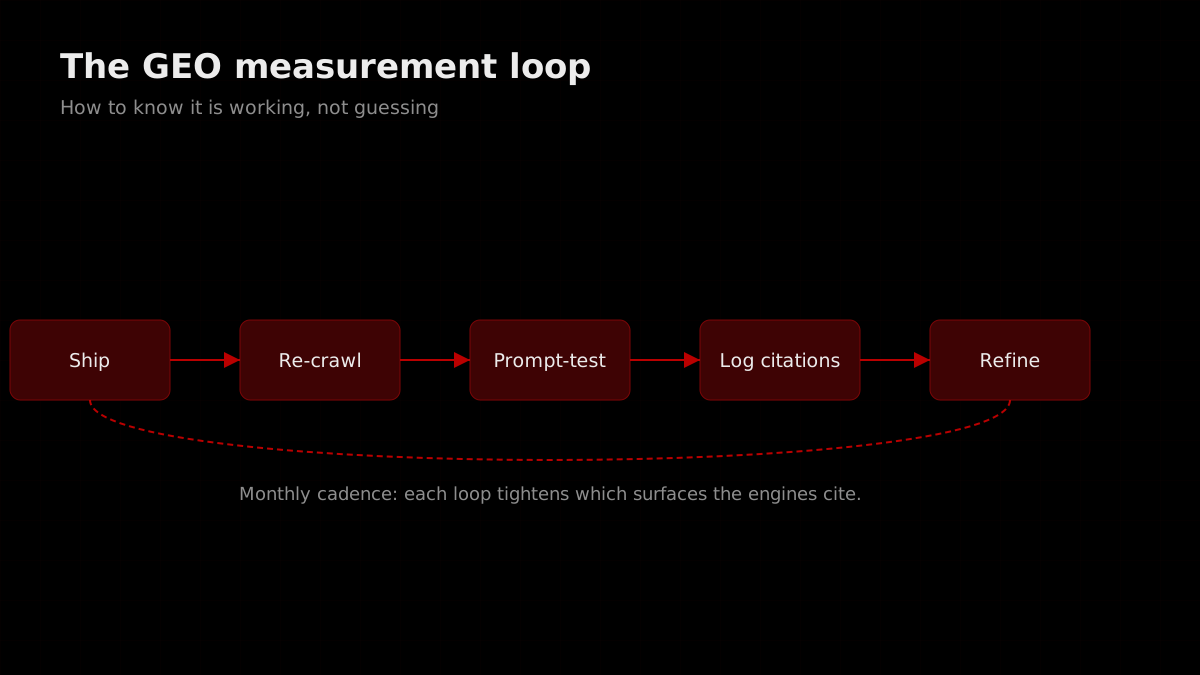
The loop has five steps run on a monthly cadence: ship the changes, wait for the engines to re-crawl, prompt-test the target queries, log which sources each engine cites, and read the result back into the next round. The target queries are the 10 to 20 questions a buyer in your category would actually ask an engine, framed naturally rather than as keywords. Run them across the engines that matter for your audience, which for most B2B SaaS means Google AI Mode, Perplexity, and ChatGPT, and record your share of citations against competitors. The free AI search visibility checker is a starting instrument, and the full methodology is in measuring your share of AI citations.
If you cannot measure citations, you are guessing
The failure mode of GEO is shipping changes and never checking whether the engines picked them up. A real program prompt-tests the target queries on a fixed cadence, logs which sources each engine cites, and reads the result back into the next round of changes. Without that loop, a team cannot tell a schema win from a coincidence, cannot defend the budget, and cannot compound. The measurement loop is not optional instrumentation bolted on at the end. It is the part of GEO that turns one-off optimization into a repeatable system.
Source: FORKOFF SaaS GEO engagement notes, 2026
The metric that matters is share of citations on your target query set, tracked over time. Vanity proxies like "are we mentioned anywhere in AI" do not survive contact with a budget conversation. Share of citations does, because it is comparative, it is tied to buyer intent, and it moves in response to specific changes you can attribute. When a schema change lifts your citation share on a cluster of pricing queries within a re-crawl cycle, that is a defensible, repeatable win. When prose restructuring lifts your share on comparison queries a month later, that is the next one. Anthropic has documented how its models handle source citations, and Perplexity's own documentation describes how it surfaces sources, both of which inform which signals to track per engine.
Operator notePrompt-test the same 10 target queries monthly and log the citation set. The loop is the program, not the ship.
Which engine to optimize first is a real decision, not a detail. The engines weight signals differently, and a SaaS audience skews toward one or two of them. The tradeoffs between the two dominant surfaces are covered in Perplexity versus Google AI Overviews, and Google's own announcements about generative AI in Search are the authoritative source for how its AI surfaces evolve.
Generative Engine Optimization: Is It Safe and How to Do It the Right Way
Edward Sturm
A practitioner take on doing GEO the durable way rather than chasing short-term tricks.
Where to start: branded queries before unbranded
A prioritization point that saves SaaS teams months: start with branded queries before chasing unbranded citations. The instinct is to fight for the high-volume unbranded query, the "best tool in category" answer, because that is where the new logos are. But that is the most contested citation surface, and a smaller SaaS company rarely wins it first.

Neil Patel
@neilpatel
Branded queries are the real GEO battleground. Not unbranded ones. Everyone is chasing unbranded AI citations. Get mentioned when someone asks ChatGPT about "best CRM software" or "top marketing agencies." I understand the appeal. But it's the wrong place to start.
The faster path is to own the answers about your own brand. When a buyer asks an engine what your product does, who it is for, how it compares to a named competitor, or what it costs, those branded and comparison queries are far less contested and convert at higher intent. Winning them first builds the entity authority and citation history that makes the unbranded queries winnable later. A SaaS company that the engines reliably cite for its own brand and comparisons has earned the trust signal it needs to compete for the category-level answer. Start where you can win, then expand outward.
FORKOFF SaaS GEO benchmarks: what citation lift looks like
The honest benchmark for what a GEO program produces comes from the public GEO citation lab rerun, which measured a 34 percent average cite rate across audited surfaces, and from the pattern across FORKOFF SaaS engagements. The reusable findings are directional rather than a single guaranteed number, because citation rates depend on category competitiveness and starting structure, but the shape is consistent.
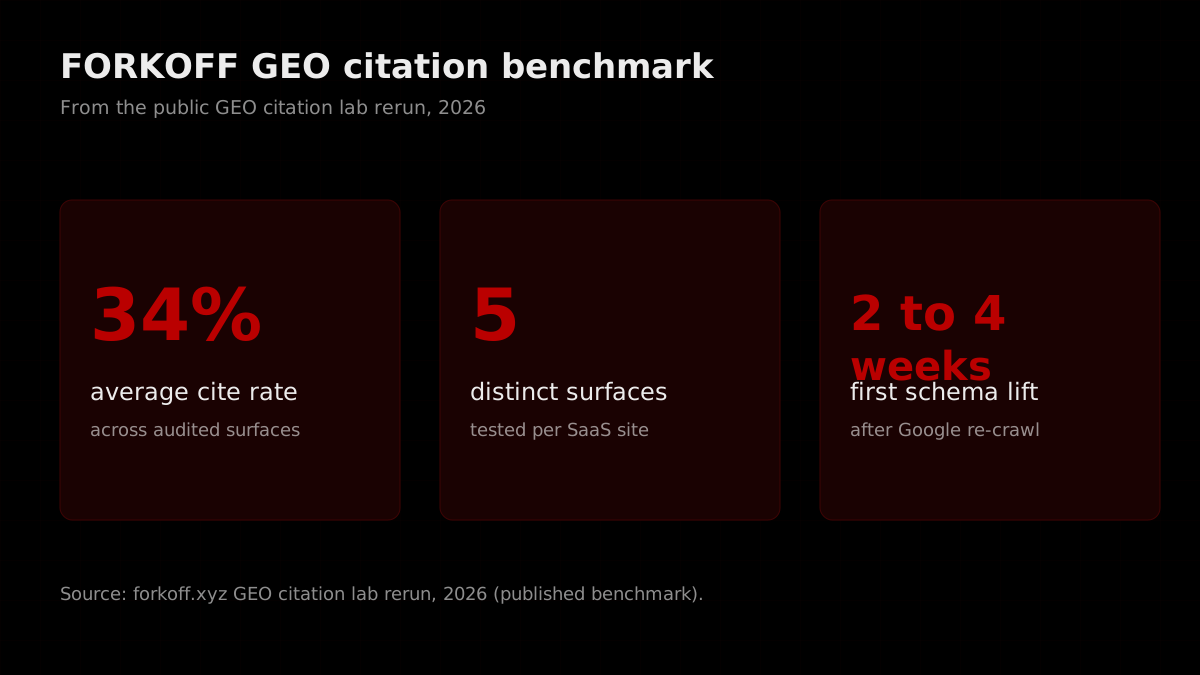
Schema-only changes are the fastest lever, showing measurable citation lift within 2 to 4 weeks of a re-crawl in the engagements where the content was already trusted. Comparison and pricing surfaces respond first because they map most directly to buyer queries, and prose restructuring on blog content follows in the 4-to-8-week window. The full playbook across all five surfaces typically shows compounding citation lift by the 60-to-90-day mark, at which point the measurement loop has enough data to tell which surfaces are carrying the program. The benchmark methodology behind these figures is the same one used in the best AI visibility tools comparison, and the podcast-specific version of citation strategy is in the podcast AEO citation strategy guide.
The reason the numbers hold is that none of this is a trick. The lift comes from making genuinely useful, factually complete content legible to the engines through structure and schema, which is exactly what the engines are built to reward. There is no exploit to patch. A SaaS company that structures its highest-intent surfaces for citation, attaches the schema stack, and runs the monthly measurement loop is doing the durable version of the work, and the durable version is what compounds. This is the same first-principles discipline behind a founder-led growth motion.
The verdict for SaaS founders
Generative engine optimization is the rare 2026 acquisition channel where a focused five-person team can out-execute a larger incumbent inside a quarter, because the winning signals are structural rather than slow-building. The work is finite and prioritizable: fix comparison and alternatives pages first, then pricing pages, then restructure your top blog posts, then docs and use-case pages, and attach the five-schema stack across all of them. None of it requires a content sprint, and the highest-ROI wins are pure engineering time on content you already own.
The two disciplines that decide whether a GEO program compounds are honesty and measurement. Honest comparison pages that name real weaknesses get cited more than one-sided sells, because engines reward balance. And a monthly measurement loop that prompt-tests your target queries and tracks your share of citations is what turns one-off changes into a system you can defend and repeat. Skip either and you are guessing.
If you want the playbook run for you rather than scoped internally, FORKOFF executes it for SaaS founders on an outcome-priced engagement, from the schema stack through the citation measurement loop. The buyers who used to find you on page one of Google are now asking an engine for a shortlist. The SaaS companies that structure their sites for citation get named. The ones that wait get summarized out of the answer while a competitor gets the demo.