
Roughly nine in ten pages on the open web still ship with no structured data at all, and most of the ones that do bury the wrong schema types in the wrong places. That gap is the entire opportunity. AI answer engines do not reward effort. They reward legibility, and schema markup is the cheapest way to make a page legible to a machine that is deciding whether to cite you or paraphrase someone else.
Schema markup for AEO is the JSON-LD structured data that tells ChatGPT, Perplexity, and Google AI Overviews what your content means, so they can attribute an answer to your brand by name instead of guessing. The problem is that almost every guide on the subject lists 12 to 15 schema types, ranks none of them, and leaves you implementing markup for events you do not run and products you do not sell. This post does the opposite. It forces a rank. Five schemas carry almost all of the citation value, and the rest is supporting markup you ship later or never. FORKOFF runs answer engine optimization as a managed service, and the five-schema stack below is the exact sequence we deploy on a client site before we touch anything else.
There is one more thing worth saying up front. This post implements the schemas it teaches. The FAQPage, Article, and BreadcrumbList markup on this page is live, which means the engines that index it read it through the structured-data layer the post argues for. That is deliberate, and by the end you will see why a page that practices what it preaches earns more citations than one that only describes the practice.
The 30-second answer to schema markup for AEO
Schema markup for AEO is the JSON-LD structured data that tells AI answer engines what your content means so they cite it with confidence. You do not need 15 schema types. Five carry almost all of the citation lift: FAQPage, Organization, Article, HowTo, and Speakable. FAQPage stays at the top even after Google deprecated its visual rich result on May 7, 2026, because ChatGPT, Perplexity, and Google AI Overviews still read it directly. Ship JSON-LD in a head script block, hold FAQPage answers to 40 to 80 words, and validate through Rich Results Test, the Schema Markup Validator, and the Google Search Console Enhancements report before every publish. This post runs all five schemas it teaches, which is the practice in action.
Schema is the disambiguation layer, not decoration
AI answer engines do not cite pages. They cite entities they are confident about. Schema markup is the layer that turns a string of text into a typed entity an engine can match against its internal graph. A page with complete JSON-LD tells ChatGPT or Perplexity exactly which brand, which question, and which answer it is reading, so the engine attributes the citation to a named source instead of paraphrasing a guess. Pages with complete markup earn measurably more pulls than identical unstructured pages, and the gap is widest on brand and comparison queries where ambiguity is highest. Schema is not a ranking decoration. It is the machine-readable identity card for the page.
Source: 2026 AEO citation field studies, directional
Does schema markup still matter for AI search in 2026?
The honest answer is yes, and more than it did for classic SEO. Classic search could rank a page on links and content quality without ever reading its structured data. Answer engines work differently. They assemble a response by pulling typed, attributable facts from sources they are confident about, and confidence is exactly what schema provides. A page that declares its author, its publish date, its questions, and its answers in machine-readable JSON-LD hands the engine a clean set of entities to cite. A page without it forces the engine to infer the same facts from raw HTML, which is slower, lossier, and far more likely to end in a paraphrase that names no one.
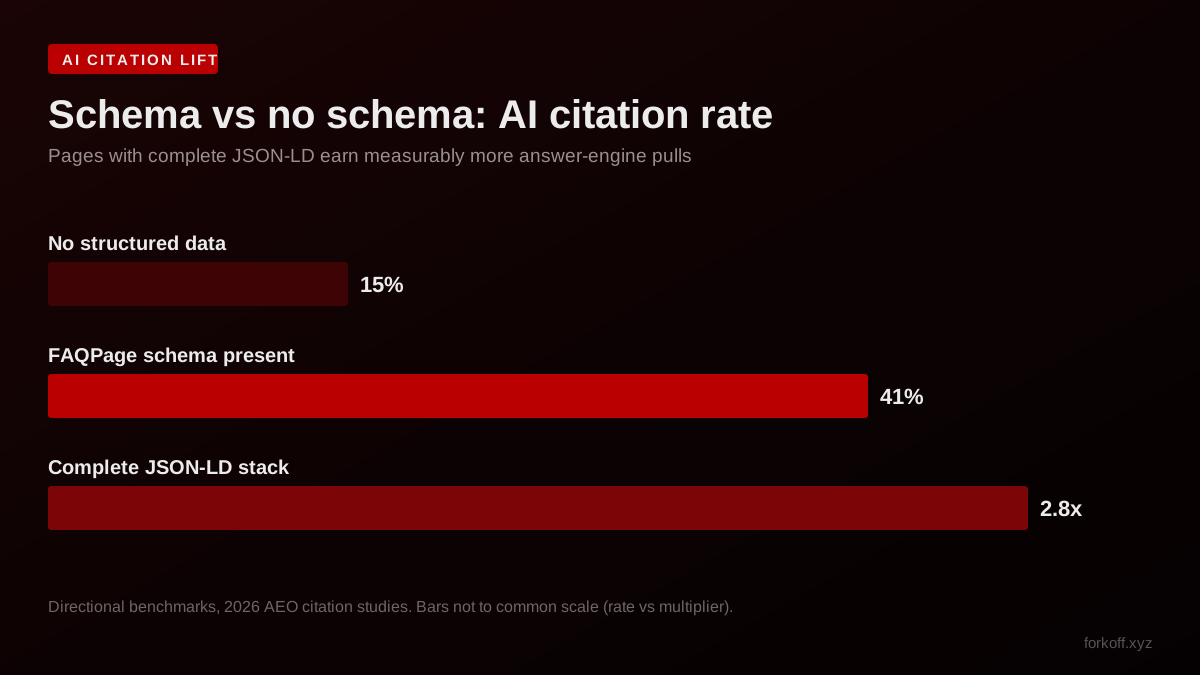
The benchmarks back this up. Across 2026 citation studies, pages with complete JSON-LD markup earn around 2.8 times the AI citation rate of identical unstructured pages, and the single largest jump comes from FAQPage schema, which moves a page from roughly a 15 percent baseline citation rate to about 41 percent. Those numbers are directional and they vary by niche, but the direction is consistent across every test: structured pages get cited, unstructured pages get summarized.
The reason is mechanical, not magical. When GPTBot or PerplexityBot crawls a page, it does not parse your CSS or guess at your visual hierarchy. It looks for the signals that are cheapest to trust, and a well-formed JSON-LD block is the cheapest of all. Google's own documentation on structured data describes how the markup is consumed for search features, and the AI engines built on top of the same crawled corpus inherit that legibility. The practitioners arguing this in public are not theorists either.

Corey Haines
@coreyhainesco
I built a skill that implements schema markup , JSON-LD structured data for rich results, entity linking, and AI discoverability across every page type. You describe your site structure and it generates the correct schema for each page type: Organization, Product, Article, FAQ,… Show more
Operator noteFAQPage first, every time. 41% citation rate beats every other single schema in 2026 testing., FORKOFF AEO audits, 2026
The 5-schema priority stack for AEO
Here is the forced rank. Five schemas, in implementation order, with everything else explicitly below the line. The ranking is not by difficulty or by how often a schema appears in tutorials. It is by citation lift per hour of implementation, which is the only metric that matters when you have a finite amount of engineering time and a site that ships zero structured data today.
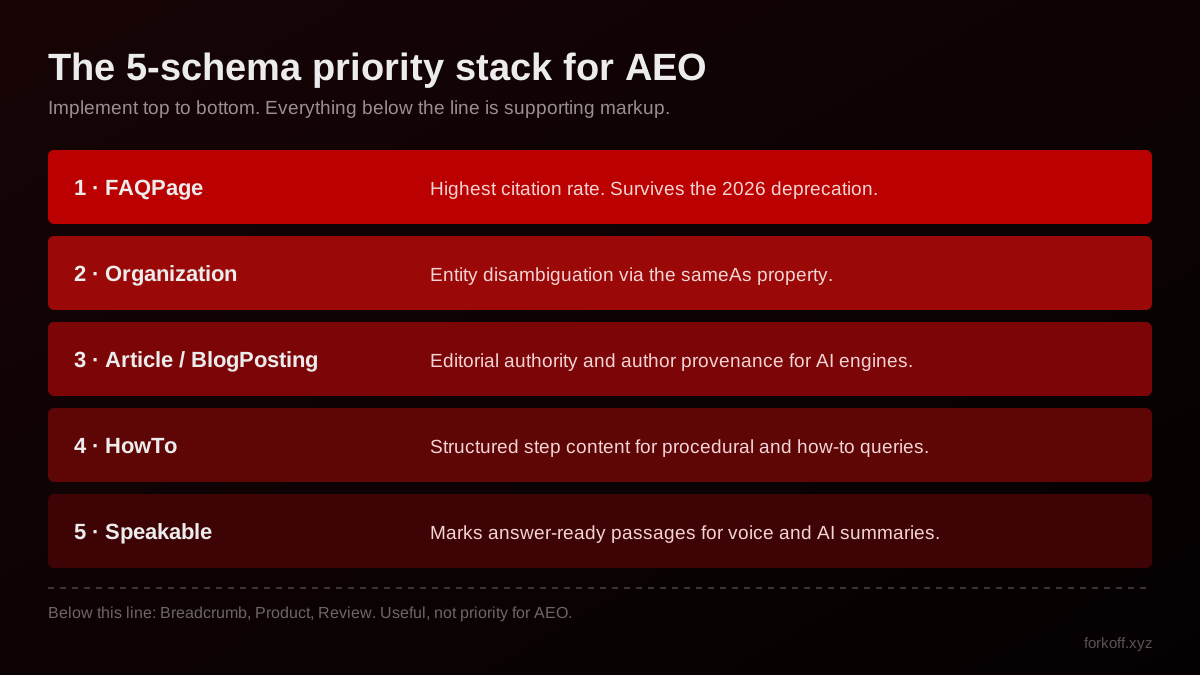
The stack is deliberately short. FAQPage goes first because it produces the largest single-schema citation jump and survives the 2026 deprecation that scared half the industry into removing it. Organization goes second because it is a one-time, site-wide block that disambiguates your brand across every query. Article goes third because it carries author and date provenance that engines like Perplexity weight when they choose a source. HowTo goes fourth, but only on pages that have genuine step content. Speakable goes fifth as the passage-level marker for voice and AI summaries. The at-a-glance table makes the same call in a format an engine can lift directly.
The 5 AEO schemas at a glance
| Schema | Primary AEO job | Implement when | Priority |
|---|---|---|---|
| FAQPage | Verbatim answer extraction by AI engines | You have question-and-answer content | 1, ship first |
| Organization | Brand entity disambiguation via sameAs | Site-wide, every property | 2 |
| Article / BlogPosting | Editorial authority and author provenance | Every blog post and editorial page | 3 |
| HowTo | Structured step content for procedural queries | You have genuine step-by-step content | 4 |
| Speakable | Marks answer-ready passages for voice and AI | High-traffic informational pages | 5 |
Priority reflects citation lift per hour of implementation, not difficulty.
Everything below the line, Breadcrumb, Product, Review, Event, Recipe, JobPosting, is supporting or situational markup. Breadcrumb helps navigation context and is worth adding once the five are live. Product and Review matter for ecommerce and never for a B2B blog. Event, Recipe, and JobPosting matter only for the sites that actually have those things. Implementing all 15 schema types is not thoroughness; it is wasted time that delays the five that produce the lift. The whole argument turns on understanding why an engine reads schema the way it does.
Five schemas carry the lift, the other ten are noise
Most schema guides list 12 to 15 types and rank none of them, which leaves an operator implementing Event, Recipe, and JobPosting markup on a B2B blog that has none of those things. The honest version is that five schemas produce almost all of the AEO citation value for a typical content or SaaS site: FAQPage, Organization, Article or BlogPosting, HowTo, and Speakable. Breadcrumb, Product, and Review are useful supporting markup but they do not move citation rate the way the top five do. Implementing all 15 is not thoroughness. It is wasted engineering time that delays the five that matter.
Source: FORKOFF AEO implementation notes, 2026
Schema #1: FAQPage, the highest citation rate in 2026
FAQPage is the first schema you implement, period. In 2026 testing it produces the largest single-schema citation jump of any structured-data type, moving a page from roughly 15 percent baseline citation rate to about 41 percent. The reason is that FAQPage hands the engine exactly what it wants: a question and a direct, self-contained answer it can extract and attribute. ChatGPT pulls the acceptedAnswer text near-verbatim, Perplexity surfaces it as a cited footnote, and Google AI Overviews lift it into the answer box. No other schema is this directly answer-shaped.
The implementation is straightforward. A FAQPage block carries a mainEntity array of Question objects, each with a name and an acceptedAnswer whose text holds the answer. The schema.org FAQPage specification defines the required shape, and Google's structured-data guidance for FAQ pages documents the field requirements. Here is a minimal, valid block:
<script type="application/ld+json">
{
  "@context": "https://schema.org",
  "@type": "FAQPage",
  "mainEntity": [
    {
      "@type": "Question",
      "name": "Which 5 schema types matter most for AEO?",
      "acceptedAnswer": {
        "@type": "Answer",
        "text": "FAQPage, Organization, Article or BlogPosting, HowTo, and Speakable carry almost all of the AEO citation lift in 2026. Everything else is supporting markup."
      }
    }
  ]
}
</script>
The single most overlooked detail is answer length. acceptedAnswer.text should run 40 to 80 words. That range is long enough to stand alone as a cited answer but short enough that engines pull it whole rather than truncating it. Answers over 120 words get summarized, which means the engine rewrites you instead of quoting you, and answers under 30 words lack the context to function as a standalone response. One direct answer per question, no nested lists, no sub-questions.
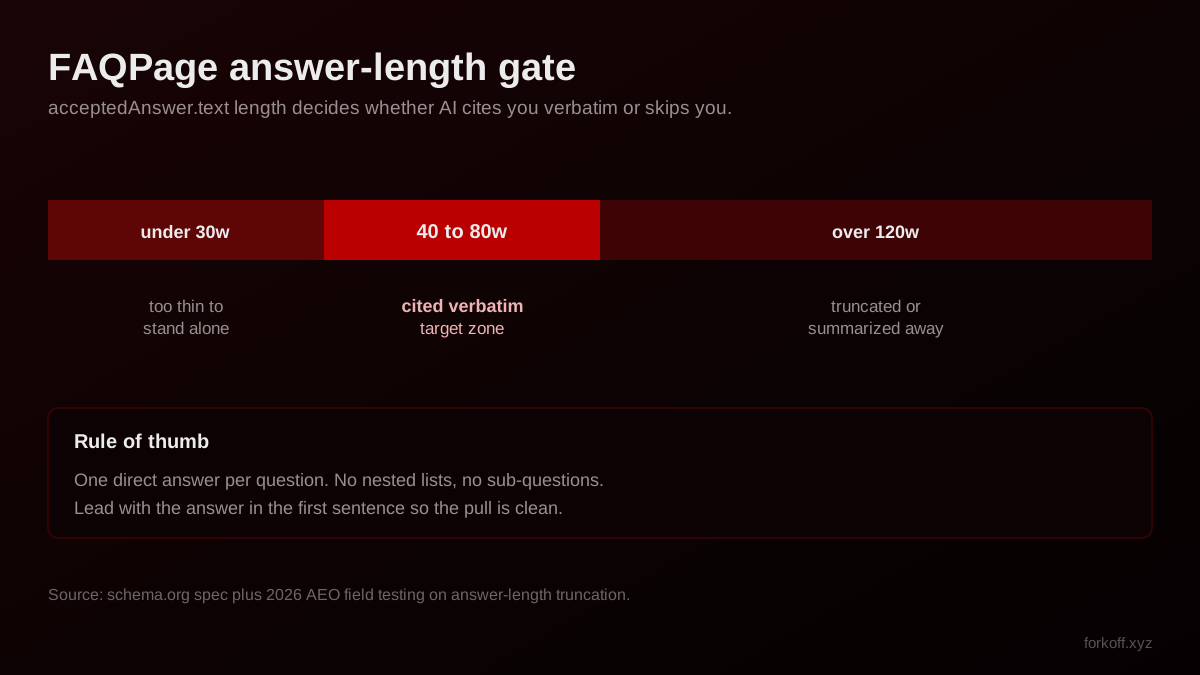
FAQPage acceptedAnswer.text length gate
| Answer length | AI engine behavior | Verdict |
|---|---|---|
| Under 30 words | Too thin to stand alone in an answer | Expand |
| 40 to 80 words | Cited verbatim, target zone | Ship |
| Over 120 words | Truncated or summarized away | Trim |
One direct answer per question; no nested lists or sub-questions.
The operators arguing about whether FAQ schema is worth keeping after the deprecation are having exactly this debate in public, and the experimental data they bring is more useful than any vendor claim.
The FAQPage deprecation paradox, reconciled
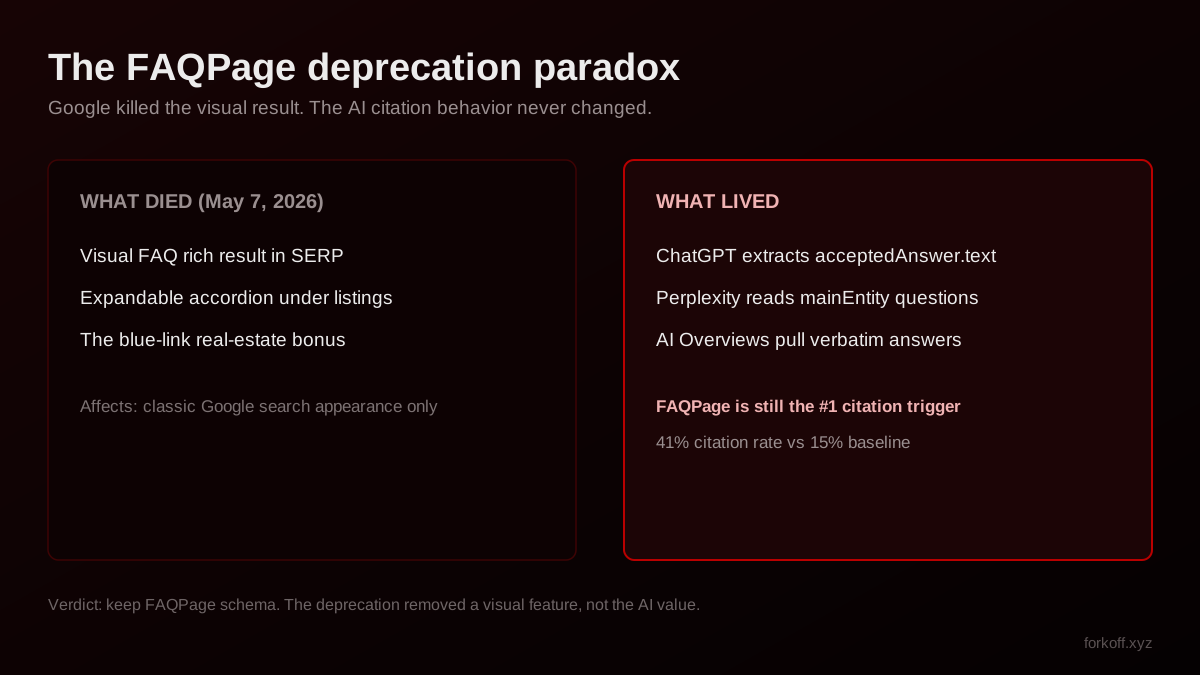
Here is the tension that scared the industry. On May 7, 2026, Google deprecated FAQPage rich results, meaning the expandable FAQ accordion that used to appear under search listings stopped showing. A wave of advice followed telling people to strip FAQPage schema from their sites because it no longer did anything. That advice was wrong, and following it cost pages real citations.
The deprecation removed a visual feature in classic Google search. It did not touch the AI citation behavior at all. ChatGPT still reads acceptedAnswer text during ingestion. Perplexity still parses the mainEntity questions. Google AI Overviews still pull verbatim FAQ answers. The schema that earns the 41 percent citation rate is the same schema whose visual rich result was retired. One thing died; the more valuable thing lived.
The practitioner data on this is unambiguous. Operators who ran controlled tests, removing schema from one set of pages and leaving an identical set untouched, watched citation rates drop on the stripped pages and recover when the schema was redeployed. That is about as clean a causal signal as you get in this field.
I removed schema from 5 pages and left 5 identical pages alone. The pages I removed schema from saw Perplexity citation drop by 40% over 8 weeks. Redeployed schema on the test pages and citations recovered. Do not remove FAQPage schema.
If you stripped FAQPage schema after May 2026, put it back. If you never had it, this is the first thing to ship. The deprecation changed where the schema pays off, not whether it pays off, and the payoff moved to the surface that is growing fastest. The specialists who kept their heads through the deprecation panic were saying the same thing.
Stop Panicking Over the "Death" of FAQ Schema. 🛑
A specialist arguing against panic over the death of FAQ schema.

Liam | Coinpresso
@LiamCryptoSEO
Google officially killed FAQ rich results. For three years, the playbook was simple - add FAQPage schema, get extra SERP space, boost CTR. Sites were doing it everywhere, half of them with questions nobody was actually asking. Google noticed. And eventually just ended it
Schema #2: Organization and the sameAs entity layer
Organization schema is the second priority because it solves a problem the other schemas cannot: telling an engine which brand you actually are. When ChatGPT or Perplexity encounters your company name in a query, it has to decide whether you are the brand it should cite or a different company with a similar name. Organization schema, and specifically its sameAs property, is how you win that decision.
sameAs is an array of authoritative URLs that point at the same entity: your Wikipedia page, your Wikidata item, your Crunchbase profile, your LinkedIn company page, your G2 listing, your GitHub organization. Each link is a vote that the engine can cross-reference, and a populated sameAs array collapses the ambiguity that makes engines hedge. The schema.org Organization type defines the full property set. A minimal block looks like this:
<script type="application/ld+json">
{
  "@context": "https://schema.org",
  "@type": "Organization",
  "name": "FORKOFF",
  "url": "https://forkoff.xyz",
  "logo": "https://forkoff.xyz/logo.png",
  "sameAs": [
    "https://www.linkedin.com/company/officialforkoff",
    "https://x.com/officialforkoff",
    "https://www.crunchbase.com/organization/forkoff"
  ]
}
</script>
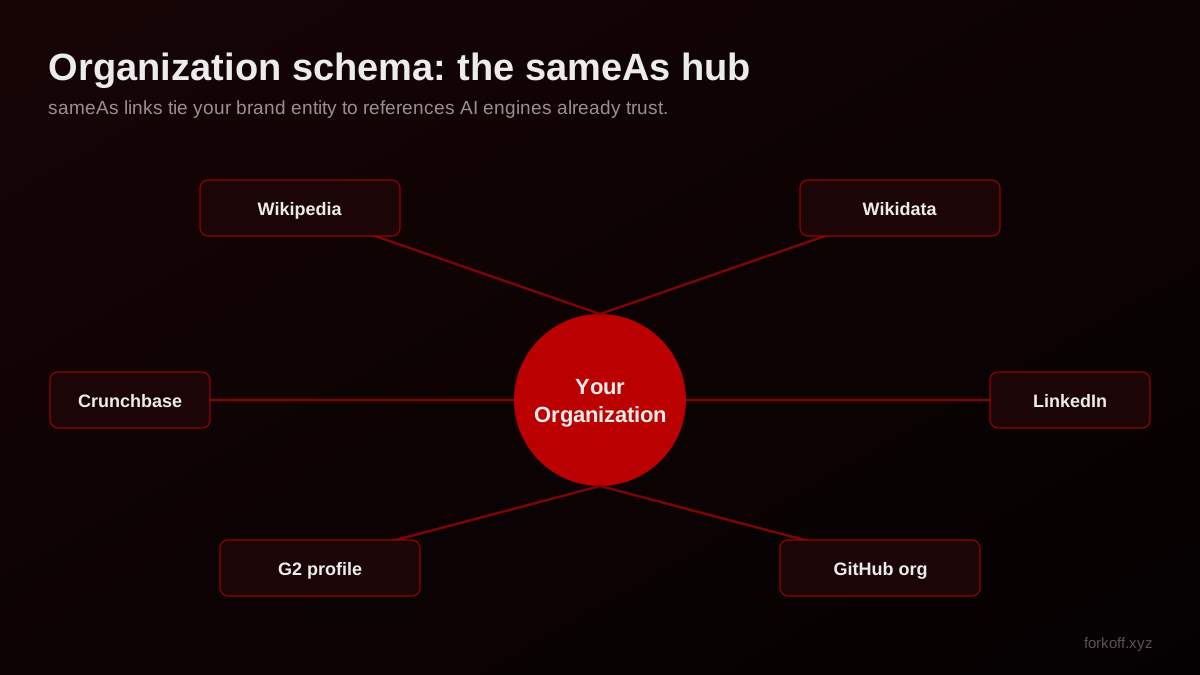
Ship Organization once, site-wide, in a shared layout so every page inherits it. This is the lowest-effort, highest-durability schema on the list: you write it a single time, populate the sameAs array with as many authoritative references as you can verify, and it disambiguates your brand on every query for the life of the site. The operators who add it consistently report the same outcome on brand queries.
Adding Organization schema with sameAs linking to our Wikipedia page, Crunchbase, LinkedIn and G2 profile made a noticeable difference on brand queries. Before, ChatGPT would mix us up with a company with a similar name. After, it consistently identifies us correctly and cites our actual domain.
Operator noteA populated sameAs array is the cheapest entity-disambiguation win on the board.
Schema #3: Article and BlogPosting for editorial authority
Article, or its more specific cousin BlogPosting, is the third schema because it carries the provenance signals that engines weight when they choose between competing sources. The properties that matter are author, datePublished, and dateModified. Perplexity in particular leans on author and date to rank which source to cite, favoring content with a clear, named author over anonymous pages. An Article block with a real author tied to a Person entity tells the engine this content came from someone, not from a content farm.
The schema.org Article type defines the structure. The key is to populate author as a Person or Organization, not a bare string, and to keep dateModified honest:
<script type="application/ld+json">
{
  "@context": "https://schema.org",
  "@type": "BlogPosting",
  "headline": "Schema Markup for AEO: The 5 Schemas That Matter",
  "author": { "@type": "Person", "name": "Simba" },
  "datePublished": "2026-06-08",
  "dateModified": "2026-06-08",
  "publisher": {
    "@type": "Organization",
    "name": "FORKOFF",
    "url": "https://forkoff.xyz"
  }
}
</script>
dateModified is the property most teams get wrong. They set it once and never touch it, which tells engines the page is stale even after a real update. Update dateModified every time the content meaningfully changes, because freshness is a tiebreaker when two equally authoritative pages compete for the same citation. A page that visibly maintains its schema keeps its citation share; a page that lets it ossify loses ground to fresher competitors with identical markup.
Schema that goes stale loses citation share
Structured data is not a set-and-forget asset. dateModified, answer copy, and sameAs references all drift, and engines weight freshness when they decide which source to cite for a current query. Pages that have not been touched in many months lose citation share to fresher competitors with the same markup, even when the older page is more authoritative. The maintenance cost is small: update dateModified when the content changes, revalidate after every edit, and re-check the sameAs targets quarterly. The pages that keep their citations are the ones whose schema reflects a page that is actually being maintained.
Source: FORKOFF content-freshness audits, 2026
The author signal also pairs with the byline and Person schema that every credible content page should carry. If your Article schema names an author but the page has no visible byline and no Person entity behind that name, the signal is weaker than it looks. The agent-ready site audit covers how the author entity ties together across the page.

antoine
@antoinpreaubert
schema markup is not GEO. LLMs don't read your JSON-LD and cite you. they read the semantic layer , do you answer the question clearly, do trusted sources mention you, do your claims hold up when cross-referenced? every pivoting SEO agency is selling schema as the unlock
Schema #4: HowTo for procedural and step content
HowTo is the fourth schema, and the rule for it is narrow: implement it only on pages that have genuine step-by-step content. HowTo markup describes a procedure as an ordered list of steps, each with a name and text, and engines use it to answer procedural queries, the "how do I" questions where a numbered sequence is the natural answer. On a page that walks through an actual process, it is a strong citation magnet. On a page that does not, forcing it is a validation failure waiting to happen.
The schema.org HowTo type defines the step structure. A minimal block for a process page looks like this:
<script type="application/ld+json">
{
  "@context": "https://schema.org",
  "@type": "HowTo",
  "name": "How to validate schema markup before publishing",
  "step": [
    { "@type": "HowToStep", "name": "Rich Results Test", "text": "Run the page through the Rich Results Test to catch required-property gaps." },
    { "@type": "HowToStep", "name": "Schema Markup Validator", "text": "Check JSON-LD syntax against the schema.org specification." },
    { "@type": "HowToStep", "name": "GSC Enhancements", "text": "Confirm processing at scale in the Search Console Enhancements report." }
  ]
}
</script>
Note that HowTo, like FAQ, had its visual rich result wound down in Google search, and the same logic applies: the AI citation value persists even where the visual feature does not. The format maps cleanly onto procedural queries, which is exactly the kind of question AI engines field constantly. If your content is a real procedure, HowTo earns its place at position four. If it is an opinion piece or a comparison, skip it and do not contort the content to fit the schema.
Using Schema Markup to Rank on AI Search
A walkthrough of using schema markup to rank in AI search.
Schema #5: Speakable for voice and AI-answer passages
Speakable is the fifth and final priority schema. It uses SpeakableSpecification to mark specific sections of a page as the best candidates for voice search responses and AI-generated summaries. Instead of letting an engine guess which passage to read aloud or cite, Speakable points it directly at your most answer-ready content using a cssSelector or an xpath.
The schema.org SpeakableSpecification type defines the property. The practical pattern is to point Speakable at the first paragraph of each major section, which is where you should be front-loading the direct answer anyway:
<script type="application/ld+json">
{
  "@context": "https://schema.org",
  "@type": "WebPage",
  "speakable": {
    "@type": "SpeakableSpecification",
    "cssSelector": ["h2", ".answer-lead"]
  }
}
</script>
Speakable sits at position five because its impact is narrower than the schemas above it: it matters most on high-traffic informational pages where a clear question-and-answer structure exists, and it does little on pages without that shape. But on the right page it is a precise instruction to Google Assistant and AI Overviews about which sentence to lift, and precision is worth claiming. The way each engine actually consumes these five schemas differs, which is why the stack covers all of them rather than betting on one.
Operator noteEvent, Recipe, JobPosting markup on a B2B blog is wasted time. Ship the five, skip the rest.
Why JSON-LD beats Microdata for every AEO use case
There are two ways to ship schema: JSON-LD in a script block, or Microdata as attributes scattered through your HTML. For AEO, JSON-LD wins on every axis, and it is not close. JSON-LD lives in a standalone script block in the page head, completely decoupled from the visible markup. That separation is exactly what makes it easy for an LLM to tokenize and parse: the structured data is a clean, self-contained object, not a set of attributes tangled into presentation HTML.
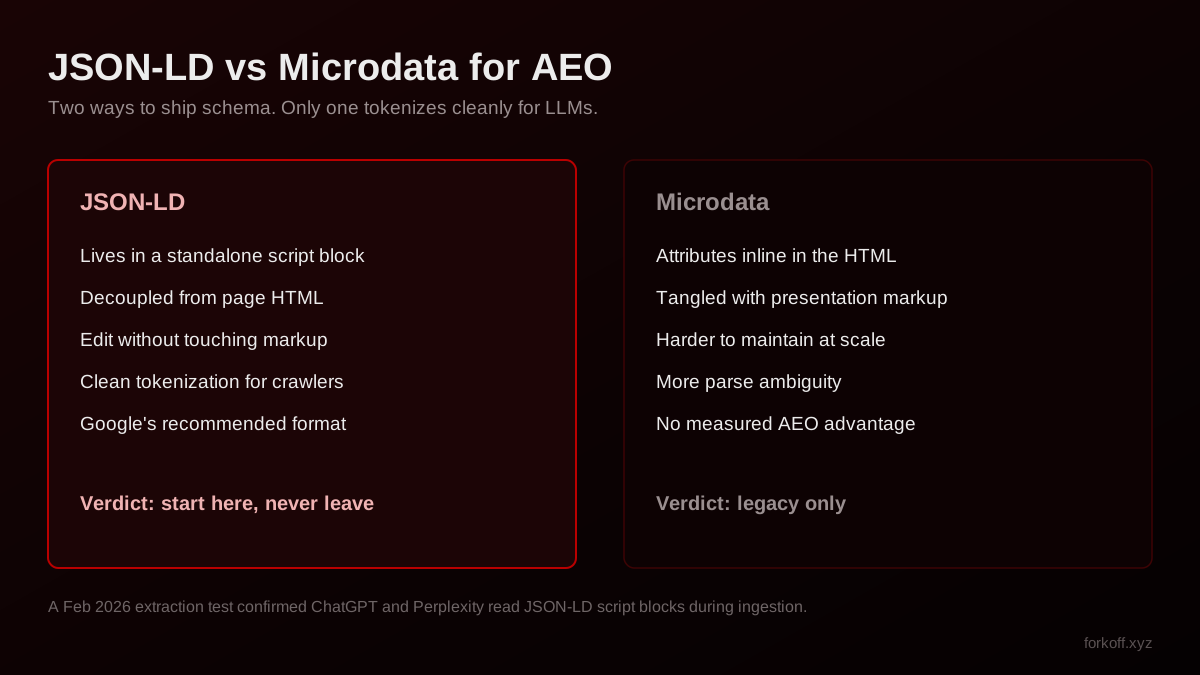
Microdata embeds itemscope and itemprop attributes inline, which means your schema is interleaved with your layout. That is harder to maintain, more error-prone, and offers no measured AEO advantage. Google has recommended JSON-LD for years, and a February 2026 extraction test confirmed that ChatGPT and Perplexity read JSON-LD script blocks during content ingestion. The developer consensus on this is overwhelming: start with JSON-LD and never leave. There is no scenario where a content or SaaS site should reach for Microdata in 2026.
One implementation detail that trips teams up: keep the JSON-LD in the head or early in the body, and make sure your CMS does not mangle it. Some platforms HTML-escape quote characters inside schema fields, which silently breaks the JSON. If you generate blocks by hand, the schema JSON-LD generator produces valid output you can paste directly, and it is the fastest way to get a clean Organization or FAQPage block without hand-counting braces.
How LLMs actually process your schema
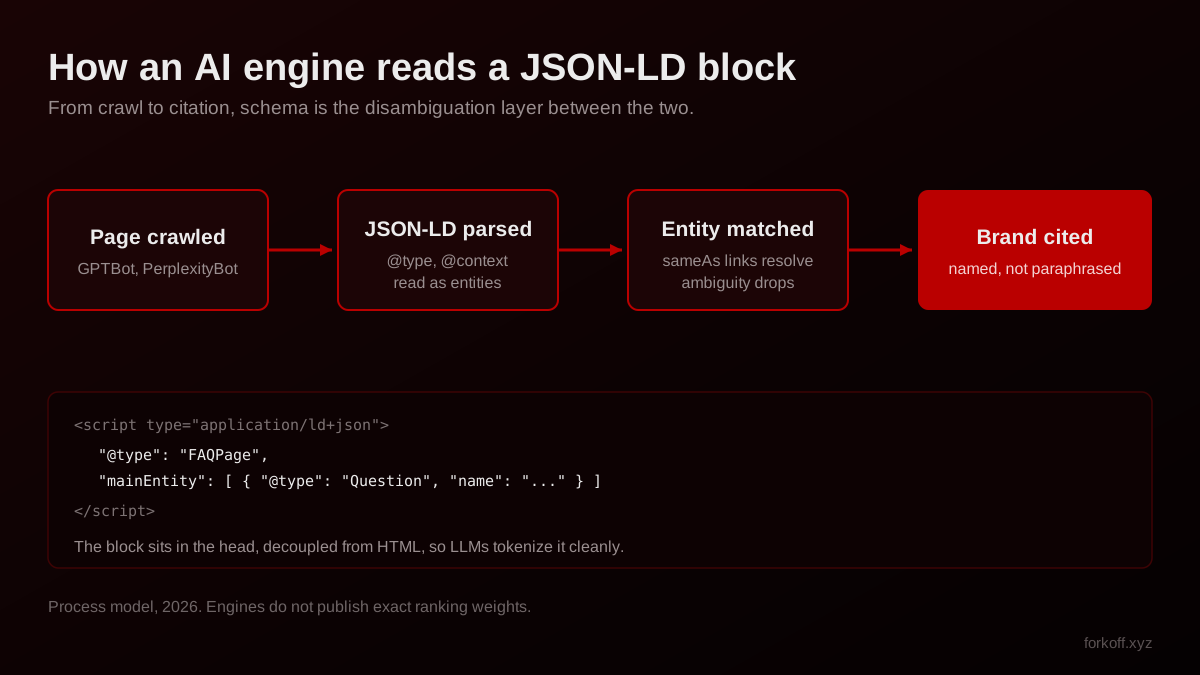
It helps to hold an accurate mental model of what happens between your JSON-LD and a citation. The engine crawls the page with its own bot, GPTBot for ChatGPT or PerplexityBot for Perplexity, both of which are documented in the OpenAI GPTBot reference and the Perplexity crawler guide. During that crawl it reads the JSON-LD block and interprets @type and @context to understand what kind of entity each object represents. Then it tries to match those entities against what it already knows, resolving sameAs links to confirm your brand identity and pulling answer text where the schema offers it. When a user query maps to content the engine has read and trusted, your brand surfaces as a named citation rather than an unattributed paraphrase.
The critical insight is that schema does not improve your content's quality. It improves the engine's confidence in attributing your content. A weak page with perfect schema still loses to a strong page on the merits of the answer. But two pages of equal quality are not equal in the engine's eyes if one is legible and the other is not. Schema is the tiebreaker, and on the open web where most pages ship no structured data, it is a tiebreaker you win by default just by showing up with clean markup.
This is also where the honest caveat belongs. Schema is necessary but not sufficient. The contrarian view, that LLMs read the semantic layer rather than your raw JSON-LD and that markup alone does not earn citations, is partly right: schema without quality content earns nothing. The correct framing is that schema removes the friction between good content and its citation, which is why you implement it after the content is strong, not instead of making it strong.
The 3-tool validation chain before every publish
A schema block that validates as syntactically correct can still fail silently in production. The classic failure mode is markup that parses cleanly but omits a required property for its type: no error is thrown, no rich result appears, and no citation lift materializes. The page looks fine and quietly underperforms. The only defense is a three-tool validation chain run before every publish.
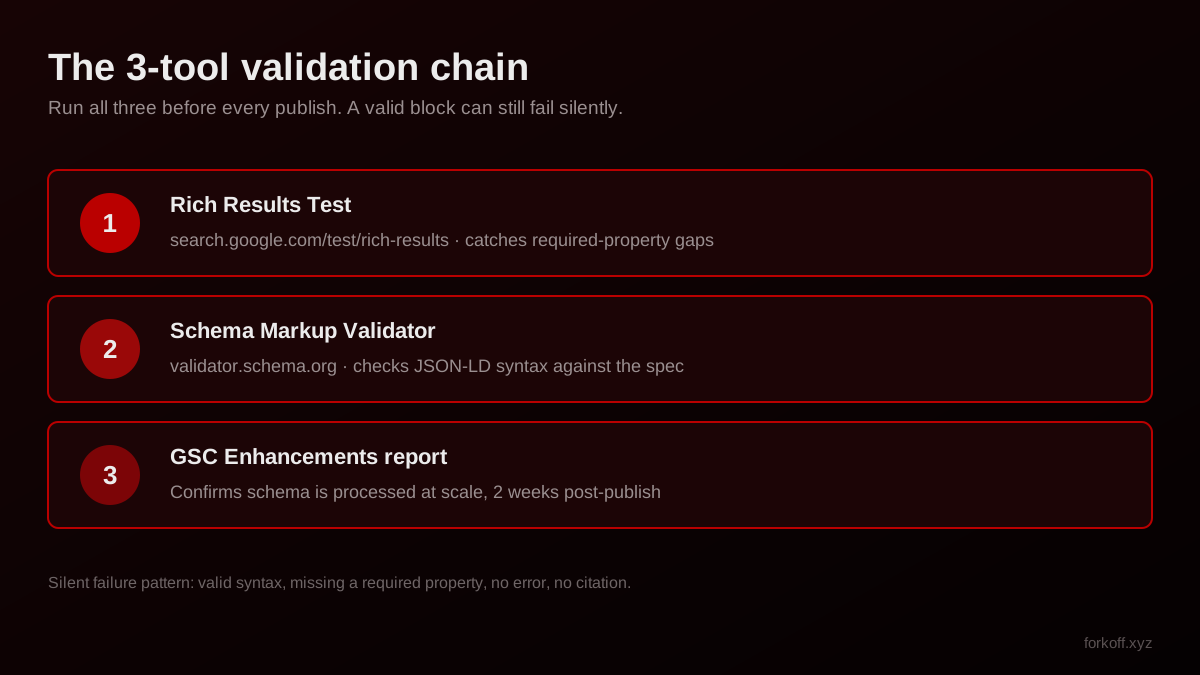
Run them in order. First, the Google Rich Results Test, which checks rich-result eligibility and flags missing required properties for each detected type. Second, the Schema Markup Validator, which checks your JSON-LD syntax against the full schema.org specification and catches structural errors the Rich Results Test does not surface. Third, the Google Search Console Enhancements report, checked roughly two weeks after publish, which confirms the schema is being processed correctly at scale across your real traffic, not just in a one-off test.
The Search Console step is the one teams skip, and it is the one that catches the silent failures. A page can pass both pre-publish validators and still show errors in the Enhancements report once Google processes it in context. Practitioners who run the full chain catch the missing-required-property failures that cost citations; those who stop at the syntax validator do not. The validation discipline pairs naturally with the broader B2B AEO checklist, which folds schema validation into a wider pre-publish gate. If you want a fast read on where your markup stands before you start, the AEO checker and the free AI SEO audit both surface schema gaps in seconds.
Operator noteValid syntax with a missing required property is a silent failure. Run all three validators.
How each AI engine leans on your schema differently
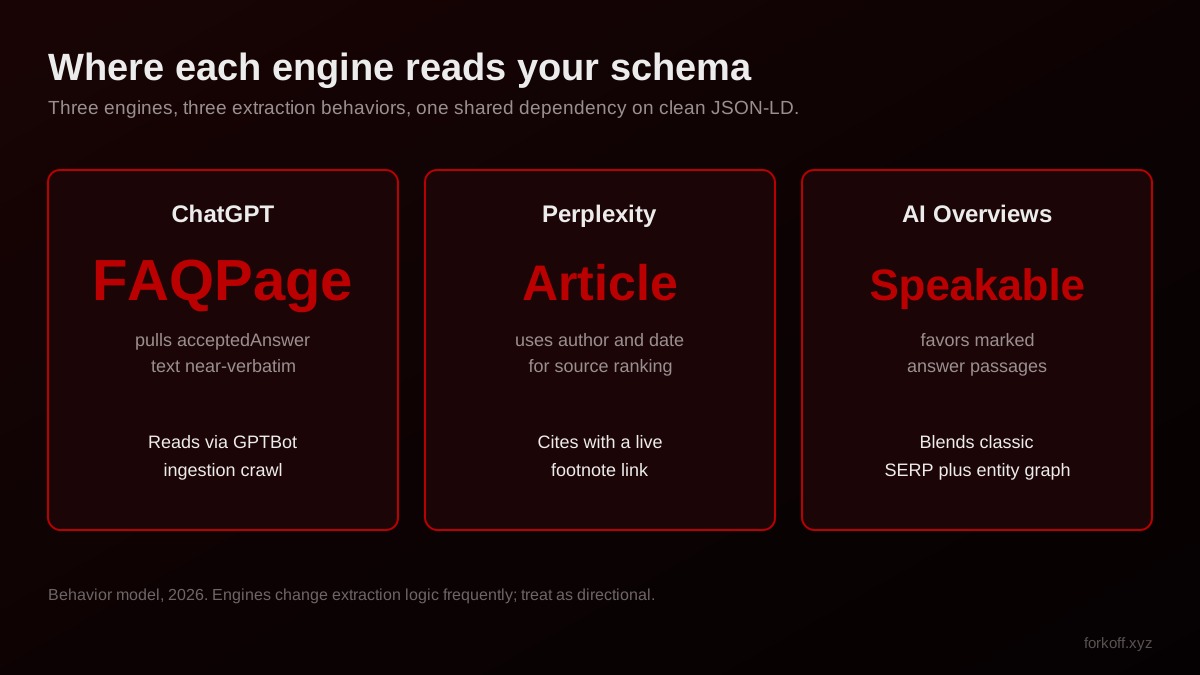
The five-schema stack works because the major engines do not consume schema identically, and covering all five hedges against any one engine's quirks. ChatGPT leans hardest on FAQPage, pulling acceptedAnswer text close to verbatim when a query matches a question it has indexed. Perplexity leans on Article, using author and datePublished to rank which source deserves the cited footnote, which is why provenance properties matter more for Perplexity visibility than for ChatGPT. Google AI Overviews blend classic SERP signals with the entity graph and favor Speakable-marked passages when they choose what to read into an answer.
The benchmark numbers in this post are directional, and the engines change their extraction logic frequently, so treat the per-engine breakdown as a model rather than a contract. The durable conclusion is that all three engines need clean JSON-LD as the substrate. The differences sit on top of that shared requirement. If you only had time for one schema, FAQPage would be the bet across all three engines; the other four widen your coverage as each engine weights them differently. The platform-level differences in citation behavior are covered in depth in the Perplexity versus Google AI Overviews comparison, and the question of how much schema actually drives generative ranking versus content quality is the subject of generative engine optimization for SaaS and the broader question of how AI Overviews rank brands.
AI citation rate by markup completeness
| Page markup state | Relative AI citation behavior | Notes |
|---|---|---|
| No structured data | 15% baseline citation rate | Engine paraphrases, rarely names the source |
| FAQPage schema present | 41% citation rate | Highest single-schema lift in 2026 testing |
| Complete JSON-LD stack | 2.8x baseline | Compounding effect across query types |
Directional benchmarks from 2026 AEO citation studies; rates vary by niche and query.
A one-week rollout sequence for the 5 schemas
Implementation order matters because it lets you ship the highest-lift schema first and validate each before moving on, rather than dumping all five into a single deploy you cannot debug. Here is the sequence we run on a client site, compressed into a working week.
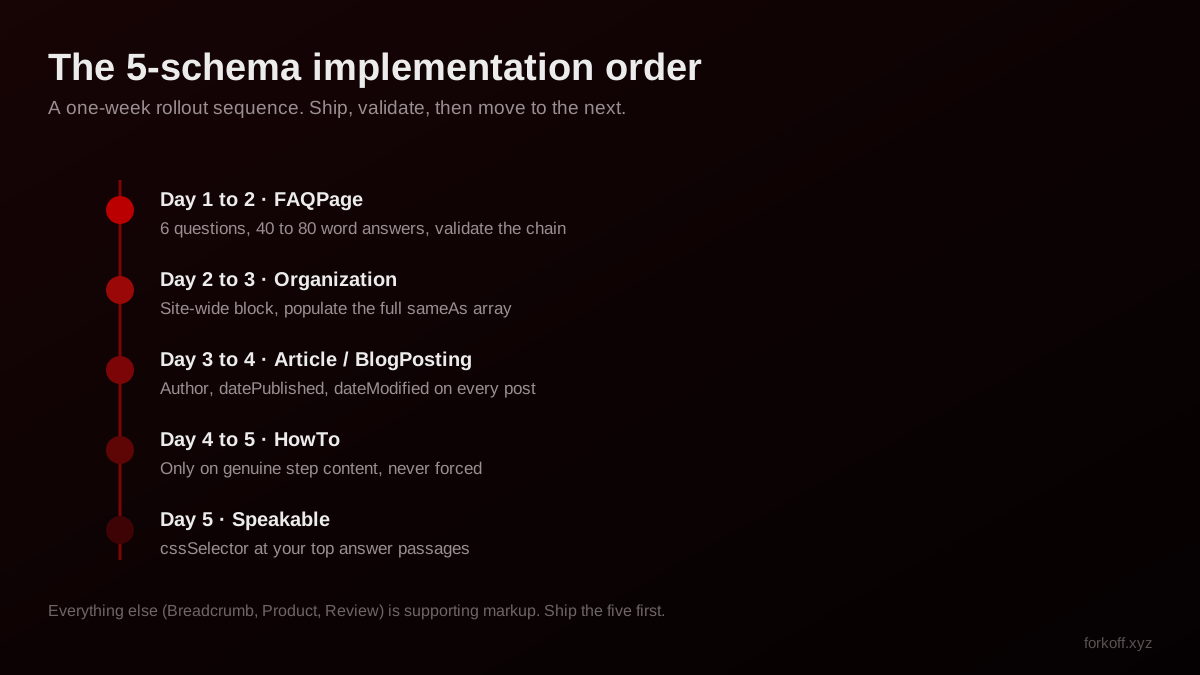
Days one and two: FAQPage. Write six question-and-answer pairs, hold each answer to 40 to 80 words, ship the block, and run it through the full validation chain. This is the schema that produces the most citation lift, so it goes first and gets the most attention. Days two and three: Organization, deployed site-wide in a shared layout with a fully populated sameAs array. Days three and four: Article or BlogPosting on every editorial page, with a real Person author and an honest dateModified. Day four to five: HowTo, but only on pages with genuine step content, never forced onto pages that lack it. Day five: Speakable, with cssSelector pointed at your top answer passages.
FAQPage acceptedAnswer.text length gate
| Answer length | AI engine behavior | Verdict |
|---|---|---|
| Under 30 words | Too thin to stand alone in an answer | Expand |
| 40 to 80 words | Cited verbatim, target zone | Ship |
| Over 120 words | Truncated or summarized away | Trim |
One direct answer per question; no nested lists or sub-questions.
Everything else, Breadcrumb for navigation context, Product and Review for ecommerce, situational types like Event, comes after the five are live and validated. The point of the sequence is discipline: each schema ships, validates, and earns its place before the next one starts. For a podcast or media property, the same logic applies but with content-type-specific schema layered on top, which is covered in the podcast AEO citation strategy. For tracking whether the rollout actually moved citations, the share-of-AI-citations measurement method is the companion piece, and the operator-grade rollout itself is documented step by step in the answer engine optimization playbook.
Modern context: schema in the agent-ready era
The reason this matters more every quarter is that the surface schema feeds is growing while the surface it used to feed shrinks. Classic blue-link search is giving ground to answer engines, AI Overviews, and increasingly to autonomous agents that read the web on a user's behalf. All of them consume structured data as a primary signal. An agent booking a service, comparing tools, or answering a research question does not read your hero copy; it reads your schema, your sameAs graph, and your answer blocks. The page that is legible to a 2024 crawler is the page that is legible to a 2026 agent, and schema is the through-line.
That is why the deprecation of FAQ and HowTo rich results in classic search was a head-fake. Google retired a visual feature in a surface that is declining in relative importance, while the same schema kept paying off in the surfaces that are growing. Reading the deprecation as a signal to remove schema was reading the wrong surface. The agent-ready web rewards the sites that ship clean, complete, maintained structured data, and penalizes the ones that treat schema as a rich-result lottery ticket rather than the machine-readable identity layer it actually is. The strategic framing for agencies sits in the ChatGPT citation strategy for agencies, and the platform mechanics in how AI Overviews rank brands. The wider agent-readiness layer, llms.txt and crawler rules that sit alongside schema, is covered in the agentic SEO audit, and the same structured-data discipline underpins LLM SEO as a service.
Structured Data in 2026: GEO vs Traditional SEO
Structured data in 2026 framed as GEO versus traditional SEO.
The page about schema should run the schema
The strongest signal that a schema guide is credible is whether it implements the markup it recommends. This post ships FAQPage, Article, and BreadcrumbList schema on itself, which means the AI engines that index it read it through the exact structured-data layer the post argues for. That is not a gimmick. A page that practices what it teaches is more likely to be cited for the query it targets, because the engine finds clean, typed, answer-ready content where the post claims it should be. Self- demonstrating schema is a compounding AEO asset for any how-to page.
Source: FORKOFF GEO methodology, 2026
The verdict: ship five, validate three times, skip the rest
The forced rank holds. Schema markup for AEO is not a 15-type checklist; it is five schemas that carry the citation lift and a pile of supporting markup that does not. Ship FAQPage first, because at a 41 percent citation rate it beats every other single schema and it survived the May 2026 deprecation that scared the industry into removing it. Add Organization site-wide for brand disambiguation through sameAs. Add Article with a real author and an honest dateModified for editorial provenance. Add HowTo only where genuine step content exists, and Speakable on high-traffic informational pages. Everything below that line, Breadcrumb, Product, Review, Event, comes later or never.
Two disciplines turn this from a list into a result. Ship JSON-LD, never Microdata, because clean tokenization is the entire point. And validate through all three tools, Rich Results Test, Schema Markup Validator, and the Search Console Enhancements report, before every publish, because the failure mode that costs you citations is the silent one that throws no error. Do those two things on top of the five-schema stack and you are ahead of the roughly nine in ten pages shipping no structured data at all.
This post ran all five of those schemas on itself while making the argument, which is the cleanest demonstration available: the page about schema markup is itself marked up, and the engines reading it found exactly the typed, answer-ready content the post said they would. If you would rather have the stack implemented, validated, and tracked for citation lift than do it by hand, that is the answer engine optimization engagement, and the GEO service extends it across every AI surface.