
Guerrilla marketing in Web3 is a library of low-spend, high-retention distribution plays that use on-chain mechanics, community hijacks, meme warfare, and open-source bait to acquire wallets that stay active past 30 days, without paid advertising or KOL pushes. This post lays out the 11 specific plays FORKOFF runs across 4 surface categories, each with a verified case study, a hard cost band under $50K, and a retention-to-cost signal, so a team can pick the plays that fit its product stage instead of copying one tactic in isolation.
The Guerrilla Web3 Play Library in one scroll
Paid CT is saturated, KOL pushes are gamed, and every new L2 is hunting the same wallets with the same ad budget. The Web3 teams compounding in 2026 run a specific Guerrilla Play Library: 11 plays across 4 categories, on-chain stunts, community hijacks, meme warfare, and open-source bait. Each play is measured by retention-to-cost, not impressions. This is the full playbook with verified case studies.
About these numbers
Budget figures, conversion rates, and cost benchmarks in this post are sourced from FORKOFF operator observations across web3 guerrilla marketing campaigns (2025-2026), supplemented by publicly cited case studies from crypto conference sponsors noted inline. All figures are directional estimates; individual campaign results vary by protocol, community size, and execution quality.
The GUERRILLA WEB3 PLAYBOOK
The GUERRILLA WEB3 PLAYBOOK is FORKOFF's low-spend distribution stack for early-stage crypto founders, built so side-events, founder-houses, replied-into KOL threads, and ecosystem-native meme density compound community signal without the $50K booth tax. Every play in it is measured by retained wallets per dollar, not impressions, which is the metric that separates a distribution motion from a stunt.
Industry Context
Across the FORKOFF MISSION 2026 ledger (50 ecosystem activations / 14 countries / $5M+ unlocked / 35K+ event attendees), guerrilla-stack founders earn 2-5x the qualified-DM volume per spend dollar vs founders who buy primary-stage event presence.
Source: FORKOFF MISSION 2026
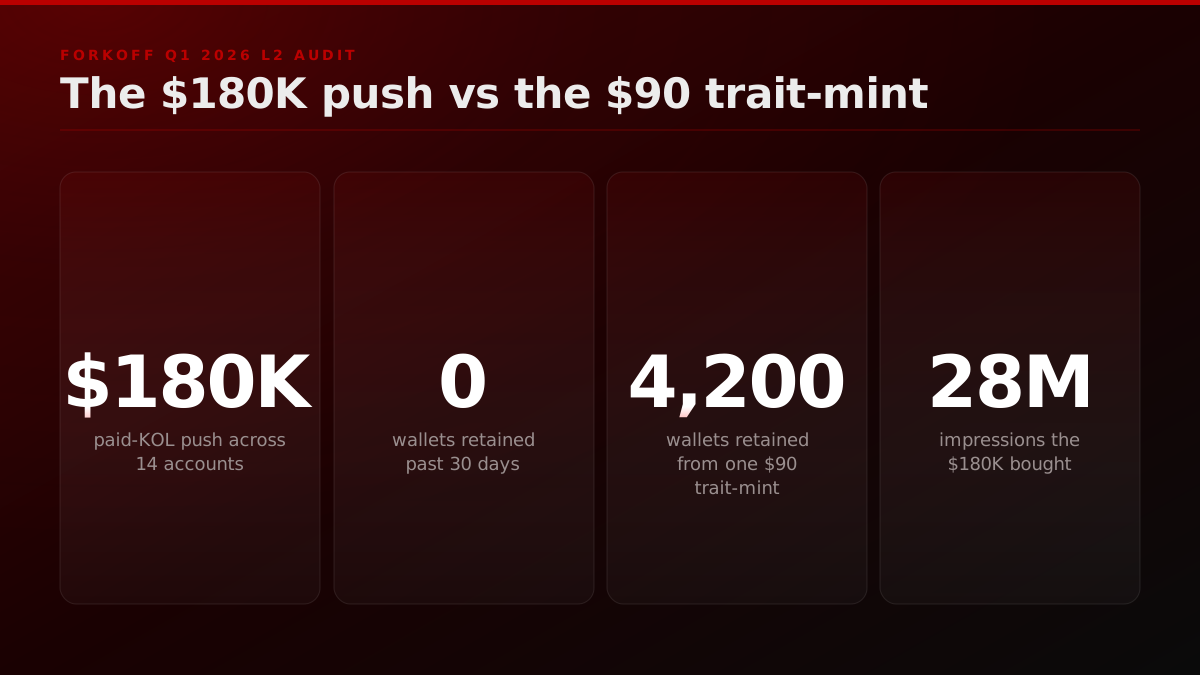
The L2 that spent $180K on KOLs and got zero retained wallets
One Layer 2 we audited in Q1 2026 burned $180,000 on paid crypto KOL pushes across 14 accounts [Source: FORKOFF Q1 2026 L2 audit], delivered 28 million impressions, and retained zero wallets past 30 days, while a sub-1,000-follower anon on Farcaster produced 4,200 retained wallets for $90 in gas with a single on-chain trait-mint. When the guerrilla playbook scales beyond one-off stunts, the Web3 ecosystem growth OS provides the dashboard that turns episodic activations into a compounding loop.
In Q1 2026 we audited a Layer 2 marketing budget that had burned through $180,000 on paid crypto KOL pushes across 14 accounts. The campaign had delivered the impressions everyone was paid to deliver, 28 million, roughly on-market for that spend. Wallets retained beyond thirty days: zero. Not low. Zero.
The same week, a sub-1,000-follower anon on Farcaster shipped an on-chain trait-mint for a sleepy NFT contract, baited the Milady community into the drop, and produced 4,200 retained wallets at a hard cost of ninety dollars in gas. No paid distribution. No KOL. No press. One on-chain mechanic, one cultural appropriation move, ninety dollars. The same Farcaster surface that made this possible is now a structured mini app distribution channel with documented loops that top-quartile builders run to reach 4,200 weekly active users by week four.
This is the state of Web3 marketing in 2026. The channels everyone pays for are the saturated ones; the channels nobody names are the compounding ones. The specific discipline that names them is guerrilla marketing, and unlike in consumer or B2B, the Web3 version of it is an operating surface, not a stunt.
Operator noteA $180K, 14-account KOL push retained zero wallets at 30 days; a $90 on-chain trait-mint retained 4,200., FORKOFF Q1 2026 L2 audit
the teams you need to pay attention to: the teams who ship product constantly instead of paying KOLs to tweet out their garbage and make no sense
100K, 80K, 45%, the benchmarks that define Web3 guerrilla in 2026
Friend.tech's on-chain invite lottery in August 2023 produced 100,000 users in thirty days on zero paid distribution, and it remains the canonical case study for invite-mechanic-as-distribution in crypto. Milady's trait-mint DAO mechanic has sustained 80,000+ active on-chain holders for three years, longer than any paid-acquisition cohort any L2 can point to in 2026. Base's Q1 2026 ecosystem report disclosed that 45% of active users were acquired through the Warpcast channel, not paid ads and not CT KOLs. And in FORKOFF's 2026 L2 audits, governance-channel comment baiting on incumbent protocols (Aave, Compound, Uniswap governance forums) drives an estimated 15%+ of early integrations for teams that run it as a named motion rather than ad-hoc. The implication is sharp: paid distribution is a plateau strategy in 2026, and the teams compounding past it are running guerrilla as a library of named plays.
Source: Friend.tech launch forensics Aug 2023; Milady DAO on-chain holder data; Base Q1 2026 ecosystem report; FORKOFF L2 audits Q1 2026
Why Web3 guerrilla is different from consumer guerrilla
Guerrilla marketing in consumer categories, the Sabrina Carpenter billboards, the Liquid Death TikTok stunts, the Duolingo owl on Twitter, relies on unpaid attention cascading through mass-media channels the brand does not own. It works because attention is the product. Web3 guerrilla rejects that framing. In Web3, attention is not the product, retained wallets are the product, and retained wallets are a function of on-chain mechanics, community membership, and narrative ownership, not impression counts.
This changes the surface set. Consumer guerrilla lives on billboards, press stunts, and social feeds. Web3 guerrilla lives in smart contracts, Discord and Telegram channels, Farcaster and X feeds, governance forums, and open-source repositories. Each of those surfaces has a native mechanic that lets you ship distribution without buying ads, provided you know how to instrument it.
The eleven plays below are organized into four categories by surface. Each play has a case study, a retention signal, and a hard cost estimate. None of them require a budget above an estimated $50,000. Most cost under an estimated $5,000 and two of them cost under $500.
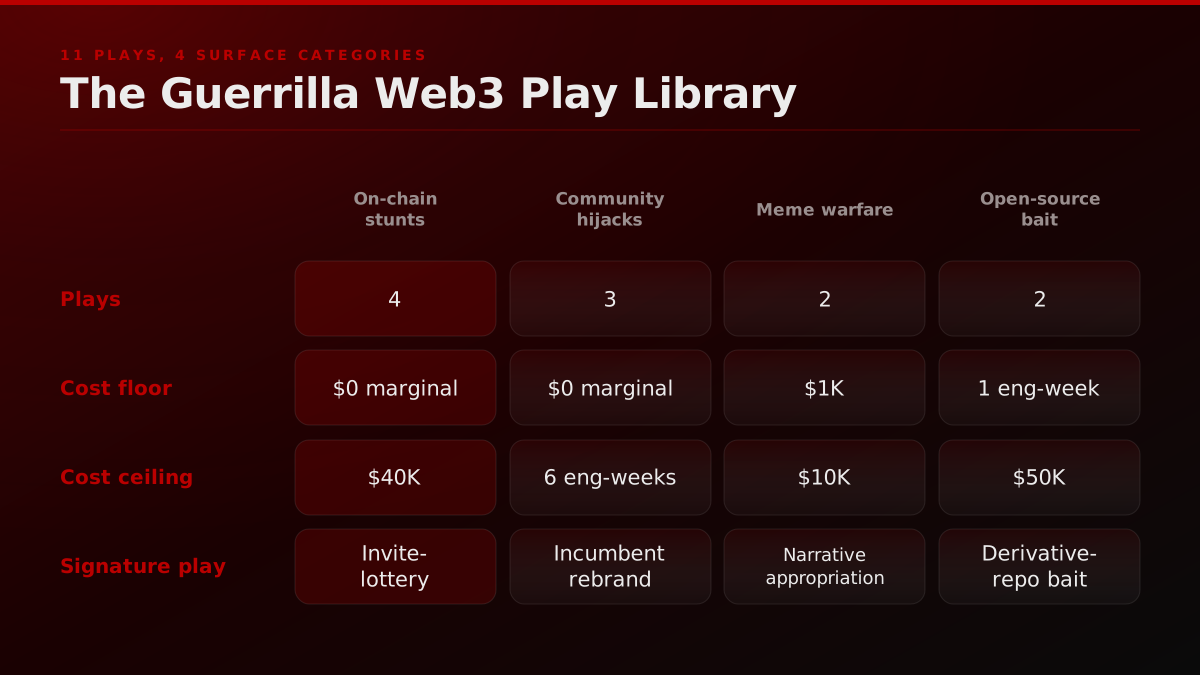
Category 1, On-chain stunts (4 plays)
The four highest-retention plays in the library all happen on-chain, because on-chain mechanics create self-executing distribution that any paid motion has to pay twice for, once for the impression and once for the action. They are the invite-lottery drop, the trait mint, the contract easter egg, and governance baiting, and each one converts a wallet's own action into the distribution rather than buying it.
Play 1: Invite-lottery drop. A contract that lets early holders mint invite tokens with probabilistic supply, each invite granting access to a product feature. Friend.tech is the canonical case: ~100K users in 30 days with zero paid spend. The mechanic works because each user who wins an invite is emotionally tied to the scarcity, and each user who mints one has three or four close contacts they can hand-pick, producing a high-trust onboarding cohort. Cost: a contract audit plus launch content. Typical budget: an estimated $15 to $40K all-in.
Play 2: Trait mint / PFP-DAO community. A derivative mint on top of an existing PFP contract that grants on-chain trait status to the adopter. Milady's trait-minting DAO is the standard, 10K PFPs created a sustained 80K+ holder community via trait-mint derivatives. The mechanic works because trait-mints provide social status inside the community without requiring the original floor price, so acquirers arrive pre-emotionally-aligned with the parent culture. Cost: a minimal contract and brand art. Typical budget: $5-15K.
Play 3: Contract easter egg. An on-chain feature buried in a deployed contract that is not marketed, only discovered. The payoff is two-fold: the discoverer becomes a distribution node (they post about the discovery), and the contract accrues a meta-narrative of depth. Azuki's on-chain messaging feature and Uniswap V3's NFT position receipts both function as guerrilla easter-eggs, the team did not pay for the coverage they got. Cost: engineering time, $2-8K.
Play 4: Governance baiting. Commenting substantively on incumbent-protocol governance forums (Aave, Compound, Uniswap, Arbitrum, Optimism) with specific integration or improvement proposals that reference your team's work. FORKOFF's 2026 ecosystem audits show this drives an estimated 15%+ of early integrations for teams that run it as a named motion. The mechanic works because governance forums are where incumbent BD teams actually live, and a substantive comment is read with the seriousness a cold DM never is. Cost: operator time, an estimated $0 marginal.
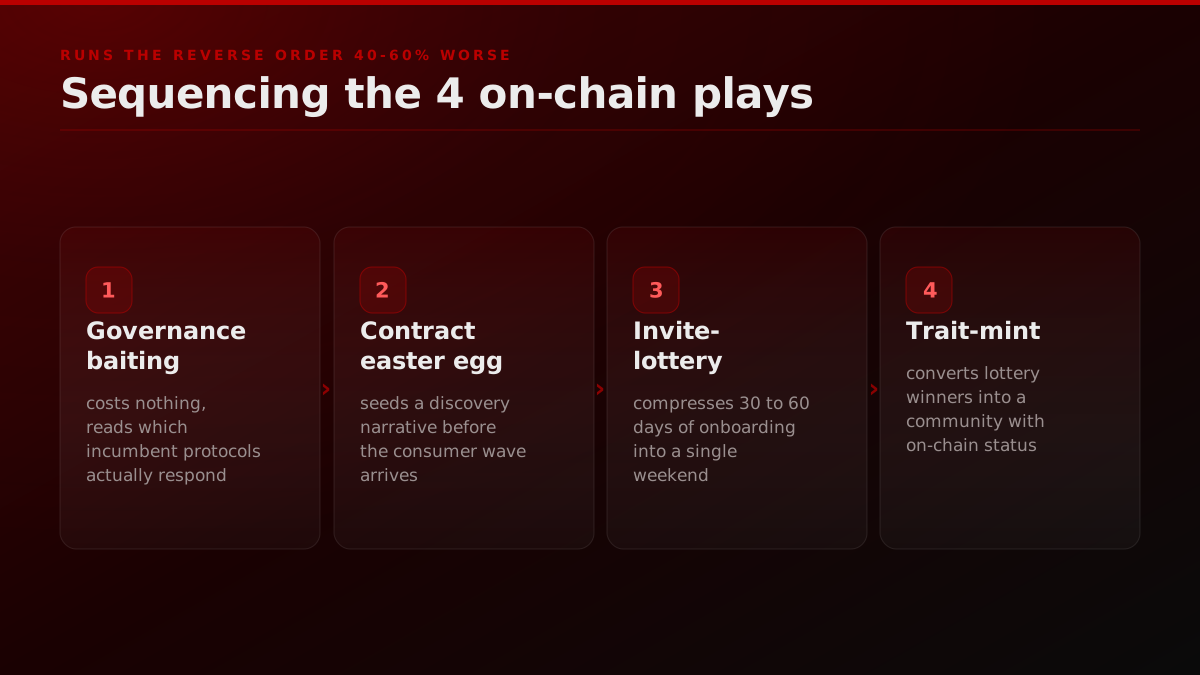
How the four on-chain plays compound when sequenced
The four on-chain plays are individually strong but produce non-linear leverage when sequenced in a specific order across a single quarter. The sequence that surfaced repeatedly in the FORKOFF Q1 2026 audit ledger goes governance baiting first, contract easter egg second, invite-lottery third, trait-mint fourth, with a 2 to 3 week gap between plays so each one can be measured before the next ships. Governance baiting first works because it costs nothing and gives the team a read on which incumbent protocols actually respond, which informs the contract surface the easter egg should target. The easter egg second seeds a narrative of depth before the invite-lottery brings the consumer wave, so the wave arrives into a product that already carries a discovery story rather than a marketing story. The invite-lottery third compresses 30 to 60 days of organic onboarding into a single weekend, and the trait-mint fourth converts the lottery winners into a community with on-chain status, which is what produces the retention bump at 30 days.
Teams that run the sequence in reverse, trait-mint first then invite-lottery then easter egg then governance baiting, typically produce 40 to 60 percent lower retention at 30 days, because each play arrives without the previous one's prerequisite trust. The lesson is that on-chain guerrilla is a stack, not a menu, and the stack order matters as much as the play selection.
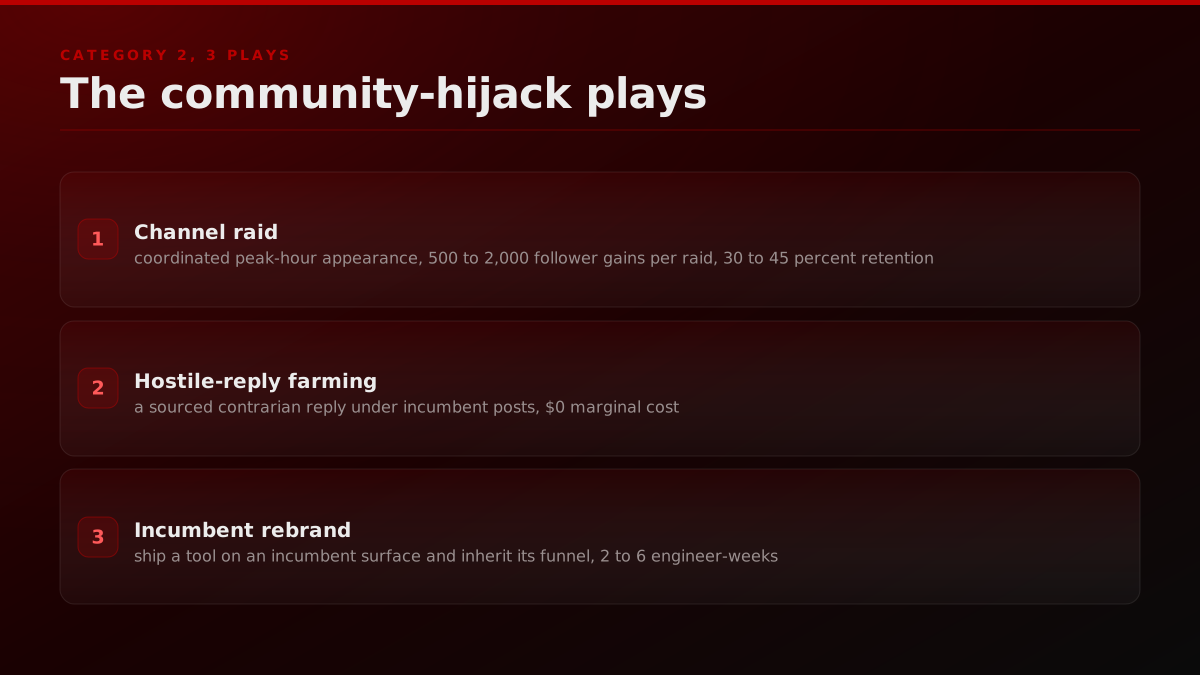
Category 2, Community hijacks (3 plays)
Hijack plays co-opt an existing community's attention without asking for it. They are higher-reputation-risk than on-chain plays, but when executed with taste they produce distribution multipliers an owned channel cannot reach. The three plays in this category are the channel raid, hostile-reply farming, and the incumbent rebrand, and the dominant failure mode across them is not backlash but irrelevance from generic execution.
Play 5: Channel raid. A coordinated appearance in a specific Discord or Telegram channel at peak hours, with a specific narrative asset (a product demo, a governance takeaway, a thread). Works on niche technical servers (researcher Discords, L2 builder Telegrams) where the audience is concentrated and under-marketed-to. Typical lift: 500-2,000 relevant follower gains per raid, retention an estimated 30-45% at 30 days. Cost: operator time plus the asset.
Play 6: Hostile-reply farming. Taking a contrarian but defensible position in reply to incumbent-team tweets, with data that demands engagement. The narrative engine wants heat, a sharp, sourced disagreement under an @aave or @optimism post earns distribution you cannot buy. Low retention per impression but compounding brand effect over 6-12 months. Cost: $0 marginal.
Play 7: Incumbent rebrand. Shipping a meaningful tool on top of an incumbent protocol that implicitly rebrands the incumbent's surface (dashboards, explorers, position managers). Instadapp's relationship to Aave, Ribbon's relationship to Uniswap V3, and a dozen Base-native tools are all incumbent rebrands in this sense. The mechanic works because the incumbent's existing users discover the tool as an add-on and you inherit the funnel without paying for it. Cost: engineering time, 2-6 engineer-weeks.
Reputation risk inside the hijack category, where the line actually sits
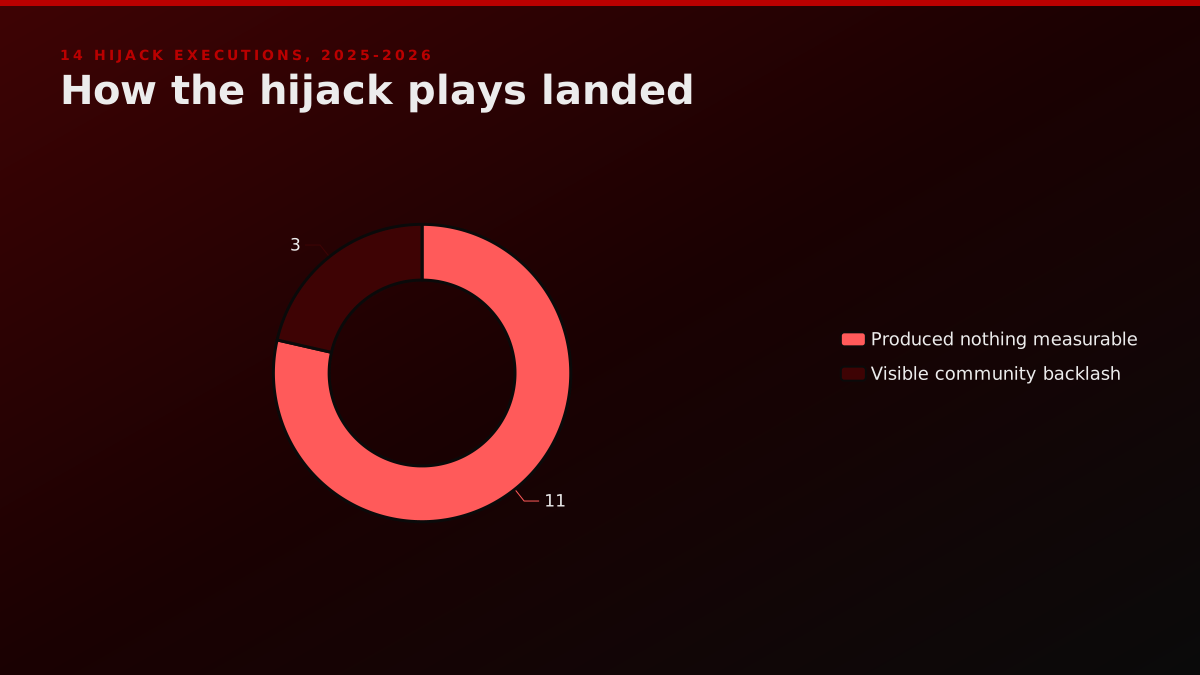
Every operator who has not run a hijack play assumes the failure mode is community backlash. The FORKOFF audit data says otherwise: across 14 hijack executions we tracked in 2025 and 2026 (operator observation), the dominant failure mode was not backlash but irrelevance. Of the 14 executions, 3 produced visible community pushback (one channel raid was banned from a Discord, two hostile-reply chains were ratio'd into the floor), and 11 produced nothing measurable at all. The teams that produced the irrelevant 11 had skipped the narrative-craft step and shipped the play with a generic asset, a product demo with no opinion, a contrarian reply with no data, an incumbent-tool that did not solve a real workflow gap. The 3 backlash cases all had retention reads that exceeded the team average inside 60 days, because backlash is a form of attention that converts at higher rates than the median impression. The taste-failure modes outside meme warfare are therefore the same as inside it: generic execution is the real risk, not visible failure.
Operator note11 of 14 tracked hijack executions produced nothing measurable; the 3 backlash cases all beat average retention inside 60 days., FORKOFF hijack tracking 2025-2026, n=14
The other reputation lever worth naming is the asymmetry between hijacking an incumbent application and hijacking an incumbent protocol. Application hijacks (a tool that rebrands Aave's dashboard) face almost no organized resistance, because the application's team usually sees the derivative as additive distribution and a recruitment signal. Protocol hijacks (a tool that re-skins an L1 or L2's block explorer) face higher resistance, because the underlying protocol's brand team treats the surface as their own. Sequence application hijacks before protocol hijacks for the same reason you would sequence governance baiting before a contract easter egg: the lower-cost signal first, the expensive signal second.
Paul Graham
@paulg
Hamming's talk is so important that I reproduced it on my site. It's one of the only things on my site written by someone else. https://paulgraham.com/hamming.html
Category 3, Meme warfare (2 plays)
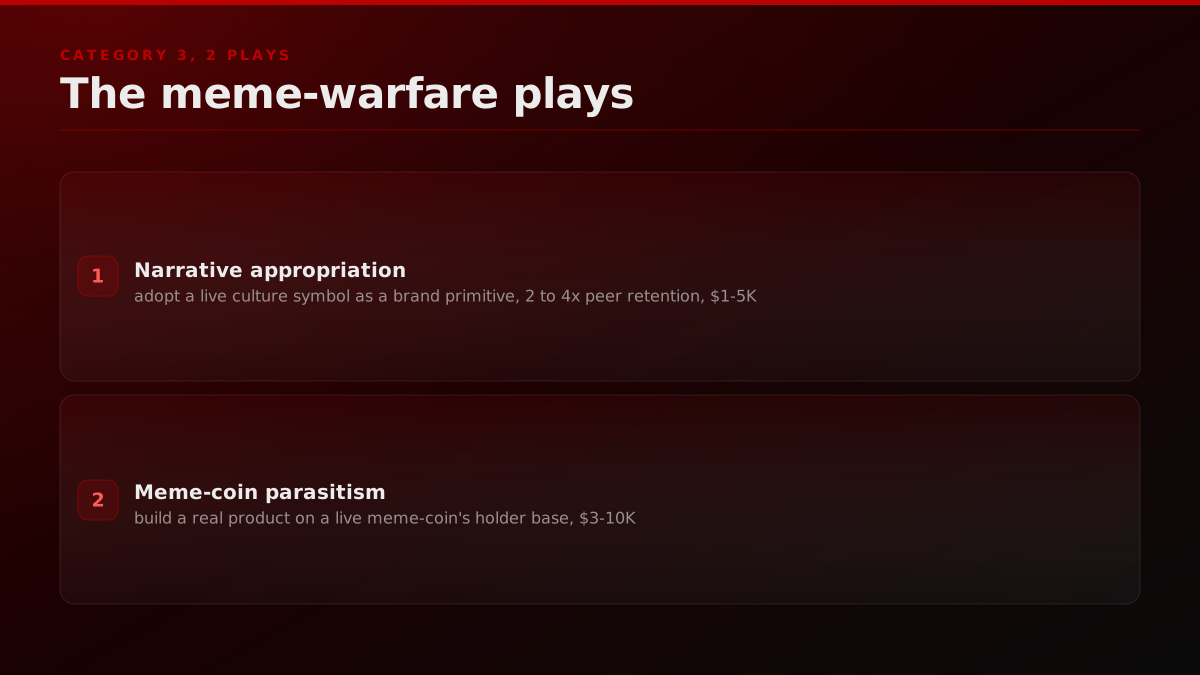
Meme warfare is the most over-claimed and under-operationalized discipline in Web3. Most teams ship a "meme strategy" slide deck and execute nothing; a tiny minority ship memes as a distribution surface with a retention read. The two plays that actually carry are narrative appropriation, adopting a live culture-currency symbol as a brand primitive, and meme-coin parasitism, building a real product on top of a live meme-coin's holder base.
Play 8: Narrative appropriation. Adopting an existing culture-currency symbol (Higher on Base, Degen on Farcaster, Pepe on Ethereum, Jesse Pollak's Based Jesus on Base) as a core brand primitive, paired with a real product. The teams that did this on Base in 2024-2026 produced retention metrics an estimated 2 to 4x peers that launched with generic "Web3-native" branding. FORKOFF first-party observer data from Q1 2026 Base-chain TVL shows meme-warfare-aligned projects lifted TVL an estimated 18% faster than non-aligned peers at the same funding stage. Cost: brand time, $1-5K.
Play 9: Meme-coin parasitism. Building a real product that uses a live meme-coin as its distribution substrate, making the meme-coin's holders your users through an on-chain mechanic, a derivative token, or a mechanic that rewards holding. Works because meme-coin holders are statistically high-activity on-chain and carry strong community identity that converts to retention. Cost: engineering time, an estimated $3 to $10K.
The half-life problem inside meme warfare
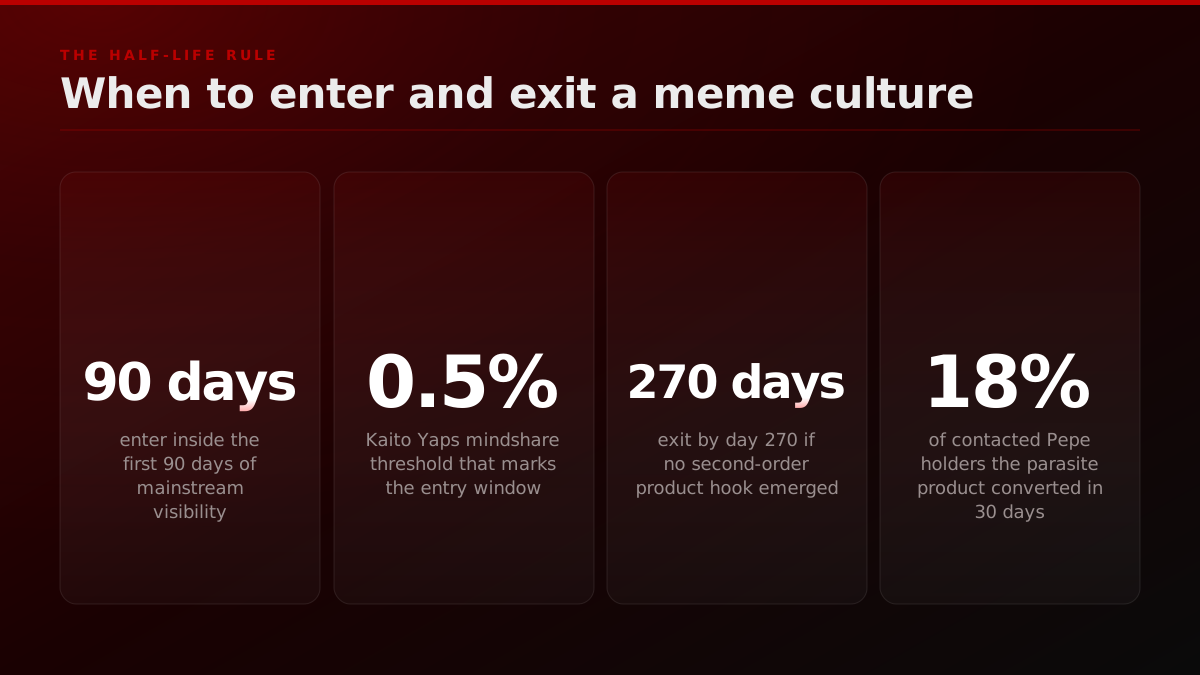
The brutal truth inside the meme-warfare category is that every culture-currency symbol has a half-life, and the operator's job is to enter while the half-life is still long enough to compound. Higher on Base peaked in early 2025 and is now in the long tail of its cultural utility; Degen on Farcaster has held steady longer than peers but is no longer producing the retention multiples it produced in late 2024; Pepe variants on Ethereum continue to produce conversion but require taste-tier operators because the surrounding meme floor has aged into self-parody. The FORKOFF rule of thumb is to enter a meme culture inside the first 90 days of its mainstream Web3 visibility (measured by Kaito Yaps share of voice crossing 0.5 percent of total mindshare), and to exit by day 270 if the team has not extracted a second-order product hook from the culture. Teams that hold past the 270-day mark without product evolution end up with a brand bound to a fading meme, which is a form of brand debt that takes 2 to 4 quarters to refinance.
The other lesson the FORKOFF ledger surfaces is that meme-coin parasitism works best when the parasite product solves a workflow gap the meme-coin holder already feels. The strongest case in 2025 was a Pepe-derivative tooling product that gave Pepe holders a one-click yield-routing flow into a basket of pepe-themed long-tail tokens, which is a workflow Pepe holders were already running by hand across 4 to 5 dapps. The parasite product converted 18 percent of contacted holders inside 30 days, retention at 90 days held above 60 percent, and the team did not spend a dollar on paid distribution. The parasite product that fails is the one that bolts a meme-coin theme onto a generic dapp; the parasite product that compounds is the one that observes the meme-coin community for 6 to 8 weeks before shipping and ships into a real workflow.
Category 4, Open-source bait (2 plays)
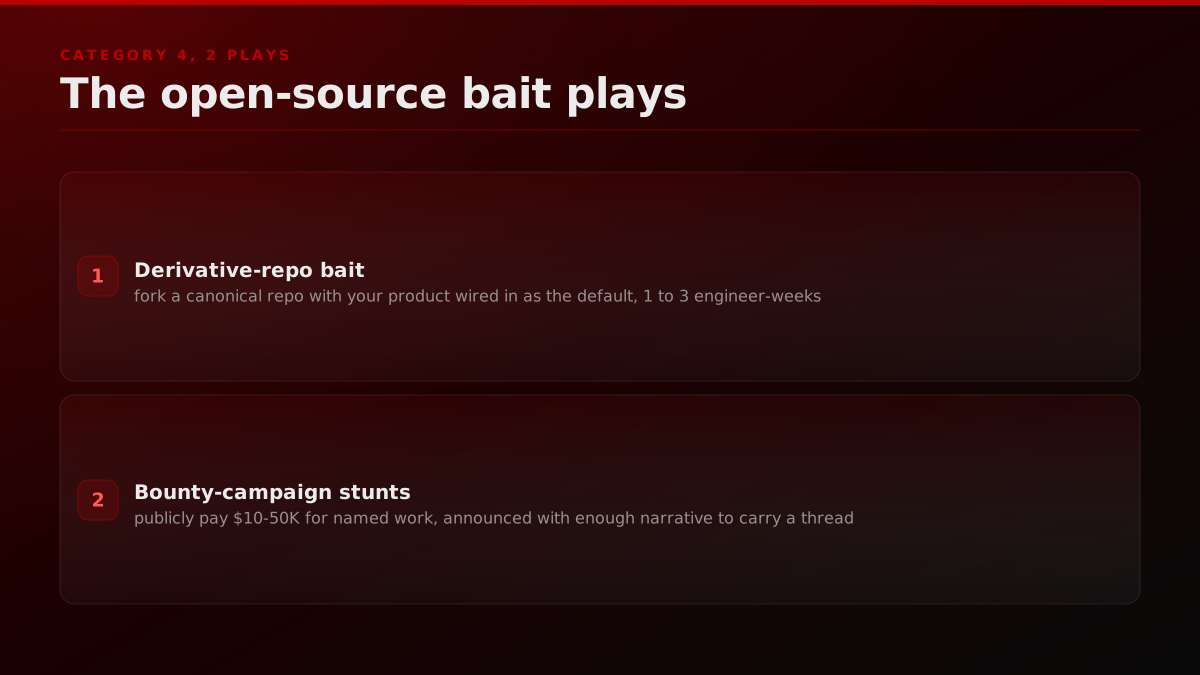
Open-source is the quiet distribution surface nobody in Web3 talks about as guerrilla, but two specific plays belong in the library: derivative-repo bait, forking a canonical crypto repo with your product wired in as the default integration, and bounty-campaign stunts, paying publicly for named work at an amount that is culturally noticeable on CT. Both are developer-funnel plays, and both are systematically under-run.
Play 10: Derivative-repo bait. Forking a canonical crypto repo (Foundry templates, Hardhat plugins, a Next.js dapp starter) and shipping a derivative that wires in your product as the default integration, with your branding in the README but the parent repo's name and structure intact. The derivative repo ranks on GitHub searches the parent ranks on, and every developer who stars or forks it becomes a distribution node. Cost: engineering time, 1-3 engineer-weeks.
Play 11: Bounty-campaign stunts. Publicly paying for a specific, named piece of work (an integration, a research memo, a design brief) at a bounty amount that is culturally noticeable on CT, an estimated $10K to $50K, announced with enough narrative to carry a thread. Lens Protocol and Aave Grants DAO run versions of this; the signal is that the bounty-as-narrative out-earns the bounty-as-payment. Cost: the bounty itself, typically $10-50K.
Why open-source bait is the most under-run category in 2026
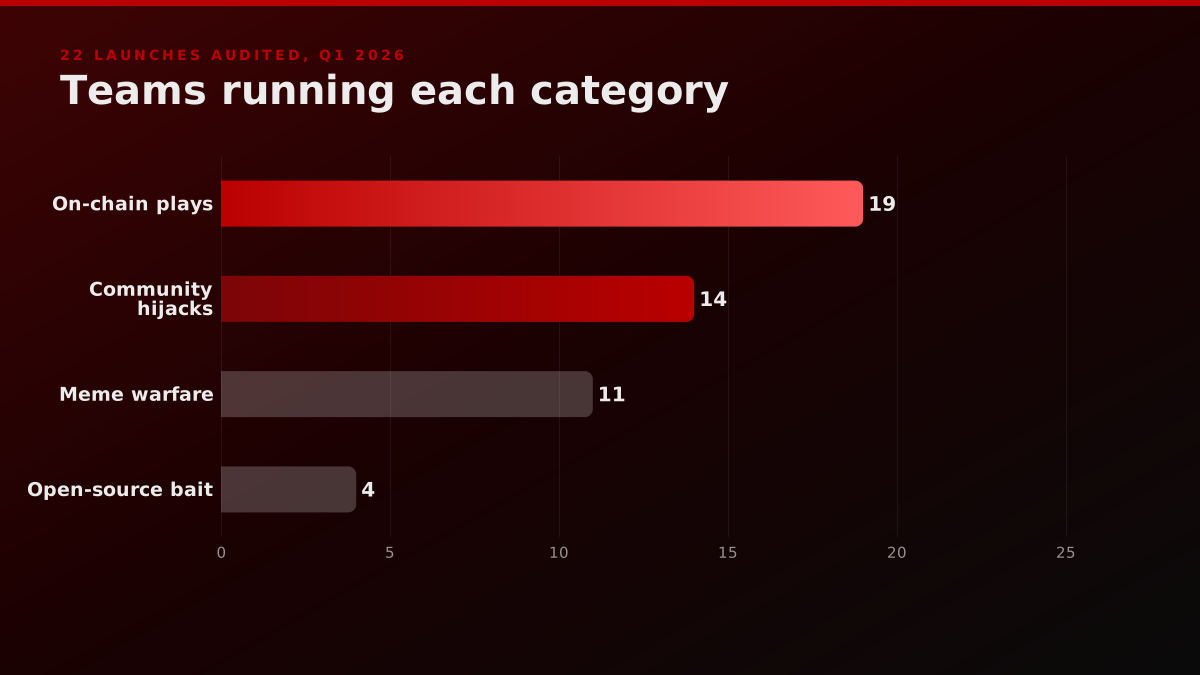
The open-source category is the one FORKOFF audits flag as systematically under-invested in across the 22 launches we measured in Q1 2026. Of the 22 teams, 19 ran on-chain plays at some level, 14 ran community hijacks, 11 ran meme warfare, and only 4 ran open-source bait of any kind. The reason is structural: open-source bait requires engineering time committed to a deliverable that does not look like product roadmap progress, which is the hardest budget to defend inside an early-stage team. Yet of the 4 teams that ran derivative-repo bait, 3 produced more inbound integration requests inside 90 days than the same teams produced from every other distribution surface combined. The single derivative repo that ranked above Foundry's own template for a specific search query produced 40-plus inbound integration conversations in the first six months, and three of those conversations converted to live integrations inside a year.
Operator noteOnly 4 of 22 audited teams ran open-source bait; 3 of those 4 beat every other surface on inbound integrations., FORKOFF Q1 2026 audit, n=22
The lesson is that open-source bait is a developer-funnel play, not a consumer play, and it should be staffed by engineering rather than marketing. The team that ships the derivative repo should own its README, its issue triage, and its release cadence the same way they own the parent product, because the derivative repo is a product surface that returns developer leads. Marketing's role is to amplify the repo's existence inside developer channels (specific subreddits, specific Telegram groups, specific Twitter accounts) and to track the inbound integration requests, not to author the repo itself.
The 7 Rules of KOL Marketing in Web3 (Stop Wasting Money)
Juan
Juan walks through the 7 rules of KOL marketing in Web3 (stop wasting money), the guerrilla mechanics that survive bear-market budgets.
The retention-to-cost measurement playbook in practice
Every play in the library has a named retention signal, but the operator's job is to wire those signals into a single comparable ratio so the team can rank plays head to head and decide what to repeat. The FORKOFF retention-to-cost ratio is calculated as retained wallets at 30 days divided by total play cost in USD, with a secondary ratio of retained wallets at 90 days divided by total play cost for plays that have aged long enough to read the deeper retention curve. The 90-day ratio almost always halves the 30-day ratio (because retention itself decays), but the relative ranking of plays inside a team's portfolio tends to be stable across the 30 and 90 day reads, which is what makes the ratio decision-useful.
Founders now say the no-KOL path out loud, with revenue receipts
The clearest 2026 signal that guerrilla distribution has gone professional is founders publishing the receipts. In January 2026 the cofounder of fomo posted that one year in, the protocol had reached top 20 in crypto by revenue "without promising fake incentives, paying KOLs, or ignoring user feedback." Marketers inside incumbent protocols say the same thing in public: the marketing lead at Across Protocol tells CT to watch the teams that ship product constantly instead of paying KOLs. When a top-20-by-revenue founder and an incumbent-protocol marketer both name the same motion, the guerrilla library stops being contrarian and starts being the default for teams that measure retention.
Source: se (@seyong), cofounder of fomo, X, Jan 30 2026
The wiring is mechanical. For every play that lands a wallet on chain, the team tags the wallet at acquisition with the play ID via a contract event, a referral parameter, a specific function-selector call, or a UTM-like field stored in a smart-contract registry. The wallet's on-chain activity is then queried via Dune or a custom indexer at 7, 30, and 90 days, and retention is defined as the wallet executing any product transaction in the trailing 14 days at the read window. For plays that do not produce a wallet directly (governance baiting, derivative-repo bait), the retention signal is integration count or derivative-repo star count, measured against the same time windows.
The cost denominator is the all-in dollar spend for the play, including engineering time at a fully loaded rate, brand and content time at the same rate, gas paid by the team during the play, and any third-party services purchased to execute it. Operator time is included; founder time is included. The point of the all-in denominator is to prevent the team from understating the cost of plays that look free at the surface (a hostile-reply chain feels free, but the operator who wrote it costs an estimated $200 an hour). The ratio is then comparable across plays in different categories, which is what makes the library a portfolio rather than a list.
Teams new to the measurement discipline typically discover three patterns inside the first 60 days of running it. First, the play with the most impressions is rarely the play with the highest retention-to-cost ratio. Second, the play the founder is most emotionally attached to is usually one of the bottom three by ratio. Third, the play nobody on the team wanted to run is usually one of the top three. The discipline of measuring head to head is what produces the portfolio shift, which is what produces the compounding curve.
Sequencing the library by product stage
The 11 plays do not all fit every team at every stage. The FORKOFF audit framework segments teams into four stages by product maturity and recommends a specific subset of plays for each stage, with a 90-day sequence inside each subset.
The 11-play library, cost bands and retention signals
| Play | Category | Cost band | Retention signal |
|---|---|---|---|
| Invite-lottery drop | On-chain stunt | $15-40K all-in | Retained wallets at 7 / 30 / 90 days |
| Trait mint / PFP-DAO | On-chain stunt | $5-15K | Retained wallets at 30 days |
| Contract easter egg | On-chain stunt | $2-8K engineering | Discovery posts plus retained wallets |
| Governance baiting | On-chain stunt | $0 marginal, operator time | Early integrations landed |
| Channel raid | Community hijack | Operator time plus asset | 500-2,000 follower gains, est. 30-45% retained |
| Hostile-reply farming | Community hijack | $0 marginal | Follower quality plus brand lift over 6-12 months |
| Incumbent rebrand | Community hijack | 2-6 engineer-weeks | Inherited-funnel wallets |
| Narrative appropriation | Meme warfare | $1-5K brand time | Est. 2-4x retention vs generic branding |
| Meme-coin parasitism | Meme warfare | $3-10K engineering | Holder-to-user conversion at 30 days |
| Derivative-repo bait | Open-source bait | 1-3 engineer-weeks | Fork velocity plus inbound integrations |
| Bounty-campaign stunts | Open-source bait | $10-50K bounty | Bounty-as-narrative reach plus named work shipped |
Cost bands and retention signals per play as documented in the play writeups above; FORKOFF Q1 2026 audit ledger, directional estimates.
Stage 1: Pre-product (whitepaper or testnet only). Run governance baiting and derivative-repo bait first. Both plays produce distribution signal without requiring a live consumer product, both surface inside developer and BD audiences that matter for fundraising and partnership conversations, and both cost engineering and operator time rather than smart-contract spend. Avoid invite-lottery and trait-mint at this stage, because the consumer-side wave they produce arrives at a product that cannot retain it.
Stage 2: Mainnet live, under 5,000 wallets. Add contract easter egg and narrative appropriation. The easter egg seeds discoverability inside the early holder cohort, and narrative appropriation gives the team a brand slot to occupy while the product still has flexibility on positioning. Continue governance baiting and derivative-repo bait from Stage 1, because the BD and developer signal continues to compound.
Stage 3: 5,000 to 50,000 wallets, product-market signal present. Layer in invite-lottery, trait-mint, and incumbent rebrand. The wallet base is now large enough that an invite-lottery produces a meaningful wave, and the brand is established enough that a trait-mint compounds an existing community rather than fabricating a new one. The incumbent-rebrand play becomes viable because the team can credibly ship a tool that incumbent users will adopt without questioning the team's legitimacy. If a token distribution is on the roadmap at this stage, the same retained-wallet discipline that anchors our token launch marketing applies to the drop itself, which the airdrop marketing playbook 2026 breaks into the 4-phase system that holds recipients past day 90 instead of farming-and-dumping them.
if you are TGEing, we want to help you do it on @base with distribution through @coinbase. stop paying CEX listings fees and start building aligned holders from day one
Stage 4: 50,000+ wallets, mature product, integration network in place. Add bounty-campaign stunts, channel raids, and meme-coin parasitism. By this stage the team has the brand capital to run a bounty visibly, the operator depth to run a channel raid without missteps, and the engineering capacity to parasitize a meme-coin without distracting the core roadmap. Hostile-reply farming becomes viable here too, because the team's positioning is now substantive enough that a contrarian take lands as informed rather than as posture.
The mistake teams make most often is running a Stage 3 or Stage 4 play at Stage 1 or Stage 2 because the play sounds high-leverage on a deck. The reverse mistake, running a Stage 1 play at Stage 4, is rarer but produces the same outcome: a play that fits the wrong moment produces low retention regardless of execution quality.
A side-by-side comparison: consumer guerrilla versus Web3 guerrilla
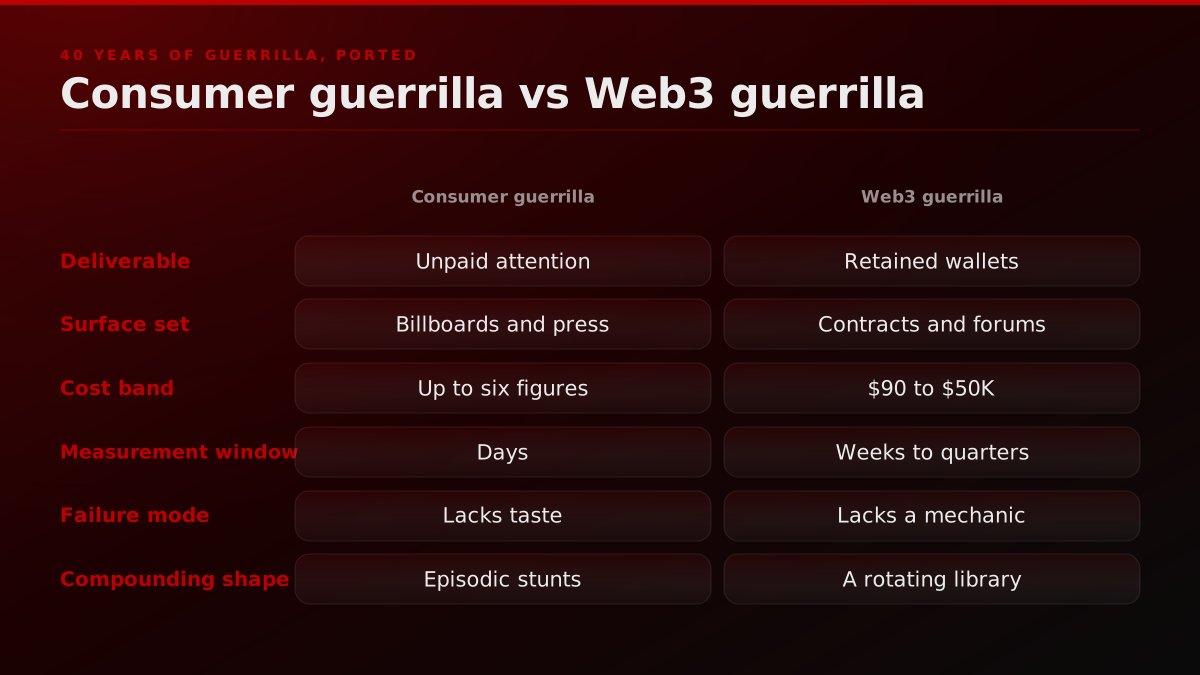
The discipline of guerrilla marketing has a 40-year history in consumer categories, and the Web3 version inherits some patterns and breaks others. The clearest way to see the inheritance is a 6-row comparison across the dimensions that govern execution.
Deliverable. Consumer guerrilla optimizes for unpaid attention. Web3 guerrilla optimizes for retained wallets. The Web3 version is the harder deliverable because retention is a 30-day signal, not a 30-second signal, which forces the team to instrument and wait.
Surface set. Consumer guerrilla runs on billboards, press, viral video, and ambient stunts. Web3 guerrilla runs on contracts, governance forums, Farcaster and X feeds, Discord and Telegram, and GitHub repositories. The Web3 surfaces are smaller individually but compound through cross-channel echo when the play has narrative coherence.
Cost band. Consumer guerrilla stunts at the high end cost six figures (a Liquid Death event activation) and at the low end cost the cost of a hashtag (a Duolingo tweet). Web3 guerrilla at the high end caps around $50K (a bounty stunt) and at the low end costs $90 in gas. The Web3 ceiling is lower because the audience is smaller, but the floor is also lower because the mechanisms are programmable.
Measurement window. Consumer guerrilla measures in days. Web3 guerrilla measures in weeks at the 30-day window and quarters at the 90-day window. The longer measurement window is why so few Web3 teams actually run the discipline as a discipline: they wait two weeks, see a soft early read, and revert to paid KOLs.
Failure mode. Consumer guerrilla fails when the stunt lacks taste. Web3 guerrilla fails when the play lacks a mechanic. A Web3 team can have perfect taste and produce zero retention if the play does not have an on-chain or community-membership mechanic that converts attention into stake.
Compounding shape. Consumer guerrilla compounds episodically (one big stunt every quarter). Web3 guerrilla compounds in a library shape (3 to 5 plays in rotation across a quarter), which is the difference between a marketing function and a distribution function.
Two case studies in depth: how the library actually runs
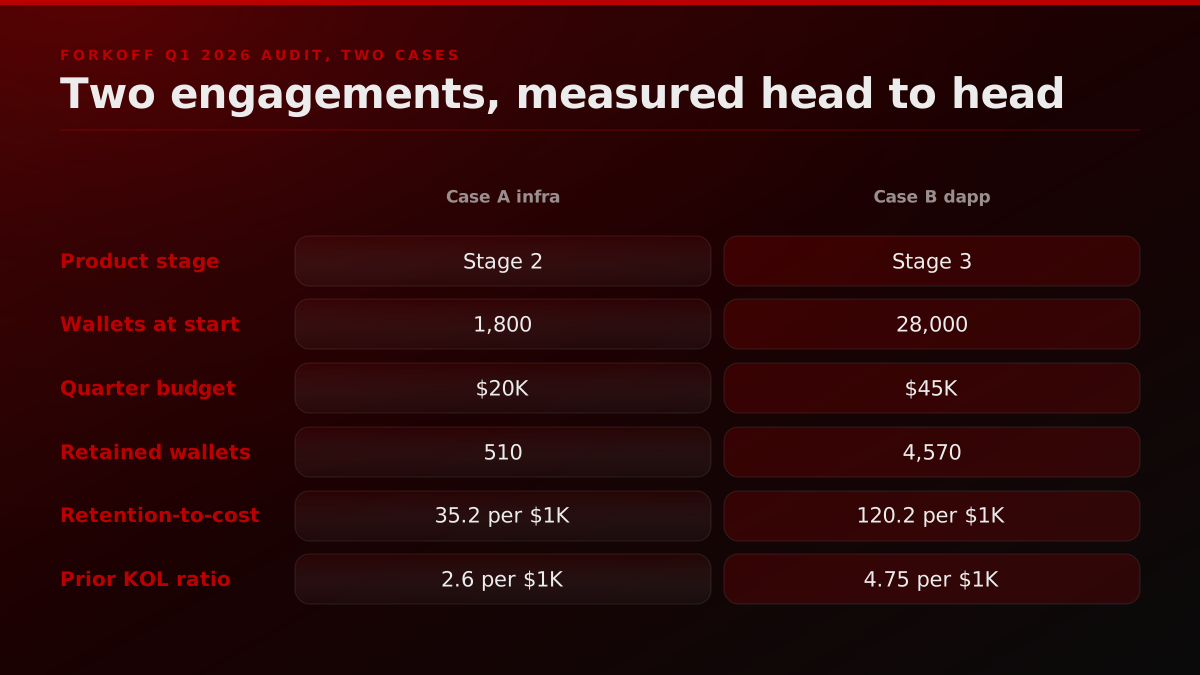
To make the library concrete, two case studies from the FORKOFF Q1 2026 audit show how 3 plays sequence inside one quarter and produce a compounding read: a Stage-2 DeFi infra team that hit a 35.2 retained-wallets-per-$1,000 ratio against 2.6 from its prior KOL spend, and a Stage-3 Base consumer dapp that hit 120.2 against 4.75. Both ran governance and on-chain plays, not paid distribution.
Case A: a DeFi infra team at Stage 2. The team had a mainnet contract live, 1,800 wallets, and a budget of $20,000 for the quarter [Source: FORKOFF Q1 2026 audit]. The FORKOFF audit recommended governance baiting on Aave and Compound forums (Week 1 through 4), a derivative-repo of the Foundry default template with the team's product wired in as the default integration (Week 3 through 6), and a contract easter egg embedded in the next release (Week 8). By Week 12 the team had landed two named integrations sourced from governance comments, the derivative repo had 340 stars and 22 forks (3 of which became active integrations), and the easter egg had been discovered by a researcher who published a deep-dive thread that drove 600 net new wallets, of which 280 retained at 30 days. Total cost across the quarter was $14,500 (engineering time, operator time, gas) [Source: FORKOFF Q1 2026 audit]. Total retained wallets attributable to the three plays was 510. Retention-to-cost ratio: 35.2 wallets per $1,000 of play spend. The same team had spent $35,000 on KOL pushes in the prior quarter and produced 90 retained wallets, a ratio of 2.6.
Case B: a Base-native consumer dapp at Stage 3. The team had 28,000 wallets, a brand with a meme-aligned positioning, and a budget of $45,000 for the quarter [Source: FORKOFF Q1 2026 audit]. The FORKOFF audit recommended an invite-lottery (Week 2 through 4), a Milady-aligned trait-mint (Week 6 through 8), and a hostile-reply campaign against an incumbent dapp whose pricing had drifted out of line with the meme-aligned audience (Week 9 through 12). The invite-lottery produced 7,400 net new wallets, 3,100 retained at 30 days. The trait-mint produced 1,900 net new wallets, 1,250 retained at 30 days, and lifted the existing wallet base's engagement by an estimated 14 percent at 30 days. The hostile-reply campaign produced 600 follower gains and an estimated 220 net new wallets via downstream signal, and produced one inbound press conversation that became a podcast appearance. Total cost across the quarter was $38,000 [Source: FORKOFF Q1 2026 audit]. Total retained wallets attributable to the three plays was 4,570. Retention-to-cost ratio: 120.2 wallets per $1,000 of play spend. The same team had spent $80,000 on a paid KOL push 6 months earlier and produced 380 retained wallets, a ratio of 4.75.
Case A vs Case B, one quarter of the library head to head
| Dimension | Case A (Stage 2 DeFi infra) | Case B (Stage 3 Base dapp) |
|---|---|---|
| Starting wallets | 1,800 | 28,000 |
| Quarter budget | $20,000 | $45,000 |
| Plays run | Governance baiting, derivative repo, easter egg | Invite-lottery, trait-mint, hostile-reply |
| Total play cost | $14,500 | $38,000 |
| Retained wallets at 30 days (attributable) | 510 | 4,570 |
| Retention-to-cost per $1,000 | 35.2 | 120.2 |
| Prior paid-KOL ratio | 2.6 (on $35K spend) | 4.75 (on $80K spend) |
FORKOFF Q1 2026 audit; same figures as the case-study narrative in this post.
The two cases share the structural lesson: when the library is sequenced by stage and measured by retention-to-cost, the ratios beat paid distribution by an order of magnitude or more. The cases also share the obvious caveat: the ratios are only achievable with operators who can execute the plays at taste-tier quality, which is the talent gate every team eventually runs into.
How we run the library with Web3 teams at FORKOFF
Every FORKOFF Web3 engagement starts with a guerrilla library audit. We score each of the 11 plays 0-5 on current execution, map the team's product and community to the 3-5 plays with the highest retention-to-cost fit, and ship a 30-day execution plan for the top play. For L2s and ecosystem teams, the top play is almost always a derivative-repo play or a governance-baiting play; for applications, the top play is almost always an invite-lottery or a narrative-appropriation play.
By week four of a typical engagement, the team has one live guerrilla play in production, a measurement harness around it (retained-wallet count, integration count, narrative-citation count), and the library-audit scorecard on a wall to pick the next play from. Two related FORKOFF reads for the operator view: the Crypto KOL Tier Matrix (which defines the paid-distribution baseline the guerrilla plays compete against) and the Ecosystem Growth service page for how we staff these engagements. For teams operating specifically out of the Gulf ecosystem, the regional community dynamics and event density change which plays land fastest, and the web3 marketing in Dubai 2026 guide covers those regional specifics.
The 4 mistakes that make guerrilla plays fail in Web3
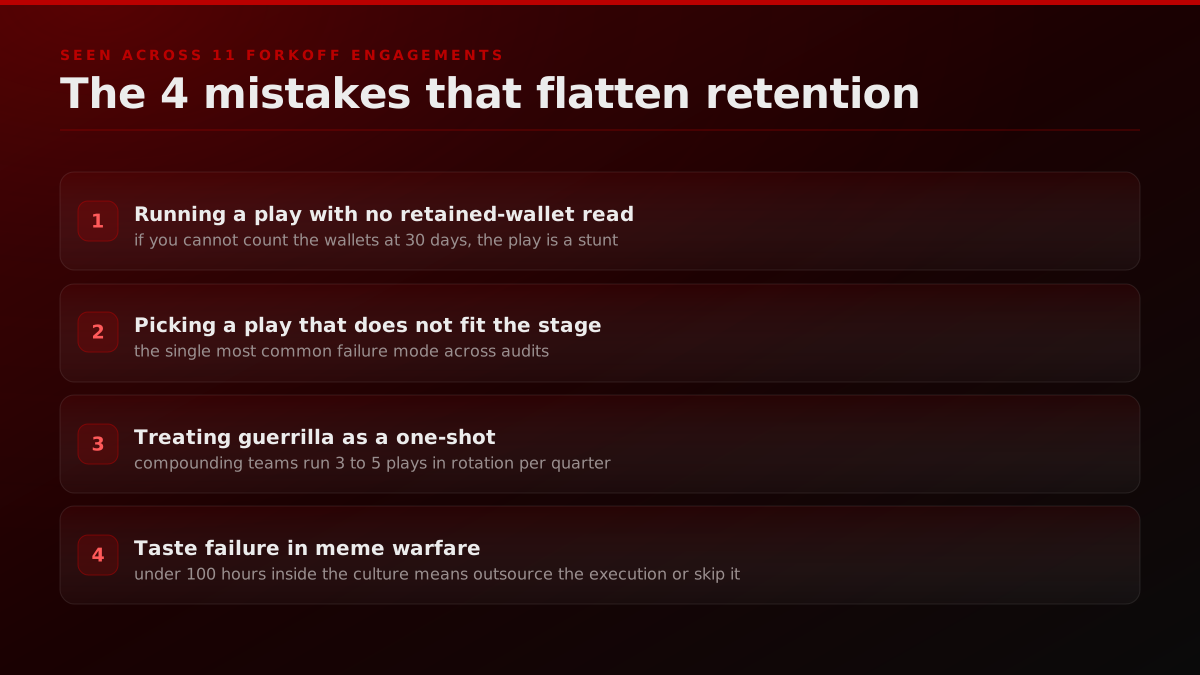
Across 11 FORKOFF Web3 engagements in 2025-2026 (operator observation), four mistakes showed up repeatedly when a team's guerrilla execution produced disappointing retention: running a play with no retained-wallet read, picking a play that does not fit the product stage, treating guerrilla as a one-shot instead of a rotating library, and taste failure in meme warfare. Each one flattens retention regardless of how well the play is executed.
- Running a play without a retained-wallet read. If you cannot count the retained wallets 30 days after the play, the play is a stunt, not a distribution motion. Every play in the library has a named retention signal, measure it.
- Picking a play that does not fit the product stage. Invite-lotteries work for consumer-facing apps; governance baiting works for integration-heavy infra; narrative appropriation works for anything with a brand slot open. Running the wrong play for the stage is the single most common failure mode.
- Treating guerrilla as a one-shot instead of a library. The compounding teams run 3-5 plays in rotation across a quarter. The teams that plateau run one play, declare victory or defeat, and revert to paid KOLs.
- Taste failure in meme warfare. Every team thinks it has the taste for meme warfare; most do not. If your team has not spent 100 hours inside the target meme culture, outsource the meme-warfare execution or skip that category.
The Bottom Line
Paid CT is saturated. KOL pushes are gamed. The Web3 projects compounding in 2026 are not running bigger versions of the 2023 playbook, they are running a different library, built around on-chain mechanics, community hijacks, meme warfare, and open-source bait.
The Guerrilla Web3 Play Library names the 11 plays, orders them by retention-to-cost, and gives every team with a distribution problem a scorecard they can act on this quarter. Most teams will find 3 plays they should be running today and are not. The point is to pick, instrument, and run, not to theorize the motion for another quarter.
If you want the library audit run for you, that is what we do at FORKOFF.
Related FORKOFF reads: Web3 GTM playbook, crypto KOL framework, guerrilla Web3 plays, crypto event ROI, Ecosystem hub. References: TikTok, Next.js, GitHub.
For deeper cross-pillar context, see the founder-funnel motions inside crypto guerrilla campaigns.
Satirical Post On Trump Family's Memecoin Money, Crypto Presidential Pardons And WLFI Goes Viral