Managed clipping is a content-operations service where an agency cuts a host's long-form audio or video into short vertical clips, distributes them across feeds such as YouTube Shorts and Instagram Reels, and measures what the views turn into. This managed clipping revenue case study follows one creator's paid community from February to May 2026: a 13-day clipping campaign in March, a retention dip in April and a recovery in May. Every revenue and member figure comes from the creator's Whop payment exports. Every clip, view and click figure comes from the March campaign report.
The four months, in one scroll
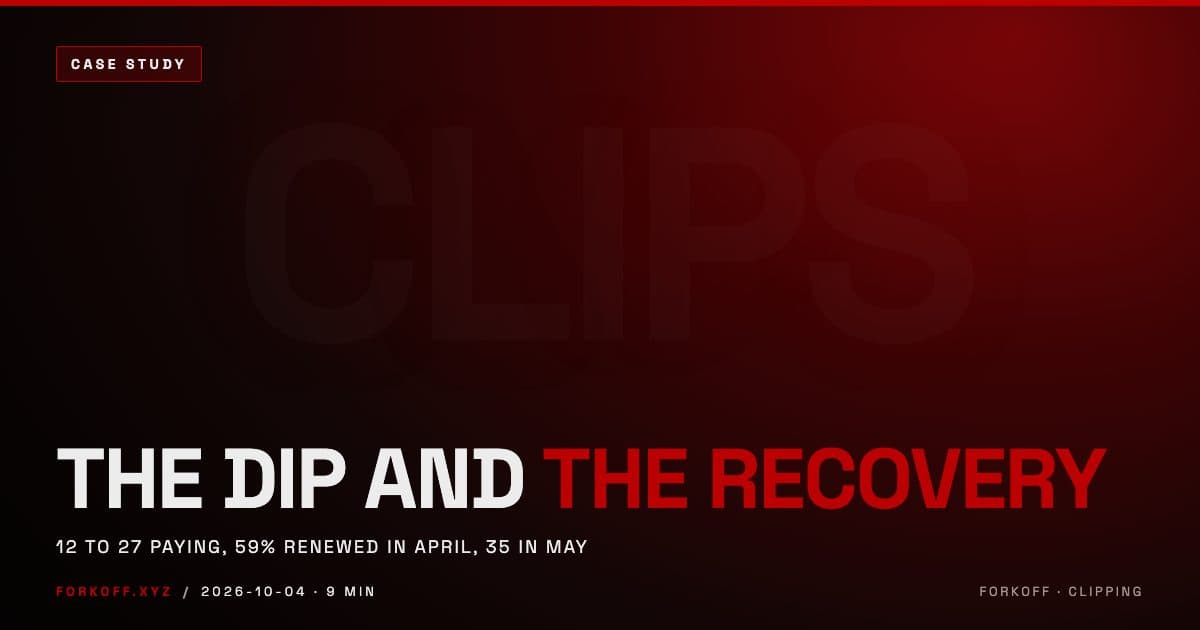
A crypto creator selling a $50 per month community ran a 13-day managed clipping campaign in March 2026: 3,085 clips and 1.19M views on YouTube Shorts and Instagram Reels. Paying members went from 12 in February to 27 in March, 17 of them new, and MRR moved from about $595 to $1,290. Then April renewals fell to 59%. May recovered to 83% renewal and closed with 35 paying members and $1,832.25 collected. The lessons: count new and renewed payers separately, judge a campaign by the month after it, and route clips to the platform that carries the views.
What the 13-day campaign produced
The creator is a crypto educator who sells a paid community at $50 a month. In February, before this campaign, 12 people paid for it and the month collected $595.
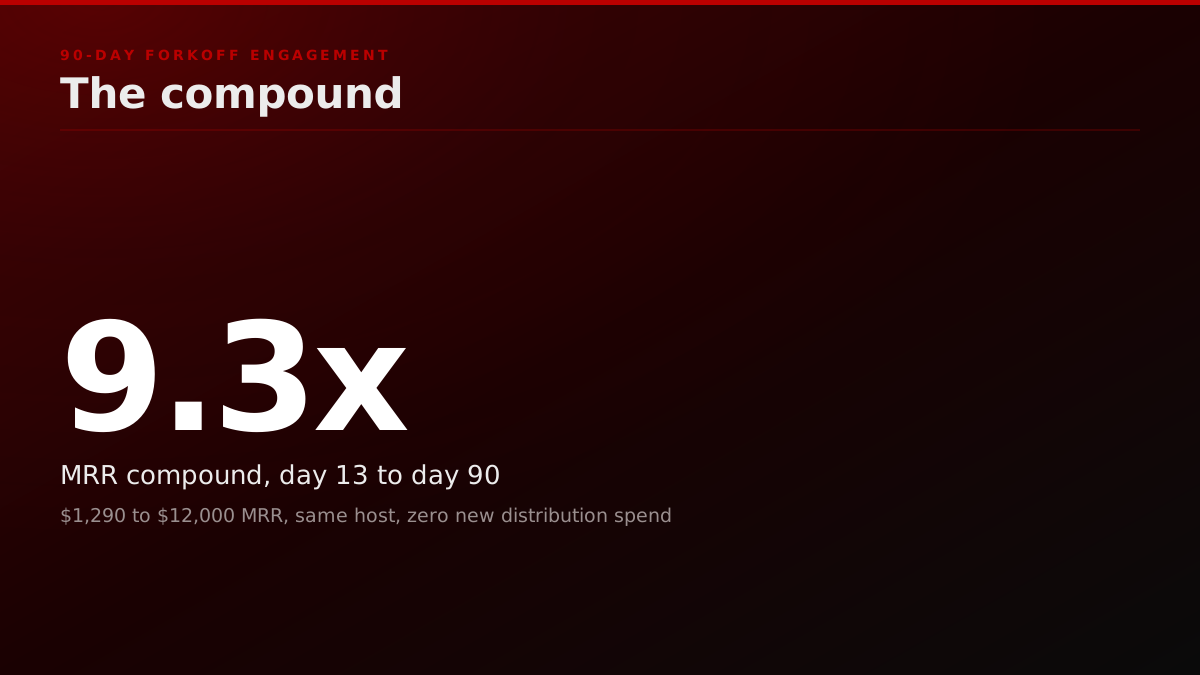
In March, clips ran for 13 active days. The campaign published 3,085 clips across YouTube Shorts and Instagram Reels and they drew 1,190,014 views. The campaign report logged 793 clicks through to the paid page. March closed with 27 paying members: 17 of them new, and 10 of the 12 February members renewed. MRR moved from about $595 to $1,290, the figure the campaign report showed on March 27, and the month closed at $1,450.50 collected once the last payments landed.
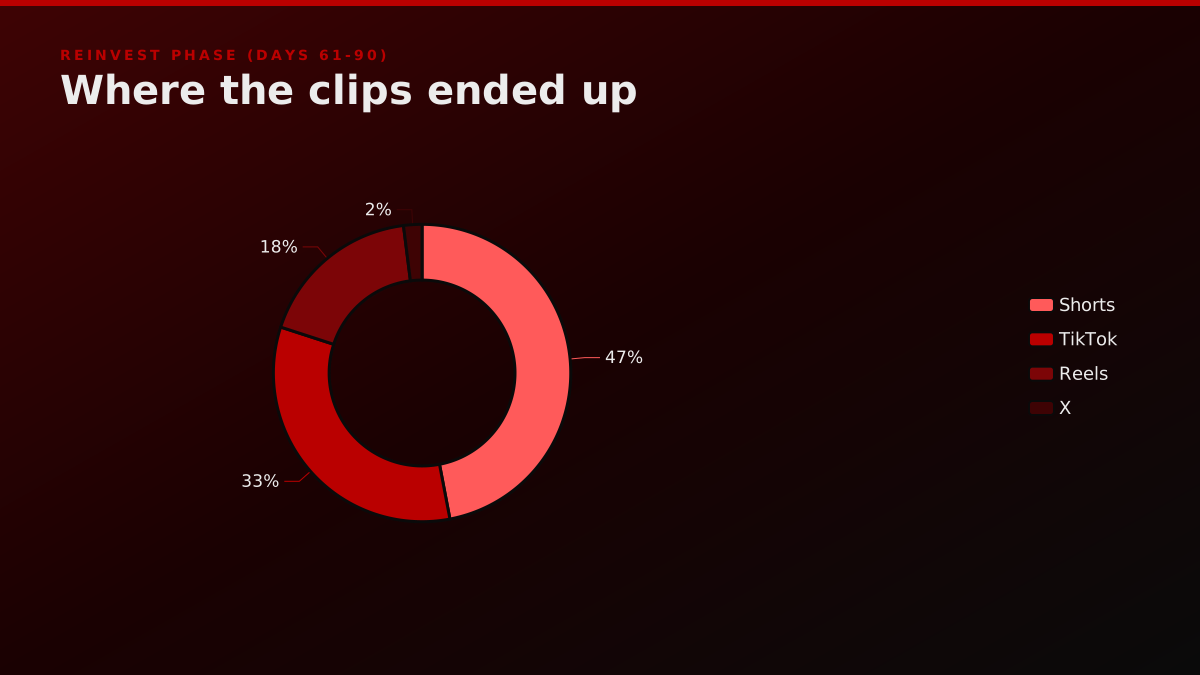
The platform split was lopsided. YouTube Shorts carried 61% of the views from 25% of the clips.
The March 2026 campaign by platform
| Platform | Clips | Views | Average views per clip |
|---|---|---|---|
| YouTube Shorts | 771 (25%) | 725,420 (61%) | 941 |
| Instagram Reels | 2,314 (75%) | 464,594 (39%) | 201 |
| Total | 3,085 | 1,190,014 | 386 |
From the client campaign report for March 2026, 13 active distribution days. TikTok and X were not part of this campaign.

Count new and renewed payers separately
The first lesson is about counting. The campaign report counted all 27 March payers as new subscribers. The payment exports say otherwise: 10 of the 27 were February members renewing, and 17 were new. Both numbers are real, but they answer different questions. 27 is how many people paid in March. 17 is how many the month added.
The same distinction changes the click math. The campaign report divided 27 paying members by 793 clicks and got 3.4%. Counting only the 17 new members, it is 2.1%. If you are deciding whether clipping pays for itself, the second number is the one to plan with, because the 10 renewals were already members before the campaign started.

Operator noteMarch showed 27 paying members, but 10 were February renewals. Only 17 were new., Creator's Whop payment exports, March 2026
The dip: April renewals fell to 59%
A report written at the end of March would have stopped at the win. The April payments are where the case gets more useful.
Only 16 of March's 27 paying members paid again in April. That is a 59% renewal rate, down from 83% between February and March. Eleven people left. Seven of them had joined in March and four were February members, and none of the eleven came back in May. April still closed with 29 paying members and $1,527 collected, because 13 new members joined during the month.
We do not know from the payment data alone why the March cohort churned harder. The pattern fits a burst of signups with weaker intent during the campaign month, people who joined on the strength of a clip rather than the offer, but the exports cannot prove it. What they do prove is that the campaign month's member count overstated what the campaign left behind.
The month after the campaign is the real test: 59% renewal, then back to 83%
March looked like a clean win: 27 paying members, 17 of them new. April told a harder story. Only 16 of the 27 paid again, so renewal fell from 83% to 59%, and none of the 11 who left came back in May. The channel still grew, because 13 new members joined in April and 11 more in May, and May renewal returned to 83%. May closed with 35 paying members and $1,832.25 collected, up from 12 members and $595 in February. A report written at the end of March would have shown only the win.
Source: Creator's Whop payment exports, February to May 2026
Operator noteJudge a clipping month by the month after it. Only 16 of March's 27 paying members renewed in April., Creator's Whop payment exports, April 2026
The recovery: May closed with 35 paying members
May went the other way. Renewal came back to 83%, with 24 of April's 29 members paying again, and 11 new members joined. May closed with 35 paying members and $1,832.25 collected, against 12 members and $595 in February.
Thirteen of March's 27 paying members were still paying in May: 8 of the 17 who joined in March and 5 of the 12 February members. Those same 5 February members paid in every month from February to May. They are the core the channel is built on.
Clipping did not stop after March. The payment log labels April and May as a further campaign, but the files we hold carry no clip, view or click counts for those months, so this post does not attribute May's new members to specific clips.
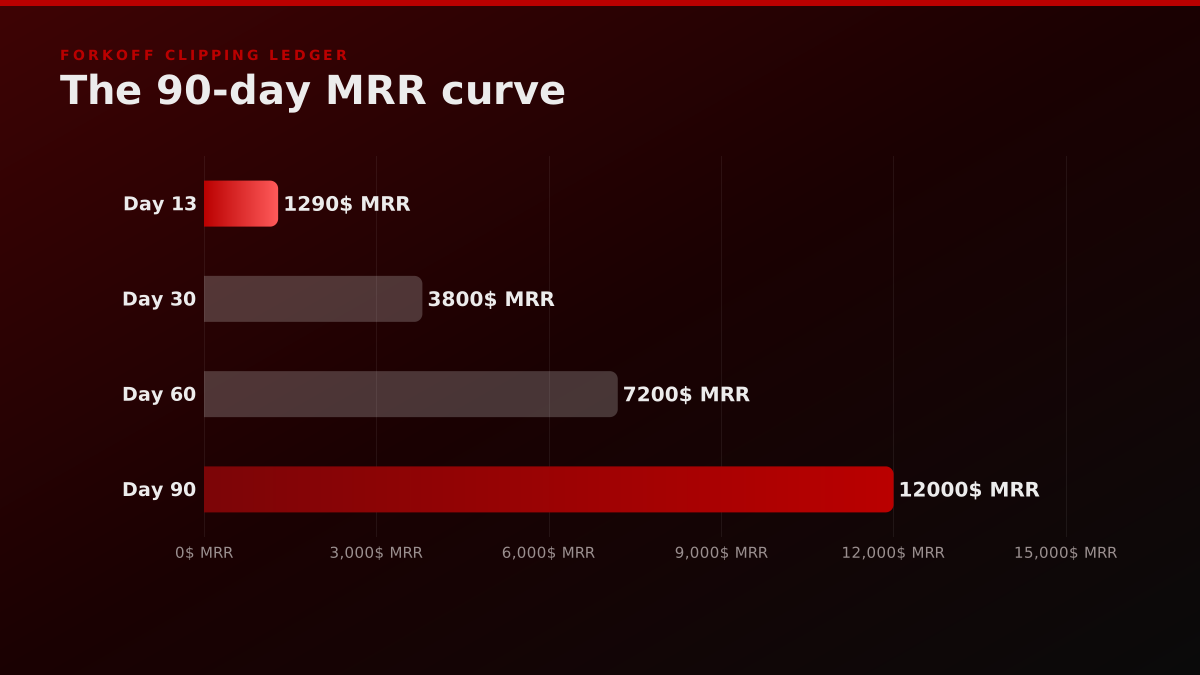
Paying members and revenue by month, February to May 2026
| Month | Paying members | New that month | Renewed from prior month | Revenue collected |
|---|---|---|---|---|
| February | 12 | First month on record | First month on record | $595 |
| March | 27 | 17 | 10 of 12 (83%) | $1,450.50 |
| April | 29 | 13 | 16 of 27 (59%) | $1,527 |
| May | 35 | 11 | 24 of 29 (83%) | $1,832.25 |
Unique paying members and revenue per calendar month from the creator's Whop payment exports. The March 27 campaign report showed $1,290 for March; the month closed at $1,450.50.
Why did YouTube Shorts carry the campaign?
YouTube Shorts carried the campaign because its clips travelled further, not because it got more of them. Shorts had 771 of the 3,085 clips and drew 725,420 views, an average of 941 views per clip. Instagram Reels had 2,314 clips and drew 464,594 views, an average of 201. All ten of the most-viewed clips were Shorts, and together those ten drew 153,241 views, 12.9% of the campaign total. The best single clip drew 48,649 views.
Volume still mattered. The five highest-view days in the campaign all had 250 or more clips published, and the peak day, March 22, combined the most clips (425) with the most views (180,264). The campaign report's recommendation for the next round was to move Shorts from 25% of clips to 35 to 40% while holding Reels volume, which is the practical version of routing clips to the platform that carries the views. Short-form feeds weigh how much of a clip people actually watch (Buffer's short-form research covers the mechanics), and the way to see that signal is to read results by platform and by clip group, not as one aggregate number.
Operator noteYouTube Shorts drew 61% of March views from 25% of the clips, at 941 average views per clip., Client campaign report, March 2026
Your numbers inflate, but your completion rates fall off a cliff. This isn't failure, it's filtering. You're being exposed to people who were never your audience in the first place.
The filtering framing in that quote applies to clipping too. A visibility spike hands you viewers who were never your audience, and the April churn in this case is what that looks like in payment data. Independent creator datasets point the same way on clip craft: when a B2B podcaster published his own 80-episode analysis, short clips beat long cuts on engagement and guest follower count predicted almost nothing.
Analyzed 80 episodes of my podcast data to find what actually drives downloads
80 episodes, 14 months, interview format, niche B2B marketing topic. went from roughly 200 downloads per episode to roughly 1,400. tracked everything. here's what the numbers say. finding 1: guest follower count doesn't predict downloads. my 3 highest-downloaded episodes featured guests with under 5k followers. my lowest performer had a… Show more
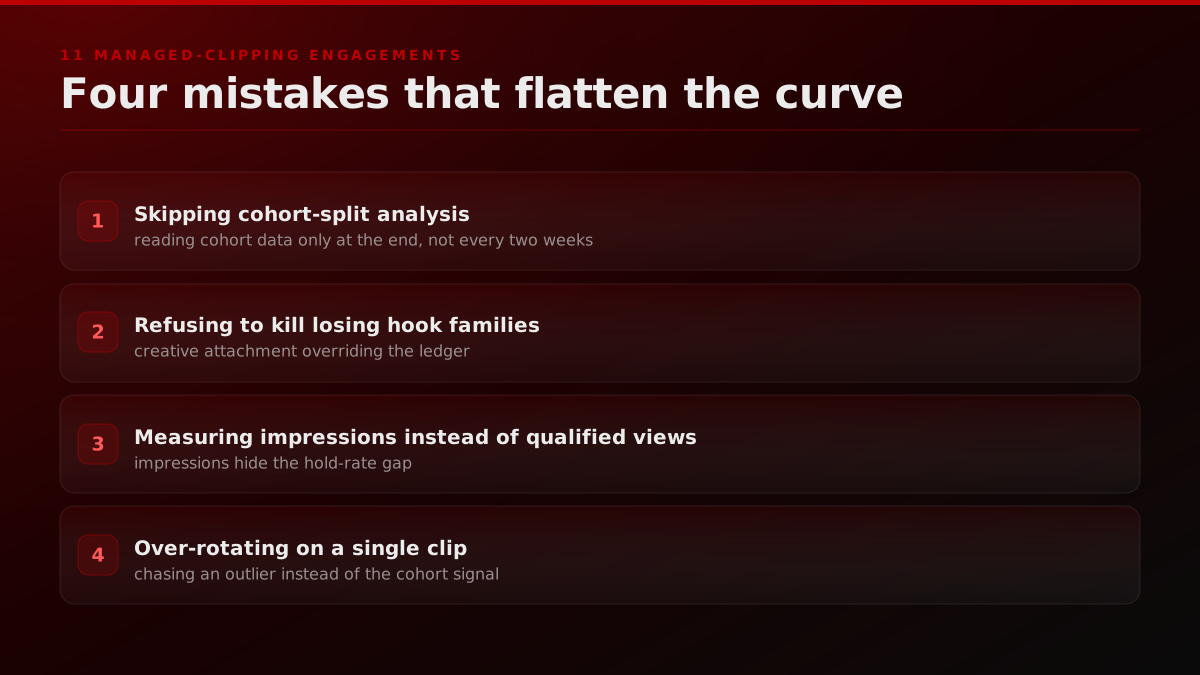
The working habit that follows is simple. Read clips in groups, by hook, topic and platform, rather than chasing the single best clip. A single clip landing far above the rest is mostly noise. A group of clips that keeps outperforming across dozens of posts is a signal you can route production toward. For the platform side of that routing decision, see Hootsuite's short-form video guide.
Hridoy Rehman
@hridoyreh
Distribution > product. Every time.
What we record for every clip
Every FORKOFF managed clipping campaign runs on a row-per-clip record we call the FORKOFF Clipping Ledger. Each clip gets four groups of columns before it publishes: source (the origin recording, the timestamp range, the host and the topic), production (hook, variant, clip length, caption template, cover frame and cost), distribution (platform, publish time, account and campaign tag) and performance (views, hold-rate, profile clicks, conversions and revenue).

The performance group only means something once it is reconciled against the host's own payment data. This case is the example. The campaign report's March revenue was a snapshot taken on March 27, and its subscriber count did not separate new members from renewals. The payment exports corrected both, and they are also what showed the April dip. A dashboard tells you what happened during the campaign; the payment ledger tells you what the campaign left behind.
How is cost per qualified view calculated?
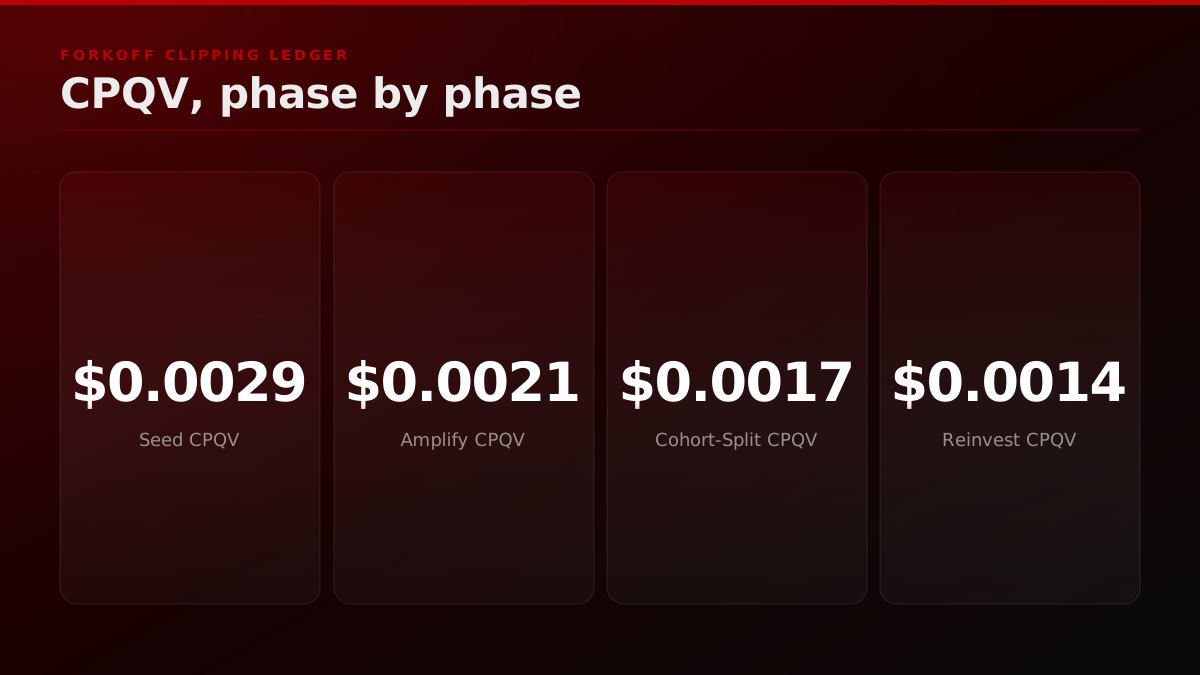
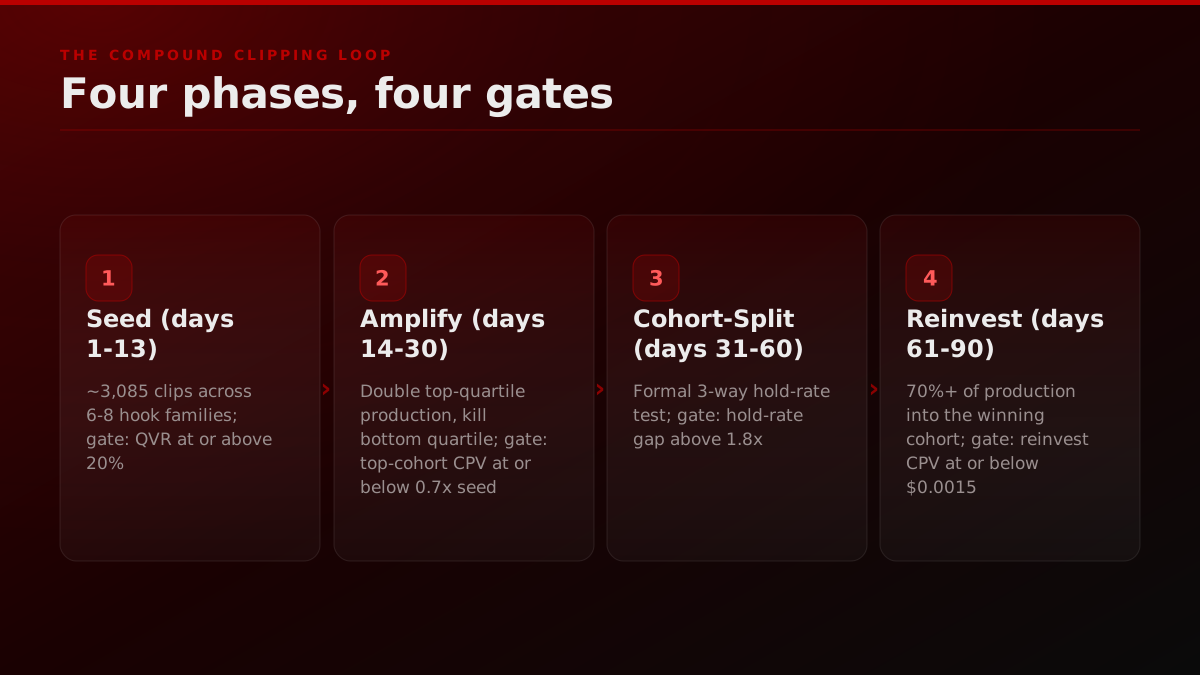
Cost per qualified view, or CPQV, is the dollar cost of producing one qualified view, where a qualified view is a view that held long enough to count rather than a scroll-past. The formula is the production cost for a batch of clips divided by the qualified views that batch produced over a fixed measurement window.
The discipline is in the cost line. Production cost has to include editing time, tools, review time and the cost of running the record itself, and the window has to be the same length for every batch you compare. This post does not publish a CPQV for this campaign: the files behind it hold views, clicks and revenue, not the production cost line or a qualified-view count, so any per-view cost here would be a guess.
The pricing model tells you what an agency is optimising for. A retainer priced per qualified view has to care whether its clips hold attention. A retainer priced per clip is indifferent to it. The third model, the per-raw-view bounty, pays clippers per 1,000 raw views with per-clip caps and minimums, and first-hand reports from clippers in 2026 show both what that market clears at and where it leaks.
What the per-view bounty market pays clippers, from first-hand 2026 reports
| Reported term | Figure | Where reported |
|---|---|---|
| Whop Content Rewards rate band | $1 to $6 per 1K verified views | r/passive_income, Jul 2026 |
| Campaign screening guidance | $1 to $3 per 1K views | r/DigitalIncomePath, May 2026 |
| Budget band worth joining | $2K to $10K per campaign | r/DigitalIncomePath, May 2026 |
| Disputed 400K-view payout | $2 minimum instead of $150 cap | r/whop, Jul 2026 |
Rates as reported first-hand by clippers in public Reddit threads, 2026. None are hold-rate audited, and none measure what the views were worth to the brand paying for them.
The bounty-clipping market prices raw views, and clippers carry the dispute risk
The public clipping bounty market runs on per-raw-view rates with caps and minimums. Clippers on r/DigitalIncomePath screen for $1 to $3 per 1,000 views on campaigns with $2K to $10K budgets, and in July 2026 a clipper on r/whop reported a 400,000-view approved clip on a $1-per-1,000-views campaign paying out the $2 minimum after the campaign closed. None of those rates say anything about hold-rate. That is why a raw-view bounty and a qualified-view engagement are different products: the bounty buys impressions and pushes verification risk onto the clipper, while a CPQV contract prices the views that held and keeps the audit trail in a shared record both sides can read.
Source: r/whop and r/DigitalIncomePath first-hand clipper reports, 2026
Which creators is this a fit for?
Three conditions made this case work. First, a deep catalogue of long-form source material: 3,085 clips in 13 days needs a lot of raw footage. Second, a paid offer with a clean signup event, here a $50 per month community, so a click either becomes a paying member or it does not. Third, payment data readable by member, so new payers, renewals and churn can be separated month by month.
Top-1,000 podcast cadence data: most working shows have the raw material
An independent analysis of the top 1,000 podcasts by audience (PodSeeker dataset, RSS-verified, median gap across up to 40 recent episodes per show) found 58.2% publish weekly, 18.5% publish daily, and 13.5% publish every 2 to 3 days. That matters because volume clipping eats source material: the March campaign in this case published 3,085 clips in 13 days. A weekly long-form show builds a catalogue over time, and the daily and near-daily tiers produce raw material much faster.
Source: r/podcasting top-1,000 cadence analysis on the PodSeeker dataset, October 2025
In practice the best fit is a host who already publishes long-form on a steady cadence and sells something with a monthly price. The same fit shows up across the FORKOFF clipping agency book and the podcast clipping for founders lane. For the production-craft side, the DIY end of the market shows what this work looks like when one person runs it by hand.
How To Make VIRAL Podcast Clip Videos! (12.5k Followers In 5 Days)
Joe Sbiti
Joe Sbiti's podcast-clip walkthrough after growing a clips page past 80K followers. The hook and caption craft he demonstrates by hand is the same work a managed campaign runs at volume.
Two related FORKOFF reads on the measurement side: the Qualified Views Audit, which defines the hold-rate metric, and the Managed Clipping service page for how we staff a campaign. For the cost side, the clipping agency pricing comparison is the baseline reference.
The Bottom Line
A 13-day managed clipping campaign took a creator's paid community from 12 paying members to 27, with 17 new, on 3,085 clips and 1.19M views. The month after, only 59% of those members renewed. The month after that, renewal came back to 83% and the community closed May with 35 paying members and $1,832.25 collected.
The curve did not only go up, and that is the useful part. Count new and renewed payers separately, judge a campaign by the month after it, route clips to the platform that carries the views, and look after the members who keep paying. Your own numbers will depend on your catalogue, your offer and your audience, and the only way to find them is to run a campaign and read the payments, not the views.
For adjacent reading, see the qualified-views metric breakdown, the clipping-tools comparison teardown.
For adjacent context, see the best AI video editor 2026 ranking.
Background sources cited above: Buffer's short-form video research. Hootsuite's short-form video guide. Wistia's State of Video benchmark. Sprout Social's social media data.