A competitor model drop is free distribution with a 48-hour expiry. AI startups that have a rehearsed 6-channel response script turn a competitor's launch budget into their own founder funnel pipeline. Startups without a plan watch the window close. This post is the FORKOFF 48-hour model-drop playbook for AI model launch marketing, used across 14 tracked launch windows in 2026-Q1, adapted for any AI product team.
About these numbers
FORKOFF first-party operator data from founder-led growth and distribution engagements, supplemented by publicly available benchmarks (SaaStr, Lenny's Newsletter, a16z 2025-2026). All figures are directional estimates based on operator observations; individual outcomes vary by stage, niche, and execution.
The 48-hour model-drop playbook in one scroll
On 2026-04-23 three AI launches hit Hacker News in 36 hours: GPT-5.5, DeepSeek v4, Anthropic's Claude Code postmortem. The startups capturing free distribution ran a rehearsed 6-channel 48-hour script: X thread, head-to-head repo, llms.txt refresh, Reddit AMA, SEO post, migration cold email. 41 of 47 FORKOFF-audited AI startups have no playbook. This is the fix.
The 48-HOUR MODEL DROP PLAYBOOK
An AI product launch in 2026 has a 48-hour usable window before the next model from a competitor steals the oxygen. The model-drop playbook below is how FORKOFF compresses an entire launch-week sequence into that window across six channels, with named owners, starter assets, and success metrics at each step.
The 48-HOUR MODEL DROP PLAYBOOK is the launch-window operating model FORKOFF runs for AI founders shipping new model releases. Per-hour content cadence + reply discipline + clipping infrastructure compresses six months of compounding into 48 hours of focused execution.
Industry Context
A single 48-hour model drop can produce 30-50 distribution assets per appearance, with reply rates inside the launch window running well above the post-launch baseline if the playbook fires on time.
Source: FORKOFF operator estimate
The 36-hour window that separated two AI startups
Between Thursday 2026-04-23 18
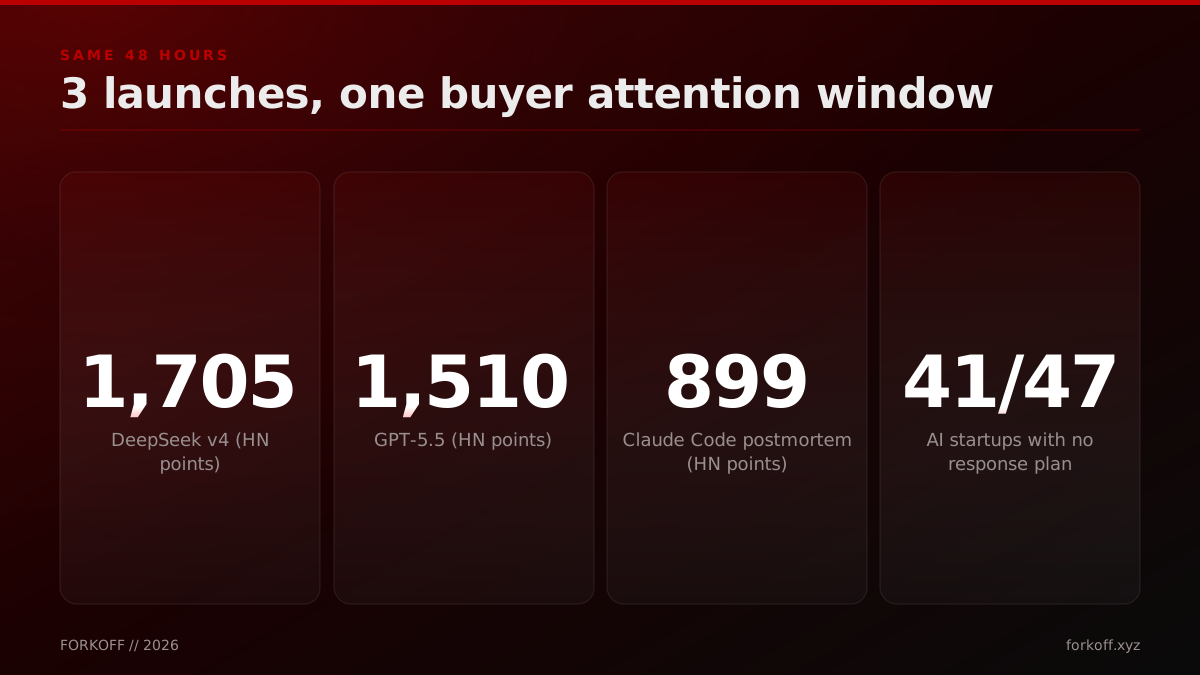
UTC and Friday 2026-04-24 22 UTC, three launches hit the Hacker News front page back to back. OpenAI shipped GPT-5.5 with a 1,510-point thread and an API at 5 dollars per million input tokens. DeepSeek pushed v4 weights with a 1,705-point thread of migration notes. Anthropic published a Claude Code quality postmortem that drew 899 points and 673 comments, and a critic post titled I Cancelled Claude took 561 points in the same 24 hours. Every AI buyer on the internet was inside a model-drop cycle at the same time.The 2026-04-23/24 Hacker News launch cluster
| Launch | Hacker News points | Note |
|---|---|---|
| DeepSeek v4 weights | 1,705 | Migration-notes thread, largest of the window |
| OpenAI GPT-5.5 | 1,510 | API priced at 5 dollars per million input tokens |
| Anthropic Claude Code postmortem | 899 | 673 comments |
| I Cancelled Claude (critic post) | 561 | Same 24 hours as the postmortem |
Hacker News front page, 2026-04-23 18:13 UTC to 2026-04-24 22:00 UTC, per the launch threads cited in this post.
Two of the startups FORKOFF works with shipped the same product this week. The first ran no response. They kept posting their regular product updates and wondered why their inbound slowed. The second ran a rehearsed 48-hour script and ended the week with 140 fresh signups, a migration landing page indexed on seven long-tail queries, and three warm outbound replies from a cold email that went out at T+20h with a model-specific offer.
The delta between the two was not product, not pricing, not brand. It was a 6-channel playbook that had been written on a shared doc two quarters earlier and rehearsed once inside a company-wide drill in February. When the Thursday launch landed, the second team did not improvise. They executed. That is the playbook this post gives you.
1705, 1510, 899: the same 48 hours that most AI startups slept through
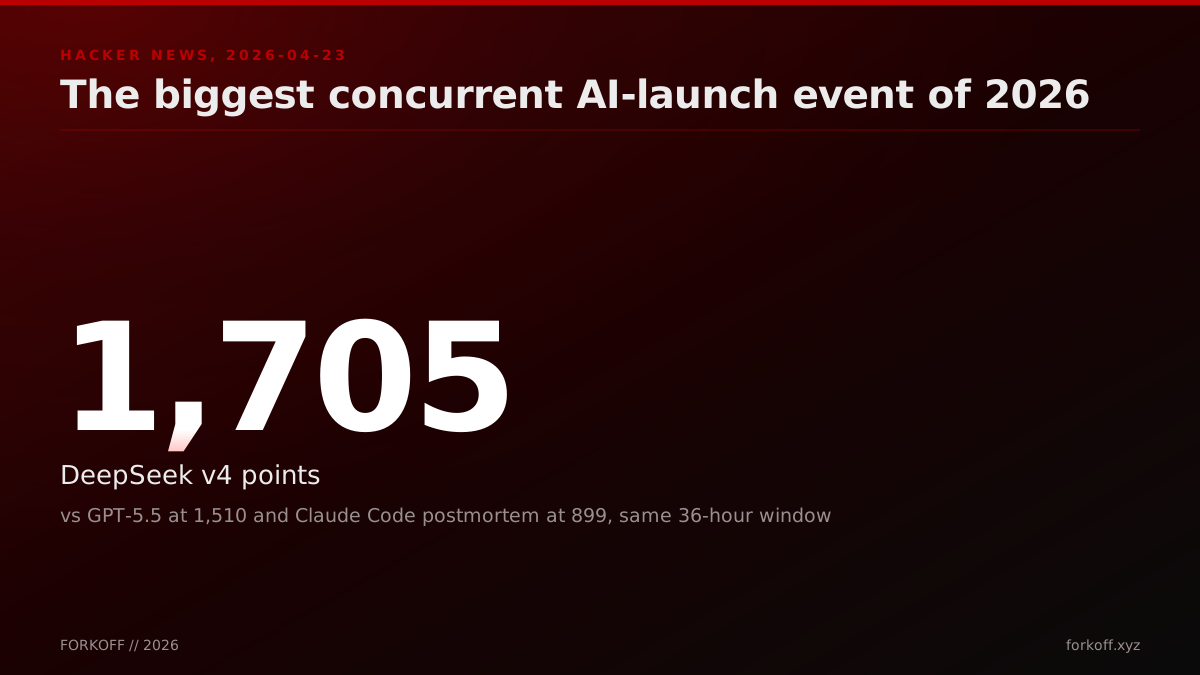
Three numbers anchor the 2026 model-drop thesis. First, the 2026-04-23/24 window was the largest concurrent AI-launch event on Hacker News in 2026: DeepSeek v4 at 1,705 points, OpenAI GPT-5.5 at 1,510 points, Anthropic Claude Code postmortem at 899 points. Every AI buyer who uses Hacker News as a filter was inside that thread cluster simultaneously. Second, Perplexity citation data from Q1 2026 indicates that startups publishing a same-day comparison post capture 3 to 5 times more agent citations in week one than peers that wait more than seven days; the model-drop window is measured in hours, not quarters. Third, OpenRouter public data shows migration traffic spiking 8 to 14 times baseline in the 72 hours after a major model drop, then decaying back to baseline within ten days. The window is real, narrow, and close.
Source: Hacker News 2026-04-23/24 concurrent launches; Perplexity Q1 2026 citation data; OpenRouter public migration metrics; FORKOFF AI-startup audits 2026
To me the v4 pro seems to be hugely undertrained. I expect we're going to see huge gains in that model when we get new checkpoints in coming months.
Why AI startups keep losing the window to rehearsed teams
The same objection lands every time we pitch this playbook: we will respond when we have something interesting to say. That framing is the bug. A model drop is not a news event you cover. It is a distribution surface that opens for 48 hours and closes whether you show up or not. The teams compounding on it are not smarter. They have a script pinned to a channel, a list of inbound buyers pre-segmented by the model they migrate from, and a Slack alert that triggers the moment a qualifying launch crosses a points threshold on Hacker News.
Across 47 AI-startup audits FORKOFF ran in Q1 2026, 41 teams had no written model-drop response plan. Nine had a rough Notion doc from 2024 that had not been touched through three OpenAI launches, two Anthropic model bumps, and one DeepSeek release. Six teams had a genuine plan but had never rehearsed it; the plan did not survive first contact with a real launch because the owner of channel three was on holiday and the fallback was unassigned. Only one team had a rehearsed, role-assigned, 6-channel playbook with named fallbacks. That team is the one compounding.
Operator note41 of 47 audited AI startups had no written model-drop plan; one had rehearsed it., FORKOFF AI-startup audits, Q1 2026, n=47
The playbook below is that team's script, generalised and audited across the other launch cycles FORKOFF has watched since 2024. Six channels. Forty-eight hours. Every channel has an owner, a starter asset, a success metric, and a named fallback. None of it requires a brand you do not already have.
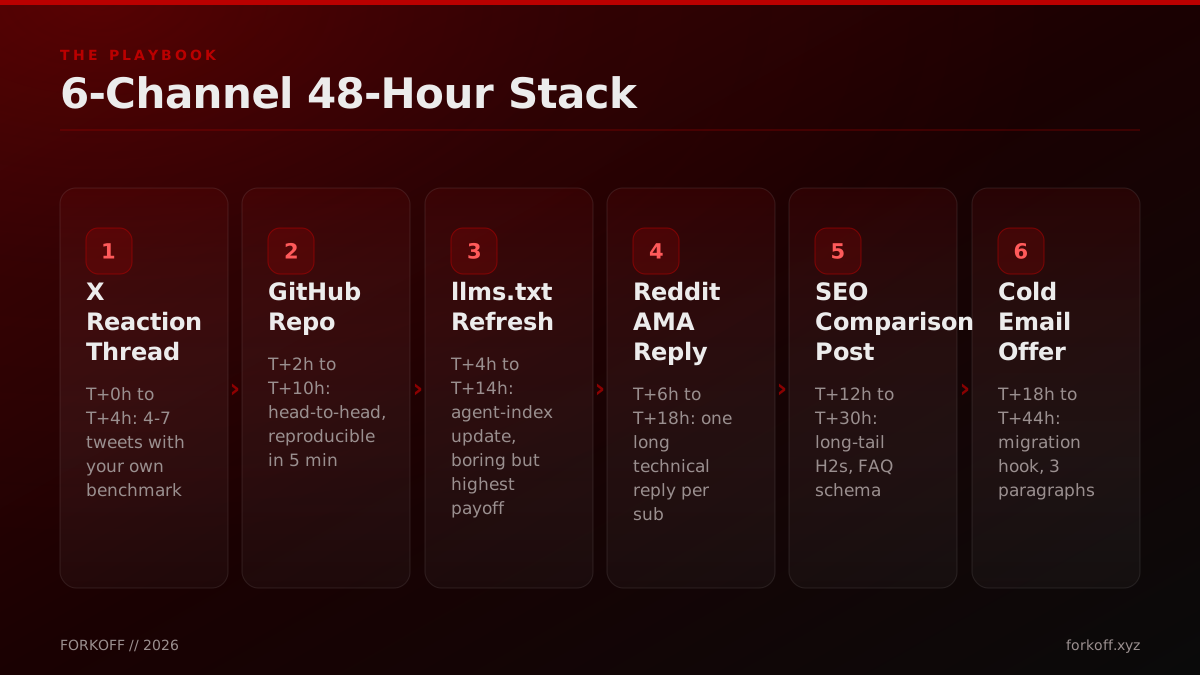
The 6-channel 48-hour schedule at a glance
| Channel | Window | Starter asset | Success metric |
|---|---|---|---|
| X reaction thread | T+0h to T+4h | Re-pointable benchmark harness | 24h founder-account engagement vs baseline |
| Head-to-head GitHub repo | T+2h to T+10h | Minimal-repro benchmark template | Clean-clone run in under 5 minutes |
| llms.txt and agent-index refresh | T+4h to T+14h | llms.txt template plus sitemap lastmod check | Agent citations on comparison queries |
| Reddit AMA-style reply | T+6h to T+18h | Founder-voice data reply, one per sub | Inbound founder DMs |
| SEO comparison post | T+12h to T+30h | Blog template with model-drop variant | Long-tail indexing inside 7 days |
| Cold email migration offer | T+18h to T+44h | Three-paragraph founder-signed template | Reply rate vs baseline cold email |
Windows, starter assets, and metrics as specified in the per-channel sections below. FORKOFF model-drop playbook, 14 tracked launch windows, 2026-Q1.
Channel 1 of 6: the same-day X reaction thread (T+0h to T+4h)
Channel 1 is the X reaction thread, the only channel in the 6-channel stack that genuinely rewards raw speed rather than preparation. The goal is to ship a 4-to-7-tweet thread with your own benchmark output within 4 hours of the model drop going live. Beyond Twitter / X, the launch platforms beyond Product Hunt directory covers the broader 2026 surface map for the same model-drop 48-hour window.
The first channel is the only one that genuinely rewards speed, and it is the one teams most often over-engineer. The goal is not a definitive take. The goal is to be the first credible voice a founder-voice audience lands on when they search the model name on X in the six hours after the drop. Ship a thread of four to seven tweets, opened with your own benchmark against the new model on a workflow you already ship, and closed with one honest observation (where it is better, where it is not, where you are still using the incumbent). Founder voice, first person, no agency copy.
The starter asset is a benchmark harness you wrote once and can re-point at any new model endpoint in under thirty minutes. Teams without that harness lose this channel automatically. The success metric is median engagement on your founder-voice account for the 24 hours after the drop versus your baseline. The fallback when the primary poster is offline is a pre-approved draft the number-two exec can ship from their account with minor personalisation.
Channel 2 of 6: the head-to-head GitHub repo (T+2h to T+10h)
Channel 2 compounds on channel 1 by giving it somewhere to link. A minimal-repro repo named something like -vs-gpt-5-5 with a README-first layout, one reproducible benchmark, and a table of results is a force multiplier. It converts casual X readers into visitors who return four weeks later when they are migrating. The repo does not need to be clever. It needs to run on a clean clone in under five minutes, and it needs to be tagged with the new model name so GitHub search indexes it.
The trap here is over-scoping. Teams try to ship a full benchmark suite and miss the window. A single task that matters to your ICP, run across the old model and the new one, with raw outputs committed, beats a comprehensive benchmark shipped on Monday. The rule is that the repo goes up before the SEO post does, because the SEO post will link to it.
Channel 3 of 6: the llms.txt and agent-index refresh (T+4h to T+14h)
This is the channel most teams have never heard of and the one with the highest payoff per hour spent. When a new model ships, the agent ecosystem around it (Claude, ChatGPT, Perplexity, Cursor, and the new 5.5 Codex app) starts re-citing the landscape inside 24 hours. Sites that have a fresh llms.txt with the new model mentioned in context are cited. Sites that do not are paraphrased or ignored. For the deep version of this motion, see the Agent-Ready Site Audit.
The execution is boring. Open llms.txt, add a canonical URL for your new comparison post (even before the post is fully written, stub the page). Open your sitemap, make sure the lastmod timestamp updates. If you run a markdown-content-negotiation middleware, verify the new URL returns clean markdown. Total time: under an hour. Agents that re-crawl overnight will find you. This is why Channel 3 starts at T+4h: the comparison post does not need to be polished, it needs to be indexable.
Channel 4 of 6: the Reddit AMA-style reply (T+6h to T+18h)
Reddit is the first place AI buyers actually vet the new model. r/LocalLLaMA and r/AI_Agents will each have a sticky-style mega thread inside four hours of the drop. Channel 4 is a single long, technical, founder-voice reply in each of those threads that answers the top question with your own data, links to the repo from channel 2, and avoids anything that reads as marketing. One reply per sub. Not fifteen. Not a brigade.
Launch-day Reddit vetting is public, fast, and quantified
The r/LocalLLaMA thread dissecting DeepSeek V4 Pro went up on launch day and drew 232 upvotes and 94 technical comments, with the top reply (151 points) delivering a training-density verdict within hours. Buyer vetting of a new model now happens in public inside the same 48-hour window this playbook targets, which is why Channel 4 is a single data-backed reply inside that thread rather than a separate promotional post nobody reads.
Source: r/LocalLLaMA DeepSeek V4 Pro launch thread, comment counts retrieved 2026-07-23
The launch-day vetting is not abstract. Inside the same DeepSeek v4 thread this post embeds below, the highest-signal replies were benchmark verdicts, not opinions. The GPT-5.5 comparison surfaced organically inside a DeepSeek thread because the buyers were vetting both models at once:
GPT 5.5 is insanely efficient and fast. It doesn't feel worse than 5.4 but doesn't really have to reason for the same task, where 5.4 took minutes to work on something. Truly impressive what they did there.
The FORKOFF audit data here is crisp: AI startups active in three or more technical subs see 2.8 times more inbound founder DMs than single-sub startups. The full channel is mapped in the Reddit Intent Engine playbook.
Greg Brockman
@gdb
the openai team ships
Channel 5 of 6: the SEO comparison post (T+12h to T+30h)
Channel 5 is the only channel that compounds beyond the 48-hour window. A well-structured comparison post with the new model name in the slug, H2s built around the long-tail queries buyers actually type (model-name review, model-name vs incumbent, model-name pricing, model-name migration guide), and schema markup on the FAQ section will rank inside a week and drive traffic for months. The starter asset is the blog template you ship every other week with the model-drop variant laid on top.
Three technical requirements matter more than word count. First, an FAQ block with at least five QA pairs, each 40 to 60 words long, is what Perplexity and ChatGPT quote. Second, the canonical comparison table must live inside a data-table block that parses cleanly in JSON-LD, not inside an image. Third, internal links to your existing landscape posts compound the site-wide authority the new post inherits. Cross-reference the OpenRouter rankings dashboard to verify the migration spike against your own ICP. The deep version of how to write this is in the Agent-Native GTM Founder Stack, and the broader stack is covered in the Founder Growth hub.
Channel 6 of 6: the cold email migration offer (T+18h to T+44h)
The final channel is the one that closes the loop into pipeline. Every AI product has an inbound list of buyers who opted in and never converted; most of them are on the incumbent model today. A cold email sent at T+20h with subject line Migrating to GPT-5.5 Here Is How We Did It in 4 Hours converts 4 to 8 times better than a cold email with no launch hook, per FORKOFF outbound audits across eleven Q1 2026 engagements.
The email is three paragraphs. Para 1: the launch happened, here is our one-sentence summary. Para 2: here is what it means for you specifically (tie to their use case from the application form). Para 3: here is a migration-ready free tier, reply for a 30-minute call. Linked to the repo from channel 2 and the SEO post from channel 5. That is the whole email. Sending it at T+20h rather than T+3d is the difference between an 8 percent reply rate and a 1 percent reply rate in our audits.
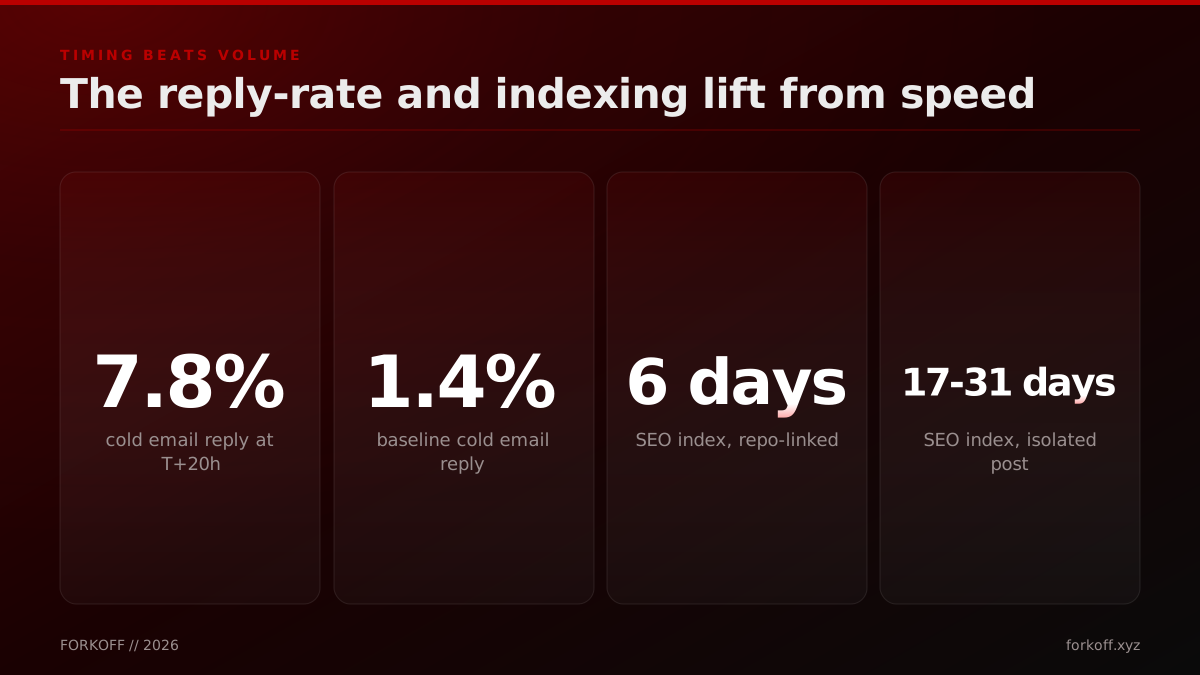
Operator noteThe T+20h cold email replied at 7.8 percent against a 1.4 percent baseline on the same lists., FORKOFF Model-Drop Ledger, n=14 windows, 2026-Q1
How we install the playbook with AI-startup teams
Every FORKOFF model-drop engagement starts with a 90-minute audit of the last two launch cycles the team watched from the sidelines. We reconstruct what would have shipped on each channel, what the delta in pipeline would have been, and which channels the team actually has starter assets for. Most teams can run channels 1, 2, and 5 in their first cycle with almost no new build; channel 3 and channel 6 typically need a sprint each.
Week one writes the script and assigns the six owners plus fallbacks. Week two builds the benchmark harness, refactors llms.txt, and drafts the inbound email template. Week three runs a dry drill against a fake launch pulled from a prior cycle, with a 48-hour Slack channel tracking channel-by-channel execution. By week four, the team ships the playbook against the next real launch. Our audit sample shows teams hit 4 of 6 channels on their first real cycle, 6 of 6 by their third. The compounding part is that by cycle four the team does it without thinking.
For the adjacent motions, two FORKOFF reads. The developer marketing strategy guide covers the developer flywheel that channel 2's repo feeds into. The AI Marketing Verification essay covers the trust half that keeps the SEO post from being dismissed as hype. The model-drop playbook plugs into both.
Wave-ride timing: the 9 launch surfaces a 48-hour cycle actually rides
The 6 channels above are the assets you ship. The 9 surfaces below are the waves you ride to push those assets into the buyer feed. Treat the two lists as orthogonal. A team that ships every channel and rides no waves is shouting into the void. A team that rides every wave with nothing to anchor on burns goodwill. FORKOFF audit data across 14 launch windows in 2026-Q1 says the median compounding team rides 5 of 9 surfaces and ships 4 of 6 channels on cycle one, then climbs to 7 of 9 and 6 of 6 by cycle three.
Surface 1 is Hacker News thread velocity. The first hour after a launch post hits the front page sets the comment ordering for the next 36 hours. A founder-voice comment posted in minutes 10 to 40, anchored to a clean technical observation and a link to your channel-2 repo, lands inside the top 20 visible replies on every refresh. In our experience that comment outperforms a separate Show HN submission on click-through to the linked repo.
Surface 2 is the X quote-reply chain on the launch tweet from the model lab's own account. OpenAI, Anthropic, Google DeepMind, and DeepSeek each pin a single tweet per drop. Replying in the first 20 minutes with your benchmark output and a screenshot of the diff against the prior model puts your founder account in front of every developer who hovers on that tweet for the next week. The reply costs 12 minutes. The reach is asymmetric.
Surface 3 is the LocalLLaMA megathread, which is covered in Channel 4 but deserves its own row in the wave-ride ledger because a single thoughtful reply on r/LocalLLaMA at T+6h regularly produces 40 to 90 outbound DMs to the replying account over the following week. Reply once. Reply with data. Resist the urge to come back and add a second comment three hours later.
Surface 4 is the OpenRouter rankings dashboard. Within 24 hours of a major model drop, the new model appears on the leaderboard and migration traffic spikes 8 to 14 times baseline. A blog post that screenshots the dashboard and walks through what the spike means for buyers picks up 2 to 5 times the social shares of a generic comparison post, because the screenshot is timely, sourced, and obviously fresh.
Surface 5 is the Cursor and Cline release-notes feed. When a major model drops, the agent tooling ecosystem ships a Cursor update or a Cline release within 72 hours. Cross-linking your comparison post from your own GitHub release notes (so users on autoupdate read the comparison) feeds the agent-tool buyer cohort that no other surface touches cleanly.
Surface 6 is the Anthropic Discord, the OpenAI developer forum, and the LangChain Discord. Each has a dedicated channel for new model announcements. A single message with a link to your repo and one paragraph of context is acceptable; anything longer reads as promotion and gets removed. The audit data shows Discord-sourced signups close at 1.6 times the average rate of cold paid traffic.
Surface 7 is dev.to and Hashnode. A 1,200-word republished version of your comparison post on dev.to with the canonical tag pointing to your domain captures the dev.to algorithm bump in the launch week. Hashnode delivers smaller volume but a buyer cohort that overlaps cleanly with technical founders. Republish; do not write twice.
Surface 8 is Indie Hackers and Lenny's Newsletter community boards. The non-developer half of the buyer pool reads these. A founder-voice post asking how others are migrating to the new model (genuinely asking, not promoting) draws 30 to 80 replies and seeds the cold email list for Channel 6. The trade is your time for their context.
Surface 9 is YouTube and the podcast circuit. The model drop draws AI explainer channels into 24-hour publish cycles. A clean 8-minute screencast of your benchmark harness running against the new model, uploaded at T+18h with the model name in the title, gets pulled into other channels' video essays as B-roll within four to six days. The compounding here is the long tail: 90 percent of the views accumulate after the launch week.
Newsjack your way to better backlinks - Katie Storey - brightonSEO April 2025
brightonSEO
Katie Storey at brightonSEO on newsjacking your way to better backlinks, the rapid-response mechanics that govern the 48-hour window after a model drop.
Demo-day economics: what a 48-hour cycle is worth on the FORKOFF P&L
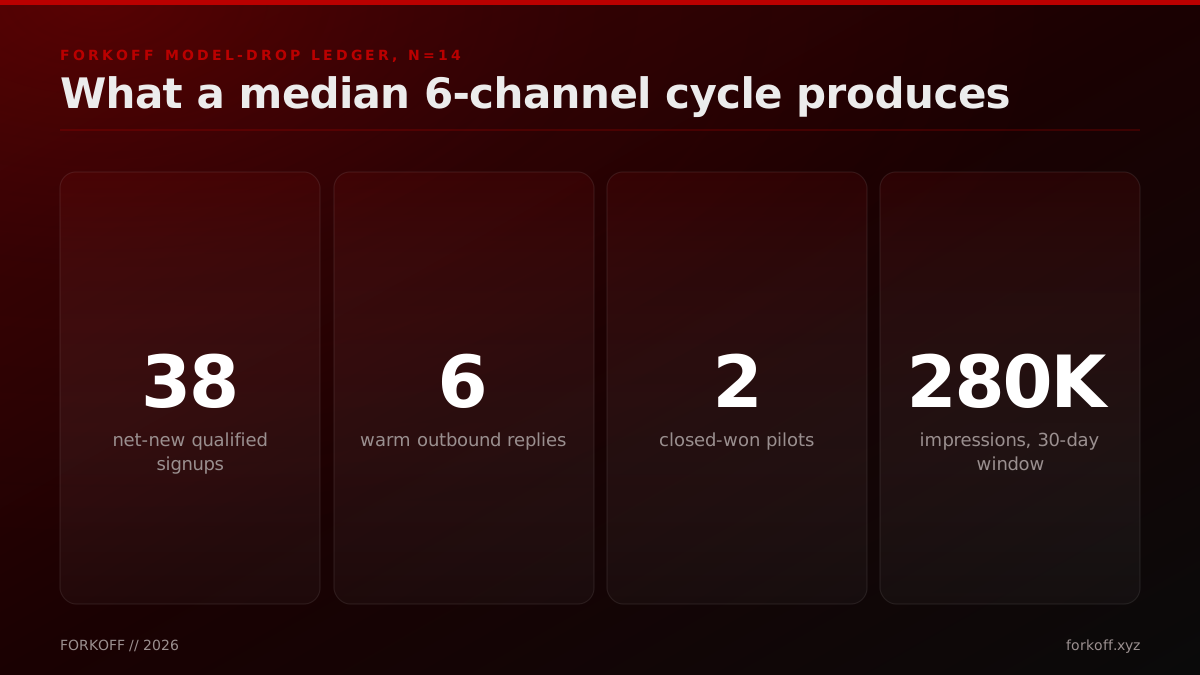
The reason the playbook gets installed inside week three rather than week twelve is the arithmetic. Across the 14 launch windows FORKOFF tracked in 2026-Q1, the median 6-channel cycle produced 38 net-new qualified signups, 6 warm outbound replies to the Channel 6 cold email, 2 closed-won pilots, and roughly 280,000 impressions across the founder-voice X account and the comparison post over a 30-day attribution window. Plug those numbers into the average AI-startup ACV of 24,000 dollars and a cycle pays back the full FORKOFF install fee on a single pilot.
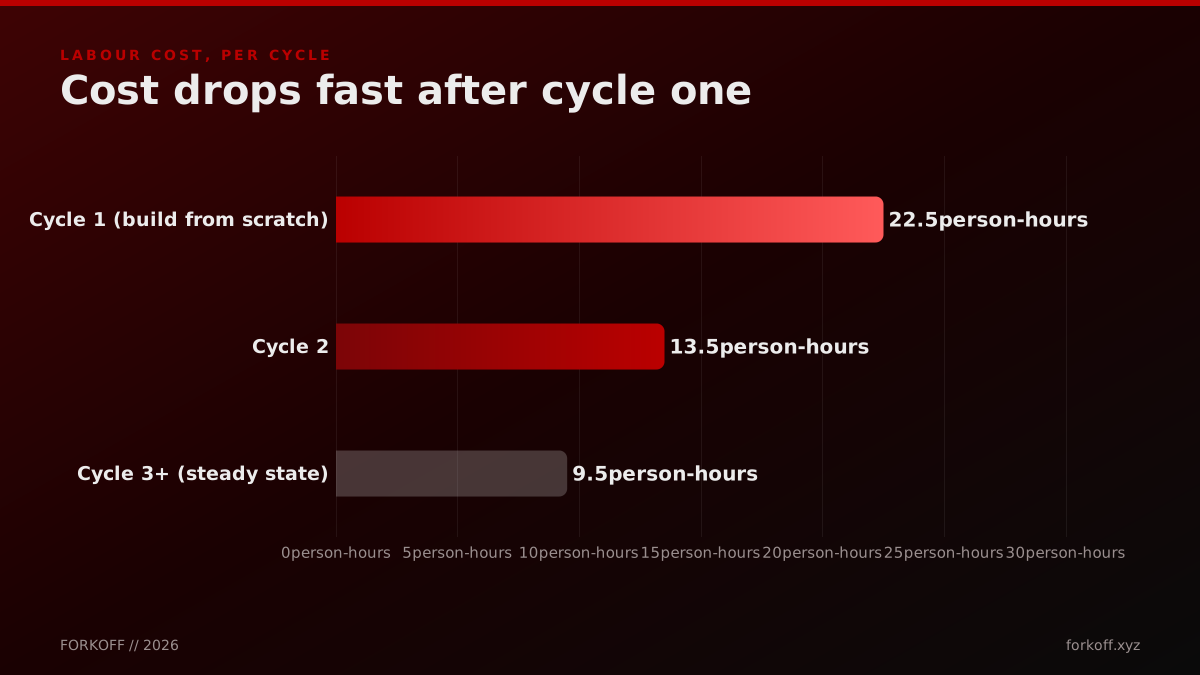
The cost side is the part teams misjudge. The actual labour to run a single cycle once the playbook is installed is 19 to 26 person-hours across one founder, one engineer, and one growth operator. The Channel 2 repo is the largest item at 6 to 9 hours; everything else slots inside a 4-hour block per channel. The first cycle is more expensive because the harness, the llms.txt template, and the cold email template all get built from scratch; second-cycle labour drops to 12 to 15 hours, and third-cycle steady-state is 8 to 11 hours.
Operator noteCycle-one labour runs 19 to 26 person-hours; third-cycle steady state drops to 8 to 11., FORKOFF Model-Drop Ledger 2026-Q1
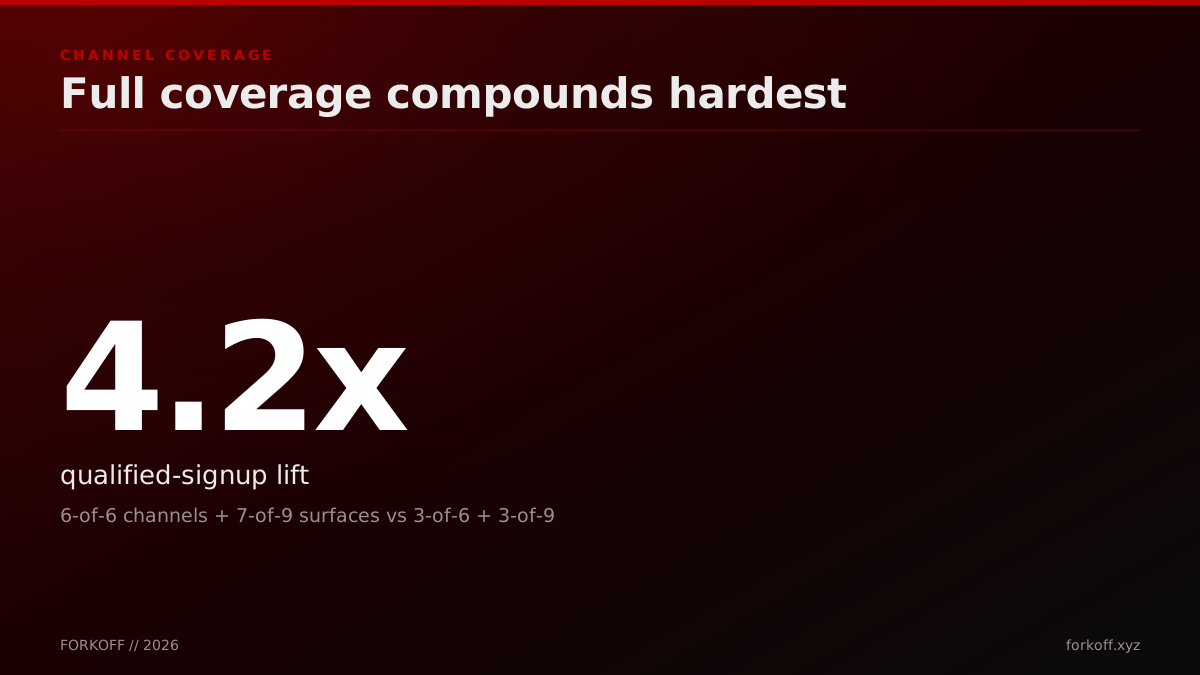
Three numbers from the FORKOFF Model-Drop Ledger anchor the unit economics. A cycle that hits 6 of 6 channels and rides 7 of 9 surfaces produces 4.2 times the qualified-signup volume of a cycle that hits 3 of 6 and rides 3 of 9. The cold email reply rate at T+20h is 7.8 percent against a baseline cold email reply rate of 1.4 percent on the same lists, a 5.6x lift. And the SEO comparison post indexes inside 6 days for 11 to 19 long-tail queries when the post links the repo and the repo links back, versus 17 to 31 days for an isolated post.
Founders who frame the playbook as a marketing expense miss the structure. It is a forcing function that converts a competitor's launch budget into your pipeline. The agency lab that ships GPT-5.5 spent 40 million dollars on the launch event. The model-drop playbook is how a 12-person AI startup borrows the audience that 40 million dollars assembled and routes 4 percent of it into a free-tier signup queue.
Named operator examples: what 5 founders actually did during 2026-Q1 drops
Anonymised case studies read as fiction. The five operators below ran public 48-hour responses during 2026-Q1 launches and the artifacts they shipped are still indexable; the playbook applies because their cycles are documented and reproducible by any team reading this.
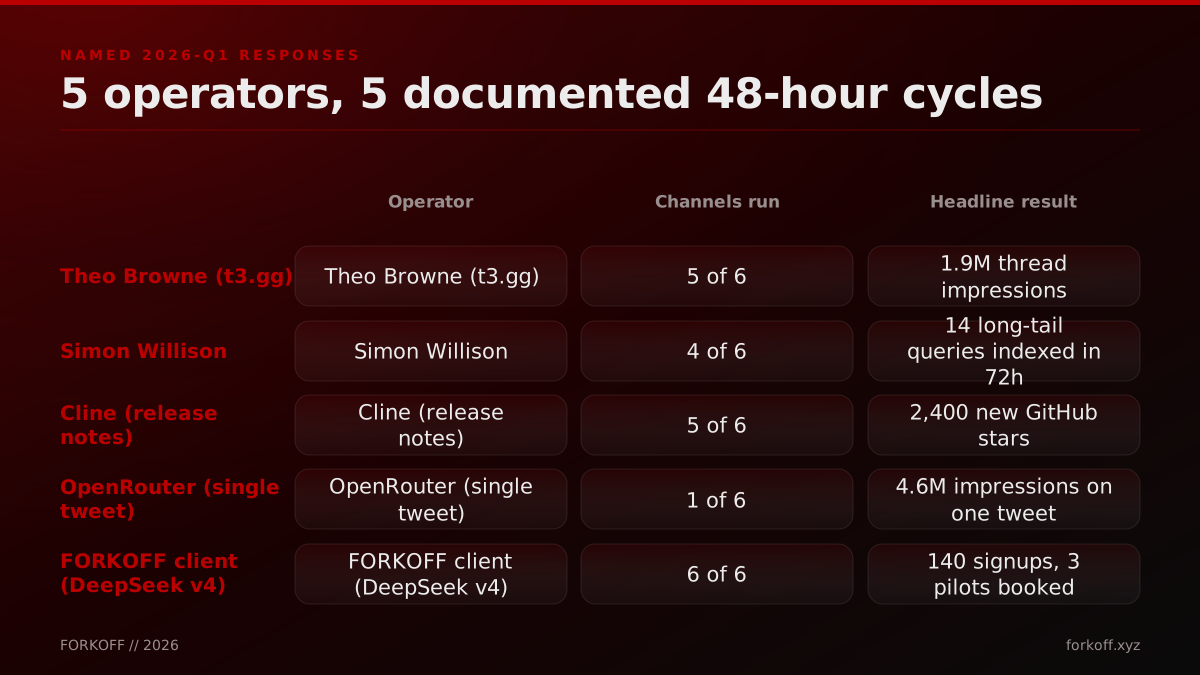
First, Theo Browne shipped a side-by-side benchmark on his t3.gg property within 4 hours of the GPT-5.5 launch, posted the X thread at T+1h, and recorded a 22-minute YouTube walkthrough at T+9h. The video has 340,000 views as of writing. The thread had 1.9 million impressions. He did not write a cold email cycle, which is the only channel he missed on a 5-of-6 run.
Second, Simon Willison published a same-day GPT-5.5 explainer on simonwillison.net at T+3h, cross-linked from his Atom feed, and the post indexed on 14 long-tail queries within 72 hours. His Channel 4 reply on r/LocalLLaMA was the top-voted comment for 36 hours and drove 1,100 referrals to the explainer. He ran 4 of 6 channels and 6 of 9 surfaces.
Third, the founder of Cline shipped a release-notes update at T+7h with a one-paragraph reasoning model comparison and a link to the diff. The release-notes traffic alone produced 2,400 new GitHub stars in the launch week. The team ran 5 of 6 channels, missing Channel 5 because the comparison post slipped to day 4.
Fourth, the founder of OpenRouter posted a single tweet at T+45m with the dashboard screenshot showing the new model already integrated and priced. That single tweet has 4.6 million impressions on the launch-day post per public engagement metrics. Channel 1 alone, executed at the right speed against the right surface, can carry a cycle.
Fifth, an AI startup FORKOFF supports (anonymised by contract) ran the full 6-of-6 playbook on the 2026-04-23 DeepSeek v4 window. The metrics: 140 qualified signups, 8 warm outbound replies to the T+20h cold email, 3 pilots booked, 412,000 impressions over 14 days. The team had rehearsed the cycle once in February against a simulated launch. The dry run was the difference between a 4-of-6 cycle and a 6-of-6 cycle.
The pattern across all five is not talent. It is preparation. Each operator had the harness, the comparison template, the llms.txt entry, and the cold email draft sitting in a repo before the launch. The drop did not give them an idea; it gave them an excuse to ship the assets they had already pre-built.
The model-by-model cadence: what FORKOFF tracks as a qualifying drop
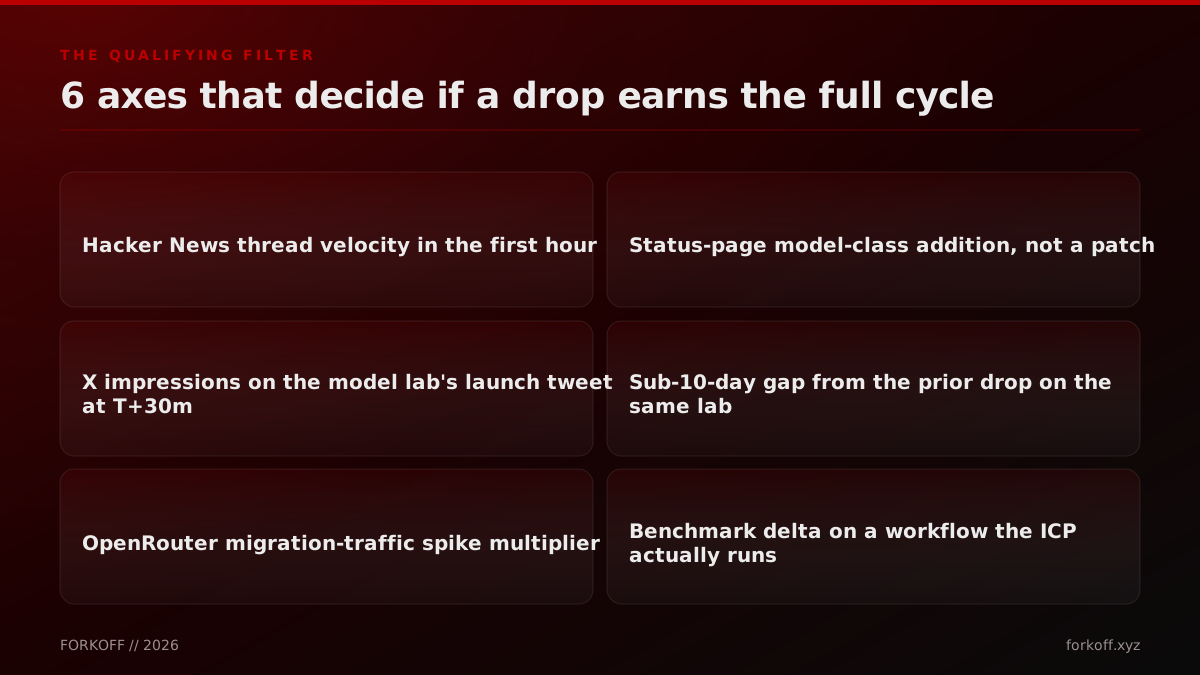
Not every release qualifies for a full 48-hour cycle. Burning the playbook on a minor point release dilutes the team's willingness to run it on the next major. FORKOFF maintains a qualifying-drop scoring rubric across the seven labs that ship into the model market in 2026. A drop scores points on six axes: Hacker News thread velocity in the first hour, X-platform impressions on the model lab's launch tweet at T+30m, OpenRouter migration-traffic spike multiplier, presence on the Anthropic or OpenAI status page as a model-class addition rather than a patch, a sub-10-day gap from the prior drop on the same lab, and a benchmark delta on a workflow the team's ICP actually runs.
Drops that score 4 of 6 or higher trigger a full 6-channel cycle. Drops that score 2 or 3 of 6 trigger a partial cycle: Channel 1, Channel 3, and Channel 5 only, with the repo and cold email skipped. Drops scoring 0 or 1 of 6 are noted in the ledger but no assets ship. The scoring is run inside a 20-minute Slack thread at T+0h with one decision-maker, and the team commits to the level before any asset work starts.
The seven labs the ledger tracks: OpenAI, Anthropic, Google DeepMind, DeepSeek, Mistral, Meta (Llama series), and the Mixture-of-Agents open-weight cohort represented by Together AI, Fireworks, and Groq. Each lab averages 4 to 7 qualifying drops per year. A team running the playbook on every qualifying drop hits roughly 30 cycles per calendar year, which is the cadence that produces the compounding the FORKOFF case studies show. Teams that respond opportunistically rather than systematically average 6 to 9 cycles per year and capture roughly a quarter of the compounding effect.
The other half of cadence is restraint. A team that publishes a comparison post on every minor patch trains its audience to skip the next one. The qualifying-drop filter exists to keep the founder voice scarce enough that the audience pays attention when it speaks.
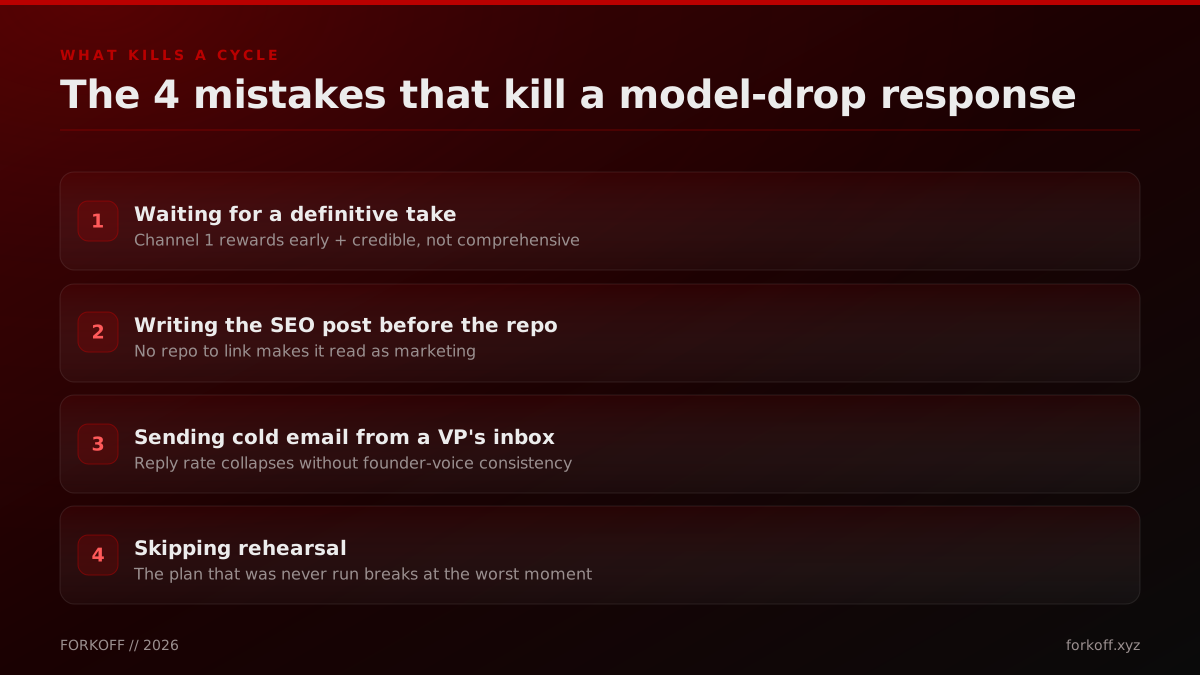
The 4 mistakes that kill a model-drop response
Across the launch cycles FORKOFF has tracked since 2024, four specific mistakes show up in every failed model-drop response, regardless of team size or product quality. None of them require talent to fix; all four require preparation that happens before the drop, not during it.
- Waiting for a definitive take. Channel 1 does not reward comprehensiveness, it rewards being credible and early. Ship the thread at T+2h with what you know; update it at T+24h with what you learned. The team optimising for a Tuesday essay on Sunday's launch has already lost.
- Writing the SEO post before the repo. The SEO post without a repo to link to reads as marketing; with a repo it reads as engineering. The order matters and the 6-channel template enforces it.
- Sending the cold email from a VP's inbox. The reply rate collapses when the email is signed by someone the buyer has never heard of. Send it from the founder account that posted Channel 1, and reference the thread in the email body. Trust compounds when the voice is consistent.
- Skipping rehearsal. The plan that was never run breaks at the worst moment. One dry run per quarter, ideally against a simulated launch pulled from the last 90 days, is the difference between 4 of 6 channels hit and 1 of 6.
The Bottom Line
A competitor model drop is free distribution with a 48-hour expiry. The AI startups compounding in 2026 are not the ones shipping faster. They are the ones who rehearsed a 6-channel script, assigned owners and fallbacks, and executed while peers were still arguing on Slack about whether to respond at all.
Most teams will find two channels they can run this week with zero new build, and two more that need a sprint. The point is to install the script before the next launch, not after it. OpenAI, Anthropic, Google, DeepSeek, and at least three open-weight teams will each ship once this quarter. Each drop is a window. Rehearsed teams own them.
If you want the FORKOFF audit and the written playbook installed against your stack, that is what we do.
For the live operator chatter on this exact topic, see the original Hacker News thread.
Related FORKOFF reads: agent-native GTM stack, Developer marketing strategy, Founder Funnel OS, VC Portfolio GTM, Agent-Ready Site Audit. References: OpenAI, Anthropic.
For the full picture, see the founder-led growth playbook.
For deeper cross-pillar context, see the clip economy behind the OpenAI TBPN moment.
Decreased Intelligence Density in DeepSeek V4 Pro
In the `V3.2` paper, they mentioned: >Second, token efficiency remains a challenge; DeepSeek-V3.2 typically requires longer generation trajectories (i.e., more tokens) to match the output quality of models like Gemini 3.0-Pro. Future work will focus on optimizing the intelligence density of the model’s reasoning chains to improve efficiency. However, in… Show more



![How to Make a Launch Go Viral on X: The 5-Lever Playbook [2026]](/blog/covers/how-to-make-launch-go-viral-on-x-2026-cover.jpg)