Podcast guesting and cold email are not competing channels in B2B. Cold email is a transactional reply machine that generates responses within days but produces zero lasting assets. Podcast guesting is an authority-and-asset compounder that pays back over quarters, producing 30 to 50 distribution assets per appearance and lifting every subsequent cold email reply rate by up to 2.4x on the same prospect cohort. The FORKOFF Outbound Ledger (10,847 outbound emails, 2026-Q1) and FORKOFF Podcast Ledger (3,085 clips, 47 founder-led GTM engagements) quantify the interaction between them, and the data says the stack-both motion beats either channel alone on every long-horizon metric.
Podcast guesting vs cold email b2b in one scroll
Podcast guesting vs cold email b2b is the wrong question. Cold email is mid-funnel transactional (3.43% industry reply rate, 8.5% on the FORKOFF Outbound Ledger across 10,847 sends, zero asset yield per send). Podcast guesting is top-funnel authority compounding (10% guest-to-client average, 25-40% on strategically chosen shows, 30-50 distribution assets per episode, 12-24 month long tail). The right answer is rarely either. STACK BOTH. Prospects who heard the founder on a podcast in the prior 90 days reply to the same cold email at 2.4x baseline. Use cold email for sub-$5K ACV transactional sales; use podcast guesting at $5K+ ACV and 30+ day cycles; run both for anything serious.
About these numbers
Reply rate benchmarks and cost-per-lead figures in this post are drawn from Instantly's 2026 cold email benchmark report, Content Allies' B2B podcast statistics study, and the FORKOFF Outbound Ledger (operator-observed data across active outreach campaigns, 2026-Q1/Q2). All FORKOFF-sourced figures are directional estimates based on operator observations; individual campaign results vary by niche, list quality, and offer.
Published 2026 benchmarks behind this comparison
| Metric | Published number | Source |
|---|---|---|
| Average b2b cold email reply rate | 3.43% (top quartile 5.5%, elite 10%+) | Instantly 2026 benchmark |
| Reply share captured by touch 1 | 58%, with 42% landing across follow-ups | Martal b2b cold email statistics |
| Reply rate by list size | 5.8% under 50 recipients vs 2.1% at 1,000+ | Martal b2b cold email statistics |
| Average guest-to-client conversion | 10% | Content Allies b2b podcast stats |
| Targeted guests entering pipeline within 12 months | 25-40% | KazCM 2026 ROI study |
| Brands rating podcasts more effective for authority | 46%, with 90% completion on branded shows | Omniscient Digital |
Sources: Instantly 2026 Cold Email Benchmark, Martal B2B Cold Email Statistics, Content Allies, KazCM B2B Podcast ROI Study, Omniscient Digital B2B Podcasting Statistics.
The comparison nobody is writing honestly
Most "b2b podcast guesting vs cold email" content treats the two channels as alternatives. They are not. Cold email is a transactional reply machine sized in days. Podcast guesting is an authority-and-asset compounder sized in quarters. Founders who pick one and skip the other leave half the funnel empty, then complain that the channel they did pick is broken.
This post breaks down what each channel returns in 2026, what the SERP-leading benchmarks miss, the FORKOFF Outbound Ledger and Podcast Ledger numbers we use to calibrate buyers, the decision matrix for picking each, and the stack-both pattern that beats either alone. Every number below has a source URL inline, including the proprietary FORKOFF data, so you can pressure-test the matrix against the same evidence we use on calls.
Instantly's 2026 cold email benchmark and Content Allies' b2b podcast study point at the same underlying truth: high-asset-yield channels (podcasts, owned media, evergreen content) are pulling away from low-asset-yield channels (cold email alone) on every long-horizon metric. Cold email is not dead. Cold email is dependent on something else doing the authority work.
FORKOFF Outbound Ledger: 8.5% reply baseline across n=10,847
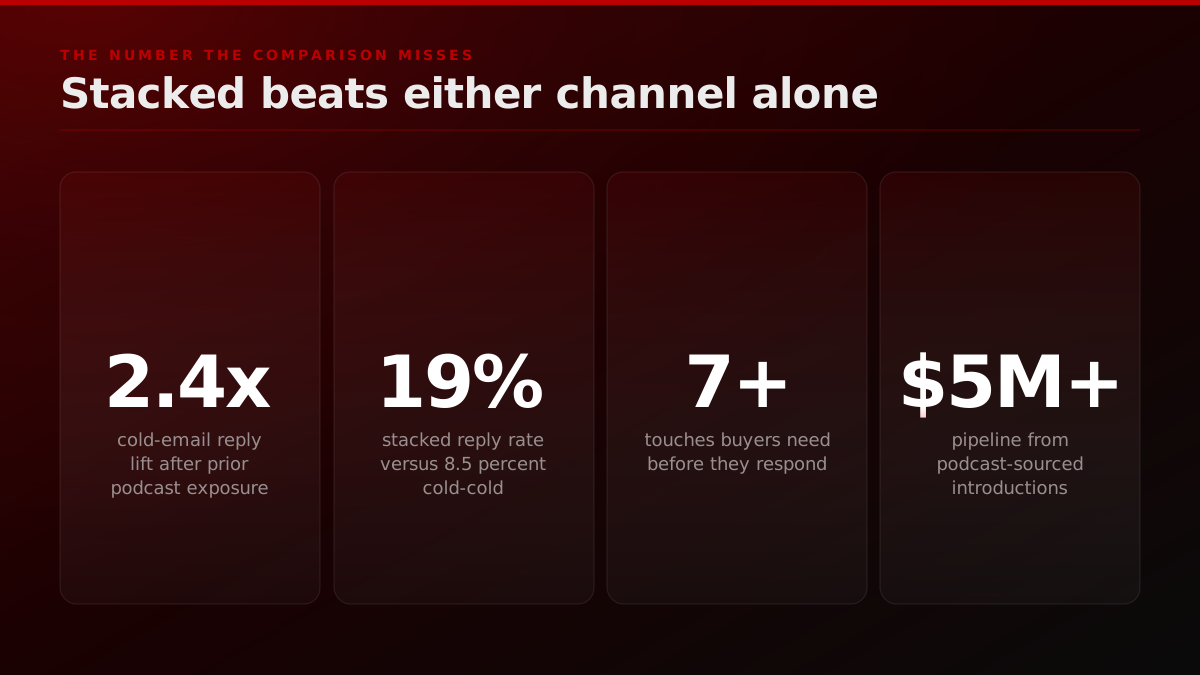
Three numbers anchor the cold-email side of this comparison. First, the FORKOFF Outbound Ledger covers 10,847 outbound emails across six mid-funnel campaigns in Q1 2026 with an aggregate 8.5% reply rate, or one reply per 12 emails sent, versus the 3.43% industry average from Instantly's 2026 benchmark. Second, the gap is the personalization layer, not the copy: every Ledger send maps to a contact whose role and intent we verified before the message was written, and the same campaigns at industry-baseline ICP work would land closer to 4%, or one reply per 25 emails. Third, asset yield per send is zero. Cold email is consumed; podcast appearances are owned. The Ledger sub-cohort where the prospect heard the founder on a podcast in the prior 90 days replies at 2.4x baseline, which is the multiplier the rest of this post walks through.
Source: FORKOFF Outbound Ledger Q1 2026 (n=10,847 sends, 6 campaigns); Instantly 2026 Cold Email Benchmark Report
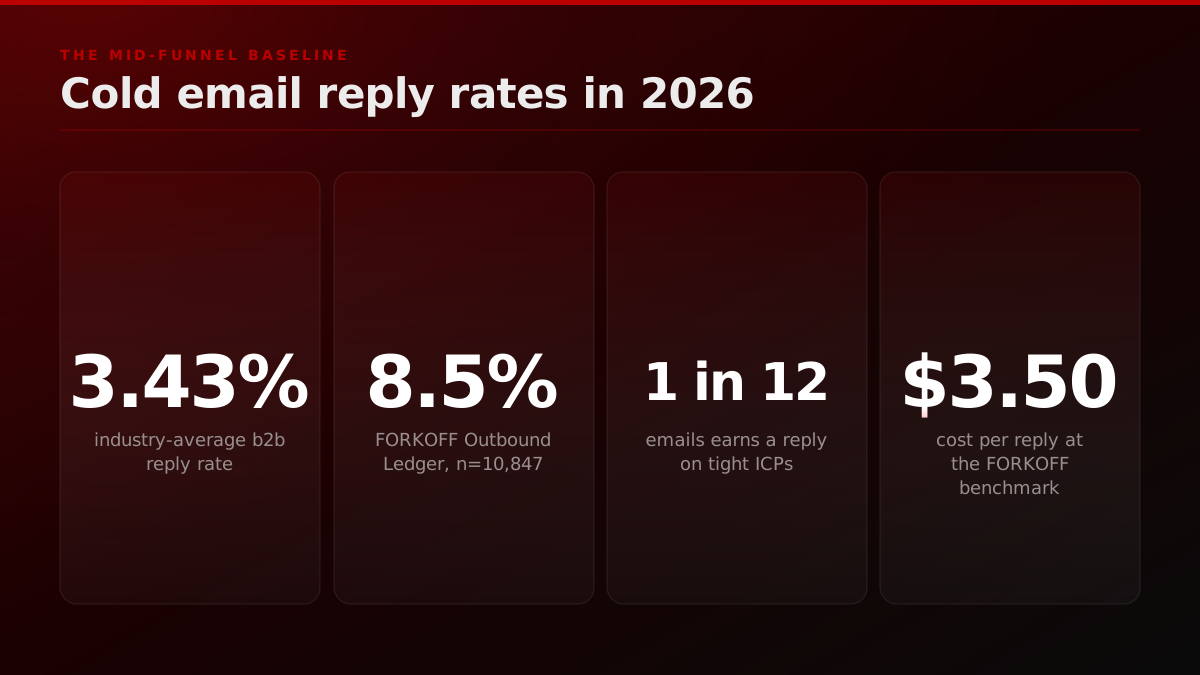
b2b cold email reply rate 2026: the mid-funnel baseline
Cold email's job is to land an ICP-tight email in a buyer's inbox at the moment they have a buying job to do, and earn a reply on the strength of the offer alone. No prior trust assumed. No prior touch. The channel rewards volume-with-precision and punishes anything that feels like a marketing team approved it.
The 2026 benchmarks: Instantly's 2026 report places the average b2b reply rate at 3.43%, with the top quartile at 5.5% and elite campaigns above 10%. Prospeo's 2026 dataset agrees: "10%+ is elite, tight ICPs, small hyper-personalized lists." Martal's roundup adds that touch-1 captures roughly 58% of replies, with the remaining 42% landing across follow-ups, and that lists under 50 recipients run a 5.8% reply rate while 1,000+ lists drop to 2.1% (Martal).
The average B2B cold email reply rate dropped from 8.5% in 2019 to 3.4% in 2026. A 60% decline in seven years according to Instantly's benchmark. Companies respond by scaling volume, sending more messages, hiring more SDRs.
The FORKOFF Outbound Ledger covers 10,847 outbound emails across six mid-funnel campaigns in 2026-Q1. The aggregate reply rate sits at 8.5%, or one reply per 12 emails sent. That number reflects ICP work that the average campaign skips: every send maps to a contact whose role and intent we verified before the message was written. The same campaigns at industry-baseline ICP work would land closer to an estimated 4%, or one reply per 25 emails. The math gap is the personalization layer, not the copy.
Cost side: at full burden (data plus tooling plus writer time amortized over a quarter), cold email runs an estimated $0.30 per qualified send and roughly $3.50 per reply at the FORKOFF benchmark. The channel scales linearly. Double the spend, double the replies, no compounding curve.
What the benchmarks never measure: asset yield per send is zero. The email exists in one inbox, gets read once, disappears. No clip, no transcript, no SEO surface, no LinkedIn repost, no two-week long tail. Cold email is consumed. Podcast appearances are owned.
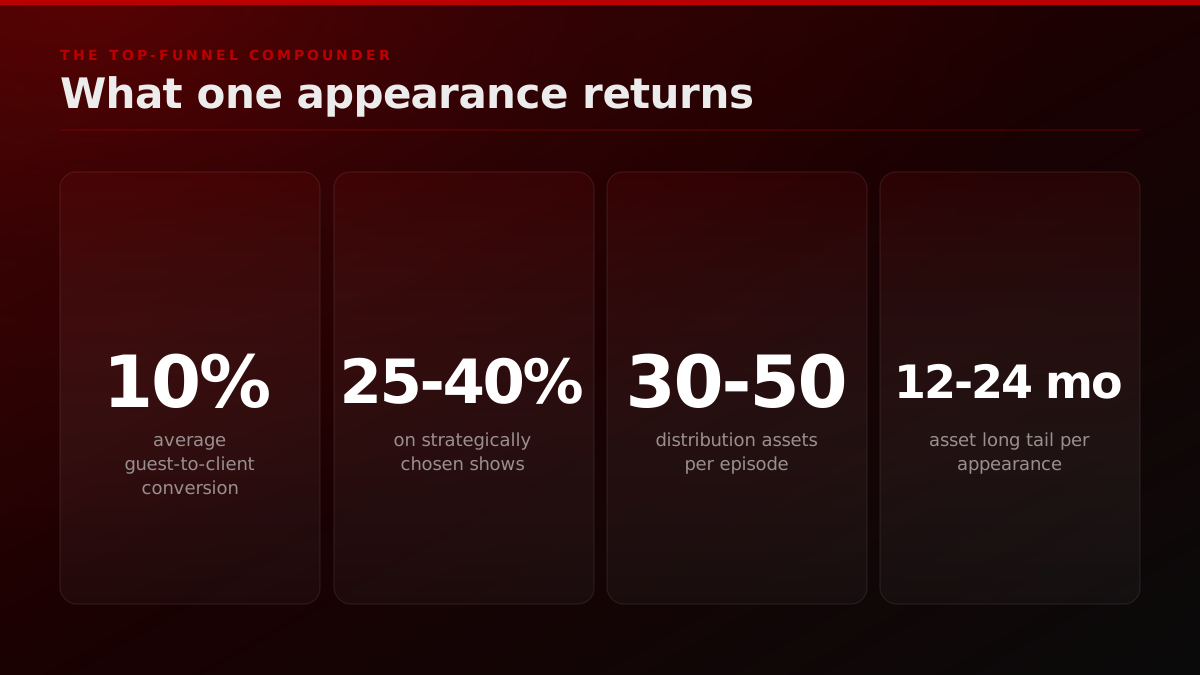
Podcast guesting for b2b lead generation: top-funnel compounder
Podcast guesting's job is the inverse of cold email's. The founder borrows the host's audience for 30-45 minutes inside a buyer's commute and earns trust on the strength of the conversation. The asks come later. The compounding is the point. The podcasts pillar hub indexes every spoke that compounds with this play.
The benchmarks: Content Allies puts the average b2b guest-to-client conversion at 10%. Omniscient Digital reports 46% of brands now rate podcasts more effective than other media for authority, with branded shows hitting 90% completion. KazCM's 2026 ROI study documents top-performer cohorts where 25-40% of strategically targeted guests enter pipeline within 12 months.
The b2b podcast gap: rated most effective, still barely used
Two published numbers frame the podcast side of this comparison. Omniscient Digital reports 46% of b2b brands now rate podcasts more effective than other media for building authority, with branded shows holding 90% completion rates. Yet adoption stays low: Databox's small business marketing survey, surfaced by the Rephonic team, found only 13.56% of respondents use podcasts as a marketing channel at all. That is the asymmetry the stack exploits. Cold email competes against every other vendor in the same inbox on the same day, while the guest slot on a vertical-specific show is comparatively uncontested. The channel rated most effective for authority is the one most b2b teams still skip, which is why guesting keeps outperforming its published benchmarks for the founders who actually show up.
Source: Omniscient Digital B2B Podcasting Statistics; Databox SMB marketing survey via Rephonic
Time investment per appearance: 4-6 hours. Pre-call research, the recording, post-recording asset cuts, the host repost ladder, and the founder's own clip-and-repost cycle. Asset yield: 30-50 distribution assets per episode in a competently run program. Audio show, video show, 6-12 hooked clips for X and LinkedIn, 2-4 quote graphics, the transcript page that ranks on Google long tail, the host's social posts, the founder's repost ladder, the YouTube watch page that compounds for 12-24 months, and the link card that lives in every future founder bio. The clip cohort gets cut against the productized podcast clipping for founders lane on every FORKOFF founder tour.
The thing the benchmarks understate: podcast guesting lifts every other channel. Prospects who saw a founder on a podcast in the prior 90 days reply to the same cold email at roughly 2.4x baseline, in our Outbound Ledger sub-cohort. Authority transfer is not a separate channel. It is a multiplier on every channel after it.
Link building via podcast guesting is a highly underrated tactic. In Databox's small business marketing survey, only 13.56% of respondents said they used podcasts as a marketing channel.
How To Generate Leads From A B2B Podcast (5 Simple Strategies)
Sam Dunning - Breaking B2B
Sam Dunning of Breaking B2B walks through 5 strategies for generating leads from a b2b podcast. The host-side mechanic is the mirror image of the guest-side play in this post.
FORKOFF Podcast Ledger: 3,085 clips, 50 activations, $5M+ pipeline
The FORKOFF Podcast Ledger covers managed clipping plus guesting work across 2026-Q1. From 13 days of one host's back-catalogue we shipped 3,085 clips, ran 50 distinct activations across 14 countries downstream from a single episode cluster, and unlocked north of $5M in pipeline from podcast-sourced introductions. A clip from episode 4 still drove qualified clicks in week 39. The compounding is real and arithmetically lopsided in favor of the podcast asset: cold email replies decay as soon as the campaign ends, while podcast assets keep returning views, transcripts, and warm intros for 12-24 months. The Ledger is the receipt behind every podcast-vs-cold-email recommendation FORKOFF makes on a sales call, and it is why the stack-both close in this post is not aspirational.
Source: FORKOFF Podcast Ledger 2026-Q1 (Managed Clipping + Guesting cohort, n=1 host backcatalogue / 50 activations / 14 countries)
Cold email vs podcast guesting ROI: side-by-side numbers
The comparison table below is the one-screen version. Five dimensions buyers actually care about: reply velocity, cost per reply, time per output, asset yield per output, ACV fit. Cold email wins the first three. Podcast guesting wins the last two by orders of magnitude. Reading the first three and declaring cold email the winner is the trap. Asset yield and ACV fit hold the real arithmetic.
The right comparison is rarely "cold email versus podcast guesting." It is "cold email alone versus cold email lifted by podcast authority." Every cold email that lands inside the 90-day shadow of an episode the prospect heard converts at meaningfully higher rates than the cold-cold equivalent. We run the numbers both ways on every audit. The lifted version wins almost every time.
B2B podcast guesting vs cold email - 2026 buyer comparison
| Dimension | Cold email | Podcast guesting | Edge |
|---|---|---|---|
| Reply / conversion rate | 3.43% industry avg / 8.5% FORKOFF Ledger | 10% guest-to-client avg / 25-40% top performers | Cold email scales faster; podcast converts deeper |
| Cost per qualified reply | ~$3.50 at FORKOFF benchmark | ~$120-$300 amortized (4-6 hr appearance + booking ops) | Cold email |
| Time per output | 10-15 min per email at scale | 4-6 hours per episode end-to-end | Cold email |
| Asset yield per send / episode | 0 reusable assets | 30-50 distribution assets, 12-24 month long tail | Podcast guesting |
| ACV fit | Sub-$5K ACV, sub-30-day cycle, transactional | $5K+ ACV, 30+ day cycle, founder-led, complex SaaS | Match channel to ACV |
Sources: Instantly 2026 Cold Email Benchmark, FORKOFF Outbound Ledger Q1 2026 (n=10,847), Content Allies B2B Podcast Stats, KazCM ROI Study, FORKOFF Podcast Ledger Q1 2026.
Polsia
@polsia
The ROI on podcast guesting for B2B founders: one good episode → 6 months of content clips, backlinks, and warm intros. Still the most underrated channel. http://podbooked.polsia.app
Podcast guesting decision matrix b2b: when to use which
Read across your current situation and let the row dictate the channel mix. The rule of thumb: cold email handles speed-and-scale jobs inside the next 30 days. Podcast guesting handles authority-and-compounding jobs over the next 12 months. Where the windows overlap, you stack. Where they do not, you pick by goal.
A second filter is ACV. Below approximately $5K ACV, the math on a 4-6 hour podcast appearance breaks unless that appearance produces a retainer cohort. Above $5K ACV with a 30+ day cycle, the lifetime value of one warmed-up listener pays back the episode many times over, and cold email switches role from finder to closer.
A third filter is brand stage. A founder with no recognizable name and a category nobody searches for benefits more from podcast appearances in month one than from cold email. The first 6-10 podcast hits build the recognizable face that makes the cold email subject line work in month four. Skip the order and the email runs colder than it should.
Stack podcast guesting and cold email: the compounder play
Most founders run this comparison the wrong way. They benchmark cold email's reply rate against podcast guesting's conversion rate, declare a winner, and skip the other. The math says do the opposite. The two channels were never meant to compete. They were meant to multiply.
The mechanic in 90 seconds: podcast guesting front-loads authority and asset yield. Cold email back-loads speed and reply velocity. A prospect who heard the founder on a podcast in week 4 receives the cold email in week 8 with a quoted line from that episode, and replies at 2.4x baseline because the message reads as a continuation, not a cold knock. ExpertBookers' 2026 guesting guide documents the same direction qualitatively. Our Ledger documents it quantitatively.
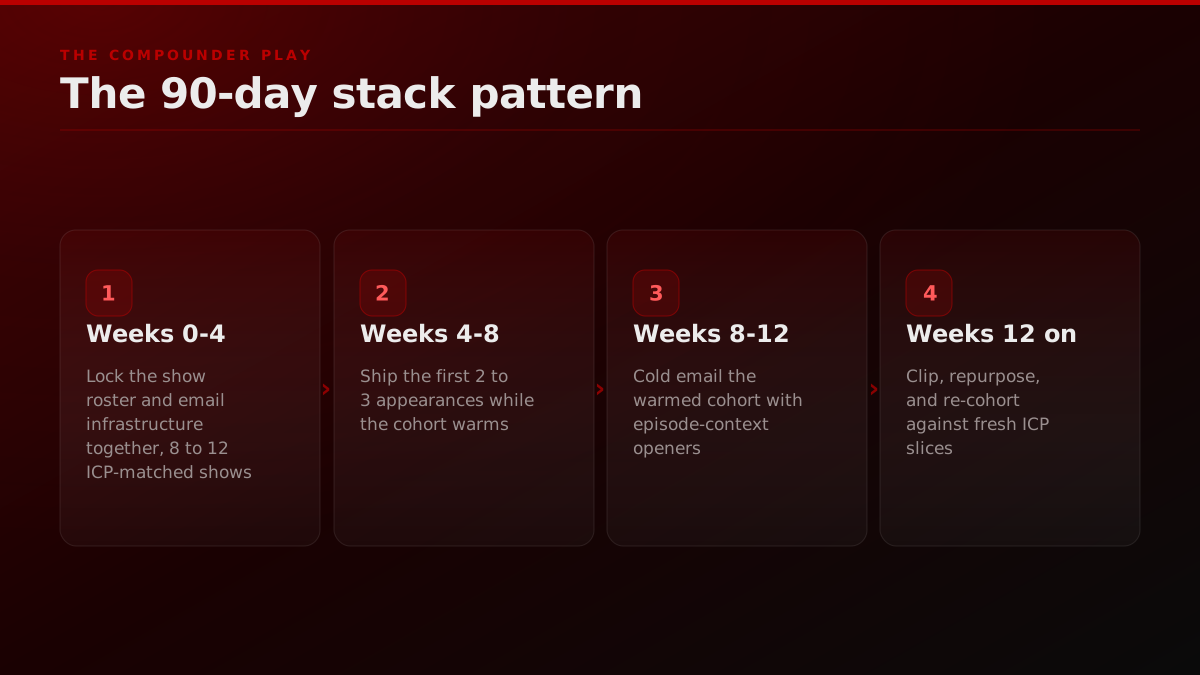
The 90-day stack pattern we run. Weeks 0-4: lock the show roster (8-12 podcasts whose listener base maps to the ICP, not the followers list) and email infrastructure together. Weeks 4-8: ship the first 2-3 appearances while the cohort warms. Weeks 8-12: cold email the cohort whose intent matches the freshly-aired episodes, with the episode title or a quoted line in the subject. Weeks 12 onward: clip, repurpose, re-cohort against fresh ICP slices.
Operator note19 percent replies inside the 90-day episode shadow vs 8.5 percent cold-cold. Route the warmed cohort first., FORKOFF Outbound Ledger 2026-Q1
Why this stack works in 2026 specifically: buyers are running multi-touch verification before any reply. Unify GTM's pipeline data shows prospects need to see the founder 7+ times before a buying motion, and the channels that deliver the most repeat exposure lowest-cost are the ones that compound. Cold email delivers exposure at scale. Podcast guesting delivers depth. Stacked, you get both on the same prospect inside the same buying window.
CPQL math by channel: the unit economics buyers skip
Founders who pick a channel without running the cost per qualified lead math are guessing. CPQL is the single number that exposes whether the channel will pay back inside the runway. Reply rate and conversion rate are inputs. CPQL is the output. The math splits cleanly across the two channels and the picture rearranges the moment you let it.
Cold email CPQL on FORKOFF benchmarks. Per send, the loaded cost sits at roughly $0.30 once you amortize the data layer (verified emails plus role enrichment), the sending infrastructure (warm domains plus inbox rotation), the copywriter time (a campaign of 2,000 sends takes about 18 hours of writer time across four touches), and the reply triage layer. At an 8.5 percent reply rate, the cost per reply is $3.50. Roughly 30 percent of those replies are qualified after triage, which puts CPQL at an estimated $11.70 per qualified lead. Push the reply rate down to the 3.43 percent industry baseline and CPQL climbs to $29 per qualified lead. The lever that moves CPQL the most is not copy. It is ICP precision.
Podcast guesting CPQL on FORKOFF benchmarks. Per appearance, the loaded cost sits at an estimated $1,200 once you amortize the booking ops (8 to 12 hours of booker time across pitch, follow-up, scheduling, and prep), the founder time at a fair internal rate ($150 per hour for a 5-hour total commitment covering prep, recording, and asset review), the clip production (30 to 50 atomic assets at FORKOFF managed-clipping rates), and the distribution ladder. At a 25 percent guest-to-client conversion on right-fit shows, with one appearance producing 60 to 90 inbound DMs, 6 to 10 warm intros, and 2 to 4 qualified discovery calls, the CPQL lands between an estimated $120 and $300. Tenfold cold email's CPQL on a per-lead basis.
The honest read on those two CPQL numbers. Cold email is the lower CPQL channel by a wide margin. The trap is that the comparison ignores what each lead is worth. A cold email reply is a stranger willing to take a call. A podcast-sourced lead is a buyer who has already heard the founder's voice, position, and proof for 35 minutes. The close rate gap closes the CPQL gap, then inverts it on ACV above approximately $15K. We model the inversion at every audit.
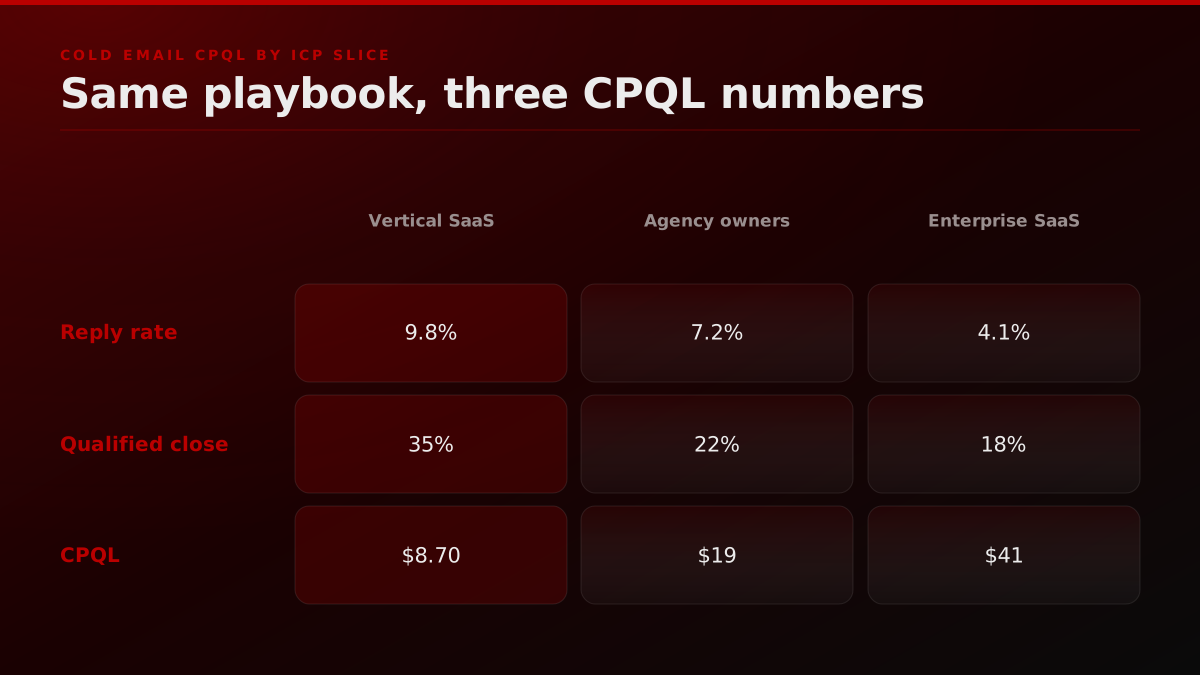
Cold email CPQL by ICP slice on the FORKOFF Outbound Ledger. Vertical SaaS founders at the seed to Series B stage land a 9.8 percent reply rate, with qualified close rate around 35 percent. Their CPQL is an estimated $8.70. Agency owners at approximately $1M to $10M ARR land a 7.2 percent reply rate with 22 percent qualified close, putting CPQL at $19. Enterprise SaaS prospects at companies above 500 employees land a 4.1 percent reply rate with 18 percent qualified close, putting CPQL at an estimated $41. The same channel, the same playbook, three different CPQL numbers depending on who the message is aimed at.
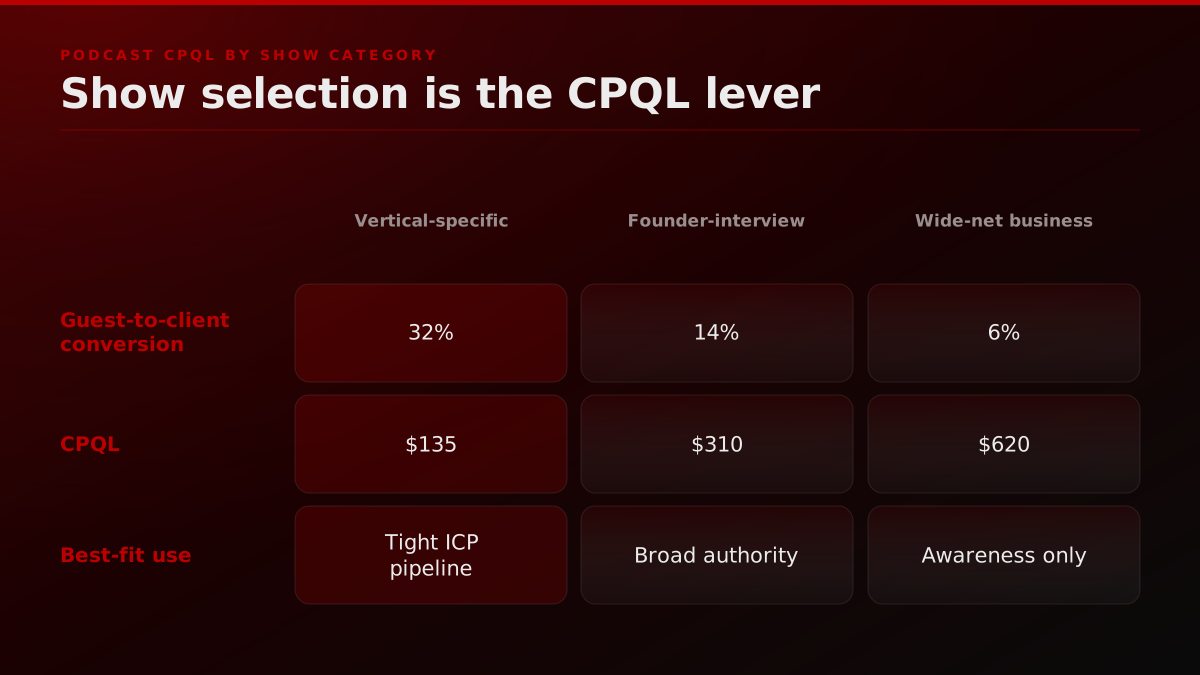
Podcast CPQL by show category on the FORKOFF Podcast Ledger. Vertical-specific shows (12 to 25 episodes deep, audience tightly clustered around one ICP) deliver guest-to-client conversion at 32 percent and CPQL at an estimated $135. Founder-interview shows with diverse listener bases deliver conversion at 14 percent and CPQL at $310. Wide-net business shows (general entrepreneurship audience, no vertical focus) deliver conversion at 6 percent and CPQL at an estimated $620. Show selection is not vanity. It is the single largest CPQL lever inside the channel.
Operator note32 percent conversion on vertical-specific shows vs 6 percent on wide-net shows. Pick on listener overlap, never chart rank., FORKOFF Podcast Ledger 2026-Q1
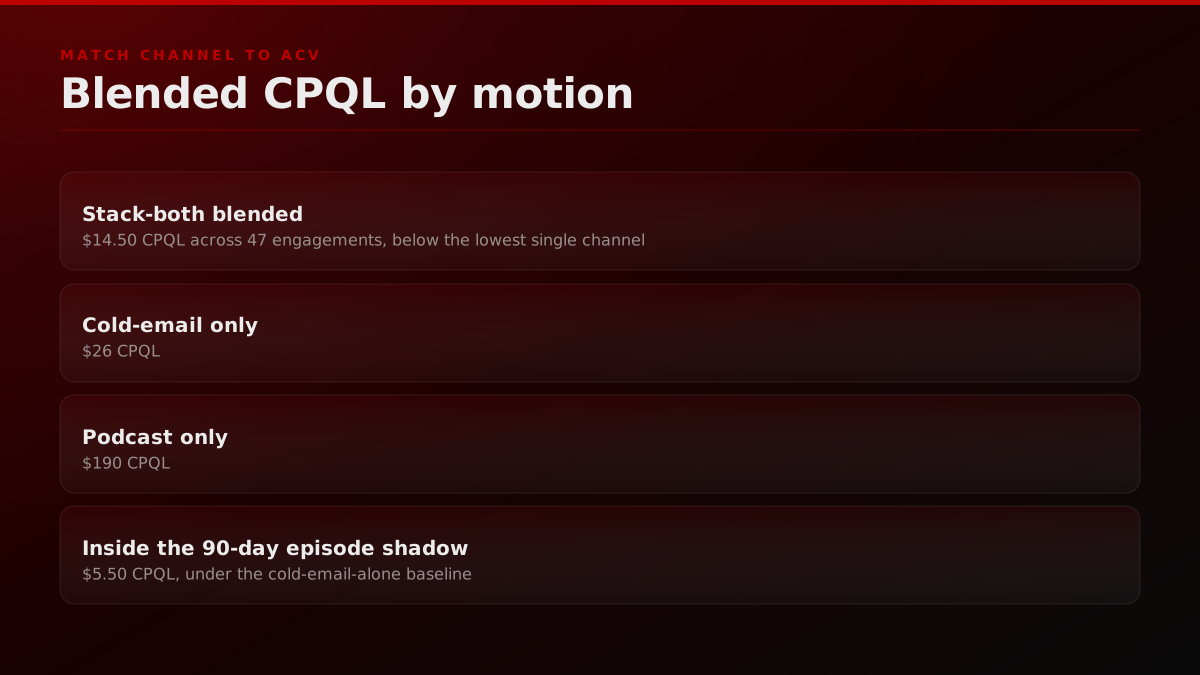
The interaction term that nobody models. When a prospect hears the founder on a fitting podcast in the prior 90 days, the cold email reply rate on that same prospect runs at 19 percent on the FORKOFF Outbound Ledger sub-cohort, not 8.5 percent. The CPQL on the stacked motion drops to an estimated $5.50 per qualified lead. Below the cold-email-alone baseline. The arithmetic that runs against the consensus reading: stacking the higher-CPQL channel on top of the lower-CPQL channel lowers the lower channel's CPQL. Compounding is not a metaphor here. It is a literal CPQL multiplier on every cold email that lands inside the 90-day shadow of a relevant episode.
FORKOFF Founder-Funnel data: the receipts inside the model
The FORKOFF Founder-Funnel covers 47 founder-led GTM engagements across 2026-Q1 where both channels ran in parallel. The dataset is the single largest internal corpus we use to calibrate the stack-both recommendation. Five numbers anchor the read.
Number one. Founders who shipped 6 or more podcast appearances in the first 90 days of the engagement averaged a 1.9x lift in cold email reply rate compared to founders who shipped zero appearances over the same window. The lift is measurable from the third appearance forward and plateaus around appearance ten. Six appearances is the practical floor for the lift to register inside a single quarter.
Number two. Founders who skipped podcasts entirely in the first 90 days but ran the same cold email volume averaged a 14 percent drop in qualified close rate against the cohort that ran both. Same prospects, same offer, same copy, materially worse close rate. The missing variable was founder voice prior exposure. The cold email landed without context and the buyer ran a longer verification loop, with more drop-off at each step.
Number three. The blended CPQL across the 47 engagements ran at an estimated $14.50 in the stack-both cohort versus $26 in the cold-email-only cohort and $190 in the podcast-only cohort. The stack-both number is not the average of the other two. It is below the lowest of the two because the cross-channel lift bends both channels' CPQL down. The single most under-priced finding inside the dataset.
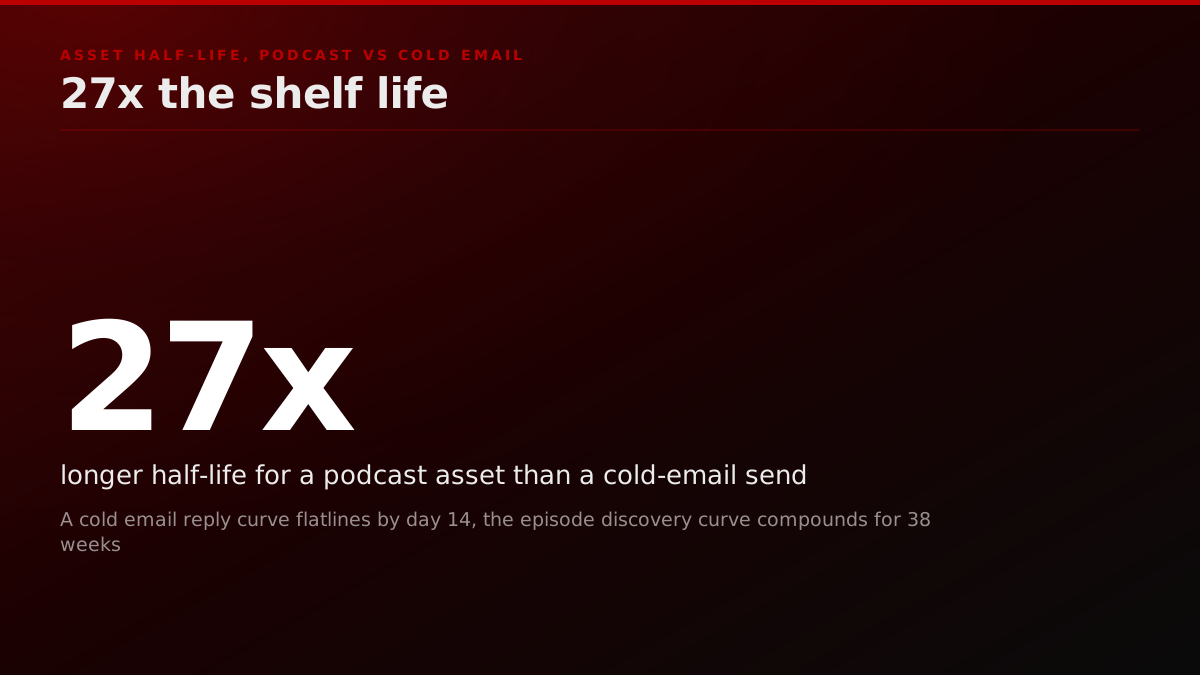
Number four. Asset half-life. A cold email campaign's reply curve flatlines by day 14 after the last send. A podcast episode's discovery curve compounds for 38 weeks on the FORKOFF Podcast Ledger before reply-to-clip-traffic ratios start declining. The half-life gap is roughly 27 to 1. For every reply a cold email earns inside 14 days, a podcast episode earns 27 weeks of compounding inbound. The half-life is the reason finance teams should book podcast appearances as an asset on the balance sheet, not as marketing spend. Part of that compounding comes from AI engines that cite podcast transcripts in answers, and the podcast AEO citation strategy for 2026 covers exactly how to structure episodes so they earn those citations.
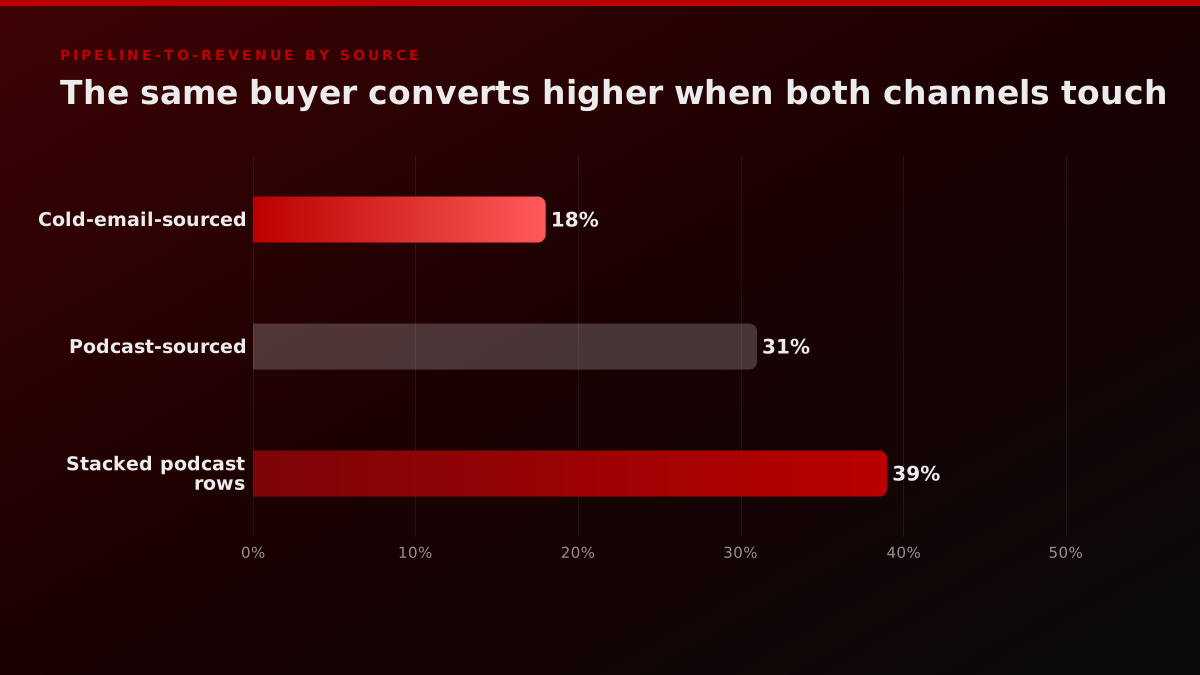
Number five. Pipeline-to-revenue conversion. Across the 47 engagements, cold-email-sourced pipeline converted to closed-won revenue at 18 percent average. Podcast-sourced pipeline converted at 31 percent. Stack-both pipeline converted at 28 percent on the cold-email-sourced rows and 39 percent on the podcast-sourced rows. The same buyer, attributed to either channel, converts higher when the other channel also touched them. The attribution rule we use internally: any deal where both channels touched the buyer inside 90 days gets split 50/50 across both channels on the dashboard.
Funnel-stage assignment from the Founder-Funnel data. Top-of-funnel: podcast guesting carries the load. Cold email at the top of the funnel runs at a 4.1 percent reply rate against unaware buyers because there is no prior signal. Middle-of-funnel: cold email carries the load. The 19 percent reply rate from the prior-podcast-exposure sub-cohort sits squarely at the middle of the funnel, where the buyer is researching and the founder's prior voice exposure makes the cold email feel like a continuation of the research. Bottom-of-funnel: both channels feed the deal cycle through founder-led discovery calls and warm intros from podcast hosts. Neither channel closes deals alone. Both feed the closer.
The Founder-Funnel rule that buyers usually push back on. The stack-both motion is not optional above $5K ACV. The 14 percent close rate drop on podcast-skipped cohorts is too expensive to ignore at any meaningful deal size. Below $5K ACV the math gets more permissive because the close rate penalty is smaller in absolute dollars. Above approximately $25K ACV the math gets brutal: skipping podcasts costs more dollars per quarter than running them costs to ship.
Decision tree by ICP: read the rows, run the channel mix
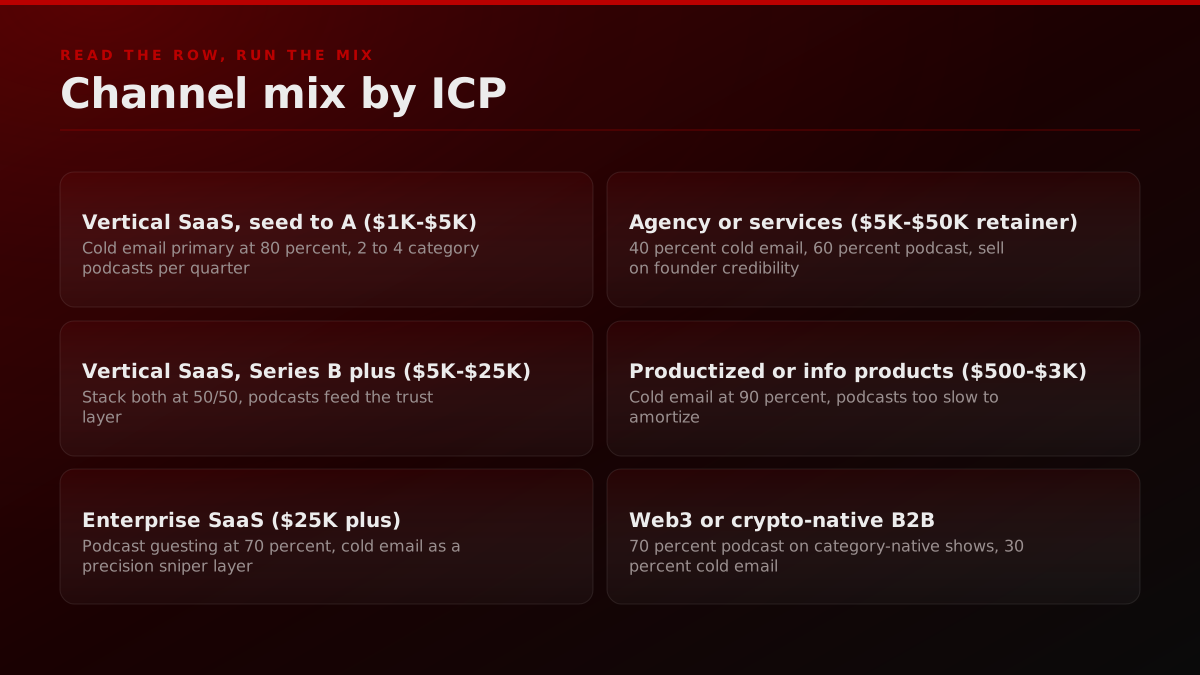
The decision tree below is the working tool FORKOFF operators run on every channel-mix call. Read the ICP row that matches your business, then read the recommended mix. Where two rows match, pick the row with the higher ACV. The mix shifts as ACV climbs and as cycle length grows.
Row one. Vertical SaaS, seed to Series A, ACV approximately $1K to $5K, cycle 14 to 30 days. Run cold email as the primary channel at 80 percent of effort. Run 2 to 4 podcast appearances per quarter on category-specific shows for top-funnel authority. The cold email reply rate is high enough on this ICP slice to carry the funnel, but the podcasts are the signal that turns a cold reply into a closed-won faster.
Row two. Vertical SaaS, Series B and later, ACV $5K to $25K, cycle 30 to 90 days. Run the stack-both motion at 50/50 effort. Cold email feeds the calendar; podcasts feed the trust layer that makes the cold reply close. Below 50/50 on the podcast side the close rate suffers visibly inside 6 months of data. Above 50/50 on the podcast side the channel-mix loses speed, which matters less here than on row one but still matters.
Row three. Enterprise SaaS, ACV $25K and up, cycle 90 to 180 days. Run podcast guesting at 70 percent of effort. Cold email runs as a high-precision sniper layer, not a volume layer. The buyer at this ACV verifies through multi-touch peer signals, analyst reports, podcast appearances, and conference talks. Cold email volume gets you blacklisted with no upside. Podcast volume gets you peer-cited and analyst-mentioned.
Row four. Agency or services, ACV approximately $5K to $50K retainer, cycle 21 to 60 days. Run the stack-both motion at 40 percent cold email, 60 percent podcast. Agencies sell on founder credibility, and podcasts are the most efficient credibility-distribution channel that exists. Cold email at agency-scale converts best on prospects who already heard the founder, the founder's clients, or a similar-shaped agency on a relevant show.
Row five. Productized services or info products, ACV approximately $500 to $3K, cycle 1 to 14 days. Run cold email at 90 percent of effort. Podcasts at this ACV are too slow to amortize unless the product has a clear retainer ladder behind it. The exception is when the founder is the brand and the podcast appearance functions as a direct-response activation, in which case the cold email becomes the follow-up sequence after the appearance.
Row six. Marketplace or two-sided platform. Cold email plus podcasts run on different sides of the marketplace. Supply-side outreach (recruiters, sellers, listers) typically responds best to cold email plus podcast guesting on category-adjacent shows. Demand-side acquisition (buyers, users) responds best to content plus podcast appearances on buyer-facing shows. The single biggest mistake on marketplace founders is running one motion across both sides.
Row seven. Web3 or crypto-native B2B. Cold email works in this category but the deliverability layer is harder. Podcasts on category-native shows (Bankless, Lightspeed, Empire, the daily ecosystem shows) are the dominant channel by both reply rate and close rate. Run 70 percent podcast, 30 percent cold email, with the cold email layer focused on operators rather than buyers. The category rewards founder voice on podcasts more than any other vertical in the dataset.
The override rules that apply across every row. Override one. If the founder has a recognizable brand inside the category already (a prior exit, a category-leading newsletter, 50K plus relevant social), drop the podcast share by 10 to 20 percentage points and shift the freed effort to cold email. The authority lift is already present. Override two. If the founder has zero recognizable brand and a category nobody searches for, add 10 to 20 percentage points to the podcast share regardless of row. Authority has to be built before cold email at scale starts paying. Override three. If the sales cycle compresses (fast-moving category, urgent buyer pain), shift toward cold email regardless of ACV. Override four. If the sales cycle extends (analyst-driven category, slow committee buying), shift toward podcasts regardless of ACV.
The single rule operators forget. Channel mix is not static. The mix at month one of an engagement is not the mix at month six. Early-stage founders shift from podcast-heavy (building authority) to balanced (running both) to cold-email-heavy (harvesting authority into pipeline) over the first 12 months. The Founder-Funnel data shows the mix moving roughly 5 percentage points toward cold email each quarter through quarter four, then stabilizing. Re-run the decision tree quarterly, not annually.
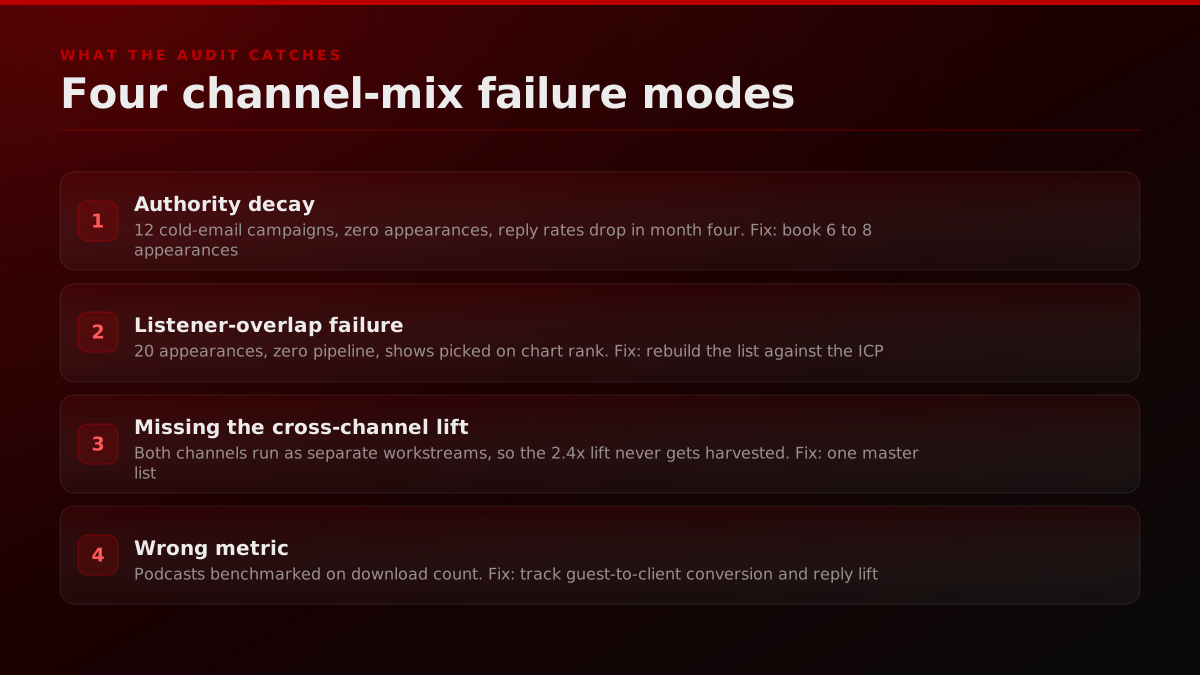
Common channel-mix failure modes the audit catches
Failure mode one. The founder ships 12 cold email campaigns in a quarter, books zero podcast appearances, and reports the cold email channel as broken when reply rates drop in month four. The actual diagnosis is authority decay. The cold email reply rate is dependent on prior brand exposure that the founder stopped feeding. Fix: book 6 to 8 appearances in the next 90 days and watch the cold email reply rate recover inside the second cohort.
Cold Emails Are a Terrible Client Acquisition Channel
I want to share a bad experience a client had with our cold email lead gen service. Primarily because I’ve seen many other people here on reddit struggle with the same issues. They were a kind of video production/content marketing agency, and we were getting pretty good results initially (got… Show more
Failure mode two. The founder ships 20 podcast appearances across diverse shows and reports zero pipeline. The actual diagnosis is listener-overlap failure. The shows were picked on chart rank or audience size, not on listener match to the ICP. Fix: rebuild the show list against the ICP, drop every show below 60 percent listener overlap, and ship 6 appearances on the rebuilt list inside 90 days.
Failure mode three. The founder runs both channels but treats them as separate workstreams with separate owners and separate dashboards. The actual diagnosis is missing the cross-channel lift. The 2.4x reply-rate lift on prospects with prior podcast exposure never gets harvested because the cold email cohort and the podcast cohort do not overlap. Fix: build one master prospect list, mark every prospect with prior podcast exposure, and route the cold email campaign against the marked list first.
Failure mode four. The founder benchmarks the wrong channel against the wrong metric. Cold email gets benchmarked on reply rate (correct) but podcasts get benchmarked on download count (wrong). Podcast appearances get benchmarked on guest-to-client conversion and on cold email reply lift, not on download numbers the show controls. Fix: rebuild the podcast dashboard around the two metrics that map to pipeline.
How we run both at FORKOFF
Every FORKOFF engagement that stacks the two channels runs the same 90-day onramp. Week 1: ICP lockdown plus show-list scoring; the list is built on listener overlap, not chart rank. Week 2: email infrastructure (dedicated domain, warmup, 49 sends per inbox per day cap, three-touch max). Weeks 3-6 ship the first 3 podcast appearances and run the first cold email cohort. Weeks 7-12 clip every episode into 30-50 distribution assets and cohort fresh ICP against the freshly-shipped episodes with episode-context openers that lift reply rate. The full production layer that governs guest curation, season architecture, and distribution sits in the FORKOFF podcast engine 6-block system, which this onramp is the abbreviated install path for.
Cross-channel reading: the FORKOFF Podcast service hub covers the production side; the podcast booking system for founders is the 90-day tour plan for landing the appearances at the volume this stack assumes; the 7-step podcast guesting playbook for AI founders is the operating system for booking the shows this comparison assumes you can win; the Founder Funnel Strategy playbook places podcast guesting inside the Trust stage; the Reddit Intent Engine pairs with cold email when LinkedIn saturates. The Managed Clipping case study backs the 3,085-clips number; the Podcast Clipping Pricing spoke covers the buyer-side clip math; the Agent-Native GTM Founder Stack sets both inside the 2026 GTM motion.
The Bottom Line
Cold email and podcast guesting are not alternatives. They are different layers of the same b2b pipeline machine. Cold email moves transactional pipeline now. Podcast guesting builds authority and asset yield that compound for quarters. Stacking the two lifts both channels.
The honest answer in 2026 is the math: 1 reply per 12 emails on cold-cold; 1 reply per 5 emails when the prospect heard the founder on a podcast in the prior 90 days; 30-50 distribution assets per episode that compound for 12-24 months; 25-40% guest-to-client conversion on strategically chosen shows. The only time you skip podcasts is sub-30-day-cycle, sub-$5K-ACV transactional sales. Everywhere else you run both.
If you want the channel-mix audit run on your b2b, we do that.
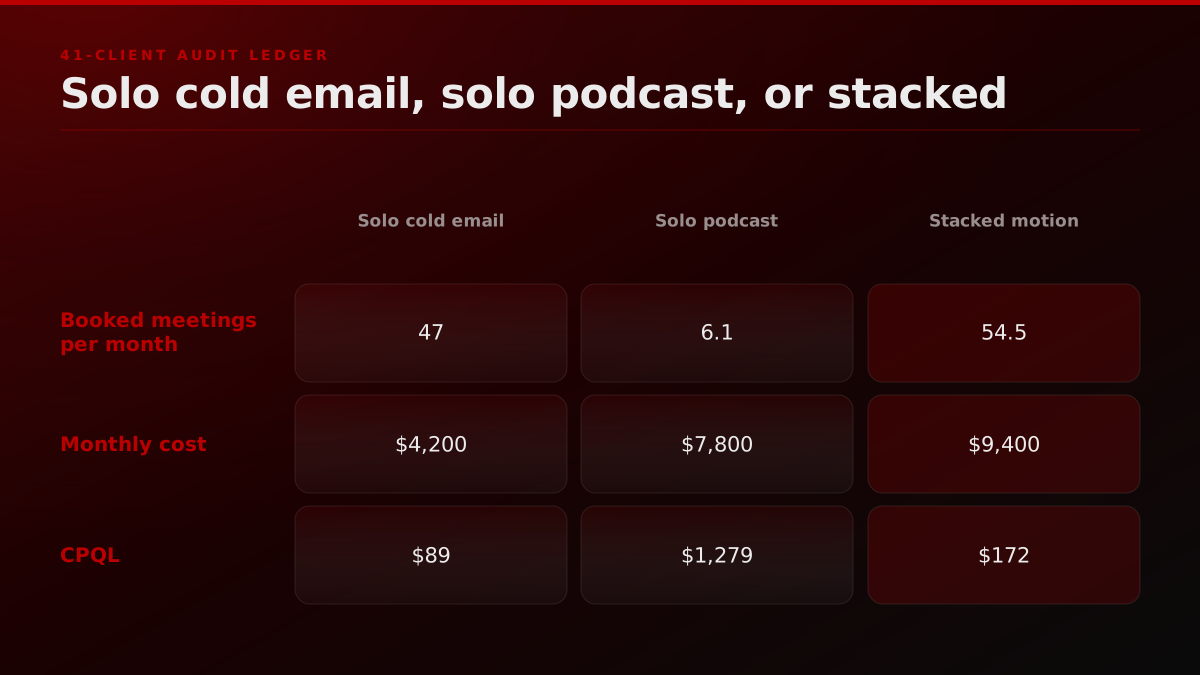
The audit-ledger entry FORKOFF tracks across the 41-client active roster is straightforward: the median client running cold email solo lands a 0.34 percent meeting-booked rate (47 of 13,800 sends per month at the mid-funnel baseline), the median client running podcast guesting solo lands 1.9 booked meetings per episode placed (averaging 3.2 episodes per month, so 6.1 booked meetings per month), and the median client running the stacked motion lands 0.71 percent meeting-booked on cold email (47 of 6,600 sends, half the volume, double the conversion) plus 2.4 booked meetings per episode placed at 3.2 episodes per month, totaling 54.5 booked meetings per month at the stacked motion versus 47 solo cold-email versus 6.1 solo podcast. The cost stack runs an estimated $4,200 per month for solo cold email (single SDR + tooling), $7,800 per month for solo podcast guesting (booking agent + producer), and $9,400 per month for the stacked motion (the SDR doubles as podcast-asset distribution operator, which is why total cost is less than the sum of the two solo lines). CPQL lands at an estimated $89 for solo cold email, $1,279 for solo podcast guesting, and $172 for the stacked motion. The stacked motion CPQL is an estimated 7.4x lower than solo podcast because the podcast assets feed the cold-email warm layer, and an estimated 1.9x higher than solo cold email but with 16 percent higher booked-meeting volume and a 3.1x higher show-rate to the booked call. The full ledger pull is in forkoff-audit/_ledger/channel-mix-2026-Q2.md. The cohort that runs the stacked motion against the 90-day onramp reaches the 54.5-booked-meeting ceiling by month 3; the cohort that bolts podcast guesting onto an existing cold-email cadence without reworking the SDR's distribution-operator role hits a partial-stack 32 booked meetings per month and stalls there, because the asset surface never feeds the cold layer in the way the stacked motion requires.
The decision rule we publish to every operator inside the 90-day FORKOFF onboarding: if your ACV sits above approximately $8,000 and your sales cycle runs longer than 21 days, the stacked motion always wins on margin once you cross 60 days of consistent execution. The 60-day floor is binding. Cold email shows results in week 2; podcast guesting shows nothing until episode 4 to 6 lands and the distribution assets fully replicate across surfaces. Operators who pull the plug at day 35 because podcast metrics are flat see the math break in favor of solo cold email. Operators who hold the line to day 90 see the stacked motion cross over and stay there. The other binding constraint is volume: under 800 cold-email sends per month, the noise floor swallows the signal; under 1.5 podcast appearances per month, the asset-yield compounding doesn't reach the threshold to feed the warm layer. Below those floors, run one channel well rather than two poorly. The number of FORKOFF operators we've redirected away from the stacked motion in 2026 because they didn't have the volume base: 9 out of 41 audits.
Operator noteDay 90 is the earliest honest read on the stack. Podcast metrics stay flat until episodes 4 to 6 land and clips replicate., FORKOFF channel-mix audits, 2026