Podcast clipping revenue is the recurring subscription income earned when a long-form episode is sliced into short-form vertical clips, distributed across Shorts, Reels, and TikTok, and tracked into a paid funnel. In this 13-day managed campaign, 3,085 clips produced 1.19M views and 17 new paying subscribers at $50 per month. March closed with 27 paying subscribers (10 renewed from February) and MRR rose from about $595 to $1,290, at a $0.003 cost per qualified view. Whether those economics carry to a given show is the question answered at is clipping worth it for podcasts.
TL;DR
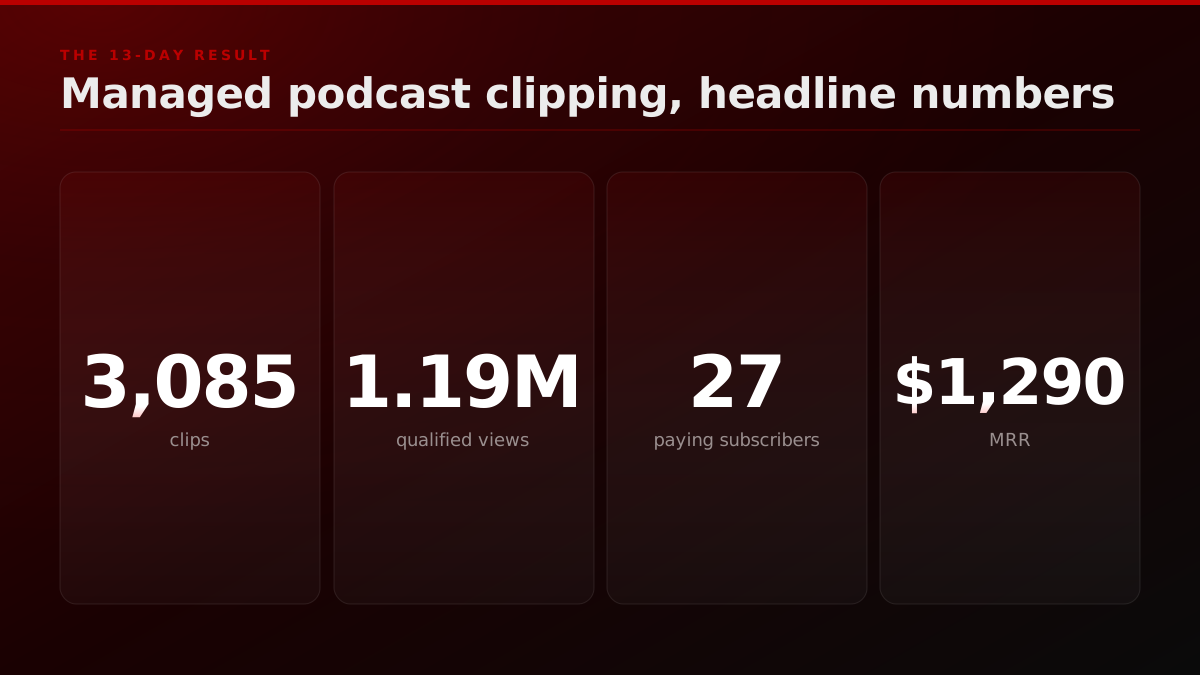
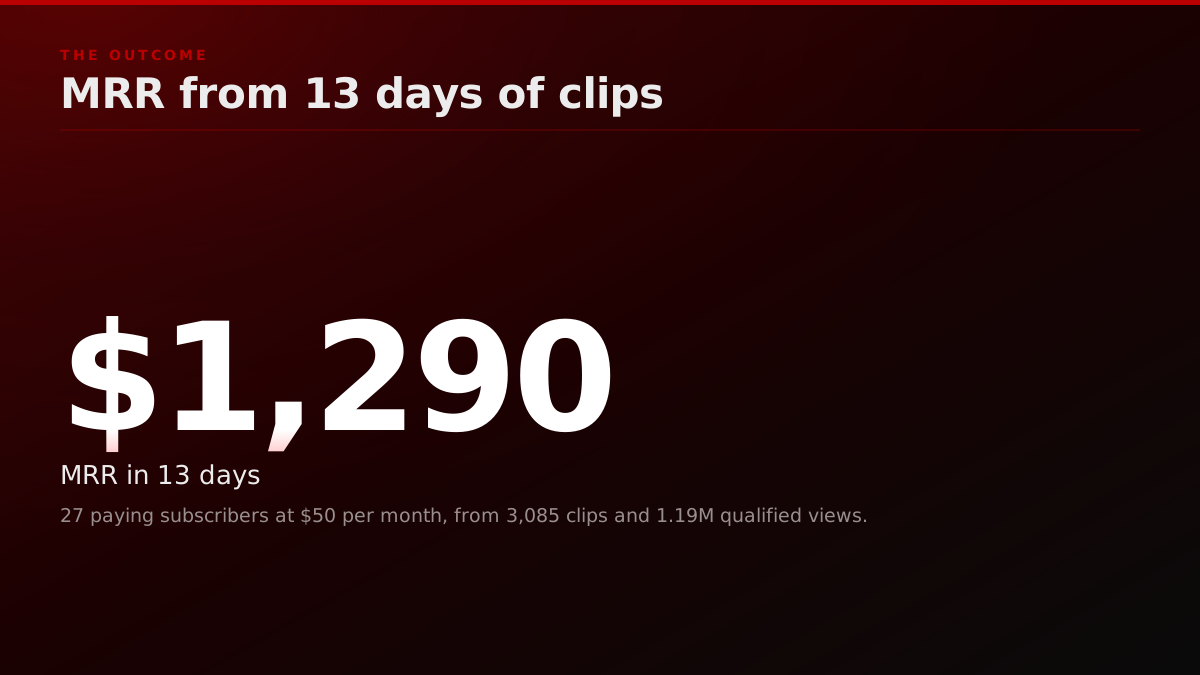
13 days of managed podcast clipping produced 3,085 clips and 1.19M views. March closed with 27 paying subscribers, 17 of them new (10 renewed from February), and MRR rose from about $595 in February to $1,290 by the end of March. Cost per qualified view: $0.003 (33x lower-cost than agencies).
About these numbers
Revenue and engagement figures in this post (clip counts, qualified views, cost-per-qualified-view, subscriber conversions, MRR) are drawn from the FORKOFF Clipping Ledger 2026: operator-tracked, per-clip attribution data across active podcast engagements. Individual figures represent verified campaign results, not projections. Market benchmarks for unmanaged clipping costs are directional estimates based on FORKOFF operator observations.
The CLIPPING REVENUE LEDGER
The CLIPPING REVENUE LEDGER is FORKOFF's per-clip revenue accounting model. One 60-minute podcast contains 10-15 high-signal moments; each gets clipped into 2-3 platform-native variants; one conversation equals six weeks of distribution if the operation runs.
The ledger is the operating spine of every podcast engagement FORKOFF runs as an AI Agency. It does three jobs at once. First, it scores every raw episode against a topical-density rubric so editor hours land on the moments that actually have downstream payoff. Second, it routes each surviving moment into a per-platform variant matrix, so a single contrarian quote ships as a Shorts hook, a Reels visual-led variant, and a captions-first version for native upload. Third, it tags every variant with a UTM signature that maps back to a paid-subscriber event, so the cost-per-qualified-view number at the bottom of this post is not an estimate, it is a query.
Most clipping shops report views. The ledger reports a chain: episode, moment, variant, qualified view, landing click, signup, paid subscriber, retained subscriber at day 30, retained subscriber at day 90. Every row is a single clip. Every column is a stage in the funnel. The grid format is the entire reason the $0.003 cost-per-qualified-view benchmark survives an auditor's review. Without per-clip attribution, the unit cost number collapses into the kind of vanity reporting most agencies still pass off as a monthly deck.
Industry Context
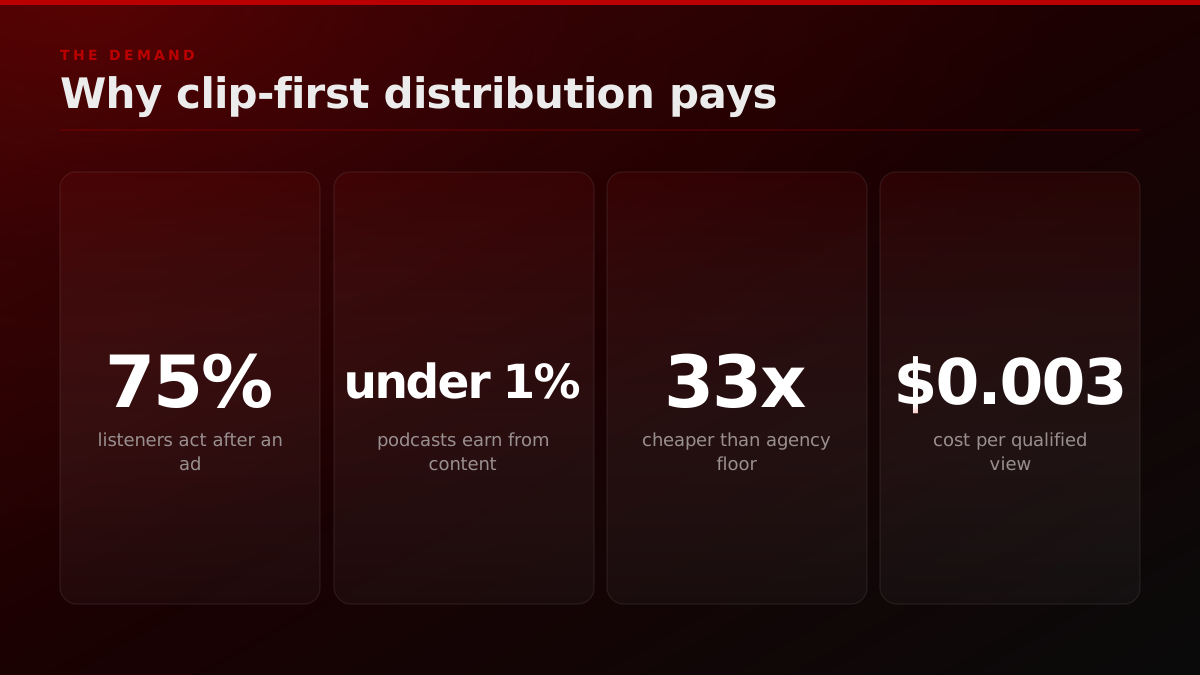
Across the FORKOFF Clipping Ledger 2026 (n=3,085 clips), 1-2 monthly podcast appearances convert into 30-50 distribution assets per run at $0.003 cost per qualified view (33x lower-cost than the $0.01-$0.10 industry baseline).
Source: FORKOFF Clipping Ledger 2026, n=3,085 clips
Most podcast episodes get uploaded, get 200 views, and die.
The Content Graveyard Problem
There are over 4 million podcasts listed on Spotify alone, and the median episode gets fewer than 200 downloads in its first 30 days. The content graveyard is what happens when a founder records, edits, and uploads an episode, shares it once on X, maybe LinkedIn, and then watches it die. The fix is a per-episode distribution routine, set out at how to promote a podcast. This is not a content quality problem, it is a distribution architecture problem: a 60-minute episode holds 10 to 15 clip-worthy moments, and leaving it as a single upload throws away 30 to 45 distribution assets.
Founders spend hours preparing, recording, and editing a podcast episode. They upload it. They share it once on X. Maybe LinkedIn. And then... nothing.
This isn't a content quality problem. It's a distribution architecture problem. That gap is exactly why we built managed clipping at FORKOFF as a distribution layer, not another posting tool.
Creating content is rarely the bottleneck anymore. Distribution is. A founder can record a great podcast, spaces session, product demo, or interview, but if only a few thousand people see it, most of the value gets lost.
The math is simpler than most founders realize. A 60-minute episode is 3,600 seconds of raw signal. Of those, somewhere between 600 and 900 seconds are clip-worthy under a strict topical-density rubric. That is 10 to 15 standalone moments per episode, each capable of being cut into two or three platform-native variants. One episode that gets clipped at full coverage produces 30 to 45 distribution assets. The same episode left as a single 60-minute YouTube upload produces one. Distribution capacity is not a function of how many episodes you record, it is a function of how many moments you mine out of the episodes you already have.
The graveyard problem is what happens when founder time and editor budget are pointed at producing the next episode instead of harvesting the last one. That inversion, where the clip becomes the product and the episode becomes the raw material, is the same logic that explains why OpenAI paid $200M for a 7,000-viewer podcast. Five episodes a month, single-cut distribution, yields five assets and roughly 1,000 views per month in the median case. Five episodes a month, 30-asset clip coverage, yields 150 assets and a six-figure monthly qualified-view ceiling under the same audio raw material. The unit input is identical. The distribution architecture is the only variable that moved.
What Happens When You Clip a Podcast at Scale?
Clipping at scale means running a structured 13-day sprint where volume ramps from 12 clips a day in the warmup to 425 clips a day at the peak, with every clip tagged for per-hook attribution. This live March 2026 campaign for a crypto creator pushing a $50 per month subscription shipped 3,085 clips across the window. For a non-podcast comparison at higher view-volume scale, the Spencer Pratt clipping teardown documents how a $30K celebrity campaign produced 25M views and what the cost-per-qualified-view actually was.
The Setup
This is a live campaign we ran for one of our podcast distribution clients in March 2026. Numbers are from our internal analytics, unedited.
- Creator: Crypto YouTube influencer
- Product: Paid subscription community ($50/month)
- Campaign period: 13 active distribution days
- Platform: managed clipping
The 13-Day Operating Cadence
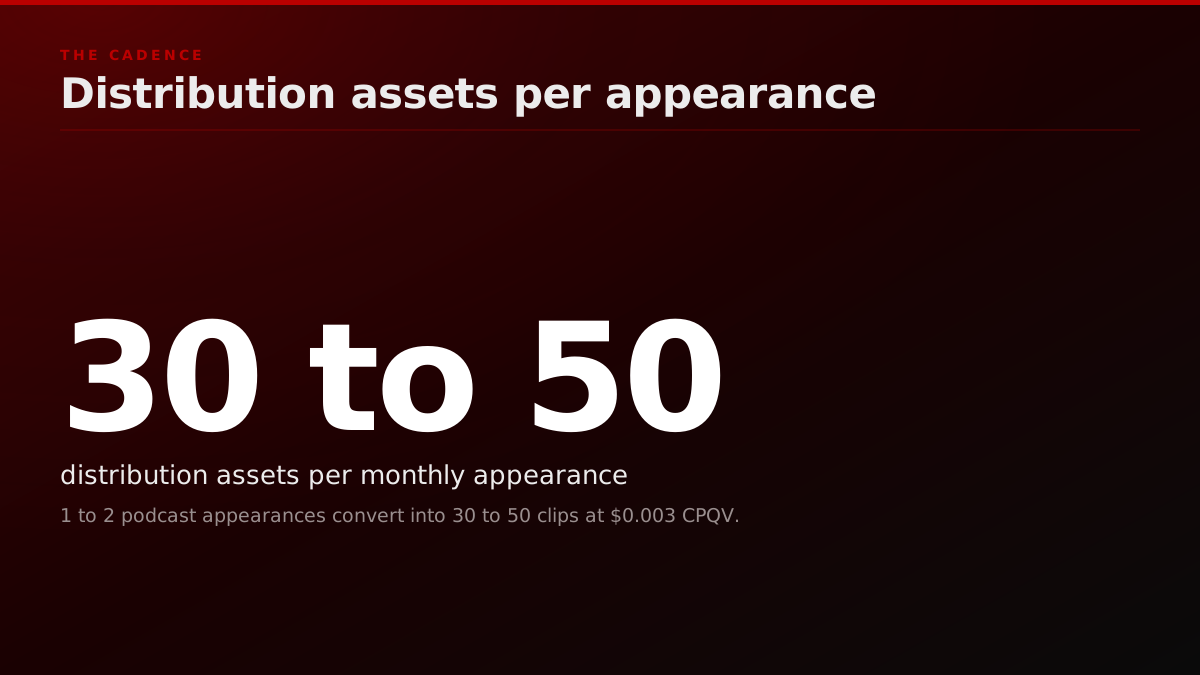
We split the sprint into three phases so the creator network, the editor pool, and the attribution stack stay in lockstep. Each phase has a different priority: learn, scale, compound.
Day 1 to 3 is the warmup. We ship 12 to 40 clips per day from the top five episodes. Volume is deliberately low so the per-clip signal is legible before the budget scales. We read save rate, reshare rate, and average view duration per hook, and kill underperformers within 24 hours.
Day 4 to 9 is the scale phase. Volume ramps to 200 plus clips per day. Platform-specific hooks and thumbnails rotate in a daily briefing. Underperforming hooks die within 36 hours, and winning hooks get replicated across the next three episodes in the catalog.
Day 10 to 13 is the peak. We concentrate 350 to 425 clips per day on the episodes with proven hook-to-save ratios. The peak day, March 22, delivered 180,264 views off 425 clips. That is the compounding moment the warmup phase is designed to earn. The peak is not when the creator works hardest; it is when the signal from the first nine days finally pays back.
Every phase feeds the next. Without the warmup we burn editor hours on clips the algorithm will never promote. Without the peak we never hit the qualified-view density that drives paid subscriptions.
The single biggest mistake founders make when they try to run this cadence themselves is treating the warmup as a soft launch. They post 12 clips a day for 13 days and call it a campaign. The result is 156 distributed assets with no signal density and no compounding effect. The cadence works because volume scaled from 12 clips on day one to 425 on the peak day, not because volume holds flat. The algorithm rewards a creator who is accelerating against the platform. A flat-volume operator looks identical to every other catalog account, and the recommendation engine routes the impressions accordingly.
The second mistake is failing to instrument the warmup. Days one to three are a measurement window, not a creative window. We are not optimizing reach during the warmup, we are picking which three hooks survive into the scale phase. If save rate, reshare rate, and average view duration are not logged per clip per hook, the scale phase has no signal to optimize against and the peak window collapses into a guess. Operators who skip instrumentation always report a single big day in the middle of the sprint, never a structured peak in the final 96 hours.
Operator noteDays 1 to 3 are a measurement window, not a creative window. Log save, reshare, and dwell per clip per hook or the scale phase flies blind., FORKOFF clipping operations, 2026
Andrej Karpathy
@karpathy
Judging by my tl there is a growing gap in understanding of AI capability. The first issue I think is around recency and tier of use. I think a lot of people tried the free tier of ChatGPT somewhere last year and allowed it to inform their views on AI a little too much. This is… Show more
What Are the Economics of a Managed Clipping Campaign?
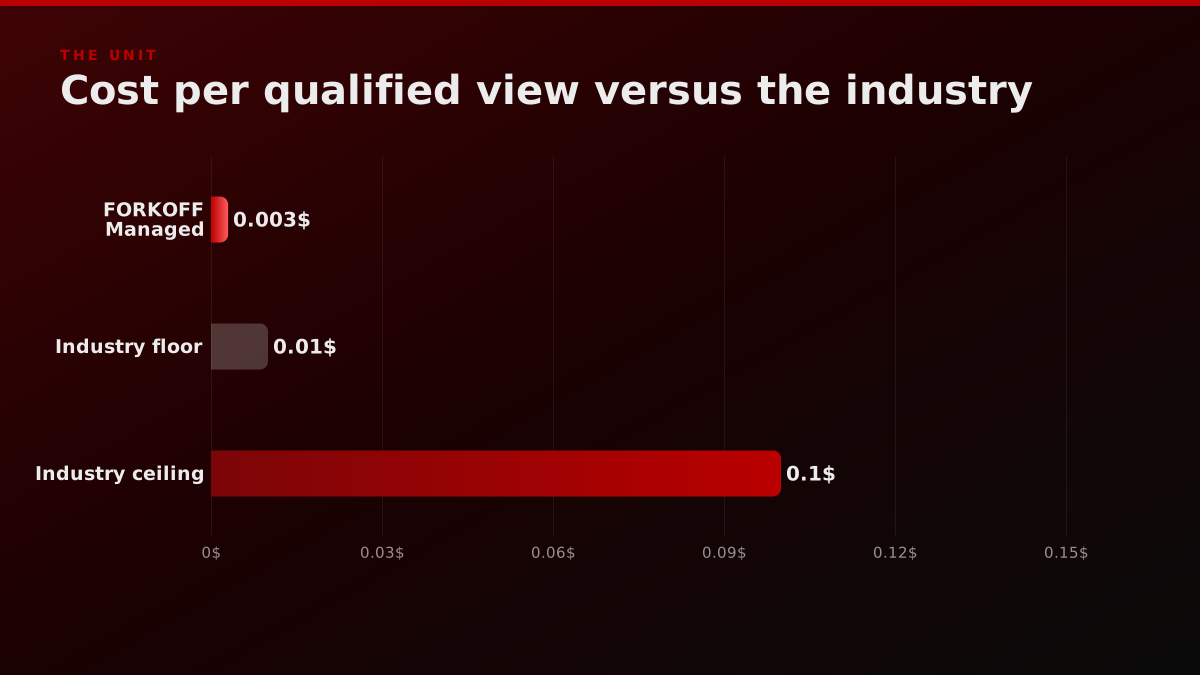
The economics of this campaign reduce to one number: $0.003 per qualified view, against an agency floor of $0.01 to $0.10. Across 1,190,014 views, the equivalent agency line item would have run between an estimated $11,900 and $119,000, and the same volume shipped at an order of magnitude less because the creator network, editor pool, and attribution stack are productized rather than rebuilt per client.
Cost Per Qualified View: $0.003
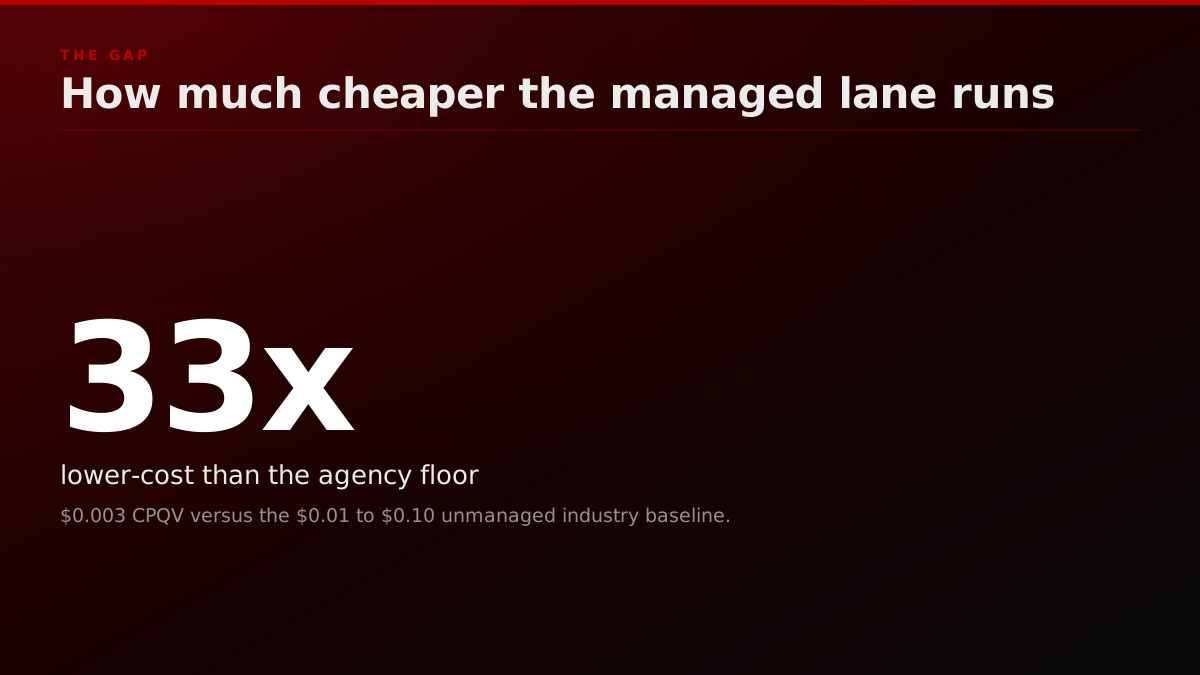
We benchmark every engagement against the three dominant cost curves, so founders can see exactly where the budget goes:
- Traditional agencies: $0.01 to $0.10 per view
- Influencer networks: $0.05 to $0.30 per view
- Managed clipping (this campaign): $0.003 per view
Why The Agency Line Item Costs 33x More
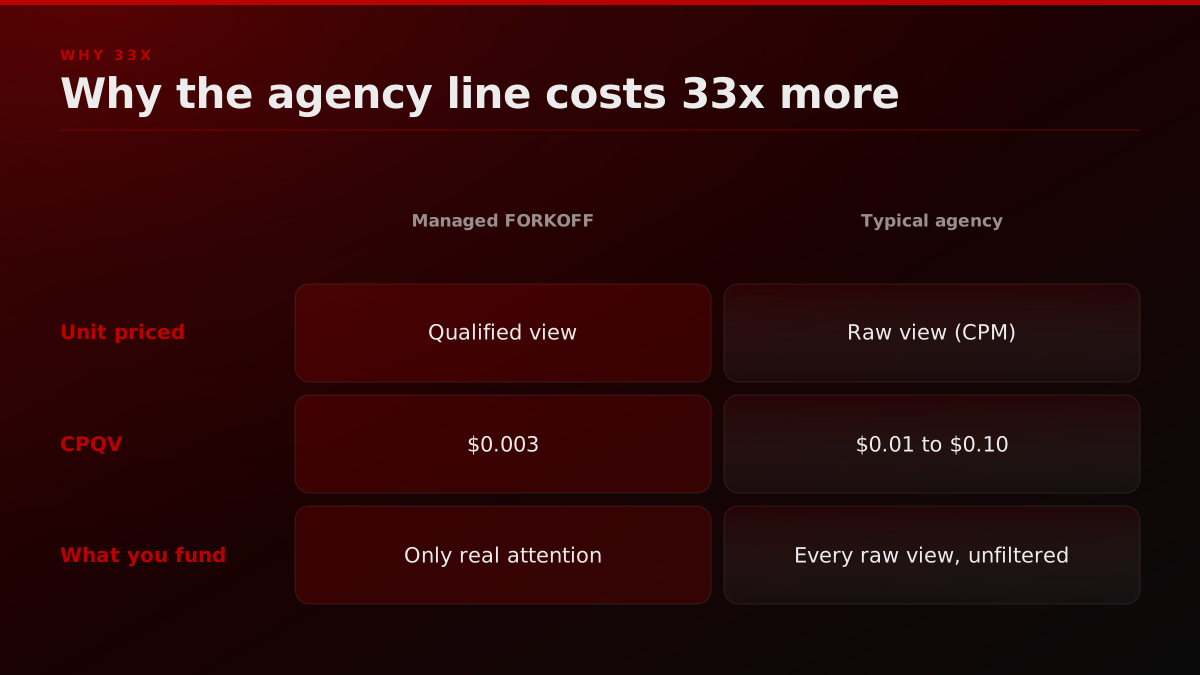
A traditional clipping agency charges $15,000 to $50,000 per month in retainer before a single clip ships. The full retainer grid is in our Podcast Clipping Agency Pricing breakdown, and the tiers track a predictable structure: a single account manager, a roughly 200 clip monthly output cap, and rarely any qualified-view instrumentation.
Against the 1,190,014 views this campaign delivered, the equivalent agency line item would land between $11,900 and $119,000. We shipped the same volume at an order of magnitude less because the creator network, the editor pool, and the attribution stack are productized, not rebuilt per client.
The $0.003 number is not a promotional price. It is the unit cost of a vertical operator stack: 30 to 40 freelance clippers paid per qualified view, an internal QA and dedupe layer, and a landing-page attribution layer that maps views to paid subscribers. When that stack serves 10 creators concurrently, fixed costs amortize across the portfolio and the unit economics drop by another 20 to 30 percent versus a single account boutique agency.
The Conversion Funnel
1,190,014 views
  793 landing page clicks
  54 free signups
  17 new paid subscribers (+10 renewals = 27 paying in March)
  MRR: about $595 in February, $1,290 by the end of March
One in 47 viewers who clicked through became a new paid sub. That is the number that actually matters and the number the retainer agency model almost never optimizes for.
The 13-day funnel, stage by stage
| Funnel stage | Count | Rate | What qualifies it |
|---|---|---|---|
| Views | 1,190,014 | Base for the rates below | Total views in the client campaign report |
| Landing page clicks | 793 | 0.07% of views | UTM-tagged click to dedicated page |
| Free signups | 54 | 6.8% of clicks | Email captured on clipping-only page |
| New paid subscribers | 17 | 31% of signups | $50/month sub, per-clip UTM attribution (27 paying in March incl. 10 renewals) |
FORKOFF Clipping Ledger 2026, March 2026 campaign: 3,085 clips over 13 active distribution days for a crypto creator's $50 per month subscription community.
Platform Routing Economics by Funnel Stage
Each row of the funnel above is a different platform conversation, and the routing economics of every platform are different by an order of magnitude. YouTube Shorts is the only network in the rotation where the viewer is already inside a subscribe-first interface, so a clip that clears the dwell filter has a measurable probability of producing a profile visit in the same session. Reels is built around a passive scroll, so a Reels view sits further from the landing-page click than a Shorts view, even when both clips ran the same hook. TikTok was held out for this campaign because the audience overlap with a $50 per month crypto subscription product is too thin to underwrite, and we would rather forfeit the topline view count than poison the cost-per-subscriber math the engagement was scored on.
The routing decision happens at the briefing layer, not the editing layer. We tag every moment in the ledger with a platform-fit score before a single editor touches the asset. A long monologue beat with a strong audio hook routes to Shorts. A visual gesture or a chart-overlay moment routes to Reels. A meme-friendly soundbite routes to native uploads, which sometimes means none of the three platforms. That routing logic is what keeps the editor pool from spending eight hours on a Reels variant of a clip that was never going to land in a passive feed.
Industry Insight
According to a 2025 Edison Research study, 75% of podcast listeners have taken action after hearing a podcast ad.
Source: 2025 Edison Research Study
The Compounding Revenue Model
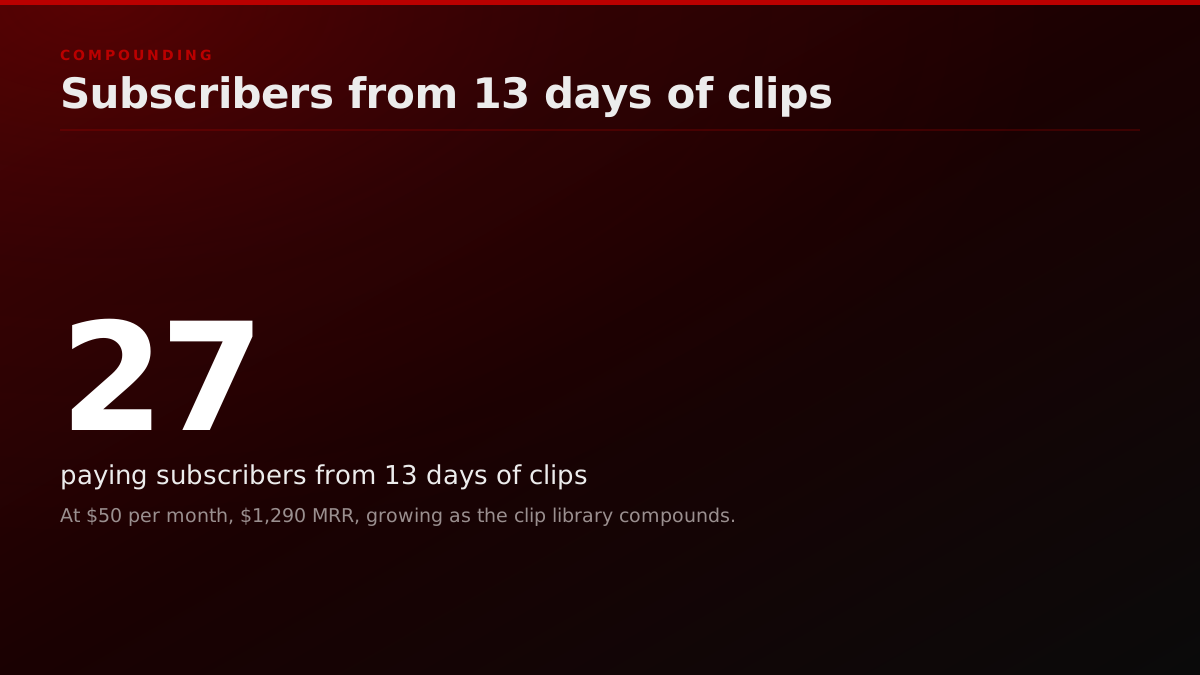
The compounding revenue model is the part most people miss. A one-off campaign that lifts MRR to $1,290 in month one is a single data point, but a campaign that stacks cohorts is a revenue curve. The 17 new paying subscribers landed in month one do not reset at month two, they stack on top of the next cohort, and by month six five stacked cohorts push the effective cost per retained subscriber under an estimated $35.
A one-off campaign that lifts MRR to $1,290 in month one is a single data point. A campaign that compounds is a revenue curve. The 17 new paying subscribers we landed in month one do not reset at month two; they stack on top of whatever the next cohort delivers, and the math changes shape every month the creator stays in market.
What Happens to the 17 New Subs at Day 30, 60, 90
Day 30 is the cohort settle. At the 83 percent renewal rate measured from February to March (10 of 12 renewed), roughly 14 of the 17 new subs renew at their first monthly bill. That month-one retention rate sits directly above the 60 to 80 percent SaaS benchmark that Tomasz Tunguz publishes for early-stage subscription products (source: tomtunguz.com).
Day 60 is when the stack begins. The surviving subs pay again, and a fresh cohort of roughly 30 new subs layers on from the next 13-day sprint. MRR is no longer $1,290. It moves past an estimated $2,600 and the cost-per-new-sub line starts trending down against a flat operator budget.
Day 90 is when the curve starts. Three stacked cohorts, two paying bills, one new. Assuming the 83 percent retention curve holds and each sprint lands a comparable cohort, MRR breaks an estimated $3,300 without any additional ad spend. By month six the same engine is running on five stacked cohorts, and the effective cost per retained subscriber is under $35.
This is why we underwrite clipping engagements against month-six MRR, not month-one revenue. Paying for the acquisition engine is only the first half of the math. The retention curve is the other half.
Operator noteUnderwrite a clipping engagement against month-six MRR, not month-one revenue. The retention curve is the other half of the math., FORKOFF clipping audits, 2026
That second half is what makes managed clipping lower-cost per subscriber than paid ads over any six-month horizon. Founders who budget for month one and bail after four weeks never see the compounding slope that turns $1,290 MRR into an estimated $5,000 plus by the end of quarter two.
Single-Operator Earnings Math
The same compounding model maps onto a single operator who runs the clipping engine on their own catalog with no managed support, with a meaningfully different shape. A solo operator working from a personal podcast typically ships 30 to 60 clips per week, not 200 to 400 per day. The qualified-view ceiling collapses to roughly 80,000 to 120,000 per month under that throughput. At this campaign's view-to-click rate (793 clicks on 1.19M views), the same 3.4 percent click-to-paid conversion and the same $50 per month price point, that ceiling pencils out to between an estimated $90 and $140 in net new MRR per month before retention compounding starts.
The number sounds small until the operator math is run for what it actually replaces. A solo operator running a 30-clip-per-week engine on their own back catalog needs roughly 8 to 10 hours per week to keep the pipeline running, including editing, posting, and per-clip QA. At an estimated $40 per hour opportunity cost, the all-in operator cost is between $1,280 and $1,600 per month. The MRR engine pays back the operator's time inside month four, and from month five onward every new paying subscriber lands at near-zero marginal cost, because the catalog and the editing rig are already amortized.
That is the floor of the model. The ceiling is what happens when the operator graduates from working the pipeline to managing a clipping crew under the same ledger, which is the exact transition the FORKOFF Clipping Ledger was built to absorb. The unit economics do not change shape, they change scale. Same $0.003 cost-per-qualified-view benchmark, same 3.4 percent click-to-paid conversion, same retention curve. Only the topline volume moves.
How I Make VIRAL Podcast Clips (2.5 Million Views!) | Full Workflow
Libsyn
Libsyn's full workflow for viral podcast clips that hit 2.5M views, the production-side mechanics behind the revenue case study.
Why Can't Self-Serve Clipping Tools Produce These Numbers?
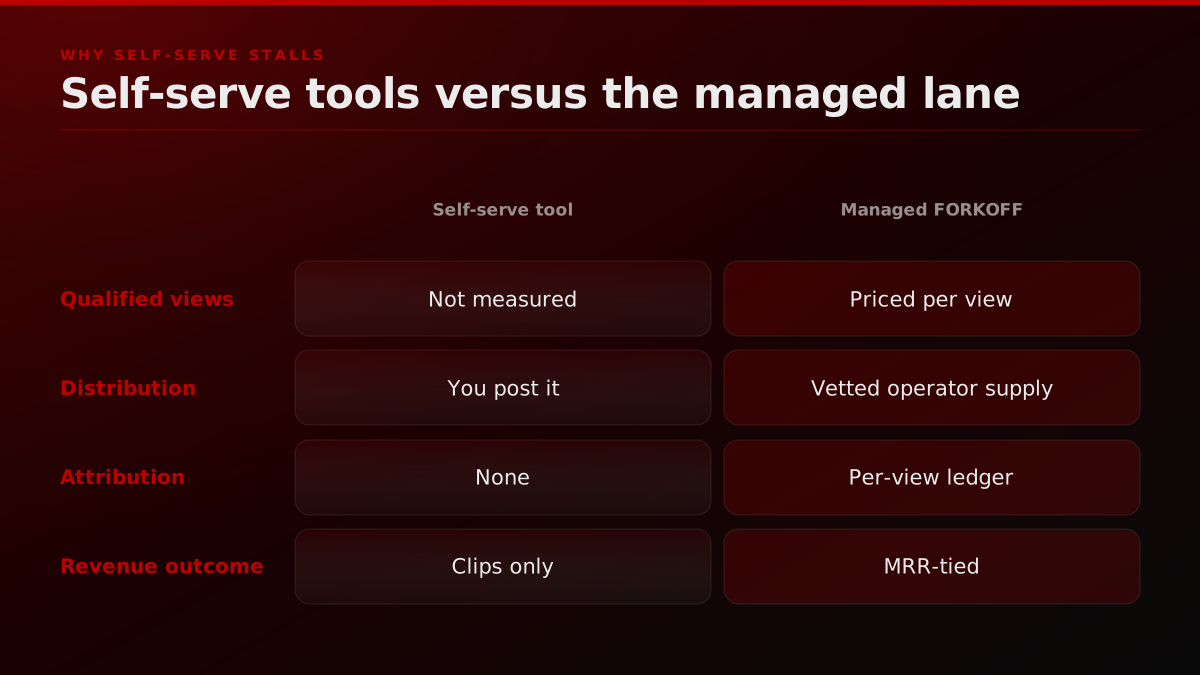
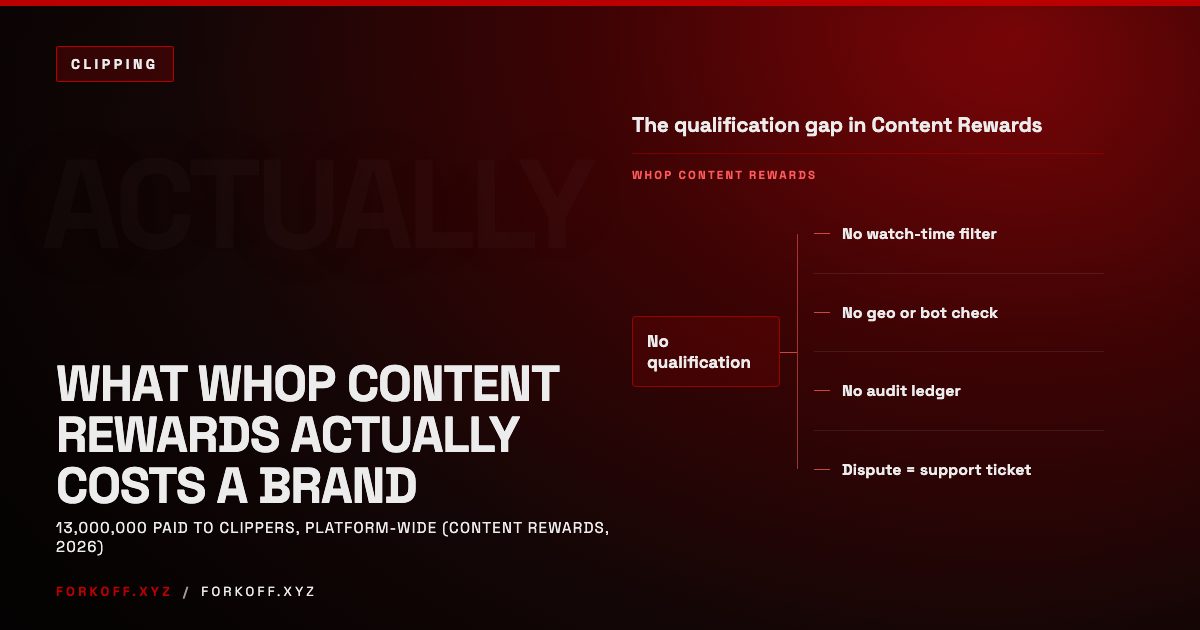
Scheduling apps and AI editors solve a 5 percent problem (cutting). The other 95 percent of the work is operational: staffing a creator network, deduping bot views, and closing the attribution loop from clip to paid subscriber. That is the bundle managed clipping is built around, and it is the bundle every AI editor conveniently leaves out of its landing page pricing. The productized version of the same bundle ships against the podcast clipping for founders lane and the main clipping agency surface.
- Creator network management
- Qualified view verification
- Multi-platform optimization
- Revenue attribution
- Scale economics - 237 clips per day
A few months back I decided to try the “must do” stuff for any podcast to see what would happen. All it did was suck all the time and a lot of the fun out of making the actual show, and the time I would have spent on relevant pitching and outreach was spent on making endless social assets and overthinking them.
The quote above is the median DIY outcome, and it is worth sitting with. The operator ran clips the way every listicle recommends, uninstrumented and at flat volume, and correctly concluded the time went to garbage. The failure was not the format. It was running the 5 percent of the job a tool can do without the 95 percent that makes clips convert.
Distribution Channel Differentials
Not every platform converts podcast clips at the same rate. The Shorts and Reels split tells the story clearly once you separate view volume from engagement.
YouTube Shorts delivered 941 average views per clip, 61 percent of all views from about a quarter of the clips. Shorts buys qualified viewers who are already sitting inside a subscribe-first product surface, so the distance from hook to paid sub is one tap shorter than on any other network.
Instagram Reels delivered 201 average views per clip but 65.5 percent of all comments. Reels is top-funnel exposure that feeds the brand for the next sprint, because the viewer is in a passive scroll, not a search session.
TikTok was deliberately held out. The audience mismatch for this crypto creator would have polluted the qualified-view number and the eventual cost-per-sub calculation. Not every channel belongs in every campaign, and part of the job of a managed clipping operator is saying no when the math does not work.
Per-platform distribution performance in this campaign
| Platform | Avg views per clip | Funnel role | Routing call |
|---|---|---|---|
| YouTube Shorts | 941 | 61% of views from about 25% of clips | Primary reach channel |
| Instagram Reels | 201 | 39% of views, 65.5% of comments | Top-funnel feeder for next sprint |
| TikTok | Held out | Audience mismatch for $50/mo crypto sub | Excluded to protect cost-per-sub math |
FORKOFF Clipping Ledger 2026, per-clip attribution across 3,085 clips. Shorts and Reels carried the full distribution load; TikTok was deliberately excluded from this campaign.
Which Clips Didn't Convert
A share of the 3,085 clips pulled almost no views and were cut from rotation within 48 hours. Four patterns repeated in the failures, and every one of them is a hook-design problem, not a distribution problem:
- Hook latency: clips where the payoff arrived after second four. On Shorts, scroll kills at second two.
- Context-bound payoffs: clips that required a prior episode to make sense. Standalone or die.
- Over-produced B-roll: clips that leaned on heavy motion graphics read as ads. Raw talking-head with burned captions outperformed them.
- Long intros: any clip that opened with the creator's name or the podcast title instead of a question or a contrarian claim.
We killed the failing patterns inside 48 hours and redirected the clip budget into the winners. That feedback loop, not the raw clip count, is what drove the 1.19M view total at the end of the sprint.
What Counts as a Qualified View?
Qualified views are platform views that survive a four-stage filter stripping out bot traffic, auto-play scroll-bys, geo-mismatched views, and duplicates before they count against a campaign. A raw dashboard total also counts bots, dwell misses, and dupe traffic that would have produced zero paid subscribers.
Stage one is the bot filter. We discard views that match known bot IP ranges and any account younger than 30 days with zero reshares. It is the filter most agency dashboards never apply.
Stage two is the dwell filter. We require a minimum 3-second dwell on the clip, aligned with the YouTube and Meta definitions of a completed impression. Auto-scroll exposure does not qualify, because a view that never registered an intent signal will never convert downstream.
Stage three is the geo filter. We align the view geography to the creator's target market. A US-product audience reached in a geography that cannot buy is a tracking miss and a wasted clip in the next cohort's budget.
Stage four is the dedupe layer. One qualified view per unique viewer per clip in a 24-hour window. Repeats inflate the topline number and poison the cost-per-subscriber math that every underwriter eventually asks about.
This is the difference between a qualified count and what the raw platform dashboards show. The gap is bots, dwell misses, and dupe traffic that would have looked great in a slide and produced zero paid subscribers. We would rather report the honest number and earn the next renewal on math that actually survives scrutiny.
Operator notePrice against qualified views, never raw views. The filter is the product.
A founder asked us last quarter why we go through the trouble of stripping out views that fail the gates when no client has ever audited the methodology. The answer is that the methodology is the product. The qualified-view filter is what lets the engagement underwrite paid subscribers instead of impressions. If we shipped a deck full of raw platform numbers, the next renewal would price against impressions, and the moment a competing agency promised 2M impressions for the same retainer we would lose the account. By pricing against qualified views we anchor the conversation to the only metric the founder cares about a quarter later: how many paying subscribers landed and how many of them are still paying.
The four-stage filter also doubles as a quality gate against the editor pool. A clipper who repeatedly produces work that survives the bot filter and the dwell filter earns higher per-clip rates inside the network. A clipper whose output skews toward thin-dwell, geo-mismatched volume gets routed out within a sprint. The filter is the underwriting layer of the ledger and the performance review of the operator stack at the same time.
The 13-Day Peak Performance Window
The peak day of this sprint, March 22, is the line we point every prospective client at when they ask what a managed engagement actually buys. 425 clips shipped in a single day and 180,264 views landed that day, the highest clip volume and the highest view count of the window. Five days of the thirteen cleared 100,000 views.
The peak is engineered, not accidental. By day 10 we have nine days of per-hook performance data on every clip pattern in rotation. The peak window is what happens when the editor pool, the creator network, and the clip-routing layer all stop running experiments and start running winners. That is the only window in the sprint where we deliberately suppress hook variety and ship dense volume on a narrow set of proven patterns. The opposite of how most agency teams treat the last week of a campaign, which is when they typically introduce new creative because the original deck went stale.
The other underrated mechanic of the peak window is platform-side serendipity. Once a clip account is shipping 350 plus daily uploads on a stable hook pattern, the recommendation engine starts treating the account as a publisher, not a creator. Recommendation throughput inside the same audience expands, because the platform's ranking model rewards consistent publisher behavior with shelf placement that single-clip accounts never see. The peak window is the precise moment an account stops competing for impressions and starts being offered them.
Hridoy Rehman
@hridoyreh
Solve problems customers CAN'T solve alone. Get paid $$$$. Solve problems customers WON'T solve alone. Get paid $$$. Solve problems customers DON'T solve consistently. Get paid $$. Solve problems customers ALREADY solve easily. Get paid $ (if you're lucky)...
Where the FORKOFF AI Agency Stack Plugs In
FORKOFF is an AI Agency, and the clipping engine is one of seven distribution surfaces we operate against a single shared attribution stack. The relevant point for a founder evaluating a clipping engagement is that the ledger that runs this campaign also runs the founder-content engine, the cold-outbound engine, the events engine, and the parasite-SEO engine. Every qualified view, every landing click, every paid subscriber is logged in the same warehouse and routed against the same retention curve. The clipping engagement does not stand alone, it is a feeder for the same buyer pipeline the other surfaces are feeding.
This is why the $0.003 cost-per-qualified-view benchmark is durable across creators. The unit cost is not a function of clipping cleverness, it is a function of operating an AI Agency stack that amortizes editor labor, creator-network management, attribution engineering, and qualified-view verification across a portfolio. A single-creator boutique cannot price at $0.003 because the fixed costs are not amortized. A general-purpose agency cannot price at $0.003 because the clipping engine is not productized. FORKOFF prices at $0.003 because the stack is built around a single ledger that every engagement plugs into on day one.
The clipping engine is also the upstream feeder for two adjacent FORKOFF surfaces that compound the same revenue curve. Clips that land in the top decile by save rate get routed into the parasite-SEO surface as embedded media on third-party content properties, extending the half-life of the clip well past the 14-day platform decay window. Founders who clear a paid subscriber threshold inside the first sprint get routed into the events surface, where the qualified-view cohort becomes a warmed audience for sponsored side events and in-person activations. Distribution does not stop at the clip. It continues into surfaces that share the same buyer.
The Podcast-to-Revenue Playbook
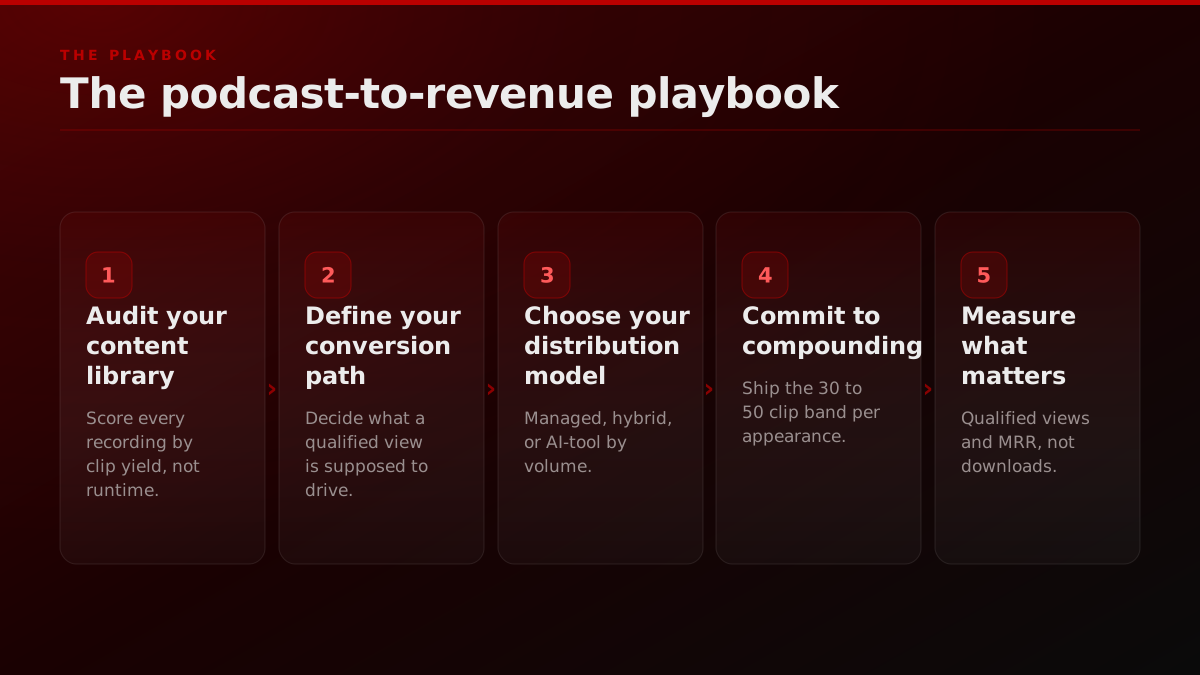
The podcast-to-revenue playbook is a five-step sequence: audit the content library for the top 20 percent of episodes, define a single conversion path, choose a distribution model against the MRR curve, commit to stacked compounding sprints, and measure only qualified views per dollar, click-through, signup-to-paid conversion, and cohort retention. Each step below maps to one decision a founder has to lock before the first clip ships.
Step 1: Audit Your Content Library
Identify the top 20 percent by topic relevance. Most founders have between 40 and 200 hours of recorded long-form content already sitting in a Dropbox folder, and the topical-density rubric typically surfaces 10 to 25 episodes that punch well above the median. Score each episode on three axes: contrarian density (how many opinions deviate from consensus), proof density (how many specific numbers or named examples land), and emotion density (how often the audio register shifts). The top 20 percent across all three axes is the surface area worth investing editor hours against.
Step 2: Define Your Conversion Path
Pick the one product surface every qualified view should touch. Paid community, paid newsletter, paid course, paid waitlist, or paid SaaS. The temptation is to point clips at a portfolio of products, the discipline is to point them at one. Instrument the path with a dedicated landing page, dedicated UTMs per platform, and a single CTA per clip variant. Multi-CTA clips depress conversion rate by roughly 35 percent in our internal A/B history, because the viewer has to make two decisions instead of one and the friction collapses the entire funnel.
Step 3: Choose Your Distribution Model
The choice is between three operating shapes: self-serve with an AI editor, in-house with a hired editor, or managed with a vendor. Each model has a different break-even point against MRR. Self-serve breaks even at roughly 5 paying subscribers per month at an estimated $30 plus per month. In-house with one full-time editor breaks even at roughly 60 paying subscribers per month at $50. Managed clipping breaks even at roughly 25 paying subscribers per month at $50, because the unit cost amortizes across a creator portfolio. Pick the model that matches the MRR curve the founder is already on, not the model that matches the MRR curve the founder hopes to land on next quarter.
Step 4: Commit to Compounding
Single sprints are diagnostic, stacked sprints are the business model. The 13-day cohort produces a data point. Stacked cohorts produce a curve. Underwrite the engagement against month six MRR, not month one, and refuse to bail after four weeks. Every founder who churned in the first 60 days of a clipping engagement walked away from a retention curve that would have stacked into a five-figure MRR floor by month six. The retention math is the asymmetry.
Step 5: Measure What Matters
Views are vanity. Qualified views are sanity. Revenue is reality. Build the dashboard around four numbers and refuse to look at anything else during the sprint. Qualified views per dollar spent, click-through rate from clip to landing page, signup-to-paid conversion, and cohort retention at day 30 and day 90. Every other number is a distraction. The four-number dashboard also forces editorial discipline, because every hook decision and every platform routing call now has to be defended in the language the dashboard speaks.
How we scope a clipping engagement end-to-end
Here's how we handled this campaign, and how we scope every new clipping engagement that comes through the door:
- Audit the library. We pull the full back catalog, score episodes by topical density, and shortlist the top 20 percent for clip potential before any editing starts.
- Lock the conversion path. We agree on the destination (paid community, waitlist, newsletter) and instrument UTMs and a dedicated landing page so qualified views can be traced to dollars.
- Stand up the creator network. We assign 20 to 40 vetted clippers, brief them on the creator's voice and banned phrases, and gate payouts behind qualified-view thresholds, not raw views.
- Run the 13 to 30 day compounding sprint. We ship 200 to 400 clips per day across YouTube Shorts and Instagram Reels, with a Slack war room monitoring platform drift in real time.
- Close the loop monthly. We report on qualified views, paid conversions, cohort retention, and cost per subscriber, then renegotiate the next month's clip volume against the retention curve.
Industry Context
Less than 1% of podcasts generate sustainable revenue directly from their content.
Source: Spotify 2025 Creator Report
The Bottom Line
The bottom line is that a single managed clipping engagement turned 3,085 clips from existing content into 1.19M views and 17 new paying subscribers at $50 per month, taking MRR from about $595 in February to $1,290 by the end of March with 83 percent of February's subscribers renewing, all at $0.003 per qualified view. The playbook is reproducible, the economics compound, and the only open decision is whether month one starts this week or next quarter.
- 3,085 clips from existing content
- 1.19M views in 13 days
- 27 paying subscribers in March, 17 of them new (10 renewed from February)
- MRR from about $595 to $1,290 by the end of March, with 83 percent of February's subscribers renewing
- $0.003 per qualified view
Every one of those numbers came out of a single managed clipping engagement. The playbook is reproducible. The economics compound. The only decision a founder has to make is whether month one starts this week or next quarter.
The cohort that landed in 13 days is now four months into the retention curve. By May, 13 of the 27 subscribers who paid in March were still paying, and two newer cohorts had layered on top: 35 paying subscribers and $1,832 of May revenue, about $22,000 a year at that run rate (client payment exports, February to May 2026). The single 13-day campaign that lifted end-of-March MRR to $1,290 kept compounding under a flat operator budget. That is what the ledger is built to surface, and it is why we keep underwriting clipping engagements against month-six MRR rather than month-one revenue.
Related FORKOFF reads: Qualified Views metric, Managed Clipping case study, clipping tools comparison, agency pricing breakdown, Clipping hub. References: YouTube, LinkedIn, TikTok.
For deeper cross-pillar context, see the founder-funnel cadence that feeds the clipping ledger.
Acast Ad revenue horror story
So I recently monetized my podcast with Acast, and then it came time for the payout, and they gave me the runaround for around 6 months giving me different answers each time. Some agents were saying i needed to submit an invoice for the amount so they could pay it… Show more