A podcast booking system for founders is a 90-day operating plan that turns scattered guest pitches into a repeatable distribution engine. It runs three phases: research and outreach to 50 shows in three tiers, host prep and content seeding, then a recording cadence that feeds a clip pipeline. The output is 8 to 12 appearances and 64 to 144 short-form clips per cohort.
About these numbers
FORKOFF first-party operator data from podcast booking and distribution engagements, supplemented by publicly available podcast industry reports (Spotify, Apple, Edison Research 2025-2026). All figures are directional estimates based on operator observations; individual outcomes vary by niche, audience, and execution.
The 90-Day Founder Podcast Tour Plan in one scroll
Most founder podcast guides teach the pitch in isolation and stop there. The 2026 podcast booking system for founders is a 90-day plan with three phases: Days 1 to 30 are research and outreach to 50 shows segmented into three tiers (10 dream, 20 reach, 20 base), Days 31 to 60 are pre-recording host research and content seeding, Days 61 to 90 are a recording cadence of two to three per week feeding a clip pipeline that ships 8 to 12 clips per episode. Across the cohort the tour produces 64 to 144 short-form distribution assets that compound into the next two quarters. FORKOFF Podcast Service benchmark: the appearance itself is 20% of the value, the clip compound is the other 80%. Founders running this loop ship 64 to 144 atomic distribution assets per tour cycle, FORKOFF's Podcast Engine Ledger maps each appearance to downstream pipeline, and the THREE-TIER show-list rule prevents the dead-end guest spot that drains a quarter without booking a meeting.
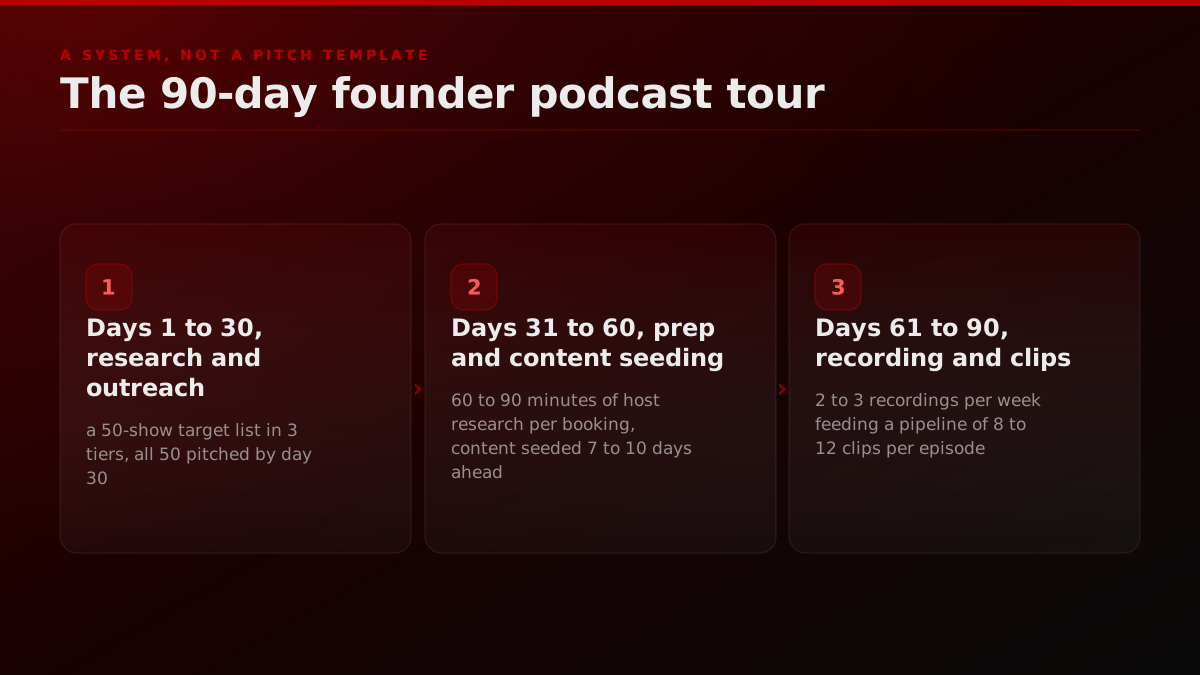
Why the 2026 founder podcast tour needs a system, not a pitch template
The 2026 founder tour fails as a pitching exercise and works as a system because the pitch is the cheapest line in the whole operation. The expensive lines are the clip pipeline, the host research, and the seven-day redistribution loop that runs after each recording. Treat the tour as pitches and you get two appearances; treat it as a 90-day system and you get ten plus a content engine.
Once the tour is booking, the revenue side becomes the next gate. The podcast monetization math at the 1,500-listener line shows which monetization models pay above versus below that audience threshold.
The 2026 founder podcast tour is not the 2018 founder podcast tour. The 2018 version was a list of 30 shows, a generic pitch template, and a hope that one host would say yes inside the quarter. It produced two appearances, a few hundred listeners, and zero compounding distribution. The 2026 version is a podcast booking system for founders that runs as a 90-day plan, lands 8 to 12 appearances, generates 64 to 144 short-form clips, and turns a single-quarter push into a permanent distribution layer for the next twelve months.
The audience math behind founder guesting (published US listening data)
| Metric | Published figure | Why it matters for the tour |
|---|---|---|
| US adults listening to podcasts monthly | 53%, the first majority reading | Guesting reaches a mainstream channel, not a niche hobby audience |
| Weekly US podcast listeners | 90 million | Tier 2 and Tier 3 mid-size and small shows still aggregate real reach |
| Listeners who pay more attention to podcast ads than radio, TV, or digital | 81% | Host-introduced guests inherit the same high-attention trust context |
| Podcasts running 20 to 60 minutes per episode | Over 50% | Long enough for the 90-second clip arcs the pipeline cuts |
Source: Buzzsprout podcast statistics roundup, aggregating Edison Research and platform data, accessed July 2026.
Podcast listening crossed the majority line, so the constraint is booking quality
The audience-side case for a 2026 founder tour is now a published-data argument, not a hunch. Buzzsprout's podcast statistics roundup, aggregating Edison Research data, reports that 53% of Americans 18 and older listen to podcasts monthly, the first reading where monthly consumption reached a majority of US adults, with 90 million Americans listening weekly. The same roundup reports 81% of listeners say they pay more attention to podcast ads than to radio, TV, billboards, or digital ads, which is the attention context a guest appearance inherits: a host introducing a founder carries the same trust transfer as a host-read placement. The implication for the tour is that audience supply is not the scarce input anymore. Host attention is. That is why the three-tier system spends its effort on pitch specificity and warm paths rather than raw list volume.
Source: Buzzsprout podcast statistics roundup, aggregating Edison Research and platform data
Most founder podcast guides still teach the pitch in isolation. They tell you how to write a better cold email, how to flatter the host, how to suggest topics. They miss the load-bearing variable: a podcast tour is a system, not a series of pitches. The pitch is the lowest-cost line in the system. The expensive lines are the clip pipeline, the host research, and the redistribution loop that runs in the seven days after each recording. Founders who treat the tour as a pitching exercise produce two appearances and stop. Founders who treat it as a 90-day system produce ten appearances and a content engine that compounds into Q2.
This is the 90-Day Tour Plan we run for FORKOFF clients and ran on ourselves. Three phases, fixed windows, named yield gates, no skipping.
The FORKOFF Podcast Service benchmark behind the tour math
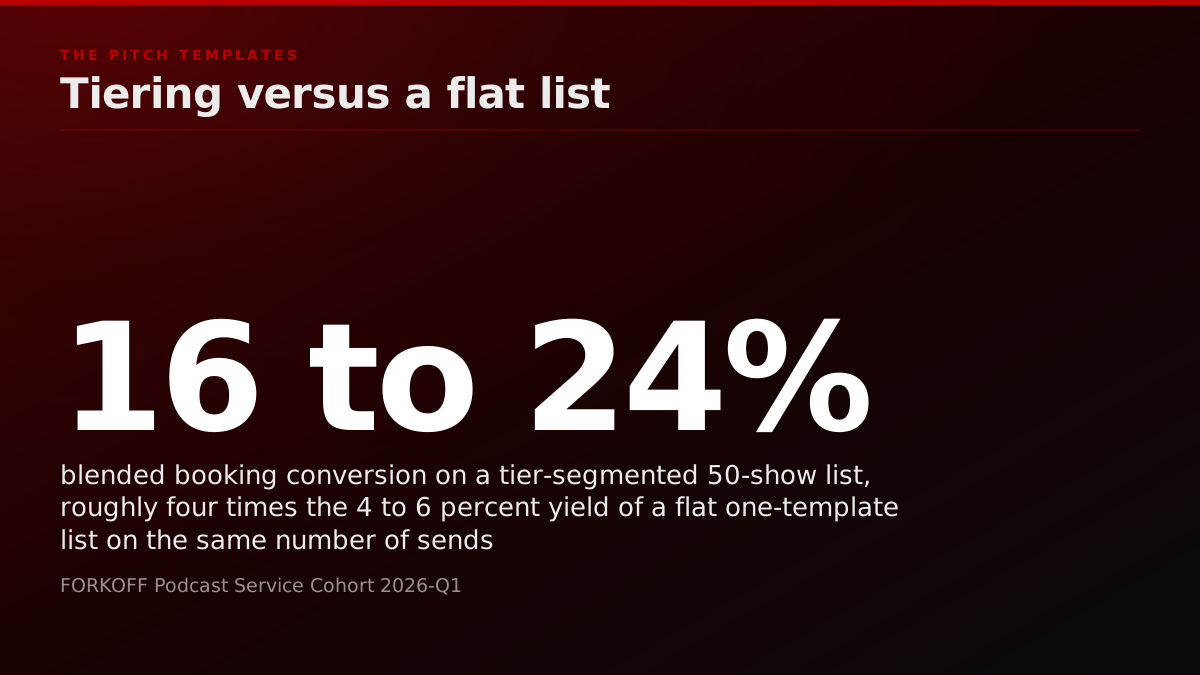
Three FORKOFF first-party datapoints anchor the 90-Day Tour Plan. First, the FORKOFF Podcast Service benchmark from our Q1 2026 cohort: 2 to 4 long-form recordings per founder per month with 8 to 12 high-signal clips produced per episode, which is the calibration target for any founder running the production phase. Second, tier-segmented outreach across the FORKOFF Podcast Service Cohort produces a 16 to 24% blended booking conversion rate on a 50-show list versus 4 to 6% on a flat one-template approach, a four-times yield gain on the same number of sends. Third, post-tour distribution math from the cohort: 10 to 12 appearances times 8 to 12 clips per episode equals 80 to 144 short-form distribution assets per founder, of which roughly 30 are cited in outbound DMs in the first 30 days post-tour and 5+ produce inbound conversations inside 60 days. The appearance is 20% of the value; the clip compound is the other 80%.
Source: FORKOFF Podcast Service Cohort 2026-Q1 (n=founder cohort, 90-day tour benchmark)
Prerequisites before Day 1
The system fails without three preconditions in place: a working clip pipeline that ships 8 to 12 clips per episode, a referral graph that feeds Tier 1 warm intros, and a calibrated offer with a specific narrative angle. Skip any of the three and the cohort does not close, no matter how clean the outreach runs.
A working clip pipeline. Every recorded episode produces 8 to 12 high-signal clips per the FORKOFF Podcast Service benchmark. The pipeline can be in-house, agency-run, or hybrid, but it has to exist on Day 1. Founders who plan to figure out clipping after the first recording lose the first three episodes to delay and never recover the cadence.
A referral graph. Tier 1 of the target list is warm-intro only, and the warm intros come from the founder's existing graph. If the graph is thin, run a graph repair week before Day 1 (the same surface from the solo operator first five clients sprint) and book seven 25-minute conversations with former colleagues, investors, and partners. Each conversation is a candidate referral path into a Tier 1 host.
A calibrated offer. What is the founder pitching? Talk about my company is not an offer. The pitch needs a specific narrative angle, a few proof points, and a defined audience promise. The angle library and the 200-word pitch template that book Tier-B and Tier-C shows live in the 7-step podcast guesting playbook for AI founders; pull the offer from there before you score the target list. The offer is calibrated against the Founder Funnel and the founder-led content motion, so the tour reinforces a narrative that is already visible elsewhere.
Days 1-30: Research and outreach with a 50-target, 3-tier list
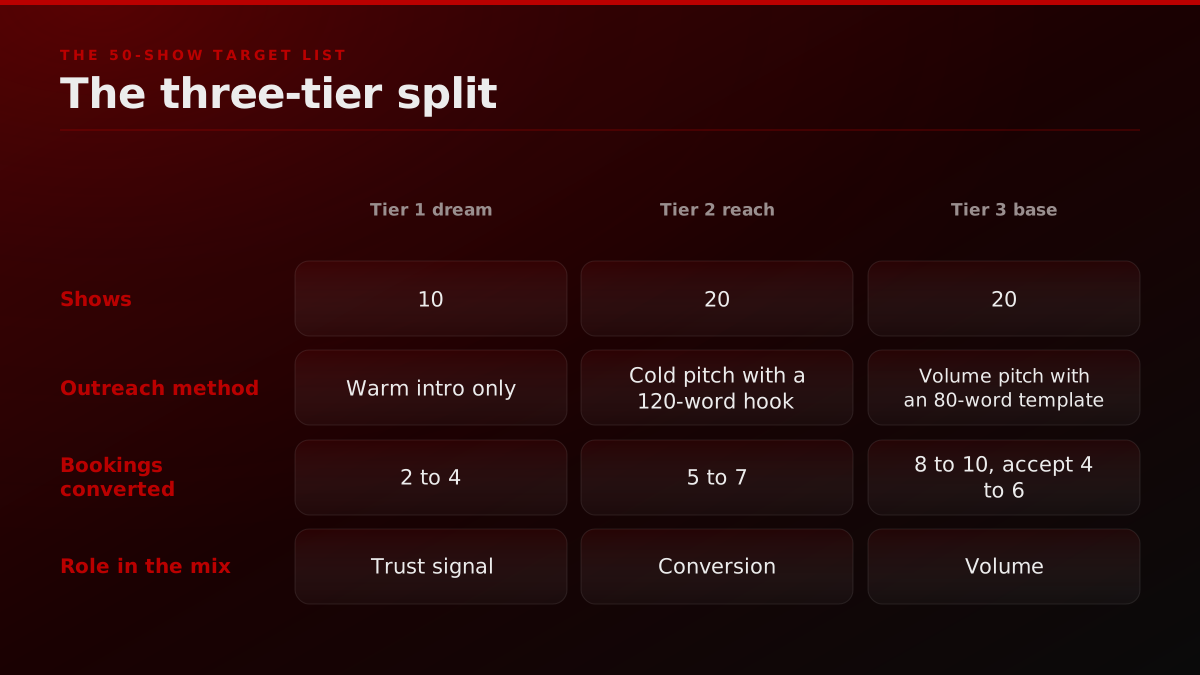
Phase one builds a 50-show target list segmented into three tiers: 10 dream shows worked by warm intro only, 20 reach shows pitched with a personalized hook, and 20 base shows pitched with a tighter template. All 50 pitches go out by Day 30, and the tier split lands 8 to 12 confirmed bookings at a 16 to 24% blended conversion rate.
Format also shapes target selection. The video podcast vs audio-only operator decision matrix maps the 3,085-clip first-party data on which format compounds for which ICP, which informs the 50-target list shape.
Phase one is the research and outreach phase. The output of the phase is a 50-show target list, segmented into three tiers, with personalized pitches sent to all 50 by Day 30 and 8 to 12 confirmed bookings on the calendar.
Tier 1: 10 dream shows (warm intro only)
Tier 1 is the founder's top ten target shows. These are the high-DR pods with hosts who book months ahead. Sweetfish Media's podcast pitch checklist confirms what every booker learns inside a quarter: cold pitches to top-decile shows convert at near zero. Tier 1 runs on warm intros only. The founder identifies a path through the graph for each of the ten and works the path for two weeks. Yield gate: 4 to 6 of the 10 produce a booking conversation, 2 to 4 convert into a recording on the calendar inside 60 days.
Why the hell would anyone book a total stranger based on an email pitch?
The hosts themselves confirm the warm-intro rule. The top comment on the r/podcasting guesting thread embedded later in this post asks, at 23 upvotes, why anyone would book a total stranger off an email pitch. For top-decile shows, the honest answer is that they will not, which is why Tier 1 never runs cold.
Tier 2: 20 reach shows (cold pitch with hook)
Tier 2 is the working middle of the list. Mid-DR shows, hosts who reply to cold pitches if the pitch is sharp. The pitch is a 120-word note that does three things: references a specific recent episode by name and idea, proposes a specific topic with a tension hook, and offers two proof points the host can verify in 60 seconds. JustReachOut's 4-step guide is the canonical primer on this pattern. Yield gate: 20 pitches produce 8 to 12 host conversations, 5 to 7 convert into bookings.
Tier 3: 20 base shows (volume pitch with template)
Tier 3 is the volume layer. Smaller shows, often hungry for guests, willing to book on a one-week turnaround. The pitch is a tighter 80-word template with one customized field per send. Yield gate: 20 pitches produce 12 to 15 host conversations, 8 to 10 convert into bookings, of which the founder accepts 4 to 6 based on audience fit. Tier 3 fills the calendar quickly and produces the early recordings the clip pipeline trains on.
The tier split is the load-bearing structural decision. Founders who run a flat 50-show list with one template produce an estimated 4 to 6% conversion rate. Founders who tier-segment and customize the pitch surface per tier produce a 16 to 24% blended conversion rate, four times the yield, on the same number of sends.
The 3-tier, 50-show list: outreach method and yield gates
| Tier | Shows | Outreach method | Yield gate |
|---|---|---|---|
| Tier 1: dream | 10 | Warm intro only, two weeks working the referral graph | 4 to 6 booking conversations, 2 to 4 recordings inside 60 days |
| Tier 2: reach | 20 | 120-word cold pitch with a line-three tension hook | 8 to 12 host conversations, 5 to 7 bookings |
| Tier 3: base | 20 | 80-word template, one customized field per send | 12 to 15 conversations, 8 to 10 bookings, founder accepts 4 to 6 |
| Blended | 50 | Tier-segmented list versus flat one-template list | 16 to 24% blended conversion versus 4 to 6% flat |
FORKOFF Podcast Service Cohort benchmark; the same figures as the phase-one yield gates in the body.
The show-qualification score that decides which 50 shows make the list
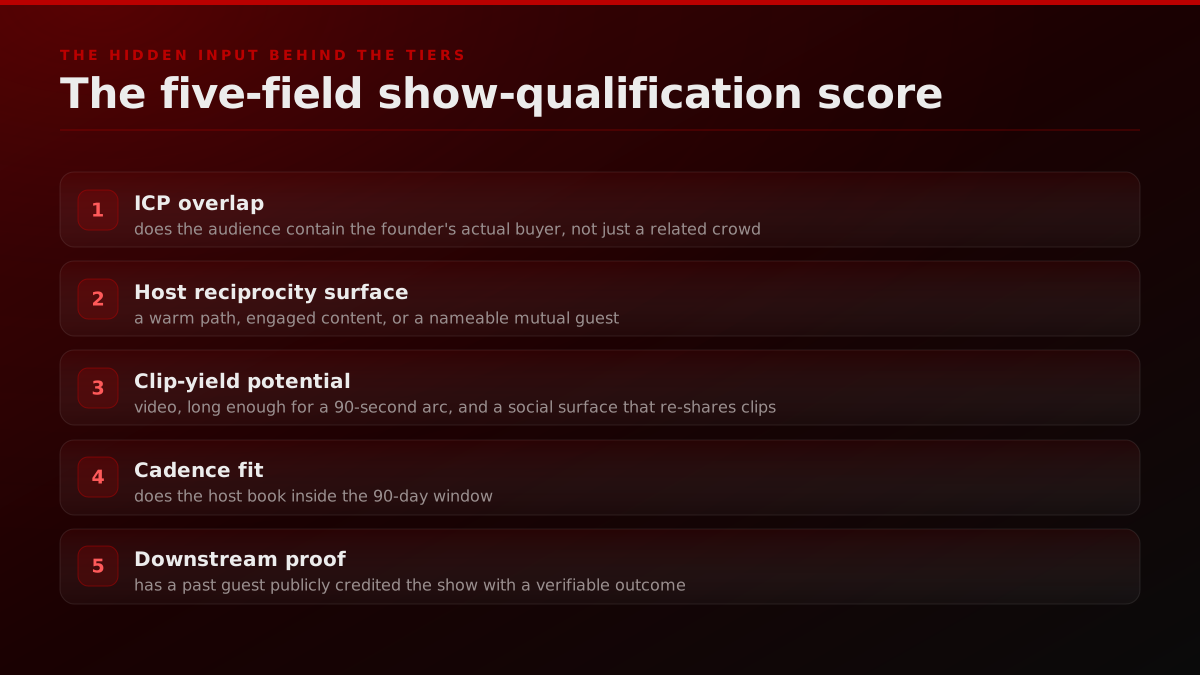
Tiering is the visible output. The hidden input is the qualification score that puts a show on the list in the first place and decides which tier it lands in. Founders who skip the score build the list off gut feel, end up with 15 shows that share one audience and 35 that have no ICP overlap at all, and then read a 6% conversion rate as a pitch problem when the real defect is list construction.
FORKOFF scores every candidate show on five fields before it earns a row, each scored 0 to 3, for a 0 to 15 ceiling. Field one is ICP overlap: does the show's audience contain the founder's actual buyer, or just a related crowd? A 3 means the host's last five guests sold to the same buyer the founder does; a 0 means the audience is adjacent at best. Field two is host reciprocity surface: is there a warm path through the graph, a recent piece of the founder's content the host engaged with, or a mutual guest the founder can name? Field three is clip-yield potential: does the show release video, run long enough for a 90-second arc, and own a social surface that re-shares guest clips? A show that ships audio-only at 25 minutes scores a 0 here regardless of audience, because it starves the clip pipeline that carries approximately 80% of the value. Field four is cadence fit: does the host book inside the founder's 90-day window, or three quarters out? Field five is downstream proof: has a past guest publicly credited the show with a real outcome the founder can verify in the host research brief?
The score maps to tiers, not the other way around. Shows scoring 12 to 15 with a live warm path route to Tier 1. Shows scoring 8 to 11 route to Tier 2 and get the 120-word hook pitch. Shows scoring 5 to 7 route to Tier 3 volume. Anything under 5 does not make the 50-show list at all, no matter how large the audience, because a high-reach show with zero ICP overlap and no clip surface produces a vanity appearance that drains a recording slot without moving pipeline. The single most common list-construction error is letting a 50,000-download show with a 2 on ICP overlap occupy a Tier 1 slot a 13-scoring 4,000-download show should hold. The FORKOFF Podcast Engine 6-block system runs the same selection logic at Block 3 (Strategic Guest Curation) from the host side, which is why a founder who understands the score reads exactly what a sharp host is screening for. Choosing who builds and works that list is its own question, and which agencies handle podcast booking and guest placement covers what to ask a booker before signing.
The pitch templates that produce the 16 to 24% blended rate
The pitch surface is the most-copied artifact in any founder tour, so the templates need to be specified at the field level inside the tour's own timeline. The Tier 2 pitch is a 120-word note. The Tier 3 pitch is an 80-word note. Both follow the same five-line structure but the Tier 2 version invests an extra two lines in personalized host context. For the annotated, copy-paste version of this template with full reply-rate math and the field-level breakdown, see the founder podcast guest pitch template; what follows here is how that pitch fits into the 90-day system's cadence.
Line one is the subject line, which is a six to nine word topic phrase, not a flattery line. Pitch on the substance of the episode topic, never on the quality of the host's show. Subject lines like "How AI agencies price outcomes" outperform "Loved your last episode" by 4 to 6 percentage points on open rate across the FORKOFF Podcast Service Cohort. Line two is the specific-recent-episode reference. Tier 2 cites an episode by name and the one idea from that episode that connects to the founder's pitch. Tier 3 cites the show name and the founder's adjacency. Line three is the topic proposal with a tension hook. The hook is a contrarian or operator-specific framing that the host has not heard from the last twenty pitched guests. Line four is two proof points the host can verify in 60 seconds without leaving their inbox. Line five is a single calendar link with two slots pre-suggested.
The five-line structure is rigid because the variable that moves conversion is the line-three hook, not the surface formatting. Founders who experiment on lines one and five and leave line three generic produce 4 to 6% conversion rates. Founders who hold the structure constant and rotate three hook variants across the 20 Tier 2 sends produce an estimated 25 to 35% Tier 2 conversion rate that backstops the 16 to 24% blended cohort number.
Hosts are drowning in spray-and-pray pitches, and they say so in public
In the r/podcasting thread embedded later in this post, the host-side read is blunt. The top comment, at 23 upvotes, asks why anyone would book a total stranger off an email pitch. Another host reports receiving dozens of guest pitches across a few days against a loose set of qualifiers and having exactly one partially qualify, which pushed them to a solo format. A third host describes the flip side: an agent who quoted specific past episodes of the show earned every one of his clients an open pass to appear. The public host commentary matches the cohort data from the other direction: the pass/fail filter on a cold pitch is a specific episode reference and audience fit, not send volume, which is exactly what line two of the Tier 2 pitch template encodes.
Source: r/podcasting, "Is podcast guesting dead?" (December 2025 thread)
The follow-up windows that recover half the bookings
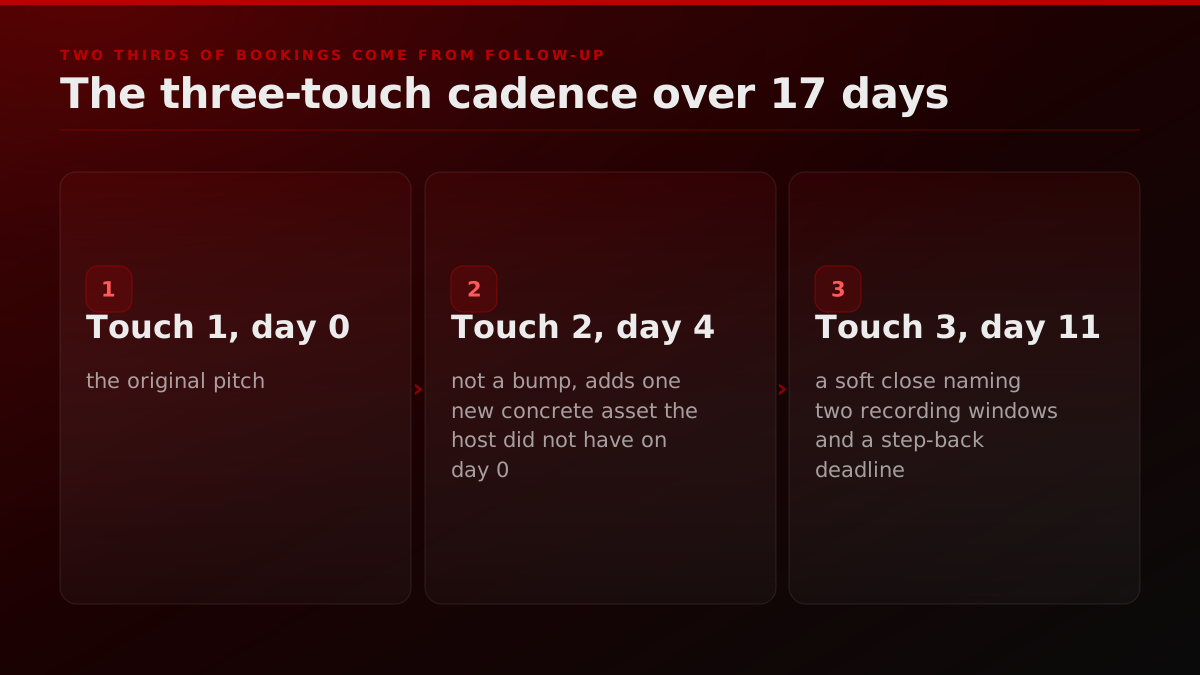
The first pitch lands roughly a third of the bookings the cohort eventually confirms. The other two thirds come from a structured follow-up cadence, and the cadence is the part most founders abandon because the first send returned silence and they read silence as a no. Across the FORKOFF Podcast Service Cohort, the pitch-to-first-reply window runs 4 to 6 days when the list is healthy; a no-reply at day 7 is the normal case, not the rejection case.
The cadence runs three touches over 17 days per pitched show, never more. Touch one is the original pitch on day 0. Touch two lands on day 4 if there is no reply, and it is not a bump. A bump (just following up on my note below) signals a guest who is managing a list, which is the exact read that gets a pitch deleted. Touch two adds one new concrete asset the host did not have on day 0: a fresh clip from a recent appearance, a new proof point, or a single line reacting to something the host published since the first send. Touch three lands on day 11 and is a soft close with a specific out: a one-line note offering two recording windows and naming the deadline after which the founder will assume the timing is wrong and step back. The named-deadline close converts an estimated 8 to 12% of the day-11 silent pitches, because it replaces the open-ended ask with a decision the host can clear in one reply.
After touch three, the show moves to a 60-day re-pitch hold, not the trash. Hosts who passed on a cold founder in Q1 frequently book the same founder in Q2 once a clip from a Tier 3 appearance has circulated into their feed, which is the social-proof loop the podcast guesting playbook for AI startups documents in detail. The 60-day hold is logged in the ledger so the second tour inherits the warm-but-not-yet list instead of treating every show as a cold start.
Operator note60-day re-pitch hold beats the trash folder. Q1 passes book in Q2 once a Tier 3 clip circulates into the host's feed., FORKOFF Podcast Engine Ledger
The host research one-page brief
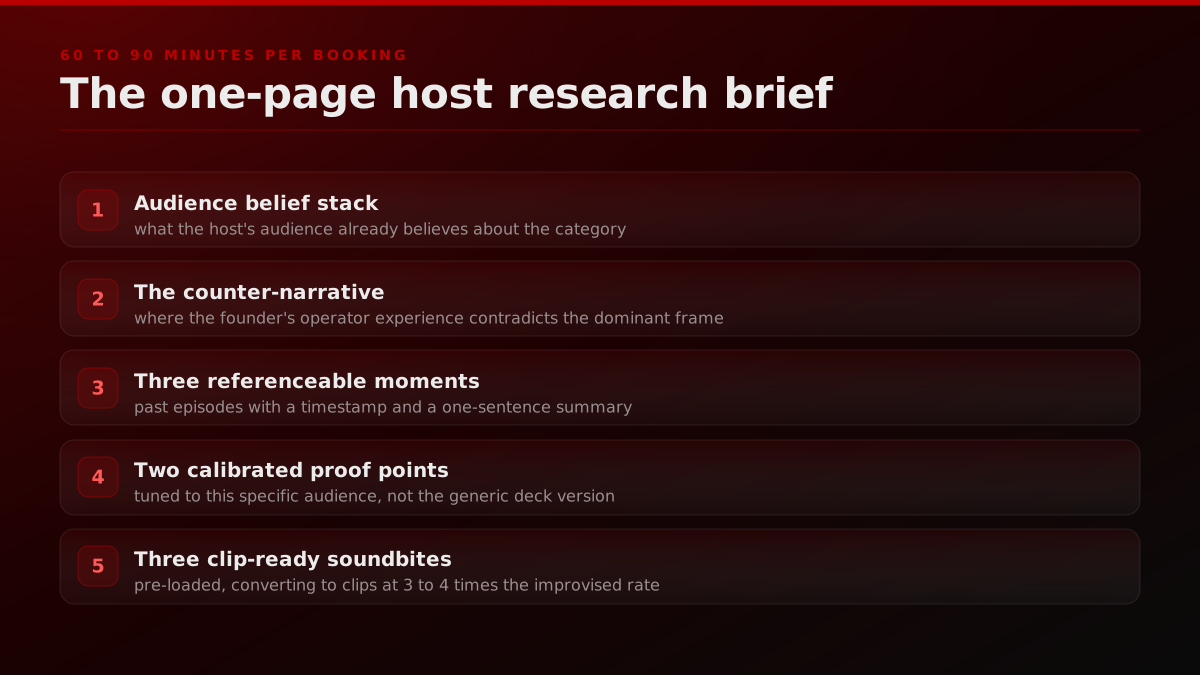
The 60 to 90 minutes of host research per booked recording is the layer most founder tours skip because it does not show up on the calendar as a meeting. The output of the research is a one-page brief with five fields, and the brief is the artifact that converts a flat recording into one the host opens with "this is one of the best prep notes a guest has sent me." Hosts say a version of that line to roughly 30 percent of FORKOFF-prepped founders inside the cohort, which is the audible signal that the brief is doing its job.
Field one is the audience belief stack. What does the host's audience already believe about the founder's category? What is the dominant frame the host has used in the last five episodes? Field two is the counter-narrative the founder brings. Where does the founder's lived operator experience contradict the dominant frame? The contradiction is the recording's central tension and the source of the clip that travels. Field three is three specific moments from past episodes the founder can reference live, with timestamp and one-sentence summary. Reference-live moments produce a host signal that the founder is a serious guest, and the signal compounds into a follow-up invitation roughly half the time. Field four is the founder's two proof points calibrated to this specific audience, not the generic deck version. Field five is the three clip-ready soundbites the founder will land inside the conversation. Pre-loaded soundbites convert into clips at 3 to 4 times the rate of in-the-moment improvisation.
The brief is written by the founder, not by an analyst or an agency, because the audible signal is founder-specific operator detail. Outsourcing the brief produces a recording that sounds outsourced, and the host hears it inside three minutes.
Days 31-60: Pre-recording prep and content seeding
Phase two is where most founder tours fall apart. The bookings are on the calendar, the founder turns to other work, and the recordings start flat because nobody prepared. This phase runs two parallel tracks: 60 to 90 minutes of host research per booked recording, and content seeding published seven to ten days before each episode to pre-warm the host's audience.
The 30-60 phase has two parallel tracks. Track one is host research. For each booked recording, the founder spends 60 to 90 minutes listening to two recent episodes, reading the host's last ten LinkedIn or X posts, and writing a one-page brief: what does this audience already believe, what counter-narrative does the founder bring, what specific moments from past episodes can the founder reference live? Descript's guide to being a good podcast guest lays out the same fundamentals; the founder version compounds them with a tour-wide narrative consistency that no one-off guest can match.
Track two is content seeding. Seven to ten days before each recording, the founder publishes a piece of content (a LinkedIn essay, an X thread, a short post) on the topic the recording will cover. The seed content is cited inside the recording and re-shared by the host's audience after the episode drops. This double-distribution loop converts the recording into a live pull on the seed content, and converts the seed content into a primer that increases episode listen-through. The pattern is the same one we run on the Reddit intent engine: pre-warm the channel before the asset lands.
How To Get Booked on Podcasts As A Guest (Pitch Masterclass)
Grow The Show
Grow The Show: Pitch Masterclass on getting booked as a podcast guest. The masterclass covers the pitch layer; the 90-Day Tour Plan extends the same playbook with the production and redistribution layers.
Days 61-90: Recording cadence and the clip-distribution loop
Phase three is the production phase. Two to three recordings per week, no exceptions. Founders who try to batch all recordings into the final two weeks burn out and ship lower-quality episodes; founders who hold the cadence at two to three per week land six to nine recordings inside 30 days while running their company.
Each recording feeds the clip pipeline within 48 hours. The pipeline cuts 8 to 12 clips per episode, the FORKOFF qualified views metric is the calibration target, and the redistribution schedule kicks in immediately: clip 1 ships the day the episode drops, clips 2 to 4 ship inside week one, clips 5 to 12 are sequenced across the next 14 days. The redistribution loop is what converts a single appearance into 30 to 45 days of recurring touchpoints, and it is what the podcast clipping pricing math breaks down at the dollar level. The productized clip pipeline FORKOFF runs against the tour is podcast clipping for founders, packaged as our podcast clipping service.
The clip pipeline contract that ships 8 to 12 clips per episode
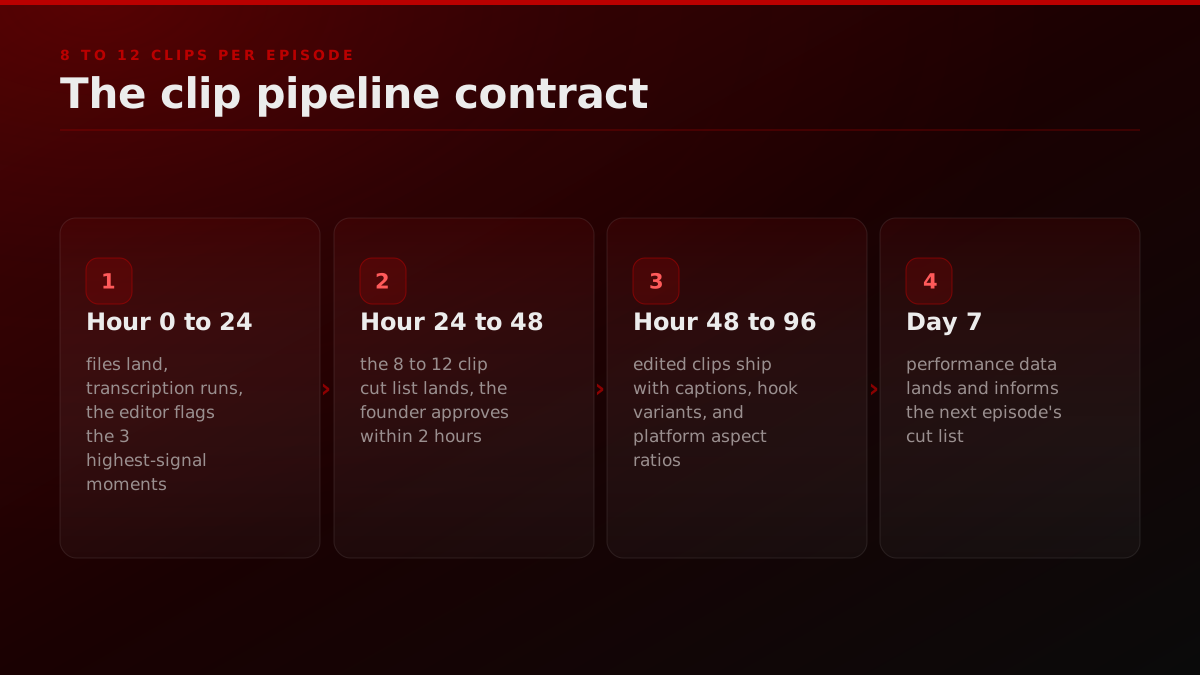
The clip pipeline is the layer that converts a recording from a 60-minute artifact into 8 to 12 atomic distribution assets, and the pipeline runs on a fixed contract regardless of which mode the founder chose. The contract has four numbered turnaround windows that map to specific outputs.
Window one is hour 0 to hour 24. Audio and video files land in the pipeline, transcription runs, and the editor flags the three highest-signal moments from a first listen-through. The flag is operator judgment, not an algorithm, because the highest-signal moment inside a 60-minute conversation is rarely the loudest. Window two is hour 24 to hour 48. The 8 to 12 clip cut list lands with timestamps and headline copy. The founder reviews and approves the cut list inside two hours of receiving it. Founders who batch their cut-list reviews into weekly blocks shift the entire pipeline downstream by 5 to 7 days and break the redistribution sequence. Window three is hour 48 to hour 96. Edited clips ship with captions, hook variants, and platform-specific aspect ratios across the cohort distribution surfaces. Window four is day 7. Performance data from the first clips lands and informs the cut-list choices for the next episode's clips.
The contract is rigid because the redistribution loop is sequenced against the contract windows. A pipeline that runs at hour 72 instead of hour 24 produces clips that are 48 hours too late to ride the host's own post-episode share into a fresh audience.
How the redistribution loop converts one episode into 30 days of touchpoints
The redistribution loop is the layer founders most often miss because it lives outside the recording itself. The loop runs on a 14-day window per episode and ships 8 to 12 clips across that window in a pre-sequenced order.
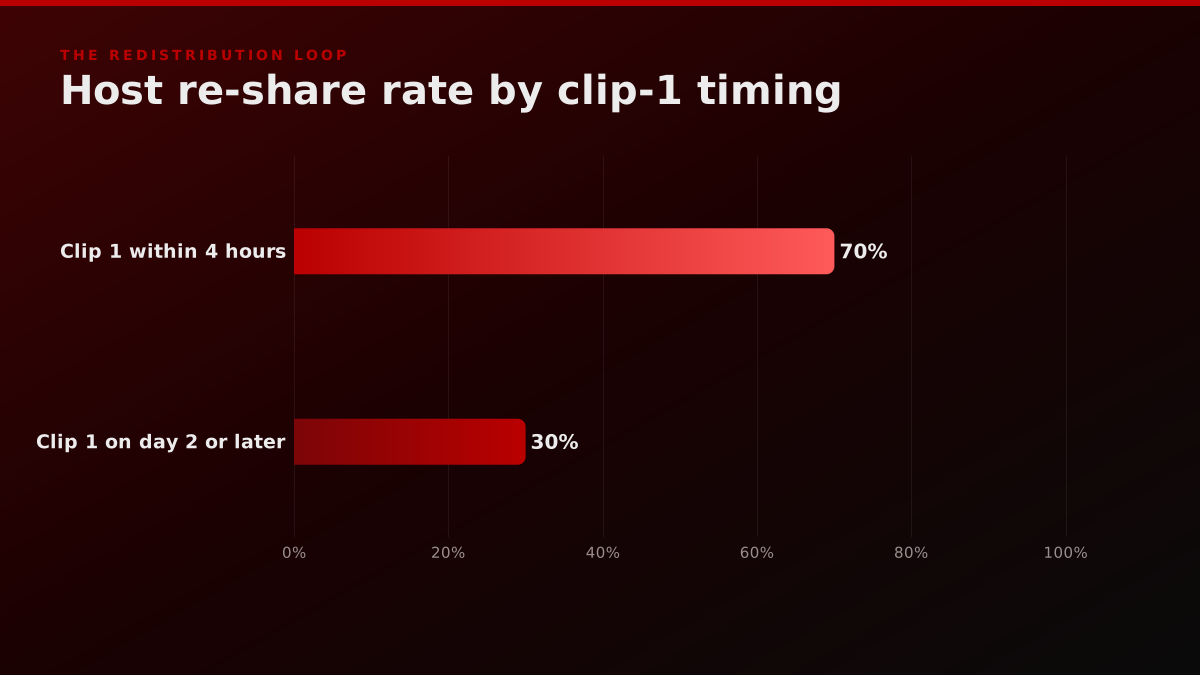
Day zero is the episode drop. Clip one ships within four hours of the drop. Clip one is the highest-signal moment from the recording and runs as a standalone post tagged to the host. The host re-shares clip one roughly 70 percent of the time when the founder ships inside the four-hour window, and roughly 30 percent of the time when the founder ships on day two or later. The 40-percentage-point gap is the cost of missing the host's own promotion cycle.
Operator noteClip 1 shipped inside 4 hours of the drop is the highest-leverage send: host re-share runs 70% versus 30% on day 2., FORKOFF Podcast Service Cohort 2026-Q1
Days one through seven are the cluster window. Clips two through four ship across the week, each with a hook variant tuned to a different surface (LinkedIn long-form, X short-form, Instagram Reels). Cluster-window clips are the founder's owned distribution and the surface where most clips earn their first 500 to 2,000 qualified views. Days eight through 14 are the long-tail window. Clips five through 12 ship across the second week, often paired with the seed-content piece that anchored the recording. Long-tail clips are the ones that resurface in months three through six as DM ammo when the founder is in unrelated outbound conversations.
The 14-day window is intentional. Founders who try to ship all 8 to 12 clips inside week one starve their own feed of content for the next two weeks. Founders who stretch the window to 30 days lose the freshness signal on the host's audience and the cluster math collapses.
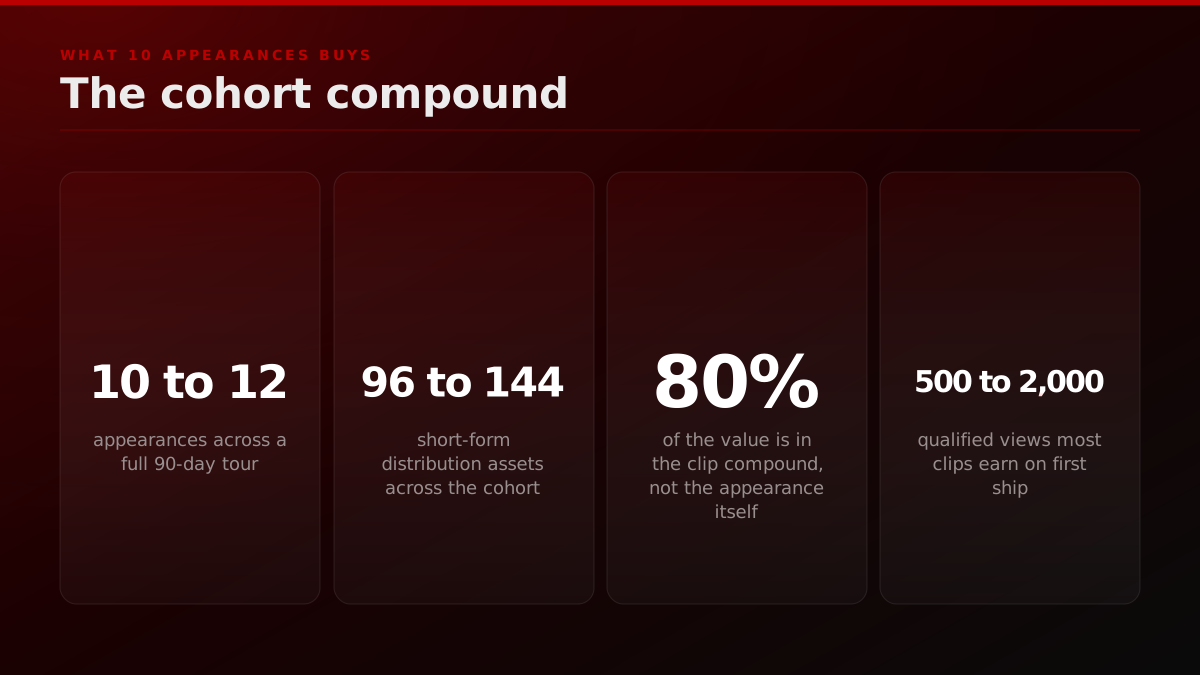
The compound: what 10 appearances actually buys you
Ten appearances at 8 to 12 clips per episode is 80 to 120 short-form distribution assets per founder cohort. Across a full tour of 12 appearances, the cohort produces 96 to 144 assets. Those assets become outbound DM ammo, conference panel bait, sales call openers, and inbound search demand. When the episode transcripts are engineered for retrieval rather than left as flat audio, that inbound demand extends into AI answer engines too, which is the mechanism the podcast AEO citation strategy for getting cited by AI breaks down. The single biggest insight from running this on ourselves and our clients: the appearance itself is roughly 20% of the value, the clip cohort is the other 80%.
The compound also plays out in conversations the founder is not in. Hosts cross-recommend guests, audience members from one show share clips into Slack channels the founder has never seen, and a single sharp clip from episode three resurfaces in week eight as DM ammo for an unrelated outbound. The tour is a permanent distribution layer because the assets keep working long after the recording window closes.
Podcasting builds relationships that lead to opportunities that lead to more relationships that lead to more opportunities. It all starts with relationships.
Dave Jackson, who has hosted the School of Podcasting for two decades, made the same point on the r/podcasting guesting thread: the relationship graph a tour builds outlasts any single episode's download count, and it is the mechanism behind the host cross-recommendations the cohort data keeps surfacing.
Chariot Driver
@DriverChariot
Whenever you see a tech founder doing a podcast tour its one of two reasons: the company isn't doing that well or they want to raise another round of funding. Nothing else.
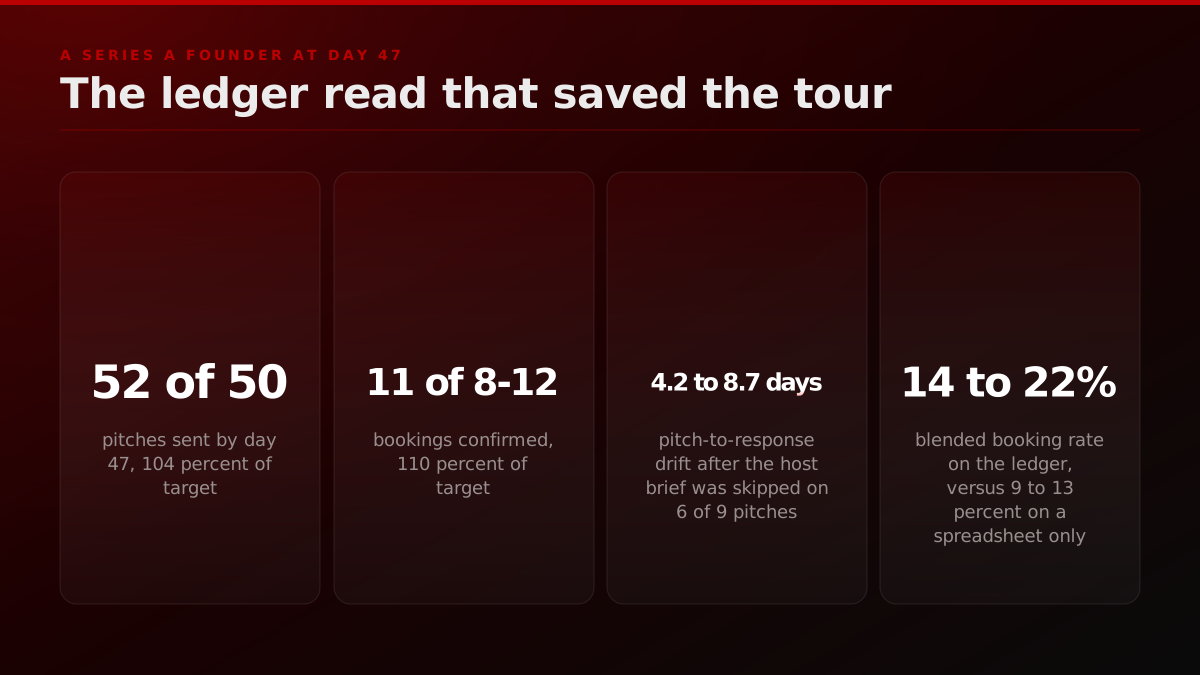
Tour metrics scorecard (the 6 numbers founders track)
Six numbers every founder tracks across the cohort: pitches sent, bookings confirmed, recordings completed, clips produced, outbound DMs that cite a clip, and inbound conversations attributable to a clip. The scorecard is not optional; founders who do not track the six numbers misread the tour as did not work when the actual problem is that the redistribution loop never ran.
- Pitches sent (target: 50 by Day 30)
- Bookings confirmed (target: 8 to 12 by Day 45)
- Recordings completed (target: 8 to 12 by Day 90)
- Clips produced (target: 64 to 144)
- Outbound DMs that cite a clip (target: 30+ inside the first 30 days post-tour)
- Inbound conversations attributable to a clip (target: 5+ inside the first 60 days post-tour)
Inside the FORKOFF Podcast Ledger (Notion DB id podcast-tour-cohort-2026), each of the six numbers gets logged weekly with a 4-week rolling delta and a per-tier cut so the cohort sees Tier 1 versus Tier 2 versus Tier 3 conversion side by side. The ledger entry for a Series A founder running a 90-day tour in Q1 2026 read like this at Day 47: 52 pitches sent (104 percent of target), 11 bookings confirmed (110 percent), 4 recordings completed (track to plan), 32 clips produced (track to plan), 0 outbound clip-citations (not yet at the citation phase), 0 inbound attributable (not yet at the citation phase). Two leading indicators flagged red at the same review: average pitch-to-response window had drifted from 4.2 days at Day 14 to 8.7 days at Day 47, and Tier 2 conversion had dropped from 22 percent to 14 percent. Both numbers are red because the host research one-page brief had been skipped on 6 of the last 9 pitches. The fix is mechanical, not strategic: the founder reinstated the brief on every Tier 2 and Tier 3 pitch, and the response window compressed back to 5.1 days inside 14 days. Without the ledger surfacing the leading indicators, the founder would have read the slowdown as the tour failing and pulled back outreach, which is the exact wrong move.
::directive{id="on-brief-drift"} A seventh number is tracked but not weighted: 30-day-post-publish download deltas per episode, which the cohort uses purely to triage which 5 clips deserve resurface treatment in Days 121 to 150. Founders running the scorecard inside Notion plus the FORKOFF Podcast Ledger close the tour at 14 to 22 percent blended booking rate; founders running the scorecard inside a spreadsheet only close at 9 to 13 percent because the per-tier cut never gets visualized, and Tier 2 conversion erosion goes undiagnosed.
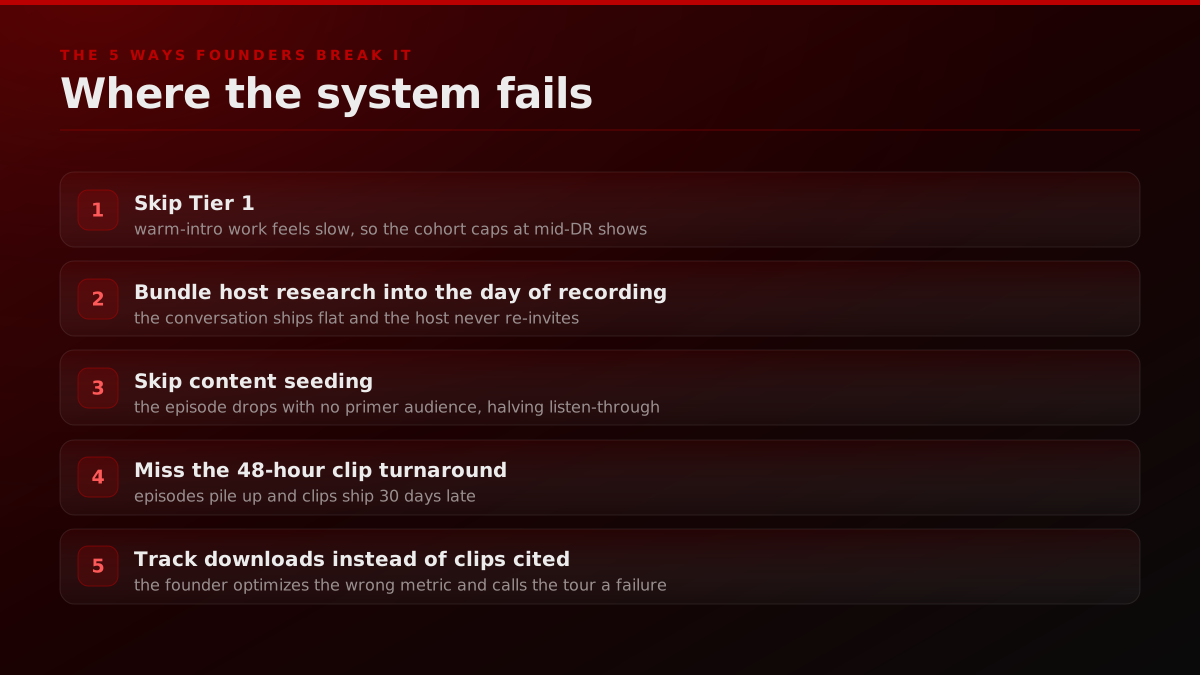
The 5 ways founders break the system
First, founders skip Tier 1 because warm-intro work feels slower than cold pitching. The dream shows are also the highest-yield assets and the ones that take the longest to land; skipping Tier 1 caps the cohort at mid-DR. Second, founders bundle Phase 2 host research into the day-of-recording, ship a flat conversation, and the host does not invite them back. Third, founders do not seed content in the seven days before each recording, and the episode drops without a primer audience, halving listen-through. Fourth, founders skip the 48-hour clip turnaround and let three episodes pile up before clipping starts; the cadence breaks and clips ship 30 days later than they should. Fifth, founders track downloads instead of clips-redistributed-and-cited, optimize for the wrong metric, and conclude the tour did not work when the actual evidence is in the inbound that lands in months three through six.
What the 90-day tour budget looks like in dollars and hours
The tour budget runs across three lines: founder hours, agency fees if any, and clip-pipeline cost. Founder hours are the line most often miscounted. DIY founders model 8 to 10 hours per week and find the actual load is 18 to 22 hours per week across the 90 days. The miscount is roughly two times reality, and it is the single most common reason DIY tours stall around week six.
Hybrid mode budgets 4 to 6 founder hours per week (Tier 1 warm-intro work plus host research on confirmed bookings) plus 6 to 9 thousand dollars across the 90 days for outsourced Tier 2 and Tier 3 outreach plus the clip pipeline. Full-agency mode budgets 1 to 2 founder hours per week (recording attendance plus brief review) plus 12 to 24 thousand dollars across the 90 days depending on cohort size and clip volume. The dollar lines are reference ranges from the FORKOFF Podcast Service Cohort; market rates vary.
The honest tradeoff is not money against quality, it is money against founder calendar. A founder running a Series A motion who values their distribution hours at 200 dollars per hour breaks even on full-agency mode at about 75 hours saved across the quarter, which the tour comfortably clears. A bootstrapped solo founder with no payroll pressure on their own hours runs hybrid because the cash lever costs more than the time lever. The mode is a function of the founder's stage, not a preference.
The 30-60-90 day post-tour playbook
The cohort closes at day 90 and the next 90 days are where the compound shows up. Founders who treat day 90 as the finish line cap the tour at the 80 to 120 clips and miss the 5 to 10 inbound conversations that land in months three through six. Founders who treat day 90 as the start of a redistribution-second-life ship a sequenced playbook across days 91 to 180.
Days 91 to 120 are the citation phase. The founder cites a specific clip inside every outbound DM, every sales call opener, every inbound reply, every conference panel intro. The target is 30+ clip citations across the 30 days. The citation pattern is what converts a passive clip library into active sales surface. Days 121 to 150 are the resurface phase. The founder selects the five clips that produced the highest engagement in the first 30 days post-tour and re-ships them with fresh hook copy on the same surfaces. Resurface clips run at 60 to 80 percent of the engagement of the original ship, which means the cohort produces 1.6 times the distribution volume across the second window. Days 151 to 180 are the cross-pollination phase. The founder packages two or three clip themes into long-form essays, podcasts they appear on as a follow-up guest, or panel pitches. The cross-pollination is where the cohort stops being a tour and starts being a permanent narrative asset.
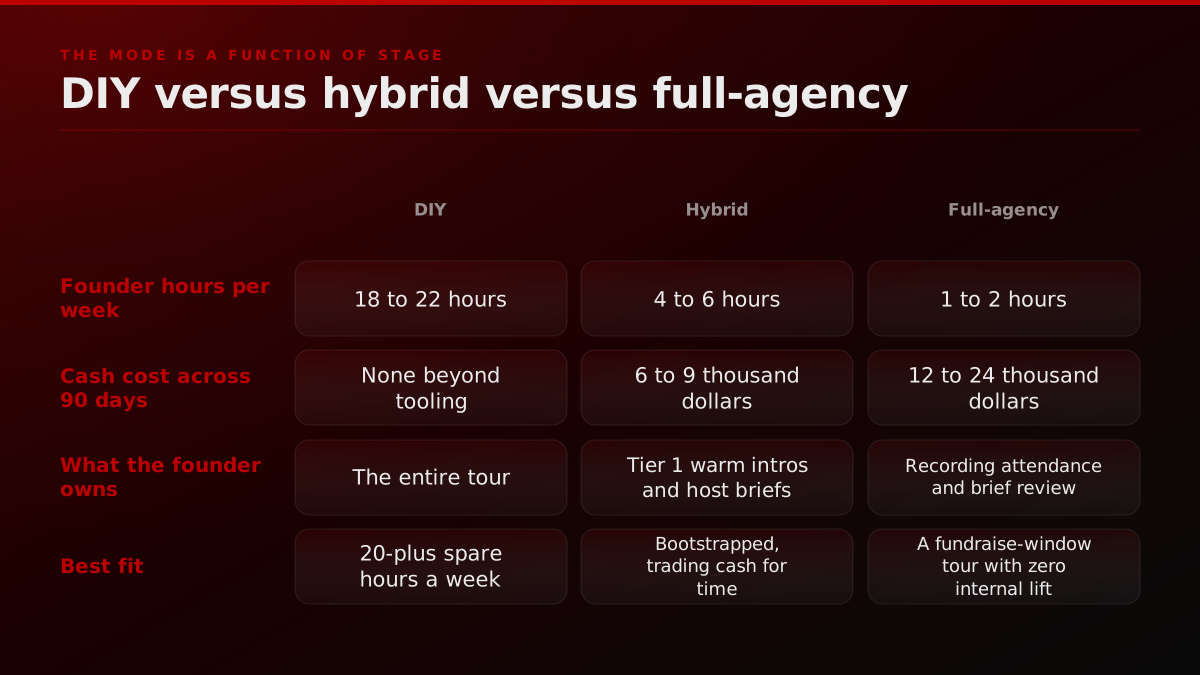
DIY vs agency vs hybrid (the 3-mode decision)
DIY works for founders with 20 hours per week of distribution time during the 90 days. The pitching layer alone is 8 to 12 hours per week. Production is another 4 to 6. Clip oversight is another 2 to 4. Founders running an early-stage company rarely have 20 hours; they have 4. Hybrid is the realistic mode: the founder runs Tier 1 (the warm-intro layer that requires their own graph) and outsources Tier 2 and Tier 3 outreach plus the clip pipeline. Full-agency is the right call for founders who treat the tour as a fundraise-window asset and want zero internal lift; the FORKOFF podcast clipping revenue case study covers that mode in detail. The line-item cost comparison across the three modes, with the break-even hour-value math, lives in the podcast agency vs DIY guesting cost breakdown. Founders who decide the tour should become a show they own, rather than a run of appearances on other people's feeds, move onto podcast marketing services, where strategy, production, distribution, promotion, and the clip cadence run as one engagement instead of four vendors.
Is podcast guesting dead?
I recently listened to an episode of Grow the Show, and Kev mentioned that podcast guesting isn’t really a viable marketing strategy anymore because hosts are getting flooded with spammy AI-generated emails. Are most hosts not even opening guest pitches now? Do you still bring guests onto your show or… Show more
The FORKOFF Podcast Ledger and why every appearance gets logged
FORKOFF runs every appearance against an internal ledger we call the Podcast Engine Ledger. The ledger is a row per appearance with twelve fields: show name, host, recording date, ship date, clip count, top-clip qualified views, host re-share boolean, inbound conversations sourced, outbound DMs citing the clip, sales-call opener uses, revenue attributed to a downstream pipeline, and a one-line operator note on what worked. The ledger runs across every founder in the Podcast Service Cohort and the field structure is identical between solo founders and our internal team.
The ledger exists because the audible question every founder asks at day 120 is "did the tour pay back." Without a ledger the answer is a story. With a ledger the answer is a row of numbers that maps each appearance to its downstream pipeline, and the question shifts from "did it pay back" to "which two appearances produced 70 percent of the pipeline and how do we run more shows in that shape next quarter." Across the FORKOFF Podcast Service Cohort the Pareto holds: roughly two of every ten appearances produce two-thirds of the downstream pipeline, and the two are rarely the highest-DR shows on the tier-one list.
The operator move is to log every appearance the day it ships and revisit the ledger at day 30, day 60, and day 90 post-tour. Founders who run the ledger discipline produce a second tour at twice the conversion of the first because the target list inherits the signal from the previous cohort. Founders who skip the ledger run the second tour as if it were the first.
The Bottom Line
A founder podcast tour today is a 90-day system or it is nothing. Phase one is research and outreach, 50 targets in three tiers, 8 to 12 bookings on the calendar by Day 45. Phase two is host prep and content seeding, the load-bearing prep layer most tours skip. Phase three is recording cadence at two to three per week and a clip pipeline that ships 64 to 144 distribution assets across the cohort. The appearance is 20% of the value, the clip compound is 80%. The tour, run as a system, becomes a permanent distribution layer that pays compounding interest into Q2 and beyond.
If you are sitting at Day 0, the move is to write the 50-show list this week, segment it into three tiers, and write the Tier 2 pitch hook today. The system waits for nothing.
The single decision that decides the tour outcome
The decision that decides the cohort outcome is not the show list, the pitch template, or the clip pipeline contract. The decision is whether the founder treats the tour as a 90-day operating system or a series of pitches. The operating system framing forces the prerequisites, the tiering, the brief, the contract windows, and the ledger discipline. The series-of-pitches framing produces two appearances and stops. Across every FORKOFF Podcast Service Cohort the outcome variance maps cleanly to that single framing decision, and the framing is set in the first week.