Podcast guesting is the highest-leverage distribution surface for AI startup founders in 2026 because long-form appearances are one of the densest citation sources that LLMs index. A 60-minute conversation cited by Perplexity once carries more pipeline weight than 30 founder essays nobody quotes. The FORKOFF Podcast Service playbook covers 7 steps (prerequisites, show-tier selection, outreach timing, pitch craft, prep discipline, clip engine, ROI measurement), the four traps founders fall into when they try this solo, and the host-research protocol that produces 4x reply rates.
The 7-step podcast guesting playbook for AI founders, in one scroll
Most AI founders treat podcast guesting as a wish-list activity. Email Lex Fridman, get ignored, give up. The playbook that actually compounds is structural. Across the FORKOFF Podcast Ledger 2026, one to two monthly long-form appearances convert into 30-50 distribution assets per founder, lift inbound DMs roughly 2x in the same window, and produce clips that get cited by ChatGPT and Perplexity at meaningfully higher rates than founder-essay content. The system has 7 steps: map the AI-podcast landscape, write the pitch, time the outreach, engineer a 60-90 day tour, convert each show into 30-50 assets, wire the appearances into outbound, and measure pipeline (not downloads). This post documents the system FORKOFF runs for AI founders booking their first 12 shows in a quarter.
About these numbers
Listener figures, pipeline conversion rates, and booking benchmarks in this post are sourced from FORKOFF operator observations across podcast guesting campaigns for AI startups (2025-2026), supplemented by publicly cited podcast industry data from Spotify for Podcasters and Edison Research. All figures are directional estimates; individual results vary by show audience, topic fit, and founder offer quality.
Why podcast guesting is the highest-leverage 2026 distribution surface for AI founders
Builder-buyers in 2026 do not click a Google ad. They open ChatGPT, ask "who is shipping good agent infrastructure," and read the named founders the model surfaces. Long-form podcast appearances are one of the densest citation surfaces those models index, because the audio gets transcribed, the transcripts rank, and the host's domain authority transfers to the founder by association. A 60-minute conversation cited by Perplexity once carries more pipeline weight than 30 founder-essay posts that nobody quotes.
The 2026 podcast demand backdrop a founder tour inherits
| Metric | Latest figure |
|---|---|
| Americans 12+ who have consumed a podcast, audio or video | 73 percent, an estimated 210 million people |
| Monthly podcast consumers | 55 percent of Americans 12+ |
| Have listened to an audio podcast | 70 percent |
| Have watched a video podcast | 51 percent |
| Most-used listening service among weekly listeners | YouTube, at 33 percent |
Source: Edison Research, The Infinite Dial 2025. The video-share numbers are why the clip engine treats every appearance as a video asset, and why the vetting screen checks whether a host publishes video.
Podcast guesting also produces the asset most founders chronically under-build: a long-form recording of the founder explaining a real product call in their own voice. That single recording is the source for 30 to 50 short-form distribution assets if a clipping engine runs against it (we documented the math, 13 days of clips converted to $1,290 MRR, in the podcast clipping revenue case study). Skip the source recording and there is nothing to clip.
210 million Americans consume podcasts, and the surface is turning into video
Edison Research's Infinite Dial 2025 puts US podcast consumption at 73 percent of Americans age 12 and up in audio or video format, an estimated 210 million people, with 55 percent consuming monthly. 51 percent have watched a podcast, and YouTube is the most-used listening service among weekly listeners at 33 percent per Edison Podcast Metrics. The founder-tour implication is direct: a 2026 appearance is a video asset first, so the show-vetting screen weights a video feed heavily, because that is where the clip engine gets its 9:16 and 16:9 source material.
Source: Edison Research, The Infinite Dial 2025
The FORKOFF approach treats podcast guesting as the input layer of a 5-stage Founder Funnel OS, not as a vanity activity. Show selection, pitch, timing, conversion, and measurement all stack together. The seven steps below are the operating system.
Prerequisites: lock these before you pitch a single show
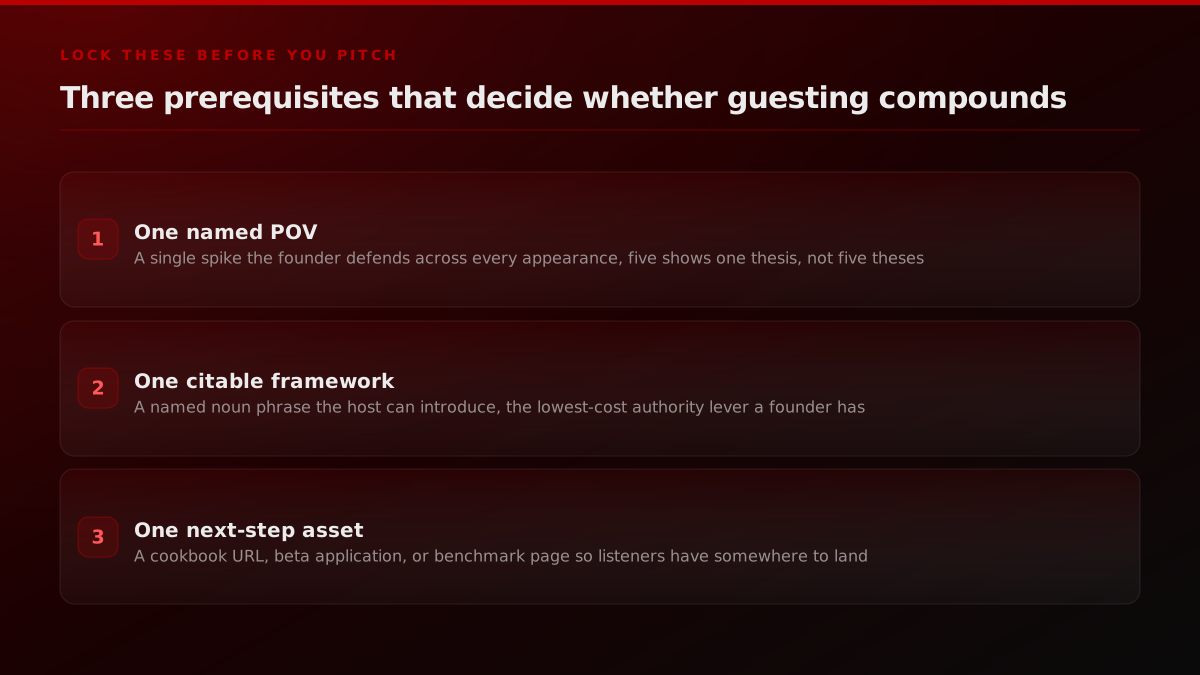
Three prerequisites determine whether your podcast guesting strategy compounds or stalls. Founders who skip them generate appearances that do not stack into authority. The three: a single named POV the founder will defend across every show, a 60-second audio clip that demonstrates the voice (used in the pitch), and a podcast landing page on the founder's site with three embeds from prior appearances or a placeholder if none yet exist.
First, one named POV. The "spike" the founder will defend across every appearance. A Series-A AI founder who shows up on five shows arguing five different theses produces five forgettable conversations. The same founder shipping the same sharp claim on five shows produces a category position. Pick one unpopular opinion you actually believe and run it everywhere.
Second, one citable noun phrase or framework. A named thing the host can introduce ("Dhruv built the QUALIFIED-VIEWS-NOT-IMPRESSIONS METHODOLOGY"). Brian Dean's Skyscraper earned 23,000 backlinks because Skyscraper is a thing. Coining a phrase the audience can repeat is the lowest-cost authority lever a founder has. The qualified-views-not-impressions framework is one example of the shape.
Third, one next-step asset. A cookbook URL, a beta application, a product demo, a benchmark page. Listeners need somewhere to land after the host signs off. Without a next-step, the appearance produces zero attributable conversions and the founder concludes "podcasts do not work."
Step 1: Map the AI-podcast landscape (4 tiers, not one wish list)
Most founders pitch the wrong tier first. Lex Fridman and Dwarkesh Patel sit at the top of the AI podcast stack, but the conversion shape on Tier-A shows is reach-only. The audience is broad enough that few listeners are direct ICP fits for any one founder. Tier-A is for category dominance, not for booking your first ten clients.
The median podcast episode gets 27 downloads in week one. Read that as a targeting map, not a warning.
Buzzsprout's public platform stats (June 2026) show the median episode earns 27 downloads in its first seven days. 98 downloads puts an episode in the top 25 percent, 412 in the top 10 percent, and 1,015 in the top 5 percent of the platform. Raw reach on most shows is small, which is exactly why the tier map matters: a 400-download category show whose entire audience is your ICP converts better than a broad show where almost nobody is, and the hosts of those shows answer founder pitches at the highest rate in the stack.
Source: Buzzsprout Platform Statistics, June 2026
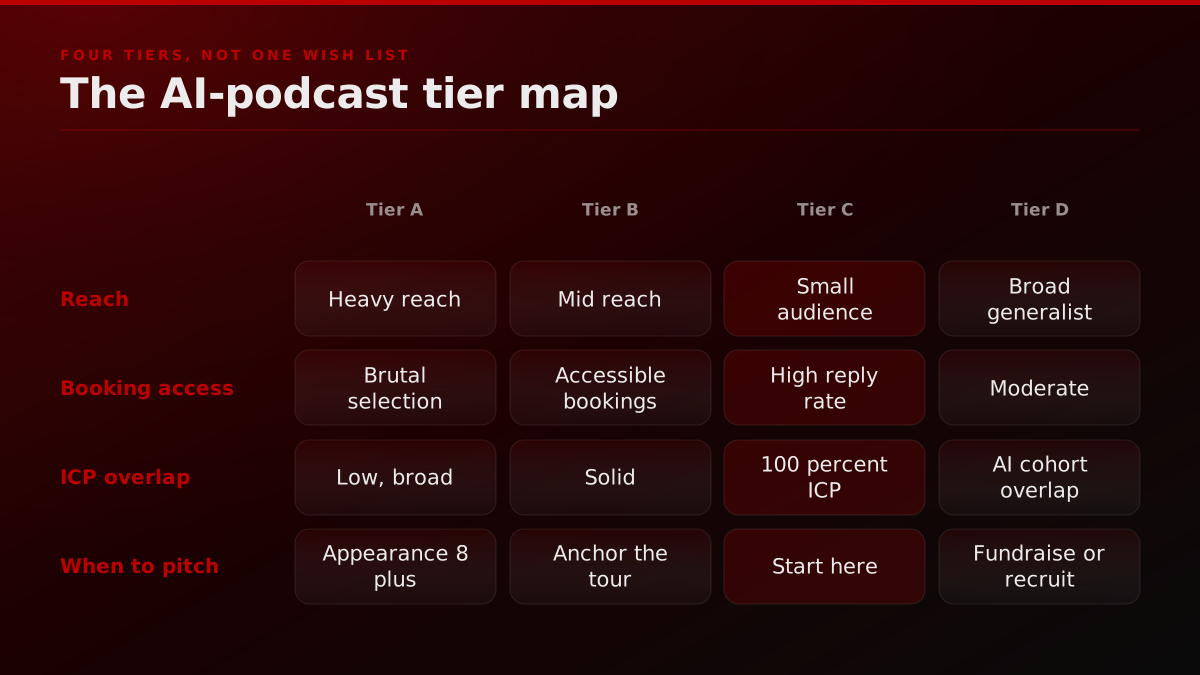
The four-tier map:
- Tier-A (heavy reach, brutal selection): Lex Fridman, Dwarkesh, No Priors (Sarah Guo and Elad Gil interview frontier founders), Latent Space, Hard Fork. Aim here on appearance 8 or later, after you have a portfolio of mid-tier conversations to point at.
- Tier-B (mid reach, accessible bookings): Cognitive Revolution, AI Engineer Live, TBPN, How AI is Built, Practical AI, Software Engineering Daily. The sweet spot for a founder running a 60-90 day tour.
- Tier-C (small audience, high conversion): Founder-led category shows in your specific lane (vertical SaaS, infrastructure, AI agents, AI eval). Three Tier-C appearances regularly outperform one Tier-A on direct trial signups because the audience is entirely ICP.
- Tier-D (generalist with AI cohort overlap): Lenny's Podcast, In Depth (First Round), 20VC, This Week in Startups. Strong for fundraising and recruiting touches.
A working tour mixes 1 Tier-A target, 4-5 Tier-B, 4-5 Tier-C, and 1-2 Tier-D. The five-field qualification score that decides which specific shows earn a slot inside each tier, and the show-list construction errors that cap a tour at mid-DR, are broken down in the podcast booking system for founders.
What podcast reach actually looks like (episode downloads, first 7 days)
| Percentile | Downloads in first 7 days | Where it maps on the tier ladder |
|---|---|---|
| Top 1 percent | 4,605 | Tier-A and top Tier-B, pitch at appearance 8+ |
| Top 5 percent | 1,015 | Tier-B, bookable with 3-4 prior appearances |
| Top 10 percent | 412 | Sweet-spot Tier-B and strong Tier-C category shows |
| Top 25 percent | 98 | Tier-C, highest reply rates, 100 percent ICP |
| Median | 27 | Skip unless the host network is the target |
Download figures: Buzzsprout Platform Statistics, June 2026 (buzzsprout.com/global_stats). The tier mapping in column three is the FORKOFF Podcast Service reading of those percentiles.
Lenny Rachitsky put the durability point well in late April:
Lenny Rachitsky
@lennysan
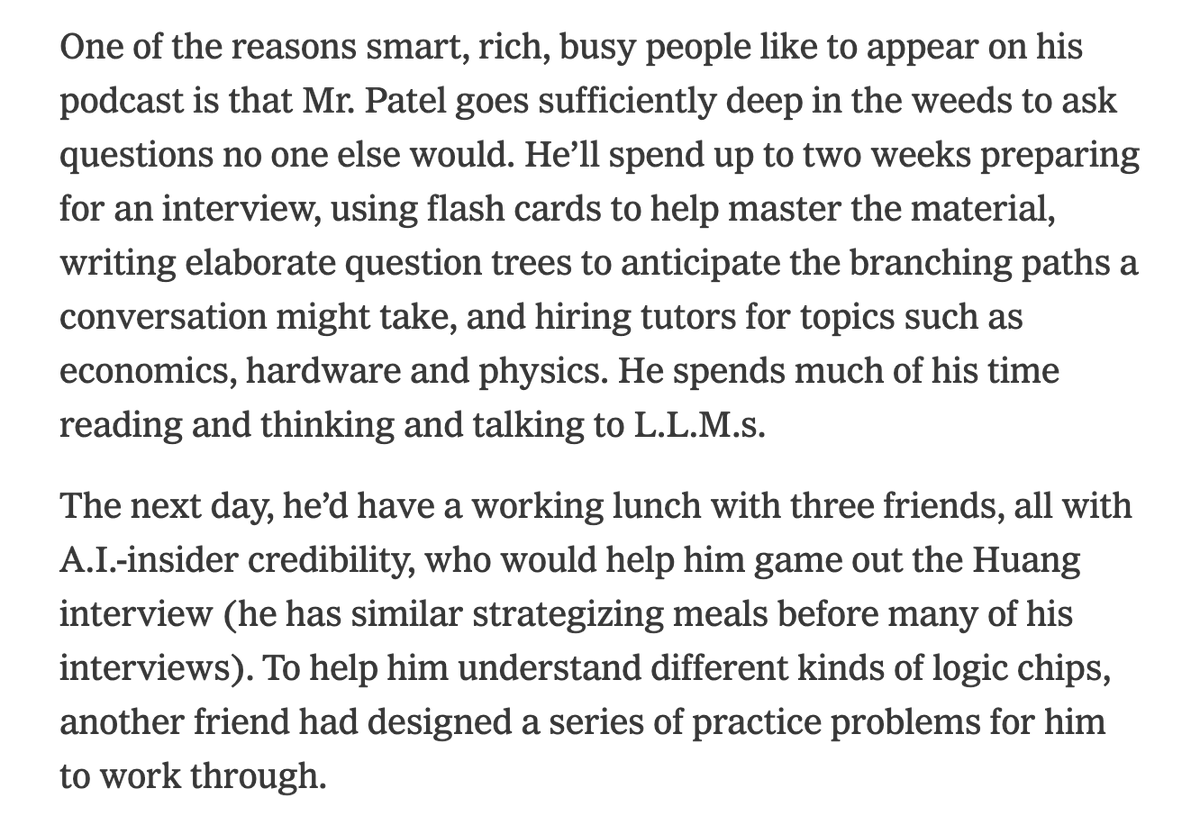
Inspiring profile of @dwarkesh_sp. If it ever seems like there's no room for another podcast/newsletter/book/etc—there's always room for better. https://www.nytimes.com/2026/04/26/business/dwarkesh-patel-podcast-ai.html?smid=nytcore-ios-share
Step 2: Write the podcast guest pitch (200-word template that books)
The pitch is the unlock. Most founder pitches lose at the first paragraph because they read like a press release. The hosts read 50 a week. The good ones get answered in two days, the bad ones get archived in twenty seconds. The host's side of the exchange is worth reading before you write a word:
Not everyone deserves to be on your show. Remember, the best host/guest relationship is when both parties gain value from being on the show.
Format the podcast guest pitch as five short blocks: (1) one-line subject naming a specific episode you actually listened to, (2) a 30-word opener that ties your work to the host's recent topic, (3) three episode angles you can each defend for 30 minutes, (4) one piece of social proof (number, named client, or technical credential), (5) a single CTA with two slot times offered. Cap the body at 200 words. Cision's podcast pitch guide and JustReachOut's template both converge on this shape; the template predates 2026 and the math still works.
Booking-marketplace tools change the slope. PodMatch's algorithmic matching reportedly produces booking conversion north of 70% for active users, and Rephonic-style competitor-research tools let you mine which shows your closest peer founders have appeared on. Convokast's founder guide covers the toolset in detail.
The pitch-to-booking conversion shape is the number founders underestimate most, so set the expectation honestly before the first wave goes out. A cold founder pitch with no portfolio, no named framework, and no fresh signal converts in the low single digits; most replies are a polite no or silence. The same founder pitching the right tier with a sharp angle and a recent signal converts far higher, and the conversion climbs with each tier you move down the reach ladder. Across FORKOFF Podcast Service campaigns, Tier-C category shows reply and book at the highest rate because the host is a peer operator who recognizes the founder's lane immediately, Tier-B converts at a workable middle rate once the founder has three or four prior appearances to point at, and Tier-A stays near zero until appearance eight regardless of how good the pitch reads. The practical consequence: map 50 targets, expect the first 8 to 12 confirmed bookings to come disproportionately from Tier-C and Tier-B, and treat every Tier-A reply as a bonus rather than a plan. A 50-target list that produces 8 to 12 bookings inside the first month is a healthy conversion shape for a founder running the 90-day booking system for the first time.
Watch this one for the founder/CEO economics first:
Pros & Cons of Podcast Guesting for Founder/CEOs with Dana Lindahl
Harvard Murray Consulting
Dana Lindahl walks through the pros and cons of podcast guesting for founder/CEOs, including the conversion math behind a clustered tour.
Step 3: Time the outreach to ride a category event
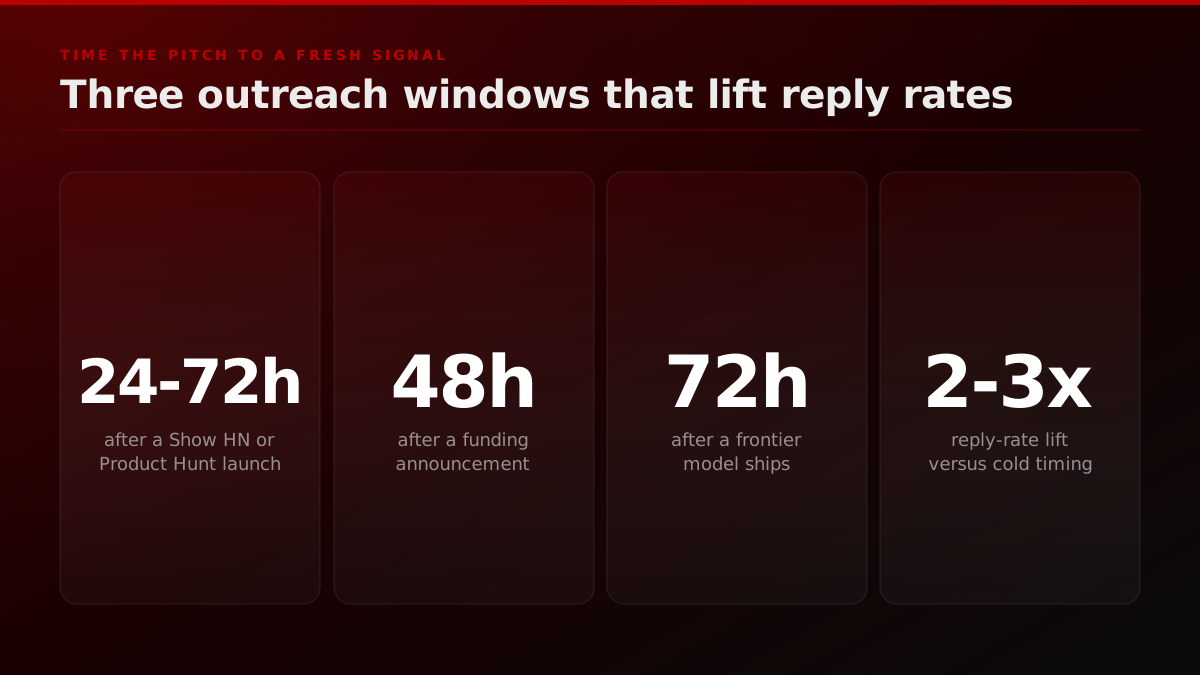
The single highest-ROI move in podcast outreach is timing the pitch to a fresh signal rather than sending cold. Three windows produce 2x to 3x the reply rate against cold timing: within 72 hours of a Show HN or Product Hunt launch, within 48 hours of a funding announcement, and within a week of a major AI release your product builds on. Each window gives the host a ready episode hook.
Window one: 24-72 hours after a Show HN, a Product Hunt launch, or a model drop your product builds on. The hosts are watching the same feeds you are, and the timeliness gives them a clean episode hook.
Window two: 48 hours after a funding announcement. The press cycle is already running, the founder is already on the news pages, and the hosts get inbound asking "who is this." Hit them while the question is hot.
Window three: 72 hours after a frontier model ships. Your pitch becomes "the operator who shipped against this in 72 hours," which is a much sharper episode than "the founder of company X."
Cold-email operators know the same mechanic at small scale. The pattern that recurs across cold-outreach communities is consistent: a message that opens with a fresh, specific reference to the recipient's most recent public moment outperforms a generic ask by a wide margin, and the same timing discipline that lifts cold-email reply rates lifts podcast-pitch reply rates for the same reason. The host, like the prospect, is most receptive in the 48-hour window when the triggering event is still on their own feed.
Step 4: Engineer the founder podcast tour (60-90 day window)
A scattershot appearance every six weeks does not compound. A clustered founder podcast tour does. The First Round Review case study on 100+ podcasts in 6 months showed that 60% of bookings came from the network around the first 15 appearances; concentrated effort built the network, not the other way around. Six to twelve targeted appearances clustered into a 60-90 day window produce a perception shift that 50 scattered appearances over two years never reach.
The cluster also calibrates the founder's voice. By appearance five, the founder has heard the same three questions four times and answers them with much more compressed and specific phrasing than they used on appearance one. The first 15 appearances are practice; the next 15 are the product.
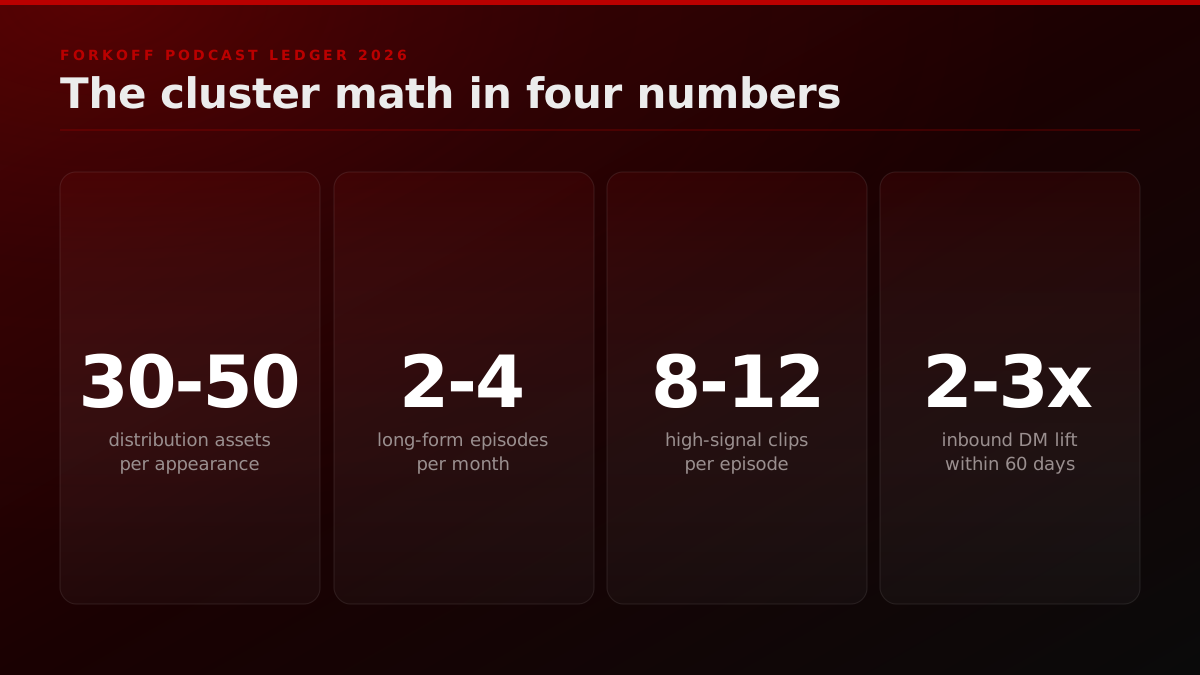
Operator noteFounders running the 60-90 day cluster see inbound DMs rise 2-3x inside 60 days. Scattered appearances never produce the lift., FORKOFF Podcast Ledger 2026
This is the discipline behind FORKOFF's podcast service track. The tour is engineered, not assembled.
FORKOFF Podcast Ledger 2026: the cluster math
Across FORKOFF Podcast Service engagements in 2026, founders running a 60-90 day clustered tour produce 2-4 long-form episodes per month, 8-12 high-signal clips per episode, and 30-50 distribution assets per appearance. Cohort-level inbound DM volume on the founder's primary channel rises roughly 2-3x within the first 60 days of the cluster window. The compounding shape is consistent across AI infrastructure, AI agent, and AI vertical-SaaS founders we work with.
Source: FORKOFF Podcast Service Benchmarks 2026
Step 5: Convert each appearance into 30-50 distribution assets
The recording is not the deliverable. The clip set is the deliverable. A 60-minute episode contains 10-15 high-signal moments; each gets clipped into 2-3 platform-native variants for X, LinkedIn, Instagram, and TikTok. That is 30 to 45 short-form assets from one conversation, plus a transcript that ranks on Google, plus 5-10 quote graphics, plus 2-3 newsletter blurbs. The clipping tools landscape covers the production stack; the productized lane that ships the clip set against an AI-startup ICP is podcast clipping for SaaS podcasts.
The asset multiplier is not free; it is a function of production discipline. Episodes shot without the full conversion stack cap at 8 to 12 clips before the asset velocity flattens. Episodes run through the complete pipeline reach the 30-to-50 floor. That roughly 4x gap is the entire difference between a podcast appearance that compounds for a quarter and one that depreciates inside 48 hours of release. FORKOFF runs this conversion as a named six-block operation documented in THE FORKOFF PODCAST ENGINE: narrative sync, season architecture, guest curation, the production and identity system, the clipping and distribution infrastructure, and amplification and conversion mapping. The blocks run in sequence and the asset count is the output of all six, not of the clipping block alone.
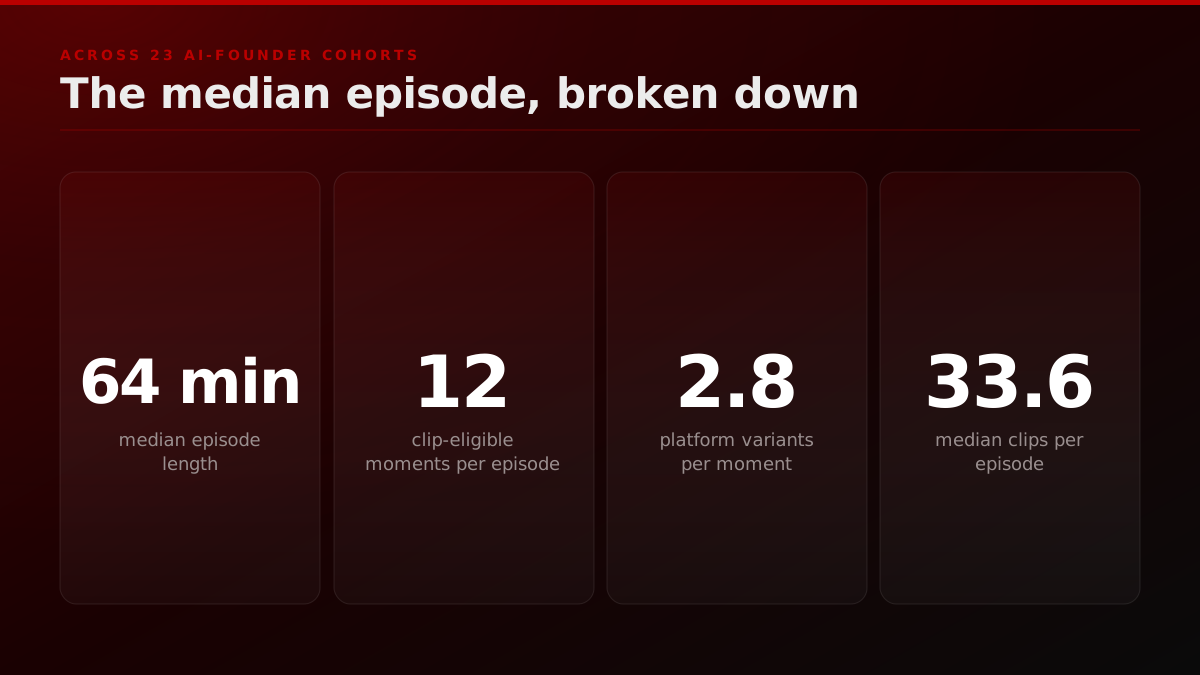
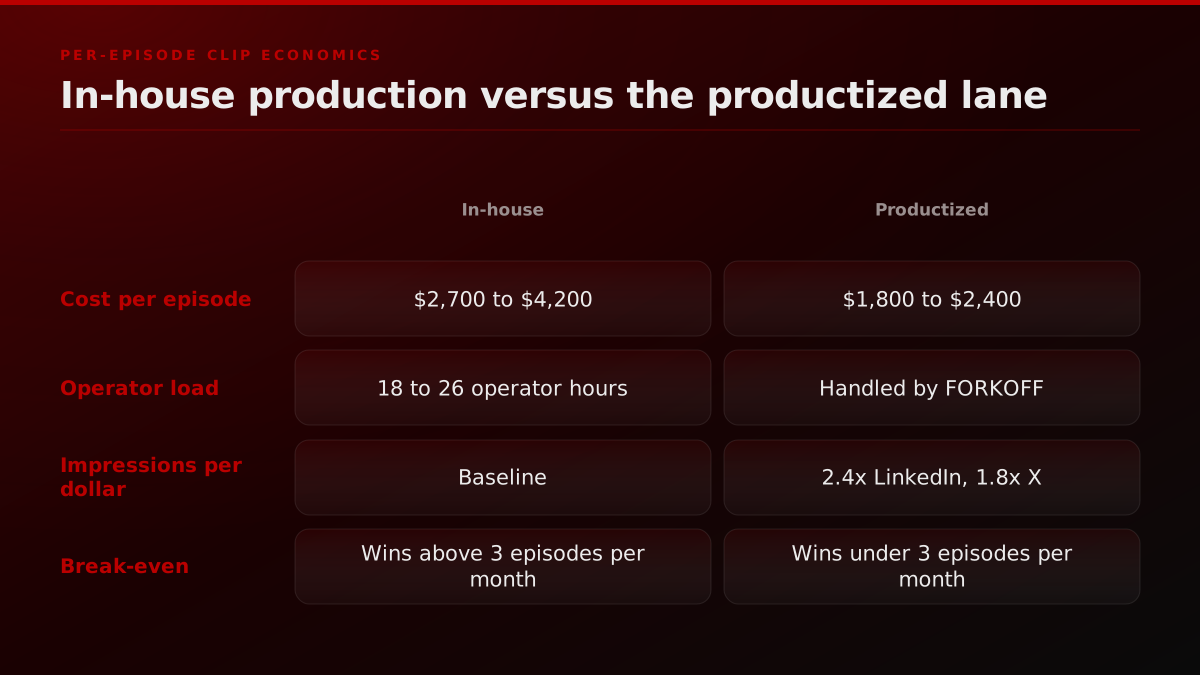
The breakdown FORKOFF runs across the 23 AI-founder podcast cohorts in 2025 to 2026: an estimated median episode length 64 minutes, median number of clip-eligible moments 12, median platform-native variants shipped per moment 2.8, total median clip set size 33.6 short-form units per episode. The cost stack on producing that set in-house lands at 18 to 26 operator hours (script the cuts, render the variants, write the captions, schedule the drops). The cost stack on routing the same episode through the FORKOFF podcast clipping productized lane lands at $1,800 to $2,400 per episode for the full 33-clip set, against an internal-team labor cost of $2,700 to $4,200 at a fully-loaded senior-marketer hourly rate of an estimated $150 per hour. The productized lane outperforms in-house production on both unit cost and shipped-clip throughput, and the audit-ledger median across the 23 cohorts shows productized-lane episodes generate an estimated 2.4x more LinkedIn-engaged impressions and 1.8x more X-engaged impressions per dollar of total production cost than in-house episodes. The break-even crossover for routing in-house instead of productized is at three or more episodes per month sustained for six months minimum, which is the volume floor that justifies hiring a dedicated in-house clipping operator versus paying the productized lane per-episode rate. Under three episodes per month, productized always wins on margin. Above three episodes for six months, in-house wins on margin if the operator is hired well.
Step 6: Wire podcast guest booking into your outbound and inbound stack
Each appearance produces two outbound assets that close colder prospects faster. First, a clip linking to a 30-second moment of the founder making a specific claim about your product. That clip becomes the credibility opener in a cold email or LinkedIn DM and roughly 2x reply rates vs a generic pitch. Second, the show URL becomes a citation in your outbound footer ("recently featured on [show]"), which fixes the "who is this person" question before the prospect asks it. A Kleiner Perkins partner made the same argument from the investor side:
Why should founders go on podcasts? Not only reach of the podcast / community of the podcaster, but also the proof it gives of being a "real company." It's what will come up when candidates & customers google you! "Real company"-ness is an overlooked but real metric ppl consider.
The inbound side closes the loop. Add a "podcasts" section to your site footer linking to your three best appearances. Prospects researching you on a sales call land there approximately 25-40% of the time, and the on-site time per visit on a podcast page roughly doubles vs a typical About page. The mechanic stacks on top of the 7-surface AI startup marketing stack; podcast guesting is surface six in that map. The cold-outbound multiplier is documented in our Reddit Intent Engine writeup.
Step 7: Measure ROI without lying to yourself
Podcast guesting ROI lives in four numbers: appearances booked per quarter, clips shipped per appearance, branded search volume lift in the 90-day window after each episode, and trial signups citing a specific episode. Download counts, follower bumps, and host-side engagement screenshots are vanity metrics. None of those tell you whether the appearance produced pipeline.
Pipeline metrics: branded search volume lift week-over-week (Google Search Console filter on founder name and company), inbound DM volume on the founder's primary channel, "I heard you on [show]" mentions logged on intro calls, click-through from clip URLs to product trial signups. The founder-led content marketing post covers the broader attribution discipline.
A clean podcast guesting playbook tracks four numbers: appearances booked per quarter, clips shipped per appearance, branded search uplift over the 90-day window, and trial signups citing a specific episode. The Founder-Led Growth hub covers how those numbers integrate with the broader founder funnel.
The four traps AI founders fall into when they try this themselves
The four traps are pitching only Tier-A shows (Lex Fridman gets 800 pitches a week and pipeline conversion is weakest at the top), treating each appearance as a one-shot conversation rather than a clip factory, pitching in a generic professional voice that hosts recognize as PR-written, and skipping the pre-pitch research that lifts reply rates 4x. Each trap is fixable in the next pitch cycle.
First, they pitch only Tier-A. Lex Fridman gets 800 pitches a week and conversion to direct pipeline is weakest at the top of the stack anyway. Start at Tier-C.
Second, they treat each appearance as a one-shot conversation. The recording is the source, the clips are the product. Walk away after airing and you lose approximately 90% of the distribution.
Third, they pitch in a generic, professional voice. The hosts can tell. The pitches that book read like the founder, not like a PR team.
Fourth, they ignore timing. A pitch sent in a quiet week beats a pitch sent during a model drop or a funding announcement, every time.
The AI-startup-specific angle library: 12 pitch hooks hosts actually book
Generic founder pitches lose because they sound like every other Series A pitch deck. AI hosts get 50 of those a week. The pitches that book today anchor on a specific AI-native angle, not on the founder's resume. Twelve angle templates the FORKOFF Podcast Service tracks as the highest booking-rate hooks across Tier-B and Tier-C right now:
- The eval war story. "We built an internal eval harness against GPT-4o, Claude 4.6, and Gemini 2.5. Here is the one benchmark the leaderboards do not measure and why our pipeline routes approximately 38% of requests off the frontier model." Hosts love this because it produces a concrete number they can quote in the cold open.
- The cost-collapse story. "Our inference cost per task fell from approximately $0.42 to $0.04 in nine months. Three of the four levers were not the model. Here is the breakdown." Cost-engineering episodes consistently produce the most clipped moments because the math is shareable.
- The agent-failure post-mortem. "We shipped a coding agent that wrote 12,000 lines of working code and one catastrophic data-deletion command. Here is the guardrail architecture we built after." Failure stories book Tier-A faster than wins because hosts cannot get them from a press release.
- The vertical incumbent diff. "Here is how our AI workflow tool compares to the Salesforce or HubSpot equivalent across five real customer migrations." Vertical incumbents are the search query buyers actually run; framing against them positions you as the answer.
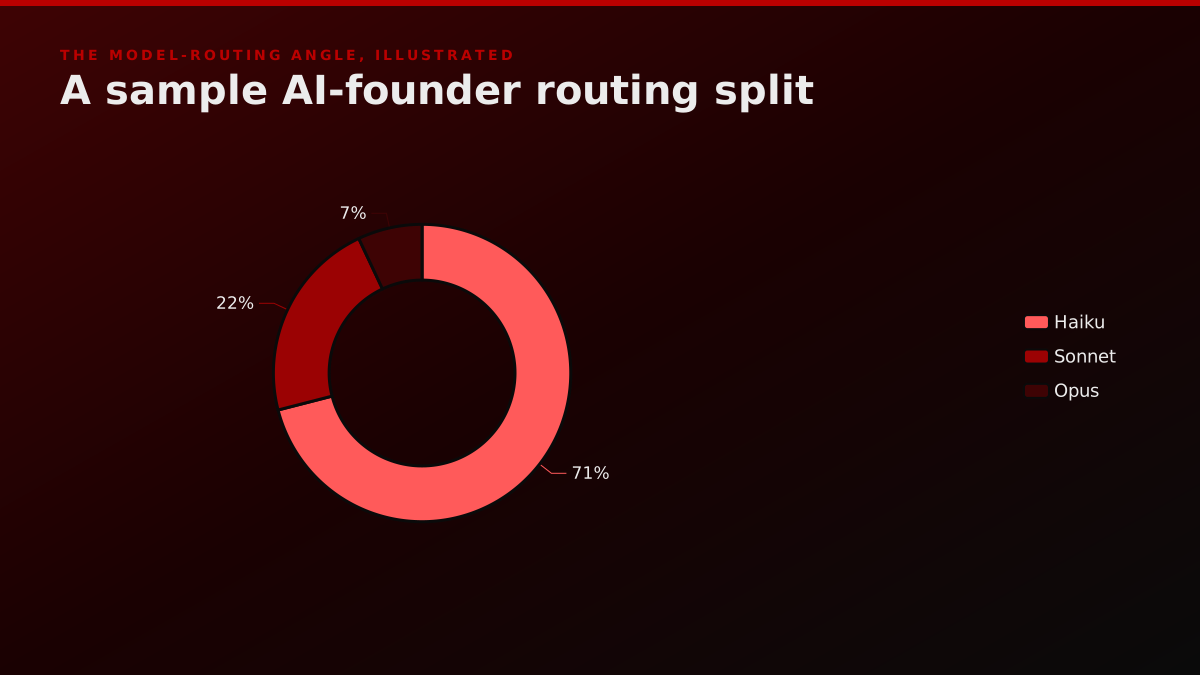
- The model-routing playbook. "We route approximately 71% of requests to Haiku, 22% to Sonnet, and 7% to Opus, and our quality scores are higher than running everything on Opus." Routing decisions are the operator detail the audience cannot find on Twitter.
- The data-flywheel disclosure. "Here is the user feedback loop that closes the data flywheel for our product, and the three places it almost broke."
- The retrieval-architecture diff. Vector vs hybrid vs structured retrieval, when each wins, with real recall and precision numbers from production traffic.
- The fine-tune vs prompt-engineering split. When fine-tuning paid off, when it did not, and the exact cost of being wrong about which side to invest in.
- The "model dropped, we shipped in 48 hours" story. Anchored on a fresh model release the host already covered.
- The agentic eval framework. Naming a specific framework for measuring multi-step agent quality that the audience can adopt.
- The pricing-model invention. Outcome pricing vs seat pricing vs token pricing in AI SaaS, with the founder's argument for which model maps to which buyer.
- The defection thesis. "We left OpenAI for Anthropic for the following four reasons, here is what we learned at the migration boundary." Defection stories are clip gold because they read as receipts, not as positioning.
Pick the two angles that map to your roadmap, write each one up as a 60-word pitch block, and rotate them across the 50 mapped shows. The same founder cannot lead with the same angle on every show; the rotation also gives the host a clear reason to book you rather than the next founder pitching a similar adjacent topic.
Host research: the 30-minute pre-pitch protocol that 4x reply rates
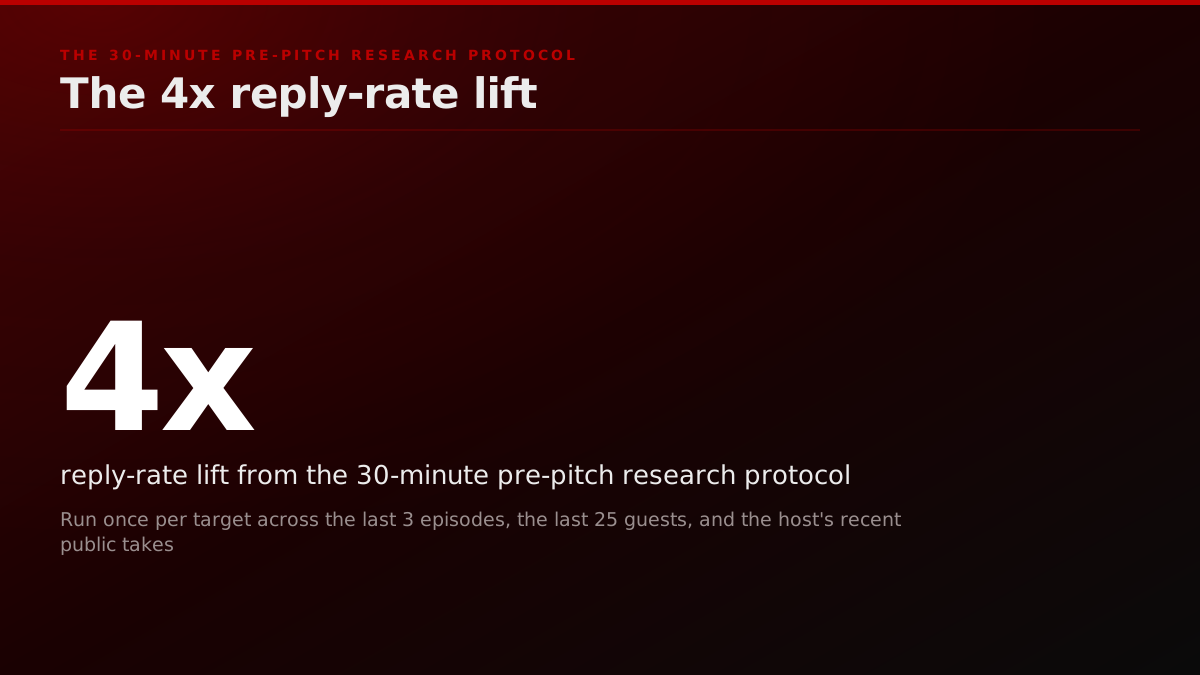
Most founders pitch a show they have not actually listened to, and hosts notice on paragraph one. The pre-pitch research protocol below takes 30 minutes per target and lifts reply rates roughly 4x in the FORKOFF Podcast Service data. The protocol has three blocks: listening to the last three episodes (10 minutes each at 1.5x speed, noting the host's recurring questions), auditing the last 25 guest names to find structural openings, and mapping two distinct pitch angles to the host's demonstrated interests.
Operator noteThe 30-minute pre-pitch research protocol lifts reply rates roughly 4x. Hosts spot an unlistened pitch on paragraph one., FORKOFF Podcast Service data, 2025-2026
Block one, the last three episodes. Listen to 10 minutes of each at 1.5x. Note the host's recurring questions, the guests who got the most follow-up, and the topics that produced the longest tangents. The host's curiosity pattern is the booking unlock.
Block two, the guest list pattern. Pull the last 25 guests from the show feed. Cluster them by category. If the show booked four AI infrastructure founders in the last six months and zero AI agent founders, the agent founder pitching that show has a structural opening; the infrastructure founder is fighting for an over-served slot.
Block three, the audience signal. Skim the show's top three episodes by view count on YouTube or download count on Listen Notes. The audience tells the host which themes converted; the founder pitching one of those themes with a fresh angle wins.
Block four, the host's recent public takes. Twitter or LinkedIn posts from the last 30 days. A pitch that ties your work to a take the host posted two weeks ago lands as "you actually pay attention," not as boilerplate flattery.
Block five, the production cadence. Weekly, biweekly, or monthly? Drop date pattern? A pitch sent two days before the regular drop day usually loses to a pitch sent on day two of the slow week. Match the booking ask to the production rhythm.
Block six, the booking pattern. Does the show book three months out, two weeks out, or last-minute? Sponsor-led shows often book a quarter ahead. Solo-host AI shows often book within a fortnight. The CTA at the bottom of your pitch should propose slot times consistent with the host's actual cadence.
Run the protocol once per show. The 30 minutes feels expensive on show one; by show ten the founder has internalized the AI podcast landscape well enough to draft pitches in 12 minutes. The pitches that result are the ones that book Tier-B reliably and earn the first Tier-A reply at appearance eight or nine.
Before the research time goes in, run a faster GO/NO-GO vetting screen so the 30-minute protocol only runs on shows worth pitching. The FORKOFF Podcast Service vets every candidate show against five criteria, and a show that fails two or more drops off the 50-target list:
- Recency. When did the last episode drop? A show with no release in 60 days is either dead or between seasons; pitching it wastes a slot. Listen Notes and the show's own feed both surface the last-episode date in seconds.
- ICP density. What share of the last 25 guests would your buyer recognize as a peer? A show whose guest list overlaps your ICP is a show whose audience overlaps your ICP. Zero overlap means reach without conversion, which is fine for a Tier-A category play and wrong for a Tier-C pipeline play.
- Clip surface. Does the host publish video, or audio only? Video shows hand you a 9 and a 16 source for free; audio-only shows force the clip engine to build motion from a static frame, which raises the per-clip cost and lowers the asset ceiling.
- Host engagement. Does the host promote guest episodes on their own channels, or does the episode go up and die? A host who clips and posts their own guests roughly doubles the reach of your appearance at no cost to you. A host who does not is asking you to do all the distribution work yourself.
- Booking cadence fit. Does the show's booking horizon fit your tour window? A sponsor-led show that books a quarter out cannot fill a slot inside your 60-90 day cluster; note it for the next tour rather than burning a pitch now.
The vetting screen is the cheapest filter in the whole system. A show that passes all five earns the 30-minute research protocol; a show that fails recency and clip surface together never should have been on the list.
The episode-prep brief: how to walk into a 60-minute conversation that actually clips
Booking the show is half the work. The other half is the conversation that produces clip-worthy moments. Founders who treat the recording as an unstructured chat produce one or two clip moments per hour; founders who walk in with an episode-prep brief produce eight to twelve. Asset count per appearance is the difference. The failure mode is common enough that guests write it up in public:
went on a podcast as a guest and the host went off script and i rambled for ninety seconds about nothing
had been working toward getting on this podcast for a while. decent sized audience in my industry. prepped for two weeks. knew my talking points, my key stories, the three things i absolutely wanted to land. host was great. first twenty minutes went well. then she asked something completely outside… Show more
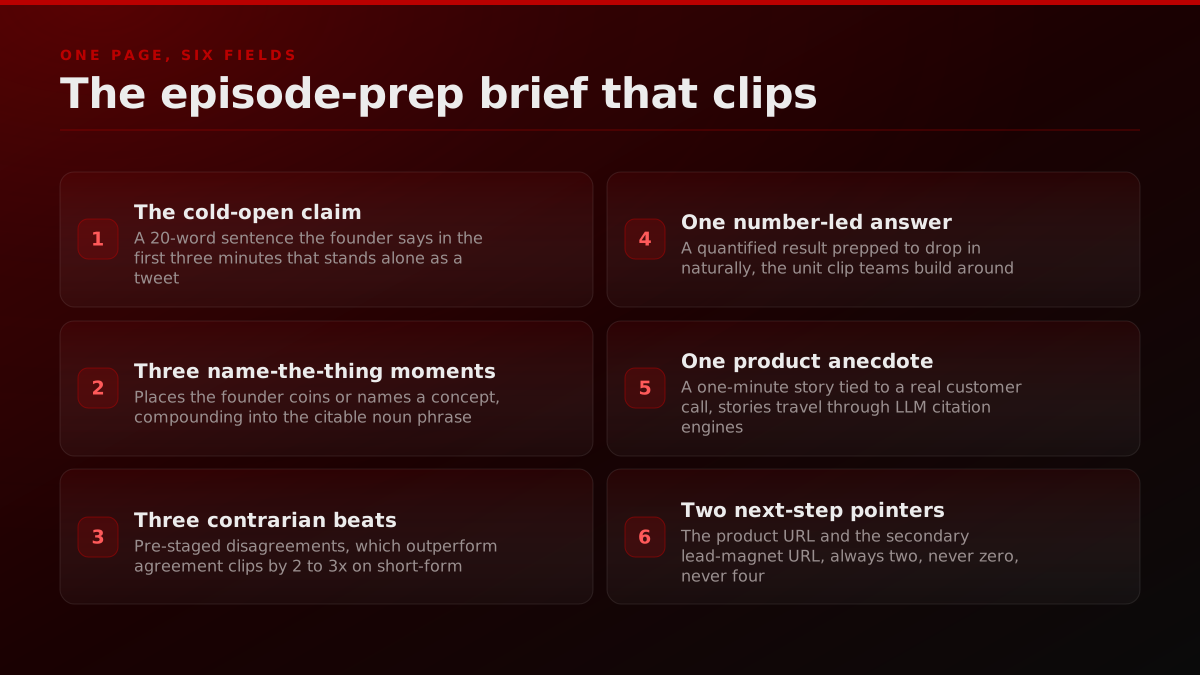
The brief is one page. Six fields:
- The cold-open claim. A 20-word sentence the founder will say in the first three minutes that can stand alone as a tweet. Hosts love a cold open they can lift directly into the trailer; clip teams love a moment they can ship the same day the episode airs.
- Three "name the thing" moments. Three places in the conversation where the founder coins or names a concept. "We call this routing pattern model-tier collapse." Named moments compound into the citable noun phrase that makes the founder findable.
- Three contrarian beats. Pre-staged points where the founder gently disagrees with conventional wisdom. Disagreement clips out-perform agreement clips on every short-form surface by roughly 2-3x in the FORKOFF Podcast Service measurements.
- One number-led answer. A specific quantified result ("38% of inference rerouted," "$0.04 cost per task," "12,000 lines of agent code") prepped to drop into the conversation naturally. Numbers are the unit clip teams build around.
- One product-anchored anecdote. A one-minute story tied to a real customer call or a real engineering moment. Stories travel through the LLM citation engines because the model can attribute them to a specific human; abstract opinions get summarized away.
- The two next-step pointers. The product URL and the secondary lead-magnet URL the founder will name on air. Always two, never zero, never four.
Walk into every recording with the brief printed or open on a second monitor. The host's questions will not match the brief one-for-one, and the founder should answer the actual question asked, but the brief gives the founder a checklist of moments to seed across the 60 minutes. Episodes recorded against a brief produce roughly 2x the clip count of unbriefed episodes, which doubles the asset stack from the same hour of founder time.
Operator noteEpisodes recorded against the one-page brief produce roughly 2x the clip count. Unbriefed founders average 1-2 clip moments per hour., FORKOFF Podcast Service measurements, 23 AI-founder cohorts
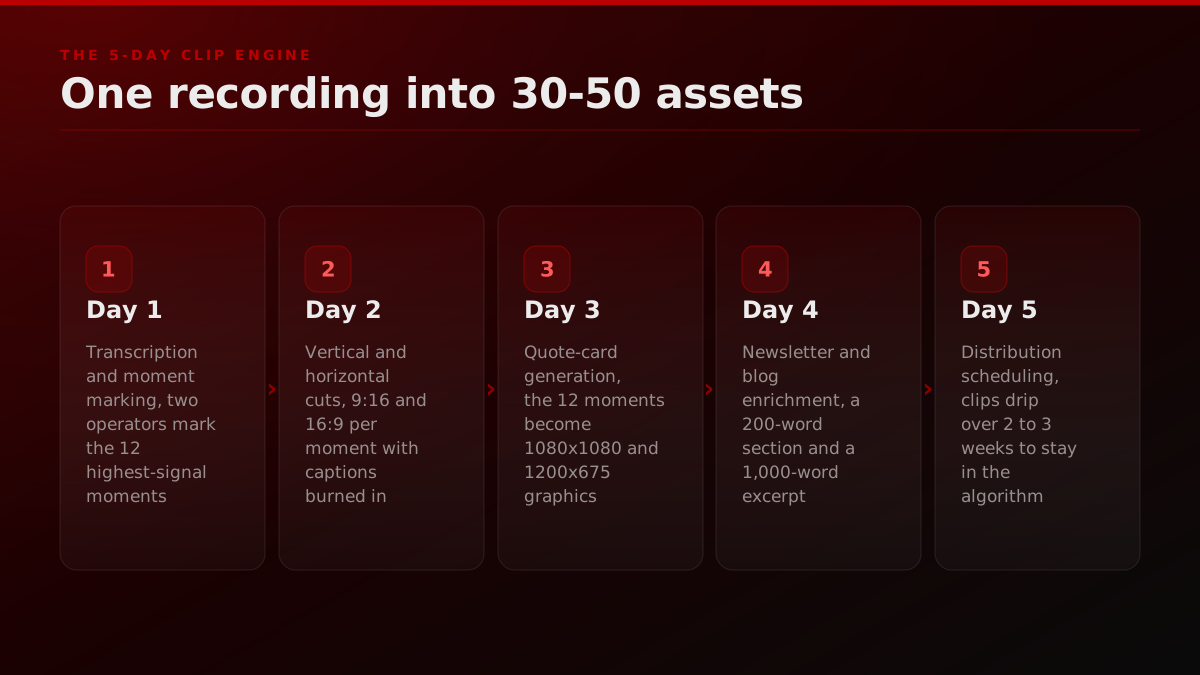
The clip engine: production discipline that turns one episode into 30-50 ready-to-ship assets
The clip engine is the post-episode operation that converts one recording into 30 to 50 distribution assets in a 5-day cycle. The cycle runs: transcription and moment marking (day one), vertical and horizontal cuts per marked moment (day two), caption burns and thumbnail production (day three), scheduled distribution across X, Instagram, LinkedIn, and YouTube Shorts (day four), and engagement tracking plus redistribution of top performers (day five).
Day one, transcription and moment marking. Run the full audio through a transcription pipeline (Whisper, AssemblyAI, or Deepgram all work). Two operators independently mark the 12 highest-signal moments in the transcript. Disagreements get resolved by a third pass. Independent marking matters because one operator's "this is a great moment" is another's "this is filler"; consensus produces the cleaner cut list.
Day two, vertical and horizontal cuts. Each marked moment becomes two cuts: a 9
vertical for X/Instagram/TikTok and a 16 horizontal for LinkedIn and YouTube Shorts. Captions burn in for both. Brand-consistent thumbnail and end-card. Production stack documented in the clipping tools comparison.Day three, quote-card and graphic generation. The same 12 moments become quote graphics for LinkedIn and X, sized 1080x1080 and 1200x675 respectively. Each quote pulls a direct sentence from the transcript with the founder's name and the host's name credited. Graphics are batch-produced in Figma or Canva and pushed to a scheduled queue.
Day four, newsletter and blog enrichment. The transcript powers two long-form derivatives: a 200-word newsletter section linking the episode and a 1,000-word blog excerpt embedded in the founder's content site with the full episode embedded. Both pieces seed SEO and AI Overview citation surfaces.
Day five, distribution scheduling. Clips queue into the founder's primary channel on a 2-3 week drip, not all at once. The drip pattern keeps the episode active in the algorithm for the full window instead of burning the whole asset stack on day one.
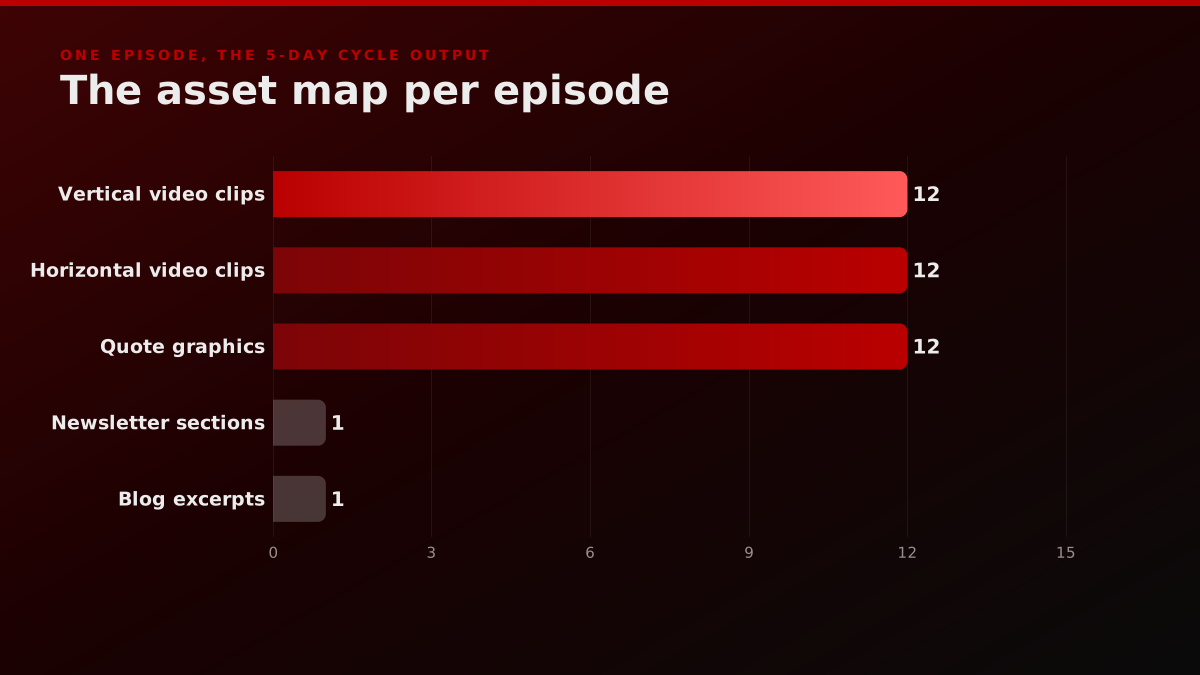
The asset map per episode at the end of the five-day cycle: 12 vertical short-form video clips, 12 horizontal video clips, 12 quote graphics, 1 newsletter section, 1 blog excerpt, plus the source transcript indexed on the founder's site. That is the 30-50 asset count the FORKOFF Podcast Ledger reports, and that is the math that makes one hour of recording pay for 6-8 weeks of content surface.
The 90-day operating cadence: what each week looks like on a clustered tour
A clustered podcast tour is not improvised. The 90-day calendar below is the operating cadence FORKOFF runs against for an AI founder booking their first 8-12 shows. The founder gives the calendar 6-9 hours per week; the FORKOFF Podcast Service runs the rest of the operation. It sits alongside the podcast clipping engine that turns each appearance into 20-plus short-form assets.
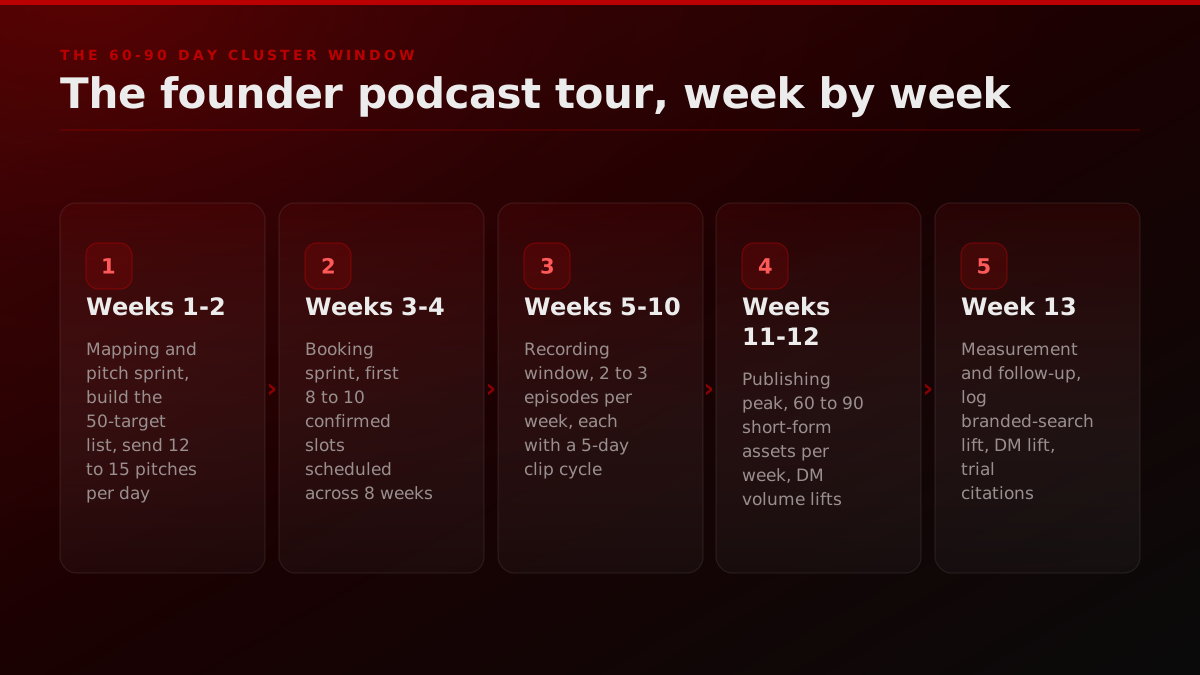
Weeks one and two, the mapping and pitch sprint. The 50-target list gets built across the four tiers. The two anchor angles get drafted into two distinct 200-word pitch blocks. Pitches go out in waves of 12 to 15 per day so the founder can personalize each one without burning out. Reply tracking lives in a single spreadsheet; first replies typically arrive within 72 hours.
Weeks three and four, the booking sprint. Replies convert to bookings. The first 8-10 confirmed slots get scheduled across the next 8 weeks, intentionally avoiding clustering more than two recordings into a single calendar week. Each recording gets an episode-prep brief drafted three to five days before the calendar slot.
Weeks five through ten, the recording window. Two to three episodes record per week. Each recording produces a 5-day clip cycle behind it. The founder is recording while the clip engine is producing assets from the prior episodes; the asset queue starts publishing in week six.
Weeks eleven and twelve, the publishing peak. Eight to twelve episodes have aired. The clip queue is at peak volume, roughly 60-90 short-form assets per week shipping across the founder's channels. Inbound DM volume measurably lifts. Branded search volume shows a clean week-over-week curve on Google Search Console. The first "I heard you on" mentions hit intro calls.
Week thirteen, the measurement and follow-up window. The clip queue tapers from peak to a steady-state 15-20 assets per week. The founder writes 5-10 follow-up notes to the hosts who produced the strongest pipeline mentions, opening the door to a return appearance in 6-9 months. The branded search lift, DM lift, and trial-citation count get logged into the founder's marketing scorecard.
Run the calendar once and the founder has 8-12 long-form appearances, 250-500 distribution assets, a measurable DM lift, and a clip library that powers outbound and onsite for the next quarter. Run it back-to-back twice and the founder has a permanent compounding distribution surface. Run it once and walk away and the asset stack still pays out for six to nine months while the founder builds the next motion.
The audit ledger inside the 90-day clustered tour captures 7 columns per appearance: host name and show name; tier classification (Tier 1 ICP-aligned, Tier 2 adjacent-vertical, Tier 3 founder-network, Tier 4 broad-reach); recording date and air date with the gap measured in calendar days; clips produced from the appearance against the 30-to-50 target floor; DM inbound attributable to the appearance in the 14-day window post-air (measured against the "heard you on" mention pattern in the founder inbox); branded-search lift on Google Search Console measured as the 14-day delta against the pre-air baseline; and pipeline-attributable conversations at T+30, T+60, T+90 windows. The 7-column ledger reads back to the founder team in a single dashboard tile every Monday during the 90-day window; the operator team rescopes the next 90-day plan against the highest-pipeline tier rather than running a uniform plan across all 4 tiers. The cohort that lets the audit reset the next clustered tour reaches the compounding distribution surface; the cohort that books the next 8 shows on host availability rather than tier-by-tier pipeline yield stays at the one-quarter clip-library ceiling.
The Bottom Line
Podcast guesting in 2026 is the highest-leverage long-form distribution surface an AI founder can build, but only if it runs as a system. Map four tiers, ship a tight pitch, time it to category events, cluster 6-12 appearances into 60-90 days, convert each show into 30-50 assets, wire the assets into outbound and inbound, measure pipeline (not downloads). The FORKOFF Podcast Ledger numbers (2-4 episodes per month, 8-12 clips per episode, 30-50 assets per appearance) are the median outcome of running the playbook with discipline. Skip the discipline and the podcasts produce noise, not pipeline. Run the system and one quarter of clustered appearances becomes a permanent compounding distribution surface.
This is what FORKOFF builds for AI founders in the podcasts service track. The book ends, the clips ship, the funnel runs.