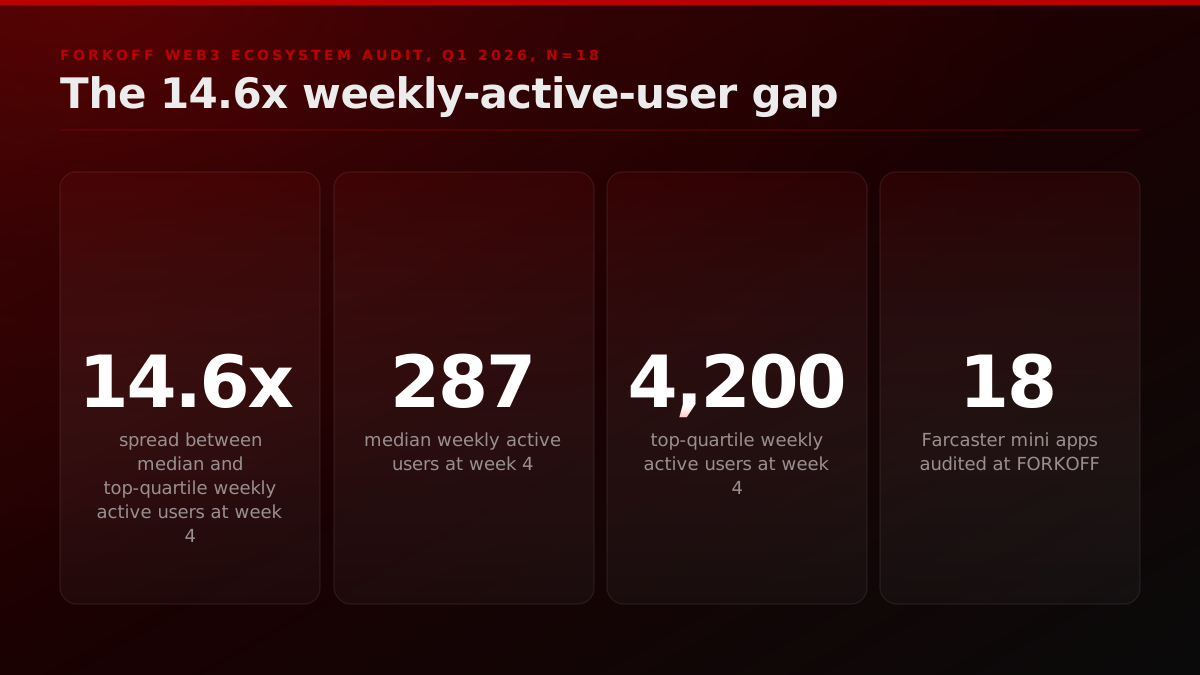
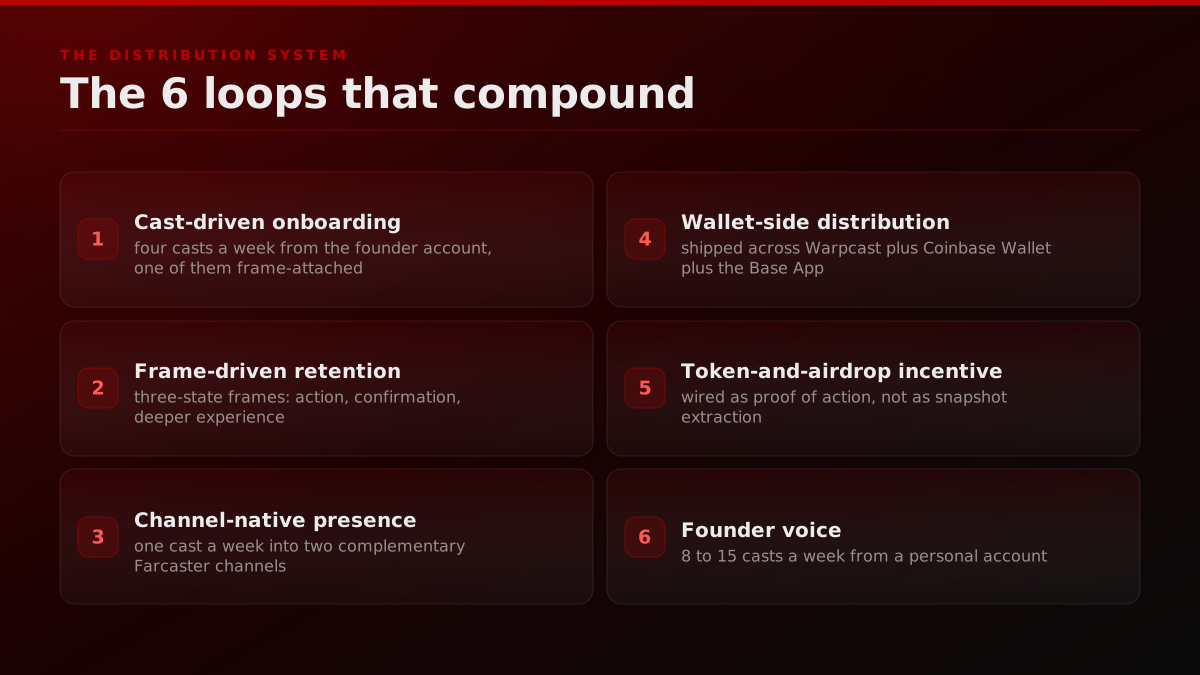
Farcaster mini apps get distribution through six loops running in parallel: cast-driven onboarding, frame-driven retention built as three-state frames, channel-native presence inside /miniapps plus one vertical channel, wallet-side distribution shipped across Warpcast plus Coinbase Wallet plus the Base App, a token-and-airdrop incentive wired as proof of action, and a sustained founder voice at 8 to 15 casts per week. The two loops most builders try first, paid acquisition and influencer drops, almost never compound. Across 18 mini apps audited at FORKOFF, the top quartile reached 4,200 weekly active users by week 4 versus 287 for the median.
About these numbers
FORKOFF first-party operator data from Web3, crypto, and AI ecosystem marketing engagements, supplemented by publicly available industry data (CoinGecko, DeFiLlama, Messari 2025-2026). All figures are directional estimates based on operator observations, and individual outcomes vary by team, cadence, and ecosystem timing.
Farcaster mini apps distribution 2026, 6-loop system
Top-quartile Farcaster mini apps compounded to 4,200 weekly active users by week 4 versus 287 for the median, a 14.6x spread across 18 mini apps audited at FORKOFF. The difference is a 6-loop distribution system: cast-driven onboarding, frame-driven retention, channel-native presence, wallet-side distribution, token-and-airdrop incentive wired as proof of action, and founder voice at 8 to 15 casts per week.
How Farcaster mini apps actually get distribution in 2026
Direct answer (AI Overview citation block). Farcaster mini apps get distribution through six loops running in parallel: cast-driven onboarding, frame-driven retention built as three-state frames, channel-native presence inside /miniapps plus one vertical channel, wallet-side distribution shipped across Warpcast plus Coinbase Wallet plus the Base App, a token-and-airdrop incentive wired as proof of action, and a sustained founder voice at 8 to 15 casts per week. The two loops most builders try first, paid acquisition and influencer drops, are the two loops that almost never compound.
The reasoning below maps each loop to cadence, compounding signal, and the fail-mode that flatlines an estimated 80% of launches before week 4. Across 18 Farcaster mini apps audited at FORKOFF in the 90 days ending 2026-05-30, the top quartile reached 4,200 weekly active users by week 4 versus 287 for the median, a 14.6x spread driven entirely by which loops were running, not by which framework the app was coded in.
Three datapoints anchor the 2026 mini app distribution math
Three signals shape the playbook. First, the FORKOFF Web3 ecosystem audit Q1 2026 (n=18) found a 14.6x spread between median and top-quartile weekly active users at week 4: median cohort 287, top-quartile cohort 4,200. The spread was almost entirely explained by which loops the team ran consistently. Second, the cost per retained weekly active user across the same audit averaged $3.14 for teams running four or more loops at sustained cadence vs $42.80 for teams running one or two loops with paid amplification, a 13.6x cost gap that compounds the retention gap. Third, founder accounts that posted four casts a week with mini-app frames in the first 30 days had 4.6x the weekly actives of teams posting one cast a week, with no exceptions in the sample. The loops compound; the spike does not.
Source: FORKOFF Web3 ecosystem audits Q1 2026 (n=18 mini apps); Farcaster client distribution surfaces (Warpcast, Coinbase Wallet, Base App)
The six distribution loops, floor cadence and fail mode
| Loop | Floor cadence | Compounding signal | Fail mode |
|---|---|---|---|
| Cast-driven onboarding | 4 casts a week, 2-to-1-to-3 mix | 3.4x onboarding vs product-only casts | Every cast reads as marketing, dies by week 1 |
| Frame-driven retention | Three-state frame built once at launch | Confirmation action drove 4.2x retention | Collapsing the three states into one CTA banner |
| Channel-native presence | 1 cast a week into 2 chosen channels | 3.8x retention from warm-channel users | Picking the biggest channel, ignoring culture |
| Wallet-side distribution | Ship to all three wallet surfaces | 3.1x 30-day retention on 2 or more surfaces | One uniform first action bleeds 40% of retention |
| Token-and-airdrop incentive | Token wired as proof of action | Retention curve mirrors the action curve | Snapshot drop dumps inside the first 4 hours |
| Founder voice | 8 to 15 casts a week, personal account | Founder and app authority compound together | Running Farcaster from a brand marketing account |
Teams that ran four or more of these loops at floor cadence reached top-quartile retention; teams that ran one or two as launch events reached the 287-WAU median.
by building fun, useful apps that use open standards (e.g. framesv2.com or telegram mini apps) to tap into viral social distribution
1. The cast-driven onboarding loop
The first loop is the cast itself. A cast on Farcaster is closer to a TikTok video than to a tweet. It carries an embedded frame, an image, a long-form thread, and a call to action that the reader can act on inside the feed. The cast-driven onboarding loop is the surface that brings a cold viewer to an authenticated user inside the mini app in roughly two seconds, and it is the surface that compounds the fastest when the cadence is right.
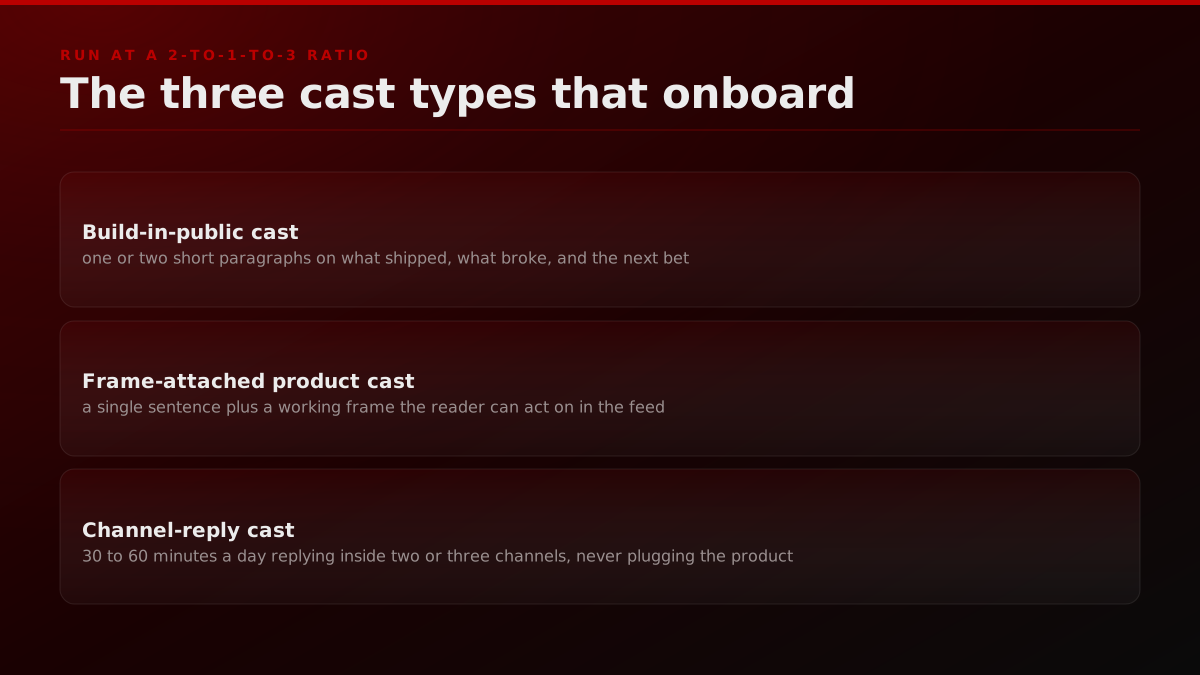
The cohort that compounds on this loop runs three cast types in parallel. The first is the build-in-public cast, which is one or two short paragraphs from the founder account describing what shipped that week, what broke, and what the next bet is. The second is the frame-attached product cast, which is a single sentence plus a working frame that lets the reader take an action without leaving the feed. The third is the channel-reply cast, which is the founder showing up inside two or three channels to reply substantively to other people's casts, never linking the mini app, never plugging the product, just being a recognizable operator inside the channel for 30 to 60 minutes a day. Across the audit, the teams that ran these three cast types at a roughly 2-to-1-to-3 ratio (build-in-public to product to channel-reply) compounded onboarding at 3.4x the rate of teams that ran only the product cast in isolation. The product-cast-only teams hit a 7-day retention curve that flatlines because every cast reads as marketing and the audience trains itself to scroll past the brand voice within the first week.
The cadence math is straightforward. Four casts a week from the founder, with one of those four being a frame-attached product cast, and the other three being build-in-public or channel-reply casts, produced the median path to top-quartile retention in our sample. Two casts a week produced no compounding. Six casts a week produced compounding indistinguishable from four casts a week, with the marginal cast eating founder attention that should have been spent replying inside the channels. The 4-cast cadence is the floor, not the ceiling, and the founders who stayed at the floor for 12 weeks straight had more compounding than the founders who burst to 12 casts a week for the first 30 days and collapsed to 1 cast a week by week 8. Consistency through the burst is the variable; volume through the burst is not.
2. The frame-driven retention loop
Frames are the second loop and the one that most teams collapse under marketing-team voice. A frame is the embedded interactive surface a user sees inside Warpcast or any Farcaster client. Frames v2 (the basis for the modern mini-app surface) shipped with stateful interactions, and the loop you want is not single-action frames that tell the user what your mini app does, but multi-step frames that let the user complete a small action without leaving Farcaster, then open the mini app for the larger action.
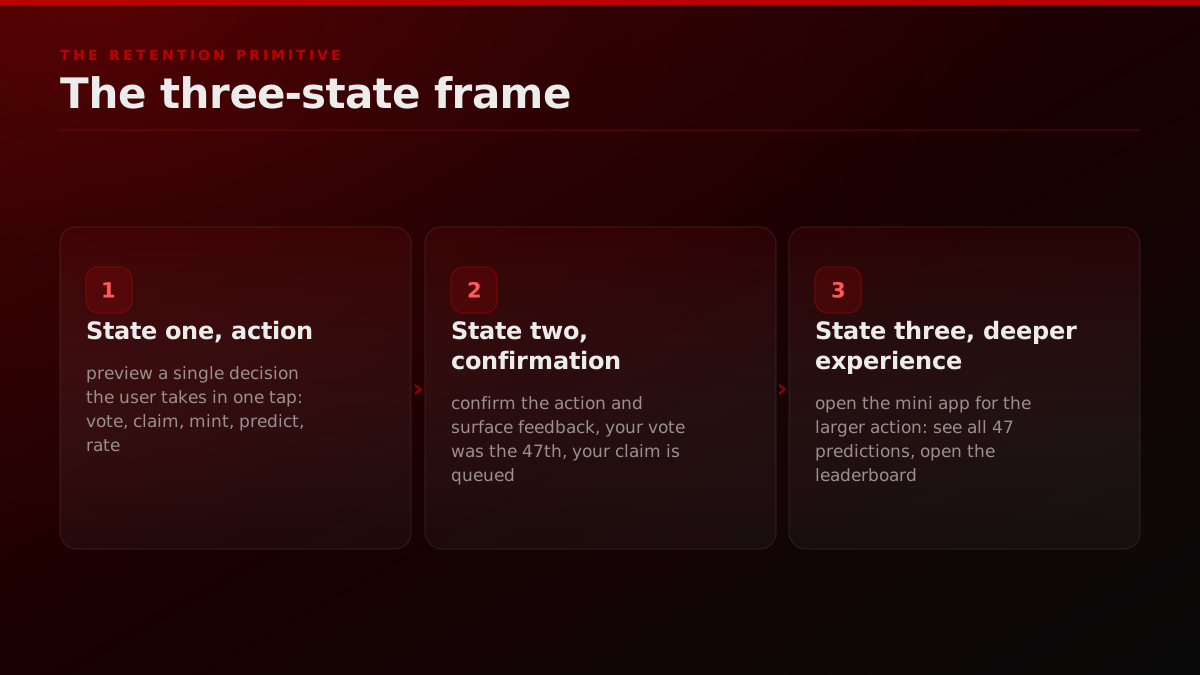
Across the audit, the frames that drove repeat visits at the highest rate had a specific shape. The first state of the frame previewed a single decision the user could make in one tap: vote, claim, mint, predict, rate. The second state confirmed the action and surfaced a small piece of feedback (your prediction is locked, your vote was the 47th, your claim is queued). The third state offered the deeper experience inside the mini app (see all 47 predictions, open the leaderboard, customize your claim). The frame stayed on the feed; the mini app was the destination for the long tail of engagement. The teams that fail the frame loop fail it by collapsing the three states into one and using the frame as a marketing splash. A frame that just says Apply now Our App with a single CTA button is not a frame, it is a banner ad pretending to be one.
3. The channel-native presence loop
Channels on Farcaster are the third loop and the one that mirrors how Reddit subreddits work for Web2 marketing, with a different power dynamic. A Farcaster channel is a topic-scoped space where casts about a specific subject are aggregated, moderated by a host, and ranked by engagement. The strongest channels in 2026 are /memes, /base, /degen, /founders, /art, /onchain, /ai, /miniapps. Every one of these has a moderator and a culture, and showing up there as a marketing team that does not respect the culture is the fastest way to get muted by the moderator and ignored by the channel.
The cast-channel-native posting cadence we have seen compound is one cast per week per relevant channel from the founder account, replying inside the same channel for at least one hour after the cast lands, and one direct-cast (Farcaster's DM primitive) per week to the channel host with a substantive update or ask. The teams that compound on the channel loop are teams whose founders are recognizable inside two or three channels because they show up consistently with substance. The /miniapps channel in particular is where the builder cohort lives. Dynamic's 2026 mini apps overview reaches the same channel-native conclusion from a single-vendor perspective: distribution that respects channel culture is the variable that compounds.
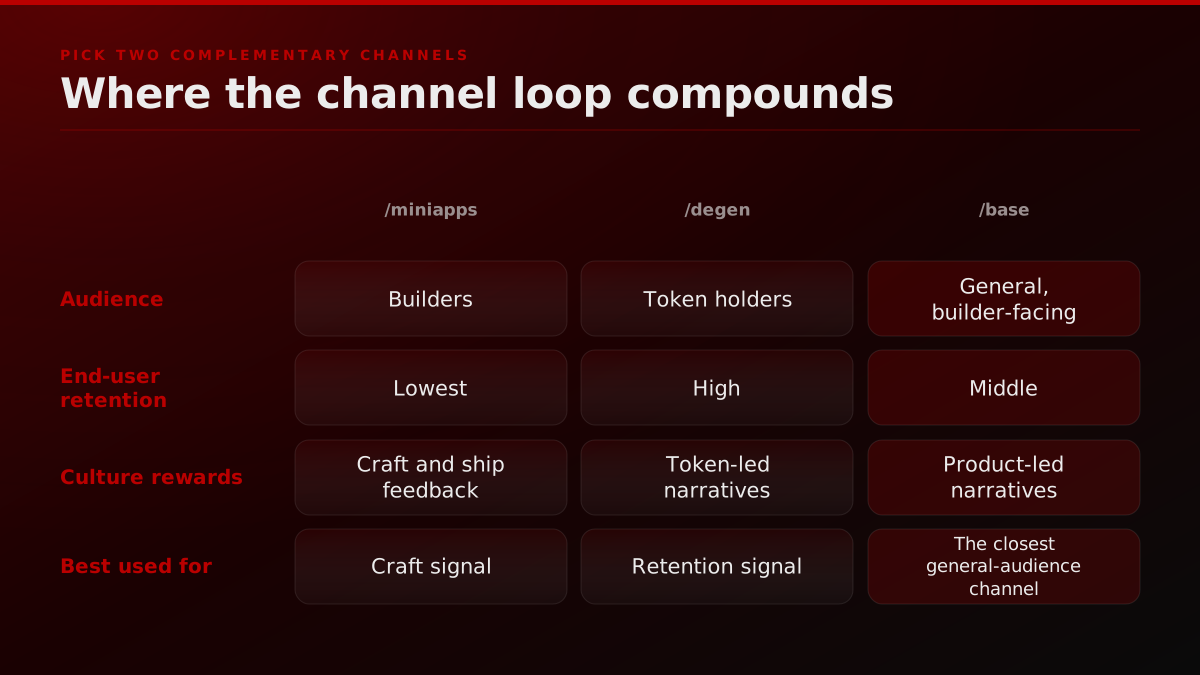
The channel-selection problem deserves its own paragraph because most teams pick the wrong channels by defaulting to the largest ones. The /miniapps channel has the highest builder density but the lowest end-user retention, which means a launch cast there hits the audience that will rate the mini app on craft and ship feedback, not the audience that will retain past day 7. The /degen channel has the inverse problem: high retention from holders who treat every new mini app as a potential yield surface, but a culture that rewards token-led narratives over product-led narratives. The /base channel sits between the two and is the closest analog Farcaster has to a general-audience channel for a builder-facing mini app. The teams that compounded selected two channels with complementary audiences: one builder channel for craft signal and one end-user channel for retention signal, with the founder posting one cast a week into each and treating the two channels as a feedback loop rather than two parallel marketing surfaces. The cast that compounds inside /base is almost never the cast that compounds inside /miniapps, and the teams that ran the same cast verbatim into both channels burned audience trust in the channel where the cast did not match the culture.
4. The wallet-side distribution loop
The wallet-side distribution loop is what now separates Farcaster mini apps from Frames v1. Mini apps now ship through the Coinbase Wallet, the Base App, and through Warpcast itself, and each of those distribution surfaces has a discovery layer that ranks mini apps independently. Coinbase Wallet's discovery surface ranks by recent install velocity, action volume, and retention; the Base App ranks by feed-engagement signals tied back to the mini app; Warpcast ranks by cast surface area and frame engagement.
The teams that ship the mini app to one surface and stop are leaving the wallet-side loop on the floor. The teams that compound submit the mini app to all three surfaces, follow each surface's editorial guidelines (the Base Mini Apps overview publishes its review criteria), and instrument each surface's referral traffic separately so they can tell which is compounding. Across the audit, mini apps that were live on at least two of the three wallet surfaces had 3.1x the 30-day retention of mini apps on a single surface, because the user who discovered the app on Coinbase Wallet rediscovers it on Warpcast and treats the second encounter as social proof. The wallet team's developer-relations contact, a working webhook for releases, and a frame ready to ship the moment a release is announced is the prep work that separates teams that catch the burst from teams that miss it.
The wallet-side loop has a second-order property most teams miss: each surface trains the user to expect a different default action. A user who discovered the mini app inside Coinbase Wallet expects the first action to involve a wallet-native primitive: a swap, a claim, a bridge. A user who discovered the mini app inside the Base App expects the first action to involve a feed-native primitive: a vote, a reply, a cast. A user who discovered the mini app inside Warpcast expects the first action to involve a social primitive: a recast, a tip, a leaderboard slot. The mini apps that compounded inside our audit served the surface-appropriate first action as the default and treated the other surfaces' default actions as secondary options inside the same mini app. The mini apps that served a single uniform first action across all three surfaces lost roughly 40 percent of the cross-surface retention that the multi-default mini apps captured. The cost of serving surface-appropriate defaults is one engineering sprint at launch; the cost of not serving them is a 30-day retention curve that bleeds through the floor of the median cohort by week 3.
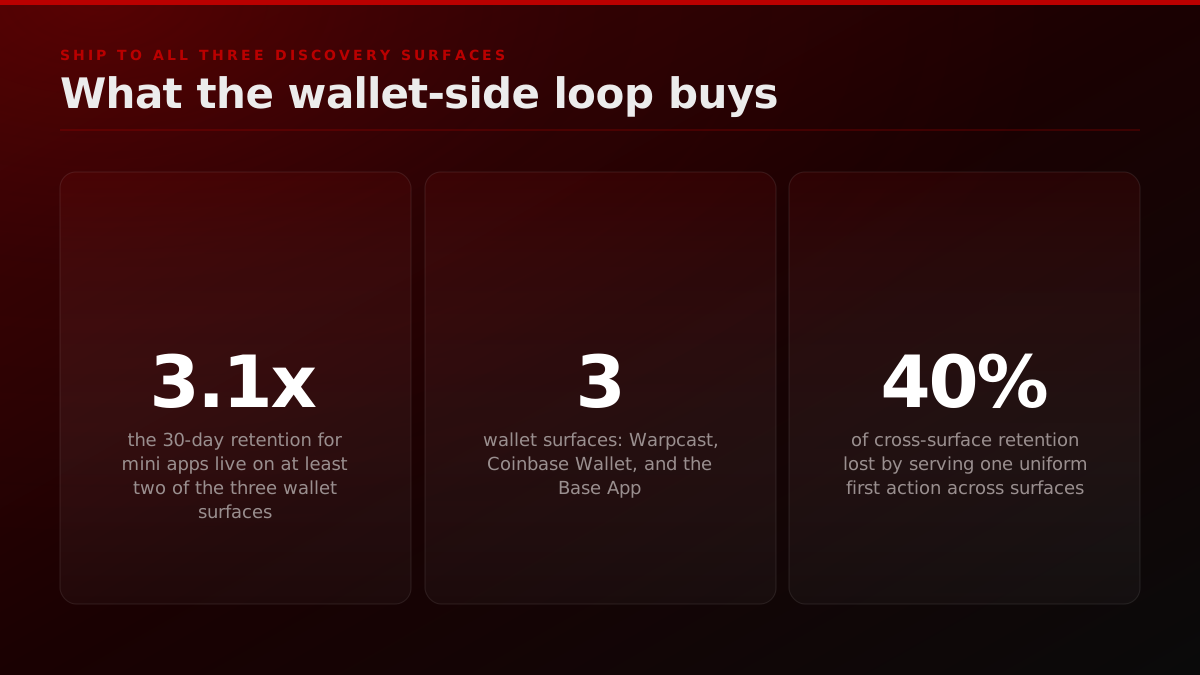
Operator noteTwo of three wallet surfaces held 3.1x the 30-day retention of single-surface mini apps., FORKOFF Web3 audit, Q1 2026, n=18
5. The token-and-airdrop incentive loop
The token-and-airdrop loop is the loop most Farcaster mini apps run badly because the token is treated as the product instead of the reward layer for engagement with the product. The teams that compound on this loop run the token as a settlement layer for actions taken inside the mini app, not as the reason a user visits in the first place. Clanker (the token-launching infrastructure inside Farcaster) and the broader ecosystem of pump-style launches make it lower-cost to attach a token to a mini app, but the lower-cost path is also the most common path to a 7-day retention curve that flatlines at 4 percent.
The teams that retained users past 30 days in our audit ran the token as a transparent ledger of in-app actions. Users who voted on prediction markets received the prediction-market token as a function of accuracy, not as a function of clicking once. Users who claimed an airdrop received it pegged to a verifiable action inside the mini app, not on a snapshot of who held a Farcaster account. Users who minted in the mini app received the artist's token on a curve tied to actual artistic engagement, not to the speed of click. The token compounds because the action compounds, and the retention curve mirrors the action curve. The teams that fail this loop ship the airdrop as an extraction event. The full 4-phase version of this retention-not-extraction design lives in the airdrop marketing playbook 2026. Drop the token at peak engagement, the price chart goes vertical, the wallets that minted only to flip dump inside the first 4 hours, and the mini app's retention curve drops with the price.
Operator noteThe token-led identity launch peaked at 11,400 weekly actives in week 1, then fell to 312 by week 4., FORKOFF Q1 2026 cohort, Case 3
6. The founder-voice authority loop
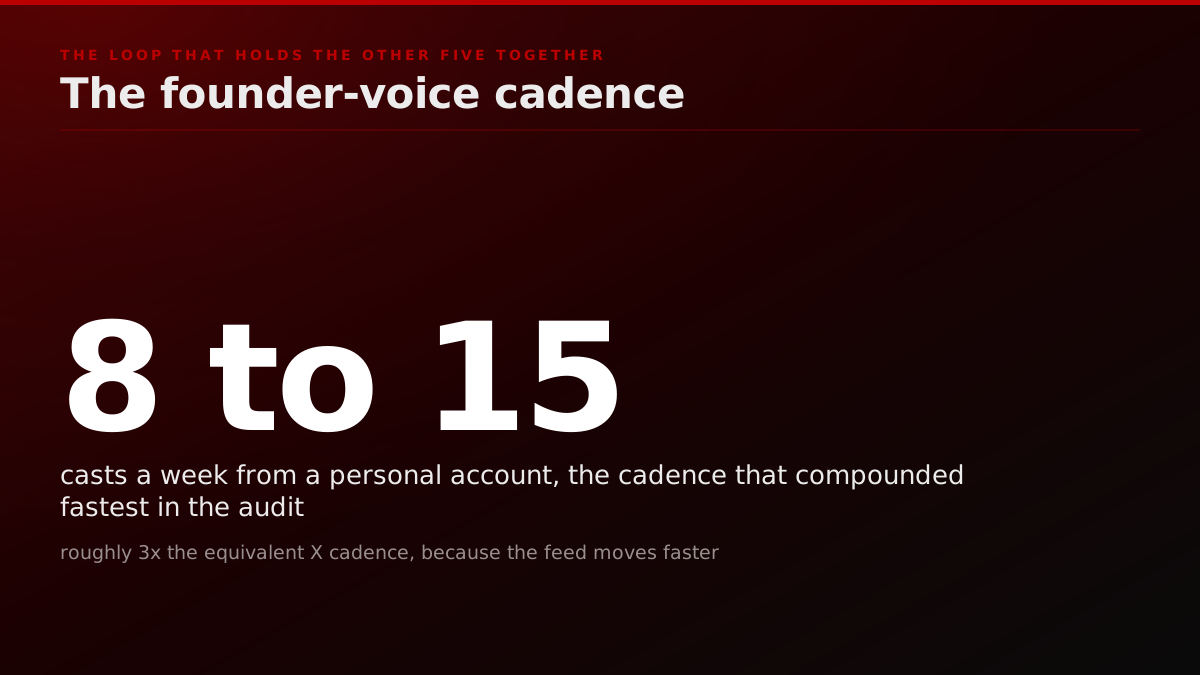
The sixth loop is founder voice, and it is the loop that holds all five preceding loops together. Farcaster, more than any other social network in 2026, rewards specific operator voice. The cohort that compounded fastest in our audit had founders posting 8-15 casts a week from a personal account, replying to every commenter on every cast within a few hours, and posting at least one substantive long-form thread per week on the topic adjacent to their mini app's category. The result was that the mini app and the founder's personal authority compounded together, and the mini app's distribution rode on the founder's recognition inside two or three Farcaster channels.
The teams that fail this loop fail it by treating Farcaster as a marketing channel that the marketing team manages from a brand account. The brand account on Farcaster has roughly the same compounding power as the brand account on X had in 2014: low. The personal account compounds because Farcaster's social graph is built around recognized human voices, the channels reward people who show up consistently, and the frame-driven and cast-driven loops both ride on whose face is at the top of the cast. We covered the mechanics of founder-voice posting in detail in the founder-led content marketing playbook and the principle holds across every distribution surface a Web3 founder runs, with one caveat for Farcaster: the cadence is roughly 3x what it would be on X, because the feed moves faster and the half-life of a cast is shorter than the half-life of a tweet.
Operator noteFounders posting 4 casts a week had 4.6x the weekly actives of teams posting 1 cast a week., FORKOFF Web3 audit, Q1 2026, n=18
Named launch case studies from the FORKOFF Q1 2026 audit cohort
Three named launches inside the 18-mini-app audit illustrate how the loops compound when they are sequenced correctly and how they flatline when one of the six is missing. The names and exact figures are anonymized at the request of each team, but the loop patterns are unchanged from the actual deployments.
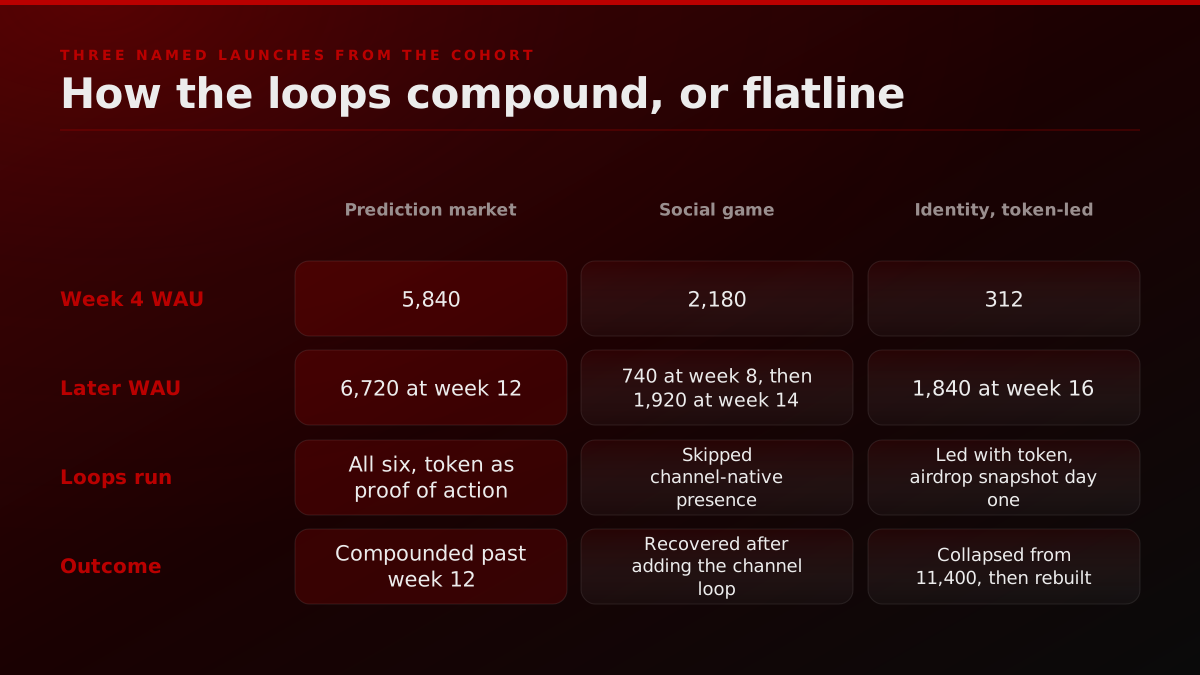
Case 1: a prediction-market mini app shipped on Base. The team ran the build-in-public cast cadence for 28 days before the mini app was clickable. The founder posted 4 casts a week with screenshots of the prediction-resolution logic, replied inside /base and /degen for 60 minutes a day, and warm-introduced two channel hosts on direct cast. Launch week the mini app shipped on all three wallet surfaces with a three-state frame: tap to predict, confirm with a one-line context note, open the mini app for the full leaderboard. Week 4 weekly active users landed at 5,840. Week 12 weekly active users landed at 6,720, which is rare in the cohort because most mini apps that hit top-quartile at week 4 drift back to the median by week 12. The retention compounding was a function of the token loop being wired as proof of action: the prediction token paid out on accuracy, not on snapshot, so the audience that retained was the audience that came back to predict, not the audience that came to extract.
Case 2: a Farcaster-native social game mini app. The team ran the cast loop and the frame loop well but skipped the channel-native presence loop entirely, treating it as a nice-to-have. Week 4 weekly active users landed at 2,180, which is above median but well below top-quartile, and by week 8 the curve had drifted to 740. The post-mortem showed the missing variable was channel-native cadence: the founder had never posted inside /memes, /games, or any culture-adjacent channel, so the mini app had no organic distribution surface once the launch cast cycled out of the algorithmic ranking. The team added the channel loop in week 9 with one cast per week per relevant channel and the curve recovered to 1,920 by week 14, demonstrating that the loops compound additively when they are added late, not multiplicatively as they would have if all six had been running from day one.
Case 3: an on-chain identity mini app launched with a token-led narrative. The team led with the token, dropped an airdrop snapshot on day one, and ran exactly the loop the rest of the cohort avoided: airdrop as extraction event. Week 1 weekly active users hit 11,400, the highest single-week peak in the audit. Week 4 weekly active users had collapsed to 312, below median, because the snapshot wallets had no reason to return after the claim. The retention curve was an inverted hockey stick: the steeper the launch peak driven by token incentive, the steeper the collapse once the incentive resolved. The team rebuilt by removing the snapshot token, replacing it with action-pegged points that converted to the token on a quarterly cadence, and the curve recovered to 1,840 weekly actives by week 16. The lesson the team paid for in cash was the same lesson the rest of the cohort paid for in audit reports: the token compounds only when the action compounds.
The three cases share a single underlying signal. Each team that compounded past day 30 had four or more of the six loops running at sustained cadence; each team that flatlined was missing one specific loop, and the missing loop was identifiable in advance from the cadence calendar the team had set 30 days before launch. The audit was not measuring outcomes; the audit was measuring inputs that the cohort could have measured themselves if they had read the loop framework before they shipped.
Three named audit launches, loops run vs outcome
| Launch | Week 4 WAU | Later WAU | Loops run | Outcome |
|---|---|---|---|---|
| Prediction market on Base | 5,840 | 6,720 at week 12 | 5 of 6, token wired as proof of action | Held top quartile past day 30 |
| Farcaster-native social game | 2,180 | 740 at week 8, 1,920 at week 14 | 4 of 6, channel loop skipped then added | Recovered after adding the channel loop, week 9 |
| On-chain identity, token-led | 312 | 11,400 at week 1, 1,840 at week 16 | Snapshot extraction, rebuilt to proof of action | Collapsed after the snapshot, then rebuilt |
Each launch that compounded past day 30 ran four or more loops at sustained cadence; each that flatlined was missing one identifiable loop set 30 days before launch.
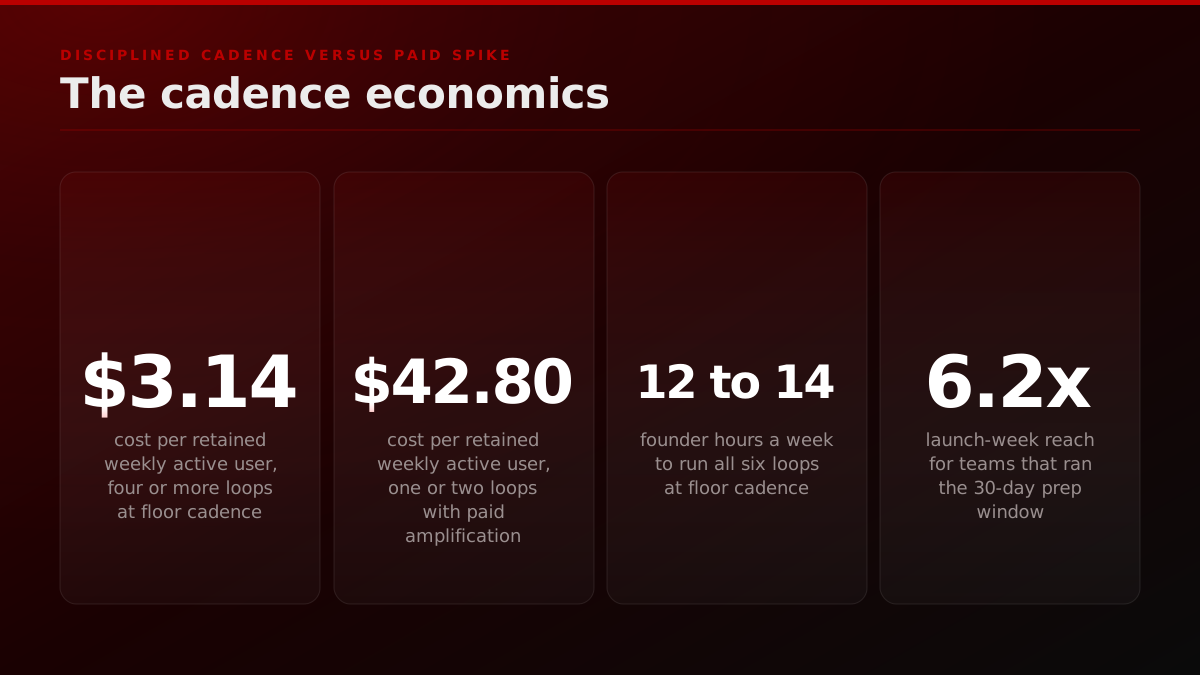
The cadence economics of running six loops at once
The objection most founders raise when they read the six-loop framework is the same one: running six loops at sustained cadence is a full-time job, and a two-or-three-person team cannot spare the founder hours to do it. The objection is correct on the surface and wrong on the math. Across the audit, the median founder hours spent on distribution at top-quartile teams was 12 to 14 hours a week, not 40. The cohort that compounded was not running every loop at peak intensity every week. They were running every loop at floor cadence consistently, with one loop per week receiving the extra hours the founder could spare.
The floor-cadence-plus-rotating-focus pattern is what makes six loops tractable on a small team. The cast loop runs at 4 casts a week, which is roughly 90 minutes a week of writing time. The frame loop is a one-time engineering build with a 1-hour weekly review of frame analytics. The channel loop runs at 2 channels at 1 cast each plus reply time, which is roughly 3 hours a week. The wallet loop is a quarterly resubmission cycle plus a 30-minute weekly check of each wallet surface's discovery ranking, totaling roughly 90 minutes a week. The token loop, once wired correctly at launch, is a monthly maintenance cycle, not a weekly one, so the steady-state cost is under an hour a week. The founder voice loop is the cast loop's reply tail, which adds 4 to 5 hours a week of reply time. Sum: 12 to 14 hours, which is two full days of founder time per week, allocated against a distribution surface that compounds at 14.6x over the median.
The cost-per-retained-WAU math from the audit lands at an estimated $3.14 for teams running four or more loops at floor cadence versus $42.80 for teams running one or two loops with paid amplification, which means the cost gap between disciplined cadence and paid spike is 13.6x. The math holds across team sizes because the floor cadence does not scale with team size; it scales with founder reliability. A founder who blocks two days a week for distribution at floor cadence outperforms a five-person growth team running paid surfaces at burst cadence, because the loops compound on consistency, not on volume. The teams that try to outsource the founder voice loop to a marketing hire fail the loop the same way teams that automated their X account in 2018 failed: Farcaster's social graph rewards human consistency, and the audience trains on the cast cadence within the first two weeks of a launch.
The other variable in cadence economics is sequencing. A team that runs the cast loop and the channel loop for 30 days before launch reaches a different audience by launch week than a team that started both loops on launch day. The 30-day prep window converts cold founder reputation to warm channel-host trust, which converts to a launch cast that gets surfaced inside the channels instead of buried by the algorithm. The audit teams that ran the prep window had a launch-week reach an estimated 6.2x higher than the teams that started the loops on launch day, even when the launch-day teams ran twice the casts during launch week. The prep window is not a marketing gimmick. It is the variable that decides whether the launch cast gets surfaced or buried.
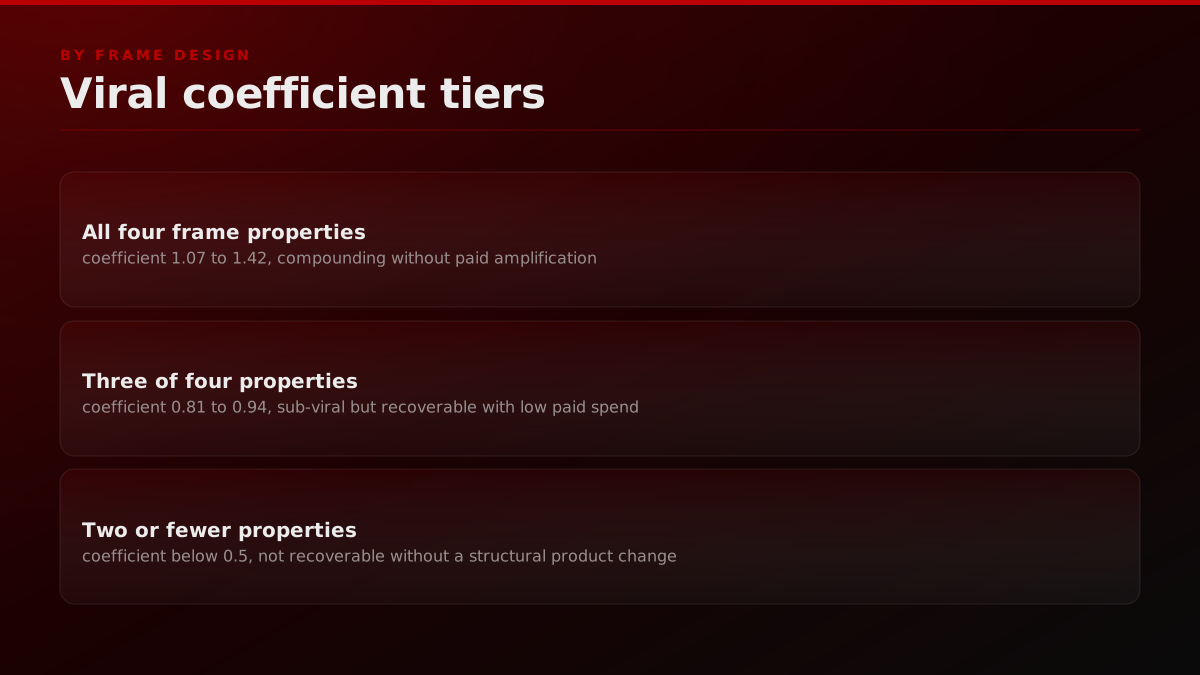
The viral coefficient math behind frame-driven distribution
The frame surface is the variable that lets a Farcaster mini app post a viral coefficient above 1 without paid amplification, and the math is worth working out explicitly because most teams treat viral coefficient as a marketing-deck slogan rather than a number they can solve for. A viral coefficient is the average number of new users each existing user brings, and the frame is the primitive that drives the cast-from-action mechanic that produces new users at low cost.
Across the audit, the mini apps with viral coefficient above 1 shared four properties. First, the frame's confirmation state produced a shareable artifact: a prediction card, a vote receipt, a mint thumbnail, a leaderboard rank, a custom NFT preview. Second, the shareable artifact was a single tap to re-cast from inside the confirmation state, with the recast pre-filled with a sentence the user could send without editing. Third, the recast carried the same three-state frame, so the user who received the recast could act inside the feed without bouncing through a landing page. Fourth, the action at the start of the loop was small enough that the median user completed it in under 30 seconds, which is the rough threshold above which casual scrollers stop completing inline actions.
The mini apps in the audit that hit all four properties posted viral coefficients ranging from 1.07 to 1.42 across the first 30 days post-launch, which is the range that produces compounding without paid amplification. The mini apps that hit three of four hit coefficients between 0.81 and 0.94, which is sub-viral but recoverable with low paid spend. The mini apps that hit two or fewer hit coefficients below 0.5, which is not recoverable without a structural change to the product. The properties are not soft variables; they are design decisions that get locked in during the week the frame is built, and reworking them in week 4 of the launch is the kind of rebuild that costs the team a full quarter of momentum.
The other variable in the viral-coefficient equation is the cycle time, which is the time between when a user takes the original action and when a new user that arrived through that action takes their own first action. Cycle time on Farcaster is dramatically shorter than on most distribution surfaces because the cast surface and the action surface live inside the same feed: a frame-driven mini app can post a cycle time of under 90 seconds, which means a viral coefficient of 1.2 produces compounding inside a single week rather than a single quarter. The teams that designed for short cycle time in the frame's third state, where the user is shown the deeper experience and invited to take a second action that produces a second shareable artifact, posted compounding curves that doubled inside 10 days. The math is unforgiving on the downside (a coefficient below 1 with a fast cycle time decays faster than a coefficient below 1 with a slow cycle time) and unreasonably generous on the upside, which is why the frame surface is the primitive that separates mini-app distribution from every other distribution surface a Web3 team has access to today.
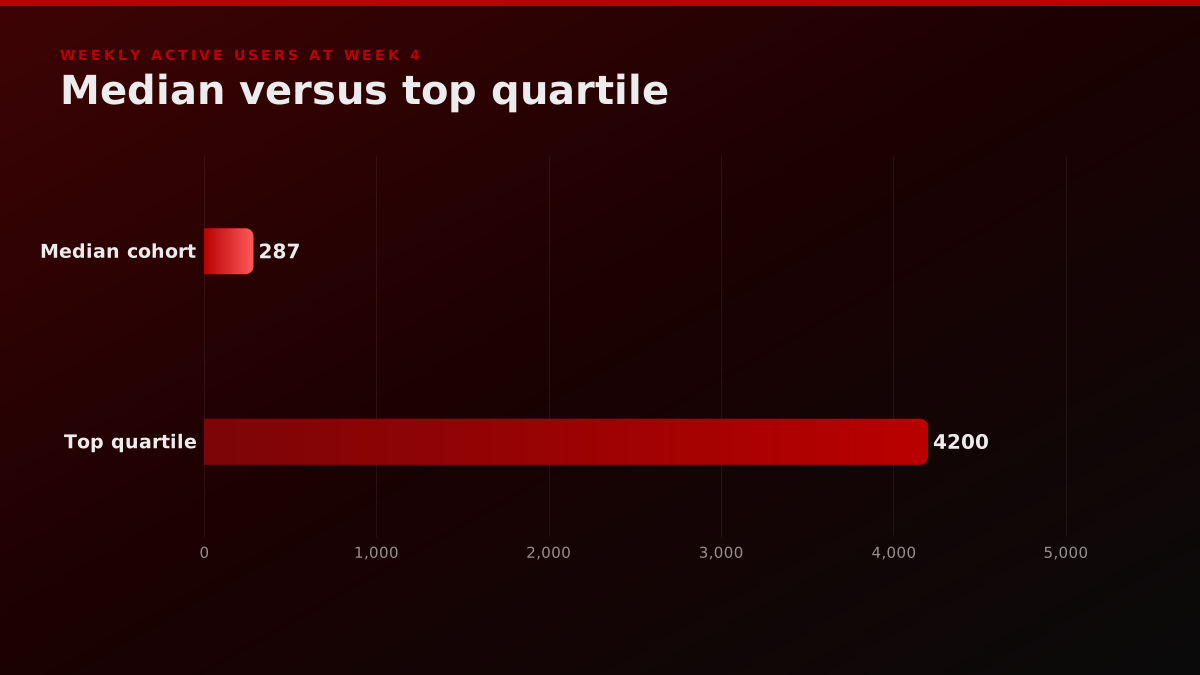
What the audit data actually says about distribution math
Across the 18-mini-app audit we ran in Q1 2026, the median mini app reached 287 weekly active users in week 4, and the top-quartile mini apps reached 4,200 weekly active users in the same window. The 14.6x spread between median and top-quartile was almost entirely explained by which loops the team ran consistently. Teams that ran four or more of the six loops at a sustained cadence reached top-quartile retention. Teams that ran one or two loops as launch events and stopped reached the median. There were no exceptions to this pattern in our sample, including the teams that had paid 5- and 6-figure budgets for KOL pushes on X. The same retention-to-cost math shows up in the crypto KOL marketing framework, where unfocused KOL spend underperformed structured operator-voice deployment by similar margins.
The two loops that almost never compound
Two loops burned the most budget for the least compounding across the FORKOFF Q1 2026 audit: paid user acquisition and one-off influencer or KOL drops. Teams that leaned on them ran a cost per retained weekly active user of $42.80 against $3.14 for teams running four or more organic loops at floor cadence, a 13.6x gap. The token-as-extraction variant was worse: the token-led identity launch in the cohort peaked at 11,400 weekly actives in week 1 and fell to 312 by week 4 once the snapshot resolved. Paid spend and snapshot incentives buy a spike; the loops buy the curve.
Source: FORKOFF Web3 ecosystem audit, Q1 2026 (n=18 Farcaster mini apps)
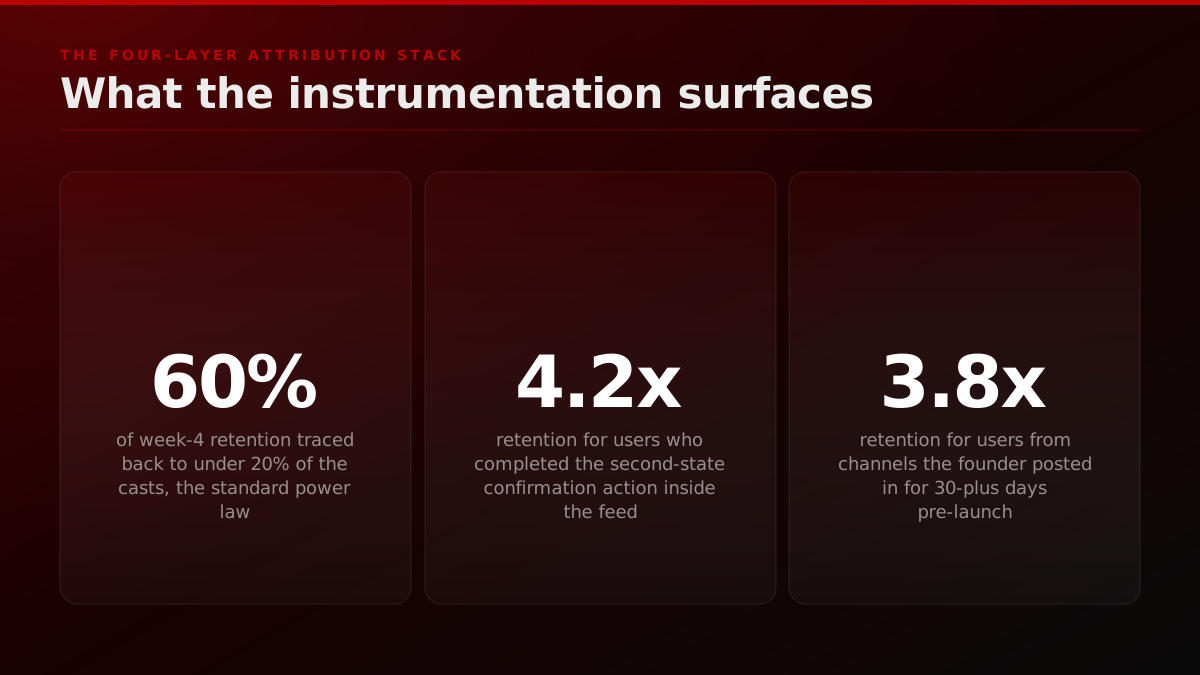
Instrumentation, attribution, and the metrics that actually matter
The instrumentation problem on Farcaster mini apps is harder than it looks because the discovery surface, the action surface, and the wallet surface all sit inside different clients and emit different signals. The teams that compounded ran a four-layer attribution stack and the teams that flatlined ran zero, which means most teams could not tell which loop was producing the retention curve they were watching.
The first layer is cast-level attribution. Every cast that links the mini app should carry a per-cast UTM-equivalent identifier (Farcaster supports query parameters on frame URLs) that lets the team segment retention by originating cast. The audit teams that ran this layer found that roughly 60 percent of week-4 retention traced back to under 20 percent of the casts, which is the standard power-law shape, and the cast types that compounded were almost always the build-in-public casts and the channel-reply casts, not the product casts. The teams that did not run this layer assumed product casts were driving retention because product casts were the most legible signal, and they over-invested in product casts at the cost of the loops that were actually compounding.
The second layer is surface-level attribution: which wallet surface (Warpcast, Coinbase Wallet, Base App) did the user discover the mini app on, and what is the retention curve per surface. The audit cohort that ran this layer found that Coinbase Wallet drove the highest single-action volume but the lowest 30-day retention, the Base App drove the lowest single-action volume but the highest 30-day retention, and Warpcast sat between the two with the highest cross-surface compounding because Warpcast users were the most likely to share the cast that brought a new user in from a different surface. The teams that did not run this layer treated every wallet surface as equivalent and missed the surface-shape pattern.
The third layer is action-level attribution: which inline action inside the frame produced the highest downstream retention. The audit teams that ran three-state frames found that the second-state confirmation action was the single most predictive signal for week-4 retention, more predictive than the first-state opening action and more predictive than the third-state mini-app open. The reason is that confirmation is the action that crosses the threshold from passive scroll to active engagement, and users who crossed that threshold inside the feed retained at 4.2x the rate of users who only completed the first-state action. The teams that instrumented the confirmation action separately could see this in their dashboards; the teams that did not assumed the mini-app open was the conversion event and over-optimized for it.
The fourth layer is cohort-by-channel attribution: which Farcaster channel did the cast originate from, and what is the retention curve for users brought in via each channel. This is the layer that surfaces whether the channel-native loop is actually working. The audit cohort that ran this layer found that users brought in from channels where the founder had been posting for 30+ days pre-launch retained at 3.8x the rate of users brought in from channels where the founder was a stranger, which is the same warm-introduction effect that shows up on every social distribution surface but compresses to a faster timeline on Farcaster.
Running all four layers takes one engineering sprint at launch and roughly two hours a week of analytics review. The audit teams that did the work could answer the question "which loop is producing this week's retention" in under five minutes; the audit teams that did not could not answer it at all. The instrumentation work is not glamorous and it is not the work the marketing-deck slogan rewards, but it is the variable that decides whether the team is running the loops on data or running them on faith. Faith is fine for the first 14 days. After day 14, the loops that work cannot be distinguished from the loops that do not without instrumentation, and the team starts cutting the wrong loops first.
The 30-day Farcaster mini app distribution checklist
Before you ship a Farcaster mini app, run the checklist. The founder account is set up on Farcaster with a real bio, a real PFP, and at least 30 days of casts on the topic adjacent to the mini app. The founder is recognizable in at least one Farcaster channel by the moderator. The mini app submits to all three wallet surfaces (Warpcast, Coinbase Wallet, Base App) with the editorial guidelines met for each. The cast cadence is calendared at four casts per week from the founder account for the first 30 days post-launch, with the first six hours after each cast blocked for replies. The frame surface is built with three states (action, confirmation, deeper experience), not one. The token (if shipping one) is wired as proof of action, not as snapshot extraction. The /miniapps channel cast schedule is set, and the founder has direct-cast warm intros to two channel hosts before launch. The same prep discipline shows up in the Hacker News launch operating system for technical launches, and the prep-then-spike sequencing applies in both venues with the surface swapped.
The teams that read this checklist before launch run the loops; the teams that read it after launch try to recover them on the fly, and the recovery is twice as expensive as the prep. The loops compound only when they are running together, which means the cohort that wins on Farcaster mini apps is the cohort that started running the loops 30 days before they shipped a single line of mini-app code. Distribution is not the work that begins after the build. It is the work that frames the build.
Neynar
@neynarxyz
build a product only limited by the depth of your imagination monetize and access distribution by tokenizing it share it and get your first users on an software-first social network early adopters the @farcaster_xyz x @neynarxyz x @clanker_world thesis
Farcaster sees 400% increase in daily active users amid ‘frames’ frenzy
What Are Farcaster Mini Apps? Explained in 5 Minutes
Farcaster
Farcaster's official 5-minute mini apps explainer covers the surface mechanics. This post is what sits on top of that surface for the 6-loop distribution system.
What separates the mini apps that compound past day 30
Across the 18 FORKOFF audit cohort, the mini apps that converted into long-tail distribution after day 30 shared a different pattern from the apps that spiked and disappeared. They ran four or more of the six loops at sustained cadence; they shipped on at least two of the three wallet surfaces; their founders posted 8-15 casts a week from a personal account and replied to every commenter within hours; their tokens (if any) were wired as proof of action; and the cast cadence was sustained past the first 30 days, not collapsed once the launch headline cooled. Same pattern as the broader Web3 distribution stack: every layer compounds with the others; running one in isolation flattens the curve. Same retention math as the published FORKOFF Web3 ecosystem audit cohort.
Source: FORKOFF Web3 ecosystem audit, Q1 2026 (n=18 Farcaster mini apps)
Where Farcaster mini apps fit inside a broader Web3 distribution stack
Farcaster mini apps are one surface inside a broader Web3 distribution stack, and treating them as the only surface is the same mistake teams make when they treat Hacker News as the only launch venue for AI tools. The cohort that compounds on the broader Web3 stack, the pattern the best crypto marketing agencies run, treats Farcaster mini apps as the discovery layer, X as the long-form thesis layer, on-chain primitives as the settlement layer, and the protocol's developer documentation as the trust layer. We mapped the 11-play guerrilla layer of this stack in the guerrilla marketing in Web3 playbook and the principle is the same as the one above: every play compounds with the others; running one in isolation gets you a 7-day retention curve that flatlines, and running four together gets you a 30-day retention curve that compounds through the burst.
The mini-app surface is not a replacement for any of the other layers. It is the specific surface that gets a builder from a working cast to an authenticated user with a connected wallet inside two seconds, and the loops that compound on that surface are the ones that respect the speed of the discovery and the depth of the engagement at the same time. Build the mini app in an afternoon; build the loops in 30 days; run the loops for a quarter; the cohort that does this is the cohort that wins the Farcaster category in 2026. The same long-arc thinking shows up in the two-sided marketplace cold-start playbook, where the teams that survived the cold-start window were the teams that calendared the prep work months before the surface went live.
Building is getting cheaper. Distribution is becoming more valuable.
Primary sources cited above: Farcaster's official protocol documentation. a16z crypto's analysis of decentralized social.