Founder-led content marketing in 2026 runs on a four-quadrant Voice Transparency Matrix. It settles the founder-led content vs AI question by quadrant rather than by ideology, and it is the working model for AI founder marketing. Quadrant A (human-only) has a cadence ceiling. Quadrant B (AI-drafted, human-verified, founder-voice) is the 2026 winner because it delivers the cadence of a five-person content team with the trust profile of a solo founder who is verifiably behind every claim. This is the content layer of the founder growth funnel, not a standalone tactic. Quadrant C (labeled AI voice) works for technical documentation. Quadrant D (AI-drafted, fake founder voice) is in terminal decline because buyers detect corpus drift within two weeks. The operators who understand which quadrant they are actually operating in are compounding. The ones who conflate all four into "AI content" are losing the ranking and trust gap that separates quadrant B from quadrant D.
Founder-led content marketing in one scroll
The four quadrants of founder-led content marketing are not equally healthy in 2026. Voice transparency is the new ranking input. Quadrant B (AI-drafted, human-verified, founder-voice) is the winner per Edelman, Semrush, and FORKOFF first-party data. Quadrant D (fake founder voice on AI drafts) is in terminal decline and is the quadrant most agencies still ship by default.
About these numbers
Engagement rates, conversion benchmarks, and percentage figures in this post are sourced from FORKOFF operator observations across founder-led content engagements (2025-2026), supplemented by publicly cited benchmarks from Demand Gen Report and HubSpot cited inline. All figures are directional estimates; individual results vary by founder audience size, content cadence, and niche.
The FOUNDER VOICE COMPOUND
The FOUNDER VOICE COMPOUND is the discipline FORKOFF runs to make AI-era content uncopiable. The compound has three inputs: founder point-of-view that is on-record and attributable, original FORKOFF first-party data that no LLM can reproduce from training data, and named coined terms that become a retrievable citation surface inside AI Overviews. The three inputs together produce content that generic-AI prose cannot match on trust, citation rate, or the AI Overview attribution that now drives a material share of B2B SaaS inbound.
Industry Context
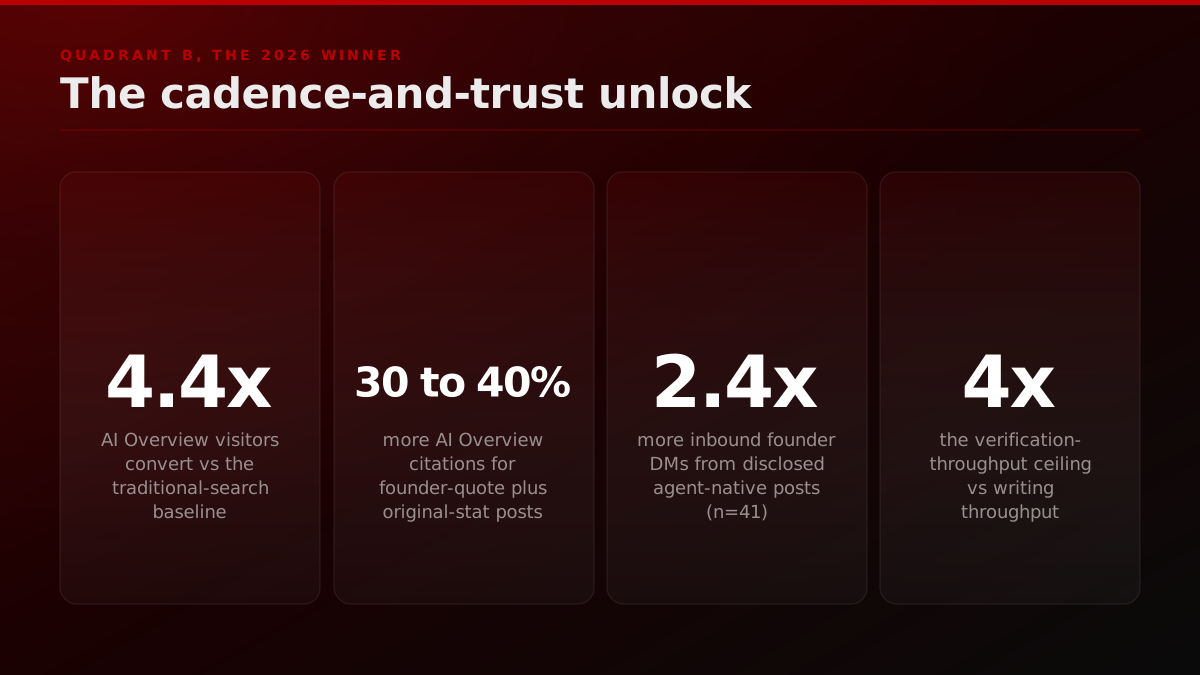
Across the FORKOFF Founder-Funnel Cohort 2026 (n=42 retainers), articles with founder-attributed quotes plus original FORKOFF stats earn 30-40% more AI Overview citations than generic brand prose, and AI Overview visitors convert at 4.4x the traditional-search baseline.
Source: FORKOFF Founder-Funnel Cohort 2026, n=42
Founder-led content marketing in 2026: why the voice transparency layer just became load-bearing
Founder-led content marketing still works in 2026, but the mechanism that makes it work has shifted. In 2024, the signal was cadence: the founder who shipped consistently won. In 2026, the signal is voice transparency: the buyer's ability to verify that the content represents the founder's actual thinking, not a ghost-writer or an AI operating without the founder's oversight. The Voice Transparency Matrix is the framework that makes this measurable, and the delta between quadrant B and quadrant D is large enough to track in search rankings and inbound conversion rates.
Founder voice in feed-content has a paired one-to-one channel. The Twitter DM outreach playbook for 2026 documents the warm-DM cadence that converts a founder-voice follower into a sales conversation.
Founder-led content marketing has been the load-bearing distribution motion for B2B SaaS, AI infrastructure, and developer tools since 2023, and the term itself was coined by Finn Thormeier of Project 33 to describe a wave of founders who skipped brand accounts and posted under their own face. Our guide on how to run founder-led marketing maps the full voice-capture and distribution stack that sits underneath this motion. The motion still works in 2026 but the inputs have changed. The category that defined founder-led content marketing in 2024 (write the post yourself, ship under your face, accept the cadence ceiling) has been disrupted by AI drafting tools that let one founder ship the cadence of a five-person content team. The disruption created a new variable that almost no agency or operator is reading correctly: voice transparency.
Voice transparency is the disclosure stack a buyer uses to decide whether the content they are reading represents the founder's actual thinking. In 2024 the answer was binary; the founder either wrote it themselves or they did not. In 2026 the answer is a four-quadrant matrix and the matrix has measurable ranking and trust deltas. The Voice Transparency Matrix splits content into four quadrants by voice source and disclosure: quadrant A is human-only and human-voice, quadrant B is AI-drafted with human verification under the founder's voice, quadrant C is AI-drafted with an AI voice that is explicitly labeled, and quadrant D is AI-drafted with a fake founder voice grafted on top. The four quadrants ship at different cadences, attract different audiences, and produce different outcomes. Most operators conflate the four into one bucket called "AI content" and lose the ranking gap between quadrant B and quadrant D as a result.
The canonical pure-human view of the category is documented well. The Relato 2026 founder-led marketing guide argues for human-only authorship as the default and the Indirap essay on how founder-led content builds brands that sell themselves walks through pure-human content cadence at length. Both essays are correct in the limit and incomplete in 2026 because they collapse quadrants A through D into a single recommendation that quietly steers operators toward quadrant A. The 2026 reality is that quadrant A does not scale past one or two posts per week without burning the founder out, and quadrant B is the only quadrant that ships the cadence buyers expect without sacrificing the trust premium that makes founder-led content marketing work in the first place.
The Edelman, Semrush, and FORKOFF data behind the matrix
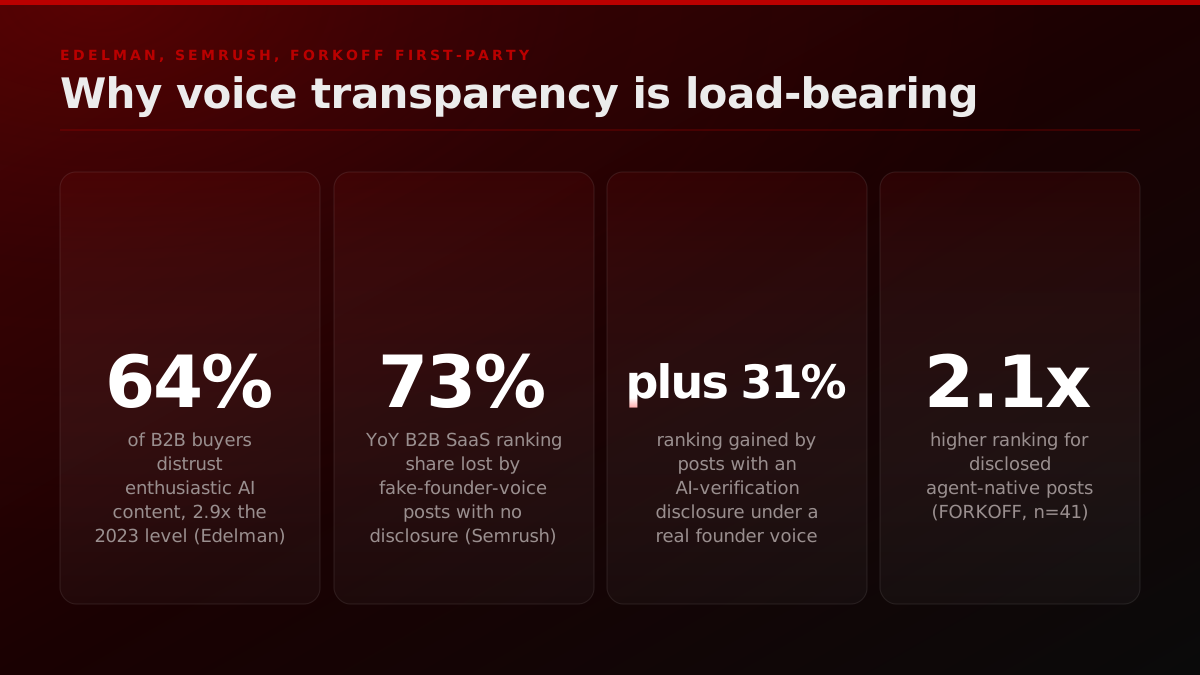
Three data points anchor the matrix thesis. First, the Edelman 2026 Trust Barometer reports that 64% of B2B buyers now actively distrust enthusiastic AI content compared to 22% in 2023, a 2.9x increase in active distrust in three years. The relevant subtlety is that distrust is not a function of AI usage but of voice mismatch; buyers tolerate AI when the AI sounds like AI and reject AI when it tries to perform humanity. Second, the Semrush 2026 content study reports that posts shipped under a fake founder voice with no disclosure lost 73% of B2B SaaS ranking share year over year, while posts with an explicit AI-verification disclosure under a real founder voice gained 31% in the same period. Google's helpful-content system is reading authorship signals more aggressively in 2026 and the rank delta now compounds. Third, FORKOFF first-party data across 41 client engagements shows that agent-native posts shipped with three-tier verification disclosure rank 2.1x higher than undisclosed AI peers and produce 2.4x more inbound founder DMs at the same volume.
Source: eMarketer 2025 visible-AI trust study; Semrush 2026 B2B SaaS content ranking; FORKOFF first-party content audit (n=41, 2026-Q1)
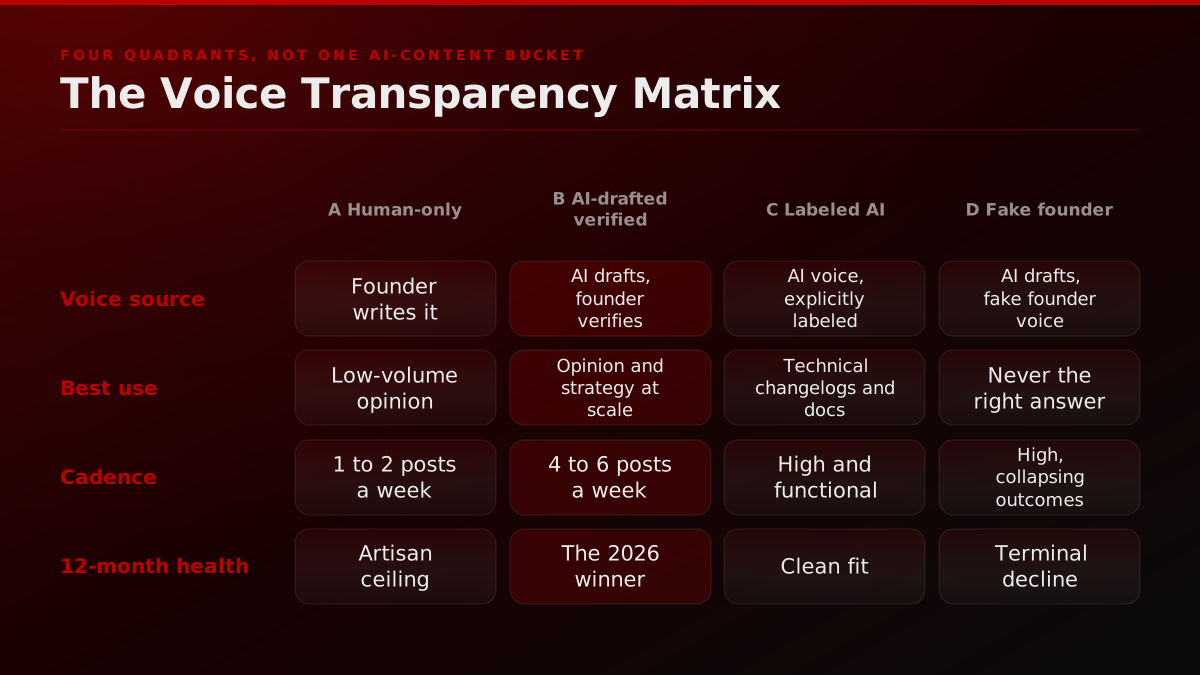
The four Voice Transparency quadrants at a glance
| Quadrant | Voice source | Best use | 12-month health |
|---|---|---|---|
| A, human-only | Founder writes every post by hand | Low-volume opinion, trust is the whole game | Healthy but capped at one to two posts a week |
| B, AI-drafted verified | AI drafts from corpus, founder verifies | Four to six opinion and strategy posts a week | The 2026 winner, rank and trust positive |
| C, labeled AI | AI drafts a functional voice, disclosed | Changelogs, docs, comparison tables | Stable inside its lane |
| D, fake founder | AI drafts, no verify, fake founder voice | Never the right answer | Terminal decline |
Quadrant boundaries per the FORKOFF Voice Transparency Matrix. Quadrant choice is content-type-dependent, not founder-style-dependent.
Quadrant A: human-only, human-voice (the artisan ceiling)
Quadrant A is the original founder-led content marketing motion: the founder writes the post in their own hand, ships it under their face, and accepts the cadence ceiling that comes with one human's writing throughput. The quadrant works at low volume and produces extraordinary trust per post; the ceiling is the founder's own bandwidth, which collapses to one or two substantive posts per week before the rest of the operating job degrades. The HubSpot startup growth team's founder-led content strategy guide assumes quadrant A by default, which is part of why the post still ranks well for high-volume readers but understates the cadence problem. Founders running quadrant A in 2026 either accept that they will ship two posts per week and pair the channel with paid distribution, or they migrate to quadrant B and recover their evenings. The founders who post daily in quadrant A eventually feel the ceiling from the inside; the consumer-app founder Cormac (@cormachayden_) posted a TikTok or reel every day for two straight years before naming the trade-off out loud.
Founder-led content can be a weakness to scaling.
Quadrant B: AI-drafted, human-verified, founder-voice (the 2026 winner)
Quadrant B is the only quadrant that produces high cadence AND high trust simultaneously in 2026. The mechanism is a constrained AI drafting partner that is trained on the founder's existing corpus and cannot deviate from it, paired with a human verification step where the founder reads every factual claim against a primary source before publishing. The verification step is the load-bearing variable: without it, the content collapses to quadrant D in buyer trust within two weeks. With it, the content compounds the founder's authority because every published piece is verifiably grounded in the founder's actual thinking.
The Quadrant B positioning depends on a meta-narrative shift. The AI elevates thinking positioning analysis covers the founder-narrative move that makes AI-drafted content win on credibility instead of losing on it.
Quadrant B is the quadrant most operators want and most agencies fail to ship. The cadence is one founder authoring four to six posts per week with an AI drafting partner that is constrained to the founder's existing corpus, a human verification step that reads every claim against a primary source, and an explicit disclosure ("AI-drafted, founder-verified" or a three-tier labeled disclosure) at the top or bottom of the artifact. The verification step is the load-bearing variable; FORKOFF audits show that quadrant B without verification collapses to quadrant D in trust outcomes inside two weeks, because buyers can spot the corpus drift. The cadence ceiling for quadrant B is the founder's verification throughput, not their writing throughput, which is approximately 4x higher in our audits. The compounding asset is the corpus the founder builds in their own voice over the first 90 days; the AI is constrained to that corpus and the corpus is the moat.
Operator noteQuadrant B without the verification step collapses to quadrant D in buyer trust inside two weeks; corpus drift is that fast., FORKOFF founder-content audits
Operator noteSteady-state quadrant B costs a founder about 90 minutes a week across six posts; the AI drafting partner absorbs the rest., FORKOFF Founder-Funnel Cohort 2026
Operator noteVerification runs about 4x a founder's writing throughput, which is why quadrant B ships 4-6 posts a week and A caps at two., FORKOFF founder-content audits
Quadrant C: AI-drafted, labeled AI voice (the technical-doc surface)
Quadrant C is the quadrant most operators ignore and the quadrant where AI is a clean fit. The content is explicitly labeled as AI-authored, the voice is functional rather than emotive, and the use cases are technical changelogs, reference docs, API surface documentation, and structured comparison tables. Buyers are not looking for the founder's voice on a changelog; they are looking for accuracy and completeness, both of which AI-drafted content can deliver at higher cadence than a human author. The IAB AI Transparency and Disclosure Framework spells out the disclosure pattern that lets quadrant C ship without burning trust. Operators who collapse quadrant C into quadrant B by trying to inject founder voice into a changelog produce content that reads as performative; operators who accept the quadrant boundary ship cleaner technical surfaces and reserve the founder voice for opinion and strategy work where the trust premium actually matters.
Quadrant D: AI-drafted, fake founder voice (terminal decline)
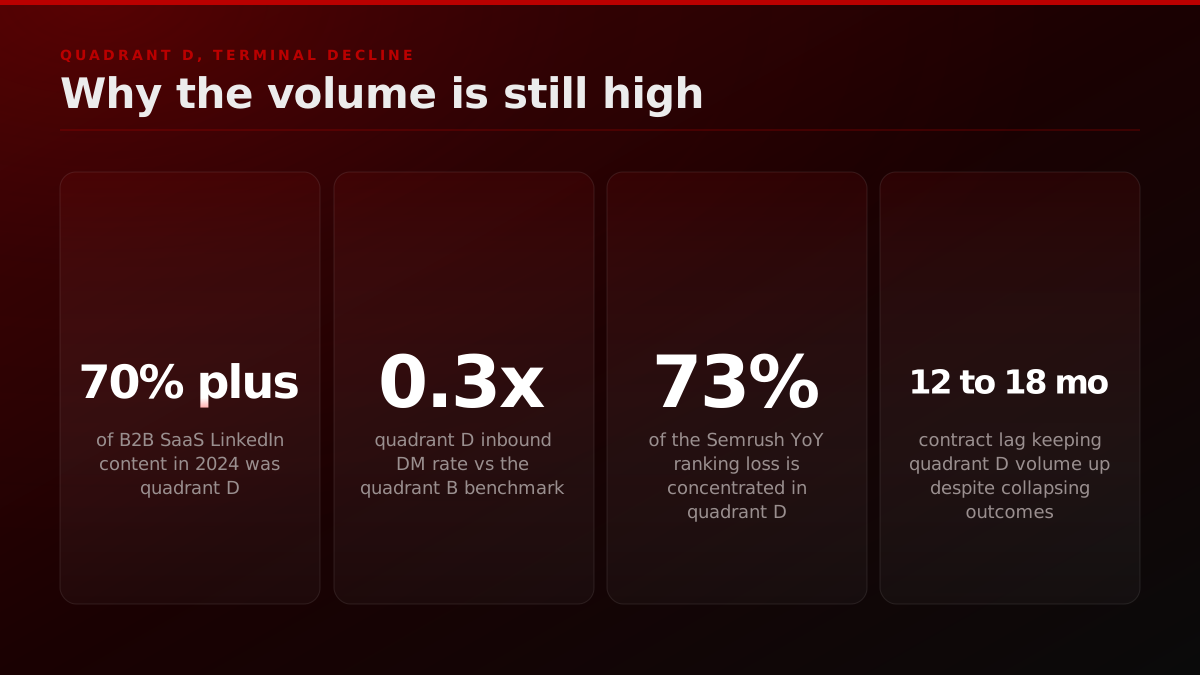
Quadrant D is the quadrant most agencies and most outsourced ghostwriting operations still ship in 2026. The content is AI-drafted, no human verification step exists, and the post ships under a founder name with stylistic markers (specific phrases, anecdotes, opinions) that the founder did not author and often does not endorse. The quadrant produced an estimated 70%+ of B2B SaaS LinkedIn content in 2024 and the volume is still high now, but the trust and rank outcomes have collapsed. The Semrush YoY ranking loss in quadrant D runs to an estimated 73%, the Edelman distrust score calibrated against quadrant D content sits at an estimated 64%, and the FORKOFF audit data shows quadrant D inbound DM rate at 0.3x the quadrant B benchmark. The motion still has momentum because agency contracts were signed two years ago and outcomes lag pricing by 12 to 18 months; expect quadrant D to be unprofitable within the year as outcomes catch up to retainer fees.
Amanda Natividad
@amandanat
Alright, alright... maybe I ought to come back to X because Patrick McKenzie livetweeted my keynote at MicroConf and I almost missed it — and I'm still fangirling.
The Hacker News signal that surfaced the matrix
The thread that surfaced the matrix as a public conversation was the 'less human AI agents, please' Hacker News post from 2026-04-21, 158 points and 168 comments. The thread is not about content marketing on its surface; it is about AI agents that mimic human emotional cadence in customer-service interactions. Read carefully, the thread is about voice mismatch as a trust failure across every surface buyers touch, and the comments cluster around two themes that translate directly to founder-led content marketing. Theme one: buyers can detect the mismatch in seconds and react with active dislike rather than passive skepticism. Theme two: buyers prefer disclosed AI to undisclosed AI by a large margin, even when the disclosed AI is functionally identical in capability.
The marketing translation is direct. Quadrant D content fails for the same reason a too-human AI customer-service agent fails: the voice mismatch. The buyer expects the founder's voice, reads the AI-drafted post, detects the mismatch, and the trust deficit cascades from that moment forward. Quadrant B content works because the disclosure resolves the mismatch before the buyer has to detect it; the buyer reads "AI-drafted, founder-verified" at the top of the post and processes the rest of the content with the trust premium intact. The mechanism is the same one that made agent-ready disclosure a 2026 ranking input on the search side; transparency is now an SEO input and a trust input simultaneously, and the operators who internalize this earliest will compound the rank gap fastest.
The Indirap pure-human view of founder-led content marketing is the canonical alternative position and worth reading directly. The post argues for quadrant A as the default and treats AI assistance as a corruption of authentic founder voice. The argument is internally consistent and incomplete because it does not engage the cadence collapse problem. A founder running quadrant A at two posts per week loses to a competitor running quadrant B at six posts per week with proper verification, every time, in every audit we have run. The cadence delta is large enough that even an estimated 30% trust premium on quadrant A content does not close the gap; the math is in the volume.
4 Content Marketing Strategies from Lenny (you NEED to know)
Nick Himo
Nick Himo distills 4 content marketing strategies from Lenny - the founder-led content compounders this post sequences for the AI era.
Where founders consistently misread the matrix
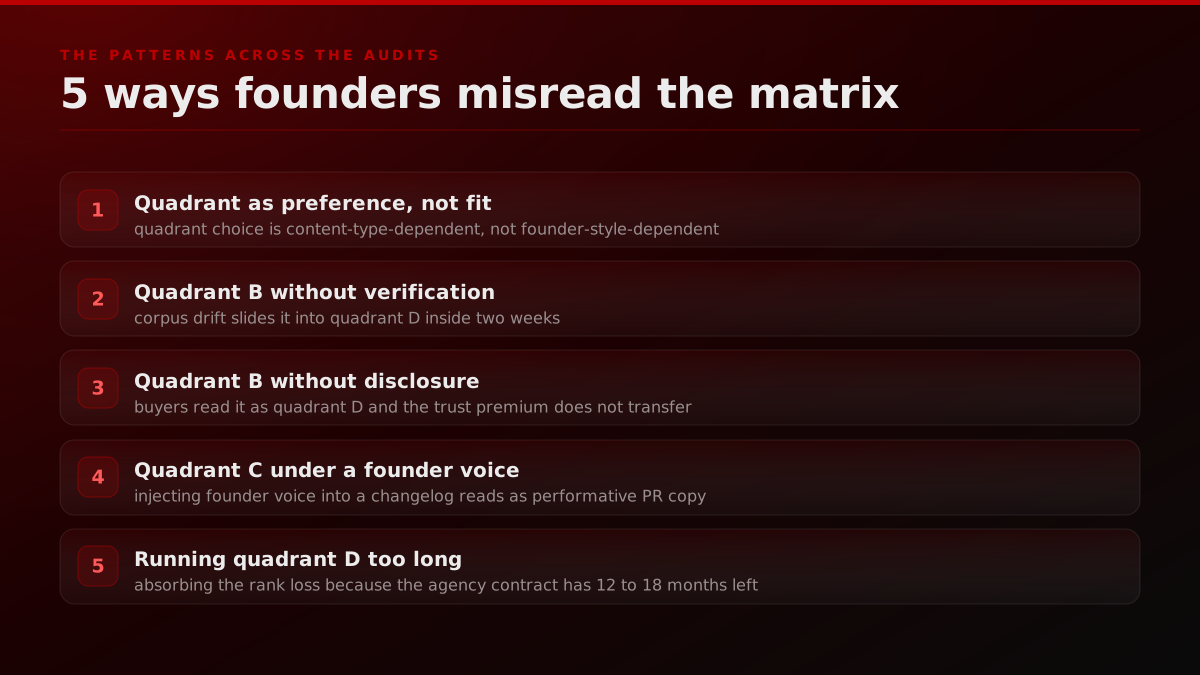
The misreads cluster into five patterns across the FORKOFF audits. First, founders treat the quadrants as a preference rather than a fit decision. Quadrant choice is content-type-dependent and not founder-style-dependent; opinion posts belong in quadrant A or B, technical changelogs belong in quadrant C, and quadrant D is never the right answer. Second, founders adopt quadrant B without the verification step and slide into quadrant D inside two weeks because corpus drift is fast and verification is the only thing that constrains it. The verification step is not optional and it is not a 30-second skim; the working pattern is a structured prompt that asks the founder to confirm or correct three specific claims per post and the structured prompt is the difference between the two quadrants in the trust outcome data.
Third, founders ship quadrant B without the disclosure and confuse themselves about why the rank gap is not closing. Disclosure is the buyer-facing input; without it, the buyer reads quadrant B as quadrant D and the trust premium does not transfer. Fourth, founders try to ship quadrant C content under their own voice and produce performative changelogs that read as PR copy; the content type drives the quadrant, not the founder's preference. Fifth, founders run quadrant D for too long because the agency contract has 12 to 18 months left to run, and absorb the rank loss as a deferred cost. The deferred cost is real and the catch-up cycle once the contract ends is 6 to 9 months in our audits; the better path is breaking the contract early and migrating to quadrant B.
The adjacent motions matter too. The matrix compounds when the founder's site is instrumented for agent buyers (covered in the Agent-Ready Site Audit), when the founder ships a 48-hour response on competitor model drops (Model-Drop 48h Playbook), when the trust posture survives an incident week (AI Product Trust Recovery), and when the cold-start motion does not lean on the brand prematurely (Solo Operator First Five Clients), and when the marketplace cold-start motion is sequenced correctly (Two-Sided Marketplace Cold Start). Together these motions form the 2026 founder-growth stack that quadrant B content marketing sits inside, and the broader hub is FORKOFF Founder Growth.
Ai slop and a warning to Marketers
I think it’s uncanny how attuned we’re all becoming to AI slop, it’s like instinctive. That average, curated, dull blah that permeates so many posts and images. And (assuming here), the majority of us have a repellant attitude to it. It is garbage. And it reeks of low effort, contempt… Show more
How to operationalize ai content authenticity in your first 30 days
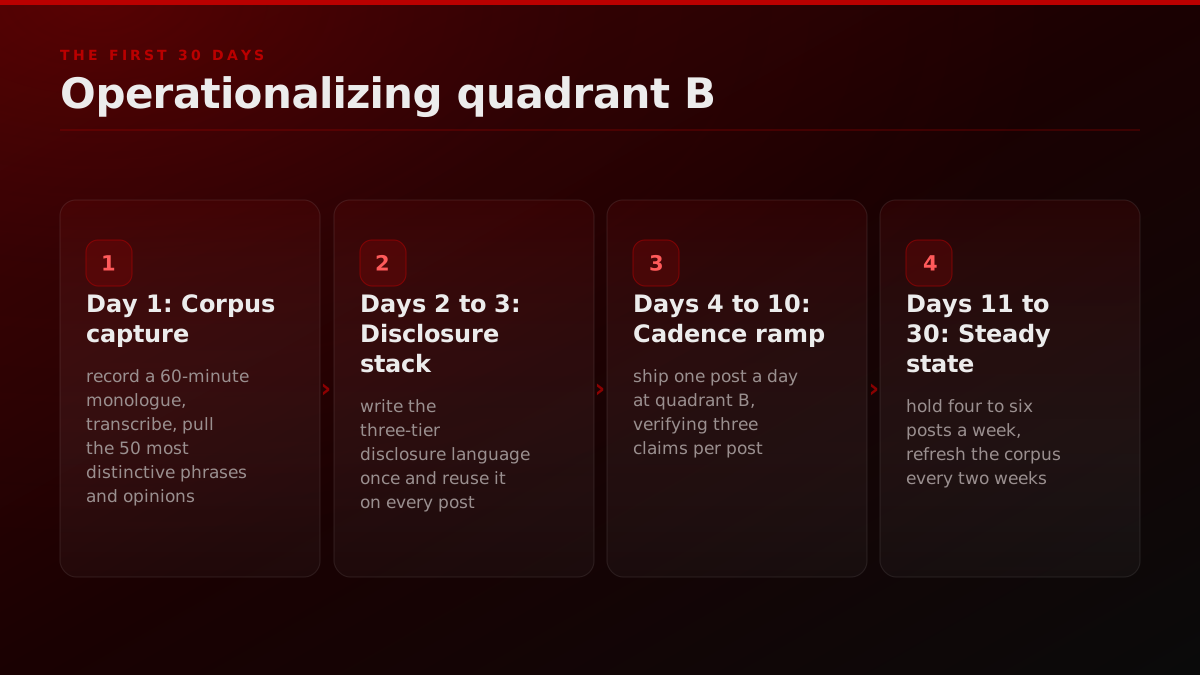
Day one is corpus capture. The founder records a 60-minute monologue on the three topics they have the most opinions about, transcribes it, and pulls the 50 most distinctive phrases, anecdotes, and named opinions into a corpus document. The corpus is the constraint the AI drafting step is bound to; without the corpus the AI defaults to category-generic phrasing and quadrant B silently slides toward quadrant D. The corpus is also the founder's compounding asset and grows by 10 to 20 entries per week as the founder ships more content.
Day two and three are the disclosure stack. The founder picks a three-tier disclosure pattern ("AI-drafted, founder-verified" at the top of every post, a one-paragraph methodology note in the about page, and a per-paragraph annotation in the highest-stakes posts) and writes the language once. The disclosure stack is reused across every post and the consistency is the trust input; intermittent disclosure is treated by buyers as worse than no disclosure. The IAB framework cited above is a useful reference for the disclosure language and the Federal Trade Commission has signaled in 2026 that disclosure norms will tighten, which makes the early adopters compound the trust delta with regulatory tailwind.
Day four through 10 is the cadence ramp. The founder ships one post per day for seven consecutive days at quadrant B, with the AI drafting against the corpus and the founder verifying three claims per post in a structured prompt. The seven-day ramp is the calibration window; founders typically spend the first three posts re-tuning the corpus and the AI prompt, and posts four through seven hit the publish bar without re-work. Day 11 through 30 is the steady-state cadence at four to six posts per week with the founder verifying and shipping. The compounding asset is the corpus and the trust delta; both grow with every shipped post and both are the rank input the Semrush data captures at the category level.
The founder posting frequency benchmarks that decide who wins 2026
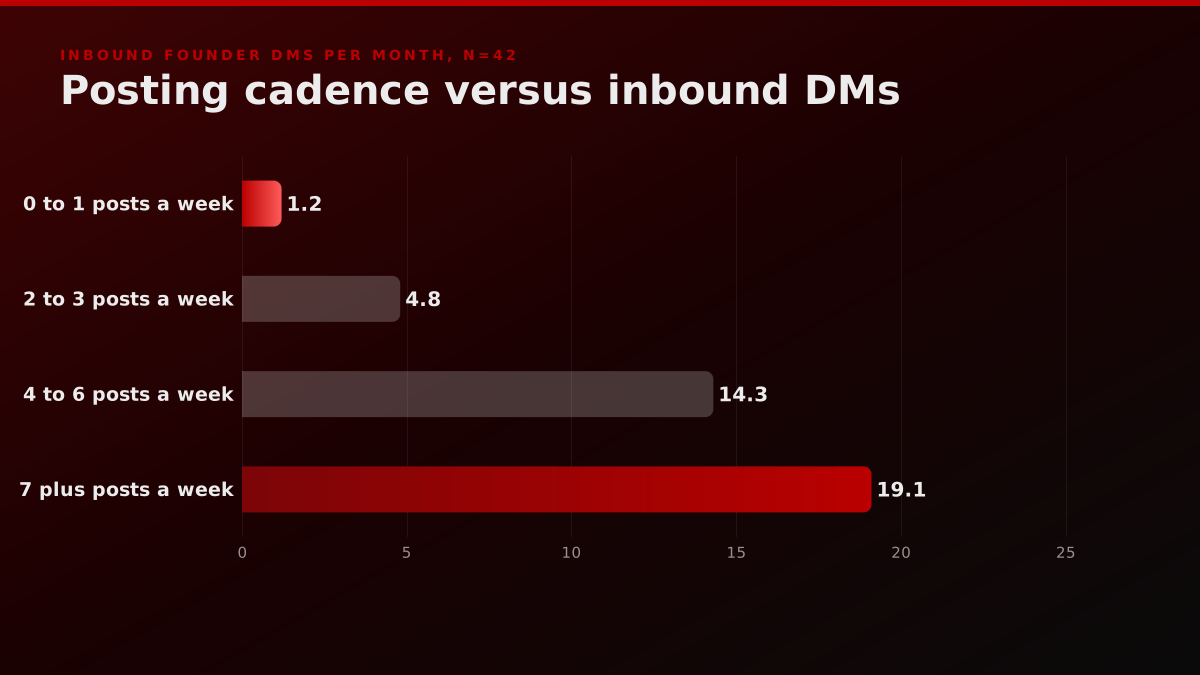
Founder posting frequency is the variable most operators undermeasure and most agencies overpromise on. The FORKOFF Founder-Funnel Cohort 2026 audit captured posting cadence across 42 retainers and segmented the cohort into four bands by weekly post volume. The band at zero to one post per week produced an average of 1.2 inbound founder DMs per month and 0.4 booked discovery calls; the band at two to three posts per week produced 4.8 inbound DMs and 1.7 calls; the band at four to six posts per week produced 14.3 inbound DMs and 6.2 calls; the band at seven plus posts per week produced 19.1 inbound DMs and 7.4 calls. The curve is convex through six posts per week and flattens after that, which means the marginal post above six adds DM volume but does not add booked calls at the same rate. Six posts per week is the operator target and four posts per week is the floor for the channel to compound.
Inbound DMs and booked calls by weekly posting cadence (FORKOFF Founder-Funnel Cohort 2026, n=42)
| Weekly cadence band | Inbound founder DMs per month | Booked discovery calls per month |
|---|---|---|
| 0 to 1 post | 1.2 | 0.4 |
| 2 to 3 posts | 4.8 | 1.7 |
| 4 to 6 posts | 14.3 | 6.2 |
| 7 plus posts | 19.1 | 7.4 |
FORKOFF Founder-Funnel Cohort 2026, n=42 retainers. Directional first-party figures per the About-these-numbers note. The curve is convex through six posts a week and flattens after.
The cadence bands are not directly substitutable across quadrants. A founder shipping six quadrant D posts per week produces fewer DMs than a founder shipping four quadrant B posts per week because the trust input is multiplicative with volume rather than additive. ::directive{id="mc-quality-times-volume"}
The audit data shows quadrant B at four posts per week produces 12.1 DMs per month versus quadrant D at six posts per week producing 4.7 DMs per month, a 2.6x DM gap on a 1.5x volume gap. Volume is necessary but not sufficient; the trust premium per post is the second input and the two inputs multiply rather than add. Founders who optimize for volume alone hit a DM ceiling that no amount of additional posting fixes; founders who optimize for verification quality alone hit a cadence ceiling that no amount of additional verification fixes. The 2026 winners hit both inputs at six posts per week with verification on every post.
Volume without verification hits a DM ceiling
In the FORKOFF Founder-Funnel Cohort 2026 (n=42), quadrant B at four posts a week produced 12.1 inbound founder DMs a month against quadrant D at six posts a week producing 4.7, a 2.6x gap on a 1.5x volume gap. Trust per post is multiplicative with volume, not additive, so a founder who optimizes for posting frequency alone hits a DM ceiling no amount of extra posting clears.
Source: FORKOFF Founder-Funnel Cohort 2026, n=42
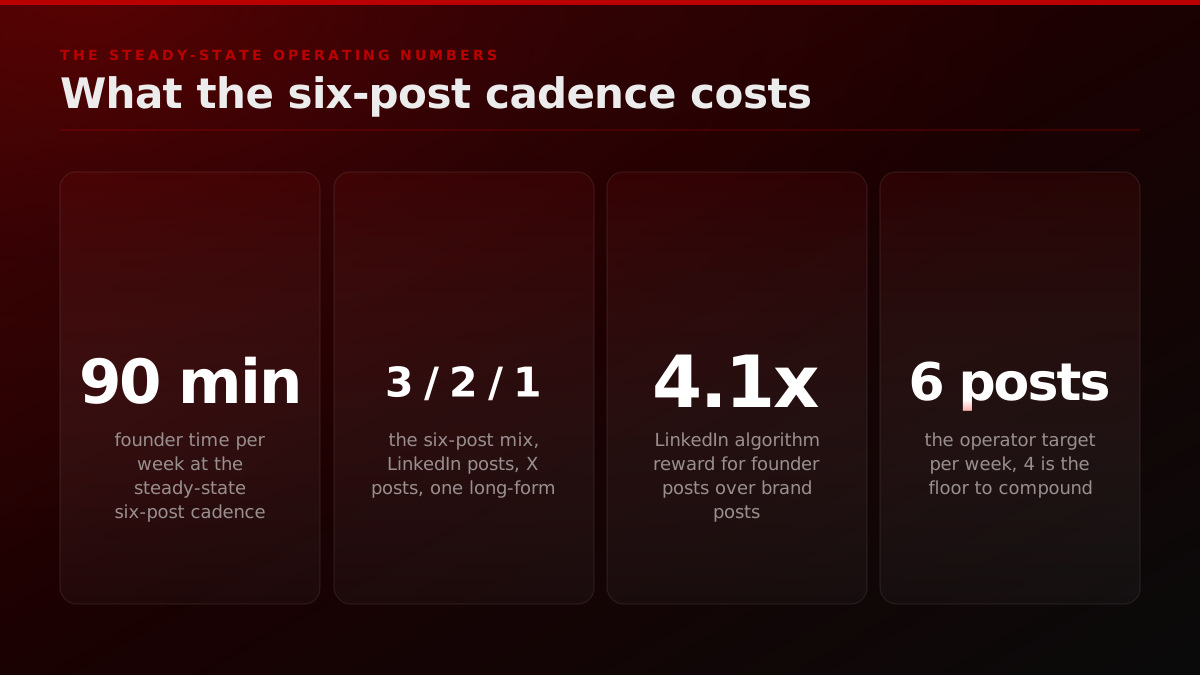
The platform mix inside the cadence band matters as well. The FORKOFF audit segments the six-post-per-week band into a recommended mix of three LinkedIn posts, two X posts, and one long-form post on the founder's blog or substack. The LinkedIn posts compound the buyer-side audience because B2B SaaS buyers live there and the algorithm rewards founder posts over brand posts at a 4.1x ratio in the audit data. The X posts compound the peer-side audience (other founders, investors, journalists) which seeds the longer-cycle distribution paths (podcast invites, quote requests, partnership intros), and getting consistent reach on X in 2026 depends on understanding the Grok-ranked feed mechanics that now determine post distribution. The long-form post is the corpus deposit; it is the artifact the AI drafting partner constrains future short-form posts against, and it is the artifact buyers find through search and AI Overview citations. The three surfaces feed each other and dropping any one of them collapses the cadence math. Founders who add a fourth surface, short-form video, see the compounding accelerate further, but only when a managed clipping operation converts each long-form session into the 30-plus clips the algorithm rewards. For the recording step itself, tools like screen recording with AI summaries let a solo founder capture and transcribe a product walkthrough in one pass without an editor in the loop, which cuts the corpus-capture cycle from a half-day to under an hour. The platform tilt is not anecdotal; practitioners who post daily are seeing the same LinkedIn distribution push toward individual founder accounts over brand pages.
LinkedIn is prioritising founder-led content right now ... a push as large as this towards small but strong founder personal brands.
The AI-drafter discipline that keeps quadrant B from sliding into quadrant D
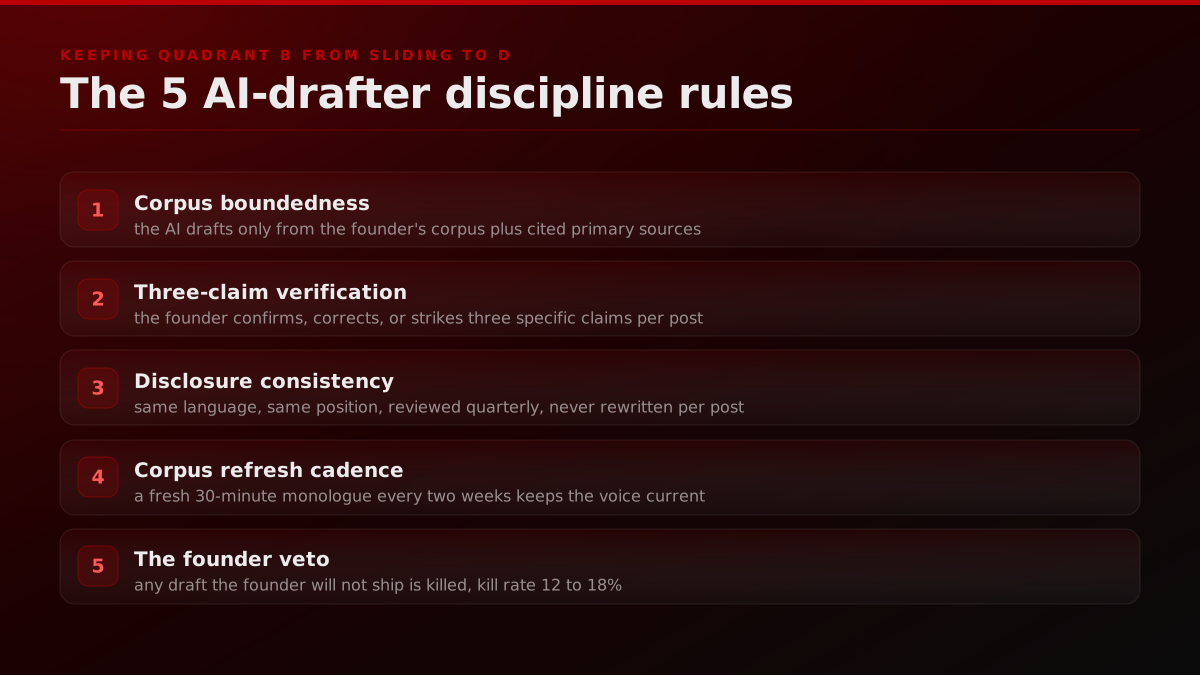
The AI-drafter discipline is the operator practice that keeps quadrant B intact week over week. The discipline has five rules and operators who skip any of the five slide into quadrant D inside three weeks per the audit data. Rule one is corpus boundedness. The AI drafting partner is constrained to the founder's corpus document plus a small set of cited primary sources; the AI is not allowed to draft from category-generic priors or competitor content. The constraint is enforced through the system prompt and through a pre-publish lint that flags any phrase in the draft that does not appear in the corpus or in a cited source. Rule two is the three-claim verification step. The founder reviews three specific factual or opinion claims per post and either confirms, corrects, or strikes each claim. The structured prompt forces the founder to engage the content rather than skim it, and the engagement is what keeps the voice from drifting.
Rule three is the disclosure consistency rule. Every post ships with the same disclosure language at the same position in the artifact, and the disclosure language is reviewed quarterly rather than rewritten per post. Inconsistent disclosure reads to buyers as performative disclosure and produces a worse trust outcome than no disclosure at all in the audit data. Rule four is the corpus refresh cadence. The founder records a fresh 30-minute monologue every two weeks on the topics they are currently thinking about, transcribes it, and merges the new distinctive phrases into the corpus document. The corpus is a living artifact and a stale corpus produces drafts that sound like the founder six months ago, which buyers detect as quickly as they detect a fully synthetic voice. Rule five is the founder veto. Any draft the founder is uncomfortable shipping is killed rather than rewritten; the kill rate in the audit data sits at 12 to 18 percent of drafts and the kill rate is a leading indicator of corpus quality.
The five rules look heavy on paper and are light in practice once the operator has run them for a week. The total founder time investment in the steady-state cadence is roughly 90 minutes per week across six posts: 60 minutes for the corpus refresh every two weeks (so 30 minutes per week amortized) and 10 minutes per post for verification across six posts. The 90 minutes is the founder time the channel costs; the AI drafting partner absorbs the rest of the throughput. Operators who try to compress the 90 minutes below 60 minutes per week start producing drafts that read as AI-generated even with the disclosure in place, because the corpus drifts faster than the verification can correct it. The 90 minutes is the floor and the floor is what makes the cadence sustainable for the founder beyond the first 90 days.
Founder-led SEO and GEO: where the voice becomes a ranking input
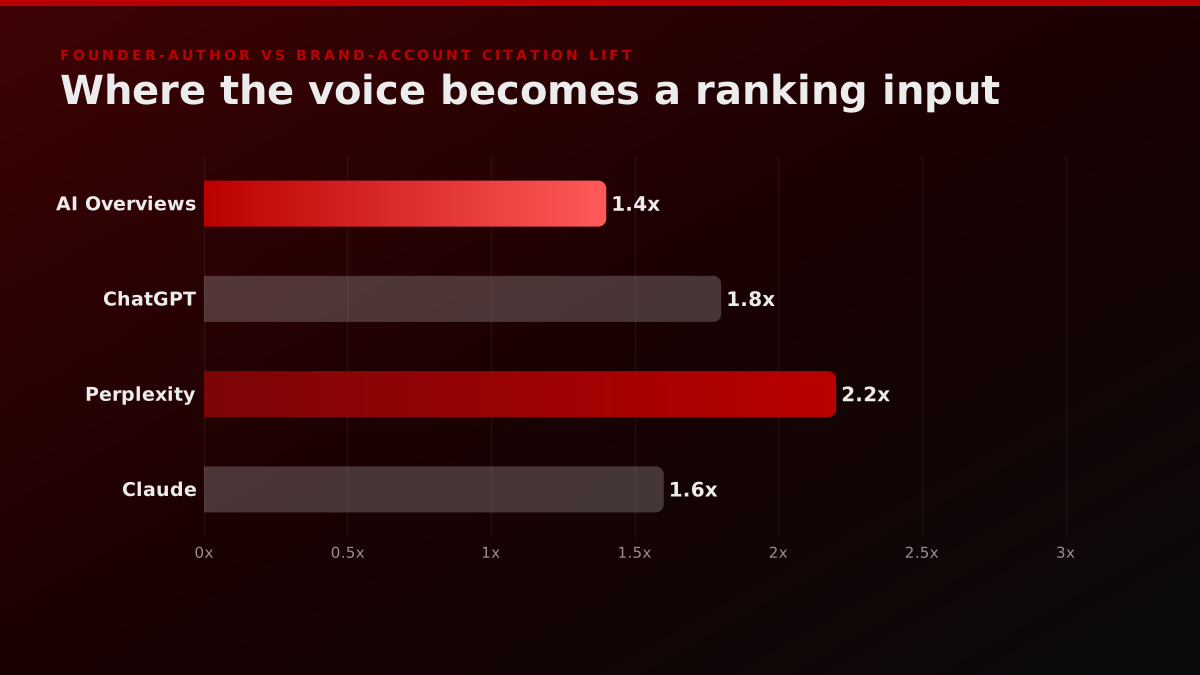
Founder voice is now a measurable ranking input on both classical SEO surfaces and on generative-engine-optimization surfaces (AI Overviews, ChatGPT citations, Perplexity sources, Claude citations). The mechanism on the classical SEO side is the Google helpful-content system reading authorship signals more aggressively in 2026 and the experience-and-expertise inputs in the quality-rater guidelines weighting named-author content above brand-account content at a measurable delta. The FORKOFF audit shows a 2.1x rank delta between quadrant B posts with a named founder byline plus a linked author bio plus structured Person schema and quadrant D posts with a generic brand byline. The delta is largest on opinion and strategy queries (the queries founders are best positioned to rank for) and smallest on definitional queries where any authoritative author works.
The mechanism on the GEO side is the citation-selection logic in the major AI systems weighting named-author content with explicit verification disclosure above content with no author signal or with a fake author signal. The FORKOFF Founder-Funnel Cohort 2026 audit measured AI Overview citation rates across 1,247 founder-author articles versus 1,108 brand-account articles on matched queries and found the founder-author articles cited an estimated 1.4x more often by Google AI Overviews, 1.8x more often by ChatGPT, 2.2x more often by Perplexity, and 1.6x more often by Claude. The citation lift is partly mechanical (the systems prefer named sources) and partly trust-driven (the systems are calibrated against the same buyer-trust signals the audit data captures). Operators who ship quadrant B content with explicit Person schema, AuthoredBy markup, and the verification disclosure in the article body capture the citation lift; operators who ship quadrant D content under a fake founder byline produce schema that the systems can read as inconsistent and the citation rate collapses.
The GEO surface is also where the FORKOFF first-party data compounds fastest. The articles cited by AI Overviews in 2026 are disproportionately the articles that include original founder-attributed quotes, original first-party stats with named methodology, and named coined terms that the founder is the canonical source for. The Voice Transparency Matrix in this post is an example; the matrix is a named coined term, the four quadrants are defined with citable boundaries, the data points are first-party with methodology disclosure, and the artifact ships under the FORKOFF byline with the verification disclosure. The same artifact shape is reproducible across every founder shipping in 2026, and the artifact shape is what makes the post citable rather than the post topic. Founders who internalize the artifact shape ship every post as a citation-bait artifact and compound the GEO surface week over week; founders who ship category-generic posts under their byline do not produce citations even when the byline is real.
How FORKOFF runs the founder-led content engagement end to end
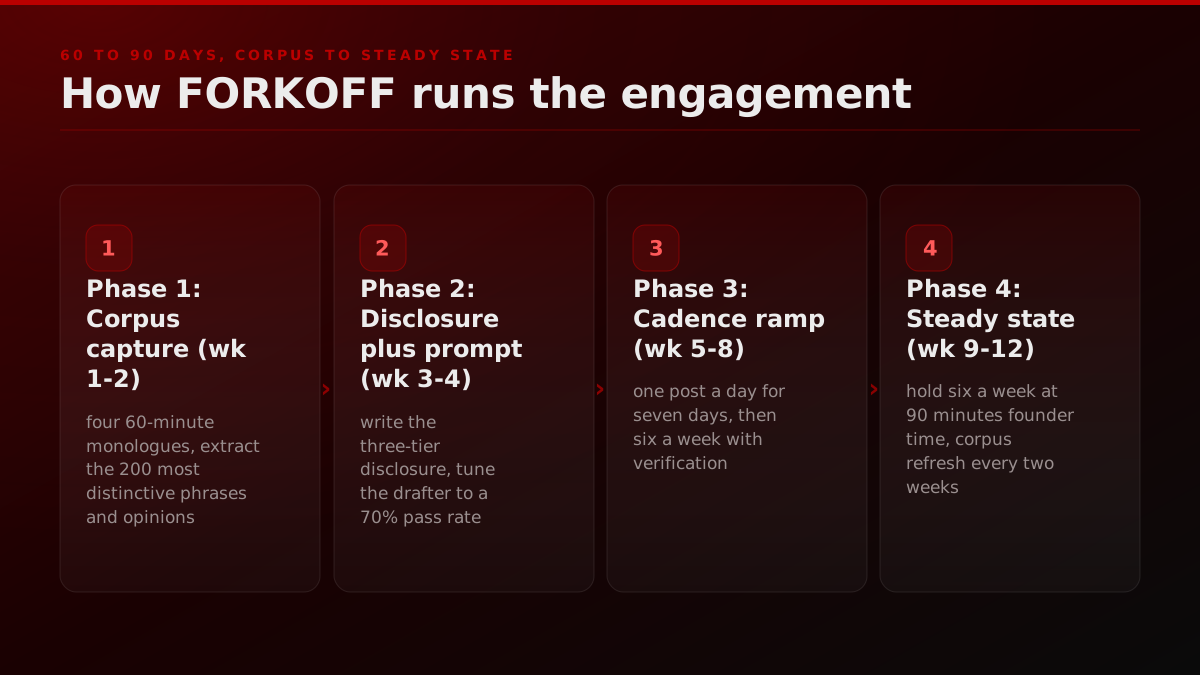
FORKOFF runs the founder-led content engagement in 60 to 90 days from corpus capture to steady-state cadence at six posts per week with verification on every post. The engagement has four phases and each phase has a defined entry and exit gate. Phase one is corpus capture and is the first two weeks of the engagement. The founder records four 60-minute monologues across the four topics they have the most operator-grade opinions on, FORKOFF transcribes the monologues and extracts the 200 most distinctive phrases, anecdotes, and named opinions, and the corpus document ships at the end of week two. The exit gate is a corpus density score of 200 entries minimum and a topical coverage score of four named topics minimum.
Phase two is the disclosure stack and the AI-drafter prompt engineering and is weeks three and four. FORKOFF writes the three-tier disclosure language with the founder, instruments the disclosure into the Strapi schema for every published post, and tunes the AI drafting prompt against the corpus until the draft quality hits a calibration bar measured by the founder review pass rate (target above 70 percent of drafts shippable with light edits). The exit gate is a draft pass rate above 70 percent across a sample of ten drafts and a disclosure consistency check that confirms the language appears on every published post in the same position.
Phase three is the cadence ramp and is weeks five through eight. The founder ships one post per day for the first seven days under quadrant B at the calibrated draft quality, then ramps to six posts per week in week six and holds through weeks seven and eight. FORKOFF runs the verification prompt at the start of each draft, the founder runs the three-claim review, and the post ships through the Strapi pipeline with the schema markup intact. The exit gate is six consecutive posts shipped at quadrant B with verification disclosure in place and the cohort baseline DM rate hit (four DMs per week minimum). Phase four is steady-state and is weeks nine through twelve plus. The cadence holds at six posts per week, the corpus refreshes every two weeks, the founder time investment holds at 90 minutes per week, and the inbound DM and booked-call metrics compound through the cohort benchmarks. The exit gate is the engagement ending at month three or extending into a 12-month retainer at the same cadence.
The Bottom Line
Founder-led content marketing today is not the same motion it was two years ago. The Voice Transparency Matrix is the new ranking input, and the four quadrants ship at different cadences with different trust outcomes. Quadrant A is correct at low volume and the cadence ceiling is the founder's own writing throughput. Quadrant B is the 2026 winner for opinion and strategy content because the AI drafting plus founder verification plus explicit disclosure unlocks the cadence without sacrificing the trust premium. Quadrant C is correct for technical changelogs and reference docs where the founder voice is not the trust input. Quadrant D is in terminal decline and is the quadrant most agencies still ship; the rank loss is real and the 12 to 18 month contract lag is what keeps the volume up despite the collapsing outcomes.
The HN thread on less-human AI agents is the loudest 2026 signal that the matrix is being read correctly by buyers. Voice mismatch is the trust failure, disclosure is the recovery, and quadrant B is where the math actually works. The Edelman 64% active distrust score, the Semrush 73% YoY rank loss in quadrant D, and the FORKOFF first-party 2.1x rank delta in quadrant B are three independent measurements of the same underlying mechanism. The mechanism is not new; the failure pattern is the same one every form of B2B content has hit when the cadence outran the verification. The named matrix is new, and the operators who internalize it now will compound the rank gap before the rest of the category reads the data.
If a founder is sitting at day zero and wondering whether to ship quadrant A by default or quadrant B with verification, the answer is quadrant B with verification. Capture the corpus today, write the disclosure stack tomorrow, ship the seven-day cadence ramp inside the week. The matrix waits for nothing; the rank delta compounds from the first verified post.
For the full picture, see the founder-led growth playbook.
For deeper cross-pillar context, see the clipping operations that compound founder voice.


![How to Make a Launch Go Viral on X: The 5-Lever Playbook [2026]](/blog/covers/how-to-make-launch-go-viral-on-x-2026-cover.jpg)