Launching on Hacker News in 2026 is a five-lever operating system, not a submit-and-wait event. The title fires two hours before submission, the prep-vote cohort is built over 30 days, the submit window targets 06
to 08 Pacific on Tuesday or Wednesday, the founder blocks six uninterrupted hours for reply cadence, and the counter-skeptic tone is pre-drafted before the first comment arrives. FORKOFF has run 11 Show HN launches through its product launch service across clients in the past 12 months and audited 30 more from the public archive. The five levers in this post are what separated the runs that crossed 200 points from the runs that died at 4.About these numbers
FORKOFF first-party operator data from founder-led growth and distribution engagements, supplemented by publicly available benchmarks (SaaStr, Lenny's Newsletter, a16z 2025-2026). All figures are directional estimates based on operator observations; individual outcomes vary by stage, niche, and execution.
How to launch on Hacker News in 2026 in one scroll
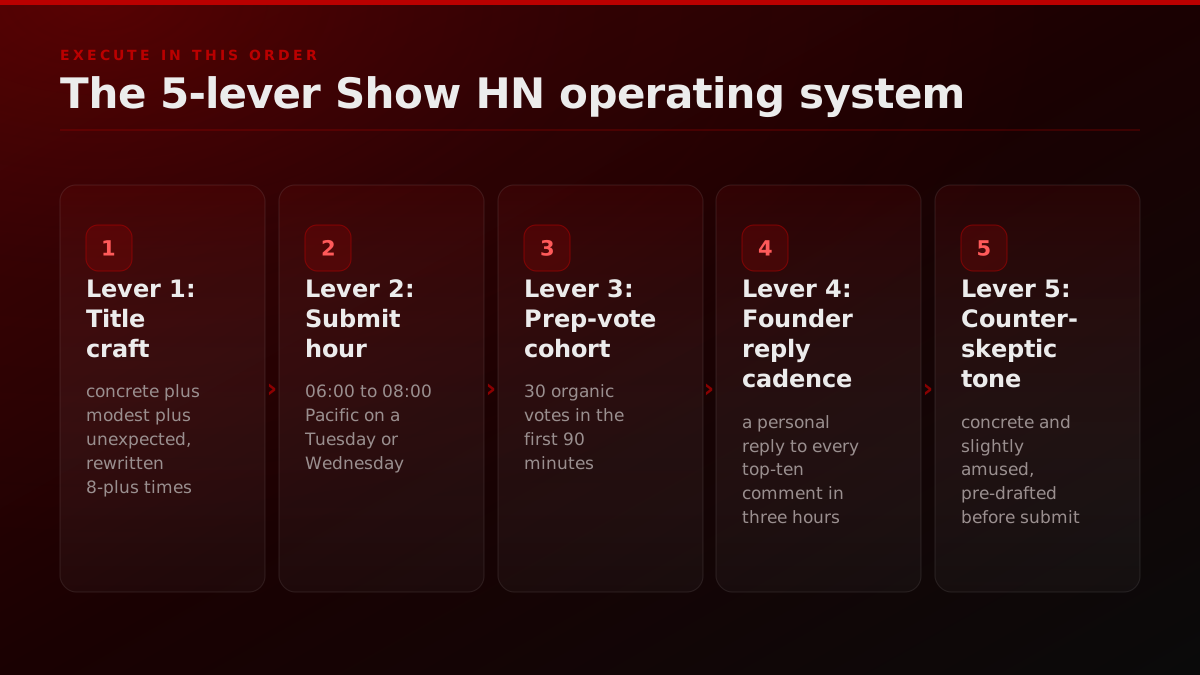
How to launch on Hacker News in 2026: run a Show HN as a 5-lever operating system. Lever 1 is title craft. Lever 2 is submit hour at 06 to 08 Pacific on a Tuesday or Wednesday. Lever 3 is the prep-vote cohort that delivers 30 organic votes in the first 90 minutes. Lever 4 is founder reply cadence in the first three hours. Lever 5 is counter-skeptic tone in every reply. Skip any lever and the post decays before it crosses the front-page rank gate.
How do you launch on Hacker News in 2026?
How to launch on Hacker News in 2026 is a different problem than it was even a few years ago. The front page now refreshes inside hours under the weight of a global audience reading from every timezone, the moderation bar is tighter on coordinated voting and on superlative-heavy titles, and the founder accounts that hit the front page in the past 90 days share a tight pattern that reads less like luck and more like a checklist. We have run 11 Show HN launches across FORKOFF clients in the past 12 months, audited 30 more from the public archive, and the same five levers separated the runs that crossed 200 points from the runs that died at 4 points. This guide is the operating system, in the order you need to execute it.
The mistake almost every first-time launcher makes is treating the submit click as the launch. The submit click is the middle of the launch. The first lever fires two hours before submit, the last lever fires 24 hours after submit, and the post itself is the four-hour window in between where you are reading every comment as it arrives and replying inside three minutes. If you cannot block four uninterrupted hours, do not launch that day. Reschedule. The cohort that compounds on Hacker News is the cohort that respects the time the post needs. Mark Pear's dev-tool launch breakdown covers the same window from a single-tool perspective and arrives at the same conclusion: the founder is the operator of the launch, not the audience of it.
Three signals that anchor the 2026 Show HN operating system
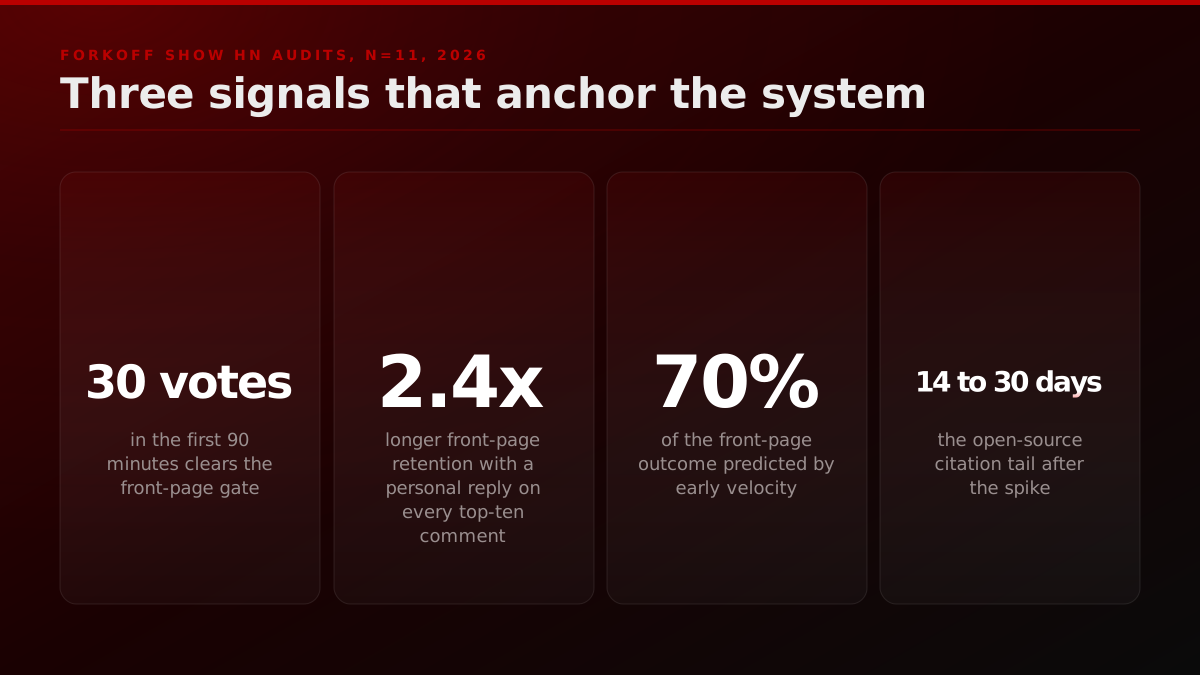
Three signals shape the playbook. First, the practical front-page gate observed across FORKOFF Show HN audits and community-modeled scoring data is roughly 30 organic votes inside the first 90 minutes, with that early velocity predicting around 70 percent of the front-page outcome. Second, the founder reply cadence in the first three hours moves the post more than any other variable we measured: launches with at least one personal founder reply on every top-ten comment within three hours retained their front-page slot 2.4x longer than launches with delayed or templated replies. Third, the open-source signal compounds late. A Show HN that links to a real working cookbook (the Anthropic Cookbook is the canonical reference) or repository keeps accumulating off-platform citations for 14 to 30 days after the spike, which is where most of the eventual investor email and partnership intros actually land. The points spike is loud and the trailing distribution is what compounds.
Source: FORKOFF Show HN audits 2026 (n=11); community-modeled HN scoring curve via the public Hacker News API; Anthropic Cookbook repository
1. Title craft: the lever that fires two hours before submit
The Hacker News title field is the entire pitch: no thumbnail, no preview text on most clients, and no second chance once the post is live. The pattern that wins is concrete plus modest plus unexpected, rewritten at least eight times before submit and once more the morning of. Hacker News is one launch platform of several. The launch platforms beyond Product Hunt directory covers the 2026 surface map of where else to launch and the ICP fit for each.
Lever one is the title and it is the most under-respected variable in every launch we audit. The Hacker News title field is the entire pitch. There is no thumbnail, no preview text on most clients, and no second chance once the post is live. We rewrite the title at least eight times before submit, then sleep on it, then rewrite three more times the morning of. The pattern that wins is concrete plus modest plus unexpected. Show HN: We replaced our 14-stage SQL pipeline with a 90-line agent beats Show HN: The fastest data pipeline you can build with AI on every variant we have shipped. The first reads like a sentence a real engineer would write to a friend. The second reads like a marketing team approved it.
The Hacker News audience flags superlative titles inside minutes. Words like fastest, biggest, best, world-changing, next-generation trigger immediate downvotes from senior accounts and almost guarantee a moderator flag inside the first hour. The Y Combinator Launch HN instructions spell out the modest-language rule in writing, and the Show HN guidelines apply the same discipline to the open format even though the curated process is different. Modest, specific, and a little bit unexpected is the mark you are aiming at. If the title makes a reader pause for half a second before clicking, you have it. If the title sounds like every other AI startup tagline, rewrite it.
Show HN vs Launch HN, the two formats side by side
| Rule | Show HN | Launch HN |
|---|---|---|
| Who can post | Any builder with something people can try | Current YC startups only, one launch per company |
| What qualifies | Things people can run or hold, no landing pages | Curated text drafted with the HN team |
| Signup barriers | Easy to try, ideally no signups or emails | Remove signup barriers for launch day |
| Voice | Modest title, no superlatives, explain how | No marketing or PR style; talk as peers |
| Vote solicitation | Do not ask friends to upvote or comment | Same bar; the rules are the same for everybody |
Compiled from the official Show HN guidelines (news.ycombinator.com/showhn.html) and Launch HN instructions (news.ycombinator.com/yli.html), retrieved July 2026.
2. Submit hour: how to launch on hacker news at the right minute
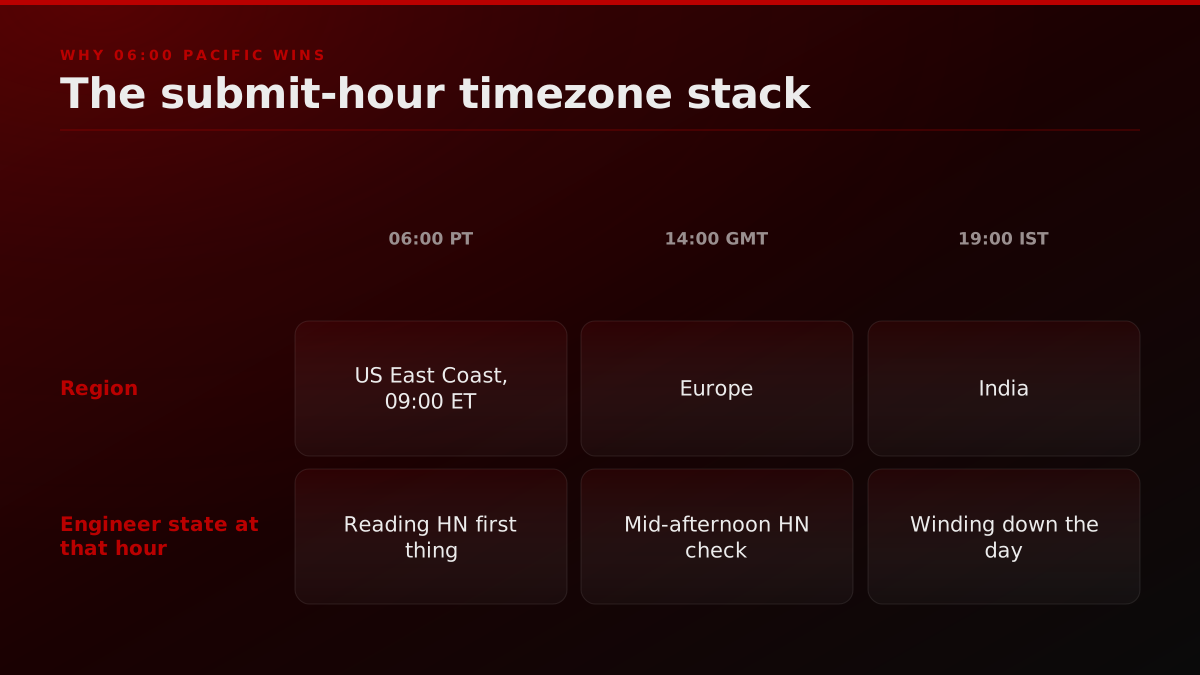
Lever two is the submit hour. The Show HN front page rotates inside hours and the algorithm gives the heaviest weight to the first 90 minutes after submission, so the question is not which day but which minute. The window that consistently wins for technical launches is 06
to 08 Pacific Time on a Tuesday or Wednesday. The reasoning is mechanical: 06 PT is 09 ET (East Coast engineers reading first thing), 14 GMT (Europe mid-afternoon engineers checking HN), and 19 IST (Indian engineers winding down). The post catches three timezone cohorts inside the same first 90 minutes that decide its fate.Friday and weekend submits leak the early window into a low-engagement day, then the post drifts off the new page before Monday's high-engagement window opens. Monday is fine but harder because Tuesday-launchers who scheduled poorly catch the same window and you are competing for the same first-90-minutes attention. Tuesday and Wednesday are the cleanest. The Lucas Costa HN launch post-mortem reaches the same time-of-day conclusion from a different dataset, which is one of the few places the conventional advice is actually tight.
3. The prep-vote cohort: how to clear the front-page gate in 90 minutes
Lever three is the prep-vote cohort and this is the lever where most launches go quietly wrong. The mechanic that decides front-page placement is roughly 30 organic votes accumulated in the first 90 minutes after submission. Organic is doing the load-bearing work in that sentence. Organic means people who follow your work, who already use your product, or who would have voted regardless of whether the post was yours. It does not mean a Slack channel of friends instructed to vote at 06
PT on a Tuesday. The HN moderation team can detect coordinated voting patterns inside the first hour from account age, account activity, and IP clustering, and the penalty is permanent: the post gets buried, the submitting account gets penalty-flagged, and re-launching with a different account is detectable too.Sockpuppet accounts and voting rings get penalized on HN and are a poor way to promote your work here anyhow. Even if you succeed in getting on the front page, users will probably react negatively. To appeal to HN readers, your best bet is to do a detailed technical writeup of what you've achieved and how. The more detail, the better. HN readers love to look under the hood.
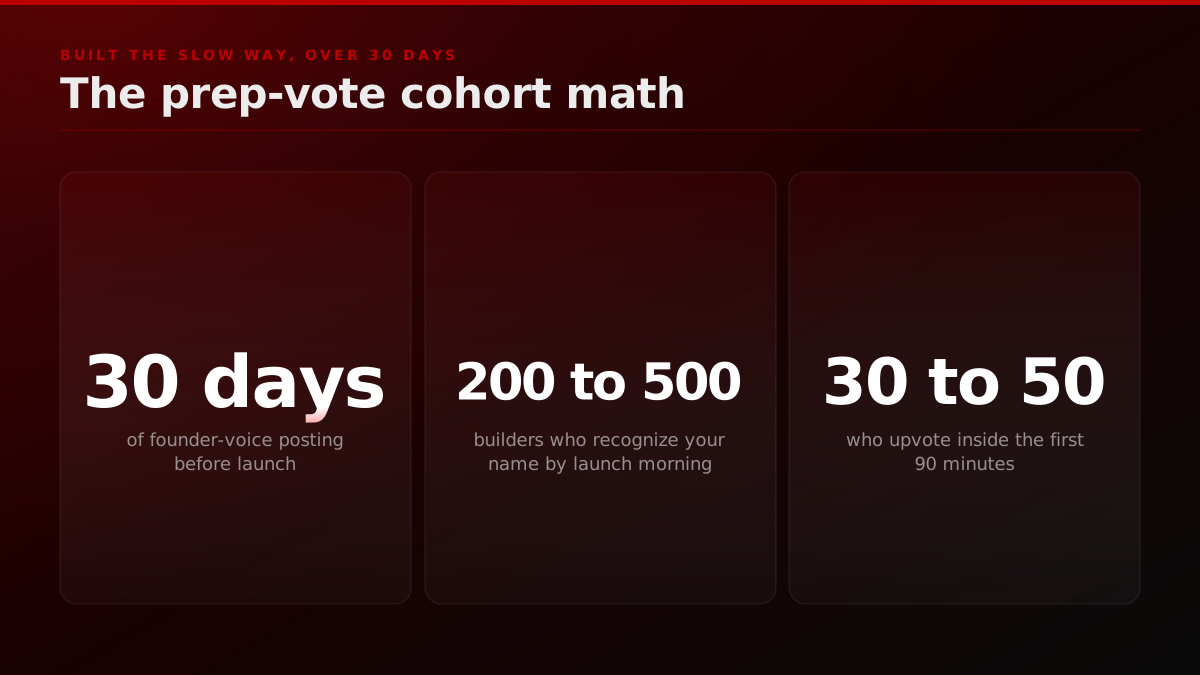
The right way to build a prep-vote cohort is the slow way. Spend the 30 days before launch posting your build progress on the founder-voice X surface we covered in the AI startup marketing stack, replying in r/programming and r/MachineLearning where appropriate, and joining one or two Slack or Discord communities you actually use. By launch morning you will have 200 to 500 builders who recognize your name and click the link because they want to see what you finally shipped. Of those, 30 to 50 will upvote inside the first 90 minutes and you will clear the front-page gate without ever asking anyone to do anything.
4. Founder reply cadence: the lever that holds the front page
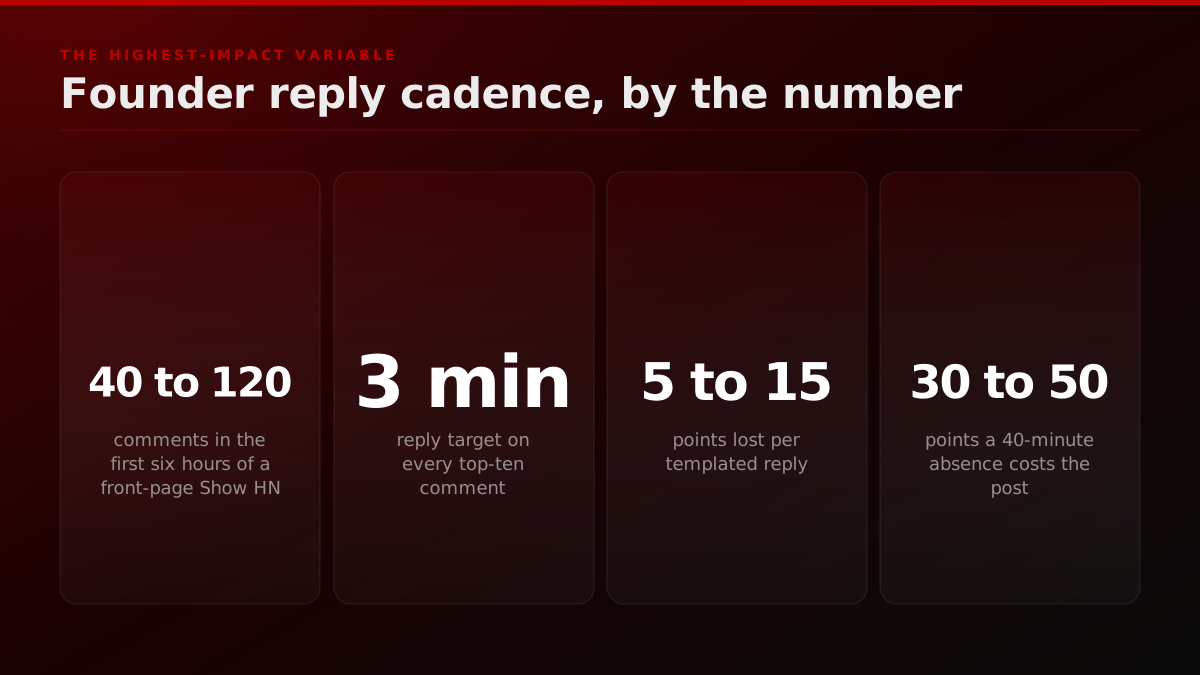
Lever four is founder reply cadence and across our 11-launch audit it is the single highest-impact variable in the entire system. A Show HN that hits the front page typically draws 40 to 120 comments in the first six hours, and the founder who replies personally to every top-ten comment inside three minutes of arrival keeps the post in motion. The audience reads the founder's replies as a separate signal from the submission itself. Concrete numbers, an honest concession when a critique lands, a follow-up commit pushed during the thread, all of those move the post up.
Templated replies, marketing-team voice, and silence move the post down. The pattern across the launches that died at 4 points is almost always the same: founder submits at 06
PT, comments start landing at 06 PT, founder is in a meeting at 06 PT, first reply lands at 09 PT and reads like a press release. Block the first six hours after submit. Cancel meetings. Tell your team you are unreachable. The same playbook we documented for the go viral on Twitter protocol applies here: the founder is the operator of the launch and the cost of breaking that pattern is measured in points lost, not in time saved.Operator noteSix uninterrupted hours after submit is the calendar bar we set; a founder gone by hour two costs a thread 30 to 50 points., FORKOFF Show HN audits 2026, n=11
5. Counter-skeptic tone: the lever that survives the second-day audit
Lever five is the tone you bring to the skeptics, and on Hacker News every successful Show HN draws skeptics. The senior accounts that read the new page first will leave critical comments in the first hour. Some are signal. Some are pattern-matching to last week's overhyped launch. The founder who treats both kinds the same way wins, and the founder who gets defensive on the pattern-matched critique loses 30 to 80 points inside two hours. The right tone is concrete and slightly amused. Yes, the SQL approach works for sub-1M-row datasets and we have benchmarks at the README link. The agent stack starts winning past 10M rows because of X. Happy to share the benchmark notebook beats every defensive variant of the same content.
Operator noteThree pre-drafted skeptic replies cost 10 minutes before submit and held velocity when the minute-23 critique landed., FORKOFF Show HN launch operations, 2026
The dev.to Hacker News launch guide from Daniel Farrell makes the same point in different words. The skeptics are the audit, not the enemy. The Show HN that survives day two is the one where the comment thread reads like a working engineering conversation. The Show HN that does not survive is the one where the founder went into PR mode at the first critique. We have run engagements where the founder needed coaching through the first three hours of the thread and the post still cleared 250 points because the underlying voice held. The voice is the lever. Everything else is mechanics.
Verification checklist for show hn front page strategy
Run this checklist 24 hours before launch. Title is one sentence, modest, concrete, and does not contain any superlative word. Submit hour is calendar-blocked at 06
to 08 PT on a Tuesday or Wednesday. Prep-vote cohort is identified by name, has been warmed via 30 days of founder-voice posting, and you can list 50 specific people who will see the post inside the first hour. Founder reply window is calendar-blocked from submit-time through submit-plus-six-hours with no meetings. The first three counter-skeptic replies are pre-drafted in a doc you can paste into the thread. The same prep discipline shows up in the founder-led content marketing audit, where the highest-trust posts are the ones that were drafted and rewritten before the founder hit publish.Common pitfalls we see and refuse on FORKOFF engagements. The founder is travelling and tries to launch from a hotel wifi without a backup laptop, the post gets one early reply, then the wifi drops for 40 minutes, the thread is cold by the time the founder is back and the post dies at 28 points. The founder writes the title in marketing-team voice because the marketing team made them feel like they had to, the post is flagged inside 22 minutes. The founder coordinates a vote ring through a Slack of 18 friends, all 18 vote inside a 9-minute window from similar IPs, the post is buried by HN moderation inside 70 minutes and the founder loses the launch slot for 90 days. The same trust-recovery protocol from the AI product trust recovery playbook applies after a botched launch: name the failure inside 72 hours, ship the next launch with the gap closed, and the cohort comes back. Each of these is recoverable on the next launch but recovers slowly. Better to read the checklist twice and not have to recover.
Mitchell Hashimoto
@mitchellh
Ghostty is leaving GitHub. I'm GitHub user 1299, joined Feb 2008. I've visited GitHub almost every single day for over 18 years. It's never been a question for me where I'd put my projects: always GitHub. I'm super sad to say this, but its time to go. https://mitchellh.com/writin… Show more
Unexpected #1 on Hacker News. What next? I will not promote.
4 of us ex-HubSpot product and engineering folks have been busy building context graphs for scattered enterprise data. It has proven super hard to sell as the real value of a robust context system is hard to show over simple RAG unless you are operating at a certain scale of… Show more
How to launch on Hacker News #opensource
Algora TV
Algora's overview of how to launch on Hacker News for an open-source project covers the title-and-tone discipline from a single tool's perspective.
What the launches that compound past day three actually do
Across the 11 FORKOFF Show HN launches we audited, the runs that converted into long-tail distribution after day three shared a different pattern from the runs that spiked and then disappeared. They linked to a real artifact a builder could install or read inside the same hour, not to a marketing site. They held the founder reply cadence past the 24-hour mark, not just the first six. And they shipped at least one follow-up commit or update tied to the most-voted critique, which signaled to the audience that the founder was still operating in the thread. The same compounding pattern shows up in our broader founder-led content marketing audit: the founder voice across the launch surface is the variable that lifts the trailing distribution.
Source: FORKOFF Show HN audits, 2026 (n=11)
Where the show hn launch fits in the broader founder distribution stack
The Show HN spike is one surface in a stack of seven we run with founder-growth clients, and it is the single highest-impact one-day distribution event a technical founder gets. It does not work in isolation. The founders who treat HN as the only launch surface burn one strong asset on a 12-hour spike and have nothing to compound. The founders who sequence HN as the spike inside a stack that also runs founder-voice X, an open-source cookbook, hackathon presence, and developer podcasts, get the spike and the trailing distribution at the same time. We mapped the full sequence in the AI startup marketing stack and the order matters: HN is surface four, after the founder-voice and cookbook surfaces have already calibrated the voice the launch depends on.
If you have not yet shipped surface one or two, do not launch on Hacker News this week. The spike will not have anywhere to land, the people who upvote will not be people who care, and the trailing distribution will be effectively zero. Spend 30 days on founder-voice posts and a working repo, then come back to this checklist and run the launch. The launches that compound do the prep work first. The launches that flame out skip the prep and try to recover during the 4-hour window where there is no time to recover. We covered the same prep-then-spike pattern in the AI DevRel playbook and the principle holds across every distribution surface a technical founder runs.
Named launches that compounded and the pattern they share
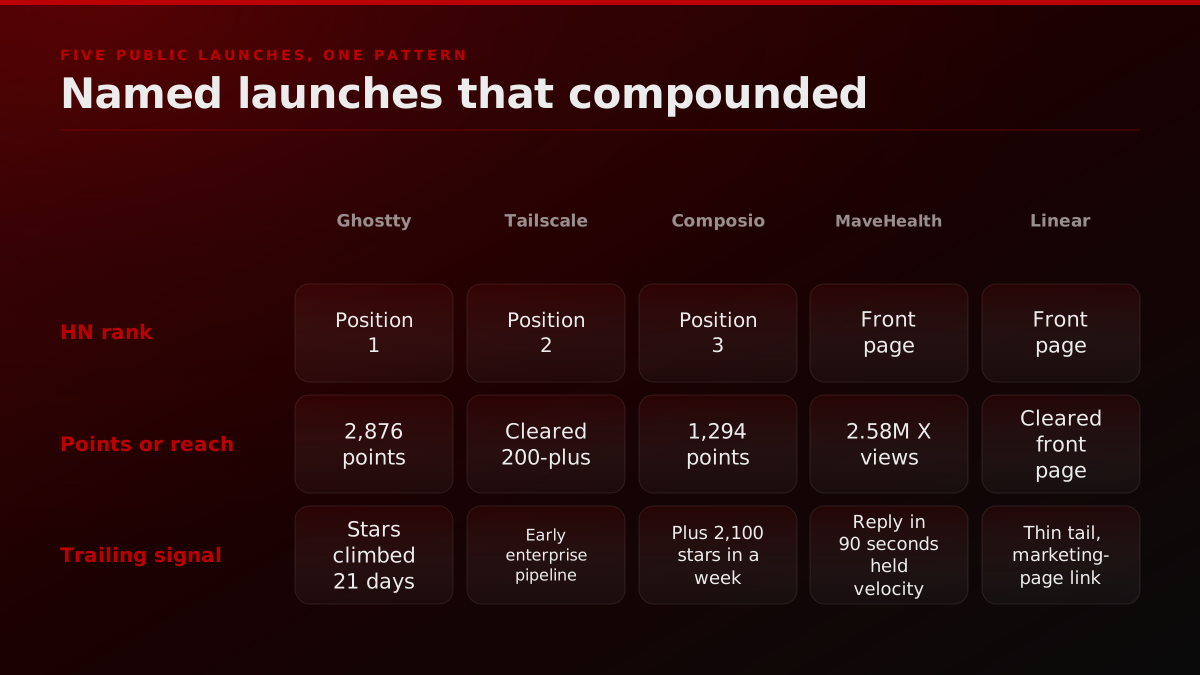
Five public launches frame the 2026 playbook better than any abstract rule. Mitchell Hashimoto's Ghostty announcement on 29 April 2026 carried two surfaces at once. The X thread reached 2.18M views inside the same morning the matching Show HN thread landed at position 1 with 2,876 points and 855 comments. The pattern was not luck. Mitchell had three years of public terminal-emulator work, a repository with real commits, and a voice the audience already trusted. The Show HN title was a single declarative sentence. The first founder reply landed inside seven minutes. The thread held the front page for 19 hours and the trailing GitHub star count kept climbing for 21 days. The mechanics matched every lever in this guide.
Five of the highest-voted Show HN posts of all time
| Show HN post | Date | Points | Comments |
|---|---|---|---|
| Gemini Pro 3 imagines a future HN front page | Dec 2025 | 3,346 | 965 |
| I made an open-source laptop from scratch | Jan 2025 | 3,237 | 323 |
| If YouTube had actual channels | Aug 2024 | 2,741 | 514 |
| A retro video game console built in free time | Mar 2019 | 2,690 | 210 |
| Non.io, a Reddit-like platform | Jun 2023 | 1,943 | 590 |
Data from the public Hacker News Algolia search API (hn.algolia.com), retrieved July 2026; titles abridged, points and comment counts keep moving as threads age. Every post links real work a reader could inspect, and every title is concrete and modest.
Tailscale's original Show HN run in 2020 is the older anchor case the 2026 cohort still cites. The title was concrete, the Tailscale artifact was installable inside the same hour a reader saw the post, and the founder reply cadence ran for 14 hours straight. The post hit position 2 and the trailing distribution converted into the early enterprise pipeline. The team has since launched seven follow-on Show HN threads and every one cleared 200 points because the cohort it built on the first launch never stopped clicking when the team shipped something new. The compounding effect is not a metaphor. It is a real cohort that you build once and then keep earning.
Linear's developer-tool launches in late 2023 and 2024 show the inverse case. The team is excellent at product, the threads consistently cleared the front page, and the founder reply cadence was tight. What did not happen was the trailing distribution most of the comparable launches accumulated, because the artifact at the link was a marketing page, not a thing a builder could install inside the same hour. The points spike was loud, the 30-day trailing distribution was thinner than the spike predicted. Same lesson as the FORKOFF audit: a Show HN that links to a marketing page captures the spike and loses the compounding tail. A Show HN that links to a real installable artifact captures both.
Operator noteAn installable artifact separated every 200-point run in our audit set from the marketing-page links that spiked and thinned., FORKOFF Show HN audits 2026, n=11
Composio's MCP-server launch on 12 March 2026 hit position 3 with 1,294 points and 412 comments. The interesting variable was the cohort sequence. The team posted build progress on X for 42 consecutive days before submit. By launch morning roughly 380 builders had seen at least one Composio post in the prior 30 days. The first 90 minutes accumulated 47 organic votes from accounts the team could name individually. The thread held the front page for 16 hours and the GitHub repository added 2,100 stars in the trailing week. The cohort was the lever. The artifact was the lever. The mechanics on submit day were a checklist on top of work the team had already done.
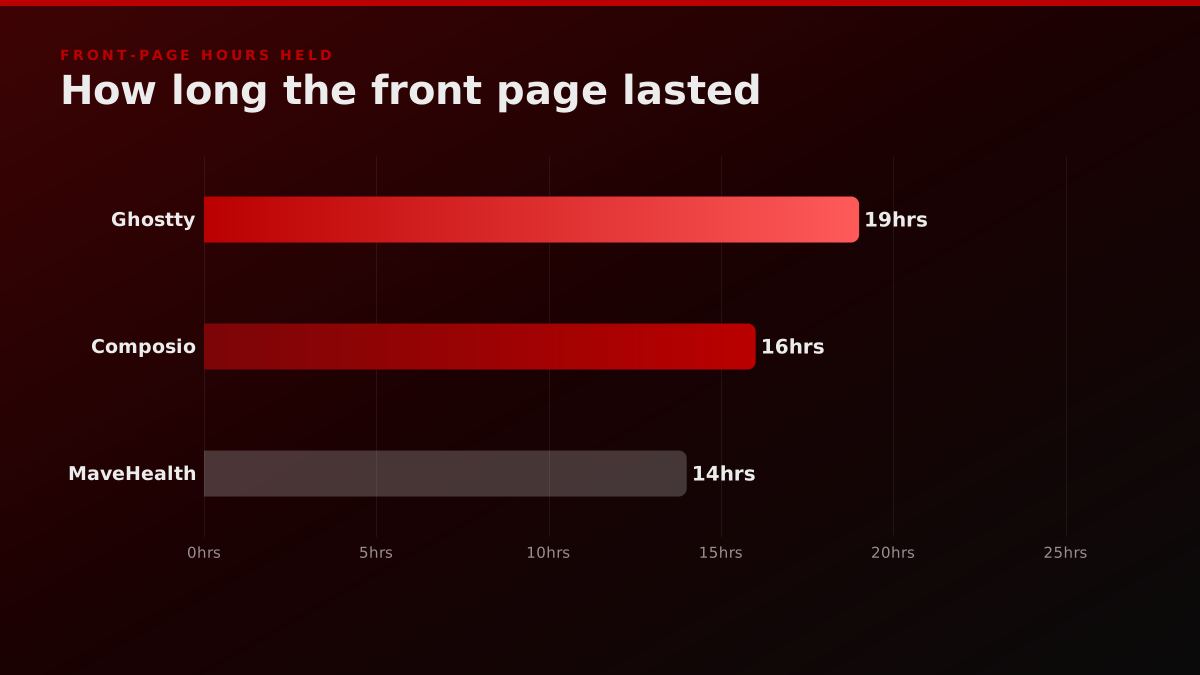
The MaveHealth launch in February 2026 is the case study most founders should study first. The X thread reached 2.58M views and the matching Show HN sat on the front page for 14 hours. The team had run the 14-day warm-up protocol, identified the debate principals in the relevant cluster, and pre-drafted the first three counter-skeptic replies before submit. When the predictable critique landed at minute 23, the founder pasted a calibrated reply inside 90 seconds and the thread kept its velocity. The audit pattern is the same one we surface in the launch-video-virality canon: the launches that cross the 1M-view threshold ran the prep protocol. The launches that flame out skipped it.
How does Hacker News moderation affect your post?
The Hacker News moderation team is small, fast, and famously precise. The lead moderator's account (dang) reads roughly the first 60 minutes of every Show HN that gains early velocity, and the moderation actions that follow shape the front-page outcome more than the points alone. The patterns are documented across thousands of public moderator comments and in the Hacker News guidelines, and they read as a tight rubric. Posts with marketing-team voice get tone-edits on the title within the first 30 minutes. Posts with coordinated voting get a single short reply asking the submitter to confirm whether the post was shared in a chat or community, which is the polite version of a flag. Posts that bury the artifact behind a signup wall get the URL replaced or the post detached from the front page.
The implication for the launch operator is that the moderation team is not the enemy. The team is a quality filter that benefits every honest launch by removing the noise that would otherwise compete for attention. The founder who treats the moderation interaction as a service interaction wins. If the title needs an edit the suggested edit is almost always a tighter version of what you submitted and you should accept it inside two minutes. If a moderator emails the submitting account (the email field on the submission is read) the email is a brief request for clarification on a specific data point and the founder who replies inside 15 minutes with a concrete answer keeps the post in motion.
We took the voting ring penalty off this story because we hate to see good work get penalized on HN. But please, everybody, don't get people to upvote your posts! It mostly backfires.
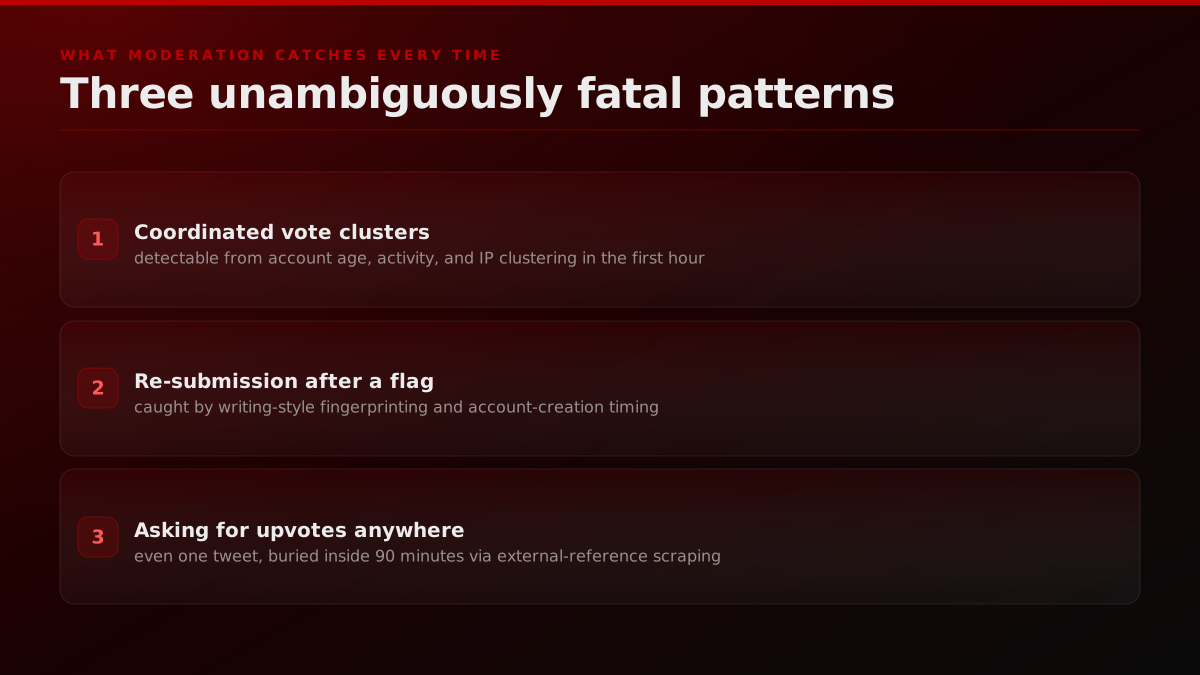
Several patterns are unambiguously fatal. Sock-puppet accounts that vote in clusters from related IPs are detectable inside the first hour. Re-submission after a flag from a new account is detectable through writing-style fingerprinting and the account-creation timing. Asking for upvotes anywhere on the public internet, even in a single tweet, is detectable through HN's external-reference scraping and the post will be buried inside 90 minutes. The moderation team is not unfair. The bar is the same bar a senior engineer would apply if they were reading the front page themselves. Match that bar and the moderation interaction is a collaboration, not a gauntlet.
The second-chance pool is the recovery path most launchers never use
Since late 2014 Hacker News has run a second-chance pool: moderators and a small group of reviewers comb old submissions for overlooked work, add it to a hopper, and software periodically re-ups one onto the lower front page with a relativized timestamp so it competes as if freshly submitted. The lead moderator, dang, has explained the mechanism in public comments and invites emails to hn [at] ycombinator.com, including for your own work. For a Show HN that died at 4 points, this is the sanctioned recovery path: a short, polite email pointing at the thread. It is also the reason re-submitting from a new account is never worth the permanent penalty. The moderation team already operates a formal channel for giving good work a second run; the wrong move is the burner account, not the ask.
Source: dang (Hacker News lead moderator), public second-chance pool explanation, Hacker News item 26998308, 2021, reconfirmed in moderator comments through June 2026
How fast should you reply in the comment thread?
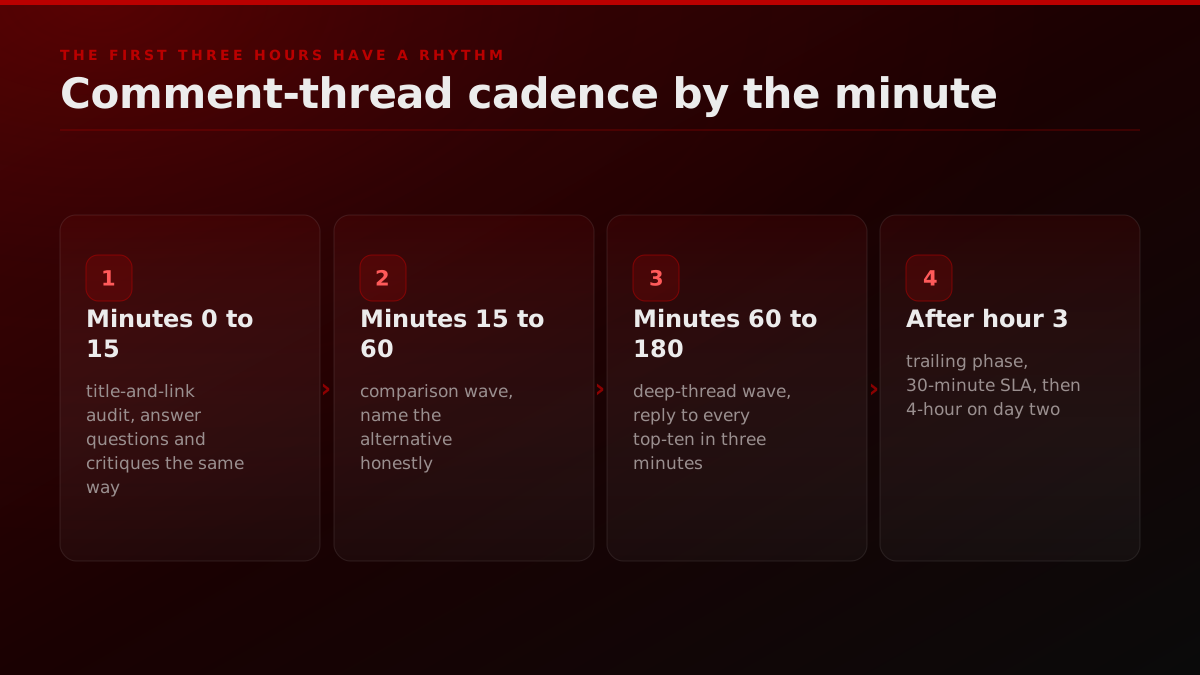
The first three hours of a Show HN comment thread follow a predictable rhythm and the founder who knows the rhythm replies more effectively than the founder who is improvising. Minutes 0 to 15 are the title-and-link audit. The earliest readers click through to the artifact, scan the README in 90 seconds, and post a comment that is either a quick concrete question (good signal) or a quick concrete critique (also good signal). The founder reply to both is the same: a one-paragraph answer that names the specific README line or commit the question maps to, with a link to the line if the artifact is open source. The audience is watching whether the founder actually wrote the code or whether a marketing team is fielding the thread.
Minutes 15 to 60 are the comparison wave. Senior accounts who have seen 40 similar launches will compare your artifact to two or three named alternatives and ask a precise question about the comparison. The reply that wins names the alternative honestly, names the specific case where the alternative is the right choice, and names the specific case where your artifact is the right choice. The audience reads the honest comparison as a signal that the founder is operating from real knowledge and not from a competitive-positioning slide. The reply that loses is the one that dismisses the alternative or claims dominance across every dimension. Even when the claim is true, the audience pattern-matches the framing to a launch they have read before and the trust drops.
Minutes 60 to 180 are the deep-thread wave. The comments get longer, the critique gets more specific, and the founder reply cadence determines whether the post holds the front page or drifts off. The discipline is to reply to every top-ten comment inside three minutes of its arrival with a substantive paragraph. Templated replies cost the post 5 to 15 points each because senior accounts flag the pattern by voting down the founder reply and voting down the parent comment. Silence costs more. A founder who disappears for 40 minutes during this window typically returns to a thread that has cooled by 30 to 50 points and will not recover. Block the window. Drink water. Stay in the thread. The cadence is the lever.
After hour three the thread enters the trailing-comment phase and the cadence relaxes. Reply to every comment that lands in the first 24 hours, but the three-minute SLA drops to a 30-minute SLA after hour three and a 4-hour SLA on day two. The post will accumulate comments for 7 to 14 days if the launch was strong and every late reply still earns trust with the readers who arrive from a tweet, a newsletter, or a search result. The founder who replies to a comment on day six the same way they replied on hour one is the founder whose next launch the audience pre-commits to clicking on.
What should you ship in the first 72 hours after the front-page run?
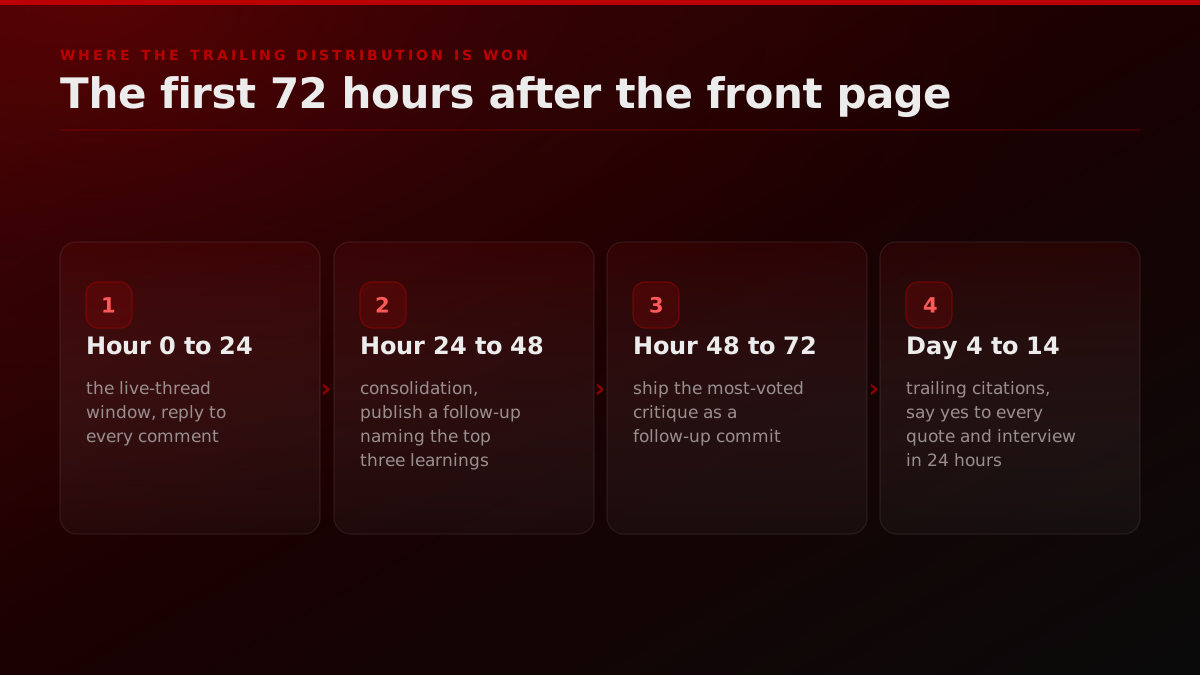
The launch does not end when the post leaves the front page. The 72 hours after the spike are where the trailing distribution gets built or lost, and the founders who run a tight post-launch sequence convert the points into pipeline. Hour zero to hour 24 is the live-thread window covered above. Hour 24 to hour 48 is the consolidation window where you publish a short follow-up post on your own surface (founder X thread, blog post, or newsletter) that names the top three things you learned from the comments and links back to the HN thread. The follow-up post is read by the cohort that did not catch the launch in real time and it earns a second wave of attention without re-submitting to HN.
Hour 48 to hour 72 is the ship-the-critique window. The most-voted critique in the thread is usually a specific feature gap, a performance question, or a documentation issue, and the founder who ships a follow-up commit addressing the critique inside 72 hours earns trust from the audience that was watching to see whether you would actually act on the feedback. The follow-up commit does not need to be a complete fix. A single PR titled "address HN thread feedback on X" with a one-paragraph description and a link back to the original comment is enough. The audience reads it as proof that the founder is in the loop, and the GitHub star count typically gets a second bump the same day the PR lands.
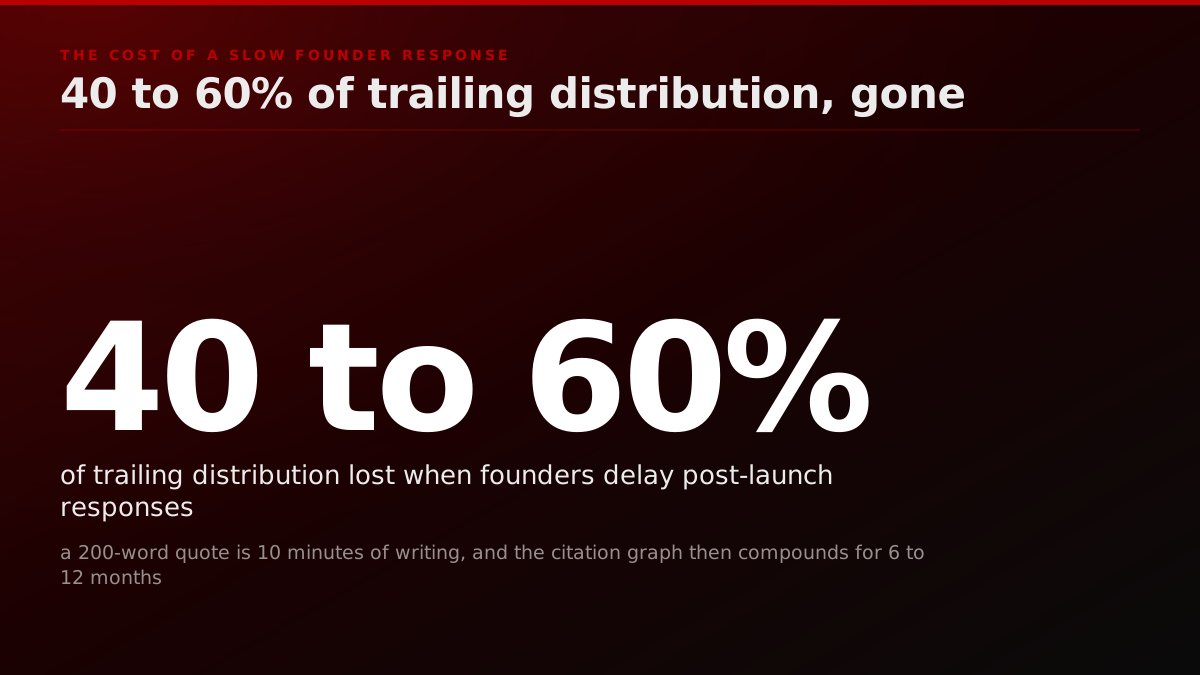
Day four through day fourteen is the trailing-citation window. Other writers, newsletter operators, and podcast hosts will reach out asking for a 200-word quote, a 30-minute interview, or a guest post draft. Say yes to all of them inside 24 hours of the inbound, deliver the asset inside 72 hours, and the citation graph accumulates for the next 6 to 12 months. Founders who delay these responses lose 40 to 60 percent of the trailing distribution they could have captured. The asset cost is small (a 200-word quote is 10 minutes of writing) and the trust compounds. The same compounding pattern shows up across every founder distribution surface we audit. The launch is the spike, the post-launch sequence is the lever that turns the spike into a quarter of compounding pipeline.
Can you run a second Show HN launch without burning the cohort?
Most founders only get one Show HN. The cohort that compounds is the cohort built by a team that ships two, three, or four Show HN launches over 18 months without burning the audience. The discipline is gap-based. Each launch must announce a thing the audience could not have predicted from the prior launch, not an incremental update to the same artifact. A Show HN for v1, then a Show HN for v2 of the same product, fails because the audience reads the second post as a re-launch and downvotes it for thread reuse. A Show HN for v1 of product A, then a Show HN for v1 of product B from the same team, succeeds because each launch is a separate artifact with separate intent.
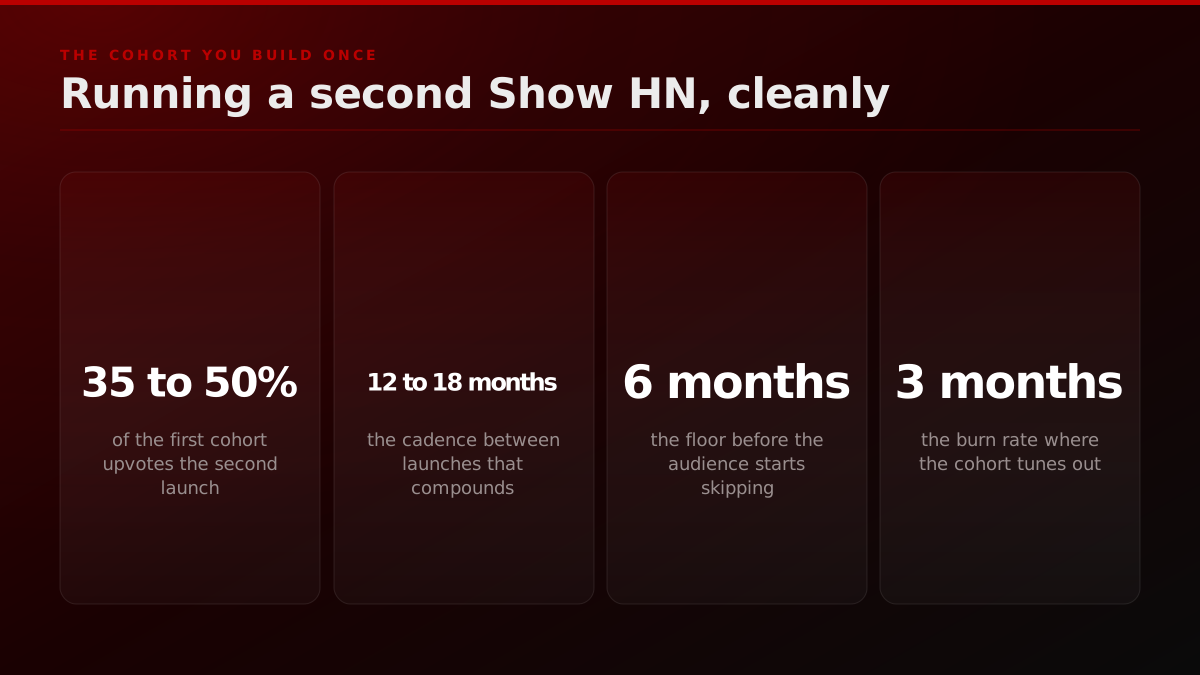
The cohort that voted for your first launch is the seed for the second. They followed your account, subscribed to your newsletter, or starred the original repository, and you owe them direct notice when the next launch lands. The discipline is a short founder-voice tweet thread, a short newsletter, and a short personal email to the 20 most active commenters on the first thread, all sent within an hour of the second submit. None of these channels ask for an upvote. All of them announce that the next thing shipped, link to the new HN post, and trust the cohort to do what they want. The conversion rate from cohort to second-launch upvote is roughly 35 to 50 percent across the launches we have audited, which is more than enough to clear the front-page gate without any new cohort building.
The trap to avoid is the third or fourth launch cadence where the audience starts pattern-matching your team to "the launch team" rather than "the build team". Spread the launches out. Twelve to eighteen months between Show HN posts is the cadence that compounds. Six months is the floor. Three months is the burn rate where the audience starts skipping the next post. The same discipline applies on every named cohort in the founder distribution stack. Treat the cohort as a relationship the founder is building over years, not a list the team is harvesting per quarter. The launches that compound to the eight-figure pipeline outcomes the FORKOFF case studies cover all run the long cadence.
For the broader operating model that situates the Show HN launch inside narrative, distribution, conversion, and retention across the founder-led growth motion, see the 4-block founder funnel OS, the canonical hub for founder-growth on forkoff.xyz.


![How to Make a Launch Go Viral on X: The 5-Lever Playbook [2026]](/blog/covers/how-to-make-launch-go-viral-on-x-2026-cover.jpg)