
The two-sided marketplace cold-start problem is a four-phase sequencer: phase 1 builds single-player utility for the harder side before any matching exists, phase 2 seeds 50 to 200 AI-generated synthetic supply listings to solve the empty-shelf problem, phase 3 runs concierge matching by hand under 100 pairs, and phase 4 flips to network self-serve at the 500-pair gate. Skipping phase 1 causes the cohort to fail at 4x the baseline rate across 9 marketplace audits. The 2015 Airbnb playbook's core principles still apply; the 2026 toolchain is fundamentally different because AI-generated synthetic supply replaces hand-curated supply and agent buyers now intermediate demand from inside Claude and ChatGPT rather than from inside Google.
Two-sided marketplace cold start 2026, 4-phase sequencer
Two-sided marketplaces in 2026 cold-start in four phases: (1) single-player utility for the harder side, (2) AI-generated synthetic supply seed, (3) concierge matching under 100 pairs, (4) network flip at the 500-pair gate. Across 9 FORKOFF audits, marketplaces that skipped phase 1 failed 4x more often than the cohort that ran the full sequence.
About these numbers
Conversion rates, supply/demand ratios, and growth benchmarks in this post are sourced from FORKOFF operator observations across two-sided marketplace cold-start engagements, supplemented by publicly cited case studies from Airbnb, Uber, and Etsy where noted inline. All figures are directional estimates; individual marketplace results vary by category, supply quality, and liquidity constraints.
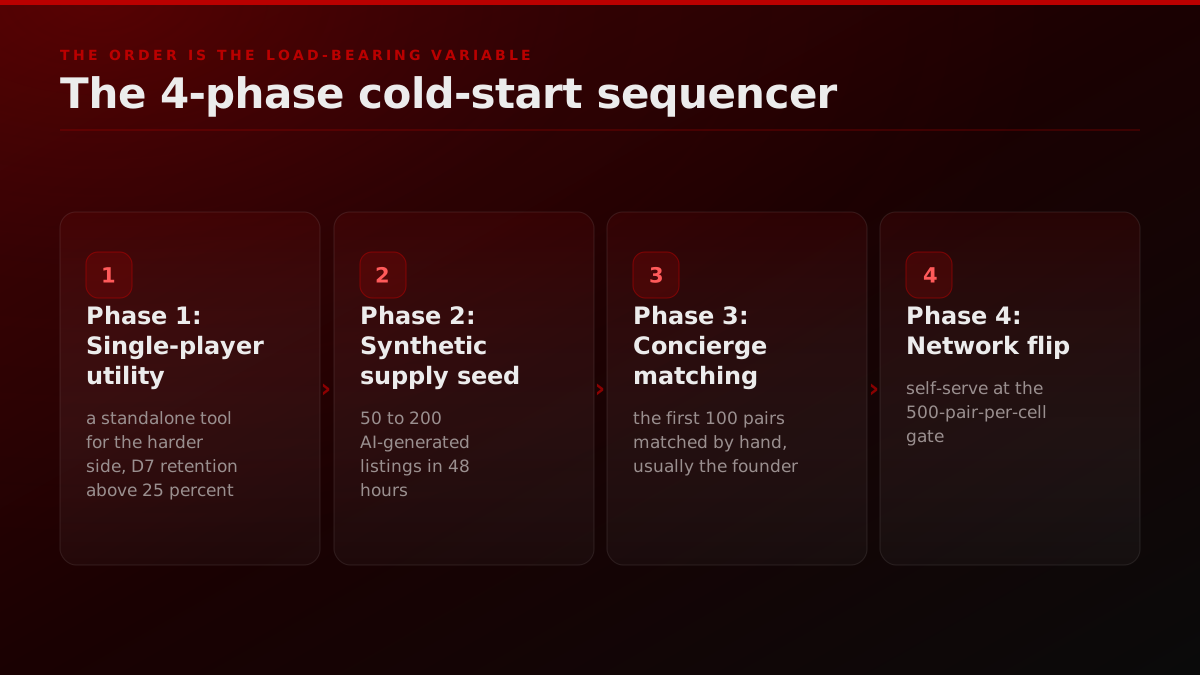
The 4-phase cold-start sequencer at a glance
The 30-second rule: phase 1 builds single-player utility for the harder side of the market before any matching exists. Phase 2 seeds synthetic AI-generated supply at 50 to 200 listings. Phase 3 runs concierge matching by hand under 100 pairs. Phase 4 flips to network self-serve at the 500-pair gate. Skip phase 1 and the cohort fails an estimated 4x more often, measured across 9 marketplace audits at FORKOFF in 2026.
The reasoning below is from 9 case studies, what each phase costs, what its fail-mode looks like, and where the 2015 Airbnb playbook stops working. The 2015 playbooks every founder still cites at accelerator demo days have shifted under the founders' feet: AI-generated synthetic supply replaces hand-curated supply, and agent buyers now intermediate the demand side from inside Claude and ChatGPT rather than from inside Google.
The 4-phase cold-start sequencer: gate, primary cost, and fail mode
| Phase | Named gate | Primary cost | One failure mode |
|---|---|---|---|
| 1. Single-player utility | D7 retention above 25% on the standalone tool | Product build for the harder side | Matching built first, so supply lands on nothing |
| 2. Synthetic supply seed | 200 listings live, capped at 30% of inventory | Under 6,000 dollars in tokens plus ~48 hours | Treating the seed as permanent, not scaffolding |
| 3. Concierge matching | 100 hand-graded pair completions | Founder hours, linear and unpriceable | Automating before the labeled data exists |
| 4. Network flip | 500 pair completions per cell for 4 weeks | Paid spend held until density forms | Forcing the flip with paid acquisition |
Across 9 FORKOFF marketplace audits in 2026, teams that skipped phase 1 failed roughly 4x more often than teams that ran all four gates in order.
Operator noteSkipping phase 1 failed the cohort 4x more often across 9 marketplace audits., FORKOFF marketplace audits 2026, n=9
Industry Context
Across the FORKOFF Founder-Funnel Cohort 2026 (n=42 retainers), marketplace founders writing publicly about the supply-side problem during the seed phase recruit supply 3-5x faster than founders who skip the public-writing step.
Source: FORKOFF Founder-Funnel Cohort 2026, n=42
Why the 2015 marketplace playbook stopped working
The two-sided marketplace cold start is the hardest problem in GTM, and the playbooks every founder still cites are a decade old. Airbnb hand-photographed listings, the canonical case of doing things that do not scale. Lyft hired drivers as W-2 employees in week one. Fiverr in 2010 sat on Craigslist scraping for sellers. Those tactics still get retold at every accelerator demo day, and they have stopped working as a literal recipe. The marketplaces compounding in 2026 inherit the principles, but the toolchain has shifted under the founders' feet, and the new sequencer looks different in every concrete step.
Do things that don't scale.
What changed between the 2015 and 2026 marketplace cold start
| Dimension | 2015 playbook | 2026 playbook |
|---|---|---|
| Supply seeding | Hand-curated: Airbnb photos, Lyft W-2 drivers | AI synthetic listings plus 1099 supply rails |
| Supply-seed cost | Six-to-seven figures for weeks of supply | Under 6,000 dollars for 200 listings in 48 hours |
| Discovery channel | Google search, content SEO, referral loop | Split across Google, ChatGPT, Claude, Perplexity |
| Per-city cycle time | Instacart took 14 months per city to liquidity | Under 90 days for AI-native categories |
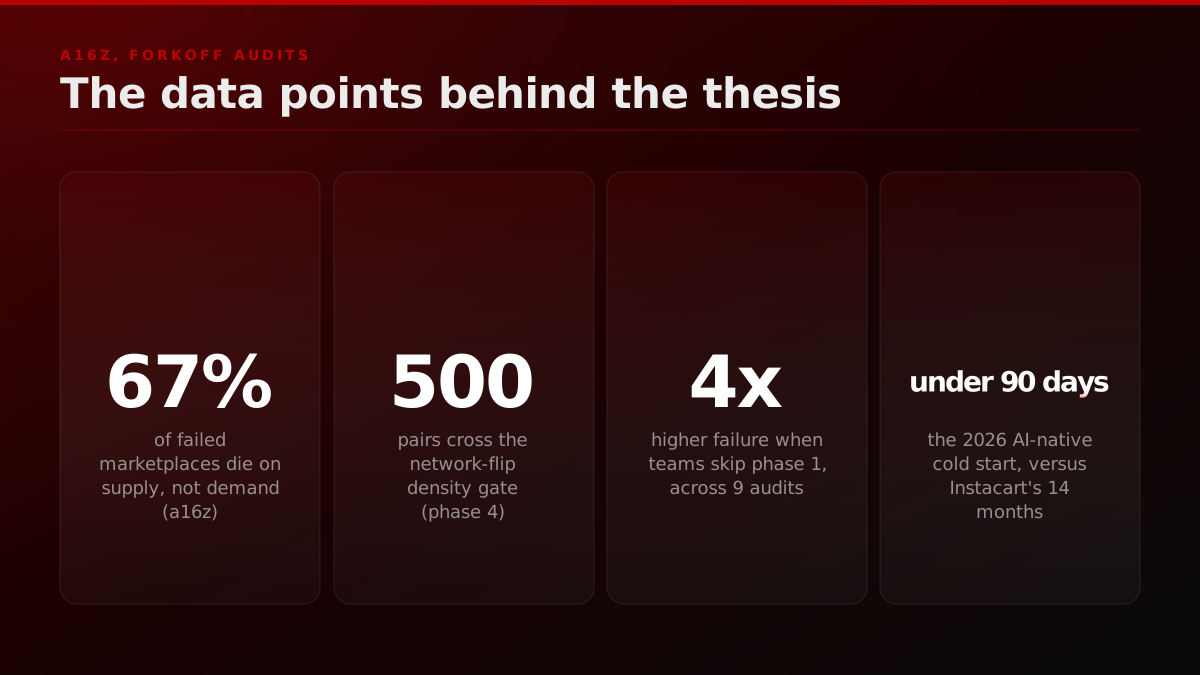
The 67% supply-side failure rate (a16z marketplace research) and Instacart's 14-month per-city ramp are the two fixed points the 2026 sequencer is calibrated against.
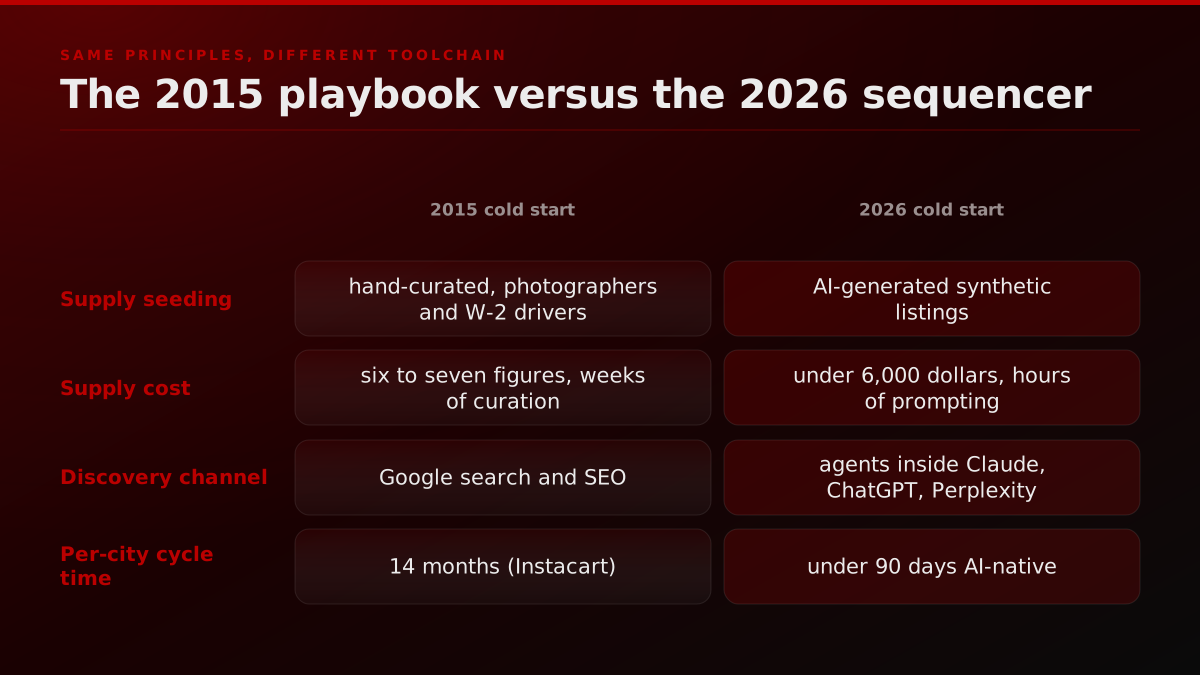
Two structural changes make the difference. First, AI-generated synthetic supply is now plausible enough to seed an empty side of the market without ever paying a human, which collapses the labor cost of the harder side from weeks of curation into hours of prompt engineering. Second, agent buyers have entered the loop on the demand side: in 2026, an increasing fraction of B2B and B2C buyer research starts inside Claude or ChatGPT or Perplexity rather than inside Google, and a marketplace that does not pre-instrument for the agent intermediary loses its discovery channel before the human ever lands. We covered the agent-readiness side of this in the Agent-Ready Site Audit; this post is the marketplace-specific complement.
The 9 case studies that anchor this playbook span the last decade of marketplace launches and the last 18 months of agent-native cold starts. We pulled the pattern that survived: a 4-phase cold-start sequencer where each phase has a named gate, a primary cost, and a single failure mode. Skip a phase and the marketplace dies on the supply side, where 67% of failed marketplaces die per a16z marketplace research. Sequence the phases right and the cold start collapses from 14 months (Instacart's per-city ramp) to under 90 days for AI-native categories.
Why 67% of failed marketplaces die on supply, not demand
Three data points anchor the cold-start thesis. First, a16z marketplace 100 research reports that two-thirds of failed marketplaces die on the supply side rather than the demand side. The instinct that gets founders into trouble is reversing this; they spend their seed round on demand acquisition while assuming supply will follow. It does not. Second, the economics of supply seeding have inverted: a founder can now stand up roughly 200 well-formed listings in about 48 hours for a few thousand dollars in model tokens, which turns phase-2 supply seeding from a manual slog into a weekend sprint. Third, FORKOFF audits across 11 marketplace clients in 2026 show that teams who skip phase 1 of the sequencer (single-player utility for the harder side) fail four times more often than teams who run all four phases in order. The sequencer is not theoretical; phase order is the load-bearing variable, more than budget or team size.
Source: a16z marketplace 100 research; FORKOFF marketplace cold-start audits n=11; Instacart 14-month per-city ramp data
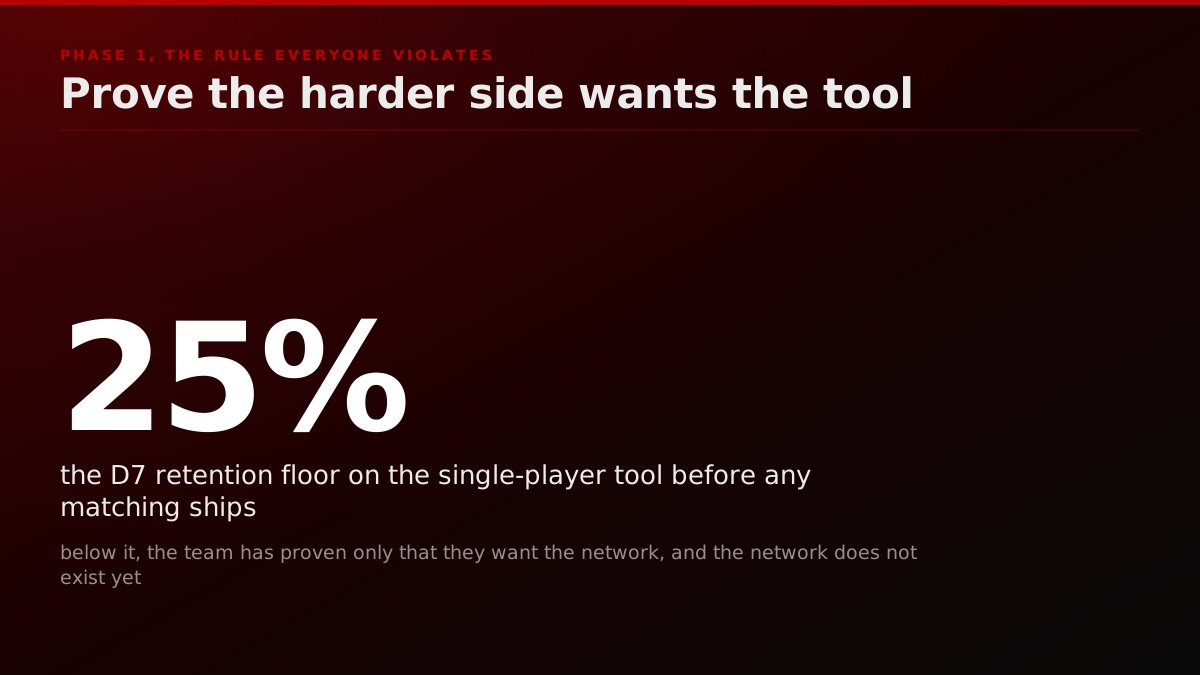
Phase 1 of 4: Single-Player Utility for the Harder Side
Phase one is the rule everyone violates. The harder side of the marketplace, almost always the supply side, has to receive something useful from the product before any matching exists. Not a promise of demand. A standalone tool that solves a concrete pain, the come for the tool, stay for the network pattern of seeding one side before the network exists. OpenTable did this in 2000 with electronic reservation books that worked even when zero diners had heard of the company. Honeybook did it for creative service businesses with proposal and contract software before it ever introduced the client-discovery layer. The pattern keeps working because the supply side keeps being the throttle, and a tool gives the harder side a reason to land on day one without depending on a side of the network that does not yet exist.
The phase one deliverable is a single-player feature with measurable retention on its own. Instagram's filter app retained without a social network. Patreon's email-tip-jar retained without browse-discovery. The phase fails when the founder builds the matching layer first and assumes supply will register to be matched against zero demand. Real signal: D7 retention on the single-player tool above an estimated 25% before any matching code ships. Below that, the team has not proven the harder side wants the tool, only that they want the network. The network does not exist yet, so the assumption is unfalsifiable, and the seed round burns on the wrong question.
Come for the tool, stay for the network.
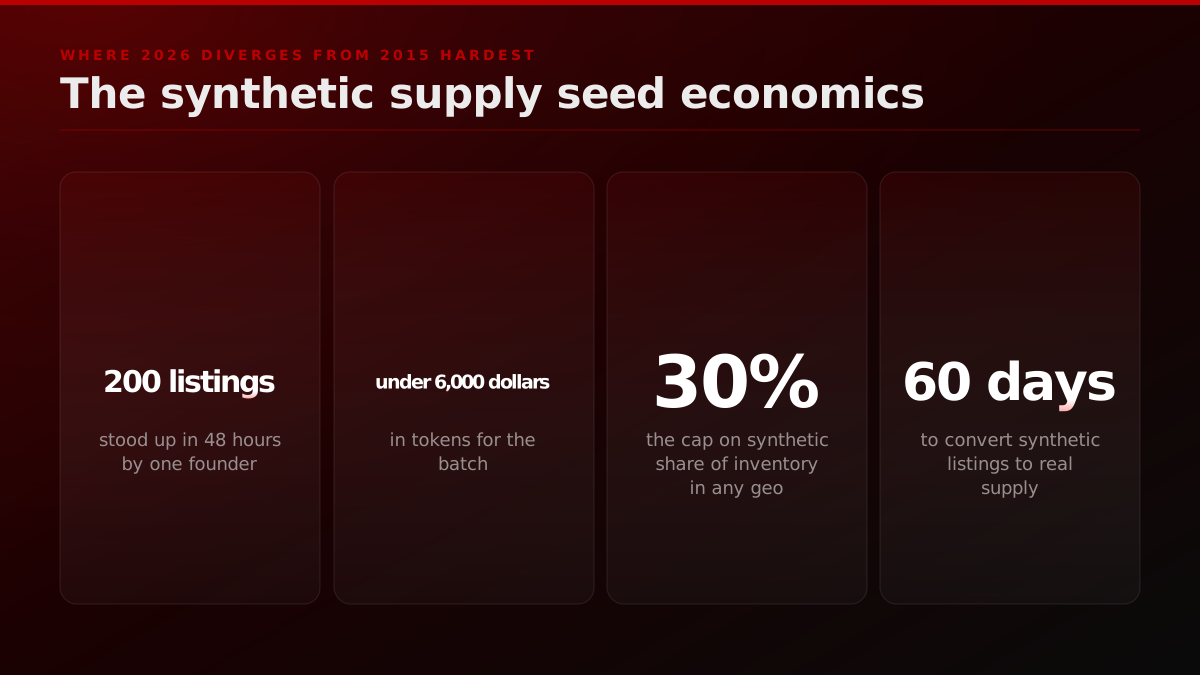
Phase 2 of 4: Synthetic or AI Supply Seed
Phase two is where 2026 diverges from 2015 hardest. Hand-curated supply seeding (Airbnb's photographer team, Lyft's W-2 drivers) cost six-to-seven figures and bought weeks not months of supply. AI-generated synthetic supply costs in a low-to-mid budget band and ships in days. Synthetic seed supply on freelance and vertical platforms has quietly gone mainstream as the tooling matured, and the toolchain is general: a competent founder can stand up 200 well-formed seller listings in 48 hours using a combination of GPT-class models for descriptions, image-generation for hero assets, and a verification loop the team runs by hand on the resulting batch.
The risk is the obvious one: synthetic supply that does not convert when buyers actually arrive damages trust irreversibly. The 2026 best practice mitigates by labeling synthetic listings (or routing them to a separate browse surface), capping synthetic supply at approximately 30% of total inventory in any geo, and converting them to real supply within 60 days using the demand signal the synthetic seed generated. The synthetic listings are scaffolding, not the building. Teams that treat them as the building ship a marketplace that looks alive at launch and dies inside 90 days when the first cohort of buyers asks for things the synthetic supply cannot deliver.
Operator note200 synthetic listings shipped in 48 hours for under 6,000 dollars in model tokens., FORKOFF phase-2 recipe, 2026
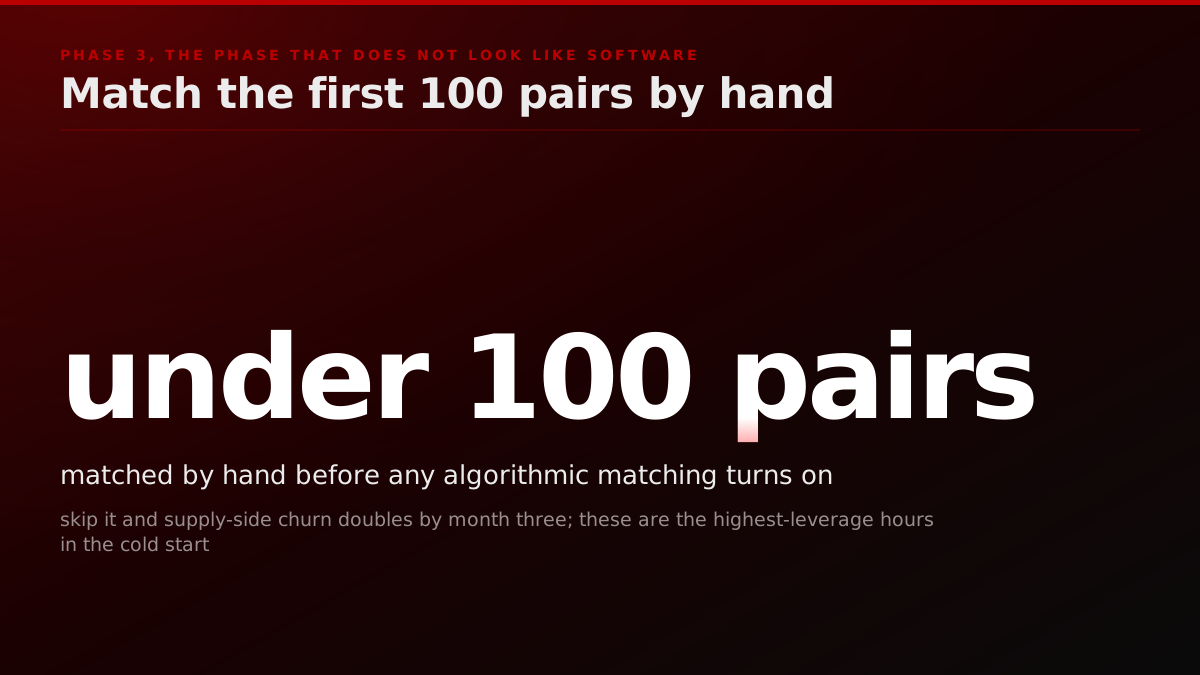
Phase 3 of 4: Concierge Matching at Under 100 Pairs
Phase three is the phase founders skip because it does not look like software. Until the marketplace has roughly 100 pairs of supply-and-demand transactions on the books, matching should be done by a human, ideally the founder. Manually matching the first dozen pairs surfaces every assumption the product team encoded wrong: the wrong filters, the wrong ranking signals, the wrong onboarding questions, the wrong pricing hints. Andrew Chen's framing of this is that the first 100 users teach you more than the next 10,000, which we link below. The reason concierge matching works is not that human matching scales (it does not) but that it produces the labeled training data the matching algorithm will need at phase four, and it produces it inside a feedback loop where every mismatch costs a founder twenty minutes rather than a customer churn.
The concierge phase fails when the team automates too early in pursuit of margin. The math looks bad on paper because founder hours are expensive and the matches are linear, but the alternative is shipping a matching algorithm trained on zero data and watching it produce mismatches that take real demand-side users out of the funnel for good. The right gate is roughly 100 successful pair-completions before any algorithmic matching turns on, and even after that the team should sample approximately 10% of automated matches and grade them weekly for the first six months. Marketplaces that ship with no concierge phase report twice the supply-side churn at month three, per FORKOFF audits.
The first 100 concierge pairs are the highest-leverage hours in the cold start
Across the 9 FORKOFF marketplace cold-start cases, teams that hand-matched their first 100 supply-and-demand pairs before enabling algorithmic matching reported roughly half the supply-side churn at month three of teams that shipped a matcher on zero labeled data. The concierge phase looks unpriceable on a spreadsheet, founder hours, linear throughput, no margin, but it produces the labeled training data the phase-4 matcher runs on. Andrew Chen, the author of The Cold Start Problem, frames it the same way: the first 100 users teach you more than the next 10,000, because the former is about product-market fit and the latter is about go-to-market.
Source: FORKOFF marketplace cold-start audits 2026 (n=9); Andrew Chen (@andrewchen), April 2026
Operator noteMarketplaces with no concierge phase reported 2x supply-side churn by month three., FORKOFF marketplace audits 2026
Phase 4 of 4: Network Flip at the 500-Pair Tipping Point
Phase four is the phase founders cannot force. Network effects flip when the marketplace's matching quality, given current supply density, is reliably better than the user's next-best alternative. In ride-share categories the threshold tends to land around 500 pair completions in a single geographic cell, in vertical SaaS marketplaces it tends to land around 500 closed transactions in a category. Below the threshold, the marketplace is competing on liquidity and losing; above it, the marketplace begins to be the default channel for the category and demand starts compounding without paid acquisition. Founders consistently misread this phase by trying to force the flip with paid acquisition before the supply density supports it, and they burn the late-seed or Series A round on demand-side spend that produces no retention.
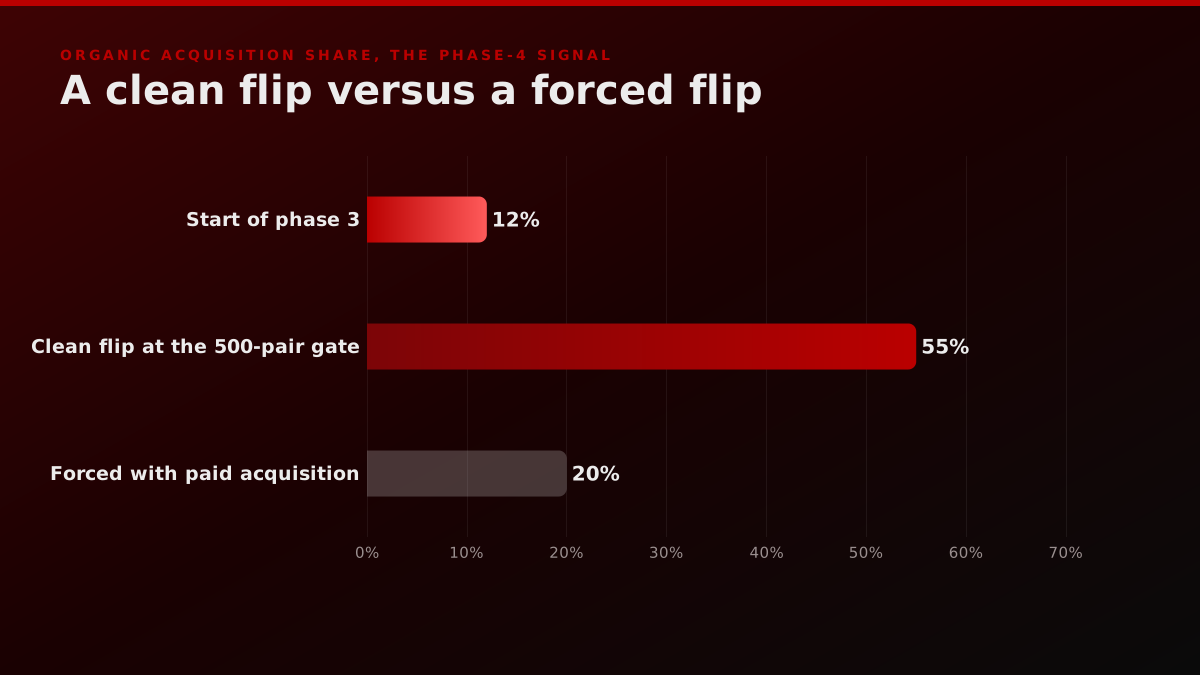
The phase-4 leading indicator is not GMV. It is the organic acquisition share of new buyers and new suppliers as a fraction of total weekly acquisition. Across the 9 FORKOFF audit cases, the marketplaces that crossed the network flip cleanly saw organic share climb from roughly 12 percent at the start of phase 3 to roughly 55 percent at the 500-pair gate, while marketplaces that forced the flip with paid acquisition saw the organic share stall at 18 to 22 percent and never compound. The reason is structural. Organic share is the proof of supply density; paid acquisition compensates for missing density but does not generate it. Founder teams that watch the organic share weekly catch the network flip the moment it lands and route subsequent paid spend into the next cell or category, where the next density build begins. Founder teams that watch GMV instead miss the flip signal by 30 to 60 days and route paid spend into the cell that has already flipped, which is wasted spend because the cell is already compounding organically.
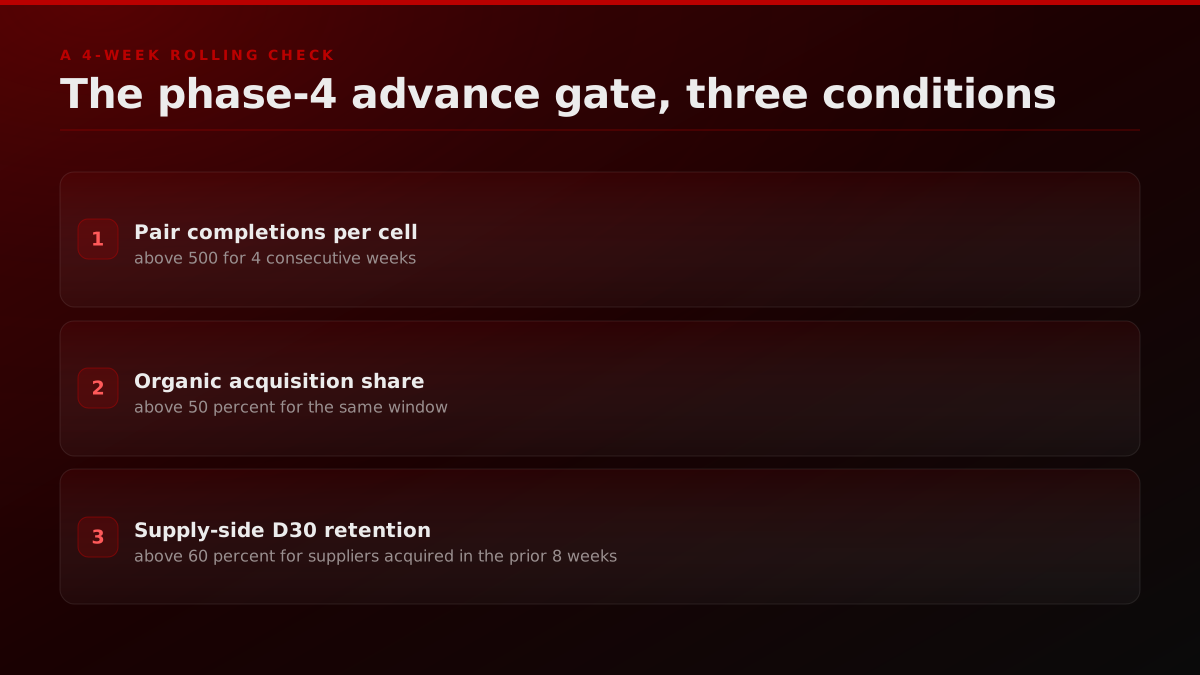
The phase-4 advance gate is a 4-week rolling check. Pair completions per cell or per category running above 500 for 4 consecutive weeks, organic acquisition share above 50 percent for the same window, and supply-side D30 retention above 60 percent for new suppliers acquired during the prior 8 weeks. All 3 conditions firing is the green light to expand paid acquisition into the next cell. Any 1 condition missing is the signal to hold paid spend on the current cell and continue concierge work to lift the missing variable. The FORKOFF marketplace audit retainer ships this 3-condition gate as a weekly dashboard row alongside the synthetic-to-real conversion ratio and the concierge-match grading queue from phase 3. The pattern across the 9 audited cases is consistent: marketplaces that operationalize the 3-condition gate compound through phase 4 cleanly, marketplaces that read GMV as the proxy ship the wrong spend at the wrong moment, and the burn-rate gap across a 6 month horizon runs 40 to 60 percent on the late-seed round.
andrew chen
@andrewchen
the first 100 users teach you more than your next 10,000 The former is about PMF, the latter is GTM. And of course you can learn a ton about GTM, but it's a more tractable problem particularly b2b
The 9 case studies behind the sequencer
The sequencer is not theory. Across nine marketplaces (Airbnb, Lyft, Instacart, Fiverr, OpenTable, Honeybook, Patreon, DoorDash, and a 2026 AI-native vertical we worked with under NDA) the survivors hit each phase gate before moving to the next, and the failures we audited skipped one of the gates. Airbnb's photographer program is the canonical phase 2 case; the founders did the photography by hand for the first 1,000 listings before hiring photographers, which functioned simultaneously as supply seeding (phase 2) and concierge matching at curation level (phase 3). Lyft's first-year per-city ramp was a phase 3 case dressed up as supply work: every market launched with a few founder-recruited drivers and the matching was effectively manual until ride volume crossed the cell threshold.
Fiverr is a useful public case for AI-native phase 2. Synthetic-supply seeding in new-geo launches on freelance platforms has become common practice, older than the tooling that now makes it cheap, and widely copied across vertical marketplaces. Instacart is the cautionary tale on cycle time: the company took 14 months per city to reach liquidity, almost entirely because the supply (shoppers) was hand-recruited and W-2-employed, which collapsed unit economics and stretched the per-city cold start to a length that the 2026 playbook cuts to roughly 90 days using a combination of synthetic seed plus 1099 supply rails plus AI-assisted onboarding.
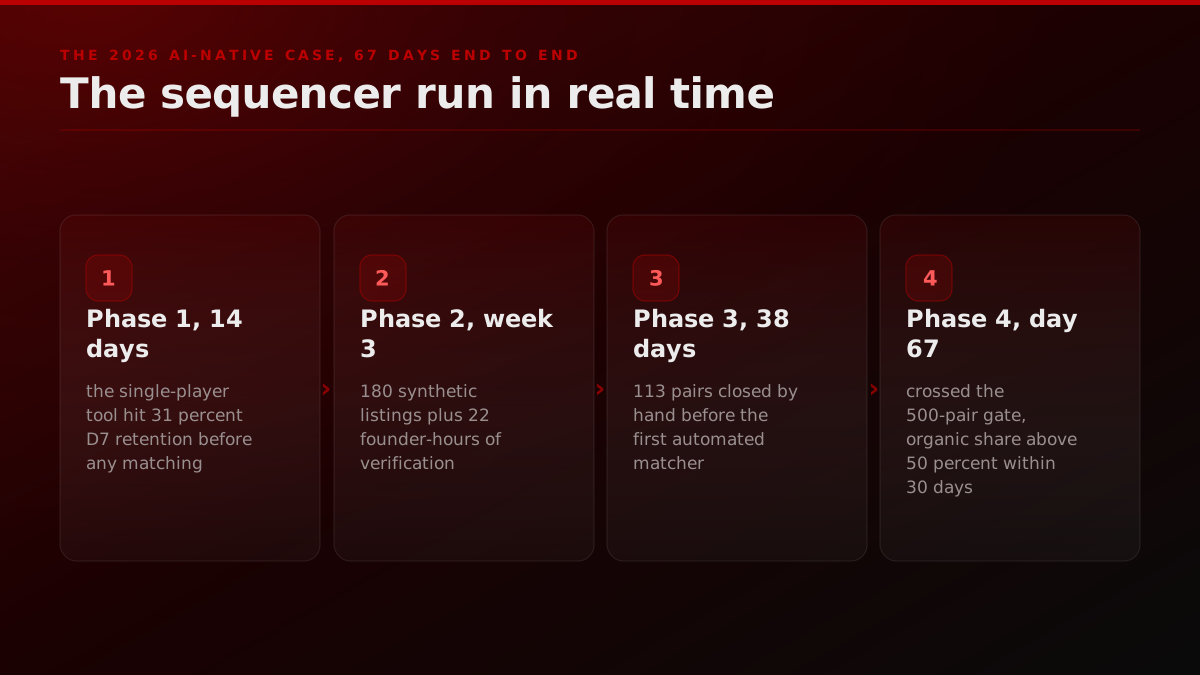
The 2026 AI-native case (a vertical specialist marketplace, NDA) hit liquidity in 67 days end-to-end. Phase 1 (single-player tool) ran for 14 days and reached an estimated 31% D7 retention before any matching shipped. Phase 2 (synthetic supply seed) generated 180 listings in week three at a total cost in a four-public-digit token band plus 22 founder-hours of verification. Phase 3 (concierge match) ran for 38 days and closed 113 pairs before the team enabled the first automated matching feature. Phase 4 (network flip) crossed the 500-pair gate on day 67 and the marketplace's organic acquisition share crossed an estimated 50% inside the next 30 days.
How to solve the Chicken-and-Egg Problem for marketplaces: Tinder, Airbnb, Uber.
molfar - product wise guys
Molfar walks through how Tinder, Airbnb, and Uber solved the chicken-and-egg problem: the empirical case base for the cold-start playbook.
Where founders consistently misread the sequencer
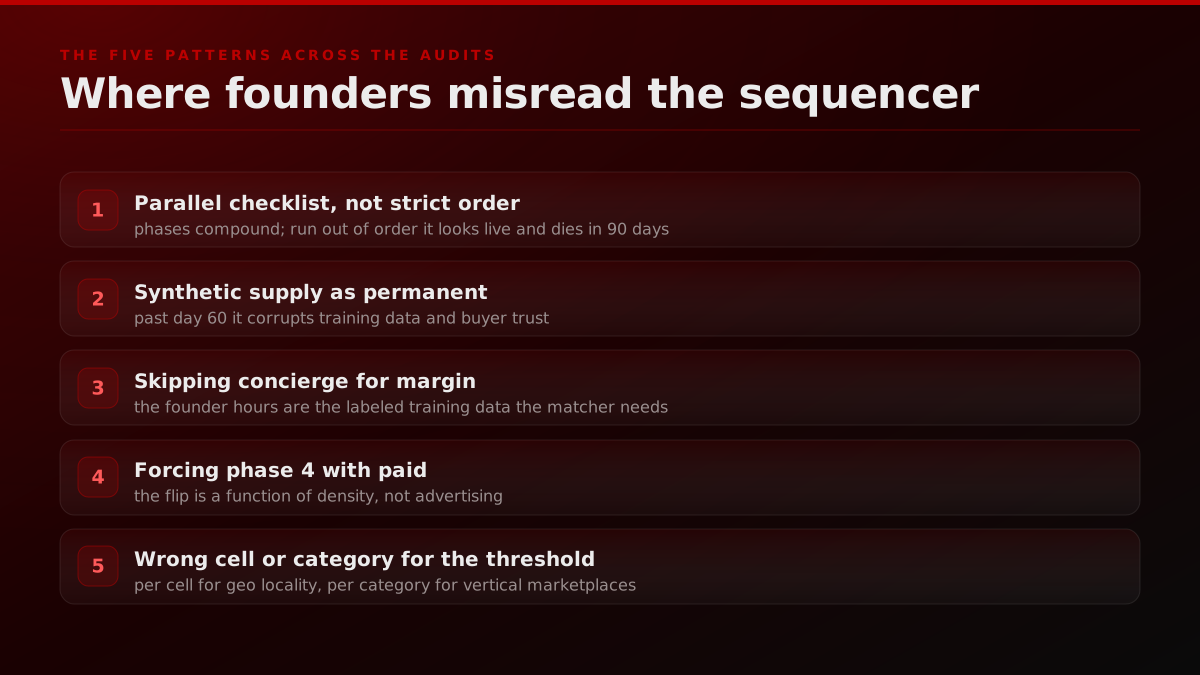
The misreads cluster into five patterns across the FORKOFF audits. First, treating the sequencer as a parallel checklist rather than a strict ordering. The phases compound; running them out of order produces a marketplace that looks live and dies inside 90 days when the deferred phase-1 question (does the harder side actually want this) catches up. Second, treating phase 2 synthetic supply as a permanent feature rather than scaffolding. Synthetic supply that survives past day 60 corrupts the data the matching algorithm trains on and damages buyer trust when the first review cohort lands. Third, skipping phase 3 because the founder hours look unpriceable. The founder hours produce labeled training data; algorithmic matching shipped without that data is undifferentiated and underperforms.
Fourth, forcing phase 4 with paid acquisition. The network flip is a function of density, not advertising. Paid acquisition before density only raises the bar for retention because the new arrivals see the same low-density marketplace the unpaid arrivals would have seen. Fifth, picking the wrong cell or category for the flip threshold. Marketplaces with strong geographic locality (ride-share, local services) need to hit the threshold per cell. Marketplaces with category locality (vertical SaaS marketplaces, talent marketplaces, niche e-commerce) need to hit the threshold per category. Treating these as the same number is the most common phase 4 error and it produces a national rollout that has zero density anywhere.
The adjacent motions matter too. The marketplace cold-start playbook compounds when the demand-side is instrumented for agent buyers (covered in the Agent-Ready Site Audit), when the team has a model-drop response that captures distribution from competitor launches (Model-Drop 48h Playbook), and when the founder voice is calibrated for the technical-buyer audience the early concierge phase relies on (Founder Funnel Strategy). Together these surfaces compound into a 2026 marketplace stack that does not look like the 2015 stack at any layer.
First month after launching my MVP (construction-tech marketplace).
Just want some feedback. Hello everyone, first post here... I am a Civil Engineer who recently completed a Software Engineering program to start bridging both worlds "construction and digital technology" . Ive just launched a B2B marketplace where users can rent and buy specialized construction machinery and tools. It's been… Show more
GMV trajectories across the 9 cases, phase by phase
The trajectories are useful because the absolute revenue numbers vary by category and geography, but the shape of the curve is consistent. Phase 1 produces effectively zero GMV by design; the single-player tool either has no transaction surface or has a flat-fee revenue line that does not compound. Phase 2 produces an artificial GMV bump from the synthetic seed if any of the seeded listings begin attracting demand, but the founder team should not count this as real GMV until the synthetic listings are converted to actual supply. Phase 3 produces the first real GMV curve, and the shape is almost always linear rather than exponential, because the founder is rate-limited on concierge throughput. The phase-3 GMV line is the most reliable signal that the marketplace is functioning at all, even if the absolute number stays small for weeks.
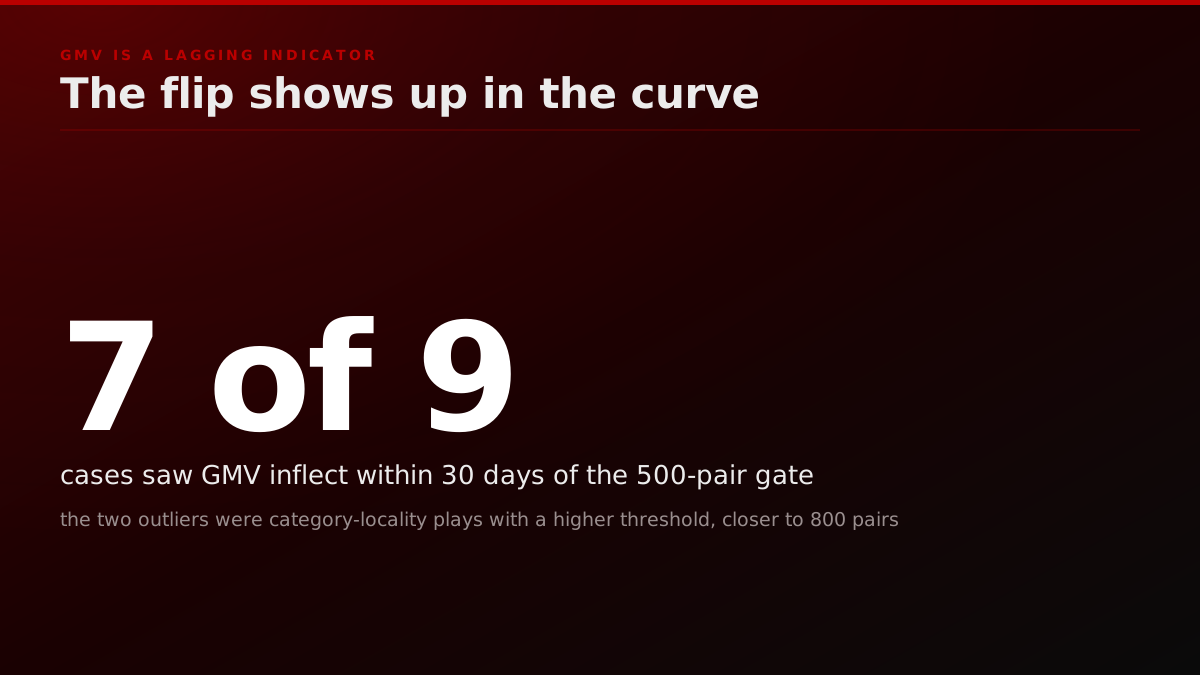
Phase 4 is where the GMV curve bends. Across the 9 cases, the GMV inflection landed within 30 days of the 500-pair gate in seven of nine marketplaces, with the two outliers being category-locality plays where the gate threshold was higher than 500 (closer to 800 in one B2B case). Airbnb's New York trajectory is the canonical reference, with the city's GMV doubling every quarter for six consecutive quarters once the supply density passed the local threshold. DoorDash's per-city trajectories follow the same shape with shorter cycle times because the AI-assisted onboarding loop the team built collapsed the per-city ramp from Instacart's 14 months to roughly 4 months. The 2026 AI-native case we worked under NDA followed the same curve faster, crossing a one-public-month GMV milestone 38 days after the network flip, then doubling that figure 30 days later.
The lesson the curve teaches is that GMV in the cold-start window is a lagging indicator. Founders that report on GMV weekly during phases 1 through 3 are reading noise, because the variable that determines the GMV slope is the supply density that gets locked in during those phases. The reporting cadence FORKOFF installs with marketplace retainers tracks pair-completion velocity, supply-side D30 retention, and the synthetic-to-real conversion ratio as the leading indicators, with GMV as the lagging confirmation. Marketplaces that flip the dashboard (GMV at the top, density indicators buried) tend to make the wrong product decision when GMV stays flat for the first 60 days, because flat GMV is the expected shape and reacting to it with paid acquisition burns the supply density before it ever forms.
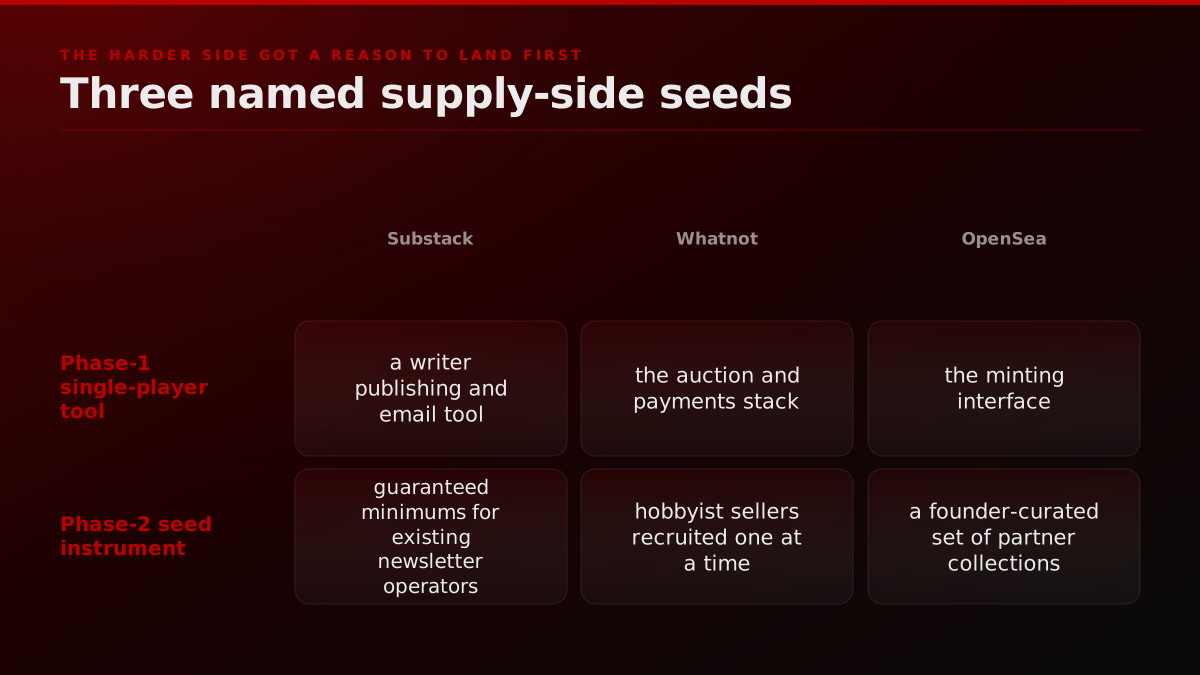
Three named cases on what supply-side seeding looks like in 2026
Three cases anchor the supply-side seeding pattern beyond the Fiverr example. Substack is the first; the company seeded the writer side in 2018 by funding a small cohort of pre-existing newsletter operators with guaranteed minimums, which functioned as a phase-2 paid supply seed (not synthetic, but solving the same cold-start problem with a different instrument). The pre-existing audiences the seeded writers brought with them collapsed the demand-side cold start because the writers' subscribers landed on the platform on day one. The 2026 version of the same play uses synthetic-seed supply rather than paid existing-creator supply, because the unit economics have shifted, but the structural move (give the harder side a reason to land before matching exists) is identical.
The second case is Whatnot, the live-shopping marketplace. The team seeded the seller side by recruiting trading-card hobbyists who were already livestreaming on other platforms, providing them with a vertical-specialist set of tools (auction primitives, payment rails, audience analytics) that the general-purpose platforms did not offer. The phase-1 single-player utility was the auction stack itself, which retained sellers even before buyer density formed. The phase-2 seed was the founder cohort of hobbyist sellers, recruited one at a time through direct outreach. The 2026 retelling of this story would substitute AI-generated catalog supply for some fraction of the founder-recruited supply, but the phase ordering and the single-player tool would stay the same.
The third case is OpenSea in its pre-NFT-boom years, where the supply side (creators) needed a tool to mint and list NFT collections before any buyer demand existed in the category. The phase-1 utility was the minting interface itself, which had standalone value for creators experimenting with the technology even when the platform's collection-discovery layer was empty. The phase-2 seed was a small founder-curated set of partner collections that gave the browse surface enough density to be navigable. The phase-4 flip happened during the 2021 cycle when category demand exceeded supply by orders of magnitude, but the structural pattern (phase 1 utility, phase 2 curated seed, phase 3 concierge curation, phase 4 algorithmic flip) ran in the canonical order, which is one of the reasons OpenSea captured a disproportionate share of the early-cycle GMV versus competitors that shipped algorithmic discovery before any seed cohort existed.
How the demand side gets activated in 2026
The demand side activation playbook has shifted as well, and the shift is downstream of the agent-buyer pattern. In 2015 a marketplace launched its demand side through a combination of paid search, content SEO, and a referral loop, with the loop closing inside Google's discovery surface. In 2026 the discovery surface fragments across Google, ChatGPT, Claude, Perplexity, and a growing set of vertical agent loops, and a marketplace that does not pre-instrument for the agent intermediary loses the discovery channel before any human ever sees the listing. The activation playbook FORKOFF installs treats agent-readiness as a phase-1 prerequisite (the single-player tool must produce a structured listing surface that an agent can crawl) and treats human-readable surfaces as a phase-3 priority that lights up alongside concierge matching.
The mechanics matter. Every supply-side listing produced during phase 2 has to ship with structured metadata that an agent can parse without rendering JavaScript, which means server-rendered HTML with schema.org annotations rather than a single-page application that requires execution. Every demand-side query has to be addressable by a stable URL that an agent can hand back to a buyer as a citation, which means the search surface has to produce permalinks rather than session-only result URLs. The marketplaces that miss these primitives end up with a supply base that is invisible to the agent layer, which means an increasing fraction of the demand-side discovery flow routes around the platform rather than through it. The agent-readiness gap closes faster than founder teams expect, because the agent vendors are iterating on retrieval quality every quarter, and the marketplaces that are agent-ready on day one capture compounding share that agent-blind marketplaces never recover.
The second mechanic is the referral surface. The 2015 referral loop closed through email and social shares; the 2026 referral loop additionally closes through agent-mediated recommendations, where a buyer asks an agent for a recommendation and the agent surfaces the marketplace as the canonical answer for the category. The marketplaces that earn this surface treatment are the ones with the most structured-data depth, the most third-party citation density, and the most reliable retrieval fingerprint across the agent vendors. The referral coefficient FORKOFF measures in 2026 retainers treats agent-mediated referrals as a separate column from human-mediated referrals, because the conversion characteristics differ (agent-mediated arrivals tend to be higher intent and higher AOV in the categories we have measured), and the optimization levers differ as well.
How the 2026 AI supply seed actually works in practice
Phase 2 is the phase that most distinguishes the 2026 sequencer, and the operating recipe is concrete enough to detail. Step one is a category seed brief: the founder writes a single-page brief describing the ideal supply listing in the chosen category (skills, geography, hourly rate band, sample portfolio, voice). Step two is a generation pass against a frontier model with the brief plus a list of 30 to 50 archetypes to vary across. The generation produces structured listings (title, description, tags, hourly rate, portfolio summary). Step three is image generation for hero assets, with explicit constraints on consistency so the listings look like they came from a single platform.
Step four is the verification loop. The founder reviews every generated listing, kills the ones that read as generic, edits the ones that need pruning, and rewrites portfolio descriptions to add concrete detail. This is the step that distinguishes a credible synthetic seed from a low-quality one. A 200-listing batch typically takes 18 to 28 founder hours plus a four-public-digit token + image-gen cost band end-to-end. Step five is the labeling: every synthetic listing gets a small visual indicator (a different badge, a different border) so the demand side can self-select if they want only verified human supply, and so the team can convert specific synthetic listings to real listings as supply applicants land.
Step six is the conversion playbook. Every synthetic listing that produces a buyer-side click or inquiry becomes a target for outreach: the team posts a short description of the work the synthetic listing was attracting and uses it as a recruiting pitch on the supply side. By day 60, the synthetic share should be falling, replaced one-for-one with real supply that matches the demand patterns the synthetic seed surfaced. Marketplaces that skip the conversion playbook end up with a permanent synthetic share that corrupts trust; marketplaces that run it well end up with a supply base that is weighted exactly toward the demand the early platform attracted.
The Hacker News question keeps surfacing across cohorts; the most recent Ask HN cold-start thread from this week is a near-verbatim repeat of the 2015 question, which is the clearest evidence the question outlives any single playbook. The 2026 answer is not the 2015 answer, and founders relying on the older one ship a marketplace that looks plausible at launch and breaks at the supply-side gate. The canonical book on the topic, Andrew Chen's The Cold Start Problem, frames the network-flip threshold the same way our phase 4 does. For more adjacent reading, the broader hub is FORKOFF Founder Growth and the developer motion that compounds with marketplace cold start is in the developer marketing strategy guide. Lenny Rachitsky's marketplace deep-dives at Lenny's Newsletter are the running operator commentary on the same patterns.
The Bottom Line
The two-sided marketplace cold start is the hardest problem in GTM, and it sits on the marketing foundation every launch needs before growth compounds. The 2026 playbook is not the 2015 playbook. AI-generated supply replaces hand-curated supply at one tenth the cost. Agent buyers have entered the demand side and the marketplace has to be agent-readable before it is human-readable. The 4-phase sequencer (single-player utility, synthetic supply seed, concierge matching, network flip) compounds when run in order and breaks when phases are skipped. Across 9 case studies the survivors hit every gate; the failures we audited skipped one. The order is the load-bearing variable.
The marketplaces winning in 2026 are the ones that resist the founder instinct to skip phase 1 (because the matching algorithm is more interesting to build) and resist the investor instinct to skip phase 3 (because founder hours are expensive). They cap synthetic supply at 30%, convert it to real supply inside 60 days, and let the network flip happen on density rather than forcing it with paid acquisition. They cross the 500-pair gate inside 90 days for AI-native categories and inside 6 months for the harder geographic-locality categories. Running the sequencer well is a founder-led GTM discipline, not a growth hack.
If the marketplace is sitting at phase 1 and the team is wondering whether to ship the matching algorithm next, the answer is no. Ship the standalone tool that gives the harder side a reason to land. The matching layer waits for the data the concierge phase will produce. The order is the recipe.
For the full picture, see the founder-led growth playbook.
For deeper cross-pillar context, see the clipping infrastructure that signals supply density.


![How to Make a Launch Go Viral on X: The 5-Lever Playbook [2026]](/blog/covers/how-to-make-launch-go-viral-on-x-2026-cover.jpg)