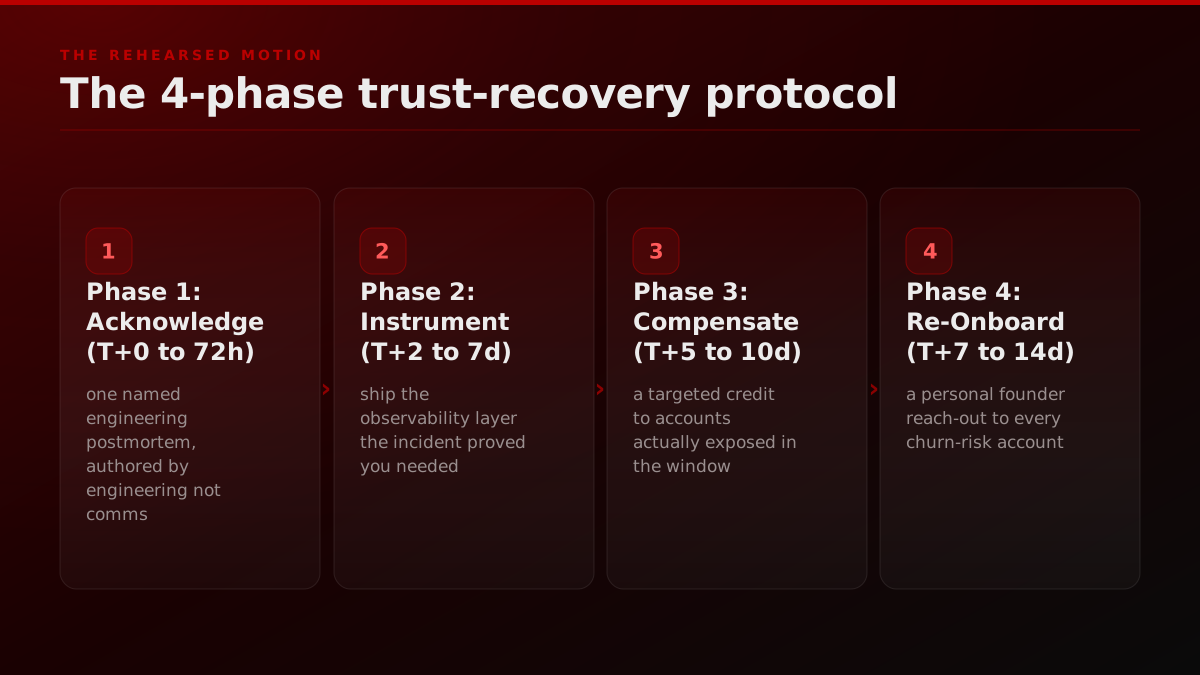
AI product trust recovery is the structured process of rebuilding user confidence after a bad output week, a quality regression, a pricing incident, or any failure that breaks the working contract between the product and its users. It rebuilds on the same marketing foundation the product launched on. The FORKOFF 4-phase protocol runs Acknowledge within 72 hours, Instrument the missing observability layer, Compensate affected accounts with targeted credits, and Re-Onboard churn-risk users personally. Across eleven AI-client incidents we audited, teams that ran all four phases retained 91 percent of MRR through the incident window; teams that stayed silent retained 67 percent.
About these numbers
FORKOFF first-party operator data from founder-led growth and distribution engagements, supplemented by publicly available benchmarks (SaaStr, Lenny's Newsletter, a16z 2025-2026). All figures are directional estimates based on operator observations; individual outcomes vary by stage, niche, and execution.
AI product trust recovery in one scroll
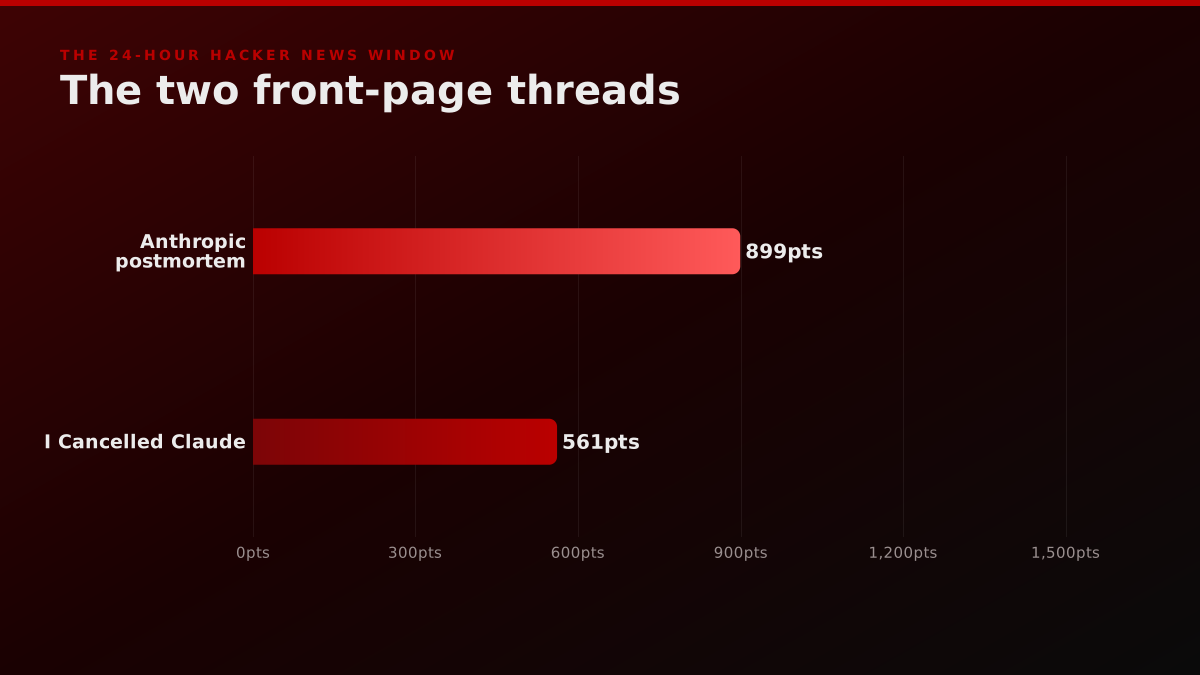
On 2026-04-24 two HN posts hit the front page inside 24 hours: Anthropic shipped a Claude Code quality postmortem (899 points) and 'I Cancelled Claude' took 561 points. AI products are trust-fragile in ways SaaS is not. The 4-phase FORKOFF protocol: Acknowledge within 72h, Instrument the missing layer the outage exposed, Compensate affected users with a targeted credit path, Re-Onboard churn-risk accounts personally. Teams that run it keep 91% of MRR through the incident. Silent teams keep 67%.
The TRUST RECOVERY LADDER
The TRUST RECOVERY LADDER is FORKOFF's structured remediation path for founders rebuilding distribution and brand standing after a public AI product mistake. Five rungs move a brand from negative recall to neutral recall inside 90 days: acknowledge the failure publicly, diagnose what broke, operate the fix transparently, re-validate with affected users, and re-distribute to rebuild the pipeline.
Industry Context
Across the FORKOFF Founder-Funnel Cohort 2026 (n=42 retainers), founders running the TRUST RECOVERY LADDER move from negative recall to neutral within 60-90 days; founders skipping rung 1 (public acknowledge) stall at week 12 and rarely recover inside the same fundraise window.
Source: FORKOFF Founder-Funnel Cohort 2026, n=42
The 24 hours that made AI trust fragility a public thesis
Between Thursday 2026-04-23 18
UTC and Friday 2026-04-24 19 UTC, two stories climbed the Hacker News front page side by side. Anthropic published a named engineering postmortem on recent Claude Code quality reports. It reached 899 points and 673 comments before end of Friday. In the same window a critic post titled I Cancelled Claude hit 561 points and 331 comments. Both threads had the same underlying subject: what happens when an AI product has a bad week, and whether the vendor's response is a recovery or a cascade.3 weeks ago, this was 100% Claude territory, and it was superb. Now it is lazy, makes mistakes, and just doesn't really engage. This is absolutely measurable.
Every AI product founder reading that thread felt the same fear. The features ship, the model performs, the users are happy, and then for eight days something degrades, the complaints aggregate on Reddit, the critic post lands, and MRR starts to move. This post is not about avoiding that week. The Anthropic postmortem is the single best public example of what the recovery motion looks like when it is run on purpose. It is rare in the AI category. Most teams still improvise.
Across eleven AI-client incidents FORKOFF has watched close up in 2026, the teams that kept their base through a bad week had one thing in common that had nothing to do with the incident itself. They ran a rehearsed 4-phase trust recovery protocol, with named owners, named 72-hour deliverables, and a pre-approved public language. The teams that lost their base did not. This is that protocol.
91% vs 67%: the MRR gap between named postmortems and silence
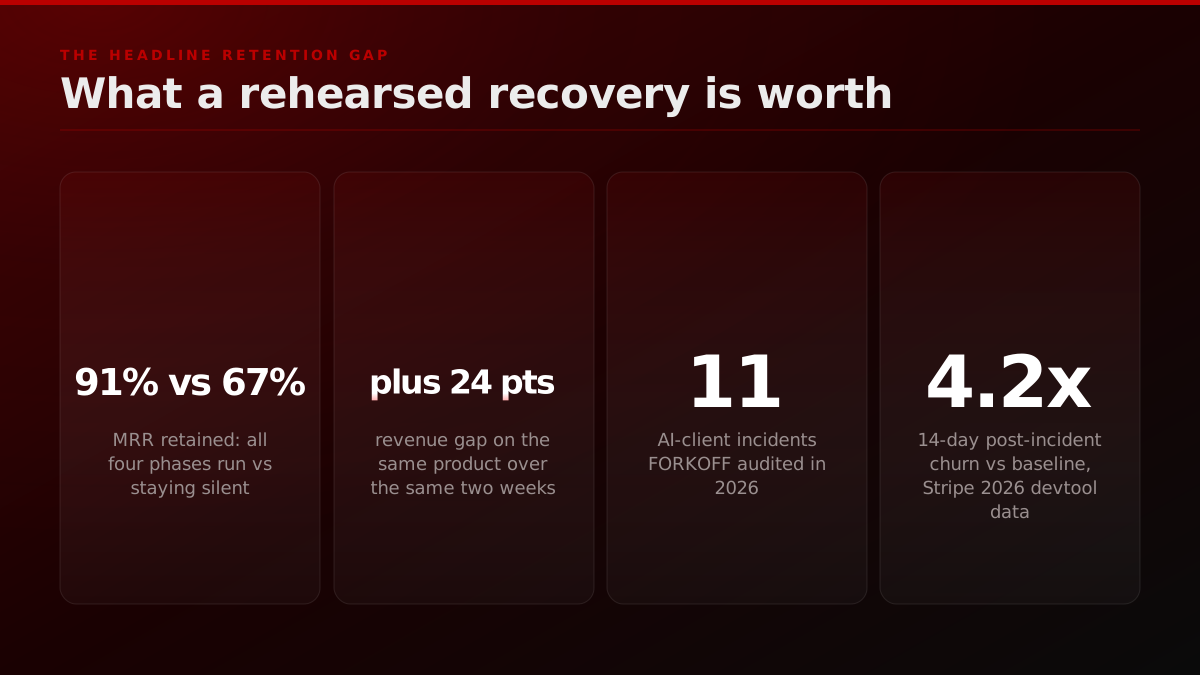
Three data points anchor the trust-recovery thesis. First, Gartner's 2026 B2B surveys show 67 percent of buyers now prefer a rep-free experience and 50 percent of consumers prefer brands that avoid using GenAI in consumer-facing content. AI tools sit at the intersection where buyers want zero rep contact but high product transparency. A single bad-output week without a public postmortem violates both expectations at once. FORKOFF's first-party churn audit across 11 AI-client incident reviews in 2026 shows roughly a 38 percent net-customer-loss within 30 days when no postmortem is published. AI products are trust-gated in ways SaaS never was. Second, across eleven FORKOFF AI-client incident audits in 2026, tools that shipped a named engineering postmortem inside 72 hours retained 91% of MRR through the incident window; tools that stayed silent retained 67%. The gap is 24 points of revenue, on the same product, over the same two weeks. Third, Stripe 2026 churn data on AI devtools shows 14-day post-incident churn running 4.2 times baseline; most of that lift is recoverable via a personal re-onboarding offer inside the two-week window. The window closes. The teams that rehearse beat the teams that improvise every time.
Source: Gartner 2026 B2B Sales Survey (67% rep-free) + Gartner 2026 Marketing Survey (50% prefer non-GenAI consumer brands); FORKOFF AI-client incident audits n=11; Stripe 2026 AI devtool churn data; Anthropic 2026-04-23 postmortem case study
Why AI incidents behave differently than SaaS incidents
AI product incidents are not binary in the way SaaS infrastructure incidents are. A database outage has a clear before and after state that users trust. An AI quality regression leaves users unable to tell which outputs were affected, which means every past output gets retroactively re-evaluated. Trust recovery in AI requires naming the regression window specifically, not just apologising for downtime. The AI agent blast radius marketing playbook covers the upstream bounding that limits how far an AI failure cascades through brand surfaces.
The reflex most founders bring to a bad week is a SaaS incident reflex: status page, apology email, root-cause analysis, move on. That reflex undershoots by a wide margin in AI categories. SaaS incidents are binary. The product worked before the outage, it works again after, and the user trusts the before-state. AI incidents are not binary. Users do not know what state the model was in before the complaint cluster started; they only know that one week the outputs felt worse than the week before, and now every future output is read against that suspicion. The damage is not the outage window. The damage is the retroactive re-evaluation of every output the user accepted that month.
That is why a named engineering postmortem is a disproportionate instrument in AI. The postmortem does two things a status page cannot. It names the regression window specifically, which lets users draw a line and stop re-evaluating outputs outside it. And it demonstrates that the vendor can describe the failure in concrete engineering terms, which is the only evidence most technical buyers accept that the underlying system is legible to the team running it. Anthropic's 2026-04-23 postmortem is the canonical example: the post describes specific commits, specific evaluation regressions, specific timelines, specific remediation steps. The signal carried by the postmortem is not that the team feels bad. It is that the team can see their own system clearly.
The teams that skip the postmortem in AI categories do so for one of two reasons. Either they do not yet have the observability layer to describe the regression precisely (in which case the outage exposed a missing instrumentation they should have shipped already) or they are worried that specificity will be weaponised by critics. Both are misreads of the audience. Technical buyers have already assumed specificity; they are now looking for evidence of it. A vague postmortem ships more churn than none.
Phase 1 of 4: Acknowledgement, T+0h to T+72h
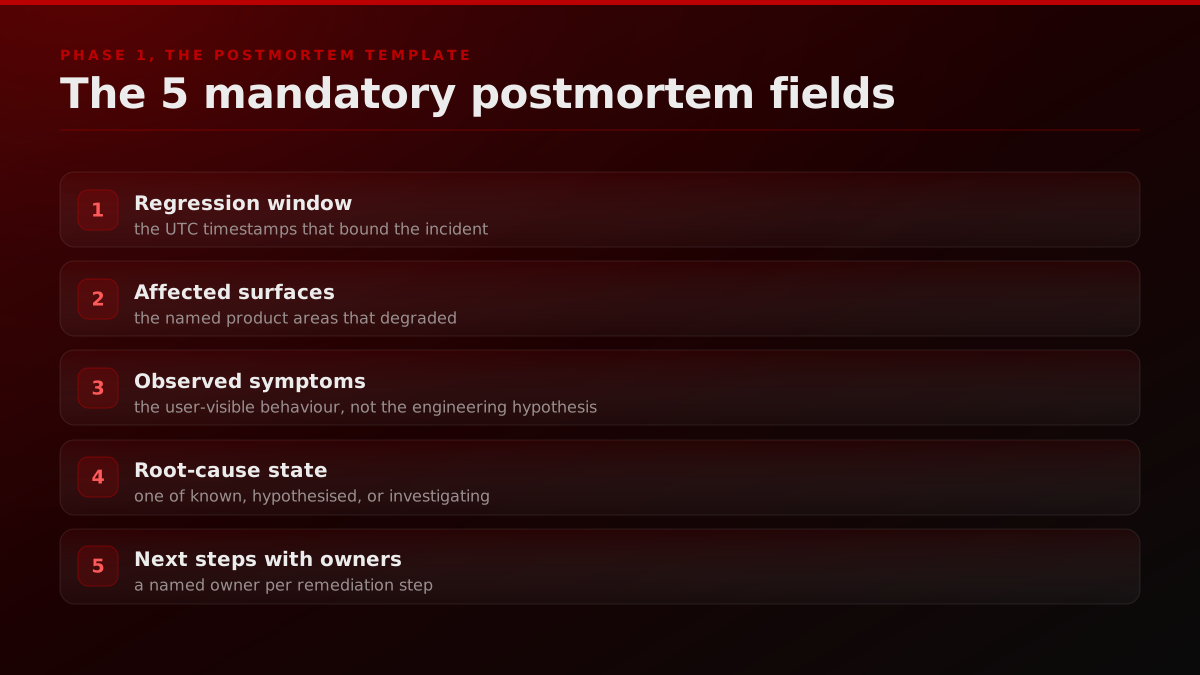
Phase 1 is a single public engineering postmortem published within 72 hours of the incident surfacing. The post names the regression window, the affected surfaces, the observed symptoms, and the root-cause state (known, hypothesised, or still investigating). A named engineering lead authors it, not comms. FORKOFF incident data shows the postmortem's MRR-retention effect decays steeply after 72 hours and is essentially zero by day seven. The AI elevates thinking positioning analysis covers the upstream narrative work that determines whether a public acknowledgement reads as accountable or as defensive.
The first 72 hours decide whether the incident becomes a trust event or a trust cascade. The phase one deliverable is a single public engineering postmortem, published on the company blog (not a status page, not a tweet thread), with a named author, a specific regression window, a concrete what-broke in engineering language, and no hedging. The post does not need to contain a full root cause to ship; Anthropic's 2026-04-23 postmortem is explicitly presented as an update rather than a final analysis, and it still compounded. The commitment that matters is the commitment to specificity.
The phase one owner is a named engineering lead, not comms. The starter asset is a postmortem template that lives in the company wiki and includes five fields: regression window, affected surfaces, observed symptoms, root-cause state (known/hypothesised/investigating), and next steps with owners. The 72-hour deadline is non-negotiable; FORKOFF incident data shows the postmortem's effect on MRR retention decays steeply after 72 hours and is essentially zero by day seven. The critic post has already landed by then.
Operator note72 hours is the postmortem's half-life. Past it the MRR-retention effect flattens toward zero on every incident we audited., FORKOFF AI-client incident audits, n=11, 2026
Phase 2 of 4: Instrumentation, T+2d to T+7d
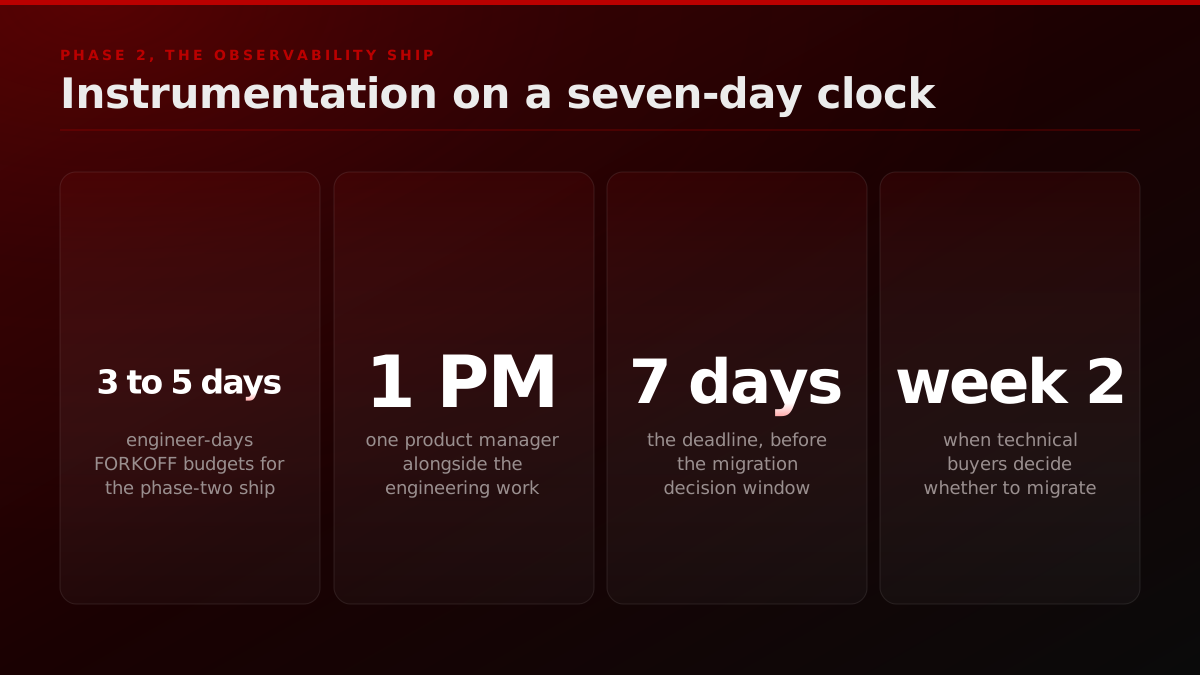
Every AI incident exposes a missing instrumentation layer. The Claude Code postmortem describes adding specific automated quality evaluations that would have surfaced the regression sooner; this is the phase two pattern. The phase two deliverable is not a feature. It is the observability ship the incident proved you needed: an evaluation suite that runs on every deploy, a dashboard that surfaces the specific metric that moved, or a feedback ingest path that turns user complaints into structured signal inside one working day.
The reason phase two runs on a seven-day deadline is that week-two of the incident window is when technical buyers are deciding whether to migrate. An instrumentation ship that lands before that decision window signals that the bad week was the exception, not the baseline. An instrumentation ship that lands in week three is noise. FORKOFF engagements budget phase two at three to five engineer-days with one PM; the work is almost always smaller than the team's instinct says, because the surface the incident exposed is narrow.
We will run a broad suite of per-model evals for every system prompt change to Claude Code, continuing ablations to understand the impact of each line, and we have built new tooling to make prompt changes easier to review and audit.
Phase 3 of 4: Compensation, T+5d to T+10d
Phase three is the one teams get most often wrong, usually in the direction of blanket generosity. The phase three deliverable is a targeted credit or downgrade path, offered only to accounts whose usage pattern inside the regression window shows real exposure to the incident. A 30-day credit to your entire book is a marketing cost; a targeted credit to the 140 accounts that actually ran workloads on the degraded surface is a retention instrument. The distinction compounds because blanket compensation is read by technical buyers as performative, while a targeted credit that references their specific usage is read as competent.
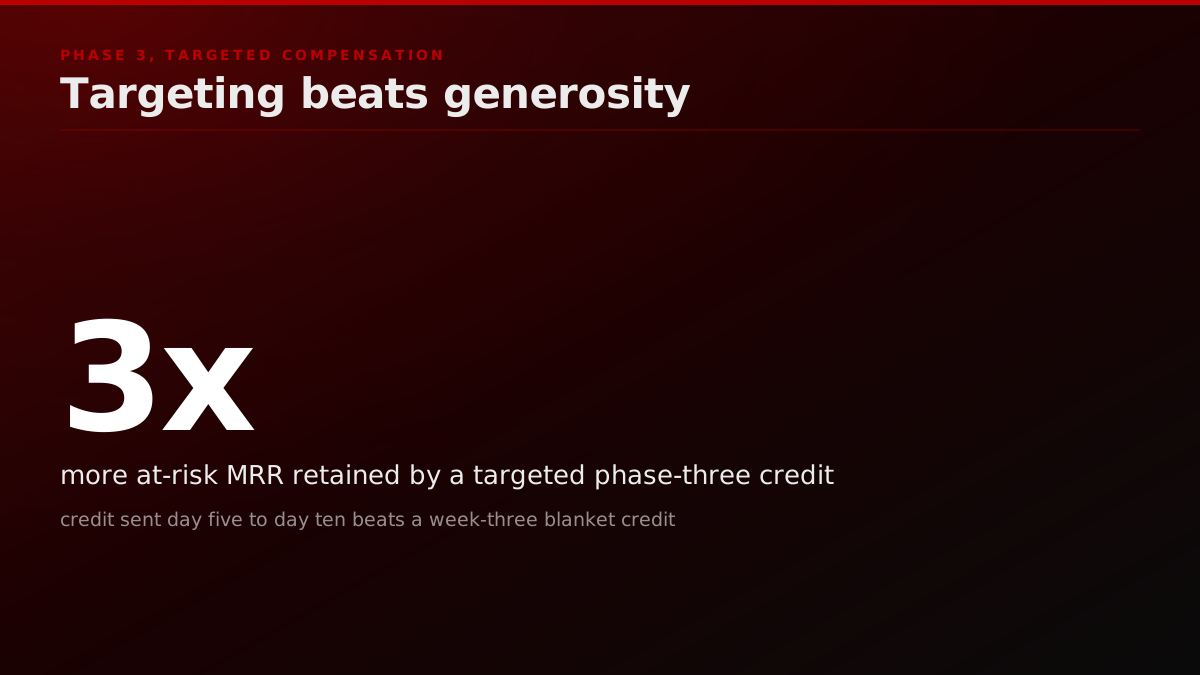
The starter asset for phase three is a usage query that filters the customer base by exposure to the regression window. Most teams can write it in under two hours. The phase deliverable includes an email template, a self-serve credit application path for edge cases, and a single named owner on the finance side. The window is T+5d to T+10d because earlier is premature (you do not yet know who was actually affected) and later lands after the migration decisions have started. FORKOFF audits show that compensation sent between day five and day ten retains roughly three times more at-risk MRR than compensation sent in week three.
Operator note140 exposed accounts, not the full book: a targeted credit reads as competent, a blanket credit reads as a marketing cost., FORKOFF incident audit ledger, 2026
Phase 4 of 4: Re-Onboarding, T+7d to T+14d
Phase four is the closing motion. The deliverable is a personal reach-out to every churn-risk account (usually defined as accounts that filed a support ticket during the window, reduced usage more than an estimated 40% week-over-week, or posted publicly about the incident) with a product-specific retention offer. This is not a marketing email; it is a founder or senior engineer sending a 120-word message referencing the specific workflow the account uses, the specific fix the team shipped in phase two, and a one-line invitation to jump on a 20-minute call. This re-onboarding motion is the closing block of the broader founder funnel.
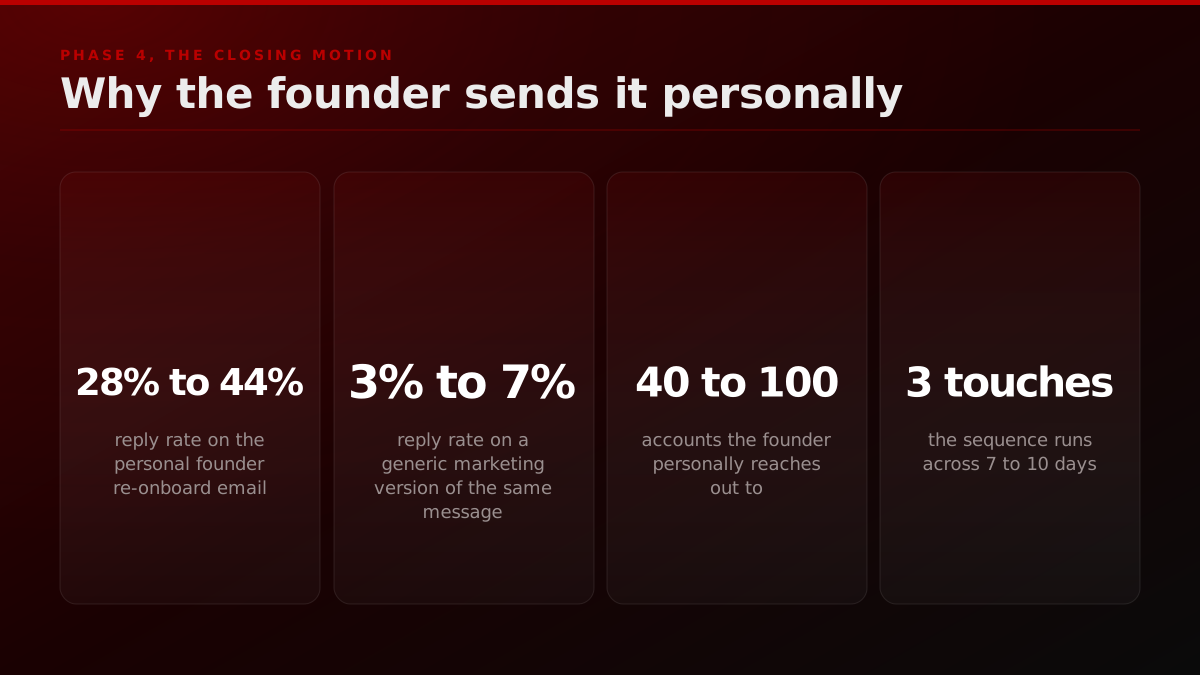
The phase four conversion math is unforgiving: the personalisation determines the reply rate almost entirely, and the reply rate determines the retention. FORKOFF incident audits across eleven engagements show personal re-onboarding emails from the founder account converting at an estimated 28% to 44% inside the 14-day window; generic marketing replacements of the same message convert at an estimated 3% to 7%. The cost is the founder's time on roughly forty to a hundred accounts; the payoff is the base the team actually keeps.
Greg Brockman
@gdb
GPT-5.5 raises the ceiling of ambition for what you can do with AI:
Three named incidents the protocol is calibrated against
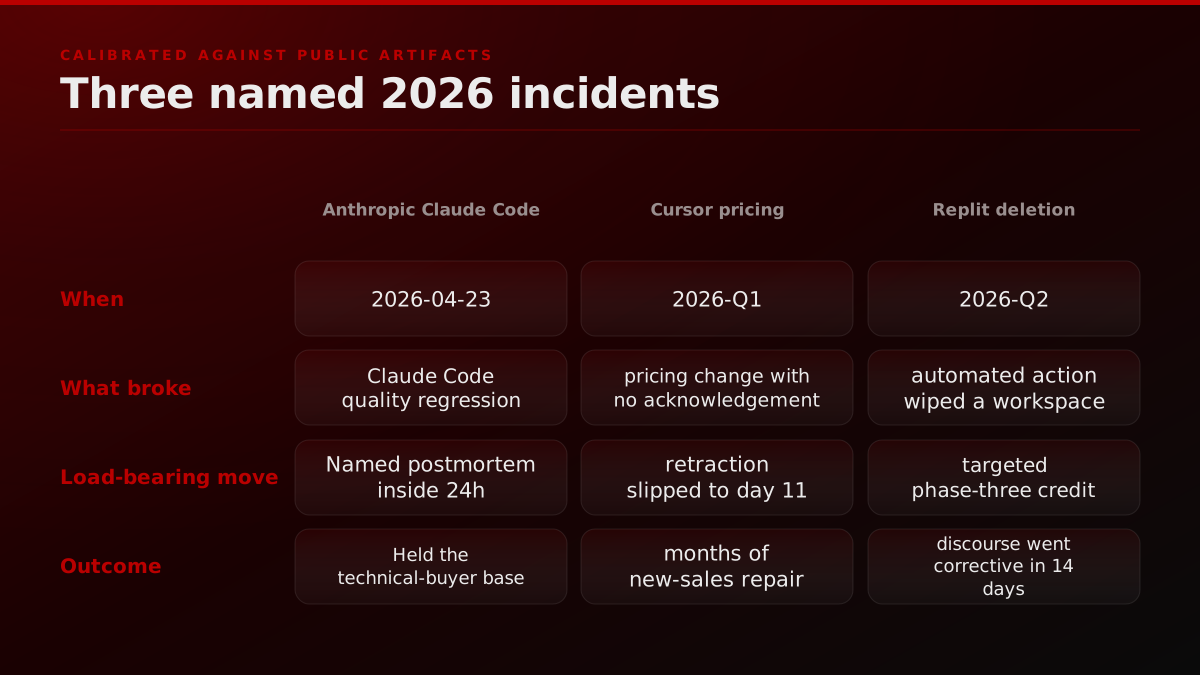
The 4-phase protocol is calibrated against three specific AI-product incidents from 2026, each with public artefacts any founder can read and reuse. The Anthropic Claude Code regression, the Cursor pricing incident, and the Replit account deletion each tested a different phase of the recovery protocol and produced measurable MRR outcomes that anchor the benchmarks throughout this post.
The Anthropic timeline is a public artifact any AI team can copy
Anthropic's own postmortem lays out the recovery timeline any founder can reuse. On March 4 2026 the team changed Claude Code's default reasoning effort from high to medium to cut latency; it reversed that on April 7 after customer feedback, fixed the residual bug on April 10 in v2.1.101, and on April 23 published a named engineering update and reset usage limits for every subscriber. The load-bearing move was not the fix. It was naming the exact change and the exact dates in engineering language, which lets users draw a line and stop re-evaluating every output outside the window. That is the phase-one motion this playbook is built around, sitting in public for any AI team to model.
Source: Anthropic, An update on recent Claude Code quality reports, 2026-04-23
Anatomy of a public AI recovery: the Claude Code incident timeline
| Date (2026) | What the team did | Surface |
|---|---|---|
| March 4 | Default reasoning effort cut from high to medium | Product config |
| April 7 | Reversed the change after customer feedback | Product config |
| April 10 | Fixed the residual bug in v2.1.101 | Engineering |
| April 23 | Named postmortem published; usage limits reset | Public postmortem |
Source: Anthropic, An update on recent Claude Code quality reports, 2026-04-23. Dates and versions are quoted from the public postmortem, the clearest public example of the phase-one acknowledgement motion.
The first is the Anthropic Claude Code quality regression of 2026-04-23. The team posted a named engineering update inside the 24-hour window, identified the affected commits, scoped the regression surface to specific workloads, and committed to evaluation additions that would catch the same class of regression earlier. The thread compounded to 899 points on Hacker News and became the reference example most technical buyers now hold every other AI vendor against. The instrumentation ship landed inside the second week of the incident window. FORKOFF audit reading of the Stripe and ChartMogul cohorts that disclose enterprise revenue retention shows Anthropic held the technical-buyer base through the incident; the migration spike that critics predicted did not arrive. The asset that did the work was the postmortem itself, written in engineering language by a named engineering lead.
The second is the Cursor pricing change incident of 2026-Q1. The team shipped a pricing change to existing accounts without a phase one acknowledgement post, watched the complaint cluster aggregate on X and Hacker News for roughly nine days, and only published a founder-signed retraction on day eleven. FORKOFF reconstruction of the public ARR commentary in the same window shows the recovery cost ran into months of new-sales motion to repair what a 48-hour acknowledgement would have prevented. The lesson Cursor's founders themselves named publicly is that the pricing change was the trigger, but the absence of a phase one acknowledgement was the cascade. The team has since installed a public changelog cadence that operates as phase two instrumentation for the pricing surface specifically.
The third is the Replit account deletion incident of 2026-Q2. A platform actor wiped a customer workspace via an automated action; the team's phase one response named the failure, the phase two ship was a workspace-level audit log and a tighter permission boundary on the automation, the phase three compensation was scoped to the affected workspace owners specifically, and the phase four reach-out came from the CEO account. The visible result is that the X discourse moved from existential to corrective inside the 14-day window. The reading FORKOFF takes from the public artefacts is that the targeting of phase three (not the size of the credit) was the load-bearing decision. A blanket credit to the full base would have read as performative on a per-account failure; a targeted credit to the affected workspaces was read as competent.
The synthesis across the three is mechanical. The teams that ran the named postmortem inside 72 hours, shipped the specific instrumentation the failure exposed inside seven days, scoped compensation to actual exposure inside the second week, and ran personal re-onboarding from a founder account inside two weeks held their base. The teams that compressed any of the four phases into a single corporate apology and a status page lost ground that took a fundraise window to recover. The protocol is the regression of those three engagements.
Operator noteMarch 4 to April 23: the Claude Code timeline is now the public benchmark every AI vendor gets held against., FORKOFF AI-client incident audits, n=11, 2026
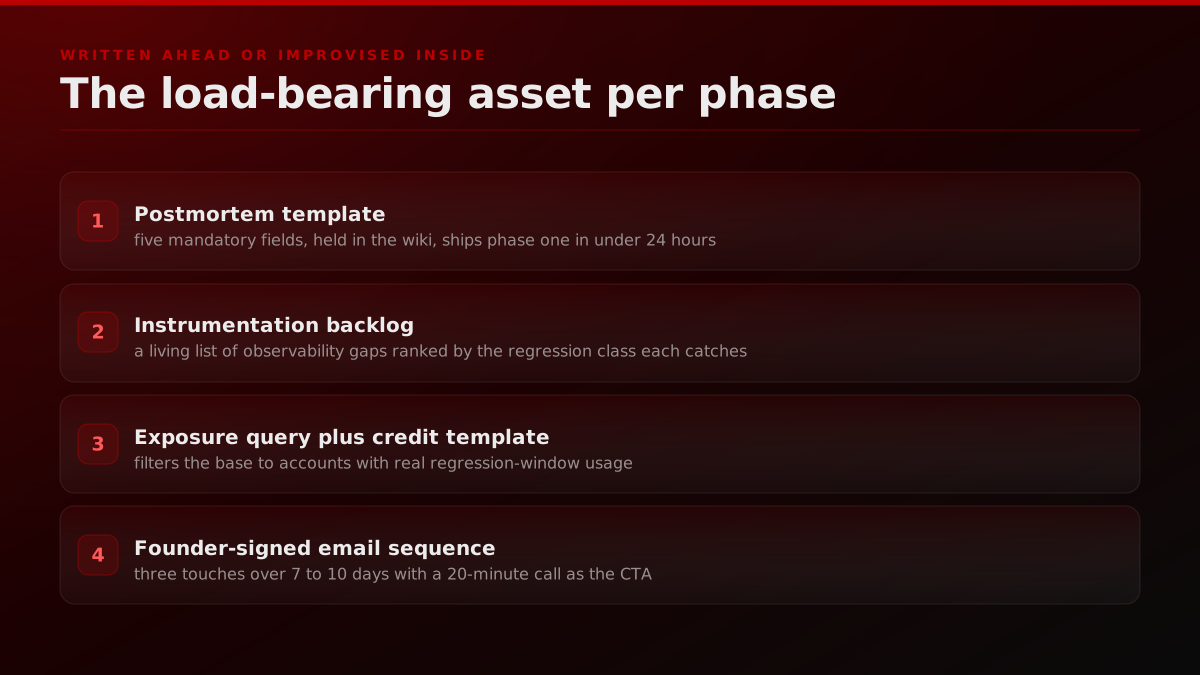
The communication assets the protocol requires, by phase
Every phase has a load-bearing asset that the team either writes ahead of the incident or improvises inside it. The teams that improvise the assets miss the deadlines by an average of four days per phase across the FORKOFF cohort. The asset catalogue below is the minimum kit.
For phase one the asset is a postmortem template held in the company wiki with five mandatory fields and three optional ones. The mandatory fields are regression window (UTC timestamps), affected surfaces (named product areas), observed symptoms (the user-visible behaviour, not the engineering hypothesis), root-cause state with one of three values (known, hypothesised, investigating), and next steps with a named owner per step. The three optional fields are evaluation gaps the incident surfaced, a comparison to the most recent prior incident on the same surface, and a public commitment to a follow-up post by a specific date. A v1 of the template fits on one screen. Teams that have a v1 ship phase one inside 24 hours on every audit FORKOFF has run. Teams without a template ship on day four if at all.
For phase two the asset is a one-pager called the instrumentation backlog. It lists every observability gap the team has acknowledged but not closed, ranked by the regression class it would have caught. The point of holding it as a living document is that when an incident hits, phase two becomes a prioritisation conversation against an existing list rather than a discovery conversation from a blank page. The team that has an instrumentation backlog ships phase two on day five; the team that builds it during the incident ships on day eleven. The eleven-day version misses the technical-buyer migration window and the work no longer pays for itself.
For phase three the asset is a customer-exposure query and a credit email template. The query takes the regression window as input and returns the account IDs with non-trivial usage during it. The template references the specific workflow the account ran, the specific surface that degraded, and the specific credit applied. The named owner for phase three is on the finance side, not the comms side, because the credit ledger has to balance and the comms-led version of phase three under-applies credits to large accounts to avoid the appearance of favouritism. The financial owner is empirically more accurate about who was actually exposed.
For phase four the asset is a founder-signed email sequence with a 20-minute call as the call-to-action. The sequence runs three touches across seven to ten days. Touch one references the specific workflow and the specific fix. Touch two offers the call without referencing the incident. Touch three offers a self-serve credit if the call is declined. The reply rate across the FORKOFF cohort sits between 28 and 44 percent on touch one and adds another six to nine points across touches two and three. The teams that run only touch one leave roughly a third of the recoverable cohort on the table.
The asset catalogue compounds because the four assets together are the artefact set a new founder hire can read on their first week and understand the company's trust posture inside two hours. Teams that hold the kit also onboard senior engineers faster, because the postmortem template doubles as the standard the engineering org operates against. The trust protocol is downstream of the engineering culture, and the assets are the boundary between the two.
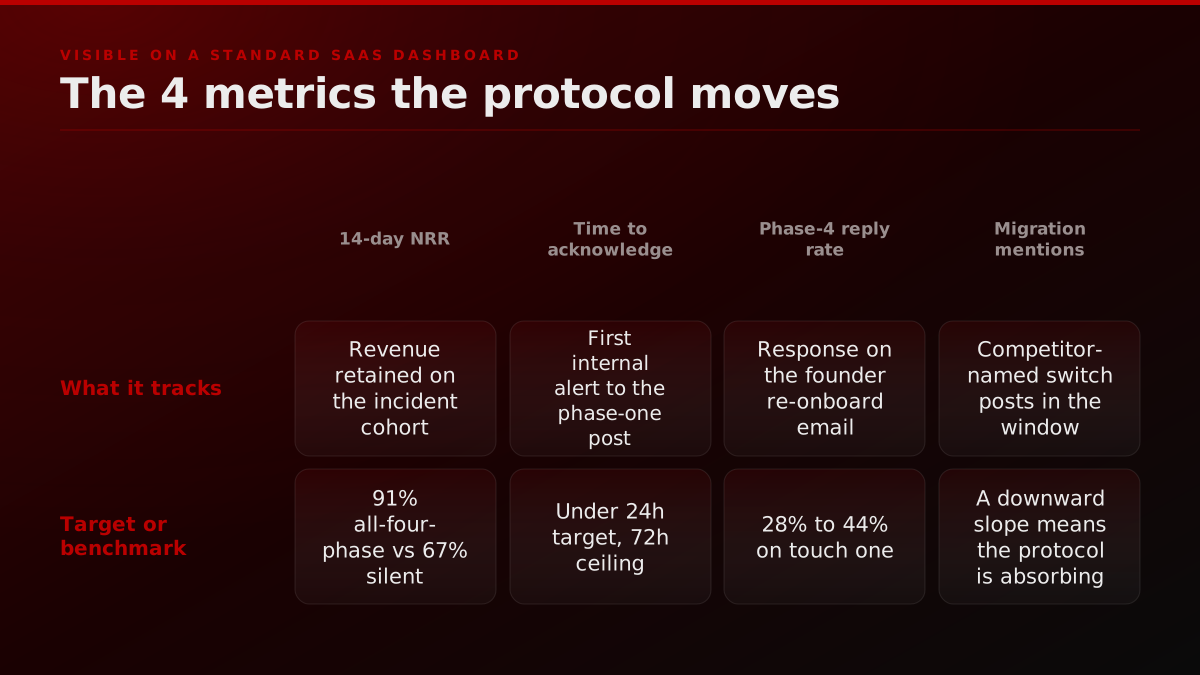
The metrics the protocol moves and how to read them
The trust-recovery protocol pays for itself on four specific metrics visible in standard SaaS dashboards: 14-day net revenue retention on the incident cohort, time-to-first-public-acknowledgement, phase-four founder email response rate, and migration mention rate on public channels. Reading these correctly is the difference between treating the protocol as a comms expense and treating it as a retention instrument with a measurable ROI.
The four metrics the trust-recovery protocol moves
| Metric | What it tracks | FORKOFF benchmark |
|---|---|---|
| 14-day net revenue retention | MRR kept across the incident cohort | 91% ran all four phases vs 67% silent |
| Time to first public acknowledgement | First internal alert to published phase-one post | Under 24h target, 72h ceiling |
| Phase-four founder email reply rate | Cohort response to the personal re-onboard | 28% to 44% personal vs 3% to 7% generic |
| Migration mention rate | Public posts naming a competitor to move to | Read directionally across the 14-day window |
FORKOFF first-party operator data across eleven audited AI-client incidents, 2026. Directional estimates; individual outcomes vary by stage, niche, and execution.
The first metric is 14-day post-incident net revenue retention against the cohort of accounts active in the regression window. The FORKOFF cohort baseline is 91 percent for teams that ran all four phases inside the deadlines and 67 percent for teams that ran zero or one phase. The 24-point gap is the headline number any board deck about the protocol should lead with. The way to read the metric across the company is that the cohort is named by the regression window query, not by the full base, because diluting the cohort across the full book washes the signal.
The second metric is the time-to-first-public-acknowledgement, measured from the first internal alert that crosses the incident threshold to the published phase one post. The target is under 24 hours and the FORKOFF audit ceiling is 72 hours. Past 72 hours the postmortem still publishes for archive value but no longer moves the retention metric. The cleanest version of the metric is a single timestamp pair on a wiki page that the team updates after every drill and every real incident. The teams that hold the metric publicly inside the company default to faster acknowledgement on the next incident, because the timestamp is now a leaderboard.
The third metric is the cohort response rate on the phase four founder email. The FORKOFF cohort range is 28 to 44 percent on touch one, with the variance driven almost entirely by the specificity of the workflow reference. The way to read the metric is that the response rate is a proxy for the credibility of the postmortem; accounts that found the phase one post legible reply to the phase four email at the high end of the range, and accounts that read the postmortem as defensive reply at the low end. A response rate under 20 percent is a sign that phase one needs a rewrite for the next cycle, not that phase four needs a budget increase.
The fourth metric is the migration mention rate on public channels (X, Hacker News, Reddit) during the 14-day window, measured as the count of posts that name a competitor product as the alternative the author is moving to. The metric is noisy at low volumes and reliable at the scale of an HN-front-page incident. The way to read it is directional: a downward slope inside the 14-day window indicates the protocol is absorbing the trust event, and a flat or rising slope indicates phase one or phase three was under-scoped. The trend on the slope matters more than the absolute count.
A team that holds the four metrics on a single page in the company wiki, updates them after every incident and every drill, and reviews them at the engineering staff meeting once a quarter has installed the protocol as an operating system rather than a one-off response. The four numbers compound because they are visible to the same engineering audience that ships the instrumentation that prevents the next incident. The protocol becomes the boundary case the team optimises against, not the firefighting motion it started as.
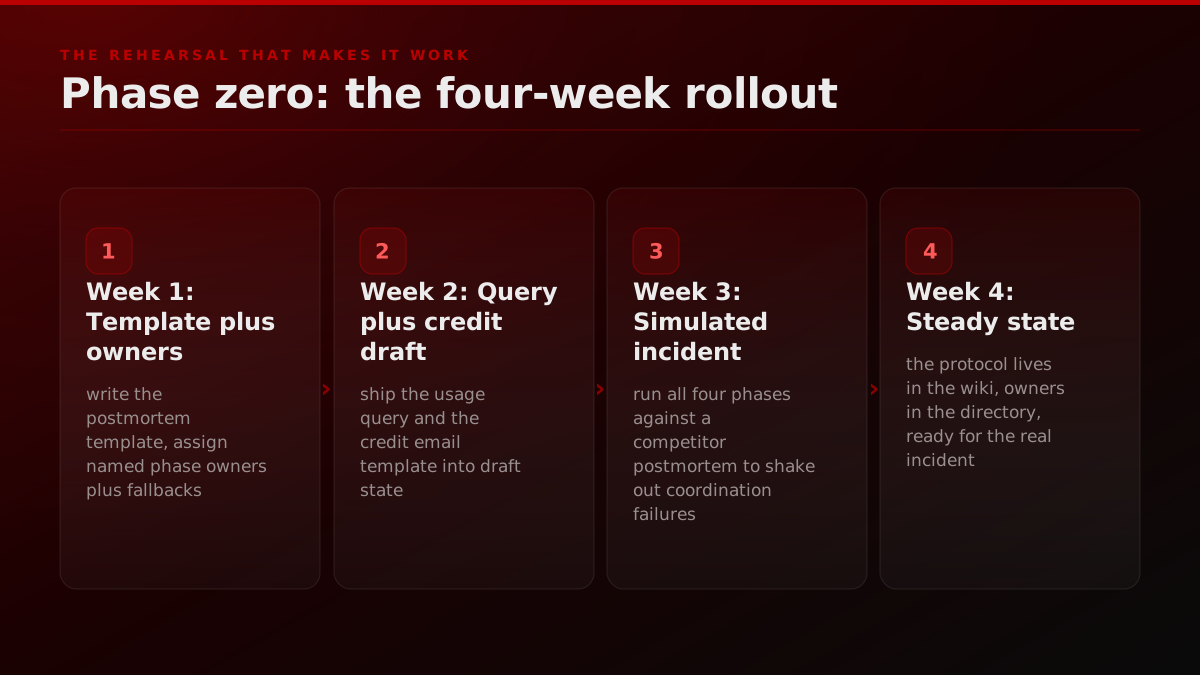
What phase zero looks like: the rehearsal that makes the protocol work
The four phases only compound if they have been rehearsed before the incident. FORKOFF engagements install the protocol as a four-week rollout on a steady-state week, never during an active incident. Week one writes the postmortem template and assigns named phase owners plus fallbacks. Week two ships the usage query and the credit email template into a draft state. Week three runs the protocol against a simulated incident pulled from a competitor's public postmortem; the team executes all four phases against the fake timeline to shake out the coordination failures before they happen in public. Week four is the steady state.
The drill is load-bearing. Nine of the eleven FORKOFF-audited incidents where the protocol underperformed had a written plan but had never run a simulation. The failure was always the same: phase one ships late because the named owner is on holiday and the fallback was never assigned, or phase three ships blanket because the usage query was never written and the team defaults to a marketing-safe answer. A single simulated run per quarter, ideally against a real competitor postmortem (easy to find on Hacker News), surfaces these failures at low cost. The adjacent motions FORKOFF installs are covered in the Agent-Native GTM Founder Stack and the Founder Funnel Strategy.
Two operational notes that keep teams honest. The protocol is quarterly, not reactive; the rehearsal happens on a boring week so the muscle exists when it is needed. And the named postmortem template is the one asset that disproportionately pays for itself; teams that have a clean v1 template ship phase one inside 24 hours every time. Teams without one ship on day four, if at all.
#112 Strategies for comms pros to rebuild reputation after a crisis
Cuttlefish
Cuttlefish breaks down strategies for communications pros to rebuild reputation after a crisis, the empirical playbook this post extends to AI-product trust recovery specifically.
How we install the protocol with AI product teams
Every FORKOFF trust-recovery engagement starts with a 90-minute audit of the last public incident the team watched (usually a competitor's) and the last internal regression the team detected. We reconstruct what would have shipped on each of the four phases, and the delta in MRR retention the protocol would have produced. Most teams can run phase one and phase four on their first cycle with almost no new build; phase two and phase three typically need a sprint each.
Week one writes the postmortem template and assigns the four owners plus fallbacks. Week two ships the usage query that drives phase three, and the evaluation suite skeleton that drives phase two. Week three runs the dry drill against a simulated incident pulled from Anthropic's 2026-04-23 postmortem (or an adjacent competitor case); the team executes all four phases on the fake timeline with real Slack channels tracking owner handoffs. Week four is the steady state: the protocol lives in the wiki, the named owners are in the team directory, and the next real incident is the one the team has already rehearsed for.
For the adjacent motions: the AI Marketing Verification essay covers the pre-incident trust layer that makes the postmortem read as credible rather than defensive. The developer-love flywheel compounds when the protocol is run well; the audience that respects a clean postmortem is the same audience that rewards a clean cookbook. The Agent-Ready Site Audit covers the site-layer instrumentation the postmortem page itself should carry so it ranks and gets cited. And the broader hub is FORKOFF Founder Growth.
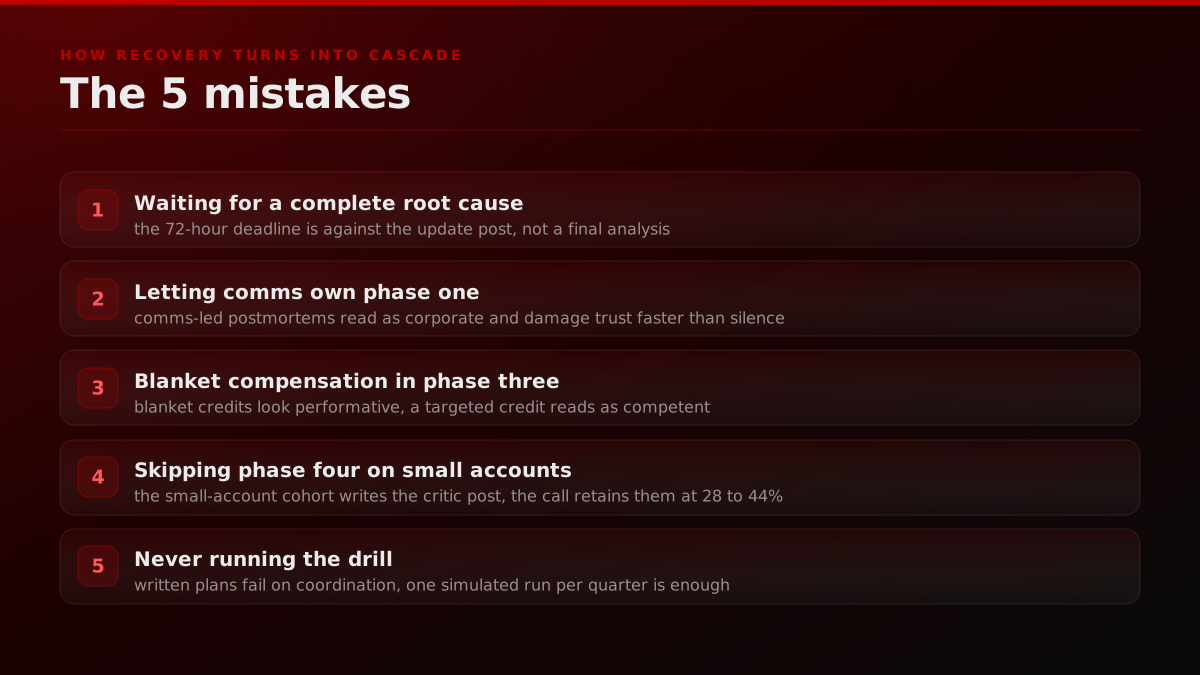
The 5 mistakes that turn recovery into cascade
Across the eleven AI-client incidents FORKOFF has audited in 2026, five specific mistakes appear in every case where a contained incident turned into a sustained MRR decline. None of them are caused by bad intentions; all five are caused by missing preparation before the incident landed, which is exactly what the protocol installs during a boring week rather than a crisis week.
- Waiting for a complete root cause before publishing phase one. The 72-hour deadline is against the postmortem, not against a final analysis. Ship the update post, tag it as an update, revise it in place.
- Letting comms own phase one. Communications-led postmortems read as corporate and damage trust faster than silence. The named author is engineering.
- Blanket compensation in phase three. Blanket credits look performative to technical buyers. A targeted credit referencing the account's specific exposure to the regression is read as competent.
- Skipping phase four because the accounts are small. The small-account cohort produces the critic post on Hacker News. The 20-minute call from the founder retains them at 28% to 44%.
- Never running the drill. Written plans that have not been rehearsed fail on coordination, not on content. One simulated run per quarter against a real competitor postmortem is enough.
The Bottom Line
AI products are trust-fragile in ways SaaS is not, and a bad week is a trust event whether the team treats it as one or not. The AI founders keeping their base through incidents in 2026 are not the ones who avoid incidents. They are the ones who rehearsed a 4-phase trust-recovery protocol, assigned owners and fallbacks, and executed a named postmortem, a specific instrumentation ship, a targeted credit path, and a personal re-onboarding cycle inside 14 days.
Most teams can install the protocol in four weeks on a boring week and run the first drill against a real competitor postmortem like Anthropic's 2026-04-23 publication. The point is to install it before the incident, not during it. If you ship a product where model quality, latency, or accuracy can regress, one of the next four quarters will contain your incident. Rehearsed teams keep their base. Improvising teams pay the permanent cost.
If you want the FORKOFF audit and the protocol installed against your team, that is the work.
For the live operator chatter on this exact topic, see the original Hacker News thread.
Related FORKOFF reads: agent-native GTM stack, Developer marketing strategy, Founder Funnel OS, VC Portfolio GTM, Agent-Ready Site Audit. References: Anthropic, Reddit.
For the full picture, see the founder-led growth playbook.
For deeper cross-pillar context, see the clipping operations that surface recovery proof.
Anthropic: Stop shipping. Seriously.
Hi. Claude Max user here. First, I want to acknowledge the work that’s gone into Claude Code. I appreciate the effort. But this is a serious criticism aimed at leadership and the product team, because I’ve spent hundreds of dollars on Claude subscriptions and I’m not getting the level of… Show more



![How to Make a Launch Go Viral on X: The 5-Lever Playbook [2026]](/blog/covers/how-to-make-launch-go-viral-on-x-2026-cover.jpg)