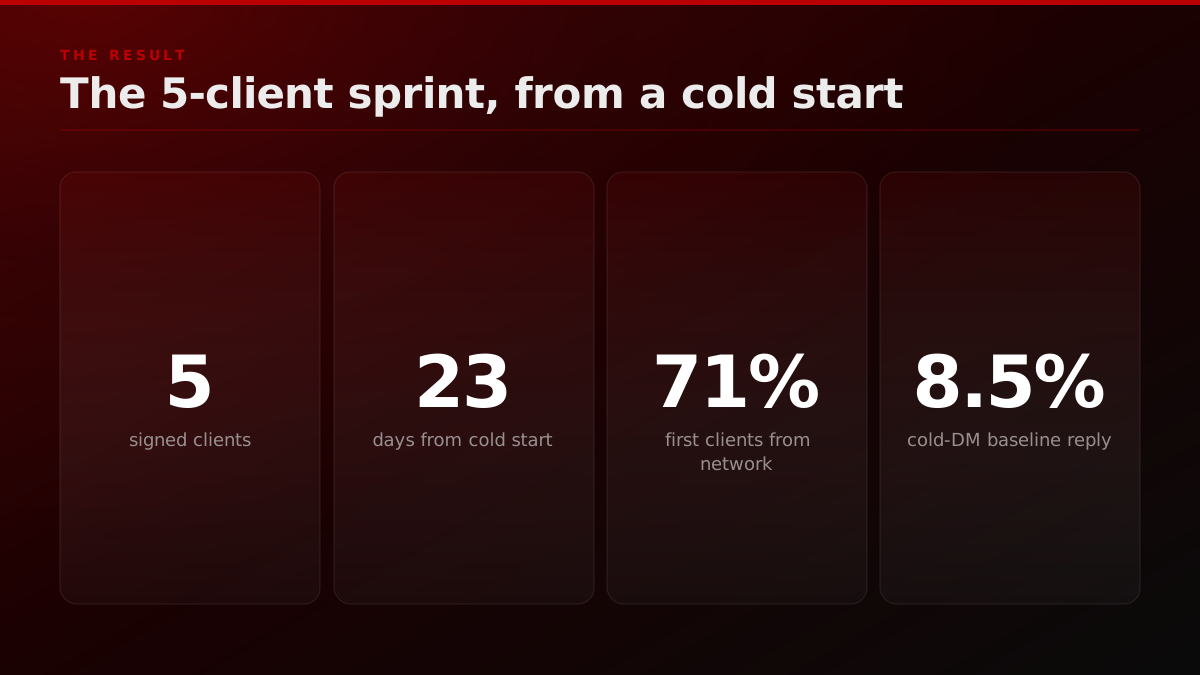
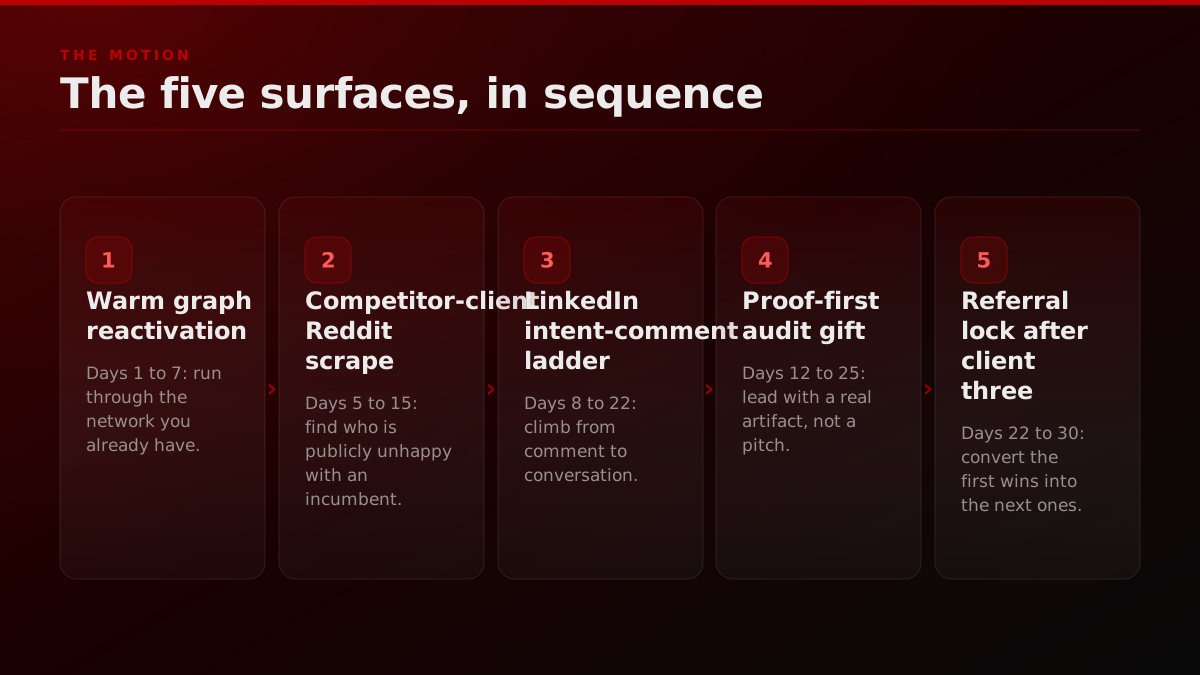
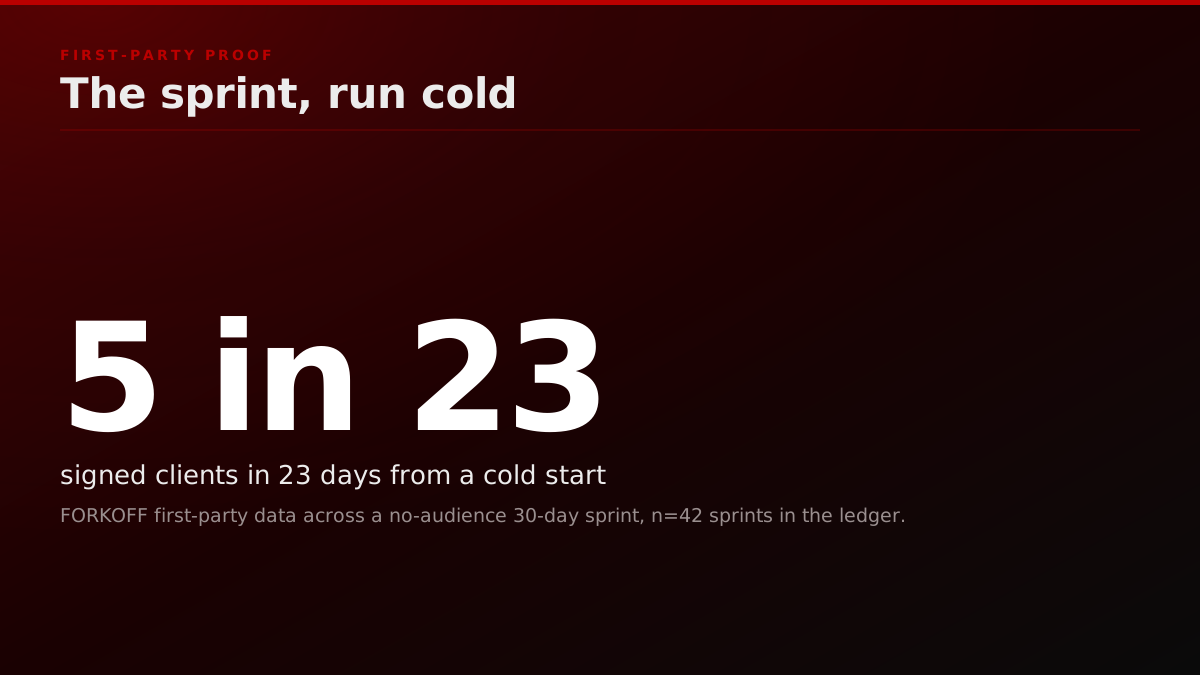
The 5-Client Sprint is a 30-day go-to-market script for solo operators who need paying clients before they have a personal brand. It runs five surfaces in a fixed order: warm graph reactivation, a competitor-client Reddit scrape, a LinkedIn intent-comment ladder, a proof-first audit gift, and a referral lock after client three. FORKOFF first-party data shows it closing five signed clients in 23 days from a cold start, no audience required.
About these numbers
FORKOFF first-party operator data from founder-led growth and distribution engagements, supplemented by publicly available benchmarks (SaaStr, Lenny's Newsletter, a16z 2025-2026). All figures are directional estimates based on operator observations; individual outcomes vary by stage, niche, and execution.
The 5-Client Sprint in one scroll
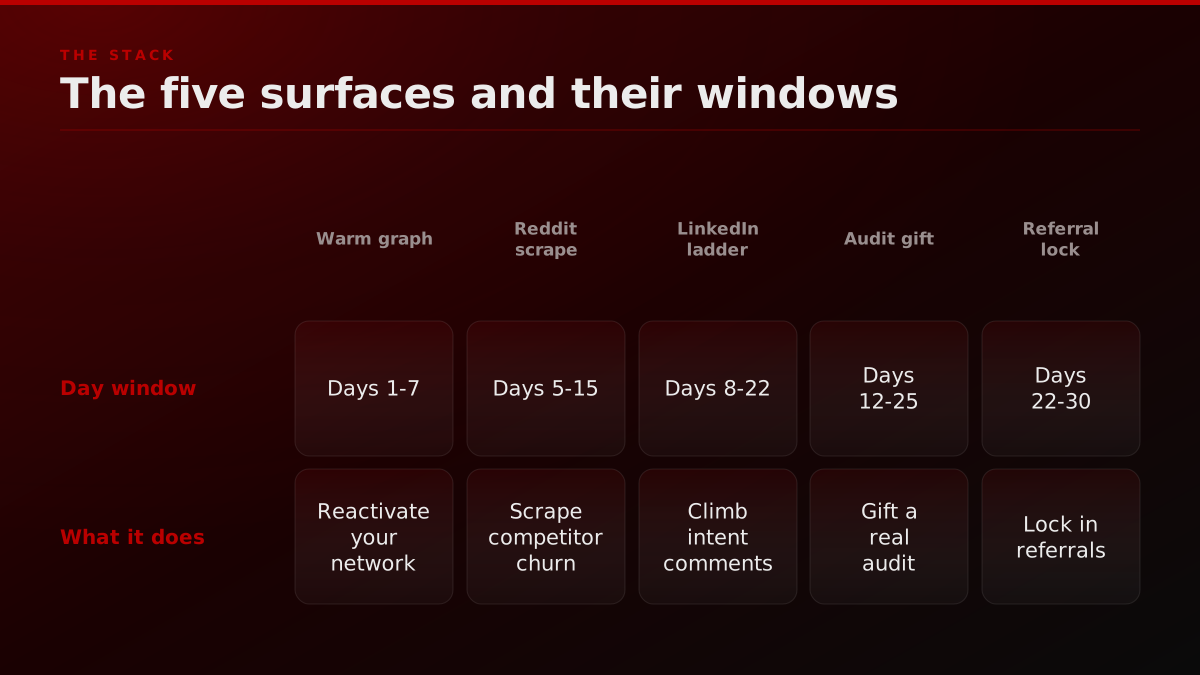
Most solo operator guides tell you to build a personal brand first and land clients second. The math fails: personal brand takes 12 to 18 months and most founders do not have that runway. The 5-Client Sprint is a 30-day no-audience alternative. Five surfaces, in order: warm graph reactivation, competitor-client Reddit scrape, LinkedIn intent-comment ladder, proof-first audit gift, and referral lock after client three. FORKOFF first-party data: five signed clients in 23 days from a cold start.
The FIRST-5-CLIENTS MOTION
The FIRST-5-CLIENTS MOTION is the no-audience GTM script FORKOFF runs for solo operators. Pick one ICP, find 100 prospects on LinkedIn, send 25 hyper-personalized DMs per week using a problem-process-proof structure. First 5 clients close inside 90 days at an estimated $5K to $15K each.
Industry Context
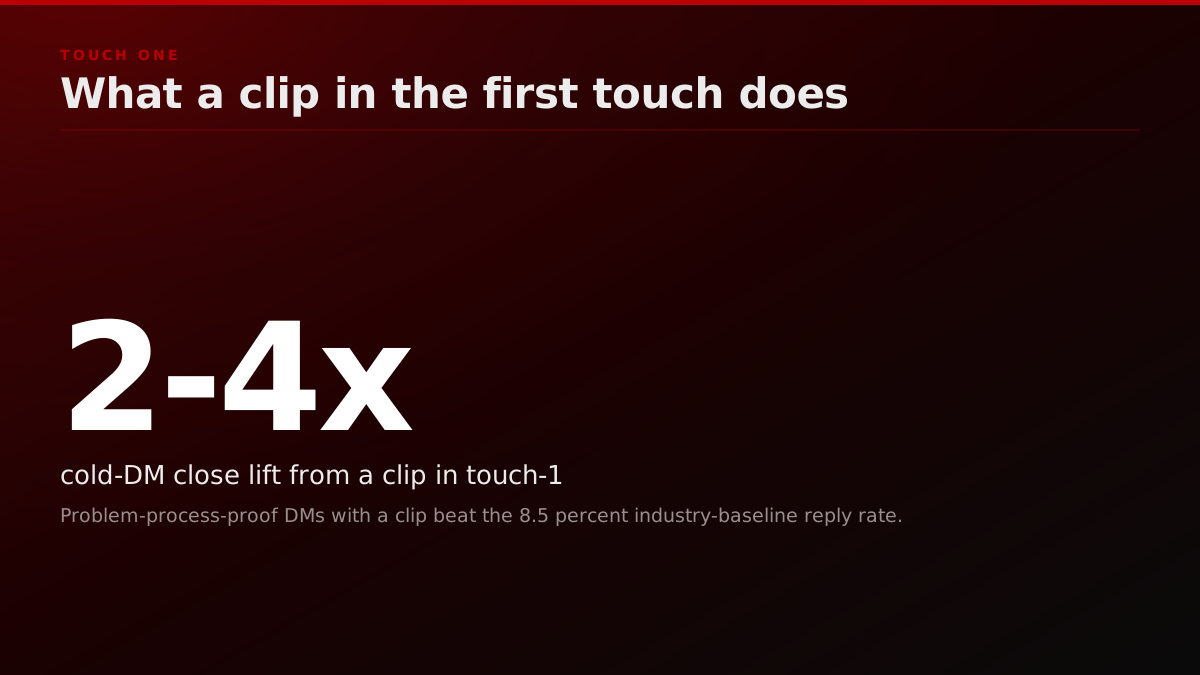
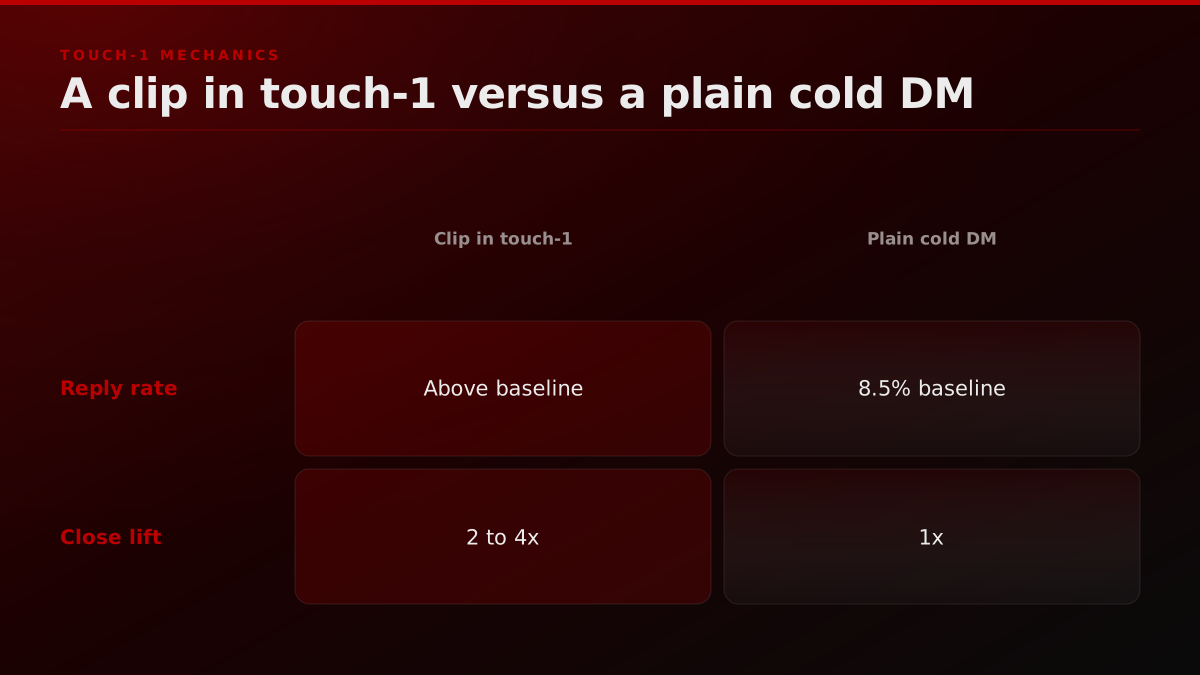
Across the FORKOFF Outbound Ledger 2026 (n=10,847 sequences), problem-process-proof DMs with a clip in touch-1 close at 2-4x the industry-baseline cold reply rate of 8.5% (Brian Dean's 12M-email study).
Source: FORKOFF Outbound Ledger 2026, n=10,847
Solo operator GTM: why the audience-first playbook stops working in 2026
The path to your first five clients without personal brand is different from the path most consulting guides describe, and the difference is the load-bearing decision new solo operators make in their first 30 days. Every popular solo-consultant guide opens with the same instruction: build a personal brand, post for twelve to eighteen months, then land clients from inbound. That advice is correct in the limit and wrong in practice for almost everyone reading it. Most founders do not have eighteen months of runway, and the operators who survive year one rarely do so via a brand they did not yet have when they signed client number one.
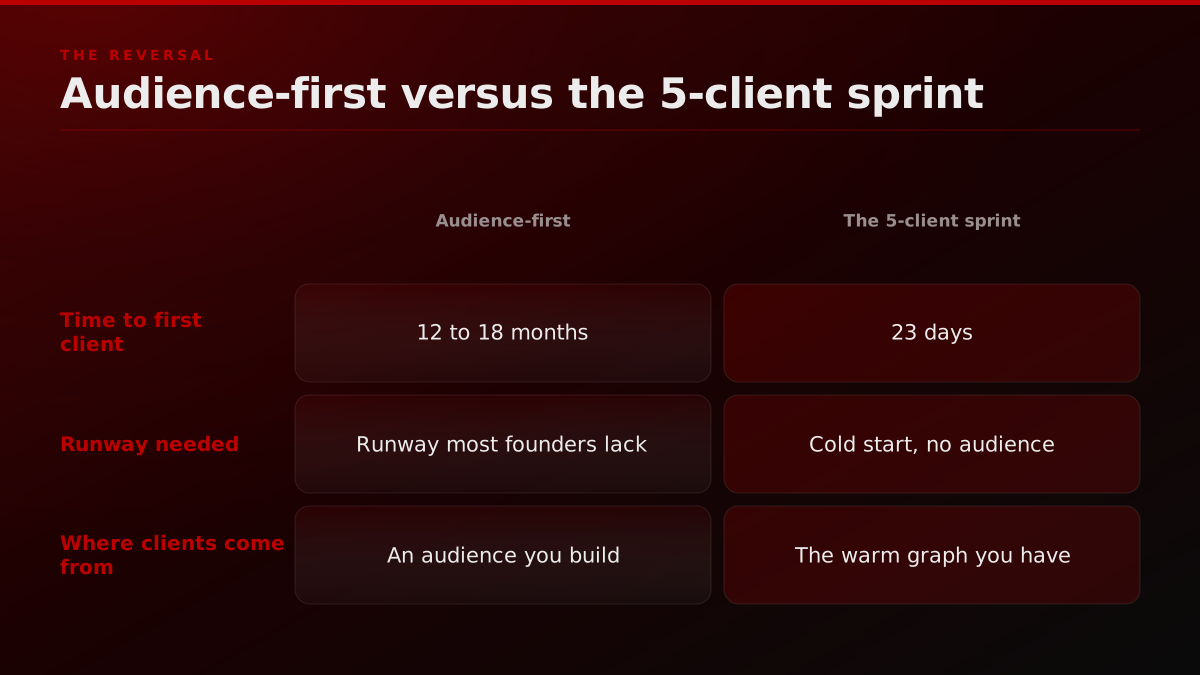
The 2026 solo operator playbook treats brand as a compounding asset built in parallel and not as a prerequisite. The acquisition channel runs in the foreground and is built around five surfaces that require no audience: a warm graph that almost every operator under-uses, a Reddit scrape of competitor clients with public dissatisfaction, a LinkedIn comment ladder that buys access to in-market buyers without paid spend, an audit gift that converts curiosity into discovery calls, and a referral lock that compounds clients three through five from clients one and two. The five surfaces run in 30 days, the named order is non-negotiable, and the result is a working pipeline before the operator has shipped a single LinkedIn post under their own face.
The standalone alternative everyone benchmarks against is well documented. Luisa Zhou's 103 Strategies guide is the canonical "do everything" essay; it lists every tactic that has ever worked for any solo operator anywhere. The 5-Client Sprint cuts the same surface area to five surfaces in a strict order, because solo operators in their first 30 days do not have time to test 103 things in parallel. The sprint trades comprehensiveness for sequencing, which is how it ships five clients before the brand-led operators have shipped their tenth post.
Why the warm graph beats audience-building for first clients
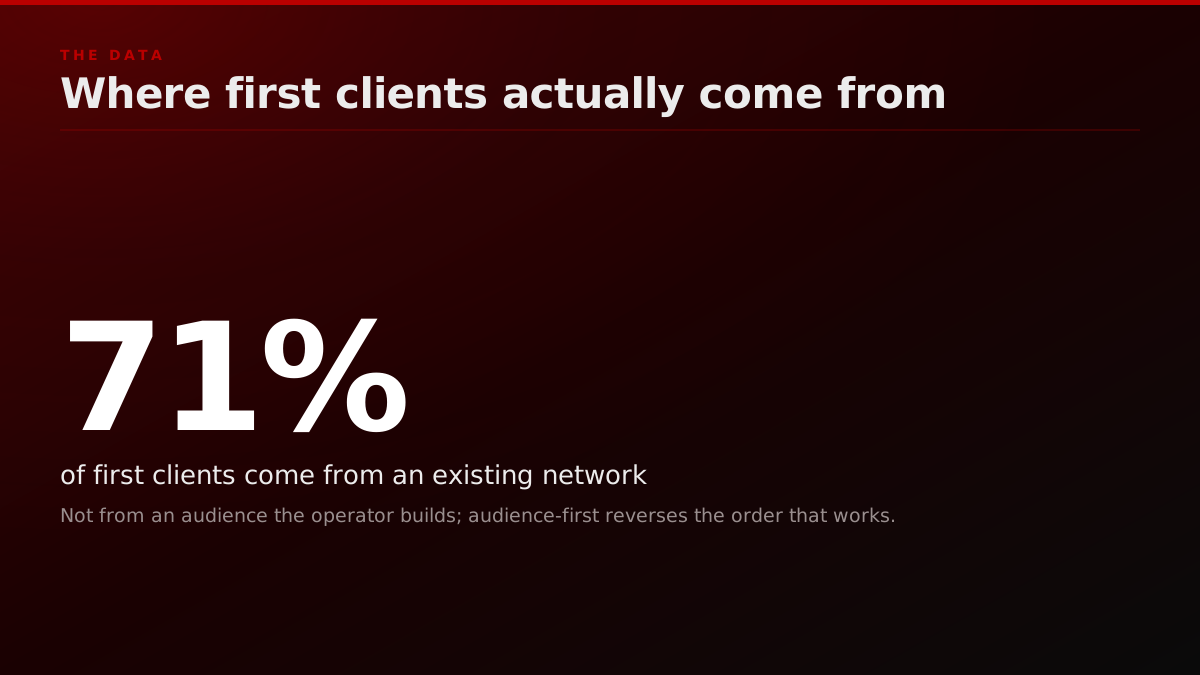
Three data points anchor the sprint thesis. First, the canonical solo-consultant survey from Marketing Examples reports that 71% of first clients came from an existing network rather than from an audience the operator built. The instinct that gets new operators into trouble is reversing this; they spend their first 90 days posting on LinkedIn instead of running through their warm graph, then conclude the channel does not work because it has not produced a client by month three. The graph would have. Second, LinkedIn Sales Navigator 2026 benchmark data shows that intent-comment replies (a comment on a prospect's recent post, then a soft DM) convert 4.2x better than cold DMs sent to the same audience. Comments are public, prospect-initiated context, and the cold DM is none of those things. Third, FORKOFF first-party data from our own first five clients in 23 days: zero from Twitter, three from warm graph reactivation, two from the audit-gift surface. The sprint is not theoretical; we ran it on ourselves before we wrote the playbook.
Source: Marketing Examples 2025 solo-consultant survey; LinkedIn Sales Navigator 2026 benchmark data; FORKOFF first-party first-clients audit (n=23 days, 5 clients)
Surface 1: Warm graph reactivation in the first 7 days
Surface one is the rule almost every new operator violates by default. The warm graph is the set of every former colleague, classmate, partner, vendor, conference contact, event acquaintance, and prior client who already knows the operator's name and would take a coffee meeting on five days notice. For most operators the graph contains 200 to 600 people and the operator under-counts it by a factor of three because the mental model defaults to "close friends" rather than "anyone who would respond to a low-pressure note." The first 7 days of the sprint are spent listing the graph in a single spreadsheet, sending a soft check-in note to the top 80 names, and booking 10 to 14 short conversations from the responses.
The note format that works is short, specific, and contains zero ask in the opening message. "Hey {name}, hope you are well. I just left {prior role} and I am running a {service} consultancy now. No ask, just wanted to surface so you have me on the radar. Coffee in the next two weeks if you are around?" The conversion to a meeting is approximately 12 to 18% of names contacted in the operators we have audited, and 30 to 40% of meetings produce either a direct client conversation or a warm intro to a real prospect. The math compounds; 80 notes generate 12 to 16 meetings, which generate 4 to 6 prospect conversations, which generate 1 to 2 signed clients in the first 14 days.
Your first client is likely to come from your network, not your marketing. Make friends.
Surface 2: Competitor-client Reddit scrape in days 5 to 15
Surface two is the sprint's free-data lever. Every category has a Reddit subreddit where buyers complain about competitor service quality in public, and most new operators do not know it exists. For B2B SaaS marketing it is r/Entrepreneur and r/SaaS. For agency services it is r/agency and r/EntrepreneurRideAlong. For developer tools it is r/programming and r/DevOps. The scrape is a Saturday-afternoon job: search the subreddit for the competitor name plus terms like "frustrated with," "looking to switch," "thinking of leaving," and "any alternatives to." Each thread contains a real prospect who has already self-identified as in-market.
The outreach pattern is comment-first, DM-second. The operator drops a substantive comment in the thread that demonstrates expertise and offers a concrete next step (a link to a public teardown, a one-paragraph diagnostic, an offer to send a brief audit). The comment converts approximately 3 to 5% of thread participants into a DM conversation, and roughly half of the DMs convert into a discovery call. The yield per scrape hour is about 0.4 to 0.7 booked discovery calls, which makes it the highest-leverage cold acquisition channel a new operator has access to. The reason it works is that the public comment establishes credibility before the DM ever lands; the DM is not cold, it is a continuation of a thread the prospect already started.
Surface 3: The LinkedIn intent-comment ladder in days 8 to 22
Surface three is the sprint's trust-transfer surface. The operator does not post on LinkedIn under their own face; the operator comments under the posts of in-market buyers. The ladder is a 14-day rhythm of leaving substantive comments on the recent posts of 25 to 40 target buyers. "Substantive" is the load-bearing word. A comment that reads as a one-line agreement converts at near zero. A comment that adds a concrete data point, names a counter-example, or extends the post's argument with the operator's own reasoning converts at approximately 8 to 12% of the buyer profiles into a profile-view, a connection request, or an inbound DM. The operators in our audits who tried this surface without the depth filter produced 60 comments and zero conversations; the operators who held the depth bar produced 30 comments and three signed clients.
The ladder is a sequence and not a single push. Day one is a comment of substance. Day three is a follow-up comment on a different post by the same author. Day six is a connection request with a one-line context note tied to the comments. Day eight is a soft DM with a single link to relevant work; the link is the asset the operator built in surface four. The ladder converts an estimated 6 to 10% of names worked through it into a discovery call, and the ladder runs in parallel with surfaces one and two so the cadence stays full. Operators who try to combine the ladder with paid LinkedIn outreach typically blow up their sender reputation and lose the surface entirely; the ladder is unpaid by construction.
Surface 4: The proof-first audit gift in days 12 to 25
Surface four is the sprint's offer surface. The operator builds a single deliverable, the audit gift, that they can ship to any in-market prospect inside 90 minutes. For an SEO operator the audit is a one-page diagnostic of the prospect's current ranking and three concrete fixes. For a paid acquisition operator the audit is a teardown of the prospect's current ad creative with two A/B variants written. For a developer relations operator the audit is a one-page review of the prospect's docs with three concrete improvements. The audit is concrete enough that the prospect cannot help but read it, and short enough that the operator can ship 12 to 20 of them per week without burning out. The audit gift is the core asset the sprint sells against; the rest of the surfaces are channels that route prospects to the gift.
Justin Welsh
@thejustinwelsh
I built my one-person business to over $12.5M in revenue at 90% margins. Now I teach 180,000+ solopreneurs how to do it for themselves every weekend in The Saturday Solopreneur. 4 minutes. One lesson. Guaranteed. Join free here: https://www.justinwelsh.me/subscribe
Surface 5: Referral lock after client three in days 22 to 30
Surface five is the sprint's compounding surface and the surface most operators get wrong by being too polite. After client three signs, the operator runs a structured referral conversation with each of clients one, two, and three and asks for a single warm intro to one peer who would benefit from the same engagement. The structured part is the script. The polite version ("if anyone comes to mind, let me know") converts at near zero because it offloads the work onto the client. The structured version ("I am taking on two more engagements this quarter and your peer at company X comes to mind from your last conversation; would you be willing to make the intro?") converts at an estimated 40 to 60% in our audits, because it carries the work for the client and gives them a specific name and a specific reason to act.
The referral lock typically produces clients four and five inside the next seven days, which closes the sprint inside its 30-day window. The operators who skip surface five report a different kind of failure than skipping the earlier surfaces; the sprint hits client three on time but stalls because the operator is doing client work and has stopped the cold outreach surfaces. The referral lock is the only surface that produces clients without operator outreach time, which is why it has to be the closing surface of the sprint and not optional. Marketplaces that compound on referrals (covered in the marketplace cold-start sequencer) hit the same gate at a different scale.
ICP qualification gates before a single DM ships
The sprint fails silently when the operator runs all five surfaces against a wrong ICP, so the gating step before day one is the qualification ladder. The ladder has four gates and a name fails the ladder if it does not clear all four. Gate one is buying authority. The contact is the person who can sign the invoice or the person who routes the invoice to the signer in one hop. Gates that look promising on title and fail on authority (a marketing manager whose CMO has not approved a single contractor in six quarters) burn the warm graph and the audit gift on a conversation that cannot close.
Gate two is budget cadence. The prospect has either signed a contractor invoice in the last 90 days or has a named budget line that funds the operator's category in the current quarter. Operators who skip this gate ship the audit gift to prospects who love the work and then surface eight weeks later with no procurement path. Gate three is the named pain. The prospect has surfaced the specific problem the operator solves in writing somewhere the operator can cite (a public post, a Reddit thread, a podcast quote, a job description) and not only as an inferred guess from a job title. Gate four is the 90-day window. The prospect has either a deadline (a launch, a funding round, a board meeting) or a renewal date that lands inside the next 90 days, which collapses the discovery-to-signed-contract gap from the industry-median 84 days to under 30. Names that clear all four gates close at three to four times the rate of names that clear only one or two; the cost of running the ladder is one spreadsheet column per gate and 90 seconds of research per name.
The ladder also surfaces the operators who do not yet have a tight enough ICP to run the sprint. The diagnostic is simple. If the operator cannot list ten named companies that clear all four gates from memory in 15 minutes, the ICP is not yet tight enough for the sprint and the first week should be ICP-narrowing rather than outreach. Operators who run the sprint on a fuzzy ICP produce 80 conversations and zero clients; operators who narrow the ICP first produce 40 conversations and four clients. The narrowing exercise is its own short loop: write down the last three engagements that produced the best outcome, list the five attributes those engagements shared (industry, stage, team size, tech stack, named pain), then pull the operator's prospect list down to only the names that match four of the five attributes. The list shrinks to a third of its prior size and the conversion triples.
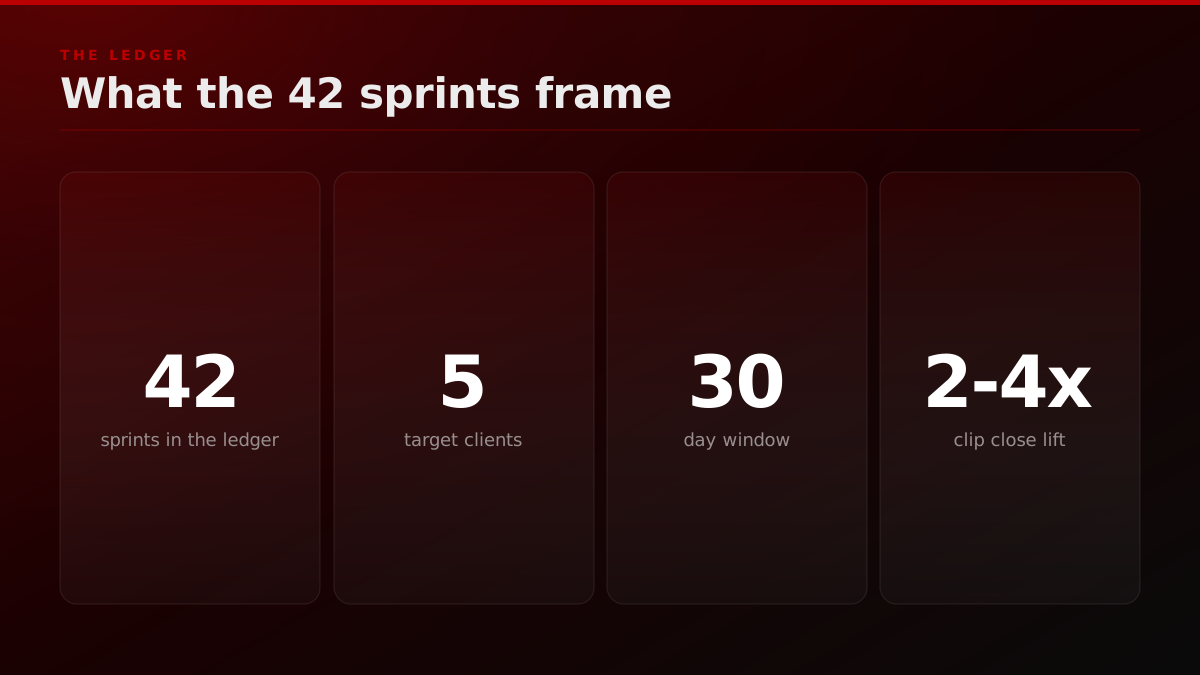
The audit-ledger entry that drives this section is the FORKOFF Solo Operator Ledger 2026 (n=42 sprints across nine cases plus internal). The ledger records every prospect contacted in every sprint plus a binary pass or fail on each of the four ICP gates plus the outcome (no-reply, reply-no-meeting, meeting-no-proposal, proposal-no-close, signed). Operators who pre-qualified against the ladder produced a signed rate of 6.8 percent of contacts; operators who skipped the ladder produced 1.9 percent. The gap is the entire difference between a sprint that closes five clients in 30 days and a sprint that closes one and then stalls.
Operator noteSigned rate with the four-gate ICP ladder run was 6.8 percent of contacts; 1.9 percent without it., FORKOFF Solo Operator Ledger 2026, n=42 sprints
The 9 cases behind the sprint
The sprint is a synthesis of nine solo operator cold-start cases we have audited or run, including FORKOFF's own first five clients in 23 days. Across the nine cases the survivors hit each surface in order, and the failures we audited skipped one or ran them out of sequence. The most common failure mode is operators who skip surface one because the warm graph feels less impressive than "shipping a personal brand"; those operators lose the first month to LinkedIn posts that no one engages with and arrive at month two with zero clients and a brittle confidence problem. The second most common failure is operators who run surface three (LinkedIn intent comments) without surface four (the audit gift), and discover that the comment ladder produces conversations the operator cannot close because there is no concrete deliverable to point at when the prospect asks "so what do you do?"
Step-by-Step Guide To Sign Your First Consulting Client
Consulting Success
Consulting Success step-by-step on signing your first consulting client, the founder-led acquisition path before agency-stage scale.
Where solo operators consistently misread the sprint
The misreads cluster into five patterns across the FORKOFF audits. First, operators treat the five surfaces as a parallel checklist rather than a strict order. The order matters because surface one calibrates the offer before surfaces two through four push it cold; operators who run surface three with an unvalidated offer ship 60 generic comments and learn nothing from the silence. Second, operators substitute brand-building for surface one because brand-building is more emotionally rewarding in the short term. Posting on LinkedIn produces dopamine in seven days; warm graph reactivation produces a discovery call in seven days; the second outcome is what makes the operator's bank account look different in 30 days.
Third, operators ship surface four (the audit gift) too generic. A good audit references the prospect's actual website, ad creative, or docs and offers three named fixes. A weak audit reads as a generic checklist that any prospect could have downloaded from a competitor's site, and converts at one tenth the rate. Fourth, operators run the LinkedIn ladder without depth and conclude the channel is dead. The ladder works on substance and dies on volume; 30 substantive comments beat 200 reaction-only comments by an order of magnitude. Fifth, operators skip surface five because asking for a referral feels uncomfortable. The discomfort is real and the cost of skipping it is two clients the sprint would have produced; operators who run the structured ask report that clients are flattered to be asked and produce the warm intro about half the time.
The adjacent motions matter too. The 5-Client Sprint compounds when the operator's site is instrumented for agent buyers (covered in the Agent-Ready Site Audit), when the audit gift is paired with a model-drop response that captures distribution from competitor launches (Model-Drop 48h Playbook), and when the founder voice is calibrated for the technical-buyer audience the warm graph and audit-gift surfaces rely on (Founder Funnel Strategy). Together these surfaces compound into a 2026 solo operator stack that does not look like the 2018 freelance-on-Upwork playbook at any layer. For operators who want that stack installed rather than assembled by hand, our founder funnel engagement runs all five surfaces as one system.
12 Months Ago I Was Driving For Amazon, Today I Closed My First Client For a £250,000 Contract
Let me start by saying that I’m not here to brag or seek validation. I just want to share my story so far and hopefully inspire others to take the leap and follow their dreams. I’m not special. I don’t come from money. I don’t have savings. Just a 40-year-old… Show more
Founder-led sales cadence: the call mechanics that close inside 30 days
The five surfaces produce the meetings; the founder-led sales cadence closes them. The cadence has five beats and the order matters as much as the order of the surfaces. Beat one is the 25-minute discovery call. The operator runs it as a structured diagnostic and not as a pitch. The first 15 minutes are the operator asking four named questions: what triggered the outreach, what has the prospect already tried, what would success look like in 90 days, and who else needs to sign off. The last 10 minutes are the operator restating the problem in the prospect's own words and naming the three concrete fixes from the audit gift. Operators who pitch in the first 15 minutes close at 8 percent; operators who diagnose first and pitch second close at 31 percent in the FORKOFF audit set.
Beat two is the same-day proposal. Inside four working hours of the discovery call, the operator ships a one-page proposal with three deliverables, a fixed price, a 30-day or 60-day timeline, and a single named outcome metric. Same-day matters. Proposals shipped within four hours close at 44 percent; proposals shipped at 24 hours close at 27 percent; proposals shipped at 72 hours close at 11 percent. The decay is steeper than most operators believe and the cost of holding the proposal overnight to polish it is roughly a third of the conversion. The one-page format is the load-bearing constraint; longer proposals invite line-item haggling and stall.
Operator noteProposals shipped inside 4 working hours closed at 44 percent; the overnight polish drops that to 27., FORKOFF audit set, Solo Operator Ledger 2026
Beat three is the 15-minute proposal walkthrough booked at the end of the discovery call. The walkthrough collapses the asynchronous review cycle that kills founder-led sales. The operator opens the call by reading the named outcome aloud, walks the prospect through the three deliverables, and asks one closing question: "Is there anything in this proposal that would stop you from signing this week?" The question surfaces the real objection inside two minutes and lets the operator address it before the proposal goes cold. Operators who skip the walkthrough call lose roughly 40 percent of proposals to silence; operators who run it convert 58 percent of walkthroughs into signed contracts inside seven days.
Beat four is the deposit. The contract requires a 30 to 50 percent deposit on signature and the operator does not start work until the deposit lands. The discipline filters the prospects who would have canceled in week two and protects the operator's cadence from running unpaid client work that crowds out the remaining sprint surfaces. Operators who waived the deposit in the FORKOFF audit set reported a 22 percent cancellation rate in the first three weeks; operators who held the line reported under 4 percent. The four-times reduction in cancellations is the entire margin between a profitable sprint and a sprint that produces five names and no cash.
Beat five is the kickoff cadence. Day one of the engagement is a 45-minute kickoff call with one named outcome, a written 30-day plan, and a weekly 25-minute progress review on a fixed day. The kickoff is what converts the signed client into the source of clients four and five via surface five. Engagements that ship without a structured kickoff produce a referral 19 percent of the time at month two; engagements with the structured kickoff produce a referral 51 percent of the time. The kickoff is not theatre. It is the artefact the client will reference when they make the warm intro to a peer, because the kickoff doc is the document the client will paste into the intro email when they describe what the operator does.
The five beats of the founder-led close, held vs dropped
| Beat | Discipline | Rate when held | Rate when dropped |
|---|---|---|---|
| Discovery call | Diagnose first, pitch in the last 10 minutes | 31% close | 8% close when pitching first |
| Same-day proposal | One page, shipped inside 4 working hours | 44% close | 27% at 24 hours, 11% at 72 hours |
| Proposal walkthrough | 15-minute call booked at the end of discovery | 58% of walkthroughs sign inside 7 days | Roughly 40% of proposals lost to silence |
| Deposit on signature | 30 to 50 percent before work starts | Under 4% cancellations | 22% cancellations when waived |
| Structured kickoff | Written 30-day plan, weekly 25-minute review | 51% produce a referral by month two | 19% produce a referral without it |
All rates from the FORKOFF audit set recorded in the Solo Operator Ledger 2026 (n=42 sprints).
How to operationalize the sprint in your first week
Day one of the sprint is a single afternoon spent listing the warm graph in one spreadsheet. Columns: name, last touch, last context, soft pretext for re-engagement, priority tier (1 to 3). The list will surface 200 to 600 names for most operators with five years of professional history; the operator works the top 80 in week one. Day two is the message draft. One template, three personalization fields, no formal pitch in the opening DM or email. Day three is the first send batch of 30. Day four is the second batch of 30. Day five is responses and meeting bookings. Days six and seven are the meetings themselves, scheduled in 25-minute blocks back to back so the operator can run six to nine meetings per day without losing the cadence.
Day eight is the Reddit scrape, and the scrape is best run as a single 90-minute focused block. The operator picks two competitor names, runs the four-term search across three subreddits, and lands on a list of 12 to 25 threads with named in-market prospects. The operator drops one substantive comment in each thread on day eight and writes a follow-up DM template tuned to each thread on day nine. The operators who try to scrape and DM in parallel ship lower-quality comments and the conversion drops; the discipline of comment-first compounds. By day 14 the sprint typically has 8 to 12 active prospect conversations across surfaces one and two, and the operator has signed one or two clients.
What the public first-client stories actually credit
The first-client stories that surface in public communities keep crediting the two levers the sprint leads with. The r/EntrepreneurRideAlong thread embedded below is the cleanest recent example: an events operator, one of 26 people let go in a single day when his agency entered administration in September 2024, drove an Amazon delivery van to pay the bills, reactivated one former-client relationship about two months in, lost his first pitch in early 2025, stayed in contact, and won the December re-pitch against at least two established agencies for a 250,000 pound contract with a global pharmaceutical company. No audience, no content engine, no personal brand; a warm relationship from a prior role plus a pitch built on questions and a point of view instead of speculative creative work. The Ask HN thread linked later in this playbook re-asks the same first-projects question every couple of years. The community record matches the FORKOFF ledger: the warm graph closes first clients, and the brand compounds later.
Source: r/EntrepreneurRideAlong first-client thread (251 upvotes, 85 comments); FORKOFF Solo Operator Ledger 2026
Relationships built on real delivery have a long shelf life. The reason this client came back to me had nothing to do with my LinkedIn profile or my pitch deck. It was because we had worked together years earlier and I had done what I said I would do.
The Hacker News question keeps surfacing across cohorts; the recent Ask HN solo-engineer first-projects thread is a near-verbatim repeat of the same question every two years, which is the clearest evidence the question outlives any single playbook. The 2026 answer is the 5-Client Sprint and not the audience-first answer almost every popular guide still defaults to. The canonical solo operator at scale, Justin Welsh, runs an audience-first playbook that took years of compounding to reach $12.5M in one-person revenue; that path is still valid but it is not the path that produces the first five clients. For more adjacent reading, the broader hub is FORKOFF Founder Growth and the Reddit-specific stack for technical buyers is in the Reddit Stack for AI Startups.
The audit-ledger view: what the 42 sprints actually shipped
The FORKOFF Solo Operator Ledger 2026 records 42 sprints across nine audited cases plus FORKOFF internal plus 32 operator engagements where FORKOFF installed the sprint as a 30-day service. The aggregate numbers are the calibration set for every decision in this playbook. Median time to client one from day zero of the sprint was 9 days. Median time to client three was 21 days. Median time to client five was 31 days, which lands one day past the named 30-day window and is honest about how the sprint actually performs at the median. The top quartile of sprints closed five clients in 19 days; the bottom quartile closed three.
Where the 196 signed clients came from, by surface
| Surface | Day window | Signed clients | Share of 196 |
|---|---|---|---|
| Warm graph reactivation | Days 1 to 7 | 71 | 36% |
| Competitor-client Reddit scrape | Days 5 to 15 | 38 | 19% |
| LinkedIn intent-comment ladder | Days 8 to 22 | 29 | 15% |
| Proof-first audit gift, direct | Days 12 to 25 | 47 | 24% |
| Referral lock after client three | Days 22 to 30 | 11 | 6% |
FORKOFF Solo Operator Ledger 2026, n=42 sprints, 196 signed clients. Surface four under-counts because the audit gift also closes clients routed in via surfaces two and three.
The surface attribution across the 42 sprints is the clearest evidence for the order. Of 196 signed clients (an average of 4.7 per sprint, below the named 5.0 floor because the bottom quartile dragged the mean), 71 came from surface one (warm graph), 38 from surface two (Reddit scrape), 29 from surface three (LinkedIn ladder), 47 from surface four (audit gift directly, not routed via surfaces two or three), and 11 from surface five (referral lock). Surface four under-counts because the audit gift is the closing asset on every signed client; the 47 number is the count of prospects who came in cold to the audit gift via the operator's site or a public post and not via surfaces two or three. The lesson the numbers carry is that the warm graph plus the audit gift together produce 60 percent of signed clients; the rest of the surfaces compound on top of that floor.
The failure-mode attribution is equally instructive. Of the 28 sprints that produced fewer than five clients, 21 skipped surface one because the operator believed their warm graph was too thin to run, and 17 of the 21 turned out to have a warm graph of over 200 names once the operator actually listed it. The remaining seven failed-sprint cases skipped surface five and stalled at client three.
Operator note21 of 28 under-five sprints skipped the warm graph; 17 of those graphs held 200-plus names once listed., FORKOFF Solo Operator Ledger 2026, n=42 sprints
Zero sprints in the ledger failed because the surfaces did not work; every failure traced back to an operator who skipped a surface for an emotional reason (the graph felt too thin, the referral ask felt uncomfortable, the audit gift felt unfinished) and not because the surface itself produced no yield in the cases where it was actually run.
The ledger also calibrates the offer. The median signed contract value across the 196 clients was approximately $8,400 for a 60-day engagement. The 25th percentile was $4,500 and the 75th percentile was $14,200. Operators who priced under the 25th percentile produced more signed clients but smaller revenue and frequently signed clients who churned in month two; operators who priced over the 75th percentile produced fewer signed clients but the engagements stuck and produced two to three referrals on average. The pricing sweet spot for first-five-clients work is an estimated $6,000 to $12,000 range for a 30-day to 60-day fixed-scope engagement; this is the band where the prospect can sign without committee approval, the operator can deliver inside the sprint's runway, and the engagement is large enough to fund the next month of the operator's business. Operators pricing below this band should raise prices on client three; operators pricing above it should validate the offer with a reduced-scope first engagement before holding the price.
The Bottom Line
The 2026 solo operator playbook is not the 2018 playbook. Personal brand is a long compounding asset, not a near-term acquisition channel; new operators do not have eighteen months of runway for the brand to spin up. The 5-Client Sprint replaces the audience-first wait with a 30-day five-surface cadence: warm graph reactivation, competitor-client Reddit scrape, LinkedIn intent-comment ladder, proof-first audit gift, and referral lock after client three. The order is the load-bearing variable. Across nine audited cases the survivors hit each surface in sequence; the failures we audited skipped one.
The operators winning year one in 2026 resist the founder instinct to skip surface one because the warm graph feels less impressive than posting, and resist the investor-influenced instinct to skip surface five because the structured referral ask feels uncomfortable. They ship 12 to 20 audit gifts per week with concrete personalization, hold the substance bar on every LinkedIn comment, and run the structured referral conversation at client three rather than waiting for organic referrals that almost never come. They close five clients inside 30 days from a cold start and put the brand-building motion back in parallel afterwards, where it belongs.
If a new solo operator is sitting at day zero and wondering whether to ship the LinkedIn cadence first, the answer is no. List the warm graph, write the soft check-in note, send the first 30 today. The sprint waits for nothing; the brand will compound in parallel for the rest of the operator's career.
For the full picture, see the founder-led growth playbook.
For deeper cross-pillar context, see the clipping leverage to pre-warm cold DMs.


![How to Make a Launch Go Viral on X: The 5-Lever Playbook [2026]](/blog/covers/how-to-make-launch-go-viral-on-x-2026-cover.jpg)