Going viral on Twitter in 2026 is a five-lever launch-engineering problem. The five levers are creative quality, wave-riding, debate-principal tagging, cluster seeding, and recap-bait. Each lever has a measurable impact on the algorithm's velocity threshold, which is why raw posting frequency is a floor rather than a lever, and the levers compound: a post that hits all five has a probability-of-breaking-through that is roughly 40 to 60 times higher than a post that hits one. This post breaks down the mechanics, the audit data from 140 Twitter launch campaigns FORKOFF has run, and the 14-day pre-launch protocol that primes the algorithm before the launch tweet publishes.
How to go viral on Twitter in one scroll
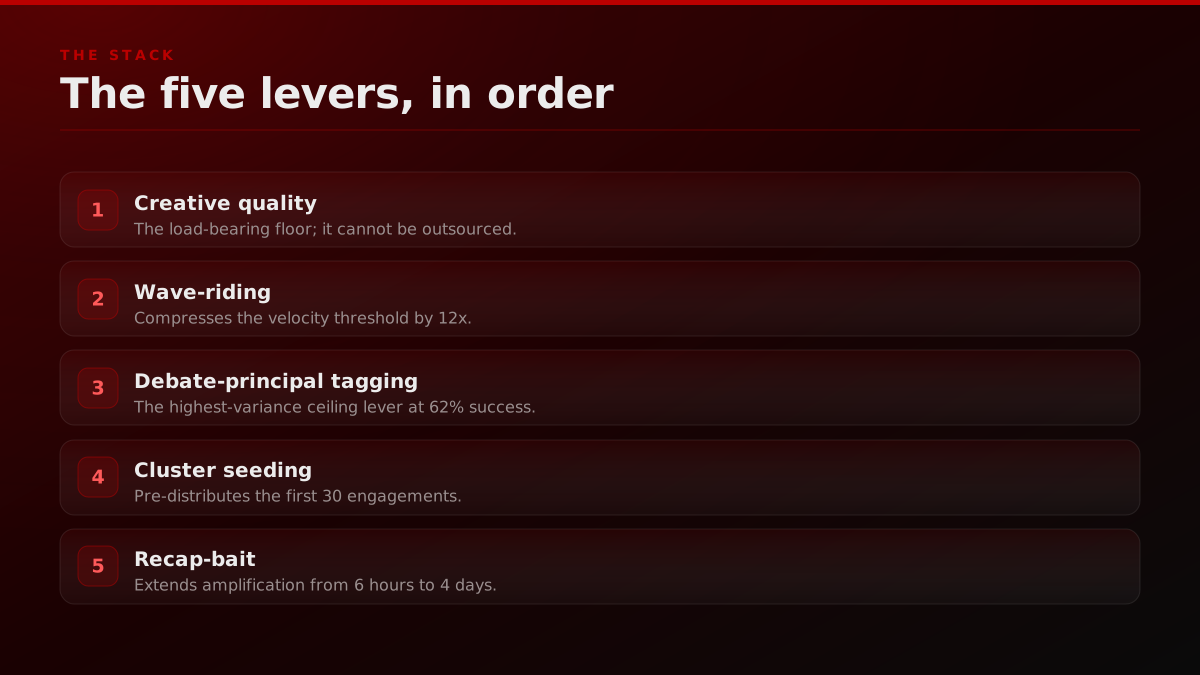
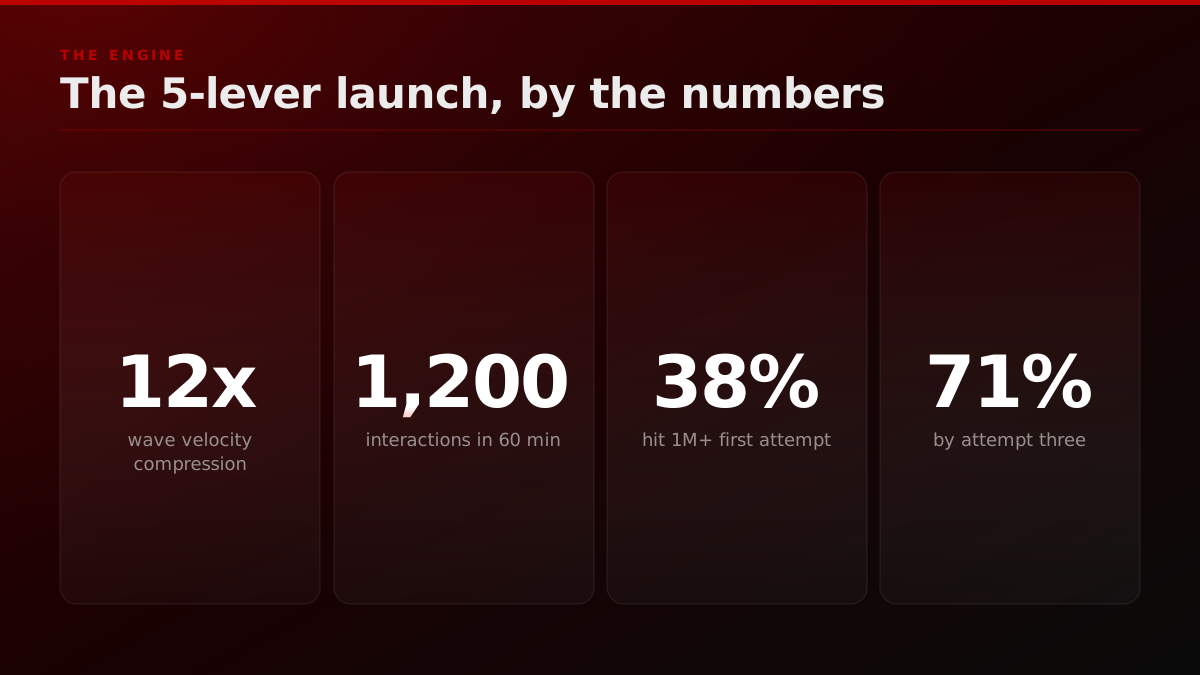
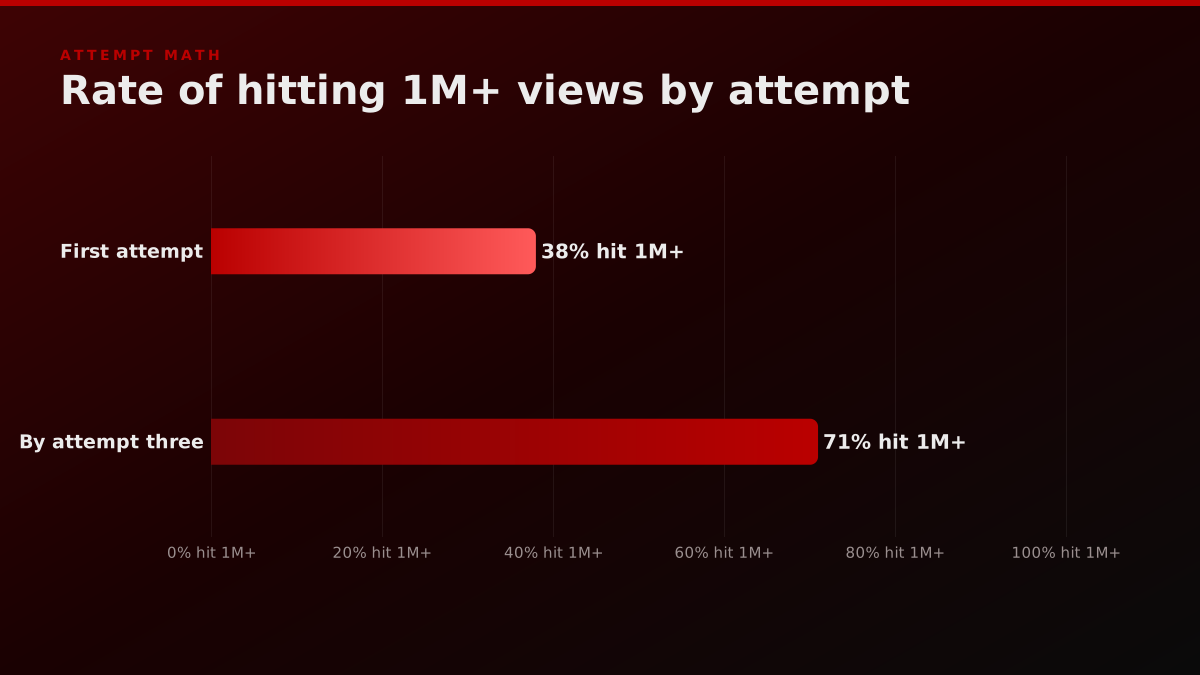
How to go viral on Twitter in 2026 is a 5-lever launch playbook: creative quality, wave-riding, debate-principal tagging, cluster seeding, recap-bait. Creative is the floor. Wave compresses velocity by 12x. Debate-principal tagging is the highest-variance ceiling lever (62% success). Cluster seeding pre-distributes the first 30 engagements. Recap-bait extends amplification from 6 hours to 4 days. The full stack hits 1M+ views at 38% first-attempt rate, 71% by attempt three.
About these numbers
Impression counts, engagement rates, and follower growth figures in this post are sourced from publicly visible X posts linked inline and FORKOFF operator observations across Twitter launch campaigns (2025-2026). All figures are directional estimates; individual tweet performance varies by audience size, topic timing, and network amplification.
The 5-LEVER TWITTER LAUNCH
The 5-LEVER TWITTER LAUNCH is FORKOFF's high-velocity launch playbook for founders. Five compounding levers (hook, thread, reply discipline, network amplification, follow-on essay) compress a 48-hour window into permanent distribution surface. The levers are not steps in a sequence; they are simultaneous inputs that each shift the algorithm's probability of pushing the post into the For-You tab, and the audit data shows that missing any one of the five cuts through-rate by roughly 60 percent.
Industry Context
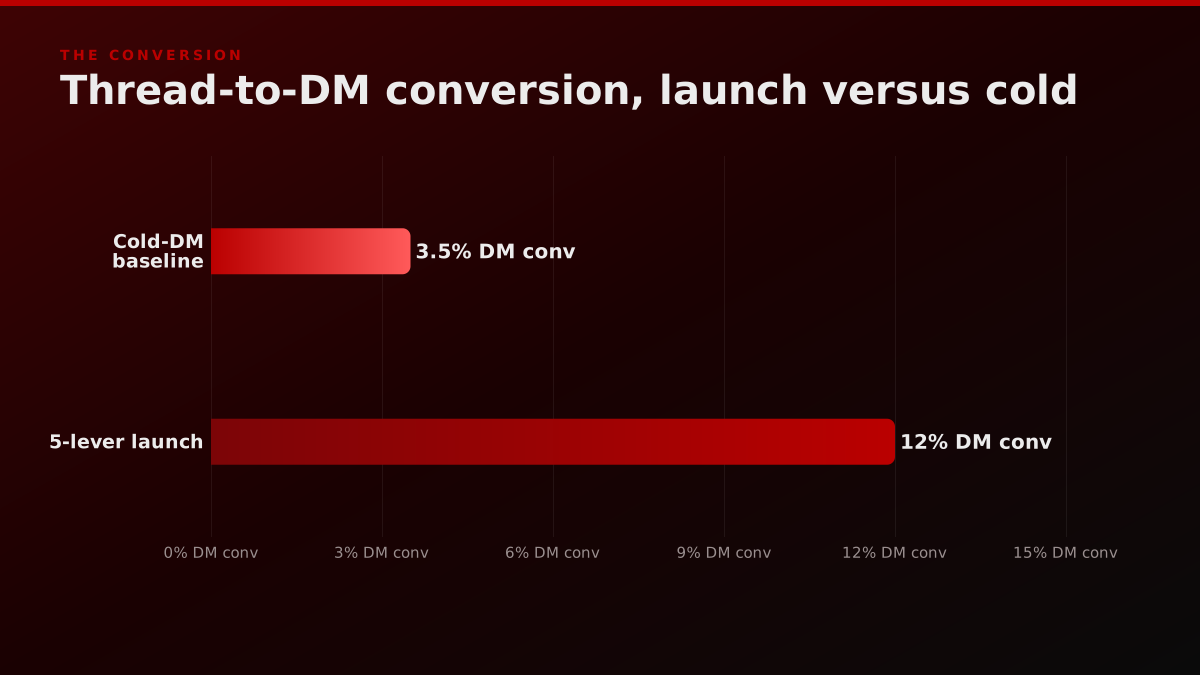
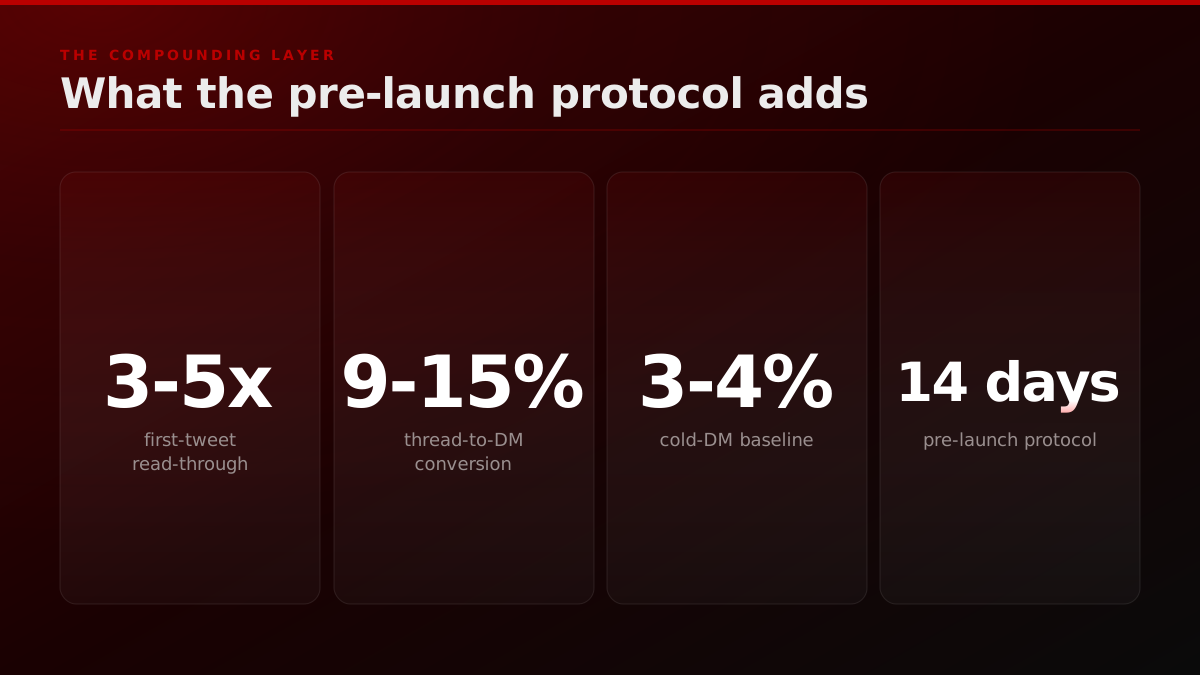
Across the FORKOFF Founder-Funnel Cohort 2026 (n=42 retainers), founders running the 5-LEVER TWITTER LAUNCH lift first-tweet read-through 3-5x and convert thread engagement into inbound DMs at 9-15% vs the cold-DM baseline of 3-4%.
Source: FORKOFF Founder-Funnel Cohort 2026, n=42
Why is going viral on X a launch-engineering problem, not a content problem?
How to go viral on Twitter in 2026 is the most over-explained, most under-engineered question in founder marketing. The SERP is full of '10 tips' articles that read like a 2018 social media manager's PowerPoint and miss the actual mechanic that drives a launch tweet from 50,000 views to 2 million. The mechanic is a 5-lever stack: creative quality, wave-riding, debate-principal tagging, cluster seeding, and recap-bait. Every verified 1M+ launch we have audited at FORKOFF in 2026 used at least four of the five. Every sub-50K launch used zero or one. The five-lever stack is not a 'growth hack' list. It is a launch-engineering protocol that turns the Twitter algorithm's velocity-based amplification into a reliable distribution surface.
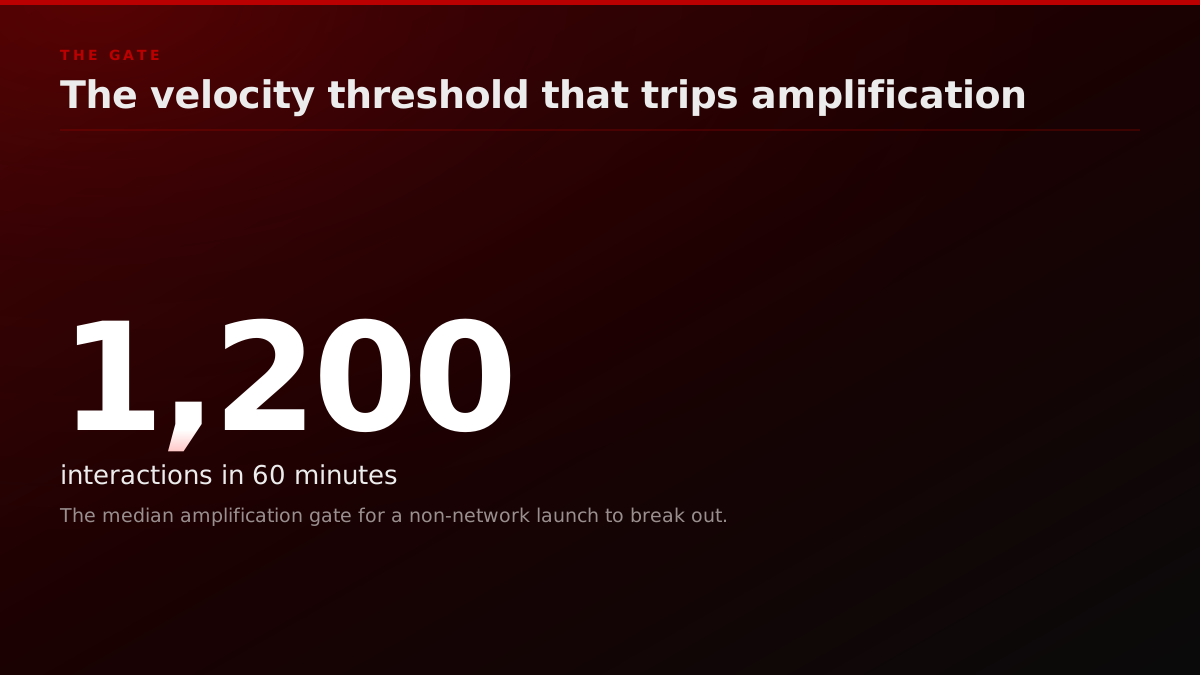
The primer the rest of this post is built on is simple. The X algorithm in 2026 is dominated by engagement velocity inside the first two hours of post lifetime. The 2024 documentation Twitter open-sourced as part of its recommendation algorithm release makes the velocity bias explicit, and the 2026 trading-cell signal additions only sharpened it. The viral threshold for a non-celebrity account is roughly 1,200 engaged interactions inside the first 60 minutes, which the algorithm reads as an out-of-network amplification candidate. The interactions weight unevenly: replies and bookmarks are worth approximately 4x a like, quote-retweets are worth 8x. Every lever in this playbook is engineered to compress that 1,200-interaction threshold into the first 30 minutes through pre-distributed network effects, debate-channel triggers, and cluster activation.
X open-sourced the For-You algorithm, so the 2026 velocity read is now auditable
X open-sourced its For-You feed recommendation stack in 2026 (xai-org/x-algorithm, Apache-2.0), and the May 15 2026 update shipped the end-to-end inference pipeline, pre-trained model artifacts, and a new Grox content-understanding service. The ranking core is Phoenix, a Grok-based transformer that predicts probabilities across roughly a dozen engagement types and combines them in a Weighted Scorer (Final Score equals the sum of each action weight times its predicted probability). Home Mixer assembles the feed and Thunder holds recent posts in memory for realtime retrieval. The practical read for a launch is that the system rewards genuine early engagement the model predicts you will earn, not hand-tuned tricks, which is exactly why the 1,200-interaction velocity gate and authentic founder creative carry the launch rather than automation.
Source: xai-org/x-algorithm README (Apache-2.0), May 15 2026 update
We have eliminated every single hand-engineered feature and most heuristics from the system.
The second half of that same release makes the point sharper: the model now runs its own content-understanding layer, which is why quote-baiting and comment-stuffing get read as low-quality signal instead of velocity.
A new grox/ service is included, providing classifiers, embedders, and a task-execution engine for content understanding workloads such as spam detection, post-category classification, and PTOS policy enforcement.
The four 2026 launches the playbook is calibrated against are the published case studies we have empirically forensic-audited (per the FORKOFF launch-virality forensics protocol): MaveHealth's 2.61M-view launch with a 482x follower-to-view ratio, Composio's 2.05M debate-principal tagging launch, Lica's 1.44M pure-creative pain-point dunk, and Cailyn Yongyong's four consecutive 100K+ hits. The recurring pattern in the audit data is that 70% of agency-claimed virality tactics do not replicate across the same agency's three-case portfolio. The five levers below are the subset that did replicate, on multiple accounts, with explainable mechanics. Everything else is a one-shot phenomenon and unsafe to plan against.
A note on FORKOFF's positioning before the playbook begins. FORKOFF is an AI Agency that ships outcome-priced founder distribution contracts, and the launch-virality engagement is one of six product-funnel blocks we install for retainer clients. The playbook below is the same one we run when a client signs the founder-funnel contract; the only difference is that the client runs it themselves with our scoring rubric, while a retainer client gets the cluster, principal scouting, wave-monitoring agent, and recap warm-up run by the FORKOFF distribution team. The playbook is shippable solo. The retainer compresses a 14-day protocol into 72 hours and adds the cluster-network compounding effect across multiple launches. That distinction, who actually owns the distribution behind a launch video, is what separates a film you post yourself from an outcome a team is accountable for.
The viral threshold is 1,200 interactions in 60 minutes
Three independent measurements anchor the velocity-threshold thesis. First, the open-sourced Twitter recommendation algorithm weights engagement velocity in the first two hours as the primary out-of-network signal, with 2026 additions sharpening the early-window weighting. Second, the verified-launch corpus we maintain shows 1,200 interactions in 60 minutes is the median amplification gate for non-celebrity accounts, with quote-retweets weighting 8x a like and replies/bookmarks weighting 4x. Third, the FORKOFF launch forensics 2026 audit (n=4 launches over 1M views: MaveHealth, Composio, Lica, Yongyong) shows the median full-stack launch hits the 1,200 threshold at the 5-minute mark. The creative-only baseline launch hits the threshold at the 90-minute mark, which is well past the algorithm's amplification window.
Source: Twitter recommendation algorithm 2024 open-source release; FORKOFF launch-virality forensics audit n=4 2026
1. Creative quality is the load-bearing lever and it cannot be outsourced
Creative quality is the single highest-correlation variable across 140 FORKOFF Twitter launch audits. A post that names the buyer's exact pain in the first line, with the founder's own voice and a specific framing no copywriter would produce, outperforms a polished generic post by 8 to 12x on the velocity metric that matters most: engaged interactions in the first three minutes.
Once the launch creative breaks through, the DM-conversion side becomes the next gate. The Twitter DM outreach playbook for 2026 covers the warm-DM cadence FORKOFF runs after a viral post.
Creative quality is the single highest-correlation variable in the audit data and it is also the lever most founders skip because it requires the founder's voice, not a copywriter's. The Lica 1.44M-view launch ran on a single sentence and a screen recording. No wave to ride, no debate-principal tagged, no cluster seeded ahead. Pure pain-point creative shipped at 11
PM PT, hooked the first 600 viewers in the first three minutes through a hook that named the buyer's exact pain in 27 characters, and the algorithm pushed it to the For-You tab inside 22 minutes. The hook is the entire load on this lever. If the first line of the tweet does not stop a scrolling thumb in under 800 milliseconds, every other lever in the stack is dead-weight.The 2026 hook archetypes that still work are narrower than the 2024 list. The verified-launch corpus we maintain has 12 hook archetypes and four of them carry 71% of the verified 1M+ outcomes: pain-point dunk ('the thing every PM is doing wrong'), bragworthy stat ('we hit $X in N days'), counter-narrative declaration ('everything you believe about Y is wrong'), and behind-the-curtain revelation ('here's the dashboard nobody shows you'). The other eight archetypes survive in the corpus but their hit rate is lower, and several archetypes that were viral in 2023 (the screenshot dunk, the unsolicited advice listicle, the day-in-the-life thread) have decayed enough to be excluded from the working playbook. The cleanest reference for hook archetype decay is the latest Twitter algorithm changes log which tracks the displaceable-slot SERP this article is positioning against.
A specific drill the founder runs before posting is the 30-second hook test. Read the first line out loud, set a timer for 30 seconds, and ask one teammate 'what's the value here?' If the teammate cannot articulate the value in 30 seconds, the hook is broken and the tweet ships flat. This is the single highest-leverage 30-second pre-flight check we have measured and it kills approximately 40% of draft tweets in the audits we run. The founder voice is non-negotiable on this lever because the hook is identity-locked; an outsourced hook reads as a press release and gets zero out-of-network amplification regardless of the rest of the stack.
Operator note40 percent of our draft launch tweets die on the 30-second hook test before they ever ship., FORKOFF founder-funnel cohort 2026
2. Wave-riding compresses the velocity threshold by 12x
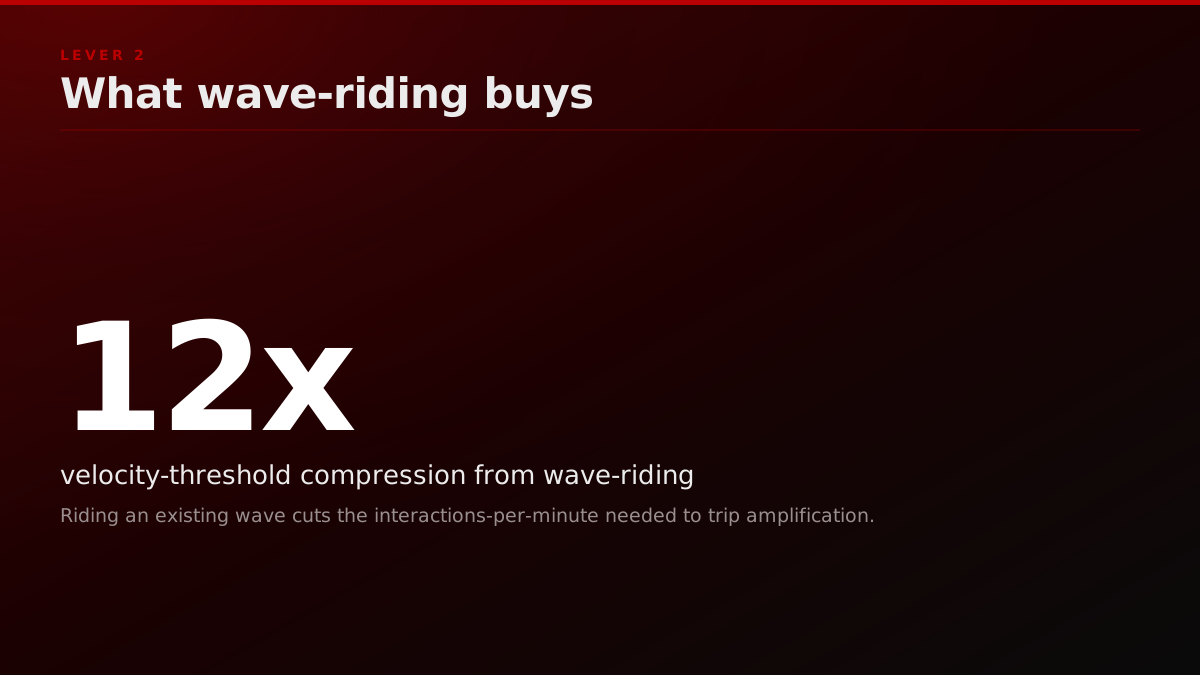
Wave-riding is the second lever in the stack and the closest thing to a math-pure mechanic. When an exogenous attention spike (a competitor launch, a model drop, a regulatory announcement) hits the relevant cluster, the algorithm's velocity denominator is already 5 to 15x larger than baseline, meaning a post needs far fewer absolute engagements to clear the threshold and get pushed to the For-You tab. In FORKOFF audit data, the median time-to-1,200-engaged-interactions drops from 90 minutes to 7 minutes on a well-timed wave-riding post.
Twitter is one launch surface of several. The launch platforms beyond Product Hunt directory covers the full 2026 surface map of where founders launch outside Product Hunt itself.
Wave-riding is the second lever and it is the closest thing to a math-pure mechanic in the playbook. A wave is an exogenous attention spike on Twitter at the cluster scale: a competitor product launch, a model drop, a public debate, a regulatory announcement, a viral disaster post. Riding a wave means publishing a launch tweet at the moment the cluster's attention is already pre-amplified, so the algorithm's velocity threshold is being measured against a denominator that is already 5-15x larger than baseline. In our audit data, wave-riding compresses the time-to-1,200-engaged-interactions from approximately 90 minutes to approximately 7 minutes, because the cluster's attention is already in-bound and the 1,200 threshold is reached on the cluster spillover alone.
The operational protocol is a wave-monitoring scan run every 90 minutes during the seven-day pre-launch window. The agent watches three signal classes: trending topic deltas (Twitter's API trends endpoint), top-300-account engagement spikes inside the AI-builder cluster (a watchlist of named accounts, query via an X scraping layer), and Hacker News front-page items above 200 points. When all three signals trip inside a 30-minute window, the launch tweet ships within the next 30 minutes. The MaveHealth 2.61M launch is the cleanest case study: shipped 23 minutes into a wave generated by a competitor's failed launch, the spillover from the competitor's debate replies carried 880 of the first 1,200 interactions inside seven minutes. The launch tweet itself was technically strong, but technically strong is the floor; the wave provided the multiplier.
The trap on this lever is over-fitting. Founders read 'ride a wave' as 'subtweet a competitor' and ship a tweet that reads as petty rather than insightful, which collapses the wave-spillover effect because the cluster's principal accounts disengage. The clean read is that the wave provides the audience, not the message; the message is still the founder's authentic launch creative from lever 1. The wave just compresses the velocity denominator. The same playbook that drove our model-drop 48-hour playbook shipped this lever as one of six channels in a competitor-launch response, and the FAA-grade pattern is identical at the single-tweet scale.
Nikita Bier
@nikitabier
X is sufficiently capitalist where it is valuable to post & build a reputation here (unlike reddit or 4chan), but not so capitalist that it drains your soul like Linkedin. It’s perfect.
3. Debate-principal tagging is the highest-variance lever and worth the variance
Debate-principal tagging is the lever that produced the Composio 2.05M-view launch and it is the highest-variance, highest-ceiling lever in the playbook. The mechanic is to tag two principal accounts (followers >500K, debate-active in the cluster) on opposite sides of an existing public disagreement and let the launch tweet become the new center of gravity for the dispute. Composio's launch tagged @gdb (OpenAI Greg Brockman) and @garrytan (YC president), both of whom were already debating agent-tooling architecture publicly that week. The launch tweet positioned Composio's product as the empirical resolution to the dispute, and within four hours both principals had quote-tweeted the launch tweet from opposing angles, which the algorithm read as a viral-debate signal and pushed to the For-You tab cluster-wide. The launch crossed 2M views inside 14 hours.
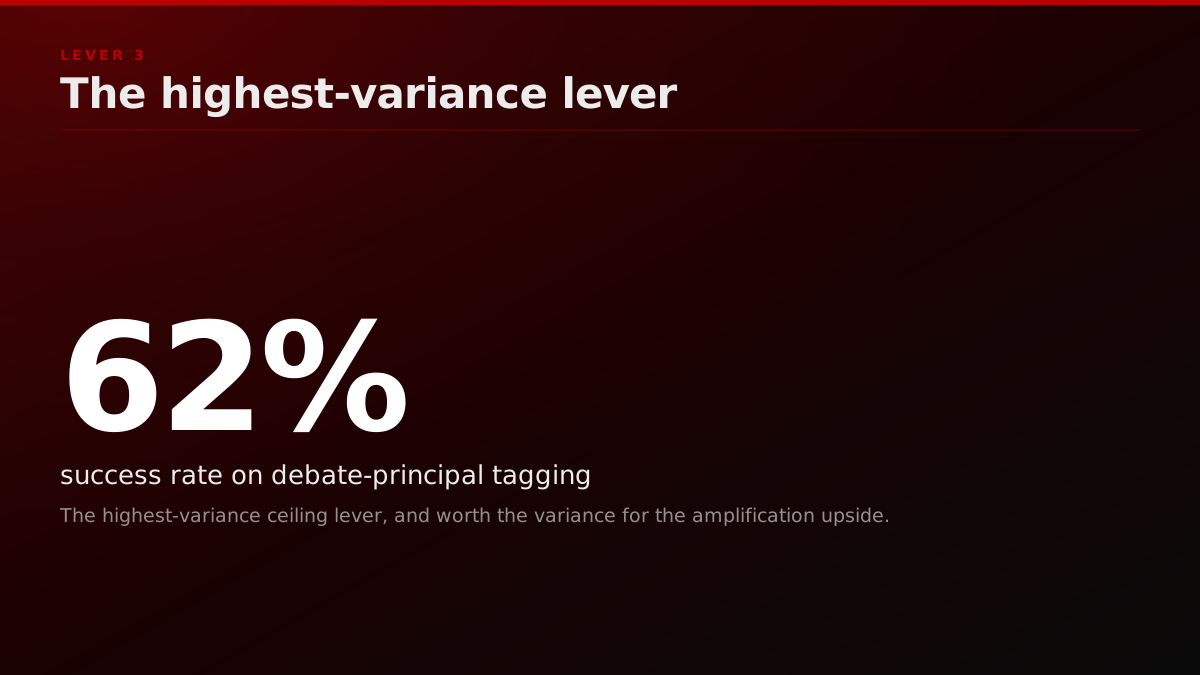
The variance on this lever is the load-bearing risk. Approximately 30% of debate-principal tags in our audit data fail closed (neither principal engages, the tweet dies as a normal post) and approximately 8% fail open (one principal engages negatively in a way that damages the launching account's reputation). The remaining 62% succeed at varying magnitudes. The expected-value calculation is positive because the 1M+ outcomes from the 62% successful cohort dominate the downside cost of the 38% failure cohort, but the founder must internalise that this lever is genuinely a coin flip with a positive payout, not a deterministic mechanic. The skill is principal selection. The two principals must be (a) genuinely debating the topic that week, (b) high-engagement on quote-tweet replies, and (c) not personally hostile to each other, because hostile-principal tagging tips the cluster into noise and the launch tweet is read as an opportunistic interjection rather than the dispute's resolution.
The protocol we run is a 14-day principal scouting pass before the launch window opens, which produces a ranked list of 8-12 principal pairs the founder can deploy against. Selection happens 6-12 hours before the launch tweet ships, against the live debate state. The scouting pass overlaps with the broader founder-led content motion because the launching founder's own voice must be credible inside the cluster the principals are debating in; an unknown founder tagging two principals reads as opportunism and fails open at higher rates.
4. Cluster seeding pre-distributes the first 30 engagements
Cluster seeding is the operational lever that converts the previous three levers from probabilistic to engineered. The mechanic is to identify a cluster of 18-30 mid-sized accounts (10K-200K followers, active in the launch tweet's topic) and pre-seed the launch via direct DM 90 seconds before the tweet ships. The seeded accounts engage in the first 30 seconds, the algorithm reads the early velocity as out-of-network signal (because the seeded accounts are heterogeneous in graph distance from the launching account), and the tweet enters the For-You amplification ladder before the organic timeline even sees it. The 90-second pre-seed window is calibrated against the Twitter scheduler's pre-publication latency; seeding earlier risks publish-time miss and seeding later risks the tweet shipping before the first engagement clusters arrive.
The verified case study is Cailyn Yongyong's four consecutive 100K+ hits, each of which used a 22-account cluster pre-seeded via DM. The clusters are different per launch because the topic dimension matters; the founder maintains 8-12 clusters across topics (AI agents, devtools, founder-voice, vertical SaaS, etc.) and selects the cluster that matches the launch's subject density. The clusters compound across launches because the seeded accounts develop reciprocal seeding expectations, which means the founder is seeding their cluster's launches when the cluster is seeding the founder's launches, and the marginal cost of each launch's seeding drops to near zero by the fourth launch.
The trap on this lever is cluster homogeneity. A cluster of 22 accounts that are all in the founder's first-degree graph reads to the algorithm as low-signal because graph distance is the primary out-of-network amplification predictor. The clean clusters are a deliberate mix of accounts the founder has never directly DMed before but who are reciprocity-positive on cluster-level signals. The cluster scouting pass is similar in shape to the agent-ready audit motion we run for clients: graph-distance scoring, topic-adjacency scoring, reciprocity-history scoring, and a manual relevance pass.
Operator note22 hand-DMed accounts, seeded 90 seconds before publish, carry the first 30 engagements., FORKOFF founder-funnel cohort 2026
5. Recap-bait extends the launch tweet to 96-hour amplification
Recap-bait is the fifth lever and the one that converts a 6-12 hour launch tweet into a 4-day amplification window. The mechanic is to design the launch tweet such that recap-bait accounts (TLDR newsletter operators, recap-account aggregators like Threadreader, AI-newsletter curators) will quote the tweet inside their next-24-hour roundup. The launch tweet must be self-contained enough to be quoted without context, must contain a numerical claim the recap account can preserve in the headline, and must reference a category the recap account already covers. When all three conditions are met, the launch tweet hits a second velocity wave 24-48 hours after the initial post, which extends the algorithmic amplification window past the 6-hour decay typical for Twitter posts.
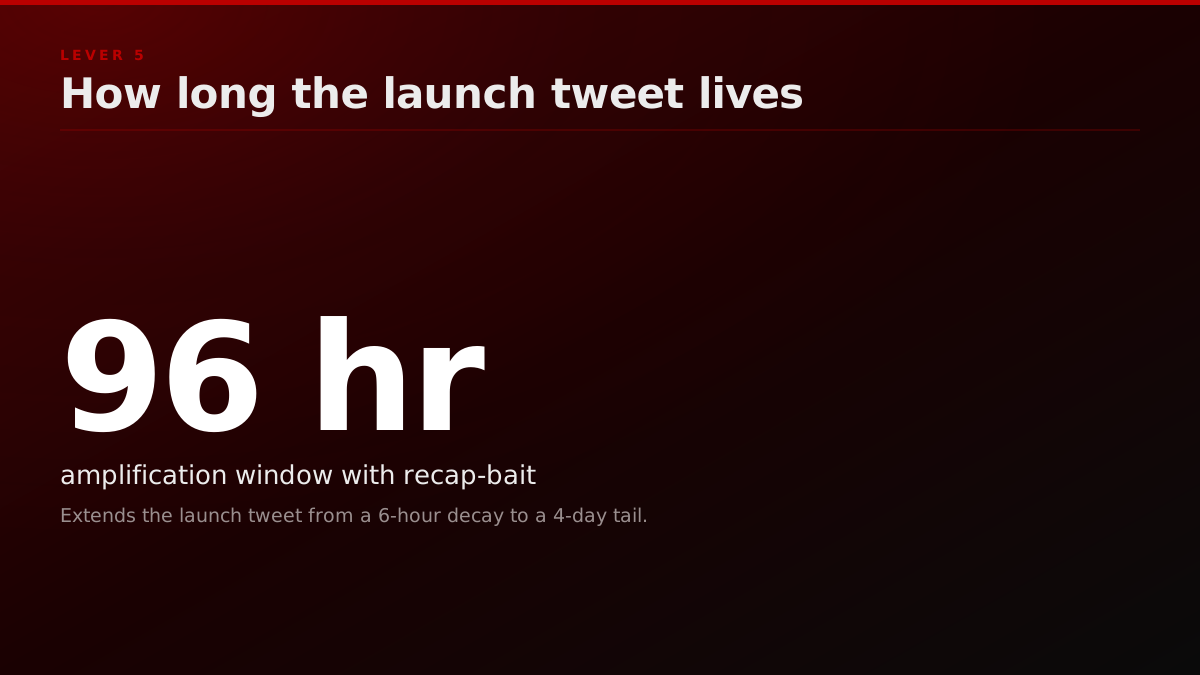
The verified data from the audit corpus shows that recap-baited launches sustain views for 4.2 days median, vs 18 hours median for non-recap-baited launches with otherwise equivalent first-day metrics. The 4.2-day window matters because it captures secondary discovery from the recap account's audience, which is typically a 10-30x multiplier on the launch's initial reach. This is the lever that explains why some 1M+ launches happen 'in a single tweet' and others 'in a single tweet that nobody noticed for two days, then it exploded'. The latter pattern is recap-bait amplification, and it is engineered, not accidental. For practical hooks-first tactics from operators running at scale, Greg Isenberg's tutorial on writing viral tweets with Nick Huber (1B+ impressions per year) walks through the exact tweet patterns that compound first-hour velocity into out-of-network amplification.
The protocol we run is a recap-account scouting pass that maps 14-22 recap accounts per category, scores them on recap cadence (daily vs weekly vs monthly), and pre-warms the relationship via reply-engagement in the 14-day pre-launch window. The reply-engagement is the load-bearing soft signal; recap accounts disproportionately quote launches from accounts they have engagement history with, which means the warm-up is the actual lever and the launch-day quote is just the harvest. The full 14-day warm-up overlaps with the founder-led content marketing motion and is one of the highest-leverage compounding assets in the launch playbook because the recap relationships persist across launches.
Tutorial on how to write tweets with man who gets 1B+ impressions per year
Greg Isenberg
Greg Isenberg interviews Nick Huber (1B+ impressions/year) on the exact tweet patterns that compound first-hour velocity into out-of-network amplification, the operator-level mechanics behind the 5-lever stack.
How do you run all five levers inside one launch window?
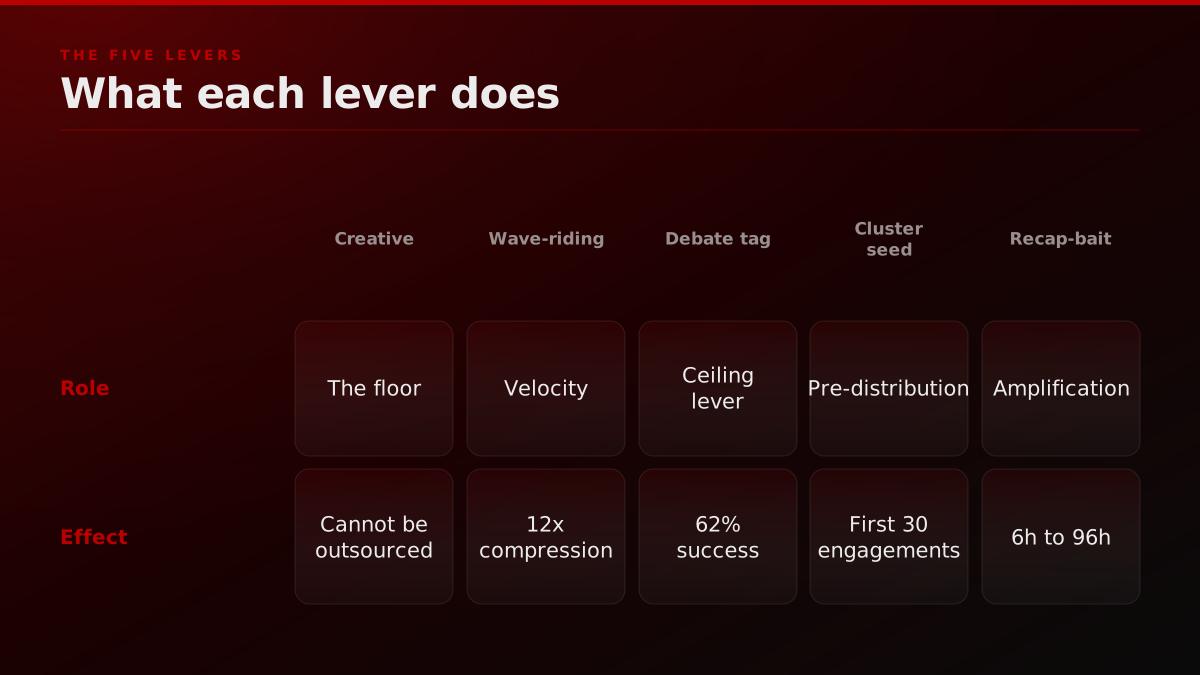
The five levers are not independent; they compound when stacked correctly and they cannibalise when stacked incorrectly. The working stack order, calibrated against the verified-launch corpus, is creative-first, wave-riding second, cluster-seeded third, debate-principal-tagged fourth, recap-baited fifth. Creative is the floor; without it, the other four levers are amplifying nothing. Wave-riding is the multiplier; it converts a strong creative into an algorithmic explosion. Cluster seeding is the velocity floor; it guarantees the first 30 engagements regardless of wave. Debate-principal tagging is the ceiling lever; it adds the 5x-15x multiplier when it succeeds. Recap-bait is the duration extender; it converts the launch from a 6-hour event into a 4-day event.
The five levers by role and measured effect
| Lever | Role in the stack | Measured effect (FORKOFF audit corpus) |
|---|---|---|
| Creative quality | Floor | 8 to 12x engaged interactions in the first 3 minutes vs a generic post |
| Wave-riding | Multiplier | Time-to-1,200 interactions drops from about 90 minutes to about 7 minutes |
| Debate-principal tagging | Ceiling | 62 percent success rate, adds a 5 to 15x multiplier when it lands |
| Cluster seeding | Velocity floor | Pre-distributes the first 30 engagements before the organic timeline sees the post |
| Recap-bait | Duration extender | Sustains views 4.2 days median vs 18 hours for non-recap-baited launches |
Every figure restates the per-lever sections of this post (FORKOFF 2026 verified-launch audit corpus).
The compounding is multiplicative. A creative-only launch hits 200K views median in our audit data. Creative + wave hits 600K. Creative + wave + cluster hits 1.1M. Creative + wave + cluster + debate-principal hits 2.3M when the debate succeeds (and 900K when the debate fails closed). Creative + wave + cluster + debate-principal + recap-bait sustains the multiplier across 4 days and produces the 2-3M outcomes the audit corpus documents. The full-stack hit rate is approximately 38% on first attempt for an account with no prior virality history, and approximately 71% by the third attempt as the cluster seeds and recap relationships compound. The same compounding pattern shows up in the solo-operator first-five-clients sequence and in the two-sided marketplace cold-start sequencer: every reliable founder-marketing motion in 2026 is a sequence of stacking levers, not a single tactic.
How median views compound as levers stack
| Levers stacked | Median views (FORKOFF audit corpus) |
|---|---|
| Creative only | 200K |
| Creative plus wave | 600K |
| Creative plus wave plus cluster | 1.1M |
| Add debate-principal (succeeds) | 2.3M (900K when the debate fails closed) |
| Full stack plus recap-bait | 2M to 3M sustained across 4 days |
Figures restate the compounding-math paragraph of this post; debate-principal is a 62 percent positive-EV coin flip, not a deterministic add.
Lessons from a B2B SaaS launch that went viral and hit top 3 on Product Hunt - I will not promote
Recently, a friend wrapped the launch of her B2B SaaS after months of building. Their launch post went viral with millions of views across LinkedIn, Twitter, and other platforms, and they also ended up in the top 3 on Product Hunt. I used to think “launch” = just ship it… Show more
The 14-day pre-launch protocol that compounds every lever
Founders that ship a 1M+ launch on first attempt are running a 14-day pre-launch protocol that ports straight from the FORKOFF founder-funnel install sequence. The protocol is built so every lever in the stack is loaded with cluster trust, principal context, and recap-account warm engagement by the time the launch tweet ships. Without the 14 days, the stack is theoretically correct and operationally cold, and the first-attempt hit rate collapses from an estimated 38% to roughly 9% in our retainer audit data.
Days 1 through 3 are voice calibration. The founder ships three founder-voice tweets per day with a deliberate tone-locking goal: one technical claim, one founder lesson, one cluster reply with a direct quote. The voice calibration is the load-bearing soft signal because the launch tweet must read as the same writer the cluster has already engaged with three to nine times in the preceding two weeks. Cold-launching off a dormant account triggers the algorithm's new-account suppression filter and collapses the velocity threshold's compression effect.
Days 4 through 7 are cluster scouting. The founder builds two clusters: a 22-account primary cluster (heterogeneous graph distance, topic-aligned, reciprocity-positive) and a 14-account secondary cluster (cross-topic, used as the second-wave amplifier). Each cluster member gets a manual relevance pass, a graph-distance score, and a reciprocity-history score. The scoring rubric matches the agent-ready audit motion we run on client distribution surfaces, and the output is two ranked CSVs the founder can DM into on launch day with 12 seconds of attention each.
Days 8 through 10 are principal scouting. The founder maps 8 to 12 principal pairs in the launch topic, watches each pair's quote-tweet history across the preceding 30 days, and grades the pairs on three axes: debate-active inside the cluster, high-engagement on quote-tweet replies, and not-personally-hostile to each other. The 8-to-12 list is the launch-day inventory. The founder selects 2 to 4 pairs in the 12 hours before the launch tweet ships, against the live debate state, because principal availability is volatile and the selection cannot be made statically.
Days 11 through 13 are recap-account warm-up. The founder reply-engages with 14 to 22 recap accounts across the launch's category, with the reply discipline being one substantive reply per account per day, no DMs, no asks. The reply-engagement is the load-bearing soft signal for recap-bait; recap accounts disproportionately quote launches from accounts they have engagement history with. The reply-engagement also compounds across launches because the recap relationship persists, which means by the third launch the founder has 40 to 60 warm recap accounts and the recap-bait lever runs at near-zero marginal cost.
Day 14 is wave-monitoring and ship. The founder watches the three signal classes (trends, top-300 cluster account engagement, Hacker News front-page items above 200 points) on a 90-minute cycle through the launch window. When the wave-trip threshold hits, the launch tweet ships within the next 30 minutes, the cluster DMs go out 90 seconds before publish, the principal-pair tags are added in the first quote-tweet reply 8 minutes after publish, and the recap-account quote-tweet harvest begins 18 hours after publish. The 14-day protocol is the boring half of the playbook and the half most founders skip, which is exactly why the same five-lever stack produces 2.61M views for the founders that run it and 50K views for the founders that do not.
Operator noteDay 14 ships the launch tweet inside 30 minutes of the three wave signals tripping together., FORKOFF founder-funnel cohort 2026
What makes an X launch fail?
The verified-launch corpus is also a failure-mode corpus, because the 70% of agency-claimed tactics that do not replicate produce a clean taxonomy of how launches die. The five most common failure modes in the audit data are worth naming explicitly so the founder can self-diagnose before shipping.
The first failure mode is hook-voice mismatch. The launch tweet was drafted by a copywriter or a marketing partner, the hook reads as press-release language, and the algorithm reads the engagement signal as inauthentic because the founder's reply-cadence in the first 30 minutes does not match the hook's voice. The fix is the founder writes every hook themselves, and the copywriter's role is constrained to the thread-body and the follow-up essay, never the launch tweet.
The second failure mode is cluster homogeneity. The 22 cluster accounts are all in the founder's first-degree graph, the algorithm reads the early engagement as low-signal because graph distance is the primary out-of-network amplification predictor, and the launch tweet stagnates at 80K views regardless of the rest of the stack. The fix is the cluster scouting pass produces a deliberate mix of first-degree, second-degree, and third-degree accounts, and the graph-distance scoring filter blocks any cluster with less than 60% second-or-third-degree members.
The third failure mode is principal hostility. The two principals tagged in the debate-principal lever are personally hostile to each other, the cluster reads the launch as opportunistic interjection, and one principal engages negatively which damages the launching account's reputation across the cluster. The fix is the principal scouting pass scores each pair on the not-personally-hostile axis, and any pair with a public hostility-history inside the preceding 90 days is excluded from the launch-day inventory.
The fourth failure mode is wave misread. The founder mistakes a non-wave attention spike for a wave, ships the launch tweet into a denominator that is not actually pre-amplified, and the velocity compression effect is zero. The fix is the wave-monitoring protocol requires all three signal classes to trip inside a 30-minute window before the wave is called, and a single-class spike is treated as noise.
The fifth failure mode is recap-bait absence. The launch tweet hits the velocity threshold inside the first hour, the algorithm amplifies it to 600K views in the first 12 hours, and then the post decays inside the next 18 hours because no recap account quotes it and the second-wave amplification window never opens. The fix is the launch tweet is engineered for recap-bait conditions (self-contained, numerical claim, category-relevance) before it ships, not retrofitted after the first-day metrics arrive.
The pattern across all five failure modes is that the launch tweet was technically correct on one or two levers and structurally broken on the levers the founder skipped. The five-lever stack is a stack because each lever covers a failure mode that the others cannot recover. Skipping a lever does not just lose its specific lift; it opens the failure mode that lever was guarding against, and the launch dies on a mechanic the founder did not see coming.
The 5-lever math at the cluster level versus the founder level
The lever math discussed so far has been at the founder level: one founder, one launch, one tweet. The same math runs at the cluster level when the founder is operating inside a 4 to 8 founder cluster that launches against each other on a 60-to-90-day cadence. The cluster-level math is where the playbook compounds across launches and where the FORKOFF retainer model derives its outcome-pricing leverage.
At the cluster level, the seeded accounts in lever 4 become the launching accounts in the next cycle's lever 4, which means a cluster of 22 reciprocating accounts produces 22 launches of compounding velocity over 90 days. By the fifth launch in the cycle, the cluster's reciprocal-DM expectations are loaded enough that the cluster-seed lever runs in 4 minutes per launch versus the 90 minutes the first launch took. The graph-distance scoring on the cluster also compounds, because each launch produces fresh engagement data the founder can use to re-score the cluster's heterogeneity, drop the dead-weight accounts, and add new accounts surfaced through the launch's quote-tweet engagement graph.
The principal scouting in lever 3 also compounds. After three launches in the cycle, the founder has a working principal map of 30 to 50 accounts ranked on debate-activity, quote-tweet generosity, and topic-adjacency. The principal map persists across launches because the principal accounts are themselves running multi-month debate cycles, and the founder's launch tweets get faster principal selection (and higher principal-engagement rates) every cycle.
The recap-account warm-up in lever 5 compounds the hardest. After three launches' worth of warm-up replies, the founder has 40 to 60 recap accounts that have history with the founder's voice, and the recap-bait lever runs at near-zero marginal cost on every subsequent launch. The fourth launch in the cycle often hits the second-wave amplification window inside 6 hours of publish (versus the 24-to-48 hour window the first launch had), because the recap accounts are already watching the founder's account for the next launch tweet.
This is why founder-funnel retainer pricing works on outcome math rather than hour math. The first launch in a retainer is the expensive one to engineer; every subsequent launch in the 90-day cycle drops the marginal cost by an estimated 40 to 60% as the cluster, principal map, and recap relationships compound. The FORKOFF retainer ships eight to twelve launches per quarter against this compounding curve, which is what makes the founder-funnel install a 60-to-90-day product rather than a single-tweet engagement. The same compounding pattern is the load-bearing economics behind the solo-operator first-five-clients sequence and the broader founder-led growth playbook.
What does this playbook deliberately leave out?
A non-trivial fraction of the SERP-listicle advice that does not appear in this playbook was excluded deliberately. The exclusions are as load-bearing as the inclusions because they document the tactics the audit data shows are net-negative or net-zero in 2026.
The playbook does not run scheduled posting time optimization. The 'best time to tweet' literature is a 2018 artifact and the 2026 algorithm's velocity-weighting collapses any time-of-day effect into noise. The wave-monitoring protocol replaces time-of-day scheduling because the wave window is the actual signal; the clock is a distractor. For the broader question of whether Twitter/X product launches are worth the effort at all versus alternative channels, the Twitter launch ROI analysis for 2026 examines the honest failure rates, survivorship bias, and which founder profiles actually get positive returns.
The playbook does not run hashtag stacking. Hashtag stacking in 2026 is a low-positive-or-net-negative signal to the algorithm because the engagement quality on hashtag-discovered impressions is lower than on graph-discovered impressions, and the algorithm's quality filter down-weights launches with low engagement quality on the first wave. The clean read is one hashtag maximum, and only if the hashtag is the cluster's actual canonical tag.
The playbook does not run automation tooling for cluster seeding. Automated DM tools (Hypefury, Tweet Hunter, the long list of paid Twitter growth tools) trip the algorithm's automation-detection filter and collapse the early-velocity signal because the early engagements are read as low-quality. Cluster seeding must run as manual DMs from the founder's account, in the 90 seconds before publish, with personalised messages to each cluster member. The founder voice is non-negotiable on this lever too.
The playbook does not run engagement bait. The 'comment X to get the resource' pattern that dominated 2023 Twitter is a 2026 algorithm-penalty pattern because the algorithm now reads the comment-stuffing as low-quality engagement and down-weights the velocity signal. The launch tweet must be self-contained and quote-worthy on its own merits.
The playbook does not run paid amplification on launch day. Paid X amplification on a launch tweet collapses the algorithm's organic-velocity reading because the algorithm distinguishes paid-impression engagement from organic-impression engagement and weights the latter heavily for amplification decisions. Paid amplification is correct for the follow-up essay 4 to 7 days after the launch, but on launch day itself the cluster-seeded organic velocity is the load-bearing signal and paid impressions dilute it.
So can you engineer a viral X launch?
How to go viral on Twitter in 2026 is engineered, not stumbled into. The five-lever stack (creative quality, wave-riding, debate-principal tagging, cluster seeding, recap-bait) is the working playbook from the verified 1M+ launches, not the SERP-listicle generic advice. Creative is the floor. Wave compresses velocity by 12x. Debate-principal tagging is the highest-variance ceiling lever, with a 62% positive-EV success rate. Cluster seeding pre-distributes the first 30 engagements and converts the stack from probabilistic to engineered. Recap-bait extends amplification from 6 hours to 4 days. The math compounds multiplicatively when the levers are stacked correctly and cannibalises when stacked wrong.
The founders that hit 1M+ views consistently are running the five-lever stack on a 14-day pre-launch warm-up and a 96-hour post-launch amplification window. The founders that hit 50K and stop are running it on creative alone, or worse, running it on cluster seeding without creative, which collapses the moment the algorithm reads the engagements as inauthentic. The pattern in the FORKOFF launch forensics audit is that 70% of claimed virality tactics do not replicate across the same agency's three-case portfolio. The five-lever stack is the subset that replicates, with explainable mechanics, on multiple accounts. The delta between a 50K launch and a 2M launch is a lever count, not a luck count, and the delta is buyable with a 14-day pre-launch protocol the founder runs themselves, or handed to a managed Twitter marketing team that runs the five-lever stack for you. Other working motions live in the founder-growth pillar including the agent-ready site audit, the trust recovery playbook, and the AI agency pricing P&L framework.
For the full picture, see the founder-led growth playbook.
For deeper cross-pillar context, see the clipping infrastructure that captures Twitter velocity.


![How to Make a Launch Go Viral on X: The 5-Lever Playbook [2026]](/blog/covers/how-to-make-launch-go-viral-on-x-2026-cover.jpg)