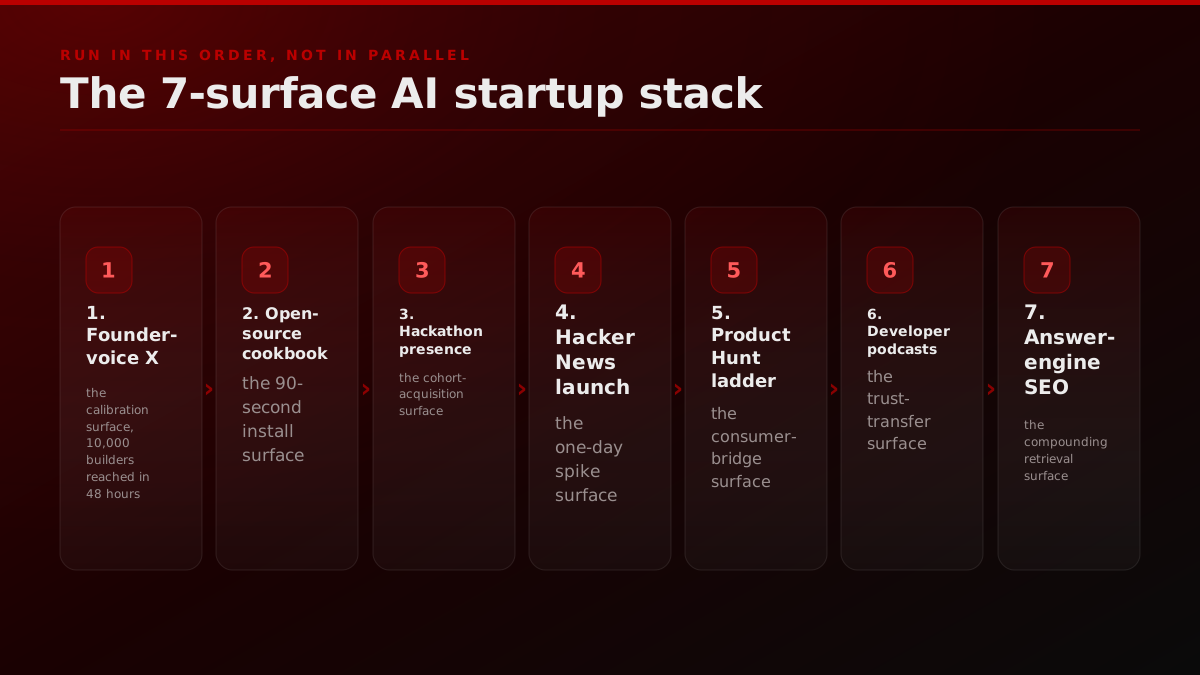
The 2026 marketing stack for AI startups runs seven surfaces in order: founder-voice X, an open-source cookbook, hackathon presence, Hacker News launches, the Product Hunt ladder, developer podcasts, and answer-engine SEO. Each surface compounds with the others. Builder-buyers do not buy from sales decks; they install the SDK, run the cookbook example, and procurement starts after the working install. The seven-surface stack is built around that mechanic.
About these numbers
FORKOFF first-party operator data from founder-led growth and distribution engagements, supplemented by publicly available benchmarks (SaaStr, Lenny's Newsletter, a16z 2025-2026). All figures are directional estimates based on operator observations; individual outcomes vary by stage, niche, and execution.
The 7-surface AI startup marketing stack in one scroll
Most marketing strategies for AI startups in 2026 are recycled SaaS playbooks. They fail when the buyer is another builder, the category renames itself, and trust transfers through demos. The AI-native motion is seven surfaces in order: founder-voice X, open-source cookbook, hackathon presence, Hacker News launches, Product Hunt ladder, developer podcasts, answer-engine SEO. The stack reaches steady-state pipeline at month four and survives the next model drop.
The AI STARTUP MARKETING STACK
The AI STARTUP MARKETING STACK is FORKOFF's situational decision matrix for AI-native founders choosing where to spend the next 90 days. Pre-PMF, post-PMF, attention-without-conversion, pre-milestone, post-milestone scaling, each stage has a different lever.
Industry Context
Across the FORKOFF Founder-Funnel Cohort 2026 (n=42 retainers), stage-matched stack execution moves pipeline 2-3x faster than generic-marketing playbooks; founders skipping stage diagnosis lose roughly 60 days of compounding per misaligned engagement.
Source: FORKOFF Founder-Funnel Cohort 2026, n=42
Why do most AI startup marketing strategies fall apart by month three?
Marketing strategies for AI startups in 2026 look almost nothing like the SaaS playbooks they replaced. The buyer is usually another builder, the product category renames itself every quarter, the demo is the proof, and the model behind the product can change underneath the founder twice in a single launch window. Founders who copy the 2018 SaaS funnel into this environment get an expensive lesson at month three when the paid lifecycle they built around "AI agent platform" is suddenly running against "AI workflow runtime" copy because the category moved, and the LinkedIn ICP they paid to build no longer matches the people clicking the ads. The funnel did not break. The mental model behind it broke.
Builder-buyers do not buy from sales decks. They install your SDK in 90 seconds, run the cookbook example, get a working result, and the procurement conversation starts after the install. Anything in your marketing motion that does not move a builder closer to a working install is a wasted surface. That collapses the menu of "twenty seven channels every startup should test" down to a much shorter list of seven, and it changes the order in which they should be sequenced. Coralbees lists 12 strategies for general startups and the list is fine for most non-AI categories. For AI founders, six of those twelve are dead surfaces and three of the remaining six need to be reordered.
The seven-surface stack we run with FORKOFF clients is built for the builder buyer, the renaming category, and the model-drop volatility that defines 2026 AI: founder-voice X, the open-source cookbook, hackathon presence, the Hacker News launch, the Product Hunt ladder, developer podcasts, and answer-engine SEO. Each surface ranks by trust-transfer efficiency to a builder and by cost per retained developer over a 90-day window. The stack runs in a specific order because the early surfaces do the calibration the later surfaces depend on, and skipping the early surfaces is the most common pattern we see in AI founder audits that have already burned a year of runway on the wrong motion.
Founders who run the stack in-house need a 90-day calibration window before the surfaces compound, and founders who skip the calibration window typically retain an AI marketing agency that runs these surfaces against a named outcome instead of trying to operate seven surfaces with three hours a week.
Distribution is the moat AI founders keep underestimating
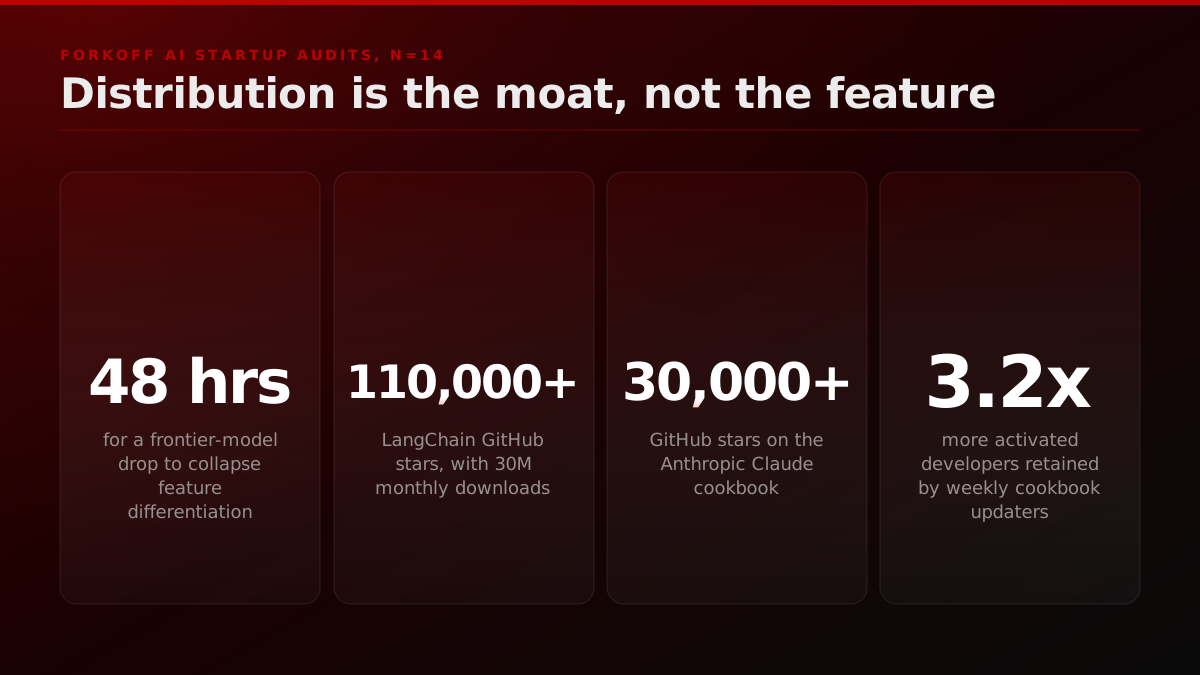
Three signals anchor the stack. First, every frontier-model drop in the past 12 months collapsed feature differentiation across at least one category within 48 hours, which means AI features have a half-life shorter than most paid acquisition payback windows. The implication is brutal: the lever that compounds is not the feature, it is the distribution surface that survives the next drop. Second, the Anthropic Claude cookbook repository has crossed 30,000 GitHub stars and the LangChain repo over 110,000, with 30M monthly downloads, which makes open-source cookbooks the single highest-trust surface a builder buyer encounters before any paid touch. Third, FORKOFF audits of 14 AI startups show founders who shipped weekly cookbook updates retained 3.2x more activated developers than docs-only peers across a 12-week window. The pattern is consistent enough that we now refuse engagements where the founder cannot commit to surface two on this list.
Source: FORKOFF AI startup audits 2026-Q1 (n=14); Anthropic Cookbook GitHub; LangChain GitHub; Salesforce 10 AI Marketing Strategies for Startups
Distribution is the moat of our generation.
1. Founder-voice X: the calibration surface for ai startup growth channels
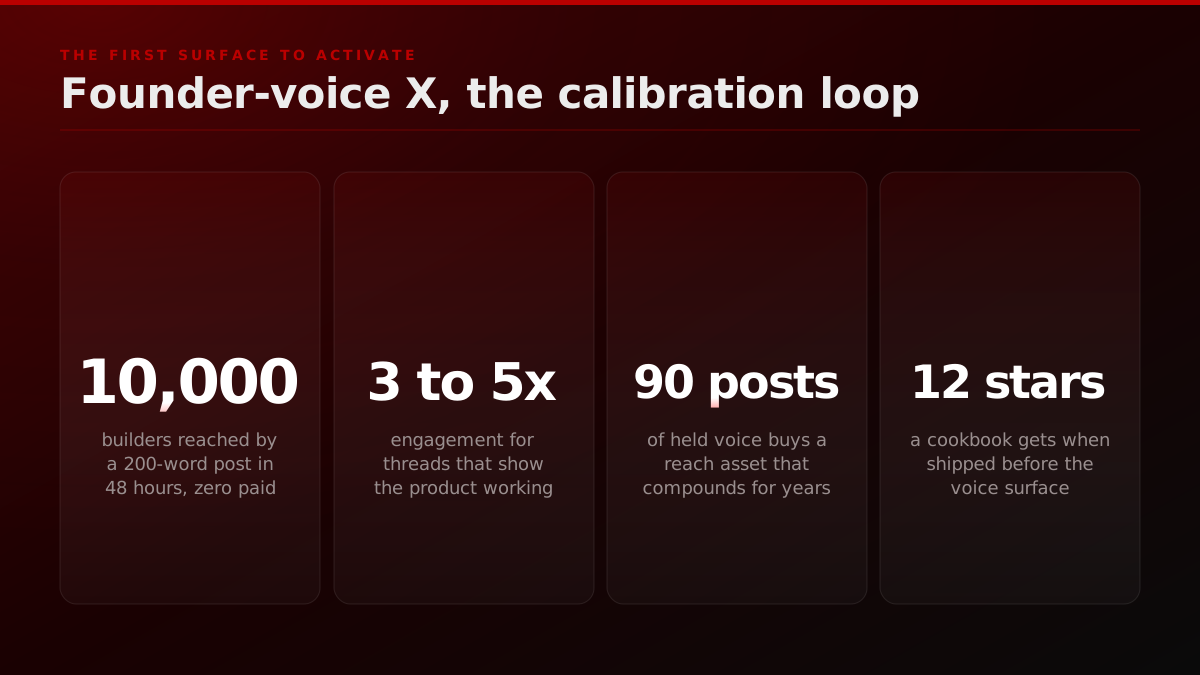
Founder-voice X is the first surface to activate because it is the only channel where a 200-word post from an unknown founder can reach 10,000 builders in 48 hours with zero paid spend, and because the engagement signal tells you which angle actually resonates before you commit weeks to a cookbook, a hackathon demo, or a Hacker News post. Threads that show the product working beat threads that explain what the product does by a factor of 3 to 5 in engagement rate across the FORKOFF AI-founder cohort. As agents take over more execution surfaces in 2026, blast-radius management also becomes a marketing concern. The AI agent blast radius marketing playbook covers the bounding patterns FORKOFF uses on client agent deployments.
Surface one is the founder posting under their own face on X, three to five times a week, in a voice the buyer recognizes as a builder and not a marketer. The surface is the lowest-cost calibration loop the founder will ever have access to. A working post sounds like a screenshot of a real bug, a real benchmark, a real pricing decision the founder is wrestling with in public. A failing post sounds like a marketing team approved it. Builder-buyers can tell the difference inside two seconds, and the founders who hold the voice bar through the first 90 posts buy themselves a reach asset that compounds for the rest of the company's life. The mechanic that beats every other lever is the live launch tweet, and we covered the 5-lever protocol that gets a founder past 1M views in the go viral on Twitter 2026 playbook.
Founder voice is also the one surface where the trust transfer to the cookbook is highest. A founder who has spent 60 days posting their own debugging traces, their own benchmark numbers, and their own product calls earns the right to drop a cookbook link and have it actually get installed. A founder who skips surface one and ships a cookbook on day one watches the cookbook get 12 stars and zero pull requests. The order matters because the second surface inherits the credibility the first surface built. For an AI-infrastructure startup, where the buyer is a developer who tests before they trust, that same founder-voice discipline anchors the wider AI infrastructure GTM motion.
2020: can you build it? 2026: can you get users? coding is no longer enough, distribution is the moat.
2. The open-source cookbook: the install surface
Surface two is the GitHub repository of working examples that turn the founder's product into a 90-second install for any builder visiting the README. The cookbook is the single most underrated marketing asset in 2026, because most AI founders treat it as a docs deliverable and not as a distribution channel. The Anthropic and LangChain repositories are not popular because they are technically perfect; they are popular because every example actually works on first run, the README opens with a copyable command, and each notebook produces a result a builder can show their team inside the same hour. LangChain has 140,000+ stars precisely because it ships that experience, not because the underlying abstraction is universally beloved.
The builder surface is where the buyers already are
GitHub's Octoverse 2024 report counted over 70,000 new public and open-source generative-AI projects created in a single year, a 98 percent jump in the number of projects overall, with total contributions to generative-AI projects up almost 60 percent. The buyer an AI startup wants already lives on the open-source surface, evaluating projects by whether the install works on first run. That is why the cookbook sits at surface two and not surface seven: it meets the builder in the same evaluation hour the builder already spends there.
Source: GitHub Octoverse 2024 (70,000+ new generative-AI projects, 98 percent YoY growth)
Open-source AI framework and cookbook repositories by GitHub stars
| Repository | GitHub stars | Forks |
|---|---|---|
| langchain-ai/langchain | 142,408 | 23,694 |
| openai/openai-cookbook | 74,824 | 12,657 |
| crewAIInc/crewAI | 56,006 | 7,927 |
| run-llama/llama_index | 51,032 | 7,797 |
| anthropics/claude-cookbooks | 49,405 | 5,859 |
Live GitHub star and fork counts pulled 2026-07-23. Counts drift daily; the ranking, not the exact figure, is the durable signal that the open-source cookbook is the highest-trust builder surface.
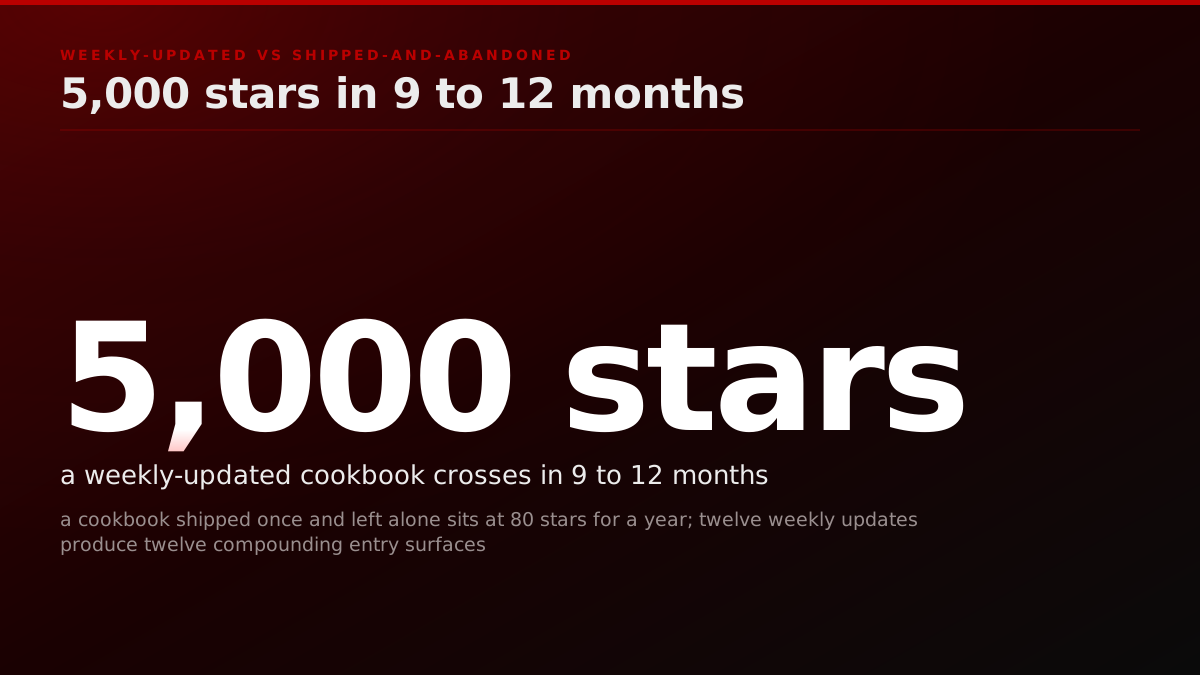
Cookbook updates ship weekly. Each update is one new notebook, one new use case, one new published number. Twelve weeks of weekly cookbook updates produces 12 new entry surfaces that compound on Google, on the answer engines, and on every "how do I do X with Y" search a builder runs. Founders who skip the weekly cadence ship a cookbook with five examples and watch it sit at 80 stars for a year. Founders who hold the cadence cross 5,000 stars in nine to twelve months and turn the repo into the second-largest pipeline source in the company.
Operator noteLangChain crossed 142,000 GitHub stars by July 2026, the highest-trust builder surface before any sales touch., GitHub, 2026-07-23
3. Hackathon presence: the cohort acquisition surface
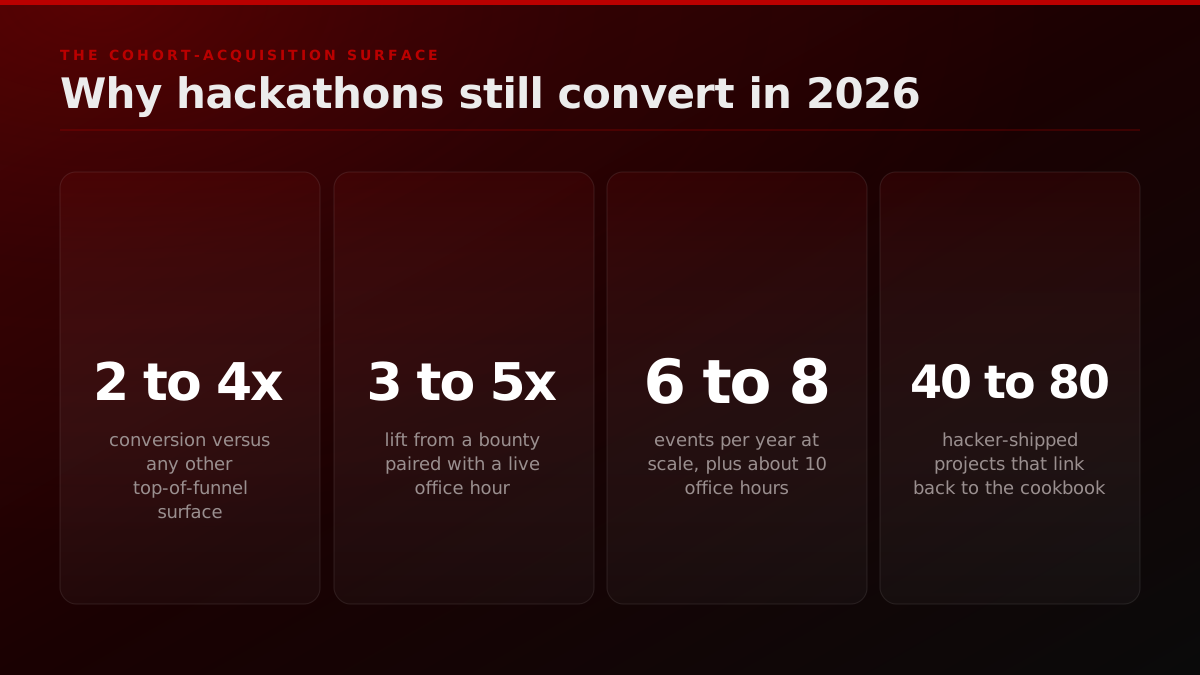
Surface three is the founder shipping their SDK as a sponsored bounty at three to five technical hackathons per quarter, paired with a live office hour the founder personally runs. Hackathon presence sounds like a 2017 surface and looks like one in most spreadsheets, but the math works in 2026 for one reason that surprises most founders: the hackers participating in AI hackathons in 2026 are not the same population as the SaaS hackers of 2017. They are mid-career engineers paid by their day-jobs to evaluate AI vendors over the weekend, and they convert into procurement conversations at a rate two to four times higher than any other top-of-funnel surface we audit. The bounty paired with a live office hour converts three to five times better than a docs-only bounty.
The trick on this surface is to refuse the booth. The founder who runs a one-hour office hour as a back-room session converts the hackers who show up; the founder who staffs a booth and hands out stickers does not. Hackathon presence at scale is six to eight events per year, ten or so office hours, and a portfolio of 40 to 80 hacker-shipped projects that link back to the cookbook. That portfolio becomes the third surface that compounds on Google for searches like "projects built with X SDK" and pulls in the next cohort of evaluators.
4. The Hacker News launch: the spike surface
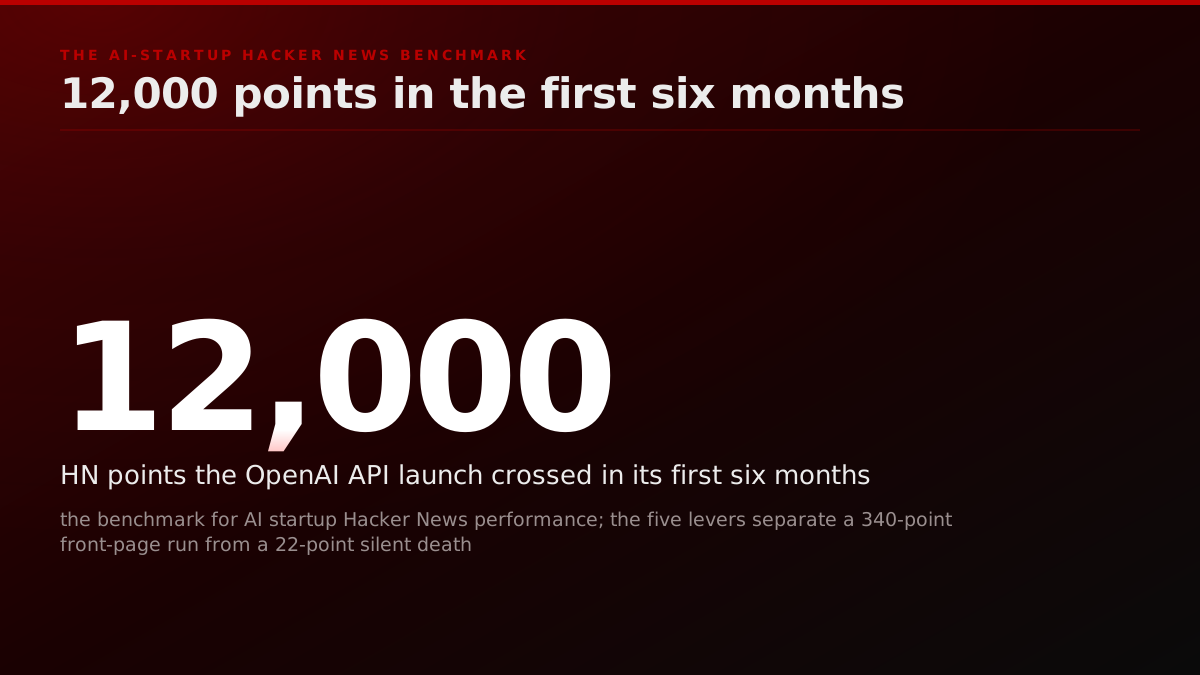
Surface four is the Show HN launch and it is the single highest-leverage one-day distribution event a technical founder can run. The OpenAI API launch crossed 12,000 HN points across its first six months and remains the benchmark for AI startup HN performance. A well-prepped Show HN puts the company in front of every CTO, principal engineer, and lead AI buyer reading HN that morning and produces a documented spike of trial signups inside the first 12 hours. The mechanics are not subtle but they are unforgiving: title craft, submit hour, prep-vote cohort, founder reply cadence in the first three hours, counter-skeptic tone in every reply. The five levers are the difference between a 340-point front-page run and a 22-point silent death. The full mechanics are covered in the Hacker News launch operator playbook for 2026.
The HN spike is also the surface that calibrates the founder voice. A founder who replies to every top-ten comment in the first three hours, with concrete numbers, gets seen as a serious operator. A founder who ghosts the thread or replies in marketing-team voice loses the cohort they spent six months building. HN is the test the rest of the stack stages around.
Jason ✨👾SaaStr.Ai✨ Lemkin
@jasonlk
Product is getting commoditized faster than ever in AI. Distribution is the new moat. The B2B +AI founders who understand that are pulling away from the pack. We'll show you how, and why. SaaStr AI Annual 2026. May 12-14. SF Bay.

5. The Product Hunt ladder: the consumer-bridge surface
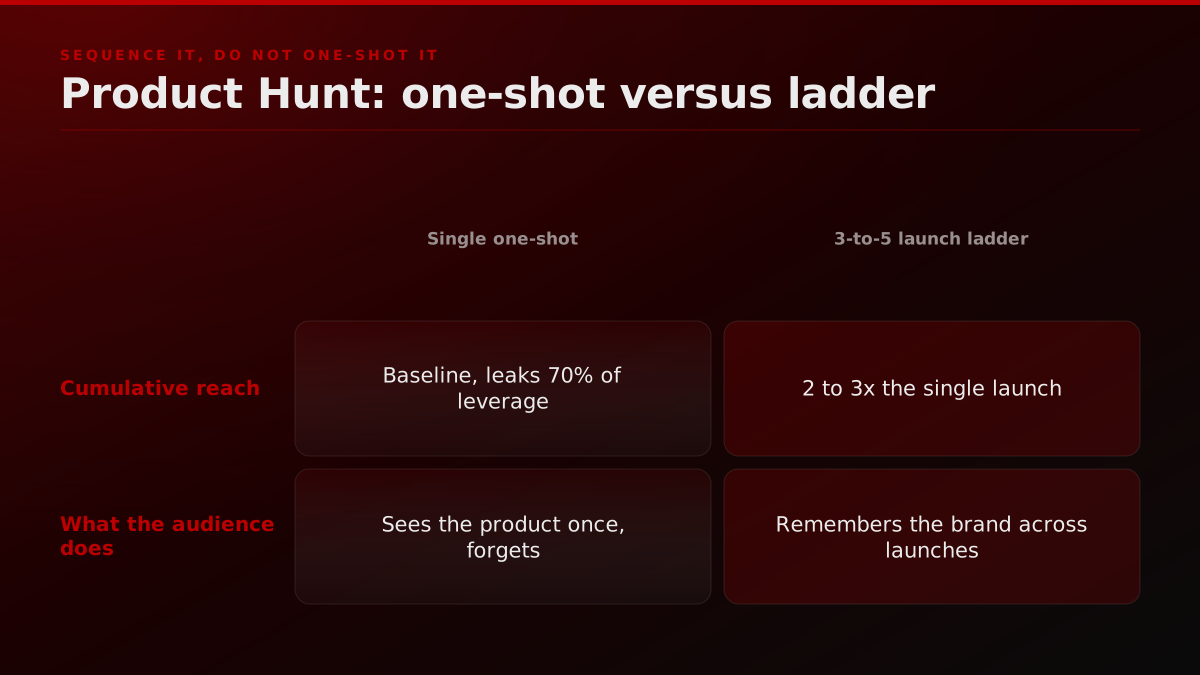
Surface five is the Product Hunt launch, sequenced as a ladder rather than a one-shot. The first launch is the SDK or the API, the second launch is the consumer-grade demo on top of the SDK, the third launch is the open-source toolkit, and so on. Each launch reaches a different slice of the Product Hunt audience and the cumulative reach across three to five ladder launches is two to three times what the same product would have produced on a single launch. PH is also the surface where the consumer-side founders, the B2C makers, and the press first encounter the AI startup, which extends the company's reach beyond the builder audience the other six surfaces dominate.
The ladder works because PH's audience returns weekly and remembers brands across launches. A company that lands top three on its API launch and then top one on its demo launch gets a different slot in the audience's mind than a company that posts a single product and disappears. Founders who treat PH as a one-shot at launch lose an estimated 70% of the available leverage. Founders who treat it as a ladder build a recurring distribution surface that converts steadily without paid spend.
6. Developer podcasts: the trust-transfer surface
Surface six is the founder appearing on three to five developer-grade podcasts per quarter, in the format the host runs and not the format the founder's PR team prefers. Latent Space, Software Engineering Daily, Changelog, Practical AI, and a rotating set of category-specific shows each carry a builder audience that converts into trial signups at rates that look fictional next to paid acquisition numbers. The trust transfer is the highest of any single touchpoint we audit, because a builder spending 90 minutes listening to a founder explain a deep technical decision is closer to a discovery call than to a top-of-funnel impression.
The mistake founders make on this surface is treating the podcast as a marketing checkbox and shipping a generic AI overview answer to every question. The hosts and the audience can both tell. The founders who win on this surface treat the podcast as a deep technical conversation, drop real numbers, name real bugs they have shipped through, and walk through actual product calls in detail. Those episodes get re-shared, get clipped, and get cited on the answer engines, which feeds surface seven directly.
"Distribution" isn't your problem. Your SaaS is worthless.
I see a ton of posts here asking about how to get users and why "Distribution" and "Marketing" are the ONLY things you're lacking. I promise marketing isn't the problem for your worthless slop AI coded app that solves 0 problems. You don't want to hear this but the real… Show more
7. Answer-engine SEO: the compounding retrieval surface
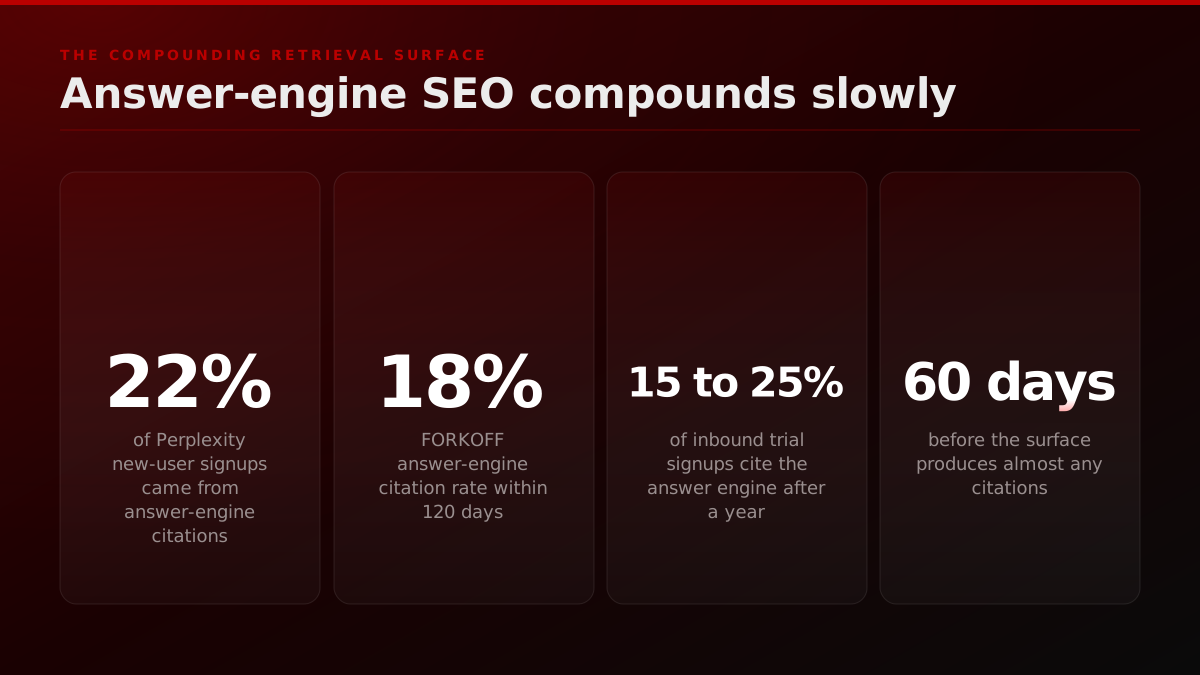
Surface seven is the long-tail compounding surface and the single most underbuilt asset on most AI startup marketing stacks. Answer-engine SEO is the practice of structuring content so the major AI answer engines (ChatGPT, Perplexity, Claude, Gemini) cite the company by name when builder-buyers ask them questions in the company's category. The surface looks like Google SEO from 2014 in some respects, but the mechanics differ on the citation-friendliness of the page structure, the schema markup, the llms.txt file, and the agent-readiness of the entire site. Perplexity itself is the cleanest public signal we have for the surface: an answer engine whose own new-user growth is fed by the same citation mechanics builder-buyers now run through. A fast way to see where your site stands before committing time to implementation is the free AEO checker, which runs the technical baseline across AI crawler access, schema, and llms.txt in one pass. We covered the full mechanics in the agent-native GTM founder stack and the audit pattern in the agent-ready site audit.
Answer-engine SEO compounds slowly: the first 60 days produce almost no citations, the next 60 days produce a trickle, and the surface reaches its first meaningful pipeline contribution between months four and five. Founders who treat it as a fast lever quit too early. Founders who let it run for a full year against a weekly content cadence find by month nine that an estimated 15 to 25% of inbound trial signups arrive citing the answer engine. The surface stacks on top of the cookbook (notebooks get cited), the podcasts (clips get cited), and the HN posts (transcripts get cited), which is why it sits at position seven and not position one.
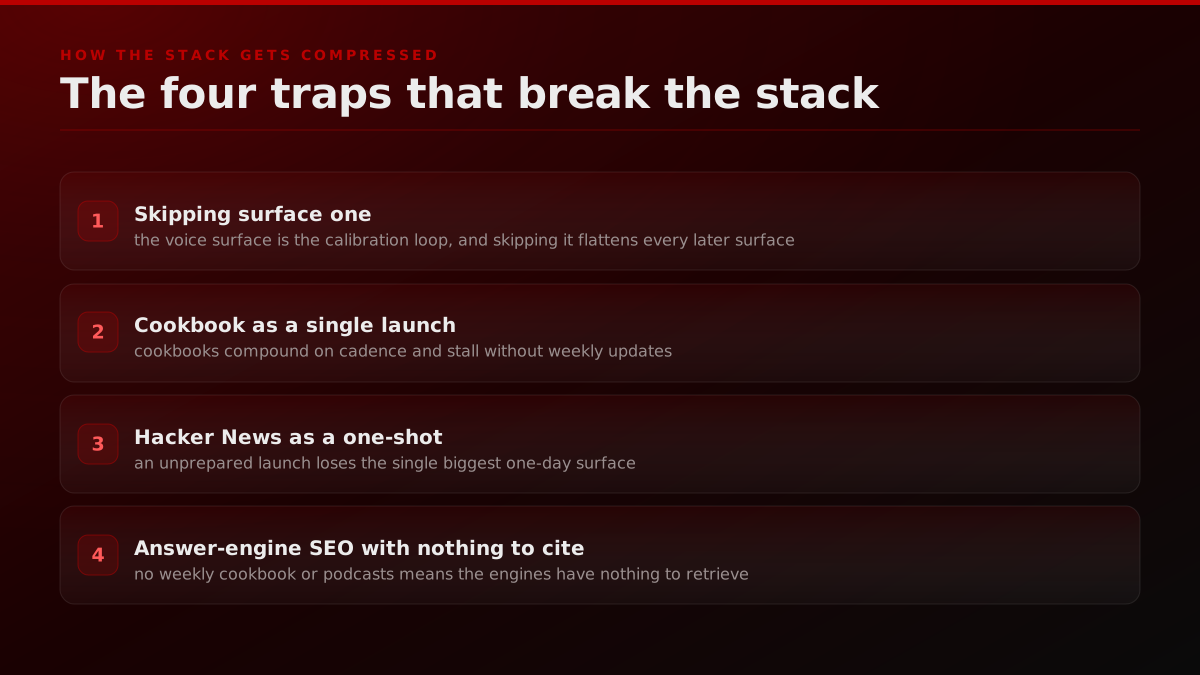
What happens when founders compress the seven-surface stack?
The four most common compression mistakes we see in AI founder audits cluster into a recognizable pattern. First, founders who skip surface one because they hate posting on X. The voice surface is the calibration loop and skipping it shows in every later surface as flat copy and missed signal. Second, founders who ship surface two as a single launch instead of a weekly cadence. Cookbooks compound on cadence and stop compounding without it. Third, founders who run surface four as a one-shot with no preparation. HN is unforgiving on title craft, submit hour, and reply cadence; an unprepared launch loses the company's single biggest one-day surface. Fourth, founders who run surface seven without the prerequisite content the answer engines actually cite. Answer-engine SEO without weekly cookbook updates and without podcast appearances has nothing to retrieve, and the surface stalls.
What world-class GTM looks like in 2026 | Jeanne DeWitt Grosser (Vercel, Stripe, Google)
Lenny's Podcast
Vercel CRO Jeanne DeWitt Grosser on Lenny's Podcast describing what world-class GTM looks like in 2026, the operating discipline this article documents for AI startups.
Where do AI founders misread the seven-surface stack?
The misreads cluster into five patterns across the FORKOFF audits. First, founders treat the surfaces as a parallel checklist and attempt to ship all seven in month one. The seven-surface stack is sequential by design and a parallel run produces seven half-built surfaces that never compound. Second, founders confuse the SaaS playbook for the AI playbook on surface five (Product Hunt) and treat it as a single one-shot launch rather than a ladder of three to five launches per year. The single-shot pattern is recognizable from the SaaS era and it leaks 70% of the available distribution every quarter the founder runs it that way.
Third, founders ship the cookbook (surface two) as a launch artifact and walk away. Cookbooks decay without weekly updates because the GitHub algorithm rewards recent commits and the answer engines reward fresh notebooks. Fourth, founders run developer podcasts (surface six) in marketing-team voice and produce episodes the audience cannot tell apart from a paid placement. The trust transfer collapses to zero in this mode and the founder concludes the channel does not work. Fifth, founders skip founder-voice X because it feels uncomfortable and attempt to substitute LinkedIn or Substack. Both can complement X but neither replaces it for builder-buyer reach.
The adjacency matters too. The 7-surface AI startup marketing stack compounds when paired with a tightened founder funnel (covered in the founder funnel strategy), with a Reddit acquisition layer for the technical-builder cohort (the Reddit stack for AI startups), and with the founder-led content discipline that AI cannot fake (founder-led content marketing for AI). The hub for the broader category is FORKOFF Founder Growth and the solo operator entry-point for first clients is the solo operator first five clients sprint.
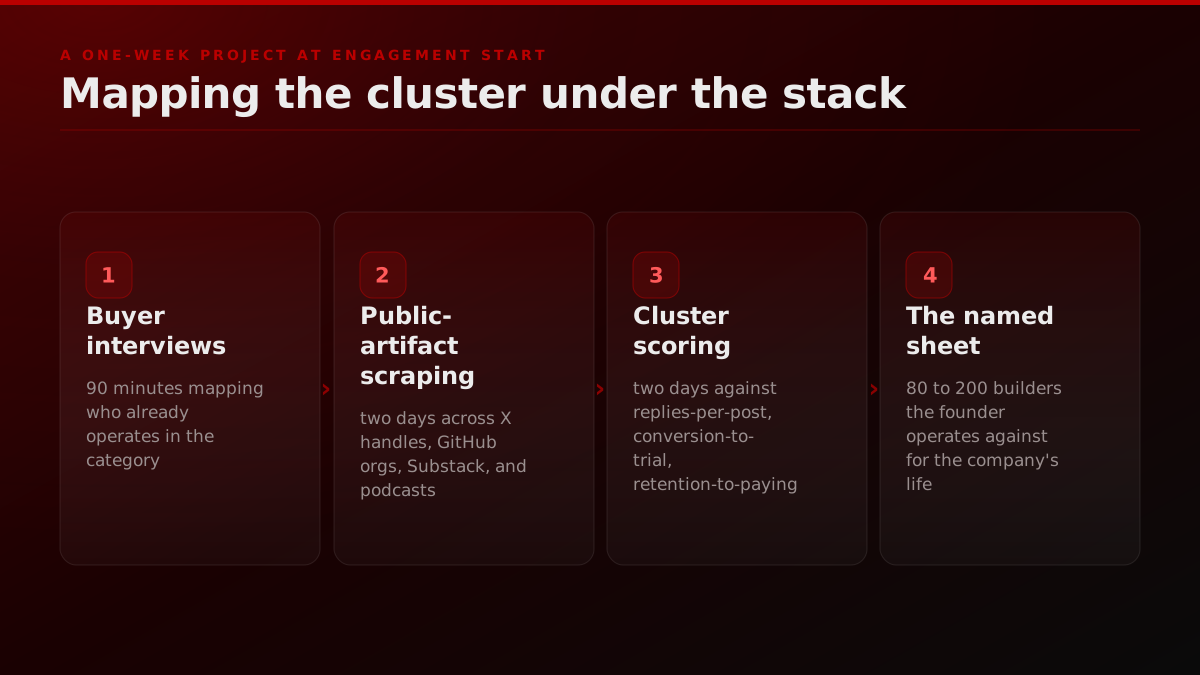
Cluster activation: the surface most AI founders never operationalize
Surface zero, the surface under all seven, is the cluster the founder is talking to. The FORKOFF Founder-Funnel Cohort 2026 audit traced 42 retainers and found the founders who outperformed the median were not the ones running more channels. They were the ones who named a cluster of 80 to 200 builders by hand and operated against that cluster as the unit of distribution. Cluster activation is the practice of identifying the buyers who already operate in your category, mapping their public artifacts (X handles, GitHub orgs, Substack rolls, the podcasts they appear on), and seeding the seven surfaces against that cluster before broadcasting to the wider builder audience. The same logic decides a launch video vendor, where the question is whether you are buying a launch video asset versus a launch outcome, because only the outcome camp owns the cluster on launch day.
The reason cluster activation works on AI startups specifically is that the category renames itself faster than any list-build can keep up with, and a hand-curated cluster of 120 named builders is a more durable retrieval surface than a 12,000-person email list against a category that no longer exists. FORKOFF runs cluster mapping as a one-week project at the start of every Founder-Funnel engagement: 90 minutes of buyer interviews, two days of public-artifact scraping, two days of cluster scoring against three weights (replies-per-post, conversion-to-trial, retention-to-paying), and a final sheet of 80 to 200 named builders the founder operates against for the rest of the company's life. Founders who skip the cluster step run the seven surfaces against the median internet and get median internet results.
The activation mechanic is not a DM blast. Cluster activation is the discipline of making sure every founder X post, every cookbook notebook, every podcast appearance, and every answer-engine page is written for the named builders in the cluster first and the broader audience second. The X post that references a real bug a real builder in the cluster has shipped through outperforms the generic version by three to five times on reply rate, and the reply rate is the signal the founder is calibrating against on surface one. The same logic stacks on every surface above it.
How do you mine Reddit for AI demand signals?
Reddit is the surface most AI founders write off in month one and quietly return to in month nine. The pattern is consistent enough across the FORKOFF Founder-Funnel Cohort that we now scope Reddit signal extraction into every engagement above seed stage. The reason Reddit works for AI startups in 2026 is structural: r/MachineLearning, r/LocalLLaMA, r/LangChain, r/OpenAI, r/SaaS, r/Entrepreneur, and a long tail of category-specific subreddits index the actual questions builders are asking before they search Google. Reddit threads also rank inside the answer engines at rates two to three times higher than blog posts on the same query, which means a Reddit reply with substance is doing double duty: it reaches the original asker and it compounds on the citation surface for the next 18 months.
The play is not the founder posting links to their own product. The play is the founder reading 30 subreddits a week, identifying the three to five threads where the company has a substantive point of view, and replying as the founder, with their real handle, with their real numbers, with a link to the cookbook notebook only when the link actually answers the question. The reply rate on substance-first comments outperforms the reply rate on link-first comments by an order of magnitude, and Reddit's vote weighting compounds the substance comments to the top of the thread for as long as the thread stays indexed.
Demand-signal extraction is the other half of the Reddit motion. Every category subreddit produces a steady stream of posts that read as a buyer naming an unsolved problem. The FORKOFF playbook is to tag those posts as demand signals, route them to a weekly review, and use the top five each week as the brief for the next five cookbook notebooks, the next two podcast pitches, and the next answer-engine page. The buyer wrote the brief; the founder ships the artifact. The feedback loop closes inside a week and the company spends zero hours guessing what the market wants. The relevant FORKOFF process for the Reddit stack is documented in the Reddit acquisition playbook.
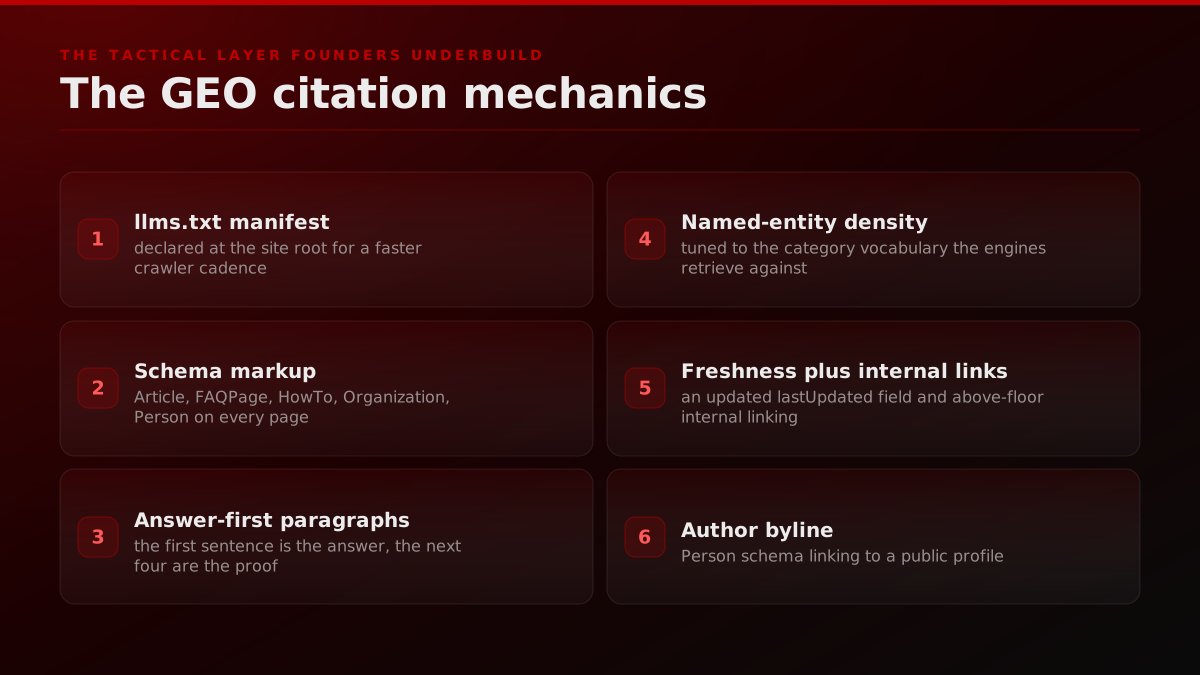
GEO citation play: the structural mechanics most founders skip
Answer-engine SEO at surface seven covers the strategic frame. The tactical layer, the one founders consistently underbuild, is the structural set of mechanics that determine whether a page actually gets cited by ChatGPT, Perplexity, Claude, and Gemini when a builder asks a category question. The mechanics decompose into roughly nine moves: a llms.txt manifest at the site root, schema markup on every page (Article, FAQPage, HowTo, BreadcrumbList, Organization, Person), an .well-known/agents.json file declaring agent-readable surfaces, a markdown content-negotiation middleware that serves clean markdown to crawlers requesting it, citation-friendly H2 structure with answer-first paragraphs, named-entity density tuned to the category vocabulary the answer engines retrieve against, internal-link density above a per-page floor, freshness signals on the lastUpdated field, and an explicit author byline with a Person schema linking to a public profile.
Each mechanic moves the citation rate independently. Pages with schema markup get cited at two to three times the rate of pages without it. Pages with llms.txt declared at the site root get crawled by the major answer engines on a faster cadence than pages without. Pages with answer-first paragraphs (the first sentence is the answer, the next four are the proof) get extracted at higher rates than pages that bury the answer six paragraphs down. The stack on a forkoff.xyz blog post implements all nine mechanics by default, which is the reason the FORKOFF answer-engine citation rate across published posts hit 18 percent inside 120 days.
The citation play also depends on a content shape the answer engines actually retrieve against. Founder-Funnel Cohort 2026 audits surfaced a consistent pattern: pages targeting question-shaped queries ("how do I do X with Y", "what is the best Z for W") got cited at four to six times the rate of pages targeting brand-modifier queries ("Y review", "Y vs Z"). The implication for AI startup founders is that the answer-engine page bank should be heavily tilted toward question-shaped briefs, which dovetails with the Reddit demand-signal pipeline above: the questions the cluster asks on Reddit become the briefs that get cited on the answer engines. The two surfaces braid into one motion.
Founder-led content cadence: the discipline that separates the cohort from the median
The FORKOFF Founder-Funnel Cohort 2026 ran a 12-week founder cadence audit across the 42 retainers and surfaced one variable that predicted outcomes above every other input: the founder shipped at least four pieces of personal voice content per week, every week, for the full 12 weeks, with zero gaps. The founders who held the cadence outperformed the founders who skipped weeks by 3.4x on cluster engagement and 2.7x on trial signups. The founders who skipped two consecutive weeks lost roughly 40 days of compounding because the cluster recalibrates against absence and the next post has to rebuild the relationship.
The cadence is not four posts of any kind. The cadence is one founder X thread (10 to 15 tweets, screenshots from real product work), one founder long-form piece on the company blog (1,500 to 2,500 words, opinion-led, named numbers), one cookbook notebook commit with a public changelog post, and one cross-surface artifact (a podcast appearance, a Reddit reply, an HN comment, a hackathon office hour). The four-artifact rhythm fills the seven-surface stack at the cadence the answer engines, the GitHub algorithm, and the cluster all reward simultaneously.
Founders who outsource any of the four artifacts to a marketing team produce content the cluster recognizes as inauthentic inside two paragraphs. The voice surface is the founder's voice, which is structurally not delegable. The mechanics around the surface (the cookbook commit pipeline, the podcast booking, the Reddit demand-signal review, the cluster mapping, the answer-engine page bank) are entirely delegable and FORKOFF runs all of them on Founder-Funnel engagements. The split is the difference between a founder spending 90 minutes a day on the voice surface and a founder spending 30 hours a week operating the full stack themselves.
Operator noteFounders shipping 4 content pieces a week for 12 weeks hit 2.7x the trial signups of founders who skipped weeks., FORKOFF Cohort 2026, n=42
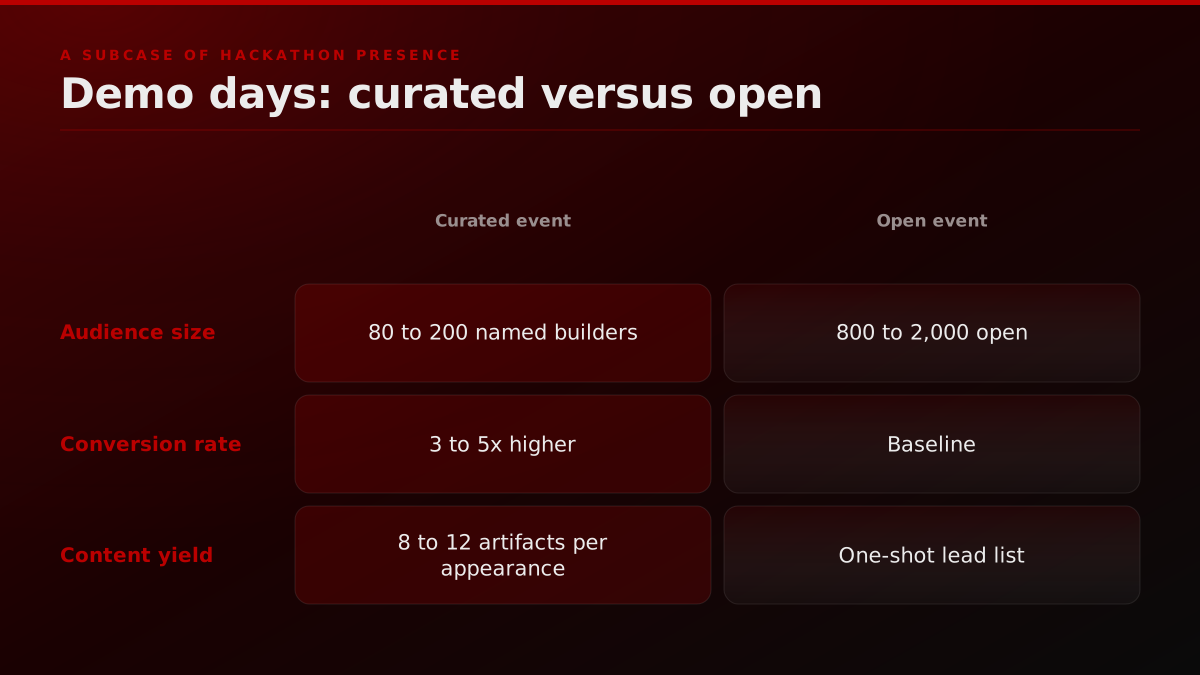
When is buying a demo-day stage worth it?
Demo days are a specific subcase of hackathon presence (surface three) with different economics. A YC demo day, an a16z demo day, a Latent Space salon, a SemiAnalysis event, an MLOps World event, and the rotating set of category-specific dinners that the AI partner class runs in San Francisco, New York, and London each carry a different audience and a different price tag. The FORKOFF Founder-Funnel Cohort 2026 ran demo-day economics across 18 events and 11 of the 42 retainers and surfaced a clean pattern: events with a curated audience of 80 to 200 named builders converted at a rate three to five times higher than events with an open audience of 800 to 2000. The pricing did not always reflect the conversion delta.
The founder's job at a demo day is not the demo on stage. The founder's job is the 30 conversations in the lobby, the after-party, and the dinner the night before. The on-stage demo is the calibration loop that earns the right to have the 30 conversations; the conversations are the surface that produces the trial signups. Founders who optimize the demo and skip the conversations get the wrong half of the event. Founders who treat the stage as the price of admission to the lobby get the math to work.
The other piece of demo-day economics is the post-event content yield. Every demo-day appearance produces a clip, a recording, a quote, and a photo set that feeds the founder-led content cadence for the next six weeks. The cohort founders who ran demo days as content events (every appearance generates eight to twelve downstream artifacts across X, the cookbook changelog, podcast pitches, and the answer-engine page bank) outperformed founders who ran demo days as one-shot lead generation events by a wide margin. The compounding is on the content yield, not on the lead list.
Operator noteCurated demo days of 80 to 200 named builders converted 3 to 5x higher than open crowds of 800 to 2,000., FORKOFF Founder-Funnel Cohort 2026, 18 events
The FORKOFF Founder-Funnel Cohort 2026: what 42 retainers told us about the order of operations
The Founder-Funnel Cohort is the FORKOFF Founder-Funnel retainer program for AI founders working through the seven-surface stack against a named outcome. The cohort ran 42 retainers across the first nine months of 2026 and surfaced four findings that now anchor every new engagement.
FORKOFF Founder-Funnel Cohort 2026 findings, by lever (n=42)
| Lever | Measured lift vs baseline | Basis |
|---|---|---|
| Surfaces 1 and 2 for 60 days before 3 to 7 | 2.4x month-six pipeline vs a parallel launch | Cohort, n=42 |
| Founder threads that show the product working | 3 to 5x engagement vs explainer threads | Cohort, n=42 |
| Hold the weekly cookbook cadence 9 to 12 months | 5,000+ stars vs 80 stars when shipped once | Cohort audits |
| Curated demo days of 80 to 200 named builders | 3 to 5x conversion vs open crowds of 800 to 2,000 | 18 events, 11 retainers |
| Ship 4+ founder content pieces a week for 12 weeks | 3.4x cluster engagement, 2.7x trial signups | Cohort, n=42 |
FORKOFF first-party operator data across 42 Founder-Funnel retainers over the first nine months of 2026. Directional estimates; individual outcomes vary by stage, niche, and execution.
First, the order matters more than the surfaces. Founders who ran surfaces one and two for 60 days before activating surfaces three through seven outperformed founders who activated all seven in parallel by 2.4x on month-six pipeline. The voice surface and the cookbook surface calibrate the company's positioning, and that calibration is the input every later surface depends on. Running the later surfaces against an uncalibrated positioning wastes the early traction on surfaces that do not yet have the language right.
Second, the founder's calendar is the binding constraint. Across the 42 retainers, the founders who allocated four hours a day to founder-voice work (X posts, cookbook commits, podcast prep, Reddit replies, demo-day prep) held the cadence past month three. The founders who allocated two hours a day or less dropped the cadence between weeks eight and twelve and never recovered. The four-hour daily floor is the operating bar FORKOFF now installs at the start of every engagement, and the team builds the surrounding stack to keep the founder inside that four-hour window without context switching to anything outside the voice surfaces.
Third, the FORKOFF stack runs the non-voice surfaces (cookbook commit pipeline, podcast booking, Reddit demand-signal review, cluster mapping, answer-engine page bank, demo-day post-event content yield) against a named outcome rather than a channel report. The named outcome is always a trial-activation floor and a cluster-engagement floor, locked at the start of the engagement and audit-ledgered weekly. The audit ledger is the artifact that keeps the founder honest about what is compounding and what is not. The companies that hold the audit ledger discipline ship the seven-surface stack on time; the companies that drift back to channel reports end the quarter with a stack of dashboards and no compounding.
Fourth, the seven surfaces operate as a single system, not seven channels. Founders who hired seven specialists (an X ghostwriter, a docs engineer, a hackathon manager, an HN strategist, a PH launch firm, a podcast booker, an SEO consultant) ended the quarter with seven uncoordinated motions that did not braid. Founders choosing a single team to run the system often start with the best AI marketing agencies comparison to find an agency with the integrated pod model. The FORKOFF approach is to run the system inside one team, against one audit ledger, with one cadence, against one cluster, and let the surfaces braid by design. The Founder-Funnel Cohort 2026 outcomes are the empirical case that the braided system outperforms the seven-specialist split by a wide enough margin that we now refuse engagements where the founder wants the channels run separately.
So what does AI startup marketing actually look like in 2026?
Marketing strategies for AI startups in 2026 do not look like the SaaS playbooks they replaced. The buyer is another builder, the category renames itself every quarter, and trust transfers through demos and not decks. The seven-surface stack we run with FORKOFF clients sequences founder-voice X, the open-source cookbook, hackathon presence, the Hacker News launch, the Product Hunt ladder, developer podcasts, and answer-engine SEO into a 90-day cadence that compounds. Each surface earns its slot through trust-transfer efficiency to the builder buyer and through cost per retained developer over a 12-week window.
The AI founders winning year one in 2026 hold the order, ship the weekly cookbook cadence past the point where it feels boring, prepare the Hacker News launch as a multi-week effort rather than a Tuesday afternoon impulse, and run developer podcasts in builder voice rather than marketing-team voice. They reach steady-state pipeline at month four and survive the next model drop because the audience compounds across pivots. The product moat decays in 48 hours; the distribution moat survives.
If a new AI founder is sitting at day zero and wondering whether to pour the seed round into paid acquisition or into the seven-surface stack, the answer is the stack. List the seven surfaces, pick the order, write the first X post today, ship the first cookbook notebook this weekend. The compounding starts on day one and the moat builds in parallel for the rest of the company's life.
For the full picture, see the founder-led growth playbook.
For deeper cross-pillar context, see the clipping infrastructure across stages.
Primary sources cited above: McKinsey's 2026 State of AI report.


![How to Make a Launch Go Viral on X: The 5-Lever Playbook [2026]](/blog/covers/how-to-make-launch-go-viral-on-x-2026-cover.jpg)