The FORKOFF Podcast Engine is a 6-block system that turns one founder podcast appearance into 30 to 50 distribution assets and 90 days of compounding pipeline. Block 1 locks the narrative before the studio is booked, Block 2 maps episodes to a season arc, Block 3 curates guests for narrative contribution, Block 4 builds the production and identity stack, Block 5 extracts and distributes the atomic assets, and Block 6 maps amplification to pipeline with UTM attribution. The blocks compound multiplicatively, so skipping Block 1 collapses Block 5.
The 30-second answer
THE FORKOFF PODCAST ENGINE is the 6-block system FORKOFF runs on every managed founder podcast appearance: narrative sync before booking, season architecture, strategic guest curation, the production and identity stack, clipping and distribution infrastructure, and amplification with UTM attribution. Run all six and one 60-minute conversation becomes 30 to 50 atomic distribution assets compounding for 90 days. Skip Block 1 and Block 5 collapses; skip Block 6 and no deal is attributable. The ledger receipt across the managed cohort: 3,085 clips in 13 days at $0.003 CPV, 50 ecosystem activations across 14 countries, 250+ investor introductions, and $5M+ pipeline unlocked.
About these numbers
FORKOFF first-party operator data from podcast booking and distribution engagements, supplemented by publicly available podcast industry reports (Spotify, Apple, Edison Research 2025-2026). All figures are directional estimates based on operator observations, and individual outcomes vary by niche, audience, and execution.
heading: THE FORKOFF PODCAST ENGINE in one scroll
summary: THE FORKOFF PODCAST ENGINE is the 6-block system FORKOFF runs on every founder podcast appearance. Block 1 locks the narrative before the studio is booked. Block 2 maps episodes to a season arc. Block 3 curates guests for narrative contribution. Block 4 builds the production and identity stack. Block 5 extracts and distributes 30 to 50 atomic assets per recording. Block 6 maps amplification to pipeline with UTM attribution. The blocks compound multiplicatively. Skip Block 1 and Block 5 collapses. Skip Block 6 and the founder cannot prove which episode closed which deal. The FORKOFF Podcast Ledger across managed engagements: 3,085 clips in 13 days, 50 ecosystem activations across 14 countries, $5M+ pipeline unlocked, 250+ investor introductions logged.
variant: tip
---
Most founder podcast appearances die at upload because there is no podcast engine framework around them
A founder records a 60-minute interview on a respected show. The episode goes live on a Tuesday. The host tweets the link. The founder retweets it once with a generic "great chat with @host, listen here." Three days later, the episode has slipped off both feeds. Inside two weeks, every party has moved on. The leak is not the recording. The leak is the absence of a podcast engine framework around the recording, a SYSTEM that turns one 60-minute conversation into 30 to 50 distribution assets and 90 days of compounding pipeline.
This is the default state of founder podcasting in 2026. Edison Research's 2025 Infinite Dial study puts total podcast consumption at 73 percent of Americans 12 and older, an estimated 210 million people, with 55 percent consuming monthly; the inventory is enormous and monthly listenership keeps climbing, while the median founder appearance still depreciates inside 48 hours of release because nothing downstream of the recording is engineered to compound.
The podcast audience is huge and increasingly video-native
Edison Research's Infinite Dial 2025 puts total podcast consumption at 73 percent of Americans age 12 and older, an estimated 210 million people, with 55 percent consuming monthly and 51 percent having watched a video podcast. The first touch a new listener has with a show is now more often a clip in a vertical feed than an RSS subscription. That is the structural reason Block 5 treats every episode as feedstock for platform-native clips instead of a single audio file: the audience that never opens a podcast app is reachable, but only through the short-form surfaces where it already scrolls.
Source: Edison Research, The Infinite Dial 2025
The gap between that audience and the median show is measurable. Buzzsprout's platform stats for June 2026 put the median episode at 27 downloads in its first week, against 412 for the top 10 percent. The table below is the whole argument for running an engine instead of an upload.
The podcast attention gap: audience size vs the median episode
| Metric | Number | Source |
|---|---|---|
| US consumers 12+ who have ever consumed a podcast | 73% (est. 210 million people) | Edison Research, Infinite Dial 2025 |
| Monthly podcast consumers | 55% of Americans 12+ | Edison Research, Infinite Dial 2025 |
| Have watched a video podcast | 51% of Americans 12+ | Edison Research, Infinite Dial 2025 |
| Median episode downloads, first 7 days | 27 | Buzzsprout Global Stats, June 2026 |
| First-week downloads to reach the top 10% | 412 | Buzzsprout Global Stats, June 2026 |
| First-week downloads to reach the top 1% | 4,605 | Buzzsprout Global Stats, June 2026 |
The audience is enormous and the median episode reaches almost none of it. The distribution stack, not the recording, decides which side of that gap a founder lands on.
Operator note27 first-week downloads is the Buzzsprout median episode; the FORKOFF floor per appearance is 30 clip-assets, each with its own window., Buzzsprout Global Stats, June 2026; FORKOFF Podcast Ledger
Most founders treat a podcast appearance as a marketing event. FORKOFF treats it as the source feedstock for a 90-day distribution engine. The difference is THE FORKOFF PODCAST ENGINE: six blocks, each with one job, each load-bearing for the next.
This article documents the six blocks verbatim from how we run them on managed engagements. Block names and numbers come from the FORKOFF podcast service spec and the FORKOFF Podcast Ledger. The closing line is the same one we use on the one-pager: PODCASTS ARE NOT CONTENT, THEY ARE NARRATIVE INFRASTRUCTURE.
---
The FORKOFF Podcast Ledger
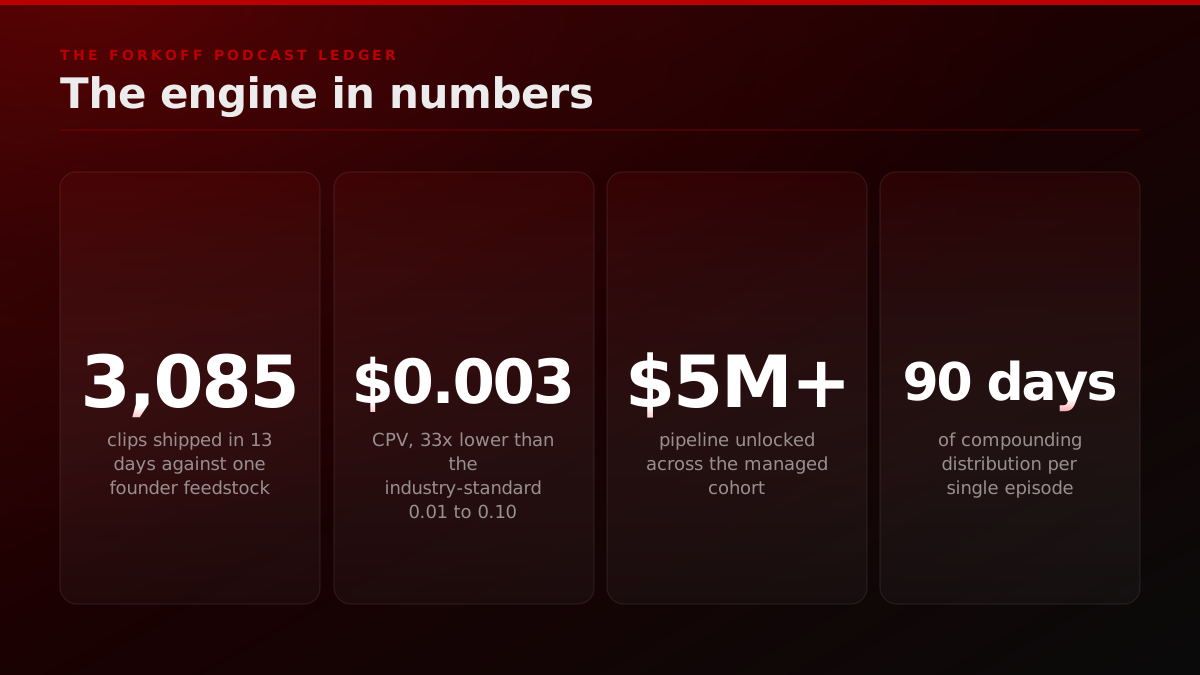
The FORKOFF Podcast Ledger is the operator record behind every claim in this post: 3,085 clips shipped in 13 days against one founder feedstock at $0.003 CPV, 50 ecosystem activations across 14 countries, 250+ investor introductions logged, and $5M+ in pipeline unlocked across the managed cohort. The monetization side of the same operating system is broken down in the podcast monetization math at the 1,500-listener line, which shows which of the four common podcast revenue models clear above that threshold. Founders comparing managed providers before committing budget can review the best podcast marketing agency roundup, which scores the outcome-priced lane against the retainer shops.
heading: 3,085 clips, 13 days, $5M+ unlocked - the engine in numbers
content: Across managed FORKOFF podcast engagements, the operating numbers are: 2 to 4 long-form episodes per month per founder, 8 to 12 high-signal clips generated per episode, 30 to 50 atomic distribution assets produced per recording when the full 6-block engine runs, 90 days of compounding distribution per single episode. The Clipping Ledger reference run hit 3,085 clips in 13 days against one founder feedstock at $0.003 CPV (33x lower-cost than the industry-standard $0.01 to $0.10). The amplification layer logs 50 ecosystem activations across 14 countries, 2,000+ qualified ecosystem leads, 250+ investor introductions, 35,000+ event attendees touched, and $5M+ pipeline unlocked across the cohort. The ledger compounds because the engine is engineered for compounding, not because any single episode was viral.
source: FORKOFF Podcast Ledger (managed engagement cohort 2025-2026); FORKOFF MISSION
sourceUrl: https://forkoff.xyz/services/podcast
variant: bullish
---
Block 1 - Narrative and Ecosystem Sync
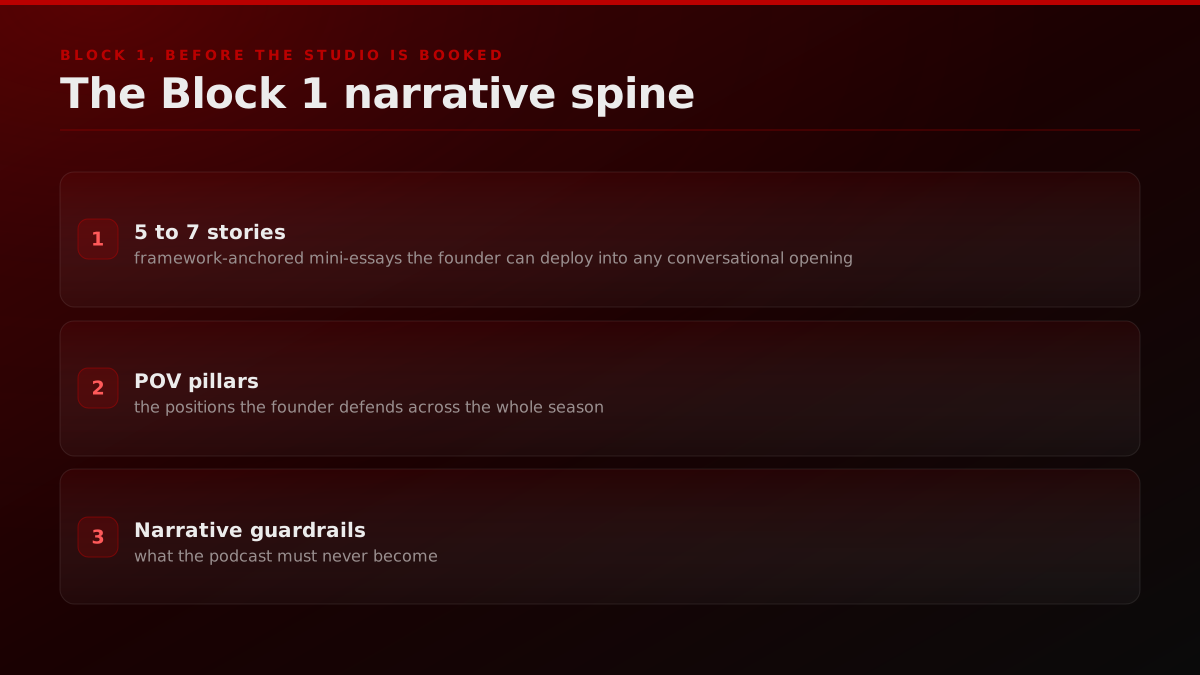
Block 1 happens before the studio is booked. Most founders skip it because it does not produce a deliverable they can post, and that is exactly why it is load-bearing. The output is a 1-page document holding the 5 to 7 framework-anchored stories the founder tells across the season, the POV pillars they defend, and the narrative guardrails the show must never cross. Without that spine, every episode retires at release instead of compounding for 90 days.
The output of Block 1 is a 1-page document the founder reads back to themselves before every recording. It contains the 5 to 7 stories the founder will tell across the season, the POV pillars the founder defends, and the narrative guardrails (what the podcast must never become). The 5 to 7 stories are not anecdotes. They are framework-anchored mini-essays the founder can deploy into any conversational opening.
Why this matters: a founder without a documented narrative spine produces episodes that retire at release. A founder with a narrative spine produces episodes that compound for 90+ days because every clip routes back to the same thesis. The FORKOFF Podcast Ledger tracks this directly. Founders who skip Block 1 cap at 8 to 12 clips per episode and see flat amplification. Founders who run Block 1 hit the 30 to 50 asset target and see compounding amplification through Block 5 and Block 6.
The same architecture shows up wherever founder-led media works. Cody Schneider's founder-led marketing playbook opens with the identical sequence: interview customers and industry experts about their deep knowledge, turn the recordings into a video podcast, and wrap a newsletter around the show. The narrative comes first, the recording second, the distribution surfaces third.
Cody Schneider
@codyschneider
founder led marketing 101 the playbook to make yourself famous in your industry interview your customers and industry experts about their deep knowledge record the interviews with riverside turn them it into a video podcast create an email newsletter about the podcast
---
Block 2 - Season Architecture
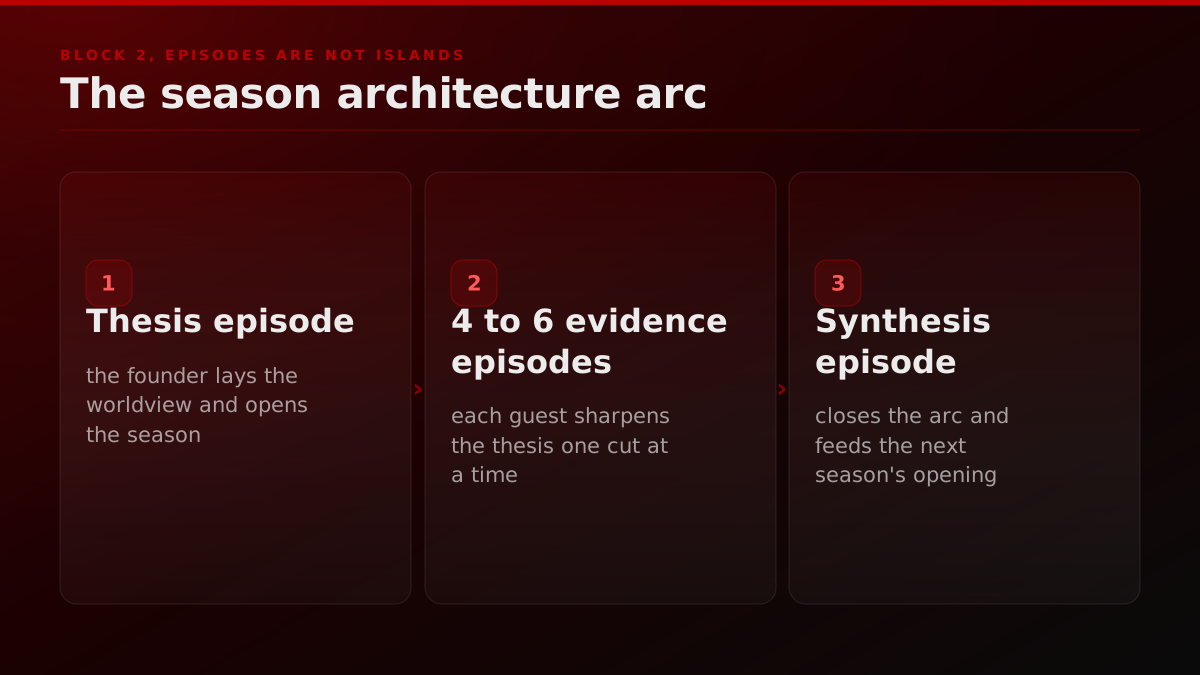
Episodes do not exist in isolation, and Block 2 is the documented mapping of every planned episode in the next quarter to its role inside a season arc. The standard season opens on a thesis episode, builds through 4 to 6 evidence episodes that each sharpen the thesis, and closes on a synthesis episode that feeds the next season's opening. The FORKOFF cadence is 2 to 4 long-form episodes per month, the band where founder voice survives volume.
Season Architecture is the second block: a documented mapping of every planned episode in the next quarter to its role inside the season. The standard season opens on a thesis episode (the founder lays the worldview), builds through 4 to 6 evidence episodes (each one a guest who sharpens the thesis), and closes on a synthesis or category-shaping episode that feeds the next season's opening.
The FORKOFF Ledger cadence is 2 to 4 long-form episodes per month per founder. Below 2, the season loses momentum. Above 4, the founder voice flattens. The 2 to 4 band is where founder voice survives volume.
Block 2's deliverable is a season grid mapping each episode slot to (a) its role in the arc, (b) the KPI floor for that episode, and (c) the downstream asset commitment from Block 5. With Block 2, every clip carries the season's accumulating context. Without it, every recording is an island.
---
Block 3 - Strategic Guest Curation
Guests are selected for narrative contribution, not popularity, with a custom briefing deck for every recording. Block 3 is where most founder podcasts visibly fail, because the default move is to book the loudest available guest rather than the guest whose story sharpens the season's thesis. The briefing deck is the lever: off-narrative guests produce 2 to 4 useful clips, while on-narrative guests prepared with a deck produce 8 to 12 clips of the founder's worldview.
Block 3 is the block where most founder podcasts visibly fail. The default founder pattern is to book the loudest guest the calendar can secure. The FORKOFF pattern is to book the guest whose story sharpens the season's thesis, then prepare them with a briefing deck so the recording produces 8 to 12 high-signal clips of the founder's worldview, not the guest's.
Each guest's story has to be positioned inside the founder's macro narrative. For an AI infrastructure founder this means the guest list bridges the founder's thesis (e.g. "agent-native distribution") into the listener's existing categories. For a Web3 ecosystem founder it means the guest list spans DeFi, RWA, and AI + Blockchain to map the cultural perimeter. The published Creator Science / Jay Clouse playbook on guest selection makes the same point in a different vocabulary.
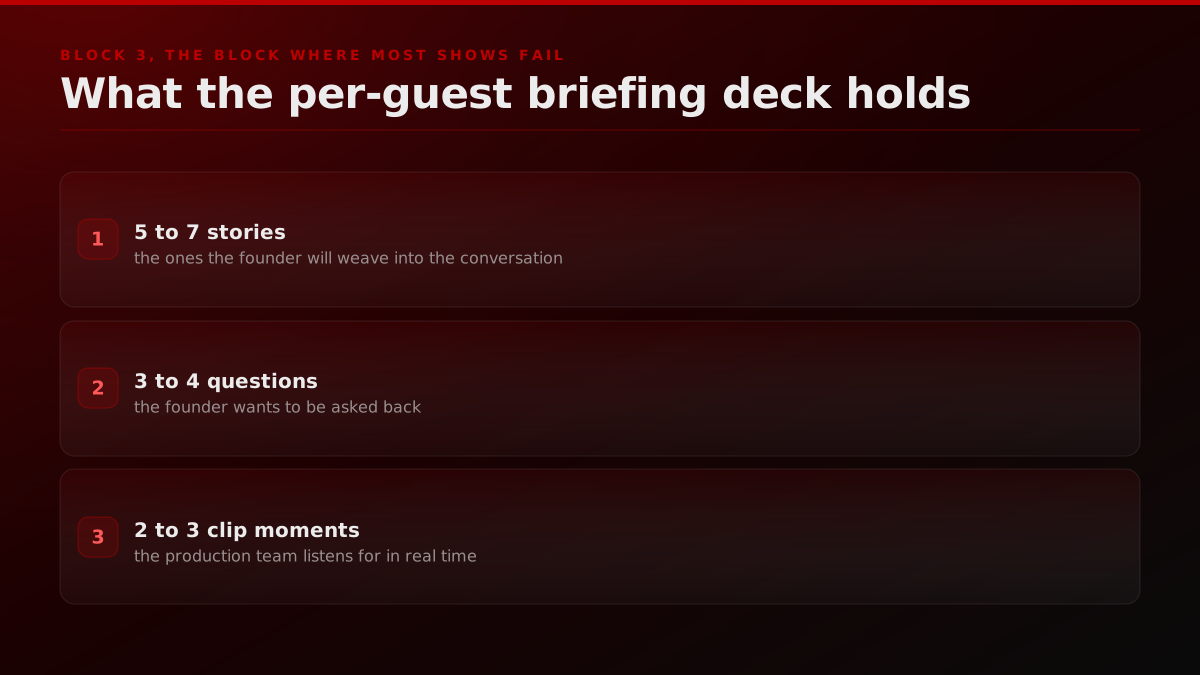
The deliverable is a per-guest briefing deck containing the 5 to 7 stories the founder will weave in, the 3 to 4 questions the founder wants to be asked back, and the 2 to 3 Block 5 clip moments the production team will be listening for in real time. The briefing is the lever. Off-narrative guests produce 2 to 4 useful clips. On-narrative guests with a briefing deck produce 8 to 12.
Block 3 runs the selection logic from the host side. The mirror motion, where the founder is the one being booked onto other shows rather than booking guests, runs the same five-field qualification score in reverse and is documented in the podcast booking system for founders. A founder who runs both sides of the table reads exactly what a sharp host screens for in a guest pitch.
---
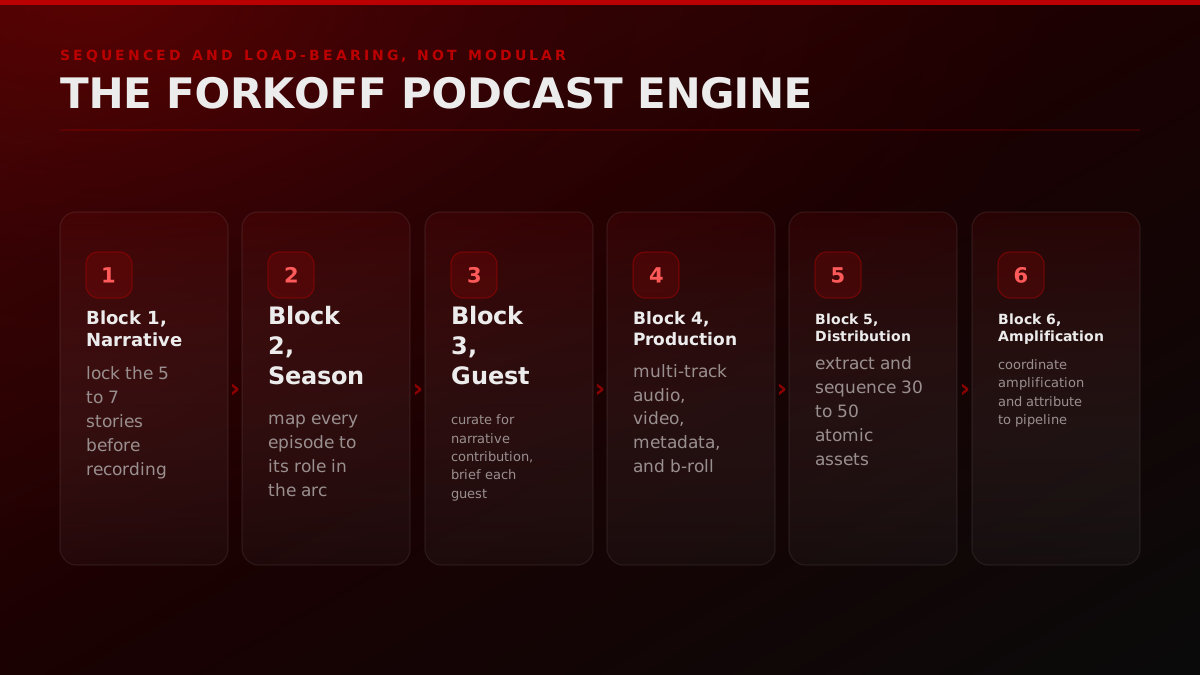
How do the six blocks feed each other?
caption: THE FORKOFF PODCAST ENGINE - six blocks, each with one job, each load-bearing for the next. Block 1 (narrative) feeds Block 2 (season). Block 2 feeds Block 3 (guest). Block 3 feeds Block 4 (production). Block 4 feeds Block 5 (clipping and distribution). Block 5 feeds Block 6 (amplification and conversion). Skip any block and the next one collapses.
alt: Horizontal six-block flow diagram on dark background in FORKOFF red showing narrative, season, guest, production, distribution, amplification stages.
file: 0
---
Block 4 - Production and Identity System
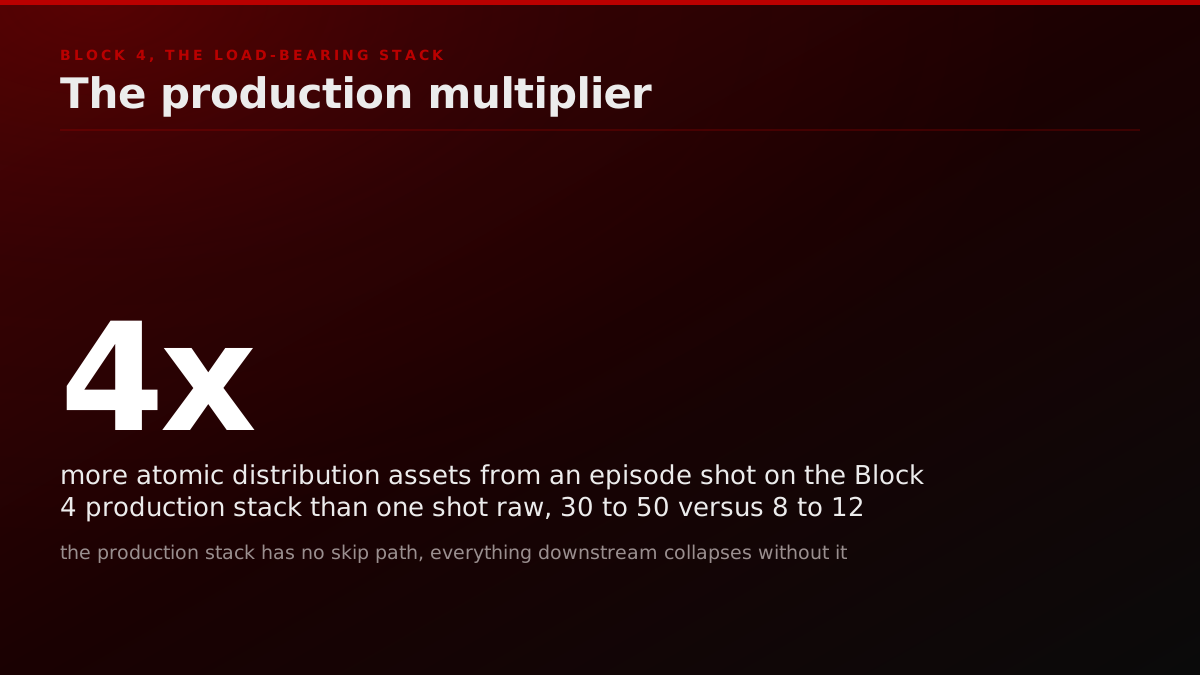
Block 4 is the production and identity stack: high-clarity multi-track audio, multi-angle video, consistent visual language, and metadata built for long-term reuse. It is load-bearing because everything downstream collapses if the source recording is muddy, off-brand, or stripped of metadata, so Block 4 has no skip path. Episodes shot on this stack convert into 30 to 50 atomic assets per recording, while episodes shot raw cap at 8 to 12.
Block 4 is the production stack. It is the load-bearing infrastructure of THE FORKOFF PODCAST ENGINE because everything downstream collapses if the source recording is muddy, visually off-brand, or stripped of metadata. Block 4 has no skip path.
The production discipline at FORKOFF runs on multitrack recording (each speaker on a dedicated track), multi-angle video (locked main + wide + dynamic), a teleprompted hook line at the open and close of every recording, and captured b-roll for visual contrast inside Block 5 clips. The metadata side is equally load-bearing: every recording is tagged with episode role (per Block 2), guest profile (per Block 3), narrative tags, and timestamp markers for the 8 to 12 clip moments the producer flagged live.
Why this matters in numbers: the FORKOFF Podcast Ledger shows episodes shot on this stack convert into 30 to 50 atomic distribution assets per recording. Episodes shot raw (no multi-track, no metadata, no b-roll) cap at 8 to 12. The 4x multiplier is the difference between a podcast that compounds and one that depreciates. Riverside.fm publishes a breakdown of multi-track recording mechanics that overlaps with the production side of Block 4 at the tooling layer.
Identity is the second half of Block 4. Visual consistency across thumbnails, episode covers, and clip frames is what makes the audience read three clips from three different episodes as a single brand surface. The Acquired channel is the clearest public example of that discipline held across a long catalogue, where the production and identity choices stay recognizable over hundreds of hours of long-form craft.
---
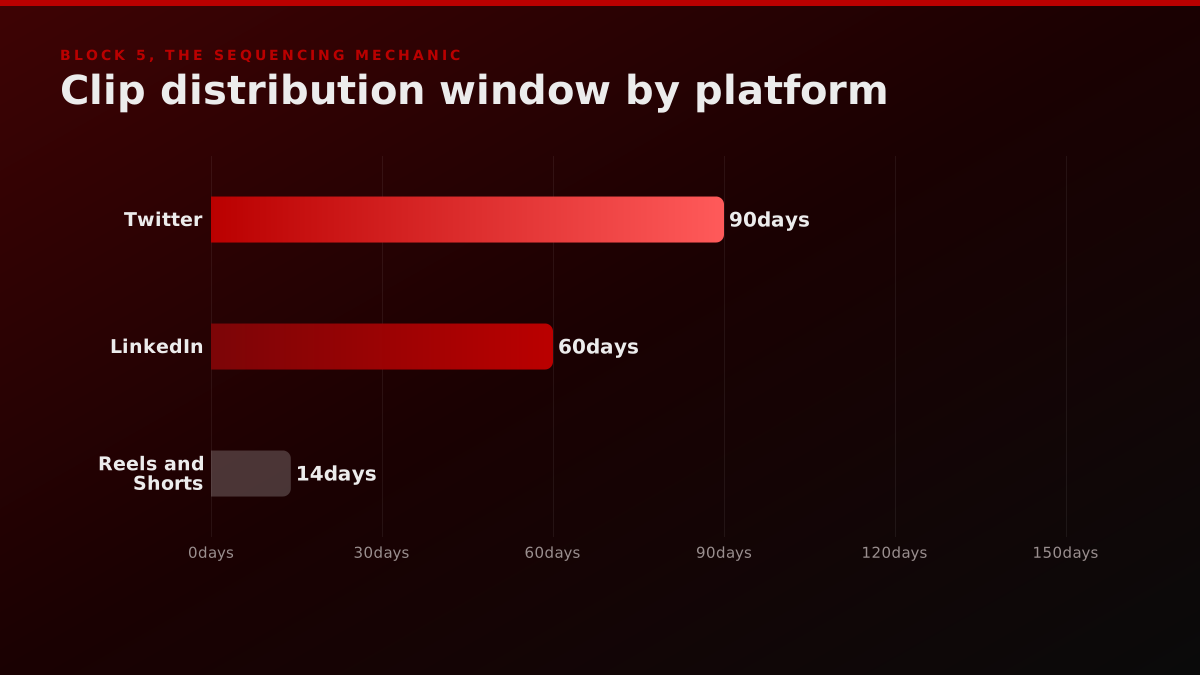
Block 5 - Clipping and Distribution Infrastructure: the podcast distribution system that turns one episode into 30 assets
Block 5 extracts high-signal moments into context-rich clips mapped to specific audiences, platforms, and distribution windows. This is where the 60-minute conversation becomes 30 to 50 assets, and it is the most operationally complex block in the engine. The mechanics are sequencing: Twitter clips space over 90 days, LinkedIn clips over 60 days, and Reels and Shorts over 14 days, each platform getting a different cut from the same source.
Block 5 is where the 60-minute conversation becomes 30 to 50 distribution assets. It is the most operationally complex block and it is the block FORKOFF commits the most production hours to.
The mechanics are sequencing. The same clip never ships to the same platform twice. Twitter clips space over 90 days, with the launch clip landing in the first 48 hours after release and the long tail seeded across the quarter on a calendar the founder approves. LinkedIn clips space over 60 days because the LinkedIn feed has a longer attention horizon and a different conversion math. Reels and Shorts space over 14 days because the short-form algorithms decay velocity inside two weeks and a delayed Reel under-performs a fresh one against the same hook.
FORKOFF clip distribution windows by platform
| Platform | Window | Cut style | Sequencing note |
|---|---|---|---|
| Twitter / X | 90 days | Verbal hook + quote-card overlay | Launch clip inside 48h, long tail all quarter |
| 60 days | Clip + founder context paragraph | Longer horizon, proof-led conversion | |
| Reels / Shorts / TikTok | 14 days | B-roll + captions + 1.2-second hook | Algorithms decay velocity in two weeks |
| YouTube | Evergreen | Horizontal master render | Embed surface for blog and show notes |
FORKOFF Podcast Ledger, managed engagement cohort 2025-2026. The same clip never ships to the same platform twice. The launch clip lands inside the first 48 hours; the Twitter long tail is seeded across the quarter on a founder-approved calendar.
Each platform gets a different cut. The Twitter cut leans on the verbal hook and a quote-card overlay. The LinkedIn cut leans on a context paragraph the founder writes around the clip. The Reel cut leans on b-roll, captions, and an Instagram Reels hook in the first 1.2 seconds. Same source, three different renders, three different distribution windows.
The FORKOFF Clipping Ledger numbers anchor Block 5: the podcast clipping revenue case study, 3,085 clips in 13 days at $0.003 CPV, 33x lower-cost than the industry-standard $0.01 to $0.10. The 90-day compound case shows the same engagement reaching $12K MRR by day 90 against a zero incremental distribution spend. Block 5 is the unit-economics block; if it is not running, Block 6 has nothing to attribute.
The FORKOFF pricing surface for managed clipping and the qualified-views metric document the measurement discipline that makes the CPV number defensible. The productized lane is FORKOFF podcast clipping.
Operator note5B+ views processed across the FORKOFF clipping network; podcast feedstock follows the same rule, clip yield is set before recording., FORKOFF clipping network, 2026
---
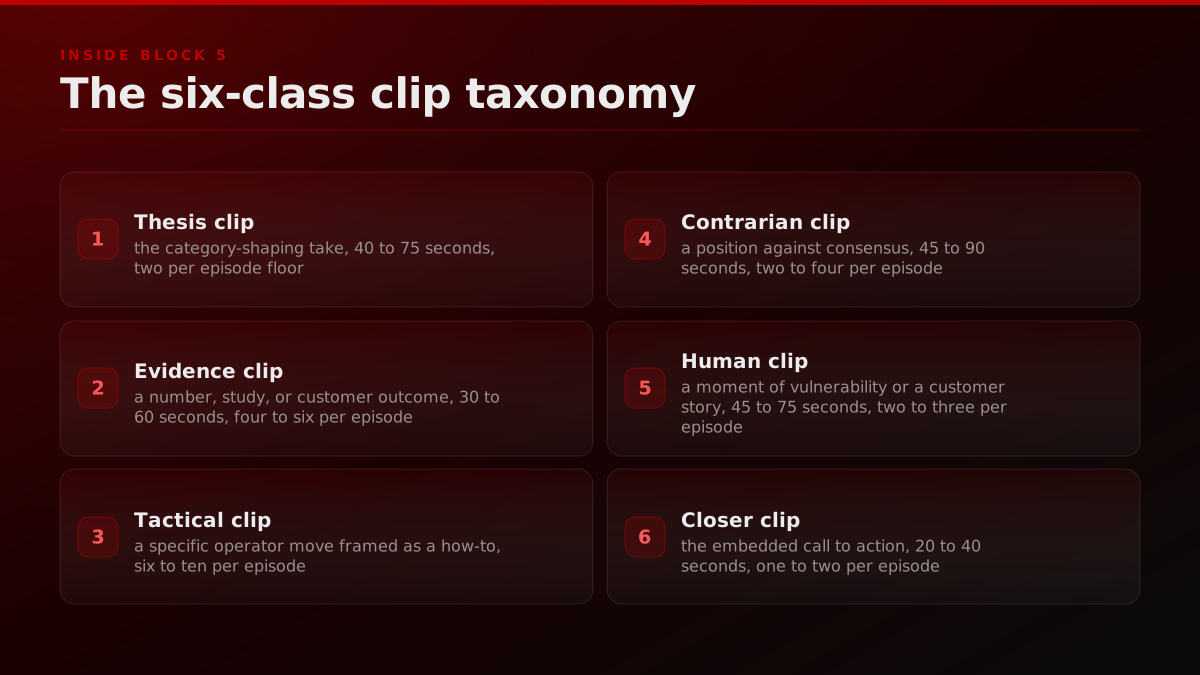
Inside Block 5 - the clip taxonomy that produces 30 to 50 assets from one recording
The clip volume that defines Block 5 is not a function of editor headcount, it is a function of a documented clip taxonomy applied to the raw transcript before the first cut is rendered. The FORKOFF taxonomy carries six asset classes per episode, thesis, evidence, tactical, contrarian, human, and closer, and each class has its own platform map, render spec, and sequencing window. A 60-minute appearance yields four to six clips per class, which is how the 30 to 50 number lands without sending the founder back into the booth.
The FORKOFF clip taxonomy carries six asset classes per episode, and each class has its own platform map, render spec, and sequencing window. A 60-minute founder appearance typically yields four to six clips in each class, which is how the 30 to 50 number lands without forcing the founder back into the booth.
Class one is the thesis clip: the founder's category-shaping take in 40 to 75 seconds, no b-roll, vertical 9
with a quote-card overlay. It anchors the Twitter launch window in the first 48 hours and seeds the LinkedIn thought-leadership lane on day three. Two thesis clips per episode is the floor.Class two is the evidence clip: the founder cites a number, a study, a customer outcome, or a named operator example. 30 to 60 seconds, screen-cap overlay of the source or stat, vertical and horizontal renders. These run on LinkedIn first because the LinkedIn audience converts on proof, and on Twitter second as the long-tail seed. Four to six evidence clips per episode is the typical yield.
Class three is the tactical clip: a specific operator move the founder describes, framed as a how-to. Captions burned in, hook line in the first 1.2 seconds, vertical 9
cut. Reels, Shorts, and TikTok primary; Twitter and LinkedIn secondary. The tactical class drives the Reel and Short volume because the short-form algorithms reward immediate utility. Six to ten tactical clips per episode is achievable when the conversation is operator-dense.Class four is the contrarian clip: the founder takes a position against the consensus. 45 to 90 seconds, often with the host pushing back on camera, no b-roll, vertical and horizontal. The contrarian clip is the highest-velocity asset on Twitter because the algorithm rewards quote-tweet engagement, and contrarian framing produces quote-tweets at a 3x to 5x rate over consensus framing. Two to four contrarian clips per episode, no more, because the founder's reputation budget for contrarian framing is finite.
Class five is the human clip: a moment of vulnerability, a story about a customer, a setback, or a personal stake the founder discloses. 45 to 75 seconds, slower pacing, often with ambient audio raised. These run on LinkedIn primarily, Instagram Reels secondarily, and almost never on Twitter because the Twitter feed punishes pacing-slow assets. Two to three human clips per episode. The human class is what builds the trust capital that the FORKOFF Founder Funnel cashes in at the Trust stage.
Class six is the closer clip: the call to action the founder embeds in the conversation itself. 20 to 40 seconds, captioned, ending on the founder's product or service surface. The closer never opens an episode and never anchors a launch window; it seeds Day 30 onward when the launch attention has decayed and the lookback math starts mattering. One or two closer clips per episode is the cap, because over-using closers degrades the credibility of the surrounding classes.
The taxonomy is the production spec, but the operating discipline is the clip ledger: every clip is logged with class, platform, scheduled date, UTM, render version, and post-publish performance. The ledger is what makes Block 5 a system instead of a sprint. Without it, a clipping team produces volume one quarter and forgets the playbook the next. With it, the playbook is the asset.
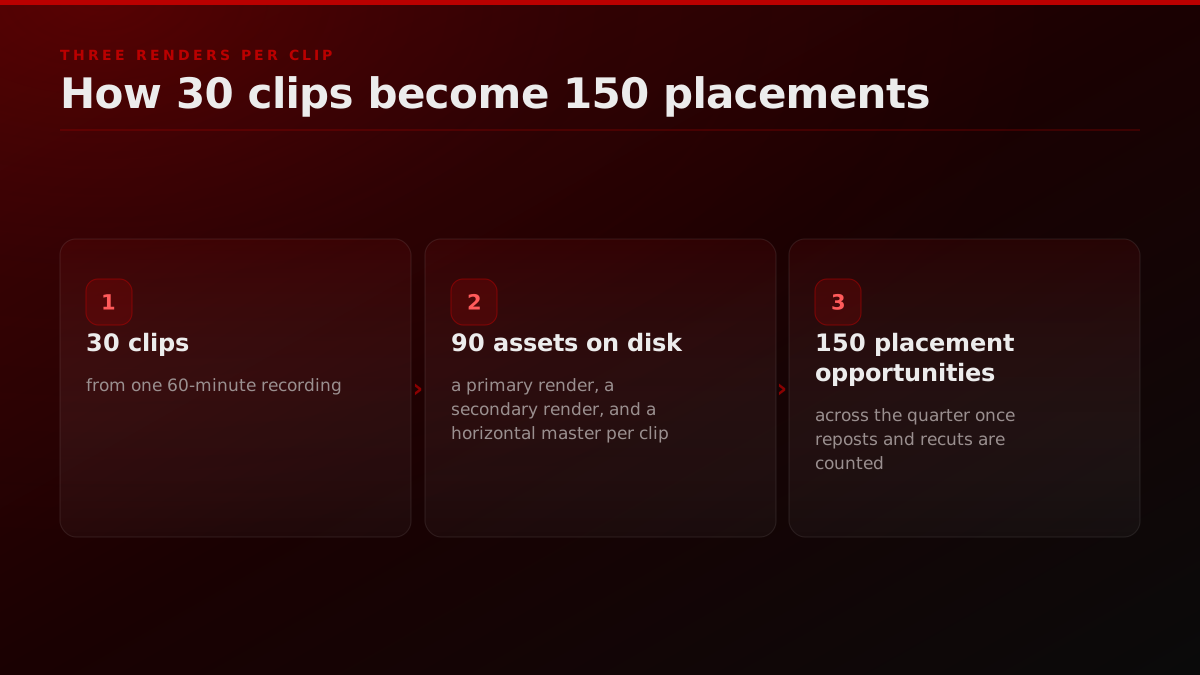
The render side carries the same discipline. Every clip gets a primary render (the platform it was designed for), a secondary render (the next-best platform), and a horizontal master (the YouTube and embed surface). Three renders per clip means a single 60-second moment generates three distribution surfaces, which is how a 30-clip episode becomes 90 assets on disk and 150 placement opportunities across the quarter when reposts and recuts are counted.
---
Audit your podcast engine against the 6-block system
Auditing your podcast engine against the 6-block system means scoring your last three appearances on each block, narrative, season, guest, production, distribution, and amplification, then finding which blocks are missing. Most founders are running Blocks 1 through 4 and skipping the two that actually compound revenue: clip distribution sequencing and conversion attribution. Send us the three appearances and FORKOFF ships a 30-day plan to close the gaps.
heading: Audit your podcast against the 6-block engine
description: Send us your last three podcast appearances. FORKOFF maps them to the 6-block scorecard and ships a 30-day plan to close the missing blocks.
buttonText: REQUEST THE PODCAST AUDIT
buttonUrl: /contact?src=blog-spoke-podcasts-forkoff-podcast-engine-6-block-system-mid
---
Block 6 - Amplification and Conversion Mapping
Block 6 coordinates ecosystem amplification and maps every episode to intros, partners, docs, and onboarding flows with UTM attribution. This is where the engine converts: without it, the prior five blocks produce a beautiful, compounding, unattributable distribution asset, and with it every episode wires into a measurable downstream surface. The attribution layer is non-negotiable, because without UTM tagging at the deal-source level, podcast ROI is a vibe rather than a number.
Block 6 is where the engine converts. Without it, the prior five blocks produce a beautiful, compounding, unattributable distribution asset. With it, every episode is wired into a measurable downstream surface.
The amplification side coordinates with ecosystem partners: KOLs, newsletters, DAOs, and community partners get pre-briefed so the launch window is amplified by aligned voices instead of algorithmic luck. The conversion side maps each episode to the founder's downstream surfaces. A thesis episode routes to a partner conversation. An evidence episode routes to a doc update. A category-shaping closer routes to a press cycle and fundraising-warm-up sequence.
The attribution layer is non-negotiable. UTM tagging on every clip, episode, show-notes link, and CTA. The founder's CRM reads those UTMs at the deal-source level, so when an inbound lead closes, the founder can name the episode that generated the conversation. Without this layer, podcast ROI is a vibe.
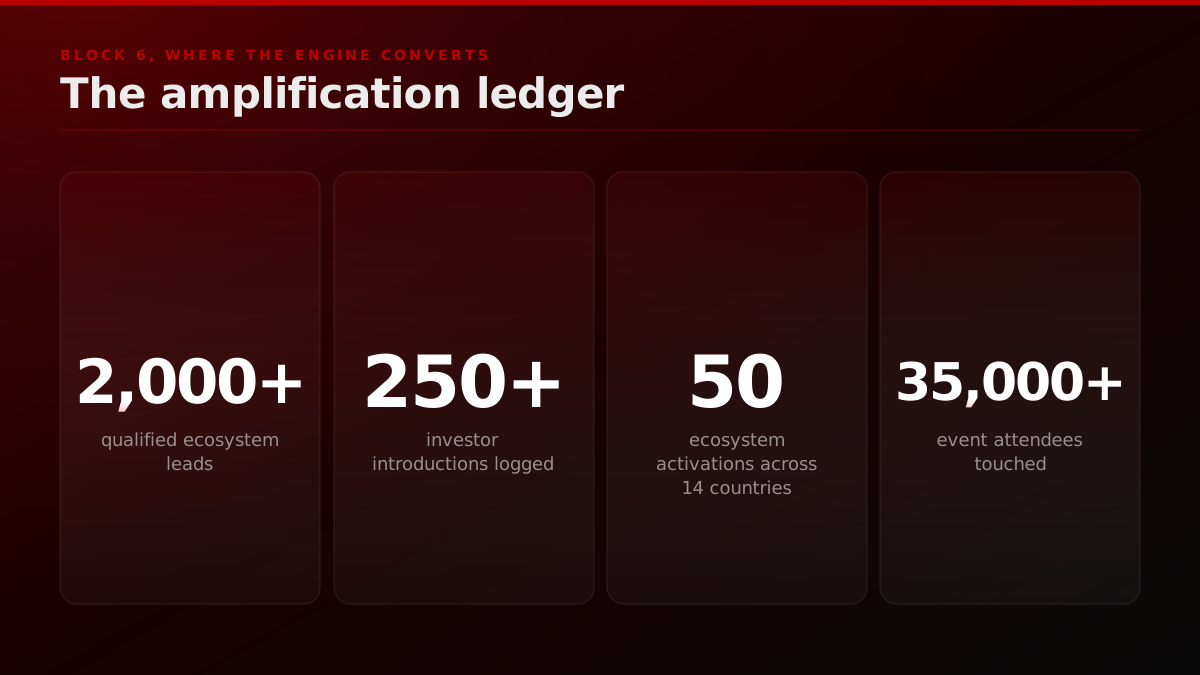
The FORKOFF MISSION ledger tracks Block 6 outcomes across the cohort, logged on the FORKOFF podcast service ledger: 50 ecosystem activations across 14 countries, 2,000+ qualified ecosystem leads, 250+ investor introductions, 35,000+ event attendees touched, and $5M+ pipeline unlocked. Skip Block 6 and the same engine produces the same clips, the same impressions, and zero attributable pipeline.
Operator noteUTM wiring on every clip takes one afternoon; cohort founders who skipped it named zero podcast-sourced closed deals at review., FORKOFF Podcast Ledger, managed cohort 2025-2026
---
Operator proof - Sam Ovens' playbook on clip distribution
Sam Ocean's breakdown of Sam Ovens' creator-economy playbook makes the Block 5 case in one line: cut clips of long-form to distribute on short-form platforms, and do not do the cutting yourself, put a system or team in place to do it. That is the same multiplicative argument THE FORKOFF PODCAST ENGINE runs on, where the recording is the cheap input and the engineered distribution around it is where the compounding lives.
SAM OCEAN
@thesamocean
8 insights on winning in the creator economy from the guy building Skool (Sam Ovens): 1.) Organic is king – YouTube, Podcast, Newsletters. Cut clips of long-form to distribute on short-form platforms (don't do this yourself, get a system/team in place to do it). 2.) Membership… Show more
Cut clips of long-form to distribute on short-form platforms (don't do this yourself, get a system/team in place to do it).
Top creator-economy operators delegate clipping to a system
Sam Ocean's widely bookmarked breakdown of Sam Ovens' creator-economy playbook (Ovens built Skool) puts distribution first: organic long-form on YouTube, podcasts, and newsletters, with clips of the long-form cut for short-form platforms, and an explicit instruction not to do the cutting yourself but to put a system or team in place. That is the industry-consensus version of Block 5. The founder's job is the 60 minutes of recording; everything downstream belongs to an engine that runs without the founder in the loop.
Source: Sam Ocean on X, on Sam Ovens' creator playbook, 2023
---
Operator proof - r/podcasting on what they wish they knew
A 370+ upvote r/podcasting thread on 12-month podcasting lessons lands on one recurring theme: making the episodes is only the start, and consistency plus everything downstream of the recording is where the real work lives. The author's sharpest line is that almost anyone makes one or two good episodes; the challenge is sustaining quality week after week. THE FORKOFF PODCAST ENGINE is engineered against exactly this leak, because Blocks 5 and 6 are the downstream stack that turns each recording into 90 days of output without asking the founder for more hours.
After a year of running a podcast, here's what I wish I knew before I started:
I honestly think just about anyone can make a good podcast episode or two, but the real challenge is to keep making good episodes week after week without lowering your quality or burning out.
---
Reference - Jenny Hoyos on the short-form formula
On My First Million, Jenny Hoyos breaks down the formula behind her 100M+ view months on YouTube Shorts: every clip is engineered around a hook, a retention curve, and packaging decided before the edit starts. It is the clearest public walkthrough of the per-clip discipline Block 5 applies to podcast feedstock, and it reaches the same conclusion the FORKOFF cohort data reaches: short-form performance is engineered, not lucky.
Her Viral Formula Breaks 100 Million Views On YouTube Shorts (ft. Jenny Hoyos)
My First Million with Jenny Hoyos on the formula behind 100M+ short-form views: hook, retention, and packaging engineered per clip.
---
The compounding math: why all six blocks ship together
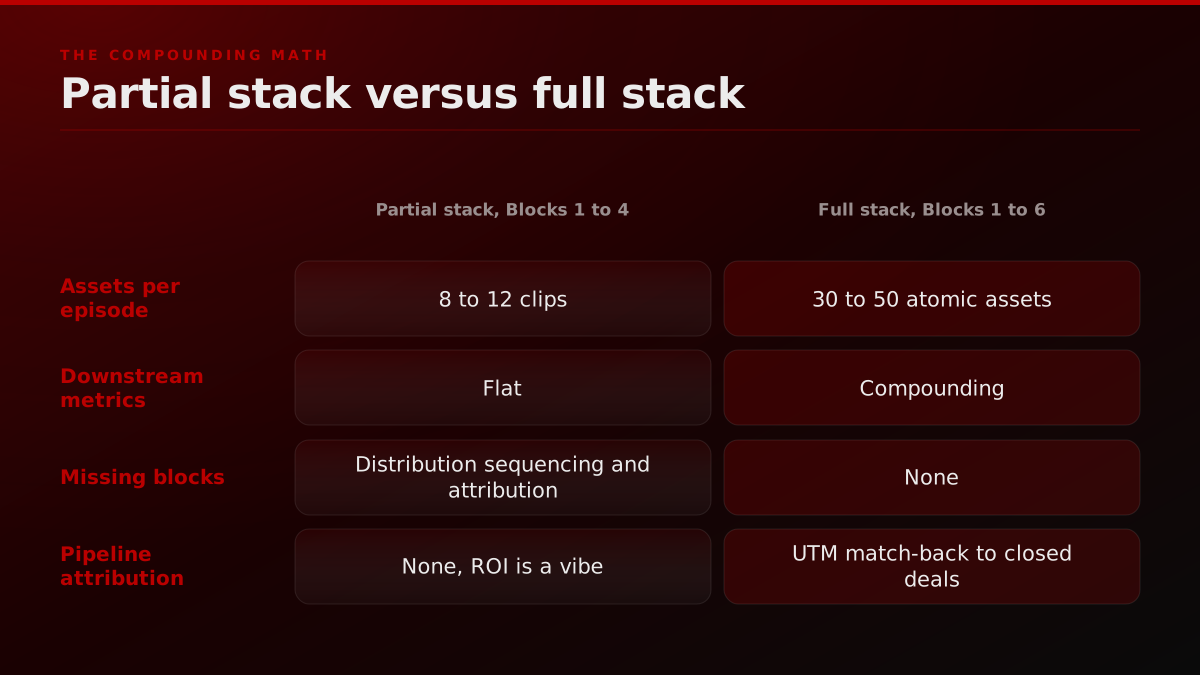
The six blocks compound multiplicatively, not additively, so each block multiplies the leverage of the next and missing one collapses everything downstream. Block 1 alone produces a clear narrative and zero asset volume. Blocks 1 to 3 produce a strategic show with low compounding. Blocks 1 to 5 produce assets at volume but no attribution to revenue. Only the full Blocks 1 to 6 stack produces a permanent distribution engine with match-back to closed deals.
The FORKOFF Podcast Ledger reads the same pattern across the managed cohort. Block 1 alone produces a clear narrative and zero asset volume. Blocks 1 to 3 produce a strategic show with low compounding. Blocks 1 to 5 produce assets at volume but no attribution to revenue. Only the full stack, Blocks 1 to 6, produces a PERMANENT DISTRIBUTION ENGINE: one founder podcast appearance compounding across 90 days, 30 to 50 atomic distribution assets, and match-back to closed deals through the founder's CRM.
The cohort math: a founder running the partial stack (Blocks 1 to 4) produces 8 to 12 clips per episode and sees flat downstream metrics. A founder running the full stack produces 30 to 50 atomic assets and sees compounding pipeline. The difference is two blocks: clip distribution sequencing and conversion attribution. Both are engineering problems with documented solutions.
The median podcast episode logs 27 downloads in its first week
Buzzsprout's public platform stats for June 2026, a month in which 148,846 new episodes were uploaded, show the median episode logging 27 downloads in its first 7 days. An episode needs 412 first-week downloads to crack the platform's top 10 percent and 4,605 to reach the top 1 percent. Recording more episodes does not move a founder up that curve; distribution does. The gap between the median show and the top decile is exactly the downstream stack this article calls Blocks 5 and 6, and it is why FORKOFF commits most production hours after the recording, not before it.
Source: Buzzsprout Global Stats, June 2026
This is the same compounding-stack pattern we document in the Founder Funnel OS, where podcast appearances are the Trust stage's primary surface. The Founder Funnel uses the podcast as a stage. THE FORKOFF PODCAST ENGINE is the operating spec for what happens inside that stage. The engine is the conversion layer underneath the booking work; the front half of the motion, mapping tiers, writing the pitch, timing the outreach, and clustering the appearances, is the 7-step podcast guesting playbook for AI founders. Book the shows with the playbook, convert them with the engine.
---
Operator voice on podcast leverage
text: I had been on twelve podcasts before I called FORKOFF. Twelve. I could not name a single deal that closed because of a podcast. After we wired the 6-block engine across the next four appearances, three deals closed inside ninety days that I could trace to specific episodes by UTM. The recordings were not better. The engine around them was.
author: Founder
role: AI infrastructure founder, FORKOFF managed engagement 2026
source: FORKOFF Podcast Ledger interview transcript
sourceUrl: https://forkoff.xyz/services/podcast
---
Block-by-block asset output
The block-by-block asset output maps each of the six blocks to its job, the assets it produces per episode, and the failure mode that hits if it is skipped. Block 1 yields the narrative doc, Block 5 yields the 30 to 50 platform-native clips and the 90-day calendar, and Block 6 yields the UTM ledger that ties pipeline back to specific episodes. The 30-to-50 target only shows up when all six run, which the table below makes explicit.
title: THE FORKOFF PODCAST ENGINE - asset output per block
headers: ["Block", "Job", "Asset output per episode", "Failure mode if skipped"]
rows:
- ["1. Narrative and Ecosystem Sync", "Define the 5-7 stories the founder will tell", "1 narrative doc + reusable across season", "Episodes retire at release; clips lack thesis"]
- ["2. Season Architecture", "Map each episode to its role in the arc", "1 season grid + per-episode KPIs", "Recordings become islands; arc collapses"]
- ["3. Strategic Guest Curation", "Select for narrative contribution, brief each guest", "1 briefing deck per guest", "Off-narrative guests produce 2-4 clips"]
- ["4. Production and Identity System", "Multi-track audio, video, metadata, b-roll", "Source recording assets + identity kit", "Downstream extraction fails; clips look orphaned"]
- ["5. Clipping and Distribution Infrastructure", "Extract 30-50 assets, sequence across platforms", "30-50 platform-native clips + 90-day calendar", "Episode dies inside 48 hours of release"]
- ["6. Amplification and Conversion Mapping", "Coordinate amplification, attribute to pipeline", "UTM ledger + CRM source attribution", "Pipeline unattributable; ROI is a vibe"]
footnote: Asset output figures from the FORKOFF Podcast Ledger across the managed engagement cohort 2025-2026. The 30 to 50 atomic-asset target is observed only when all six blocks run.
---
The Bottom Line
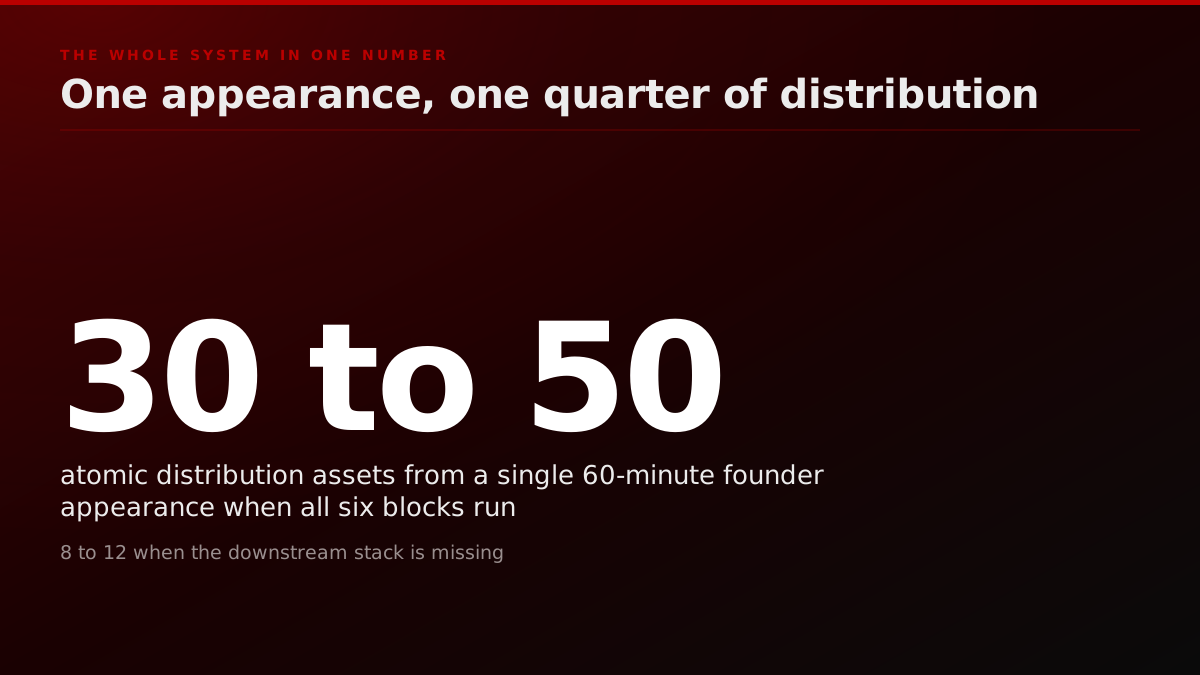
Most founder podcast appearances die at upload because nothing downstream of the recording is engineered to compound. THE FORKOFF PODCAST ENGINE turns the same recording into 30 to 50 distribution assets, 90 days of compounding distribution, and pipeline match-back to closed deals through the founder's CRM. The win is not recording more episodes, it is running the six-block engine around each one so a single 60-minute conversation becomes a quarter of distribution.
Six blocks, each with one job. Block 1 locks the narrative. Block 2 maps the season. Block 3 curates the guest. Block 4 builds the production stack. Block 5 extracts and distributes the assets. Block 6 amplifies and attributes. The blocks are not modular; they are sequenced and load-bearing. Skipping Block 1 collapses Block 5. Skipping Block 6 makes the entire engine unmeasurable. The FORKOFF Podcast Ledger across the managed cohort is the receipt: 3,085 clips in 13 days, 50 ecosystem activations across 14 countries, $5M+ pipeline unlocked, 250+ investor introductions logged.
PODCASTS ARE NOT CONTENT, THEY ARE NARRATIVE INFRASTRUCTURE. The founders who win in 2026 are not the ones recording more episodes. They are the ones running THE FORKOFF PODCAST ENGINE around every recording, so a single 60-minute conversation becomes a quarter of distribution and a documented contribution to closed pipeline. If you want the same engine shipped for your founder voice, that is what we build at FORKOFF.
---
Talk to FORKOFF about your podcast engine
Talking to FORKOFF about your podcast engine means handing your founder voice to the team that runs all six blocks end to end, from the narrative spine through the UTM-attributed conversion layer. Podcasts are not content, they are compounding distribution and dealflow systems, and the engine is what turns a recording into a documented contribution to closed pipeline. The next step is a single conversation about your current show.
design: cta3
heading: Podcasts aren't content. They're compounding distribution and dealflow systems.
description: Run THE FORKOFF PODCAST ENGINE on your founder voice. Built end-to-end by FORKOFF.
primaryButtonText: TALK TO FORKOFF
primaryButtonUrl: /contact?src=blog-spoke-podcasts-forkoff-podcast-engine-6-block-system-bottom
---
Frequently Asked Questions
These are the questions founders ask most often about THE FORKOFF PODCAST ENGINE: what the six-block system actually is, how many distribution assets one appearance should produce, how long a single episode compounds, why the narrative block comes before recording, and how FORKOFF measures pipeline impact. Short answers below, each grounded in the FORKOFF Podcast Ledger numbers.
Q1. What is THE FORKOFF PODCAST ENGINE?
THE FORKOFF PODCAST ENGINE is the 6-block system FORKOFF runs on every managed founder podcast appearance to convert one 60-minute conversation into 30 to 50 atomic distribution assets, 90 days of compounding distribution, and pipeline match-back to closed deals. The blocks are Narrative and Ecosystem Sync, Season Architecture, Strategic Guest Curation, Production and Identity System, Clipping and Distribution Infrastructure, and Amplification and Conversion Mapping. They run in sequence and compound multiplicatively.
Q2. How many distribution assets should one podcast appearance produce?
The FORKOFF Podcast Ledger benchmark across managed engagements is 30 to 50 atomic distribution assets per recording when all six blocks run. Episodes shot without the production stack from Block 4 cap at 8 to 12 clips. The 4x asset multiplier is the difference between a podcast that compounds and one that depreciates inside 48 hours of release.
Q3. How long does it take to compound on a single episode?
A single episode under THE FORKOFF PODCAST ENGINE compounds for roughly 90 days. Twitter clips space across 90 days, LinkedIn clips space across 60 days, Reels and Shorts space across 14 days because the short-form algorithms decay velocity inside two weeks. The 90-day window is the operating ceiling; episodes still produce attributed pipeline beyond it but the asset velocity drops.
Q4. Why does Block 1 (narrative sync) come before recording?
Block 1 is the load-bearing block because every clip extracted in Block 5 routes back to the narrative defined in Block 1. Without a documented narrative spine, clips lack the thesis that makes them recognizable as part of one founder's worldview. The FORKOFF Podcast Ledger shows founders who skip Block 1 hit 8 to 12 clips per episode and see flat amplification; founders who run Block 1 hit the 30 to 50 target and see compounding amplification.
Q5. How does FORKOFF measure pipeline impact from podcast appearances?
Block 6 wires UTM attribution into every clip, episode, show-notes link, and CTA. The founder's CRM is configured to read these UTMs at the deal-source level so when an inbound lead closes, the founder can name the specific episode that generated the conversation. Across the FORKOFF cohort, this discipline has logged 50 ecosystem activations, 2,000+ qualified ecosystem leads, 250+ investor introductions, and $5M+ pipeline unlocked, all attributed to specific podcast moments.