
How much do clippers make?
Updated Jul 25, 2026
Most clippers earn a modest side income, a smaller number who post at volume clear four figures a month, and a rare top clipper earns more, because pay is driven by real views, not by how many clips you make. Across public clipping programs the rate is a CPM, commonly around $0.50 to $4 per 1,000 genuine views depending on the campaign, the niche, and the platform, and many programs cap total payout per creator per campaign. That means earnings are a simple equation with a hard denominator: your real, non-bot, in-region views multiplied by the program CPM. A clipper posting daily in a hot niche across several warmed accounts can pull hundreds of thousands of views a month; the same effort in a cold niche pulls a fraction of that. The people who earn treat it as a job, not a lottery ticket.
Per our own CPQV benchmark of 3,085 clips, qualified views price out at a measurable cost per view rather than a flat retainer. FORKOFF CPQV Benchmark
- 01Start with the CPM Public clipping programs pay a rate per 1,000 genuine views, commonly around $0.50 to $4 depending on the campaign and niche. That rate is the base of every earnings estimate.
- 02Multiply by real views Payout is CPM times genuine views, not total clips. A clip with 100,000 real views at a $2 CPM earns about $200; ten clips that flop earn close to nothing.
- 03Account for the caps Many programs cap payout per creator per campaign, so a viral month is bounded by the campaign budget. Read the cap before you judge a program by its headline CPM.
- 04Factor niche and platform A high-demand niche and a platform where your accounts are warm pull far more views per clip than a cold niche, so the same posting effort earns very different amounts.
- 05Add the view-quality filter Serious programs only pay for genuine, in-region views and screen out bots and farms, so inflated view counts do not translate into payout. Real reach is the number that pays.
Why two clippers with the same clips earn very differently
The headline CPM is the smallest part of the answer. Two clippers can post the same edits and earn a tenth of each other, because pay tracks genuine views and genuine views track niche demand, account health, and consistency. One clipper picks a hot niche, warms several accounts, and posts daily, so the algorithm starts feeding their clips and a few break out; the other posts twice a week across cold accounts and stays invisible. Program rules matter too: a campaign that only counts verified, in-region views and caps payout is honest about what it pays, and that is the model worth clipping for. On the brand side this is the same idea FORKOFF prices with cost per qualified view, paying only for views that clear a gate. If you are starting out, the practical guide is how to start clipping, and vetted clippers get paid campaigns through FORKOFF for clippers.
What drives clipper earnings
| Driver | Low end | High end |
|---|---|---|
| Program CPM (per 1,000 genuine views) | About $0.50 | About $4 on premium campaigns |
| Views per clip | A few hundred on cold accounts | Hundreds of thousands when a clip breaks out |
| Niche demand | Cold niche, few views per clip | Hot niche, high views per clip |
| Posting cadence | A couple of clips a week | Daily across several warmed accounts |
| View quality | Inflated views that do not pay | Genuine, in-region views that do |
Figures are market program rates observed across public clipping campaigns, not a FORKOFF quote. Earnings are the program CPM multiplied by genuine, non-bot views, and many programs cap total payout per creator per campaign.
Frequently asked questions
How much can a beginner clipper make?
In the first month, usually very little, because new accounts are cold and pull few views. As accounts warm and a niche compounds over several weeks, a consistent beginner can move from a few dollars to a modest side income. Payout follows real views, which take time to build.
What is a typical clipper CPM?
Across public clipping programs the rate is commonly around $0.50 to $4 per 1,000 genuine views, depending on the campaign, the niche, and the platform. These are market program rates, not a FORKOFF quote, and many programs also cap total payout per creator.
Can you make a full-time income clipping?
Some clippers do, but they treat it as a job: multiple warmed accounts, a high-demand niche, daily posting, and clips chosen for watch time. The full-time earners are a minority who post at volume and keep their accounts healthy, not casual posters.
Do clippers get paid for fake or bot views?
Not by serious programs. Honest campaigns only pay for genuine, in-region views and screen out bots and view-farm traffic, so an inflated view counter does not mean a bigger check. Real reach is what pays, which is why view quality matters as much as view count.
How do I actually get paid to clip?
Join a clipping program or a managed network that runs paid campaigns, follow its sourcing and posting rules, and post real clips that earn genuine views. FORKOFF pays vetted clippers through campaigns on its network via FORKOFF for clippers.
Receipts, deep dives, and playbooks.
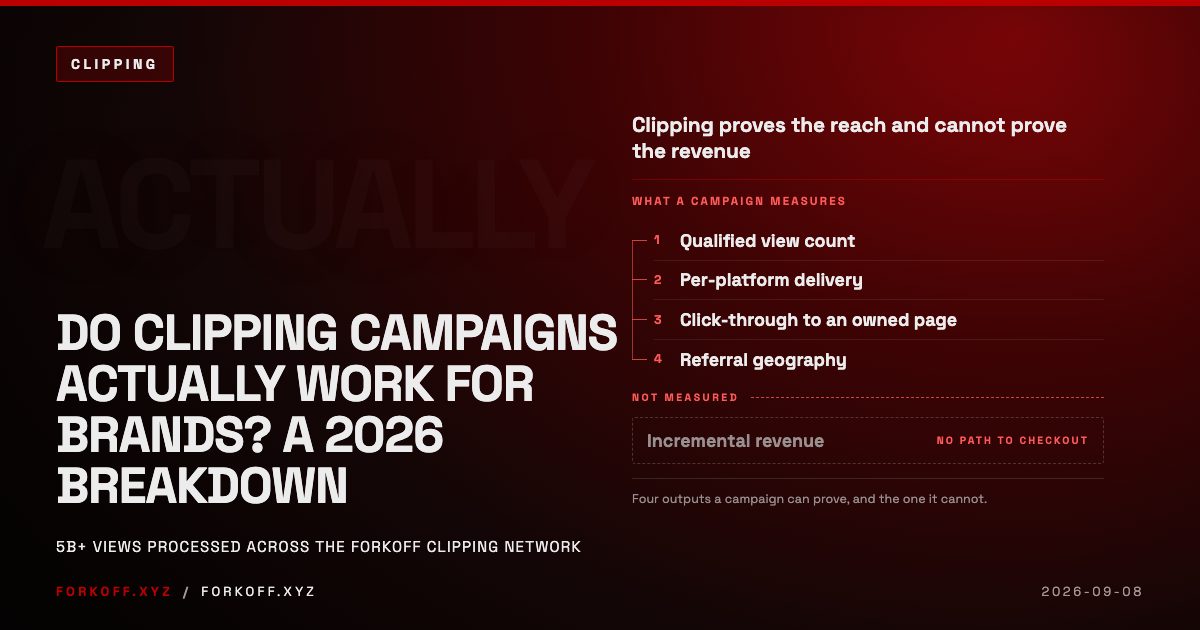
Do Clipping Campaigns Actually Work for Brands? A 2026 Breakdown
Clipping campaigns buy reach at a low unit price and cannot prove revenue. The 2026 breakdown of CPM by content signal, attribution and vendor diligence.
 Read
Read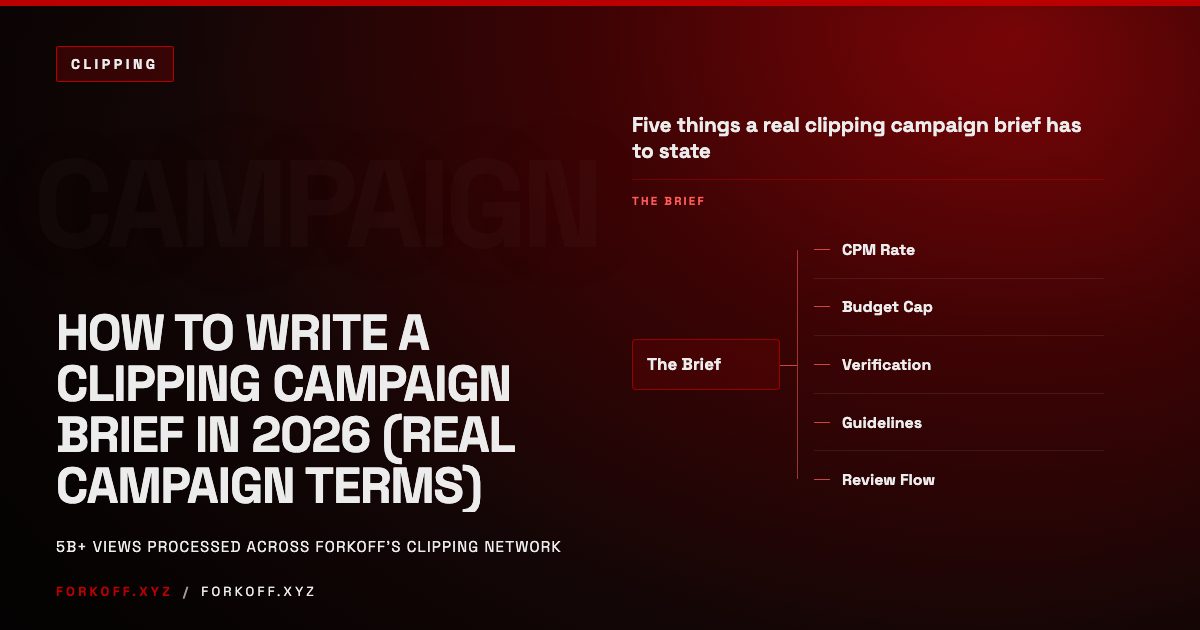
How to Write a Clipping Campaign Brief in 2026 (Real Campaign Terms)
A clipping campaign brief sets the CPM, budget cap, submission rules, and review flow that decide whether a campaign gets quality clips or wasted budget.
Read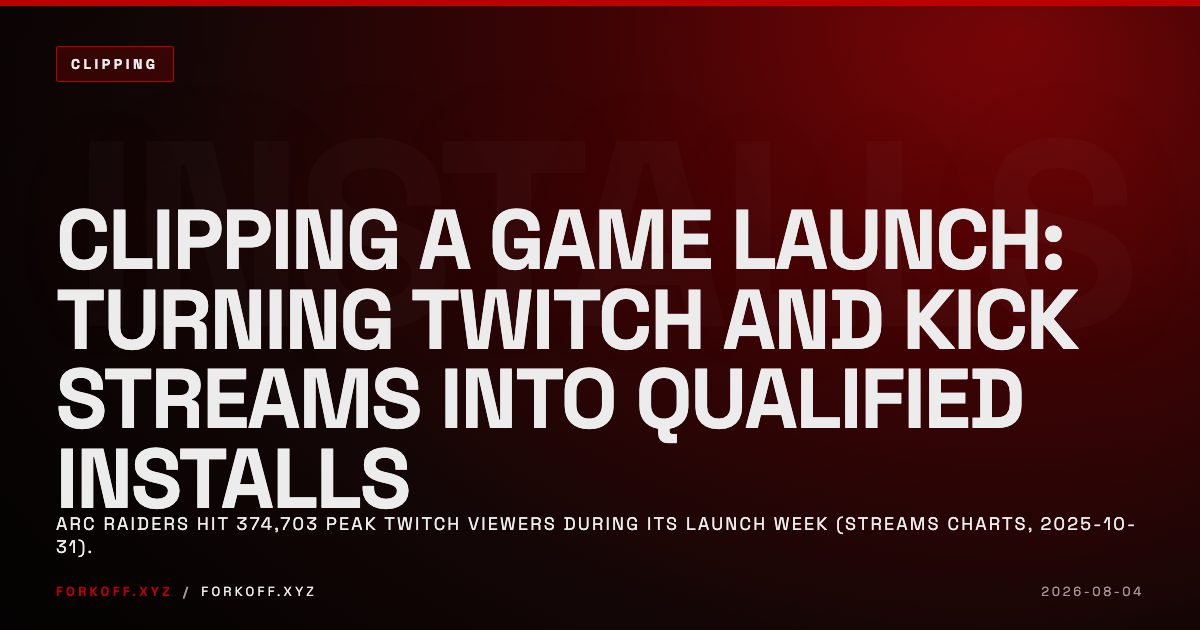
Clipping a Game Launch: Turning Twitch and Kick Streams Into Qualified Installs
A launch-week playbook for clipping Twitch and Kick streams into qualified installs, with Drops mechanics, wishlist math, and a 7-day production calendar.
Read