
LinkedIn vs X for a product launch in 2026
Updated Aug 5, 2026
Use X when the launch needs velocity and a public argument, and LinkedIn when the buyer is an operator or an investor who has to justify the purchase internally. X compounds through quote-tweets, replies, and recap accounts, so a launch can travel far beyond your own following within hours, which makes it the stronger first window for consumer, developer, and crypto products. LinkedIn moves through professional networks instead, so reach is slower and narrower but lands closer to budget authority, which makes it the stronger first window for B2B and DevTools. The two are not mutually exclusive and the sequencing matters more than the choice: FORKOFF runs LinkedIn distribution standalone or paired with the X launch for a two-channel first window. If you can only run one well, pick the channel your buyer actually reads, then add the second once the first is a repeatable motion.
Per our own views-to-likes benchmark of 5,375 creators, an engagement ratio outside the observed band is the cheapest tell that a launch was amplified. FORKOFF Views-to-Likes Benchmark 2026
- 01Name the buyer before naming the channel The decision is downstream of who signs. A developer or consumer audience is on X. A VP or a procurement-bound operator is on LinkedIn. Picking a channel because your own account is bigger there is the most common way this goes wrong.
- 02X for velocity, LinkedIn for credibility X distributes through public argument, so a launch can escape your following within hours through quote-tweets and recap accounts. LinkedIn distributes through professional networks and rewards dwell, so it builds the credibility a buyer forwards internally. Different physics, different jobs.
- 03Both need a warm-up, of different kinds The FORKOFF launch engine runs a 14-day cluster warm-up on X, aimed at a conversation cluster and a live argument. The LinkedIn version aims the same two weeks at named individuals, because reach travels through people rather than topics. Neither channel rewards a cold account.
- 04Run X first when you want a wave to ride If the launch has a debate in it, or a visual asset that rewards autoplay, X first gives you a wave and LinkedIn second gives you the credible write-up for the operators who saw it. This is the default order for products with any consumer or developer surface.
- 05Run LinkedIn first when the sale is committee-bound For B2B and DevTools where the buyer has to sell your product internally, lead on LinkedIn. The post gets forwarded, the comments become social proof a champion can point at, and the X launch afterwards adds reach without carrying the credibility load.
- 06Measure both on the same unit Impressions are not comparable across these platforms and neither are likes. Normalise on qualified views and on which named accounts engaged, so you can tell which channel actually produced pipeline rather than which produced a bigger number.
The two channels fail in opposite directions
An X launch fails by being loud and empty. Reach is easy to inflate there, which is why FORKOFF built RADAR in the first place, and a launch can post enormous view counts while producing nothing, so the discipline on X is verifying that the reach was real. See organic vs amplified launch benchmark and how to tell if a launch is botted for how that check works. A LinkedIn launch fails the opposite way, by being credible and invisible. The post is well received by the forty people who see it and never escapes the founder's immediate network, because LinkedIn does not have an equivalent of the quote-tweet wave to carry it outward. So the failure you are guarding against differs by channel: on X you are guarding against fake reach, on LinkedIn you are guarding against no reach. That asymmetry is the real reason to run both, because each covers the other's weakness.
There is no search demand on either phrasing, and that is informative
FORKOFF measured the literal LinkedIn launch phrasings in August 2026 (DataForSEO, US) and all seven returned zero monthly volume, with a positive control passing in the same call. The X-side launch terms carry demand but the head terms that look attractive on LinkedIn are mostly not winnable: best time to post on linkedin draws roughly 5,400 monthly US searches and is held by LinkedIn's own help pages plus the major scheduling vendors, linkedin post format draws about 1,900 and resolves to text-formatter tools rather than buyers, and linkedin analytics draws about 1,000 and is owned by the platform and the same vendors. The practical read for a founder: neither channel is a place where buyers arrive by searching for your launch. Both are push channels where reach is manufactured before the day. That is why the warm-up, not the announcement, is the work.
How FORKOFF sequences a two-channel launch
Organic distribution on LinkedIn and organic distribution on X are two of the four components of a FORKOFF launch, and the LinkedIn component runs standalone or paired with the X launch for a two-channel first window. When both run, the X side carries the 5-lever engine: a 14-day cluster warm-up across a named ICP account list, debate-principal tagging on a live argument, recap-account seeding, and launch-day wave-ride monitoring, with real accounts and never a pod. The LinkedIn side runs the founder cadence, the named-account warm-up, and launch-day comment work on a mid-morning midweek slot. Both report on qualified views against the same four-stage gate, so the comparison between them is like for like. See the LinkedIn distribution cadence playbook for the LinkedIn timeline and FORKOFF product launch for the full engagement.
LinkedIn vs X for the first 72 hours
| Dimension | X (Twitter) | |
|---|---|---|
| Distribution mechanic | Quote-tweets, replies, recap accounts | Professional networks, dwell, forwards |
| Speed | Hours, can escape your following fast | Days, stays closer to your network |
| Best fit | Consumer, developer, crypto | B2B, DevTools, committee-bound sales |
| Proximity to budget | Lower, wide but diffuse | Higher, lands near approval authority |
| Main failure mode | Loud and empty, inflated reach | Credible and invisible, no escape velocity |
| Warm-up target | A conversation cluster and a live argument | A named list of operators and investors |
| Link handling | Link in post is normal | Link belongs in the first comment |
Seven literal LinkedIn-launch search phrasings returned zero monthly US volume (DataForSEO, August 2026, positive control passed in the same call), so both channels are push rather than search surfaces. FORKOFF runs both components against the same four-stage qualified-view gate so the two are comparable on one unit.
Frequently asked questions
Is LinkedIn or X better for a product launch?
Neither is better in general; they suit different buyers. X is better when the launch needs velocity and can travel through public argument, which fits consumer, developer, and crypto products. LinkedIn is better when the buyer is an operator or investor who must justify the purchase internally, which fits B2B and DevTools. Pick the channel your buyer reads, then add the second once the first is repeatable.
Should you launch on both LinkedIn and X at the same time?
You can, and FORKOFF runs LinkedIn distribution standalone or paired with the X launch for a two-channel first window, but sequencing usually beats simultaneity. Lead on X when there is a debate or a visual asset to ride a wave with, and lead on LinkedIn when the sale is committee-bound and the post needs to be forwarded internally.
Which channel gets more reach for a launch?
X, almost always, and that is not automatically an advantage. Reach on X is easy to inflate, which is why FORKOFF built RADAR to verify whether traced launches were organic or amplified. LinkedIn produces less reach but lands closer to budget authority. Compare the two on qualified views and on which named accounts engaged, not on impressions.
Does a LinkedIn launch need a warm-up like an X launch?
Yes, and the same two-week window applies, but the target changes. On X the warm-up engages a conversation cluster and a live argument. On LinkedIn it engages a named list of specific operators, investors, and customers, because LinkedIn reach travels through people rather than topics. A cold account underperforms on both platforms.
Where should the launch link go on each platform?
On X a link in the post is normal practice. On LinkedIn off-platform links suppress distribution, so publish the post native and put the destination link in your own first comment, editing it into the post later if you want it there once reach has settled. Applying X habits to LinkedIn costs you reach on launch day.
Receipts, deep dives, and playbooks.
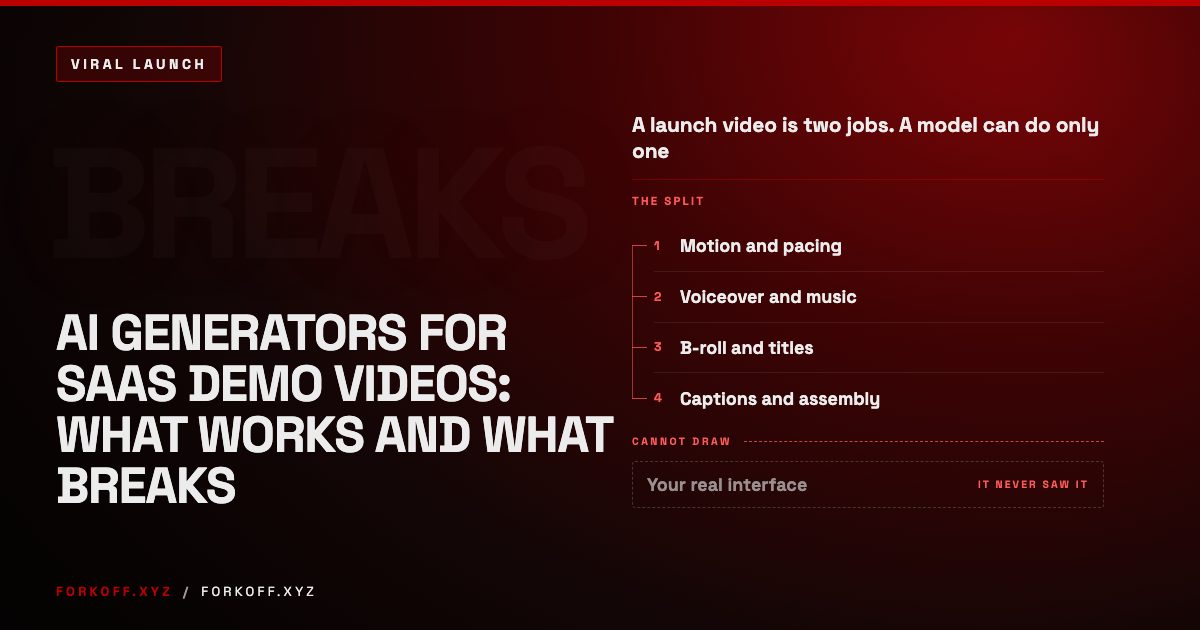
AI Generators for SaaS Demo Videos: What Works and What Breaks
AI video generators handle motion, voiceover and pacing well and draw your interface badly. Which half of a launch video to give a model, which half to keep.
 Read
Read
Why Sora Went Viral in 5 Days, and Dead in 6 Months
OpenAI's Sora beat ChatGPT to 1M downloads, then shut down 6 months later. The public download, revenue, and moderation data behind both halves.
Read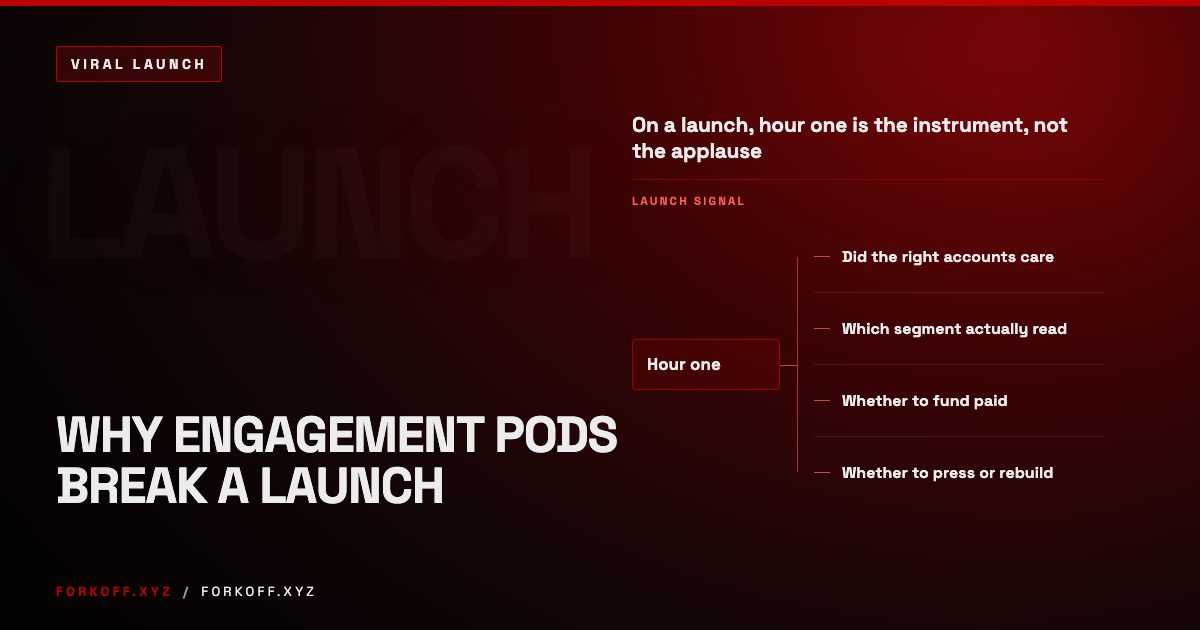
Why Engagement Pods Break a Launch
On an ordinary post a pod costs you some reach. On a launch it costs you the only measurement you had. LinkedIn's own trust VP explains where the penalty lands.
Read