Reddit versus LinkedIn is the wrong fight to pick if you frame it as a popularity contest. Both are large B2B distribution surfaces, but they source pipeline at opposite ends of the buying journey, so asking which one is bigger tells you nothing about which one will fill your calendar. LinkedIn is where you reach a named decision-maker inside a target account and where a credible point of view moves senior buyers. Reddit is where those same buyers go earlier, to research a problem candidly with peers before any vendor is on their shortlist, and where a helpful answer keeps working for months because it ranks in search and gets cited by AI. The real question a founder should ask is not which platform is better, it is which one sources qualified replies per dollar and per hour, at the stage you are trying to influence.
The 90-second version
Reddit and LinkedIn do not compete for the same job, so picking a winner on reach is the wrong test. LinkedIn sources late-funnel pipeline: precise decision-maker targeting, account-based ads, and thought leadership that reaches senior buyers, at a high cost per qualified reply (a reported 5 to 9 dollar CPC and dollar-heavy outbound). Reddit sources early-funnel pipeline: high-intent buyers researching in niche communities, at a low cash cost (a reported 0.20 to 2.00 dollar CPC) but a high operator-time cost, and it compounds because native threads keep ranking and now get cited by AI answer engines. The metric that matters is not impressions, it is qualified replies and booked calls per dollar and per hour. For most technical and SaaS founders the durable play is to stack both in sequence: seed Reddit to find the message and community that actually converts, then put that exact proven message in front of decision-makers on LinkedIn. Run one alone only when your stage forces the choice.
This post answers that with the numbers and the decision framework, not with platform loyalty. We compare cost per qualified reply instead of cost per click, map each channel to the funnel stage it actually owns, and land on the stack-both sequence we run for B2B clients, because the honest answer for most founders is not Reddit or LinkedIn, it is Reddit then LinkedIn.
Worth saying up front: this is not a neutral both-sides piece that refuses to choose. There is a clear order and a clear default, and we will make the case for both. But the reason the comparison is worth writing at all is that the popular versions of it are wrong in a specific way. The pro-Reddit camp treats LinkedIn as a dying cringe factory, and the pro-LinkedIn camp treats Reddit as a hostile place where marketers get banned, and both are arguing from the exception rather than the mechanism. Reddit is not dying and LinkedIn is not dead. They are two different machines that do two different jobs in the same buying process, and the founders who win treat the choice as an engineering decision about where their specific buyers spend attention at each stage, not a personality test about which platform they find more tolerable. If you only take one idea away, make it this: reach is a vanity metric, and the channel that wins is the one that puts a real conversation with a fit buyer in front of you for the least of whichever resource you are short on, time or cash.
About these numbers
The benchmarks below come from a mix of platform sources and independent research, each cited inline. Media-cost ranges draw on Reddit's own ad platform, the Reddit Ads help center on budgets and bidding, Statista's tracking of Reddit CPC, and independent 2025 to 2026 benchmark compilations. Buyer-behavior figures come from Gartner's B2B buying research and the LinkedIn and Edelman B2B Thought Leadership research. The cost-per-qualified-reply figures are FORKOFF's own directional ranges from running Reddit distribution and Twitter distribution for B2B clients, framed as illustrative, not guaranteed. Treat every media benchmark as a directional range, because auction pricing and audience mean your numbers will differ, and read the operator context as what we see in the field, not a universal rule.
Which is better for B2B, Reddit or LinkedIn?
Neither channel is universally better, because they are not competing for the same job. LinkedIn is the better late-funnel channel: its verified professional graph lets you target a decision-maker by title, seniority, and account, and reach them with account-based ads and thought leadership, which is exactly what you want when you already know who needs to say yes. Reddit is the better early-funnel channel: it is where buyers research a category candidly before a vendor shortlist exists, at a fraction of LinkedIn's media cost, and it compounds because native threads keep ranking and getting cited. The correct decision is not to crown a winner, it is to match each channel to the stage of the journey it actually sources, and for most founders to run both in the right order.
Reddit vs LinkedIn for B2B distribution (2026)
| Dimension | ||
|---|---|---|
| Primary strength | High-intent research communities | Verified decision-maker targeting |
| Buyer intent | High (people actively researching a problem) | Medium (feed browsing, some intent) |
| Typical CPC (benchmark) | 0.20 to 2.00 dollars | 5 to 9 dollars |
| Main cost | Operator time and skill | Ad dollars and sales headcount |
| Organic reach trend | Rising via search and AI answers | Declining for most pages |
| Trust signal | Peer credibility, anti-marketing | Professional credibility, titles |
| Compounds over time | Yes, threads keep ranking and get cited | Rarely, posts fade within days |
| Best funnel stage | Early: discovery and problem research | Late: decision-maker reach and ABM |
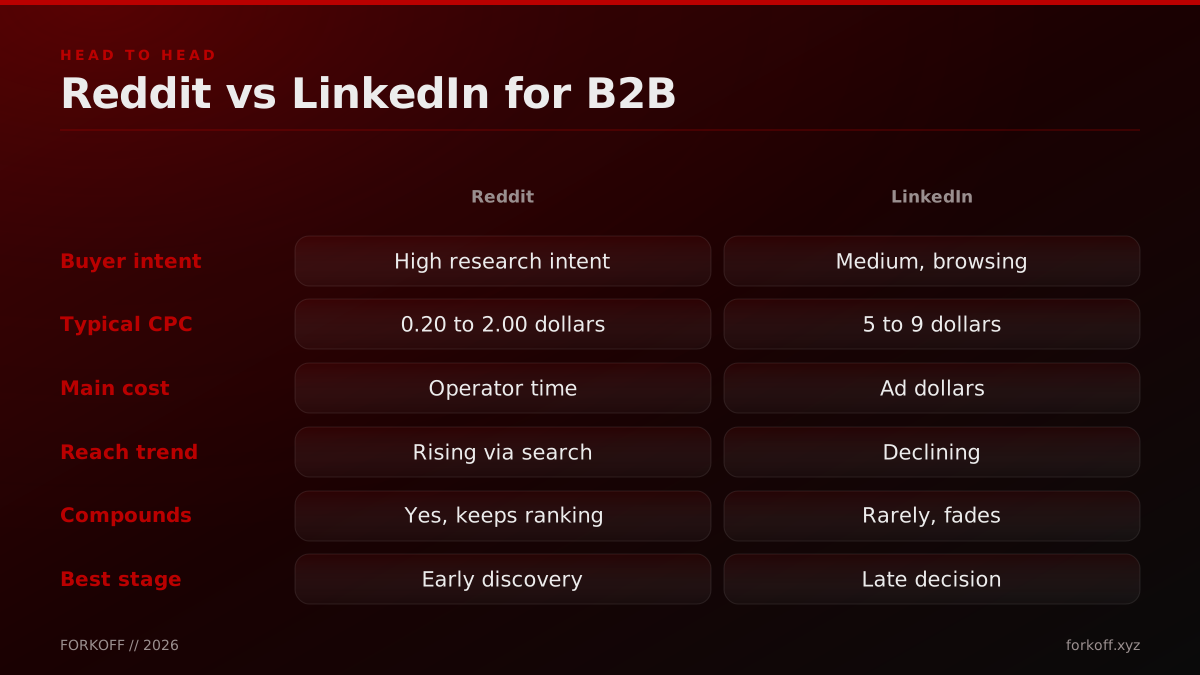
The instinct to pick a single winner comes from treating both as generic reach channels, which they are not. A useful way to feel the difference: LinkedIn is a directory you can query for exactly the right person, and Reddit is a library where your future buyers are already reading. You would not choose between a directory and a library, you would use each for what it does. That framing also explains why the endless Reddit-versus-LinkedIn threads never resolve, because commenters keep arguing about which room is louder instead of which room their buyers are in at each stage.
There is a deeper reason the two are not substitutes: they run on opposite trust mechanics. LinkedIn trust is borrowed from identity, a title, a company logo, a mutual connection, which is why a cold message from a credible-looking profile gets a hearing at all. Reddit trust is earned from contribution, since nobody can see your title and the audience actively punishes anything that reads like a pitch. That single difference shapes everything downstream. On LinkedIn you can lead with who you are; on Reddit you have to lead with what you know. A founder who internalizes that stops asking which platform is friendlier and starts asking which kind of trust they can build faster, credentialed authority or demonstrated usefulness, because the answer decides which channel will pay off first. For a technical founder with deep product knowledge but no personal brand, demonstrated usefulness on Reddit is often the faster path. For an experienced executive with a network and a recognizable company, borrowed authority on LinkedIn compounds sooner.
Reddit vs LinkedIn for B2B? What would you choose?
B2B buyers spend most of the journey away from any vendor, researching alone
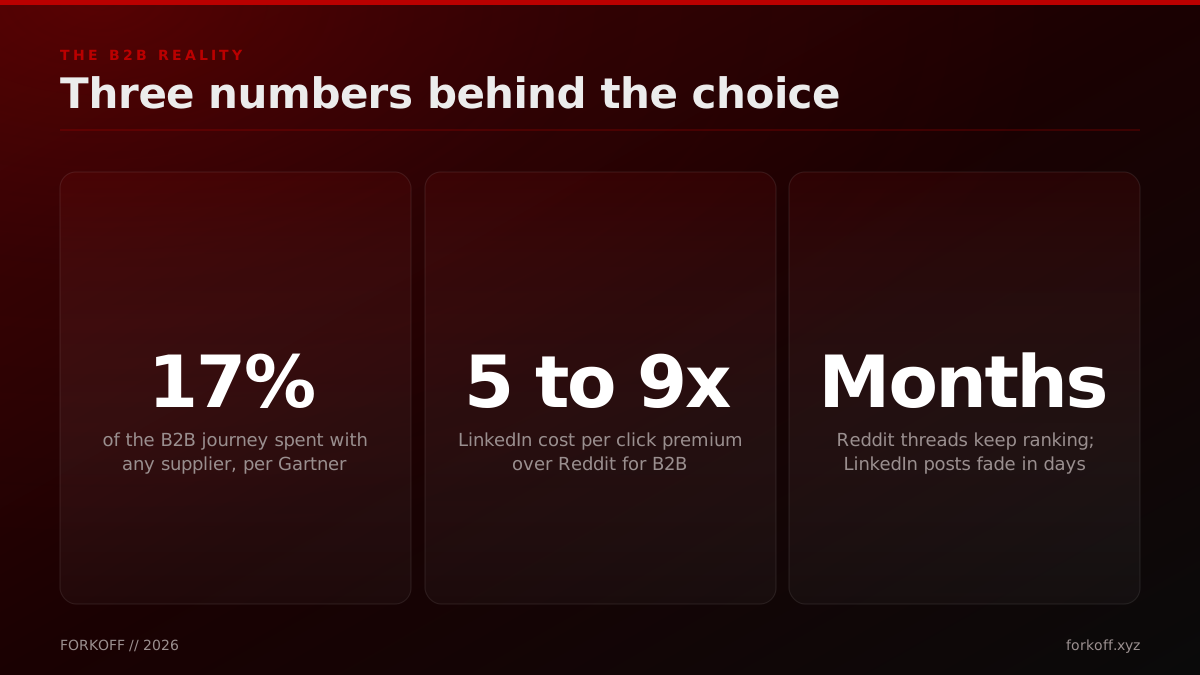
The reason distribution beats advertising for B2B is how buyers actually buy. Gartner's B2B buying research found that buyers spend only about 17 percent of the total purchase journey meeting with potential suppliers, and when they are comparing several vendors, any single sales team may get just 5 to 6 percent of that time. The rest is independent research, much of it reading peer discussion and comparison content before a rep is ever contacted. That is the exact behavior Reddit threads and LinkedIn peer posts capture, which is why showing up in those conversations distributes your product into the decision long before a demo request.
Source: Gartner, The B2B Buying Journey
Why is reach the wrong way to compare them?
Reach is the wrong comparison because impressions do not pay you, qualified replies do. A post that reaches fifty thousand feeds and produces zero fitting conversations is worth less than a single Reddit comment that earns one reply from a buyer with budget. The two channels look very different on reach and almost converge on what matters, which is how many real conversations with fit buyers each one produces per unit of the resource you are spending. That is why the only comparison worth making is cost per qualified reply, counting a qualified reply as a response from someone who matches your buyer and is willing to talk, not a like, a follower, or a click.
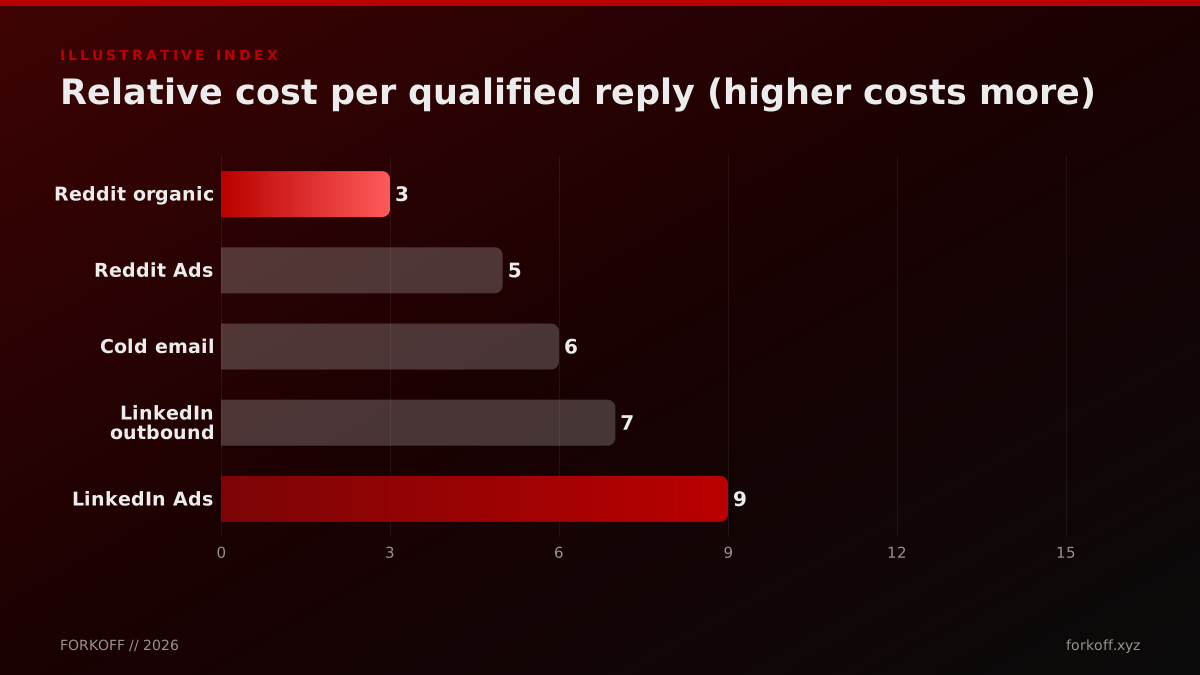
Once you switch to that metric, the platforms trade places depending on your constraint. Reddit's cash cost per reply is very low, because organic seeding costs nothing but time, but its time cost is high and skill-bound, since it takes genuine participation to earn a reply rather than a removal. LinkedIn inverts that: a well-targeted ad or a sharp outbound message can surface a decision-maker quickly, but you pay a premium for it in dollars, with reported CPCs of 5 to 9 dollars and sales time on top. The founders who get distribution right stop asking which channel is cheaper and start asking which scarce resource they actually have, hours or budget, then spend the abundant one.
It helps to make the qualified-reply definition concrete, because vague definitions are how vanity metrics sneak back in through the side door. A qualified reply is a response from a person who matches your ideal customer, engages with the substance of what you said, and is open to continuing the conversation. It is not a like, a follow, a profile view, or a comment that says nice post. By that standard, a viral LinkedIn post with two hundred likes and zero fitting replies scored zero, while a quiet Reddit comment that earned one thoughtful message from a director of engineering at a target account scored one. Reach makes the first look like a triumph and the second like a rounding error. Pipeline says the exact opposite, and pipeline is what pays salaries. The discipline that follows from this is simple and unpopular: report the number of qualified replies per channel every week, put it next to the reach numbers, and watch how quickly the team stops optimizing for applause once the two are side by side.
Operator noteReach is a vanity metric. Count qualified replies and booked calls per dollar and per hour, not impressions or follower counts., FORKOFF distribution desk
Alex Lieberman
@businessbarista
My Twitter/X reach is f*cked. Posted the same thing at the same time on X & Linkedin today. X: Followers: 245.8k Likes: 33 Replies: 5 Views: 7,341 Linkedin: Followers: 133.3k Likes: 238 Replies: 39 Views: 51,888 One of many examples I've been tracking the last few weeks.
Where does LinkedIn actually source B2B pipeline?
LinkedIn sources pipeline from precise decision-maker access, not broad reach. Its real advantage is that professional identity is verified, so you can target by job title, seniority, company, and industry with a confidence no other social platform offers, and then reach those exact people with account-based ads and with thought leadership they take seriously. That is late-funnel work: you already know the account and the buyer, and LinkedIn is how you get in front of them credibly. What LinkedIn is not, for most accounts today, is a cheap organic reach machine, because organic distribution has tightened and more reach now sits behind paid.
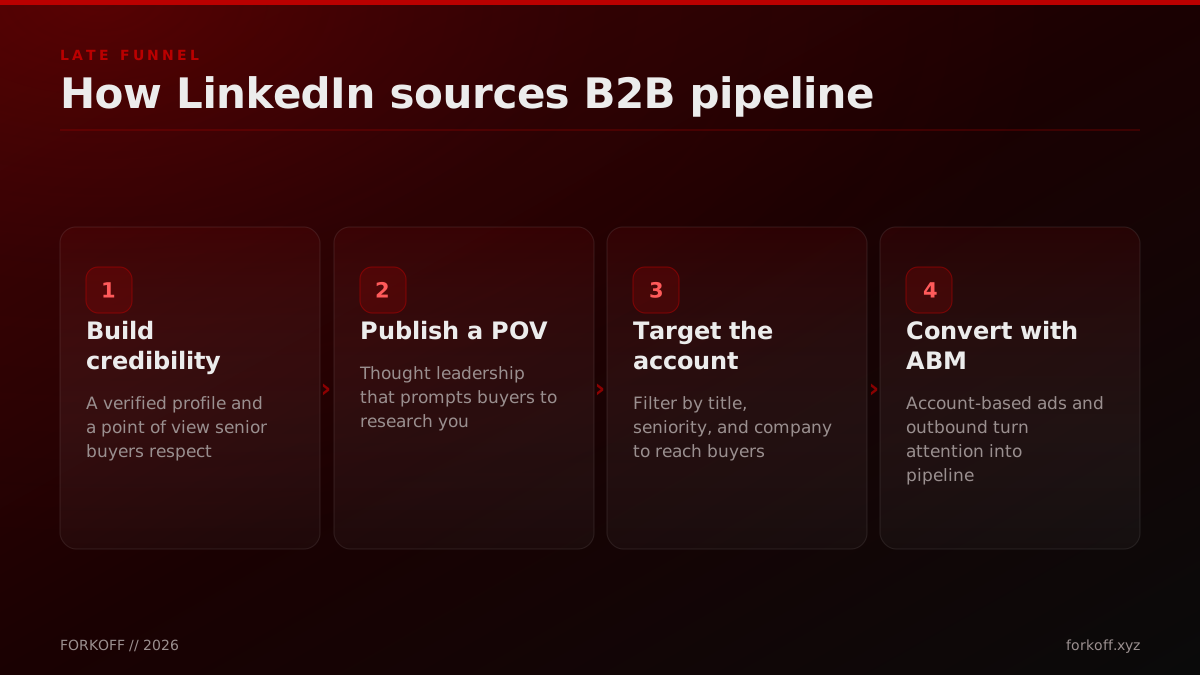
The channel rewards a specific motion: a credible profile, a consistent point of view that senior buyers find worth reading, and precise targeting to convert that attention into pipeline through outbound and ABM. The LinkedIn and Edelman thought leadership research has repeatedly found that a majority of decision-makers say strong thought leadership led them to research and buy from a company they had not previously considered, which is the mechanism that makes LinkedIn worth its premium. The failure mode is treating it as a volume channel, blasting generic connection requests and boosting posts for reach. That buys impressions, not replies, and it is exactly the vanity-reach trap this whole comparison is built to avoid. The purest form of that trap is the engagement pod, and it is worth understanding why pods fail on LinkedIn specifically before paying for reach on any channel.
The uncomfortable trend inside that strength is that LinkedIn outbound keeps getting harder as inboxes saturate. Connection-request and cold-message reply rates have fallen for years as every B2B team piled into the same templated playbook, which is why the operators still winning on LinkedIn have shifted from volume outbound to a content-plus-targeting motion. They publish something a decision-maker genuinely wants to read, then use paid to put that post in front of the exact accounts they care about, rather than spraying connection requests and hoping. That is the arbitrage the sharper B2B operators are describing right now, and it is a very different game from the connect-and-pitch approach most teams still run. It also explains why LinkedIn increasingly rewards a real point of view over raw activity: the feed favors posts that earn engagement, and paid amplification is cheapest when the underlying post already resonates. In other words, LinkedIn is quietly turning into a channel that punishes founders who have nothing distinctive to say and rewards the ones who do.
LinkedIn is where senior buyers still take thought leadership seriously
LinkedIn's structural advantage is verified professional identity, which makes precise seniority and account targeting possible in a way no other social platform matches. The LinkedIn and Edelman B2B Thought Leadership research has repeatedly found that a majority of decision-makers say strong thought leadership directly led them to research and ultimately buy from a company they had not previously considered, and that it matters more during economic uncertainty. For B2B, LinkedIn's value is not raw reach, it is that the right title inside the right account is reachable and receptive to a credible point of view.
Source: LinkedIn and Edelman, B2B Thought Leadership Impact Report
Cody Schneider
@codyschneider
stop everything that you're doing and read this if you're in b2b saas biggest arbitrage in the game right now strategy is do organic posts on linkedin with like comment for actions get organic reach / engagement then do thought leadership ads to these posts, with engagement
Where does Reddit actually source B2B pipeline?
Reddit sources pipeline from active research intent and peer trust, earlier in the journey than LinkedIn reaches. Buyers use Reddit to figure out which tools and vendors are worth considering, candidly and away from sales pressure, so showing up helpfully in the right subreddit puts your product into the shortlist-forming stage most channels never touch. The trust mechanism is inverted from advertising: Redditors are skeptical of marketing by default, so credibility comes from being genuinely useful, which is harder to fake and more durable once earned. Done well, Reddit is not a lead form, it is distribution into the exact conversations where buying decisions start.
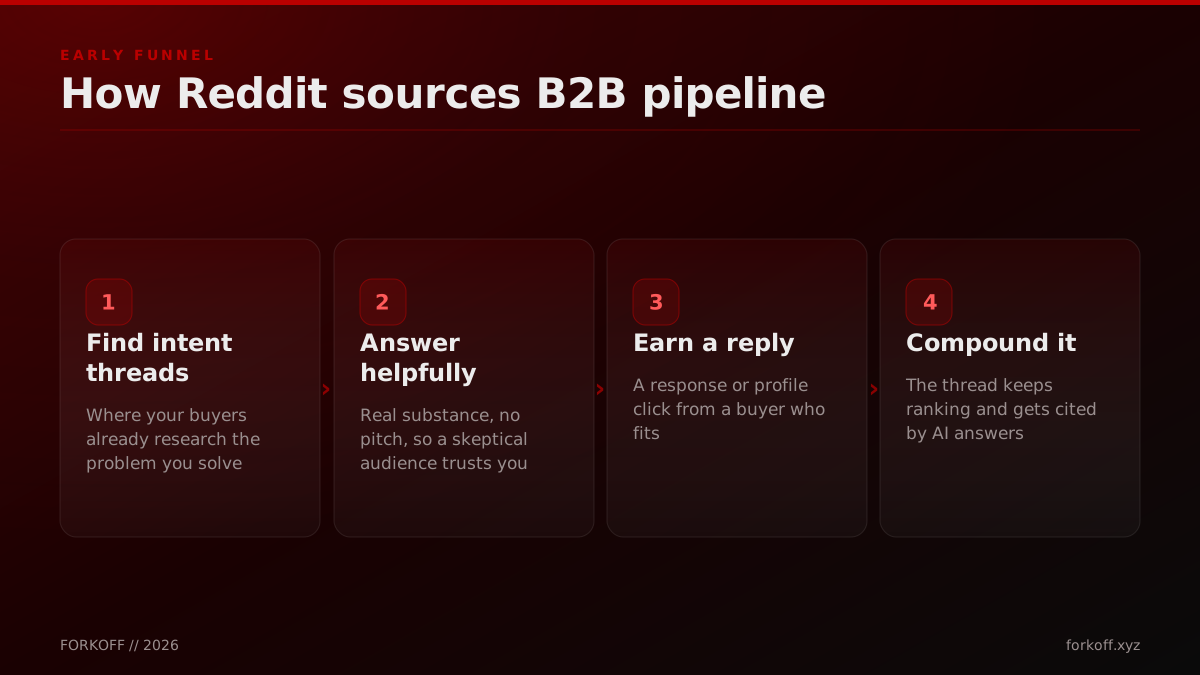
The motion that works is unglamorous and compounding: find the threads where your buyers are already researching the problem you solve, answer with real substance and no pitch, earn a reply or a profile click, and let the thread keep working. That last part is Reddit's structural edge over LinkedIn. Because Google licensed Reddit content in a reported 60 million dollar deal and now surfaces it heavily, a strong Reddit answer keeps earning search traffic and increasingly shows up when Reddit comments become AI citation sources long after you post it. A LinkedIn post is mostly spent in a day. The tradeoff is speed: Reddit is slow to start and skill-bound, which is why founders who try it for a week and quit conclude it does not work, when the truth is it compounds only if you stay.
The efficiency argument is not just anecdotal either. eMarketer has reported that Reddit helped consumer tech marketers reach roughly a seven dollar return on ad spend and that Reddit's share of tech ad spend has climbed sharply, which lines up with the sub-dollar click costs operators keep publishing. For a founder, the read is that the platform is genuinely efficient at the top of the funnel, and that the real constraint is skill and patience rather than budget. It is also why the pattern works unusually well for technical and developer-facing products, where the buyer is more likely than average to be on Reddit researching a stack decision in the first place, a dynamic we break down in the Reddit stack for AI startups. The mistake founders make is importing an advertising mindset into a community, treating a subreddit like an audience to broadcast at rather than a room to be useful in. The channels that reward you on Reddit are the ones where you would happily comment even if you had nothing to sell, and buyers can tell the difference instantly.
Why is Reddit so much better of a business platform than linkedin?
Why is Reddit so much better of a business platform than linkedin?
Reddit distribution now compounds through search and AI answers
Reddit changed from a hard-to-measure community into a durable distribution surface when Google signed a reported 60 million dollar deal in early 2024 to license Reddit content for training and surfacing, and Reddit's own results have shown search-driven visibility climbing since. The practical effect for a founder is that a genuinely helpful Reddit comment keeps working: it ranks in Google, it appears in the Discussions and Forums block, and it increasingly gets pulled into AI Overviews, ChatGPT, and Perplexity answers. A LinkedIn post, by contrast, is mostly spent within a day or two of the feed. One channel is a flow, the other is a compounding stock.
Source: Reuters, Reddit and Google content licensing deal, 2024
What does a qualified reply actually cost on each channel?
A qualified reply costs very different resources on each channel, which is why cost per click is such a misleading way to compare them. On Reddit, a qualified reply is cheap in cash and expensive in hours: you pay almost nothing to post, but you pay in the operator time and skill it takes to earn credibility and write answers good enough to draw a response. On LinkedIn, a qualified reply is expensive in cash and cheaper in hours: precise targeting can surface a decision-maker quickly, but you pay a premium CPC or a sales salary for the privilege. Cold email and Twitter sit at other points on the same tradeoff. The table below lays out the honest, directional ranges we see.

What a qualified reply costs by channel (illustrative, directional)
| Channel | Typical media cost | Cost per qualified reply | Notes |
|---|---|---|---|
| Reddit organic seeding | None (time only) | Low cash, high hours | Skill-bound, compounds, slow to start |
| Reddit Ads | 0.20 to 2.00 dollars CPC | Moderate | Only worth it once the message is proven |
| LinkedIn outbound DM | None (time and tooling) | Moderate to high | Reply rates fall as inboxes saturate |
| LinkedIn Ads / ABM | 5 to 9 dollars CPC | High | Precise targeting, premium price |
| Cold email | Low (tooling) | Variable | Volume game, deliverability sensitive |
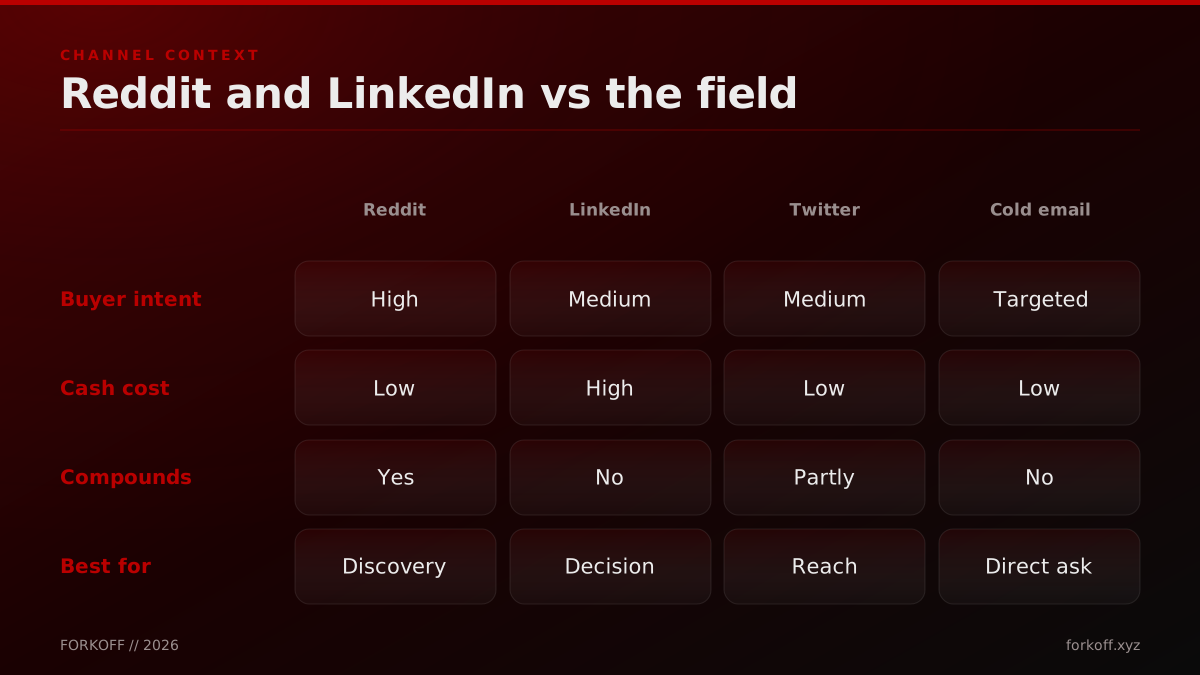
The practical implication is that your cheapest channel is the one that spends your abundant resource. A technical founder with time and product knowledge but little budget should lead with Reddit, where their expertise is the currency, and read our breakdown of what Reddit actually costs before adding paid. A funded team with budget but no spare operator hours can justify leading with LinkedIn's paid targeting, as long as they are amplifying a message that already converts. What nobody should do is buy expensive LinkedIn or Reddit clicks against an unproven offer, because cheap or dear, a click on a message that does not land produces no reply at all.
The way to make this concrete is to run the arithmetic on your own funnel rather than on anyone's benchmark. Take a channel's total cost for a month, in dollars for paid or in a fair hourly rate for the time you spent, and divide it by the number of qualified replies it produced. Most founders are quietly shocked the first time they do this, because the channel that looked cheapest per click is rarely the cheapest per reply, and the channel that felt like a time sink often produced the highest-intent conversations of the month. A hundred Reddit comments that took ten hours and produced four real conversations can beat a thousand dollars of LinkedIn ads that produced one, or lose to it, and you cannot know which without the division. This is also why we treat channel choice as one part of a broader content distribution plan rather than a standalone bet, because the same proven message should be working across several surfaces at once, not trapped in the single channel a founder happens to prefer.
How I Used Reddit to Hit $17K MRR (With ZERO Audience)
Starter Story
A founder case study on reaching 17,000 dollars in monthly recurring revenue using Reddit as a cold-start channel with zero existing audience.
Operator noteReddit's cost per reply is mostly time, LinkedIn's is mostly dollars. Budget the scarce resource you actually have, hours or cash., FORKOFF Reddit and social field notes, 2026
Which channel fits which stage of the buying journey?
Each channel owns a different stage, and mapping them to the funnel resolves most of the debate. Reddit owns the top of the funnel, discovery and problem research, because that is when buyers are reading peer discussion to decide what is even worth evaluating. LinkedIn owns the bottom, the decision and account-based stage, because that is when you need to reach a specific, named person with authority. The middle, active comparison, is contested ground where both channels contribute: a Reddit thread comparing options and a LinkedIn post from a credible operator can each tip a shortlist. Seeing it as a map rather than a contest is what lets you run both without them competing.
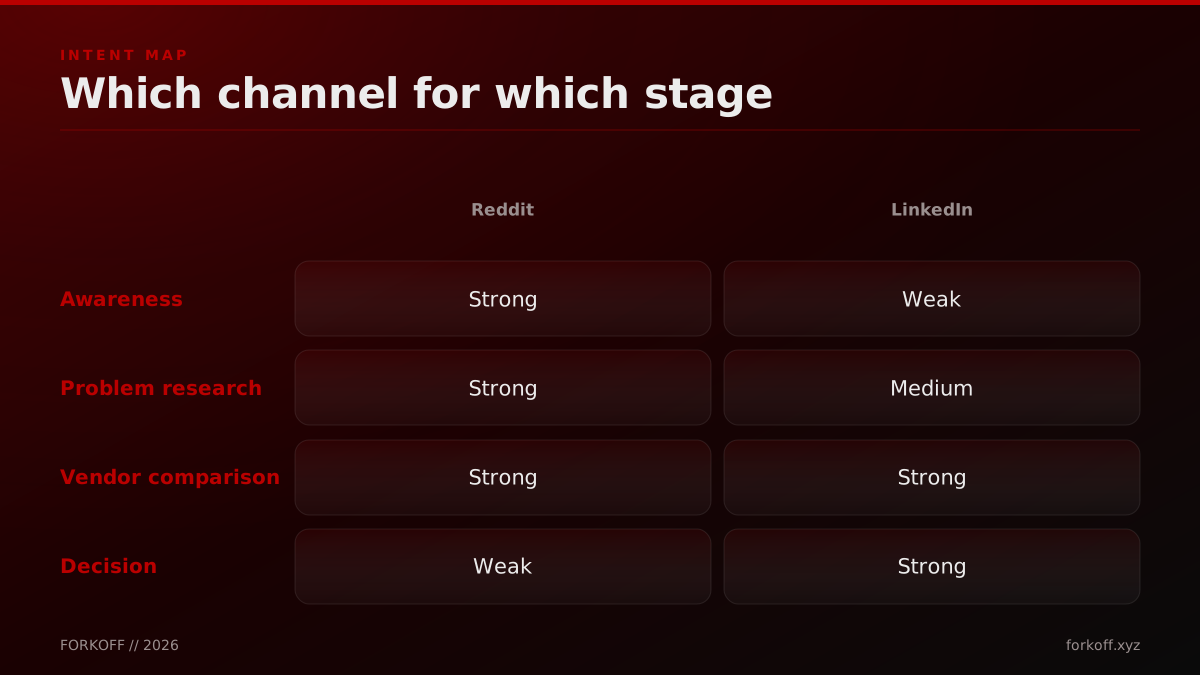
This is also why single-channel advice ages badly. A founder who only runs LinkedIn is invisible during the research stage where shortlists form, so they spend to reach buyers who have already, quietly, decided who to consider. A founder who only runs Reddit builds durable discovery presence but has no efficient way to reach a specific decision-maker inside a target account when a deal needs a champion. The B2B founders who compound distribution cover the whole journey by design, and they do it with two or three deep channels, not by being everywhere shallowly.
This maps onto how modern B2B buying actually runs, which is mostly anonymous and self-directed. A large share of the research that decides a deal happens before a buyer ever fills in a form or replies to a rep, in search results, communities, and peer conversations you cannot see in your CRM. Analysts who study attention, like Rand Fishkin's team at SparkToro, keep finding that the visible, trackable part of the buying journey is the small tip of a much larger iceberg of unattributable influence. The practical consequence is that a channel's real job is often to shape a decision you will never get to attribute cleanly, which is exactly what durable Reddit presence and consistent LinkedIn thought leadership both do at their respective stages. A founder who insists on last-click attribution for every dollar will systematically underrate both channels, defund the thing that was quietly seeding the pipeline, and then wonder why the demos dried up two quarters later. The channels that build shortlists rarely get credit for the deals they started.
LinkedIn is a cringefest but it works for B2B startups - Here's what you need to do to generate leads and get clients
Reddit clicks are cheaper than LinkedIn, but cheap clicks are not qualified replies
On raw media cost the two channels are not close. Independent 2025 to 2026 benchmark compilations put Reddit's cost per click in roughly the 0.20 to 2.00 dollar range, while LinkedIn's precise B2B targeting typically runs 5 to 9 dollars per click, consistent with Statista's tracking of Reddit CPC by format. But the cheap click is a trap if you read it as the whole story. A qualified reply, a real conversation with a buyer who fits, costs far more than a click on either platform, and the ratio of clicks to qualified replies is what actually separates the two. Compare cost per qualified reply, not cost per click.
Source: Statista, Reddit CPC by ad format
What is the verdict: stack both, and in what order?
For most B2B founders the verdict is to stack both channels, and the order is Reddit first, then LinkedIn. Lead with Reddit because it gives you fast, candid signal at low cash cost about which message, community, and angle actually convert, since its research-minded audience will tell you plainly what resonates and what reads like marketing. Once a message is proven in the threads, put that exact message in front of decision-makers on LinkedIn, where precise targeting and thought leadership do the late-funnel work. Sequencing this way means your premium LinkedIn spend only ever amplifies a message Reddit already validated, instead of paying the highest CPC on the board to test unproven angles.
Pierre-Eliott Lallemant
@pierreeliottlal
Most SaaS founders fail because they scale acquisition too late. We did the opposite. We focused on distribution before product perfection. That's how we went from $0 to 2,000+ paying customers in 9 months with 0 outside funding. Here's the exact growth system we used:
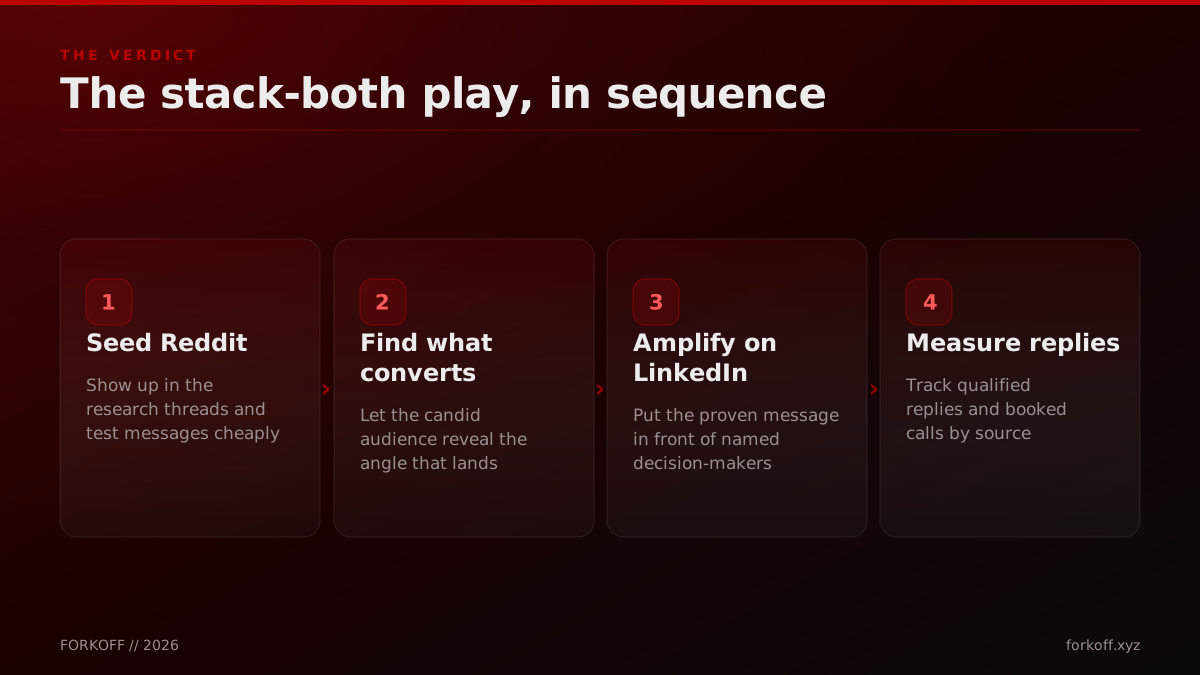
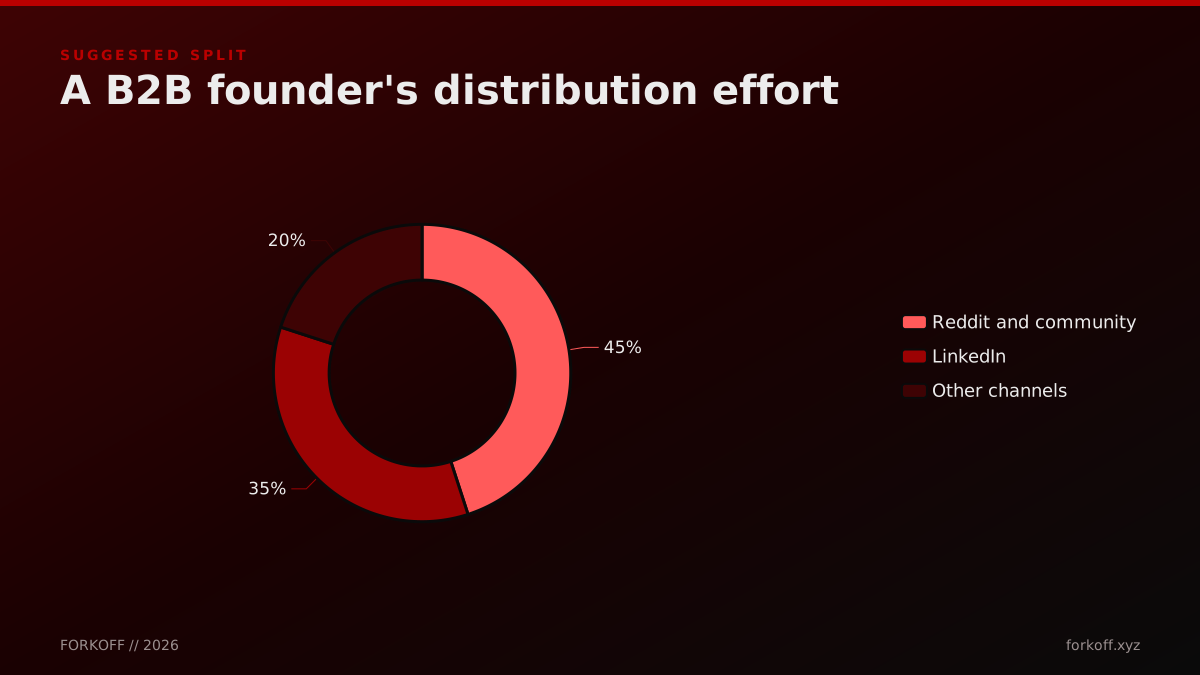
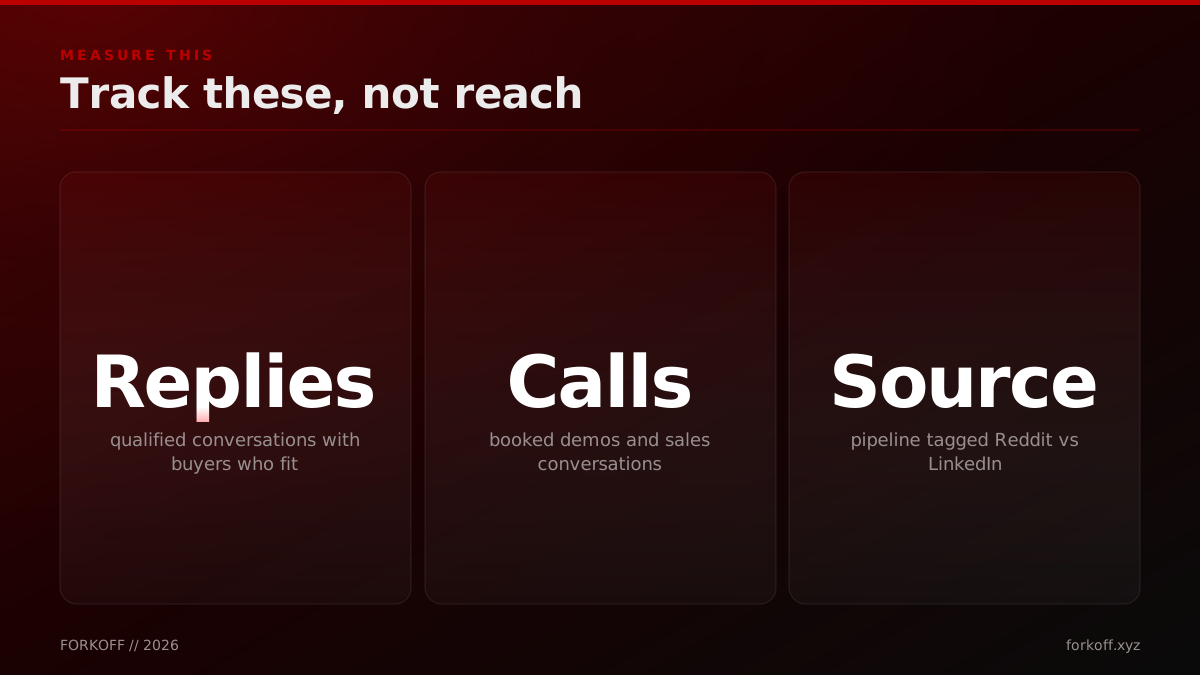
The sequence is a flywheel, not a one-time handoff. Reddit surfaces the language buyers use and the objections that matter, LinkedIn puts that validated language in front of the people who sign, and the closed deals tell you which subreddits and which messages to double down on next. Run as one program, the two channels are strictly better than either alone, which is why we run Reddit and Twitter distribution as a single motion rather than two disconnected tactics. The measurement that keeps it honest is simple: track qualified replies and booked calls by source, so you always know which channel and which message produced the pipeline.
Running the two as one program is also how founder-led distribution scales without simply adding headcount. The Reddit half produces raw language and objections, the LinkedIn half converts attention into named-account pipeline, and increasingly the connective tissue between them is tooling rather than more people, a shift we cover in the agent-native GTM founder stack. The point is not to automate the trust, which cannot be faked on Reddit and is thin on LinkedIn, but to automate the plumbing around it: surfacing the right threads to answer, tracking which messages convert, and moving a winning angle from one channel to the next without a manual handoff quietly losing the thread. Done that way, a solo founder can run a distribution motion that used to need a small team, and the sequence stays intact because the system, not a person's memory, is carrying the proven message from Reddit into LinkedIn and back into the next round of thread selection.
Reddit and Linkedin, Unlikely Titans in B2B Sales
Will | The ADHD Strategist
A B2B sales walkthrough that frames Reddit and LinkedIn as two unlikely titans to stack rather than choose between.
Does LinkedIn Leads usefull vs Reddit leads ??
Operator noteSeed Reddit to find the message that converts, then put it in front of decision-makers on LinkedIn. The sequence beats either alone., FORKOFF paid plus organic field notes, 2026
When should you pick just one?
You should pick a single channel only when your stage genuinely forces the choice, and then you pick by where your buyers already research. If you are a solo or pre-revenue founder with time but no budget, run Reddit alone, because your product expertise is the currency and the compounding search and AI visibility is worth more to you than speed. If you are a funded team selling into enterprise, where the buyers live on LinkedIn and rarely discuss vendors publicly, run LinkedIn alone, because precise decision-maker targeting is the only efficient path to those accounts. The mistake is picking on preference or on which platform you personally enjoy, rather than on where your specific buyers actually go to research.
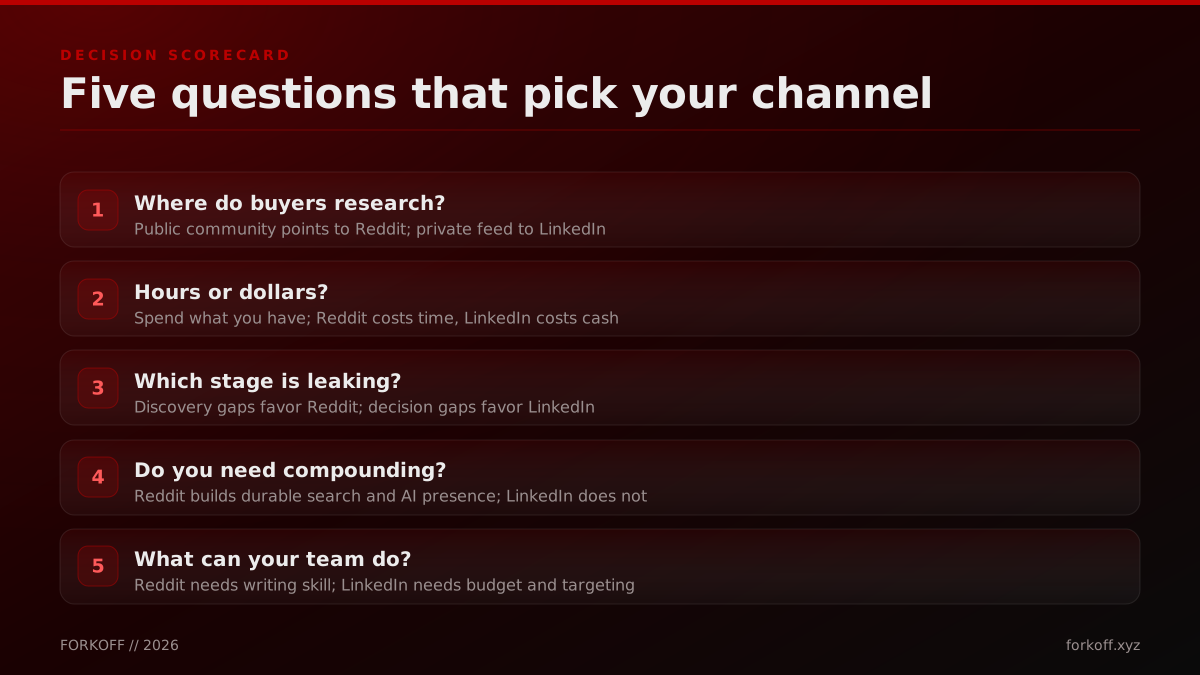
Run the five questions in that scorecard honestly and the choice usually makes itself. Where do your buyers research, and is it a public community or a private feed? Is your scarce resource hours or dollars? Which funnel stage is actually leaking, discovery or decision? Do you need distribution that compounds, or reach you can turn on this week? And does your team have the writing skill Reddit demands, or the budget LinkedIn demands? If most answers point one way, lead there. If they split, that is the signal to stack both, and to read our web3 and technical founder Reddit playbook or the Reddit stack for AI startups for how the early-funnel half is run in practice.
One more edge case worth naming, because it trips up a lot of founders: the channel your buyers use is not always the channel you personally find comfortable. Plenty of technical founders avoid LinkedIn because the culture feels performative, and plenty of marketing-minded founders avoid Reddit because the norms feel hostile and the payoff is slow. Both instincts quietly cost pipeline when the avoided channel is where the buyers actually are. The fix is not to force yourself to enjoy a platform, it is to separate the strategy from the execution: decide where your buyers research based on evidence, then get the execution done, by you if you can sustain it or by someone who can if you cannot. The founders who struggle most are the ones who let taste override data, running the channel they like instead of the channel their buyers use, and then blaming the channel when the pipeline does not show up. Pick on where the buyers are, not on where you feel at home.
How I got 60+ paid SaaS customers in 90 days (SEO + Reddit + LinkedIn, no ads) no viral formula, just manual workflows
Operator noteForced to pick one channel? Go where your buyers research: Reddit for technical and SaaS founders, LinkedIn for enterprise ABM., FORKOFF distribution desk
How does FORKOFF run Reddit and LinkedIn together?
We run them as one distribution program with a single scoreboard, not as two channel teams optimizing separate vanity metrics. The Reddit half seeds the communities where a client's buyers research, earns qualified replies with genuinely useful answers, and compounds them into search and AI citations. The social half takes the messages that proved out on Reddit and puts them in front of named decision-makers, so paid and targeted effort only ever amplifies validated language. Above both sits one measurement layer that tags every inbound by source and reports qualified replies, booked calls, and sourced pipeline, which is the only way to settle the Reddit-versus-LinkedIn question with evidence instead of opinion.
That is also why we lead most B2B engagements with distribution rather than advertising: when buyers spend the majority of the journey researching independently, being present and credible in the research beats interrupting it. If you are weighing whether to run this in-house or bring in help, the honest framing is that distribution is a skill and a sustained time commitment, not a switch you flip once. The Reddit half in particular rewards operators who show up consistently for months, and the LinkedIn half rewards a clear point of view and disciplined targeting, neither of which a founder can usually sustain alongside actually building the product. That is the tradeoff a good engagement is built to solve, mapped vendor by vendor in FORKOFF's best Reddit marketing agency comparison, and it is worth being clear-eyed about what a program actually includes before you commit, which is why our AI marketing agency engagement spells out what the program covers up front instead of hiding it behind a call.
If you want the channel decision made with your actual numbers rather than a benchmark, that is what our Reddit marketing service and Founder Funnel exist to do, alongside the broader go-to-market and answer-engine work that keeps the distribution compounding. The honest promise is not that one channel wins, it is that the right sequence, measured properly, beats any single channel run on faith.
The Ultimate Reddit Marketing Strategy (For B2B & SaaS)
Sam Dunning - Breaking B2B
A B2B and SaaS specific Reddit marketing playbook from an operator, useful for seeing how the early-funnel half of the stack is actually run.
Operator noteAttribution is hard with distribution. Ask every inbound where they first heard of you, and tag Reddit and LinkedIn as separate sources., FORKOFF distribution desk