GWDC 2026 Korea is the second edition of the Global Web3 Developers Conference, a Web3-and-AI industry summit organized by Web3Labs. It runs September 29 and 30, 2026, at the aT Center in Seoul, South Korea, following GWDC HK, held February 8 and 9, 2026, in Hong Kong as an official Consensus Hong Kong side event that the organizer reports drew over 2,000 industry attendees. This preview lays out the verified dates and venue, the four named zones the organizer has structured the show around, the confirmed speaker lineup, the 48-hour hackathon, and how the dates line up with Korea Blockchain Week 2026, the other major Web3 event landing in Seoul the same week.
GWDC 2026 Korea in one scroll
GWDC 2026 Korea, the second Global Web3 Developers Conference, runs September 29 and 30, 2026, at the aT Center in Seoul, organized by Web3Labs. It follows GWDC HK, held February 8 to 9, 2026, in Hong Kong as an official Consensus Hong Kong side event that the organizer reports drew over 2,000 industry attendees. The Seoul edition adds a formal 48-hour hackathon (500-plus developers, $100,000-plus in prizes across five public chains) and structures the venue into four named zones: Main Stage, Innovation Stage, Innovation Booth Zone, and Hackathon Zone. Confirmed speakers include Johnny Ng, Min Byoung-dug, Caspar Wong, Jack Kong of Nano Labs, Evan Auyang of Animoca Brands, Ella Zhang of YZi Labs, and NAVER co-founder Hyuk-il Kwon. The dates coincide with Korea Blockchain Week 2026 and its invitation-only Upbit Institutional Summit. FORKOFF is not affiliated with the organizer; this preview is independent editorial coverage aimed at tech, SaaS, deep tech and Web3/AI builders deciding whether the trip is worth it.
GWDC 2026 Korea: what a Web3 or AI builder needs to know before booking Seoul
FORKOFF is not affiliated with GWDC 2026 Korea, Web3Labs, or any of the event's sponsors or partners. This is independent editorial coverage, written from the angle we write everything from, what a Web3 or AI founder doing their own go-to-market actually needs before deciding whether a conference trip is worth the flight. We did not invent a date, a venue, a speaker, or a figure in this post. Every number here traces to the organizer's own site (gwdc.net), the organizer's teaser materials, or independent press coverage, and every one of those sources is cited inline.
A note on scope before the detail. GWDC 2026 Korea is a teaser-stage event as of this writing, roughly eight weeks out, so this preview covers what has been announced and verified rather than what a full post-event recap could cover. Where the organizer's own materials do not go deeper than a one-line description, such as the exact hourly programming inside each of the four zones, we say so rather than inventing session titles or headcounts nobody has published yet. That restraint is deliberate: the fastest way for an event preview to lose a reader's trust is to fill a gap in the source material with a plausible-sounding invented detail, and we would rather leave a section thinner than pad it with something nobody actually confirmed.
Operator noteSeoul, September 29 to 30, 2026, aT Center. The one locked date in this preview., gwdc.net
What is GWDC 2026 Korea?
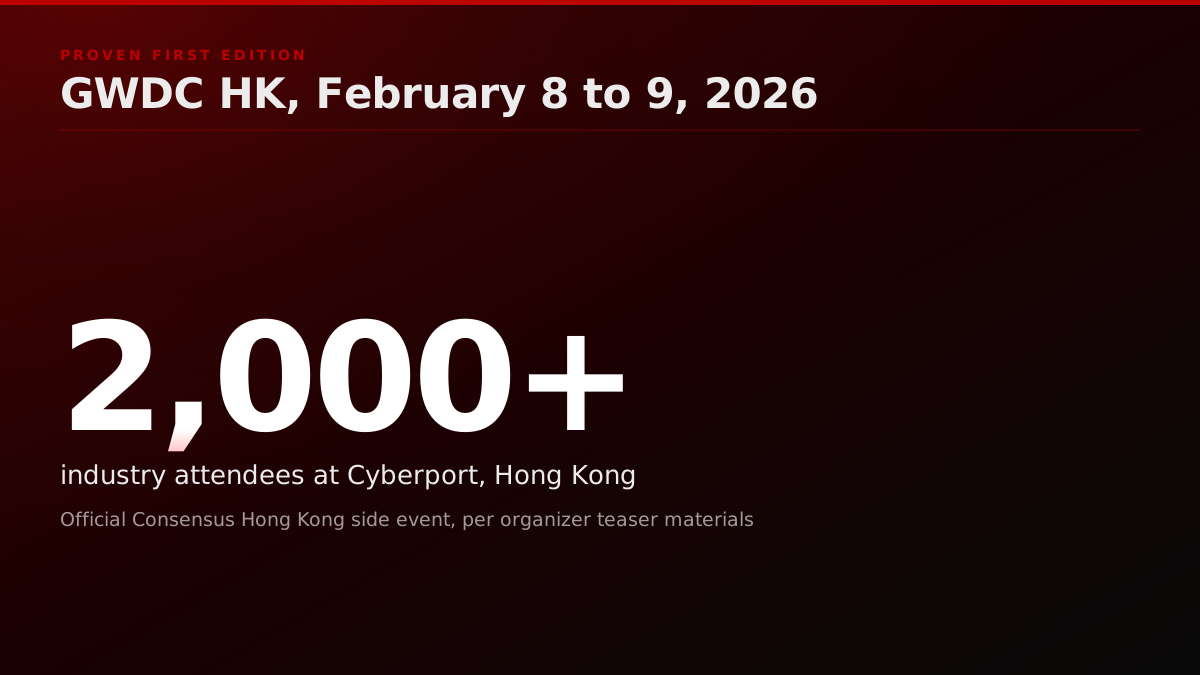
GWDC, the Global Web3 Developers Conference, is organized by Web3Labs, a Hong Kong-based Web3 incubation, acceleration, and investment platform led by CEO Caspar Wong. The series positions itself as being "for builders by builders," with a stated focus on the intersection of Web3 and AI rather than a single-vertical crypto conference. The first edition, GWDC HK, ran February 8 and 9, 2026, at Cyberport in Hong Kong, timed as an official side event three days ahead of the main Consensus Hong Kong 2026 conference. The organizer reports it gathered over 2,000 industry attendees and describes it as having ignited a tech wave across the Asia-Pacific region.
GWDC 2026 Korea is the direct follow-up, moving the format to Seoul and, based on the organizer's public materials, meaningfully expanding the ambition: a larger attendee target, a formal 48-hour hackathon with real prize money, and a four-zone venue structure that did not exist at the Hong Kong debut. Co-host credit for GWDC HK went to Techub News, a Hong Kong Web3 media outlet, and Techub News remains one of the announced global business partners for the Korea edition.
The positioning line the organizer repeats across every piece of teaser copy is "for builders by builders," and the program design backs that up more than most conference taglines do. Rather than a single agenda track with a vendor expo bolted on, the four-zone structure separates policy-and-capital conversation (Main Stage) from technical programming (Innovation Stage) from discovery (Booth Zone) from hands-on building (Hackathon Zone). That is a deliberate choice, not a default, and it is the same instinct behind why the show pairs a formal hackathon with real prize money against a genuine strategic-leadership track rather than treating the hackathon as a side activity for junior developers while the main stage handles the "real" business.
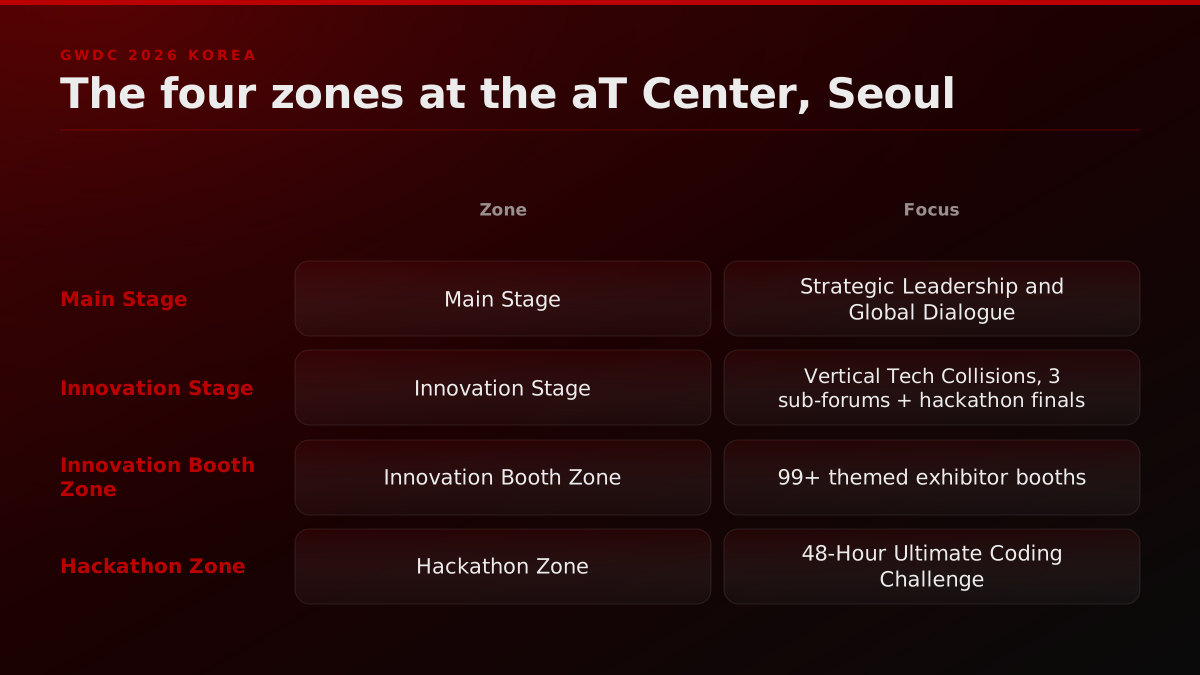
The four zones at GWDC 2026 Korea
| Zone | Focus | Notable detail |
|---|---|---|
| Main Stage | Strategic Leadership and Global Dialogue | Policy synergy, cross-border cooperation |
| Innovation Stage | Vertical Tech Collisions | 3 sub-forums; hosts hackathon finals |
| Innovation Booth Zone | An immersive tech bazaar | 99-plus themed exhibitor booths |
| Hackathon Zone | 48-Hour Ultimate Coding Challenge | 500-plus devs, 5 chains, $100k-plus |
Zone names and descriptions per the organizer's own teaser copy and gwdc.net, corroborated by ChainCatcher and Cryptorank News, August 2026.
Dates, venue, and what "aT Center" means for travel planning
The locked, verified detail is simple: GWDC 2026 Korea runs September 29 and 30, 2026, at the aT Center (서울 aT센터) in Seoul, South Korea. This is confirmed on the organizer's own site at gwdc.net and independently corroborated by press coverage from KuCoin, ChainCatcher, and Cryptorank News, all reporting the same two-day window at the same venue.
The aT Center sits in Seoul's exhibition and convention infrastructure, the kind of venue that regularly hosts trade shows and large public events rather than a boutique conference hotel. For a builder used to the tighter, hotel-ballroom scale of a side-event circuit like ETH-week side rooms, an expo-hall venue changes the on-the-ground logistics: expect more walking between zones, plan meeting locations in advance rather than assuming you will bump into a contact near a single stage, and treat travel time between the venue and central Seoul hotel districts as a real line item when planning your day.
That logistics detail matters more than it sounds like on paper, because it directly shapes how you should plan your two days. A conference spread across four physically distinct zones rewards a founder who has already decided which zone is their home base before landing, and penalizes anyone hoping to wander the whole floor and see what happens. Book your Seoul hotel with the aT Center's actual location in mind, not just proximity to the KBW venue if you are attending both, since the two events are not guaranteed to sit close together in the city.
Registration for general attendance runs through Luma. At time of writing, the public materials point to that registration flow rather than a published tiered ticket-price grid, which is a different pattern than some Gulf-region shows that list Visitor, Delegate, and VIP pricing up front. Confirm current pricing and any available passes directly on the Luma listing or gwdc.net before booking non-refundable travel.
The track record is one data point, and it is a real one
GWDC HK ran February 8 to 9, 2026, at Cyberport in Hong Kong as an official side event of Consensus Hong Kong 2026, timed to run three days ahead of the main show. The organizer reports it gathered over 2,000 industry attendees and describes it as igniting a tech wave across the Asia-Pacific region. That is a real, dated first edition, not a paper conference, which is a meaningfully different starting position than a brand-new event series announcing its debut with no prior run. Whether a second edition in a new city, at four to eight times the attendee target, holds the same quality bar is the open question this preview cannot answer in advance.
Source: GWDC 2026 Korea teaser materials and Web3Labs' own recap framing
What are the four zones at GWDC 2026 Korea?
The organizer's most distinctive structural choice is splitting the aT Center into four named zones rather than running a single stage-plus-expo-floor format. Reading the four zones in order, in the sequence a first-time attendee would likely move through them, is the fastest way to decide where your two days should actually go.
Main Stage, Strategic Leadership and Global Dialogue, is the macro-strategy track. The organizer frames this as a platform for policy synergy and top-level industry design, covering cross-border cooperation, real-world AI implementation, and next-generation decentralized infrastructure. If your business depends on regulatory clarity, government relationships, or cross-border capital flows between Korea, Hong Kong, and the wider region, this is your anchor zone.
Innovation Stage, Vertical Tech Collisions, is where the show gets more technical and more segmented. It splits into three sub-forums: Developer Ecosystem, Web3 and Financial Infrastructure, and AI and Cloud-Native. This zone also hosts the hackathon finals, which means the same physical space carries both curated vertical programming and the live payoff of the 48-hour build competition, a structural choice that keeps hackathon energy visible to the wider attendee base rather than sequestering it in a separate room.
Innovation Booth Zone, described by the organizer as an immersive tech bazaar, is the exhibition floor, reported at over 99 themed booths. Press coverage of the announcement also references over 30 KOL roving interviews happening inside this zone, a format that turns booth walk-throughs into recorded content rather than static demos.
Hackathon Zone is the fourth and most concrete zone: a dedicated 48-hour coding competition space. This is covered in full below, but the short version is that it is not a side activity bolted onto the conference, it is one of the four named pillars of the entire venue.
Who is speaking at GWDC 2026 Korea?
As of early August 2026, the organizer has announced a lineup that spans government, exchange, and Web3-native infrastructure figures rather than concentrating entirely in one lane. Confirmed names include Johnny Ng, a member of the CPPCC National Committee and of the Hong Kong Legislative Council, and Min Byoung-dug, a sitting member of South Korea's National Assembly and the proposer of the Digital Asset Basic Act, the legislation that shapes how Korea regulates digital assets. Suk-hun Yoon, Chairman of the Asia Economic Development Committee, rounds out the policy side of the roster.
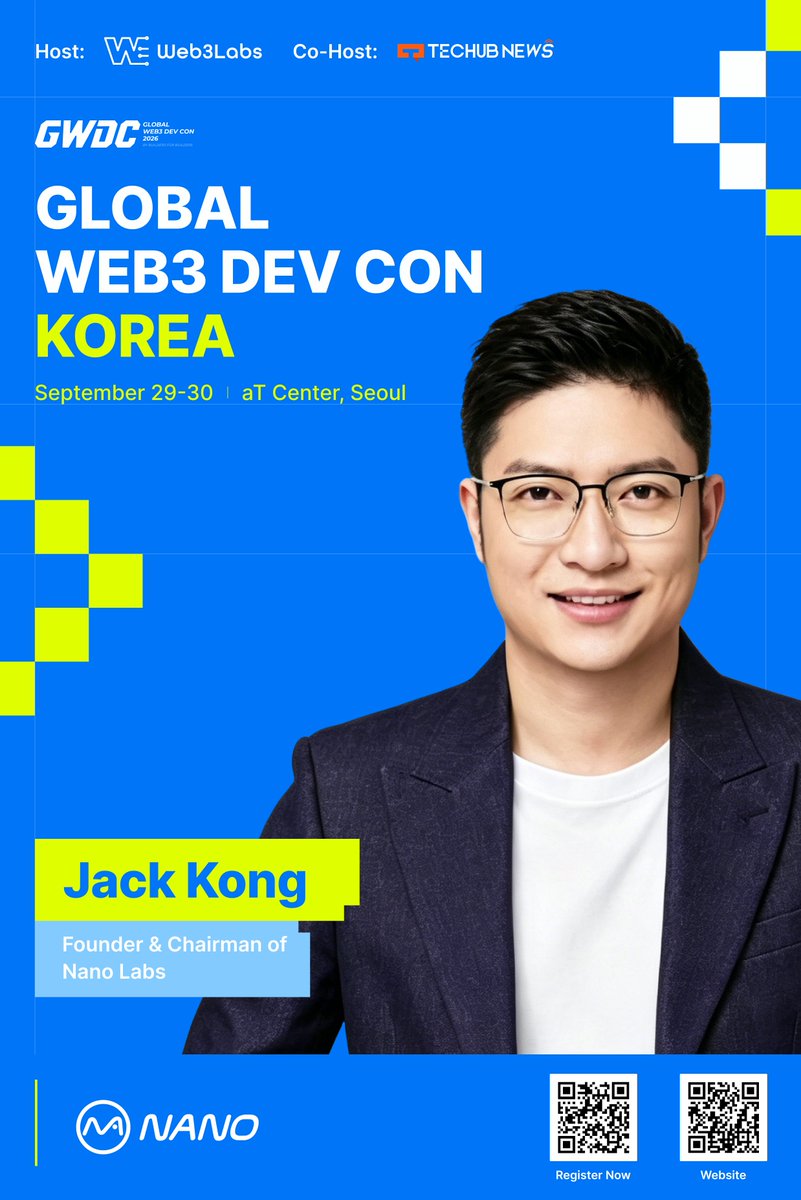
On the builder and capital side, Caspar Wong, CEO of Web3Labs, anchors the organizer's own presence. Jack Kong, Founder and Chairman of Nano Labs (NASDAQ: NA), a publicly listed AI-chip and Web3-infrastructure company, confirmed his slot in late July with a note that he would speak on AI chips, Web3 infrastructure, and the future of intelligent computing.
Nano Labs Founder Jack Kong will be attending GWDC 2026 Korea in Seoul, bringing insights on AI chips, Web3 infrastructure, and the future of intelligent computing. Looking forward to connecting with builders.
2026 GWDC KOREA
@GWDC2026
GWDC2026Korea Keynote Speaker Announcement Web3 & AI frontier tech leader joins the summit! We are extremely honored to announce that Mr. Jack Kong, Founder & Chairman of Nano Labs, is confirmed to speak at GWDC 2026 Korea! NanoLabsLtd (NASDAQ: NA) is a leading AI chip and Web3… Show more
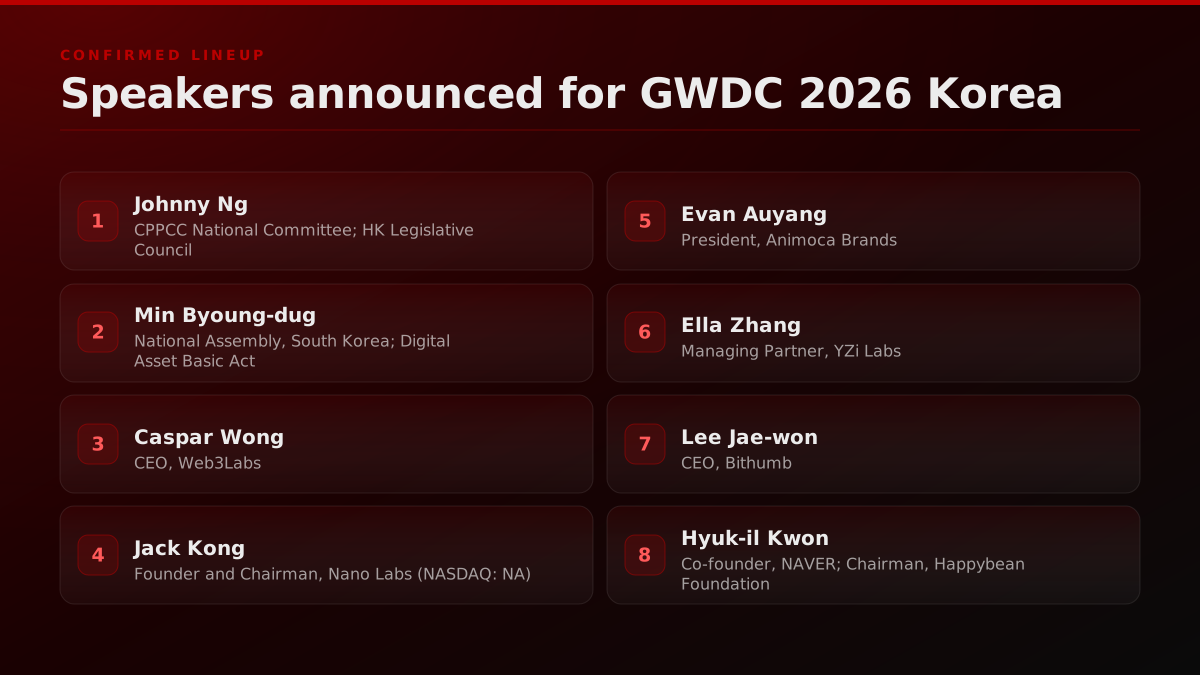
Evan Auyang, President of Animoca Brands, and Ella Zhang, Managing Partner of YZi Labs, bring two of the more recognizable names in Web3-native venture and gaming infrastructure to the Seoul stage. On the Korean domestic side, Lee Jae-won, CEO of Bithumb, one of Korea's largest crypto exchanges, and Hyuk-il Kwon, co-founder of NAVER and Chairman of the Happybean Foundation, round out the confirmed list.
Confirmed speakers on the GWDC 2026 Korea lineup
| Speaker | Title | Organization |
|---|---|---|
| Johnny Ng | CPPCC National Committee; Legislative Council | Hong Kong |
| Min Byoung-dug | National Assembly; Digital Asset Basic Act | South Korea |
| Caspar Wong | CEO | Web3Labs |
| Jack Kong | Founder and Chairman | Nano Labs (NASDAQ, NA) |
| Evan Auyang | President | Animoca Brands |
| Ella Zhang | Managing Partner | YZi Labs |
| Lee Jae-won | CEO | Bithumb |
| Hyuk-il Kwon | Co-founder; Chairman, Happybean Foundation | NAVER |
Per the official GWDC 2026 Korea X account and Techub News announcements, current as of early August 2026. Lineups shift before an event; check gwdc.net/riyadh for the live roster equivalent at gwdc.net.
A NAVER co-founder on the roster is a real institutional signal
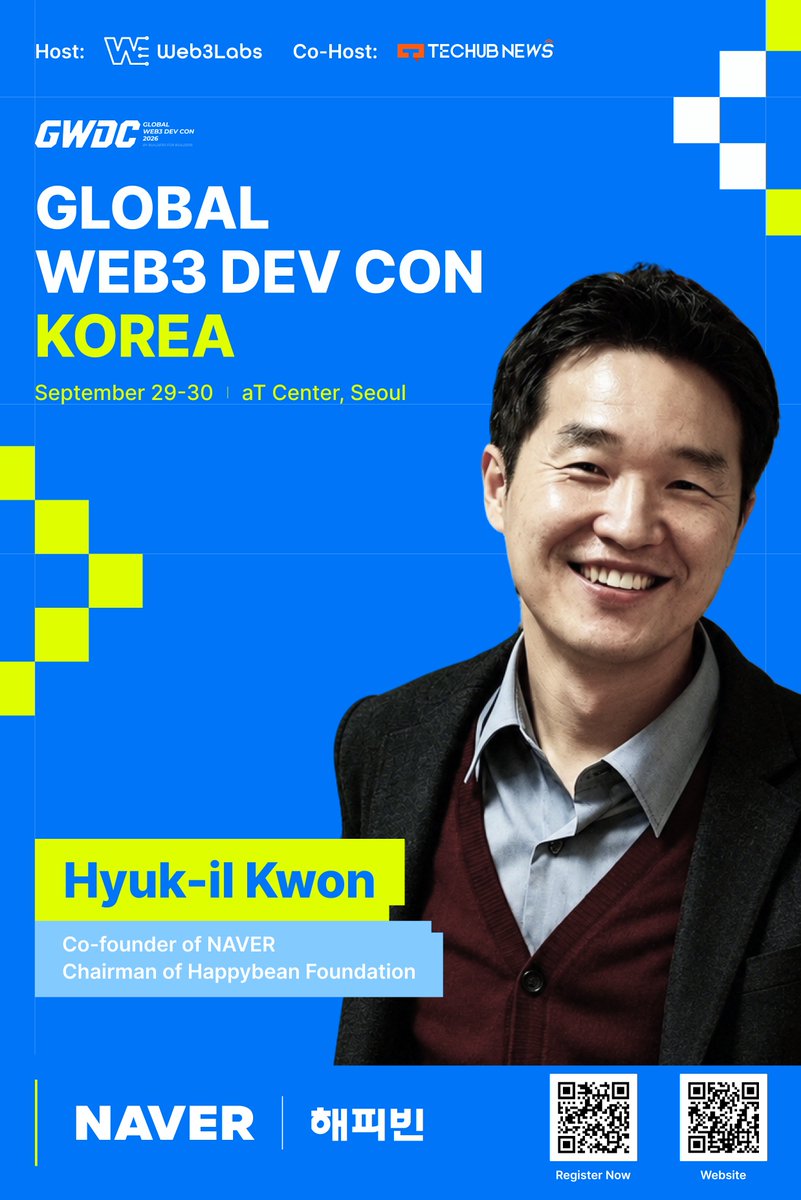
Confirmed speakers this deep into a teaser cycle usually skew toward the organizer's own network and sponsor obligations. Hyuk-il Kwon, co-founder of NAVER (South Korea's dominant search and internet platform) and chairman of the Happybean Foundation, is a genuinely notable outlier on that pattern, alongside Min Byoung-dug, the sitting National Assembly member who proposed Korea's Digital Asset Basic Act. Their presence signals the organizer secured real domestic institutional reach for the Seoul edition, beyond the Hong Kong-based Web3 and crypto-native names that anchored the first show.
Source: Techub News and the official GWDC 2026 Korea X account, July 29, 2026
2026 GWDC KOREA
@GWDC2026
GWDC2026Korea Guest Update We are honored to announce Mr. Hyuk-il Kwon, Co-founder of NAVER & Chairman of Happybean Foundation, will be joining GWDC2026KOREA! official_naver is South Korea's leading internet giant and dominant search engine platform.
Speaker announcements have followed a steady weekly cadence on the official @GWDC2026 account through July and into August, alongside a parallel run of business-partner announcements. Lineups shift before an event, and the current, full roster is the one published on gwdc.net rather than anything reproduced in a preview like this one, so check the official site before finalizing a speaker-driven travel decision.
Reading the confirmed list as a set rather than as individual names, the pattern worth noting is how few of them are purely Web3-native. A National Assembly member who authored digital-asset legislation, a NAVER co-founder, and the CEO of one of Korea's largest exchanges sit alongside a NASDAQ-listed AI-chip founder and two of the more recognized names in Web3 venture and gaming infrastructure. That mix maps directly onto the show's own Web3-and-AI positioning rather than reading as a crypto conference with an AI speaker added for relevance. For a founder deciding which zone to prioritize, the speaker mix is itself a useful signal: if your product sits closer to policy, exchange infrastructure, or capital allocation, the Main Stage names are your track; if it sits closer to AI infrastructure or Web3-native tooling, the Innovation Stage names are yours.
The 48-hour hackathon
The Hackathon Zone anchors a formal, dedicated competition rather than a loosely organized side track. ChainCatcher's coverage of the teaser puts the prize pool at over $100,000 combined, with more than 500 developers expected to participate, drawn from China, South Korea, Japan, India, and Southeast Asia. Five leading public blockchains are reported to be launching parallel, simultaneous developer tracks inside the hackathon, so a team is not locked into a single ecosystem's tooling before the clock starts, they can choose (or move between) chain-specific tracks depending on what they are building.
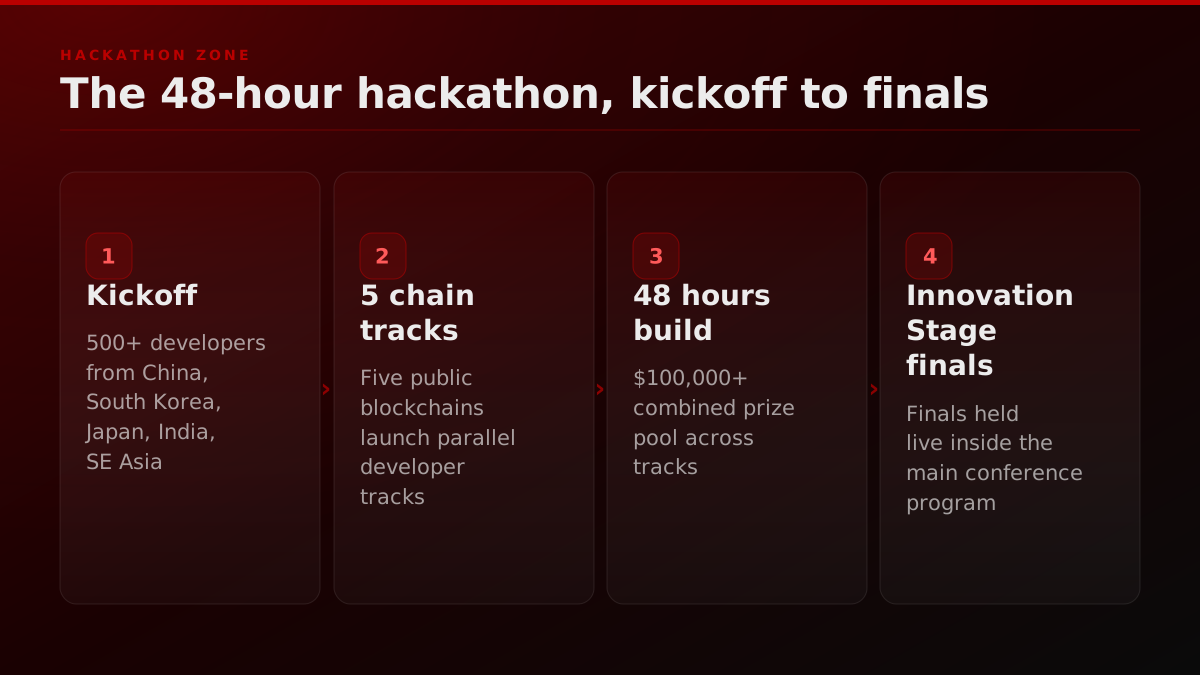
Hackathon registration runs through a separate Google Form linked from gwdc.net rather than through the same Luma flow used for general attendance, and the finals happen live on the Innovation Stage, which means the hackathon's payoff moment is structurally woven into the main conference programming rather than announced separately after the fact. For a developer weighing whether to fly in specifically for the hackathon rather than the talks, the combination of a real prize pool, multi-chain tracks, and a finals slot inside the main venue is a meaningfully different commitment than a typical weekend hackathon with no conference wrapped around it.
For a founder rather than an individual developer, the hackathon is worth a second look even if you are not personally building. A multi-chain hackathon drawing 500-plus developers from five countries and territories is one of the more efficient technical-talent-scouting environments a conference can offer, concentrated into 48 hours rather than spread across a two-day expo floor where most conversations are business development rather than engineering. If your GWDC 2026 Korea trip has any recruiting or technical-partnership goal attached to it, the Hackathon Zone deserves floor time even if your product itself has nothing to do with the five public chains running tracks.
GWDC 2026 Korea by the numbers, and why the numbers disagree
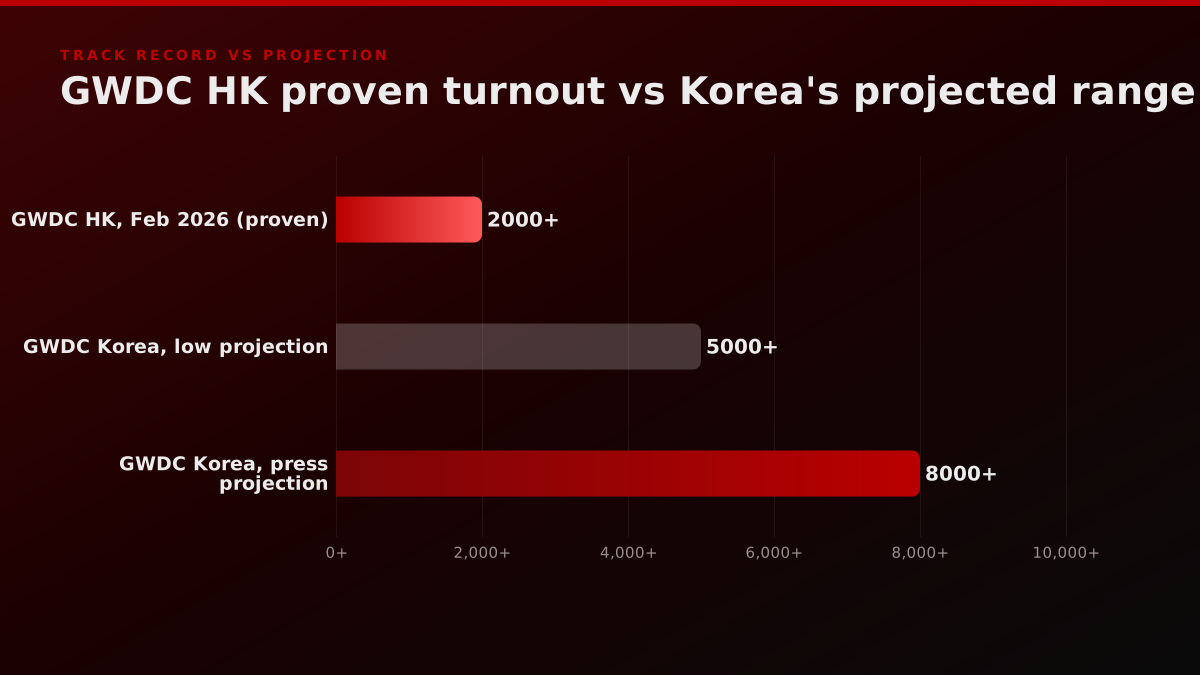
Here is where attribution matters most, so the reporting will be explicit rather than smoothed over. The organizer's own site, gwdc.net, states the Seoul edition targets over 5,000 attendees. Independent press coverage of the same teaser announcement, including KuCoin, ChainCatcher, and Cryptorank News, reports over 8,000 attendees. Both numbers ultimately trace back to organizer-supplied materials; the discrepancy is most likely a difference in which version of the press kit each outlet worked from, not two independently measured counts. Neither figure is an audited headcount, and both describe an event that has not yet happened.
Read the attendee count as a range, not a number
The organizer's own site states the Seoul edition targets 5,000-plus attendees. Independent press coverage of the same teaser, including KuCoin, ChainCatcher, and Cryptorank News, reports 8,000-plus. Both figures trace back to the same organizer-supplied materials, and both are forward-looking projections for an event that has not happened yet, not an audited count. The honest read is a range, 5,000 to 8,000-plus, sized against the proven February baseline of 2,000-plus rather than treated as a fixed number.
Source: gwdc.net direct fetch versus KuCoin, ChainCatcher, and Cryptorank News, August 2026
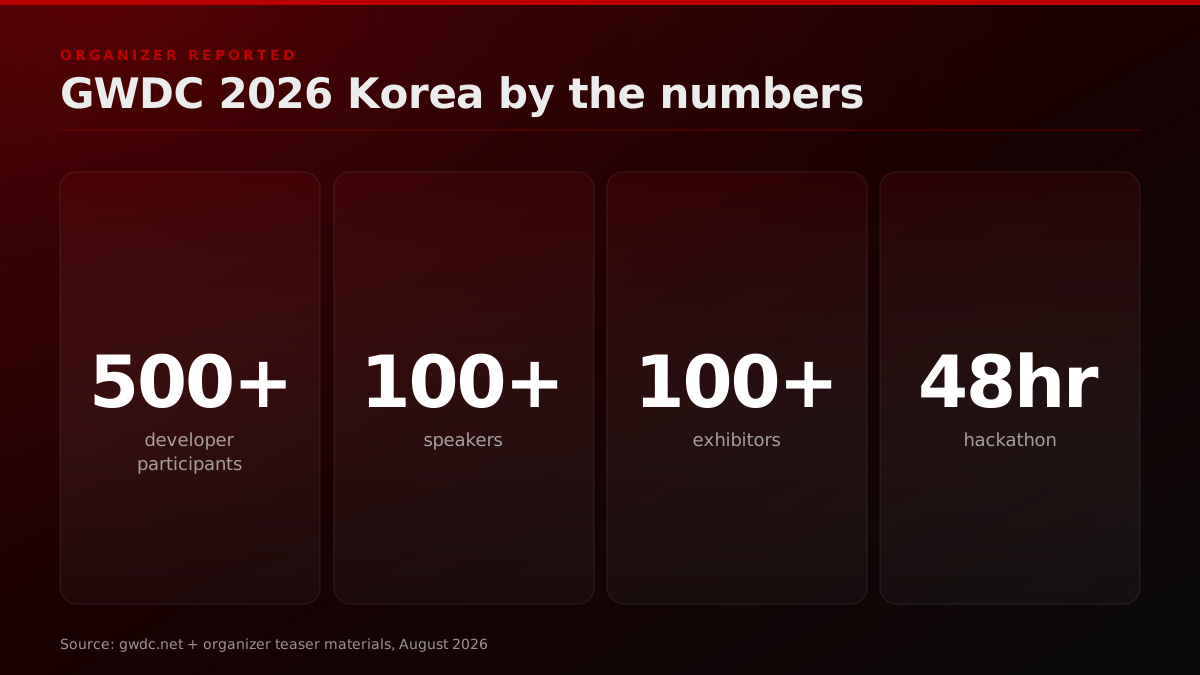
Beyond the top-line attendee range, the organizer reports over 500 developer participants, over 100 speakers, and over 100 exhibitors for the Seoul edition. The one number this preview treats as a real, dated data point rather than a forward-looking claim is the GWDC HK attendance figure: over 2,000 industry attendees at the February Hong Kong debut, an event that already happened and has been independently referenced by multiple outlets covering the Korea follow-up as its stated track record.
Operator noteRead attendance as 5,000 to 8,000-plus, not a fixed headline number., gwdc.net versus press aggregation
The honest planning move, the same one that applies to any pre-event organizer projection, is to size expectations against the proven February baseline of 2,000-plus and treat anything in the 5,000-to-8,000-plus range as the organizer's ambition for a second, larger-city edition rather than a number to plan a booth budget against.
Why Seoul, and why the same week as Korea Blockchain Week
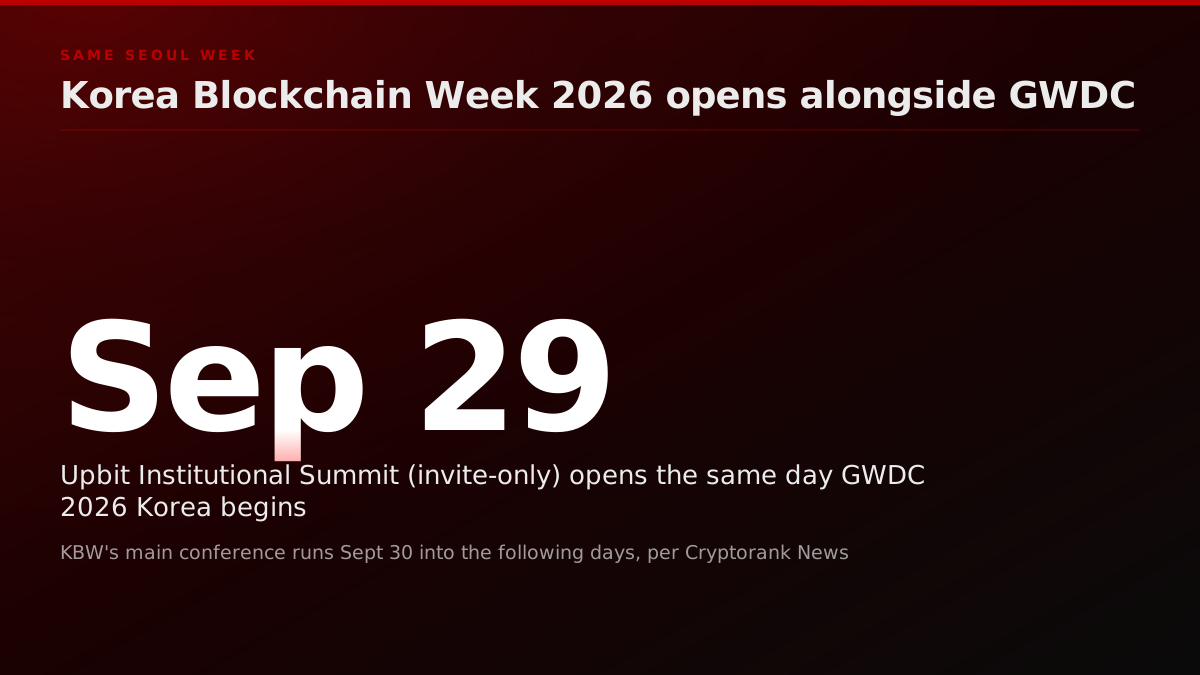
The choice of Seoul is not happening in isolation on the 2026 conference calendar. Korea Blockchain Week (KBW) 2026 opens around the same September 29 to 30 window, and its reported program includes an invitation-only Upbit Institutional Summit on September 29, aimed at asset managers, family offices, and venture capital firms, with the main KBW conference running September 30 into the days that follow. GWDC 2026 Korea and KBW 2026 are organized independently of each other, by different organizations, but the calendar overlap is real and verifiable.
Seoul is hosting two Web3 weeks at once, not one
The detail that changes the calculus for a Western builder is not GWDC 2026 Korea in isolation, it is that Korea Blockchain Week 2026 opens around the same September 29 to 30 window. KBW's reported program includes an invitation-only Upbit Institutional Summit on September 29 for asset managers, family offices, and venture firms, with the main KBW conference running September 30 into the following days. A trip booked around GWDC 2026 Korea's two days can realistically extend into KBW's adjacent programming without a second flight, which is the kind of scheduling overlap that makes a single Seoul trip cover meaningfully more ground than the GWDC dates alone suggest.
Source: Cryptorank News, KBW2026 with Upbit coverage, and the GWDC 2026 Korea official teaser
For a Western founder weighing the trip, that overlap changes the math more than GWDC 2026 Korea does on its own. A single flight to Seoul in late September 2026 can realistically span two concurrent Web3 conference weeks, GWDC's developer-and-AI-forward two days plus KBW's broader institutional and investor programming, rather than requiring two separate trips at two separate points in the year. That is the single biggest reason this is worth planning around carefully rather than treating GWDC as an isolated two-day commitment.
Operator noteKBW2026's invite-only Upbit Summit opens the same day, September 29., Cryptorank News
The domestic institutional signal reinforces the same read. Min Byoung-dug, the National Assembly member behind Korea's Digital Asset Basic Act, and Hyuk-il Kwon, co-founder of NAVER, are not the kind of names a Hong Kong-based organizer typically secures for a debut city edition without real local traction. Lee Jae-won of Bithumb adds a domestic exchange voice alongside them. Read together with the KBW overlap, the picture is a Seoul week with genuine Korean institutional participation, not simply a regional roadshow stop for a Hong Kong-native event brand.
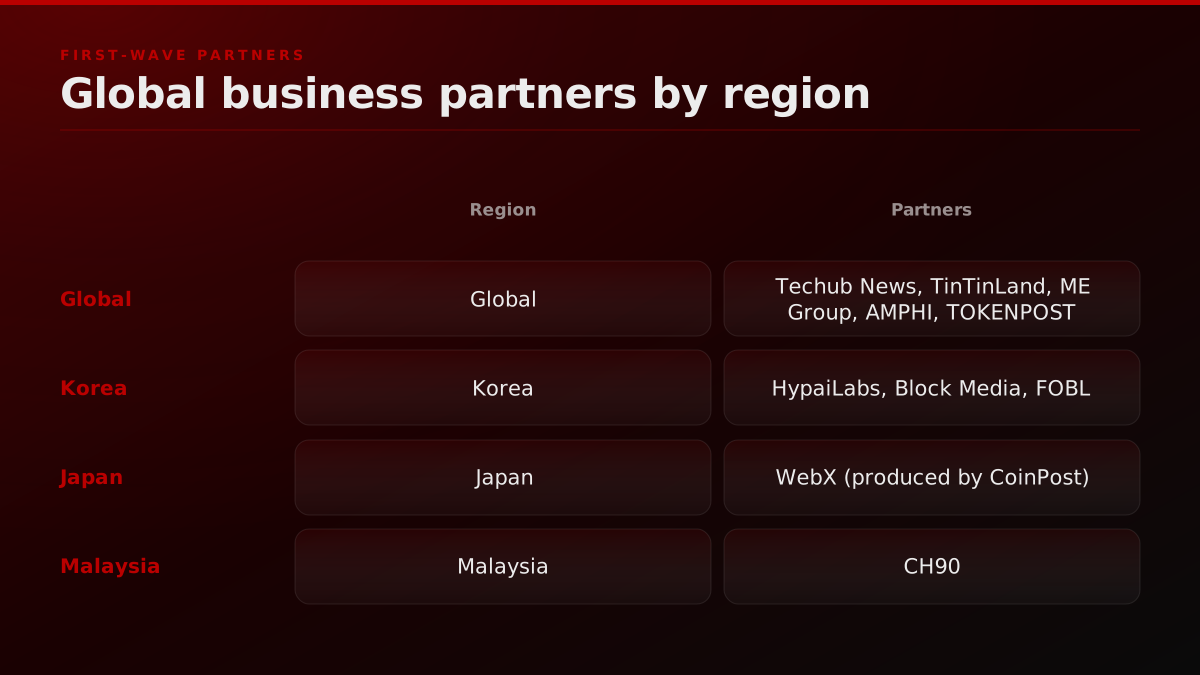
Global business partners announced for GWDC 2026 Korea (first wave)
| Region | Partners |
|---|---|
| Global | Techub News, TinTinLand, ME Group, AMPHI, TOKENPOST |
| Korea | HypaiLabs, Block Media, FOBL |
| Japan | WebX (produced by CoinPost) |
| Malaysia | CH90 |
Per sequential partner-announcement posts from the official GWDC 2026 Korea and Web3Labs X accounts, late July to early August 2026.
The organizer's business-partner build-out has followed the same logic geographically. Techub News, TinTinLand, ME Group, AMPHI, and TOKENPOST anchor the global and Korea-facing partner tier; HypaiLabs, Block Media, and the Korean exchange platform FOBL cover Korea specifically; WebX, the Japan-based Web3 conference and platform produced by CoinPost, brings a Japan bridge; and CH90 covers the Malaysia and wider Southeast Asia region. That is a genuinely multi-market partner list for a second-edition event, not a single-region push.
2026 GWDC KOREA
@GWDC2026
GWDC2026Korea Global Business Partner (Japan Region) Announcement Joining forces to bridge Japan, Korea, and the global Web3 ecosystem! We are thrilled to announce that WebX, Asia's premier Web3 conference and platform produced by CoinPost, has officially joined GWDC 2026 Korea.

If you are building an event-week plan that spans more than one conference in a city, the same mechanics we document for a New York Ethereum week apply directly here: our event activation playbook for ETHConf in New York walks through mapping your buyer to the right room across a multi-event week, and our crypto conference sponsor decision matrix is the framework for deciding whether to sponsor, host a side room, or simply attend either show.
How GWDC 2026 Korea fits the wider Asia-Pacific Web3 calendar
GWDC 2026 Korea is not the only Web3-and-AI show competing for a builder's late-2026 travel budget in this part of the world, and it is worth placing it against the shows a Western founder is more likely to already know. WebX, the Japan-based Web3 conference produced by CoinPost, is one of the region's more established annual events and is now a confirmed regional business partner for GWDC 2026 Korea rather than a competitor on the calendar, a partnership that suggests the organizer is positioning GWDC as complementary to the existing Japan-Korea Web3 circuit rather than trying to displace it. TOKEN2049, which runs Singapore and Dubai editions and describes itself as the world's largest crypto event, remains the scale benchmark most Western attendees already calibrate against; GWDC 2026 Korea is not attempting to compete on that scale, it is competing on Korea-specific access and the Web3-plus-AI framing.
Korea Blockchain Week itself has run since 2018, founded by FACTBLOCK and now in its ninth year, making it the more established Seoul-specific Web3 gathering, which is exactly why its 2026 edition landing the same week as GWDC matters more than either show would alone. The official KBW2026 site lists the 2026 dates as September 29 to October 1, overlapping GWDC 2026 Korea's full two-day run.
KBW2026 Starts Here
Korea Blockchain Week
The official Korea Blockchain Week channel's own "KBW2026 Starts Here" promo, the concurrent Seoul event this preview flags as the reason a GWDC 2026 Korea trip can cover more ground than its two days alone suggest.
A founder who already had KBW on their calendar gets GWDC's developer and hackathon programming essentially for the cost of an extra day or two on the ground, not an extra trip. A founder who had neither on their calendar has a genuine reason to look at the combined week rather than either show in isolation, since the two together cover a materially wider slice of the Korean and regional Web3 and AI ecosystem than either would alone. Prior editions already draw genuine first-hand attendee coverage, the kind of organic trip report that only shows up once a Seoul Web3 week is an established fixture rather than a debut.
[TL] A trip to Korea Blockchain Week with Team Liquid and Sui
A trip report crosspost from Team Liquid's own coverage of attending Korea Blockchain Week alongside Sui, the kind of first-hand attendee content that shows up once a Seoul Web3 week is a real, established fixture on the calendar.
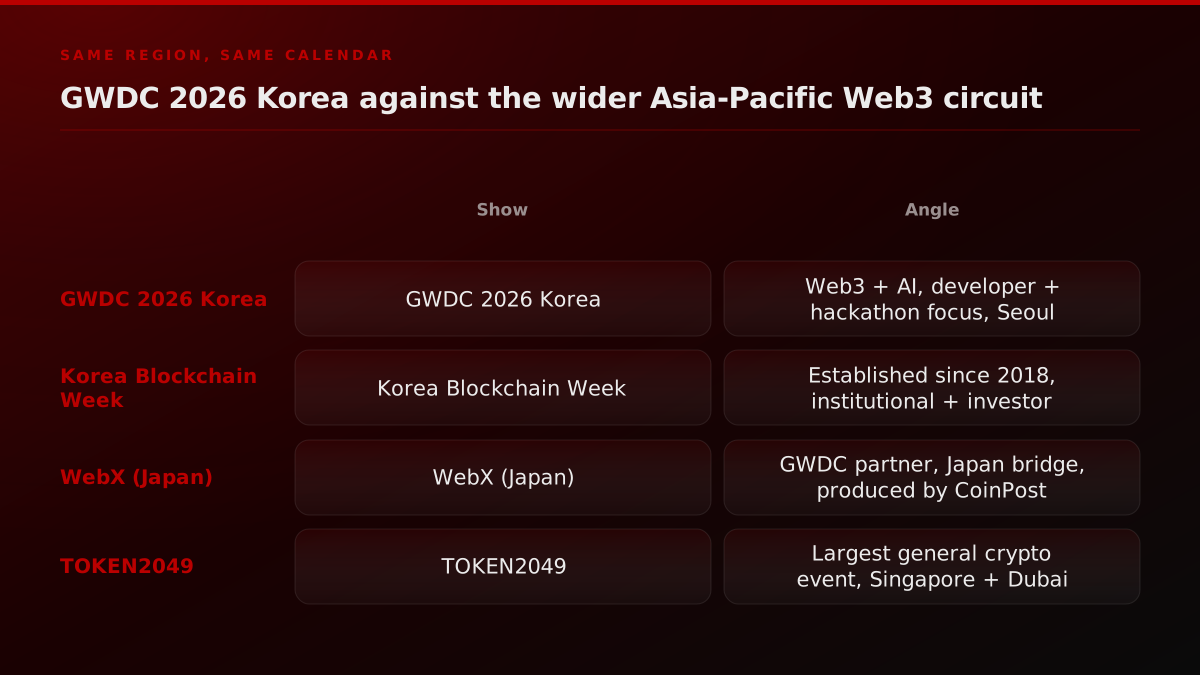
The practical takeaway for a Western founder comparing this against a more familiar show like TOKEN2049 or WebX is not that GWDC 2026 Korea replaces either, it is that it adds a Korea-specific, developer-and-hackathon-heavy option to a calendar that, before this announcement, had comparatively thin dedicated Web3-and-AI programming landing specifically in Seoul on a fixed, verified date. For a founder weighing the wider Asia-Pacific calendar rather than Seoul specifically, India's own fixture, India Blockchain Week 2026 in Mumbai, runs its fourth edition the following quarter and is worth putting on the same comparison.
Is GWDC 2026 Korea worth attending?
This is the real question behind most searches that land on a page like this, and it deserves a direct answer rather than a brochure. For a Web3 or AI founder with genuine interest in the Korean market, in cross-border Asia-Pacific capital, or in a multi-chain hackathon with real prize money, GWDC 2026 Korea concentrates a specific and verifiable mix of builders, exchange operators, and policy figures in Seoul on dates that also carry Korea Blockchain Week. For a founder with zero Asia-Pacific exposure and no interest in either event's specific buyer base, the case is weaker on the trip's own merits, and the honest move is to weigh it against a conference closer to your existing market rather than treating "Web3 conference in Asia" as an undifferentiated line item.
Two structural caveats are worth carrying into that decision. First, this is a second edition scaling from a proven 2,000-plus attendee debut toward a projected 5,000-to-8,000-plus range, roughly two to four times the prior scale, in a new city. That is an execution bet, not a guarantee, and it is worth watching the organizer's channel for concrete programming detail (session schedules, confirmed exhibitor lists) as the date approaches rather than booking purely off the teaser figures. Second, the public materials do not yet publish a tiered ticket-price grid the way some competing regional shows do, so budget planning depends on checking the Luma registration flow directly rather than assuming a published price point.
Neither caveat is a reason to write the trip off, they are reasons to plan it the same way you would plan around any second-edition event with real momentum but no long track record: confirm the concrete details (session schedule, exhibitor list, final ticket pricing) closer to the date rather than locking a full itinerary off the teaser materials alone, and hold the Hong Kong debut's 2,000-plus figure as your anchor for what the organizer has actually delivered once before.
Operator noteGWDC HK drew 2,000-plus in February. Korea is the scale-up bet, unproven yet., GWDC 2026 Korea teaser materials
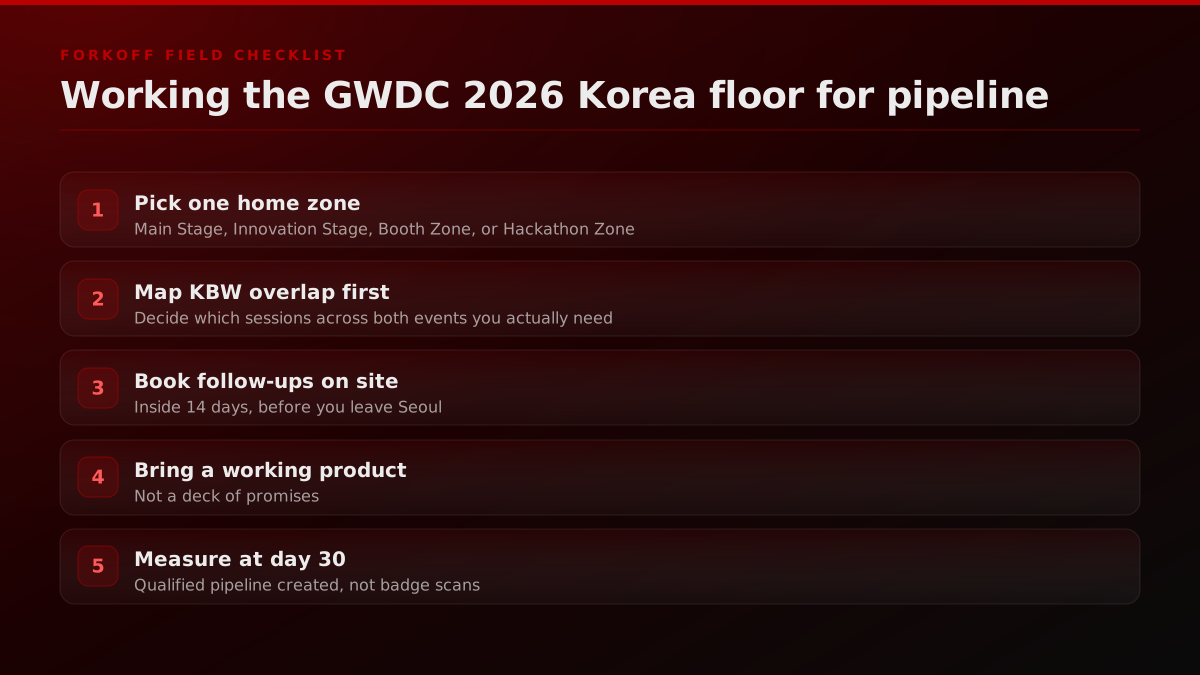
The way we coach clients to work any conference floor, including one this new, is mechanical rather than aspirational. Pick one home zone (Main Stage for policy and capital conversations, Innovation Stage for technical partnerships, the Booth Zone for discovery, the Hackathon Zone if you are recruiting technical talent) and build your two days around it rather than trying to cover all four evenly. Book your follow-ups on site, inside fourteen days, before you leave Seoul. If the KBW overlap is part of your plan, map which sessions across both events you actually need before you land, because a shared city week does not mean a shared schedule automatically resolves itself. And measure the trip thirty days later on qualified pipeline created, not on badge scans or the size of the crowd photos.
Before you commit a travel budget to any conference week, including this one, it is worth pressure-testing what attention at an event like this is actually worth to you rather than assuming a badge scan equals a lead.
How FORKOFF thinks about a Seoul conference week like this one
We are not affiliated with GWDC 2026 Korea, Web3Labs, or any listed sponsor, exhibitor, or speaker. We publish previews like this one for the same reason we run event marketing for clients: a conference trip only pays off if the days are planned backward from the pipeline a founder actually needs to close, and that planning has to start before the flight is booked, not on the show floor.
The mechanics we run for clients working a multi-event week like this one, whether it is Seoul in September, a Gulf conference cycle like the Global Blockchain Show and its co-located Crypto Mining Guild in Abu Dhabi, or an ETH-week side-room circuit in New York, stay the same regardless of the specific city: map your buyer to the right zone or track before you commit floor time, build a pre-event narrative cadence so your presence is felt before you land, decide whether a side room or a booth is the better use of budget for your specific goal, and instrument the trip so the outcome is a measured number thirty days out rather than an anecdote. Our event activation playbook and our dinner versus booth ROI breakdown document that approach in more depth, and the reasoning transfers cleanly from a New York Ethereum week to a Seoul Web3-and-AI week.
The narrative layer around a trip like this matters as much as the floor work itself, which is why we rarely treat a conference booking as an isolated line item. That is true whether the surrounding motion is our Twitter and X marketing practice carrying the pre-event and live cadence, our KOL marketing program activating the right regional voices ahead of a Seoul or Hong Kong trip, or a broader marketing foundation motion tying the conference into a launch. For founders thinking about the wider Korean and North Asian Web3 push beyond a single conference week, our writing on the Web3 ecosystem growth operating system, the crypto KOL marketing framework, and Web3 GTM playbook lays out the surrounding motion.
Global channels for sponsorships, booth bookings, and developer Hackathon registration for GWDC 2026 Korea are now officially open. We invite premium projects and developer communities worldwide to gather in Seoul and co-author the next chapter of Web3 and AI integration.
If you are weighing a presence at GWDC 2026 Korea, at Korea Blockchain Week the same week, or at either alongside a broader Asia-Pacific push, the most useful next step is a conversation about what you are actually trying to close and which room concentrates that buyer. You can talk to a FORKOFF strategist about your events plan directly, or book a call through our contact page if you would rather start there. We will give you a straight read on whether a specific trip is worth it for your specific buyer, including telling you when it is not, because independent coverage only stays useful if the honest math survives contact with a sales conversation.
Related reading for your Seoul and Korea Blockchain Week planning
The events practice at FORKOFF publishes a working library of operator playbooks that apply directly to a GWDC 2026 Korea or wider Seoul-week plan. If you are new to how we scope a conference engagement, the events service overview explains the approach, and our Founder Funnel work covers the placement and BD side of a founder's own conference-week presence. For another AI and Web3 builder gathering weighed with the same decision framework, our preview of The Algorithm Alliance walks through its meetups and next Singapore edition.
For the underlying economics, the crypto event ROI breakdown of dinners versus booths is the fastest way to understand where conference dollars actually convert, and the first-party sponsorship ROI piece shows how to instrument a trip so the outcome is measurable rather than anecdotal. The crypto conference sponsor decision matrix gives you the framework for choosing between sponsoring, hosting a side event, or simply attending, and the net negative ROI debate is worth reading if you are skeptical that conference spend pays off at all. For execution once you are on the ground, the host a side event playbook and the cost-per-qualified-lead sponsorship playbook are the operator references our own events team runs against every conference week, GWDC 2026 Korea included. For another Asia-Pacific Web3 event on the same calendar, our GameFi Alliance Web3 Gaming Summit preview covers the Singapore date on October 6, 2026 with the same honest read on what is and is not yet confirmed.