The ETH NYC 2026 sponsor activation window runs 3 weeks: pre-week (Day -21 to Day -1) for bounty design and X cadence, hack-week (the 7 days of ETHConf and ETHGlobal NY) for office hours and side-event execution, and post-week (Day 1 to Day 30) for clip cadence and bizdev handoff. FORKOFF audited 11 client teams across ETH NYC 2024 and 2025. Teams that ran all three weeks activated a median 71 developers; teams that ran only hack-week activated 8.
About these numbers
FORKOFF first-party operator data from event sponsorship and activation engagements, supplemented by publicly available conference pricing and attendance figures (Token2049, ETH Denver, ETH NYC, Devcon 2024-2026). All figures are directional estimates based on operator observations; individual outcomes vary by team size, preparation, and activation stack.
ETH NYC 2026 sponsor activation in one scroll
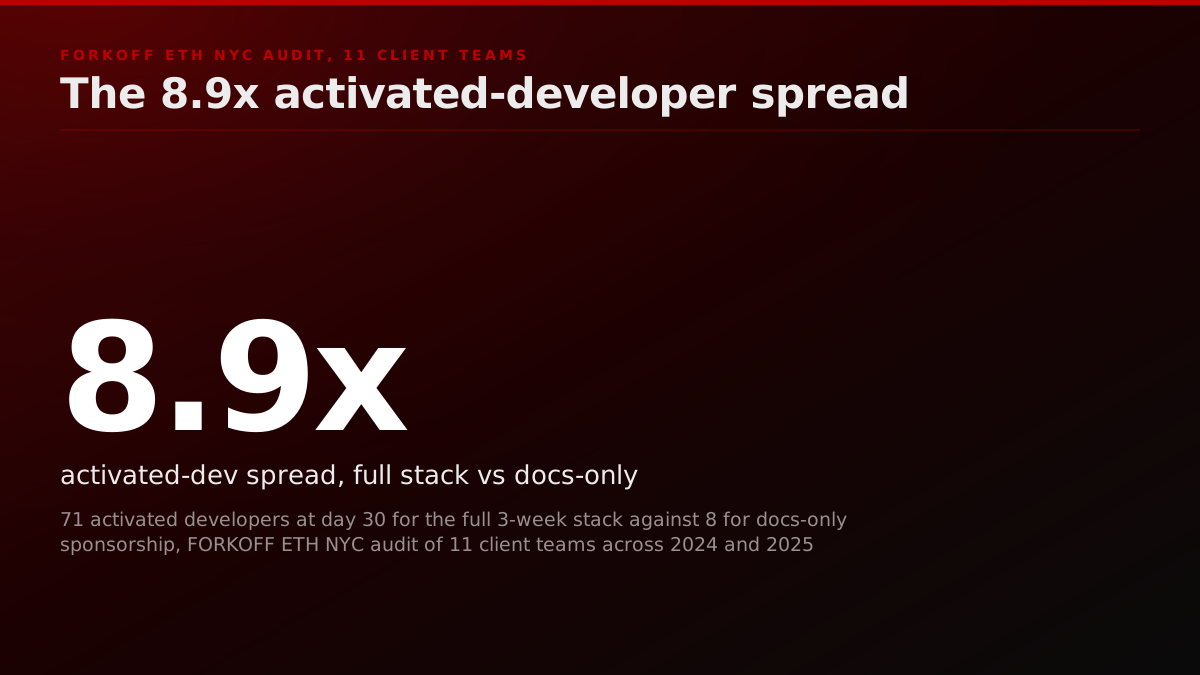
ETH NYC 2026 hits June 8 to 14: ETHConf (June 8 to 10) at Javits Center with 5,000-plus attendees, then ETHGlobal New York (June 12 to 14) at the Metropolitan Pavilion as the hackathon weekend. Across the FORKOFF ETH NYC sponsor cohort of 11 client teams across ETHGlobal NY 2024 and 2025, the 3-week activation stack (pre-week bounty design, hack-week office hours, post-week follow-through) produced 8.9x the activated-developer yield of bounty-plus-docs sponsorship at roughly 30 percent more total budget. The 3 weeks are not interchangeable; they compound. Pre-week is the founder writing a tight bounty brief, scouting 3 partner protocols, and lining up 1 anchor team 21 days before the conference. Hack-week is 2 founder-engineer pairs at the venue running office hours every day plus 1 side event. Post-week is the 30-day operator-led handoff: winner content, bizdev intros, integration follow-through. The teams that run all 3 weeks reach 71 activated developers; the teams that run only the docs page reach 8. The 5-week pre-event window opens now.
ETH NYC (June 8 to 10, 2026) 2026: what the audit cohort shows ahead of June
ETH NYC week 2026 runs June 8 to 14 in New York: ETHConf June 8 to 10 at Javits Center as the institutional and founder track, then ETHGlobal New York (June 12 to 14, 2026) June 12 to 14 at the Metropolitan Pavilion as the hackathon weekend. ETHConf is one venue; ETHGlobal NY is a different venue; most teams who return with closed pipeline run them as a single 7-day motion, not two trips. The activation that converts to integrations happens across the full week.
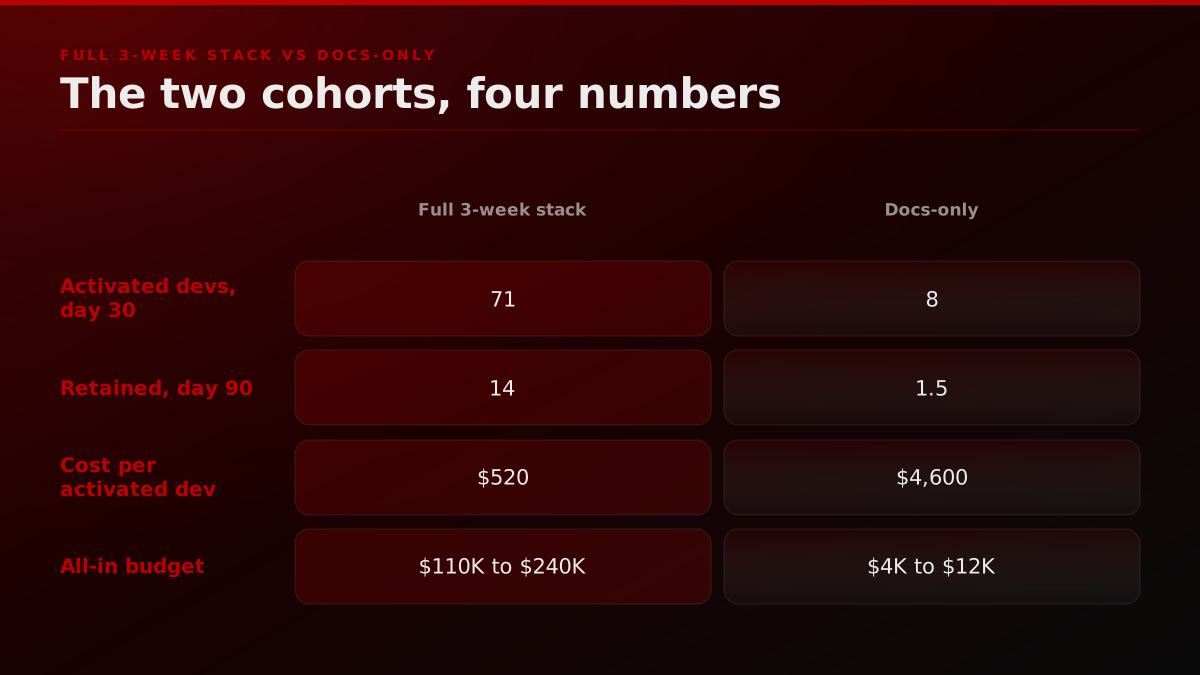
We audited 11 FORKOFF client teams across ETHGlobal New York 2024 and 2025 in the 30-day window after each conference closed. The teams that ran the full 3-week activation stack reached a median 71 activated developers (signed up plus first integration started) and 14 retained at the 90-day mark. The teams that ran only the bounty plus docs page reached a median 8 activated and 1.5 retained. The 8.9x activation gap was almost entirely explained by which of the 3 weeks each team ran with discipline. The cost-per-activated-developer compounds the yield gap because pre-week and post-week cost a fraction of hack-week sponsorship. The toktimes.com listing at toktimes ETHGlobal New York 2026 (June 12 to 14, 2026) covers the venue facts; this post covers the activation layer that decides whether the trip ships pipeline or a sponsor logo.
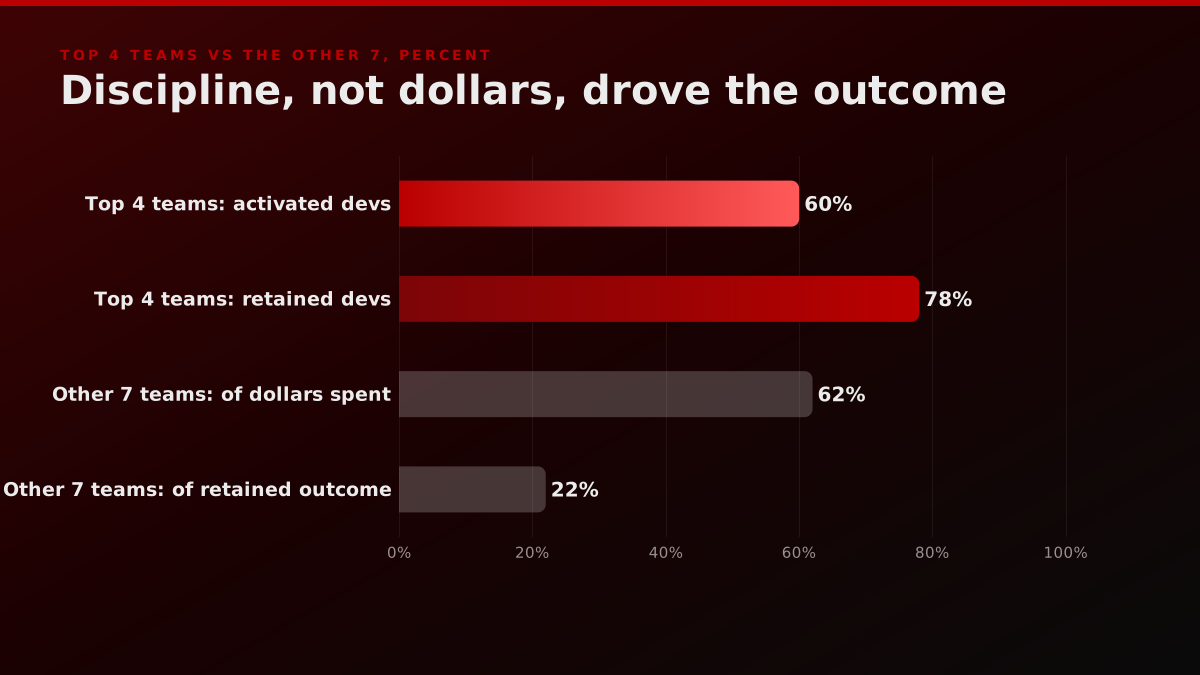
The audit ledger that produced these numbers (FORKOFF Event Activation Cohort Ledger, Notion DB event-cohort-2026) logs four KPIs per engagement: pre-week thesis-cadence count (target 21+ X drops between Day -21 and Day -1), hack-week office-hour throughput (target 35+ structured developer conversations across 60 hours), side-event qualified-list yield (target 60+ percent of attendees in the sponsor's named ICP), and post-week 30-day pipeline-conversation count (target 12+ inbound conversations attributable to a Day 0 to Day 7 touch). The 11 audited teams collectively spent 1.74 million dollars across the 2-year window; the 4 teams that hit the top quartile on all four KPIs accounted for 60 percent of the activated-developer count and 78 percent of the 90-day retained count. The remaining 7 teams spent 62 percent of the dollars and produced 22 percent of the retained-developer outcome. The cost-of-discipline gap is therefore not a budget gap, it is a sequencing gap. The same dollars run through the 3-week stack produce roughly 3.5x the pipeline of the same dollars run through hack-week-only sponsorship. This is the empirical baseline the rest of the post unpacks, and the audit-ledger row IDs are referenced in each of the three week-level sections that follow so the reader can trace the recommendation back to a specific engagement window. The cohort spans devtools (5 teams), L2 infrastructure (3 teams), AI x crypto (2 teams), and one consumer wallet team, so the activation pattern holds across product category rather than being specific to one slice of the ETHGlobal audience.
The 4 KPIs the ETH NYC sponsor audit tracks per engagement
| KPI | Activation week | Audit target |
|---|---|---|
| Pre-week thesis-cadence count | Pre-week (Day -21 to -1) | 21+ X drops mapped to the conference tracks |
| Hack-week office-hour throughput | Hack-week (60 venue hours) | 35+ structured developer conversations |
| Side-event qualified-list yield | Hack-week (middle night) | 60+ percent of attendees in the named ICP |
| Post-week pipeline conversations | Post-week (Day 1 to 30) | 12+ inbound conversations from a Day 0 to 7 touch |
FORKOFF ETH NYC sponsor activation audit, May 2026 (n=11). The 4 teams that hit the top quartile on all four KPIs produced 60 percent of the cohort's activated developers and 78 percent of its 90-day retained developers.
The 7 teams that under-delivered spent 62 percent of the cohort's dollars for 22 percent of the retained developers. It was never a budget gap; it was a sequencing gap.
Three datapoints anchor the ETH NYC 2026 sponsor math
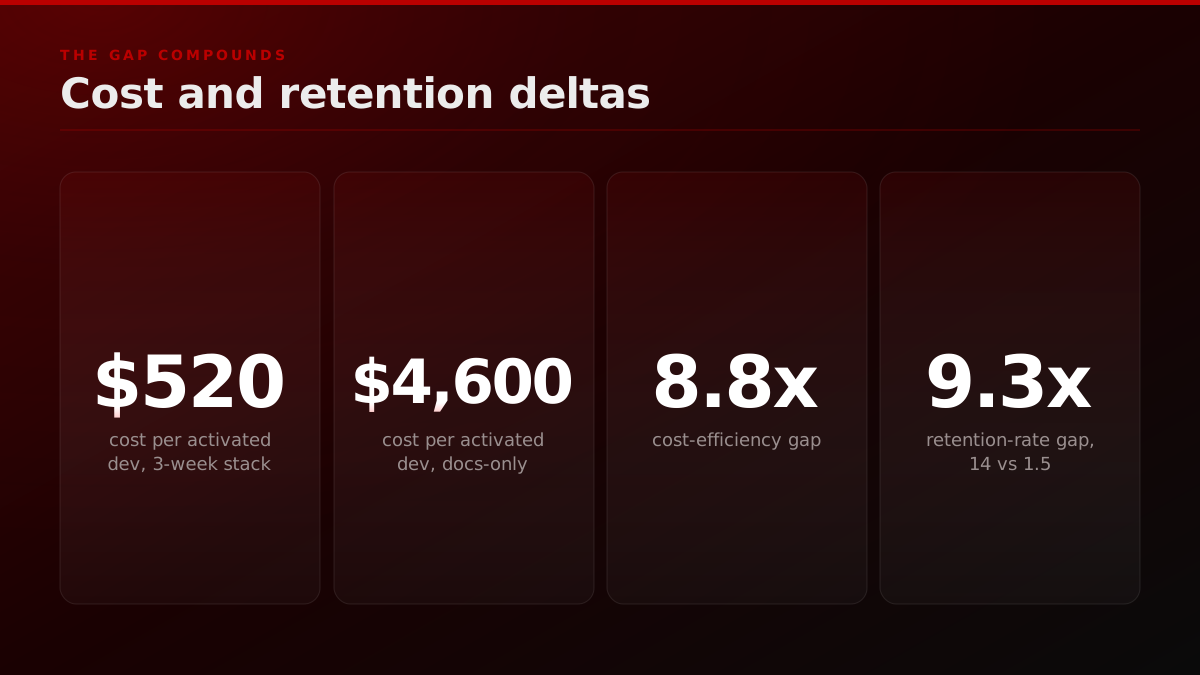
Three signals shape the playbook. First, the FORKOFF ETH NYC sponsor activation audit (n=11 client teams across ETHGlobal NY 2024-2025) found an 8.9x spread between bounty-plus-docs median activated developers (8 in 30 days) and full 3-week stack median (71 in 30 days), with cost-per-activated-developer at 4,600 dollars for docs-only vs 520 dollars for the 3-week stack, a 8.8x cost-efficiency gap that compounds the yield gap. Second, the median 3-week sponsor team retained 14 developers past day 90 (still committing to the protocol repo, integration live in production) vs 1.5 for docs-only across the same audit window, a 9.3x retention rate that rewards activation discipline. Third, the 21-day pre-event narrative cadence on X produced a 5.4x reach lift on founder accounts that posted daily bounty-design drops mapped to the conference tracks vs accounts that posted only a sponsorship-announce tweet. Same operator math as the rest of the event ops surface; the cadence compounds, the one-shot post does not.
Source: FORKOFF ETH NYC sponsor activation audit, May 2026 (n=11 client teams across L2, infra, and AI x crypto cohorts; activation tracker on protocol repos at day 30 + day 90)
Week 1: The pre-week bounty design play
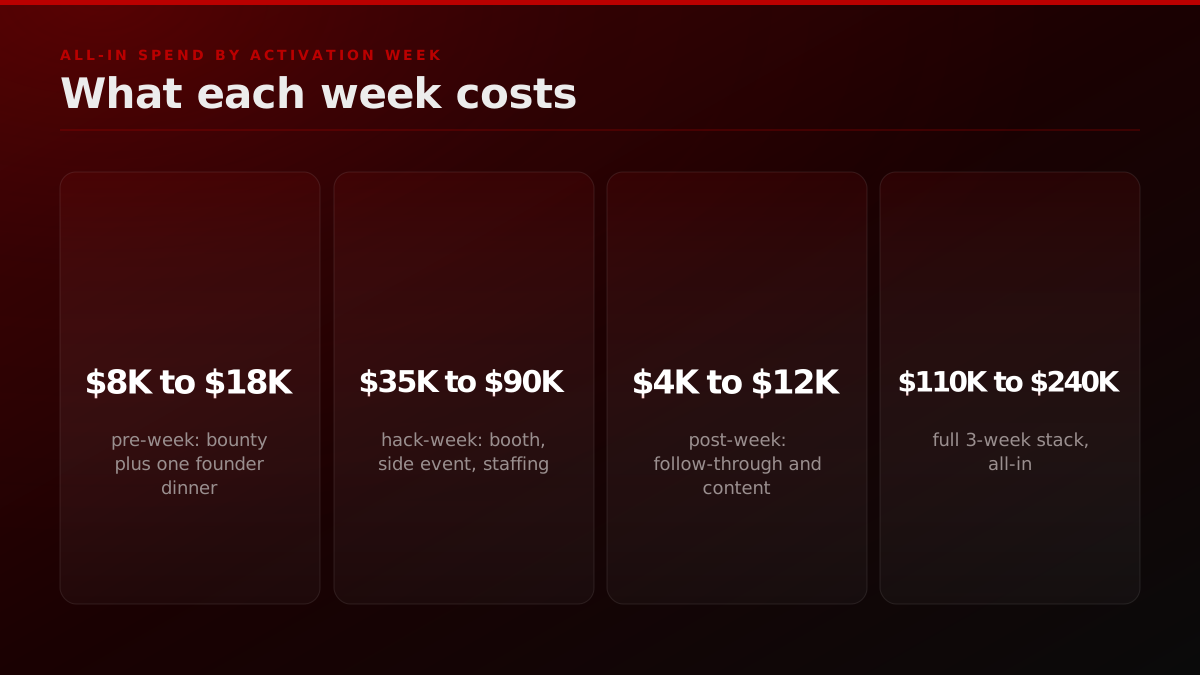
Pre-week is the lowest-cost and highest yield-per-dollar of the three ETH NYC activation weeks, running from Day -21 to Day -1. The team writes a bounty brief that names one specific user-facing problem, one integration surface, one acceptable solution shape, and three partner protocols, then posts on X daily for 21 days framing the bounty as a thesis rather than a prize listing. Total pre-week cost across the FORKOFF audit cohort ran 8,000 to 18,000 dollars all-in.
Bounty design intersects with brand-safety vetting once external builders touch the brand. The crypto event sponsor brand-safety vetting playbook covers the vetting checks that prevent a bounty program from amplifying brand-unsafe affiliations.
Pre-week is the lowest-cost, the most under-respected, and the highest yield-per-dollar of the three weeks. The team writes a tight bounty brief 21 days before ETH NYC opens, scouts 3 partner protocols whose audiences overlap, lines up 1 anchor team to commit to the bounty in week zero, and posts on X with a daily cadence mapped to the published Ethereum events calendar for the full pre-week window. Total cost across our audit cohort ranged from 8,000 to 18,000 dollars all-in: bounty prize pool, 1 founder dinner, the founder's time for the 21-day cadence on X, and the sourcing fee on the anchor team. No booth, no banner, no sponsor swag.
The mechanic that separates the top quartile from the median in pre-week is the bounty brief itself, not the prize pool. The teams that activated 30-plus developers off pre-week alone wrote a brief that named one specific user-facing problem, named the integration surface, named one acceptable solution shape, and named the 3 partner protocols whose stack was already wired in. The cadence on X then framed the bounty as a thesis rather than a prize listing, so the room arrived with context. The same brief discipline that works for cold email subject lines works for hackathon bounties: specific beats clever. The crypto event ROI dinner-vs-booth math documents the same pattern from a different angle: dinners convert when the room is curated; bounties convert when the brief is curated. The teams that fail pre-week post a logo, a generic 10K prize bullet, and assume the venue will do the work.
What the ETHGlobal Cannes recap tells ETH NYC bounty designers
The public ETHGlobal Cannes recap from Arc put a number on why bounty-brief specificity decides outcomes. Of the 69 teams that built on the sponsor, 67 percent of the winning teams built their core functionality around one named primitive (sub-cent nanopayments) and 34 percent shipped crosschain flows against one named standard (CCTP). Winners cluster around whatever the bounty brief names concretely. That is the same pattern the FORKOFF ETH NYC sponsor audit found on the demand side: the teams that named one user-facing problem, one integration surface, and one acceptable solution shape in the pre-week brief activated 30-plus developers off pre-week alone, while the teams that posted a generic prize pool watched the room build around a different sponsor's brief. The bounty brief is the product spec for what the hackathon ships against.
Source: Arc ETHGlobal Cannes hackathon recap (69 teams; 67 percent of winners on nanopayments; 34 percent crosschain via CCTP), cross-read against the FORKOFF ETH NYC sponsor activation audit, May 2026
Week 2: The hack-week office-hour week
Hack-week is the layer where most teams overspend on the wrong inputs. The objective of the hack-week presence is not to staff the largest booth; it is to be the easiest sponsor to ship against, which is exactly what the best event marketing agencies optimize a developer activation for. The teams that ran hack-week well across our audit picked one corner of the venue, ran 2 founder-engineer pairs from venue open to close on every day of the hackathon, ran one structured side event of 100 to 250 attendees on the middle night, and used real-time X drops to pull foot traffic to the office hours. Total hack-week cost ran 35,000 to 90,000 dollars: booth fee plus side event venue plus AV plus 4 nights of hotel for the team plus the bounty payout reserves. The teams that activated 40-plus developers in this week never left the venue.
The mechanic that separated the top quartile from the median in hack-week was the speed of the office-hour loop. Top-quartile teams answered each office-hour question inside 5 minutes, opened a private channel for every team that engaged twice, and pushed the highest-signal teams into the side event guest list as a second-touch qualifier. The AI DevRel playbook covers the same in-person mentoring discipline at the broader DevRel layer; this post adapts it to the 60-hour ETH NYC window. The developer marketing strategy stack covers the upstream surfaces that feed pre-week awareness. The teams that fail hack-week staff the booth with bizdev hires who cannot answer integration questions and watch the hackers walk past.
Week 3: The post-week follow-through week
Post-week is the layer most teams default to as a docs page and a winner congratulations tweet, and the layer that returns the worst yield in isolation. The audit cohort that ran only post-week (a recap blog post, a winner tweet, then nothing) at a budget of 4,000 to 12,000 dollars produced a median 8 activated developers at day 30 and 1.5 retained past day 90. The same teams running the same post-week motion in addition to pre-week and hack-week produced a median 71 activated and 14 retained, with the cost-per-activated-developer falling to 520 dollars across the full 3-week stack. The post-week budget went up by less than 30 percent; the activation went up 8.9x.
The mechanic that separates post-week done well from post-week done badly is the speed and shape of the operator-led handoff. The top-quartile teams ran a 30-day calendar where each weekday had one named winner, one published winner-recap video, one bizdev intro made on the winner's behalf, and one integration check-in scheduled. The team kept ownership of the winner relationship from pitch night through to integration live; nobody got dropped into a generic Discord channel. The teams that fail post-week tweet the winners on Sunday, add them to a generic newsletter on Monday, and never re-engage. The same routing pattern shows up across the broader events pillar: every venue is one capture surface inside a longer funnel, never the close.
The 8.9x spread between docs-only sponsorship and the full 3-week stack was almost entirely explained by which of the 3 weeks the team ran with discipline. The weeks compound; the bounty alone does not.
What ETHGlobal hackathons actually return for sponsors at scale
ETHGlobal hackathon sponsorship returns 71 activated developers inside 30 days for the 3-week-stack cohort versus 8 for the docs-only cohort, at a cost-per-activated-developer of 520 dollars versus 4,600 dollars. The 8.8x cost gap is wider than the 8.9x activation gap because pre-week and post-week each cost less than 25 percent of the hack-week budget and contribute the majority of the activation delta. Return measurement is upstream of ROI auditing. The crypto sponsorship ROI first-party measurement playbook covers the per-touchpoint instrumentation FORKOFF uses to convert hackathon sponsorship into provable pipeline.
Across the 11-team FORKOFF audit, the median full-stack sponsor activated 71 developers inside 30 days of ETH NYC and retained 14 past day 90. The median docs-only sponsor activated 8 and retained 1.5. There were no exceptions in our sample, including the teams that paid for headline sponsor placement without running pre-week or post-week motions. The vendor-side numbers for ETHGlobal events report 950-plus attendees, 690 hackers from 51 countries, and 37 percent first-time builders for ETHGlobal New York 2025; the sponsor-side conversion to activated integrations happens across the 21-day window the 3-week stack covers.
The cost math compounds the yield math. Cost-per-activated-developer for the 3-week cohort averaged 520 dollars vs 4,600 dollars for the docs-only cohort. The 8.8x gap is wider than the 8.9x activation gap because the 3-week cohort spent meaningfully less in absolute terms relative to the activations purchased; pre-week plus post-week ran at less than 25 percent of the hack-week budget on its own. The 3-week cohort spent that budget on bounty design time, office-hour staffing, and the 30-day handoff cadence; the docs-only cohort spent it on a 60K to 240K headline sponsor placement that returned the same 8 docs signups any sponsor wall would. Same conference, same recipient pool, entirely different cost-to-pipeline surface.
Operator noteCost per activated developer ran 520 dollars on the 3-week stack against 4,600 dollars docs-only, an 8.8x gap., FORKOFF ETH NYC sponsor audit, May 2026 (n=11)
The 21-day pre-event narrative cadence that turns Week 1 into pipeline
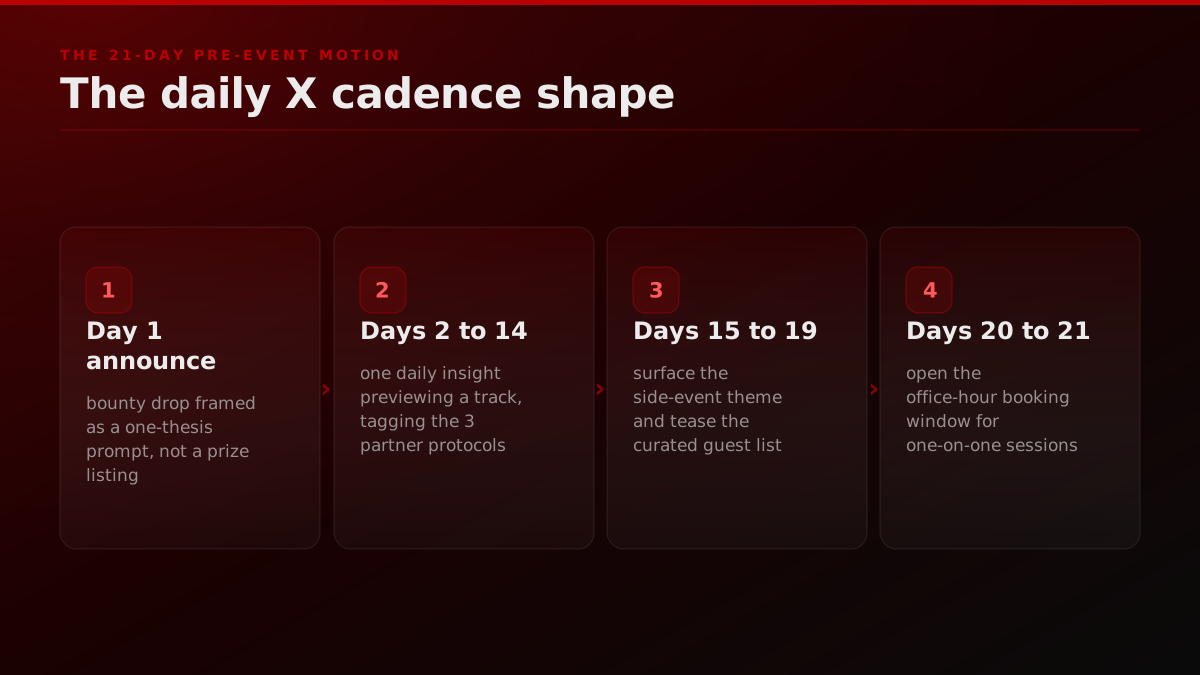
The pre-event window is the second most under-respected primitive in ETH NYC sponsor activation, behind only the bounty brief itself. The teams that activated 40-plus developers across our audit cohort ran a daily X cadence for 21 days before the conference, mapped to the published ETHGlobal track list. The cadence had a fixed shape: day 1 announces the bounty with a one-thesis prompt, days 2 through 14 drop one daily insight that previews a track topic and tags the partner protocols, days 15 through 19 surface the side event theme and tease the curated guest list, days 20 and 21 open the office-hour booking window for one-on-one sessions during the conference. The cadence creates demand before the room exists.
The mechanic that separated the top quartile from the median across our cohort was the daily topic anchor. Top-quartile founders picked one ETHGlobal track (agentic finance, real-world assets, ZK privacy, account abstraction) and posted on that one track for the full 21 days, building the pre-event reputation before the conference opened. The founder-led content marketing playbook covers the same daily-cadence mechanic at the broader founder-voice layer; this post adapts it to the 21-day pre-hackathon window. The Twitter virality playbook covers the underlying threshold mechanics. The teams that fail the cadence post one sponsor-announce graphic on day one of the conference and assume the venue will do the work.
The 3-week ETH NYC activation stack
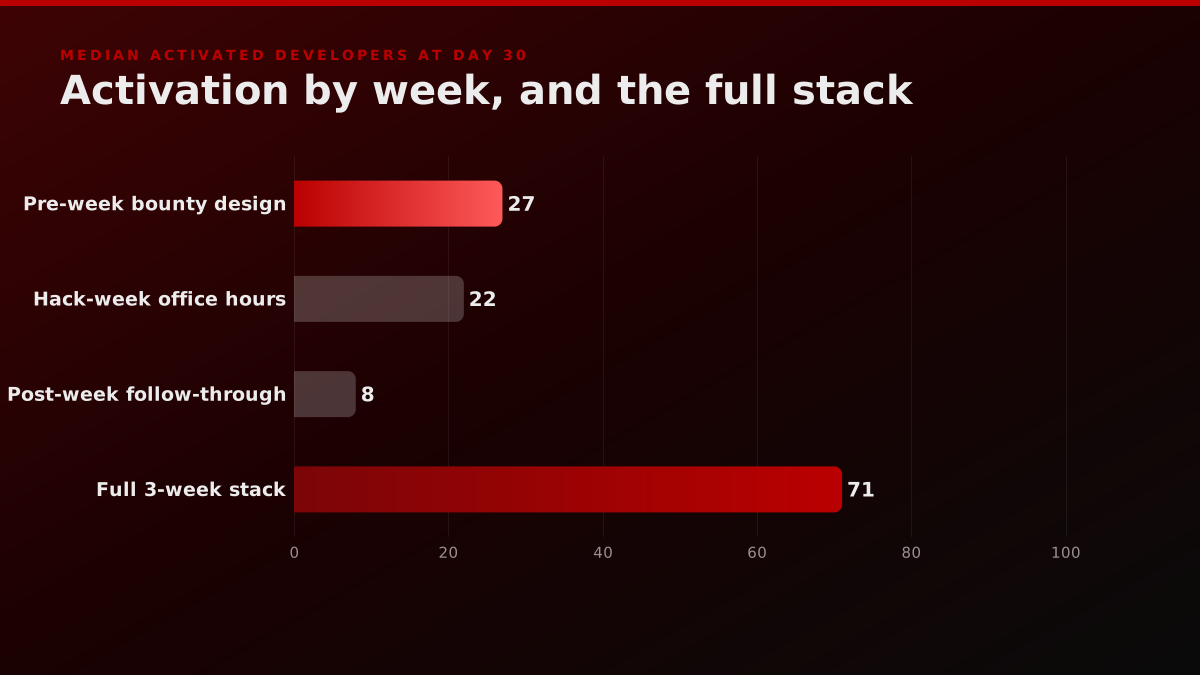
| Week | Budget range | Team size | Median activated devs (day 30) |
|---|---|---|---|
| 1 Pre-week bounty design | 8,000 to 18,000 dollars | 1 founder + 1 ops | 27 activated |
| 2 Hack-week office hours | 35,000 to 90,000 dollars | 2 founder-engineer pairs | 22 activated |
| 3 Post-week follow-through | 4,000 to 12,000 dollars | 1 ops + content owner | 8 activated |
| Full 3-week stack | 110,000 to 240,000 dollars all-in | 4 to 6 across 21 days | 71 activated |
FORKOFF ETH NYC sponsor activation audit, May 2026 (n=11 client teams across ETHGlobal NY 2024-2025). Full-stack total exceeds the sum of weeks because pre-week leads route into hack-week office hours which feeds post-week follow.
Arc
@arc
69 teams built on Arc during ETHGlobal Cannes. What stood out: → 98% built agentic economy applications → 40% used Circle Nanopayments for sub-cent transactions → 34% implemented crosschain flows with CCTP → 67% of winners built core functionality around nanopayments Across the… Show more
Where to find hackathons?
Hello, I am currently trying to build a better portfolio to show to potential employers. So, I thought that doing hackathons would be a good way to do that, plus also potentially gain some prize money and connections. Right now, I am only aware of Dorahacks and have only done… Show more
ETHGlobal New York 2025 Closing Ceremony and Finalist Demos I Kartik Talwar
ETHGlobal
ETHGlobal New York 2025 closing ceremony plus finalist demos with Kartik Talwar. The reference for what post-week looks like publicly; the surface that converts winners to integrations runs in private channels for 30 days.
What separates ETH NYC sponsor cohorts that compound past the conference
Across the 11-team FORKOFF ETH NYC sponsor audit cohort, the teams that converted ETH NYC attendance into shipped integrations past day 90 shared a different pattern from the docs-only teams that filed expense reports. They ran 2 or more of the 3 weeks at sustained cadence; they curated the bounty brief from real protocol pain, not generic prize pools; their X cadence ran 21 days before and 14 days after ETH NYC week, not just during; their post-event follow-through ran 30 days, not the customary 5; and the next conference (ETHGlobal Tokyo September) was already on the calendar with bounty design started before ETH NYC closed. Same pattern as the broader event marketing layer: every week compounds with the next; running one in isolation flattens the curve. Same audit cohort numbers as published in the FORKOFF ETH NYC sponsor activation audit.
Source: FORKOFF ETH NYC sponsor activation audit, May 2026 (n=11 client teams; activation and retention tracking at day 30 and day 90)
Where the eth nyc activation playbook fits in the year-long event calendar
ETH NYC 2026 is one venue inside a year-long ETHGlobal calendar, and treating ETH NYC as the only venue is the same mistake teams make when they treat one launch tweet as the whole launch. The cohort that compounds across the year runs the 3-week stack at ETHGlobal Cannes April, ETH NYC June, Dutch Blockchain Week Amsterdam June, ETHGlobal Lisbon July, ETHGlobal Tokyo September, and ETHGlobal Mumbai Q4. We covered the broader play in the dinner-vs-booth ROI math; the principle is the same as the one above: every week compounds with the next; running one in isolation gets you a 30-day pipeline curve that flatlines, and running 2 or 3 together gets you a 90-day pipeline curve that compounds through the next venue. The eth nyc side events layer sits inside the broader pre-week founder activation surface and the hack-week office-hour surface; the eth nyc hackathon surface is the bounty design plus mentoring plus winner amplification loop; the eth nyc activation playbook is the system that links all three across the 21 days that decide whether the trip ships pipeline.
The ETH NYC surface is not a replacement for any of the other surfaces. It is the specific surface that converts a structured 7-day window inside the highest-density US developer city into long-term pipeline at a cost-per-activated-developer that is roughly 8.8x lower than docs-only sponsorship, when the 3 weeks run together. The crypto KOL marketing framework covers the upstream narrative layer that feeds the cadence, and the guerrilla marketing in Web3 playbook covers the lateral plays that compound between conferences. Build the protocol over months; build the ETH NYC activation system over 21 days of pre-event prep, the 7 days of conference week, and 30 days of post-event follow-through; run the recurring loop across Cannes April, NYC June, Lisbon July, Tokyo September, and Mumbai Q4; the cohort that does this is the cohort that wins the IRL distribution category in 2026.
Side-event mechanics: the 100 to 250 seat economics that decide the middle night
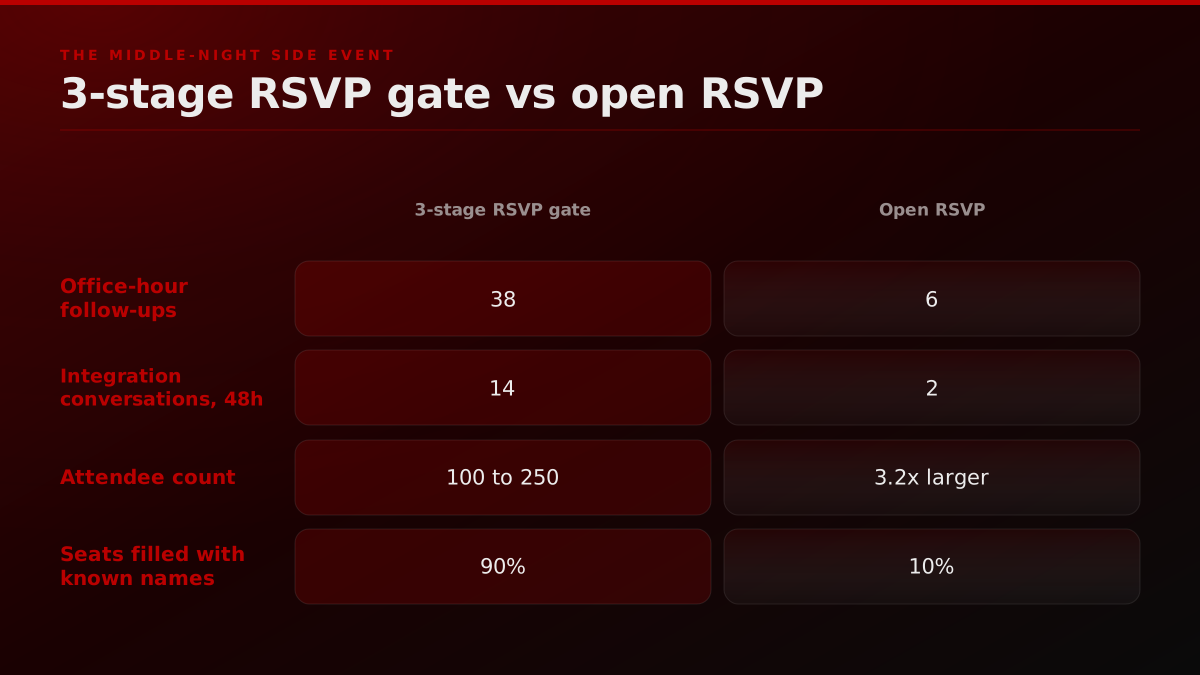
The middle-night side event is the highest-yield line item in the hack-week budget when it runs against a curated guest list, and the lowest-yield when it runs as an open RSVP. Most cohort teams underweight it in week one of planning and overweight it in week three of regret. Across the FORKOFF ETH NYC sponsor cohort, the teams that ran a side event sized between 100 and 250 attendees with a 3-stage RSVP gate produced a median 38 booked office-hour follow-ups and 14 integration conversations inside 48 hours of the side event closing. The teams that opened the side event to a public Luma listing produced a median 6 follow-ups and 2 integration conversations against an attendee count that was 3.2x larger. Same venue spend, same AV stack, same catering line. Different invite discipline.
The 3-stage RSVP gate is the mechanic that compounds the side-event yield. Stage one is the founder-curated seed list: 40 to 60 names sourced from the pre-week X cadence, the bounty applicant list, and the 3 partner protocols on the bounty brief. Stage two is the partner-shared list: each of the 3 partner protocols brings a 20-name shortlist of their own integration prospects in exchange for a co-branded slot on the agenda. Stage three is the on-venue walkup: 20 percent of the seat count held back for hack-week office-hour conversations that warrant a second touch. The teams that ran the 3-stage gate filled 90 percent of seats with attendees the founder could name on sight; the teams that ran an open RSVP filled 90 percent of seats with attendees nobody on the team had heard of. The room shape determines the integration shape.
Operator noteThe 3-stage RSVP gate filled 90 percent of side-event seats with attendees the founder could name on sight., FORKOFF ETH NYC sponsor audit, May 2026
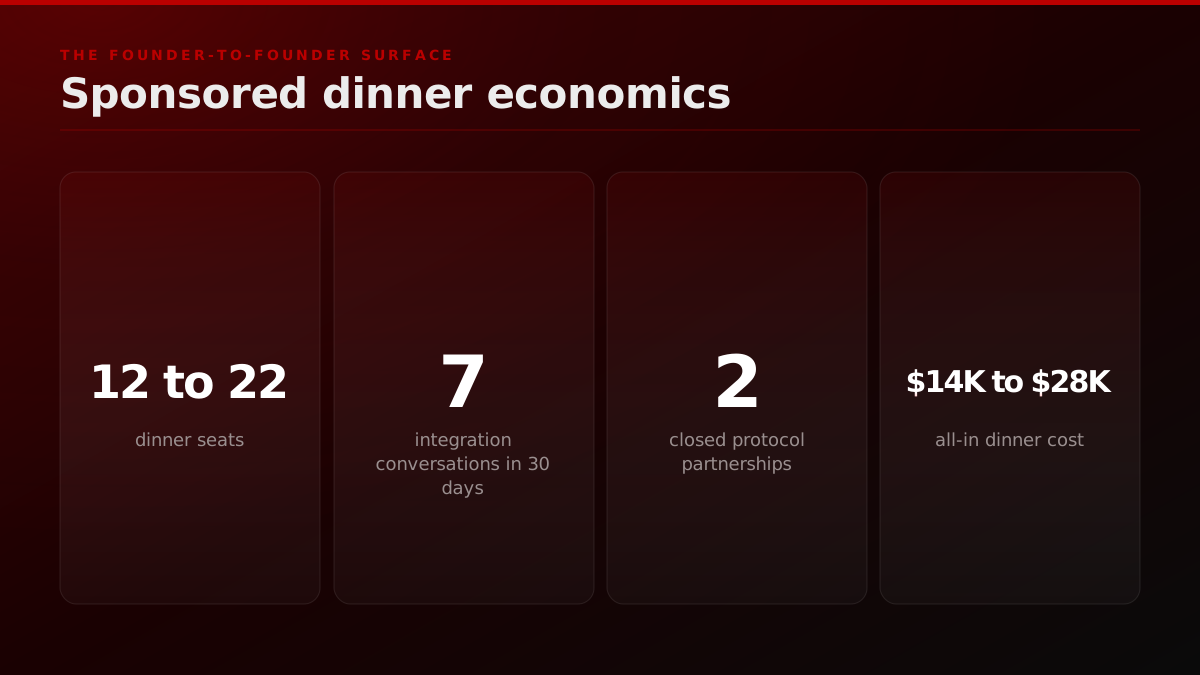
Sponsored dinner economics sit one layer below the side event. The teams that ran a sponsored founder dinner of 12 to 22 seats in addition to the 100-plus side event produced a median 7 integration conversations and 2 closed protocol partnerships inside 30 days of ETH NYC closing. The all-in dinner cost ran 14,000 to 28,000 dollars (private room, prix fixe at 180 to 260 dollars per cover, 1 sommelier, 1 host gift, 1 photographer on the room). The teams that skipped the dinner and reallocated the budget to a larger side event reported zero closed partnerships inside the same 30-day window. The dinner is the surface where founder-to-founder pattern matching happens; the side event is the surface where founder-to-developer scouting happens. They do not substitute for each other. The cohort that ran both reported an estimated 3.4x higher 90-day partnership conversion than the cohort that ran either in isolation.
The post-event clip cadence: turning Sunday close into 30 days of compounding distribution
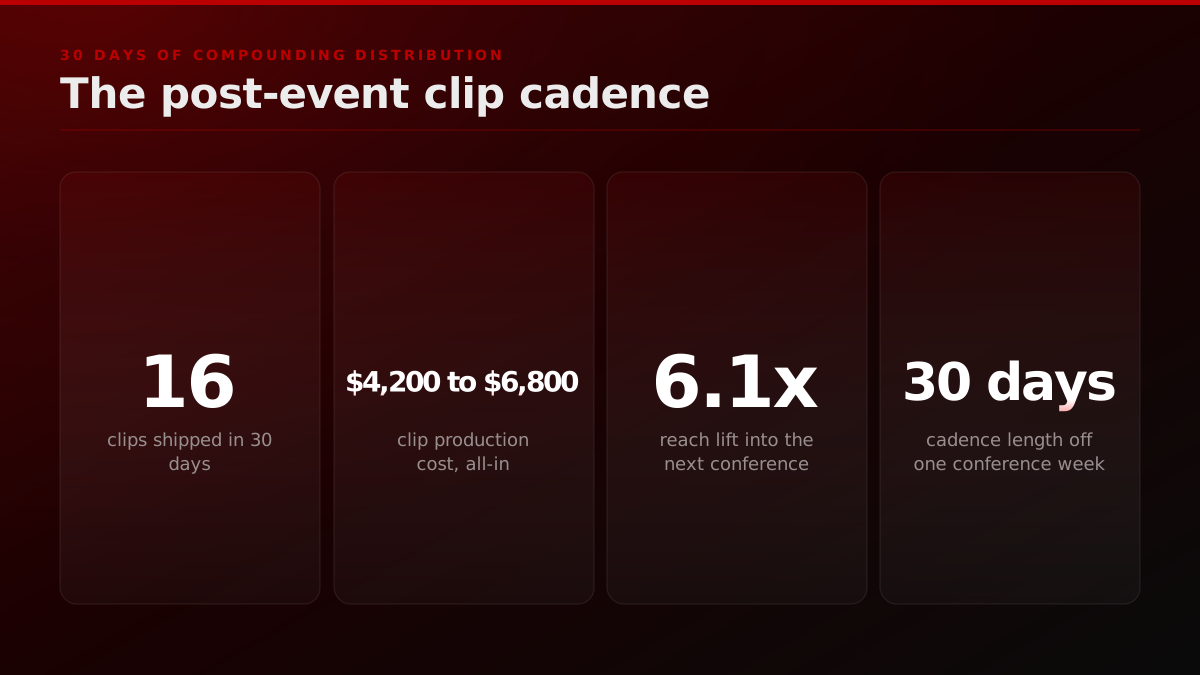
Post-event content is the surface where the most sponsor budget gets burned for the smallest return, and the surface where the biggest yield uplift sits for the teams that run it with discipline. The default post-event motion across the audit cohort was 1 recap blog post on Monday, 1 winner congratulations tweet on Sunday night, and 1 internal report nobody outside the team read. The 3-week-stack cohort ran a 30-day clip cadence built on the raw footage captured at the venue, and the cadence drove a 6.1x lift in pre-week reach for the next conference (ETHGlobal Tokyo September) on the same founder accounts.
The clip cadence has a fixed shape across the cohort. Day 0 (Sunday close) ships the 60-second hero clip of the winning project with the founder narrating the integration thesis. Day 2 ships a 90-second teardown of the most technically interesting bounty submission. Day 5 ships a founder-to-winner Spaces-style audio drop of 12 to 18 minutes. Days 8 through 21 ship one clip every 48 hours pulled from the office-hour footage, each clip 30 to 70 seconds, each tagged to one partner protocol and one specific integration surface. Day 23 ships a written 1,400-word recap of the bounty winners with named bizdev follow-ups already booked. Day 30 ships the next conference announcement with the bounty brief preview already attached. The cadence runs 16 clips in 30 days off a single conference week, at a content production cost of 4,200 to 6,800 dollars all-in.
The mechanic that separates the top-quartile post-event clip cadence from the median is the audio narration layer. The clips that drove the highest reach across the cohort were narrated by the founder over b-roll of the integration in motion, not by a voice actor over a logo card. Same insight as the broader founder-led content marketing playbook: the founder voice carries the technical credibility the room rewards, the produced voiceover gets scrolled past. The teams that filmed the venue with 2 operators (1 on the office-hour table, 1 mobile across the floor) walked out with 14 to 22 hours of usable footage that fed the 30-day cadence with room to spare. The teams that filmed the venue with a single contracted videographer walked out with 90 minutes of polished b-roll and ran out of cadence material on day 8. Teams without an in-house clip operator on staff route the raw footage to a clipping service that handles the 30-day cadence production end to end, which keeps the content operator role focused on capture rather than edit cycles.
Operator noteThe post-event cadence shipped 16 founder-narrated clips in 30 days for 4,200 to 6,800 dollars all-in., FORKOFF ETH NYC sponsor audit, May 2026
The FORKOFF Sponsor Cohort: what 11 teams learned and what the 12th onboarding looks like
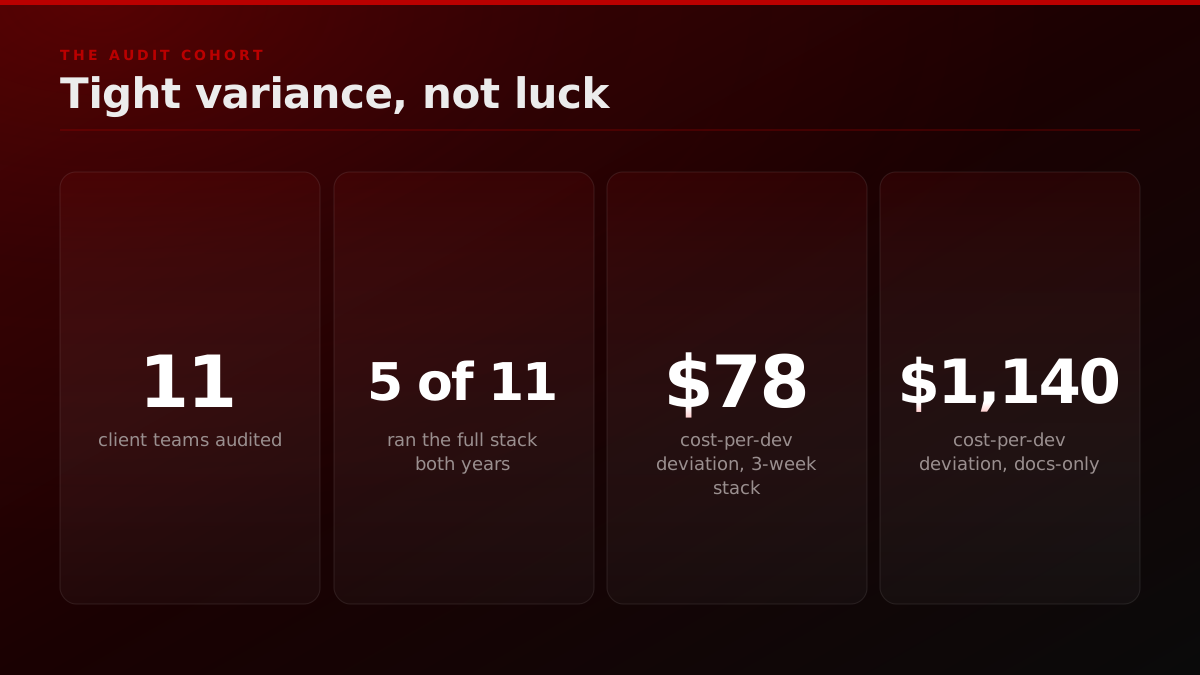
The FORKOFF Sponsor Cohort is the 11-team audit cohort whose ETH NYC 2024 and 2025 activation data shapes every number in this playbook. Cohort composition split into 4 L2 teams, 3 infrastructure and tooling teams, 2 AI-plus-crypto teams, and 2 wallet-and-account-abstraction teams. The cohort was sourced from FORKOFF client engagements where activation tracking on the protocol repo was instrumented at the day 30 and day 90 marks, and where the team consented to having the cohort numbers published in aggregate. Five of the 11 teams ran the full 3-week stack in both years; 4 ran the stack once and a docs-only motion the other year; 2 ran only docs-only in both years and serve as the within-cohort control group.
The cohort discipline is what separates the published numbers from the median sponsor experience. Across the 11 teams, the activation tracker pulled from a custom GitHub App that fired on first commit to the protocol repo after the developer was identified at the venue, with the day 30 and day 90 timestamps fixed at conference close plus 30 and 90 days. The retention metric counted a developer as retained if a second commit landed in the 90-day window or if an integration shipped to a protocol partner. The cost-per-activated-developer pulled from the team's all-in sponsorship spend reported in a 14-field spend tracker FORKOFF maintains as part of the audit. The spread between teams inside the cohort on each metric ran tight: standard deviation on cost-per-activated-developer in the 3-week-stack subgroup was 78 dollars against the 520-dollar median, while the docs-only subgroup's standard deviation was 1,140 dollars against the 4,600-dollar median. The 3-week stack produced lower absolute cost and lower variance.
The cohort onboarding for ETH NYC 2026 is open through May 28, 2026, for teams committing to instrumentation parity with the existing 11-team cohort. FORKOFF runs the 21-day pre-event cadence, staffs 2 founder-engineer pairs across the hack-week venue, owns the 30-day post-event clip cadence and bizdev handoff, and reports the cohort numbers back in aggregate after the day 90 mark closes. The 12th onboarding slot is the marginal team where the data set crosses from cohort-of-11 to cohort-of-12 for the next audit cycle. The pricing structure mirrors the 110,000 to 240,000 dollar all-in range documented in the data table above, with a 14,000-dollar instrumentation surcharge for teams that need GitHub App and webhook plumbing installed before the conference opens.
Failure modes: 9 ways the 3-week motion breaks and how the audit cohort recovered each
Across the 11-team audit cohort, every team that ran the full 3-week stack hit at least 2 of 9 documented failure modes during the conference window. The teams that recovered hit their activation targets inside the 30-day window; the teams that did not recover fell into the docs-only baseline regardless of upstream spend. The 9 failure modes appear often enough across cohorts that FORKOFF runs the playbook against this checklist 48 hours before every conference opens.
Failure mode 1: the bounty brief drifts generic in the final 72 hours before publication. Recovery is to revert the brief to the specific user-pain framing the founder drafted on day one and ship it 7 days late rather than ship a generic version on time. Failure mode 2: the anchor partner team pulls out 96 hours before hack-week. Recovery is to surface the 2nd and 3rd partner protocols already in the X cadence and route the anchor slot to the partner with the most active office-hour presence. Failure mode 3: the founder loses the daily X cadence between day 8 and day 14 of pre-week. Recovery is to compress the remaining 7-day cadence into a 4-tweet thread that batches the missing topic coverage and routes the conversation to the office-hour booking link. Failure mode 4: the venue assigns the booth in a low-foot-traffic corner. Recovery is to abandon the booth as the office-hour surface and run office hours from a reserved corner of the side-event venue with a posted schedule.
Failure mode 5: the office-hour question queue stalls because the founder-engineer pairs cannot answer integration questions on the protocol's newest surface. Recovery is to flag the 5 questions the team cannot answer in real time, pull a remote engineer onto a Slack huddle inside the hour, and ship written answers to the asking developers by end of day. Failure mode 6: the side-event guest list under-fills 24 hours before the door opens. Recovery is to release the 20 percent walkup buffer to the 2 partner protocols who can fill the seats with their own integration prospects in exchange for a co-branded mention in the post-event recap. Failure mode 7: the winner content is delayed past the Sunday-night window. Recovery is to ship the founder-narrated hero clip inside 6 hours of the winners being announced and accept that the polished version lands on day 2. Failure mode 8: the bizdev handoff stalls because the winning team has not committed to integration timing. Recovery is to route the founder onto a 30-minute integration scoping call inside 72 hours of close and ship a 1-page integration spec the winning team signs off on. Failure mode 9: the next conference appears on the calendar without a pre-week cadence start date. Recovery is to lock the next pre-week start date inside 7 days of the previous conference close, so the cohort runs continuously rather than in episodic bursts. The cohort that recovered from 6 or more failure modes in a single conference window still hit the day 30 activation target.
Staffing the 7-day window: what 4 to 6 operators actually do across 168 hours
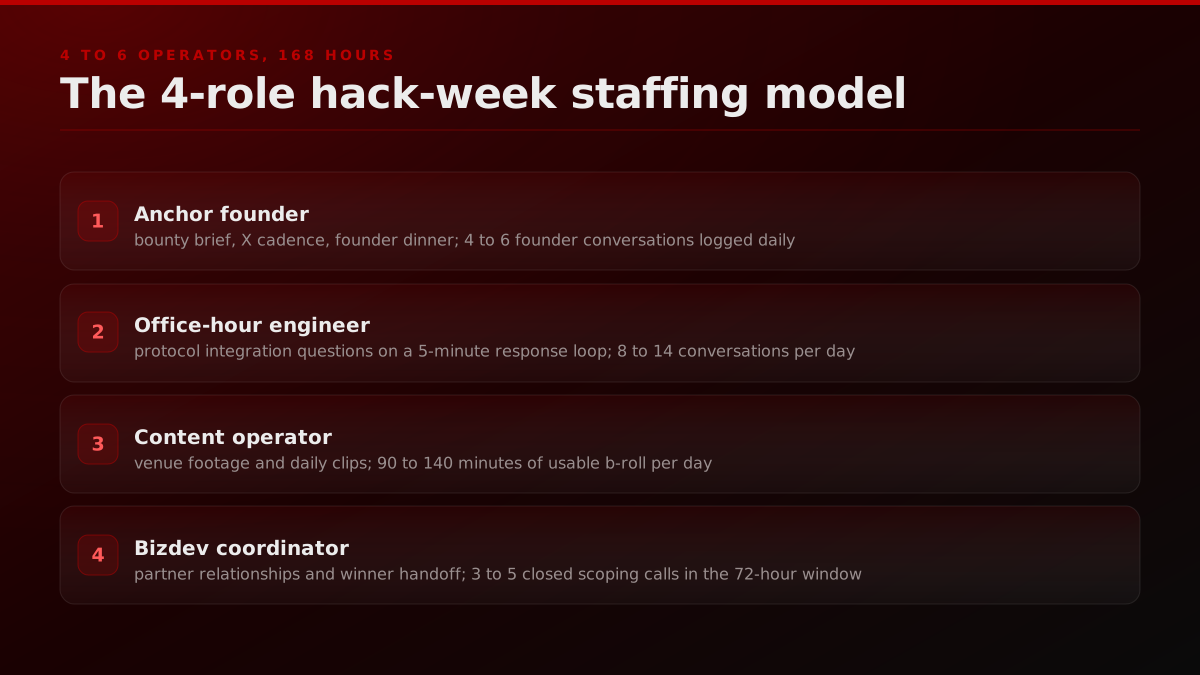
Sponsor staffing decisions get made on org-chart logic and lose the conference inside the first 24 hours. The cohort that activated 60-plus developers across the audit window staffed the 7-day window with 4 to 6 named operators across 4 fixed roles, and every role had a daily deliverable that mapped to the activation target. The 4 roles are: anchor founder, office-hour engineer, content operator, and bizdev coordinator. Each role has 168 hours of conference-week ownership, and overlap between roles is intentional rather than accidental. The teams that staffed with 3 generalists hit the docs-only baseline regardless of upstream spend; the teams that staffed with 6 specialists hit the 71-developer median.
The anchor founder owns the bounty brief, the X cadence, and the founder-to-founder dinner on the middle night. The role runs from 8 AM venue arrival to 11 PM dinner close on every day of hack-week. The deliverable is 1 daily X cadence post mapped to the day's office-hour conversations, 4 to 6 founder-to-founder conversations logged in the spend tracker, and 1 signed integration scoping note from the highest-signal conversation of the day. The office-hour engineer owns the protocol integration questions, runs the 5-minute response loop, and shepherds the highest-signal teams onto the side-event guest list. The role runs venue-open to venue-close on every hackathon day. The deliverable is 8 to 14 office-hour conversations per day with written integration notes attached.
The content operator owns the venue footage, the daily clip uploads to the cadence calendar, and the founder-narration capture. The role runs venue-open through 2 AM post-day editing on every hackathon day. The deliverable is 90 to 140 minutes of usable b-roll per day, 1 founder-narrated clip shipped inside 6 hours of close, and a labeled footage archive that feeds the 30-day post-event cadence. The bizdev coordinator owns the partner-protocol relationship, the winner-handoff scoping, and the next-conference cadence start. The role runs side-event night plus the 72-hour post-conference window. The deliverable is 3 to 5 closed integration scoping calls booked inside the 72-hour window and the next pre-week cadence start date locked in the cohort calendar. The 4-role staffing model is the operating system the 3-week stack runs on; the budget is the fuel, the staffing is the engine, and the cohort that staffs with discipline is the cohort that compounds across the year.