
Events
Events that compound across the calendar. Founder houses, vox pops, hacker houses, citation blitzes, and event takeovers. The posts below cover the FORKOFF event activation catalog, why a founder-house at ETHCC out-converts a sponsorship-tier booth at Token2049, and the qualified-view proof that anchors every event activation to qualified pipeline rather than badge-scan vanity. See the FORKOFF events service.
Written by the operators running the engagements, measured on a clipping network that has processed 5B+ views.
28 articles in Events. All FORKOFF blog.
Event activations that produce pipeline, not badge scans
Most event marketing budgets go toward the thing that's easiest to buy: a sponsorship tier, a booth, a logo on the step-and-repeat. It's also the least effective spend per dollar, because a badge scan from a stranger walking past a booth converts at a fraction of the rate of a real conversation the founder had in person. The activation catalog exists because a founder house, a well-run vox pop, or a coordinated citation blitz around the event window consistently outperforms the booth on the metric that actually matters: qualified pipeline.
Founder houses vs sponsorship booths
A sponsorship-tier booth at a major conference gets the logo on a wall and a stream of badge scans from people walking past on their way to the coffee line. A founder house, a rented space where the founder hosts smaller sessions, dinners, and drop-in conversations across the same conference week, gets the founder direct time with the specific people worth talking to, self-selected by who actually shows up. The badge-scan number is bigger; the founder-house conversations are the ones that turn into pipeline.
Vox pops and citation blitzes
A vox pop, short on-the-ground interviews capturing real attendee reactions at an event, produces distribution content that's impossible to fake from a desk: real people, real quotes, real event energy. A citation blitz around the same event, coordinated posts and mentions timed to the event window, extends the founder's visible presence beyond whoever physically attended, so the activation's reach isn't capped by the venue's floor space.
Measuring an activation against qualified pipeline
Attendee count and badge scans are easy numbers to report and mostly meaningless: they measure foot traffic, not intent. The activations that actually justify their cost get measured against qualified pipeline, conversations that turned into a real next step, tracked back to the specific event and specific interaction that started them. That tracking has to be set up before the event, not reconstructed afterward from memory, or the qualified-view proof that anchors the activation to real results simply doesn't exist.
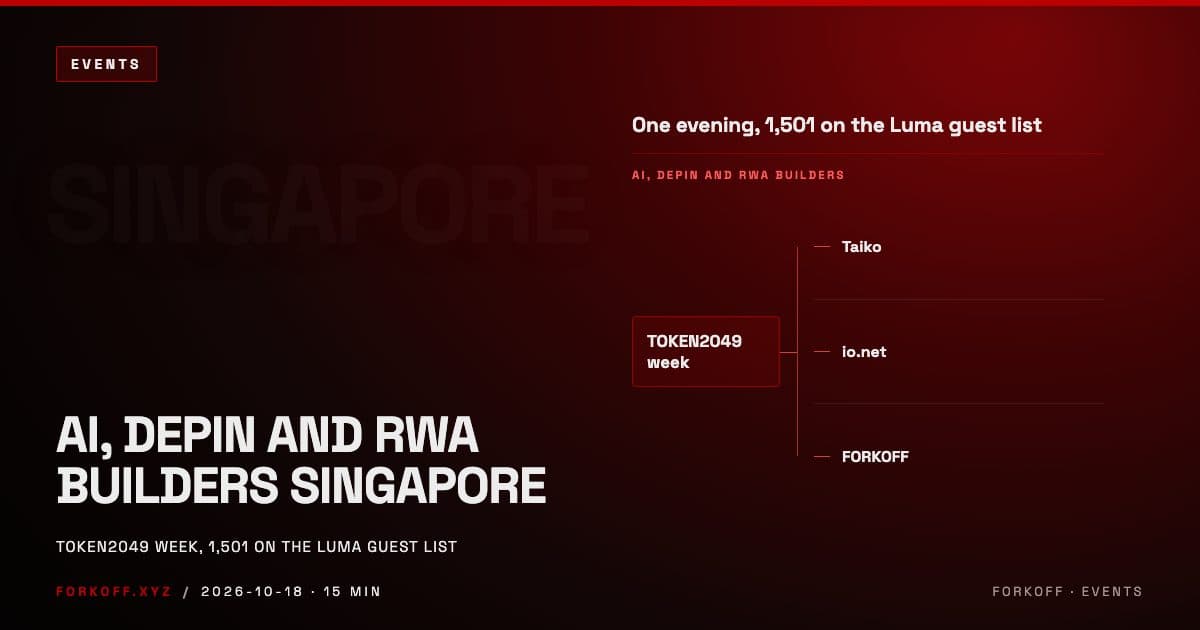
AI, DePIN and RWA Builders at TOKEN2049 Singapore 2025: 1,501 on the Guest List
A recap of AI, DePIN and RWA Builders, the evening side event FORKOFF hosted with Taiko and io.net during TOKEN2049 week in Singapore: panels, partners, data.
 Read
Read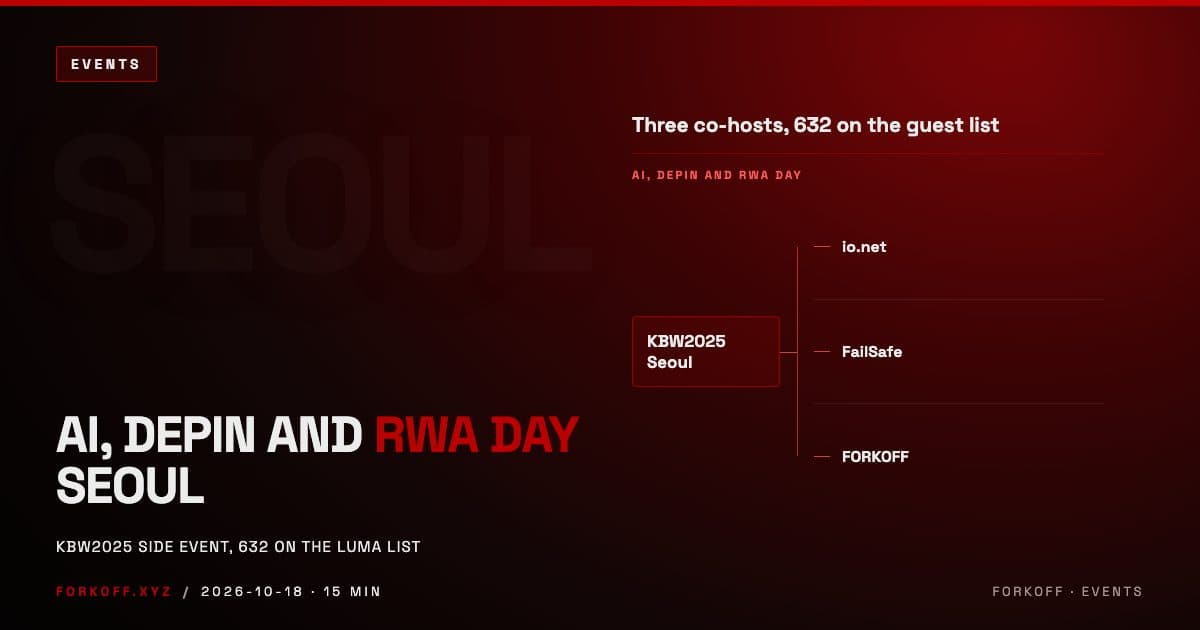
AI, DePIN and RWA Day at Korea Blockchain Week 2025: 632 on the Guest List
A recap of AI, DePIN and RWA Day, the half-day side event FORKOFF co-hosted with io.net and FailSafe in Seoul during KBW2025: hosts, agenda and real numbers.
Read
India Blockchain Week 2025 Recap: What the Third IBW Showed, From a Media Partner
A media partner recap of India Blockchain Week 2025 in Bengaluru: the conference, Demo Day, sponsors, the numbers from X and YouTube, and lessons for 2026.
Read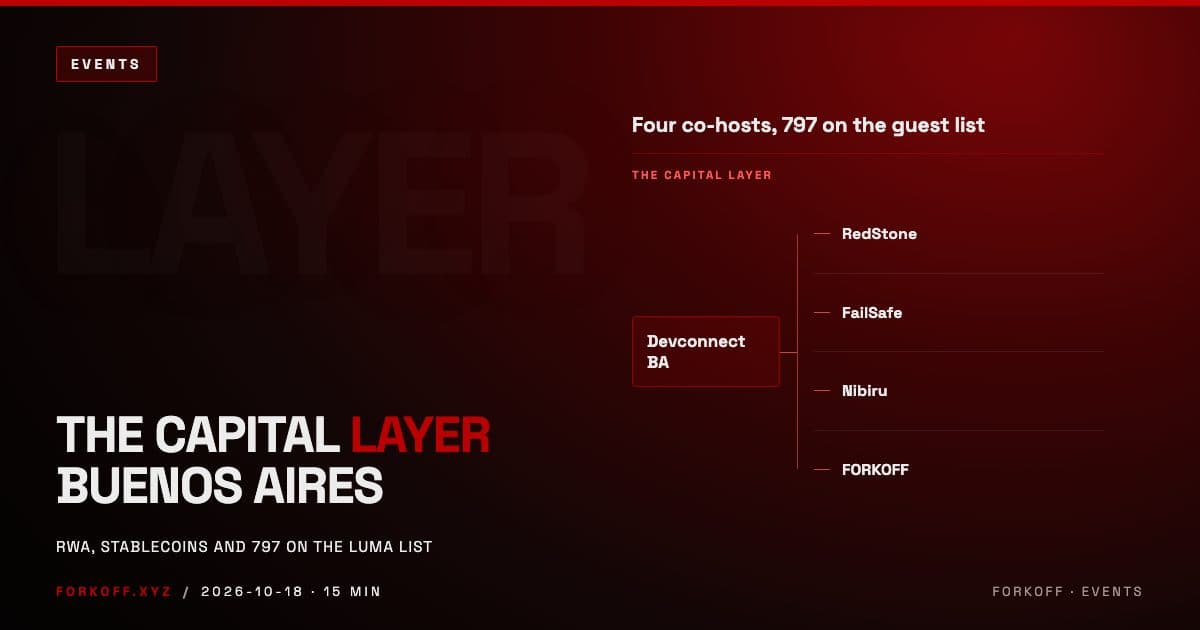
The Capital Layer at Devconnect Buenos Aires: RWA, Stablecoins and 797 on the Guest List
A recap of The Capital Layer, the RWA, stablecoin and institutional builders day FORKOFF co-hosted at Devconnect Buenos Aires: hosts, partners and real numbers.
Read
Affiliate Conclave 2026 (Abu Dhabi): Dates, Tickets, Tracks, and Who It Is For
Affiliate Conclave 2026 runs December 15 to 16 at Emirates Palace, Abu Dhabi, co-located with Global Trading Show. Dates, tickets, tracks, a neutral read.
Read
The Algorithm Alliance: AI and ML Builder Community and Its Next Singapore Meetup
The Algorithm Alliance is an AI and ML builder community run by VAP Group. Its editions, format, who it is for, and the next Singapore meetup, 6 October 2026.
Read
Crypto Mining Guild 2026 (Abu Dhabi): Date, Venue, and the Mining-to-AI Pivot
Crypto Mining Guild 2026 is a December 10 Global Blockchain Show side event at Space42 Arena, Abu Dhabi. Date, venue, format, and the mining-to-AI pivot.
Read
GameFi Alliance Web3 Gaming Summit 2026 (Singapore): What Founders Need to Know
The GameFi Alliance Web3 Gaming Summit runs October 6, 2026 in Singapore. An independent preview of the date, agenda, audience, and whether it is worth it.
Read
India Blockchain Week 2026 (Mumbai): Dates, Forums, Tickets, and Who Should Go
India Blockchain Week 2026 runs Nov 1 to 2 at the Fairmont Mumbai. The new Institutional and Future Asset forums, ticket tiers, and who should go.
Read
The Capital Circle 2026 (Singapore): Date, Format, and the TOKEN2049 Week
The Capital Circle returns to Singapore on October 6, 2026, the day before TOKEN2049 week. Format, hosts, and whether the trip is worth it.
Read
Global Trading Show 2026 (Abu Dhabi): Speakers, Dates, and What to Expect
Global Trading Show 2026 runs December 15 to 16 at Emirates Palace, Abu Dhabi. Dates, verified speakers, ticket tiers, and what the expo actually covers.
Read
GWDC 2026 Korea (Seoul): Dates, Venue, Speakers, and the Four Zones
GWDC 2026 Korea runs September 29 to 30 at the aT Center in Seoul. Dates, venue, the four zones, confirmed speakers, and the 48-hour hackathon.
Read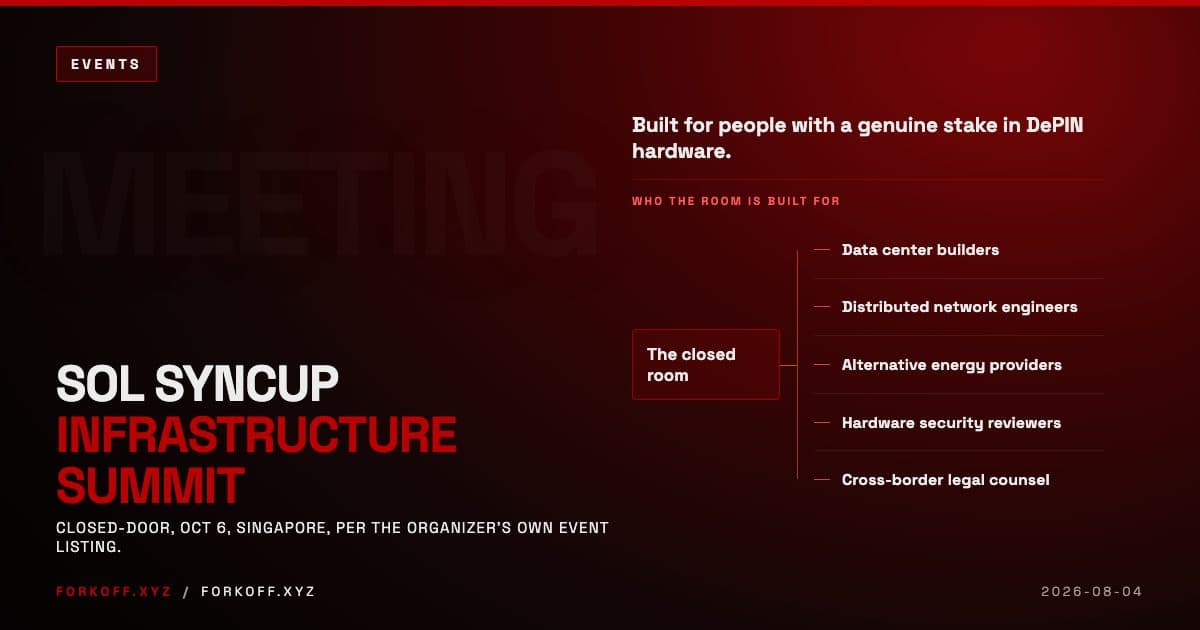
Sol SyncUp Infrastructure Summit Singapore: Inside the Closed-Door DePIN Meeting
Sol SyncUp is hosting a closed-door Infrastructure Summit in Singapore to standardize DePIN architecture. What it is, who is in the room, and why it matters.
Read
Event Lead Follow-Up: The Post-Event Nurture System
Most event leads never get a real follow-up. Here is the post-event nurture system, tier the room, capture the context, and run a cadence that books meetings.
Read
B2B SaaS Conference Sponsorship vs Paid Ads: Cost Per Pipeline Dollar in 2026
B2B conference sponsorship vs paid ads on one yardstick: cost per pipeline dollar. Real CPL and CPQL benchmarks, the measurement trap, and when each wins.
Read
Global AI Show 2026 (Riyadh): Speakers, Dates, and What to Expect
Global AI Show 2026 runs in Riyadh, June 29 to 30 at Crowne Plaza Riyadh RDC. Speakers, the three co located shows, tickets, and the sovereign AI agenda.
Read
Global Games Show 2026 (Riyadh): Speakers, Dates, and What to Expect
Global Games Show 2026 runs in Riyadh on June 29 to 30, Saudi Arabia premier B2B gaming event. Verified speakers, agenda, ticket tiers, and a neutral read.
Read
Dutch Blockchain Week 2026 (Amsterdam): Speakers, Dates, and What to Expect
Dutch Blockchain Week 2026 runs June 22 to 28 in Amsterdam, Summit June 24 to 25 at the Johan Cruijff ArenA. Speakers, side events, tickets, EU comparison.
ReadShowing 1-18 of 28 blogs
All 28 Events posts
- AI, DePIN and RWA Builders at TOKEN2049 Singapore 2025: 1,501 on the Guest List
- AI, DePIN and RWA Day at Korea Blockchain Week 2025: 632 on the Guest List
- India Blockchain Week 2025 Recap: What the Third IBW Showed, From a Media Partner
- The Capital Layer at Devconnect Buenos Aires: RWA, Stablecoins and 797 on the Guest List
- Affiliate Conclave 2026 (Abu Dhabi): Dates, Tickets, Tracks, and Who It Is For
- The Algorithm Alliance: AI and ML Builder Community and Its Next Singapore Meetup
- Crypto Mining Guild 2026 (Abu Dhabi): Date, Venue, and the Mining-to-AI Pivot
- GameFi Alliance Web3 Gaming Summit 2026 (Singapore): What Founders Need to Know
- India Blockchain Week 2026 (Mumbai): Dates, Forums, Tickets, and Who Should Go
- The Capital Circle 2026 (Singapore): Date, Format, and the TOKEN2049 Week
- Global Trading Show 2026 (Abu Dhabi): Speakers, Dates, and What to Expect
- GWDC 2026 Korea (Seoul): Dates, Venue, Speakers, and the Four Zones
- Sol SyncUp Infrastructure Summit Singapore: Inside the Closed-Door DePIN Meeting
- Event Lead Follow-Up: The Post-Event Nurture System
- B2B SaaS Conference Sponsorship vs Paid Ads: Cost Per Pipeline Dollar in 2026
- Global AI Show 2026 (Riyadh): Speakers, Dates, and What to Expect
- Global Games Show 2026 (Riyadh): Speakers, Dates, and What to Expect
- Dutch Blockchain Week 2026 (Amsterdam): Speakers, Dates, and What to Expect
- Global Blockchain Show 2026 (Riyadh): Speakers, Dates, and What to Expect
- Crypto Event Sponsor Brand-Safety Vetting Playbook 2026
- Crypto Event Sponsorship 2026: The CPQL Operating System
- Crypto Conference Sponsorship ROI: 2026 First-Party Cohort Data
- Are Crypto Conferences Worth It? An Operator's Math on the Net-Negative-ROI Debate (2026)
- Best Crypto Conference to Sponsor in 2026: 4-Way Decision Matrix
- How to Host a Side Event at a Crypto Conference: The 30-Day Playbook
- ETH NYC 2026 Side Events: The Operator's Directory
- ETH NYC 2026 Activation Playbook: The 3-Week Motion
- Crypto Event ROI: Why $5K Dinners Beat $25K Booths
Read sister categories
Clippings
Creator-led clipping that turns founder content into qualified organic reach. Geotargeted distribution. Audit ledger on every cycle.


Podcast
Founder podcasts that compound. Two to four founder hours per week converted into multi-platform recall, not vanity downloads.

Founder Funnel
Founder-led growth playbooks that survive past PMF. Distribution architecture, not single-channel hacks.

Ecosystem Strategy
Ecosystem distribution playbooks for protocols, foundations, and AI platforms past PMF. Builder grants and category narrative architecture.
AI Search and AEO
Getting cited by ChatGPT, Perplexity, Claude and Google AI Overviews. Schema, answer units, and the signals AI crawlers actually read.
Reddit Marketing
Compliant, non-spam Reddit distribution. Operator accounts, subreddit fit, and the moderation rules that decide whether a post survives.
Twitter and X Growth
Founder-led distribution on X. Thread architecture, reply surface, and follower quality over follower count.
Launch Video
Product and company launch video that carries a real launch beat, not a sizzle reel. Format, timing, and what separates reach from noise.
UGC Videos
Creator-made video ads that read as native rather than produced. Briefing, rights, and the volume needed before a winner appears.
KOL and Influencer
Creator and KOL partnerships priced on qualified delivery. Roster screening, authenticity checks, and payout math shown before acceptance.
SaaS GTM
Go-to-market for B2B SaaS past PMF. Qualified pipeline over signups, and the product-health metrics that survive a board review.
Events engagements that compound
Outcome-priced engagements, audit-proof on every cycle. Five active engagements per quarter, capped on purpose.
Frequently asked questions
How does the FORKOFF blog organize categories?
Each category maps to a FORKOFF service line: clipping, founder-led growth, podcast, Reddit, Discord, activations, plus uncategorized for cross-cutting posts. Each category index aggregates articles in that lane and links to the underlying service.
How often are new articles added to each category?
We publish 2 to 4 operator-grade articles per week across all categories combined. Most categories see 1 to 2 new pieces per month. Higher-velocity lanes like clipping and founder-led growth get more weekly cadence.
Who writes the category content?
Articles are co-authored by FORKOFF operators and the founders we work with. Every claim ties to an audit ledger entry from a live engagement. Each piece is reviewed against our 3-tier verification matrix before it ships.
Can I subscribe to a specific category feed?
Category-specific RSS feeds are available at /blog/<category>/rss.xml (where supported). All categories also ship to @officialforkoff on X and to the FORKOFF newsletter within an hour of publish.
How do I apply for the related engagement?
Each category page has a primary CTA pointing at the matching FORKOFF service. Apply via Calendly for a 30-minute intro. Five engagements per quarter cap, by application only.
Talk to FORKOFF about your events engagement.
Receipts, deep dives, and playbooks.
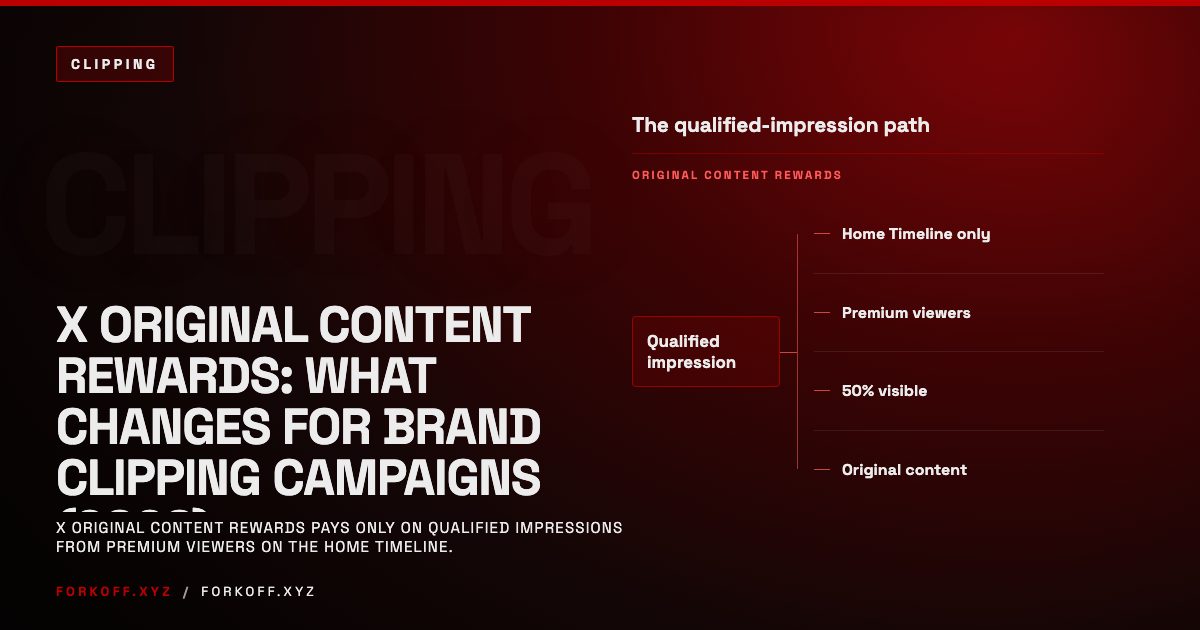
X Original Content Rewards: What Changes for Brand Clipping Campaigns (2026)
X swapped Creator Revenue Sharing for Original Content Rewards, so recycled-clip payouts are gone. What brands running clipping campaigns change now.
Read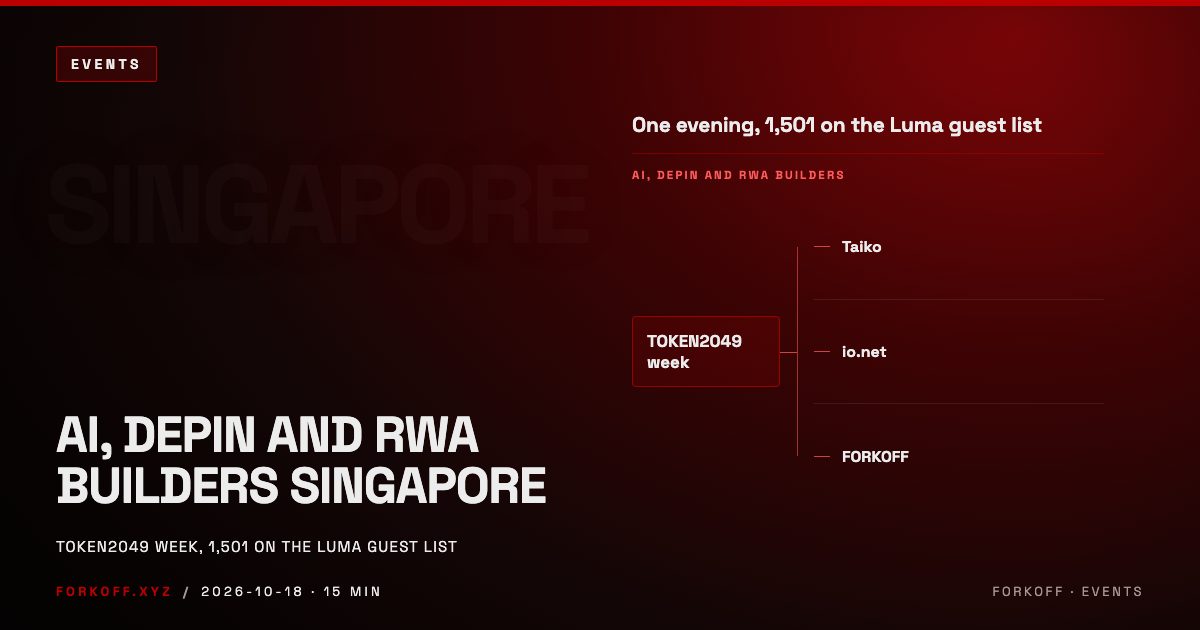
AI, DePIN and RWA Builders at TOKEN2049 Singapore 2025: 1,501 on the Guest List
A recap of AI, DePIN and RWA Builders, the evening side event FORKOFF hosted with Taiko and io.net during TOKEN2049 week in Singapore: panels, partners, data.
Read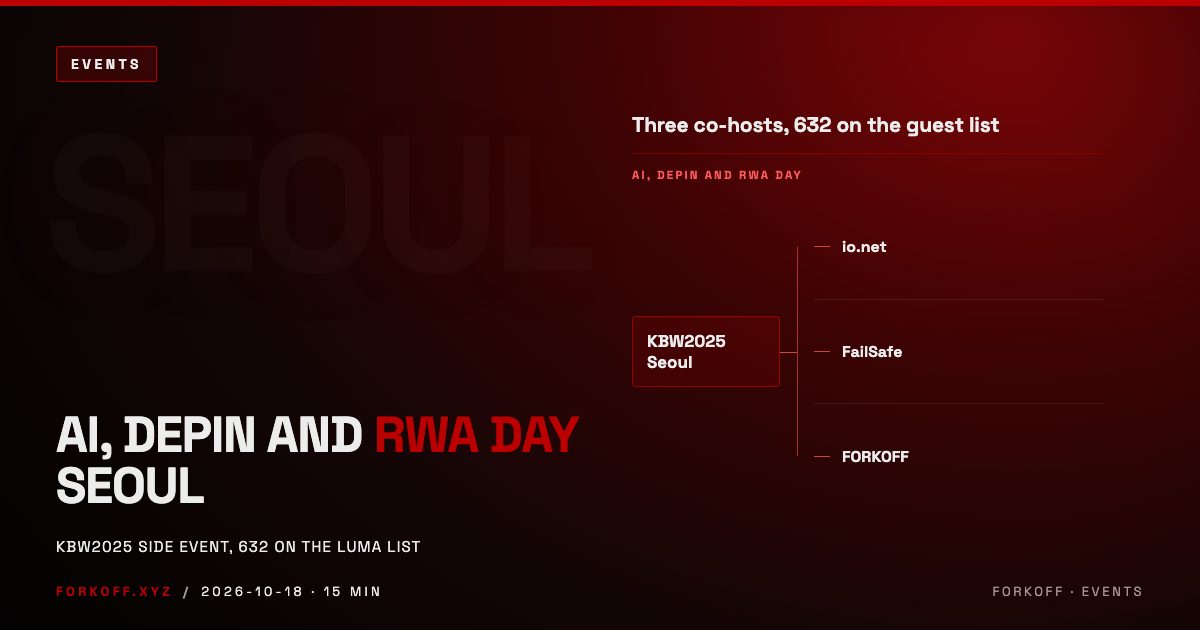
AI, DePIN and RWA Day at Korea Blockchain Week 2025: 632 on the Guest List
A recap of AI, DePIN and RWA Day, the half-day side event FORKOFF co-hosted with io.net and FailSafe in Seoul during KBW2025: hosts, agenda and real numbers.
Read