Airdrop marketing in 2026 is the practice of designing a token distribution so the recipient cohort holds and keeps using the protocol after the drop, not a one-day giveaway pegged to a wallet snapshot. The four phases below come from a FORKOFF audit of 21 token-issuing protocols: pre-drop signal design, drop-event mechanics, post-drop retention engineering, and the recurring flywheel. Teams that ran three or more of the four phases retained their cohort past day 90; teams that ran one or two watched the curve cliff inside the first week.
Airdrop marketing in one scroll
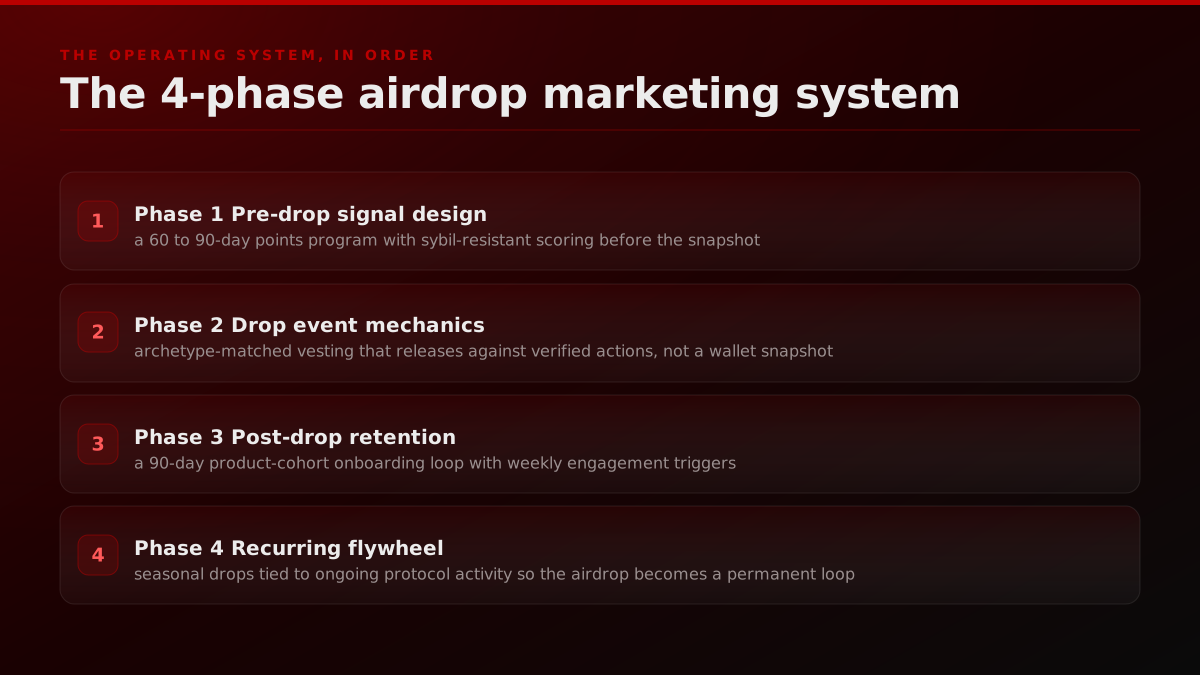
Airdrop marketing in 2026 is a 4-phase system, not a launch event. Phase 1 is pre-drop signal design across a 60 to 90-day points program with sybil-resistant scoring. Phase 2 is drop event mechanics that release tokens against verified actions, not snapshots, with vesting that matches the protocol's value curve. Phase 3 is the 90-day post-drop retention loop where the recipient cohort is onboarded as a product cohort with weekly engagement triggers. Phase 4 is the recurring flywheel where the airdrop becomes a permanent loop tied to ongoing protocol activity. Across 21 audited protocols in the FORKOFF Web3 cohort, the top quartile reached 41 percent day-90 retention; the median reached 6 percent.
About these numbers
FORKOFF first-party operator data from Web3, crypto, and AI ecosystem marketing engagements, supplemented by publicly available industry data (CoinGecko, DeFiLlama, Messari 2025-2026). All figures are directional estimates based on operator observations across the 21 audited protocols; individual outcomes vary by protocol design and market conditions.
Most airdrop marketing collapses inside 24 hours
The reason most airdrops in the 2024 to 2026 window failed as marketing is mechanical. A team spent six months building a protocol, weeks hyping a token, then dropped tokens to a snapshot of wallets at one block height, watched 78 percent of those wallets sell inside the first 24 hours, and retained 4 percent of the recipient cohort past day 90. The launch headline lasted one news cycle. The retention curve was a cliff. Coverage of the broader pattern in the DL News investigation into Sybil farms looting airdrops for hundreds of millions documented one attacker on Arbitrum extracting 531,000 dollars across 1,000 wallets, and the same pattern appeared in our own audit data: a small farmer cohort captured the value, the legitimate cohort flipped immediately because the token had no protocol-aware utility, and the team had no instrumentation to filter or compound the right wallets.
Airdrop farmers aren't users. They're arbitrageurs of your incentive design.
The market read has converged on farmer versus holder
The builder and fund consensus in 2025 to 2026 stopped treating raw recipient counts as a success metric. Kava, posting to an audience of 284,000 followers, put the recipient pool bluntly: airdrop farmers are not users, they are arbitrageurs of a protocol's incentive design, because 60 percent of wallet addresses can trace back to one operator running a spreadsheet and a VPN. Dragonfly managing partner Haseeb Qureshi made the same point from the cap-table side: every issuer wants holders instead of dumpers, which is the design problem an airdrop exists to solve. The extraction side is documented, not theoretical. DL News traced a single Arbitrum sybil operator pulling 531,000 dollars across roughly 1,000 wallets, and Hyperliquid's answer was to route 310 million tokens through a published points program biased against the deposit-and-trade-once pattern instead of a blind snapshot.
Source: Kava (@KAVA_CHAIN) and Haseeb Qureshi (Dragonfly) on X, 2025 to 2026; DL News Arbitrum sybil investigation; CoinDesk Hyperliquid airdrop coverage
We have audited 21 token-issuing Web3 protocols across FORKOFF clients in the past 90 days, mapped the airdrops that compounded against the airdrops that flatlined, and the same four phases separated them every time. This is the operating system in the order you run it. The 4-phase system frames the build instead of the other way around: the cohort that wins on airdrop marketing is the cohort that started running the phases 60 to 90 days before the snapshot, not the cohort that wrote the best launch tweet. Coinsider's tokenomics primer covers the broader mechanics; this post covers the airdrop-specific marketing layer that decides whether the token holds value past launch day.
Phase 1: Pre-drop signal design (the points-program window)
The pre-drop window is the single most under-respected primitive in airdrop marketing. The teams that retained users in our audit cohort ran a 60 to 90-day structured points program before the snapshot, with 5 to 8 actions inside the protocol that each accrued points on a transparent ledger that users could see in real time. The actions matched the protocol's actual usage pattern: bridging, providing liquidity, voting, staking, completing onboarding flows, holding for a minimum period. The points program ran on the assumption that the cohort the team wanted to retain after the drop was already inside the protocol before the drop, and the points were the trail that scored which wallets to reward.
The mechanic that separated the top quartile from the median was the sybil resistance baked into the points logic. Top-quartile teams used multi-action thresholds (2 of 3 categories, not single-action), wallet-age cutoffs, gas-spend minimums per action, and on-chain pattern-matching for cross-wallet funding via the same exchange deposit. The median teams ran a single-action snapshot at one block height, which is the lowest-cost possible filter and produced the worst possible cohort. The same sybil-detection logic that Alchemy's airdrop hunter detection writeup documents at the analytics layer applies at the eligibility-design layer: the more dimensions the points program scores, the harder it is for a farmer to game without genuine engagement. The same farmer-versus-fan split is the core problem in GameFi player acquisition, where an airdrop-led launch imports extractors instead of players.
Operator noteOpen the points program 60 to 90 days before snapshot. Under 30 days rewards whoever held a wallet at one block height., FORKOFF Web3 audit, Q1 2026, n=21
Three datapoints anchor the 2026 airdrop marketing math
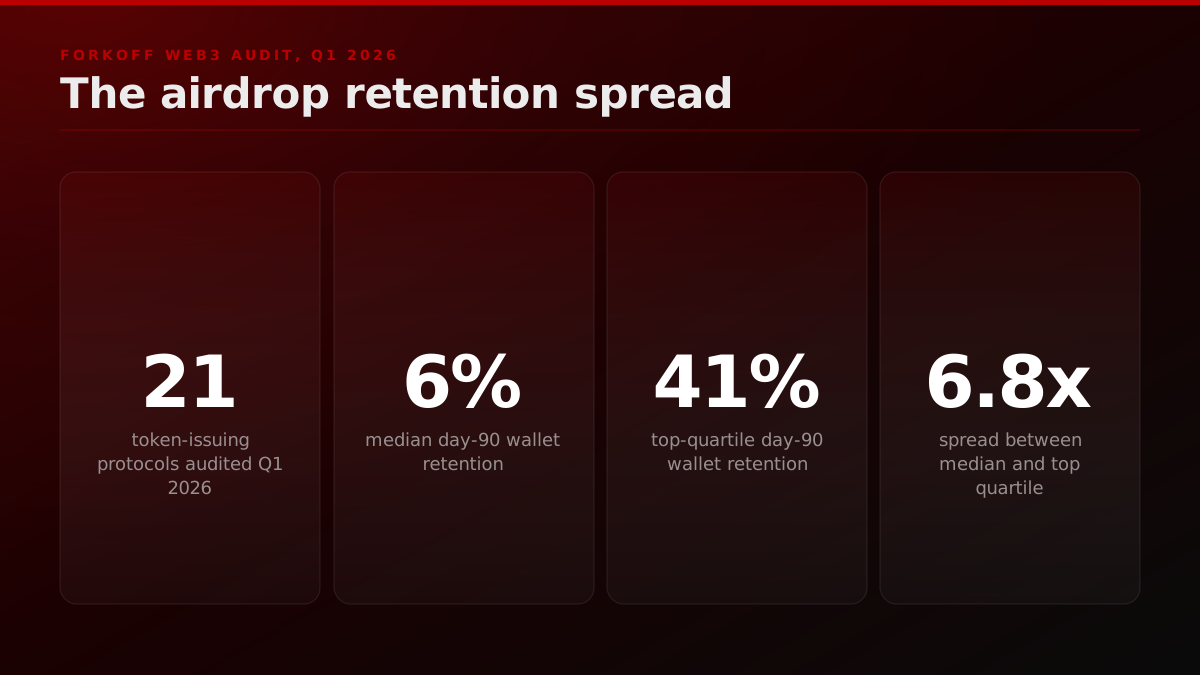
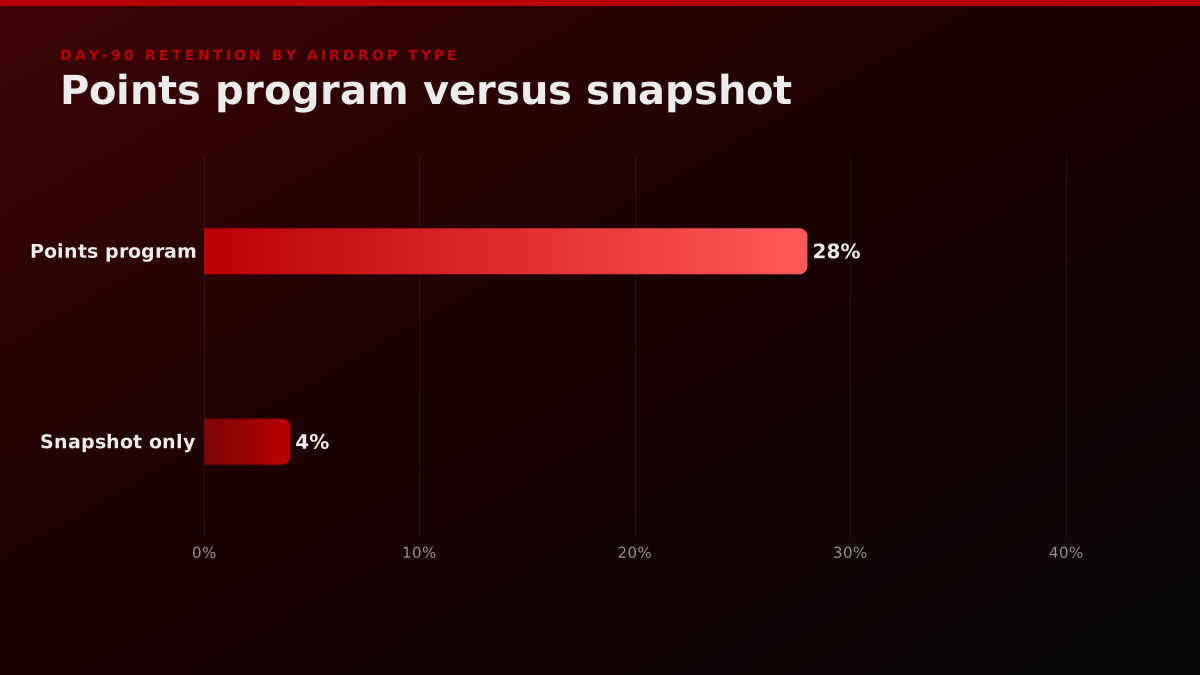
Three signals shape the playbook. First, the FORKOFF Web3 ecosystem audit Q1 2026 (n=21 token-issuing protocols) found a 6.8x spread between median and top-quartile day-90 retention: median cohort retained 6 percent of recipient wallets, top-quartile cohort retained 41 percent. The spread was almost entirely explained by which of the 4 phases each team ran with discipline. Second, cost-per-retained-wallet across the same audit was 8.40 dollars for teams running the full 4-phase system at sustained cadence vs 76 dollars for teams running snapshot-and-launch with paid amplification, a 9x gap that compounds the retention gap. Third, points-program airdrops produced 28 percent average day-90 retention while snapshot-only airdrops produced 4 percent across the audit, with no exceptions in the sample. The phases compound; the snapshot does not.
Source: FORKOFF Web3 ecosystem audits Q1 2026 (n=21 token-issuing protocols, on-chain retention measurement at day 90 post-TGE)
ICP gating before the points program goes live
Every audit cohort that hit top-quartile retention started Phase 1 with an Ideal Customer Profile lock, not a points spec. They wrote a one-page ICP document that named the wallet archetypes the protocol was built for, the on-chain behaviors those archetypes already exhibited on competing protocols, and the volume thresholds that signaled genuine usage versus farming. The points logic was derived from the ICP document, not the other way around. A perpetuals protocol whose ICP was the active derivatives trader with 50,000 dollars of monthly volume on a competing venue scored points against bridged volume, position-holding duration, and PnL realism. A liquid staking protocol whose ICP was the long-arc ETH holder scored points against staking duration, withdrawal restraint, and validator selection. The points program never scored an action that fell outside the ICP behavior set, which is the single largest filter against farmer cohorts who optimize for whatever action a points program scores.
The median teams in the audit ran the inverse sequence. They wrote a points spec first, then back-fitted the ICP language to whatever cohort the points spec attracted, then spent Phase 3 surprised that the recipient cohort behaved nothing like the cohort they had pitched investors. ICP-first sequencing is the canon precondition for every other phase. The same ICP-before-tactics rule that FORKOFF locks in across the founder-growth surface applies on the airdrop surface with the wallet as the unit of identity instead of the email.
Named TGE case studies the playbook lifts from
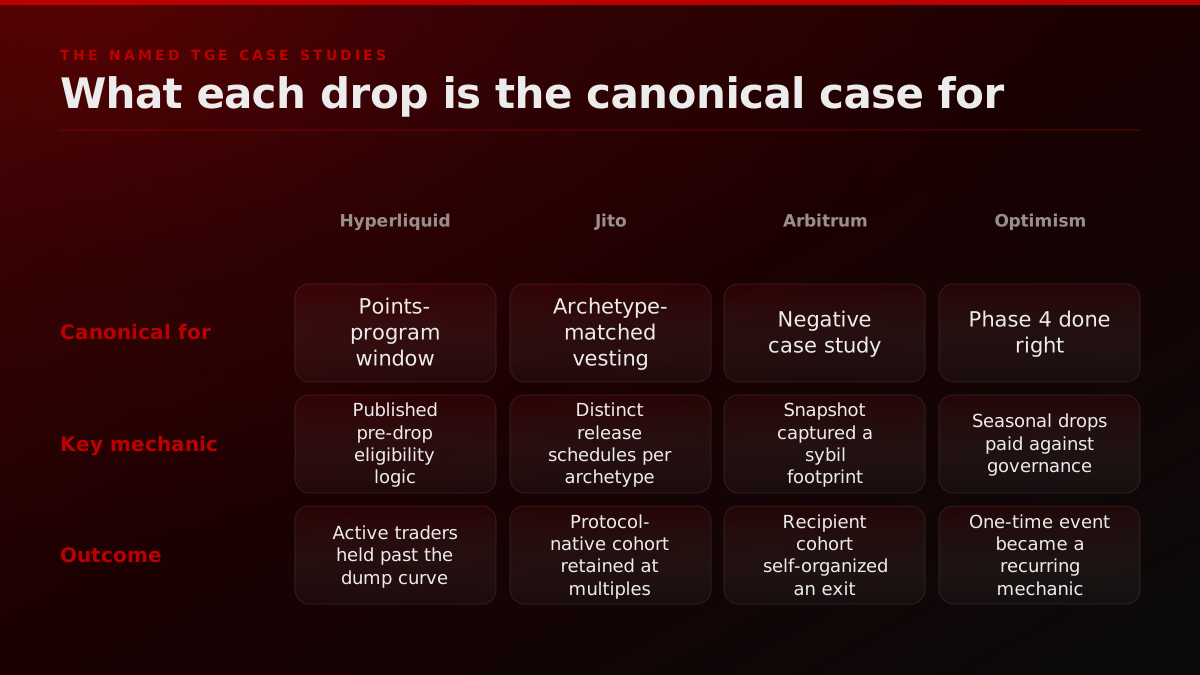
The 4-phase frame is not a hypothesis. It is the pattern that explained the spread inside the FORKOFF audit cohort and that reproduces across the named TGE events the broader market has dissected publicly. Hyperliquid is the canonical case for the points-program window. The team ran a long structured pre-drop signal collection across perpetuals volume, referral activity, and held positions, with the eligibility logic published in advance and the sybil filter biased against wallets that fit the deposit-and-trade-once pattern. The recipient cohort included a long tail of active traders who held tokens past the dump curve because the protocol kept producing fee revenue and the team kept routing that revenue back to holders. The r/CryptoCurrency reverse-engineering thread embedded above documents the mechanics in operator detail.
Jito is the canonical case for archetype-matched vesting. The team split the recipient cohort across protocol-native validators, MEV-aware traders, and Solana ecosystem contributors, with distinct release schedules per archetype and a transparent eligibility ledger. The protocol-native cohort retained at multiples of the speculator cohort across the first 90 days post-TGE, and the team published the cohort-by-cohort retention data instead of a single headline number. Arbitrum is the negative case study every operator learns from. The drop event released tokens against a snapshot that captured a meaningful sybil footprint, and the post-drop product team had no archetype-matched onboarding plan in flight, which left the recipient cohort to self-organize an exit. The DL News investigation linked above documents the 531,000-dollar Sybil farm on the same drop. Optimism is the case for Phase 4 done right. The team scoped seasonal drops at TGE, published the eligibility tightening between seasons, and turned the drop from a one-time event into a recurring distribution mechanic that paid against ongoing governance and protocol activity.
The pattern across the named cases is the same as the pattern inside the FORKOFF audit cohort. The teams that ran 3 or more of the 4 phases retained the recipient cohort at the day-90 mark; the teams that ran one or two phases watched the curve cliff inside the first week.
Named TGE events the 4-phase playbook lifts from
| Protocol | Canonical for | Key mechanic | Public reference |
|---|---|---|---|
| Hyperliquid | The points-program window | Long pre-drop signal collection across perps volume, referrals and held positions, published eligibility, sybil filter against deposit-and-trade-once wallets | CoinDesk, Nov 2024 |
| Jito | Archetype-matched vesting | Recipient cohort split across validators, MEV-aware traders and ecosystem contributors, distinct release schedule per archetype, transparent eligibility ledger | Phantom Learn |
| Arbitrum | The negative case | Snapshot captured a large sybil footprint, no archetype-matched post-drop onboarding in flight, cohort self-organized an exit | Arbitrum Foundation docs; DL News |
| Optimism | The recurring flywheel | Seasonal drops scoped at TGE, eligibility tightening published between seasons, drops paid against ongoing governance and protocol activity | Bitcoinist |
Each row summarizes publicly documented mechanics from the linked references; see the in-body links for full sources.
Phase 2: Drop event mechanics (vesting, eligibility, claim window)
The drop event is the second phase and the one that most teams optimize for the wrong outcome. Most teams design the drop event to maximize a one-day price headline. The teams that compound design the drop event to align the recipient's incentive curve with the protocol's value curve. The mechanic that separates them is vesting, but not the off-the-shelf cliff-and-linear-vesting that token-launch templates default to. The audit cohort that retained users used three distinct vesting patterns matched to recipient archetypes.
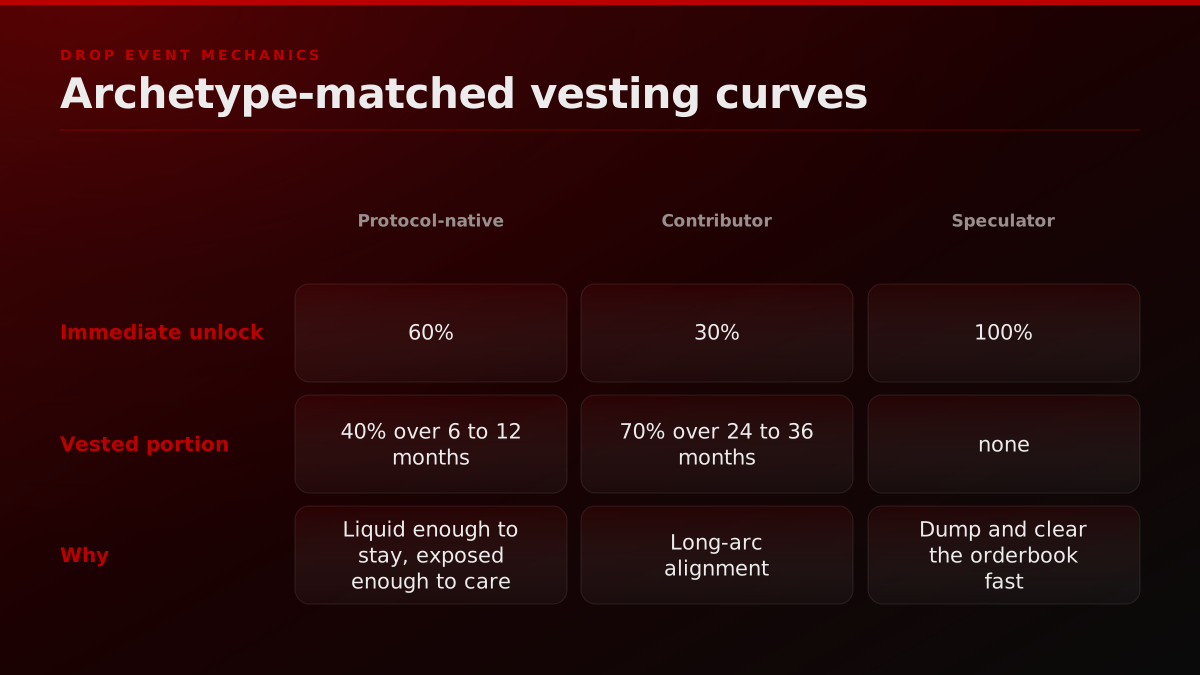
The first archetype is the protocol-native user who accrued points through real usage. These wallets received roughly 60 percent of their tokens immediately and 40 percent on a 6 to 12-month linear vest, because the team wanted them liquid enough to stay engaged but exposed long enough to care about the price curve. The second archetype is the developer or contributor cohort. These wallets received 30 percent immediately and 70 percent over 24 to 36 months, because the team wanted long-arc alignment. The third archetype is the speculator cohort that crossed the eligibility threshold but had no other protocol activity. These wallets received 100 percent immediately on purpose, which let the speculator cohort dump and clear the orderbook quickly so the long-tail demand from the first two archetypes could establish a price floor. The teams that fail Phase 2 ship a single vesting curve to all archetypes and watch the speculator dump drag the protocol-native cohort underwater on day one.
Archetype-matched vesting the retaining cohort shipped at TGE
| Recipient archetype | Immediate unlock | Remaining schedule | Why the curve is set this way |
|---|---|---|---|
| Protocol-native user | About 60 percent | 40 percent linear over 6 to 12 months | Liquid enough to stay engaged, exposed long enough to care about the price curve |
| Developer or contributor | About 30 percent | 70 percent over 24 to 36 months | Long-arc alignment with the people building the protocol |
| Speculator (threshold-only) | 100 percent | None | Clears the orderbook fast so long-tail demand from the first two archetypes sets a floor |
FORKOFF Web3 ecosystem audit, Q1 2026 (n=21 token-issuing protocols). Directional operator model; individual outcomes vary by protocol design.
Every company wants holders instead of dumpers on their cap table.
The anti-sybil mechanics layer (what actually filters farms)
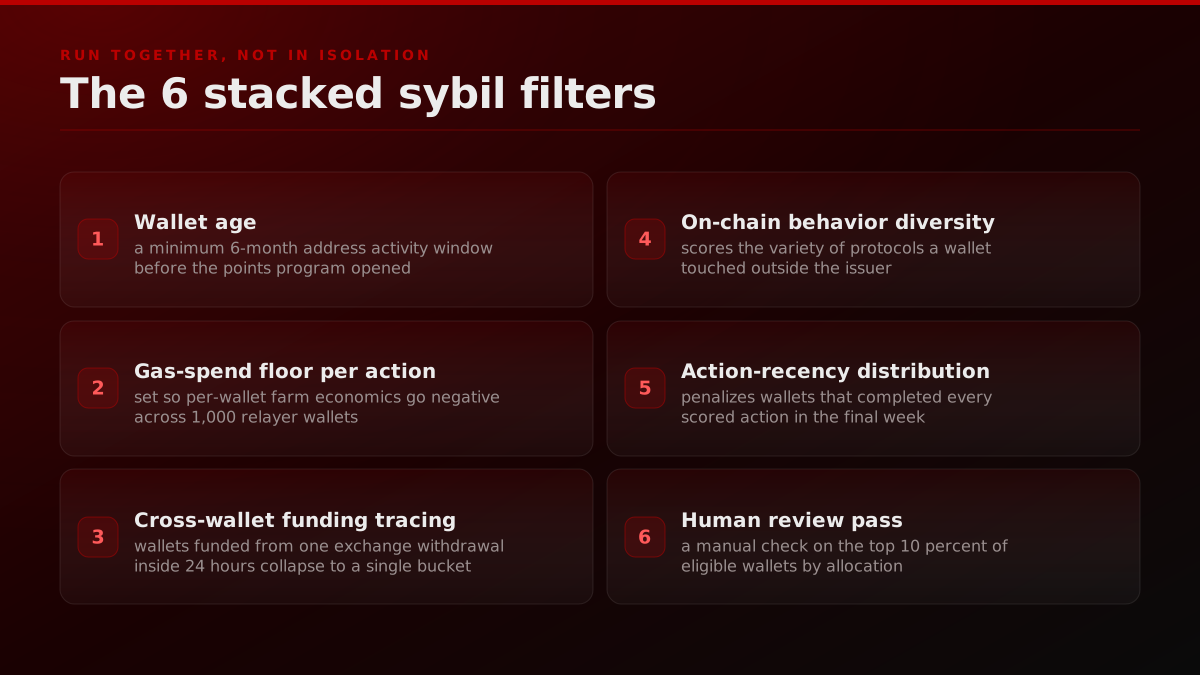
The teams that lifted day-90 retention above 30 percent ran 6 stacked sybil filters at the eligibility layer, not one. Filter one is wallet age with a minimum address activity window of 6 months before the points program opened, which prunes burner wallets spun up the week the program went live. Filter two is gas-spend floor per action, set at a level that makes per-wallet farm economics negative when run across 1,000 wallets via a relayer. Filter three is cross-wallet funding tracing, where any wallet group funded from the same exchange withdrawal inside a 24-hour window is collapsed to a single eligibility bucket. Filter four is on-chain behavior diversity, which scores wallets against the variety of protocols they have touched outside the issuing protocol. Filter five is action-recency distribution, where a wallet that completed every scored action inside the final week of the points program receives a reduced score relative to a wallet whose activity is distributed across the full window. Filter six is the human review pass on the top 10 percent of eligible wallets by token allocation, which catches the high-allocation farm clusters that automated filters miss.
The 6 filters run together, not in isolation, and each one carries a transparent scoring contribution that the team publishes after TGE so the recipient cohort can audit its own allocation. The published audit is the trust-building primitive that lets the recipient cohort accept a tightened eligibility curve in season 2 without revolting against the team. The teams that hid the eligibility logic to prevent farmer reverse-engineering ended up with a recipient cohort that distrusted the entire allocation and dumped on the assumption that the next cohort would receive better terms. Same trust-design rule as every other long-arc retention surface: the more the cohort sees, the longer the cohort stays.
The filters also need an appeals process. Top-quartile teams ran a 14-day appeals window where wallets flagged as sybil could submit an off-chain signature plus identity attestation to recover eligibility. The appeals process recovered roughly 4 percent of flagged wallets across the audit cohort and the recovered wallets retained at a rate higher than the median, because a wallet willing to go through an appeals process is a wallet with a long-arc interest in the protocol. The teams that skipped appeals lost the high-trust recovered cohort entirely.
Phase 3: Post-drop retention engineering (the 90-day product cohort)
The third phase is where most airdrop marketing dies. The team ships the drop, the marketing function declares victory, and the product team is left with a recipient cohort that has tokens, no onboarding context, and a 7-day window before the dump curve overwhelms whatever organic demand the protocol generated. The teams that compound treat the 90-day post-drop window as a product onboarding loop, not a marketing wind-down. They run a weekly engagement schedule that maps every recipient archetype to a specific in-protocol action: liquidity providers get a weekly yield update with reinvestment prompts, voters get governance-vote nudges with token-weighted impact previews, and active-trader cohorts get cross-protocol routing offers that tie the new token into the broader DeFi stack. Kraken's airdrop primer documents the same pattern from a CEX-listing perspective: the airdrops that hold price post-listing are the ones whose recipient cohorts kept transacting, not the ones whose recipients claimed and walked.
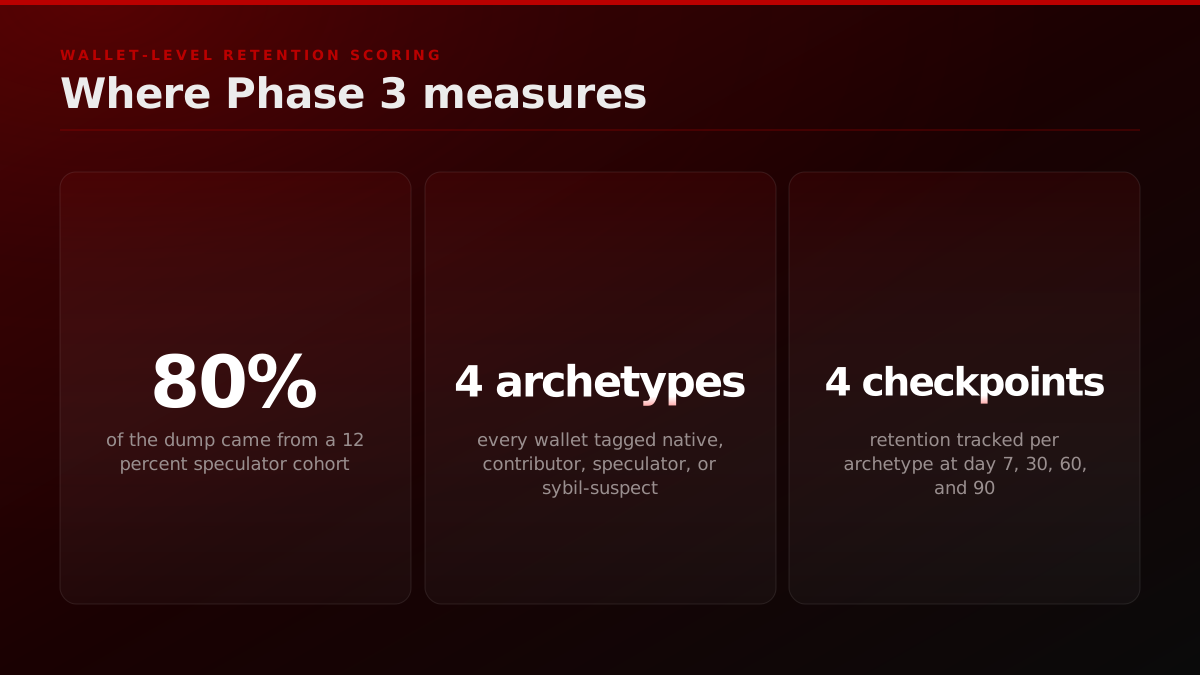
The instrumentation discipline that separates the top quartile from the median in Phase 3 is wallet-level retention scoring. Top-quartile teams tagged every recipient wallet at TGE with an archetype label (protocol-native, contributor, speculator, sybil-suspect) and tracked weekly retention by archetype across day 7, day 30, day 60, and day 90. The retention curve by archetype told the team within 14 days whether the drop event mechanics had over-rewarded one archetype, and the team adjusted the weekly engagement program to lift the underperforming archetype. The median teams tracked total recipient retention as a single number, which obscured the dynamic that 80 percent of the dump came from a 12 percent speculator cohort that the team could have routed differently in Phase 2 if they had measured by archetype in Phase 3.
Operator noteTag every recipient wallet at TGE by archetype. A single retention number hid that 80% of the dump came from 12% of wallets.
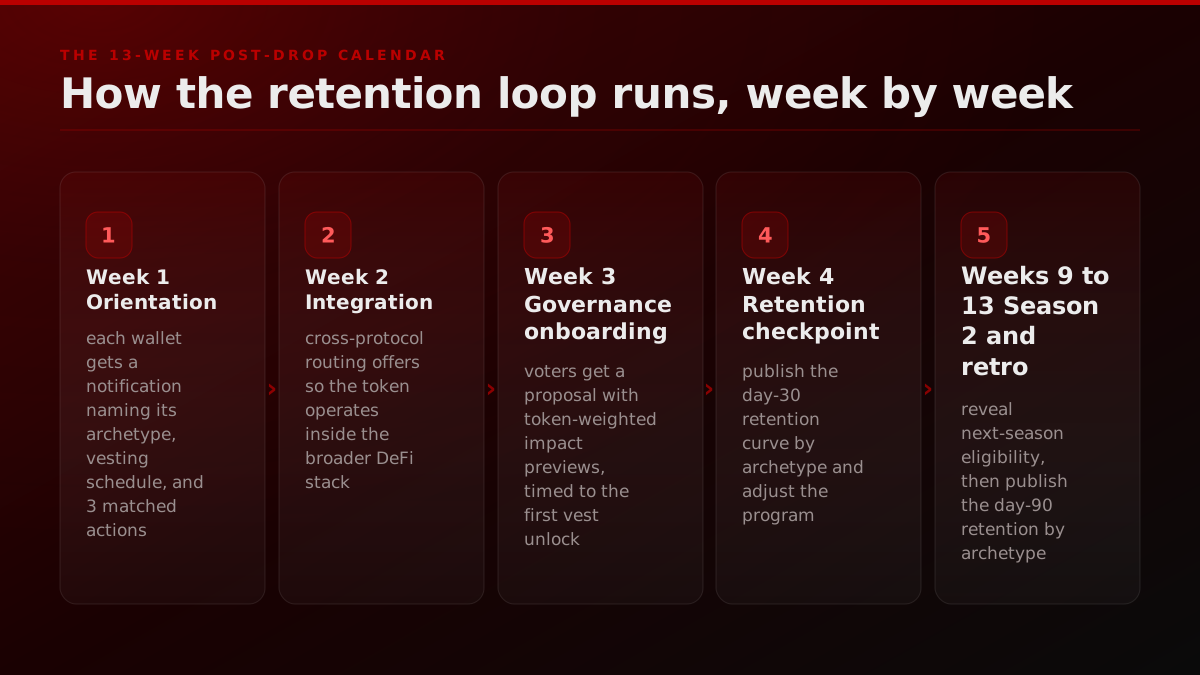
The 90-day post-drop retention loop, week by week
The audit cohort that compounded ran a structured 13-week post-drop calendar with a specific deliverable per week tagged to each archetype. Week 1 is the orientation week, where every recipient wallet receives a personalized in-protocol notification that names their archetype, their vesting schedule, and the 3 actions inside the protocol that match their archetype's behavior pattern. Week 2 is the integration week, where the team ships cross-protocol routing offers tied to the new token so the recipient cohort sees the asset operating inside the broader DeFi stack instead of as an island. Week 3 is the governance onboarding week, where active voters receive a governance proposal with token-weighted impact previews and a 7-day voting window timed to the first vest unlock. Week 4 is the retention scoring checkpoint, where the team publishes the day-30 retention curve by archetype and adjusts the engagement program against any archetype underperforming the model.
Weeks 5 through 8 run the same loop on a tighter cadence with a focus on the speculator cohort that survived day 30, because every wallet that holds tokens past the dump curve is a high-value retention candidate the team should not waste. Week 9 is the season-2 reveal, where the team publishes the eligibility logic and scoring tightening for the next drop season so the recipient cohort has a 30-day runway to plan. Weeks 10 through 12 run pre-drop engagement for season 2 layered on top of the season-1 retention program. Week 13 is the cohort retrospective, where the team publishes the day-90 retention data by archetype and the public retro that explains what the team learned about farmer patterns. The 13-week calendar is operator-grade and concrete, not a vague intent to engage post-drop. The teams that wrote it down before TGE ran it; the teams that planned to figure it out post-TGE never built it.
The instrumentation underneath the 13-week calendar is wallet-level attribution tied to the protocol's product analytics, not a separate growth dashboard. Top-quartile teams piped every recipient wallet's archetype label, vesting schedule, points-program score, and post-drop engagement events into the same data warehouse that fed the product team's daily active wallet metric. The product team and the airdrop marketing team operated on one canonical retention number per archetype per week, which removed the most common political failure mode of the post-drop window: the marketing team claiming the drop worked because token price held while the product team showed the active wallet count had collapsed.
Phase 4: Recurring flywheel (the airdrop as permanent loop)
Phase 4 turns the airdrop from a one-time launch event into a permanent retention loop: recurring seasonal drops scoped to active-protocol behavior, with each season's eligibility scoring tightened against the prior season's farmer pattern and tied to verifiable on-chain milestones. The teams in our audit that compounded past month 6 ran this loop on a sustained cadence; the teams that shipped one drop and stopped converted the long-tail incentive into a sell signal. This idea slots into the broader Web3 ecosystem growth OS, which generalizes the airdrop loop into a category-wide operating model.
The fourth phase is the loop that turns the airdrop from a one-time event into a permanent retention primitive. The teams that compound past month 6 in our audit treated the initial airdrop as the first iteration of a recurring distribution mechanic, not as a finished marketing event. They ran ongoing seasonal drops scoped to active-protocol behavior, with each season's eligibility scoring tightened against the prior season's farmer pattern. They tied the recurring drops to verifiable on-chain milestones (TVL thresholds, vote participation, cross-chain bridge activity) so the token kept moving as a function of protocol use. They published the eligibility logic transparently so the legitimate cohort could plan for the next season instead of guessing.
The teams that fail Phase 4 collapse to one of two failure modes. The first is the team that ships the initial airdrop and never runs a second one, which signals to the recipient cohort that the airdrop was a one-time launch hook and converts the long-tail incentive into a sell signal. The second is the team that ships recurring drops with the same eligibility logic every season, which lets sybil farms refine their automation across seasons and dilutes the legitimate cohort over time. The audit cohort that compounded past month 6 ran a tightening eligibility curve where each season's filter was stricter than the prior season's, with public retros that explained what the team had learned about farmer patterns from the prior drop. Same long-arc thinking shows up in the Farcaster mini apps distribution playbook, where the cohort that compounded past 30 days was the cohort that ran the loops on a sustained cadence rather than as a launch event.
Recurring drop seasons and the tightening eligibility curve
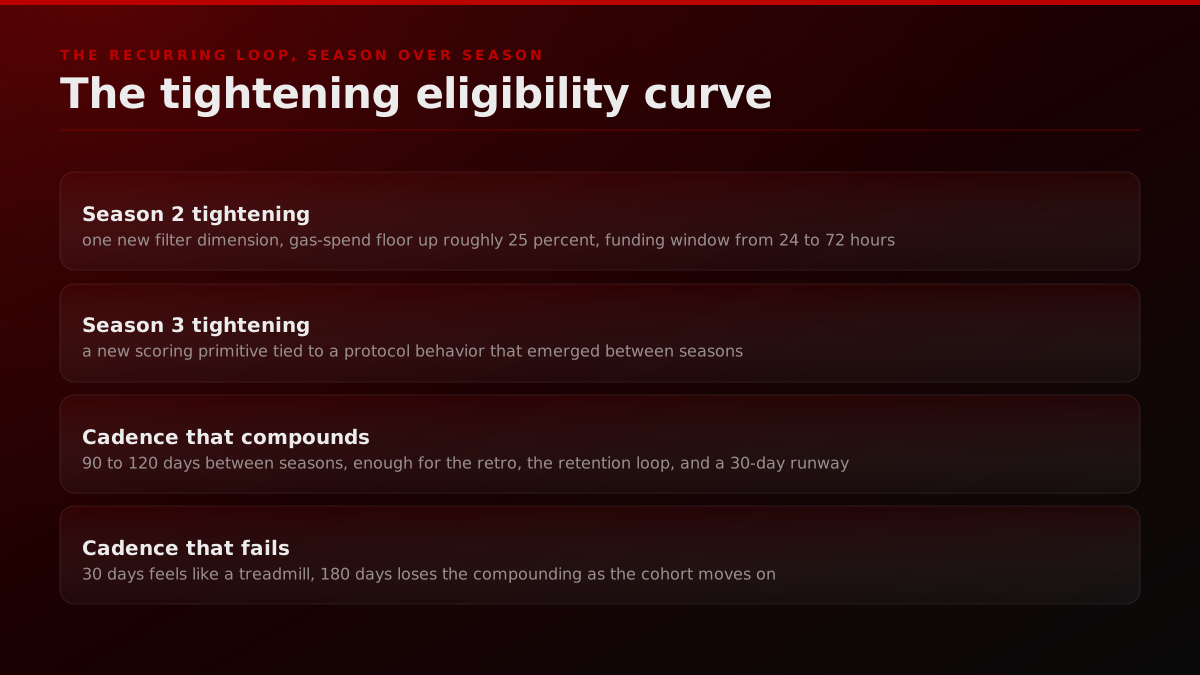
The recurring-loop teams ran each seasonal drop with a published delta from the prior season. Season 2's eligibility logic added one filter dimension that season 1 had not used, lifted the gas-spend floor on a per-action basis by roughly 25 percent, and tightened the cross-wallet funding window from 24 hours to 72 hours. The tightening was public, scoped to specific farmer patterns the team had observed in season 1, and accompanied by a public retro that named the patterns and explained the rationale. The recipient cohort saw the tightening as a signal that the team was protecting their allocation against dilution, not as a hostile move against legitimate users. The teams that tightened in secret triggered a retention drop because the legitimate cohort could not distinguish a tightening intended to filter farms from a tightening intended to clawback prior allocations.
Season 3 introduced a new scoring primitive instead of a tighter version of the existing primitive. The new primitive was always tied to a protocol behavior that had emerged organically between seasons 1 and 2, which means the recurring loop became a mechanism for surfacing the cohort that was using the protocol in ways the team had not originally scoped. The 4-phase system is not a static template. It is a living distribution program whose parameters update against the cohort's observed behavior and against the farmer ecosystem's observed adaptation. The teams that froze the parameters watched the farmer cohort catch up inside two seasons.
The cadence between seasons mattered as much as the tightening. The audit cohort that compounded ran 90 to 120 days between seasons, which gave the team enough time to publish the retro, run the post-drop product engagement loop on the prior cohort, and signal the next season's parameters with a 30-day runway. Seasons shipped on a 30-day cadence collapsed the retro-and-runway window and felt like a treadmill to the recipient cohort. Seasons shipped on a 180-day cadence lost the compounding effect because the recipient cohort moved on to other protocols' active drops in the gap.
What the audit data actually says about airdrop marketing math
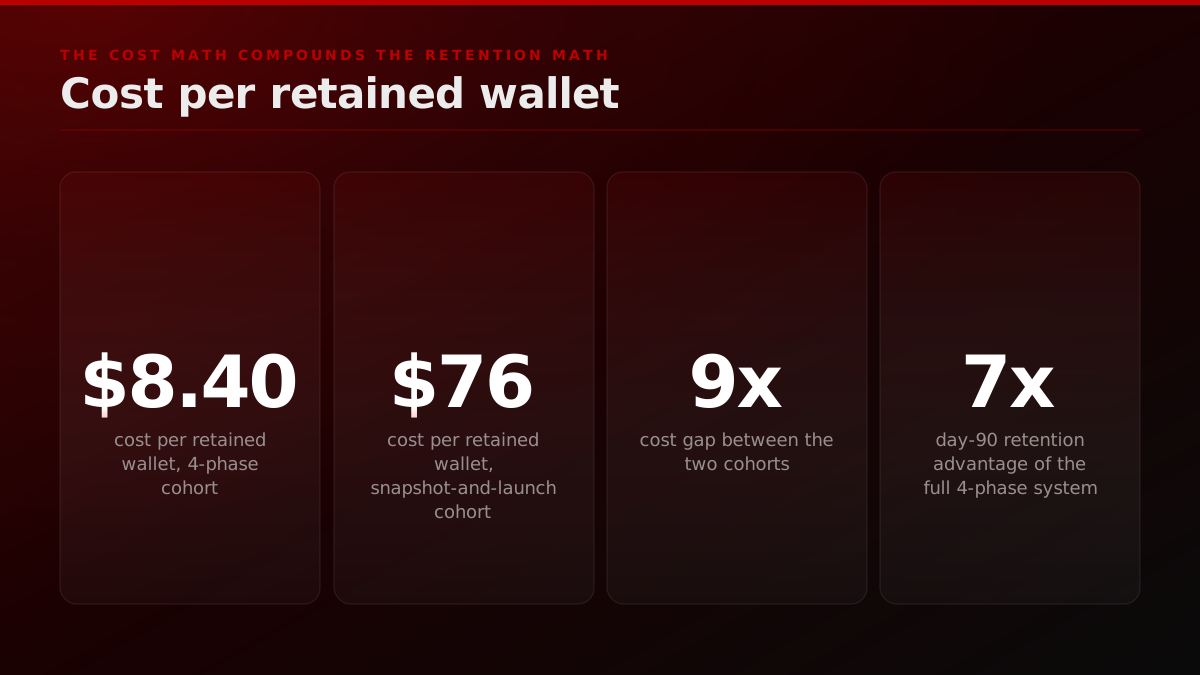
Across the 21-protocol audit we ran in Q1 2026, the median protocol retained 6 percent of recipient wallets at day 90 post-TGE. The top quartile retained 41 percent. The 6.8x spread between median and top-quartile was almost entirely explained by which of the 4 phases the team ran with discipline. Teams that ran 3 or more of the 4 phases at sustained cadence reached top-quartile retention. Teams that ran one phase (typically Phase 2, the drop event) reached the median. There were no exceptions in our sample, including the teams that had paid 7-figure budgets for KOL pushes on X. The same retention-to-cost math shows up in the crypto KOL marketing framework, where unfocused KOL spend underperformed structured operator-voice deployment by similar margins.
The cost math compounds the retention math. Cost-per-retained-wallet for the 4-phase cohort averaged 8.40 dollars vs 76 dollars for the snapshot-and-launch cohort. The 9x gap is wider than the retention gap because the snapshot cohort spent meaningfully on paid amplification (KOL pushes, exchange listing fees, hype campaigns) trying to recover the retention curve after the drop. The 4-phase cohort spent that budget upstream on the points program infrastructure, the eligibility-scoring logic, the post-drop product engagement program, and the seasonal-drop transparency. Same recipient cohort size in raw wallets; entirely different cost-to-revenue surface.
The budget split a founder can copy line by line
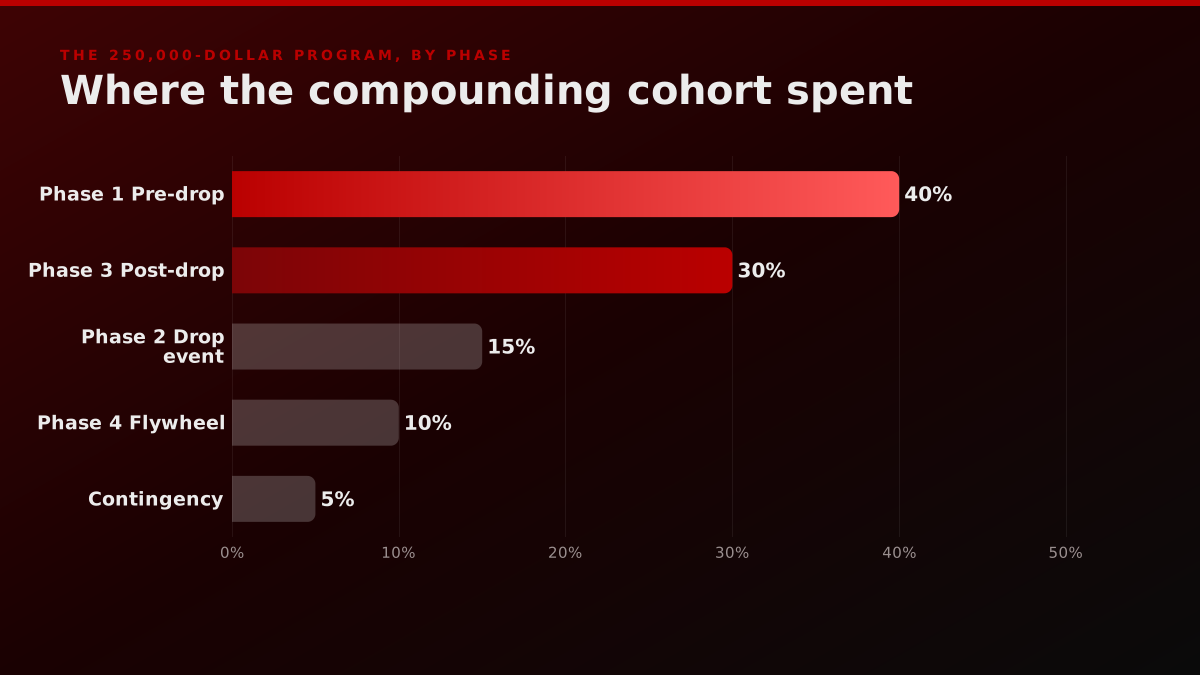
The audit cohort that hit top-quartile retention spent against the 4 phases, not against the launch week. The split below is the directional allocation the compounding cohort ran on a 250,000-dollar airdrop marketing budget, which was the median program spend across the protocols that reached top-quartile retention. A founder can lift the percentages directly and scale them to the actual budget; the ratios held across program sizes from 80,000 dollars to 1.2 million dollars in the cohort.
Phase 1, pre-drop signal design, took 40 percent. That is the points-program build, the eligibility-scoring engine, the sybil-filter calibration passes, and the 60-to-90-day operator time to run the program and answer the community. On the 250,000-dollar program that is 100,000 dollars, and it is the line item the snapshot cohort spent close to zero on, which is the root cause of their retention cliff. Phase 2, drop event mechanics, took 15 percent, roughly 37,500 dollars, almost entirely the smart-contract work for archetype-matched vesting and the claim infrastructure. Phase 3, the 90-day post-drop retention loop, took 30 percent, roughly 75,000 dollars, split across the 13-week engagement calendar, the per-archetype notification system, and the product-analytics wiring that puts every recipient wallet on one retention number. Phase 4, the recurring flywheel, took 10 percent, roughly 25,000 dollars, scoped as the season-2 design and the public retro. The final 5 percent, roughly 12,500 dollars, was the contingency the operator held against a mid-program farmer adaptation that forced a filter change before snapshot.
The snapshot-and-launch cohort inverted the split. They put 70 percent into launch-week amplification, KOL pushes and a listing campaign, 20 percent into the snapshot and claim contract, and almost nothing into the pre-drop program or the post-drop loop. That is why their cost-per-retained-wallet ran 76 dollars against the 4-phase cohort's 8.40 dollars: they spent the budget on the news cycle and had no instrumentation to compound the wallets that the news cycle attracted. The single highest-leverage move a founder can make is to take the 70 percent that would have gone to launch-week amplification and move 40 of those points upstream into the pre-drop points program, where the budget buys a filtered cohort instead of a flipped one.
Operator noteMove 40 points of launch-week KOL budget upstream into the pre-drop points program. That is the line item retention is bought on.
The FORKOFF AI Agency operating posture on airdrops
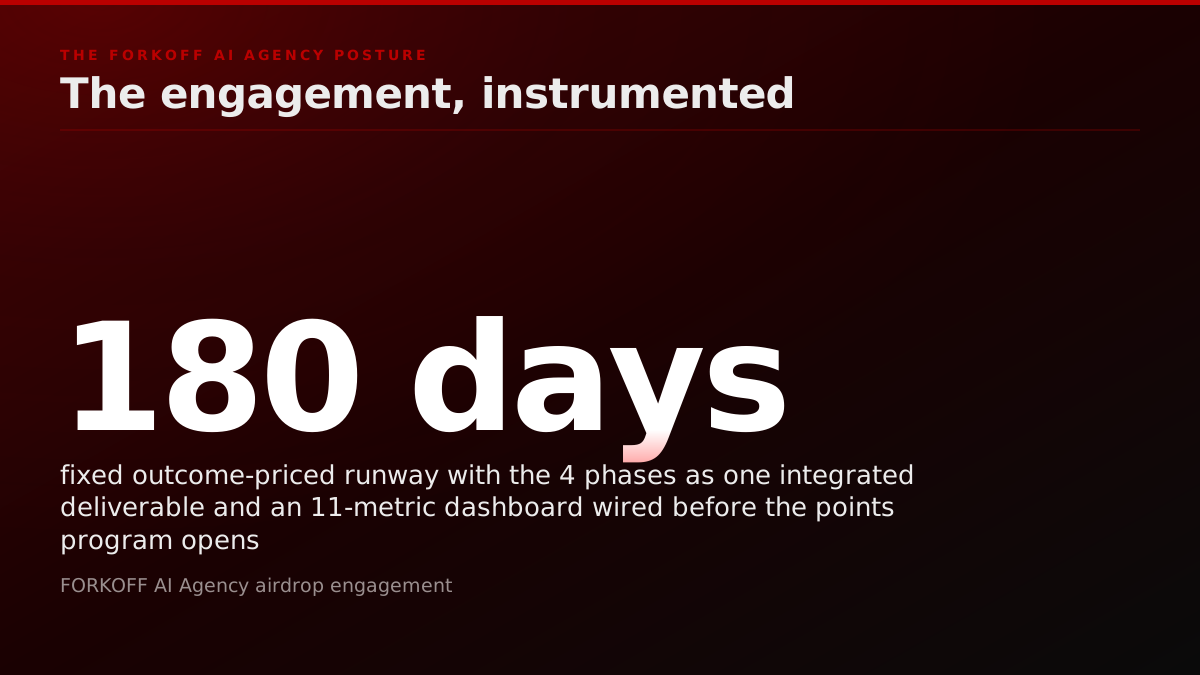
FORKOFF runs airdrop marketing as an AI Agency engagement, which changes the operating posture in two specific ways that show up in the audit data. The first is that the eligibility-architect role, the on-chain analyst role, and the voice owner role are each instrumented as an agent-augmented workflow rather than a single-operator function. The points-logic design, the sybil-filter calibration, and the forensics-floor detection passes run as scripted pipelines that the operator reviews and approves at every checkpoint, which compresses the calibration window from weeks to days and lets the team iterate on the eligibility curve against live cohort behavior rather than against a frozen pre-snapshot spec. The second is that the post-drop retention loop is run as a weekly automated scorecard that posts to the founder's review surface every Monday, which removes the latency between a retention-curve shift and the operator response. The teams that hire FORKOFF's web3 marketing team on outcome-priced contracts get the 4 phases as a single integrated deliverable with a fixed 180-day runway and the 11-metric instrumentation dashboard wired before the points program opens; the teams that hire FORKOFF on the audit-only tier get the diagnostic and the 90-day fix plan and run the phases internally against the spec we hand off.
The 90-day airdrop marketing strategy checklist
Before you ship an airdrop, run the checklist. The points program is live with 5 to 8 actions scored against multi-dimensional sybil filters at least 60 days before the planned snapshot. The eligibility logic is published so legitimate users can plan and farmers cannot reverse-engineer it after the fact. The drop event uses archetype-matched vesting (not a single curve for all wallets) with the speculator cohort routed to immediate liquid for orderbook clearing. The post-drop product team has a 90-day weekly engagement plan mapped per recipient archetype, with retention scoring tracked at day 7, 30, 60, 90. The airdrop is the first iteration of a recurring drop schedule, with seasons 2 and 3 already scoped at TGE so the cohort knows what to expect. The team has a public retro plan to explain farmer patterns and tighten eligibility logic between seasons. The same prep discipline shows up in the two-sided marketplace cold-start playbook and the prep-then-launch sequencing applies in both venues with the surface swapped.
The teams that read this checklist before launch run the phases; the teams that read it after launch try to recover them on the fly, and the recovery is twice as expensive as the prep. The phases compound only when they run together, which means the cohort that wins on airdrop marketing is the cohort that started running them 60 to 90 days before the snapshot, not the cohort that bought the longest KOL push the week of TGE. Distribution is not the work that begins after the build. It is the work that frames the build.
Stacy Muur
@stacy_muur
Crypto in 2026 still turns on one truth: real PMF beats every token gimmick, airdrop, or hype cycle. The three PMF paths from this research piece: 1️⃣ Partner with elite institutional customers and let them write the roadmap. 2️⃣ Get in front of the agentic commerce curve befo… Show more
Reverse Engineering Hyperliquid
I reverse engineered Hyperliquid's closed-source validator binary. Key findings: * 8 undisclosed addresses control all transaction submission * Single private key can set any oracle price instantly: no timelock, no limits * Chain can freeze via governance. No undo function exists. * `TestnetSetYesterdayUserVlm` in mainnet binary: retroactive volume manipulation for… Show more
The Only Tokenomics Video You'll Ever Need
Coinsider
Coinsider's tokenomics primer covers the underlying token-design mechanics that the airdrop marketing system sits on top of. Distribution mechanics ride on top of token sinks and faucets, not below them.
What separates the airdrops that compound past day 90
Across the 21-protocol FORKOFF audit cohort, the airdrops that converted into long-tail retention after day 90 shared a different pattern from the drops that spiked and disappeared. They ran 3 or more of the 4 phases at sustained cadence; they used multi-dimensional sybil filtering in the points program; they shipped archetype-matched vesting at TGE rather than a single curve; their post-drop product team had a 90-day weekly engagement plan tagged per archetype; and the airdrop was scoped as the first iteration of a recurring loop, not a one-time launch event. Same pattern as the broader Web3 distribution stack: every layer compounds with the others; running one in isolation flattens the curve. Same retention math as the published FORKOFF Web3 ecosystem audit cohort.
Source: FORKOFF Web3 ecosystem audit, Q1 2026 (n=21 token-issuing protocols)
Where airdrop marketing fits inside the broader Web3 distribution stack
Airdrop marketing is one surface inside a broader Web3 distribution stack, and treating the drop as the only surface is the same mistake teams make when they treat a single launch tweet as the whole launch. The cohort that compounds on the broader Web3 stack runs the airdrop as the retention layer for an already-engaged community, the founder voice on X as the long-form thesis layer, the on-chain primitives as the settlement layer, and the developer documentation as the trust layer. We mapped the 11-play guerrilla layer of this stack in the guerrilla marketing in Web3 playbook and the principle is the same as the one above: every play compounds with the others; running one in isolation gets you a 7-day retention curve that flatlines, and running 3 or 4 together gets you a 90-day retention curve that compounds through the burst.
The airdrop surface is not a replacement for any of the other layers. It is the specific surface that converts an engaged cohort into long-term retained users at a cost-per-retained-wallet that is an estimated 9x lower than paid acquisition, when the 4 phases run together. Build the protocol over months; build the airdrop marketing system over 90 days of pre-drop and 90 days of post-drop; run the recurring loop for a year; the cohort that does this is the cohort that wins the token-issuing category in 2026. The same long-arc thinking shows up in the broader founder-growth literature: ride the structured loop instead of the launch spike.
For adjacent context, see the Web3 GTM playbook 2026.