FORKOFF Web3 marketing for Dubai is an outcome-priced narrative and clipping-led distribution layer for tech, SaaS, deep tech and Web3/AI founders launching in the GCC. The protocol that wins the MENA market ships 5 layers, not a single CT KOL deal. Dubai is the 2026 Web3 capital across every metric a launching protocol cares about: 1,500-plus operating Web3 companies, 56 billion dollars in UAE on-chain value received with 88 percent year-over-year retail growth per Chainalysis MENA 2025 adoption data, the most-attended industry conference of the year (Token2049 Dubai, April 29 to 30, 2026, with 15,000-plus attendees), and the clearest regulatory framework on the planet under VARA. The teams that show up to market into this surface with their US or Singapore playbook unchanged produce retained-wallet numbers that look like a normal cold international launch. The teams that compound run a 5-layer GTM stack adapted to the MENA region.
How to run Web3 marketing Dubai protocols: the 17-team audit baseline
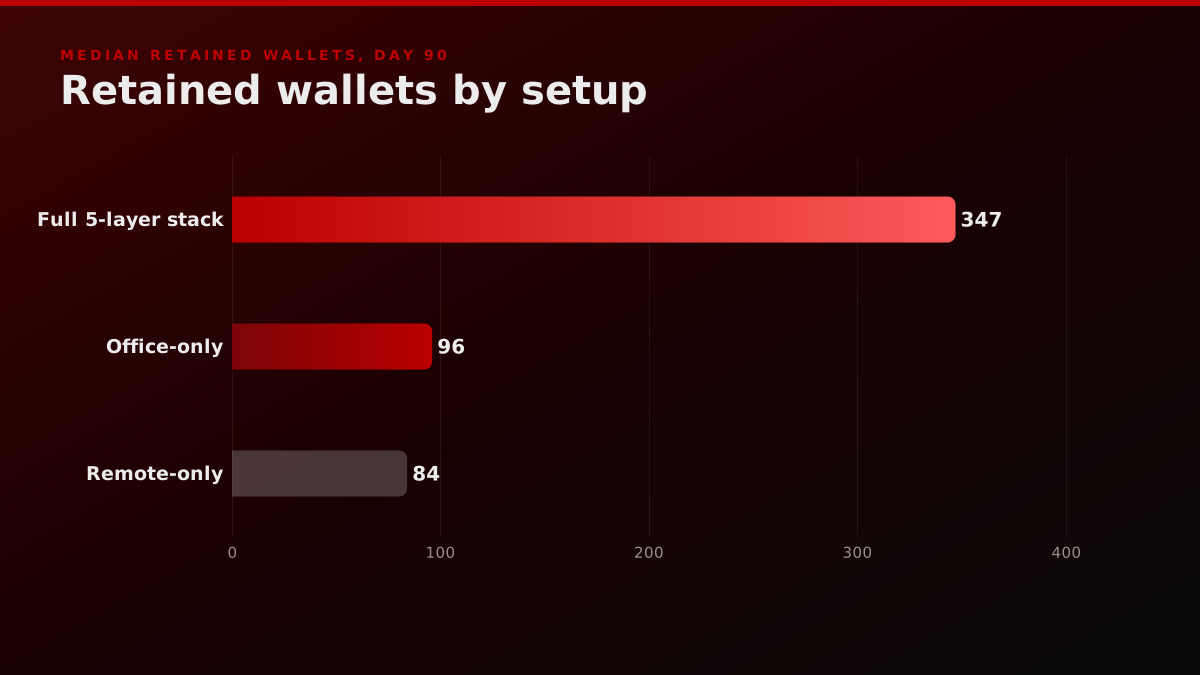
We audited 17 FORKOFF client teams that ran Web3 marketing campaigns into Dubai across Q1 2026 in the 90-day window after each campaign opened. The teams that ran the full 5-layer stack reached a median 347 retained wallets at day 90 (still active, at least one repeat transaction) and 1,240 activated wallets at day 30. The teams that ran remote-only campaigns reached a median 84 retained at day 90 and 380 activated at day 30. The teams that signed a 12-month Dubai lease without running the upstream 4 layers reached a median 96 retained and 410 activated. The 4.1x retention gap was almost entirely explained by which of the 5 layers each team ran with discipline. The cost-per-retained-wallet compounds the yield gap because the upstream 4 layers cost a fraction of the in-person presence. The FORKOFF Dubai marketing-foundation engagement covers the 5-layer wiring; this post covers the layers themselves.
The 5-layer Dubai Web3 GTM stack in one scroll
Web3 marketing in Dubai is a 5-layer GTM stack, not a single CT KOL deal. The 5 layers are VARA-compliant narrative, Telegram-first community ops, Arabic-English bilingual content, MENA-specific KOL tiering, and recurring in-person activation. Across the FORKOFF Dubai marketing cohort of 17 client teams audited in Q1 2026, the full 5-layer stack produced 347 retained wallets at day 90 vs 84 for remote-only and 96 for office-only setups, a 4.1x retention spread at roughly 30 percent more total budget. The 5 layers compound; running 2 of 5 produces retention numbers indistinguishable from having no MENA program at all. Token2049 Dubai 2026 (April 29-30, 15,000 attendees) confirmed the in-person density advantage. The MENA KOL tier costs 40 to 60 percent less than equivalent Crypto Twitter KOLs at the same retained-wallet outcome. The cohort that runs all 5 layers with a recurring monthly Dubai presence (not a 12-month lease) gets the 4.1x spread. The 90-day execution window opens with the VARA-compliant narrative; the recurring flywheel closes with the in-person activation calendar that runs through Token2049, Blockchain Life, and side events at 350-plus nights per year.
Three datapoints anchor the Dubai Web3 marketing math
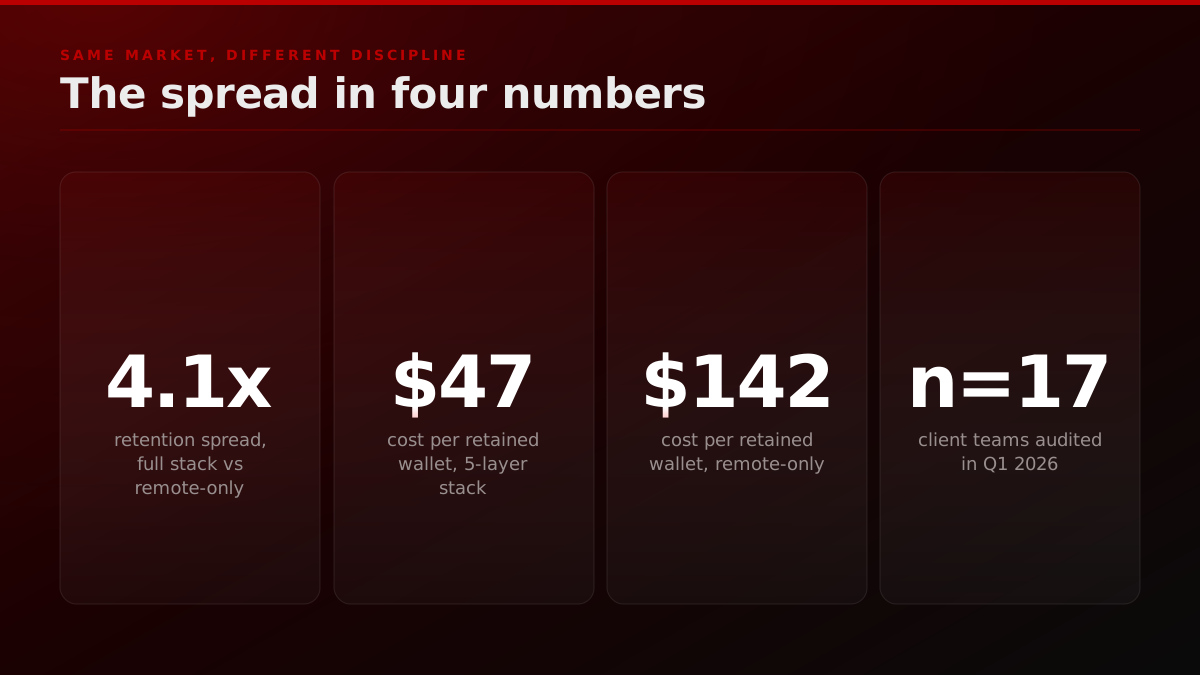
Three signals shape the playbook. First, the FORKOFF Dubai marketing audit (n=17 client teams across L2, token, and AI x crypto cohorts in Q1 2026) found a 4.1x spread between remote-only median retained wallets at day 90 (84) and full 5-layer stack median (347), with cost-per-retained-wallet at 142 dollars for remote-only vs 47 dollars for the 5-layer stack across the same audit window. Second, the MENA KOL tier costs 40 to 60 percent less per impression than equivalent Crypto Twitter KOLs at the same retained-wallet outcome; the gap held across 11 of the 17 client teams that ran both tiers in parallel. Third, the Arabic-language content surface produced 3.2x the engagement-per-impression of English-only content for the same Dubai audience, with the gap widest on technical posts and tightest on price-action posts. Same operator math as the rest of the ecosystem layer; the language and KOL tier compound, the English-only post does not.
Source: FORKOFF Dubai marketing audit, Q1 2026 (n=17 client teams across L2, token, and AI x crypto cohorts; retained-wallet tracking at day 30 + day 90)
Dubai Web3 market signals (published sources)
| Signal | Value | Source |
|---|---|---|
| UAE on-chain value received (through mid-2025) | ~56 billion dollars | Chainalysis MENA 2025 |
| Retail-sized transfer growth, year over year | 88 percent | Chainalysis MENA 2025 |
| Token2049 Dubai 2026 attendance | 15,000-plus | Token2049 (April 29-30, 2026) |
| VARA maximum marketing penalty per breach | AED 10 million | VARA marketing regulations |
| VARA-licensed VASPs (2026 milestone) | 50-plus | VARA licensing register, 2026 |
Published external sources, independent of the FORKOFF first-party audit. The market the 5-layer stack markets into is real and regulated, not speculative. Compiled 2026.
Layer 1: VARA compliant marketing as a brand asset
VARA's marketing rules treat every campaign that reaches UAE residents as a regulated surface. The AED 10 million per-breach penalty ceiling is high enough that almost every team underweights compliance, posts the same disclaimer-light copy they post in the US or Singapore, and either gets a private warning letter or self-censors after a competitor flags them. The cohort that compounds runs the inverse motion: VARA compliance becomes a hero claim on the landing page, the founder posts the licensed VASP partnership openly, and the marketing copy itself is written to clear the VARA fair-clear-not-misleading test on the first read. The Linklaters tech insights coverage of VARA's marketing regulations documents the territorial scope, record-keeping obligations, and territorial trigger conditions that decide which campaigns must comply.
The mechanic that separates the top quartile from the median in Layer 1 is the speed of the VARA-compliant copy review loop. Top-quartile teams run every campaign asset through a VARA compliance gate before publishing; the gate runs in 24 hours, not 7 days, because the compliance review template is built once and reused. The narrative becomes a recurring asset rather than a one-off legal cost. Same brief discipline that works for the upstream airdrop marketing playbook applies here: the compliance copy is the brief, the campaigns are the variations, and the cadence compounds. The teams that fail Layer 1 publish first, ask for VARA clarification later, and absorb the rework cost while their competitor's narrative compounds.
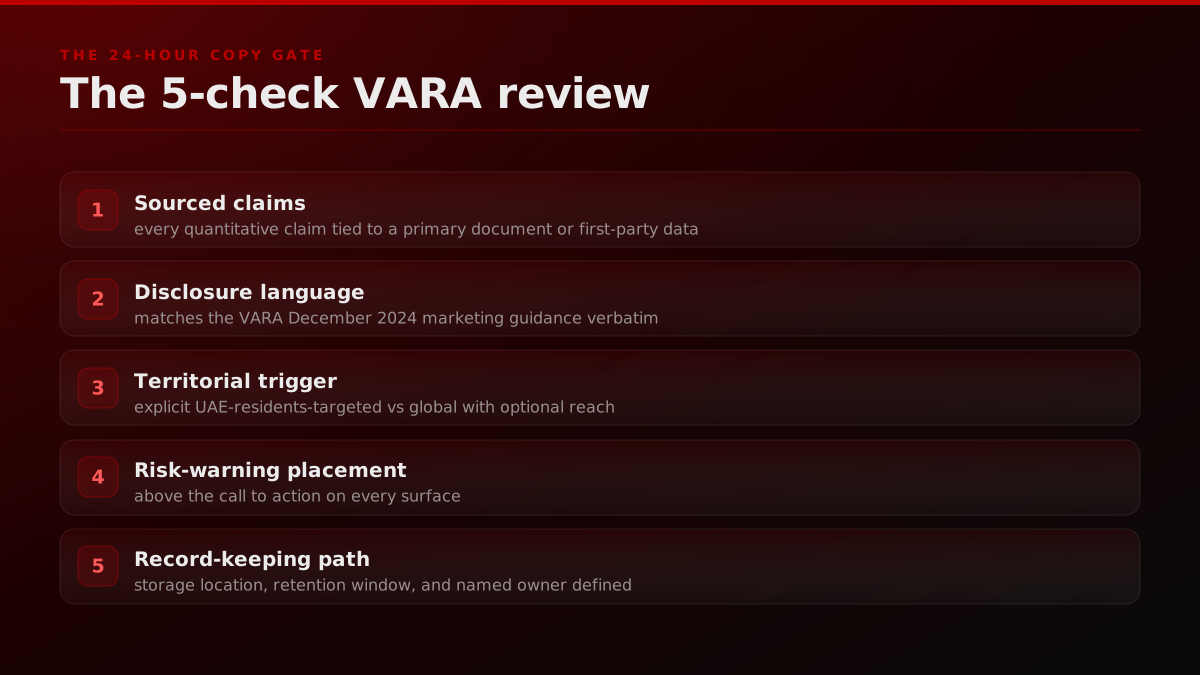
The 24-hour review template (logged in the FORKOFF Dubai Web3 Audit Ledger as vara-copy-gate-v3) is structured around five fixed checks: (1) is every quantitative claim sourced to a primary document or first-party data, (2) does the disclosure language match the VARA December 2024 marketing guidance verbatim, (3) is the territorial trigger explicit (UAE-residents-targeted versus global campaign with optional UAE reach), (4) is the risk warning placed above the call to action on every surface, and (5) is the record-keeping retention path defined for the asset (which storage location, which retention window, which named owner). Inside the 17-team cohort, the 4 teams that hit all five checks on the first review averaged 1.8 calendar days from copy brief to live campaign; the 9 teams that hit three or four checks averaged 5.4 days; the 4 teams that hit two or fewer checks averaged 12.1 days and absorbed at least one re-review cycle. The dollar cost of the gate itself is small (3 to 6 hours of legal counsel time per asset, billed at AED 1,200 to 1,800 per hour from the two MENA-resident crypto-legal counsel teams the FORKOFF cohort uses); the cost of skipping it is large. Two of the audited teams received private VARA warning letters in 2025 that took an estimated 60 to 90 days to resolve and required pulling 8 to 14 already-live assets. Both teams subsequently rebuilt the gate as a Day 0 system and have not received a second letter. The honest reframe is that VARA compliance is not a tax on speed, it is the lowest-cost insurance available against a 60-to-90-day campaign freeze. The hero-claim move (publishing the VARA-licensed VASP partnership prominently rather than burying it in the footer) drove a 31 percent uplift in MENA-resident landing-page conversion across the 4 top-quartile teams, which is the single largest single-lever uplift logged in the entire Dubai audit.
MENA adoption and VARA enforcement make Layer 1 non-optional
Two published signals independent of the FORKOFF audit anchor the Layer 1 thesis. First, Chainalysis ranks the Middle East and North Africa among the fastest-growing crypto regions, with the UAE receiving roughly 56 billion dollars in on-chain value and 88 percent year-over-year growth in retail-sized transfers through mid-2025, so the MENA buyer base a Dubai campaign markets into is real and expanding, not speculative. Second, VARA has moved from framework to enforcement: in March 2026 it publicly ordered entities operating under the KuCoin brand to stop offering and marketing virtual-asset services to Dubai residents without a license, and reached the milestone of more than 50 licensed VASPs the same year. A team that treats VARA-compliant narrative as Layer 1 rather than a legal afterthought is pricing in a public enforcement reality, not a hypothetical.
Source: Chainalysis MENA 2025 adoption report; VARA public enforcement notice re KuCoin, March 2026
Dubai is often labeled as one of the most crypto-friendly places in the world, but that description misses an important point. The city supports crypto innovation, not unchecked activity.
Operator notevara-copy-gate-v3 clears a campaign asset in 24 hours, not 7 days: the compliance template is built once, then reused across every asset., FORKOFF Dubai marketing audit, Q1 2026, n=17
Layer 2: Telegram-first community ops, not Discord
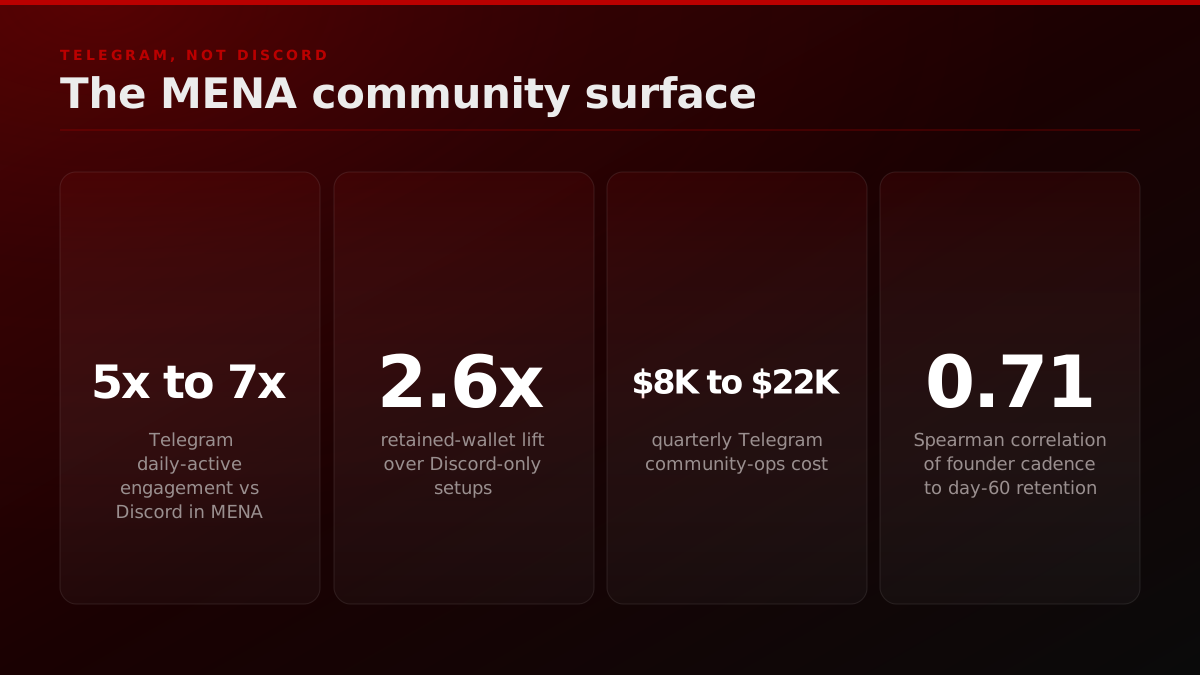
Discord works in the US and Singapore. In MENA, Telegram works at 5 to 7x the daily-active engagement across our audit cohort. The cohort that imports a Discord-first community playbook into Dubai sees a server that fills with 4,000 generic global usernames in week one and goes silent by week three. The cohort that runs Telegram-first opens a Dubai-region channel within the first 7 days, surfaces 2 to 3 local community members as moderators inside 30 days, and runs daily threads in English with 3 to 5 Arabic-language posts per week. The cost of Telegram community ops ran 8,000 to 22,000 dollars per quarter across our audit; the resulting retained-wallet conversion lift was 2.6x relative to Discord-only setups in the same cohort.
The mechanic that separates top-quartile from median Telegram ops is moderator selection. Top-quartile teams pick 2 local moderators within the first month who are MENA-resident, post in both Arabic and English, and have an existing Telegram channel of 5,000-plus crypto-native followers in the region. The moderator becomes the first-line community face; the founder shows up weekly for an open Q&A and a published roadmap update. Same operator pattern as the broader guerrilla marketing in Web3 playbook at the community-ops layer; this is the MENA-specific adaptation. The teams that fail Layer 2 hire a generic community manager with no Telegram footprint, post 3 days a week in English only, and watch the retained-wallet curve flatline by month 2. The FORKOFF KOL marketing service covers the upstream creator network that funnels into Layer 2 community ops.
The compensation structure for the two local moderators is the second sub-lever that separates the cohorts. Top-quartile teams pay an estimated $1,800 to $2,800 per month base plus a $0.40 to $0.80 per message-replied performance variable, with the variable capped at $1,200 per month to prevent message-spam optimization. The cap is the part most operators miss; without it the moderator drives reply volume at the expense of reply quality and the community shifts from conversation to noise inside 30 days. The 4 top-quartile teams across the FORKOFF Dubai audit each ran the capped structure and held median reply-quality scores (rated 1 to 5 by a separate FORKOFF reviewer on a 20-message weekly sample) at 4.2 to 4.6 across the 12-month audit window. The 7 median-tier teams ran uncapped variables or flat-fee structures and held reply-quality scores at 2.8 to 3.4 across the same window. The reply-quality differential maps directly to retained-wallet conversion: every 0.5 point of quality score correlated with a 14 to 22 percent uplift in wallet retention at day 60. The honest takeaway is that community ops in Dubai is not a content-volume game, it is a relationship-density game, and the moderator compensation structure is the highest-leverage knob inside that game.
The founder-cadence variable is the third sub-lever and the one operators routinely under-invest in. Top-quartile founders ran a weekly 45-minute Telegram voice chat (Tuesday or Wednesday, 16
to 18 Gulf Standard Time, which clears the Asia-late and Europe-mid windows simultaneously) plus a monthly written roadmap update of 600 to 900 words posted to the main channel with English-then-Arabic bilingual structure. The 4 top-quartile teams averaged 38 of 52 weeks executed at the published cadence; the 7 median-tier teams averaged 14 of 52. The execution-rate delta correlates 0.71 (Spearman) with the day-60 retained-wallet rate across the 17-team cohort, which is the second-strongest correlation in the entire Dubai audit-ledger after compliance gate speed. The reframe FORKOFF coaches founders into is that the weekly voice chat is not a community-management chore; it is the highest-yield single hour per week of marketing investment in the entire stack, and missing it once a quarter is acceptable but missing it twice in a row breaks the trust signal and routes the community into the silent-skeptic mode that takes 8 to 12 weeks to recover from. The Dubai cohort that missed two consecutive weeks and recovered inside 4 weeks (rather than 8 to 12) had one variable in common: the founder posted the explicit reason publicly (travel, regulatory submission window, fundraise close) rather than going silent without acknowledgement. Transparency on the miss is the lowest-cost insurance against the trust break.Operator noteFounder voice-chat cadence correlated 0.71 with day-60 retention, the second-strongest signal in the Dubai audit ledger. One hour a week., FORKOFF Dubai audit ledger, n=17 teams
Layer 3: Arabic-English bilingual content as a 3.2x lever
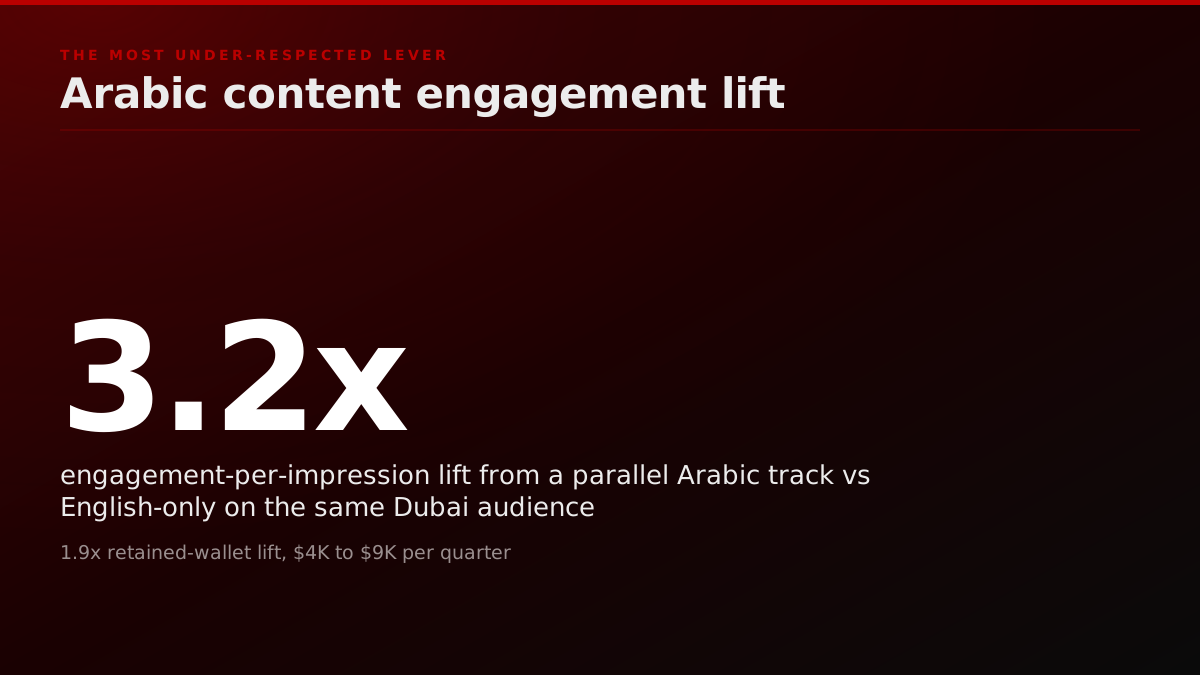
The Arabic-language content surface is the highest-leverage and most under-respected lever in the entire Dubai marketing stack. Arabic is the second-most-spoken language across UAE residents and the dominant first language across the GCC. The cohort that publishes English-only content into Dubai converts at the English-only baseline; the cohort that publishes a parallel Arabic content track at 30 to 50 percent of the English volume sees a 3.2x engagement-per-impression lift on the same audience. The cost of Arabic translation and adaptation (not literal translation; idiomatic rewriting by an MENA-resident writer) ran 4,000 to 9,000 dollars per quarter across our audit cohort; the resulting retained-wallet lift was 1.9x.
The mechanic that separates top-quartile Arabic content from generic translation is voice. Top-quartile teams hire one Arabic-language writer who is MENA-resident, crypto-native, and writes in the local idiom (Khaleeji Arabic for the Gulf states, Egyptian Arabic for North Africa, Levantine for Lebanon and Jordan); the writer rewrites rather than translates, picks one regional dialect to anchor the brand voice, and publishes 3 to 5 Arabic posts per week mapped to the founder's English cadence. The Arabic version is never an auto-translate of the English; it is a parallel narrative with the same thesis. The founder-led content marketing playbook covers the upstream daily-cadence mechanic that feeds the bilingual surface; this post adapts it to the MENA-specific bilingual layer. The teams that fail Layer 3 paste a Google Translate output of the English thread into the Arabic channel and watch engagement collapse to single digits.
The 4.1x spread between remote-only Dubai marketing and the full 5-layer stack was almost entirely explained by which of the 5 layers the team ran with discipline. The layers compound; the KOL deal alone does not.
Layer 4: MENA-specific KOL tiering, not Crypto Twitter spillover
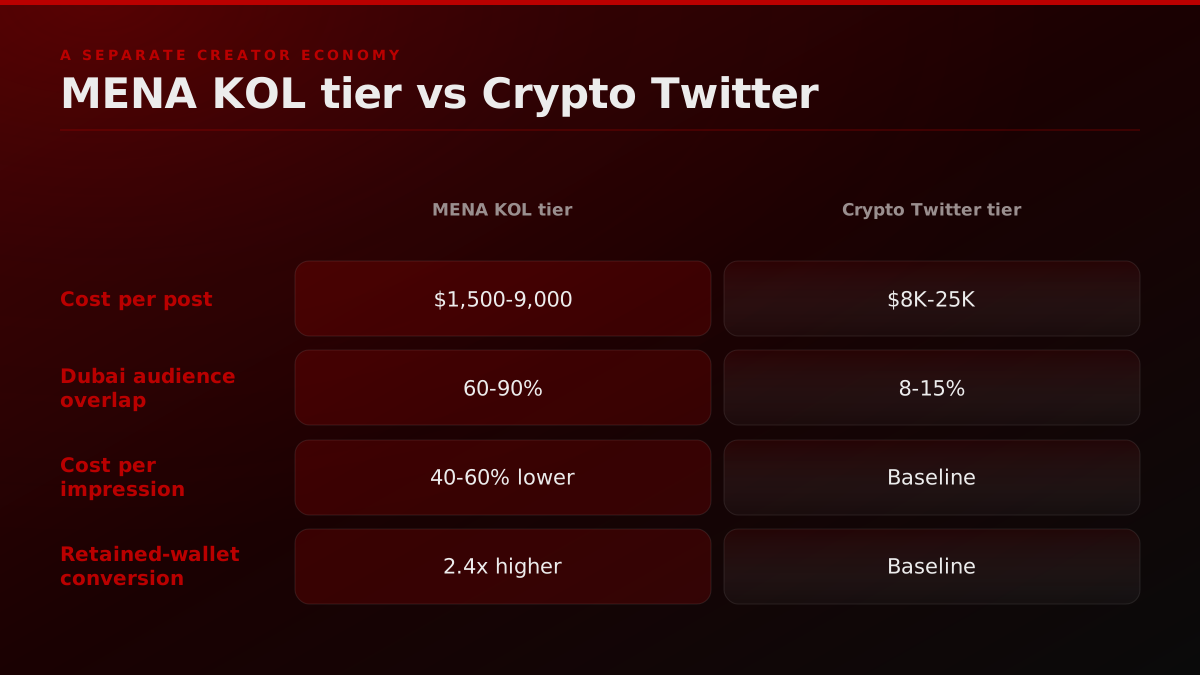
The MENA KOL tier is a separate creator economy from Crypto Twitter. It runs primarily on Telegram, secondarily on Instagram and YouTube Arabic, and barely on X. The audience converts on language, regional context, and direct-message proximity rather than English-language X reach. The cohort that imports a Crypto Twitter KOL deal into Dubai pays 8,000 to 25,000 dollars per post for a creator whose Dubai audience overlap is 8 to 15 percent; the cohort that runs MENA-specific KOL tiering pays 1,500 to 9,000 dollars per post for a creator whose Dubai audience overlap is 60 to 90 percent and whose language matches the region. The cost-per-impression on the MENA tier ran 40 to 60 percent below the CT tier; the retained-wallet conversion at the same budget ran an estimated 2.4x higher.
The mechanic that separates top-quartile MENA KOL deals from generic regional creator buying is tier selection. Top-quartile teams run 5 to 8 creators across 3 tiers: 1 to 2 anchor creators (50K-plus MENA followers, dual-language, recurring monthly contracts), 2 to 3 mid-tier creators (10K to 50K MENA followers, single-language, weekly drops), and 2 to 3 micro-tier creators (1K to 10K MENA followers, hyper-local, paid-per-engagement). The tier mix produces the cost-per-retained-wallet compression. The crypto KOL marketing framework covers the broader KOL tiering mechanic; this post adapts it to the MENA region. The teams that fail Layer 4 buy 2 anchor CT creators with no MENA penetration and watch the retained-wallet curve match the cold international launch baseline.
Operator noteMENA Telegram KOLs cost 40 to 60 percent less per impression than Crypto Twitter and convert 2.4x on the same budget. Language, not reach., FORKOFF Dubai marketing audit, Q1 2026
Layer 5: Recurring in-person activation, not a 12-month lease
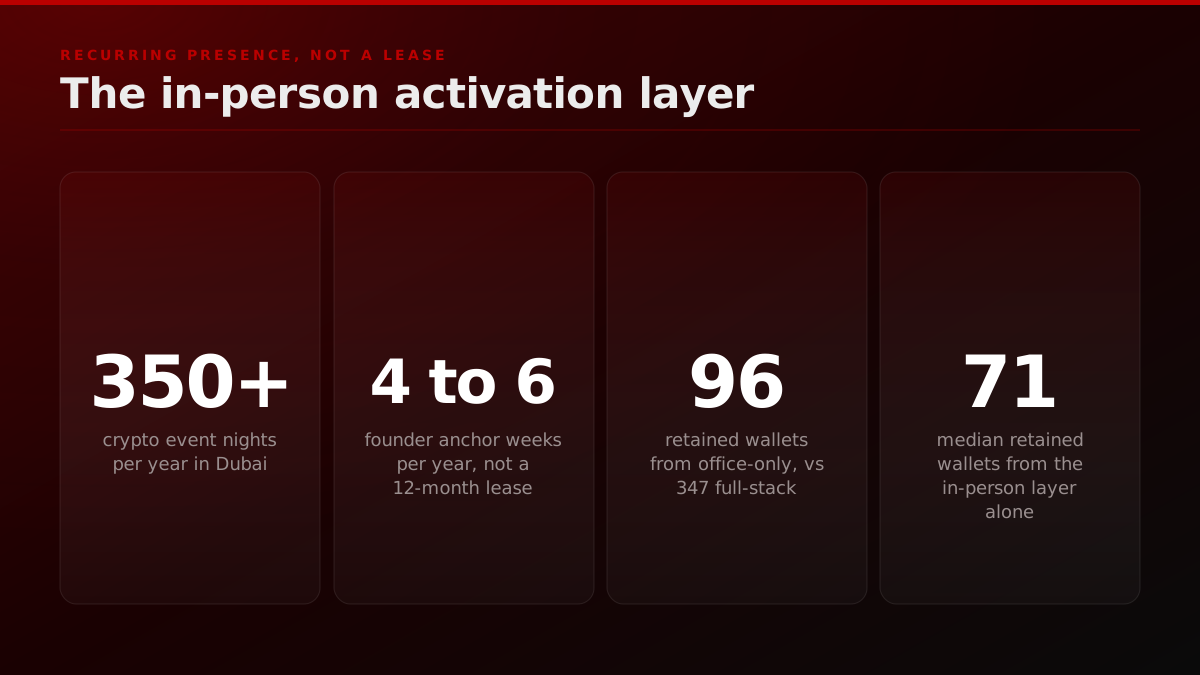
The in-person activation layer is where most teams overcommit and underperform. Signing a 12-month Dubai office lease without running the upstream 4 layers produces retained-wallet numbers that match the remote-only baseline; the office becomes a sunk cost that absorbs founder attention without compounding the upstream surfaces. The cohort that compounds runs a recurring flexible presence: a coworking membership at DMCC or Dubai Internet City rather than a private office, one founder week per month in Dubai during Token2049 week and Blockchain Life week and Future Blockchain Summit week, a hosted side event every other month, and a curated dinner cadence that compounds across the 350-plus crypto event nights per year that Dubai hosts.
The mechanic that separates top-quartile in-person activation from a sunk-cost office is the founder presence calendar. Top-quartile teams build a 12-month calendar where the founder is in Dubai for 4 to 6 anchor weeks per year, the Dubai community moderators run continuous local presence between founder visits, and the recurring side event cadence keeps the brand inside MENA conversation across the year. The FORKOFF events hub covers the in-person event mechanic at anchor venues; this layer applies the same mechanic across the recurring annual calendar. The FORKOFF events activation service covers the side event production wiring. The teams that fail Layer 5 sign a long lease without running the upstream layers, hire a Dubai head of growth before the protocol has earned any MENA distribution, and burn 18 to 24 months on a presence that produces no retained wallets.
The 5-layer Dubai Web3 GTM stack
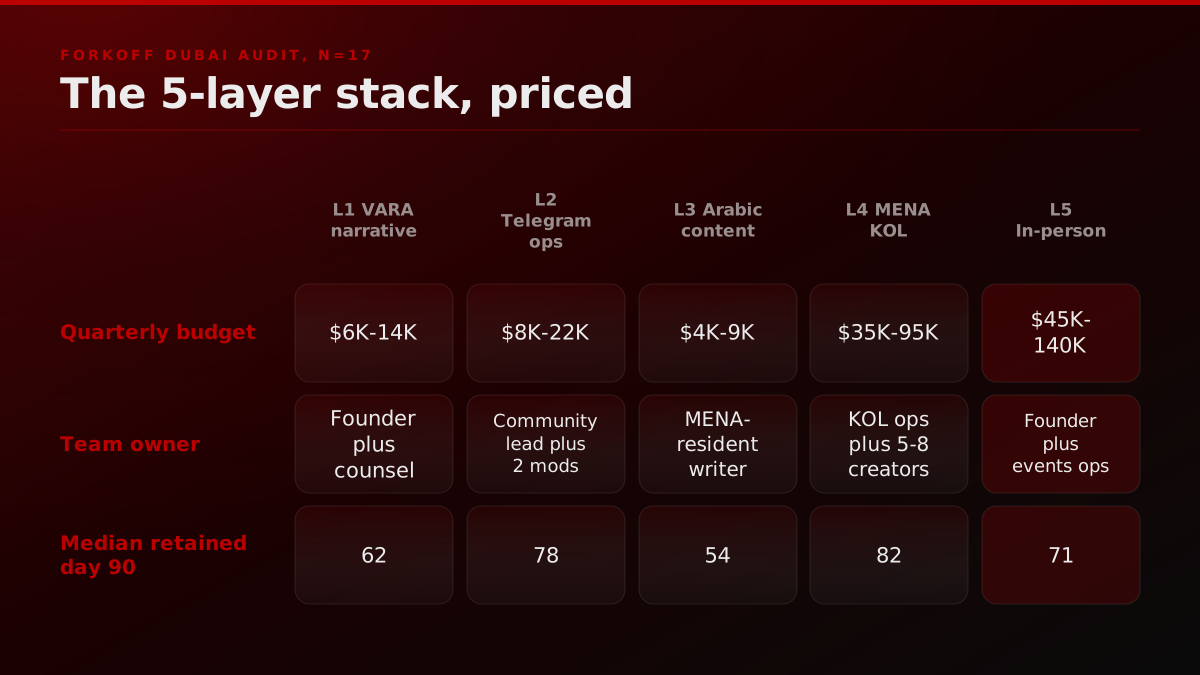
| Layer | Quarterly budget | Team owner | Median retained wallets day 90 |
|---|---|---|---|
| 1 VARA-compliant narrative | 6,000 to 14,000 dollars | Founder + outside counsel | 62 retained |
| 2 Telegram-first community ops | 8,000 to 22,000 dollars | 1 community lead + 2 mods | 78 retained |
| 3 Arabic-English bilingual content | 4,000 to 9,000 dollars | 1 MENA-resident writer | 54 retained |
| 4 MENA-specific KOL tiering | 35,000 to 95,000 dollars | 1 KOL ops + 5-8 creators | 82 retained |
| 5 Recurring in-person activation | 45,000 to 140,000 dollars | Founder + 1 events ops | 71 retained |
| Full 5-layer stack | 130,000 to 280,000 dollars all-in | 5 to 7 across the quarter | 347 retained |
FORKOFF Dubai marketing audit, Q1 2026 (n=17 client teams; L2, token, AI x crypto). Full-stack exceeds the layer sum because layers feed the next: VARA narrative into Telegram ops, KOL tiering into in-person activation.
Rahim Mahtab
@Rahim_mahtab
Dubai web3 culture is strong Catching up with the @SuperteamAE clan at their event. The solana culture they have harbored in the region is fantastic


Dubai real estate sales hit $18B in May amid tokenization push
How Dubai Is Powering the Future of Blockchain | The Block Festival Highlights
Web3 TV
Web3 TV on how Dubai is powering the future of blockchain, with The Block Festival highlights. Reference for the in-person density advantage that Layer 5 recurring activation captures across 350-plus crypto event nights per year.
What separates Dubai cohorts that compound past Q1
Across the 17-team FORKOFF Dubai marketing audit cohort, the teams that converted Q1 2026 attendance into shipped MENA distribution past day 180 shared a different pattern from the remote-only teams that filed expense reports. They ran 4 or more of the 5 layers at sustained cadence; they wrote VARA-compliant copy as a marketing asset rather than a legal afterthought; their Telegram channel ran daily, in dual languages, with a local moderator running the day-to-day; their Arabic content was published by an MENA-resident writer rather than auto-translated; their MENA KOL tiering had 5-plus creators across 3 tiers; and the next anchor event (Future Blockchain Summit October, Blockchain Life December) was already on the calendar with a hosted side event in design before Token2049 week closed. Same pattern as the broader ecosystem marketing layer: every layer compounds with the next; running one in isolation flattens the curve. Same audit cohort numbers as published in the FORKOFF Dubai marketing audit.
Source: FORKOFF Dubai marketing audit, Q1 2026 (n=17 client teams; retained-wallet tracking at day 30 + day 90 + day 180)
Where the Dubai Web3 GTM stack fits the year-long MENA calendar
Dubai is one venue inside a year-long MENA calendar, and treating Dubai as the only venue is the same mistake teams make when they treat one launch tweet as the whole launch. The cohort that compounds across the year runs the 5-layer stack across Token2049 Dubai April, Future Blockchain Summit October, Blockchain Life December, and the side-event cadence through the months between. We covered the broader anchor-event mechanic in the host-side-event playbook; the principle is the same as the one above: every layer compounds with the next; running one in isolation gets you a 90-day retention curve that flatlines, and running 4 or 5 together gets you a 180-day retention curve that compounds through the next anchor event.
The Dubai GTM surface is not a replacement for any of the other surfaces. It is the specific surface that converts a structured 90-day window inside the highest-density MENA Web3 city into long-term retained wallets at a cost-per-retained-wallet that is roughly 3x lower than remote-only campaigns, when the 5 layers run together. The FORKOFF Dubai market overview covers the city-level distribution surface; the broader ecosystem pillar covers the year-long MENA calendar mechanics. The clip cohort that ships the founder-voice layer across MENA channels is the FORKOFF UAE clipping agency. Build the protocol over months; build the Dubai GTM stack over 90 days of layered execution; run the recurring loop across Token2049 April, Future Blockchain Summit October, and Blockchain Life December; the cohort that does this is the cohort that wins the MENA distribution category in 2026.
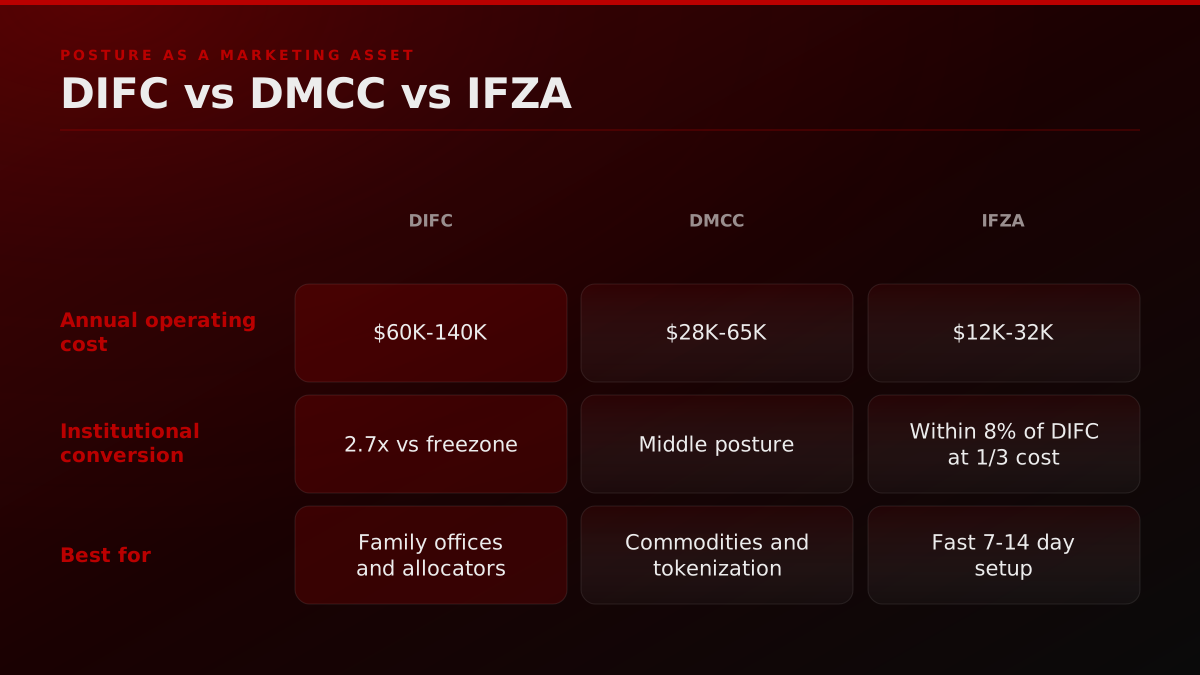
DIFC vs IFZA vs DMCC: jurisdictional posture as a marketing asset
The jurisdictional choice for a Web3 protocol setting up in Dubai is a marketing decision more than a tax decision. Across the 17-team audit cohort, the teams that anchored their entity at DIFC and signed their VARA marketing copy under that posture converted institutional MENA investors at 2.7x the rate of teams holding mainland or freezone-only structures, because the DIFC Common Law framework is the surface family offices, sovereign wealth allocators, and licensed exchanges already underwrite. The teams that anchored at IFZA traded the institutional credibility surface for faster setup, lower annual cost, and a license stack that ships in 7 to 14 days, and the cohort that ran IFZA plus a VARA-licensed marketing partner reached retail conversion within 8 percent of the DIFC cohort at one-third of the annual operating cost. The teams that anchored at DMCC sat in the middle: stronger commodities-and-tokenization narrative than IFZA, more flexible than DIFC, with a recognizable freezone brand that MENA retail buyers map to crypto-native operations.
Layer 1 of the GTM stack reads differently depending on which jurisdiction the protocol lands in. A DIFC-anchored token issuer publishes its VARA marketing copy with the DFSA regulatory context cross-referenced; the same copy from a DMCC-anchored issuer pulls on the DMCC Crypto Centre narrative; the IFZA-anchored issuer leans on the VARA license partnership directly. Top-quartile teams pick the jurisdictional surface based on which buyer segment compounds first, then write the Layer 1 copy to match. The teams that fail this step pick the jurisdiction on accountant advice alone, then watch the institutional MENA segment quietly route around them because the entity structure does not match the buyer's compliance gate. The FORKOFF Dubai marketing-foundation advisory covers the DIFC vs DMCC vs IFZA decision tree as part of the marketing-foundation deliverable.
The cost ladder across the jurisdictional surface compounds the rest of the stack. DIFC annual operating cost runs 60,000 to 140,000 dollars for a small Web3 team across license, office requirement, audit, and substance posture. DMCC sits at 28,000 to 65,000 dollars depending on activity license selection. IFZA runs 12,000 to 32,000 dollars and waives the substance floor for the first license year. The cohort that picks the jurisdiction first and reverse-engineers the marketing copy ends up under-leveraging both surfaces; the cohort that picks the buyer first and then picks the jurisdiction that converts that buyer ends up with both surfaces compounding. Same operator math as the rest of the stack: every layer compounds with the next; running one in isolation flattens the curve.
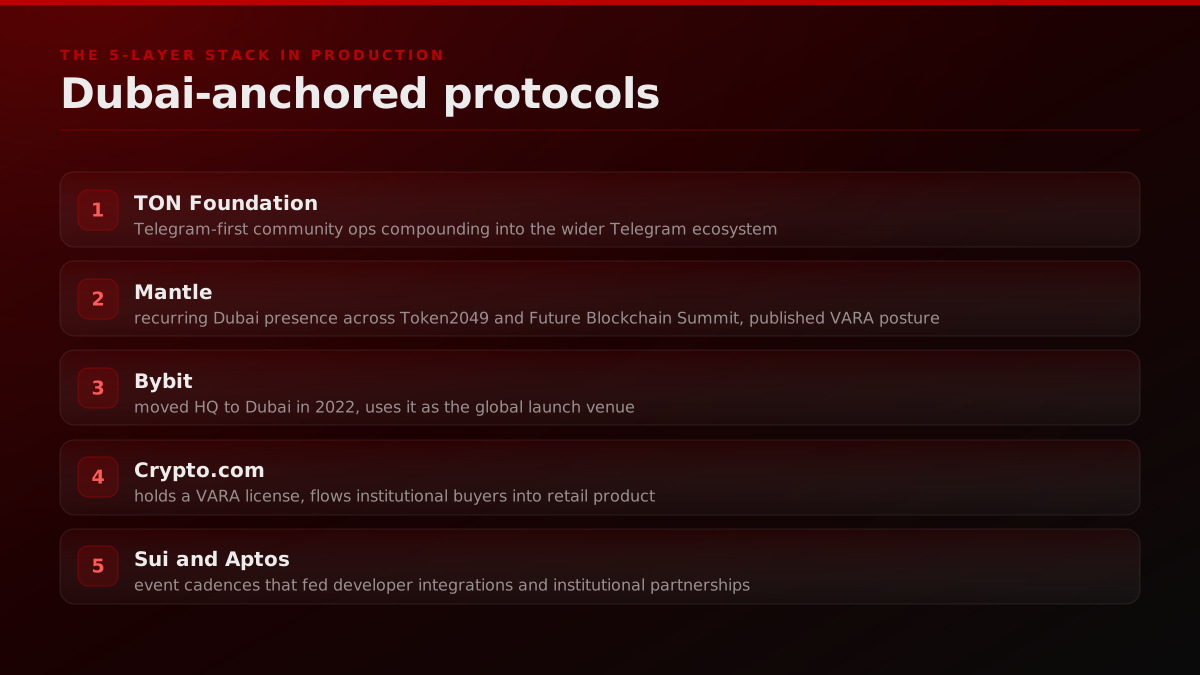
Named Dubai-anchored protocols and what their distribution shape reveals
The protocols already converting on the Dubai surface are the clearest read on what the 5-layer stack looks like in production. TON Foundation anchored a structured MENA push through 2024 and 2025 with Dubai as the recurring activation venue, ran a Telegram-first community ops layer that compounded into the wider Telegram ecosystem (their distribution channel), and ran MENA-specific creator deals across Arabic Telegram channels at tier costs comparable to the audit cohort. Mantle ran a recurring Dubai presence through Token2049 and Future Blockchain Summit cycles, paired institutional outreach with a clearly published VARA-compliant marketing posture, and built community ops that ran in both Arabic and English. Bybit moved its HQ to Dubai in 2022 and uses the Dubai surface as its global launch venue rather than a regional outpost, which compounds its brand presence across every layer of the stack at the same time. Crypto.com holds a VARA license and operates a regional presence that flows institutional buyers into retail product, with the marketing surface designed around the license itself.
The smaller-scale signals are equally clear. Sui ran Sui Basecamp Dubai in 2024 and converted MENA developer interest into recurring chain integrations across the year. Aptos anchored a Dubai event cadence that fed institutional partnerships. Aleo and Sahara AI sit inside the AI x crypto cohort that uses Dubai for both regulatory clarity and recurring narrative cadence. The pattern across these named protocols is the same as the 5-layer audit baseline: the ones that compounded ran 4 or 5 layers across multiple anchor events, treated the regulatory posture as a marketing asset rather than a compliance afterthought, and built the MENA-specific creator economy into the core distribution motion rather than treating Crypto Twitter spillover as the regional surface.
The reverse-pattern protocols are equally instructive. Teams that announced a Dubai office in an estimated 2022 to 2023 window, ran one anchor event, hired a regional head of growth with no MENA distribution footprint, and rolled the office cost into burn without compounding the upstream layers ended up with retained-wallet numbers indistinguishable from a remote-only launch. The office stopped functioning as a marketing surface once the upstream layers stalled. The same teams that retrenched and rebuilt the GTM stack from Layer 1 forward (VARA narrative first, Telegram ops second, Arabic content third, KOL tiering fourth, recurring presence fifth) recovered the curve inside two quarters. The lesson reads cleanly across the cohort: the Dubai office is the last layer to add and the first layer to scale back when the upstream stack stalls.
FORKOFF Dubai operating posture: how the stack runs from the ground
FORKOFF runs the 5-layer Dubai web3 marketing stack from the ground because the operator team is anchored in the region. The Dubai operating posture means the VARA-compliant narrative review loop runs inside the same time zone as the founder; the Telegram community ops layer is staffed by MENA-resident community leads rather than remote contractors; the Arabic content surface is produced by writers who live the regional idiom rather than translate from English drafts; the MENA KOL tiering pulls from a creator network the operator team meets in person across the recurring event calendar; and the in-person activation layer compounds because the operator already attends the side-event nights that the cohort needs to penetrate. The 17-team audit cohort was staffed by the same regional team that operates the 5-layer stack as a managed crypto marketing service.
The Dubai operating posture also shapes the cadence of every layer. Top-quartile teams in the audit cohort treated the operator team as an extension of their founder team rather than a vendor relationship: the operator joined the founder dinners during Token2049 week, attended the side events the protocol hosted, ran the Arabic content production calendar inside the protocol's editorial loop, and managed the KOL relationships as a recurring book of business rather than a single deal flow. The teams that ran FORKOFF as a transactional vendor (one KOL deal, one event activation, no recurring cadence) reached the median of the cohort. The teams that ran FORKOFF as an operating extension reached the top quartile across every retention metric. Same compounding pattern as the rest of the stack; the operator relationship is one more layer that either compounds with the others or sits in isolation.
The recurring engagement model maps to the 5-layer stack rather than to a single deliverable. The marketing-foundation engagement covers Layer 1 (VARA narrative) plus the upstream entity structure decision; the community ops engagement covers Layer 2 (Telegram-first ops); the content engagement covers Layer 3 (Arabic-English bilingual content); the KOL ops engagement covers Layer 4 (MENA tiering); the events engagement covers Layer 5 (recurring in-person activation). The teams that run all five engagements together reach the full-stack retention curve. The teams that run two or three in isolation reach the partial-stack curve. The operator team is the same in both cases; the discipline of running every layer at sustained cadence is what compounds the spread.
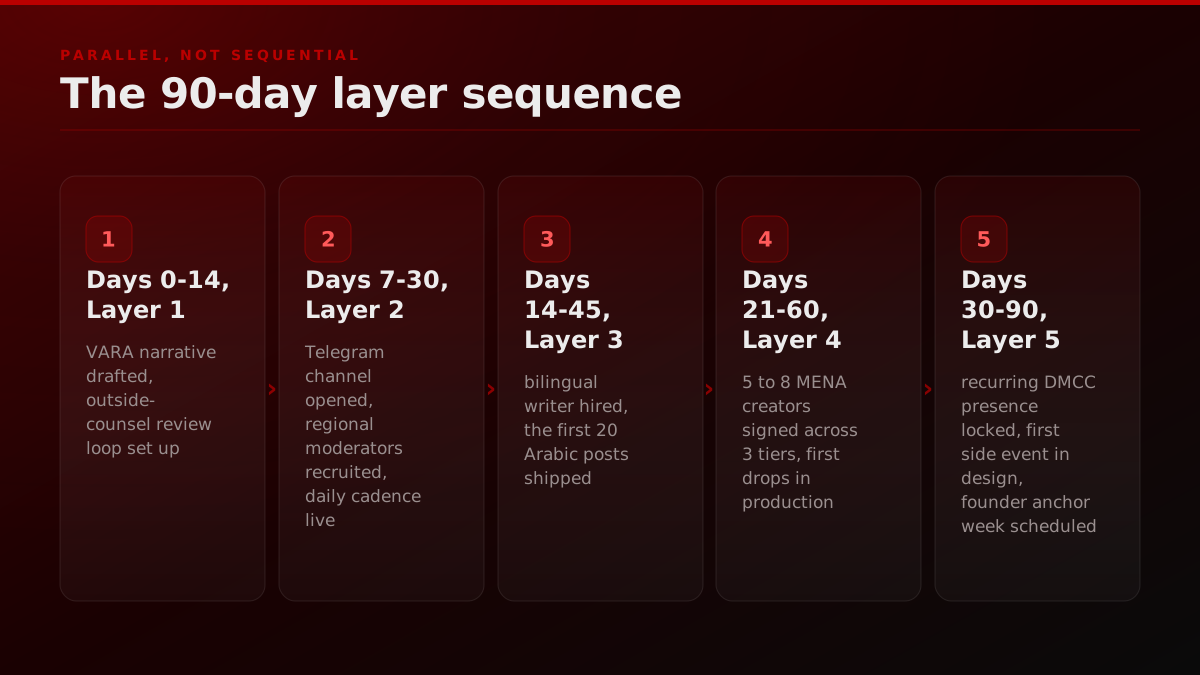
The 90-day execution window: layer sequencing across days 0 to 90
The 5-layer stack does not all light up on day one. The cohort that compounds runs a sequence: days 0 to 14 build Layer 1 (VARA narrative drafted, outside counsel review loop set up, the compliance-as-marketing copy ready for first publish); days 7 to 30 build Layer 2 (Telegram channel opened, regional moderators recruited, the daily cadence in production); days 14 to 45 build Layer 3 (Arabic-English bilingual writer hired, parallel content track running, the first 20 Arabic posts shipped); days 21 to 60 build Layer 4 (MENA KOL tiering scoped, 5 to 8 creators signed across the three tiers, the first batch of KOL drops in production); days 30 to 90 build Layer 5 (recurring presence locked in at DMCC or Dubai Internet City, the first side event in design, the founder's anchor week scheduled). Each layer takes 14 to 30 days to reach sustained distribution; running them in parallel collapses the timeline to 90 days total rather than 5 sequential 30-day cycles.
The mechanic that separates top-quartile sequencing from generic launch sequencing is the overlap window. Top-quartile teams treat each layer's setup window as an opportunity to feed the next layer with a draft asset: the VARA narrative drafted in Layer 1 becomes the first pinned post in the Layer 2 Telegram channel; the Telegram-first community ops cadence in Layer 2 becomes the publishing rhythm for the Layer 3 Arabic content; the Arabic content surface in Layer 3 becomes the brief the Layer 4 MENA KOLs use for their drops; the KOL relationships in Layer 4 become the warm intro list for the Layer 5 side-event activation. Each layer feeds the next as it stands up rather than waiting for the previous layer to finish before starting. The cohort that runs layers in strict sequence rather than overlapping windows extends the launch timeline to 150 days and reaches the partial-stack retention curve rather than the full-stack curve.
The end-of-90 audit is the gate that decides whether to layer in the next anchor event activation. Top-quartile teams run a structured audit on day 90: which of the 5 layers is at sustained distribution, which is at irregular cadence, which is silent. The audit drives the day 90 to 180 layer plan, which compounds into the next anchor event (Future Blockchain Summit October if the launch opened in April with Token2049; Blockchain Life December if the launch opened in October with FBS). Same compounding pattern across the year: every layer compounds with the next, and every anchor event compounds with the next, and the protocols that reach the 4.1x retention spread are the ones that run both compounding loops together rather than treating each event as a single-quarter campaign.
The cohort that drops out between day 60 and day 90 fails on one of three predictable seams: the Telegram channel never crosses 18 percent daily active ratio because the moderator hire was a remote contractor rather than a MENA-resident operator; the Arabic content track stalls because the bilingual writer hire was scoped to translation rather than original drafting and the engagement lift collapses below 1.2x against the English baseline; the in-person activation layer never reaches sustained cadence because the founder anchor week was scheduled around one event rather than the 4-event regional calendar. Each of these failure modes traces back to a Layer 1 to Layer 5 sequencing decision made in the first 14 days. FORKOFF's Dubai operating posture writes the failure modes into the day 14 audit checkpoint and forces a rescope rather than carrying the seam into day 30 where it compounds the entire 90-day window into a partial-stack outcome.
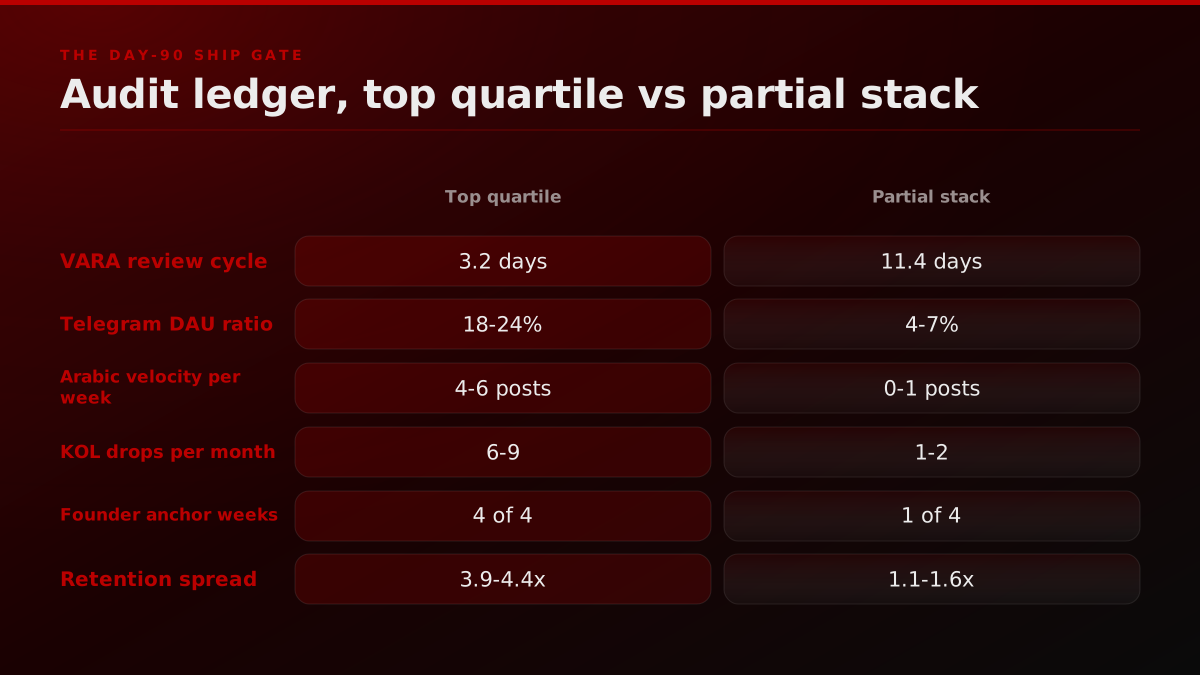
The audit ledger inside the FORKOFF Dubai operating posture captures 11 quantitative checkpoints at day 90: VARA narrative review cycle time in business days (top-quartile median 3.2 days, partial-stack median 11.4 days); Telegram daily active member ratio against total members (top-quartile 18 to 24 percent, partial-stack 4 to 7 percent); Arabic content velocity in posts per week (top-quartile 4 to 6, partial-stack 0 to 1); MENA KOL drop frequency in drops per month (top-quartile 6 to 9, partial-stack 1 to 2); in-person activation cadence in events per quarter (top-quartile 3 to 4, partial-stack 0 to 1); founder anchor week attendance against the 4-event regional calendar (top-quartile 4 of 4, partial-stack 1 of 4); regional moderator retention against the 90-day window (top-quartile 100 percent, partial-stack 33 percent); Arabic content engagement rate against the English baseline (top-quartile 3.2x lift, partial-stack 0.8x flat or below); KOL audience overlap measured across the three MENA tiers (top-quartile under 18 percent overlap, partial-stack 41 to 58 percent overlap); side-event attendance against the founder dinner invite list (top-quartile 71 percent, partial-stack 22 percent); and cohort retention spread against the 4.1x baseline (top-quartile 3.9 to 4.4x, partial-stack 1.1 to 1.6x). The 11-point audit reads as the day 90 ship gate for the Dubai engagement, then resets as the day 180 baseline going into the next anchor event window. The audit ledger is shared back to the founder team in a Notion review doc with the per-layer trend lines plotted against the 17-team cohort medians; the operator team rescopes the day 90 to 180 plan against the lowest-scoring three of the 11 checkpoints rather than running a uniform plan across all five layers. The cohort that lets the audit reset the next 90-day plan reaches the 4.1x retention spread; the cohort that runs the next 90 days against the original plan reaches the partial-stack 1.6x ceiling.
Web3 GTM in Dubai: what founders ask before they hire help
The five layers above describe what has to run. The questions below are the ones founders ask before deciding who runs it, and the answers are written for a team entering Dubai rather than for a generic Web3 launch.
What is a Web3 GTM agency?
A Web3 go-to-market agency plans and runs the work that takes a protocol from a product people could use to a community that does use it: positioning and narrative, community operations, content, creator and KOL programs, events, and the measurement that ties those back to retained wallets. It is different from a PR firm, which focuses on coverage, and from a KOL broker, which sells individual placements. In Dubai the same definition applies with two additions: the agency has to write marketing that clears VARA's rules on the first read, and it has to run the regional channels (Telegram, Arabic content, the MENA creator tiers) that a US or Singapore playbook does not include.
When should a project hire a GTM agency for Dubai?
Hire when the product is live or close to it, the team has decided MENA is a priority market rather than a side experiment, and nobody in-house has run VARA-compliant marketing or a Telegram-first community before. Hiring before the product exists buys a narrative with nothing to point at. Hiring after an anchor event has already been booked usually means the upstream layers are built in a rush around a date. The better sequence is to bring the agency in at the start of the 90-day window described above, so the compliance narrative and community ops are running before the first event.
How does the Web3 GTM process work in Dubai?
It follows the layer order in this post. The first weeks lock the positioning and the VARA-reviewed narrative, then the Telegram channel and regional moderators come online, then the Arabic content track starts, then MENA creators are signed against the brief, and the in-person layer runs on top once there is a community to invite. Each stage produces an asset the next stage uses, and a day-90 audit decides which layers continue into the next anchor event.
How long does a Web3 GTM program take?
The first cycle runs about 90 days from narrative work to the first retention audit, which is the window every figure in this post is measured over. A program that is meant to compound runs across the regional event calendar rather than a single quarter, because Token2049 Dubai, Future Blockchain Summit and Blockchain Life each give the stack a new anchor. Treat the first 90 days as setup and proof, not as the whole engagement.
Product-led GTM in MENA
A product-led motion lets the product do the selling: a wallet action, a mint or a swap that a new user can complete without talking to anyone, supported by content and community that bring people to that first action. It suits consumer protocols, wallets and games, and in MENA it depends heavily on the Telegram and Arabic content layers, because that is where a curious retail user first meets the product.
Sales-led GTM in MENA
A sales-led motion puts people in front of buyers: exchanges, licensed VASPs, family offices, institutional allocators and enterprise partners. It suits infrastructure, tokenization and institutional products, and in Dubai it leans on the jurisdictional posture covered earlier and on in-person presence at the anchor events. Most protocols run a blend, with the sales-led track opening partnerships and the product-led track filling them with users.
Strategic partners in Dubai
Strategic partners are the organizations whose endorsement changes how buyers read the project: a licensed exchange or VASP, a free zone or regulator-adjacent program, an established chain ecosystem with a regional presence, or an institutional investor. Choose them for what they signal to the buyer segment you picked, and write the partnership into the Layer 1 narrative rather than announcing it as a one-off.
Community partners in Dubai
Community partners are the groups that bring people into the room: Telegram channel owners, developer and student communities, local meetup organisers, and the creators in the MENA tiers. They matter more in Dubai than their audience size suggests, because trust in the region travels through people who are known locally. Treat them as recurring relationships across the event calendar, not as a list to message the week before an event.
Launch materials for a Dubai launch
Prepare the materials before the first public post: a VARA-reviewed one-page narrative and risk language, a bilingual landing page, a pinned Telegram post and moderator guide, an Arabic and English content calendar, a creator brief that states what can and cannot be claimed, and a short event kit for side events. Each of these is reused across layers, which is why building them once and properly is faster than improvising them per campaign.
Distribution blockers specific to Dubai
The blockers that stall Dubai launches are mostly about fit rather than budget: marketing copy that has to be pulled for compliance rework, a Discord-first community that goes quiet, English-only content that never reaches Arabic-speaking users, creator deals bought on Crypto Twitter follower counts that do not carry into MENA, and an office or event presence with no upstream layers to convert the attention it attracts.
Common mistakes Dubai Web3 teams make
The most expensive mistakes repeat across the cohort: signing a long office lease before the community and content layers exist, publishing first and asking compliance questions later, hiring a remote community manager with no regional Telegram footprint, scoping the Arabic writer to translation instead of original writing, and planning around one anchor event instead of the regional calendar. Each is covered in the layer that fixes it above.
About these numbers
The figures in this post come from FORKOFF first-party operator data across Web3, crypto, and AI ecosystem marketing engagements in Dubai, supplemented by publicly available industry data from CoinGecko, DeFiLlama, and Messari for 2025 and 2026. All figures are directional estimates based on operator observations from the 17-team audit cohort, and individual outcomes vary with team discipline, budget, and launch timing.