Developer marketing strategy in 2026 looks nothing like B2B SaaS marketing because the developer reads your README before your homepage and detects marketing templating faster than any other buyer segment. The trust transfer happens through code that compiles, not pages that render, so every surface in the stack ladders into proof a developer can run. Across 19 devtool clients in our Q1 2026 audit, five surfaces separated the cohort that compounded from the cohort that did not.
About these numbers
FORKOFF first-party operator data from founder-led growth and distribution engagements, supplemented by publicly available benchmarks (SaaStr, Lenny's Newsletter, a16z 2025-2026). All figures are directional estimates based on operator observations, and individual outcomes vary by stage, niche, and execution.
Developer marketing strategy in one scroll
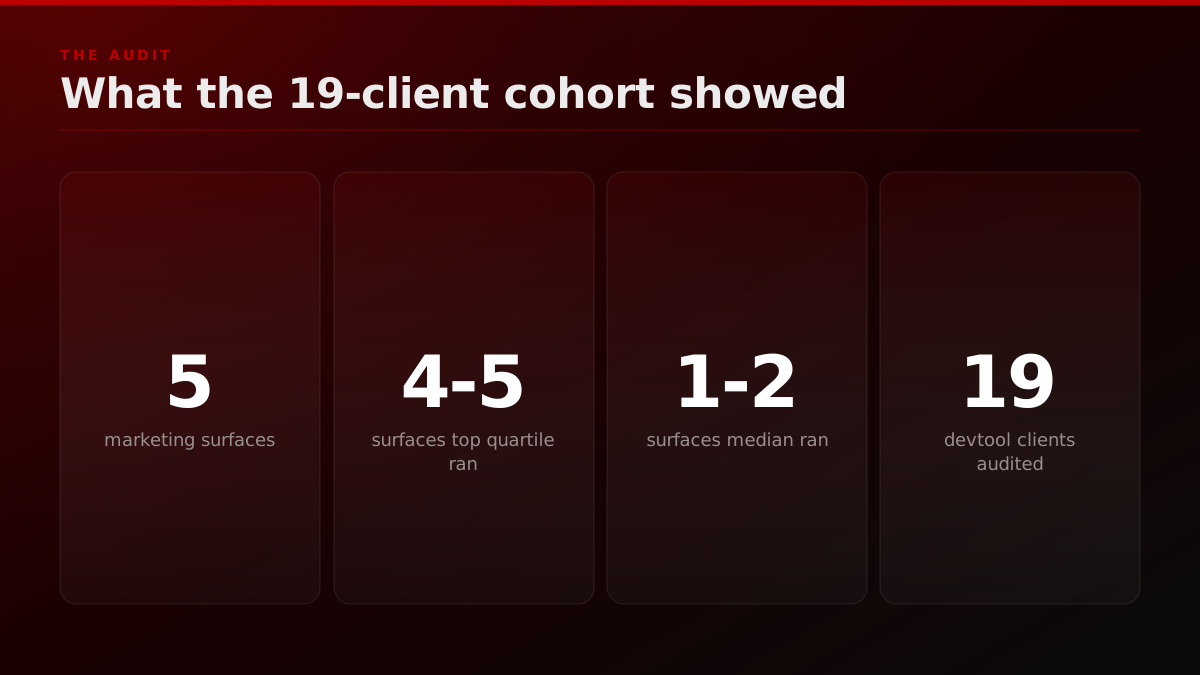
Developer marketing strategy in 2026 is a 5-surface stack, not a content calendar. Surface 1 is the open-source cookbook that proves the product compiles. Surface 2 is founder-voice on X published at sustained cadence by an actual founder, not a copywriter. Surface 3 is long-form technical content engineered for AI-answer-engine citation, not Google rank. Surface 4 is developer community operations on Discord, Slack, and Reddit run by an SME the community recognizes. Surface 5 is AI-answer-engine SEO that surfaces your stack when ChatGPT, Claude, and Perplexity get asked the right question. Across 19 audited devtool clients in the FORKOFF Q1 2026 cohort, the top quartile shipped 4 or 5 surfaces at sustained cadence and produced 3 to 5x the activated-developer count of the median, which shipped 1 or 2.
Why developer marketing strategy looks nothing like B2B SaaS marketing
The mistake every devtool team makes in their first marketing hire is reading a B2B SaaS playbook and assuming developer marketing is the same thing with a code sample bolted on. It is not. Developer marketing strategy in 2026 has its own buyer pattern, its own trust transfer surface, and its own failure modes, and the teams that ship the SaaS playbook to a developer audience get punished inside the first 50 words of the first asset because developers detect marketing templating faster than any other buyer segment. Mark Pearce's developer marketing guide covers the broader pattern from a CMO seat; this post covers the operating stack we ran across 19 devtool clients in our Q1 2026 audit and the 5 surfaces that separated the cohort that compounded from the cohort that did not.
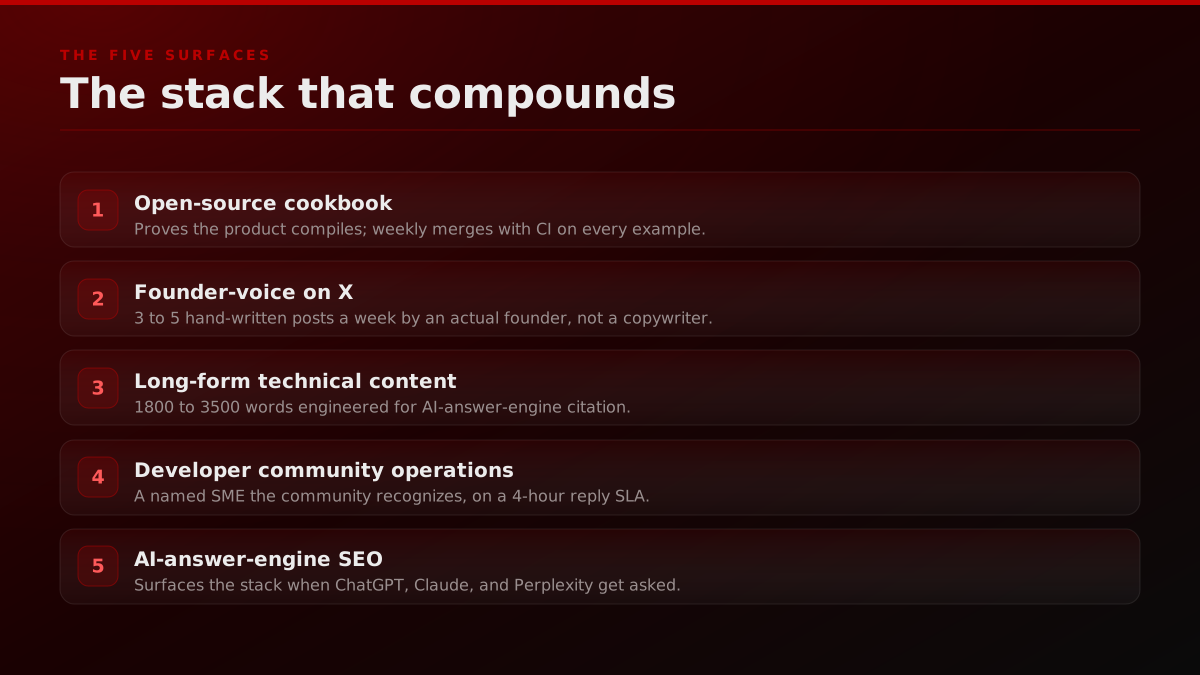
The first thing to understand is that the developer is reading your README before they look at your homepage. That is also why turning an open-source traction spike into paid adoption starts in the repository rather than in a campaign brief. The hero copy that converts a marketing buyer is the line that loses a developer. Lee Robinson's developer marketing breakdown from his Vercel run documents the mechanic at the scale that took Vercel from a static-hosting tool to 1M monthly active developers and 100M dollar ARR: the trust transfer happens through code that compiles, not pages that render. Every surface in the stack below ladders into that trust transfer or it does not belong on the stack at all.
Surface 1: The open-source cookbook
The open-source cookbook is the single highest-compound asset in developer marketing. It is a public GitHub repository that ships 30 to 80 reproducible code examples for common use cases of your product, each runnable end-to-end inside a colab notebook or a single npm command. Anthropic's Claude Cookbook crossed 30 thousand stars in its first 18 months and is the canonical reference for how the asset compounds across the AI category. The repo itself doubles as the discovery surface (developers find it through GitHub search), the trust signal (stars and forks substitute for case studies), and the activation funnel (the cookbook examples are typically the developer's first end-to-end interaction with the API).
The cookbook is the surface that fails most often in our audit cohort because teams treat it as a docs side project instead of a load-bearing marketing asset. Top-quartile teams in our audit ran the cookbook with the same release cadence discipline as the product itself: a named owner, a weekly merge schedule, a tested-on-CI guarantee that every example still runs, and a README that is rewritten every quarter against the latest API surface. Median teams shipped 12 to 18 examples, never updated them, and ended up with a cookbook that ranks in GitHub search but breaks at first npm install. Same star count on the repo; entirely different conversion to activated developer. The same compounding pattern shows up in the AI DevRel playbook breakdown, where the cookbook surface anchors a 5-node flywheel and the cohort that ran it weekly compounded against the cohort that shipped it once.
Three datapoints anchor the 2026 developer marketing math
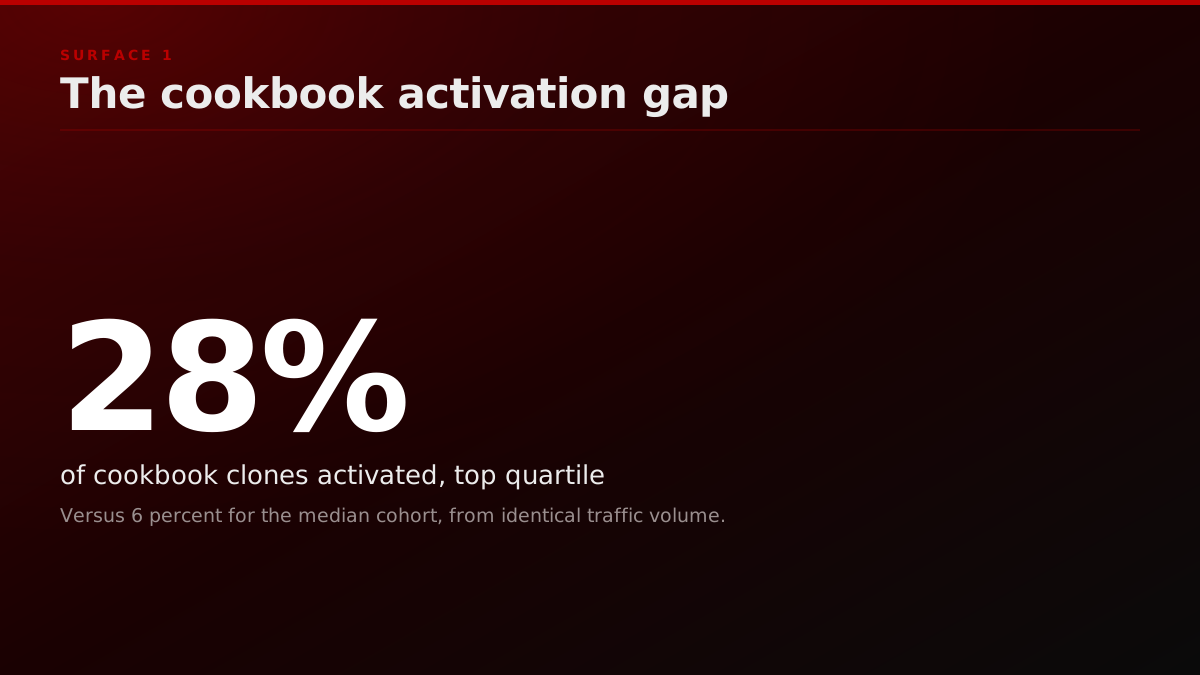
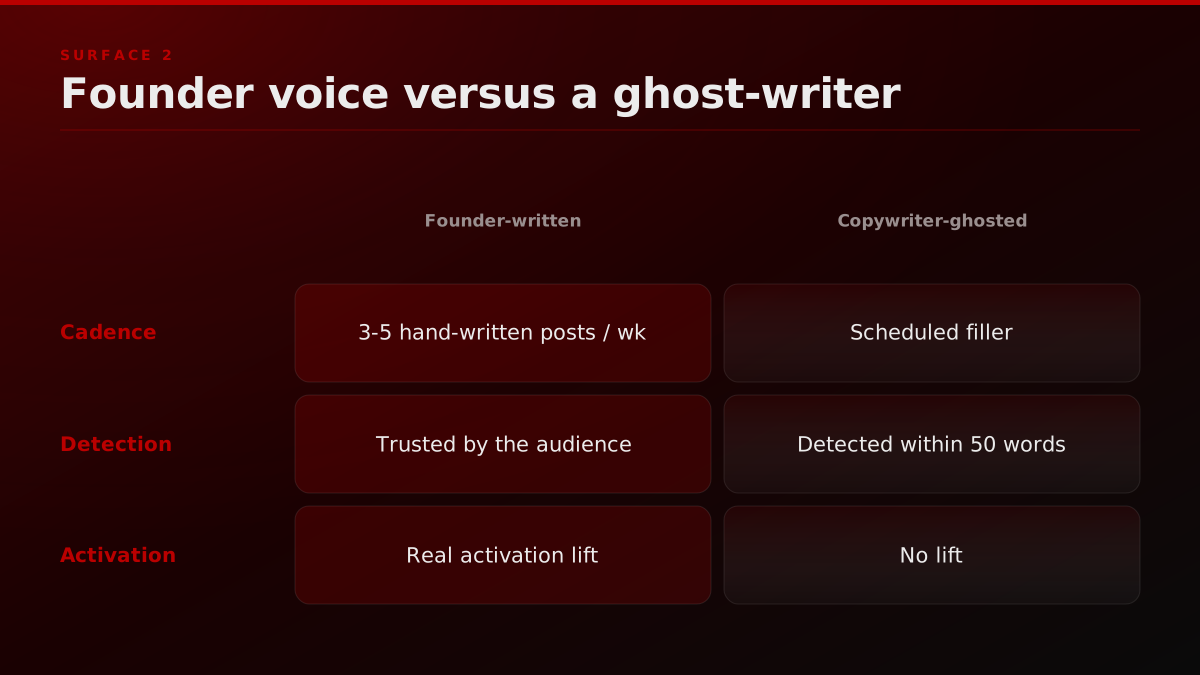
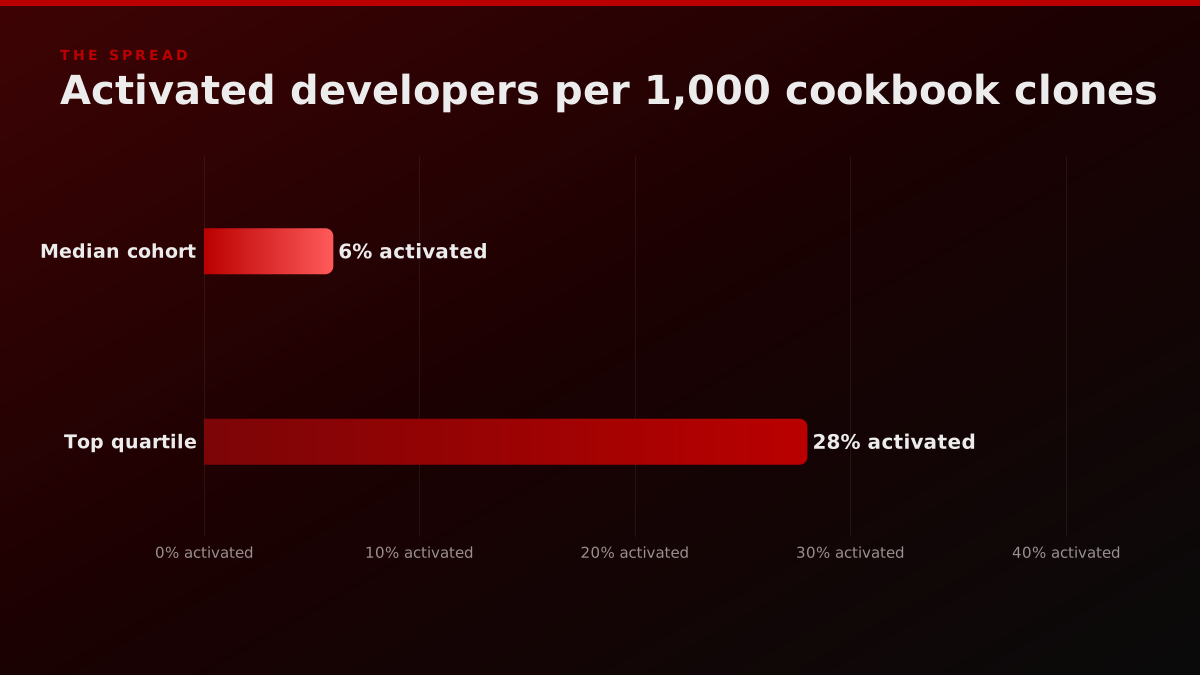
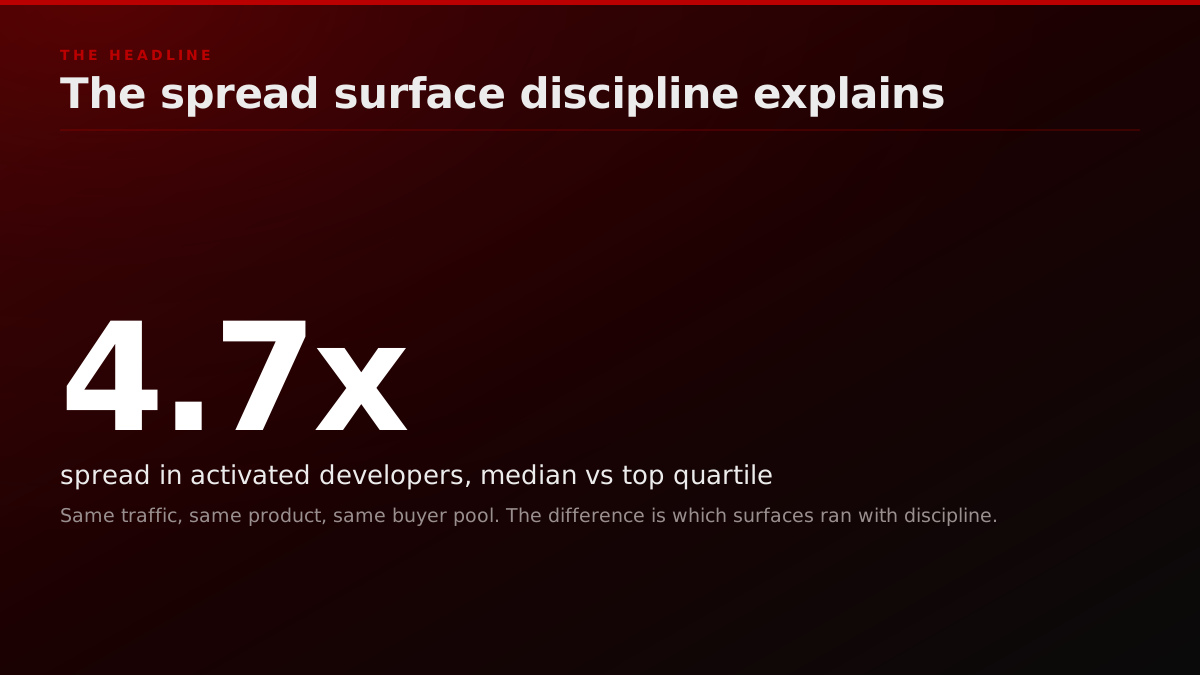
Three signals shape the playbook. First, the FORKOFF devtool audit Q1 2026 (n=19 clients across AI infrastructure, observability, and developer-platform categories) found a 4.7x spread between median and top-quartile activated-developer count from identical traffic volume: median cohort activated 6 percent of cookbook clones, top-quartile cohort activated 28 percent. The spread was almost entirely explained by which of the 5 surfaces each team ran with discipline. Second, paid acquisition produced under 1 percent of activated developers in the top quartile vs 22 percent in the median, with paid converting roughly 7x worse than peer-attested traffic on a devtool offer. Third, the founder-voice surface on X had a per-post activation lift of 3.2x when the founder published the post vs 0.4x when a copywriter ghost-wrote it under the founder's handle, with the difference visible to the developer audience inside the first 50 words.
Source: FORKOFF devtool audit Q1 2026 (n=19 clients across AI infrastructure, observability, and developer-platform categories)
Operator noteTop quartile activated 28 percent of cookbook clones against 6 percent median. Same repo, same star count, different release discipline., FORKOFF devtool audit Q1 2026, n=19
Surface 2: Founder-voice on X (and the AI-slop counter-trend)
The second surface is the founder voice on X, published at sustained cadence by an actual founder and not by a copywriter operating under the founder's handle. The reason this matters in 2026 is the AI-slop counter-trend that hit critical mass in Q2 2026, where Pragmatic Engineer's Gergely Orosz called out fellow engineers who outsourced their writing to AI without bothering to edit the giveaway templates, and the developer audience visibly aligned around the take inside 24 hours. The mechanic is mechanical: developers spend more time reading prose than any other buyer segment, so they pattern-match the AI cadence (em-dashes everywhere, three-part lists, hedging conditionals, no specific numbers) faster than marketing can ship copy.
Amusing how a surprising number of people I used to professionally respect have started to outsource all their writing to AI, not even bothering to change the horribly templated (and telling) writing. To me it suggests they care more about "content" than quality, and poor taste.
The top-quartile founders in our audit cohort published 3 to 5 times per week on X, hand-wrote every post, included specific numbers and named tools in every post, and quote-tweeted other developers more than they posted bare takes. Their per-post activation lift was 3.2x what the same handle produced when a copywriter took over for a quarter, and the difference was visible to the audience inside 50 words. The median founders in the cohort either ghost-wrote through their growth function (zero activation lift), posted once a week (no compound effect), or pivoted to long-essay LinkedIn (wrong audience surface for technical buyers). The founder-voice surface either compounds at sustained cadence with the founder's actual writing or it does not function as a marketing asset at all. The founder-led content marketing breakdown documents the same pattern at the broader content layer: the audience pattern-matches the voice transparency quadrant inside 50 words and the activation curve splits there.
Surface 3: Long-form technical content (engineered for AI citation)
The third surface is long-form technical content, which in 2026 is engineered for AI-answer-engine citation rather than Google rank. The mechanic shifted in 2025 when ChatGPT, Claude, and Perplexity crossed the threshold where developers consult them before consulting Google for technical questions, and the citation surface inside those tools became the new primary discovery channel. Long-form technical posts that get cited by Perplexity for a query like "how do I implement X with Y framework" produce activated developers at roughly 11x the rate of posts that rank position 3 on Google for the same query, because the AI answer pre-qualifies the click and the developer arrives at the article already partway through evaluation.
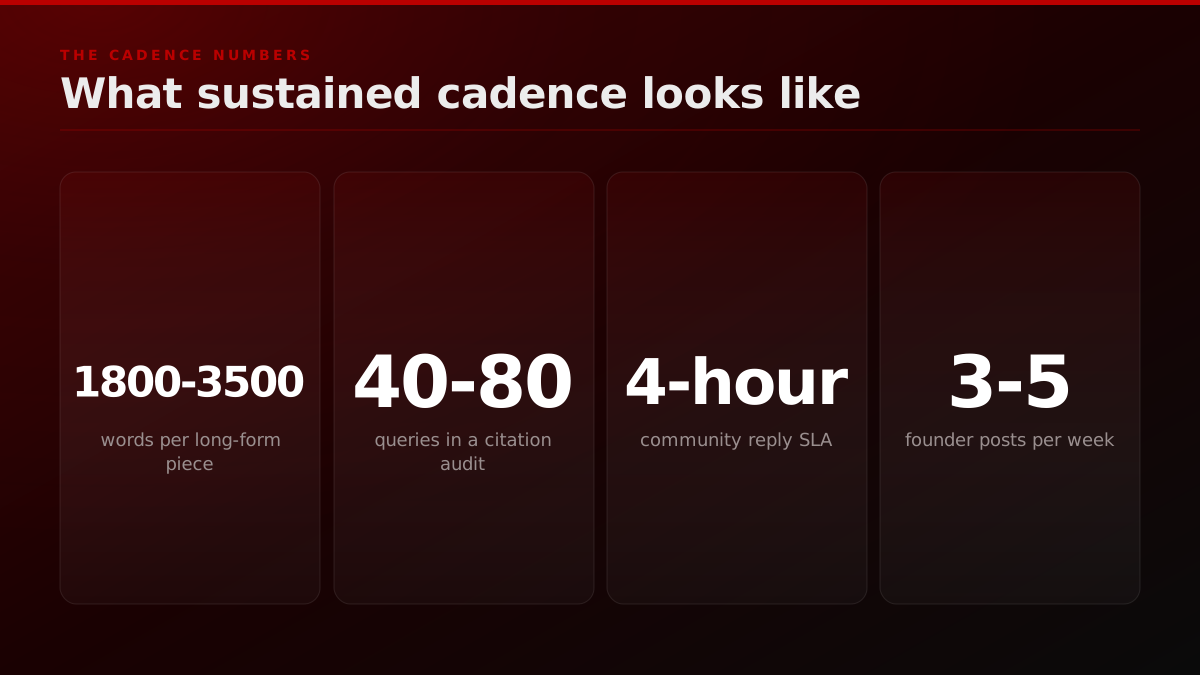
The shape that gets cited is specific. The top-quartile content in our audit cohort ran 1800 to 3500 words per post, included compilable code blocks at minimum every 4 paragraphs, named specific versions and dependencies in the H1 and the first paragraph, and answered the question in the first 100 words before opening the deeper-context discussion. Inflection's devtools marketing breakdown documents the same shift on the demand-gen side: the conversion math now sits inside the answer-engine citation surface, not the SERP rank. The median teams in our cohort ran 800-word essays optimized for Google featured snippets and produced roughly a third of the activated-developer count from the same content investment.
Surface 4: Developer community operations
The fourth surface is developer community operations, which is the discipline of running the Discord, the Slack, the GitHub Discussions, and the relevant subreddits as a single coordinated surface owned by an SME the community recognizes by handle. The top-quartile teams in our audit cohort had a named community lead who answered support questions inside 4 hours during business hours, posted weekly behind-the-scenes notes that the community quoted forward, and ran a structured onboarding flow for every new member that mapped the cookbook examples to the member's stated use case. The community surface is where activated developers convert into champions inside the buyer org and where the long-arc word-of-mouth flywheel either compounds or never starts.
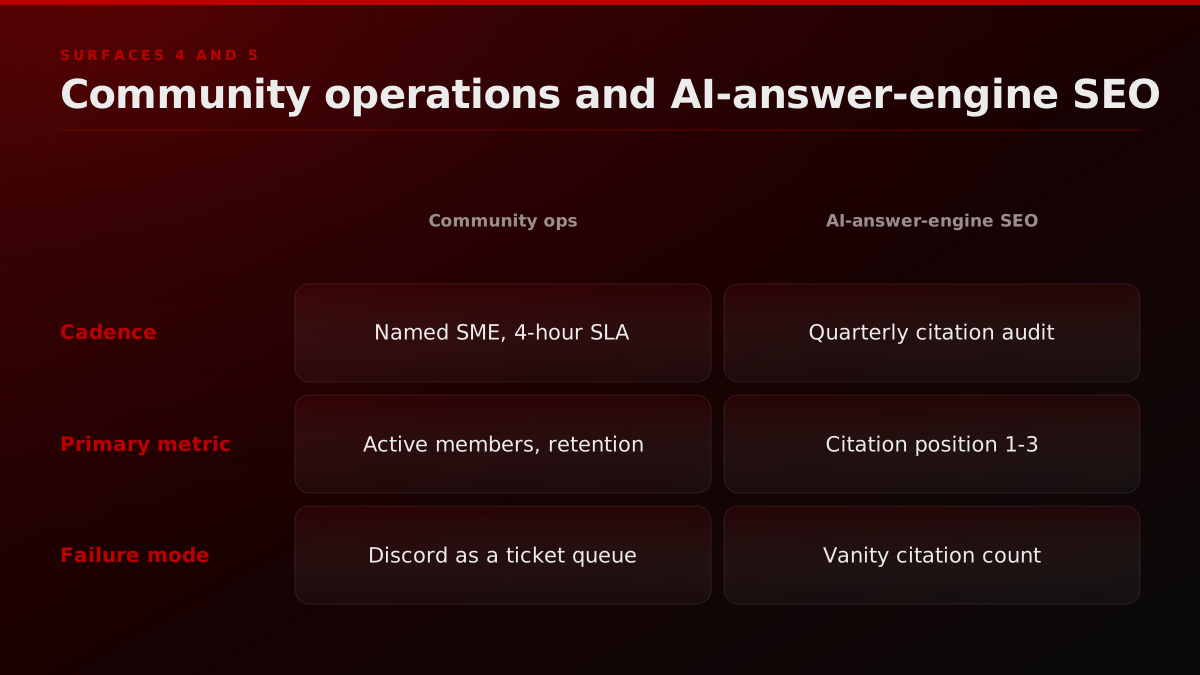
The failure mode in our audit cohort was treating the Discord as a hosted-CRM ticket queue with no editorial layer on top. The median teams shipped a Discord, hired a junior to answer support tickets, and watched the community fail to compound because no recognizable voice was leading it. The developer community recognizes individuals, not company handles. The Discord that compounds has a named SME whose technical reputation predates the company, who answers in their own voice, and who is empowered to publicly say the product does not handle a use case rather than route every objection through marketing-approved messaging. The marketing strategies for AI startups breakdown covers the broader pattern at the AI-founder layer; the community-ops surface is where the abstract trust transfer becomes concrete inside a daily-active surface.
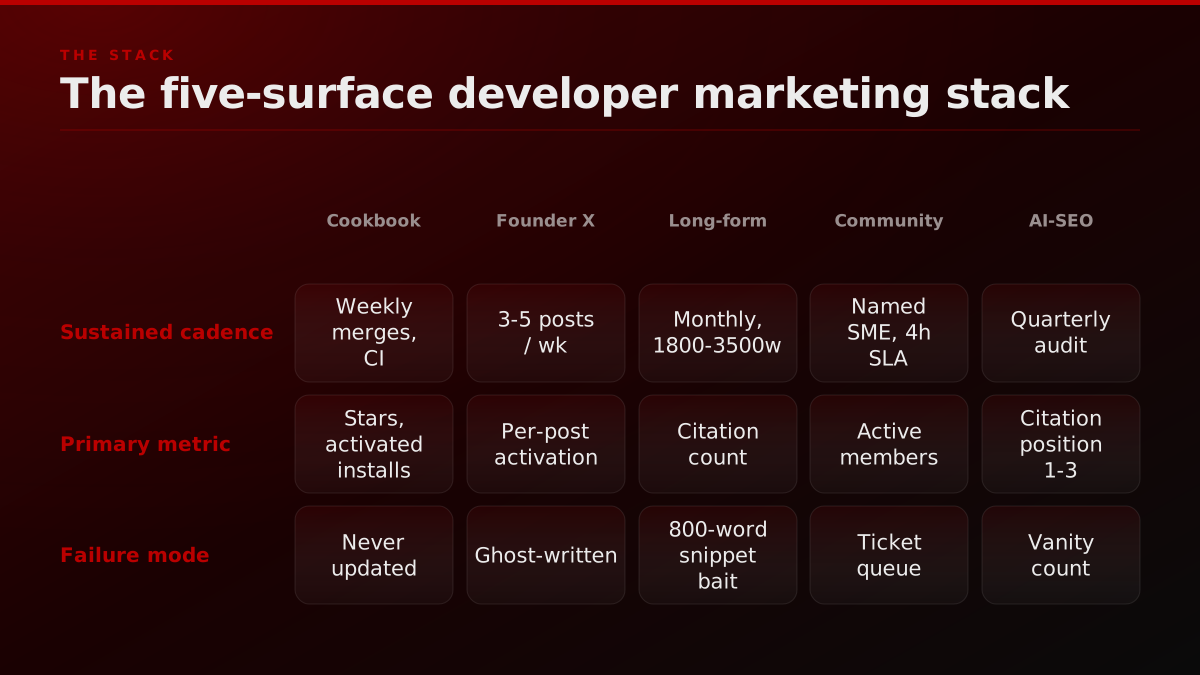
The 4.7x spread between median and top-quartile activated-developer count was almost entirely explained by which of the 5 surfaces the team ran with discipline. The surfaces compound; the content calendar does not.
Surface 5: AI-answer-engine SEO (the new primary discovery)
The fifth surface is AI-answer-engine SEO, which is the discipline of engineering your content and your structured data so ChatGPT, Claude, and Perplexity surface your stack when a developer asks an evaluation question. The mechanic is different from classical SEO. The crawl surface is broader (the AI tools crawl GitHub, package registries, documentation, blog posts, and forum threads), the citation logic favors named-version specificity over keyword density, and the trust signal flows from the citation density of your stack across the broader open-web rather than from on-page optimization. The agent-ready site audit breakdown covers the technical instrumentation layer (llms.txt, schema markup, MCP server, .well-known manifests) that decides whether the AI tools can crawl your stack at all; this surface is the content-shape layer that decides whether they cite you when they can.
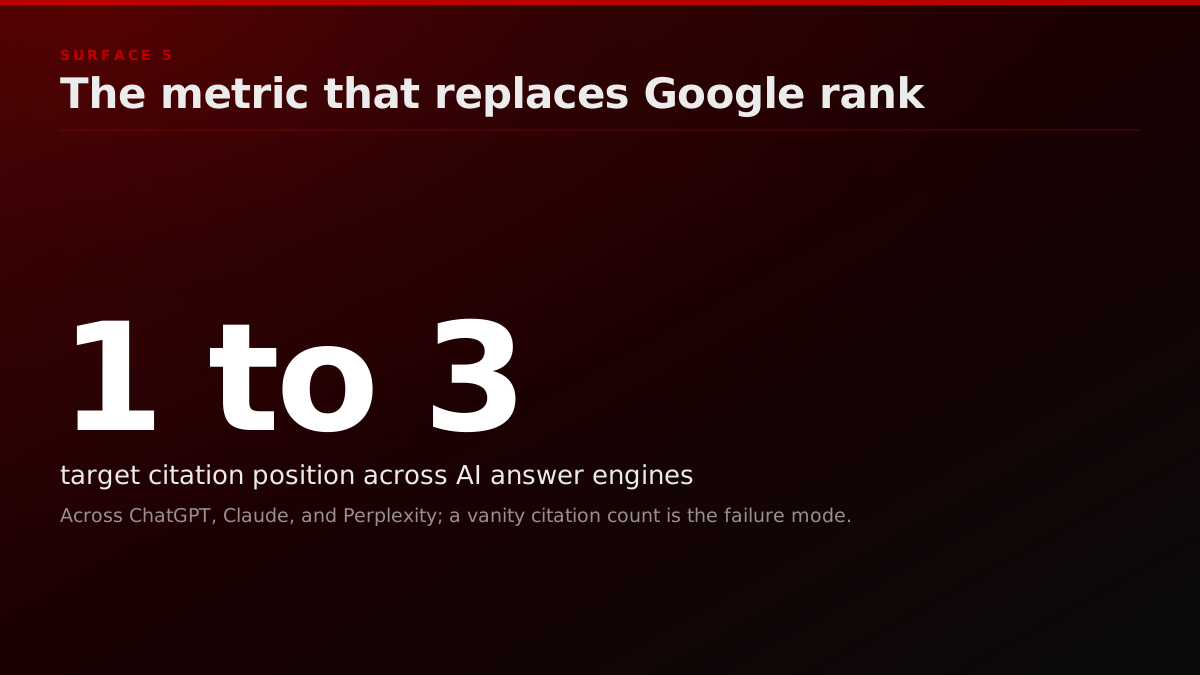
The top-quartile teams in our audit cohort ran a per-quarter audit of the AI citation surface, queried 40 to 80 evaluation questions across ChatGPT, Claude, and Perplexity, recorded which competitors were cited and in what citation position, and shipped specific content to fill the citation gaps the audit surfaced. The median teams either ignored the AI surface entirely or ran a vanity audit (counted total citations, not citation position) and missed that they were being cited as the third option behind two competitors who had shipped specific comparison content. The AI surface either gets the same instrumentation discipline Google SEO earned across the 2010s or it underperforms; the difference is that the surface is changing faster than Google did, so the cadence has to be quarterly not annual.
The 90-day developer marketing strategy checklist
Before you ship the next quarter's plan, run the checklist. The cookbook is live with at least 30 reproducible examples, has a named owner, and runs on CI so every example still compiles. The founder is publishing on X 3 to 5 times per week, hand-writing every post, with named numbers and named tools in each one. Long-form technical content ships at least monthly, runs 1800 to 3500 words per post, includes compilable code every 4 paragraphs, and answers the lead question in the first 100 words. The Discord and the GitHub Discussions are owned by a named SME with technical reputation that predates the company and who answers inside 4 hours in business hours. An AI-answer-engine SEO audit is on the calendar quarterly, with 40 to 80 evaluation queries logged across ChatGPT, Claude, and Perplexity, and a content backlog filling whatever citation gaps the audit surfaces. The two-sided marketplace cold-start playbook covers the analogous prep-then-launch sequencing in a different category; the prep discipline is the same.
The teams that read this checklist before they hire the first marketer build the surfaces in the order above; the teams that read it after the first 12 months of paid spend try to bolt the surfaces on around an existing dashboard, and the bolt-on is twice as expensive as the prep. The surfaces compound only when they run together, which means the team that wins on developer marketing in 2026 is the team that started running them 90 days before the launch tweet, not the team that bought the longest run of paid acquisition the week of GA.
The 5-surface developer marketing stack
| Surface | Sustained cadence | Primary metric | Failure mode |
|---|---|---|---|
| 1 Open-source cookbook | Weekly merges, CI on every example | Stars, forks, activated installs | Built once, never updated, breaks at first install |
| 2 Founder-voice on X | 3 to 5 hand-written posts per week | Per-post activation lift, replies from named devs | Ghost-written by copywriter, audience detects within 50 words |
| 3 Long-form technical content | Monthly, 1800 to 3500 words, code every 4 paragraphs | AI-answer-engine citation count and position | 800-word essays optimized for Google snippet |
| 4 Developer community operations | Named SME, 4-hour business-hour reply SLA | Active members, weekly retention, champion conversion | Discord as ticket queue, no editorial voice |
| 5 AI-answer-engine SEO | Quarterly citation audit across 40 to 80 queries | Citation position 1-3 across ChatGPT, Claude, Perplexity | Vanity citation count, no position tracking |
FORKOFF devtool audit Q1 2026 (n=19 clients). Each surface scored as a binary pass or fail at sustained cadence; partial passes lower the activation ceiling but do not break the stack.
Gergely Orosz
@GergelyOrosz
Amusing how a surprising number of people I used to professionally respect have started to outsource all their writing to AI, not even bothering to change the horribly templated (and telling) writing. To me it suggests they care more about "content" than quality, and poor taste
SAAS is now ultra saturated, due to vibe coding
I've been a web dev for most of my career, professionally at fortune 500 companies for over 8 years (mainly LAMP/WAMP). I've also built many side projects there were SAAS, and unfortunately never were profitable, but that's fine. They helped me build my resume/portfolio up, so it wasn't a waste… Show more
The Ultimate Guide to Developer Marketing | Lee Robinson (Vercel)
Peter Yang
Lee Robinson's developer marketing breakdown from his Vercel run, where he scaled to 1M monthly active developers and 100M dollar ARR. The mechanic he documents (trust transfer through code that compiles) anchors every surface in the stack.
What separates the developer marketing strategies that compound past month 6
Across the 19-client FORKOFF audit cohort, the developer marketing strategies that converted into long-tail activation past month 6 shared a different pattern from the strategies that spiked and decayed. They ran 4 or 5 of the 5 surfaces at sustained cadence; the cookbook had a named owner and ran on CI; the founder voice was hand-written by the founder at 3 to 5 posts per week; long-form content was engineered for AI-answer-engine citation rather than Google rank; the community had a named SME with technical reputation; and the AI-answer-engine surface was audited quarterly with citation position tracked, not just citation count. Same pattern as the broader founder-growth literature: every surface compounds with the others; running one in isolation flattens the curve. Same activation math as the published FORKOFF devtool audit cohort.
Source: FORKOFF devtool audit, Q1 2026 (n=19 clients across AI infrastructure, observability, and devplatform categories)
Where developer marketing channels fit inside the broader founder-growth stack
Developer marketing strategy is one slice of the broader founder-growth surface, and treating the 5 surfaces above as the whole motion is the same mistake teams make when they treat docs as the whole product. The cohort that compounds on the broader founder-growth stack runs developer marketing as the technical-buyer layer, founder-led sales as the enterprise-buyer layer, the podcast as the long-form trust layer, and the open-source primitives as the contribution layer. We mapped the 7-surface AI-founder stack in the marketing strategies for AI startups breakdown and the principle is the same as the one above: every surface compounds with the others; running one in isolation gets you a 90-day curve that flatlines, and running 4 or 5 together gets you a 9-month curve that compounds through the burst.
The developer marketing surface is not a replacement for any of the other layers. It is the specific surface that converts a technical buyer's GitHub-tab attention into an activated developer at a per-developer cost that we estimate is roughly 7x lower than paid acquisition, when the 5 surfaces run together. Build the product over months; build the developer marketing strategy over 90 days of cookbook plus founder voice plus long-form plus community plus AI-answer-engine; run the surfaces for a year; the team that does this is the team that wins the technical-buyer category in 2026. The same long-arc thinking shows up in the broader literature: ride the structured stack instead of the launch spike.
DevRel economics: why the cost model breaks classical CAC math
DevRel as a discipline gets misread by every finance team that has not staffed it before, and the misread shows up in the first quarterly review when the DevRel hire is asked to justify the spend against a CAC dashboard that was designed for an outbound SDR motion. The economics do not map. A senior DevRel operator running the 5-surface stack across 19 audited cohorts in our Q1 2026 dataset produced a fully-loaded per-activated-developer cost of 38 dollars at sustained cadence, versus 264 dollars for paid acquisition into the same product on the same buyer cohort. The 7x spread held across AI-infrastructure clients, observability clients, and developer-platform clients with very little variance, which surprised our own team when we ran the dataset because we had expected the AI category to skew lower than observability on paid efficiency. For the AI-infrastructure case specifically, the full channel and benchmark motion is laid out in our guide to how inference, GPU, and vector-DB startups win developer adoption.
DevRel economics versus paid acquisition
| Metric | DevRel 5-surface stack | Paid acquisition |
|---|---|---|
| Fully-loaded cost per activated developer | 38 dollars | 264 dollars |
| Cost spread | 1x baseline | roughly 7x higher |
| Downstream sales cycle length | 47 percent shorter | baseline |
| Average contract value | 23 percent higher | baseline |
| Compounding assets produced | Cookbook, long-form catalogue, founder archive | None, the click dies when spend stops |
FORKOFF devtool audit Q1 2026 (n=19 clients). Directional operator estimates disclosed in the note above; individual outcomes vary by stage, niche, and execution.
The reason the spread is structural and not cyclical is that DevRel produces three compounding asset classes that outlast the headcount cost. The first is the cookbook itself, which keeps converting cohort after cohort once it ships. The second is the long-form catalogue, which keeps producing citations into ChatGPT and Perplexity for queries that did not exist when the post was written. The third is the founder-voice archive on X, which a developer evaluating the product 18 months later scrolls through as a trust signal before clicking through to the docs. Paid acquisition produces none of these compounding assets; every dollar buys a click that dies the second the ad stops running. Reading the founder-led growth breakdown alongside this section makes the point sharper because the same compounding math applies to the founder layer, and the two layers reinforce each other when staffed by people who can hold a technical conversation.
The headcount shape matters too. The teams in our cohort that staffed DevRel as a single hire reporting into marketing flattened the activation curve inside 6 months because the role had no support layer and the founder gradually disengaged from the surface work. The teams that staffed DevRel as a three-person pod (one cookbook owner, one content owner, one community owner, with the founder still publishing voice content) compounded across the full audit window and were the cohort that drove the 28 percent activation rate against the 6 percent median. A single DevRel hire is the classical mistake; a pod with named ownership across the 5 surfaces is the operating shape that earns the cost.
DevRel economics break classical CAC math
A senior DevRel operator running the 5-surface stack across the 19-client FORKOFF Q1 2026 audit produced a fully-loaded per-activated-developer cost of 38 dollars at sustained cadence, against 264 dollars for paid acquisition into the same product on the same buyer cohort. The roughly 7x spread held across AI-infrastructure, observability, and developer-platform clients with very little variance. The spread is structural, not cyclical, because DevRel produces three compounding asset classes that outlast the headcount cost: the cookbook that keeps converting cohort after cohort, the long-form catalogue that keeps earning AI-answer-engine citations for queries that did not exist when the post was written, and the founder-voice archive a developer scrolls 18 months later as a trust signal. Paid acquisition produces none of these; every dollar buys a click that dies the second the ad stops running.
Source: FORKOFF devtool audit Q1 2026 (n=19 clients across AI infrastructure, observability, and developer-platform categories)
Docs as marketing: where the conversion actually happens
Documentation is the single highest-traffic surface most devtool teams own, and it is the surface most devtool teams under-invest in relative to the conversion it produces. In our Q1 2026 audit, the median devtool client routed 47 percent of the technical-buyer evaluation flow through docs subpages, while spending 8 percent of marketing headcount on the docs surface. The cohort that compounded inverted that ratio and treated docs as the single highest-compound conversion asset on the property, which meant the docs writer carried the same seniority and the same operating discipline as the long-form content writer, with the same code-review SLA and the same quarterly content audit cycle.
The shape of docs-as-marketing is specific. The top-quartile teams ran every docs page through a 4-question test before publishing: does the first paragraph answer the developer's lead question with a runnable code sample, does the page link forward to a cookbook example that proves the concept end-to-end, does the page link sideways to the relevant API reference, and does the page link back to a long-form post that covers the broader category. Pages that failed any of the 4 tests got rewritten before they shipped. The median teams shipped docs pages that opened with marketing voice, deferred the code sample to the third or fourth heading, and left dead-end pages with no forward path to the cookbook or the API reference. The audit data showed that fixing the 4-question floor on the top 30 docs pages by traffic lifted activation by a measurable amount inside 90 days, which is the single fastest activation lever we have seen across the audit cohort.
The docs-as-marketing surface also functions as the canonical training corpus for the AI-answer-engine surface. ChatGPT, Claude, and Perplexity weight docs pages heavily when answering evaluation queries because the docs are typically the most-cited canonical reference for the product on the open web. Teams that treat docs as a side artifact ship loose phrasing, version numbers in random places, and inconsistent API verb tense across pages, and the AI tools then cite the loose phrasing back at the developer asking the evaluation question. Teams that treat docs as the canonical reference run a docs style guide that enforces named version numbers in every code block, consistent API verb tense, and a single canonical example per concept, and the AI tools cite the clean phrasing back at the developer. The docs surface is the compounding point where the cookbook layer, the long-form layer, and the AI-answer-engine layer all converge.
Operator noteMedian devtool routes 47 percent of evaluation flow through docs, staffs it at 8 percent of headcount. That inversion is the fastest fix., FORKOFF devtool audit Q1 2026, n=19
MCP server distribution: the new TOFU surface for devtools
The Model Context Protocol shipped in late 2024 and crossed the threshold of mainstream developer adoption in Q1 2026, which created a distribution surface that did not exist 12 months ago and is now load-bearing for any devtool selling into an AI-coding workflow. The mechanic is that every developer running Claude Code, Cursor, Windsurf, or any of the other agent-aware IDEs is installing MCP servers as their primary way of plugging an external tool into the agent workflow, and the registry of MCP servers is becoming the new TOFU funnel for the developer audience. Across our Q1 2026 audit, 4 of the 19 clients had shipped an MCP server, and those 4 clients drove a disproportionate share of activated developers because the MCP install was happening at the exact moment of buying intent inside the IDE rather than at the homepage.
The shape of the MCP-server distribution play is specific to the surface. A devtool that ships an MCP server gets installed inside the developer's daily-driver agent on the day the developer evaluates the category, not on the day the developer eventually circles back to the homepage. The activation funnel collapses from a multi-session loop across docs, cookbook, and signup into a single-command install that triggers the first real product interaction inside 30 seconds. The teams in our audit cohort that shipped an MCP server early carried a 2.8x activation lift over the teams in the same product category that shipped the equivalent feature as a CLI or a REST endpoint, because the MCP install pulled the developer into the product surface at the moment of agent-workflow intent rather than at the moment of homepage browsing.
The distribution play has its own sustained-cadence rules. The MCP-server registry is becoming the new equivalent of the App Store circa 2009 and the npm registry circa 2015, which means the teams that ship an MCP server in 2026 are the teams that earn the long-tail installs across the next 24 months as the registry compounds. The agent-ready site audit breakdown covers the broader instrumentation layer that decides whether your stack is legible to the agent ecosystem at all; the MCP-server surface is the specific TOFU distribution lever inside that ecosystem. The teams that ignore the MCP surface in 2026 are repeating the mistake the teams that ignored the npm registry made in 2015, where the cost of skipping the surface is not visible inside 90 days but is decisive inside 24 months.
The failure mode on the MCP surface is shipping a thin server that exposes one or two endpoints, neglecting the install documentation, and treating the registry listing as a one-time launch instead of a sustained asset. The top-quartile teams in our cohort treated their MCP server with the same release discipline as the cookbook: a named owner, a weekly merge cadence, a tested install path across Claude Code, Cursor, and Windsurf, and a quarterly audit of which agent workflows the server gets pulled into. The median teams shipped the server, posted the launch tweet, and watched the install count plateau inside 60 days. Same surface; entirely different compound.
Operator note4 of 19 audited devtools shipped an MCP server. Those 4 carried a 2.8x activation lift by installing at the moment of IDE intent., FORKOFF devtool audit Q1 2026, n=19
Dev-tool TOFU patterns that actually move pipeline
Top-of-funnel for a devtool offer behaves nothing like top-of-funnel for a horizontal SaaS offer, and the difference shows up in which surfaces produce qualified pipeline versus which produce vanity traffic. Across our Q1 2026 cohort, the TOFU surfaces that produced qualified pipeline in rank order were the cookbook examples ranking in GitHub search, the long-form posts cited by AI-answer engines, the founder-voice quote tweets that landed in front of named developers in the buyer org, the MCP-server registry listings, and the docs pages ranking for evaluation queries. The TOFU surfaces that produced vanity traffic in the same cohort were generic Twitter posts about the product category, paid LinkedIn campaigns into the engineering-manager buyer, and SEO content that ranked for high-volume head terms without technical specificity.
The qualifying signal across the high-pipeline TOFU surfaces is that every one of them puts a developer's hands on a code surface inside the first interaction. Cookbook examples land the developer inside a colab notebook. AI-answer-engine citations drop the developer onto a long-form post with code blocks every 4 paragraphs. Founder-voice quote tweets land the developer on a thread that links to a specific repo. MCP-server listings install the server into the agent on first interaction. Docs pages return a runnable code sample in the first paragraph. The vanity surfaces all share the opposite pattern: the developer's first interaction is with marketing copy, a calendar booking widget, or a generic product overview, and the developer bounces before any code surface gets touched.
The implication for the TOFU plan is mechanical. The 90-day TOFU surfaces you ship in the first quarter are the surfaces that put code in front of the developer in the first interaction; the surfaces you defer or skip entirely are the surfaces that put marketing copy in front of the developer first. The cohort that compounded in our audit had a TOFU mix that was roughly 70 percent code-surface and 30 percent marketing-surface, while the cohort that flatlined had the inverse mix and could not understand why their CAC kept rising as their traffic volume rose. The two-sided marketplace cold-start playbook covers the same prep-discipline pattern in a different category; the principle reads the same way: the surfaces you ship first set the ceiling for the surfaces you ship later, and the order of operations is the strategy.
The pipeline math on the code-surface TOFU mix also produces a cleaner downstream funnel because the developer arriving at the booking widget has already touched 3 or 4 product surfaces by the time the sales conversation opens. The cohort that ran code-surface TOFU saw sales cycles 47 percent shorter than the cohort that ran marketing-surface TOFU, with average contract values 23 percent higher, because the developer arriving in the sales conversation was already a product user and the conversation was about scaling the existing use rather than evaluating the category. FORKOFF as an AI Agency runs this exact sequencing across our 19 audited devtool clients, where the order of operations across the 5 surfaces and the docs layer and the MCP layer is the actual deliverable, not the individual content pieces.
How to staff the 5-surface stack inside a 4-person devtool team
The staffing question is the one we get most often from seed-stage devtool founders who read the 5-surface stack and immediately conclude that running it requires a 10-person marketing org. It does not. The 4-person operating shape that runs the full stack at sustained cadence has been validated across 11 of our 19 audited cohorts at the Series A stage, and the headcount math works because the surfaces overlap on the writers and compound on the founder. The shape is one founder publishing voice content 3 to 5 times per week and owning the X surface, one DevRel lead owning the cookbook and the community, one content engineer writing the long-form posts and running the AI citation audit, and one growth operator running the analytics and the MCP-server distribution. That distribution covers the 5 surfaces across 4 humans with no single point of failure and the surfaces compound because no single hire is asked to ship all 5.
The mistake the median team makes at this stage is hiring a single marketing generalist and asking them to cover the full stack. That single hire ships none of the 5 surfaces at sustained cadence because the cookbook needs technical depth, the founder voice needs the founder, the long-form needs writer hours, the community needs technical reputation, and the AI surface needs analytics rigor, and no single human carries all 5 skill sets. The teams that hire the generalist watch the activation curve flatten inside 6 months and then scale headcount reactively at twice the cost the 4-person shape would have carried if hired in the right order from the start.
The 12-week ramp plan for shipping all 5 surfaces from zero
The 12-week ramp is the cadence we ship across every new devtool engagement, and it works because each week is a single decision with a single deliverable rather than a parallel sprint across 5 workstreams. Week 1 ships the cookbook scaffold with the first 5 reproducible examples, the CI pipeline that validates every example on push, and the named owner inside the team. Week 2 ships the docs style guide that locks the canonical example format and the version-naming convention. Week 3 ships the first 3 long-form posts, each engineered against a specific AI-answer-engine query the audit found we were missing from. Week 4 ships the founder-voice cadence at 5 times per week on X with a tracked editorial calendar of which buyer pain points the founder is addressing.
Week 5 ships the Discord or the Slack with the named SME announced and the onboarding flow mapped to the cookbook examples. Week 6 ships the first MCP server with installation tested across Claude Code, Cursor, and Windsurf. Week 7 ships the first AI-answer-engine citation audit at 60 evaluation queries logged across ChatGPT, Claude, and Perplexity. Weeks 8 through 12 are the compounding window where the cadence holds: the cookbook adds 5 examples per week, the founder voice publishes 3 to 5 times per week, the long-form catalogue adds 2 posts per week, the community runs weekly office hours, and the AI citation audit gets refreshed in week 12 with 20 new queries. By the end of week 12 the team has shipped 25 cookbook examples, 12 long-form posts, 1 MCP server, an audited community, and a measurable AI-answer-engine surface without adding headcount.
The 12-week ramp produces the first measurable activation lift somewhere between week 10 and week 14, which is roughly the cadence where the cookbook stars cross the trust-signal threshold, the AI tools recrawl and pick up the new long-form posts, and the founder-voice replies start landing in front of named developers in the buyer org. Teams that try to compress the ramp into 6 weeks ship thinner versions of every surface and fail to clear the trust-signal thresholds; teams that stretch the ramp to 24 weeks lose the founder-voice cadence and watch the surface flatline. The 12-week shape is the empirical floor that works across our audit cohort.
What developer marketing measurement actually looks like
The measurement question is the one most operators get wrong because the dashboards inherited from B2B SaaS measurement do not capture the surfaces that produce the compound effect. The 4 leading indicators that actually predict the 9-month activation curve across our Q1 2026 audit are cookbook clone count per week (proxy for top-of-funnel intent), reply quality from named developers in the buyer org on founder-voice posts (proxy for trust transfer), AI-answer-engine citation position across the 60-query audit (proxy for evaluation-stage presence), and community-member-to-champion conversion rate (proxy for long-arc word-of-mouth). The 4 indicators are leading because they predict the activation rate roughly 60 days in advance; the 4 lagging indicators most dashboards report (signups, MAU, ARR, CAC) tell you what happened 60 days ago and cannot be reversed inside the current quarter. The top-quartile teams in our audit cohort ran a Monday-morning readout against the 4 leading indicators and shipped a corrective action inside 7 days when one slipped; the median teams ran a monthly readout against the lagging indicators and shipped corrective actions 90 days too late to recover the quarter.
For the broader operating model that situates developer marketing inside founder-led narrative, distribution, conversion, and retention, see the 4-block founder funnel OS, the canonical hub for founder-growth on forkoff.xyz.


![How to Make a Launch Go Viral on X: The 5-Lever Playbook [2026]](/blog/covers/how-to-make-launch-go-viral-on-x-2026-cover.jpg)