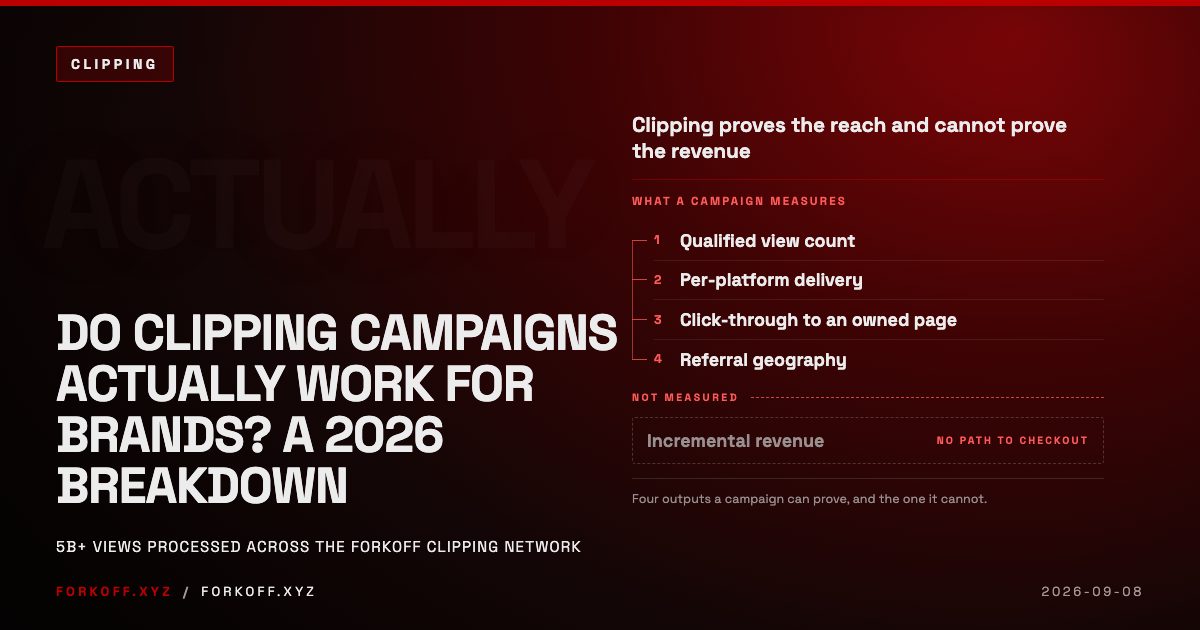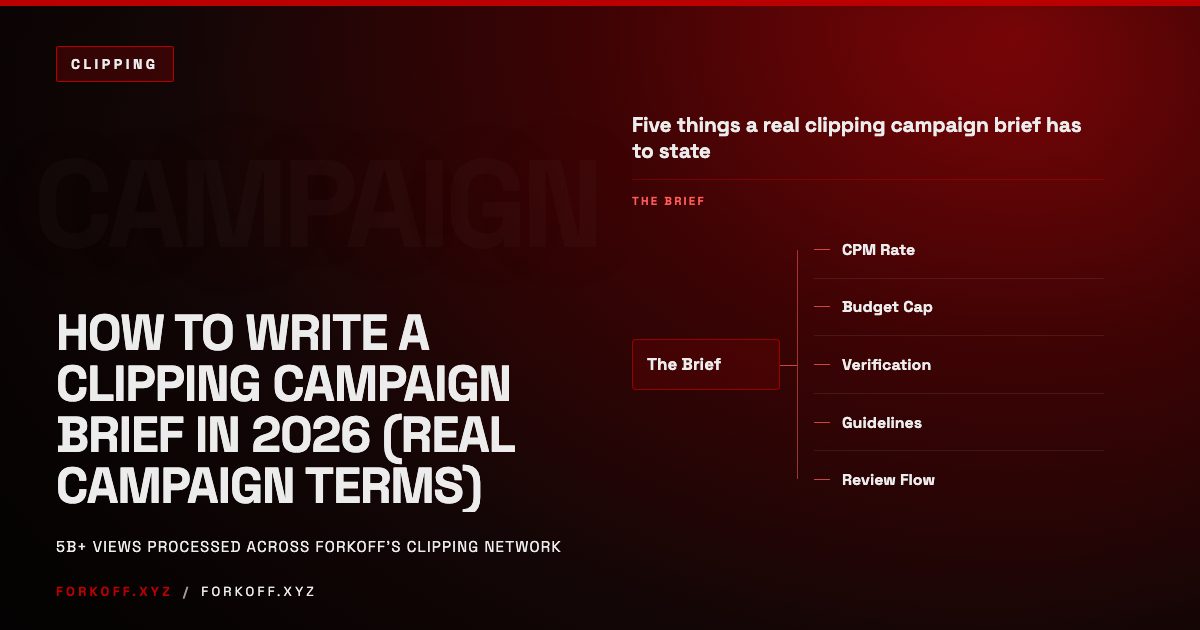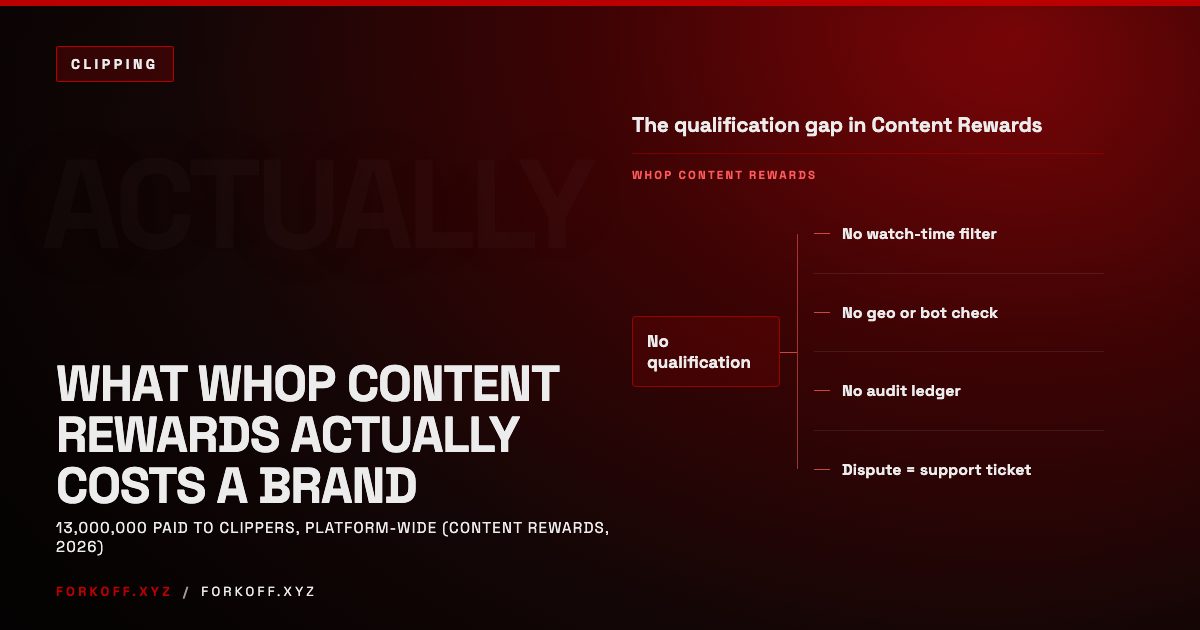
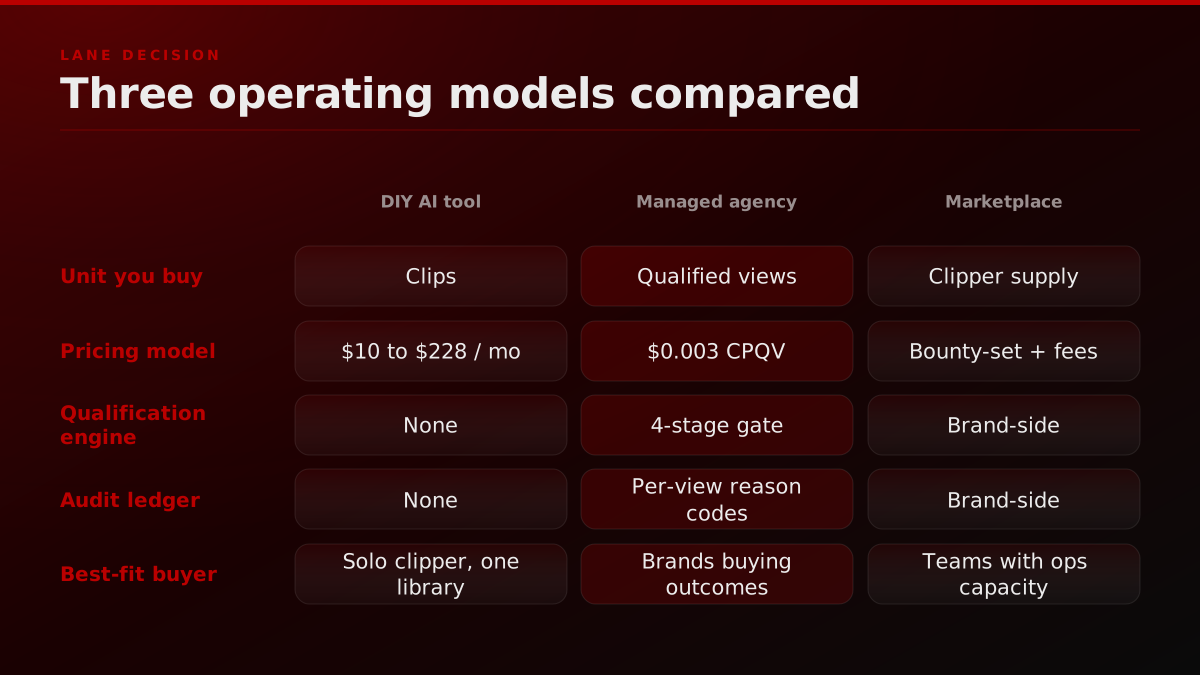
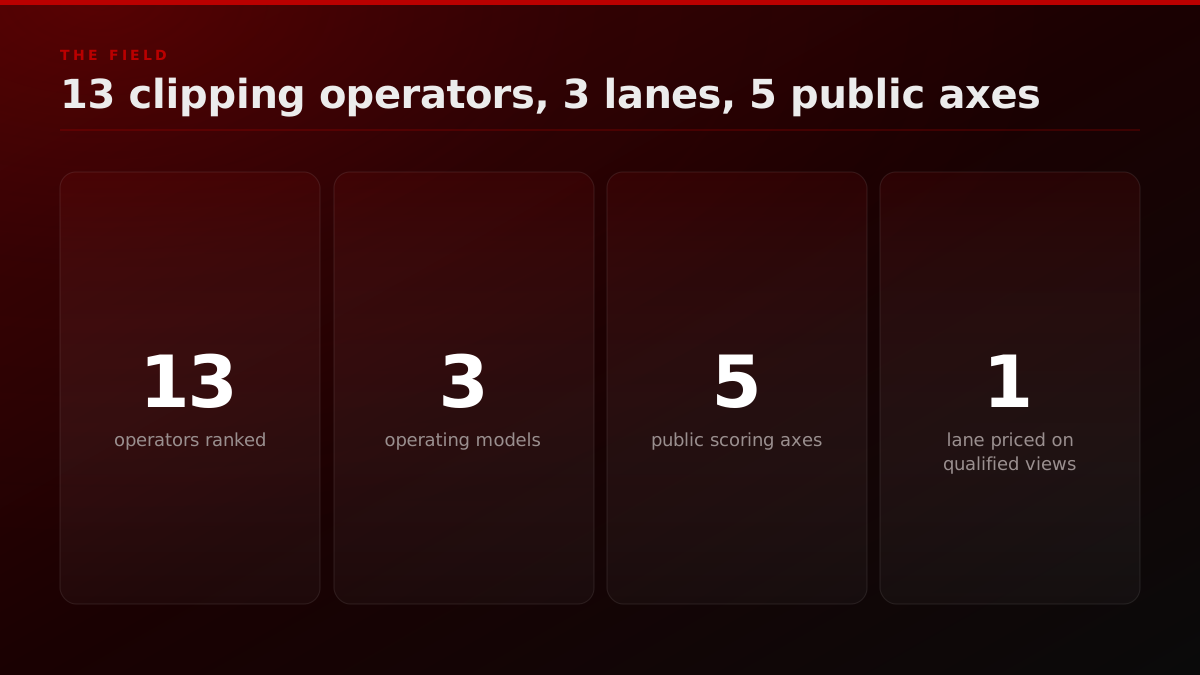
Clipping software in 2026 sits across three operating models: DIY AI tools (OpusClip, Descript, Vizard) where your team does the editing, open marketplaces (Whop, Patreon) where you post a bounty and freelancers compete, and managed agencies (FORKOFF Clipping) where a human team handles brief intake, clip selection, distribution, and qualification tracking. The model choice matters more than the tool choice: 13 named operators are ranked below on five public axes so you can verify the fit before you spend.
About these numbers
FORKOFF first-party operator data from managed clipping and short-form video distribution engagements, supplemented by publicly available creator economy data (Whop, Epidemic Sound, Patreon 2025-2026). All figures are directional estimates based on operator observations and individual outcomes vary by campaign structure, content category, and platform.
TL;DR
The best clipping software in 2026 splits into three lanes that solve different problems. DIY AI tools (OpusClip, Submagic, Klap, Vizard, Captions AI, Munch, Vidyo) auto-cut long-form video for solo clippers running their own back catalog at $15 to $99 per month. Managed agencies (FORKOFF Clipping, Clipping Culture, Lumina Clippers, Clipify) run outcome-priced campaigns where vetted clippers ship the cuts and brands pay on qualified views. Open marketplaces (Whop, Cryptoclippers) hand brands raw clipper supply and a bounty interface, with qualification and payout cleanup falling on the brand team.
The best clipping software in 2026 is not a single product; it is a lane decision. Pick the lane that matches your team capacity. If you have one person editing one library, a DIY AI tool wins on speed-to-first-clip. If you want outcomes and an audit ledger, the managed-agency lane is the only place that ships a qualified-view denominator (CPQV) and a per-view reason-code log. If you have ops capacity and want raw distribution, an open marketplace lets you set the bounty and own the qualification work.
This page ranks 13 named operators across all three lanes on five public axes: pricing model, output cadence, qualification denominator, audit trail, and best-fit ICP. FORKOFF leads the managed lane on the qualification axis. OpusClip leads the DIY lane on AI editing UX. Whop leads the marketplace lane on brand-side bounty self-serve. Read the criteria, then verify each line against the linked source.
What is clipping software in 2026?
Clipping software turns long-form video (podcast episode, Twitch VOD, YouTube upload, webinar) into short vertical cuts for TikTok, Shorts, Reels, X, Facebook, and LinkedIn. The category was niche in 2022. It is now a $1B+ surface because the distribution math inverted: TBPN. Where this roundup differs from the AI video editor roundup is the lens: this guide grades operators on the human-in-loop QA pipeline (clipper review, brand-side filter, qualified-view ledger), not on AI clip-selection algorithm quality which is the editor-roundup lens gets 7,000 live viewers per episode and 257,000 average views per clip, and OpenAI paid a reported $200M for the show in 2026 because the clip inventory mattered, not the live audience.
The software that powers the clip pipeline split into three operating models.
DIY AI tools treat clipping as a single-clipper workflow. Upload, AI detects clip-worthy moments, clipper reviews and publishes. If you are that single clipper and have no posting accounts yet, the niche pick and program signup that come before any tool choice are at how to start clipping. OpusClip, Submagic, Klap, Vizard, Captions AI, Munch, and Vidyo sit here. Subscription pricing. No qualification denominator because there is no campaign brief to filter against. For a head-to-head on the four DIY leaders plus the managed lane, the OpusClip vs Vizard vs managed clipping data comparison scores each on cost per qualified view across real client engagements.
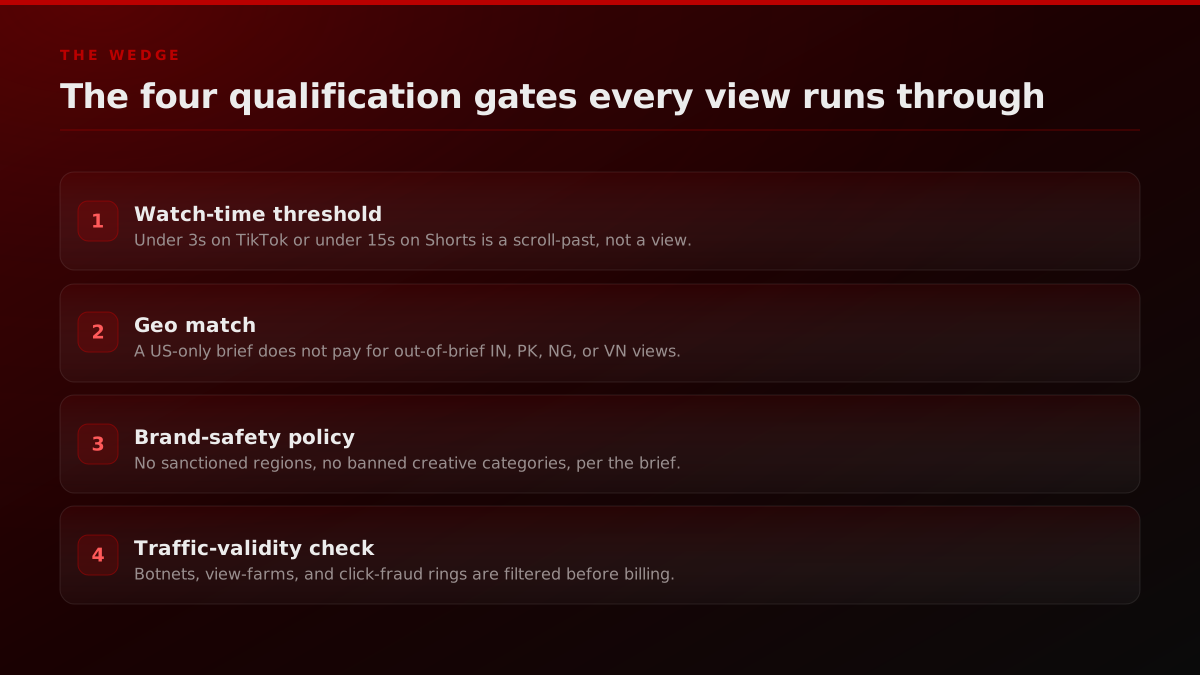
Managed agencies treat clipping as an outcome-priced campaign. Brand briefs, vetted clippers cut, agency filters every view through watch-time + geo + policy + traffic-validity gates, brand pays on qualified views (CPQV) instead of raw views (CPM). FORKOFF Clipping, Clipping Culture, Lumina Clippers, and Clipify sit here. The qualification denominator is the wedge.
Open marketplaces treat clipping as a bounty board. Brand posts bounty, clippers compete, brand approves or rejects, brand owns qualification + payout cleanup. Whop and Cryptoclippers sit here. Bounty-set pricing.
A DIY AI tool ships clips. A managed agency ships qualified views. A marketplace ships clipper supply. Pick the unit you actually want to buy.
Lane 1: DIY AI clipping tools (the solo-clipper subscription lane)
DIY AI tools are subscription products. You upload a long-form file, the AI detects clip-worthy moments, you review cuts in a browser editor, you export. Output quality depends on the AI's scene-detection model and your willingness to fix what the AI got wrong before publish. There is no clipper marketplace, no qualification engine, no campaign brief. This is the right lane when one person is editing one back catalog and the goal is speed-to-first-clip.
OpusClip
OpusClip is the category leader on AI editing UX for individual clippers. The viral-clip detection model is the strongest of the DIY tier and the editor handles caption styling, B-roll insertion, and vertical reframing without forcing the clipper into a desktop video editor. Pricing on the OpusClip pricing page runs $15 to $99 per month across the Starter, Pro, and Streamer tiers. The Streamer tier targets Twitch and Kick clippers specifically. There is no managed service, no clipper supply, and no qualification denominator. If you need geo routing, brand-safety policy enforcement, or an audit ledger you can hand to finance, the cleanup is on your team.
Read the full OpusClip review. FORKOFF vs OpusClip side-by-side at /compare/forkoff-vs-opusclip.
Submagic
Submagic is the caption-first DIY tool. Word-by-word animated captions, emoji injection, scene-aware caption sizing. Pricing on the Submagic pricing page runs $20 to $79 per month. Strongest fit for clippers whose audience converts on caption design rather than B-roll variety. Output cadence is limited by clipper review time. No managed lane, no qualification denominator. FORKOFF vs Submagic at /compare/forkoff-vs-submagic.
Klap
Klap auto-detects viral moments from long-form video and exports a 9
cut with captions. Pricing $29 to $79 per month. Stronger on the auto-cut accuracy than on the editor UX. Best fit when a clipper wants the AI to do most of the cut selection and the clipper does light review-and-publish only. FORKOFF vs Klap at /compare/forkoff-vs-klap.Vizard
Vizard runs a free tier and paid tiers from $19 to $59 per month. Caption automation, scene detection, vertical export, and a generous free allowance for early-stage clippers who want to test the workflow before paying. Output ceiling is lower than OpusClip on viral-detection accuracy but the free tier is the best in the DIY lane. FORKOFF vs Vizard at /compare/forkoff-vs-vizard.
Captions AI
Captions AI is a mobile-first DIY tool optimised for talking-head workflows and AI-generated avatars. Pricing $10 to $50 per month. Strongest on the talking-head + caption surface, weaker on long-form podcast or stream repurposing. FORKOFF vs Captions at /compare/forkoff-vs-captions.
Munch
Munch sits at the high end of DIY pricing ($49 to $228 per month, the high end of self-serve SaaS) because it bundles AI clip detection with marketing analytics and SEO suggestions for the cuts it produces. Best fit for marketing teams clipping long webinars or podcasts where the team wants the analytics layer alongside the editor. FORKOFF vs Munch at /compare/forkoff-vs-munch.
Vidyo
Vidyo is a mid-tier DIY tool ($20 to $40 per month) with AI scene detection and vertical export. Solid for solo clippers who want a no-frills DIY workflow at lower cost than OpusClip. FORKOFF vs Vidyo at /compare/forkoff-vs-vidyo.
What the DIY lane does not solve
Every DIY AI tool ships clips. None of them ship qualified views. None of them route clippers by geo brief. None of them filter views through watch-time, policy, or traffic-validity checks. None of them produce a per-view ledger. If your buyer is a CFO, a treasury team, a listing partner, or a brand-safety reviewer, the DIY lane is the wrong starting point. Move to the managed-agency lane. Self-serve clip-and-post automation tools that schedule and publish the cut for you sit in this same DIY lane; the FORKOFF vs Overlap comparison shows where automated posting stops and managed qualified-view distribution begins.
Operator noteEvery DIY-tool refugee we onboard says the same thing: the AI picks captions well and clip moments badly.
It's not about just putting subtitles on top, I mean finding those really impactful 30 seconds.
DIY scale sits on the editing layer, not the qualification layer
OpusClip publicly reports 16M+ creators and businesses on its platform and 97%+ caption accuracy, and Submagic reports 4M+ businesses saving 10+ hours a week. The scale is real, and it sits entirely on the editing-and-captioning layer. Neither tool ships a qualified-view denominator, a geo filter, or a per-view audit ledger, because a single-clipper subscription has no campaign brief to filter against. Scale on the edit does not equal scale on the outcome.
Source: OpusClip (opus.pro) and Submagic (submagic.co) public homepages, sampled 2026-07-23
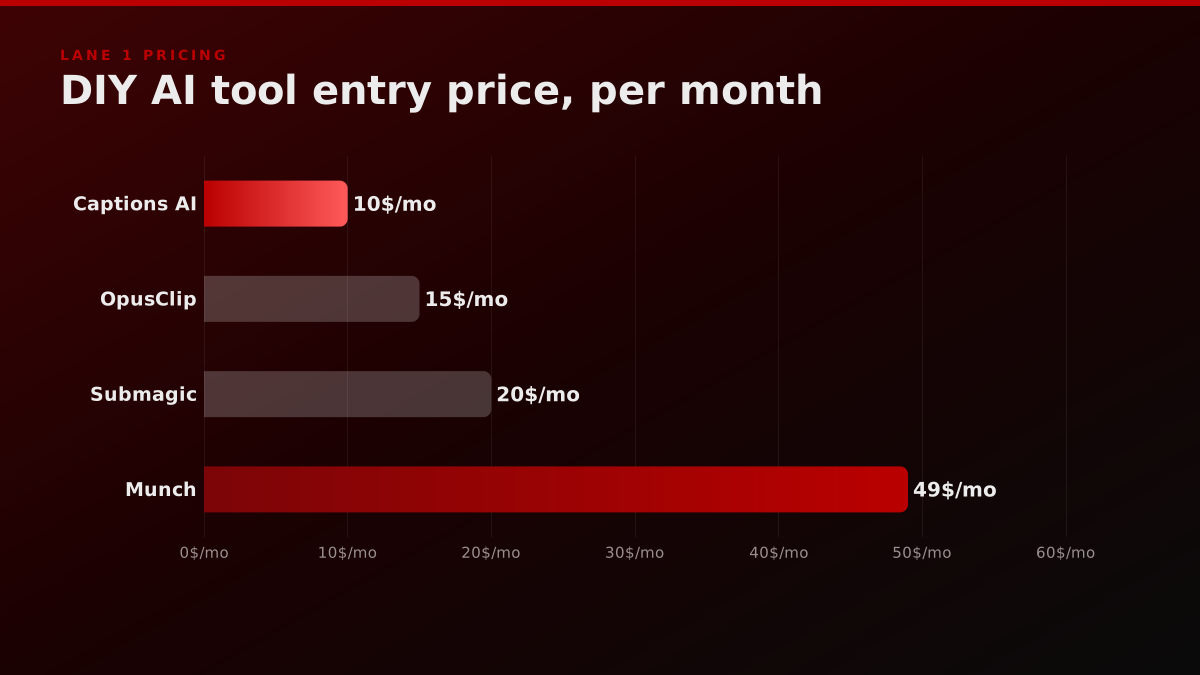
DIY AI clipping tools by entry price, ceiling, and free tier
| Tool | Entry price / mo | Ceiling / mo | Free tier | Qualified-view denominator |
|---|---|---|---|---|
| Captions AI | $10 | $50 | No | None |
| OpusClip | $15 | $99 | Yes (60 credits / mo, watermark) | None |
| Vizard | $19 | $59 | Yes (60 upload-min / mo, 720p, watermark) | None |
| Submagic | $20 | $79 | Yes (3 videos / mo, watermark) | None |
| Vidyo | $20 | $40 | No | None |
| Klap | $29 | $79 | No | None |
| Munch | $49 | $228 | No | None |
Every value is drawn from this article's per-tool sections and FAQ. DIY pricing snapshot 2026-05-08; free tiers verified on each vendor site 2026-06-26.
rasmr
@rasmr_eth
Clippers make WAY too much money rn People think I’m lying when I say an AVERAGE clipper makes $15k/month but it’s real. If more people knew how EASY it was to make six figures just fucking CLIPPING, then more people would do it and therefore CPM’s would be cheaper All I can… Show more
OpusClip Mobile App Tutorial // Learn EVERYTHING In 3 Minutes!
OpusClip
OpusClip's own walkthrough of the mobile-app DIY workflow. Useful context for the lane-1 solo-clipper experience this listicle ranks against the managed and marketplace lanes.
Lane 2: Managed clipping agencies (the outcome-priced lane)
Managed agencies run clipping as a campaign, not as a subscription. The brand writes a brief (source library, geo, brand-safety rules, target ICPs, target platforms), the agency briefs vetted clippers, the clippers cut and submit, the agency runs a qualification engine on every view, the brand pays on qualified views. Pricing is per-campaign or per-CPQV. The qualification denominator is the wedge. The full ranked field of managed providers, scored on that denominator, is in the best clipping agency comparison.
FORKOFF Clipping
FORKOFF prices on qualified views ($0.003 CPQV) instead of raw views (CPM). Every view runs through a four-stage qualification gate: watch-time threshold, geo match against the brief, brand-safety policy match, traffic-validity check (botnet, view-farm, click-fraud filters). Views that fail any gate do not count toward the bill. Per-view reason codes ship in a CSV/JSON ledger handed to the brand at campaign close. The audit ledger is the artifact a CFO or treasury team needs to recognise the spend.
Output cadence is 100+ qualified clips per week per campaign. Brand-safety policy is set at brief acceptance and includes sanctioned-region exclusions, category-specific creative rules (no medical claims, no return guarantees), and a written settlement window. Per-niche surfaces inside the FORKOFF lane include Twitch clipping and podcast clipping.
See the full service details at /services/clipping. The agency-vs-marketplace breakdown sits at /clipping-agency-vs-marketplace.
Clipping Culture
Clipping Culture runs 10B+ aggregate raw views with a celebrity-heavy clipper roster (BBNO$, Selena, Russ, Zedd) and press coverage in Forbes, Variety, and Business Insider. Strongest fit for music, celebrity, and lifestyle brands distributing inside the celebrity clipper network. Pricing is per-campaign and not publicly disclosed. The qualification denominator is not publicly documented. Audit reporting is dashboard-count level, not per-view ledger. FORKOFF vs Clipping Culture at /compare/clipping-culture-alternatives.
Lumina Clippers
Lumina runs 18B+ raw views aggregate with 62.9K clippers in its network. Pricing is raw CPM at $2 to $5 per thousand views. Volume is real and the clipper supply depth is strong. The qualification denominator is not publicly disclosed and reporting is dashboard-count level. Brands buying on raw view counts will get scale here. Brands needing audit-grade reporting will rebuild it in-house. FORKOFF vs Lumina at /compare/forkoff-vs-lumina-clippers.
Clipify
Clipify ships 3B+ views across 200+ campaigns with a roster that includes BlockDag, Spartans, Sophie Rain, and FouseyTube. The brand-side wrapper handles distribution and the toolset underneath is a clip-generation engine. Best fit for token launches and clipper-economy brands that want a packaged distribution layer. Pricing is not disclosed publicly and the qualification denominator is not published. For a head-to-head against an AI-driven entertainment clipping agency in this same managed lane, the FORKOFF vs Clouted comparison contrasts a qualified-view network with entertainment-first clip production.
Lane 3: Open clipping marketplaces (the brand-side bounty lane)
Marketplaces hand brands raw clipper supply and a bounty interface. The brand sets the bounty (per clip, per 1K views, per qualified submission), clippers compete to submit, the brand approves or rejects, the brand owns qualification + payout cleanup. Lower hourly rate on the surface, higher internal-ops cost on the back end.
Whop Clipping
Whop is the canonical marketplace. Brands post a clipping bounty alongside Whop's broader clipper-economy product (memberships, courses, communities). Pricing is bounty-set plus marketplace platform fees. Self-serve setup and clipper supply are the strengths. Qualification engine is brand-side. Audit reporting is brand-side. Best fit when a brand has internal ops capacity to write briefs, screen submissions, and run payout cleanup without agency support. FORKOFF vs Whop at /compare/forkoff-vs-whop. Full Whop clipping review. Pricing breakdown.
Cryptoclippers
Cryptoclippers is a web3-native marketplace. Open clipper supply with self-tagged geo. Quality control and qualification are on the brand. Useful when web3 teams want raw distribution volume across crypto clipper pools and accept the cleanup workload that follows.
The CPQV economics every buyer should run before signing
CPQV (cost per qualified view) is the unit that tells you whether the clipping spend converted to distribution your CFO can recognise. The math is not optional. The math is the entire reason the managed-agency lane exists as a separate product category from the DIY subscription lane and the marketplace bounty lane. Buyers who skip the math end up paying CPM for raw views, then rebuilding the qualification layer in-house at higher fully-loaded cost than the agency would have charged. To run the numbers before signing any campaign, use the CPQV calculator to see your fully-loaded cost per qualified view against the FORKOFF $0.003 benchmark.
How to compute CPQV on any operator
Start with raw spend. Add clipper time (the clipper is a real cost even when the clipper is your team). Add internal-ops time for brief writing, submission review, payout cleanup, and dispute handling. Add the cost of the qualification engine (watch-time threshold checker, geo filter, brand-safety policy enforcer, traffic-validity layer). The sum is fully-loaded spend.
Divide fully-loaded spend by qualified views. A qualified view is a view that cleared all four gates: watch-time threshold (typically 3 to 15 seconds depending on platform), geo match against the brief (campaigns targeting US buyers do not pay for IN or PK views), brand-safety policy match (no sanctioned regions, no banned creative categories), and traffic-validity check (botnet filters, view-farm filters, click-fraud filters).
The output is CPQV. A FORKOFF campaign clears at $0.003 CPQV with the ledger handed at campaign close. A raw-CPM agency at $2 to $5 CPM clears at an estimated $0.008 to $0.025 fully-loaded CPQV after you add the qualification rebuild. A DIY tool subscription clears at variable CPQV depending on clipper output and the qualification layer you bolt on. A marketplace bounty clears at variable CPQV depending on the bounty floor and the internal-ops load.
The four qualification gates
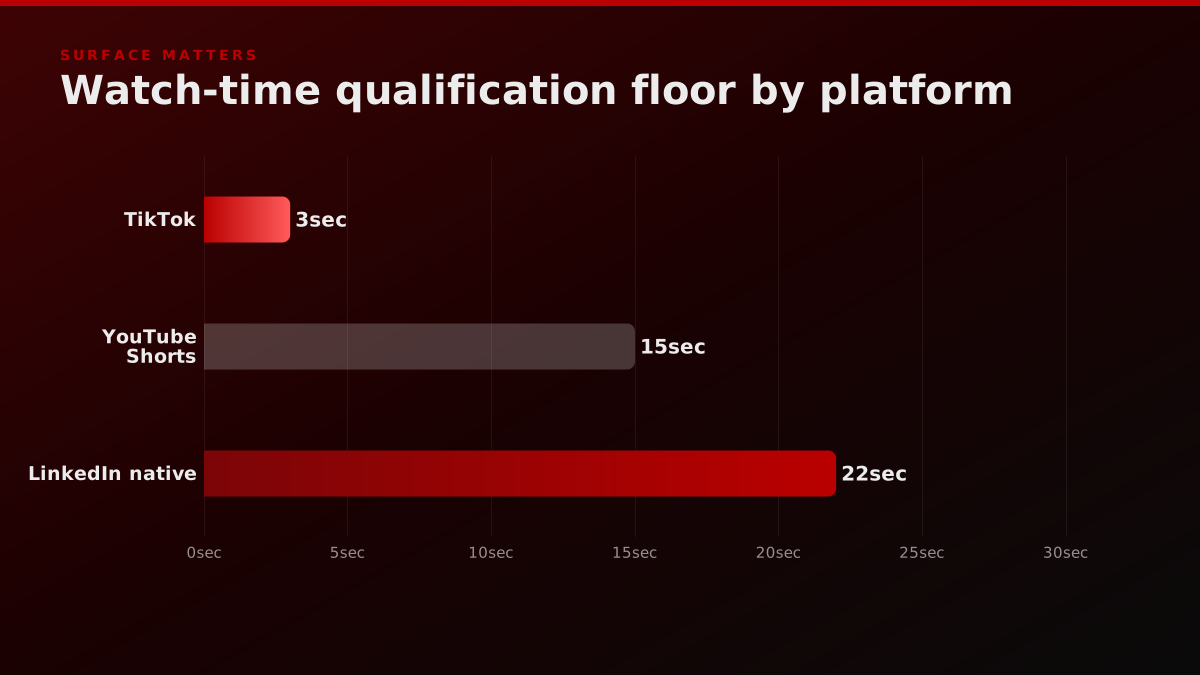
Watch-time threshold. A view that lasts less than 3 seconds on TikTok or less than 15 seconds on YouTube Shorts is a scroll-past, not a view. Platforms count it because their ad model is impression-based. Brands should not pay for it. FORKOFF sets the threshold at brief acceptance and the ledger reports the threshold-fail rate per clip.
Geo match. A brand running a US-only sandbox engagement does not pay for IN, PK, NG, or VN views even when those views drive raw count. The brief locks the geo allowlist. The ledger reports geo-fail rate per clip and reason codes (IP-block detected, VPN flagged, geo mismatch confirmed).
Brand-safety policy match. Regulated brands set creative rules at brief acceptance. No medical claims. No financial-return guarantees. No gambling or sports-betting adjacency. No sanctioned-region distribution. The ledger reports policy-fail rate per clip with the specific rule triggered.
Traffic-validity check. Botnets, view-farms, click-fraud rings, and engagement-bait loops are real. They inflate raw counts. They do not convert. The ledger reports traffic-validity-fail rate per clip and the detection-engine reason code (TIVT flag, IVT pattern, suspicious-engagement ratio).
A view that fails any gate does not count toward the bill. That is the entire point of CPQV. Raw CPM is the wrong unit because it does not filter.
Worked example: $10K monthly spend
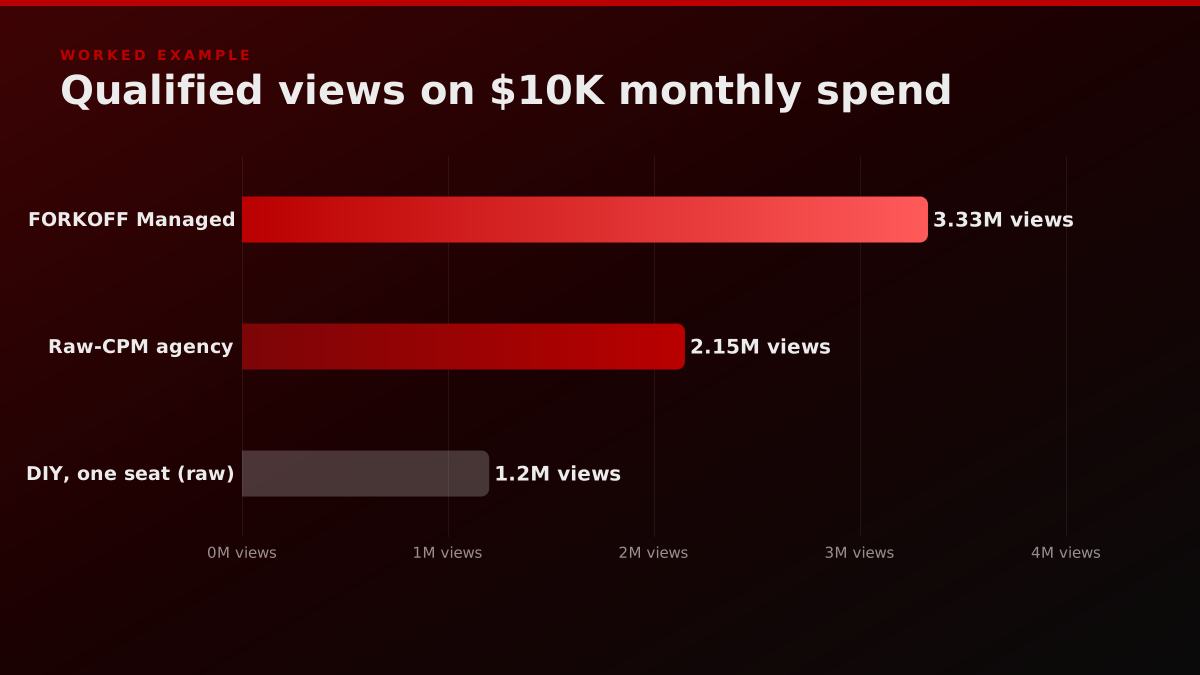
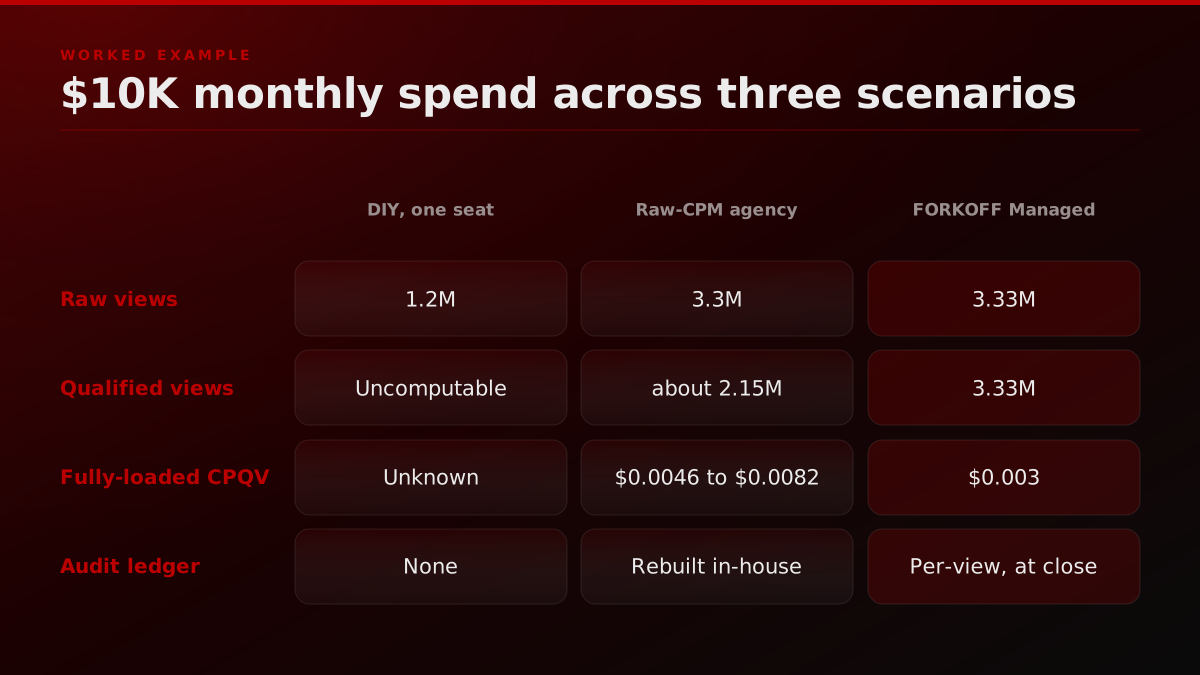
A finance brand spends an estimated $10K monthly on clipping. The DIY scenario buys 4 OpusClip Pro seats ($396), 1 clipper at $9,600 monthly (1 FTE at $115K loaded), and zero qualification. Output is roughly 60 clips per month at variable view counts. Raw views average 1.2M monthly. CPQV is uncomputable because there is no qualification engine, so the brand has no audit-grade number to hand to the CFO. Effective spend per qualified view depends entirely on the brand-side cleanup that nobody runs.
The raw-CPM agency scenario buys $10K at an estimated $3 CPM average and lands 3.3M raw views, of which roughly 35 percent fail one or more gates (watch-time fails on TikTok scroll-past, geo fails on out-of-brief regions, policy fails on rules the agency did not enforce, traffic-validity fails on botnet inflation). Qualified views are roughly 2.15M. Fully-loaded CPQV after the brand-side rebuild is an estimated $0.0046 to $0.0082.
The FORKOFF scenario buys $10K at $0.003 CPQV and lands 3.33M qualified views. Every view ships with a reason-code line in the ledger. No rebuild. No cleanup. The CFO recognises the spend at the line-item level and the treasury team reconciles against the ledger CSV. CPQV is the disclosed unit and the unit on the invoice match.
The numbers favour CPQV when the brand-side ops capacity is finite and the qualification denominator matters. The numbers favour DIY only when the clipper IS the brand team and the back catalog is small enough to manage on one seat. The numbers favour marketplace only when the brand has internal ops capacity to write briefs, screen submissions, and run payout cleanup at scale.
The FORKOFF Clipping Ledger: what shows up in the CSV
The audit ledger is the artifact that separates the managed-agency lane from every other operating model. Most managed agencies report at dashboard-count level (total views, total clips, total spend). The Clipping Ledger reports at per-view level with reason codes. The CSV ships at campaign close and stays accessible for the duration of the brand engagement plus 24 months.
Columns in the ledger
The Clipping Ledger CSV ships with one row per view event and the following columns: campaign_id, clip_id, clipper_id (anonymised), platform (TikTok, Shorts, Reels, X, Facebook, LinkedIn), post_url, view_timestamp, view_duration_seconds, view_geo_country, view_geo_region, watch_time_pass (boolean), geo_pass (boolean), policy_pass (boolean), traffic_validity_pass (boolean), qualified (boolean), reason_code, qualified_cost_usd, raw_cost_usd_if_cpm_equivalent.
The reason_code column resolves to one of: QUALIFIED, FAIL_WATCH_TIME, FAIL_GEO_COUNTRY, FAIL_GEO_REGION, FAIL_POLICY_CATEGORY, FAIL_POLICY_SANCTIONED_REGION, FAIL_TIVT, FAIL_IVT_PATTERN, FAIL_BOT_SIGNATURE, FAIL_ENGAGEMENT_RATIO, FAIL_DUPLICATE_VIEW. Each reason code maps to a specific gate failure and the brand can audit any flagged view by URL.
What the ledger lets a CFO do
A CFO recognises clipping spend when the unit of purchase is auditable. The Clipping Ledger gives the CFO three things every other operator withholds: a per-view line item that maps spend to outcome, a reason-code distribution that proves the qualification engine ran, and a settlement-window cutoff that locks the bill at campaign close so disputes are settled before the next sandbox engagement opens.
A treasury team running monthly reconciliation imports the CSV into the BI stack and joins against the invoice. The qualified-view count on the invoice matches the qualified=true row count in the CSV. Mismatches are zero by contract. A finance team running quarterly review reads the reason-code distribution to flag campaign-side anomalies (sudden geo-fail spike on a TikTok cut indicates a clipper routing issue, sudden policy-fail spike on a Shorts cut indicates a brief-acceptance gap).
What the ledger lets a brand-safety reviewer do
A brand-safety reviewer at a regulated brand needs three artifacts: the brief-acceptance document that locks the creative rules, the per-view ledger that proves the rules ran on every view, and the dispute-resolution log that shows any flagged content was pulled inside the settlement window. FORKOFF ships all three by default. Most managed agencies ship none of the three at the ledger level. The DIY tools and marketplaces do not run the qualification engine in the first place.
This is why finance, health, gambling, and regulated-commerce brands move to the managed-agency lane. The audit ledger is the contract. Without the ledger, the brand-safety review cannot close. With the ledger, the brand-safety review closes inside the settlement window and the next campaign opens on schedule.
Operator noteThe CFOs we onboard sign faster once they see a per-view reason-code CSV instead of a dashboard screenshot.
Which clipping software fits which use case?
The lane decision is the first decision. The operator decision inside the lane is the second decision. The third decision is whether the operator's qualification denominator and audit ledger match the buyer's recognition floor. Walk the tree by use case.
Solo podcast clipper editing a personal back catalog
Use case: one host, weekly episode, 100-episode back catalog, no external clipper supply, no brand-safety contract needed. The DIY lane wins. Start with Vizard free tier to confirm the workflow matches the host's editing speed. Upgrade to OpusClip Pro ($29 monthly) when the free tier caps on output. Pair with Submagic ($20 monthly) if caption design is the conversion lever. Do not move to the managed-agency lane until external clipper supply is needed.
Brand-funded podcast running a paid distribution campaign
Use case: branded podcast, weekly episode, an estimated $5K to $50K monthly spend, qualified-view denominator required for CFO recognition, brand-safety contract required for regulated-brand fit. The managed-agency lane wins. FORKOFF runs podcast campaigns at roughly 30 cuts per episode with the Clipping Ledger handed at campaign close. Apply to the podcast clipping service page for the brief-acceptance flow. Do not run a regulated-brand campaign through the DIY lane or the marketplace lane unless the brand-safety review confirms the qualification rebuild is in scope.
Twitch streamer cutting their own VOD
Use case: solo streamer, daily VOD, no external clipper supply, output cadence target of 5 to 10 clips daily across TikTok and Shorts. The DIY lane wins. OpusClip Streamer tier ($99 monthly) is purpose-built for Twitch and Kick clippers and the viral-detection model handles the VOD-to-shorts transformation without forcing the streamer into a desktop editor. Pair with Submagic if caption design lifts retention. Read the Twitch clipping guide for the full streamer-side breakdown.
Anyone else overwhelmed by editing 6–8 hour Twitch VODs into highlights?
I’m a newer streamer and honestly this is the part that’s starting to burn me out a bit. Most of my streams run 6–8 hours, and after each one I want to turn them into highlights for YouTube Shorts / TikTok. But in reality… * I forget where the good… Show more
I've tried OpusClips and Vizard and found both to be average, lacking many basic features that would make the workflow much easier.
AI tooling brand running a launch-week distribution sprint
Use case: AI product launch, 14-day distribution window, target ICP across X and LinkedIn, qualified-view denominator required for board-deck reporting. The managed-agency lane wins. FORKOFF runs launch-week sprints on a 7-day brief-acceptance cycle and the Clipping Ledger ships daily during the sprint window. Output cadence targets 100+ qualified clips per week across the X and LinkedIn surfaces. Apply through /services/clipping.
Web3 brand running an open clipper bounty
Use case: token launch, open clipper supply, brand has internal ops capacity, qualified-view denominator self-managed. The marketplace lane wins. Whop self-serve bounty setup is the canonical path. Cryptoclippers is the web3-native alternative. Allocate brand-side ops capacity for brief writing, submission review, payout cleanup, and dispute handling at the bounty floor. Without ops capacity, move to the managed-agency lane and route the campaign through /services/clipping.
SaaS GTM team clipping webinars at scale
Use case: B2B SaaS, monthly webinar series, marketing team owns the clip pipeline, analytics integration with the marketing stack is required. The DIY lane wins on tooling, but the cadence ceiling caps at the marketing team's editing capacity. Munch at the $228 monthly ceiling is the right fit because the analytics layer ships alongside the editor. Move to the managed-agency lane when output cadence exceeds team capacity or when paid-distribution spend exceeds $10K monthly.
Gaming publisher running cross-platform distribution
Use case: AAA gaming brand, multi-platform distribution across TikTok, Shorts, Reels, X, and Twitch, qualified-view denominator required for partner reporting, brand-safety contract required for ESRB compliance. The managed-agency lane wins. FORKOFF runs gaming campaigns with the Clipping Ledger and a written brand-safety contract that covers age-gating, no-spoiler clauses, and publisher-approved creative rules. Apply through the standard brief-acceptance flow.
How do you choose clipping software in five questions?
Most "which clipping software is best" decisions are actually "which operating model do I want." The wrong model wastes weeks: a solo creator on a managed-agency contract pays for infrastructure they do not need, while a brand team running a DIY tool spends editor hours that cost more than the subscription saves. Walk these five questions in order before picking a lane.
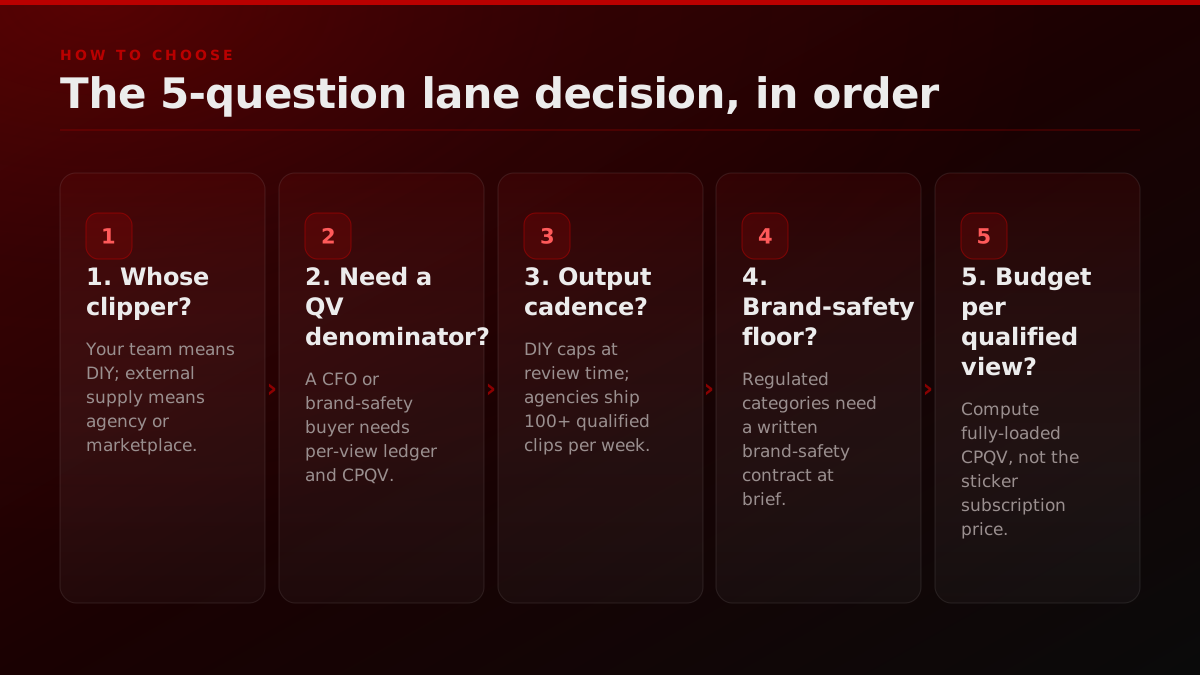
1. Is the clipper my team or an external clipper? If clipper = your team (one person editing one back catalog), the DIY lane wins on speed-to-first-clip. If clipper = external supply, you are picking between marketplace (you brief, you qualify) and agency (they brief, they qualify).
2. Do I need a qualified-view denominator? If your buyer is a CFO, a treasury team, a listing partner, or a brand-safety reviewer, you need a per-view ledger and CPQV pricing. Only the managed-agency lane ships this. Inside the managed lane, only FORKOFF ships per-view reason codes publicly.
3. What is my output cadence target? DIY tools cap at clipper review capacity (typically 5 to 30 clips per week per clipper). Managed agencies cap at brief scope (100+ qualified clips per week per campaign). Marketplaces cap at bounty-floor + clipper interest. Pick the cadence that matches your distribution surface.
4. What is my brand-safety floor? If you operate in a regulated category (finance, health, gambling, regulated commerce), you need written brand-safety policy at brief acceptance, sanctioned-region exclusions, and category-specific creative rules. Only the managed-agency lane carries this contract. Ask in writing before booking.
5. What is my budget per qualified view? DIY tool subscriptions look lower-cost until you add the cost of clipper time (the clipper IS the brand team) and the cost of cleanup (no qualification = brand-side filter). Managed agencies run an estimated $0.003 to $0.01 CPQV at FORKOFF tier. Marketplaces run lower hourly rate but higher internal-ops load. Compute your fully-loaded cost per qualified view, not the sticker price.
If you walked the five questions and landed on managed agency, see /best-clipping-agency for the in-lane ranking. If you landed on marketplace, /clipping-agency-vs-marketplace covers the cost-to-switch math. If you landed on DIY, the per-tool reviews above are the right starting point.
Operator noteNine of ten 'which tool is best' calls we take are actually lane decisions the buyer has not made yet.
Industry context
Clipping operator pricing pages confirm the public-axis snapshot: Captions AI publishes a $10 entry tier, OpusClip enters at $15, Submagic at $20, Vizard at $19, Vidyo at $20, Klap at $29, and Munch at $49 (with a $228 ceiling). Managed agencies and marketplaces do not publish a monthly subscription floor; pricing surfaces only via brief or bounty. Of the 13 operators in this list, only FORKOFF Clipping publicly prices on qualified views ($0.003 CPQV) and ships a per-view reason-code ledger as a campaign-close artifact. The other managed agencies report at dashboard-count level. The DIY tools and marketplaces have no qualification engine. The gap is the entire reason the managed-lane CPQV model exists.
Source: Public pricing pages and service-LP disclosures, sampled 2026-05-08
Creators name clip selection, not captioning, as the hard part
In a 55-comment r/podcasting thread on which AI tool cuts the best clips, the top complaint is not caption styling; it is clip selection. As one creator put it, the job is finding those really impactful 30 seconds, not just putting subtitles on top. A parallel r/Twitch thread with 177 upvotes reports the same gap: OpusClip reads talking-head content well and misses the hype on gameplay, so finding the clips takes longer than editing them. Clip selection is the unsolved DIY problem, and it is exactly what a briefed human clipper plus a qualification gate exists to fix.
Source: r/podcasting 'Which AI tool creates the best clips?' (55 comments) and r/Twitch VOD-editing thread (177 upvotes), 2025-2026
Which clipping software ships to which platform?
Clipping software is not platform-neutral. Each distribution surface (TikTok, YouTube Shorts, Instagram Reels, X, Facebook Reels, LinkedIn) has its own ranking signals, watch-time thresholds, and creative norms. Software that ships strong on TikTok often ships weak on LinkedIn because the creative register flips. The most common single route, a long YouTube upload re-cut for Reels, runs as its own managed lane at YouTube to Instagram clipping. The lane decision interacts with the surface decision.
TikTok
TikTok is the highest-volume short-form surface and the platform where qualification matters most because raw counts inflate fast on scroll-past traffic. The 3-second watch-time threshold is the standard qualification gate. DIY tools that ship strong on TikTok: OpusClip (viral-detection model is TikTok-trained), Submagic (caption styling matches the TikTok creative norm), and Vizard on the free tier for early-stage clippers. Managed agencies that ship strong on TikTok: FORKOFF runs roughly 40 percent of campaign output on TikTok with the Clipping Ledger reporting watch-time fail rates per clip. Full breakdown at /services/clipping.
YouTube Shorts
Shorts has the longest qualification threshold among short-form surfaces (15 seconds typical) and the strongest platform-monetisation signal because Shorts retention rolls into long-form recommendation. Clipping software that ships strong on Shorts is the software that handles 9
vertical reframing without cropping speaker faces and that respects the longer watch-time window. OpusClip and Klap lead the DIY lane here. In the managed lane, FORKOFF Shorts campaigns target 8-second-plus average watch time as a qualification floor and the ledger tracks platform-specific watch-time fail rates separately because the threshold differs from TikTok by 4x.Instagram Reels
Reels rewards caption density and quick hook delivery. The Meta-side qualification gate is opaque (Meta does not publish a watch-time floor publicly). The managed-agency lane runs its own watch-time threshold against the brief at brief-acceptance time. Submagic and Captions AI lead the DIY lane on Reels because the caption-first workflow matches the Reels creative norm. The FORKOFF Reels output runs the same qualification engine as TikTok with a slightly relaxed watch-time floor at brief-acceptance based on the brand's recognition tolerance.
X (Twitter)
X is the surface where clipping software lags the platform's growth. The native X video player handles 9
cuts and the algorithm rewards reply-driven engagement loops more than watch-time retention. Most DIY tools export an X-ready cut but few are X-native. The managed-agency lane handles X by routing clippers who run their own X distribution accounts at the brief-acceptance layer. FORKOFF clippers running X distribution post under their own handles with the cut content matching the brand brief and the ledger tracking per-handle qualified-view counts.Facebook Reels and LinkedIn
Facebook Reels and LinkedIn are the underserved surfaces. Facebook Reels carries massive raw volume but lower qualified-view density because the audience skews older and the watch-time floor on the platform is shorter than TikTok. LinkedIn is the inverse: lower raw volume, higher qualified-view density because the creative register matches the B2B buyer and the watch-time floor on LinkedIn averages 22 seconds for native video. Managed-agency campaigns that target B2B buyers route a 15 to 25 percent share to LinkedIn even at higher per-view cost because the qualified-view density justifies the spend. The DIY lane is underbuilt on LinkedIn because the caption animation norm does not translate to the B2B feed.
The clipper supply economics behind each lane
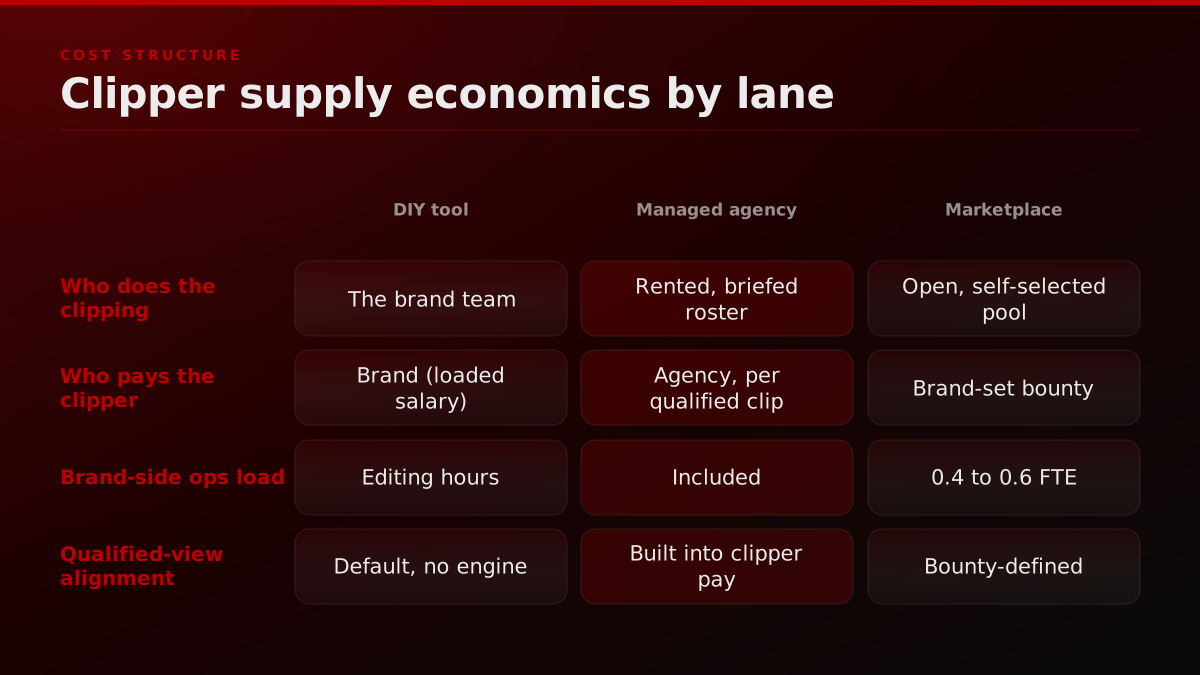
Clipper supply is the hidden variable that determines what you actually buy. DIY tools assume the clipper is on your team. Managed agencies own the clipper supply and route by brief. Marketplaces source clipper supply at the bounty level. The cost structure on each lane is downstream of the supply model.
DIY lane: the clipper is the brand team
Every DIY tool prices on subscription because the clipper is the brand team. The fully-loaded cost is the subscription plus the clipper's loaded salary. A solo founder editing their own podcast pays $29 monthly on OpusClip and zero clipper salary because the founder IS the clipper. A SaaS marketing team running a 4-clipper pod on Submagic Pro pays $79 monthly per seat plus four loaded clipper salaries at $115K each. The math flips fast: at 4 clippers, the fully-loaded clipper cost is an estimated $460K annually against a $3,792 annual subscription. The DIY-lane sticker price is roughly 0.8 percent of the total clipping spend at that team size. Buyers who optimise on the sticker price miss the 99.2 percent of cost that sits in clipper salaries.
Managed-agency lane: clipper supply is rented
Managed agencies own a vetted clipper roster and route by brief. The brand pays per-campaign or per-CPQV; the agency pays the clippers from that pool. Clipper compensation in the managed lane runs as a revenue-share or per-qualified-clip fee. FORKOFF runs a per-qualified-clip fee structure that aligns clipper incentives with the qualification engine: a clip that fails the watch-time gate does not pay the clipper, which routes clipper effort toward retention-heavy cuts rather than scroll-past inflation. Other managed agencies run revenue-share or flat-fee models that do not align clipper incentives with qualified-view density. The brand cost is roughly 60 to 70 percent of the fully-loaded DIY equivalent at the same output cadence, with the qualification engine and audit ledger included.
Marketplace lane: clipper supply is open
Marketplaces hand brands raw clipper supply at the bounty level. Clipper compensation is bounty-set by the brand. Whop's bounty floor is brand-defined and clippers self-select based on bounty attractiveness. Cryptoclippers runs a similar model with web3-native payout rails. The brand cost is lower per submission than the managed lane but higher in fully-loaded internal-ops cost because the brand owns brief writing, submission review, payout cleanup, and dispute handling. A finance team running a $10K monthly Whop bounty allocates roughly 0.4 to 0.6 FTE on internal ops to manage the bounty pipeline. The internal-ops cost wipes most of the per-submission savings against the managed-agency lane.
Why qualified-view alignment matters
The clipper supply model determines whether qualified-view alignment is built into the pricing. In the DIY lane, qualified-view alignment is brand-side because the clipper is the brand team; the alignment exists by default but the qualification engine does not. In the managed-agency lane at FORKOFF, qualified-view alignment is baked into clipper compensation; a clip that fails the qualification gate does not pay the clipper, which routes effort toward retention. In the marketplace lane, qualified-view alignment is bounty-defined; if the brand sets a bounty on raw submissions, clippers optimise for submission volume rather than retention. Walk the supply economics before committing to a lane.
What do buyers get wrong when they buy clipping software?
Most buyers misallocate clipping spend because they buy on the wrong unit: raw CPM instead of cost per qualified view, or sticker-price subscription cost instead of fully-loaded cost including the clipper's time. The five mistakes below repeat across nearly every wasted campaign FORKOFF reviews during the brief-acceptance flow, and each costs an estimated $3K to $25K in misallocated spend before it surfaces.
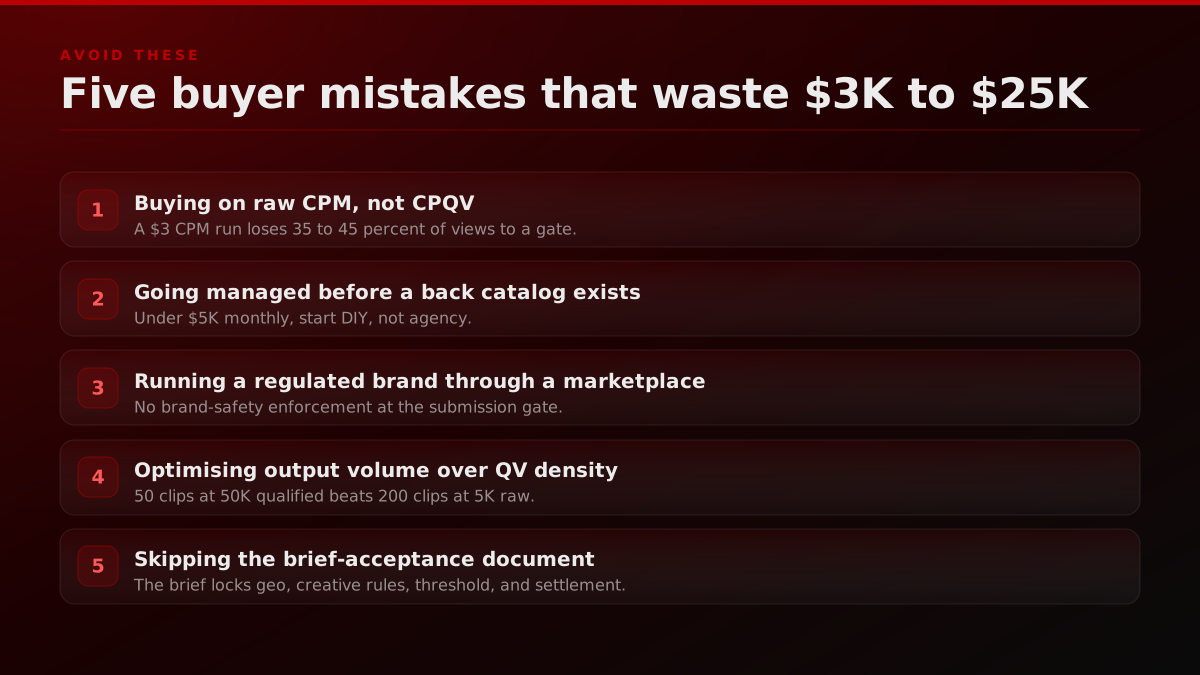
Mistake 1: buying on raw CPM instead of CPQV
Raw CPM is the legacy unit from display advertising. It does not filter for watch-time, geo, policy, or traffic-validity. A $3 CPM campaign that ships 3.3M raw views typically loses 35 to 45 percent of those views to one or more qualification gates. The CFO sees the invoice at $10K and the dashboard at 3.3M views and the spend looks efficient. The treasury team running monthly reconciliation cannot tie the spend to outcomes and the next sandbox engagement does not open on schedule. Avoid the mistake by demanding CPQV on the invoice and a per-view ledger at campaign close. Only the managed-agency lane at FORKOFF ships both publicly.
Mistake 2: starting on the managed lane before the back catalog exists
A solo podcaster with three episodes does not need a managed-agency campaign. The clipper supply is overkill, the brief-acceptance overhead is friction, and the qualified-view denominator does not yet matter because there is no CFO buyer. Start on the DIY lane with Vizard free tier or OpusClip Starter. Move to the managed lane only when external clipper supply is needed or when paid-distribution spend exceeds the threshold where qualified-view denominators matter (typically $5K monthly recurring).
Mistake 3: running a regulated-brand campaign through the marketplace lane
Finance, health, gambling, and regulated-commerce brands cannot use the marketplace lane without a parallel qualification rebuild. The marketplace bounty interface does not enforce brand-safety policy at the submission gate. Clippers submit cuts that violate creative rules and the brand reviews them after the fact. The dispute-resolution log is not contract-grade. The brand-safety review cannot close. Move regulated-brand campaigns to the managed-agency lane and confirm the written brand-safety contract at brief acceptance.
Mistake 4: optimising on output volume instead of qualified-view density
A campaign that ships 200 clips at 5,000 raw views each is louder than a campaign that ships 50 clips at 50,000 qualified views each. The dashboard tells a louder story. The CFO recognises the second campaign. The mistake repeats because output volume is visible and qualified-view density is not unless the operator ships the ledger. Demand the qualified-view denominator on every campaign and prioritise density over count.
Mistake 5: skipping the brief-acceptance document
The brief is the contract. The brief locks the geo allowlist, the brand-safety creative rules, the watch-time threshold, and the settlement window. Campaigns that skip the brief-acceptance document run into dispute-window mismatches at campaign close, qualification engine ambiguity (what counts as a fail), and creative-rule violations that nobody can audit. Every managed-agency campaign at FORKOFF opens with a written brief-acceptance document and the campaign does not start until the brand signs it. Marketplace campaigns should adopt the same artifact even when the marketplace does not require it.
Ranked overview: 13 clipping software operators
The table below ranks all 13 operators on five public axes: pricing model, output cadence, qualification denominator, audit trail, and best-fit ICP. FORKOFF authored the methodology and ranks itself first in the managed lane on the qualification axis. Every row links to a source; verify each line before making a final decision.
13 clipping operators across 3 lanes, scored on 5 public axes
| # | Operator | Lane | Pricing model | Qualified-view denominator | Best-fit ICP |
|---|---|---|---|---|---|
| 1 | FORKOFF Clipping | Managed agency | $0.003 CPQV | Yes (4-stage gate, per-view reason codes) | Brands buying outcomes (web3, AI, podcasts, SaaS, gaming) |
| 2 | OpusClip | DIY AI tool | $15 to $99 / mo | None | Solo clippers editing one podcast or stream library |
| 3 | Submagic | DIY AI tool | $20 to $79 / mo | None | Caption-heavy short-form clippers |
| 4 | Whop Clipping | Marketplace | Bounty-set + platform fees | Brand-side | Brands with internal ops capacity to run bounties |
| 5 | Klap | DIY AI tool | $29 to $79 / mo | None | Solo clippers cutting long-form back catalog |
| 6 | Captions AI | DIY AI tool | $10 to $50 / mo | None | Mobile-first solo clippers, talking-head workflow |
| 7 | Vizard | DIY AI tool | Free + $19 to $59 / mo | None | Early-stage clippers on a budget |
| 8 | Munch | DIY AI tool | $49 to $228 / mo | None | Marketing teams clipping long webinars or podcasts |
| 9 | Vidyo | DIY AI tool | $20 to $40 / mo | None | Solo clippers wanting AI scene detection |
| 10 | Clipping Culture | Managed agency | Per-campaign (undisclosed) | Not publicly disclosed | Music, celebrity, lifestyle brands |
| 11 | Lumina Clippers | Managed agency | $2 to $5 raw CPM | Raw views (no qualification denominator disclosed) | Brands optimising on raw view counts |
| 12 | Cryptoclippers | Marketplace | Variable, marketplace-driven | Brand-side (self-tagged geo) | Web3 brands willing to run their own qualification |
| 13 | Clipify | Managed agency | Per-campaign (undisclosed) | Not publicly disclosed | Token launches and clipper-economy brands |
FORKOFF authored this comparison and ranks itself first in the managed lane on the qualification axis. Public pricing snapshot: 2026-05-08.
Pick your lane
Software ranks clips; it does not run the campaign. The ranking above tells you which tool leads within each lane, but the lane choice itself determines whether you leave money on the table. A managed clipping agency crosses the execution line by owning brief intake, distribution, and qualification end to end.
If you have a single back catalog and one person editing it, the DIY lane wins. Start with Vizard free tier, upgrade to OpusClip when you outgrow it.
If you have ops capacity and want raw clipper supply, the marketplace lane wins. Start with Whop for self-serve bounty setup.
If you want outcomes, qualification, and an audit ledger you can hand to finance, the managed-agency lane wins. FORKOFF Clipping is ranked #1 in /best-clipping-agency on the qualification axis. Apply now or talk to a strategist on the /services/clipping service-LP.