A product launch announcement is not a press release, and it is not the launch video. It is the specific piece of copy that tells the market a product exists now, and most of them get written backward: company history first, features second, and the actual news, what changed, buried in paragraph three. This guide gives you the opposite order. A six-part template that works whether you are writing an email, a tweet, a Product Hunt page, or a Reddit post, the exact channel sequence to send it in, and 12 real launch announcements, with real URLs, broken down for what they got right.
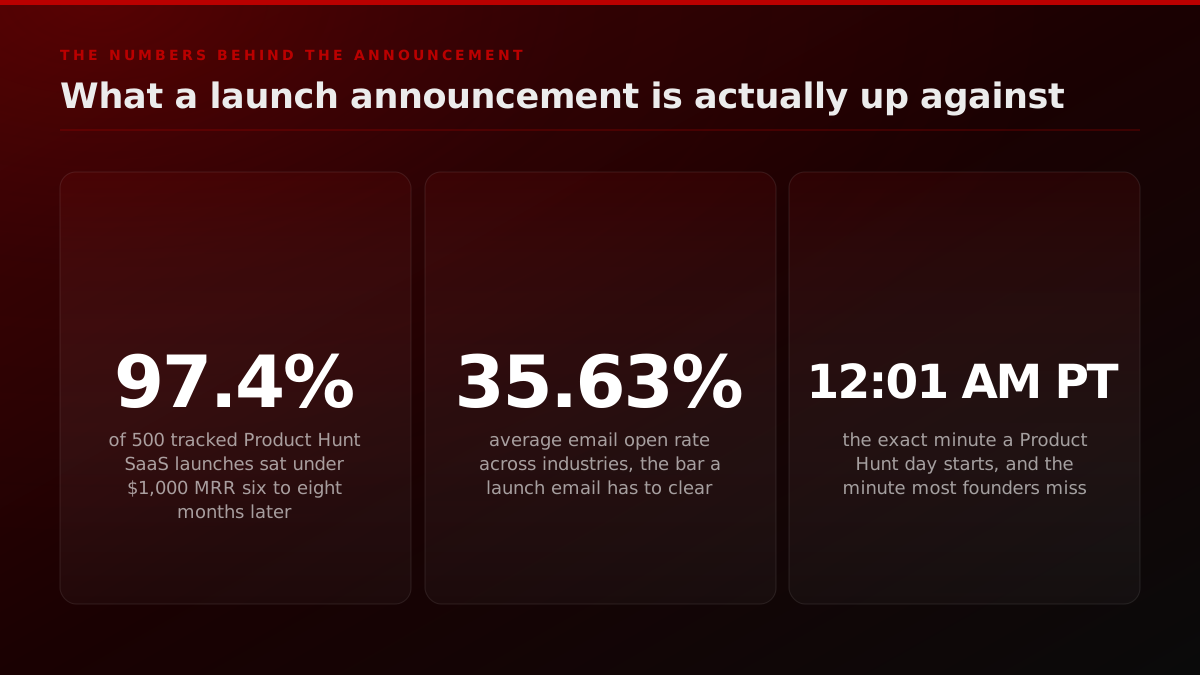
Start with the number that should reframe how much weight you put on the announcement itself. A Reddit analysis of 500 Product Hunt SaaS launches tracked from January through June 2024, then checked six to eight months later, found that 487 of them, 97.4 percent, sat under $1,000 MRR. The announcement did not cause that outcome by itself, and the analysis is honest about it: the 13 survivors mostly had paying customers before launch day, not after. But a launch announcement is being asked to carry weight it cannot carry alone. Get the template right and you get a validated product seen by the people looking for it. Get it wrong and even a good product reads like noise.
The short version
A product launch announcement is a single, specific claim, backed by real proof, sent to the right channel in the right order. It has six parts: a hook that states what changed, one specific proof point, a real screenshot or demo, a plainly named audience, one honest limitation, and a single call to action. The channel order matters as much as the copy: your own blog post first, email and X or Twitter in the same hour, Product Hunt at 12:01 AM Pacific if you are running one, Reddit later in the day once it fits the community, and paid or creator amplification after the organic version has already proven the hook. Across 500 tracked Product Hunt SaaS launches, 97.4 percent sat under $1,000 MRR six to eight months later, and the pattern in almost every one of them is the same: a good product with an announcement that read like every other announcement. Twelve real launches below show what the six-part template looks like when a founder actually uses it.
What is a product launch announcement?
A product launch announcement is the specific piece of content, an email, a tweet, a Product Hunt page, or a Reddit post, that tells the market a product, feature, or new version is available now. Most definitions, including ProductPlan's glossary entry for a product launch, describe the release mechanics but stop short of the announcement itself as a distinct artifact. It is narrower than a launch strategy, which decides the release model, and different from a launch video, which carries the story visually. The announcement's job is simpler and more mechanical: state what changed, prove it, and ask for exactly one thing.
Most launches never turn into a business, and the failure is rarely the announcement's wording
A Reddit analysis that tracked 500 Product Hunt SaaS launches from January through June 2024, then checked back six to eight months later, found that 487 of them, 97.4 percent, sat under $1,000 MRR. 456 had fewer than 100 active users, and 423 had not shipped a product update since launch month. The author is explicit that this is not proof the announcement itself was bad copy, the pattern in the 13 survivors was that they had paying customers lined up before the launch post ever went live. But it does mean a launch announcement is being asked to do a job it cannot do alone: it can get a product seen, it cannot manufacture demand that was never validated.
Source: r/SaaS, analysis of 500 tracked Product Hunt launches
I analyzed 500 Product Hunt SaaS launches. 487 are dead.
Operator noteA launch announcement cannot manufacture demand. It can only get a validated product seen by the people already looking for it.
That narrowness is the whole point. A launch announcement that tries to also be the pitch deck, the roadmap, and the origin story ends up doing none of those jobs well. The six-part template below strips it down to what actually moves a reader from scrolling past to clicking through, and every real example in this guide uses some version of it, whether the founder built it on purpose or arrived at it by instinct.
It also gets confused with the launch video and the launch strategy often enough that the confusion is worth naming directly. The launch strategy decides who gets the product, in what order, on what date, big bang or rolling, that is a release-model question, not a copy question. The launch video is the visual asset, the demo, the anthem-cut trailer, the founder-to-camera clip, that carries the story in motion. The announcement is the text that sits underneath both of them, in an email, a tweet, a Product Hunt page, or a Reddit post, and it is the one artifact almost every launch produces regardless of budget. A team with no video budget and no formal release model can still ship a working announcement. A team that skips the announcement and only has a video has nothing for a reader to click through from.
What are the six parts of a launch announcement template?
Every working launch announcement, regardless of channel, has the same six parts: a hook stating what changed, one specific proof point, a real screenshot or demo, a plainly named audience, one honest limitation, and a single call to action. Skip any one of them and the announcement gets noticeably weaker, which is the fastest way to diagnose a draft that is not landing.
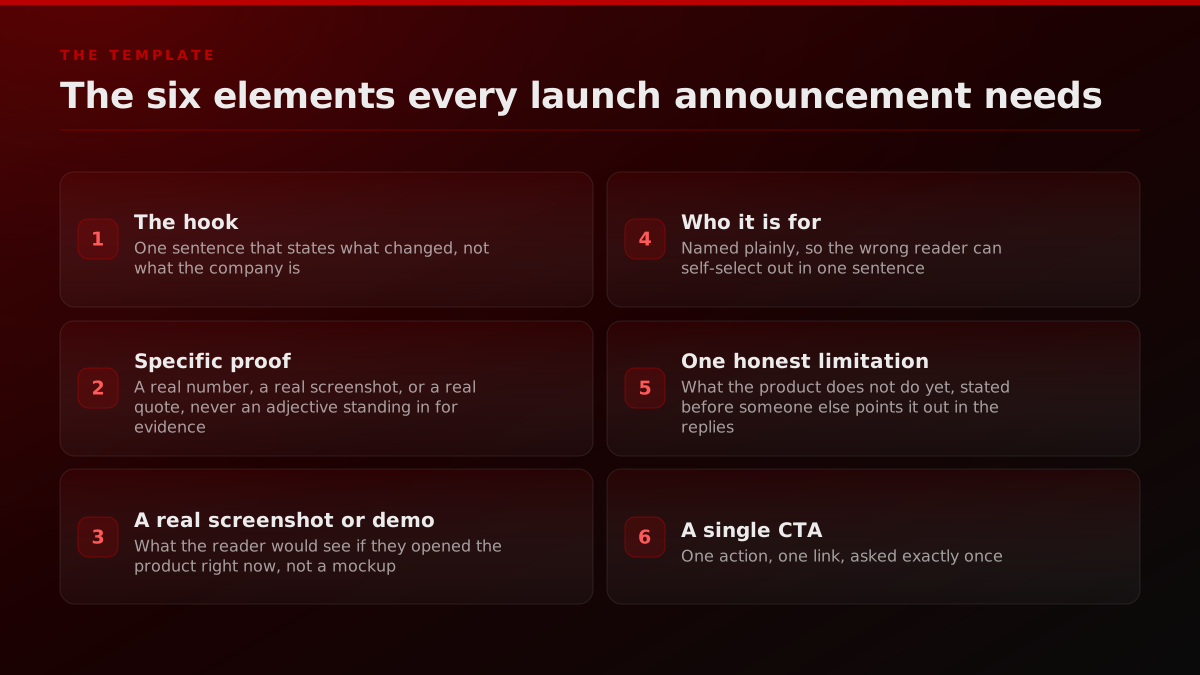
The hook states what changed, in one sentence, before anything else. Not who you are, not when you were founded, what changed. Specific proof backs the hook with a real number, a real screenshot, or a real quote, never an adjective standing in for evidence. A real screenshot or demo shows the reader what they would see if they opened the product right now, not a polished mockup that does not match the live build. Who it is for is named plainly, in one sentence, so the wrong reader can self-select out instead of reading three more paragraphs before realizing this is not for them. One honest limitation gets stated before someone else points it out in the replies, which reads as confidence rather than weakness. And a single call to action asks for exactly one thing, one link, once.
Operator noteThe hook goes first every time. Company history, founding story, and market size all belong after the reader already knows what changed.
The order matters almost as much as the parts. Lead with the hook, follow with proof, then the audience line, then the honest limitation, then the CTA. Move the hook to paragraph two and you have written a company update, not an announcement.
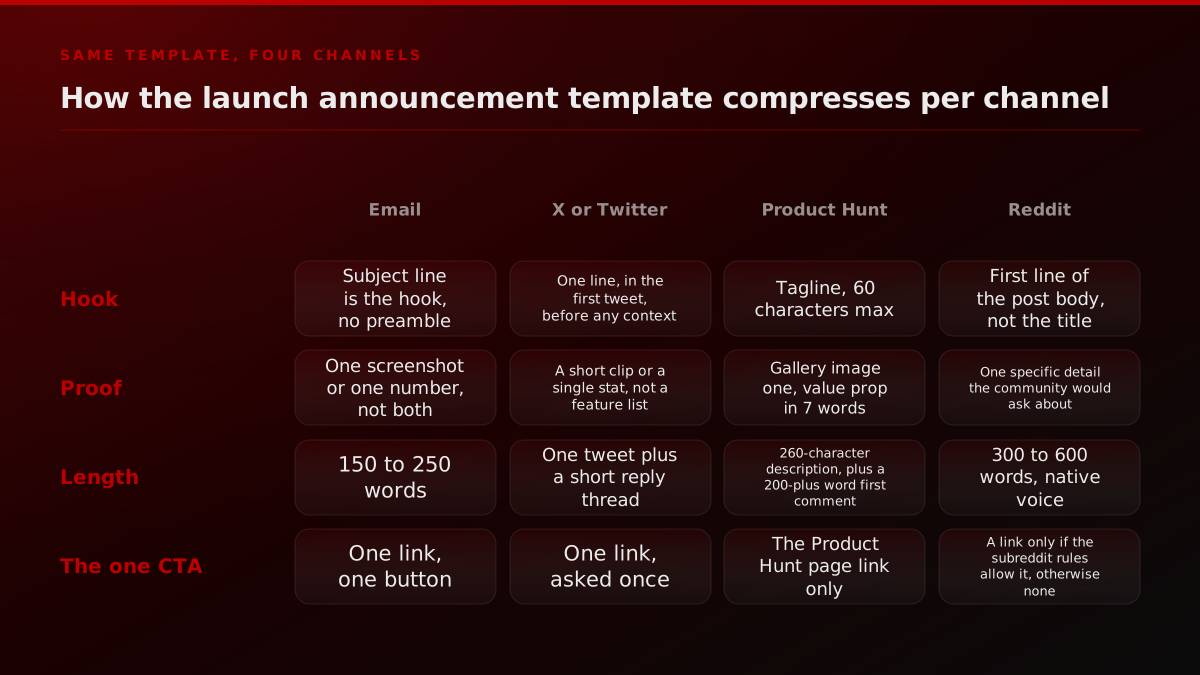
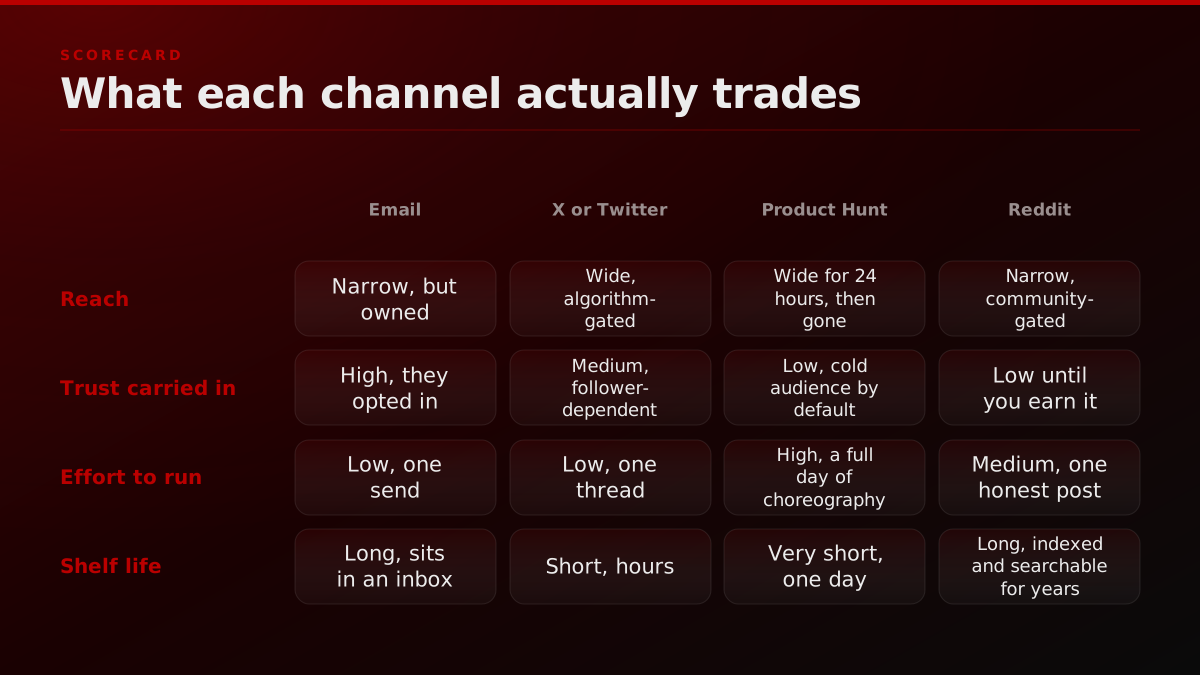
The same six parts do not compress the same way on every channel. An email leans on the subject line for the hook and gives the proof one screenshot or one number, never both, inside a 150-to-250-word body. X or Twitter puts the hook in the first line of the first tweet, backs it with a short clip or a single stat, and lets a short reply thread carry anything past the six parts. Product Hunt compresses the hook into the 60-character tagline, leans on the first gallery image for proof, and holds the rest for the first comment. Reddit is the loosest on length, 300 to 600 words in the community's native voice, but it is the strictest on proof, one specific detail the community would actually ask about, not a marketing claim.
The launch announcement template, by channel
| Channel | Hook placement | Proof format | Ideal length |
|---|---|---|---|
| Subject line | One screenshot or one number, never both | 150 to 250 words | |
| X or Twitter | First line of the first tweet | A short clip or a single stat | One tweet plus a short reply thread |
| Product Hunt | The 60-character tagline | Gallery image one, value prop in 7 words | 260 characters, plus a first comment |
| First line of the post body | One specific detail the community would ask about | 300 to 600 words, native voice |
The six-part template does not change per channel. What changes is which element gets compressed. A subject line does the job a tagline does on Product Hunt and a first line does on Reddit.
Write four separate drafts, not one, because copy-pasting the same version across all four channels is the single fastest way to make an announcement read like spam on at least three of them.
Operator noteWrite four drafts, not one. Email, X, Product Hunt, and Reddit each need their own version, not a copy-paste with the links swapped.
What order should a launch announcement go out in?
The channel order is not arbitrary, and getting it wrong is one of the most common ways a good announcement underperforms. Each channel either builds the credibility the next one needs, or extends the reach of the one before it, and running them out of sequence breaks that chain.
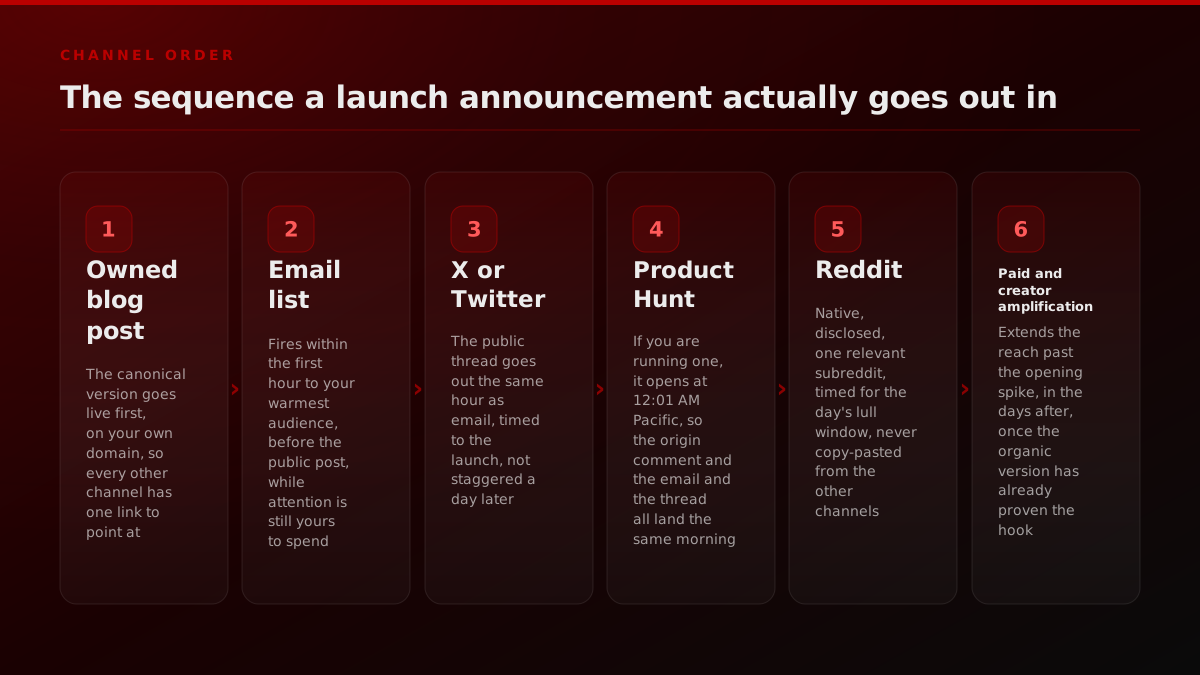
The canonical, full-length version goes live on your own blog first, at T-0, because every other channel needs exactly one link to point back to. Email and the X or Twitter thread fire in the same hour, ideally the first hour, so both waves of attention compound instead of splitting across separate days. If you are running a Product Hunt launch, it opens at 12
AM Pacific, the precise minute PH's 24-hour leaderboard day starts, which is why the email and the thread often go out the same morning as the Product Hunt page rather than a day apart. Reddit comes later, timed to when the specific subreddit is actually active rather than to your launch clock. Paid and creator amplification come last, extending reach only once the organic version has already proven which hook actually resonates.When each version should go out, relative to launch hour
| Time | Channel | What fires | Why |
|---|---|---|---|
| T-0 | Owned blog post | The canonical, full-length version | Every channel needs one link back |
| T-0 to T+1hr | The 150 to 250 word version | Attention peaks in the first hour | |
| T-0 to T+1hr | X or Twitter | The public thread | Same window as email, so waves compound |
| 12:01 AM PT | Product Hunt, if running one | Tagline, gallery, first comment | PH's 24-hour day starts this minute |
| Later, in the day's lull | The native, disclosed post | Post when the subreddit is awake | |
| T+1 to T+7 days | Paid and creator amplification | Clipped, repurposed, boosted | Extends reach once the hook is proven |
This is a compressed version of the hour-by-hour Product Hunt choreography FORKOFF runs internally. The exact minutes shift per launch, the order between channels generally does not.
Skipping the sequence is the single most common structural mistake in a launch. A founder who sends the email a day after the Product Hunt page, or posts to Reddit the same minute as the tweet using the same copy, is asking each channel to work in isolation instead of letting them stack.
What to prepare the week before you announce
The announcement itself is the easy part to get right at the last minute. The assets and the audience behind it are not, and both need to exist before the sequence above can run on schedule: a pre-committed engagement squad, a segmented email list, and, if Product Hunt is part of the plan, gallery images and a thumbnail built to spec days ahead.
Build the squad first, not the copy. FORKOFF's internal launch playbook targets 50 to 150 people who commit ahead of time to engage on launch day, recruited from your personal network, existing customers, and communities you are already a real member of, never cold-DMed strangers. The instruction that matters most is to never ask them to upvote or engage at one specific minute, since a cluster of identical-timestamp activity from new or low-history accounts reads as manufactured to every platform's ranking system, Product Hunt's included. Give the squad three bullet points to paraphrase into a genuine comment instead of a script to copy, because platforms explicitly downweight copy-paste engagement, and a real paraphrase reads as three real opinions instead of one message repeated fifty times.
Segment the email list before you write a single subject line. A launch list usually has at least three real segments, existing paying customers, waitlist signups who asked to be notified, and a cold newsletter audience who has not engaged in months, and each deserves one sentence of different framing even inside an otherwise identical email. Existing customers care that the thing they already pay for got better. Waitlist signups care that the wait is over. A cold list needs the hook to work harder, since it has no existing relationship to lean on. The 30 percent open-rate lift from segmentation comes almost entirely from this kind of framing difference, not from anything more sophisticated.
If a Product Hunt launch is part of the plan, the visual assets have fixed specs and get built days ahead, never the morning of. The thumbnail runs 240 by 240 pixels and has to read clearly at 60 by 60, which means no text on it, a bold shape and a logo is the only thing that survives that scale. Gallery images run 1,270 by 760 pixels, four to six of them, with the first one carrying the entire value proposition in seven words or fewer, since it is the only image most visitors ever actually look at. An optional demo video under 90 seconds, showing the product in the first three seconds with no intro slate, roughly doubles engagement on a Product Hunt page versus a launch with static images alone.
What should a launch announcement email include?
Email is the highest-trust, lowest-reach channel in the sequence, and the template compresses to 150 to 250 words. The subject line does the hook's job, stated plainly, no curiosity-gap clickbait, because the reader already opted in and deserves the actual news up front.
The email bar a launch announcement has to clear is lower than most founders assume, and segmentation moves it
Mailchimp's most recent published benchmark set puts the average email open rate across every industry at 35.63 percent and the average click rate at 2.62 percent. HubSpot's own 2025 data lands the average click-through rate at 2.5 percent. Those numbers are the floor a launch announcement email is competing against, not a ceiling. HubSpot's earlier State of Marketing research found that segmented campaigns drive 30 percent more opens and 50 percent more clicks than unsegmented sends, and 78 percent of marketers who segment call it their single most effective email tactic. A launch email blasted to an entire list, unsegmented, with generic subject line copy, is being measured against a bar that a five-minute segmentation pass would have cleared.
Source: Mailchimp Email Marketing Benchmarks, and HubSpot State of Marketing
The numbers set a real bar. Mailchimp's most recent benchmark set puts the average email open rate across every industry at 35.63 percent and the average click rate at 2.62 percent, and HubSpot's 2025 data lands the average click-through rate at 2.5 percent. Those are not aspirational numbers, they are the floor. A launch email with a generic subject line, no proof point, and a wall of company history before the news is competing against that floor and usually losing to it.
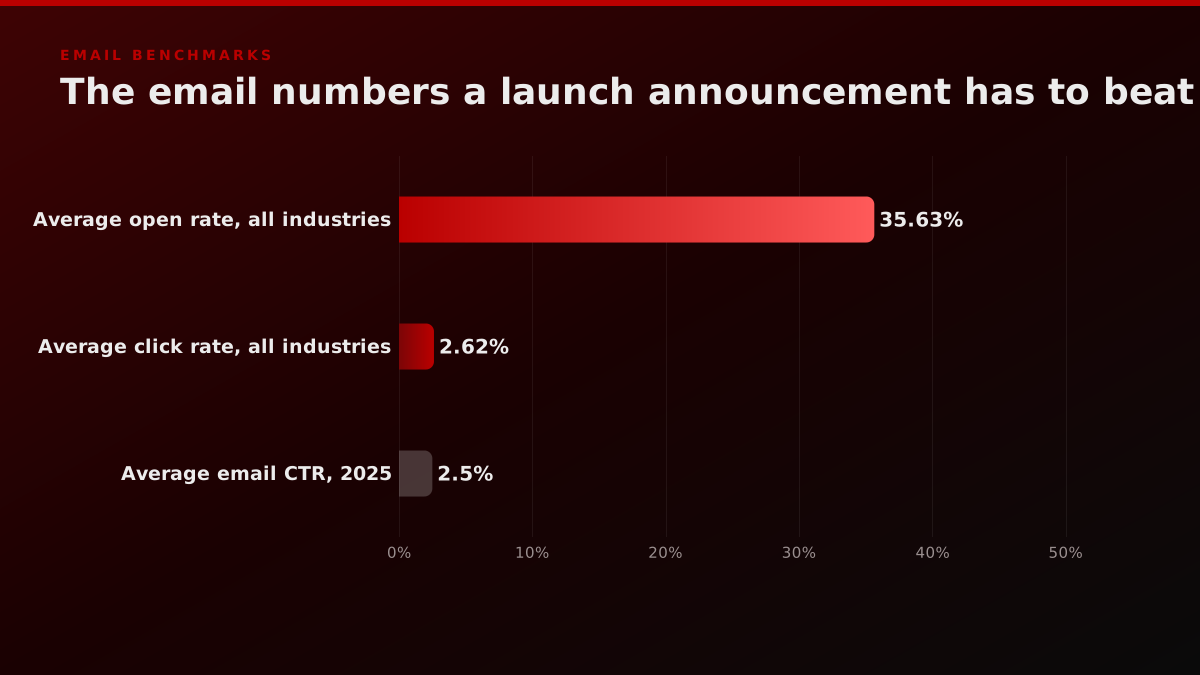
Segmentation is the cheapest lever most founders skip. HubSpot's own State of Marketing research found that segmented email campaigns drive roughly 30 percent more opens and 50 percent more clicks than an unsegmented blast, and 78 percent of marketers who segment call it their single most effective email tactic. Splitting a launch list into existing customers, waitlist signups, and cold subscribers, then writing one line of context per segment, costs five minutes and moves both numbers in the table above.
The launch announcement X or Twitter template
X compresses the template to its most literal form: the hook goes in the first line of the first tweet, before any context, because the algorithm and the reader both decide whether to keep reading in the first few words. Proof is a single stat or a short clip, not a feature list threaded across six tweets. The CTA is one link, asked once, and it is the only ask in the entire thread. Timing compounds this: Sprout Social's posting-time research and Buffer's own analysis of X posting windows both land on the same general shape, weekday mornings and the middle of the week outperform weekend and late-night posts, which is one more reason the channel-order table above times the thread to the same morning as the email instead of whenever the copy happens to be finished.
Chris Frantz
@frantzfries
Loops is live on Product Hunt today! Power your marketing and transactional email in one simple interface. We love building this product, and we hope you love using it just as much.
Loops opens with the product category stated as the hook: "Loops is live on Product Hunt today! Power your marketing and transactional email in one simple interface." No backstory, no adjective stack, the category itself is the news, and the single link goes to the Product Hunt page.
Notte
@nottecore
Anything API is live on Product Hunt! 🔥🚀 Most websites don't have public APIs. Anything API fills that gap. Describe the browser work you need. Our agent builds it, deploys it, and hands you a callable endpoint that you or Claude can invoke from everywhere.
Notte's Anything API launch does the opposite move and it also works: it leads with the gap, "most websites don't have public APIs," before it names the product at all. The hook is the problem, which lets the reader recognize themselves in the first sentence rather than waiting to be told the solution matters.
How do you write a Product Hunt launch announcement?
Product Hunt has three hard-limit assets, and the discipline of writing inside a character limit is what makes a PH announcement good practice for every other channel. The tagline runs 60 characters. The description runs 260. The first comment, posted by the maker at 12
AM Pacific and pinned, runs 200-plus words and needs to read as a genuine origin story, specific and honest, not marketing copy wearing a founder's name.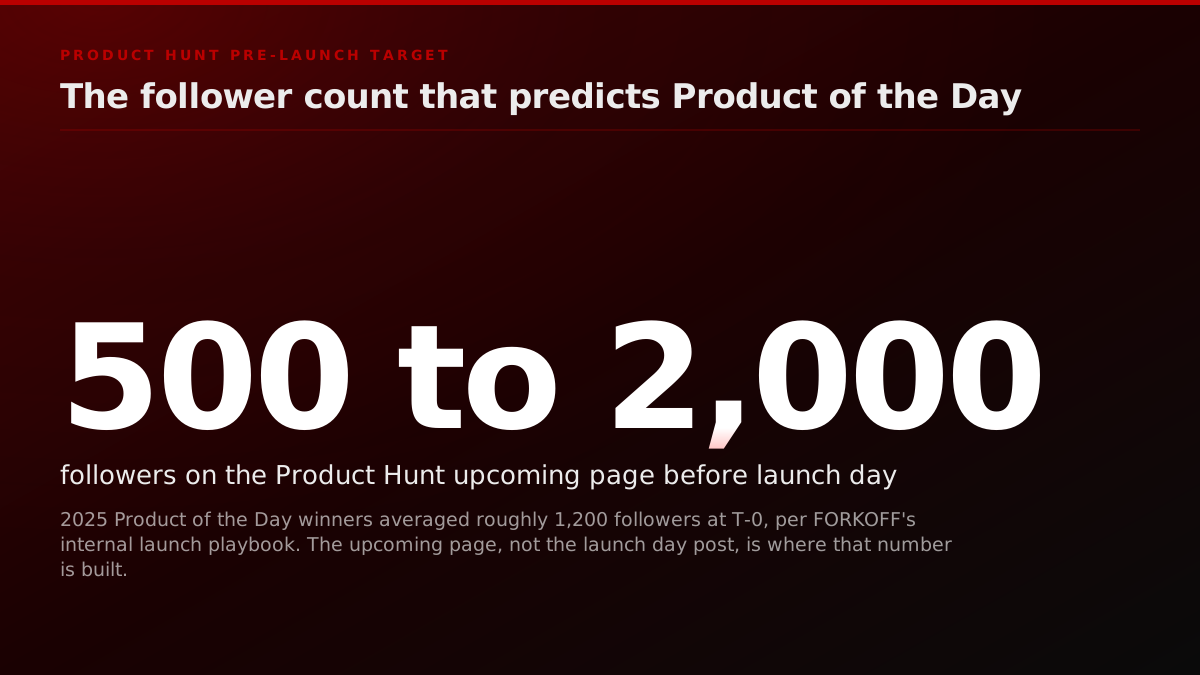
Winning the day starts weeks before it. FORKOFF's internal launch playbook, built from running and studying Product Hunt launches, targets 500 to 2,000 followers on the product's upcoming page before launch day, and 2025 Product of the Day winners averaged roughly 1,200 followers at T-0. That number gets built with two to three "Ship" updates to followers in the weeks before launch, not with anything posted on the day itself. A cold Product Hunt launch, with no upcoming page and no pre-built follower base, is starting the algorithm's velocity curve from zero against launches that started it weeks earlier.
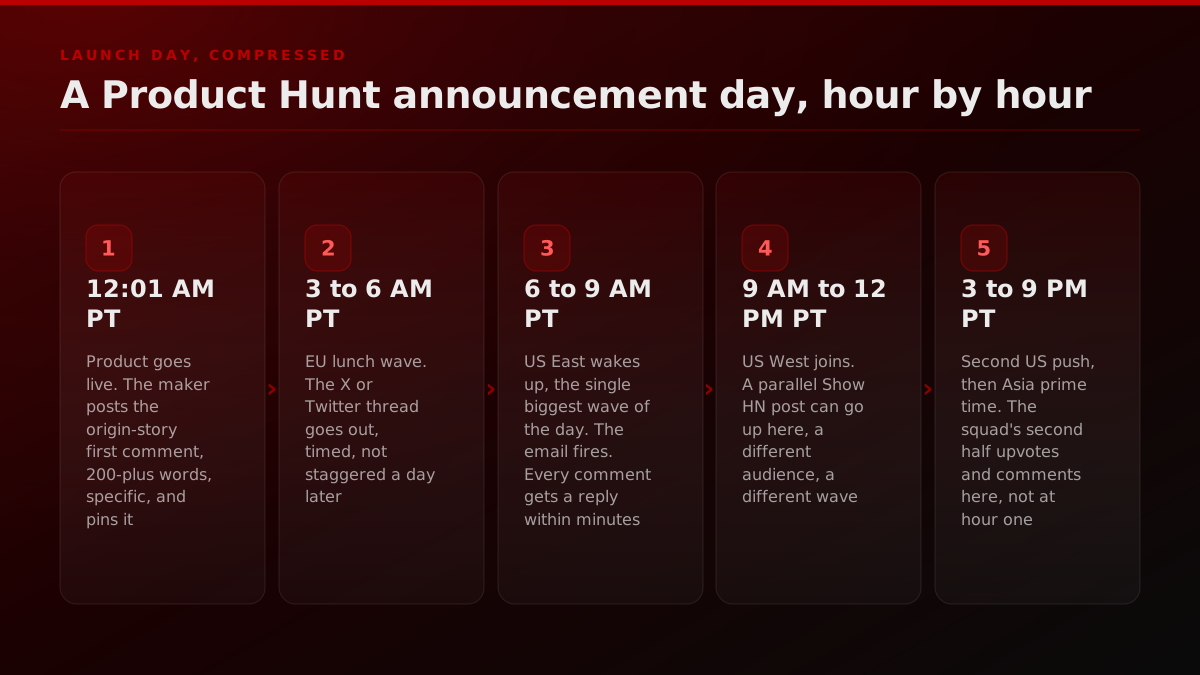
The day itself runs on a clock, not a single post. FORKOFF's choreography moves the origin comment live at 12
AM, drip-feeds the earliest squad through 3 AM, catches the EU lunch wave with the X thread by 6 AM, fires the email as US East wakes between 6 and 9 AM, opens a parallel Show HN post around 10 AM for a second audience with its own posting rules, then re-engages the squad's second half through the US evening and Asia's prime-time window. Reply to every single comment within minutes for at least the first three hours. PH's ranking algorithm weighs comment quality and maker engagement heavily, alongside upvote velocity over total count, which means a launch with 400 upvotes spread across the day and 60 thoughtful comments will outrank one with 900 upvotes concentrated in the first two hours from new accounts.Frigade
@FrigadeHQ
We're live on @ProductHunt today! Check out our launch and come support Frigade, the easiest way to for developers to build product onboarding. https://producthunt.com/posts/frigade @ycombinator
Frigade, a YC company, names its audience in the same sentence as the announcement itself: "the easiest way for developers to build product onboarding." A reader who is not a developer building onboarding flows self-selects out in five words, which is exactly the job the "who it is for" element does.
Tony Dinh
@tdinh_me
TypingMind is live on Product Hunt! 🥰 Please come join us, leave a review, comment, or say hi in the comment section
TypingMind's launch tweet asks for exactly one thing: "Please come join us, leave a review, comment, or say hi in the comment section." No feature recap, no second link, one clear invitation to engage, which is the entire CTA element done correctly.
The launch announcement Reddit template, and why most get banned
Reddit is the channel where the template breaks fastest if you treat it like the other three. A Reddit launch announcement has to read as a native post from a community member, not a cross-posted advertisement with the serial numbers filed off, because Reddit's culture, and increasingly its moderators, actively police exactly that pattern. Reddit's own platform-wide rules already ban vote manipulation and spam, and individual subreddit moderator teams routinely go further, which is why the specific community's posted rules matter more than any general playbook.
A community that gets treated as a billboard will eventually write a rule against you
In June 2026, the moderators of r/SaaS, one of the largest startup-building subreddits, posted a new rule banning an entire category of software: tools built specifically to generate, schedule, or automate promotional posts and launch announcements across Reddit and other platforms. The post is explicit about why: the sub had become flooded with automated and semi-automated promotional content that pushed down organic conversation. The rule does not ban launch announcements, founders still post them daily. It bans the pattern of treating the community as a distribution channel rather than a place people actually read. The distinction is the entire argument for writing a native Reddit version instead of copy-pasting the Twitter thread.
Source: r/SaaS moderator announcement
In June 2026, the moderators of r/SaaS, one of the largest startup-building subreddits, posted a new rule banning an entire category of software: tools built specifically to generate, schedule, or automate promotional posts across Reddit and other platforms. The moderators were explicit about the reason, the sub had become flooded with promotional content that pushed down organic conversation, and their stated position is worth quoting directly.
Our communities shouldn't be giant billboards, and the future of the internet shouldn't be an arms race between people trying to have real conversations and tools designed to interrupt, imitate, and monetize them.
New rule banning a SaaS product category: No Promotional or Advertising SaaS
The rule does not ban launch announcements. Founders post them in r/SaaS, r/SideProject, and dozens of niche subreddits every day, and plenty land well. What it bans is the specific pattern of treating a community as a distribution channel instead of a place people actually read, which is the same failure mode as copy-pasting the Twitter thread into a Reddit text box. A working Reddit announcement runs 300 to 600 words, opens with the specific detail the community would ask about rather than a company pitch, includes a link only where the subreddit's rules explicitly allow one, and comes from an account with some prior standing, not one created the same week as the launch.
I invented a timelapse camera for houseplants and brought it to market (I quit my 9-5 as software engineer for this)
PlantCam's launch post on r/SideProject shows what that looks like for a physical product: a specific, detailed origin story, quitting a software engineering job, building the hardware from scratch except one sourced module, told with enough real detail that the post itself functions as the proof point. It reads as a person sharing what they built, which is the only register that works on Reddit.
12 real launch announcements, examined
These are real launches, with real URLs, not composited or invented examples. Each one uses some version of the six-part template, and reading twelve of them side by side makes the pattern easier to copy than any single rule.
- Loops, an email platform, opened its Product Hunt tweet with the category itself as the hook and a single link as the only CTA.
- TypingMind asked for exactly one action, a review or a comment, and nothing else, keeping the whole tweet to one clean CTA.
- Frigade, a YC company, named its exact audience, developers building product onboarding, in the same sentence as the announcement.
- Notte's Anything API led with the problem, not the product, letting readers recognize themselves before being told the solution.
- Granola's Apple Watch launch trusted its existing audience enough to use one sentence of framing and one word of proof: launching today.
- Wensity, a UI component library, used a 90-second demo video to do the proof-point job a screenshot does in shorter formats, showing the product instead of describing it.
- Aceternity UI Pro paired a plain announcement line with a direct ask for feedback, treating the launch as the start of a conversation rather than a broadcast.
- Index Rusher made the pricing model itself the proof point, "pay once, use forever," a specific, checkable claim instead of a vague value statement.
- Onlook opened with a one-line origin story, a Mac app that did not exist, so the founder built one, before the ask for support.
- Fancy Components kept the entire announcement to two short lines and one honest ask, no overclaiming, no adjective stack.
- Habits Garden, a solo-founder relaunch, stated the exact platforms shipped, iOS and Android, as the proof that this was a real, working release.
- PlantCam used a detailed, specific origin story as the proof point itself on r/SideProject, the one format that works natively on Reddit.
Chris Pedregal
@cjpedregal
The best wearable is... the one you're already wearing. Excited to announce Granola for Apple Watch. Launching today⌚️
Introducing Wensity | Premium UI Components, Blocks and Templates
Wensity
Wensity's launch video for its UI component library. A 90-second demo doing the proof-point job a screenshot does in a tweet, showing the product instead of describing it.
None of these are perfect, and none of them needed to be. What they share is the discipline of stating one specific thing clearly instead of trying to say everything at once, which is the six-part template in practice more than in theory.
Notice what is missing from all twelve. None of them open with a founding date. None of them stack three adjectives before the first noun. None of them ask for more than one action in the same breath. The examples that read as confident, Loops, TypingMind, Frigade, are also the shortest ones, which is not a coincidence, brevity is what is left over once the filler gets cut. The examples with the most texture, PlantCam's origin story and Onlook's one-line backstory, earn that length by making every sentence a specific, checkable detail rather than a general claim. The rule that separates the two modes is simple: length is fine when every added word is a fact, and a liability when it is a qualifier.
Why do most launch announcements get ignored?
The failure pattern repeats across almost every dead launch post, and it is rarely the product. Harvard Business Review's Joan Schneider and Julie Hall found that 75 percent of consumer-packaged goods and retail products fail to earn even $7.5 million in their first year, and a bad announcement is not what causes that base rate, but it is what an announcement has to overcome. It is the announcement asking the reader to do work the writer should have done first.
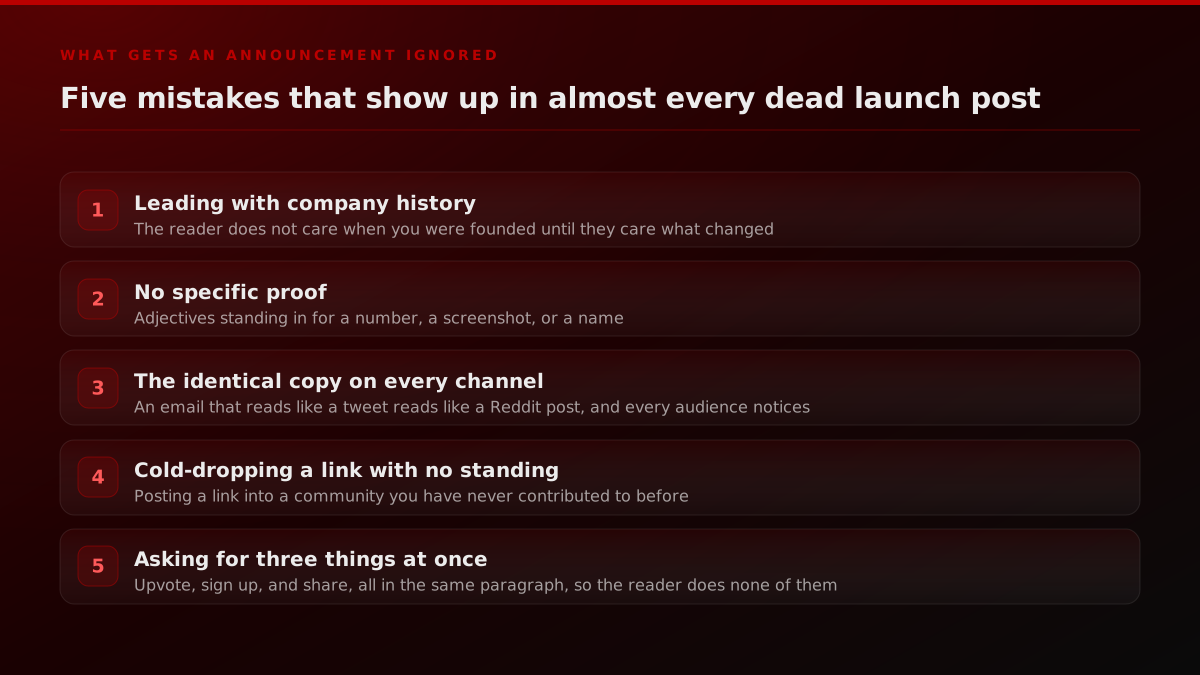
Leading with company history is the most common mistake, because the reader has not yet decided to care about the company, only about what changed. No specific proof shows up as adjectives, "powerful," "revolutionary," "next-level," standing in for a real number or screenshot the reader could actually verify. The identical copy on every channel reads as exactly what it is, an email that sounds like a tweet sounds like a Reddit post, and every audience notices the mismatch immediately. Cold-dropping a link with no standing in a community, posting the announcement as a brand-new account's first contribution, gets flagged by both moderators and readers as exactly the pattern r/SaaS's new rule targets. And asking for three things at once, upvote, sign up, and share, in the same paragraph, means the reader does none of them, because a diffuse ask reads as no ask at all. A related version of the same mistake is chasing raw view counts instead of qualified reach, which our launch views audit covers in more depth.
Writing a launch announcement that does not read like a template
The six-part structure is a skeleton, not a script, and the fastest way to make an announcement read generic is to fill each part with the same words everyone else uses. "Excited to announce" is the most common opener in launch tweets, and it is also the least informative six words available, since it describes the writer's emotional state instead of the news. Cut it and start with the actual change.
The honest-limitation element is the one founders skip most often, and it is the one that does the most work. A launch announcement that says what the product does not do yet, stated plainly before a reader has to find it themselves, reads as more credible than one that claims to solve everything, because readers who have seen a hundred launches already assume the second kind is overselling. At FORKOFF we edit almost every launch draft by deleting the first paragraph, because the real hook is usually sitting in paragraph two, buried under a sentence about when the company was founded.
A second, quieter tell is verb tense. A launch announcement describing a product that is "launching soon" or "coming this quarter" is not an announcement, it is a teaser, and it belongs in a different part of the sequence entirely. The word "now," or a specific date already in the past by the time the reader sees it, is what separates news from a promise. Readers scan for that signal before they read anything else, because a promise carries no proof and a launch does. If the product is not live yet, write the teaser and save the six-part template for the day it actually is.
Product Hunt rewards spectacle, not substance. 1,000 upvotes feels amazing. 10 customers paying $100 a month is amazing.
How FORKOFF runs launch announcements
At FORKOFF we treat the announcement and the reach behind it as one system, because a well-written announcement that nobody sees and a poorly written one with perfect distribution both fail the same way, for different reasons. We draft the four channel versions, email, X or Twitter, Product Hunt if the launch calls for one, and Reddit, as four separate pieces of writing rather than one document copy-pasted with the links swapped. Then we sequence the send times against the channel order above, and build the distribution that carries the announcement past its first hour: warm-network coordination, KOL and creator placement, and the clipping network that has moved 5B+ qualified views.
If you are still choosing the release model that determines how your announcement gets timed, our guide to big bang versus rolling launches covers the decision tree. If the announcement is riding on a launch video, the launch video playbook, the launch-video readiness checklist, and what a launch video actually costs are the next reads, alongside the ranked best product launch videos of 2026 and the anatomy of a 1M-view launch video. Our own bylines and the launches we have run sit on the press page. If you want the twitter or reddit distribution layer built before you write a word of the announcement, that is where our product launch work starts.
The steal-this checklist
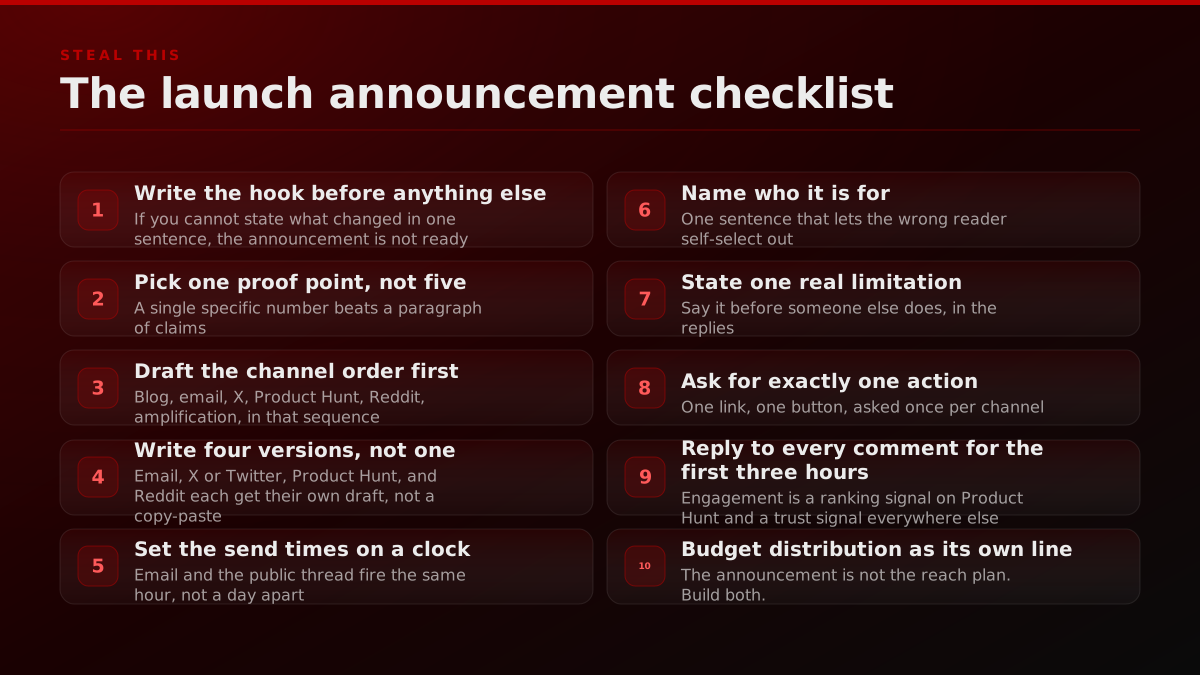
If you take one thing from this guide, take the order, not just the template. Write the hook first, pick one proof point instead of five, draft four distinct channel versions, set the send times against a real clock instead of whenever each piece happens to be finished, name who it is for, state one honest limitation, ask for exactly one action per channel, and reply to every early comment like the ranking algorithms are actually watching, because on Product Hunt, they are.
A launch announcement cannot manufacture demand for a product nobody was looking for, and 97.4 percent of tracked Product Hunt launches sitting under $1,000 MRR six to eight months out is the reminder of that. But for a product that already has real proof behind it, the difference between an announcement that gets read and one that gets scrolled past is almost never the product. It is whether the writer led with the hook or buried it in paragraph three.