A launch video in 2026 has two price tags. The first one, the video production cost, is the number every cost guide on the first page of Google will quote you, somewhere between $99 for an AI-generated explainer and $50,000 or more for a custom studio film. The second one, distribution, is the number almost nobody quotes, and it is the one that decides whether the video returns anything at all. Treating the first number as the whole cost is the most expensive mistake a founder makes when budgeting a launch. Both numbers priced as an agency engagement rather than a production quote are at how much a launch video agency costs.
The short version
A launch video in 2026 has two price tags, and almost every cost guide only quotes the first one. Production runs from $99 for an AI-generated explainer to $50,000-plus for a custom studio film, and that is the number every ranking page answers. The number nobody quotes is distribution, the spend that gets the video watched, and it is the one that decides whether the launch returns anything. Wistia's 2026 State of Video found 57% of teams spend more time creating video than promoting it and only 20% spend more time promoting, which is the budget mistake in one statistic. Production is close to solved and cheap. Attention is scarce and expensive. This guide breaks down both halves with real, cited 2026 numbers, shows where the money should actually go, and explains why a $30,000 video can still earn zero views. The first-party benchmark behind the distribution case is the FORKOFF clipping network, which has processed 5B+ views.
If you typed "explainer video cost" or "launch video cost" into Google, you got a clean answer to the wrong question. Every page on that results screen tells you what it costs to make a video. None of them tell you what it costs to make anyone watch it. That omission is not an accident. The pages ranking for those terms are written by production studios, and production is the only half of the bill they sell. So they quote it precisely, in tidy tiers, and they go silent on the half that actually determines whether your launch lands.
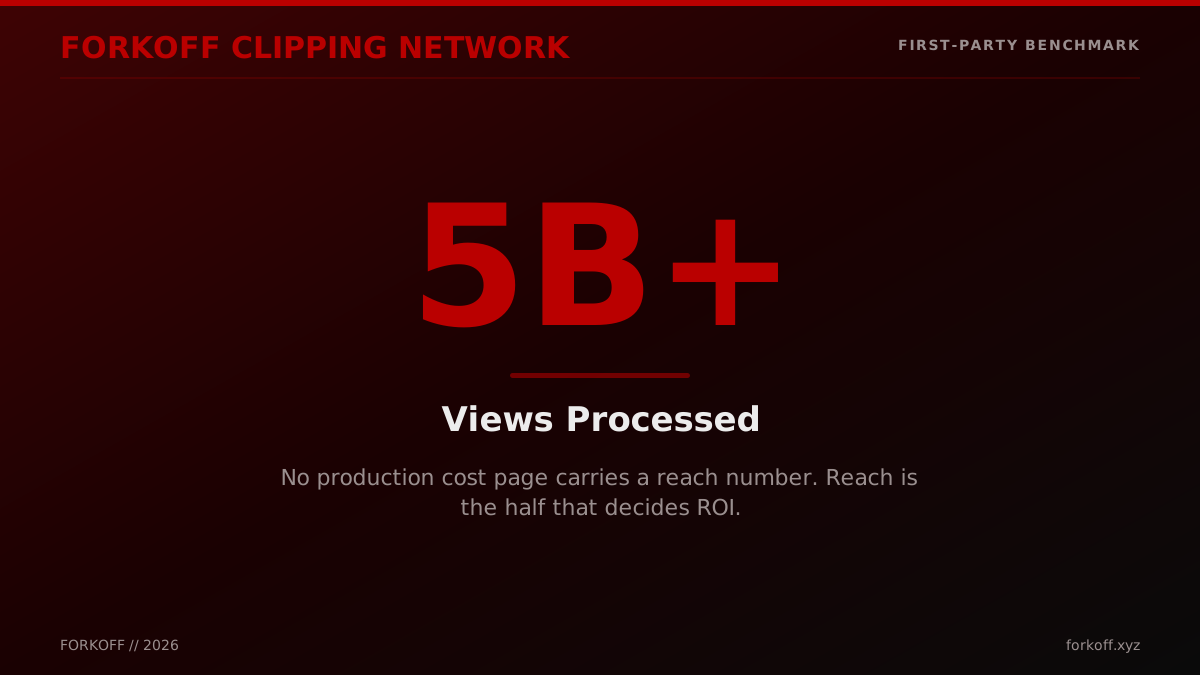
This guide fixes that. It breaks the cost of a launch video into its two real halves, production and distribution, puts cited 2026 numbers on both, and shows where the money should actually go. The short version, which the rest of the piece earns: production has become cheap and close to solved, distribution has become scarce and expensive, and the budget allocation at most startups is exactly backwards. The first-party number that frames everything below is simple. The FORKOFF clipping network has processed 5B+ views moving short-form content across platforms. No production cost page carries a reach figure like that, because production vendors do not measure reach. They measure turnaround.
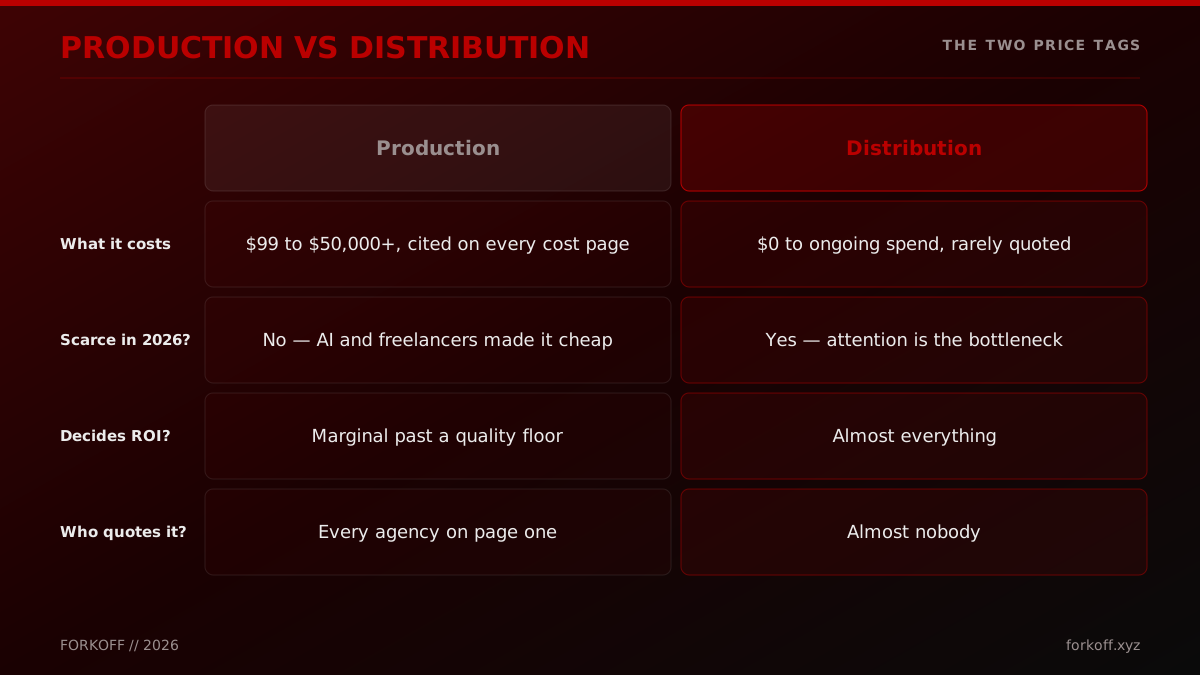
The two halves of a 2026 launch video bill
| Question | Production answer | Distribution answer |
|---|---|---|
| What does it cost? | $99 to $50,000-plus, widely published | $0 to ongoing media spend, rarely quoted |
| Is it scarce in 2026? | No, AI and freelancers made it cheap | Yes, attention is the bottleneck |
| What decides ROI? | Marginal, past a quality floor | Almost everything |
| Who sells it to you? | Every agency on page one | Almost nobody |
The cost guides answer the left column and stop. This guide is about the right column.
What does a launch video actually cost during 2026?
A launch video costs whatever you spend to make it plus whatever you spend to get it watched, and the second number is usually the larger and almost always the one founders forget. The production half is well documented and ranges from roughly $99 for an AI-generated explainer to $50,000 or more for a brand-grade studio launch film. That $99 tier is real and it buys the frame rather than the product, a split we take apart in what AI generators get right and where they break. The distribution half ranges from $0 of cash and a lot of your time, all the way up to ongoing five-figure media budgets, and it is the half that decides return on the whole spend.
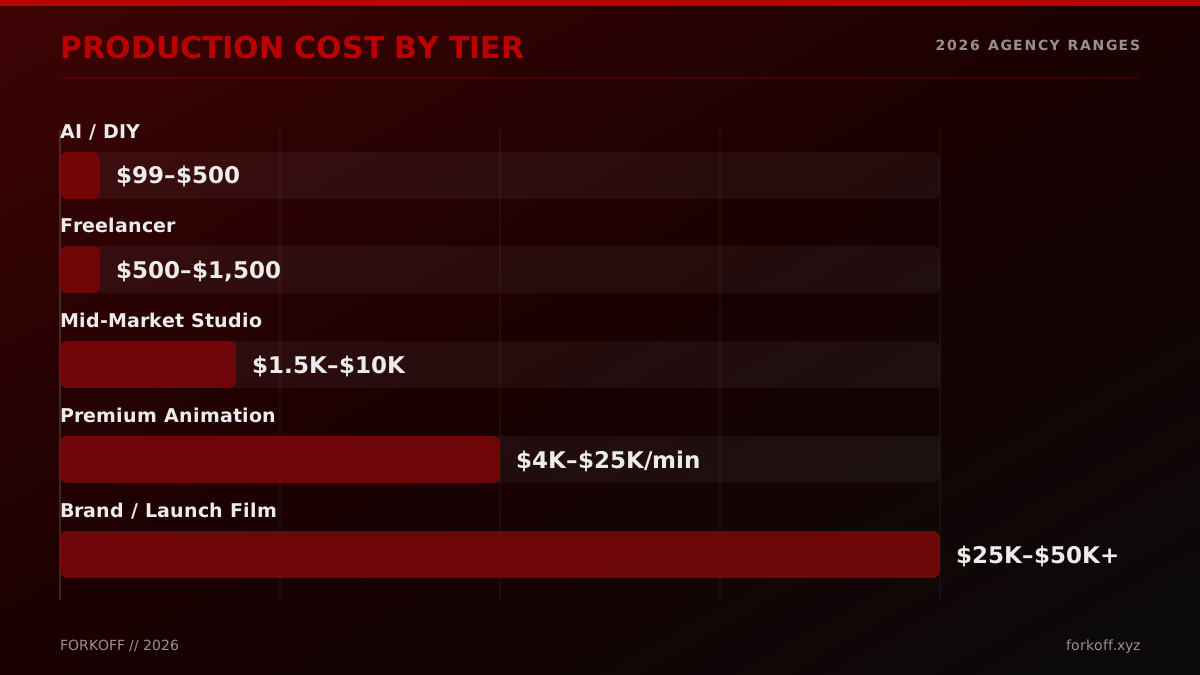
Here is the production half in plain numbers before any argument starts, because you came for a figure and you should get one. AI-generated and do-it-yourself work sits between $0 and roughly $500. A freelancer runs $500 to $1,500. A mid-market studio lands between $1,500 and $10,000. Premium custom animation is quoted at $4,000 to $25,000 per minute. A brand-grade launch film starts around $25,000 and climbs past $50,000. If you want one anchor rather than a range, Squideo wrote a genuine brief for a real 30-second animated explainer, sent it to more than 100 agencies, received 45 responses across the UK, US, Europe and Canada, and put the average starting price at £2,960. Every figure in that paragraph is a published vendor band, and the table below carries the source behind each tier.
Explainer video pricing in 2026, the production half (cited agency ranges)
| Tier | Typical 2026 price | What it buys | Source signal |
|---|---|---|---|
| AI-generated / DIY | $0 to $500 | AI tool or founder-shot screen recording | VideoExplainers lists AI videos from $99 |
| Freelancer | $500 to $1,500 | One editor, simple edit or short explainer | YansMedia freelancer band |
| Mid-market studio | $1,500 to $10,000 | Clean product or explainer, full production | Twine full-production, Advids $1,500 to $7,000 |
| Premium animation | $4,000 to $25,000 per minute | Custom animation, high craft, longer turnaround | IdeaRocket per-minute band |
| Brand / launch film | $25,000 to $50,000-plus | Studio launch film, often three-month timeline | VideoExplainers custom ceiling, $25k to $50k band |
Ranges are directional 2026 estimates pulled from public agency pricing pages. Every figure is a published vendor band, not a FORKOFF number. Verify with each vendor before you budget.
Hold both halves in your head at once and the standard cost guide starts to look like a restaurant menu with prices but no portion sizes. It tells you a steak is forty dollars without telling you whether it feeds one person or a table. The production number, on its own, tells you what the file costs. It tells you nothing about whether the file will reach a single buyer. That is the gap this guide lives in, and it is the gap the FORKOFF product launch video service was built to close, by pricing the reach and the film together instead of selling you half the job at a full price.
The reason this matters more in 2026 than it did even two years ago is that the two halves have moved in opposite directions. Making a competent video has gotten dramatically cheaper and faster, because AI tooling, template motion libraries, and a generation of fluent editors collapsed the cost of clean production. Getting a video watched has gotten harder, because more video is being published than ever into the same finite pool of attention. When the supply of something explodes and demand for attention stays flat, the scarce resource is not the thing you make. It is the eyeballs you reach. Pricing a launch video as if production were still the expensive, scarce part is pricing for a market that no longer exists.
Lenny Rachitsky
@lennysan
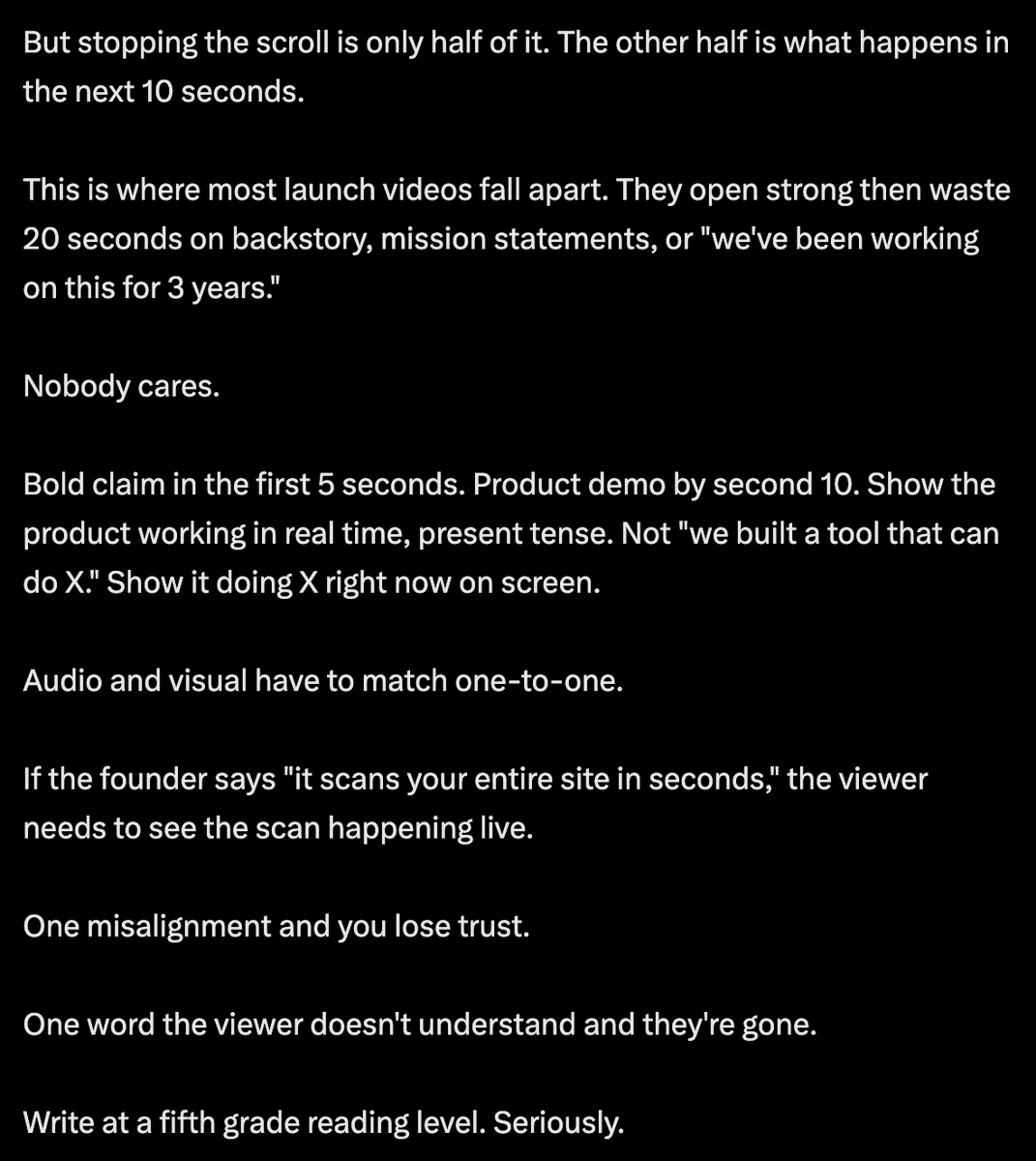
Great advice for creating your launch video https://t.co/HUp85FNeC9
What actually moves an explainer video quote?
Twelve variables move an explainer video quote, and the three with the most say over whether the video works are the three no vendor puts a price on. Knowing which way each one pushes, and how far it pushes compared with the others, is worth more than any average, because it lets you read a quote instead of just comparing it. Squideo publishes five of these drivers off its own agency survey, which is five more than most of the market, and the list below starts there and keeps going.
What actually moves an explainer video quote, by direction and weight
| Cost driver | Which way it pushes | Relative weight | Published source signal |
|---|---|---|---|
| Animation style | Up with labor intensity | Widest swing | IdeaRocket, style sets cost per second |
| Runtime | Up, and front-loaded | Very high | VideoExplainers, +25-40% per extra 30s |
| Scope and creative depth | Up | High | Squideo, cheap tiers cut strategy work |
| Turnaround | Up when rushed | Moderate | VideoExplainers, 25-50% rush premium |
| Geographic market | Up in the US versus the UK | Moderate | Squideo, US 15-30% over UK, same tier |
| Revision policy | Up with unlimited rounds | Moderate | Squideo, limited rounds, lower price |
| Volume and bundling | Down per asset | Moderate | Twine, bundled services save money |
| Script development | Up when the agency writes it | Low to moderate | Squideo, founder scripts cost less |
| Voiceover | Up for human over AI | Low | VideoExplainers, $200-$1,000 vs $99 |
| Target audience | Up with validation work | Unpriced, outcome-critical | Squideo cuts it from lowest tiers |
| Campaign goal | Reframes the whole brief | Unpriced, outcome-critical | Squideo, awareness to conversion |
| Distribution surface | Up with each native cut | Unpriced, outcome-critical | No cited vendor prices cut count |
Direction and weight are read from the vendor pages cited in this guide. Where a vendor publishes a percentage it is quoted here; where none exists, only the direction is stated. No FORKOFF rate is stated or implied by any row.
Start with the brief, because that is where most of the money is settled. Animation style has the widest swing of any single variable. The same script comes back at $99 as an AI-generated cut and past $50,000 as premium custom 3D, both figures from VideoExplainers' own 2026 cost breakdown. IdeaRocket explains the mechanism: animated explainers are calculated per finished second, and different styles are more or less labor intensive, which changes that cost-per-second calculation. Style is not a line on the invoice. It resets the rate every other line gets multiplied by, which is why it outranks everything else here.
Runtime comes next, and it is the axis studios open with. IdeaRocket notes that most studios start the pricing conversation by talking about length, and the VideoExplainers 2026 cost factors put a figure on it: each additional 30 seconds adds 25% to 40%. The part almost nobody mentions is that the curve is front-loaded. IdeaRocket says the first 60 seconds are the most expensive, after which many production costs scale and the studio gives you a break on the per-second price. So trimming 90 seconds to 60 saves less than you expect, and trimming 60 to 30 saves more. Runtime is also why two honest quotes for one brief can sit an order of magnitude apart, since budget tiers quote per finished video while premium tiers quote per minute.
Scope is where cheap quotes do their quiet damage. Squideo's survey found the lowest prices in the market often exclude strategic input, audience validation, structured scripting, and multiple revision rounds. A cheap number and an expensive number are therefore usually describing different jobs rather than different grades of the same job, which is the single most common reason a founder feels overcharged later. Script development sits inside this driver: Squideo found founder-written scripts cost less while agency-built narrative frameworks cost more. Voiceover is the smallest brief-side driver, with the VideoExplainers cost factor list pricing human narration at $200 to $1,000 against AI narration from $99.
Three more drivers move the price without changing the video at all. Turnaround is the sharpest of them, and the rush-delivery cost note from VideoExplainers reports that rush delivery under one week typically adds a 25% to 50% premium, which IdeaRocket corroborates. Revision policy sets the opposite end, and Squideo states the trade plainly: limited revisions buy a lower price, unlimited revisions buy reduced risk. How many rounds you get matters less than when you spend them, because IdeaRocket warns revisions become extremely costly once production has begun. Volume pushes the other way and is the only driver here that reliably pushes down, with Twine advising founders to bundle services where possible.
Geography moves the number without touching either the brief or the terms. Squideo's survey of 45 agencies found US agencies tend to price 15% to 30% higher than UK equivalents at the same tier. That finding also exposes the quiet flaw in every headline average, Squideo's own included: a figure blended across the UK, US, Europe and Canada is not the figure any single buyer gets quoted, so a US founder reading a British average is reading a number that is structurally low for their market before a single detail of their brief is considered.
That leaves the three drivers that decide whether the video does anything, and that no cited vendor prices. Target audience is the first. Squideo lists audience validation among the things the cheapest tiers cut, which tells you it is real work with a real cost, but no page on this results screen quotes what it costs to aim a video at CFOs rather than at developers, even though that choice changes the script, the register, the length, and the platform. Campaign goal is the second. Squideo tells B2B buyers to understand their objective across awareness, onboarding, and conversion, yet its own published average is a single number covering all three, and an onboarding explainer that plays after signup and an awareness film that has to survive a cold feed are not the same product at any price. Distribution surface is the third and the most expensive to get wrong. Every extra platform the video has to work on is another native cut with its own aspect ratio and its own first three seconds, and no cost guide on the first page prices cut count at all, which is exactly why the re-edit invoice arrives after delivery rather than in the quote.
Rank the twelve by how far they move the production number and the order is roughly style, runtime, scope, then turnaround and geography, then revisions and volume, then script and voiceover. Rank them instead by how far they move the result and the order inverts: audience, goal, and distribution surface sit at the top, and they are the three the market declines to quote. That inversion is the whole reason a published average reads as an answer and behaves like a guess.
Why is "explainer video cost" the wrong question?
It is the wrong question because a single number cannot encode the twelve variables above, and those variables dominate. An average is a blend of other people's briefs, other people's runtimes, other people's markets, and other people's deadlines, so it answers a question nobody actually asked. Asking what an explainer video costs in 2026 is like asking what a printing press costs when the real constraint is whether anyone reads the page. The honest version of the question is not "how much does the video cost" but "how much does a watched video cost," and that reframes the entire budget.
The community has already worked this out in public, faster than the agencies have. Read enough founder threads and the same realization shows up again and again: the building got easy, the getting-seen stayed hard. One founder, writing two months after launch about what actually moved the needle, put the trap plainly.
i started with everything other founders do: ProductHunt, Twitter, Build in Public. The problem is that is a very overcrowded place, where most founders launch, not where your potential customers are. The people willing to try your SaaS are not other founders, they are people obsessed with tech and AI, early adopters.
That is the whole problem in three sentences. Founders default to the channels every other founder uses, Product Hunt, Twitter, build-in-public, then discover those rooms are crowded with peers rather than customers. The video was never the bottleneck. The plan to put it in front of the right people was the bottleneck, and that plan costs money and skill that the production quote does not include. This is the same thesis the three-ring distribution model lays out in full and the launch video readiness checklist turns into a pre-launch gate.
2 months post Launch. My takes on Distribution
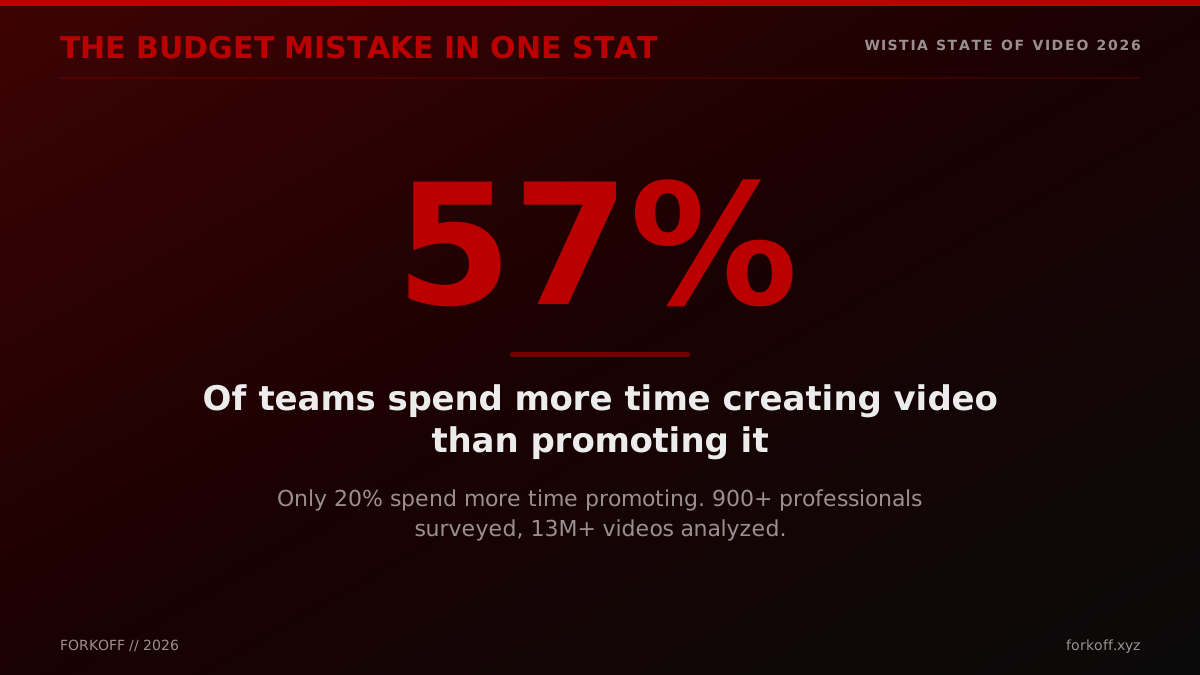
There is hard data underneath the anecdotes, and it is blunt. Wistia's 2026 State of Video, built on a survey of more than 900 professionals plus an analysis of over 13 million videos and 79 million hours of viewing data, found that 57% of teams spend more time creating videos than promoting them, while only 20% spend more time promoting and 23% split the two evenly [Source: Wistia 2026 State of Video]. That is the budget mistake of the entire category, restated as a statistic. The effort, and the money that follows the effort, pools on the side of the ledger that has become cheap, and starves the side that decides outcomes.
Teams spend more time making video than moving it
Wistia's 2026 State of Video, built on a survey of 900-plus professionals and an analysis of over 13 million videos and 79 million hours of viewing data, found that 57% of teams spend more time creating videos than promoting them. Only 20% spend more time promoting, and 23% split the two evenly. That single split is the budget mistake the whole category makes, restated as data: most of the effort goes into the asset, almost none into the reach.
Source: Wistia, State of Video Report 2026
What does the production half actually buy you?
The production half buys you the file, at a quality level that scales with what you pay, and in 2026 the floor for "good enough" sits far lower than most founders assume. You can spend $99 or you can spend $50,000, and the published 2026 ranges from real agencies map cleanly onto five tiers. Knowing the tiers matters, because the most common overspend is buying a premium tier for a job a cheaper tier would have done.
At the bottom, AI-generated and do-it-yourself sits between $0 and roughly $500. VideoExplainers, in its 2026 explainer video cost breakdown, lists AI-generated videos starting at $99, and a founder-shot screen recording costs nothing but an afternoon. Above that, a freelancer runs $500 to $1,500, which YansMedia's startup video price guide confirms as its freelancer band. The mid-market studio tier, $1,500 to $10,000, is where most funded seed-stage launches land. Twine's product launch services pricing guide puts full production at $1,500 to $10,000-plus, and Advids quotes $1,500 to $7,000. Premium custom animation climbs to $4,000 to $25,000 per minute, the band IdeaRocket publishes for studio work. At the top, a brand-grade launch film runs $25,000 to $50,000 or more, the ceiling VideoExplainers names for custom work, where a full traditional studio production routinely runs into the tens of thousands and takes months to deliver. For a sense of the middle of the market, Squideo's 2026 survey of 45 agencies put the average 30-second explainer near £2,960.
The reason production carries any price at all is real craft and real overhead, and it is worth respecting rather than dismissing. The supply side of this market is not padding its rates for fun. One videographer, pushing back on a client who wanted free work, laid out the economics from the other side of the invoice.
I've invested around 20k euros in my equipment and knowledge, doing photo and video work for some big clients.
That is a fair point and it is true. Good production is a genuine skill with genuine equipment and time behind it. The argument here is not that production is worthless or that you should always buy the cheapest tier. It is that production, at any tier, is only half the bill, and that the half you can see is the half that matters less to your launch outcome than the half you cannot.
How much does the distribution half cost, and why does nobody quote it?
Distribution costs anywhere from $0 in cash to ongoing five-figure media spend, and nobody quotes it because nobody on the production side sells it. The price is hard to publish because it does not scale with the length of a file, it scales with the size of the audience you are trying to reach, which is specific to your launch. So the cost guides skip it, and founders are left to discover the bill the hard way, after the video is made and the views do not come.
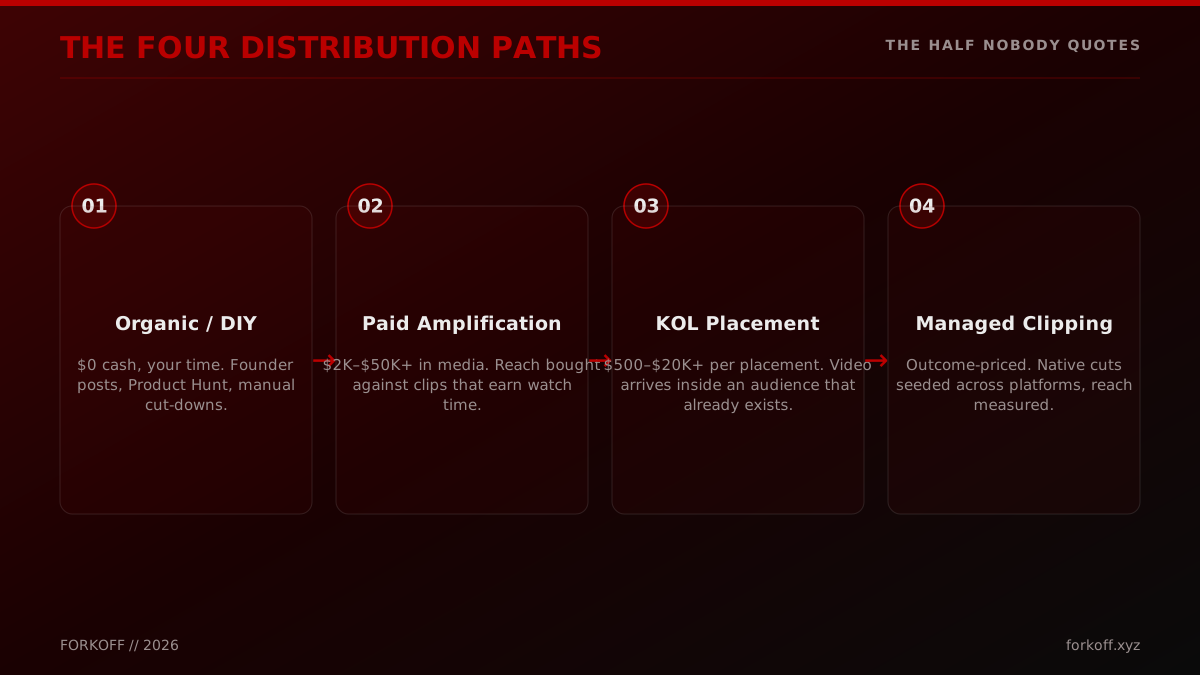
It helps to spell out what distribution actually involves, because the word gets treated as one thing when it is at least four distinct paths with different cost shapes. The first path is organic, doing it yourself, which costs nothing in cash and a great deal in time. You cut the video down by hand, post it from your own accounts, submit it to Product Hunt, and hope the early-adopter pockets find it. The second path is paid amplification, putting media budget behind the cuts that already earn watch time, which can run anywhere from approximately $2,000 to $50,000 or more depending on how much reach you are buying. The third path is creator and KOL placement, handing the asset to accounts that already hold the attention you want to rent, which runs from a few hundred dollars to $20,000 or more per placement, and which the FORKOFF KOL marketing service and the KOL rate calculator exist to price and source. The fourth path is managed clipping and syndication, where a partner cuts the video natively for each platform, seeds it, amplifies the winners, and measures reach as a loop, which the clipping service runs and which is typically priced on the outcome rather than a flat fee.
The half nobody quotes, what distribution actually costs
| Distribution path | Rough 2026 cost shape | What you get | Who owns the work |
|---|---|---|---|
| Do it yourself (organic) | $0 plus your time | Founder posts, Product Hunt, build-in-public | You, nights and weekends |
| Paid amplification | $2,000 to $50,000-plus in media | Reach bought against cuts that earn watch time | You or a media buyer, ongoing |
| KOL / creator placement | $500 to $20,000-plus per placement | The video arrives inside an audience that already exists | You source and negotiate, or a placement partner does |
| Managed clipping / syndication | Outcome-priced or programmatic | Native cuts seeded across platforms with reach measured | A distribution partner runs the loop |
Distribution cost shapes vary far more than production because they scale with the audience you are trying to reach, not with the length of the file. Model your own numbers before you sign anything.
The clearest way to see the gap is to notice who sells you each half. Every agency ranking for "explainer video cost" sells the production half and quotes it to the dollar. Almost none of them sell the distribution half, and the few that mention it bolt it on as a vague add-on. The best video marketing agencies guide scored ten real agencies on exactly this axis and found the same two columns empty every time: none scoped to funded startups, none owned distribution. That is not a coincidence. It is the structure of the market. The part that photographs well on a portfolio reel gets sold. The part that decides outcomes does not.
Why can a $30,000 video still get zero views?
Because production quality is not what gates reach. Platforms rank and throttle content at ingestion, before any real audience sees it, on early signals like watch velocity, retention in the first seconds, shares, and saves. A video that does not clear that gate gets quietly capped no matter how beautiful it is. A flawless film at an estimated $30,000 with no distribution plan is shown to a small seed audience, fails the early-signal test or never gets seeded at all, and dies in the feed. A video with zero views did not lose an audience test. It never reached one.
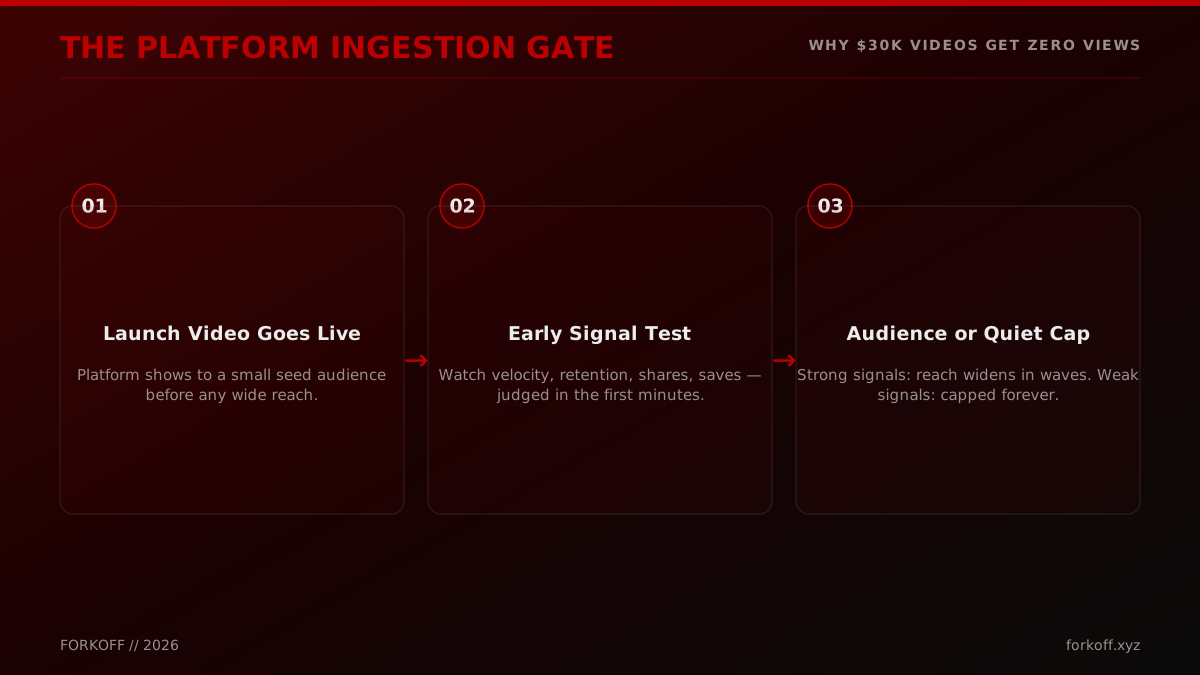
Walk through how the gate works and the production-only model starts to look fragile. When a new video goes live, the platform shows it to a small seed group and watches what they do in the first seconds and the first minutes. Did they keep watching or swipe away inside two seconds? Did anyone share, save, or comment? If the early signals are strong, the platform widens the audience in waves. If they are weak, the video is capped and never recovers, regardless of how good the back half is. This is why a slow-burn brand film that pays off at the ninety-second mark can die in the feed while a clip that lands its point in the first three seconds runs for a week. The craft that clears the gate is front-loaded attention engineering, and it is a different skill set than the cinematography most production shops sell.
A flawless video can still earn zero views
Platforms rank and throttle content at ingestion, before any meaningful audience sees it, on early signals like watch velocity and retention. A launch video with zero views did not lose an audience test, it never reached the test. This is why production quality is not the binding constraint in 2026, and why a budget that is 100% production and 0% distribution is a bet against the system that decides reach.
Source: Platform distribution mechanics, founder field reports
This is also why the cut matters as much as the shoot, and why a distribution-aware partner designs the two together. A film shot for a website hero and then cropped to a phone reads as foreign to a vertical feed and gets throttled accordingly. A clip built natively for the format clears the same gate and earns reach. That is a production decision made for a distribution reason, and it is the seam where the two halves stop being separate jobs. When the team making the video is also the team accountable for the views, the shoot gets designed so the vertical cut is first-class instead of an afterthought.
How I get customers for $0 with Product Hunt
Marc Lou
Marc Lou on getting customers for $0 through a launch surface. The throughline matches this guide: the cheap part is making the thing, the work is getting it in front of people. [VERIFY: oembed 200 confirmed 2026-06-27]
Where should the launch budget actually go?
For most launches, more of the budget should go to distribution than founders instinctively allocate, because the marginal dollar on reach outperforms the marginal dollar on polish once you clear a basic quality floor. The instinct is to pour the whole video line into the asset, because the asset is tangible and the reach is not. That instinct is the exact mistake the Wistia data measures, and reversing it is the single highest-leverage budgeting decision a founder makes around a launch.
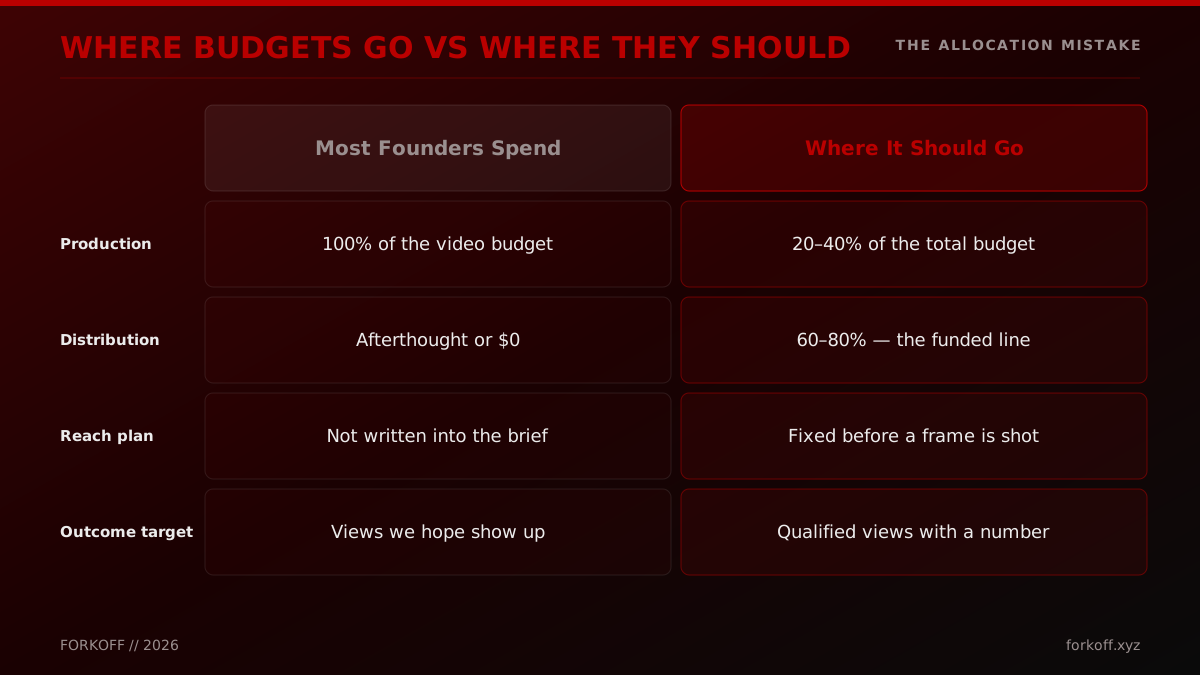
Picture two founders with the same $10,000. The first spends all of it on a polished studio video and has nothing left for reach, so the film goes live to a few hundred views and dies. The second spends approximately $2,000 on a sharp founder-shot video and $8,000 on distribution, native cuts, a couple of creator placements, and paid behind the clips that earn watch time, and reaches a hundred times the audience with a video that is eighty percent as polished. The second founder wins the launch, and it is not close. Eighty percent of the polish reaching a hundred times the audience beats a hundred percent of the polish reaching almost no one. The arithmetic only looks surprising if you are anchored on production as the thing that matters.
The demand-side case for video being worth the spend is not in dispute, which is precisely why reach is the variable left to compete on. Wyzowl's 2026 research, summarized in Searchlab's video marketing statistics roundup, has 91% of businesses now using video as a marketing tool, and HubSpot's 2026 State of Video data notes spending intentions cooling, with 40% of teams planning to spend more this year, down from 57% in 2023. Read those together and the message is clear. Everyone agrees video works. The budgets are tightening. So the winners will not be the teams that spent the most on production. They will be the teams that got the most reach per dollar, which is a distribution problem.
Demand for video is settled, which is exactly why reach is the variable
Video as a format is not in question. Wyzowl's 2026 research has 91% of businesses now using video as a marketing tool, up five points, and the surveys consistently report that most buyers say a video has convinced them to purchase. When the demand-side case is this settled and the supply of video is this cheap, the only thing left to compete on is whether your video reaches the right person at the right moment.
Source: Wyzowl, via Searchlab Video Marketing Statistics 2026
What does managed distribution cost compared to paid and organic?
Managed distribution is usually priced on the outcome rather than a flat rate, which makes it cheaper than naive paid spend per genuinely watched view and faster than organic done alone. Organic costs no cash but burns founder time and caps out at the reach of your own small audience. Paid amplification buys reach immediately but you pay for every impression whether it converts attention or not, and you own the strategy and the testing. Managed clipping sits between the two: a partner runs native cuts, seeding, and amplification as a loop, reads the early data, and reallocates toward what is working, so the spend chases signal instead of guessing. The launches that ran this loop well are worth studying: RADAR tracks real launches by reach and reads which ones earned it, and we ranked the standouts in the teardown of the best product launch videos of 2026.
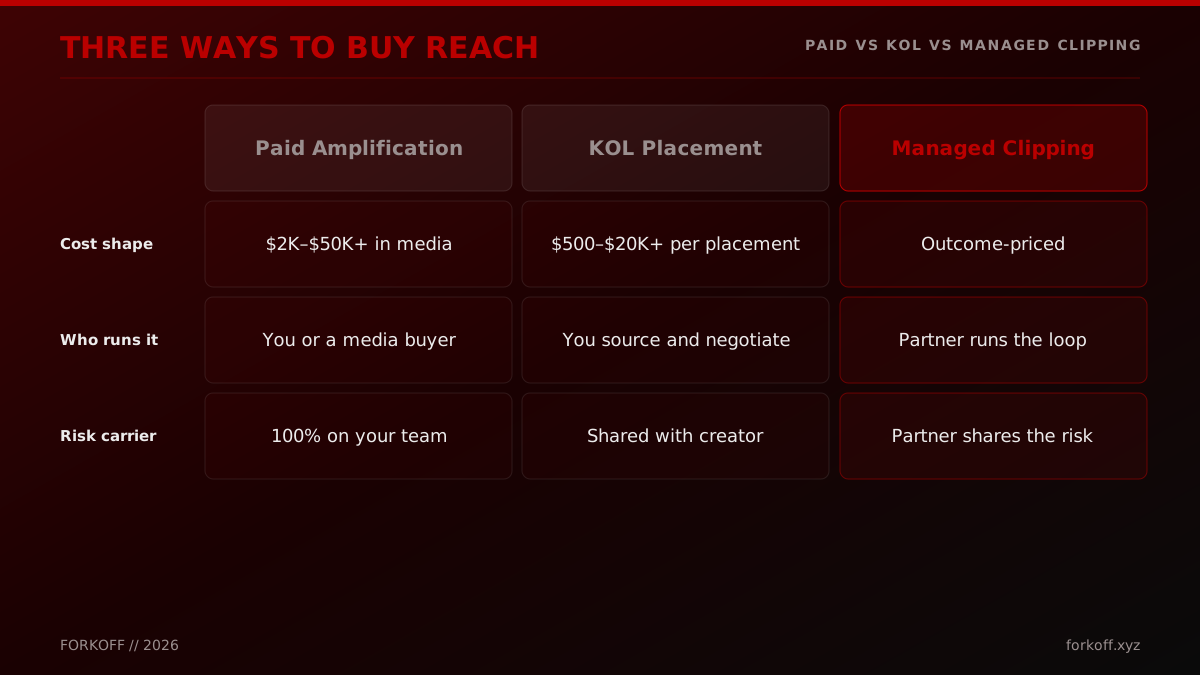
The three paths are not mutually exclusive, and the right mix depends on what is scarce for you. If your scarce resource is cash and you have time and a credible on-camera presence, lean organic and use the founder funnel and Twitter marketing playbooks to compound your own reach. If your scarce resource is time and you have budget and an existing paid engine, lean paid and feed it native cuts. If your scarce resource is reach itself, which for most funded launches is the real answer, a managed partner that owns the loop is the path that buys the outcome rather than the inputs. The thirteen operators profiled in the content distribution move piece almost all landed on some version of that third answer, and the best clipping agency comparison and best KOL marketing platforms comparison lay out who does the placement layer well.
The Reddit cost threads are a useful reality check here, because they show founders weighing the production number in isolation, with no distribution line in view at all. One founder who spent 250 euros on a launch video for a visual tool framed the decision entirely around the asset.
Since the tool is visual I thought the launch should be visual as well.
That is a reasonable instinct and a good video can absolutely help. But notice what is missing from the calculus: any line at all for getting the video watched. The whole decision is production-versus-production, cheap film versus expensive film, with distribution nowhere in the frame. That blind spot is the category's default, and it is exactly what the cost guides reinforce.
I spent €250 on our launch video, tell me if you think it was worth it
How much should you spend by funding stage?
Tie the total spend, both halves, to your runway, because the right number at pre-seed and the right number at Series A differ by an order of magnitude. The mistake is not spending too much or too little in the abstract. It is spending at a tier that does not match your stage, and in particular spending the whole stage-appropriate budget on production while leaving distribution at zero.
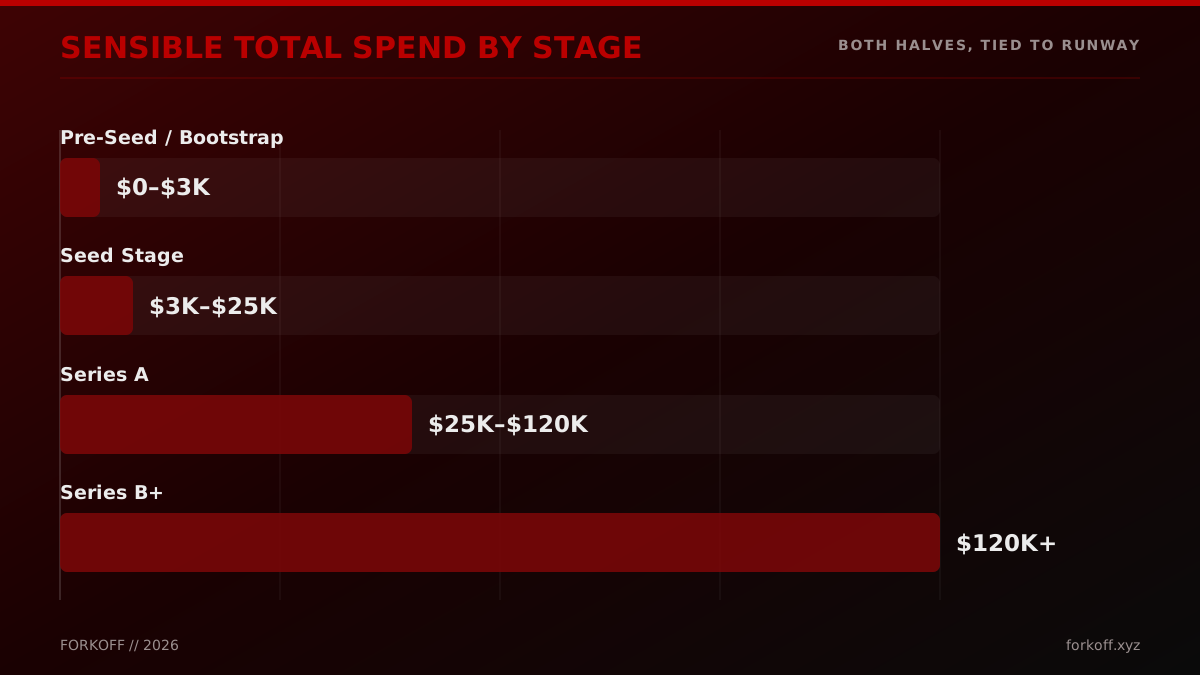
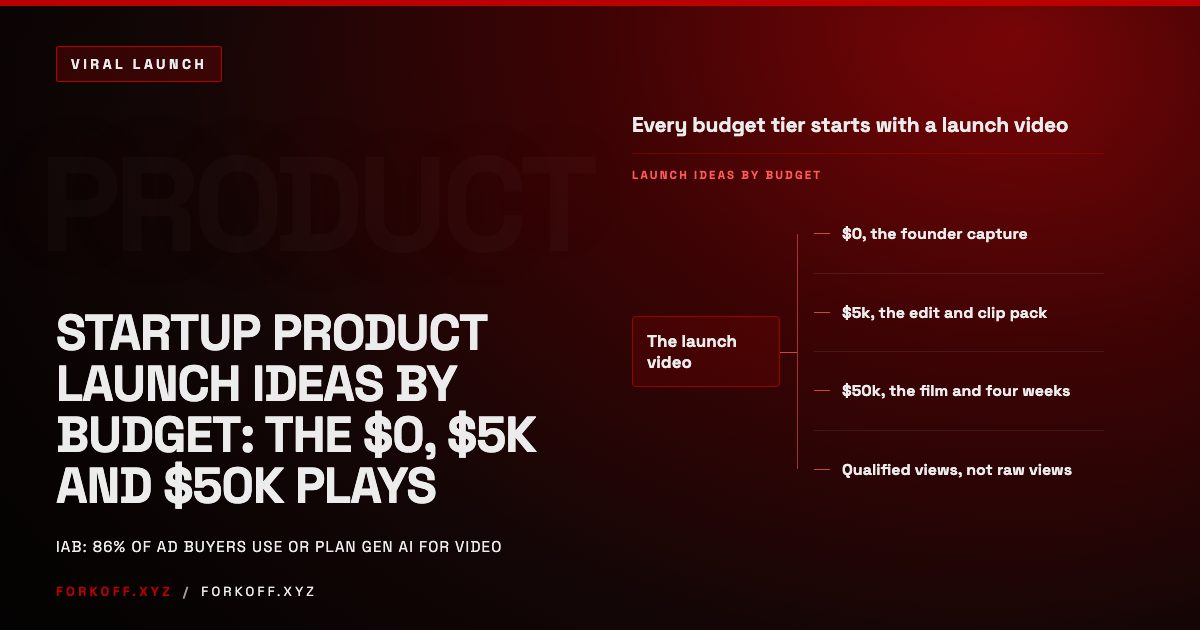
At pre-seed or bootstrapped, the sensible total is an estimated $0 to $3,000, and almost all of it should be a founder-shot demo or a single freelance edit, with energy poured into distribution rather than polish. A five-figure video at this stage is a genuine risk to a runway measured in months, and your own face explaining the product on a phone often outperforms a glossy film because it reads as real. At seed, $3,000 to $25,000 can buy one strong production, but distribution must be a separate, explicit line, not an afterthought, or the video sits on a landing page and a few hundred people see it. At Series A, an estimated $25,000 to $120,000 supports a multi-asset campaign with proper channel cuts, and this is the precise stage where distribution should graduate from "we will figure it out" to a funded line in the plan. At Series B and beyond, the spend starts around $120,000 for a brand film plus a full distribution program, and at that tier owning reach is the baseline, not a luxury. Any agency taking six figures from you without owning distribution is selling you half a service at a full price. For the broader agency-selection question at each stage, the top AI marketing agencies comparison and the influencer marketing service page cover vertical-specific distribution. If you want the launch play for each budget rather than the cost, the product launch ideas by budget guide sets out what the video and the distribution should be at $0, $5k and $50k.
When is a cheap video the right call?
A cheap video is the right call more often than the cost guides will ever admit, specifically whenever spending more on production would not change the launch outcome. There are four clear cases, and recognizing yourself in any of them can save you tens of thousands of dollars.
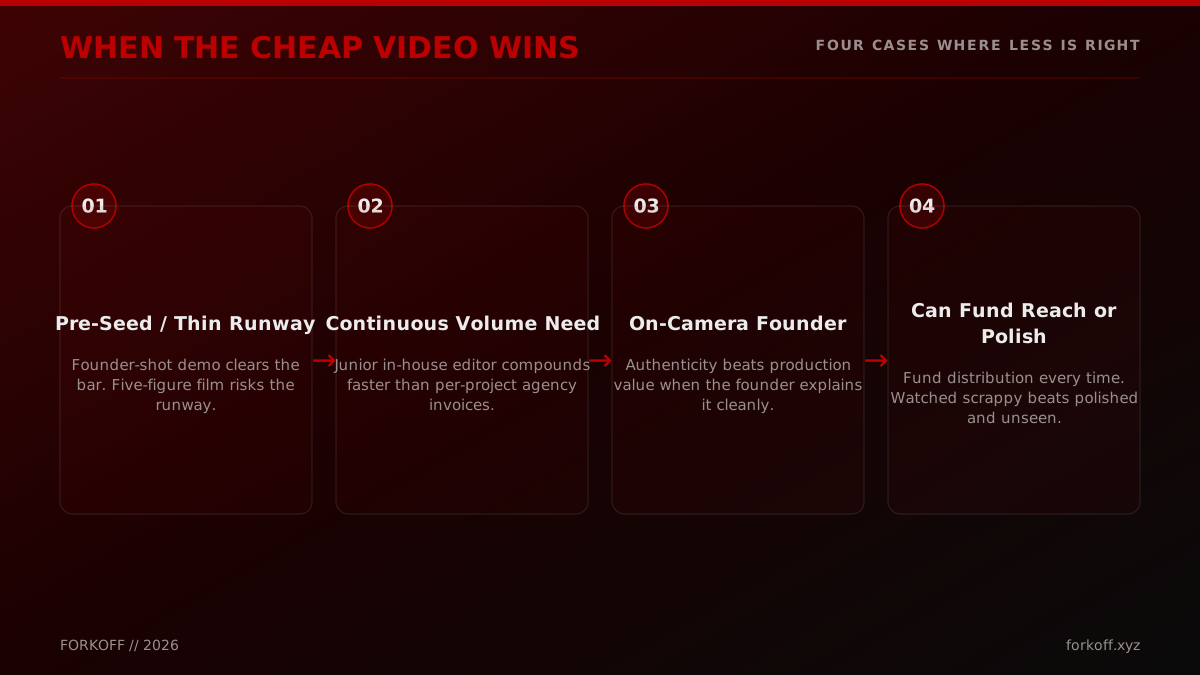
The first case is pre-seed with thin runway, where a founder-shot demo clears the bar and a five-figure film does not. The second is when you need video continuously rather than once, in which case a junior in-house editor compounds faster than per-project agency invoices. The third is when the founder is already a credible on-camera presence and the product explains itself in a screen recording, where authenticity beats production value outright. The fourth, and the most important, is when you can fund production or distribution but not both, in which case you fund distribution and shoot the video scrappily, every time. A watched scrappy video beats a polished unwatched one, and it is not a close call. Founders who have run the experiment land here repeatedly, and the famous YC launch videos that founders ask about on Reddit owe far more to the distribution machine behind them than to the production budget in front of them.
The flip side is the one case where the distribution gap genuinely does not apply: an explainer that lives inside a funnel you already drive traffic into, on a pricing page, in onboarding, or in a sales deck. There, the job is to convert someone who already arrived, the distribution is your existing funnel, and a clean, cheap explainer does the work without any feed at all. The mistake is hiring for that job when your actual job is winning new attention, getting a tidy file, and discovering there was never a plan to put it in front of anyone who had not already heard of you.
How do you budget a launch video so distribution is not an afterthought?
You budget distribution into the brief from the first line, before you commission a single frame, so the production is designed around the reach instead of the reach being improvised after delivery. The single biggest predictor of whether launch-video money is well spent is not the agency, it is whether the brief treated distribution as a real, funded part of the job. Tighten four things and most of the failure modes above disappear.
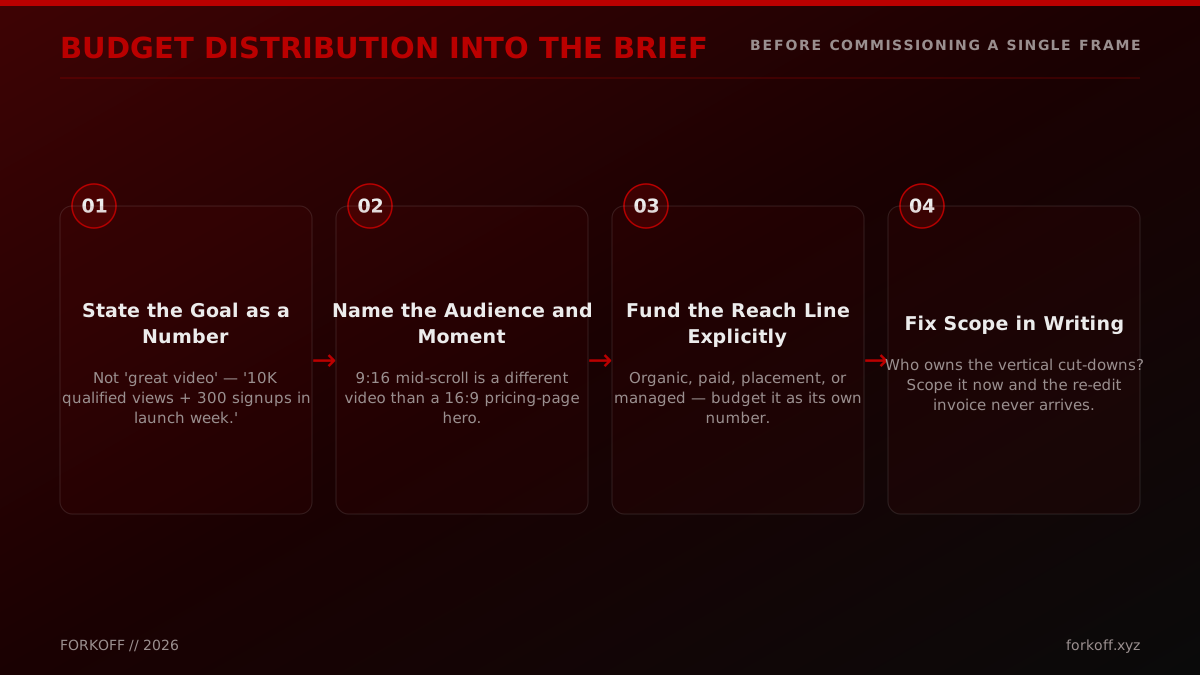
First, state the goal as a number, not a vibe. Not "a great launch video" but "10,000 qualified views from our ICP and 300 signups in launch week." A number forces every later decision and exposes any partner who cannot map their work to it. Second, name the audience and the moment, because a 9
short caught mid-scroll and a 16 hero played after an ad click are two different videos with two different first three seconds. Third, fund the distribution line explicitly, deciding now whether reach comes from organic, paid, placement, or a managed partner, and budgeting it as its own number rather than hoping it is included. Fourth, fix scope and ownership in writing, especially who owns the native cut-downs, because the most common budget leak is paying again later for the vertical cuts that should have been scoped from the start. Before any of those conversations, model the whole bill with the CPQV calculator and the marketing ROI calculator, and size reach assumptions with the launch view-tier estimator, so you walk into the agency call comparing outcomes rather than day rates.Operator noteScope the vertical cut-downs into the first brief. The re-edit invoice for cuts scoped late is the budget leak we flag most on launch work.
What does FORKOFF do differently on cost?
FORKOFF prices the production and the distribution together as one system, on the outcome rather than a production day rate, which is the structural opposite of how the cost-guide agencies sell. Most vendors quote you the film and stop. FORKOFF produces the launch video and then owns getting it watched: cutting it into platform-native short-form, syndicating it across channels, placing it with relevant creators, and amplifying with paid where the math holds. The distribution side is not a claim, it is infrastructure, backed by a clipping network that has processed 5B+ views. The product launch video service page lays out the full mechanism, the reddit marketing and podcast clipping services cover adjacent reach surfaces, and the Twitter marketing page covers the organic spine that compounds around a launch.
Operator note5B+ views processed through the FORKOFF clipping network is the distribution benchmark no production vendor on these cost pages carries.
The honest disclosure, because this guide is published by FORKOFF and you should read it with that in mind: if all you need is one beautiful film and you already own a reliable way to get it watched, a pure production shop is a cleaner and probably cheaper fit, and you should hire one. The case for paying for distribution only holds when reach is the thing you are actually short on. For most funded launches it is, which is the whole reason the production-only cost guides leave their readers stuck. They answered what the file costs and never told them the file was the cheap half.
The verdict: stop pricing the file, start pricing the watched view
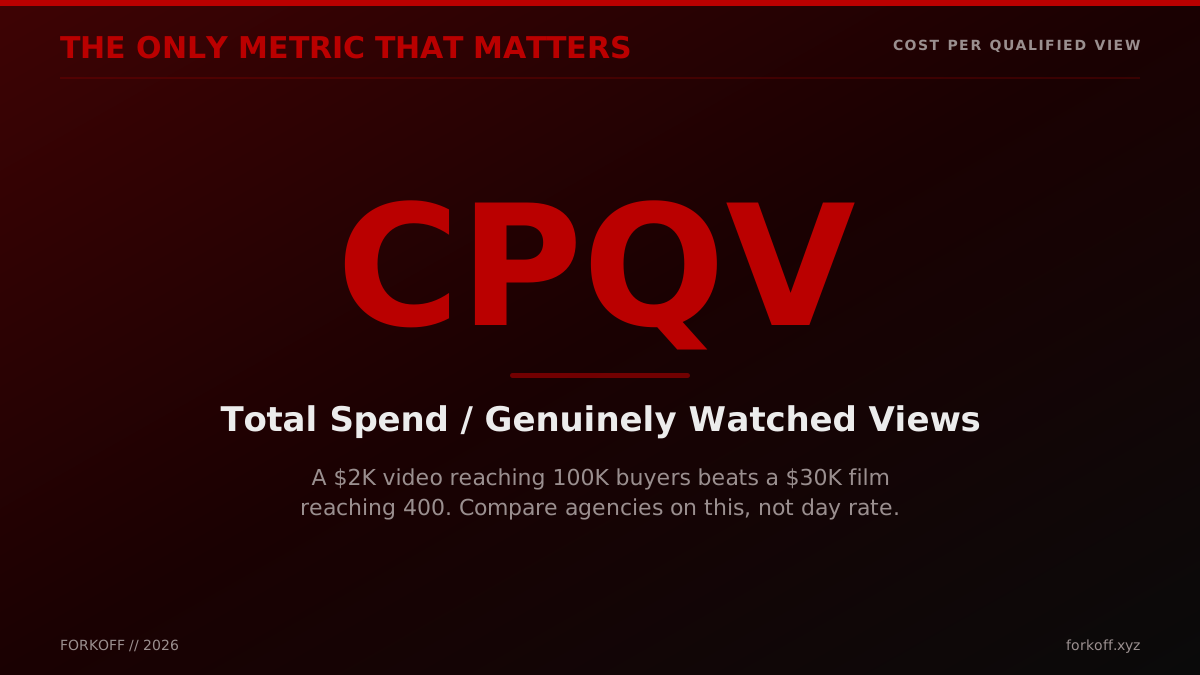
The right cost metric for a launch video in 2026 is not the price of the video. It is cost per qualified view, total spend across production and distribution divided by genuinely watched views from people who could actually buy. Measured that way, a $2,000 video that reaches the right hundred thousand people is vastly cheaper than a $30,000 video that reaches four hundred, even though the production number says the opposite. The cost guides have the comparison exactly inverted because they only ever count the numerator's first half.
So when an agency quotes you a production number and there is no distribution attached, you are being asked to spend your whole video budget on the half of the problem that does not decide the outcome. Ask the distribution questions out loud on the first call. How will this video reach an audience after it is delivered, in concrete channels and numbers? Do you do seeding, creator placement, or paid amplification, or does reach hand off to my team? What will you report back, watched minutes and qualified views, or turnaround and impressions? The answers sort the field instantly, and they are the questions the launch video readiness checklist was built to make you ask.
Production is solved. Distribution is the gap. Price accordingly, and when you want the film and the audience scoped and costed together rather than sold as separate halves, talk to us or book a call and we will map the reach plan and its cost before you spend a dollar on the asset.
Operator noteThe 57% vs 20% Wistia split is the entire thesis in one statistic, more time on the asset than on the reach.