Type "product launch press release template" into Google and eight of the top ten results are editorial guides written by PR agencies and wire vendors. Exactly one is an actual downloadable template, a modular Notion doc from a design publication. FORKOFF has published 191 blog posts and never once answered this query. That gap is the reason this guide exists, and it ships the second real template on that page, not a third essay about why press releases matter.
The short version
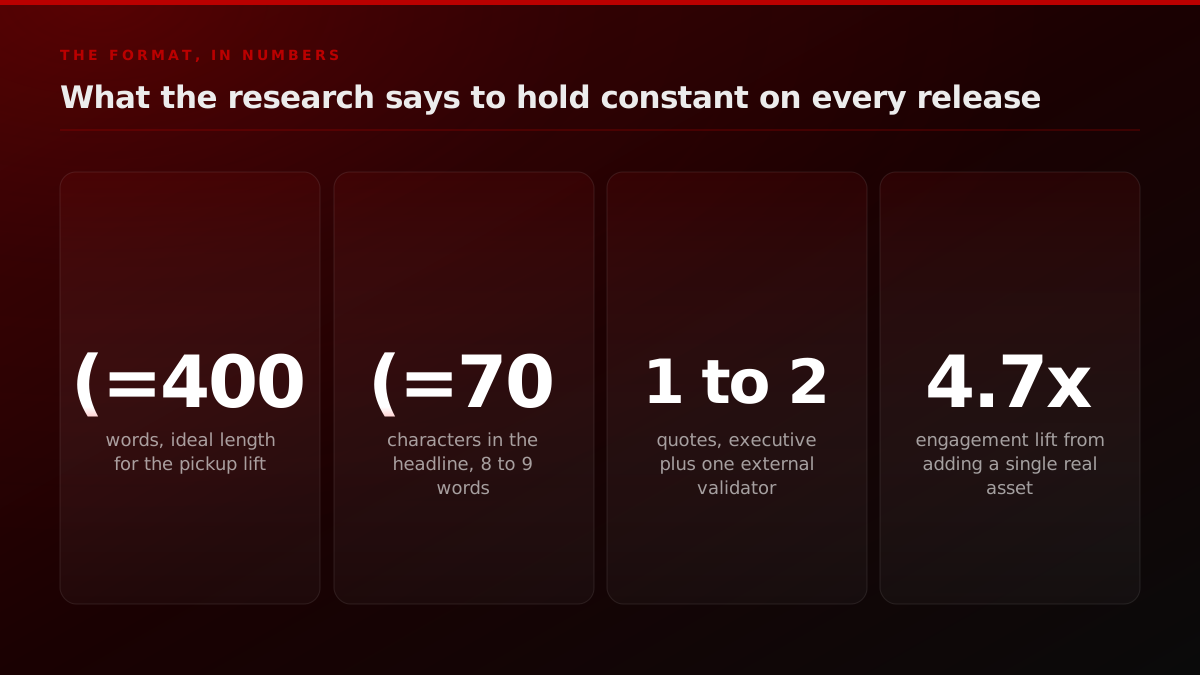
A product launch press release that a wire editor actually keeps carries exactly eight elements: headline, subheadline, dateline, lead paragraph, supporting paragraph, one or two quotes, boilerplate, and a media contact, under 400 words. Nothing else belongs in it. The generic press-release-template market is owned by PRNewswire and HubSpot at 4,400 searches a month; the launch-specific version this guide targets is a smaller, winnable 120-a-month cluster where 8 of the current top 10 results are editorial guides and exactly one is a downloadable template. This guide is the second downloadable template on that page, built to the 8-element wire format, with a fully worked vertical SaaS example you can copy. It also covers the part most templates skip: why the wire link itself carries close to zero SEO value, why a beat-matched pitch outperforms a blast by orders of magnitude, and how to sequence exclusive, niche-ladder, and wire distribution so an editor sees your release before the wire does.
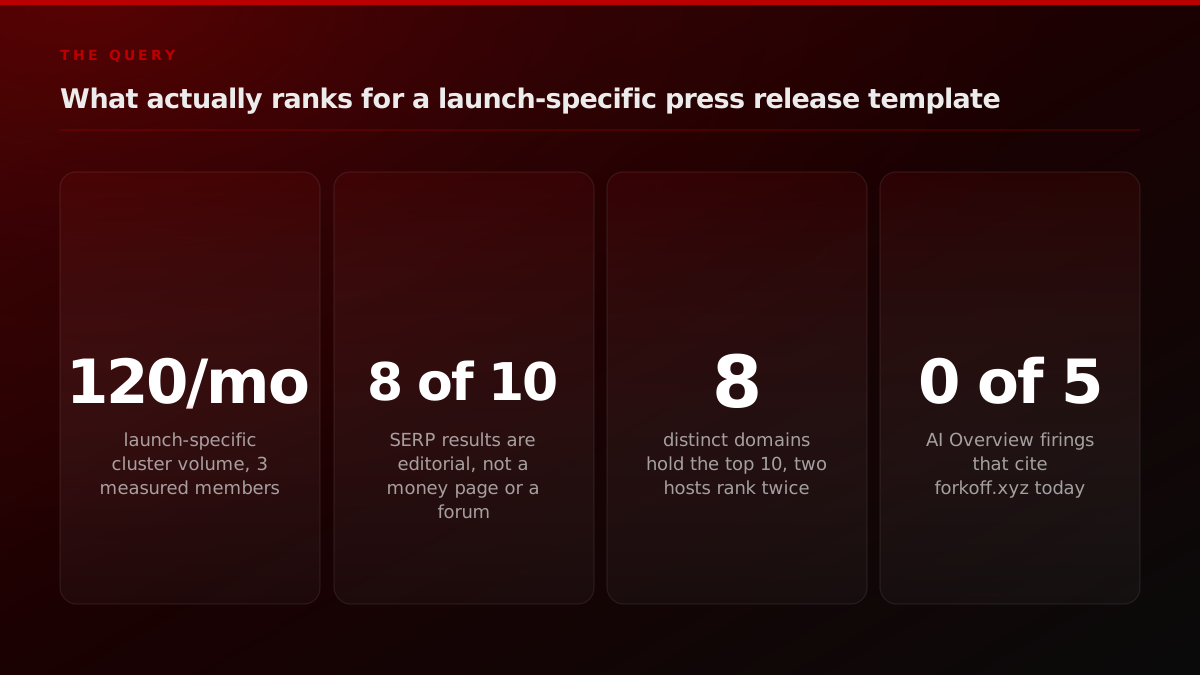
The generic version of this query, "press release template" on its own, gets roughly 4,400 searches a month and belongs to PRNewswire and HubSpot; a launch-specific template competing there loses before it starts. The narrower query this guide targets, the one a founder actually types the week before shipping, is smaller and far more winnable: about 120 searches a month across its measured variants, low keyword difficulty, and a SERP with zero social results and zero money pages selling wire distribution outright. It rewards a real, fillable template over another 2,000-word essay on why PR matters. So that is what follows: the 8-element format, one section per element, a fully worked vertical SaaS example, and a downloadable copy at the bottom you can paste into a doc today.
What actually makes a press release "wire-ready" instead of corporate filler?
A wire-ready release carries exactly eight elements, in a fixed order, and nothing else. That claim is not a FORKOFF opinion. It is the point where PR Newswire's own submission guidance, eReleases' writing guide, the AP Stylebook's news-release conventions, and every PR agency's internal template converge, because a wire service's intake system is a parser before it is a human editor, and a parser rewards a predictable shape. Add a ninth section, a ranked list of "why choose us" bullet points, a second headline, three extra quotes, and you have not made the release more persuasive. You have made it harder for the parser to route into the story feed instead of the generic announcement feed, and harder for a human editor scanning fifty of these in a sitting to find the actual news.
This matters more for a vertical SaaS launch than it looks. A horizontal product with broad name recognition can survive a slightly bloated release because a journalist already knows the category; a mid-market manufacturing or logistics or healthcare-ops tool cannot, because the reader is meeting the category and the company at the same time. Every extra sentence between the headline and the actual news costs you a reader who was never going to give you two full paragraphs of patience in the first place.
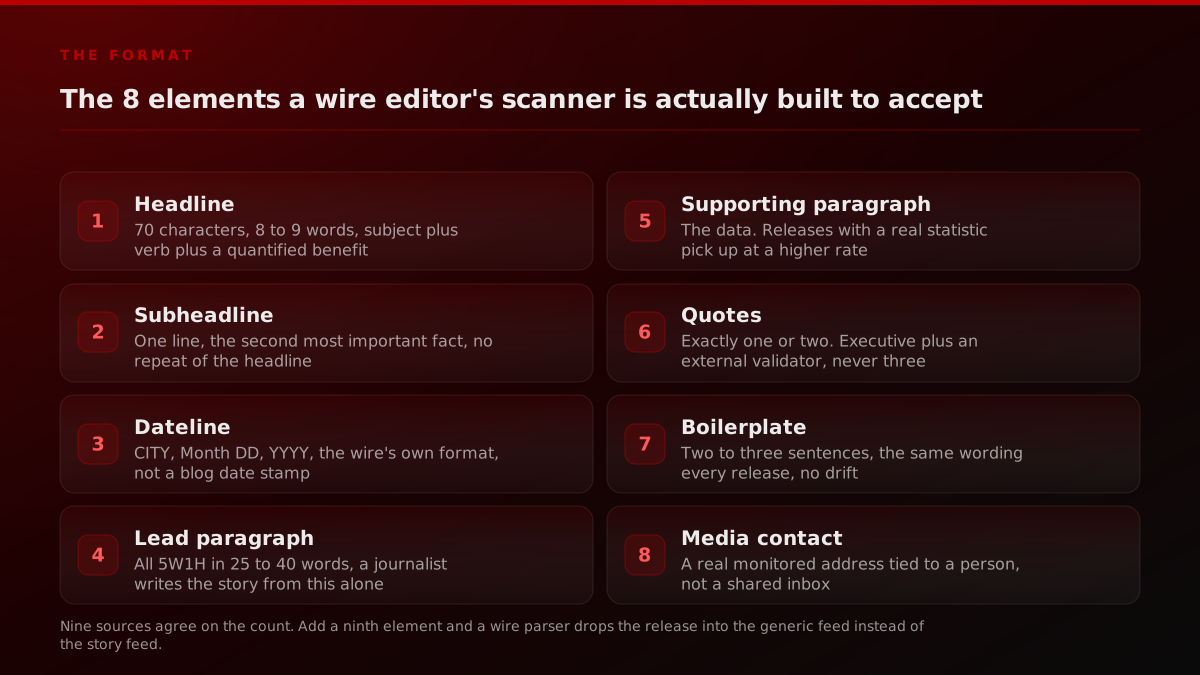
Here is the whole structure as one table you can screenshot, then the rest of this guide walks each row with the traps that make each one go wrong.
The 8 elements, section by section
| Element | What a wire editor's scanner expects | Worked example line |
|---|---|---|
| Headline | 70 chars max, subject + verb + benefit | Nimbus Ledger Cuts Approval From 9 Days to 6 Hours |
| Subheadline | One line, the second fact, no repeat | Three design-partner plants live |
| Dateline | CITY, Month DD, YYYY, wire format | DETROIT, Mich., Aug. 12, 2026 |
| Lead paragraph | 5W1H in 25 to 40 words | Launched today, cut approval 9 days to 6 hours |
| Supporting paragraph | One real statistic, methodology stays on your page | 4,200 invoices, 91% matched, zero review |
| Quotes | One or two, executive plus a validator | Founder quote plus a customer's VP of Finance |
| Boilerplate | 2 to 3 sentences, identical every release | Nimbus Ledger builds AP software for manufacturers |
| Media contact | Real, monitored, tied to a person | Priya Raman, Founder and CEO |
Nine sources agree on the count and the order. Add a ninth element, or reorder these eight, and a wire parser routes the release into the generic feed instead of the story feed.
Why does the search result for this exact phrase reward a template instead of another guide?
It rewards a template because almost nobody else has shipped a real one for this exact query. The generic version of this search, "press release template" on its own, is a large, settled market that PRNewswire and HubSpot already own; the launch-specific version a founder actually types the week before shipping is smaller, newer, and still mostly answered with essays instead of a document you can fill in tonight.
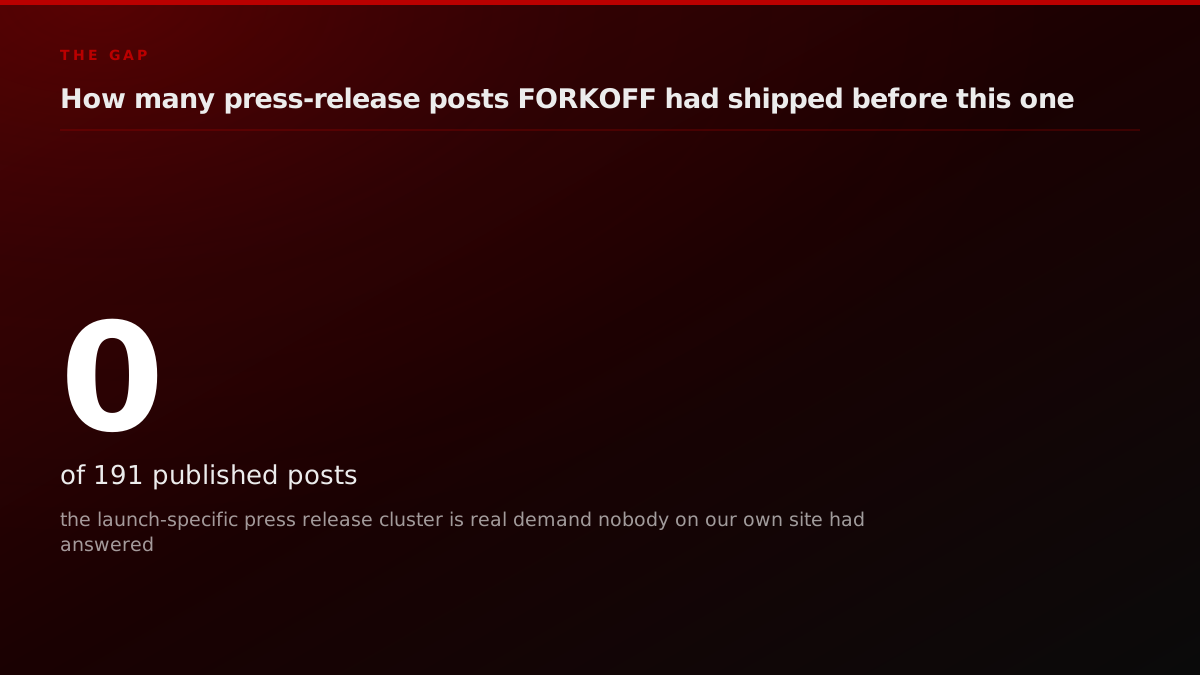
Search intent is not a matter of opinion here either; it is visible in the SERP itself. A live pull of the top 10 for the launch-specific cluster returns zero social results, zero money pages, and eight of ten editorial results, meaning the query is answerable, not commercial in the sense of "buy our wire package." But intent is not just editorial versus commercial. It is also template versus guide, and only one of the current ten results is an actual fillable document rather than an article about writing one.
That single template belongs to Coda, a modular, Notion-style document built for general PR submissions, not scoped to a product launch. Reforge holds two press-release artifacts, but both sit behind broader go-to-market courses rather than as a standalone page. The rest of the top 10, PRNewswire and eReleases among them, own the generic version of this market and write guides built to sell wire distribution, not to hand over a free copy-paste template. Prezly's PR academy is strong on the storytelling side and thin on a literal template. None of the eight editorial results is built for the specific moment this guide targets: a founder or marketer, a week before a product launch, who needs the document filled in tonight.
Who already ranks for a launch-specific press release template
| Domain | What they publish | Why it is not the launch-specific answer |
|---|---|---|
| prnewswire.com | Generic press release guide | Sells wire distribution, not a free format lesson |
| ereleases.com | Generic template and writing guide | Same generic-PR market, not launch-specific |
| prezly.com | PR academy on storytelling and coverage | Strong on strategy, thin on a template |
| canva.com | A design template you fill text into | Format only, no 8-element guidance |
| coda.io | A modular Notion-style release template | Generic PR, not launch-specific |
| reforge.com | Two release artifacts inside GTM courses | Gated behind a course, not standalone |
Eight distinct domains hold the current top 10 for the launch-specific cluster; two of them, brafton.com and channelvmedia.com, each hold two slots. Zero of the ten are FORKOFF, and zero are money pages selling wire distribution outright.
The Brand Identity
@TweetsByTBI
Streamline your submission process to blogs and awards with The Press Release, a modular template built for Notion.
That gap is why this guide does not open with another 2,000 words on why press coverage matters. It opens with the format, then hands you the filled-in copy.
Element 1: what makes a headline earn the open instead of the delete?
The headline is 70 characters or fewer, 8 to 9 words, and it follows one formula: subject, plus an active verb, plus a quantified benefit. "Company Announces Revolutionary New Platform" fails on every count, no subject a stranger recognizes, no verb doing real work, and "revolutionary" is not a benefit, it is an adjective standing in for one. "Nimbus Ledger Cuts Manufacturer Invoice Approval From 9 Days to 6 Hours" passes: a named product, a specific verb, a number a reader can hold onto. Numbers, questions, and colons lift open rates by roughly 20 percent across pitch subject lines, and the same mechanics apply to a headline scanned in a wire feed. Write the headline last. You cannot write the sharpest possible summary of a release you have not finished writing yet, and every source that studies this agrees the headline is the one line worth revising after everything else is locked.
Operator noteThe releases that earned a real reply named one verifiable number in the first two sentences, every time., FORKOFF PR pipeline, operator observation
Element 2 and 3: what belongs in the subheadline and the dateline?
The subheadline is one line and it carries the second most important fact, not a rephrasing of the headline. If the headline is the number, the subheadline is usually the scope: how many customers, how many markets, what the platform does day to day. Skip it or repeat the headline in slightly different words and you have wasted the one line editors read immediately after the headline decides whether to keep reading.
The dateline is the smallest element and the one most often written wrong by a team that has never sent a release before a wire. It follows a fixed wire convention, CITY, STATE, Month DD, YYYY, not a blog post's date stamp and not a full sentence. "DETROIT, Mich., Aug. 12, 2026" is correct. "Today, August 12th, we are excited to announce" is not a dateline, it is the opening of the lead paragraph wearing a dateline's clothes, and a wire parser that expects the fixed format will either reject it or silently mangle it.
A vertical SaaS team without an in-house PR function tends to get two things wrong here specifically. First, the city is the company's headquarters or the location of the news itself, not the city where the founder happens to be traveling that week; a dateline that drifts from release to release reads as sloppy to anyone tracking your announcements over time. Second, a remote or fully distributed team still needs to pick one city and hold it, because the dateline is a wire convention, not a claim about where your team physically sits, and inventing a new one per release breaks the same consistency the boilerplate depends on.
Element 4: how do you write a lead paragraph a journalist can actually write their story from?
The lead paragraph carries all of who, what, when, where, and why in 25 to 40 words, inverted-pyramid style: the most important fact first, everything else in descending order of importance after it. The test is not whether the paragraph sounds good. The test is whether a journalist who reads only this paragraph, and nothing else in the release, could write an accurate two-sentence story about your launch. If they cannot, the paragraph is doing marketing's job instead of news's job, and it will read that way to the one audience whose job is to spot the difference.
MMCandyCheng
@MMCandyCheng
If you can't explain the startup in your own words without plagiarizing from the company website or a press release, you shouldn't pitch it to a journalist.
This is also where a release most often fails silently. A team writes a lead paragraph that restates the headline in longer form, "Today marks an exciting day as we officially launch our groundbreaking new platform," and buries the actual news, the number, the date, the specific claim, in paragraph two or three. An editor deciding whether to keep reading has already decided by the end of paragraph one. If the news is not there, the rest of the release does not get read.
PR Tips for Startups: Finding New Angles and Creating Compelling Subject Lines
Element 5: what turns a supporting paragraph from filler into the reason you get picked up?
The supporting paragraph is the data, and it is the single highest-leverage sentence in the whole release. Releases that carry a real statistic, a genuine number from your own product, a named pilot, a measured before-and-after, pick up at a meaningfully higher rate than releases that stay in adjectives. "Nimbus Ledger processed 4,200 invoices in its pilot quarter, with 91 percent matched automatically and zero human review required" does work no adjective can do: it gives a journalist something to quote directly, and it gives an AI answer engine reading the release later something extractable to cite. Cite your methodology on your own landing page, not inside the 400-word release itself; the release is the trailer, the landing page is the full data.
Element 6: why does a release with three or four quotes read worse than one with two?
Exactly one or two quotes, never more. The proven formula is an executive quote plus one external validator, and the external quote usually does more work than the internal one, because a journalist trusts a customer's account of what changed more than a founder's account of what they built. Each quote follows a simple shape: an observation, then "because" or "which means," then a concrete implication. "We are thrilled to unveil our groundbreaking solution" is not a quote, it is a press-release cliche wearing quotation marks; strip the banned phrases, thrilled to announce, important milestone, look forward to, and most template quotes collapse to nothing, which tells you they were never saying anything specific in the first place.
A useful test before you send a draft quote back to whoever said it: read it out loud. A real observation someone actually made in conversation sounds like a person talking, specific and a little uneven. A quote written by a marketing team and routed to an executive for sign-off sounds like a press release, smooth, generic, and interchangeable with a hundred other companies' quotes on the same day. If you cannot tell which company a quote is about without the name attached to it, it is not doing its job, no matter how polished the sentence reads.
Lead with your story, not your product. Journalists don't care about features. They care about people. Why did you quit your job to build this? What pissed you off so much you couldn't stop thinking about it?
I spent > $60K/month on PR agencies at a startup that raised $680M. Here's what I learned about getting press as an early-stage operator - i will not promote
No matter how good your headline is, if you send it to a journalist that doesn't cover what you're pitching it's either going to be ignored or deleted.
Element 7 and 8: what makes a boilerplate and a media contact actually functional?
The boilerplate is two to three sentences that describe the company, and it should read identically on every release you ever send, word for word. A boilerplate that drifts release to release, a slightly different self-description each time, reads to a journalist doing background research as a company that either does not know what it does or is actively repositioning in public. Lock the wording once and reuse it.
Operator noteA boilerplate that changes wording release to release reads as a company that does not know what it does., FORKOFF PR pipeline, operator observation
The media contact is the smallest element and the one most often faked. A shared inbox, press@company.com with no name attached, tells a journalist nobody is actually watching that address. A real name, a real title, and an address that gets checked signals the opposite: that a reply will reach an actual person who can answer a follow-up question before their deadline.
Both elements compound past a single release. The same boilerplate wording belongs on your landing page's about section, in the pitch email signature, and in every future release, so a journalist researching your company from three different angles reads the identical self-description each time instead of three slightly different ones that read as inconsistency. The media contact should be checked on the same cadence as your inbox during launch week specifically, same-day replies during the 48 hours around launch matter more than same-day replies the rest of the quarter, because that is the window when a journalist is actually deciding whether to write.
Why does the wire link itself buy you close to nothing?
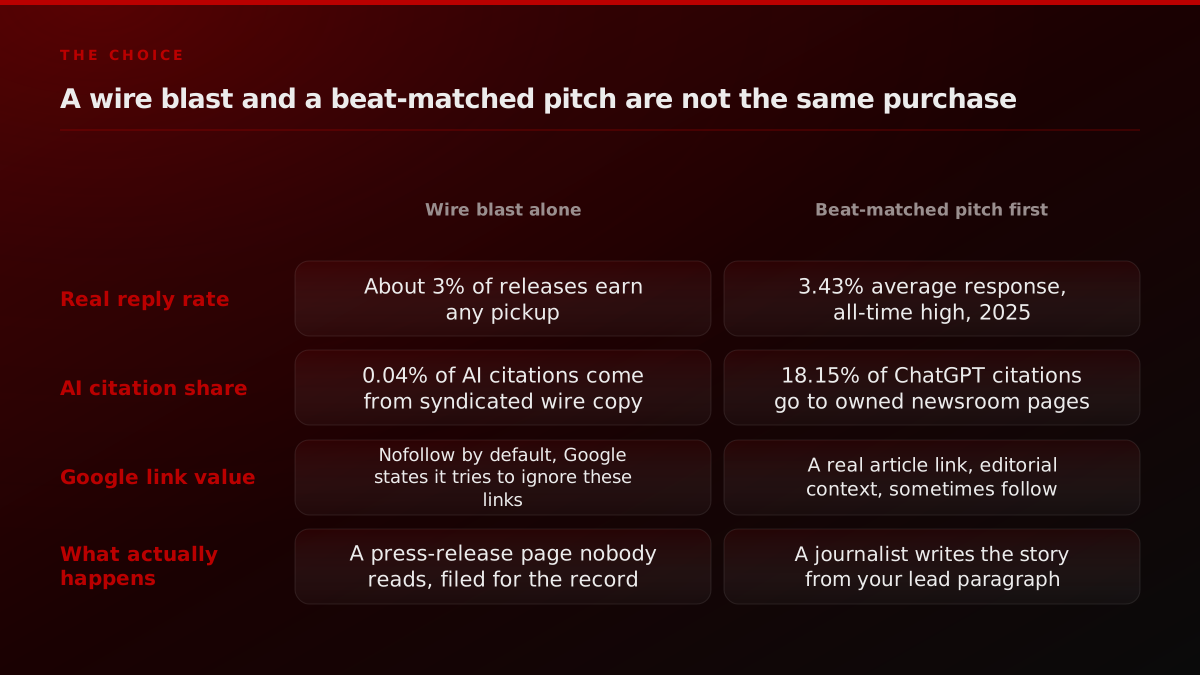
The uncomfortable finding underneath this whole format is that the wire distribution step, the part most founders assume is the point of a press release, is close to worthless as a link or an SEO play. Every major wire service ships its outbound links as nofollow by default, and Google's own spam policies name press-release links carrying optimized anchor text as a link scheme it explicitly works against.
The wire link itself is not an SEO play, and Google says so directly
Google's own spam policies name "press releases distributed on other sites with optimized anchor text" as a link scheme, and every major wire service ships those links as nofollow by default. Google has also said publicly that it tries to ignore links from press releases when it evaluates a page. If the reason you are buying a wire blast is rankings, that reason does not survive contact with Google's own documentation. The reason to write a release well is a journalist reading it, an AI answer engine citing your owned page, or a customer finding the announcement when they search your product name. None of those three depend on the wire link carrying weight it was never going to carry.
Source: Google Search Central, Spam Policies for Google Web Search
That does not make the wire useless. It makes it the wrong tool for the job most people are buying it for. A wire buys syndication breadth, brand-name corroboration across a large number of domains, and a small amount of AI-citation surface area purely from your company name and product name appearing on many pages at once. It does not buy you a journalist's attention, and it does not buy you search rankings.
Keep the two purchases separate in your own head, because conflating them is where the budget conversation goes wrong. A link is a specific technical object Google's crawler follows and weighs; a brand mention is your company's name appearing in text near a topic, whether or not anything is hyperlinked at all. Wire distribution buys the second thing at scale and the first thing almost never, since the links are nofollow by default. A founder who understands this stops asking "did the wire release move our rankings" and starts asking the two questions that actually matter: did a real journalist read it, and does our own name now show up when someone, or some model, looks up the topic.
What does earn AI-citation weight is the owned landing page the release points to, the page with your real data, your methodology, and an FAQ block an answer engine can extract cleanly. That is a direct extension of the same answer engine optimization discipline that governs any page you want an AI Overview or a ChatGPT answer to cite: a stable canonical URL, structured data, and the answer sitting in context rather than buried in wire boilerplate. If you are already thinking about how your launch gets cited by an AI answer engine rather than just indexed by Google, the ChatGPT citation strategy for agencies covers the mechanism in more depth than a single release can.
How do you sequence the pitch so an editor sees it before the wire does?
Sequence, not simultaneity, is what makes a launch release land: an exclusive pitch to one journalist first, a wider beat-matched list running alongside it, and the wire last, after both are already sent, so nobody sees your news as old by the time they open it. Getting this order backward is the single most common mistake in launch PR, and it is entirely avoidable once you know the order matters at all.
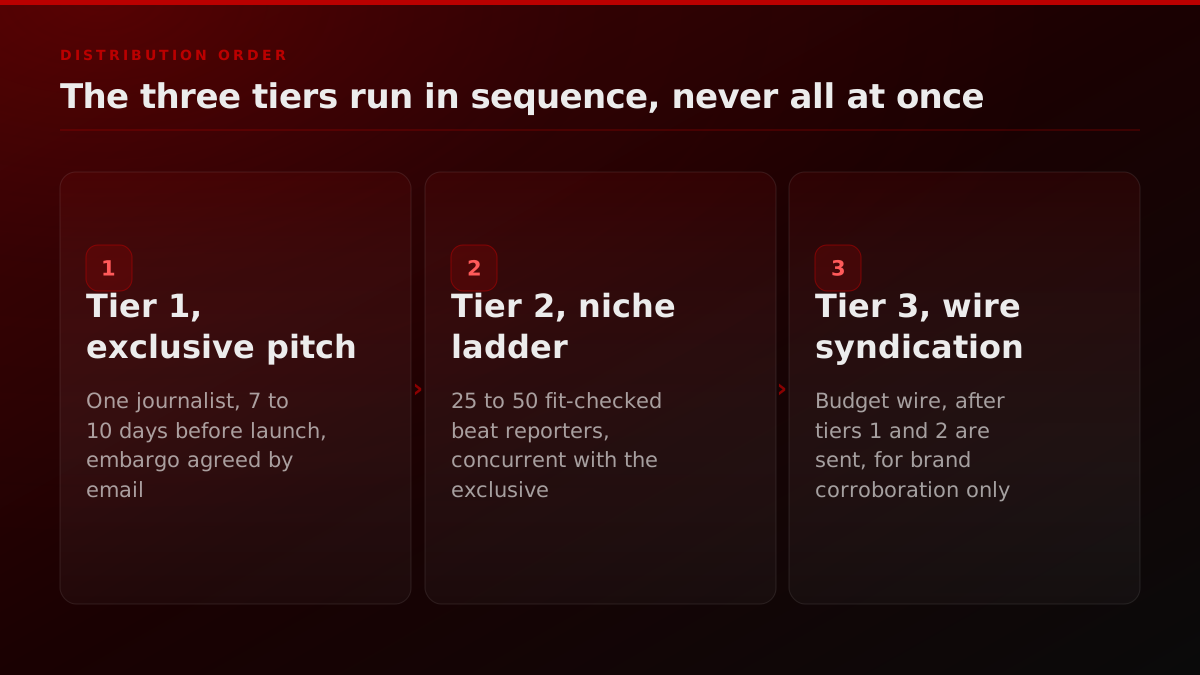
Run distribution in three tiers, in order, never all at once. Tier one is an exclusive pitch to a single journalist, sent 7 to 10 days before launch with an embargo agreed by email, meaning they get the story early in exchange for holding it until your date. Tier two runs concurrently with tier one: 25 to 50 fit-checked beat reporters who actually cover your space, each pitched individually rather than blasted as a group. Tier three, the wire, runs last, after tiers one and two are already sent, purely for brand corroboration and the small AI-citation surface a wire buys. Reversing the order, wire first, defeats the exclusive: a journalist who sees your news already syndicated across two hundred aggregator domains has no reason to treat it as a story worth their byline.
Measure the result honestly once it lands. The PR industry's own standard, the Barcelona Principles 4.0, formally bans Advertising Value Equivalency, the old trick of pricing a placement as if it were a paid ad, because it inflates a launch's apparent return and teaches the wrong lesson about what worked. Track what tier one and tier two actually produced instead: real replies, real coverage, referral traffic to your landing page, and whether an AI answer engine starts citing it. Tier three's job is narrower and should be measured that way, brand-name breadth and nothing more.
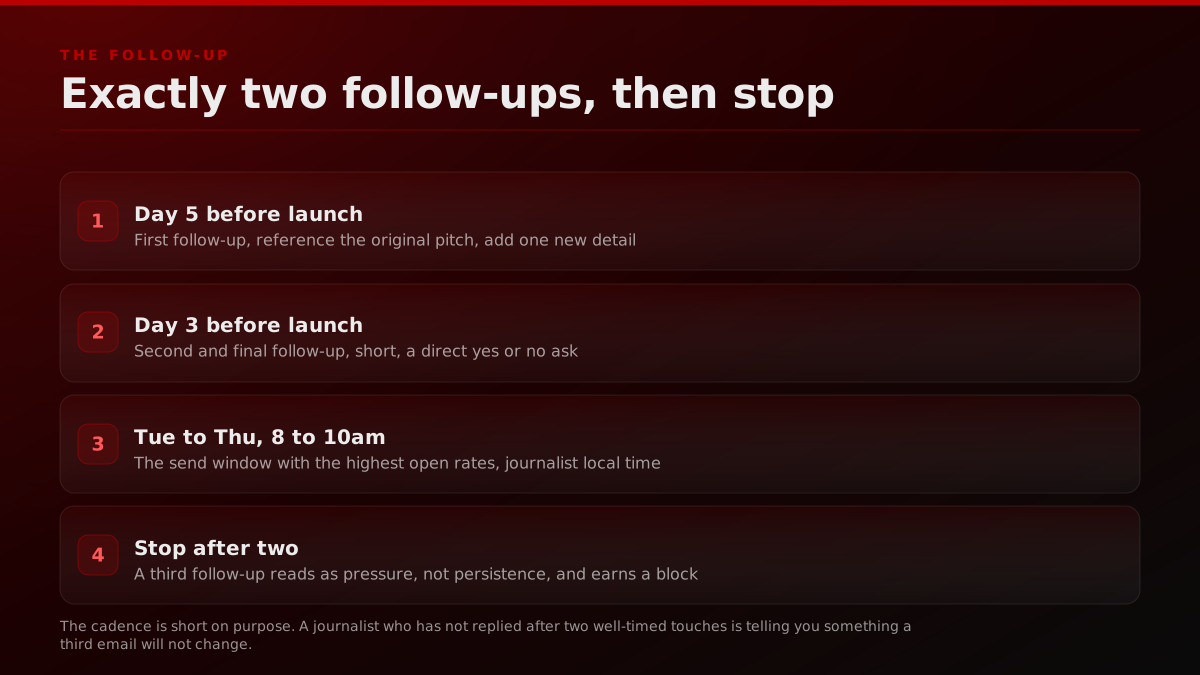
A journalist who does not reply to the first pitch is not necessarily a no. Follow up exactly twice, once around day 5 before launch and once around day 3, then stop. Tuesday through Thursday, 8 to 10am in the journalist's own time zone, is the window with the highest open rates across wire and pitch email data alike, and Thursday sends in particular clear a meaningfully higher open rate than the rest of the week. A third follow-up, or a follow-up sent outside that window because it was convenient for you, reads as pressure rather than persistence, and pressure is exactly what earns a permanent block.
How To Distribute A Press Release: Two BEST Methods [2021] | Otter PR
Otter PR
A walkthrough of the two real distribution methods for a press release once it is written: pitching it directly versus running it through a wire, and when each one actually makes sense.
A beat-matched pitch beats a wire blast by an order of magnitude
The Propel Media Barometer put the average pitch response rate at 3.43 percent in 2025, an all-time high, when the pitch is sent to a fit-checked list of beat reporters. A wire blast to a purchased list built for financial disclosure earns real journalist pickup on roughly 3 percent of releases, full stop, with no targeting behind that number at all. Thirty well-researched pitches at 3.43 percent produce about one real response. Three hundred wire recipients with zero targeting produce close to none. The math argues for spending the hour on the list, not the release.
Source: Propel Media Barometer 2025; wire-pickup baseline per PR industry benchmarking (Editorial.Link)
If you are coordinating this around a broader launch, not just the release, the product launch playbook and day-of checklist covers where the press motion sits inside the rest of the launch day sequence, and the choice between a big-bang and a rolling launch changes how many embargo dates you are juggling at once.
What does the whole template look like, filled in?
Here is the full eight-element structure as a single copy-paste block, in the exact order every wire service and PR agency template already agrees on: headline, subheadline, dateline, lead paragraph, supporting paragraph, two quotes, boilerplate, and a media contact. Fill in the brackets, delete the bracketed instructions once you've replaced them, and you have a release ready to send, no reformatting required.
[HEADLINE - 70 characters max, 8 to 9 words, Subject + active verb +
a quantified benefit. Write this LAST.]

[SUBHEADLINE - one line, the second most important fact.]

[CITY, STATE], [Month DD, YYYY] , [LEAD PARAGRAPH: who/what/when/where/why
in 25 to 40 words. A journalist should be able to write their story
from this paragraph alone.]

[SUPPORTING PARAGRAPH: the data. One real statistic from your own
product or a named pilot customer.]

"[QUOTE 1 - the executive quote. Observation + because/which means +
concrete implication. One sentence.]"
, [Name], [Title], [Company]

"[QUOTE 2 - the external validator. A customer or partner, not a
second executive.]"
, [Name], [Title], [Company]

About [Company]: [2 to 3 sentences, identical wording every release.]

Media Contact:
[Name]
[Title]
[Email] , [Phone, optional]
[Link to the owned landing page this release supports, never the homepage]
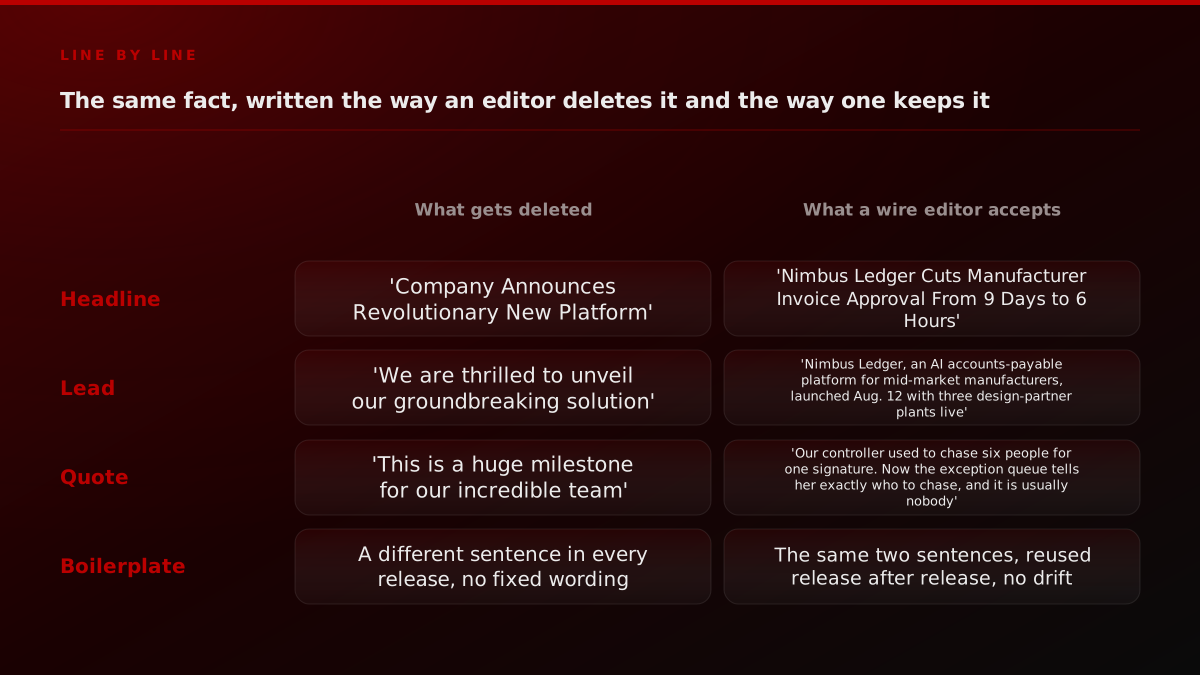
That is the blank version. Below is the same structure fully worked for Nimbus Ledger, a fictional AI accounts-payable platform for mid-market manufacturers, built as an illustrative worked example so you can see real sentence shapes rather than bracketed instructions. Swap in your own product, your own numbers, your own quotes; keep the shape.
The downloadable file above carries both copies, the blank template and the fully worked Nimbus Ledger example, in one plain text file you can paste straight into a draft.
What gets a press release deleted before an editor finishes paragraph one?
Six habits reliably move a release from an editor's story feed to the trash, and every one of them is a choice made once, in the draft, not a talent problem. None costs a dollar to fix; each one is caught by rereading the release once against this list before you hit send.
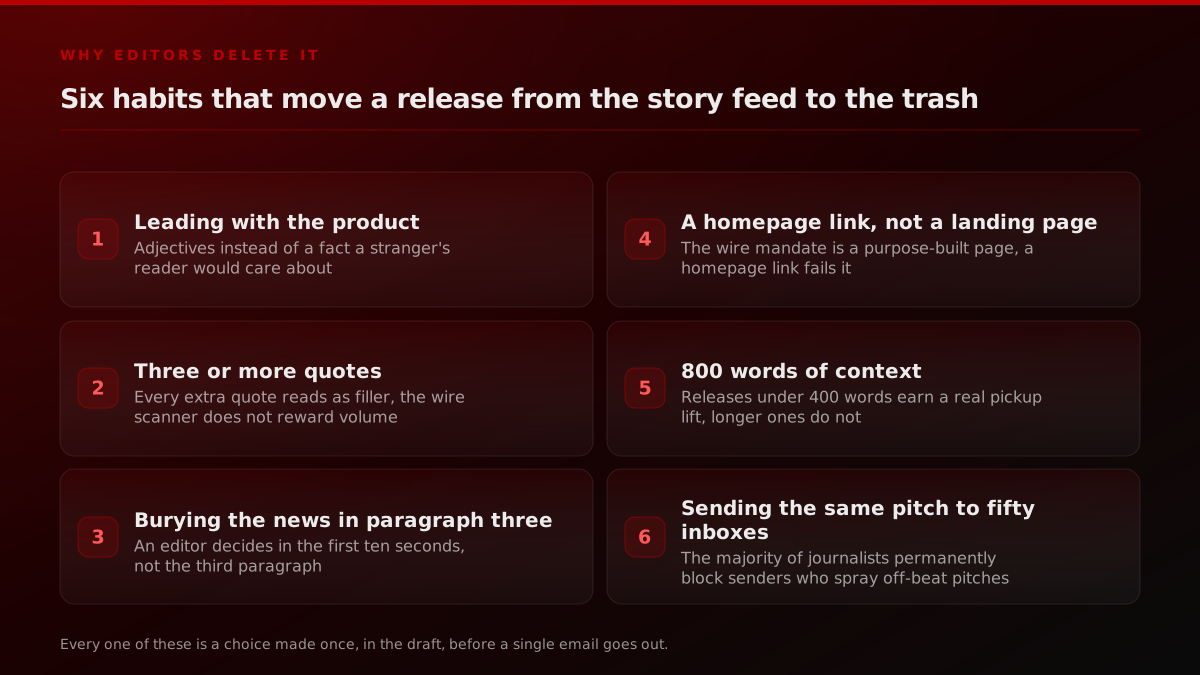
Leading with the product instead of the news is the most common one: a headline and lead built from adjectives, "cutting-edge," "innovative," "game-changing," instead of a fact a stranger's reader would care about. A wire scanner and a human editor both look for the same thing in the first two lines, a specific, checkable claim, and adjectives are not checkable.
Three or more quotes reads as padding, not depth, because a wire format has no mechanism to reward quote volume the way it rewards a real statistic. Burying the actual news in paragraph three, after two paragraphs of company background, guarantees most readers never reach it, because an editor decides whether to keep reading in the first ten seconds, not the third paragraph.
Most journalists reject a pitch in the first few seconds, for one reason
Cision's 2025 survey of more than 3,000 journalists found 86 percent reject a pitch specifically because it is off their beat, not because the writing is weak, and a large majority say they will permanently block a sender who keeps spraying irrelevant pitches. That is the real failure mode behind a press release that "does not work." It is rarely the headline. It is a release sent to the wrong 500 inboxes instead of the right 25. The fix costs nothing but time: read a reporter's last ten bylines before you pitch them, and only pitch the ones actually covering your beat.
Source: Cision, 2025 State of the Media survey
A homepage link instead of a purpose-built landing page fails the wire's own submission guidance on most premium services, and it wastes the one link inside the release that could have pointed somewhere useful. Eight hundred words of company history and context, instead of the 400-word ceiling this format holds to, measurably lowers pickup, because the length itself signals "marketing copy" to an editor triaging fifty releases in a sitting. And sending the identical pitch to fifty inboxes at once is the single most expensive mistake on this list: Cision's 2025 survey of more than 3,000 journalists found a large majority will permanently block a sender who sprays an obviously irrelevant pitch, and that block does not reset for your next release, or the one after that.
Does the format change for a funding, partnership, or milestone announcement?
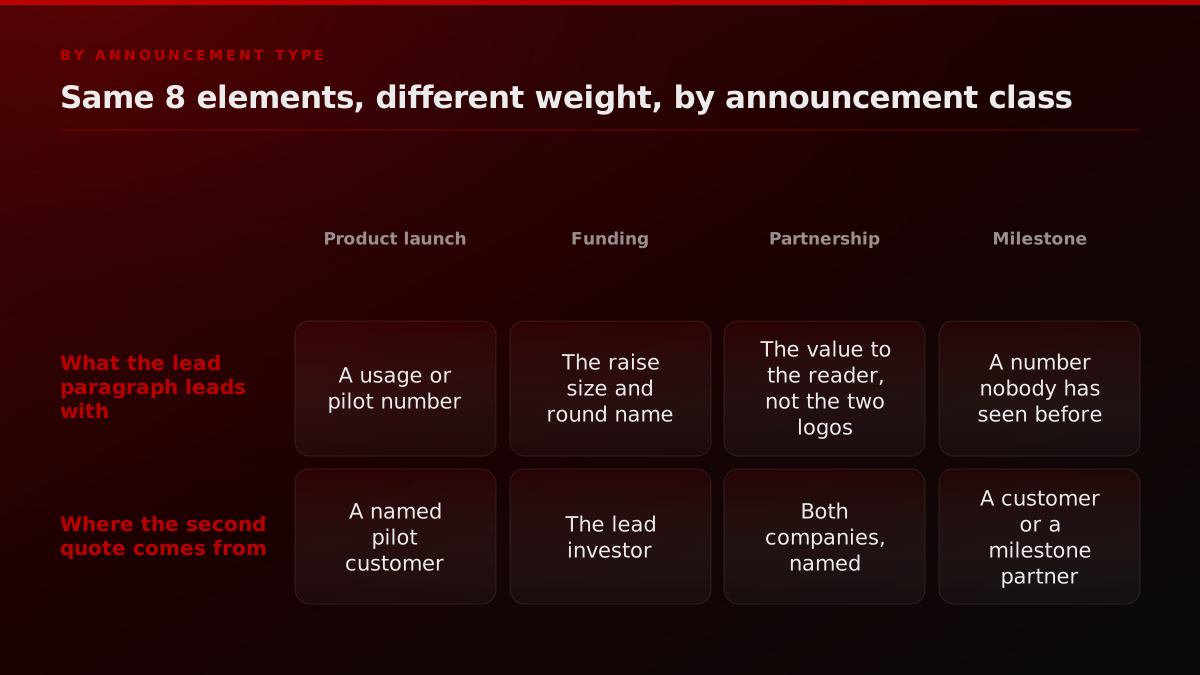
The eight elements hold for every announcement class; what changes is which two of them carry the weight. A product launch leans on the supporting paragraph, the usage or pilot number, and the second quote comes from a customer. A funding announcement leans on the lead paragraph, the raise size and the round name belong in the first sentence, and the second quote comes from the lead investor instead of a customer, because the investor's name is doing the credibility work a customer would do in a launch release. A partnership announcement needs both companies' boilerplates and both companies' media contacts, and the headline has to name the value to the reader, not just the two logos, "X and Y Partner to Cut Onboarding Time in Half" beats "X Announces Partnership With Y" for the same reason a launch headline needs a number instead of an adjective. A milestone release, a user count, a revenue figure, an anniversary, is the thinnest news of the four and lives or dies entirely on whether the supporting paragraph has a real number nobody has seen before.
If funding is the actual announcement in front of you right now, rather than a launch, the FORKOFF fundraising announcement playbook goes deeper on that version's specific traps, the SEC-adjacent quiet-period questions and the investor-quote etiquette a product launch never has to think about, than this guide's general framework does.
The verdict: the format is smaller than the panic around it
A product launch press release is eight elements, four hundred words, and one page. It is not a strategy document, and treating it like one is how a founder ends up staring at a blank doc for three hours over something that should take thirty minutes once the facts are in hand. The format has been settled for years by PR Newswire's submission guidance, the AP Stylebook, and every working agency's internal template; the part that actually varies launch to launch is the one real number in your supporting paragraph and the one specific claim in your headline.
What is not settled, and what most generic templates skip, is the wire itself. It is a corroboration tool, not a coverage tool, and treating it as the whole strategy is why so many launch releases get filed and never read by anyone who matters. The release is also not the same document as the shorter announcement copy you send to your email list, X, Product Hunt, and Reddit the same day, a release is written for a journalist's parser, the announcement is written for a reader who already follows you. Write the release to the eight elements above, pitch a fit-checked list of 25 to 50 beat reporters before you touch a wire, and let the wire run last, for the brand-name breadth it is actually good for. If you want the release, the pitch list, and the landing page it points to built as one coordinated motion around your launch date rather than three separate scrambles, that is what the FORKOFF product launch service does, and a related read worth the ten minutes is what a launch video actually costs if video is part of the same launch window. For the backlink side of the same motion, 13 backlink tactics still working in 2026 and the broader list of backlink sources for startups cover the earned-link work that compounds after the release ships, and launch platforms beyond Product Hunt covers where else the same announcement should land the same week. If credibility, not raw signups, is the actual goal of this launch, credibility versus user-acquisition campaigns is worth reading before you finalize the angle, and if you are moving fast on a narrow window, the 48-hour model-drop marketing playbook covers the compressed version of this same sequence.
Operator noteThe exclusive-first pitch beat a simultaneous blast on every launch where we ran both, no exception yet., FORKOFF PR pipeline, operator observation
If the release is riding alongside a launch video, the anatomy of a 1M-view launch video and the roundup of the best product launch videos of 2026 are the natural next reads, and if you are evaluating outside production help for that video, the best product launch video agencies is worth checking before you commit budget. Grab the download, fill in your own facts, and send the exclusive first.