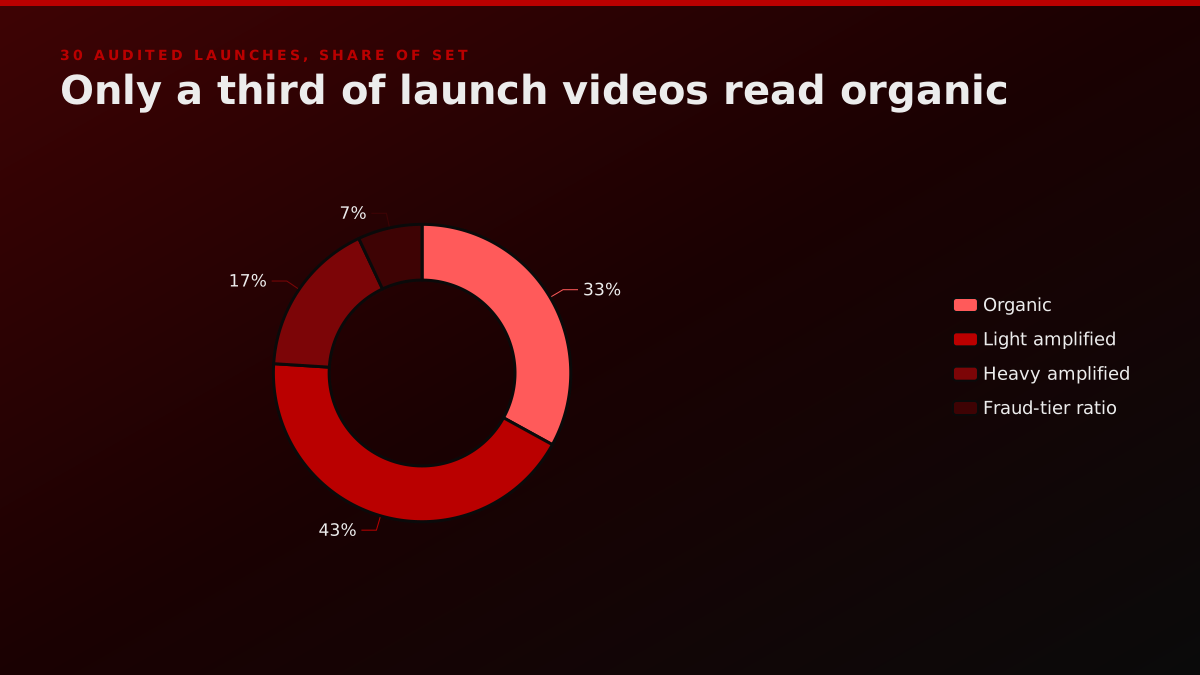
A startup launch video's view count is a distribution outcome, not a proof of quality, and frequently not a proof of a real audience either. We audited 30 real product launch videos worth more than 110 million combined views and scored each one on how far its reach ran ahead of its engagement. Only a third read organic. The rest carried a distribution-amplified signature, which is a plain way of saying the number was built rather than earned. This guide shows you the audited data, teaches you to read any launch video's reach in about a minute, and explains why the product launch video market runs on screenshots when it should run on audits.
The short version
A startup launch video's view count is a distribution outcome, not a proof of quality, and often not a proof of a real audience either. We audited 30 real product launch videos worth more than 110 million combined views and scored each one organic or amplified on how far its reach ran ahead of its engagement. Only 10 of the 30 read organic. The other 20 carried a distribution-amplified signature, and 2 sat in a fraud-tier ratio band where the reach and the engagement had almost fully come apart. The single most useful number is views per like. Under roughly 500 views per like, reach and engagement grew together the way earned reach does. Thousands of views per like on a thin reply layer is the shape of a heavy distribution push. Every competitor sells reach with a screenshot. We are the only launch-video team that publishes an audited dataset instead, with a make-good if the reach we deliver does not read organic.
What a startup launch video really measures
A launch video is two jobs wearing one name, and confusing them is the reason the whole category argues about the wrong thing. Production is making the file, and after a decade of cheaper cameras, animation tools, and now generative video, it has become close to solved. Distribution is getting the file watched by the right people at volume, and it has become the scarce, expensive, outcome-defining half. When you look at a launch video and see a view count, you are not looking at a measure of the film. You are looking at the distribution machine wrapped around it, and sometimes at a machine built to manufacture the number itself.
That distinction matters because it changes what the view count can and cannot tell you. A view on a modern feed is a served impression, which counts a play of a second or two, not a person who watched and cared. A high count proves the platform served a lot of impressions. It does not prove that a large, interested audience watched, and it certainly does not prove the film was good. Our sibling teardown on why startup launch videos get zero views makes the flip side of this case: production quality is almost never why a launch flops. The reach is missing, not the craft. This post is the mirror image. When the reach is enormous, you still have to ask where it came from, because the same distribution machinery that rescues a good film from obscurity can also inflate a mediocre one into a screenshot.
The video-marketing data explains why this is the state of the category. Wyzowl reports that 91 percent of businesses now use video as a marketing tool, and HubSpot's video research tracks the same saturation across formats. When almost everyone ships a competent video, competent stops being a differentiator, and the number attached to the video becomes the thing people compete on. The raw view count is a textbook vanity metric: it moves independently of the outcome that matters, so it is both easy to inflate and easy to be impressed by. That combination is exactly the setup that rewards buying reach.
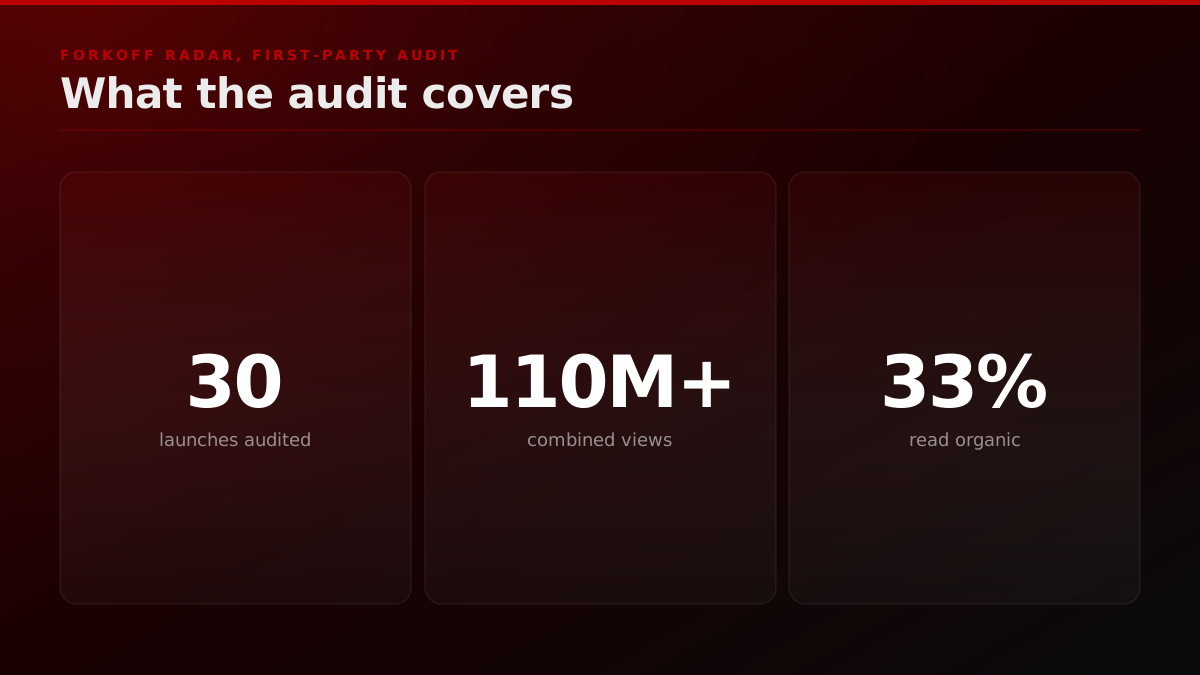
Operator noteAcross 30 audited launches worth 110M views, only 10 read organic. The other 20 carried an amplification signature.
The market rarely asks the harder question. Founder benchmarking usually means scrolling the videos that went viral this year and trying to copy the ones with the biggest numbers. The most-shared "what works" analyses, including the widely cited 17 best startup video examples on YouTube and the studio-sourced format breakdowns that circulate every quarter, rank launch videos on format and view count. Not one of them checks whether those view counts were earned. That is the gap this dataset fills, and it is the reason we built a public RADAR corpus instead of a highlight reel.
Is video that important? I hate it when the only way I can understand what a product does is by spending 2 minutes to watch a video.
Are startup launch video views real?
The honest answer, from a first-party audit of 30 real launches, is that a third of them are and two thirds are not, at least not in the way the number implies. We scored each launch on how far its reach ran ahead of the audience that engaged with it, using the public metrics on the launch post. The reading is defamation-safe by design, because the products and the founders in this set are real, and buying distribution is legal. The finding is about mechanics, not misconduct. Here is the full breakdown, computed live from the dataset rather than typed from memory, so the numbers cannot drift from the source.
How 30 audited startup launch videos scored on reach
| Reading | Launches | Share of set | What the reading means |
|---|---|---|---|
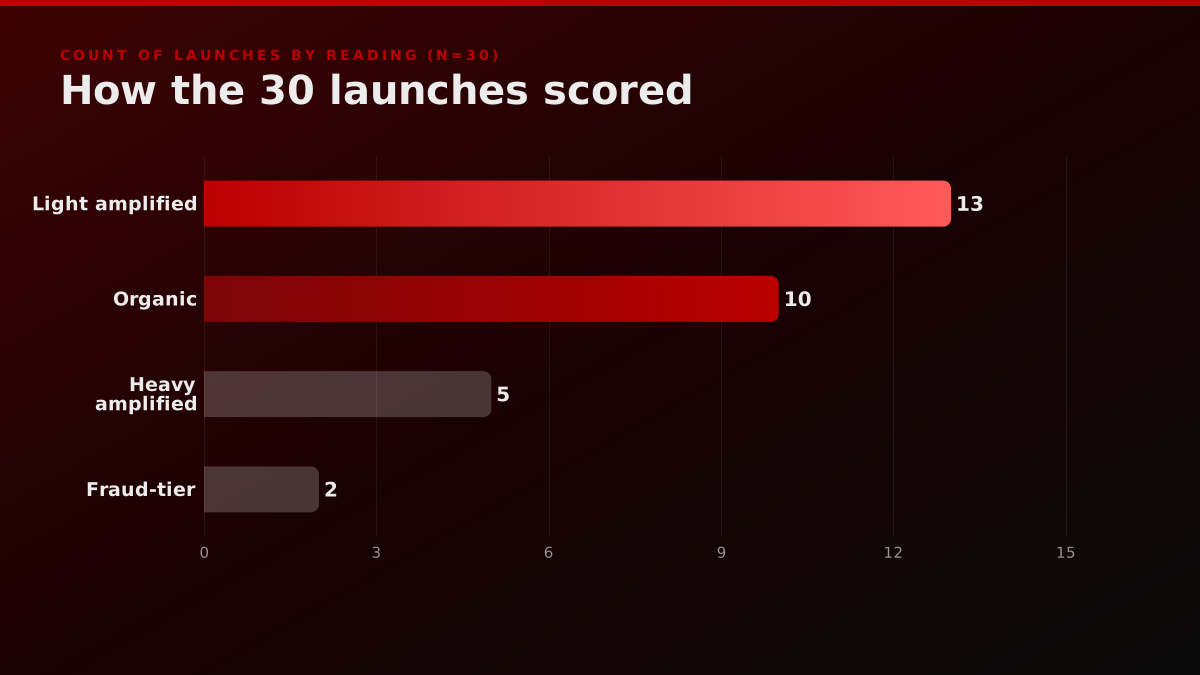
| Organic | 10 | 33 percent | Reach and engagement grew together |
| Light amplified | 13 | 43 percent | A distribution lift layered on a real launch |
| Heavy amplified | 5 | 17 percent | Reach ran well ahead of the audience that engaged |
| Fraud-tier ratio | 2 | 7 percent | The widest views-to-likes gaps in the set |
Computed live from lib/radar-launches.ts (n=30, more than 110 million combined views). Eighteen launches carry a verified forensic trace, twelve are reconstructed from the public ratio and read at lower confidence.
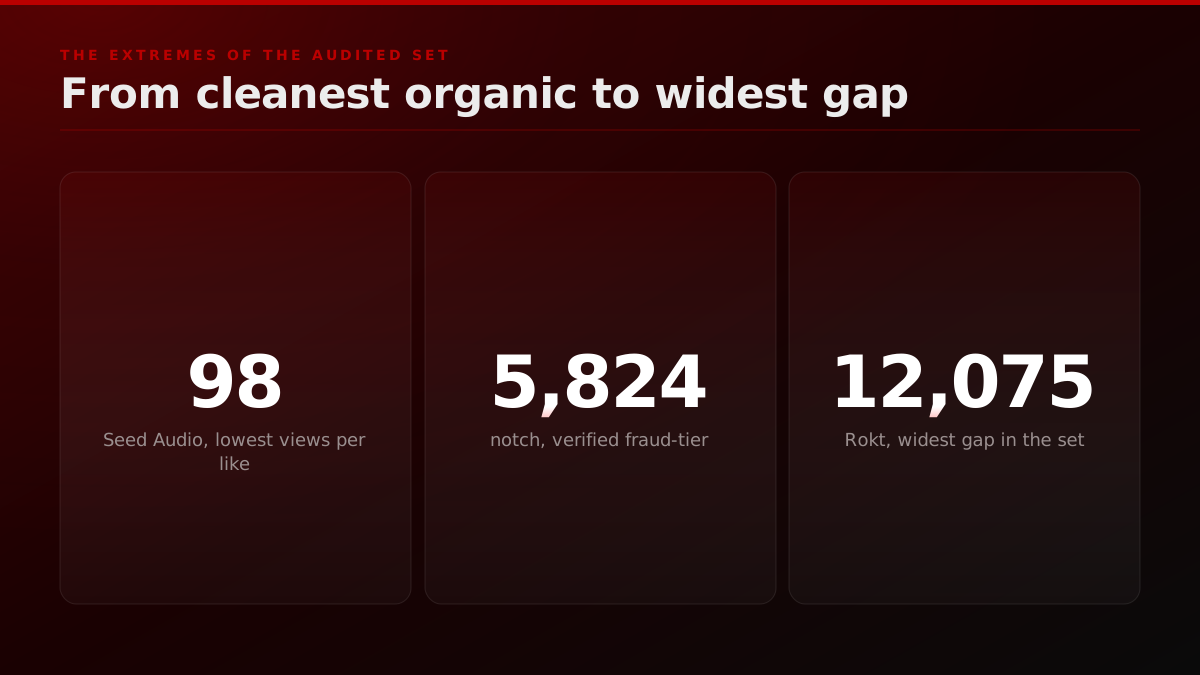
Ten launches read organic, where reach and engagement grew together and there was no gap for a distribution lift to explain. Thirteen carried a light amplification signature, a modest push on the impression count layered over a genuine launch. Five were heavy, where the reach ran well ahead of the engagement. Two sat in a fraud-tier ratio band, where the views and the audience had almost fully come apart. The clearest example of that last group is a launch that drew 1.84 million views on 316 likes, a ratio of 5,824 views for every like, the widest gap in the set. That is not a claim that anyone did anything against the rules. It is a measurement, and the measurement is extreme.
notch
@vinayjain4041.8M views·316 likes
ReadIndependent, methodology-derived signal, not a statement of fact about any person. RADAR reads how reach was built, a signature, not an accusation. See the methodology.
Operator notenotch drew 1.84M views on 316 likes, 5,824 views per like, the widest gap in the audited set.
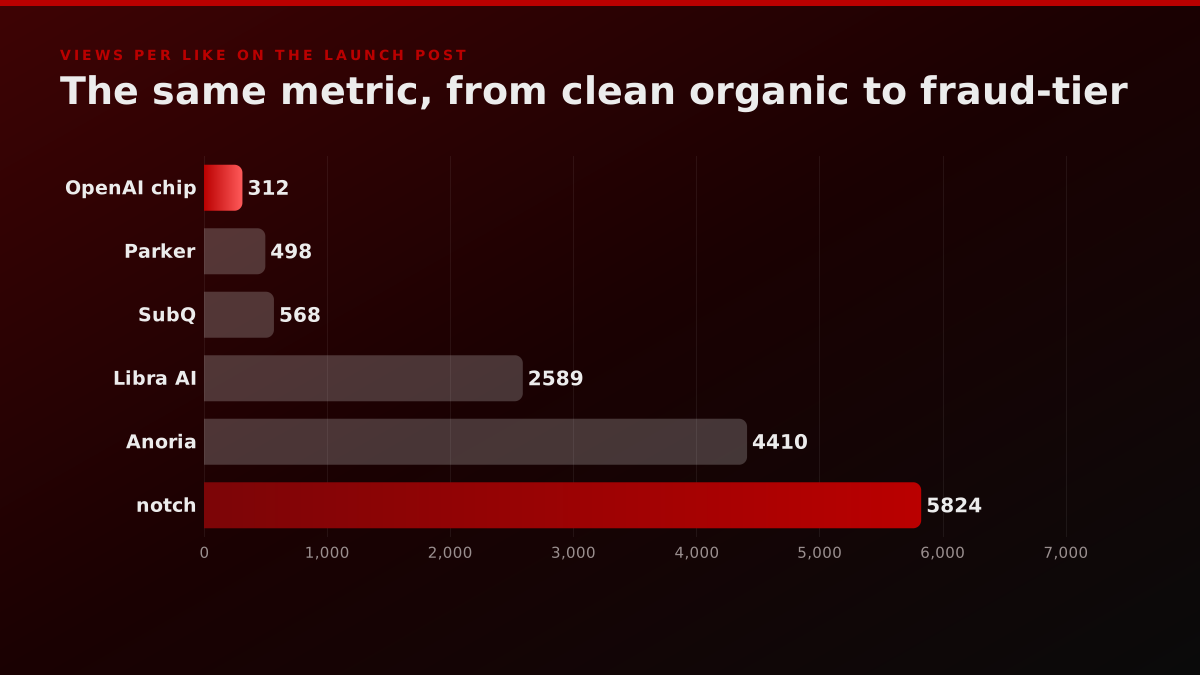
Look at the spread inside the set and the pattern is hard to miss. One launch reached 5.7 million views on 1,283 likes, about 4,410 views per like, roughly nine times the organic ceiling. Another announced a super agent to 1.9 million views on 737 likes, 2,589 views per like. A third, an ecommerce tool, hit 4.3 million views on 359 likes, a ratio above 12,000, the single widest gap we hold. Set those against the organic reads at the other end, a payments launch at 445 views per like with 2,848 replies under it, or a design-tool launch at 498 views per like carrying nearly 1,911 replies, and the difference is not subtle. The organic launches carried deep, written, two-sided conversations. The amplified ones carried enormous reach on comparatively thin engagement.
The confidence label matters too, because not every reading is equally strong. Eighteen of the 30 launches carry a verified forensic trace, which means we paged and timestamped the amplifying activity and can state the reading with confidence. The other twelve are reconstructed from the public ratio and the engagement shape alone, and we label them lower confidence on purpose. A reconstructed read never earns a hard bought verdict, because a ratio without a trace can be explained by an unusually large account or an unusual audience. Holding that line is what keeps the dataset defensible, and it is why a founder can trust a reading in the set rather than treating it as an accusation.
The breadth matters as much as the split. The 30 launches span six markets, from AI and developer tools to fintech, crypto, marketing, and consumer health, which you can see mapped on the RADAR coverage grid. This is not a cherry-picked set of embarrassing outliers. It is a cross-section of the exact launches a founder would scroll past and admire, and the base rate across that cross-section is that most of the reach was amplified. If you want the deeper methodology writeup, the launch authenticity study walks through how each reading is assembled and where the confidence levels come from.
Two thirds of the audited set was distribution-amplified, not organic
Across the 30 launches in our first-party RADAR dataset, computed live from the corpus, only 10 read organic. Thirteen carried a light distribution-amplified signature, five a heavy one, and two sat in a fraud-tier ratio band. That is 20 of 30 launches, two thirds of the set, where the reach ran measurably ahead of the audience that engaged. The combined reach across all 30 was more than 110 million views. If you are benchmarking your launch against the videos you saw go viral this year, the base rate says most of those view counts were built with a distribution push, not earned by the film alone.
Source: FORKOFF RADAR, first-party audited launch dataset (n=30)
The views-per-like tell
The single most useful number you can compute on any launch video takes one division. Divide the views by the likes. That ratio, views per like, is the cleanest cheap signal of whether reach and engagement are coupled, and it is the backbone of how we read a launch when no richer trace is available. The intuition is simple. When the platform surfaces a post organically, the same feed that shows it to you also makes it trivial to like, so views and likes tend to rise together. When reach is pushed by distribution, the impressions climb while the likes lag, and the ratio opens up.
The views-per-like bands, with audited examples
| Band | Views per like | What it usually signals | Example from the audited set |
|---|---|---|---|
| Organic range | Under about 500 | Reach and engagement coupled | OpenAI chip launch (312), Parker (498) |
| Light amplified | About 500 to 2,000 | A lift on the impression count | SubQ (568), Helena (643) |
| Heavy amplified | About 2,000 to 5,000 | Reach ahead of the audience | Libra AI (2,589), Anoria (4,410) |
| Fraud-tier ratio | Over about 5,000 | Reach and engagement decoupled | notch (5,824), Rokt (12,075) |
Bands from our own launch-video reach dataset. A ratio is one signal. A full read also weighs the view-velocity curve, the reply-network authenticity, and the quote-repost pattern.
Under roughly 500 views per like, reach and engagement are coupled the way earned reach behaves. Between about 500 and 2,000, you are looking at a light amplification band, often a real launch with a distribution nudge on top. Above 2,000, the reach is running well ahead of the audience, and above roughly 5,000 the two have decoupled almost entirely. We benchmarked these bands against a wider set of launches in the views-to-likes benchmark, and they hold up as a first read. If you want to run the ratio on a specific launch post without doing the division by hand, the free launch authenticity checker takes the views and likes and returns a grade on the same bands. The largest raw like count in our set belonged to a launch that still sat at 568 views per like, right at the light-amplification line, which is a useful reminder that a big like number and a small ratio can coexist and usually signal a genuine launch that connected.
Where does 500 come from? It is calibrated against typical engagement behavior on social video, where a healthy short-form post pulls a like from a low single-digit-percent share of the people who see it. Flip that percentage into views per like and you land in the low hundreds. When a launch runs at thousands of views per like, it is asserting that the audience liked at a rate an order of magnitude below normal, which is either a very unusual post or a reach number that outran the audience. The ratio does not tell you which. It tells you where to look.
Work a real one to see how fast this is. Take a launch that posted 4.8 million views and 12,229 likes. Divide and you get about 396 views per like, comfortably under the organic ceiling, so on the first read this looks earned. Now take a launch at 4.3 million views and 359 likes. That is roughly 12,000 views per like, more than twenty times the ceiling, and the second you compute it you know the reach and the audience have nothing to do with each other. You did not need the film, the founder's follower count, or a single tool. You needed two numbers off the post and one division. That is the whole point of leading with the ratio: it is the cheapest possible filter, and it sorts most launches into "probably fine" and "worth a closer look" in about ten seconds.
Ole Lehmann
@itsolelehmann
you need to tattoo this Boris Cherny quote into your brain: "coding is the easy part, it's knowing the domain that's the hard part" every week a new startup drops a launch video saying they "killed influencer marketing" or something but they don't get it. creating the thing
The ratio also explains the sameness that founders complain about. When production is settled and every launch drops the same polished film, the view count becomes the only visible scoreboard, so the incentive to inflate it is enormous. Wistia's State of Video research found that most teams still spend more time creating videos than promoting them, which means the category over-invests in the file and under-invests in the honest distribution that would make the reach real. That imbalance is the environment the numbers live in, and it is why a screenshot of a view count is close to worthless as proof of anything.
Production is settled, so reach is the only variable left
Wyzowl reports that 91 percent of businesses now use video as a marketing tool, and Wistia found in its State of Video work that most teams spend more time creating videos than promoting them, with only about a fifth spending more time on promotion. When competent production is this common and this cheap, a polished launch film no longer differentiates anyone. The scarce, expensive, outcome-defining variable is reach, and the moment reach becomes the variable, so does the question of whether that reach is real.
Source: Wyzowl 2026 and Wistia State of Video
How do you tell if a launch video's views are organic or paid?
You do not need our dataset to read a launch video you saw yesterday. You need about a minute and four signals, three of which are visible on the post itself. Start with views per like, then look at the depth of the written engagement, then the reply-to-like ratio, and finally the posting time. None of them is proof on its own, but together they catch most of what a raw view count hides. Here is the read, laid out as a checklist you can run on any launch post.
Read any launch video's reach yourself
| Signal | What earned reach looks like | What amplified reach looks like |
|---|---|---|
| Views per like | Under about 500 | Thousands of views for every like |
| Reply and quote depth | Thick, written, two-sided | Thin next to the view count |
| Reply-to-like ratio | Healthy, one reply per three to five likes | A few dozen replies on millions of views |
| Posting slot | Any time of day | A top-of-hour scheduled block |
| View-velocity curve | Word-of-mouth spread over hours | An injected burst near publish |
No single row is proof. A launch that trips one signal but holds the others is usually organic. A launch that trips most of them at once is where a distribution push shows up.
Replies and quote posts are the load-bearing signals because they are the costly actions. Each one is an original post a person chose to write, which is far harder to manufacture at scale than a like or an impression. A launch with a thick reply layer under its views is usually a real conversation, even if the ratio looks high, and a launch with millions of views on a few dozen replies has almost certainly had its reach pushed. In our set, one super-agent launch ran at 2,589 views per like, deep in the heavy band, yet carried more replies than likes, which is why the read stayed a signature about reach rather than a claim the launch was hollow. Posting time is a softer tell. A top-of-hour scheduled slot is a common fingerprint of a coordinated launch, so we record it as context rather than proof.
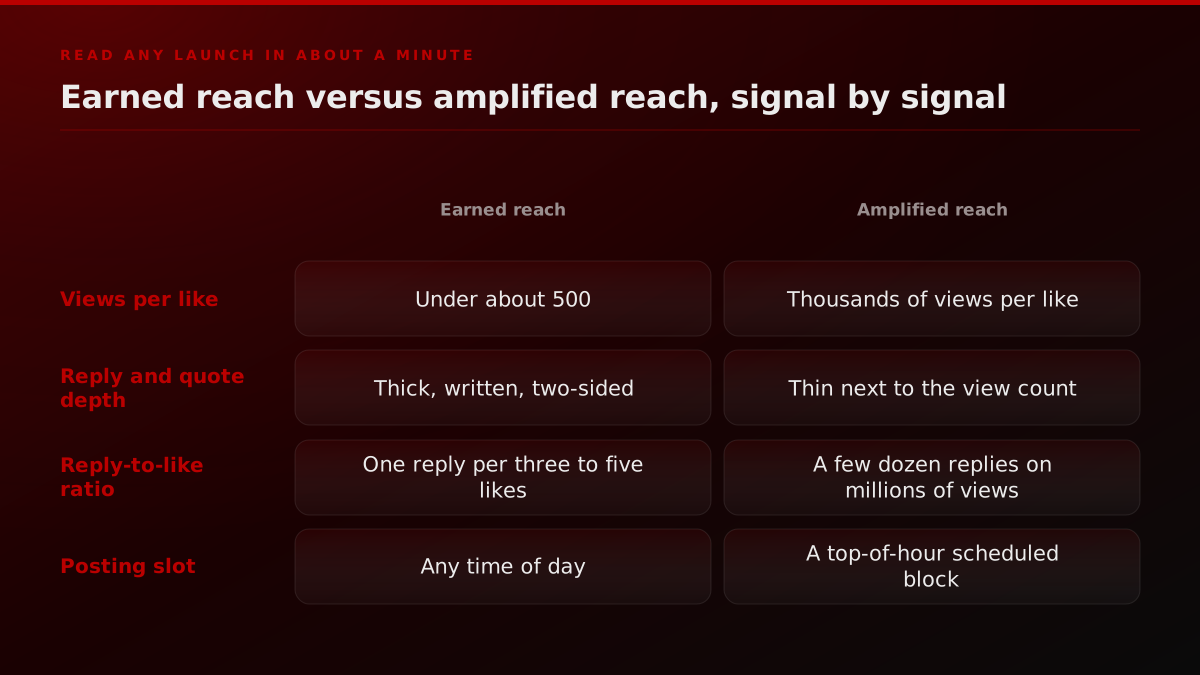
The reason this read is worth learning is that a real audience and a bought one behave differently after the click, and that difference is where your money actually goes. A product launch is a sequence, not a single moment, and the reach that converts into signups and pipeline is reach from people who could plausibly buy. If you want to turn this read into an estimate of how many of the promised views are genuinely watched by people who could buy, that is exactly what our qualified view auditor does.
Where a real audit goes past the ratio
The ratio is a first read, not a verdict, and treating it as a verdict is how you get the reading wrong. The most instructive launch in our whole set is one that would look damning on the ratio alone and turns out to be clean once you weigh the fuller trace. It is the case that proves the method has to be more than one number, and it is why we mark ratio-only readings as reconstructed and lower confidence, never a hard bought verdict.
Cursor for iOS
@cursor_ai6.4M views·13K likes
ReadIndependent, methodology-derived signal, not a statement of fact about any person. RADAR reads how reach was built, a signature, not an accusation. See the methodology.
When we hold a full forensic trace, the read weighs four more things beyond the ratio. It looks at the view-velocity curve, whether the reach grew like organic spread or arrived as an injected burst. It checks whether engagement grew in step with the views rather than the views running far ahead of a flat engagement floor. It checks whether the accounts replying and quoting look real and spread out rather than a small coordinated cluster. And it checks whether the quote-repost pattern reads as word of mouth or a known amplifier ring. A launch from a very large, widely followed account can post a real update that runs high on views per like simply because most of its audience scrolls past without liking, and only the fuller trace separates that from a bought push. Eighteen of our 30 launches carry that verified trace. The other twelve are read from the ratio and the engagement shape alone, and are labeled accordingly.
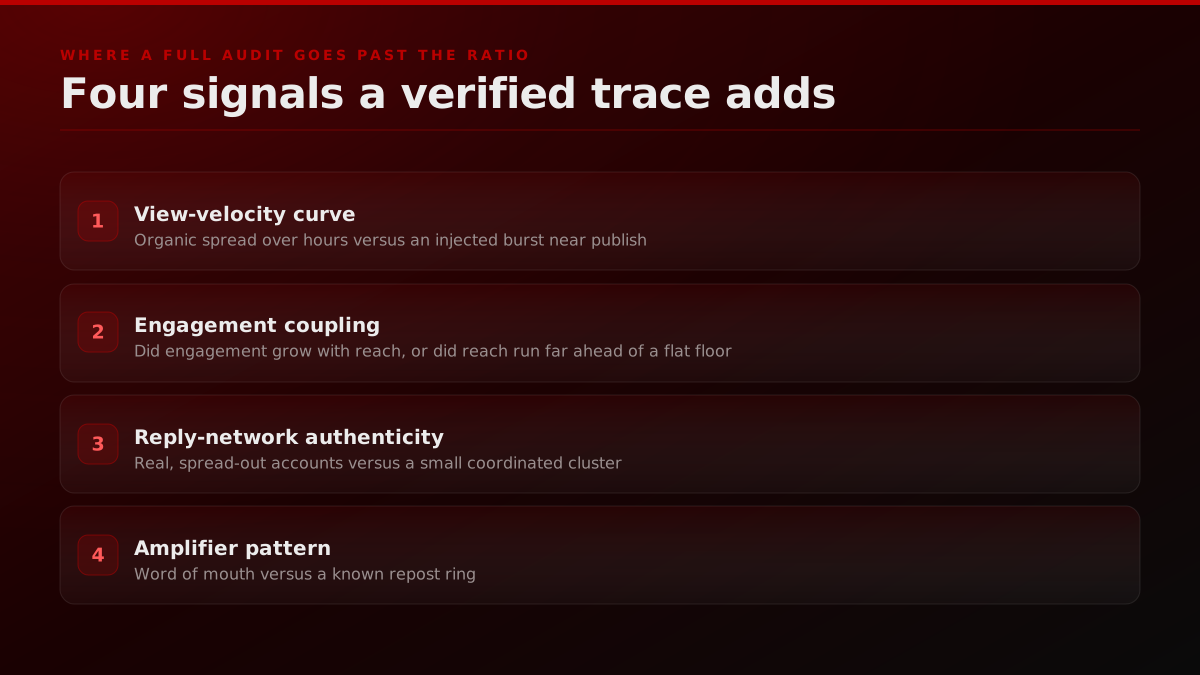
A clean example sits at the low end of the ratio scale. One major chip announcement reached 7.1 million views on 22,728 likes, just 312 views per like, with roughly 28,000 written actions under it. Everything about that shape says organic: the engagement scaled with the reach, the replies and quotes arrived in volume, and the spread looked like word of mouth. Contrast that with the fraud-tier launch above, where 1.84 million views sat on a few hundred likes and a few dozen replies, and you can see why the ratio plus the reply depth does most of the work even before the forensic layer is added.

OpenAI's Jalapeño AI chip
@OpenAI7.1M views·23K likes
ReadIndependent, methodology-derived signal, not a statement of fact about any person. RADAR reads how reach was built, a signature, not an accusation. See the methodology.
A signature describes how reach was built, not the founder
A distribution-amplified reading is a statement about mechanics, not a charge against a person. Buying or coordinating distribution to launch a product is legal and common, and the products and founders in this dataset are real. Where we hold a full forensic trace, we say a reading with confidence. Where we only have the public ratio, we mark the read as reconstructed and lower confidence, and a reconstructed read never earns a hard bought verdict. The point is not to name and shame. The point is that reach is measurable, so you should measure it before you pay for it.
Source: RADAR public-verdict framing policy
This is also why the framing stays careful. A distribution-amplified signature is a statement about how reach was built, not a charge against a founder, and we publish a "what RADAR is not saying" note on every reading for that reason. The launch authenticity report documents the full policy. The goal is not to embarrass anyone. It is to make reach measurable, so a buyer can measure it before paying for it.
The bought-reach spectrum, from paid amplification to click farms
Bought reach is not one thing, and lumping it together is how founders end up either paranoid or naive. There is a broad, legitimate spectrum at one end and a genuinely deceptive practice at the other, and knowing where a tactic sits changes how you should feel about the number it produces. At the clean end, paid amplification and named creator placement are ordinary, disclosed ways to get a good video in front of more of the right people. In the middle sit coordinated quote-tweet waves and reply pods, which are real humans acting in concert to win the first-hour test. At the far end sit the practices you should actually worry about.
That far end is where a launch leans on a click farm or low-quality automated engagement to inflate the headline number, and where coordinated inauthentic activity shades into astroturfing, manufacturing the appearance of grassroots enthusiasm that was never there. Both produce impressions the platform will happily count, and both leave the same fingerprint our read is built to catch: reach that has run far ahead of any costly, written, two-sided engagement. You cannot tell from a screenshot which end of the spectrum a launch sits on. You can tell a lot from the ratio and the reply layer, and more from the full trace, which is the entire reason we score reach instead of celebrating it.
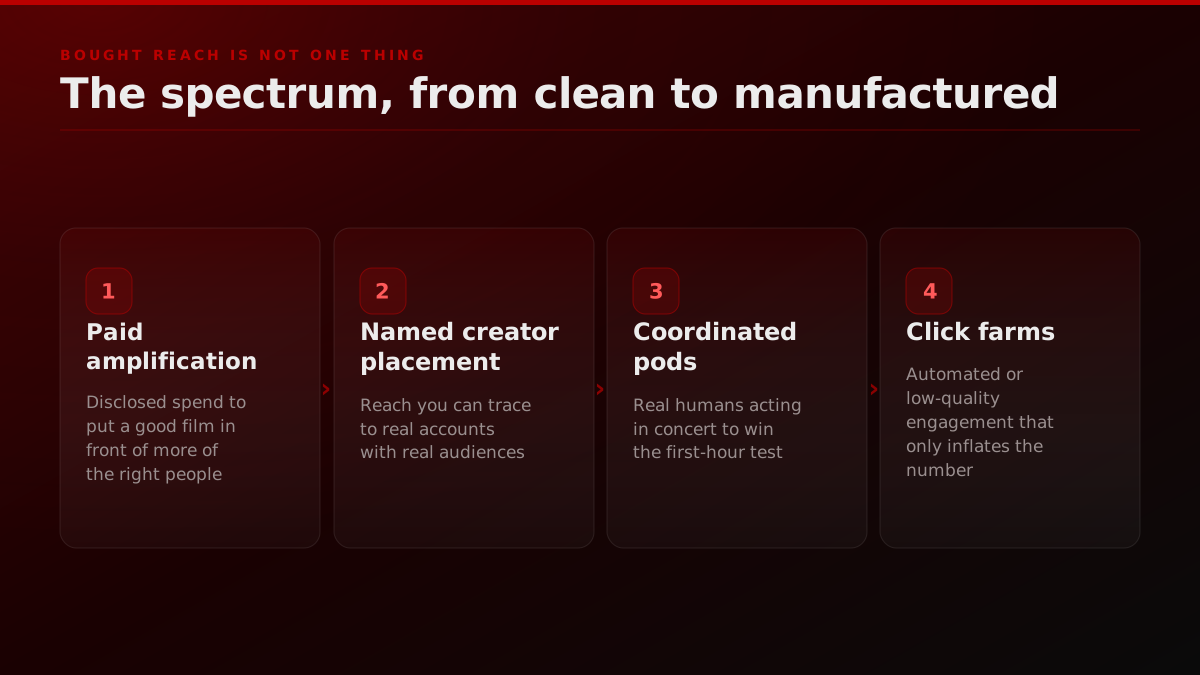
Where a tactic sits on this spectrum also changes what it costs you, and not in the way founders expect. Clean amplification and creator placement are the most expensive line items and the ones worth paying for, because they put a real film in front of real people who might buy, and the reach they produce survives an audit. The manufactured end is cheap, which is exactly why it is tempting, and it is worthless, because the reach it produces converts nothing and evaporates the moment anyone reads the engagement shape underneath it. A founder who buys the cheap number to hit a vanity target has paid to look successful to people who can already tell the difference. The buyers you want are the ones running the same ratio check in their heads.
The practical takeaway is not that amplification is bad. It is that amplification is invisible in a raw view count, so a number on its own tells you nothing about whether you are looking at a well-distributed real launch or a manufactured one. The read is what turns an impressive-looking screenshot back into information.
Why do some startup launch videos get millions of views and others get none?
The gap between a million-view launch and a four-hundred-view launch is almost never the film. It is the distribution machine wrapped around it, and increasingly it is whether that machine was built to reach a real audience or to manufacture a number. The feed decides reach in the first hour, on early signals like engagement velocity and retention in the opening seconds, before a meaningful audience is even reached. A launch that clears that window gets pushed further, and the effect compounds. A launch that does not is effectively dead on arrival.
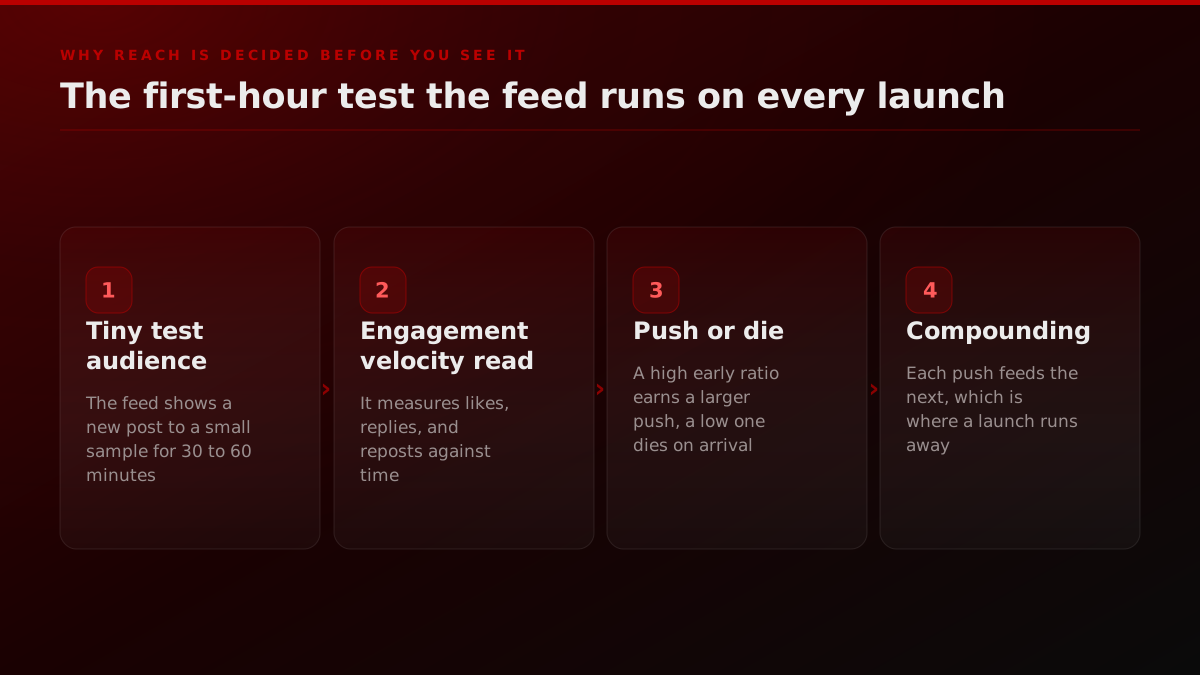
X gives your post a tiny test audience for the first 30 to 60 minutes. It's looking for one metric: engagement velocity. High ratio equals viral push. Low ratio equals dead on arrival.
That first-hour mechanic is the same whether the early engagement is genuine or seeded, which is the uncomfortable part. A launch can win the window with a real hook and a relevant audience, or it can win it with a coordinated burst and paid amplification on top, and from the outside the two can look identical on the headline number. The only way to tell them apart is the read we have been walking through. Our teardown on the anatomy of a 1M-view launch video breaks down the legitimate version of that machine step by step, and the 2026 launch video playbook covers how the production and distribution halves fit together. The data backs the mechanic: HubSpot's state-of-video work shows short, feed-native video winning distribution precisely because it is built for that opening window.
daniel_t
@danieltian
I said NO to ALL the startup launch video agencies and worked with a music video/film team for this all technology is downstream of human context (hopefully we keep it that way)
The buyer already knows. The founders you are trying to reach have watched the same weekly parade of launch videos claiming to have reinvented distribution, and many of them have grown openly skeptical of the whole category. That skepticism is not a fringe position. It is the default posture of a sophisticated buyer, and it is why a launch built on an inflated number tends to convert worse than a smaller, genuinely watched one. This is also why we treat KOL and influencer marketing as reach you can trace to named accounts, not an anonymous view dump.
What the audited data means for your own launch
If two thirds of the launches you admire had amplified reach, the practical lesson is not to despair, it is to change what you optimize for. Stop chasing the biggest raw number and start chasing qualified, auditable reach, because that is the reach that actually converts and the reach you can defend to an investor or a board. The audited set is full of launches that read organic at smaller absolute view counts and almost certainly returned more real pipeline than the fraud-tier launches above them.
I analyzed 500+ Startup launch videos, here's what actually works in 2025
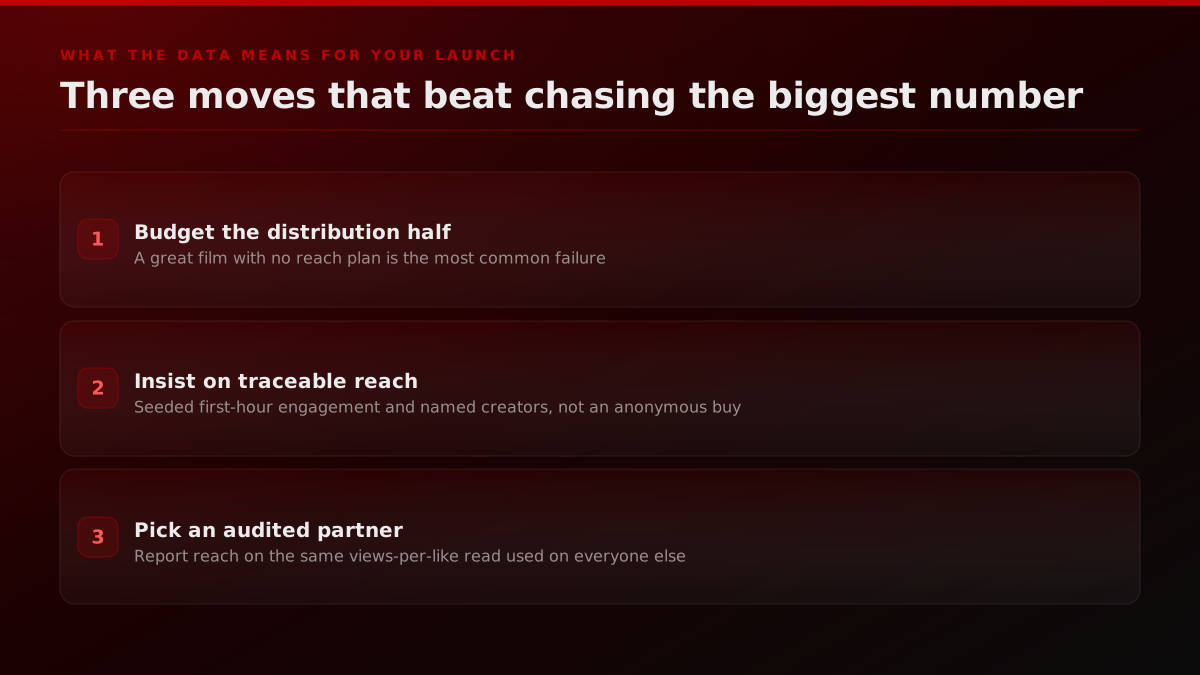
Concretely, that means three things when you plan a launch. First, budget the distribution half explicitly, because a great film with no reach plan is the most common failure mode, as the best product launch videos teardown shows across a dozen real examples. Second, insist on reach you can trace, seeded first-hour engagement from relevant accounts and named creator placement rather than an anonymous impression buy. Third, pick a partner who will report reach on the same views-per-like read they would apply to anyone else. If your launch is a software product, the product launch video service covers the specifics, and for AI-native products the product launch video breakdown by vertical covers the AI-native and demo-day cases.
What the read means for product businesses
For a product business, a launch video is judged by what happens after the view: signups, trials, waitlist joins, demo requests. That makes the views-per-like read a planning tool rather than a scandal detector. Before the launch, write down the ratio band you expect the post to land in and the conversion step you will measure against it. After the launch, compare the two. A post that lands in the organic band and moves the conversion step is worth scaling with more distribution. A post that lands far above the organic band while the conversion step stays flat is telling you the reach was built without the audience, and the next budget should go to seeding the right accounts rather than buying a bigger number.
What every launch-video agency hides
Here is the wedge, stated plainly. Every launch-video studio and agency proves its reach the same way, with a screenshot of a big view count. A screenshot cannot tell you whether that reach was earned or bought, which is precisely why the category defaults to it. We do the opposite. We publish an audited dataset, we score every launch on views per like and the engagement shape, and we apply the same read to the reach we deliver for clients, with a make-good if the reach does not read organic. You can read the full methodology and the state of the market in our state of launch videos report.
Operator noteThe OpenAI chip launch hit 7.1M views at 312 per like. Reach and likes grew together.
There is a simple test you can run on any vendor before you sign. Ask them how they will report the reach they deliver, and listen for whether the answer is a screenshot of a view count or a read of the engagement shape underneath it. Ask them what a bad outcome looks like and what happens if the reach they deliver does not read organic. A vendor who has never thought about views per like will quote you an impression number and call it success, because the impression number is the product they are actually selling. A vendor who audits reach will talk about the reply layer, the velocity curve, and the make-good, because those are the things that separate a watched launch from a bought one. The questions cost nothing and they sort the field fast.
What a make-good actually means in practice is the part most vendors will not put in writing. We agree the target read up front, then report the delivered reach on the same views-per-like and engagement-shape audit we run on every launch in the public dataset. If the reach we deliver reads as a distribution dump rather than a genuinely watched launch, that is on us to fix, not on you to discover months later when the pipeline never showed up. The report is not a screenshot of a big number. It is the ratio, the reply and quote depth, and where the reach came from, laid out the way we laid out the 30 launches above. Accountability is only real when the measurement is the same for our own work as for everyone else's.
The reason we can stand behind an audit is the same reason we can deliver the reach in the first place. Our clipping network has processed more than 5 billion views, every one of them measured rather than screenshotted, which is what a real distribution system looks like from the inside. A studio that only makes the file has no way to audit reach, because it never owned the reach. We own both halves, so we can tell you the truth about the number, including when the truth is inconvenient. That is the whole difference between selling a launch video and being accountable for whether anyone actually watched it.
Operator note5B+ views processed through the FORKOFF clipping network, every one measured, not screenshotted.