Ask a founder how they plan to launch and most will answer with a date. That is the first mistake, and it hides a second one. The real question is not when you launch but how you release, and there is not one choice to make but two: which of the four launch models fits your product, and how you get the launch in front of the people who could buy. This guide answers both. It sorts the big-bang-versus-rolling debate into the four models that actually exist, gives you a three-question decision tree to pick one, and then covers the distribution half that decides whether your carefully chosen model ever matters.
The short version
Big bang versus rolling launch is a false binary. There are four launch models: big bang, also called a hard launch (everyone, one date), rolling or phased (gradual cohort expansion), staged or feature-flagged (all users, one feature at a time), and soft launch (one market segment, then scale). The right model is a function of three inputs: how proven your infrastructure is, whether you need a single press moment, and how much launch-day risk you can absorb. Most startups should choose rolling, because it turns an all-or-nothing bet into a series of small, reversible ones. Big bang earns its place only when a single coordinated moment is the whole point, a fundraise, an acquisition, a category-defining reveal, and your systems can survive the traffic. But the model is only half the decision. A launch is not a post, it is an engineered moment, and the reach that gets your launch watched is a separate plan almost no team budgets. Pick the model with the decision tree below, then build the distribution to match.
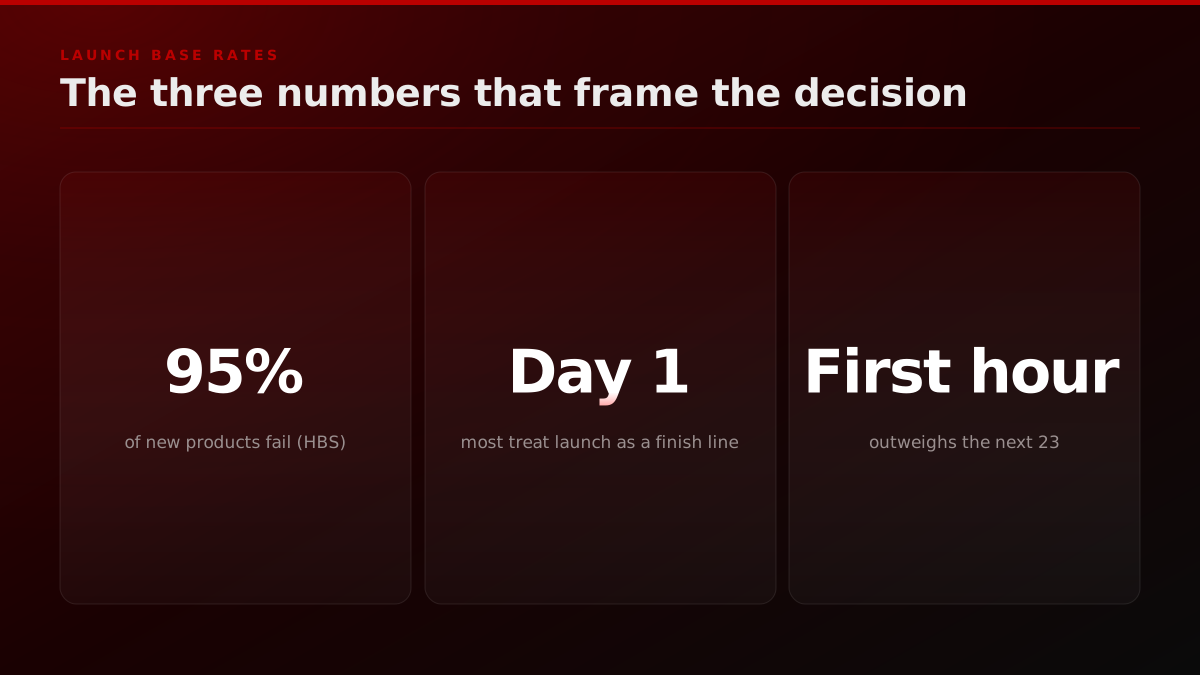
The framing you have probably seen, big bang versus rolling, is a real distinction, but it is a lossy one. It collapses four genuinely different launch models into a binary and hides the two variables that actually separate them. Get the model right and a launch becomes a series of controlled decisions. Get it wrong and you find out, on the worst possible day, that you bet everything on an assumption you never tested.
What is a product launch strategy, and why does the model matter?
A product launch strategy is the complete plan for putting a product in front of the market, and it has two halves that teams constantly merge into one. Most definitions, including ProductPlan's glossary entry, describe the release mechanics but stop short of the distribution half. The first half is the release model: the mechanics of who gets the product, in what order, over what timeline. The second half is distribution: who amplifies the launch, in what sequence, and how you know whether the reach was real. A launch strategy that names only the date has answered neither.
Ajé | the Gohighlevel Guy
@Aje_Dynamicz
As Promised Here's THE COMPLETE GUIDE TO GTM ENGINEERING (FOR BEGINNERS WHO HAVE NEVER HEARD OF IT) How Clay, Smartlead, and similar tools created a whole new freelancing niche What is GTM? GTM means Go-To-Market. A Go-To-Market strategy is everything a
The model matters because it sets your risk profile before you write a line of launch copy. A big bang launch is a single bet on a single day. A rolling launch is a sequence of small bets you can fold at any point. Those are not stylistic preferences, they are fundamentally different risk structures, and the base rates are unkind to the reckless option. Harvard Business Review's Joan Schneider and Julie Hall found that 75 percent of consumer-packaged goods and retail products fail to earn even $7.5 million in their first year. When most launches fail, the model that lets you learn cheaply beats the one that makes you guess expensively.
Most new products fail, which raises the cost of an all-or-nothing launch
Harvard Business Review found that 75 percent of consumer-packaged goods and retail products fail to earn even $7.5 million in their first year. Whatever the exact figure in any given category, the base rate is brutal, and it is the strongest argument against betting everything on a single launch date. A big bang launch assumes the product is right, the market is ready, and the infrastructure holds, all at once, on a day you cannot take back. A rolling launch treats each of those assumptions as a hypothesis to test in sequence, so a wrong one costs you a cohort instead of the whole launch.
Source: Joan Schneider and Julie Hall, Harvard Business Review
The trap is that big bang feels like the ambitious choice. It looks like conviction. But conviction without a rollback plan is just exposure, and the launch that survives is usually the one engineered to fail small. Before we get to when big bang genuinely wins, we have to stop pretending there are only two options.
What are the four product launch models?
There are four launch models, not two, and the difference between them is which variable they trade. Big bang trades safety for a single loud moment. Rolling or phased trades momentum for controlled, reversible growth. Staged, or feature-flagged, trades up-front engineering work for the ability to release one feature at a time to everyone. Soft launch trades a public moment for the chance to validate product-market fit in a small market before betting big. Each is a legitimate strategy, and each wins in a situation the others lose.
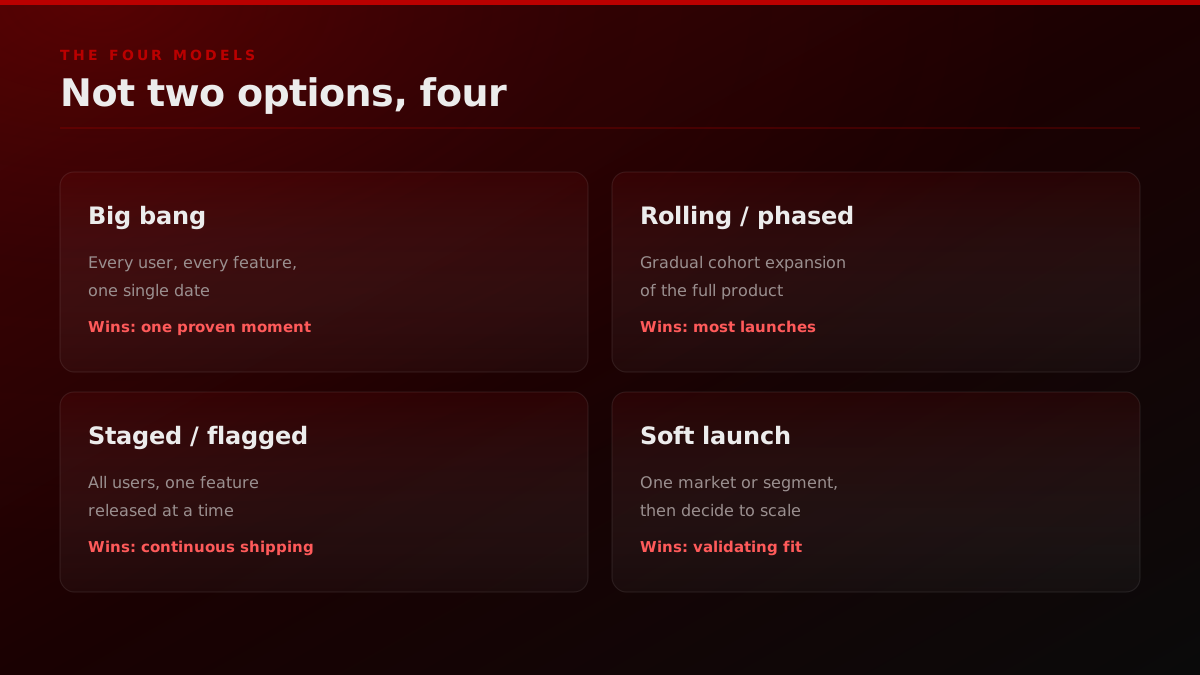
The reason the two-way framing persists is that big bang and rolling are the most visible endpoints of a spectrum, so guides treat everything else as a blend of the two. That is wrong in a way that costs teams real money. Staged and soft launch are not compromises between big bang and rolling, they optimize for different things entirely: feature scope in one case, market scope in the other. Naming all four gives you a real menu instead of a slider.
The four product launch models at a glance
| Model | What it is | When it wins | Main risk |
|---|---|---|---|
| Big bang (hard launch) | Every user, every feature, one date | You need one coordinated press moment and your systems are proven | No rollback, all failure lands at once |
| Rolling / phased | Gradual cohort expansion, full product | Most launches, especially unproven scale | Slower narrative momentum |
| Staged / feature-flagged | All users, one feature released at a time | Complex products shipping continuously | Needs flagging infrastructure up front |
| Soft launch | One market or segment, then scale | Validating product-market fit before a big push | Weak public moment, easy to stall |
The two-way big-bang-versus-rolling framing collapses four distinct models into a binary. Staged and soft launch are not sub-cases of the other two, they trade different variables (feature scope and market scope) and win in different situations.
Software engineering already worked this out under its own vocabulary, and the mapping is almost exact. In a clean walkthrough of the five most-used deployment strategies, ByteByteGo describes big bang deployment, rolling deployment, canary release, blue-green, and feature toggles. Google Cloud's guide to deployment and testing strategies documents the same set in production terms. Canary is a rolling launch by another name. Feature toggles, as Martin Fowler's canonical write-up explains, are staged launches. Blue-green is the rollback insurance that makes big bang survivable. The engineering framing is more precise than the marketing one, and it is worth stealing.
Top 5 Most-Used Deployment Strategies
ByteByteGo
ByteByteGo's walkthrough of the five most-used deployment strategies, big bang, rolling, blue-green, canary, and feature toggles. The engineering framing maps almost one to one onto product launch models.
What is a big bang launch, and when does it win?
A big bang launch, called a hard launch in marketing writing, releases the full product to every user on a single date, in one coordinated moment. Everyone gets everything at once. There is no gradual exposure, no cohort ramp, and, in the naive version, no easy way back. The entire value of the model is concentration: all the attention, press, and momentum land in the same window, which is exactly what you want when a single moment is the point.
Big bang wins in a narrow but real set of cases. If you are announcing a fundraise, an acquisition, or a category-defining reveal that only works if everyone sees it simultaneously, staggering the release would dilute the very thing you are launching for. Apple's product reveals are the canonical example: the simultaneity is the story. But the model only works when two conditions hold alongside the need for a moment. Your infrastructure has to be genuinely proven, and you have to be able to absorb an unrecoverable bad day, because a big bang launch has no built-in stress test.
The deployment world already solved this, and named the models
Software teams have run the rolling-versus-big-bang debate for years under different names, and the engineering vocabulary is more precise than the marketing one. Big bang deployment ships to everyone at once. Rolling deployment updates servers in batches. Canary release routes a small slice of traffic to the new version first, watches it, then widens. Blue-green keeps two environments and flips between them for instant rollback. The lesson that transfers directly to product launches is that the safest releases decouple the moment you deploy from the moment users are exposed, so you can move fast and still contain the blast radius.
Source: ByteByteGo, Top 5 Most-Used Deployment Strategies
That second condition is where most big bang launches quietly break. Teams pick the dramatic option, skip the honest infrastructure audit, and discover their systems' real limits in front of the entire audience at once. The failure is rarely the product idea. It is that a traffic spike ten or twenty times the normal load exposes a database query, a rate limit, or a third-party dependency that nobody stress-tested, and it does so at the exact moment the largest possible audience is watching. A big bang launch has no gradual ramp to surface that problem while only a fraction of users are exposed, which is the entire reason the ramp exists in the other models.
If you have the moment but not the readiness, the fix is not to abandon the ambition, it is to add a kill switch, which the staged model below gives you almost for free. The most disciplined big bang launches are really staged launches wearing a big bang costume: the code ships behind flags days ahead, the team dark-launches to a fraction of traffic to prove the systems hold, and then, on the announced date, they flip the flag to everyone. The audience experiences a single dramatic moment. The engineering team experiences a controlled rollout they have already de-risked. That is the version of big bang that actually wins, and it is only available to teams that built the flagging infrastructure first.
What is a rolling launch, and when does it win?
A rolling launch, also called a phased rollout, expands the audience for the full product gradually, validating stability and feedback at each step before widening. The canonical cadence moves from internal-only to 1 percent of users, then 5, 25, and finally 100 percent, with a defined check at every gate. The point is that each phase is a small, reversible bet. If a phase looks bad, you pause or roll back having exposed a fraction of your users instead of all of them.
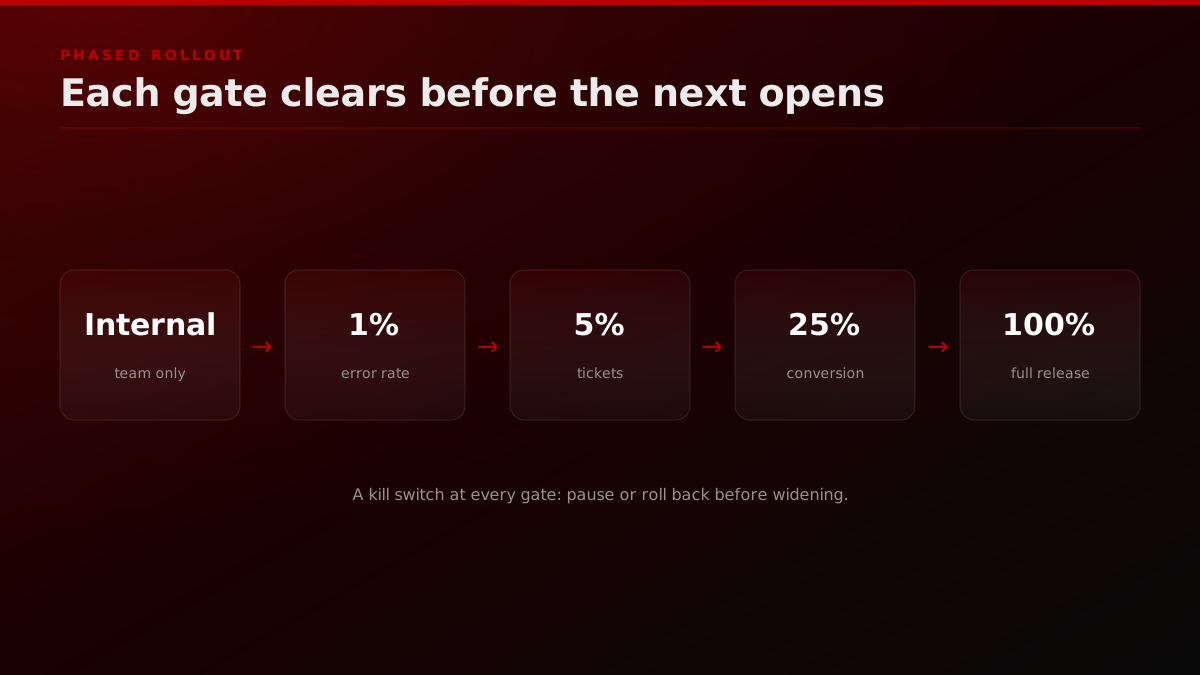
Rolling wins for most launches, and especially for any launch where scale is unproven. It turns the single all-or-nothing bet of a big bang into a sequence of cheap experiments, each of which either earns the next expansion or stops the line. In practice it runs over weeks rather than a single day: internal only first, then each percentage tier held long enough to clear its stability and engagement gate before the next widening. Critical systems take the longest, minor features compress to a week or two.
Operator noteA rolling launch turns one all-or-nothing bet into five small reversible ones. That is the entire pitch, and for most teams it is enough.
How a phased rollout is gated, by percentage of traffic
| Phase | Audience | What you measure | Advance when |
|---|---|---|---|
| 1 | Internal only | Crashes, obvious breakage | Core flows work end to end |
| 2 | 1 percent of users | Error rate, latency | Errors stay inside baseline |
| 3 | 5 percent of users | Support tickets, qualitative feedback | No spike in confusion or complaints |
| 4 | 25 percent of users | Conversion, retention | Metrics hold against control |
| 5 | 100 percent | Everything, at scale | Full release, keep the kill switch live |
This is the standard canary cadence, each tier held until it clears its stability and engagement gate before widening. Critical systems can take weeks, minor features compress to days. The bottleneck is data validation, not engineering speed.
The cost of rolling is narrative momentum. A launch that dribbles out over two months does not own a single news cycle the way a big bang can. For a lot of products that is a fine trade, because the goal is a stable release and a growing user base, not a headline. But it does mean that if you need both safety and a moment, plain rolling is not enough on its own. That is what the staged model solves.
There is a second, subtler cost to rolling that founders discover only mid-launch: it demands sustained attention from a team that wants to move on. A big bang launch has a clean ending, the day ships and the team celebrates or firefights and then it is over. A rolling launch has no such closure. Someone has to watch each gate, read the metrics, decide whether to widen or hold, and keep the whole organization patient while the release creeps forward. For a small team that discipline is real work, and the temptation to just open the gates and declare victory is constant. The teams that run rolling launches well treat each gate as a genuine decision with a written bar to clear, not a formality to rubber-stamp on the way to 100 percent.
Next week we will launch a product on-time, feature complete and with no significant bugs…
Big bang vs rolling launch: the head-to-head
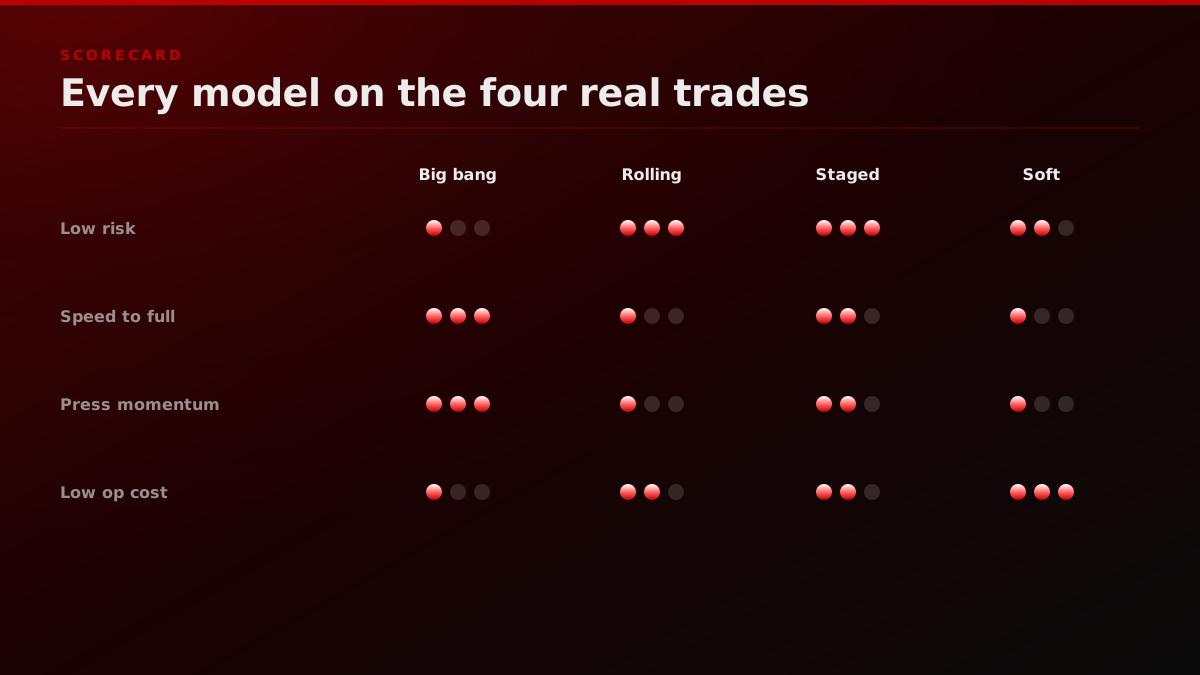
Big bang and rolling are mirror images, and laying them side by side makes the choice concrete. Big bang gives you one press moment, no rollback, a concentrated support spike, and a full release on day one. Rolling gives you diffuse momentum, a rollback at every gate, a support load spread across weeks, and a full release only after each phase clears. Neither is better in the abstract. Each is better for a specific set of constraints, and the constraints are what you should be arguing about.
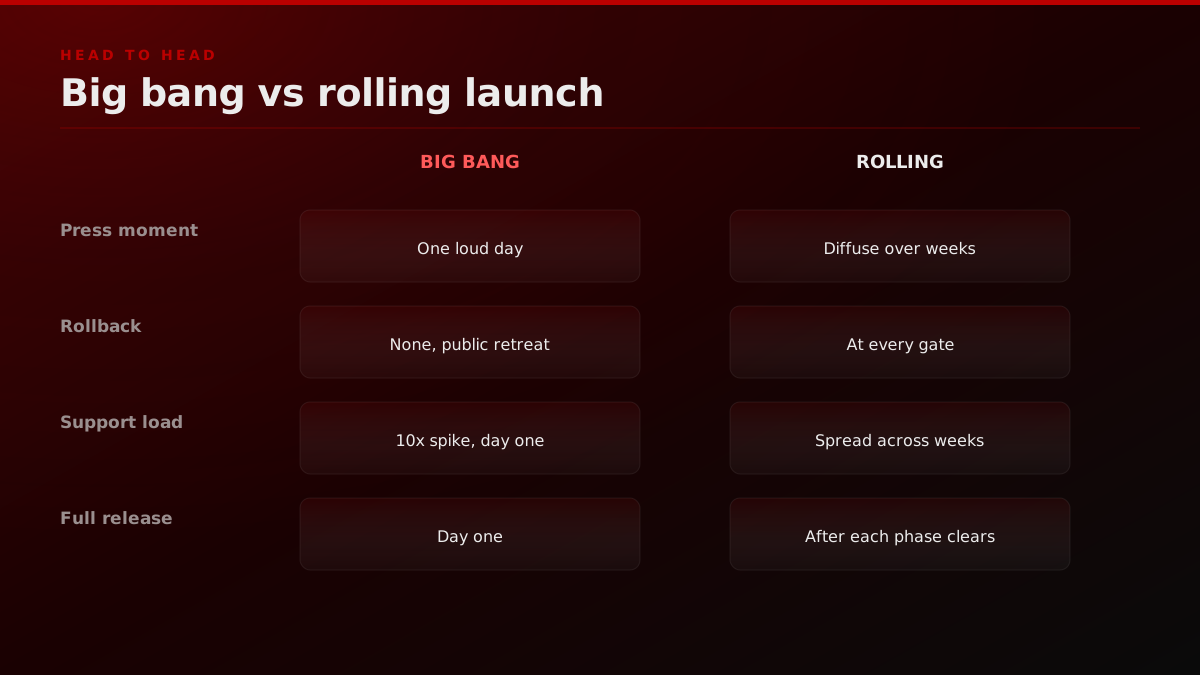
The most underrated axis in that comparison is rollback safety. A big bang launch commits you to your decision the moment it goes live, and unwinding it means a public retreat, customer communication, and often an engineering scramble. A rolling launch bakes reversal into the design: every gate is a decision point where continuing is a choice, not a default. For a first-time launch in an unproven category, that optionality is worth more than the momentum a big bang buys.
Where founders get this wrong is treating the choice as a personality test, bold versus cautious, when it is really a risk calculation. The disciplined move is to score both models against the four things you actually trade, then let the constraints decide. That is what the decision tree in the next section does.
Where does a soft launch fit?
A soft launch releases the product to a deliberately limited market, one city, one customer segment, or a small invite list, with the explicit goal of validating product-market fit before any wide push. It is not a phased rollout with fewer users. The difference is intent. A phased rollout keeps the market broad and throttles exposure for safety. A soft launch narrows the market on purpose to learn something specific, then decides whether the thing is worth scaling at all. Marketing writing usually pairs soft launch against the hard launch, which is this guide's big bang under an older name. Search either term today and you will mostly get relationship advice, because soft launch and hard launch became dating slang for how couples reveal a relationship, and the product meaning is now the minority use of the phrase.
Soft launch wins when your biggest risk is not infrastructure but assumption. If you are unsure whether the product solves the problem, whether the onboarding lands, or whether the segment will pay, a soft launch buys you that answer at low cost and low public stakes. This is the same discipline that founder-focused writing like First Round Review has documented for years: validate demand before you spend the launch. Product-led teams often chain the models: a soft launch to validate, then a phased rollout to scale safely, then a bigger public moment once both fit and stability are proven. The soft launch is the cheapest place to discover you built the wrong thing.
Launched a B2B SaaS startup, getting traction but hit a major roadblock (need advice). I will not promote
The failure mode of soft launch is stalling. Because it has no forcing public moment, a soft launch can drift indefinitely, always gathering a little more data, never committing to scale. The guard against that is a pre-committed decision date and a pre-defined bar: if the segment hits the metric by the date, you graduate to the next model, and if it does not, you kill or pivot. A soft launch without an exit criterion is just a slow way to avoid launching.
How do you choose a launch model? The decision tree
You choose a launch model by answering three questions in order, and the answers route you to one of the four. First: is your infrastructure genuinely proven at the scale the launch will bring? Second: do you need a single coordinated press moment, or is steady growth acceptable? Third: how much launch-day risk can you actually absorb if something breaks? Everything else, the copy, the channels, the timing, is downstream of those three answers.
Operator notePick the model on three inputs, infrastructure, the need for a moment, and risk tolerance. Everything else is downstream of those three.
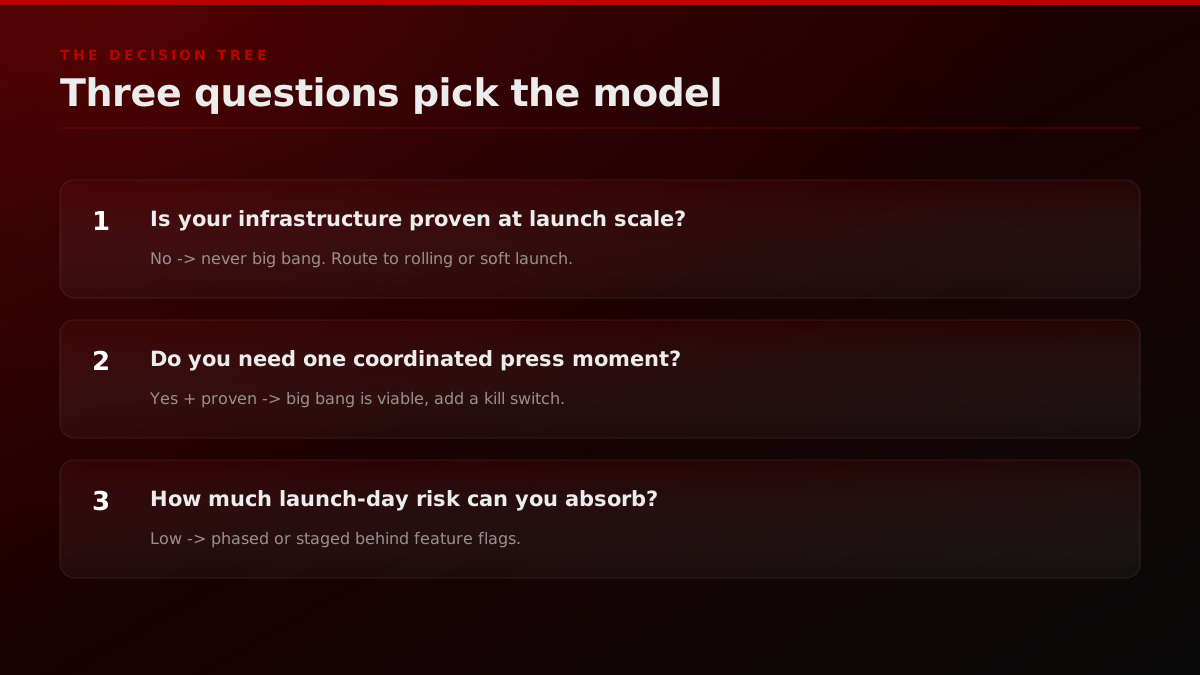
If your infrastructure is unproven, the answer is never big bang, regardless of how much you want the moment, because a big bang launch is a bet that your systems hold, and you have no evidence they will. Route to rolling or soft launch instead. If your infrastructure is proven and you need a single moment, big bang becomes viable, but only if you can absorb the risk, and only if you add a kill switch through feature flags. If you need both safety and a moment, the staged model, all users but one feature at a time behind flags, gives you the closest thing to both.
At FORKOFF we run this exact tree with founders before we touch a launch plan, because the model quietly determines everything downstream, from the support staffing to the reach strategy. A founder who wanted a splashy big bang for a payments feature walked away with a staged rollout behind flags plus a coordinated announcement moment and a press release built to the wire's own format, which gave them the press without the unrecoverable risk. The founder-funnel work starts here, with the model, not the megaphone. You can see how we have applied it across real launches in our launch playbook and the launch-week sequencing guide.
How would the decision tree play out for three real launches?
The tree is only useful if it produces different answers for different situations, so it helps to run three common launch shapes through it and watch them diverge. The point is not that one model is correct, it is that the same three questions, honestly answered, route each product to a different release model without any argument about who is bold and who is cautious. Here is how three founders we have worked with landed on three different answers.
A seed-stage developer tool with a small, technical audience and unproven infrastructure ran the tree and landed on rolling. The first question settled it: the systems had never seen real load, so a big bang was a bet on evidence that did not exist. The founder wanted a Product Hunt moment, and the honest read was that they could still stage one at the end of a phased rollout, once the product had survived a few cohorts. The launch shipped to a waitlist first, then widened weekly, and the public moment came after the product was already stable, not before. The reach still concentrated on a single day, but the risk did not.
A Series B company relaunching its core product with a major new pricing model ran the same tree and landed on big bang, correctly. The infrastructure was proven at scale, the pricing change only made sense if the entire customer base saw it at once, and a phased rollout would have created months of confusion with two prices live in the market. The one addition the tree forced was a set of feature flags on the new billing path, so that if the pricing logic misbehaved, the company could revert to the old model in minutes rather than issue refunds for a week. Big bang, but with a seatbelt.
A consumer app expanding into a new country ran the tree and landed on soft launch, because its real risk was neither infrastructure nor a missing moment, it was the assumption that a product built for one market would resonate in another. The team released to a single city, watched retention and support tickets for six weeks against a pre-committed bar, and only then decided whether to scale the rest of the country. The soft launch cost them a public splash they did not need and saved them from scaling a product the new market did not want. Three products, three questions, three different models, and no drama about it. Each also implies a different launch asset: the phased tool leaned on a series of short product clips, the Series B relaunch commissioned a single anchor film, and the soft launch used the lighter teaser, trailer, and sizzle formats sized to each phase.
What are the hidden costs founders underestimate?
The hidden cost of a launch is almost never the engineering, it is the support load and the risk, and big bang concentrates both. A single-date release funnels every ticket, incident, and confused user into the same 24 hours, so support volume can spike an order of magnitude on day one. That demands an on-call rotation, an incident playbook, and often two or three full-time-equivalent support people that early-stage teams simply do not budget for. The launch looks cheap on the spreadsheet and expensive in the war room.
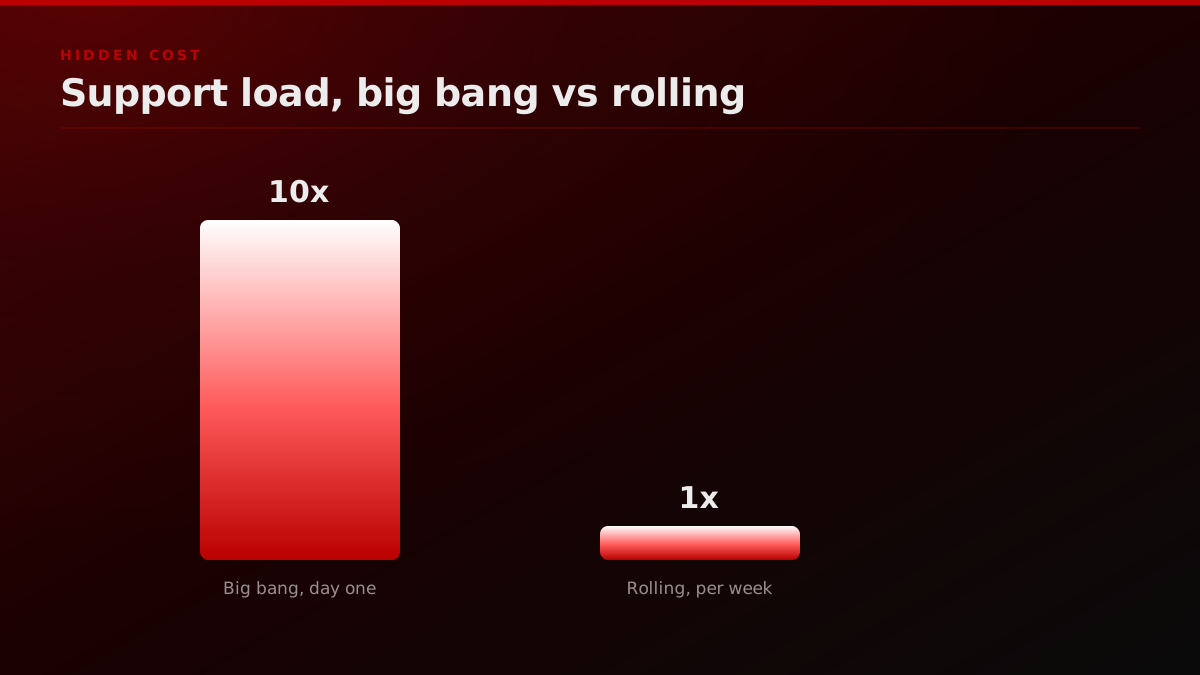
Rolling launches are not free either, but their costs are the kind you can plan around. The tradeoff is time and coordination overhead: you run the same launch across weeks, maintain the gating infrastructure, and keep the team's attention on a release that never has a single triumphant end. The advantage is that the support and risk load is spread thin instead of stacked, so no single day can overwhelm a small team. For most startups the spread-out cost of rolling is cheaper in practice than the concentrated cost of big bang, even though big bang looks simpler up front.
The cost founders miss entirely, across every model, is distribution. The launch model is a spend on safety. The distribution plan is a spend on being seen, and it is a separate bill that almost no launch budget includes. We will come back to it, because it is the half that most often decides whether the launch returns anything at all.
How do feature flags de-risk any launch model?
Feature flags de-risk a launch by decoupling the moment you deploy code from the moment users are exposed to a feature. With a flag in place, releasing is flipping a config toggle and rolling back is flipping it off, a two-minute change instead of a code revert, a rebuild, and a redeploy under pressure. That single decoupling is the highest-payoff piece of launch infrastructure a team can own, because it turns nearly every model's worst case from catastrophic into trivial.
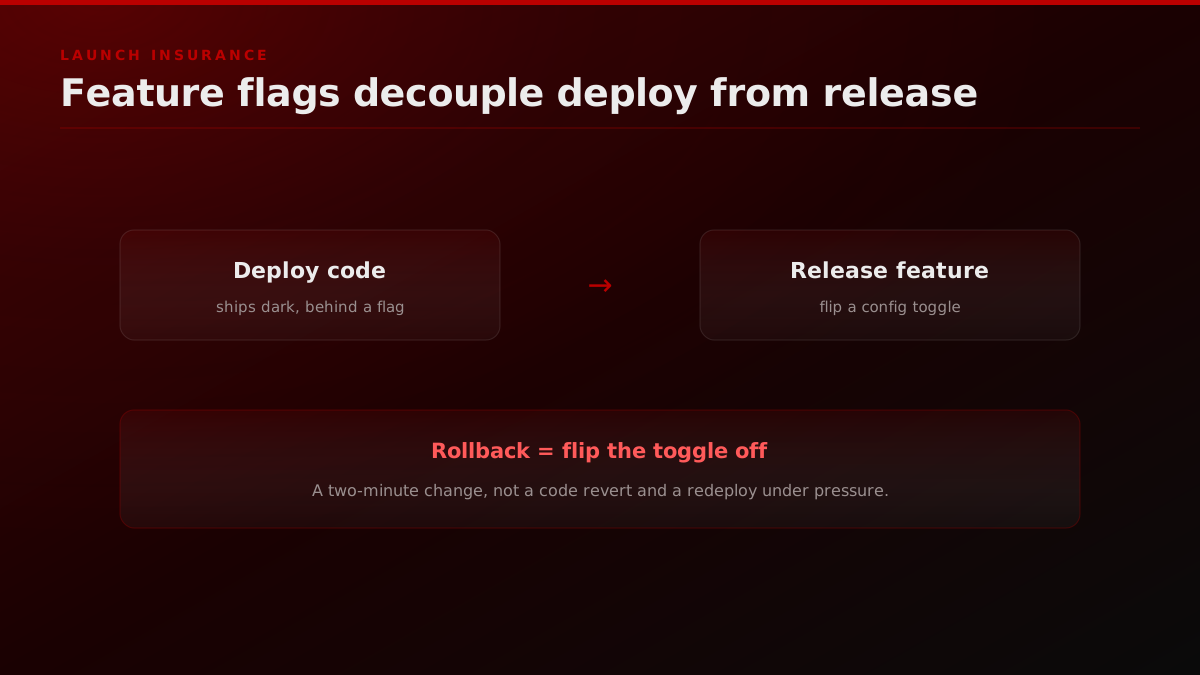
The effect on the model choice is direct. A big bang launch behind feature flags gains a kill switch, which removes its scariest property, the unrecoverable bad day. Both Atlassian's feature-flag primer and LaunchDarkly's guide to feature flags make the same point: decoupling deploy from release is what lets teams ship continuously without betting the product on each change. Optimizely's rollout documentation frames the same mechanism as the basis for controlled experimentation at launch. A phased rollout behind flags becomes trivial to operate, because widening exposure is just changing a percentage, not shipping new code. Companies that run continuous releases lean on this so heavily that the line between big bang and rolling blurs: they deploy constantly and control exposure entirely through flags. The one real cost is that you have to build the flagging system before you need it. If you have it, the safe models get cheaper and the risky one gets survivable, which usually tips the whole decision.
The distribution half nobody budgets
Here is the part every launch-model guide leaves out: the model decides how safely you release, but distribution decides whether anyone sees the launch at all. A distribution strategist with six years on the go-to-market side of startups put it plainly on r/Startups: founders treat launch day as a finish line when it is actually a trigger. The product does not go viral, the moment around it does, and that moment is engineered, not lucky.
The launch does not go viral, the moment around it does
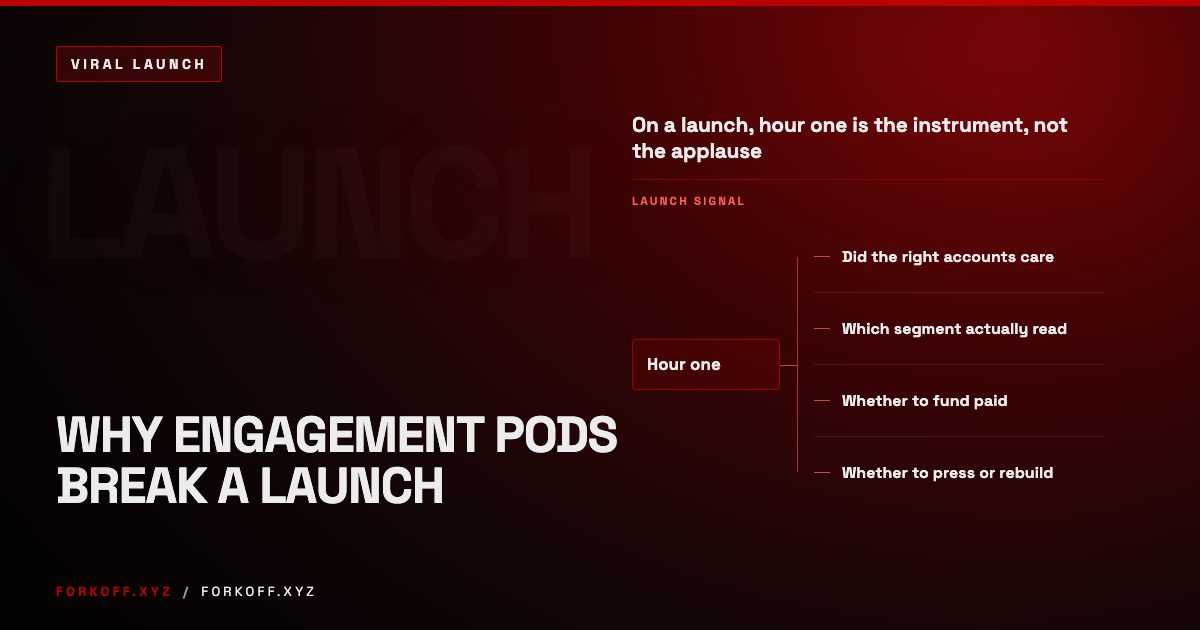
A distribution strategist with six years on the go-to-market side of startups put it bluntly on r/Startups: founders treat launch day as a finish line when it is actually a trigger. Reach on X and LinkedIn is not random, it is social proof compression, a cascade of early engagement signals that tells both the algorithm and the humans watching that something is worth stopping for. The first 60 minutes of a launch are disproportionately more important than the next 23 hours, because investors, operators, and journalists are pattern matching on momentum, and nobody wants to be the first to validate something that is not already moving. This is why the launch model is only half the decision.
Source: r/Startups, distribution strategist breakdown
The mechanics are unforgiving. Reach on X and LinkedIn is social proof compression: the first 60 minutes of a launch are disproportionately more important than the next 23 hours, because both the algorithm and the humans watching, investors, operators, journalists, are pattern matching on early momentum, and nobody wants to be the first to validate something that is not already moving. A launch with no warm network behind it and no first-hour plan does not lose the audience test, it never reaches the test. This is true regardless of which release model you picked.
The practical consequence is that distribution has to be planned on the same calendar as the release model, not bolted on the week before. If you chose big bang, the whole distribution engine has to fire on the single announced day, which means every commitment, every seeded account, every creator, has to be locked weeks ahead and timed to the hour. If you chose rolling, distribution can be sequenced too: a quieter signal at each early gate to gather feedback, then the coordinated push saved for the moment you widen to everyone. The mistake is treating the two decisions as separate projects owned by separate people. The release model sets the shape of the distribution plan, and a distribution plan that ignores the model tends to peak on the wrong day.
Your product doesn't go viral. The moment around your product goes viral. Manufacture the first hour. Lock in your network before launch day.
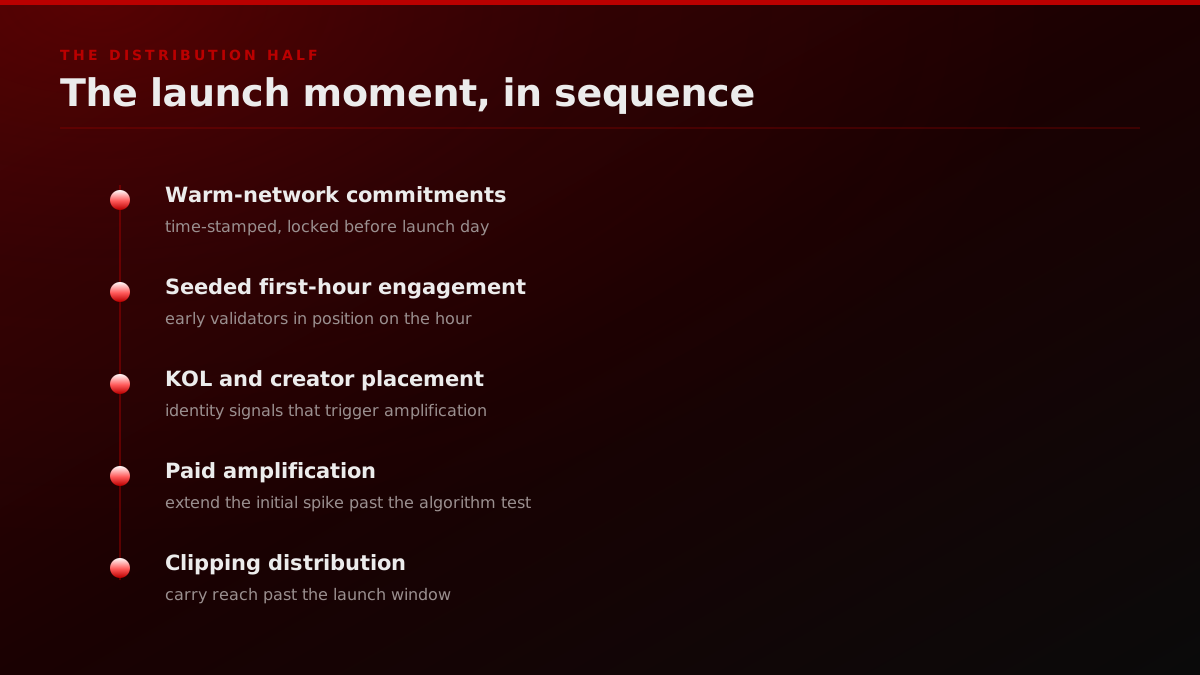
That is why we treat the launch moment as its own engineered stack, seeded before the date and coordinated on the hour. It is the core of our viral launch service: warm-network commitments locked in advance, seeded first-hour engagement, KOL and creator placement, then paid amplification and clipping to extend the reach past the initial spike. Before you commit, you can audit the qualified reach a launch is likely to earn. None of it is the product. All of it is the half that decides whether the launch is seen. The best release model in the world, executed flawlessly, still fails if it lands in silence.
How do startups get millions of organic views on launch day? (POV of a distribution strategist) I will not promote.
How we run product launches at FORKOFF
At FORKOFF we run launches as one system, model plus distribution, because splitting them is how good products launch to nobody. The sequence is always the same. We start with the three-question decision tree to pick the release model, so the risk profile is set before anything public happens. Then we build the distribution moment to match: the warm network, the first-hour coordination, the creator and paid layers, and the Reddit and Twitter and X distribution that carry it past the opening window. If you are still choosing a format for the launch asset itself, our launch-video readiness checklist and the breakdown of the startup launch distribution gap are the next reads. Once the launch model is picked, the measurement plan matters just as much, our product launch metrics guide covers what to actually track in the first 30 days, and if a big bang launch is the pick, our press release template covers the wire announcement that usually goes with it.
Operator note5B+ views through the FORKOFF clipping network is the distribution half of a launch, the part no model on the page accounts for.
The reason we can price this on outcomes rather than effort is the clipping network behind it, which has processed 5B+ views. That is not a vanity number, it is distribution capacity, the exact asset that the launch-model discussion never accounts for and the thing that turns a chosen model into a launch people actually see. When we tell a founder that the model is only half the plan, this is the other half made concrete: a network that can put a launch in front of a real audience on the day the model says to fire, rather than hoping the feed cooperates. Our bylines and the launches we have run are on the press page, the anatomy of a launch that cleared a million views is in the 1M-view launch breakdown, and the economics of the reach layer are in what a launch actually costs and the ranked best launch examples of 2026.
A bad video with perfect distribution will outperform a great video with no distribution every single time. The video is the bullet and distribution is the gun.
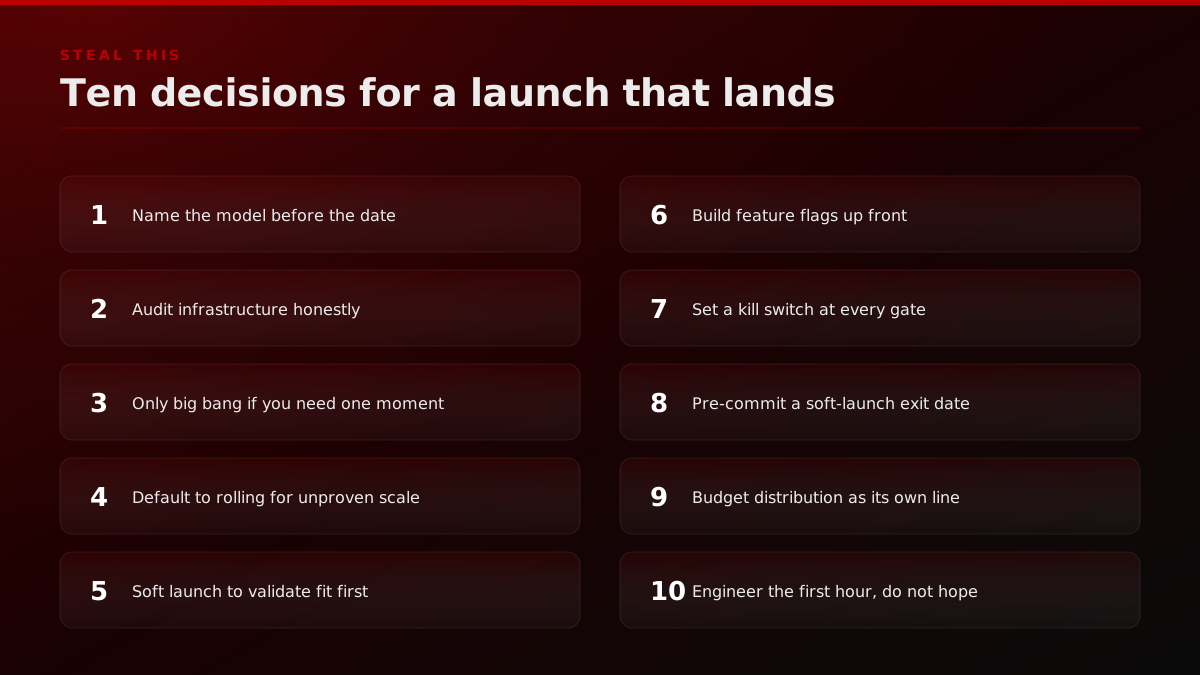
If you take one thing from this guide, take the two-part frame. Pick the model with the decision tree, big bang for a proven-infrastructure moment, rolling for controlled growth, staged for continuous releases behind flags, soft launch to validate before you scale. Then budget distribution as a separate, equally serious line, because a launch is a moment you manufacture, not a date you announce.