A launch video that crosses a million views and one that gets four hundred are usually made to the same standard. The difference is not the film. It is the distribution machine wrapped around it, the machine the four-hundred-view version never had. The view count on a launch video is a distribution outcome, not a production outcome, and once you see that, every viral launch you have ever admired starts to look less like luck and more like a repeatable sequence.
The short version
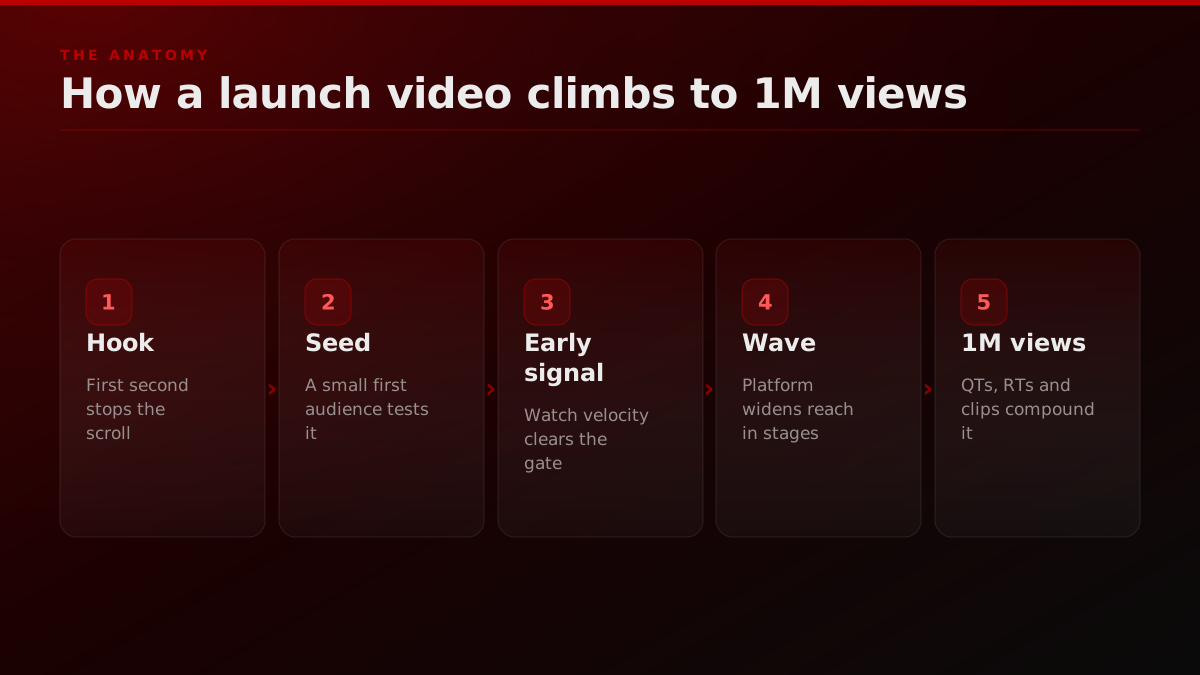
A launch video that crosses a million views is not a better film than the one that gets four hundred. It is the same craft wrapped in a distribution machine the four-hundred-view version never had. The view count is a distribution outcome, not a production outcome. Every 1M-view launch shares the same anatomy, a hook that lands inside the first second, a seed audience that passes the platform an early watch-velocity signal, and a distribution wave, quote-tweets, creator placement, native clips, and paid amplification, that compounds the reach in stages. The film is table stakes. The wave is the product. Rabbit's r1 launch teaser crossed 2.05 million views on YouTube, Bolt's launch film crossed 1.5 million, and the founder launch videos hitting seven figures on X in 2026 all ran the same play. This guide takes that anatomy apart layer by layer, with real cited numbers, and shows where the million actually comes from. The distribution benchmark behind the argument is the FORKOFF clipping network, which has processed 5B+ views.
This is a teardown, not a highlight reel. It takes apart the launch videos that crossed roughly a million views and shows you the parts that actually did the work: the first-second hook, the early watch-velocity signal that decides whether a platform shows the video to anyone, and the distribution wave of quote-tweets, creator placement, native clips, and paid amplification that compounds a strong first hour into seven figures. The short version, which the rest earns, is that the film clears a quality floor and then stops mattering, and everything after that floor is distribution.
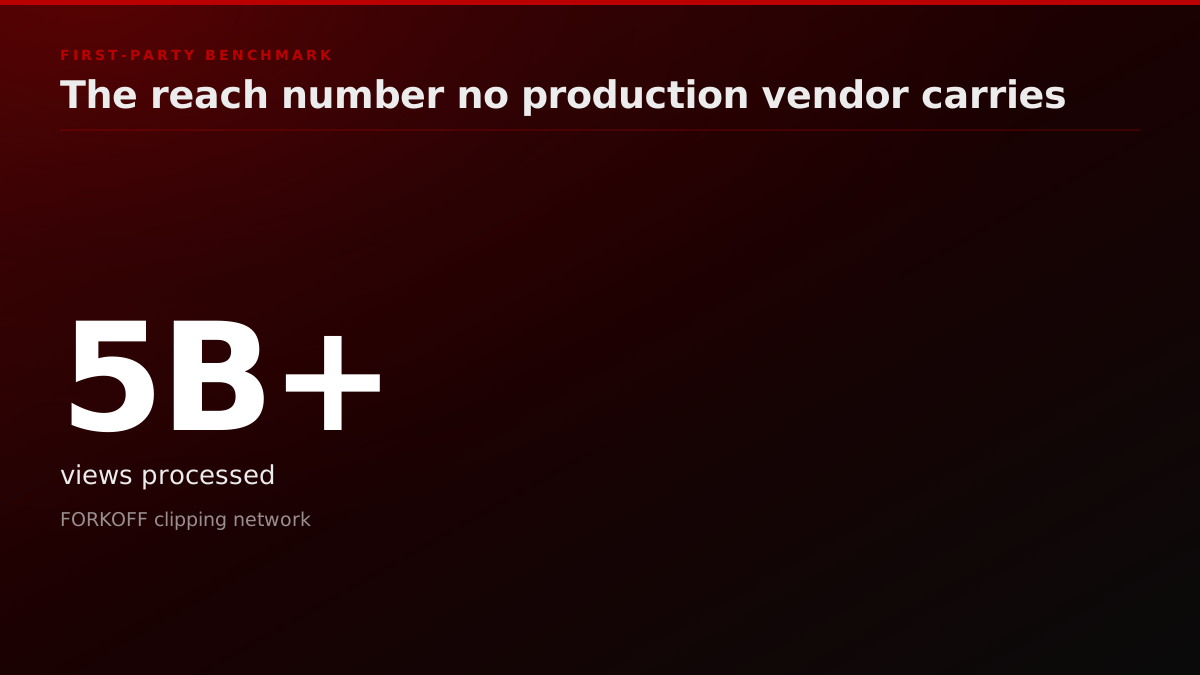
The number that frames all of it is a reach number, not a production one. The FORKOFF clipping network has processed 5B+ views moving short-form content across platforms, and that is the vantage point this piece is written from. When you have watched five billion views flow through a system, you stop believing the video is the thing. You start seeing the machine. This is the same argument the viral launch video service is built on, and the companion to how to go viral on X for 1M views, which owns the written-thread layer while this piece owns the video.
How does a 1M-view launch video actually work?
A 1M-view launch video works by running a fixed sequence: hook, seed, early signal, wave, amplification. The film enters the sequence at step one and is essentially done by step two. Everything from the seed onward is distribution, and distribution is what multiplies a good video into a great view count. Skip any step and the sequence breaks. Nail all five and the million becomes not guaranteed, but engineerable.
The mistake almost everyone makes is to treat the video as the entire launch, when the video is closer to the ammunition than the gun. A founder commissions a beautiful film, posts it, and waits for the views, because that is the story the production market sells. Then the film is shown to a small test audience, nothing is primed to watch and share it fast, the early signal comes back weak, and the platform quietly caps it. The video was never the problem. The absence of a plan to move it was. This is the same gap the launch video cost breakdown covers on the budget side and the startup launch video distribution gap covers on the strategy side.
The five layers are worth naming precisely, because each one moves a different signal and each one has a different owner. Get the ownership wrong and the layer goes unowned, which is exactly how launches fail.
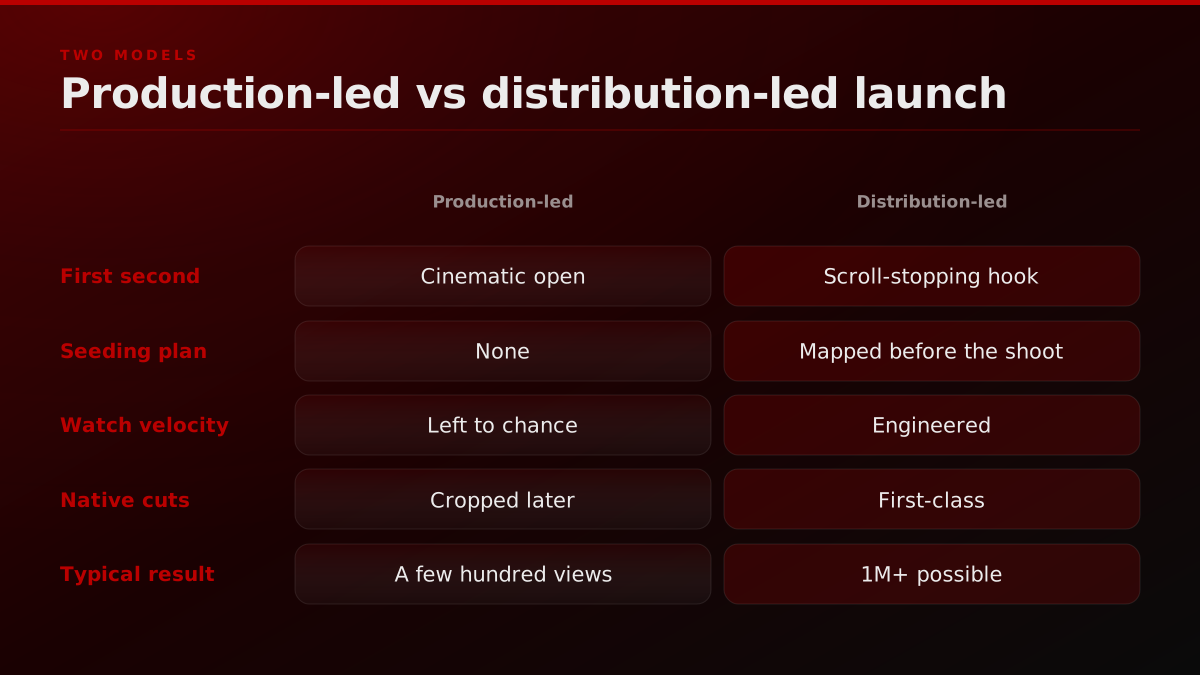
There are really only two ways to run the same launch, and the entire gap between them lives in the distribution column. A production-led launch spends its energy on the film, leaves the seed to chance, and assumes the watch velocity will take care of itself. A distribution-led launch treats the film as one input and engineers every other signal the platform is watching, from the first-second hook to the native cut to the primed seed audience posting inside a coordinated window. Same product, same budget, wildly different view counts, and the difference is not visible anywhere in the video itself. The founders who cross a million are not shooting better films than the ones who get four hundred views. They are running the right column.
The five layers of a 1M-view launch video
| Layer | What it does | Who usually owns it | The signal it moves |
|---|---|---|---|
| The hook | Stops the scroll inside the first second | Editor plus distribution strategist | Retention in the first two seconds |
| The seed | Puts the video in front of a warm first audience | Founder network plus placement partner | Early watch velocity in the first hour |
| The wave | Widens reach in stages once early signals clear | The platform, if the signals hold | Shares, saves, replies per minute |
| The amplification | Quote-tweets, creator placement, native clips | KOL and clipping partner | Re-shares into new audience clusters |
| The paid layer | Buys reach behind the cuts already winning | Media buyer or managed partner | Cost per genuinely watched view |
Every layer is a distribution decision. Only the first depends on the film itself, and even that depends more on the cut than the shoot. Directional model, not a fixed formula.
Why is the view count a distribution outcome, not a production outcome?
Because the platform decides reach before a real audience ever sees the video, on signals that have nothing to do with production quality. When you post a launch video, the platform shows it to a small seed group and watches what they do in the first minutes: did they keep watching, did they share, did they save, did they reply. Those early signals, measured against time, decide whether the video gets pushed to a wider audience or quietly capped. The camera you shot on is invisible to that decision.
This is why a flawless launch video can earn zero views. It is not that the audience saw it and disliked it. It is that the audience never saw it, because the early signal came back weak and the platform stopped showing it. A launch video with zero views did not lose an audience test. It never reached one. The a16z speedrun teardown on making a viral launch video makes the same point from the other side: the teams that consistently hit big numbers are engineering the early signal on purpose, not hoping the video earns it.
A flawless launch video can still earn zero views
Platforms rank and throttle content at ingestion, before a meaningful audience ever sees it, on early signals like watch velocity and retention in the first seconds. A launch video with zero views did not lose an audience test, it never reached one. This is why production polish is not the binding constraint on reach, and why a launch that is all film and no distribution plan is a bet against the system that decides who gets seen.
Source: Platform distribution mechanics, founder field reports
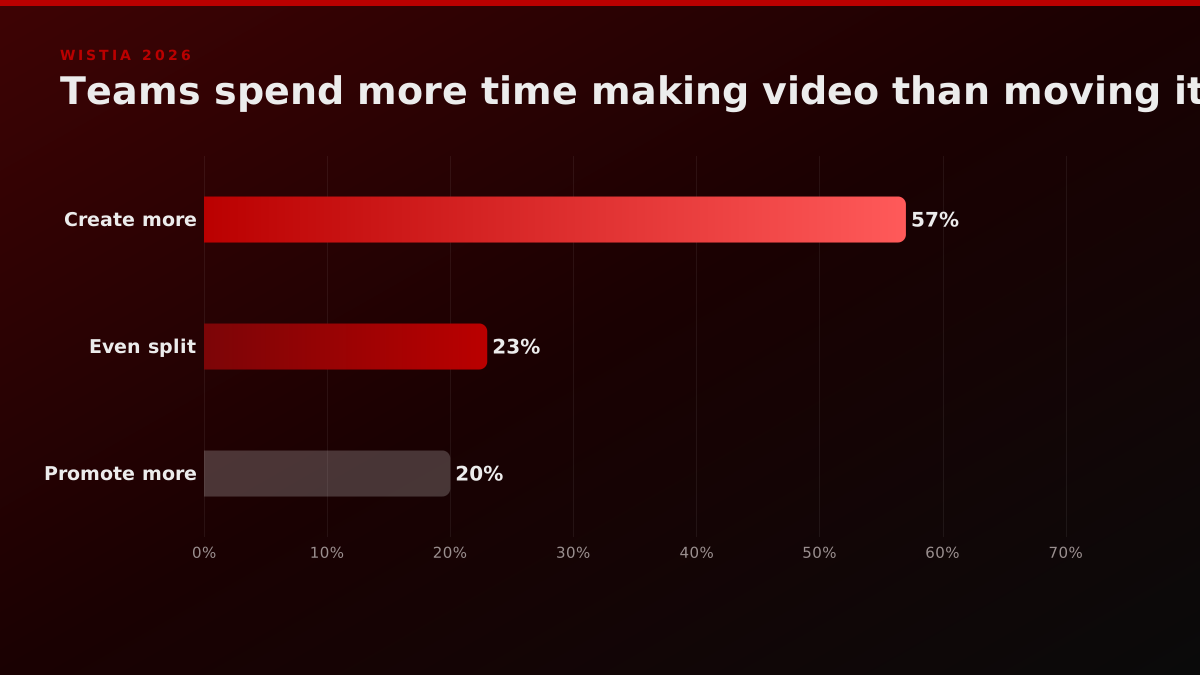
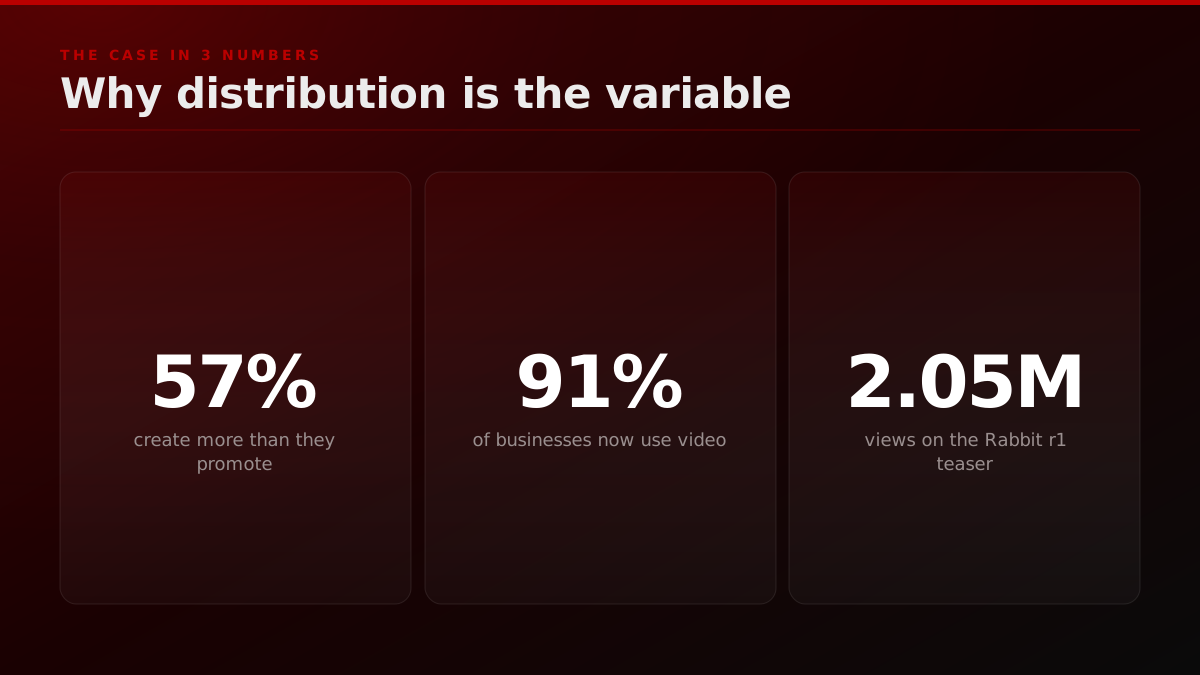
The data underneath this is blunt. Wistia's 2026 State of Video, built on a survey of more than 900 professionals plus an analysis of over 13 million videos and 79 million hours of viewing data, found that 57% of teams spend more time creating videos than promoting them, while only 20% spend more time promoting [Source: Wistia 2026 State of Video]. A 1M-view launch is what happens when a team lives in that 20%. Most launch videos die because their makers live in the 57%, pouring the hours into the asset and almost none into the reach.
What decides whether a launch video clears the ingestion gate?
The first hour decides it, and the first hour is about watch velocity, not production value. Every platform runs a version of the same test: it shows a new video to a small audience and measures how fast the engagement accumulates relative to time. A high ratio of watches, shares, and saves per minute reads as a signal that the content is worth spreading, and the platform widens the audience. A low ratio reads as a dud, and the video is capped. One r/SaaS teardown of why some launch videos explode on X and others flop put the mechanism plainly.
X gives your post a tiny test audience for the first 30 to 60 minutes. It is looking for one metric: engagement velocity. High ratio means viral push. Low ratio means dead on arrival.
That single window is why the seed matters so much. If the first people to see your launch video are a warm audience primed to watch it all the way through and share it fast, the velocity signal is strong and the platform pushes it. If the first people are a cold, random slice of the feed, the signal is weak and the video dies in the seed group, regardless of how good it is. The seed is not a nice-to-have. It is the input that decides whether the rest of the sequence ever runs, which is exactly why the founder funnel exists as its own discipline.
The uncomfortable implication is that timing beats polish. A launch video posted into a dead window with no primed audience will underperform a worse video posted into a coordinated window where dozens of accounts engage inside the first two hours. The r/SaaS teardown calls this the two-hour strike: every re-share and reply engineered to hit inside a tight window so the platform sees a spike of density and reads it as a video everyone is talking about. That is a distribution decision made about a production asset, and it is invisible on the cost page.
It also reframes what the comment section is for. On a launch post, the top replies are prime real estate, and the launches that go big seed that section on purpose: a couple of larger accounts start a real discussion in the first minutes, smaller accounts reply underneath, and the density of that early conversation feeds straight back into the velocity signal. Left alone, the comment section fills with generic congratulations that add nothing to the ranking. Structured, it becomes another lever pushing the video through the gate. None of that is about the film. All of it is about the first hour, and the first hour is where the million is won or lost.
What are the mechanics every 1M-view launch video shares?
Six mechanics show up in every launch video that crosses a million views, and five of them are distribution. The one that touches the film is the hook, and even the hook is more about the cut than the shoot. Once you can name the six, you can look at any viral launch and reverse-engineer which levers it pulled, and you can look at your own launch and see which levers you left on the table.
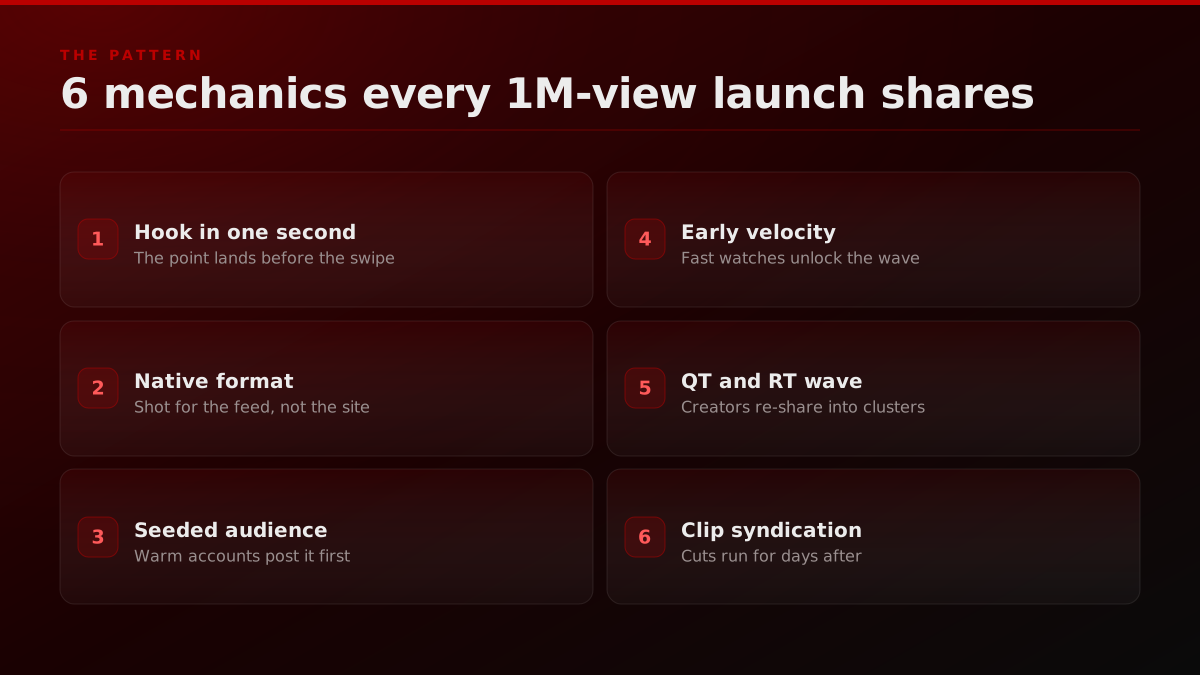
The first mechanic is the one-second hook, a visual or verbal jolt that lands before the viewer can swipe. The second is native format, the video shot for the feed it will live in rather than cropped to fit it later. The third is a seeded audience, warm accounts that post it first and drive the early velocity. The fourth is early velocity itself, the fast watches that clear the ingestion gate. The fifth is the quote-tweet and retweet wave, creators re-sharing the video into audience clusters the founder could never reach alone. The sixth is clip syndication, native cuts that keep running for days after the original post peaks. The get-to-100k-views launch video guide walks the smaller version of this same ladder for founders who want the mechanics before they scale them.
Notice what is missing from the list: budget, cinematography, runtime, and animation quality. None of them make the six. That is not because production is worthless. It is because production is table stakes, a floor you clear once, after which more of it stops moving the view count. The launch videos that cross a million are not the best-shot videos. They are the best-distributed ones.
Why does the same video explode on one account and die on another?
Because the account is part of the distribution machine, and the machine is doing most of the work. The same exact video posted by a founder with a primed network of creators ready to quote-tweet it will hit a completely different velocity than the same file posted by an account with no seed and no wave behind it. The video did not change. The distribution around it did, and distribution is what the platform is actually measuring.
This is the single most misread part of viral launches. People watch a founder's video cross two million views and conclude the video was two-million-views good. Reading the reach honestly is what RADAR does across real launches, telling the views a launch earned from the views it manufactured. What actually happened is that the founder, or the partner behind them, lined up the hook, seeded it to the right accounts, primed a wave of creators whose followers were the real buyers, and structured the first two hours so the velocity signal spiked. The video was the trigger. The wave was the payload. A founder laying out the 2026 consumer launch playbook put the ordering in the open.
Vatsal Sanghvi
@vatsal_sanghvi
consumer / prosumer gtm playbook in 2026. 1/ viral launch video: high production, quirky, we-are-breaking-the-internet kind of video, go viral on twitter, get influencers to qt/rt, decent cost. 2/ clippers and influencers: influencers keep talking about the product.
Read that order carefully, because it is the whole thesis in one post. The viral launch video is step one. Then going viral on X, then influencers quote-tweeting, then clippers. Three of the four steps are distribution, and they run after the film is finished. The film is the smallest part of the launch it is named after. This is the same reason the go-viral-on-X launch runbook and this video teardown are siblings rather than rivals: one owns the written wave, the other owns the video, and a real launch runs both.
1/ viral launch video, go viral on twitter, get influencers to qt/rt. 2/ clippers and influencers keep talking about the product.
How does the distribution wave actually multiply a launch video?
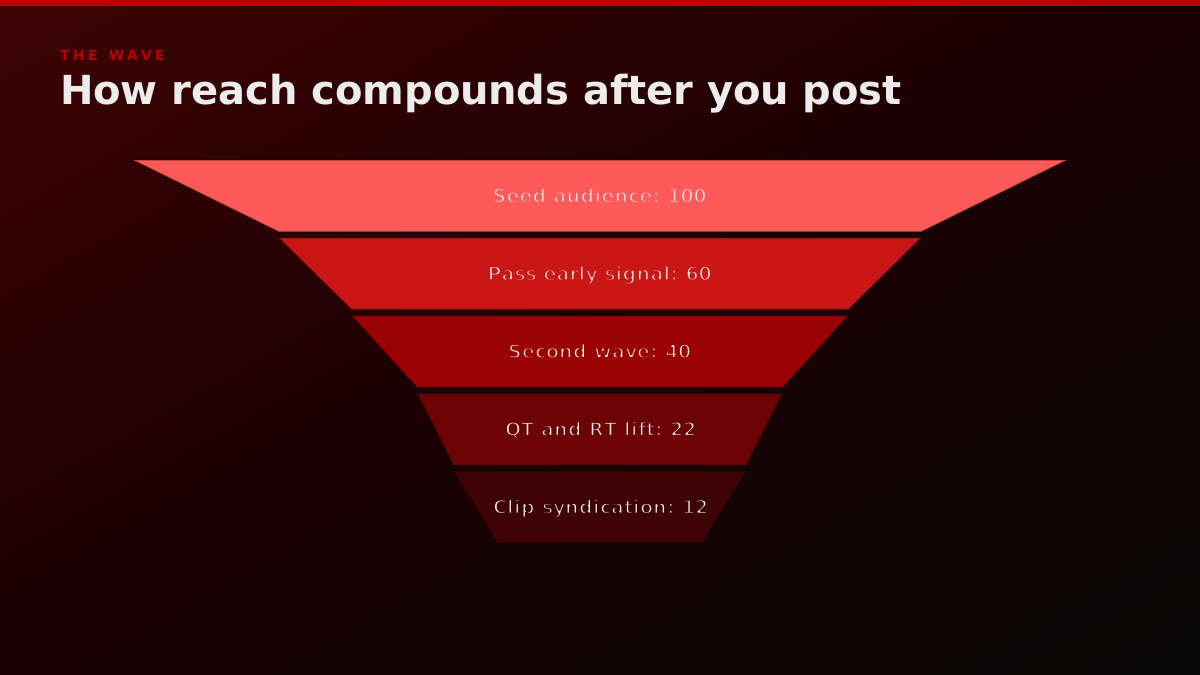
The wave multiplies reach by handing the video from one audience cluster to the next, each hand-off pulling in people the last one could not reach. The founder's post seeds the launch. Creators quote-tweet it to their own followers, who are new audiences the founder does not own. Clippers cut the video into native short-form and spread it across platforms. Recap and roundup accounts re-surface the moment for people who missed the first wave. And paid budget goes behind the cuts already earning watch time, buying reach where the organic signal has already proven the content works.
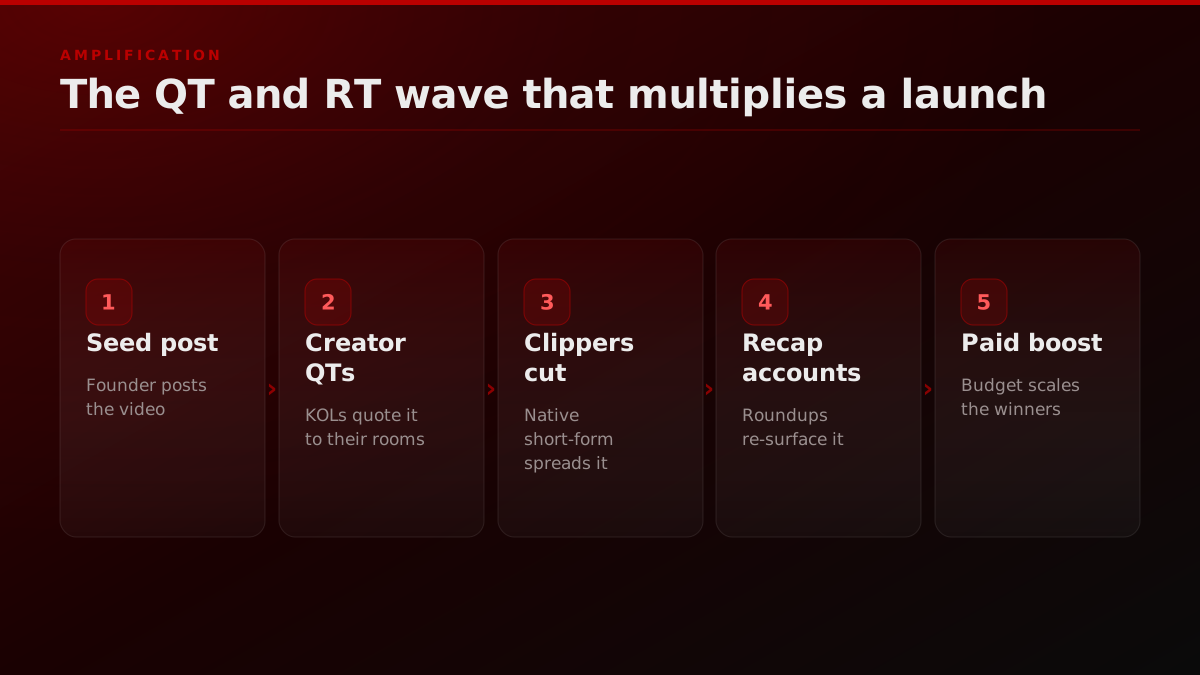
Each stage of that wave is a separate skill, and each one has a home. Creator placement is the influencer marketing discipline: finding accounts whose followers are the actual buyers, not just accounts with big numbers. The r/SaaS teardown is strict on this point, arguing that a minimum of a third of an influencer's audience should sit inside your target market, and that fifty thousand relevant followers beat five hundred thousand irrelevant ones every time. The clip layer is the clipping service: native cuts seeded across feeds so the launch keeps moving after the original post cools, and the best clipping agency comparison lays out who runs that layer well. The organic spine that compounds all of it is the Twitter marketing and Reddit marketing work that keeps a founder's own accounts warm enough to seed the next launch faster than the last.
The reason the wave beats a single big post is durability. The original launch video gets one spike, usually two to four days on the founder's post. The clips run for weeks. A launch built only around the hero film captures the spike and loses the long tail. A launch built around syndication captures both, which is why the clip is often worth more than the film it came from.
Teams pour effort into the film and almost none into the reach
Wistia's 2026 State of Video, built on a survey of more than 900 professionals plus an analysis of over 13 million videos and 79 million hours of viewing data, found that 57% of teams spend more time creating videos than promoting them. Only 20% spend more time promoting, and 23% split the two evenly. A 1M-view launch is what happens when a team sits in that 20%, and most launch videos die because their makers sit in the 57%.
Source: Wistia, State of Video Report 2026
What is a clip worth compared to the hero film?
Often more, and that inversion is the least intuitive part of the whole anatomy. The hero film is the thing the budget goes into and the thing everyone photographs on their portfolio. The clip is the thirty-second native cut nobody frames, and it is usually the piece that actually carries the reach. The film earns one launch-day spike on one post on one platform. The clip earns a long tail across many feeds for days or weeks, because it was built for the format it lives in and can be reposted, remixed, and re-surfaced long after the original cools. Stretching that tail on purpose is what sequencing the launch week does, spacing the teaser, the hero film, and the clip run across days instead of spending the whole launch on one upload.
Operator note5B+ views processed through the FORKOFF clipping network. The durable views on a launch come from the cuts, not the hero film., FORKOFF clipping network
This is why a launch designed around a single hero video quietly wastes most of its own reach. The founder gets a beautiful ninety-second film, posts it once, watches it spike and fade, and never captures the audiences that a native cut would have reached on the platforms the film was never shaped for. A launch designed around syndication treats the hero film as a source, not a deliverable, and mines it for the cuts that do the compounding. That work is the clipping service itself, and it is why the network behind it has processed 5B+ views: the value was never in making one more film, it was in moving the cuts. When you brief a launch, ask who owns the cut-downs before you ask who owns the shoot, because the cut is where the durable views come from and the shoot is where the vanity does.
What do the real 1M-view launch videos have in common?
They share the anatomy above, and you can see it in the numbers when the numbers are real. Rabbit's r1 launch teaser, a one-line video that showed almost nothing, crossed 2.05 million views on YouTube on the back of a keynote hype wave and a coordinated reaction cycle. Bolt's launch film cleared 1.58 million on the strength of a brand campaign and paid amplification behind it. Neither number came from the film being 2 million dollars better than a normal one. Both came from a machine.
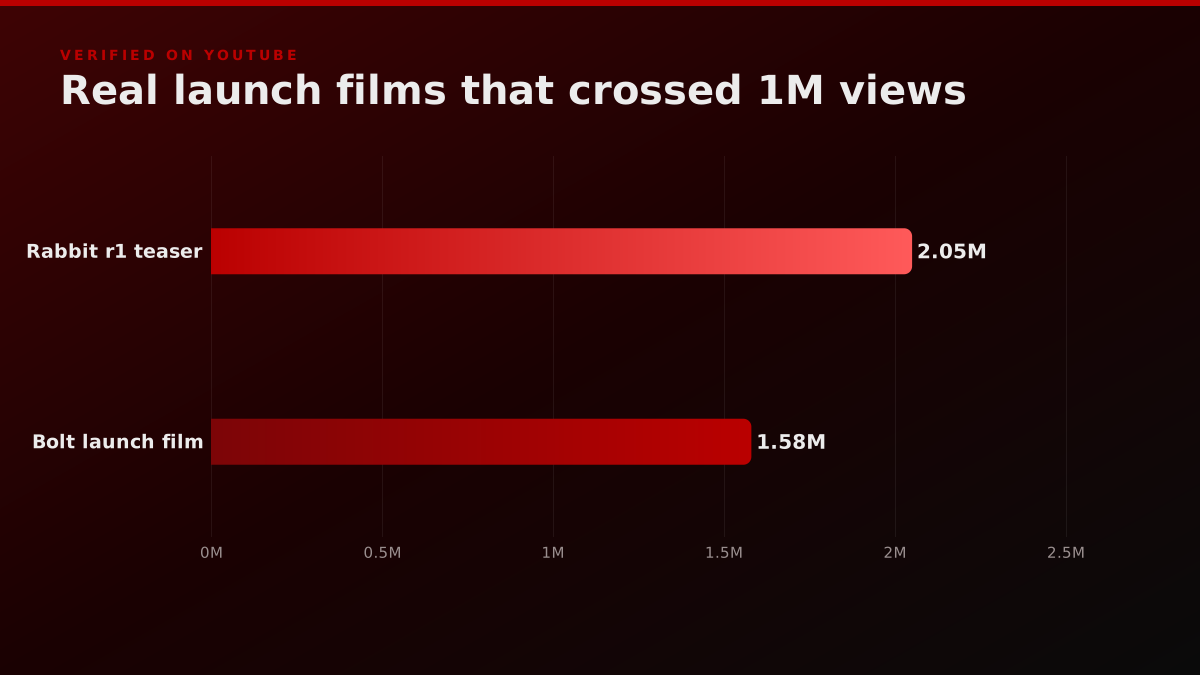
The X-native founder launches tell the same story with bigger numbers, though the numbers there deserve a caveat. The r/SaaS teardown catalogued a run of them: a Replit animation feature launch that saw 7.1 million views, a Contra payments launch that pulled 2.1 million, a giveaway-driven launch that hit 3.7 million. Those figures are the thread's claims, not independently verified here, so treat them as directional rather than gospel. But the pattern the thread describes around them, the hook, the vetted creators, the timed wave, is the same anatomy verified elsewhere, and it lines up exactly with what the real YouTube numbers show.
Real launch videos and where the reach came from
| Launch video | Reported views | Platform | What drove the reach |
|---|---|---|---|
| Rabbit r1 teaser | 2.05 million | YouTube | Keynote hype wave plus a one-line teaser hook |
| Bolt launch film | 1.58 million | YouTube | Brand campaign plus paid amplification |
| Replit animation feature | 7.1 million | X | Founder post plus targeted creator wave |
| Contra payments launch | 2.1 million | X | Founder flex hook plus influencer re-shares |
Rabbit and Bolt view counts verified via YouTube on 2026-07-11. The X figures are as catalogued in a cited r/SaaS launch teardown, not independently verified here. Treat the X numbers as the thread's claims.
A separate founder who analyzed more than 500 startup launch videos landed on a finding that looks like production advice and is actually distribution advice.
I analyzed 500+ Startup launch videos, here's what actually works in 2025
The finding was that of three formats that consistently worked, the human-led one wins on reach.
The talking-head plus motion mix, part human story and part demo, consistently gets the highest view counts.
That format wins not because a face is prettier than animation, but because a real person holds attention through the first seconds, which is exactly the signal the ingestion gate measures. The cheapest of the three serious formats produces the highest view counts, because it optimizes the one variable that actually moves reach. Production and distribution stop being separate questions right there. The broader benchmarks agree with the direction: Backlinko's video marketing research and Sprout Social's video data both find short-form video is the format audiences engage with most, and Buffer's video marketing guide notes native video consistently out-reaches shared links. When the whole field agrees the format works, the edge is never the film, it is the reach.
How much of a 1M-view launch is organic versus manufactured?
It is manufactured at the start and organic at the finish, and the manufactured start is what buys the organic finish. The first hour is engineered on purpose: the founder seeds the video to a warm network, primed creators quote-tweet it, the comment section is structured so larger accounts start real discussions early, and everything is timed to spike the velocity signal inside the window the platform is measuring. None of that is fake, but none of it is left to chance either.
Why Some Launch Videos Explode on X (And Others Flop)
Once those early signals clear the gate, control passes to the platform, and the later waves are genuinely organic, because real people who were reached by the manufactured first hour are now sharing the video on their own. So the million is real. The audience is real. What is engineered is the ignition, not the fire. This is the part that offends people who want virality to be pure luck or pure merit, and it is neither. It is a designed early signal that unlocks a genuine later spread.
The practical takeaway is that you cannot skip the manufactured hour and hope merit carries a cold post. A great launch video posted with no seed is a match struck in a vacuum. The same video posted into a coordinated first hour is a match struck in a room full of dry timber. The film is identical. The room is the launch.
What can a launch video not do, no matter how well distributed?
A launch video cannot manufacture a product people want, cannot fix a broken conversion path, and cannot make an audience that has no reason to care suddenly care. Distribution is a multiplier, and a multiplier applied to zero is still zero. If the product has no wedge, the launch video will get watched and then ignored, and the views will convert to nothing. Reach amplifies whatever is underneath it, including a weak underneath.
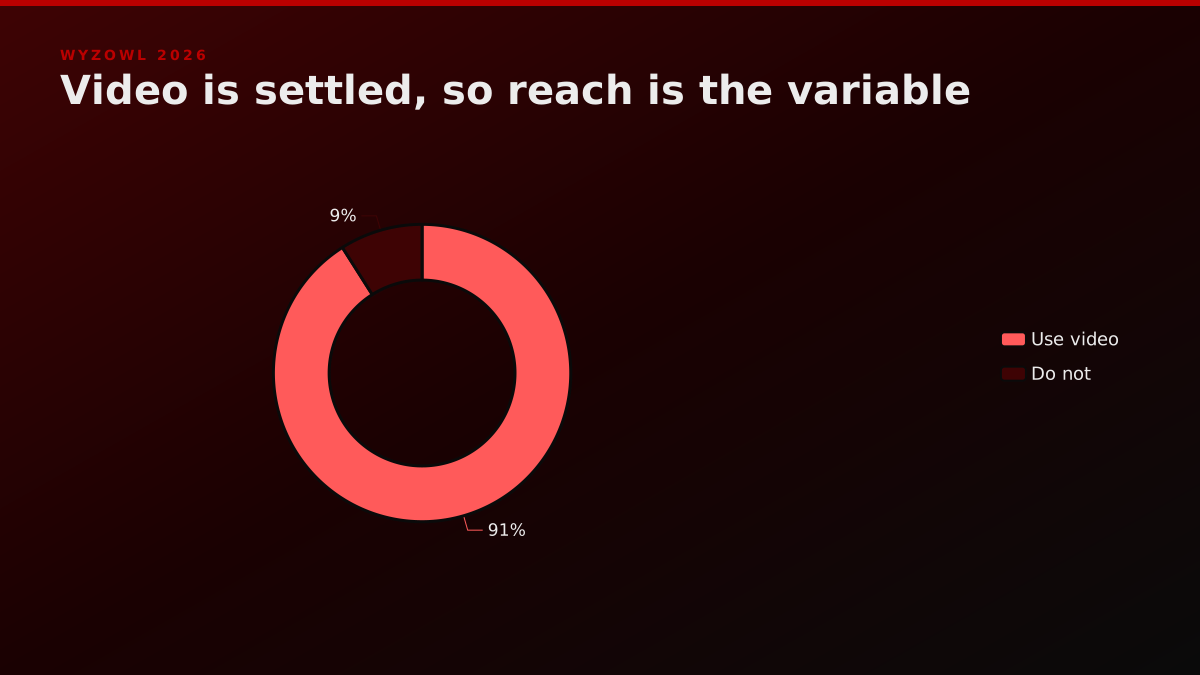
Video works, so reach is the only variable left to compete on
Wyzowl's 2026 research has 91% of businesses now using video as a marketing tool, and buyers keep reporting that video convinces them to buy. When the format is settled and the supply of video is this cheap, the film is not what separates a million-view launch from a dead one. Reach is. That is the whole reason a launch video is a distribution problem wearing a production costume.
Source: Wyzowl, via Searchlab Video Marketing Statistics 2026
The macro numbers only sharpen the point. Wyzowl's 2026 research, summarized in Searchlab's roundup, has 91% of businesses now using video as a marketing tool, so the format itself is no longer a differentiator [Source: Wyzowl 2026]. Wyzowl's own video marketing statistics add that most buyers say a video has convinced them to purchase, so the demand for video is not the question. At the same time, HubSpot's 2026 State of Video data shows spending intentions cooling, with 40% of teams planning to spend more this year, down from 57% in 2023 [Source: HubSpot 2026]. Read those two together and the strategic picture is unambiguous: everyone has the film, the budgets are tightening, and the launches that win will not be the ones that spent the most on production. They will be the ones that got the most genuine reach per dollar, which is a distribution problem every time. A launch video cannot rescue a team that spends its whole shrinking budget on the asset and none on the wave.
It also cannot make every launch worth a seven-figure push. Some launches are internal, or B2B into a tiny named market, or aimed at a funnel you already drive traffic into, and for those a quiet, cheap explainer that converts an audience that already arrived is the correct call, with no wave at all. The mistake is running a distribution-heavy playbook when your actual job is conversion, or running a conversion-only playbook when your actual job is winning new attention. Match the machine to the job. The launch video readiness checklist exists precisely to force that decision before the shoot, and modeling the whole picture with the CPQV calculator keeps the spend honest.
And it cannot survive being handed off with no owner. The recurring failure mode is a founder who commissions the film, approves it, and assumes the views are included, when reach was never anyone's job. The moment distribution is unowned, the launch reverts to hoping the algorithm is kind, and the algorithm is not kind to unseeded video.
How does FORKOFF engineer a launch video to cross a million views?
FORKOFF runs the film and the distribution as one system, on the outcome rather than a production day rate, which is the structural opposite of how a production shop sells. Most vendors quote the film and stop. FORKOFF designs the hook first, shoots the video native to the feed it will live in, seeds it through the right accounts, places it with creators whose followers are the real buyers, cuts it into platform-native short-form, and puts paid behind the cuts already winning. The distribution side is not a claim, it is infrastructure, backed by a clipping network that has processed 5B+ views.
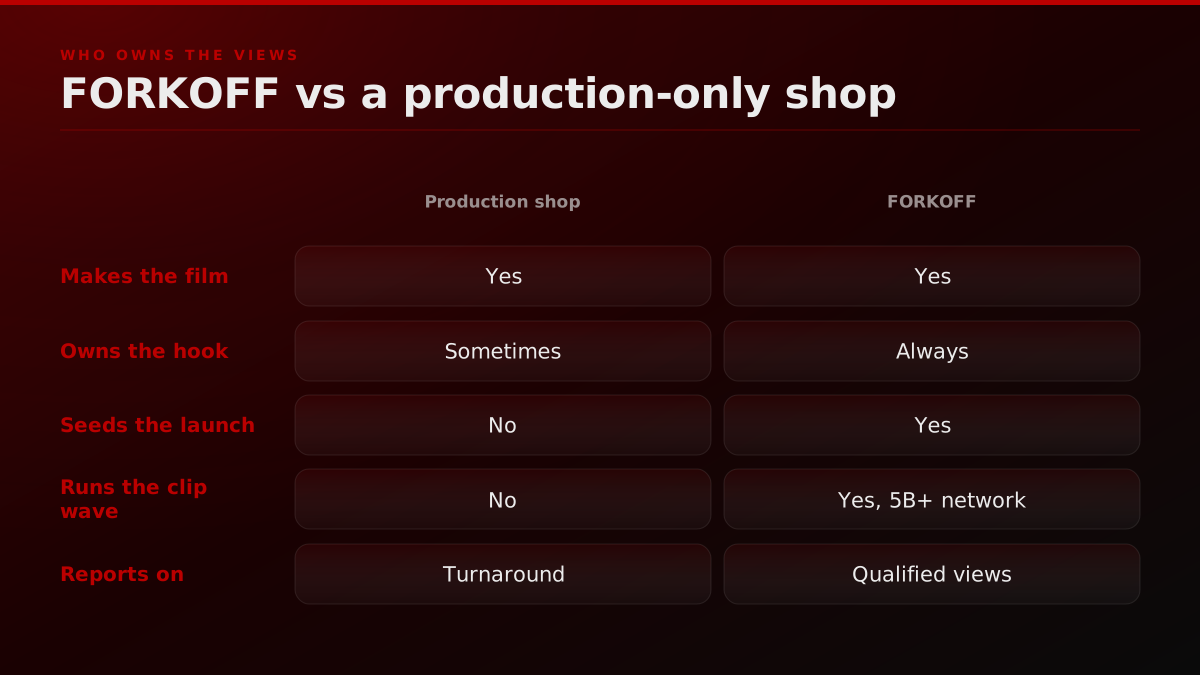
Operator noteQualified views, not raw view counters, are what FORKOFF reports on a launch. A view that could never buy is not an outcome., FORKOFF outcome reporting standard
The difference shows up in what gets reported back. A production shop reports turnaround: the video was delivered on time, at spec, at this quality. FORKOFF reports on qualified views, the genuinely watched views from people who could actually buy, which is the only number that ties a launch video to revenue. That reporting line is the honest test of who owns the reach, and it is the axis the best clipping and KOL comparison work is scored on. Judge any launch partner on it: if they cannot map their work to watched views, they are selling you the film and leaving you the reach.
The honest disclosure, because this is published by FORKOFF and you should read it with that in mind: if all you need is a beautiful file and you already own a reliable way to get it watched, a pure production shop is a cleaner and probably cheaper fit, and you should hire one. The case for a distribution partner holds only when reach is the thing you are actually short on. For most launches meant to win new attention it is, which is the whole reason the production-only market leaves its buyers with a gorgeous video and four hundred views.
How do you brief a launch video so the million is designed, not hoped for?
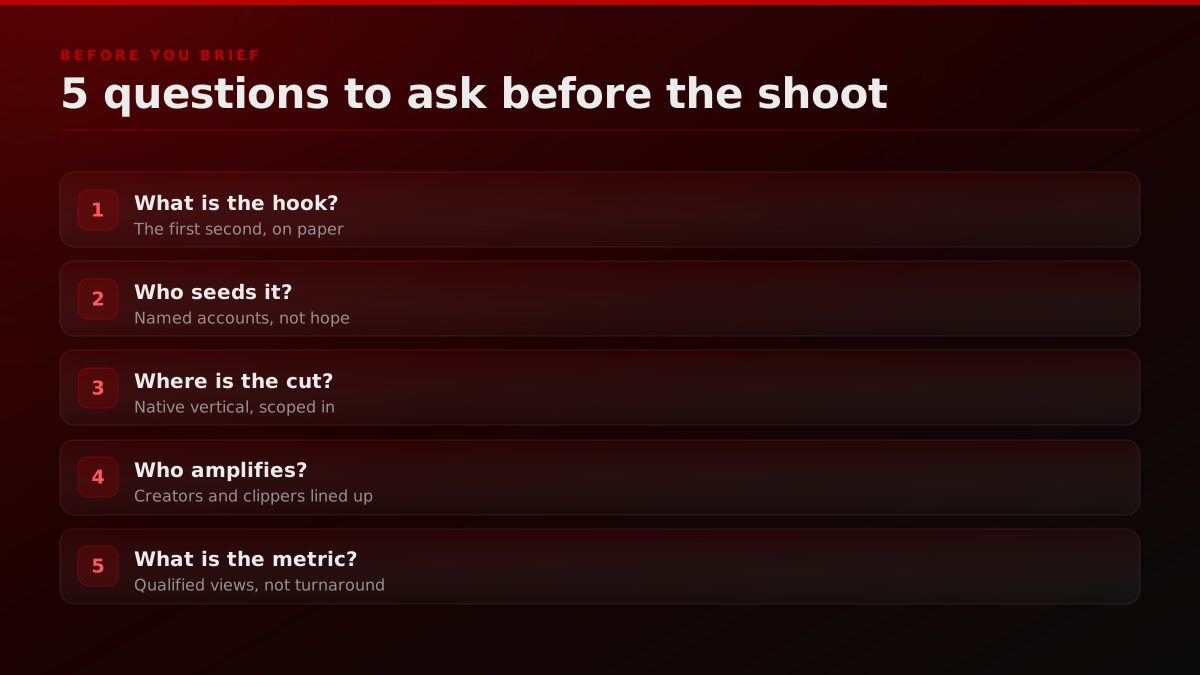
You brief the distribution into the film from the first line, before a single frame is shot, so the video is built around the reach instead of the reach being improvised after delivery. The single biggest predictor of whether a launch video crosses a million views is not the agency or the budget. It is whether the brief treated distribution as a real, funded part of the job. Five questions, asked before the shoot, sort the launches that have a shot from the ones that do not.
Operator noteThe one-line hook, written as the literal first second, is the first thing locked in a FORKOFF launch brief, before script or shoot., FORKOFF product launch video briefs, 2026
First, what is the hook, written on paper as the literal first second of the video. If you cannot state it in one line, the video does not have one yet. Second, who seeds it, named accounts and creators lined up before the shoot, not a hope that the post finds an audience. Third, where is the cut, the native vertical version scoped into the production from the start rather than cropped from a widescreen hero later. Fourth, who amplifies, the creators and clippers who will carry the wave after the founder's post peaks. Fifth, what is the metric, qualified views rather than turnaround, agreed before anyone signs. Model the whole thing with the CPQV calculator and the marketing ROI calculator so you walk into the launch comparing outcomes, not day rates.
The verdict: engineer the distribution, not just the film
The right way to think about a launch video in 2026 is as ammunition for a distribution machine, not as the machine itself. The film clears a quality floor and then hands off to the sequence that actually decides the view count: the hook that clears the first second, the seed that clears the first hour, and the wave that compounds the rest. A 1M-view launch video is not a better film than a four-hundred-view one. It is the same film with a machine behind it, and the machine is buildable.
OpenAI's Sora crossed 1 million downloads in under 5 days, faster than any consumer app in company history, and was discontinued 6 months later; the full public-data breakdown of that arc is the anatomy of a 1M number that had no machine behind it once the model itself stopped being news.
So when you plan a launch, spend the planning where the views actually come from. Write the hook before the script. Line up the seed before the shoot. Scope the cuts into the production. Fund the amplification as its own line. And judge the whole thing on qualified views, because a video that reaches the right hundred thousand people is worth vastly more than one that reaches four hundred, even if the second one looks more expensive. Production is close to solved. Distribution is the anatomy that decides the number, and when you want the film and the wave designed and costed together rather than sold as separate halves, talk to us or book a call and we will map the hook, the seed, and the wave before you spend a dollar on the shoot.
9 days until the pixels reveal.
rabbit
Rabbit's r1 teaser, a one-line launch video that crossed 2.05 million views on YouTube. The film is almost nothing. The launch machine around it, the keynote, the seeding, the reaction wave, is everything.