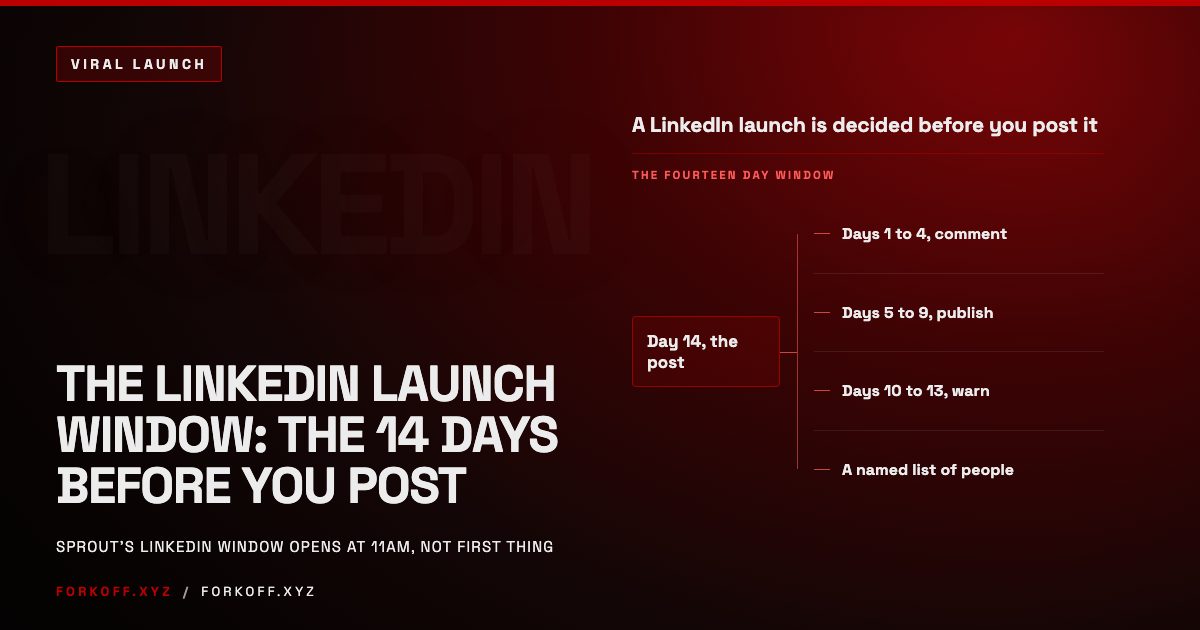
A launch video in 2026 is two jobs wearing one name. The first job, production, is making the file, and it has become cheap and close to solved. The second job, distribution, is getting the file watched by the right people, and it has become the scarce, expensive, outcome-defining half. Almost every guide, every agency quote, and every founder budget treats the first job as the whole thing. That is the mistake this playbook exists to fix, and running an online product launch that is not a webinar is the live-format version of the same fix. On LinkedIn specifically, most of that distribution work happens before the file is even finished, which is the subject of the LinkedIn launch window.
The short version
A launch video in 2026 is two jobs wearing one name. Production, making the file, is close to solved and cheap: agencies list AI explainers from $99 and Wyzowl reports 91% of businesses now use video. Distribution, getting it watched, is the scarce and expensive half, and it is the one that decides ROI. Wistia's 2026 State of Video found 57% of teams spend more time creating video than promoting it and only 20% the reverse, which is the launch mistake in one statistic. This playbook defines what a launch video actually does, the formats that work, how the videos that cross big view counts are engineered through hook, wave-ride, and a distribution stack, what both halves cost, and the production-plus-distribution system behind the ones that go viral. The distribution benchmark under it is the FORKOFF clipping network, which has processed 5B+ views.
If you searched for how to make a launch video, you probably found a hundred pages about cameras, animation styles, scripts, and price tiers. Useful, but all of it answers one half of the question. None of it tells you the part that actually decides whether your launch lands: how the video reaches a person who could buy, at a moment they are paying attention. That omission is not an accident. The pages ranking for launch-video terms are written by production studios, and production is the only half they sell.
This is the playbook for both halves. It defines what a launch video actually is and does, why production stopped being the hard part, why distribution is now the whole game, the formats that work in 2026, how the launch videos that cross big view counts are actually engineered, what each half costs, and the production-plus-distribution stack behind the ones that go viral. The number that frames all of it is a reach number, not a production one. The FORKOFF clipping network has processed 5B+ views moving short-form content across platforms. No production cost page carries a figure like that, because production vendors measure turnaround, not reach.
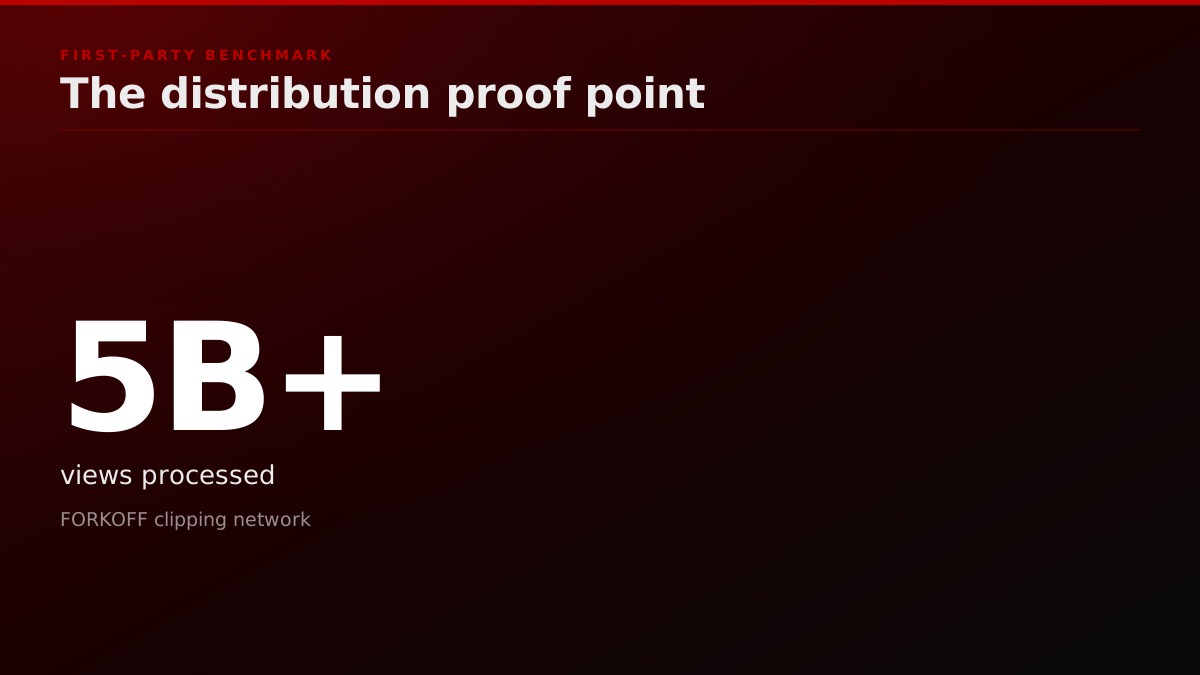
Operator note5B+ views processed through the FORKOFF clipping network is the reach baseline every plan in this playbook is scoped against.
What a launch video actually is, and what it does
A launch video is a short film made to introduce a product at a moment when attention is briefly available: a public launch, a funding announcement, a Product Hunt day, a big feature drop. Strip away the aesthetics and its job is not to be beautiful. Its job is to do four specific things, fast, in front of the right person. It has to stop the scroll in the first seconds, land what the product is and why it matters, earn enough trust that a stranger believes the thing is real, and then move that viewer somewhere with intent.
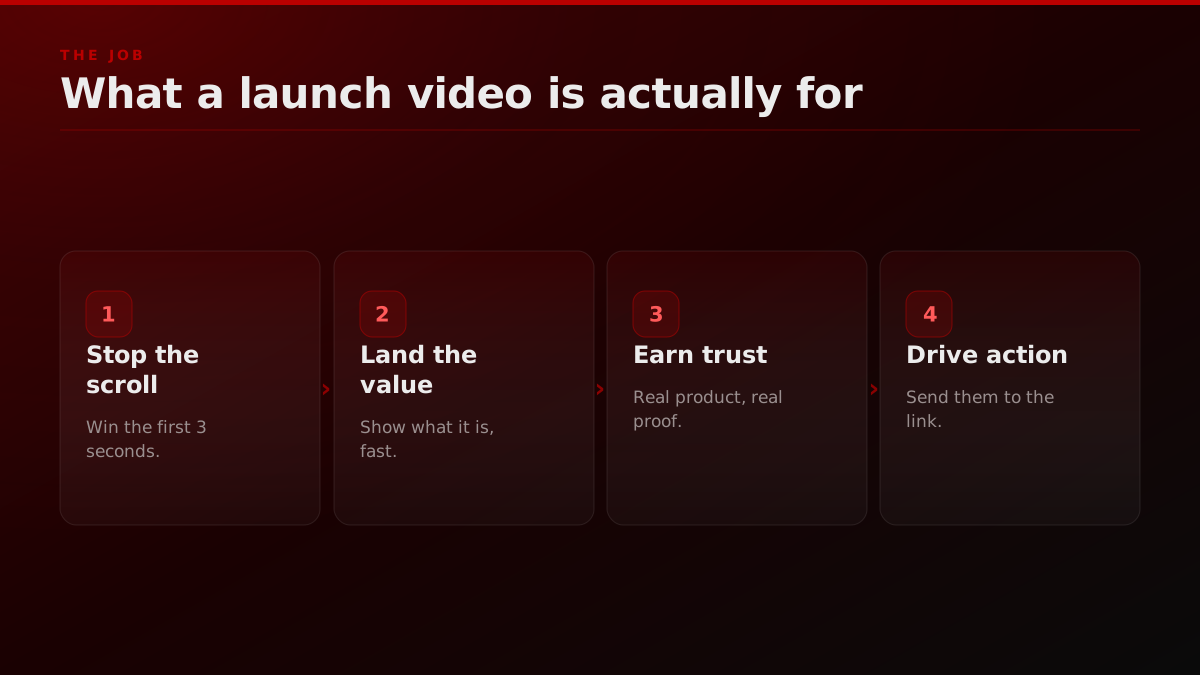
Read those four jobs again and notice what is missing. Not one of them is about how much the video cost to make. A founder-shot demo on a phone can do all four. A studio film that cost roughly $40,000 can fail all four if it opens slow, buries the value, and never reaches anyone. The format is a means to reach and action, never a trophy on a shelf. This is why the sharpest founders stopped asking what their launch video should cost and started asking what it needs to do, and to whom. The product launch video service at FORKOFF is built around those four jobs rather than around a production day rate, because the day rate was never the thing that decided the launch.
It helps to be precise about what counts as a launch video, because the word covers several different moments and each one asks something slightly different of the film. A product launch video introduces a new product or a company to a cold audience, and its whole burden is comprehension and reach at once. A funding-announcement video rides an existing news moment, so its job leans on credibility and timing more than pure explanation. A feature-launch video speaks mostly to people who already know the product, so it can assume context and move faster. A rebrand or repositioning film is the rarest and the most about tone. The mechanics in this playbook apply to all of them, but the mix shifts: a cold product launch needs the most distribution muscle, because it is starting from zero attention, while a feature drop can lean harder on an audience you already own. Naming your actual moment before you brief anything is the cheapest decision you will make and one of the most consequential. It is also the framing Y Combinator's startup library returns to again and again in its launch advice: the hard part was never making the thing, it was getting it in front of the people who would use it.
The confusion about cost is understandable. For years, making a competent video genuinely was hard and expensive, so it made sense to treat production as the whole project. That world is gone. Understanding why it is gone is the first move in the playbook, and it changes where every dollar should go.
The two halves of every launch video
Every launch video has two price tags and two jobs, and they have moved in opposite directions. Production has gotten dramatically cheaper and faster, because AI tooling, template motion libraries, and a generation of fluent editors collapsed the cost of clean output. What did not get cheaper is the one shot that has to contain your actual interface, which is why AI generators handle everything except the product itself. Distribution has gotten harder, because more video is being published than ever into the same finite pool of attention. When the supply of a thing explodes and demand for attention stays flat, the scarce resource is not the thing you make. It is the eyeballs you reach.
The two jobs inside one launch video
| Question | Production answer | Distribution answer |
|---|---|---|
| What does it cost? | $99 to $50,000-plus, widely published | $0 to ongoing media spend, rarely quoted |
| Is it scarce in 2026? | No, AI and freelancers made it cheap | Yes, attention is the bottleneck |
| What decides ROI? | Marginal past a quality floor | Almost everything |
| Who sells it to you? | Every agency on page one | Almost nobody |
The cost guides answer the left column and stop. This playbook is about the right column.
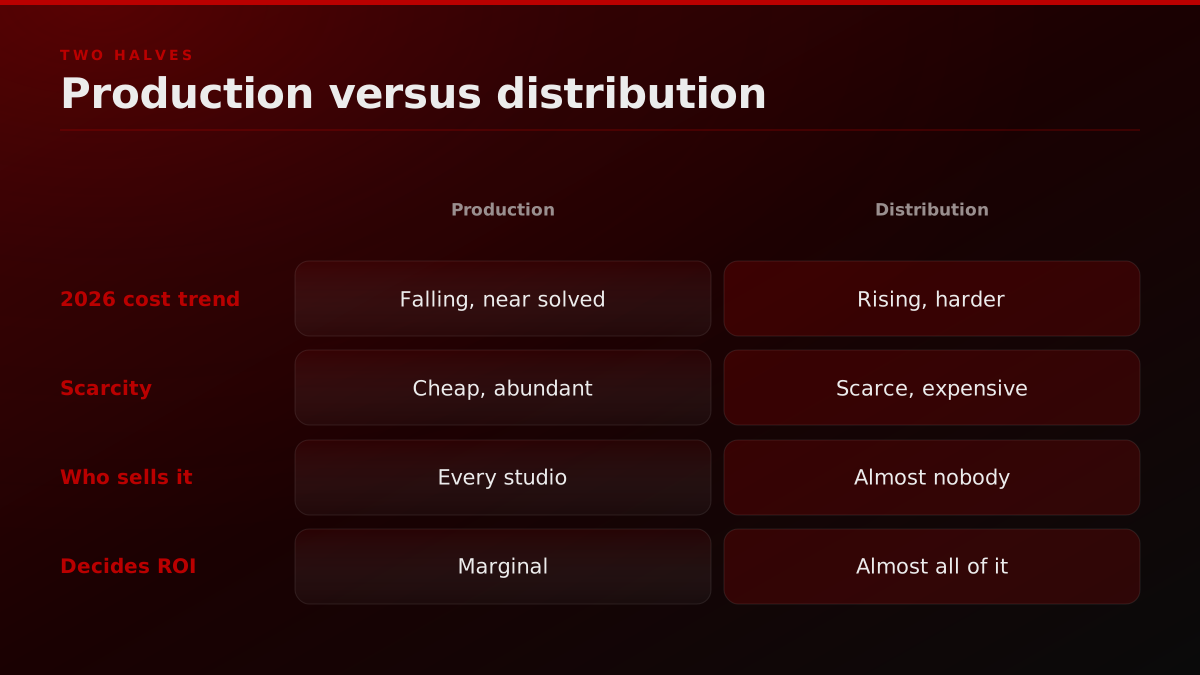
Hold both halves at once and the standard cost guide starts to look like a menu with prices but no portion sizes. It tells you a steak is forty dollars without saying whether it feeds one person or a table. The production number, alone, tells you what the file costs. It tells you nothing about whether the file will reach a single buyer. That gap is where launches die, and it is the gap the launch video cost breakdown and the startup launch video distribution gap pieces map in detail. The rest of this playbook lives in the right column of that comparison, because the left column is already solved.
Picture the split with real numbers. Two founders each have $10,000 for their launch. The first founder spends all of it on a polished studio video and has nothing left for reach, so the film goes live to a few hundred views and dies quietly in the feed the same week. The second founder spends roughly $2,000 on a sharp founder-shot video and $8,000 on distribution: native cuts, two creator placements, and paid budget behind the clips that earn watch time. The second founder reaches a hundred times the audience with a video that is eighty percent as polished, and wins the launch. It is not close. Eighty percent of the polish reaching a hundred times the audience beats a hundred percent of the polish reaching almost no one. The arithmetic only looks surprising if you are still anchored on production as the thing that decides outcomes, which is exactly the anchor the cost guides install and never remove.
The deeper reason the two halves get confused is that they feel like one job. You commission a video, you get a video, and it is natural to assume the video is the deliverable. But the deliverable a launch actually needs is not a file, it is watched attention from people who could buy. The file is an input to that, not the output. Once you separate the input from the output in your own head, the budget stops being a single line called the video and becomes two lines, production and distribution, that you fund on purpose and in proportion to what is scarce for you.
Why the production half is close to solved, and cheap
Production has become a template with a price war attached. The published 2026 ranges from real agencies span five tiers, from $0 at the do-it-yourself end to $50,000 and up for a brand-grade launch film, and the floor for good-enough sits far lower than most founders assume. VideoExplainers, in its 2026 explainer video cost breakdown, lists AI-generated videos starting at $99. The table below is the headline shape of it. The tier-by-tier detail, the vendor pages each band is quoted from, and the question of which tier your stage actually needs are all handled in the launch video cost breakdown, which is the piece that owns the cost question. What matters for this playbook is only the direction that range has moved, which is down, and fast, on the half of the job you can see.
The production half, by tier (cited 2026 agency ranges)
| Tier | Typical 2026 price | What it buys | Source signal |
|---|---|---|---|
| AI-generated / DIY | $0 to $500 | AI tool or a founder-shot screen recording | VideoExplainers lists AI videos from $99 |
| Freelancer | $500 to $1,500 | One editor, a simple explainer or short cut | Common freelancer band across agency pages |
| Mid-market studio | $1,500 to $10,000 | Clean product or explainer, full production | Where most funded seed launches land |
| Premium animation | $4,000 to $25,000 per minute | Custom animation, high craft, longer timeline | IdeaRocket per-minute band |
| Brand / launch film | $25,000 to $50,000-plus | Studio launch film, often a three-month build | VideoExplainers custom ceiling |
Ranges are directional 2026 estimates from public agency pricing pages. Every figure is a published vendor band, not a FORKOFF number. Confirm with each vendor before you budget.
Every row there is a published vendor band rather than an estimate, and the pages behind them are worth checking before you budget. YansMedia sets the freelancer band in its video for startups guide. Twine's product launch pricing guide for startups puts full production at $1,500 to $10,000-plus. IdeaRocket quotes premium animation by the finished minute. And Squideo's survey of 45 agencies puts the average 30-second explainer near £2,960, well under what founders tend to brace for. Read the five rows, notice that not one of them buys you a viewer, and move on.
The clearest proof that production is solved is that founders now build launch videos in a weekend with prompts, and the timeline fills with near-identical ones the week a new tool ships.
Javi
@rameerez
I made this product launch video over the weekend with just prompts. It's all vibe coded. There's something you should know, though: like everyone else, a few days ago my timeline started getting full of videos like this when Remotion launched their video tooling.
That is not an outlier, it is the new normal. And when everyone can make the same video, the videos converge. A founder who timed 20 SaaS launch videos scene by scene found they were all built from the same parts.
I went through 20 SaaS launch videos scene by scene. they're all the same video.
they're all basically the same video, using the same 10-scene arc, a 30 to 45 second runtime, same 3 motion rules recycled nearly exactly.
When the output is a 10-scene template that any tool can assemble, production stops being a differentiator. It becomes a commodity input, and commodity inputs compete on price until the price approaches the cost of the tool. Another editor pulled the same thread from the supply side, and found the agency price hard to justify.
agencies charge 5,000 euros and 3 to 5 weeks for a 60-second launch video. I edit videos professionally, so I knew the math did not add up.
None of this means production is worthless. A clean, well-cut video clears the quality floor the platform and the viewer both expect, and clearing that floor matters. The point is narrower and sharper: production is now the cheap, abundant, near-solved half. It is table stakes, not the edge. Spending your energy and your budget optimizing the half that is already solved, while ignoring the half that decides the outcome, is the single most common launch-video error, and it is the one the cost guides quietly reinforce.
The formats that actually work in 2026
The format that works is the one built natively for the feed it will live in, and in 2026 that default is short-form and vertical. This is not an aesthetic preference, it is where attention and the platform reward structure both point. Buffer's short-form video research reports that 85% of marketers call short-form the most effective social format, that 73% of consumers prefer short-form when learning about a product, and that people share videos at roughly twice the rate of other content. Sprout Social's video marketing research points the same way, with short-form leading the formats marketers plan to invest in, and a 2026 roundup from Searchlab collates the same picture across sources: the demand for video is broad, settled, and tilting toward short-form. A launch video cut for the feed rides those numbers. A launch video cropped from a website hero fights them.
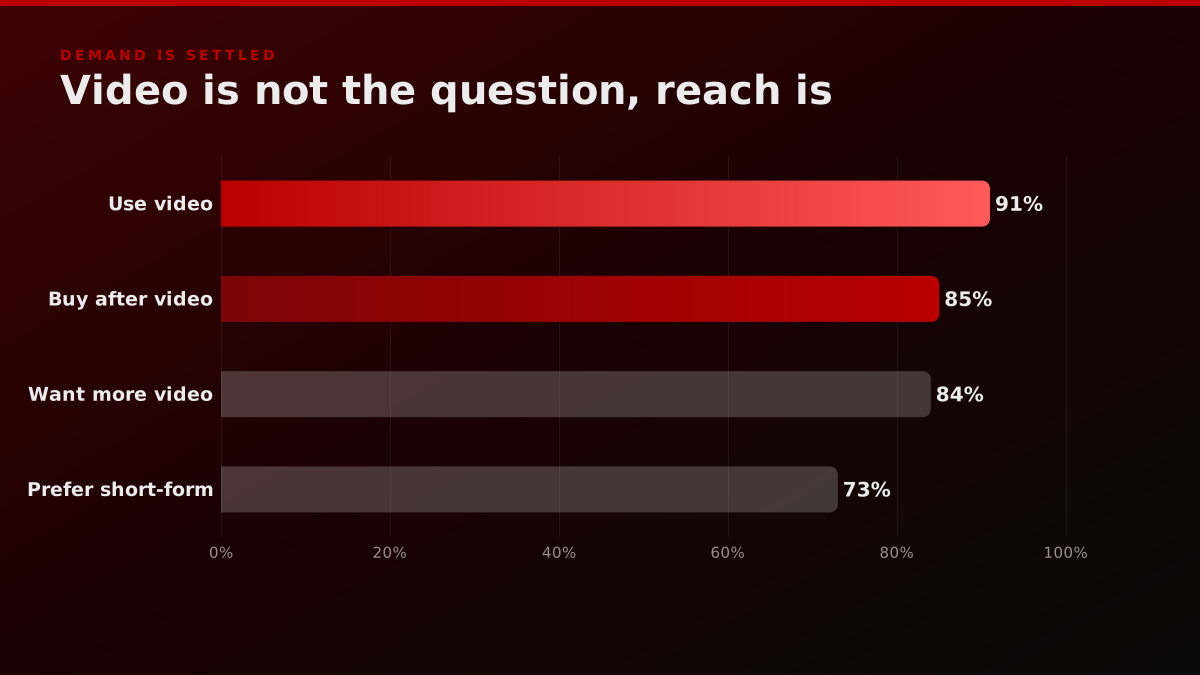
The demand for video itself is not in question, which is exactly why format and reach are the variables. Wyzowl's 2026 statistics put 91% of businesses using video, 85% of people saying a video has convinced them to buy, and 84% wanting more video from brands. When the appetite is that settled and the supply is that cheap, the winners are decided by which format reaches the right person in the right context.
Demand for video is settled, which is exactly why reach is the variable
Wyzowl's 2026 research reports 91% of businesses now use video as a marketing tool, 85% of people say a video has convinced them to buy, and 84% want to see more video from brands. When the demand-side case is this settled and the supply of video is this cheap, the only thing left to compete on is whether your video reaches the right person at the right moment. The asset is not the edge. The reach is.
Source: Wyzowl, 2026 Video Marketing Statistics
The demand-side survey numbers behind the format call
| Statistic | Number | Source |
|---|---|---|
| Businesses using video as a marketing tool | 91% | Wyzowl 2026 |
| Convinced to buy by watching a video | 85% | Wyzowl 2026 |
| Consumers who want to see more video from brands | 84% | Wyzowl 2026 |
| Say 30s to 2 minutes is the best video length | 71% | Wyzowl 2026 |
| Prefer a short video to learn, vs 12% for text | 63% | Wyzowl 2026 |
| Marketers rating short-form most effective | 85% | Buffer research roundup |
| Consumers preferring short-form to learn | 73% | Buffer research roundup |
Every row is a published survey figure from the linked Wyzowl and Buffer research pages. The demand side is settled; the open variable is reach.
In practice, three formats carry most launches. The first is the founder-shot demo or screen recording, which trades polish for authenticity and often wins because it reads as real, not staged. The second is the native short-form clip, 9
, fifteen to forty seconds, engineered to land its point before a thumb can swipe. The third is the hero film, a longer flagship piece, but the ones that work are shot so a vertical cut is first-class from the storyboard, not cropped in as an afterthought. The rule underneath all three is the same: design for the moment and the platform, not for a showreel. Which of the three to lead with also depends on where you are in the launch, a call the breakdown of teaser versus trailer versus sizzle reel walks stage by stage. A good reference for how founders make these on a shoestring is the AI product-video walkthrough below.Short and early is what the audience itself asks for
Wyzowl's 2026 research finds 71% of people say videos between 30 seconds and 2 minutes are the most effective length, and 63% would most like to learn about a product through a short video, comfortably beating text articles at 12%. Buffer's research roundup adds that people share videos at twice the rate of other content formats. Length and format are not taste decisions, they are distribution decisions: the audience has already voted for short, and sharing is the free half of reach.
Source: Wyzowl 2026 Video Marketing Statistics; Buffer short-form video research
How to Create Viral Product Videos Using AI
Website Learners
A walkthrough of making viral product videos with AI. The throughline matches this playbook: the making is the cheap, solved part, and the work is engineering the reach.
Which platform gets which cut
One launch video is really a family of cuts, because each platform rewards a different shape, and a cut that wins on one feed gets throttled on another. The single biggest production-for-distribution decision is planning those cuts before the shoot, not cropping them out of a hero film afterward. Here is how the surfaces differ in practice.
On TikTok and Instagram Reels, the winning cut is vertical, fast, and native, fifteen to thirty seconds, with the value landed in the first two, and it should look like it belongs in the feed rather than like an ad dropped into it. On YouTube Shorts, the same vertical cut works, but the audience skews slightly more intent-driven, so a clear payoff and a reason to click through to a longer video helps. On X, motion in the first frame and a strong opening line of accompanying text carry the video, because a large share of the feed autoplays muted, and the launch conversation often lives in the replies and quote tweets rather than the post itself. On LinkedIn, a slightly slower, more explanatory cut with captions works, because the audience is professional and often watching without sound in a work context, and getting that cut distributed is a separate problem covered in going viral on LinkedIn without engagement pods. On YouTube long-form, a hero film or a real demo can run for minutes, because the viewer arrived to watch, not to scroll. And on Product Hunt and a launch page, the video is a conversion asset for people who already clicked, so it can assume interest and focus on showing the product working.
One founder's first three hours, platform by platform (self-reported)
| Platform | First-3-hours result | The read |
|---|---|---|
| Instagram Reels | 261 views, 7-second average watch time | Organic reach, above their cold benchmark |
| 246 views, 89 three-second plays | Organic distribution without any prompting | |
| TikTok | 56 views at 12% retention | Hook missed the format, drop at 2 seconds |
| X | 6 plays and 1 reply | Cold account, no warm-up, no seed audience |
Self-reported data from a founder's five-platform launch post on r/buildinpublic, April 2026. One video, five feeds, four different verdicts, exactly the per-platform gate this playbook describes.
TikTok retention at 12% confirms the video wasn't built for that format.
The practical rule is to shoot once and cut many, with the vertical short as the primary format and the longer pieces derived from the same footage. That is a production decision made entirely for distribution reasons, and it is the seam where the two halves have to be designed together. A team that owns both the film and the views storyboards the vertical cut first and treats the hero film as the derivative, which is the opposite of how a production-only shop works, because a production-only shop is optimizing for the reel it will show its next client, not for the feed your launch actually lives in.
Why distribution is the scarce half that decides ROI
Distribution is scarce because it does not scale with the length of a file, it scales with the size of the audience you are trying to reach, which is specific to your launch and hard to publish a price for. So the cost guides skip it, and founders discover the bill the hard way, after the video is made and the views never come. The data on where teams actually put their effort is blunt, and it is the whole thesis in one statistic.
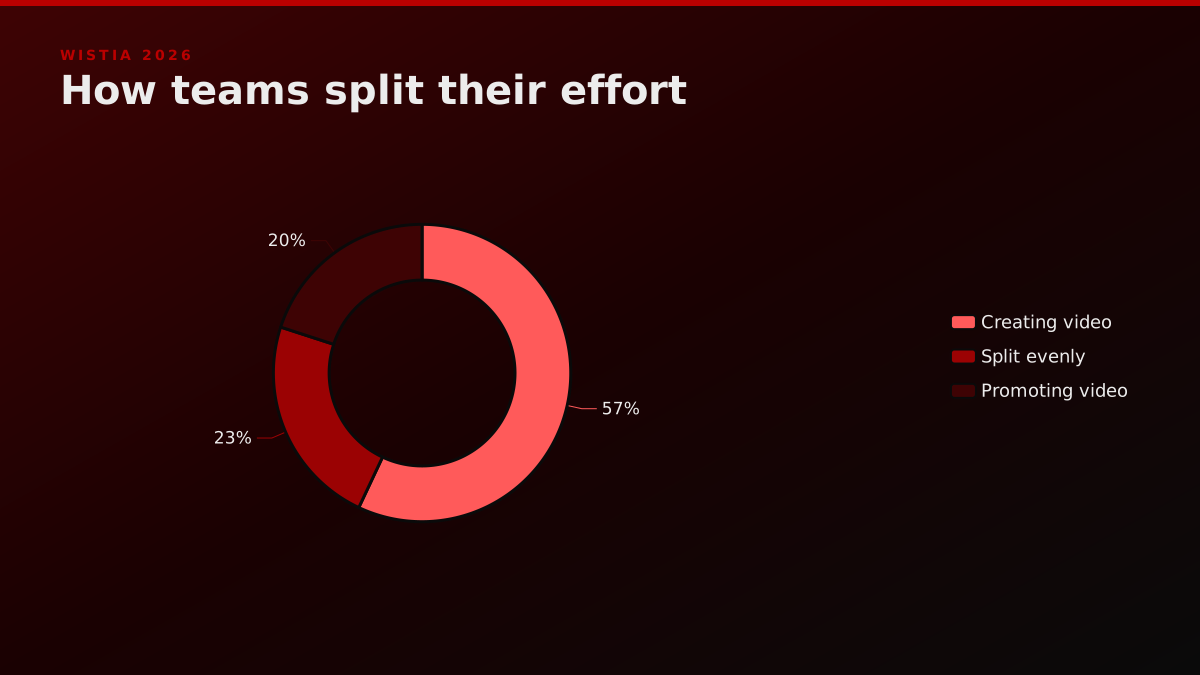
Wistia's 2026 State of Video, built on a survey of more than 900 professionals plus an analysis of over 13 million videos and 79 million hours of viewing data, found that 57% of teams spend more time creating videos than promoting them, while only 20% spend more time promoting and 23% split it evenly (Wistia State of Video 2026). That is the launch mistake of the entire category, restated as data. The effort, and the money that follows the effort, pools on the side of the ledger that has become cheap, and starves the side that decides outcomes.
Teams spend more time making video than moving it
Wistia's 2026 State of Video, built on a survey of more than 900 professionals and an analysis of over 13 million videos and 79 million hours of viewing data, found that 57% of teams spend more time creating videos than promoting them. Only 20% spend more time promoting, and 23% split the two evenly. That single split is the launch mistake the whole category makes, restated as data: most of the effort, and the money that follows it, pools on the asset and starves the reach.
Source: Wistia, State of Video Report 2026
The reframe is simple and it changes the budget. The honest question is not how much the video costs, it is how much a watched video costs. Asking what a launch video costs in 2026 is like asking what a printing press costs when the real constraint is whether anyone reads the page. Once you price the watched view instead of the file, distribution stops being an afterthought and becomes the line item the whole launch turns on. This is the exact argument the three-ring distribution model formalizes and the launch video readiness checklist turns into a pre-launch gate.
A bad video with perfect distribution will outperform a great video with no distribution every single time.
The clearest way to see why distribution is scarce is to notice who sells you each half. Every agency ranking for launch-video terms sells the production half and quotes it to the dollar, because production is a discrete deliverable they can package and price. Almost none of them sell the distribution half, and the few that mention it bolt it on as a vague add-on, because distribution is ongoing, uncertain, and hard to guarantee. So the market supplies production at scale and starves distribution, which is exactly backwards from where the value sits. The scarcity is not an accident of taste. It is the predictable result of a market that rewards packaging the easy half and avoiding the hard one.
The market is quietly repricing distribution upward
HubSpot's State of Video data shows 40% of teams plan to increase overall video spend, down from 57% in 2023, yet 48% of companies plan to increase their video promotion budgets and fewer than 10% are cutting them. Almost 40% of companies spent under $5,000 producing video last year while 41% spent under $20,000 promoting it. Read those lines together: production budgets are flattening while promotion budgets keep rising, which is the market conceding, in dollars, that the file is the cheap half and the reach is the scarce one.
Source: HubSpot, State of Video Marketing data
There is a second reason distribution stays scarce even though everyone technically knows it matters: it is uncomfortable. Production has a clean finish line, the film is done, and it feels like progress. Distribution has no finish line, only a loop that has to be run through the whole launch window, adjusting as the data comes in. Founders and teams gravitate to the task with the satisfying end state and avoid the one that never quite ends, which is another way of restating the Wistia split. The discipline the whole playbook asks for is to resist that gravity, to treat the uncomfortable, unfinished half as the real work, and to fund it accordingly.
Is it worth paying for launch distribution?
Why a $30,000 launch video can still get zero views
Because production quality is not what gates reach. Platforms rank and throttle content at ingestion, before any real audience sees it, on early signals like watch velocity, retention in the first seconds, shares, and saves. A video that does not clear that gate gets quietly capped no matter how beautiful it is. A flawless film at an estimated $30,000 with no distribution plan is shown to a small seed audience, fails the early-signal test or never gets seeded at all, and dies in the feed. A video with zero views did not lose an audience test. It never reached one.
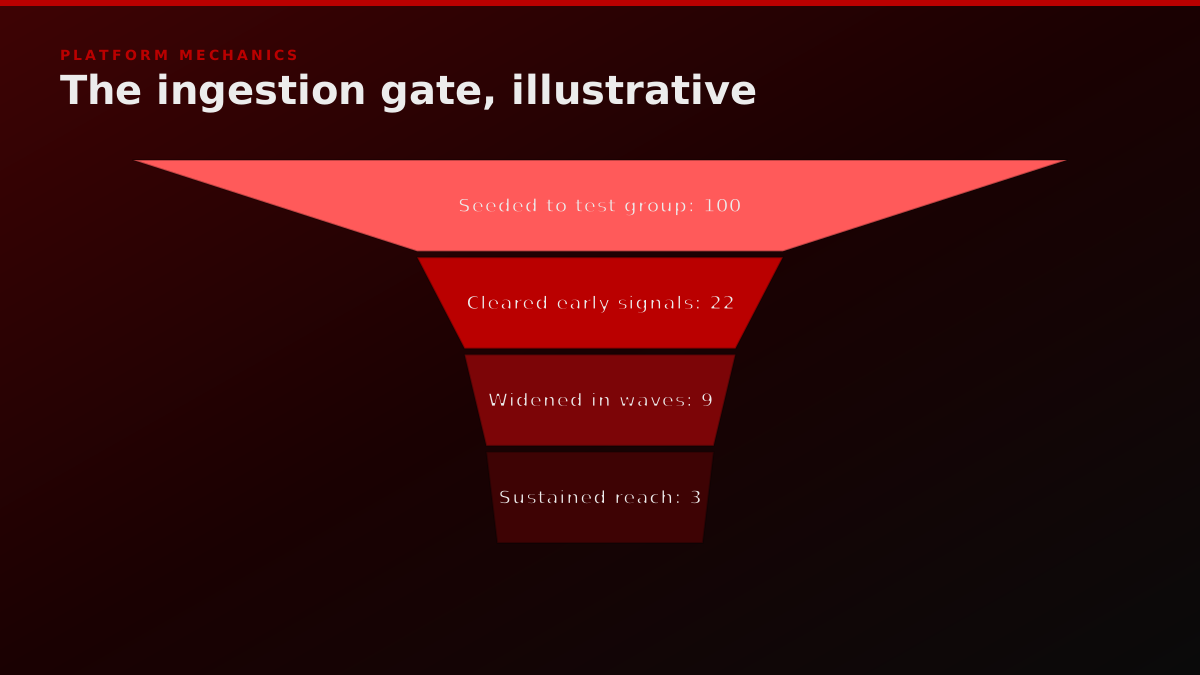
Walk through the gate and the production-only model looks fragile. When a new video goes live, the platform shows it to a small seed group and watches what they do in the first seconds and minutes. Did they keep watching or swipe inside two seconds? Did anyone share, save, or comment? Strong early signals make the platform widen the audience in waves. Weak signals cap the video and it never recovers, no matter how good the back half is. This is why a slow-burn brand film that pays off at ninety seconds dies in the feed while a clip that lands its point in three seconds runs for a week.
A flawless video can still earn zero views
Platforms rank and throttle content at ingestion, before any meaningful audience sees it, on early signals like watch velocity and retention in the first seconds. A launch video with zero views did not lose an audience test, it never reached the test. This is why production quality is not the binding constraint in 2026, and why a budget that is all production and no distribution is a bet against the exact system that decides reach.
Source: Platform distribution mechanics, founder field reports
That mechanic is also why the cut matters as much as the shoot, and why the two have to be designed together. A film shot for a website hero and then cropped to a phone reads as foreign to a vertical feed and gets throttled. A clip built natively for the format clears the same gate and earns reach. When the team making the video is also the team accountable for the views, the shoot gets designed so the vertical cut is first-class instead of a compromise. That is the seam where production and distribution stop being separate jobs, and it is exactly the seam a distribution-only agency, working from a file someone else made, cannot close.
It is worth being concrete about what the seed audience actually is, because the phrase hides the whole mechanism. When you post, the platform does not broadcast to your followers and stop. It shows the video to a small, algorithmically chosen slice, sometimes a few hundred accounts, and it measures their behavior with unforgiving speed. Average watch time, completion rate, the share and save rate, and how fast the first engagements arrive all feed a score. If the score clears a threshold, the platform promotes the video to a larger slice and measures again. Each promotion is another test, and the video either keeps clearing the bar and compounding or fails a round and gets shelved. This is why the first hour is not a warm-up, it is the exam, and why a launch that treats the first hour as a set-and-forget post is failing the exam by default.
The founders who win understand that the seed test is beatable, but only with preparation. You do not clear it by hoping, you clear it by seeding into a receptive audience, by having people ready to engage in the first minutes, and by leading with a cut you already have reason to believe performs. A cold post from an account with no warm audience, no primed early engagers, and an untested hook is walking into the exam having never opened the book. The distribution stack exists to change those odds before the video ever goes live.
How Social Media Algorithms Actually Work (And How to Beat Them)
Kallaway
A 666K-view breakdown of how platform algorithms test and promote content. The ingestion gate this playbook describes, explained from the creator side of the feed.
Winning the first three seconds: the hook
The hook is the whole ballgame, because the first three seconds are what the platform tests and what a scrolling human decides on. Everything downstream, the reach, the wave-ride, the paid amplification, is spending good money to widen the audience for those three seconds. Get them wrong and you are amplifying a video the seed audience already rejected. Get them right and the platform does the widening for free.
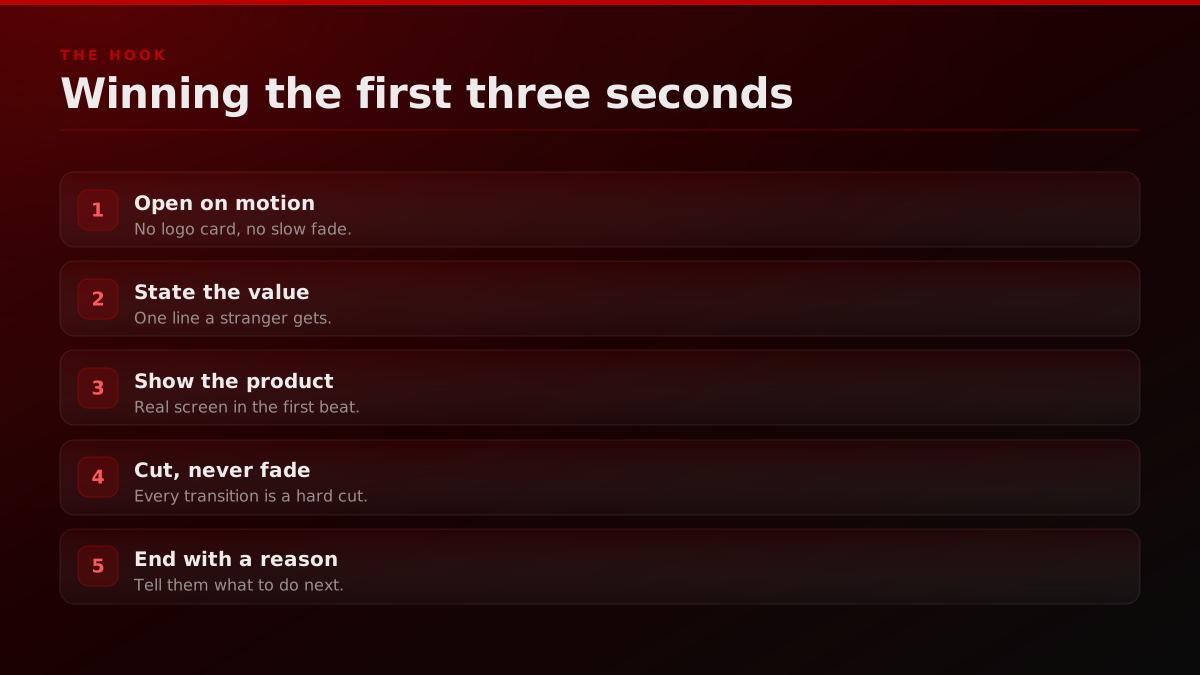
There is a repeatable anatomy to a hook that clears the gate. Open on motion, not a logo card, because a static brand slate is a swipe cue. State the value in one line a stranger understands without context, because a viewer who does not know what they are looking at is already gone. Show the real product in the first beat, because seeing the thing work builds more trust in a second than a voiceover does in ten. Cut, never fade, because hard cuts read as high energy and fades read as slow. And end with a reason to act, so the attention you won converts into a click instead of evaporating. That craft is front-loaded attention engineering, and it is a different skill set than the cinematography most production shops sell. It is the skill the how to get 100k views on a launch video guide breaks down shot by shot.
It helps just as much to know the hooks that fail, because most launch videos fail in the same predictable ways. The logo cold open is the worst offender: three seconds of a brand mark animating in is three seconds the viewer spends deciding to swipe. The slow build is a close second: a cinematic establishing shot that pays off at the thirty-second mark is a bet that the platform will show the thirty-second mark, and it will not, because the first three seconds already lost the test. The context-free clever open, a joke or a visual that only lands if you already know the product, loses the ninety percent of the seed audience who do not. And the muted-video failure is quietly common: a hook that depends entirely on a voiceover dies on every feed that autoplays without sound, which is most of them. Every one of these is a production instinct, an instinct to open like a film, and every one of them is wrong for a feed.
The reason the hook carries this much weight is leverage. A one-percent improvement in three-second retention does not add one percent of views, it compounds through every promotion round, because each round is gated on the same signal. A hook that clears the first test by a wide margin gets promoted to a larger audience, which produces more absolute engagement, which clears the next test, and so on. Small hook improvements produce large reach differences, which is why the teams that obsess over the first three seconds beat the teams that obsess over the last thirty. Spend your best creative energy where the leverage is, and the leverage is at the front.
How the launch videos that cross big view counts actually work
The launch videos that cross big view counts are not the ones with the biggest production budgets, they are the ones engineered around three mechanics: the hook, the wave-ride, and a distribution stack. The hook, covered above, wins the test audience. The other two are what most founders have never seen, because they happen after the video is posted and they are invisible from the outside. From the feed it looks like the video went viral on its own. It did not.
Why videos go viral | Kevin Allocca | TED
TED
YouTube trends lead Kevin Allocca at TED on why videos go viral. The mechanics are social, not cinematic, which is exactly why production spend alone has never bought reach.
The wave-ride is the discipline of watching the early signal and pouring effort into what the platform is already rewarding, instead of guessing in advance. When one cut of a launch starts to move, the team does not sit back, they double down: reply to every early comment to lift engagement velocity, push the winning cut to their other accounts, brief creators to quote it while it is hot, and hold back the paid budget until there is a proven cut to put it behind. A launch is not one video posted once, it is ten cuts posted across a window, with attention and spend reallocated toward the two or three that catch. This is the same reallocation logic the how to go viral on X for 1M views breakdown documents on real launches, the same wave-timed lever in how to make a launch go viral on X, and the same discipline the 13 marketers on their content distribution move piece found nearly all of them converging on.
How do startups get millions of organic views on launch day? (POV of a distribution strategist) I will not promote.
The third mechanic is the stack behind it, which is where a partner earns its fee. A founder alone can run a hook and can, with effort, run a wave-ride. What they cannot easily run is native cutting across five platforms, a roster of creators ready to place the clip, and a paid engine reading first-hour data, all at once, during the seventy-two hours that decide the launch. That is a system, and systems are what convert a good clip into a viral one.
Two more mechanics separate the launches that cross big numbers from the ones that stall, and both happen before the video is even posted. The first is the warm-up. An account that has been quiet for months and then posts a launch video is asking a cold audience to carry it, which is the hardest possible starting position. Accounts that post consistently in the weeks before a launch arrive at launch day with a primed audience, an algorithm that already understands their content, and a pool of people likely to engage in the first minutes. The warm-up is unglamorous and it is one of the highest-leverage things a founder can do, because it changes the composition of the seed audience the platform tests against. The second is the primed early engagement: having real people, a team, a community, a set of friendly creators, ready to watch, comment, and share in the first minutes, so the early-signal test sees strength rather than silence.
The wave-ride itself has texture worth naming. When a cut catches, the launch team does not just watch, they feed it. They reply to early comments to lift engagement velocity, they quote and re-post the winning cut from other accounts to widen its surface, they brief creators to reference it while it is still hot, and they hold the paid budget until there is a proven cut to put behind. If a debate or a strong opinion forms in the replies, they lean into it rather than smoothing it over, because controversy is engagement and engagement is reach. None of this is luck. It is a set of moves run deliberately inside a narrow window, and it is precisely the part that is invisible from the outside, which is why the launches that use it look like they went viral on their own. The how to go viral on X for 1M views breakdown documents these moves on real launches that crossed a million views, and none of them got there on production budget. The public read on which of those launches earned their reach and which bought it lives in RADAR.
It wasn’t a byproduct of the distribution, it was the distribution. Every angry quote tweet carried the video to a new audience for free, and the thing was built so that disagreeing with it in public was the same action as spreading it.
The distribution stack behind a viral launch
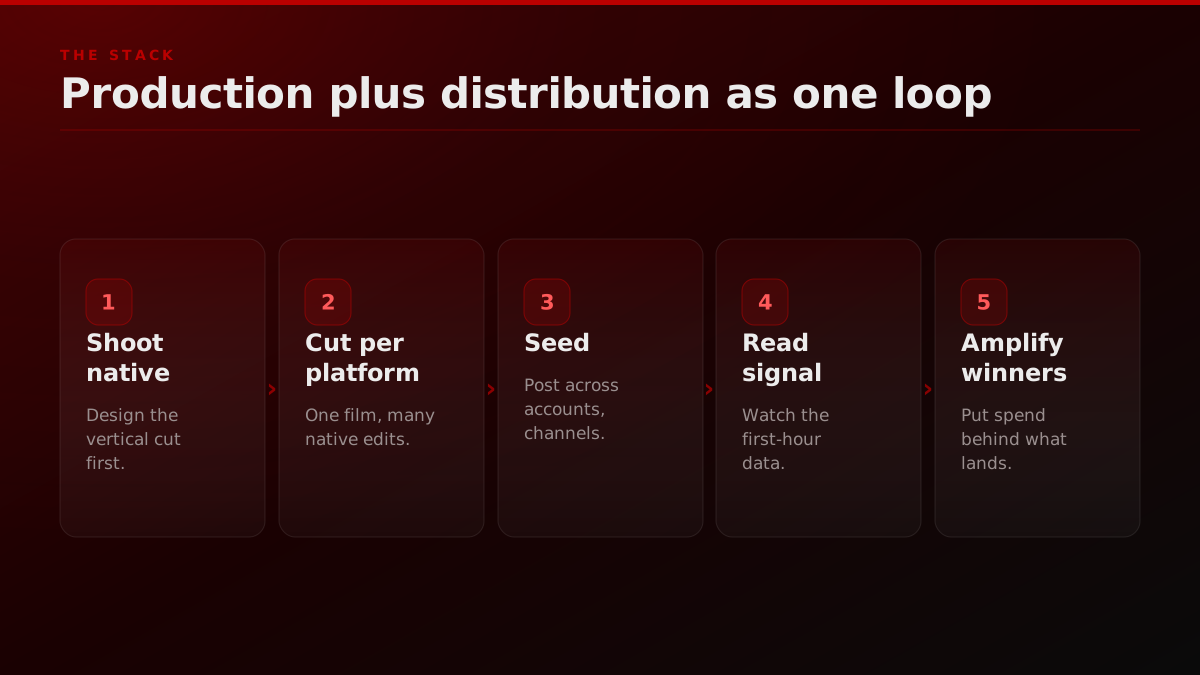
The distribution stack is the machine that reads the platform and feeds it, and it runs as a loop, not a checklist. Shoot native, so the vertical cut exists from the first frame. Cut per platform, so one film becomes many format-correct edits instead of one edit cropped five ways. Seed across accounts and channels, so the video gets a real test rather than dying on one under-followed profile. Read the first-hour signal, so you know which cut the platform is rewarding. Then amplify the winners, putting paid and creator spend behind the cuts that already earn watch time rather than guessing up front.
Operator note10 native cuts per launch is our working floor. One hero file cannot be read ten ways by the platform; ten native cuts can.
Each step in the loop earns its place. Shooting native means designing the vertical, feed-first cut from the storyboard, so the primary format is not a compromise cropped out of a widescreen film. Cutting per platform means turning one shoot into a family of format-correct edits, because the same twenty seconds needs different pacing and different text on TikTok, X, and LinkedIn. Seeding means posting across multiple accounts and channels rather than betting the whole launch on one under-followed profile, so the video gets a real test instead of a rigged one. Reading signal means watching the first-hour data closely enough to know which cut the platform is rewarding, rather than guessing which one you like best. Amplifying winners means putting paid and creator spend behind the cuts that already earn watch time, so the money chases proven signal instead of subsidizing a guess. Miss any one step and the loop leaks: seed too narrowly and nothing gets tested, skip the signal-read and you amplify the wrong cut, forget the native shoot and every cut fights the feed. That loop runs per video; across a launch it repeats over several days, which is why sequencing the launch week as a teaser, then the hero film, then a run of clips out-reaches dropping everything on launch day.
That loop is the difference between buying reach and hoping for it. Run it well and the paid budget chases proven signal, the creator placements land while the clip is hot, and the native cuts clear the ingestion gate that a cropped hero film never would. Run it badly, or not at all, and you are back to a beautiful file with no plan, which is where most launches sit. The clipping service is the engine that runs this loop at scale, and the reddit marketing and founder funnel services cover the adjacent surfaces where launch attention compounds after the first wave.
What a launch video costs in 2026
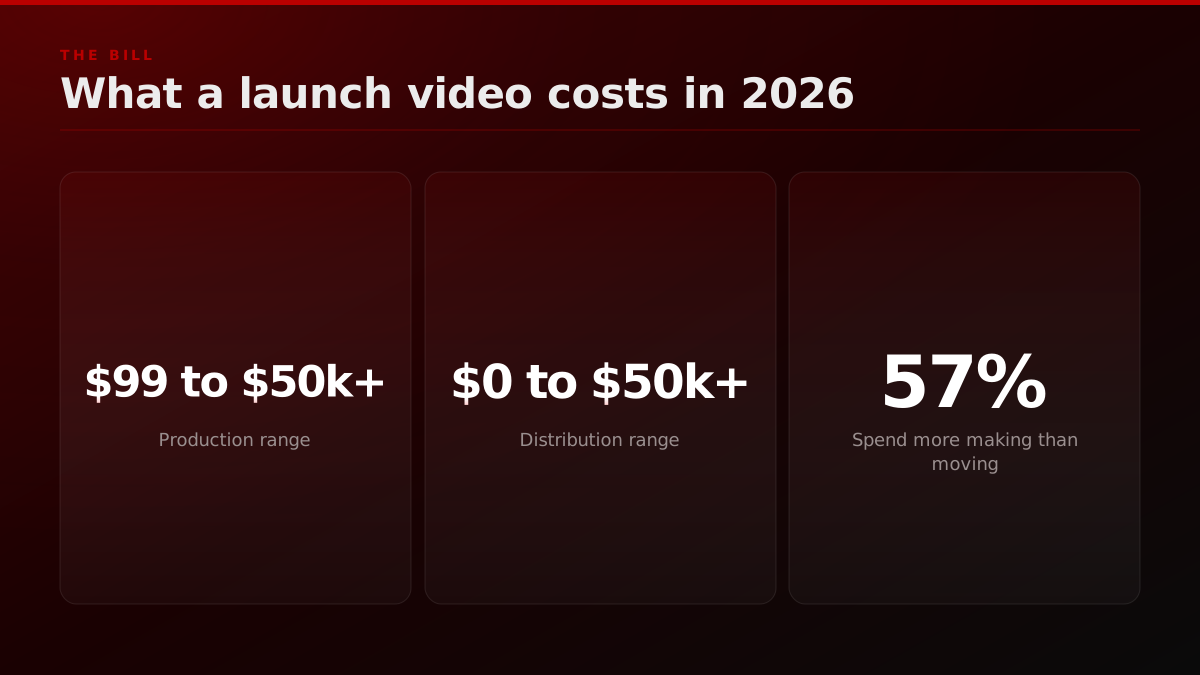
A launch video costs two bills, not one, and only the smaller of them is well documented. Agency pages put the production half between roughly $99 at the AI end and $50,000-plus for a brand-grade studio film. The reach half is the larger and mostly unquoted one, running from nothing but your own hours up to ongoing five-figure media budgets. Every tier, every cited vendor band, and a stage-by-stage view of where the money should sit are broken out in the launch video cost breakdown. What this playbook does with those two ranges is set them beside the effort split, because the shape that falls out of that comparison is the whole argument.
What companies actually spend on each half (HubSpot published data)
| Budget line | Published share | What it says |
|---|---|---|
| Spent under $5,000 on production last year | Almost 40% of companies | The file is cheap for most teams now |
| Spent over $5,000 on production | Just over 30% | Only a minority pays for premium production |
| Spent under $20,000 on promotion in 2025 | 41% of companies | Reach is already a bigger line than the file |
| Spent over $20,000 on promotion | 28% | The serious spend sits on distribution |
| Plan to increase the promotion budget this year | Almost half, at 48% | Fewer than 10% are cutting it |
All rows from HubSpot's State of Video Marketing data. Production budgets flatten while promotion budgets rise, which is the same split this playbook prices.
Work a quick example to see why the combined number is the only one that means anything. Say you spend roughly $5,000 on production and $15,000 on distribution, a $20,000 launch, and it returns 200,000 genuinely watched views from people who match your ICP. That is ten cents per qualified view. Now say a competitor spends $30,000 on a stunning film, nothing on distribution, and it returns 3,000 views because it never cleared the ingestion gate. That is ten dollars per qualified view, a hundred times worse, on a production number that was six times higher. The production-only budget looks premium on the invoice and is catastrophic on the metric that pays your bills. The whole point of pricing the watched view is that it makes this comparison visible, where the day-rate comparison hides it entirely. For real launches that got the second number right, see the ranked teardown of the best product launch videos of 2026.
The reason nobody quotes the second number is structural: the agencies ranking for launch-video terms sell the production half and quote it to the dollar, and almost none of them sell distribution, so they go silent on it. The best video marketing agencies guide scored ten real agencies on exactly this axis and found the same two columns empty every time, none scoped to funded startups, none owning distribution. That is not a coincidence, it is the market structure. The part that photographs well on a portfolio reel gets sold. The part that decides outcomes does not.
How much reach should you buy, and from where?
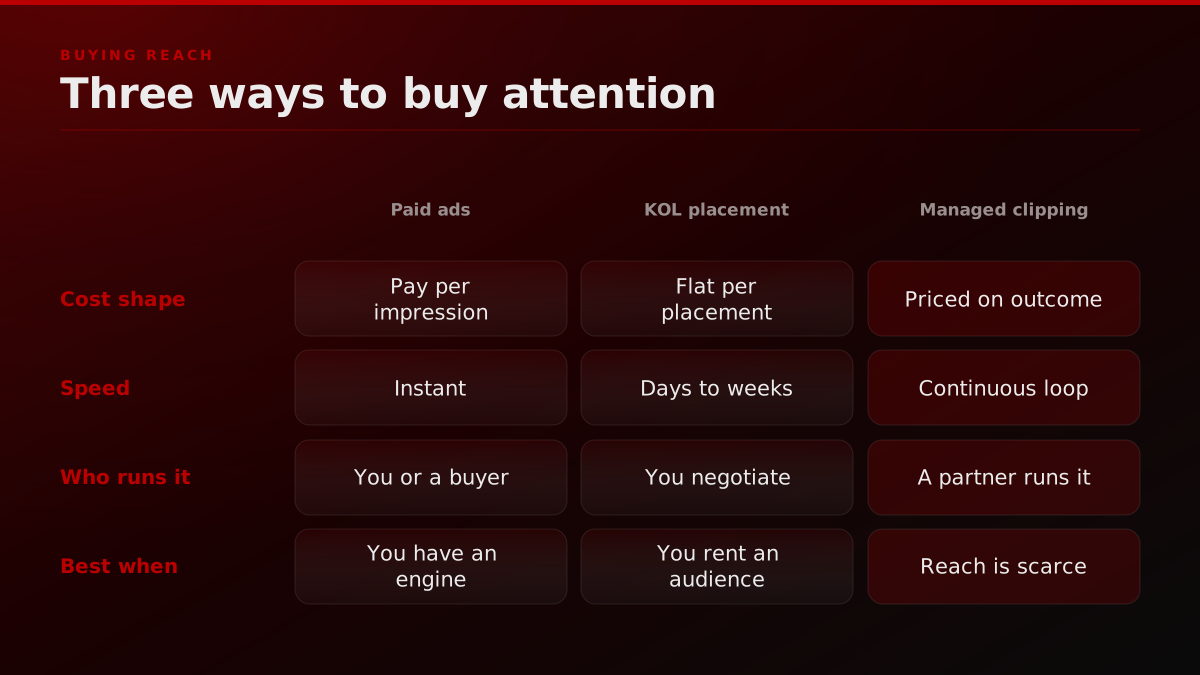
Buy reach in proportion to what is scarce for you, and there are three places to buy it: paid amplification, creator and KOL placement, and managed clipping. Each has a different cost shape, speed, and owner, and the right mix depends on whether your bottleneck is cash, time, or reach itself.
The distribution half, four paths and what each costs
| Distribution path | Rough 2026 cost shape | What you get | Who owns the work |
|---|---|---|---|
| Organic, do it yourself | $0 plus your time | Founder posts, Product Hunt, build in public | You, nights and weekends |
| Paid amplification | $2,000 to $50,000-plus in media | Bought reach against the cuts that earn watch time | You or a media buyer, ongoing |
| KOL / creator placement | $500 to $20,000-plus per placement | The video arrives inside an audience that exists | You source and negotiate, or a partner does |
| Managed clipping / syndication | Outcome-priced or programmatic | Native cuts seeded across platforms | A distribution partner runs the loop |
Distribution cost scales with the audience you are trying to reach, not with the length of the file, so it varies far more than production. Model your own numbers before you sign anything.
If your scarce resource is cash and you have time and a credible on-camera presence, lean organic and use the founder funnel and Twitter marketing playbooks to compound your own reach. If your scarce resource is time and you have budget plus an existing paid engine, lean paid and feed it native cuts. If your scarce resource is reach itself, which for most funded launches is the real answer, a managed partner that owns the loop buys the outcome rather than the inputs. For the creator-placement layer specifically, the KOL marketing service and the KOL rate calculator price and source it, and the best clipping agency and best KOL marketing agency comparisons lay out who does each layer well. Whichever mix you pick, the point is that reach is a line you fund on purpose, not a thing you hope happens.
The economics of the three paths differ in a way that matters once you run the numbers per genuinely watched view. Organic looks free, but it is not: it costs founder time, and it caps out at the reach of your own audience, which for most pre-launch companies is small. Paid buys reach immediately, but you pay for every impression whether it converts attention or not, and you own the strategy, the testing, and the risk of spending behind a cut that never earned its watch time. Managed clipping sits between the two: a partner runs native cuts, seeding, and amplification as a loop, reads the early data, and reallocates toward what is working, so the spend chases signal instead of guessing. On a cost-per-watched-view basis, managed distribution is usually cheaper than naive paid spend and faster than organic done alone, which is why most funded launches that care about the number land on some version of it. The 13 marketers on their content distribution move piece found nearly all of them converging on exactly that third answer.
Common launch video mistakes that kill reach
Most launch videos fail for a small number of repeated reasons, and every one of them is avoidable once named. The first mistake is spending the entire budget on production and leaving distribution at zero, the core error this whole playbook is written against. The second is treating the launch as a single post rather than a window: one video, posted once, with no cuts and no wave-ride, tested exactly once by the algorithm and then abandoned. The third is opening on a logo or a slow build, handing the platform a weak first-three-seconds signal that caps the video before a real audience ever sees it.
The fourth mistake is cropping a widescreen hero film into a vertical cut as an afterthought, so the primary format fights the feed instead of belonging to it. The fifth is launching cold, from an account with no warm-up and no primed early engagers, which stacks the seed test against you before the first view. The sixth is measuring the wrong thing, reporting impressions and turnaround instead of watched minutes and qualified views, so you cannot tell a video that reached buyers from one that reached bots. The seventh is hiring a production shop for a distribution problem, getting a beautiful file, and discovering there was never a plan to put it in front of anyone new. And the eighth is confusing an explainer that lives inside an existing funnel, where distribution is already solved, with a launch video meant to win new attention, where distribution is the whole job.
Read that list and notice the pattern: almost none of the failures are about the film being bad. They are about the reach being unplanned, unfunded, or measured wrong. Fix the reach and most launch videos that would have died instead land, without spending an extra dollar on production.
How much should you spend by funding stage?
Tie the total spend, both halves, to your runway, because the right number at pre-seed and the right number at Series A differ by an order of magnitude. Budgets are also tightening across the board: HubSpot's State of Video data notes that 40% of teams plan to spend more on video, down from 57% in 2023, which means the winners will not be the teams that spent the most on production, they will be the teams that got the most reach per dollar. The mistake is not spending too much or too little in the abstract. It is spending at a tier that does not match your stage, and in particular spending the whole stage-appropriate budget on production while leaving distribution at zero.
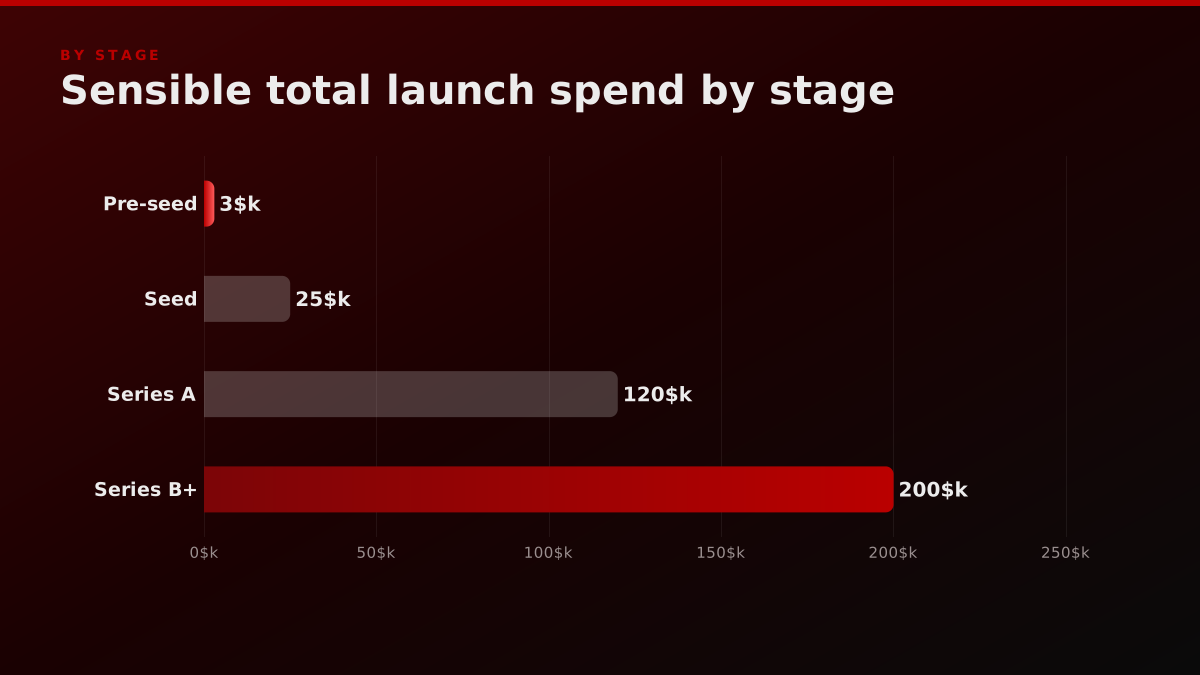
At pre-seed or bootstrapped, the sensible total is an estimated $0 to $3,000, and almost all of it should go to a founder-shot demo or a single freelance edit, with energy poured into distribution rather than polish. A five-figure video at this stage is a genuine risk to a runway measured in months, and your own face explaining the product on a phone often outperforms a glossy film because it reads as real. At seed, $3,000 to $25,000 can buy one strong production, but distribution has to be a separate, explicit line or the video sits on a landing page and a few hundred people see it. At Series A, an estimated $25,000 to $120,000 supports a multi-asset campaign with proper channel cuts, and this is the precise stage where distribution should graduate from we will figure it out to a funded line. At Series B and beyond, the spend starts around $120,000 for a brand film plus a full distribution program, and at that tier owning reach is the baseline, not a luxury. For the broader agency-selection question at each stage, the top AI marketing agencies comparison covers the field, and the product launch playbook sets the launch-day plan the video plugs into.
The through-line across every stage is the ratio, not the absolute number. At pre-seed the sensible split might be ten percent production and ninety percent distribution, because your face is free and reach is everything. By Series B the production share rises, because the brand film is a durable asset worth investing in, but distribution never drops to zero and never becomes the afterthought. Any agency taking six figures from you without owning distribution is selling you half a service at a full price, and the higher the check, the more that matters. Read the number as a ratio between the two halves, decided by what is scarce for you at your stage, and you will almost never overspend on the wrong one.
The 72 hours that decide a launch video
The launch window is short and front-loaded, so it helps to see it as a timeline rather than a single event. The work that determines whether a launch video lands is spread across the two weeks before and the three days after it goes live, and almost none of it is the shoot.
Operator note60 minutes is the real launch window. We staff replies, quote posts, and creator briefs for that hour, not for launch week.
In the two weeks before, the warm-up runs: consistent posting to prime the audience and the algorithm, the vertical cut and its platform variants get built, the hook gets tested on smaller posts, and the early engagers get lined up. In the final day before, the seeding plan is locked: which accounts post, in what order, with what accompanying text, and who is ready to engage in the first minutes. On launch, the first hour is the exam, so the team is present, replying to every comment, sharing the winning cut, and watching the signal rather than celebrating. In the twelve to twenty-four hours after, the wave-ride runs at full intensity: the cuts that caught get pushed harder, creators are briefed to reference them while they are hot, and the paid budget goes behind the proven cut, not the favorite one. Over the following two to three days, the launch compounds or decays based on those early moves, and the team reallocates toward whatever is still climbing.
Notice how little of that timeline is production and how much is distribution run as a live operation. A launch video is not a deliverable you hand off, it is a campaign you run inside a narrow window, and the teams that treat it that way are the ones whose videos cross the numbers everyone else asks how they hit.
When is a cheap launch video the right call?
A cheap video is the right call more often than the cost guides will admit, specifically whenever spending more on production would not change the launch outcome. There are four clear cases, and recognizing yourself in any of them can save you tens of thousands of dollars. The first is pre-seed with thin runway, where a founder-shot demo clears the bar and a five-figure film does not. The second is when you need video continuously rather than once, in which case a junior in-house editor compounds faster than per-project agency invoices. The third is when the founder is already a credible on-camera presence and the product explains itself in a screen recording, where authenticity beats production value outright.
The fourth, and the most important, is when you can fund production or distribution but not both, in which case you fund distribution and shoot the video scrappily, every time. A watched scrappy video beats a polished unwatched one, and it is not close. This is why the same editors who pull apart the agency pricing keep concluding the premium is soft, that the real work was always the reach, not the render. The famous launch videos founders ask about owe far more to the distribution machine behind them than to the production budget in front of them.
Alex Oak
@alexoakdev
Kind of insane how you can just: 1. Have a product idea 2. Make an AI launch video 3. Get 1M+ views 4. Get hundreds of preorders And only THEN spend money on building the product. Insane validation strategy that's now possible with AI video technology
The one case where the distribution gap genuinely does not apply is an explainer that lives inside a funnel you already drive traffic into, on a pricing page, in onboarding, or in a sales deck. There the job is to convert someone who already arrived, the distribution is your existing funnel, and a clean, cheap explainer does the work without any feed at all. The mistake is hiring for that job when your actual job is winning new attention, getting a tidy file, and discovering there was never a plan to put it in front of anyone who had not already heard of you.
The reason the cheap video wins so often is that the quality floor is lower than founders fear and the reach ceiling is higher than they expect. Past the floor, where the video is clear, watchable, and shows the product working, extra production spend buys diminishing polish that the feed barely registers, while the same money spent on reach buys audience that compounds. The exceptions are real but narrow: a genuinely abstract product that needs animation to be understood, a brand at a stage where the film is a lasting asset, or a moment where craft is itself the story. Outside those, the honest answer for most launches is to shoot it scrappily, clear the floor, and pour the saved budget into getting it watched.
How to budget so distribution is not an afterthought
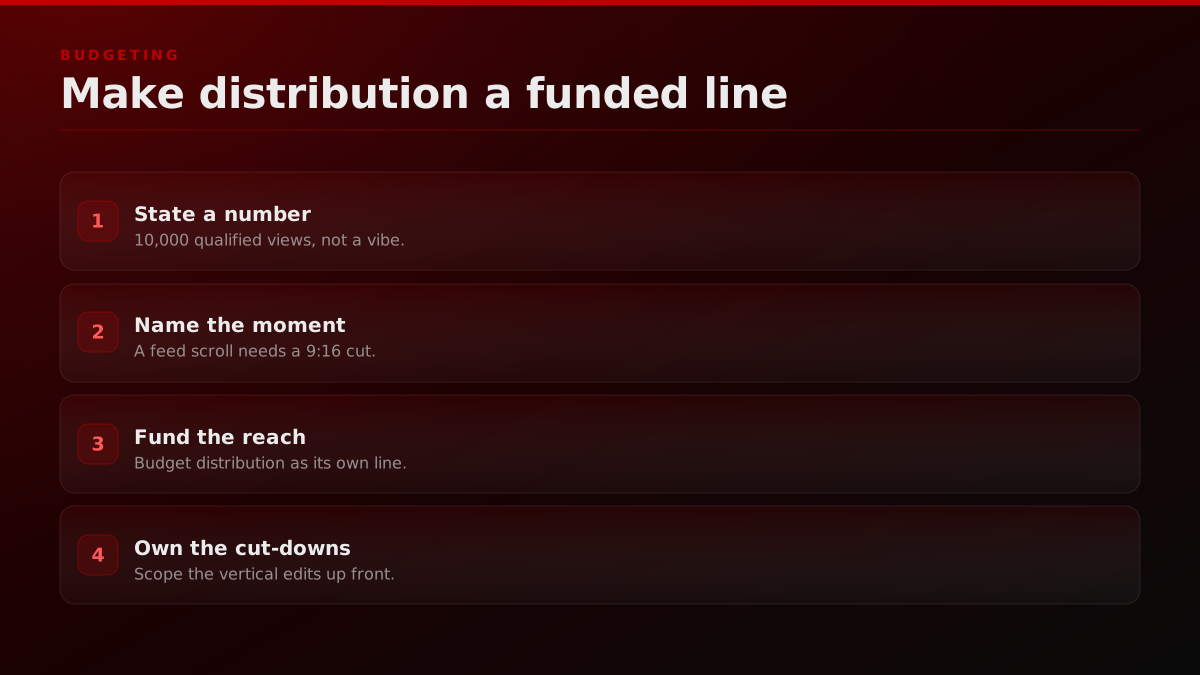
You budget distribution into the brief from the first line, before you commission a single frame, so the production is designed around the reach instead of the reach being improvised after delivery. The single biggest predictor of whether launch-video money is well spent is not the agency, it is whether the brief treated distribution as a real, funded part of the job. Tighten four things and most of the failure modes above disappear.
Operator noteA 30/70 production-to-distribution split is our default brief for funded launches. The film serves the reach plan, never the reverse.
First, state the goal as a number, not a vibe: not a great launch video but 10,000 qualified views from our ICP and 300 signups in launch week. A number forces every later decision and exposes any partner who cannot map their work to it. Second, name the audience and the moment, because a 9
short caught mid-scroll and a 16 hero played after an ad click are two different videos with two different first three seconds. Third, fund the distribution line explicitly, deciding now whether reach comes from organic, paid, placement, or a managed partner, and budgeting it as its own number rather than hoping it is included. Fourth, fix scope and ownership in writing, especially who owns the native cut-downs, because the most common budget leak is paying again later for vertical cuts that should have been scoped from the start. Those four decisions are exactly what a launch-film creative brief captures, so the team you hand it to builds to the outcome instead of to a taste. Before any of those conversations, model the whole bill with the CPQV calculator and pressure-test reach assumptions with the launch view-tier estimator, so you walk into the agency call comparing outcomes rather than day rates.Those four lines do something subtle: they turn distribution from a hope into a contract. When the goal is a number, the audience and moment are named, the reach is a funded line, and the cut-down ownership is written down, distribution can no longer quietly fall off the plan, because every one of those decisions forces someone to own the reach. The brief is where launches are won or lost long before the shoot, and a brief that treats distribution as real is the single strongest predictor that the money will be well spent. Write it that way and most of the failure modes in this playbook simply cannot happen, because you closed the door on them before you commissioned a frame.
What FORKOFF does differently
FORKOFF prices the production and the distribution together as one system, on the outcome rather than a production day rate, which is the structural opposite of how the cost-guide agencies sell. Most vendors quote you the film and stop. FORKOFF produces the launch video and then owns getting it watched: cutting it into platform-native short-form, syndicating it across channels, placing it with relevant creators, and amplifying with paid where the math holds. The distribution side is not a claim, it is infrastructure, backed by a clipping network that has processed 5B+ views. The product launch video service page lays out the full mechanism, and the clipping service covers the reach engine underneath it.
OpenAI's own Sora is the clearest public proof of what happens when a launch skips this and relies on the spike alone: 1 million downloads in under 5 days, shut down 6 months later, because nothing outside the app itself was built to carry the audience once the news cycle moved on.
The reason the single-system model matters is the seam this playbook keeps returning to. When the team that shoots the film is also accountable for the views, the vertical cut gets designed first, the hook gets built for the feed rather than the reel, and the wave-ride is planned before launch instead of improvised after it. A production shop plus a separate distribution agency, working from a file one made and the other inherited, cannot close that seam, because neither owns the whole outcome and each optimizes its own half. Owning both is not a bundling convenience, it is what lets the reach shape the film instead of fighting it, and it is why the reach numbers under the product launch video service come from the same team that makes the video, not from a hand-off.
The honest disclosure, because this playbook is published by FORKOFF and you should read it with that in mind: if all you need is one beautiful film and you already own a reliable way to get it watched, a pure production shop is a cleaner and probably cheaper fit, and you should hire one. The case for paying for distribution only holds when reach is the thing you are actually short on. For most funded launches it is, which is the whole reason the production-only cost guides leave their readers stuck. They answered what the file costs and never told them the file was the cheap half. If you want the film and the audience scoped together, talk to us and we will map the reach plan and its cost before you spend a dollar on the asset.
The verdict: price the watched view, not the file
The right way to think about a launch video in 2026 is not the price of the video. It is cost per qualified view, total spend across production and distribution divided by genuinely watched views from people who could actually buy. Measured that way, a $2,000 video that reaches the right hundred thousand people is vastly cheaper than a $30,000 video that reaches four hundred, even though the production number says the opposite. The cost guides have the comparison inverted because they only ever count the first half of the numerator.
Riley Brown
@rileybrown
Pretty amazing how @claudeai Cowork launch video got 50M views. And outside of x, literally noone cares.
So when an agency quotes you a production number with no distribution attached, you are being asked to spend your whole video budget on the half of the problem that does not decide the outcome. Ask the distribution questions out loud on the first call. How will this video reach an audience after it is delivered, in concrete channels and numbers? Do you do seeding, creator placement, and paid amplification, or does reach hand off to my team? What will you report back, watched minutes and qualified views, or turnaround and impressions? The answers sort the field instantly, and they are the questions the launch video readiness checklist was built to make you ask.
Operator noteCPQV, cost per qualified view, is the only launch metric we price against. Raw view counts hide bot reach and wrong-audience reach.
If you take one thing from this playbook, take the reframe. A launch video is not a file you commission, it is watched attention you engineer, and the file is the cheap input to it. Production has become a template that any tool can assemble, which is exactly why it stopped being the edge. Distribution has become the scarce, uncomfortable, outcome-defining half, which is exactly why almost nobody sells it and almost everybody needs it. Fund the reach on purpose, design the film to serve it, run the launch as a campaign across a window rather than a single post, and measure the watched view rather than the day rate. Do that and a scrappy video reaches the audience a polished one never would. Production is solved. Distribution is the gap. Price accordingly, and build the video and its audience as one job.