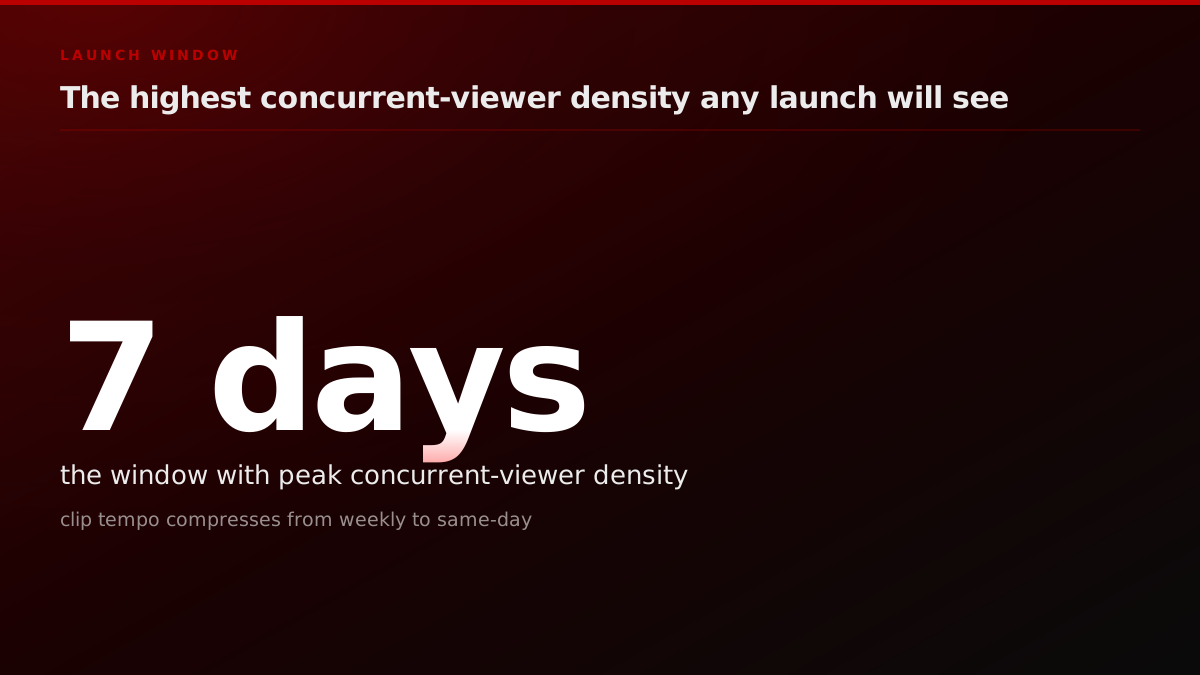
A game launch is a 7-day window where a title gets its highest concurrent-viewer density it will ever see on Twitch and Kick, and clipping that window correctly is what turns raw watch time into qualified installs. Twitch rewards it through Drops, an account-linked acquisition mechanic; Kick rewards it through a discovery algorithm that surfaces smaller channels faster. This guide covers both platforms, a real launch case study, and the 7-day production calendar a managed clipping desk runs during launch week.
About these numbers
Public streaming figures in this guide come from Streams Charts, Twitch's own developer documentation, and GameDiscoverCo's published wishlist research, cited inline with dates. FORKOFF operator figures come from our own managed clipping engagements across 2025 and 2026; individual campaign outcomes vary.
TL;DR
A game launch generates its highest concurrent-viewer and clip-worthy-moment density inside the first 7 days, and Twitch and Kick reward that density differently, Twitch through Drops-linked account acquisition, Kick through a category browse algorithm that surfaces lower-viewer channels faster. Qualified installs come from routing the right clip to the right platform inside hours, not days, and pairing every clip with a trackable action, a Drops link, a wishlist click, or an attributed install link, so the spend has a denominator. The playbook below covers the Twitch Drops mechanic, the ARC Raiders launch as a real case study, Kick's growing gaming share, and the 7-day clipping calendar a managed desk runs during launch week.
What game-launch clipping actually means
Game-launch clipping is the practice of capturing and re-cutting the highest-signal moments from a title's first days of live Twitch and Kick coverage, then routing those clips to the platforms and destinations where they convert into a tracked action, a wishlist add, a Drops-linked account, or an attributed install. It uses the same native capture control documented in Twitch's own Help Center as any other Twitch clip, but it is a narrower, faster-moving discipline than evergreen Twitch clipping, because the source material only exists for as long as the launch stays in the category trending window.
Two audiences run this differently. A solo developer clips their own launch stream and whatever co-streams happen to feature the game, usually manually, usually a day or more behind, the same tempo problem covered in what a clipping agency actually does. A publisher or a managed clipping desk treats the launch as a production sprint, watching every partnered and organic stream live, cutting the moment it happens, and shipping a vertical re-cut to TikTok, Shorts, Reels, and X inside the same hour. The gap between those two paces is most of the difference in qualified-install yield.
The genre of the game changes what "highest-signal" even means. An extraction shooter or a battle royale generates its best clips from tension and loss, a near-escape, a betrayal, a last-second extraction, because those beats are what made ARC Raiders' launch travel so far past its own player base. A cozy or narrative title generates its best clips from discovery and dialogue, a funny NPC line, a surprising story beat, a visual moment the streamer reacts to. A competitive live-service title generates its best clips from skill expression, a clutch play, a rare item drop, a leaderboard moment. None of these transfer cleanly from a generic clipping checklist; a launch clipping calendar has to be built around the specific genre's emotional signature before the first stream even goes live.
I started aiming at "all Twitch streamers." Should have started with "micro-streamers doing Fortnite who want TikTok growth." Every pivot toward specificity made the product better.
Why do the first 7 days decide a launch clip's shelf life?
A launch clip is only as valuable as the trending window it rides, and that window is short. Twitch and Kick category pages rank on current concurrent viewers, growth rate, and recency, so a title's visibility peaks inside its first week and decays fast once attention moves to the next release. Clipping on a launch's own compressed timeline, not a routine weekly cadence, is what keeps a clip's distribution window open while it still matters.
A launch's Twitch and Kick category pages are driven by trending signals, current concurrent viewers, growth rate, and recency, that decay fast once the streamer war moves to the next title or the next patch cycle. ARC Raiders is the clearest recent example: it went from the second-highest peak viewership on Twitch behind a League of Legends World Championship broadcast on launch day, to the single most-watched game on the entire platform across its launch week, outperforming League of Legends, Grand Theft Auto V, and Minecraft combined for that window (Streams Charts, ARC Raiders launch-week reporting, 2025-10-31). The same decay curve is why clipping as a distribution model treats a launch window as a sprint rather than a steady drip.
That trending curve is why a clip posted three days after a launch moment is competing against whatever is live right now, not against the launch itself. A managed desk compresses the production cycle from the usual weekly cadence down to same-day, and same-hour for the highest-signal beats, specifically because the category page's own algorithm punishes delay.
Twitch Drops: the native lever that turns watch time into a linked account
Twitch Drops is Twitch's own first-party mechanic for turning watch time into a tracked acquisition event, and it is the single biggest reason launch clipping on Twitch differs from launch clipping anywhere else. A developer flags specific channels for a campaign, viewers earn an in-game reward once they hit the campaign's watch-time rule, and claiming it is the one action on the platform that produces an attributable, account-linked prospect.
How Twitch Drops turns watch time into a linked account
A campaign runs on a scheduled window with real developer-side setup. Per Twitch's own Drops Campaign Guide, a campaign runs for up to 28 days, requires the game to support account linking and in-game entitlement granting before it goes live, and produces a detailed participation and claims report 48 hours after launch.
Drops is an acquisition mechanic, not a loyalty perk
Twitch's own Drops Campaign Guide frames the mechanic explicitly as a way to acquire new players and re-engage an existing base, tracking a viewer's watch time on flagged channels and releasing a reward once a campaign rule is satisfied. The viewer then links their game account to claim the item, which is the moment a Twitch viewer becomes a tracked, account-linked prospect rather than an anonymous watch-time number.
Source: Twitch Developers, Drops Campaign Guide
Operator noteA Drops viewer already intends to link an account, so the clip just needs to get them watching, not re-sell a game they already chose.
The mechanic matters to a clipping strategy for one specific reason: a Drops claim requires the viewer to link their game account, which converts an anonymous Twitch watcher into a tracked, identifiable prospect the moment they claim. A clip that surfaces a Drops-eligible stream is not just entertainment, it is pointing a viewer at the one lever on the platform that produces an attributable acquisition event. Twitch's Drops Technical Guide documents the full technical requirement set for a developer to wire this up before launch.
A campaign has real constraints a clipping calendar has to plan around. Per the Campaign Guide, a single Drops campaign runs a maximum of 28 days, so a launch-window campaign is usually its own short-duration configuration rather than a slice of a longer always-on one. Developers configure the game once inside Drops Settings, link a Client ID to their account-linking system, build rewards inside the Rewards Manager so they can be reused across multiple Drops, and Twitch strongly recommends, though does not require, testing the full claim-and-fulfillment flow on a designated test account before the campaign goes public. Detailed participation and claims analytics land 48 hours after the campaign starts, which is the point where a clipping desk can see, campaign by campaign, which streamers are actually converting watch time into linked accounts and shift routing weight toward them for the remaining days of the launch window.
Kick's gaming audience is now big enough to route launch budget to
By 2026, Twitch's gaming market share sits somewhere around 54 to 60 percent depending on the tracking source, down from roughly 70 percent two years earlier, while Kick has grown enough to be, per Streams Charts, the third most popular livestreaming platform by peak viewership (Streams Charts, Kick's platform growth reporting, sampled 2026-08-04). Kick's own about page puts real numbers behind that growth, over 500 million monthly hours watched, over 80 million channels, and more than 4.6 million peak live viewers, and its 95/5 creator revenue split, nearly double the standard 50/50 arrangement most Twitch Affiliates and Partners work under (Castr, Twitch vs Kick revenue comparison, sampled 2026-08-04), has pulled a meaningful share of mid-tier gaming streamers who are worth clipping even at a smaller absolute audience than a comparable Twitch channel. Seeding that streamer relationship in the first place is the same KOL marketing discipline FORKOFF runs for non-gaming launches, just compressed into a 7-day window, the streamer-facing side of that outreach relationship covered from the PR side in the embedded post below.
TPF_Darling
@tpf_darling
Okay… a LOT of people asked me to do this post (admittedly more than I was expecting haha), so as a fellow creator turned PR person, I want to share some insights to help set your expectations accordingly if/when you’re applying for game keys and campaigns with developers and PR
Kick's discovery algorithm rewards a launch streamer faster than Twitch's does
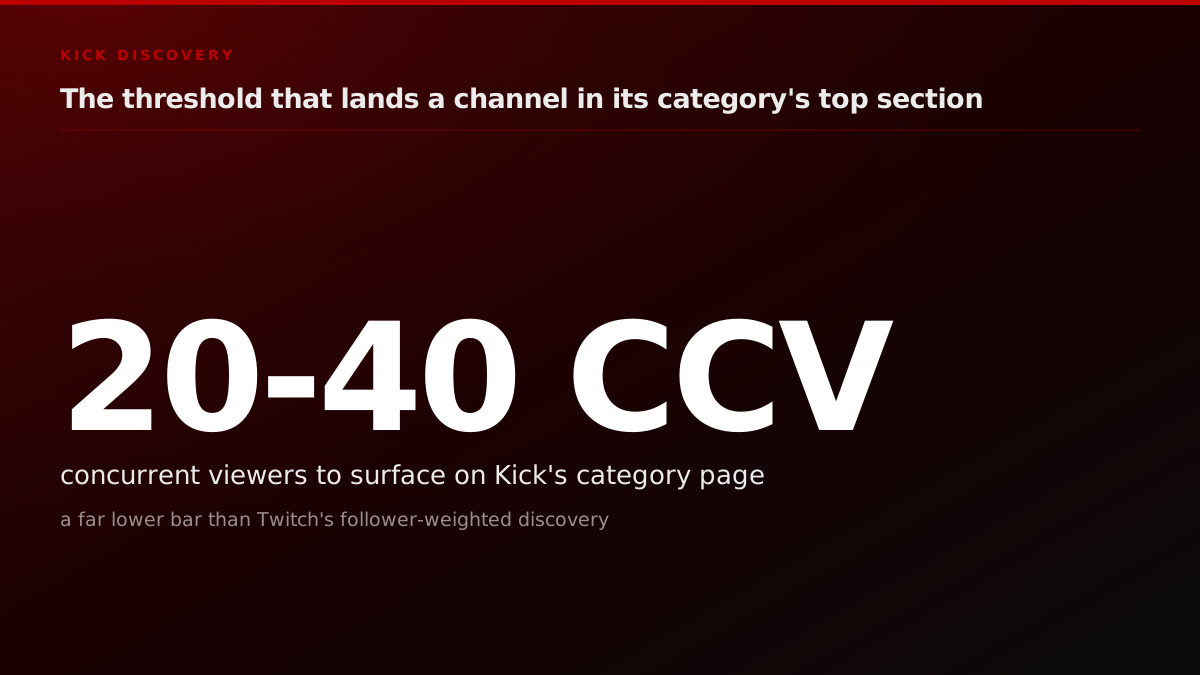
Kick's category Browse page sorts channels by current concurrent viewers, so a channel sitting at zero CCV stays at the bottom of its category, but crossing roughly 20 to 40 concurrent viewers lands it in the visible top section. That threshold is far lower than what it takes to surface on Twitch's more follower-weighted discovery, which is why a launch-week streamer with a modest but real audience can out-perform on Kick's discovery surface even with fewer total viewers.
Source: Independent Kick growth-strategy analysis (not Kick's own published documentation), sampled 2026-08-04
The practical reason to route launch clips toward Kick streamers specifically is discovery mechanics, not raw reach. Kick's category Browse page ranks live channels by current concurrent viewers, so a channel sitting at zero stays buried, but crossing roughly 20 to 40 concurrent viewers is enough to land in the category's visible top section, a far lower bar than what it takes to surface on Twitch's more follower-weighted discovery layer. A launch-week streamer building an audience from scratch breaks through faster there, which means the clip-worthy moment happens sooner relative to the streamer's total audience size.
Kick is also actively reworking that discovery layer. As of April 2026, the platform had begun rolling out a new recommendation algorithm to roughly 10 percent of users, designed to surface content on authentic engagement signals rather than raw viewer count alone, alongside the co-founders' disclosed personal investment approaching a billion dollars into the platform since its 2023 founding, a durability signal worth weighing before committing a multi-week launch campaign to any single platform's discovery mechanics. Racing, first-person shooters, and roleplay-adjacent categories have shown some of Kick's strongest relative growth through early 2026, which is a useful cross-check for whether a specific game's genre already has organic Kick traction worth amplifying, versus a genre that is still mostly a Twitch audience.
I built an AI bot that clips Twitch VODs and auto-posts them to TikTok. 30 days in — here's the numbers, the tech, and what broke.
I'm a small Twitch streamer who kept missing clip-worthy moments in my own VODs because I didn't have the energy to scrub through 6 hours of footage after streaming. So I built a tool that watches the VOD, scores every moment with AI, renders vertical clips with captions, and auto-posts… Show more
The DIY tooling layer underneath all of this is maturing fast enough that a solo streamer can now build a real clip-automation product on a weekend, as the embedded build log below shows, and that same builder explicitly named Kick support as the next roadmap item because it is "Twitch's fastest-growing competitor." A managed desk's advantage over that kind of tooling is not the automation itself, it is the human producer judgment on which of the six beats below is actually worth cutting.
Case study: ARC Raiders and the anatomy of a streamer-driven launch
ARC Raiders is the clearest recent example of what a fully streamer-driven game launch looks like end to end, from a second-place launch-day debut behind a League of Legends World Championship broadcast to the single most-watched title on Twitch across its full launch week. The numbers below come from Streams Charts' own launch reporting, not an estimate.
ARC Raiders on Twitch, the anatomy of a streamer-driven launch
| Window | Hours watched | Peak concurrent viewers | Unique channels | Twitch category rank |
|---|---|---|---|---|
| Launch day (Oct 30, 2025) | 4.3M | N/A (day-one snapshot) | N/A (day-one snapshot) | 2nd, behind League Worlds |
| Launch week (Oct 30 to Nov 5, 2025) | 35.6M | 374,703 | 71,500+ | 1st, ahead of League, GTA V, Minecraft |
| All-time peak (by mid-2026) | N/A | 400,495 | N/A | N/A |
Streams Charts, ARC Raiders launch-day and launch-week reporting, sampled 2026-08-04. Steam concurrent-player peak (481,966 on Nov 16, 2025) is a separate metric tracked by SteamDB, not a Twitch figure.
ARC Raiders launched on October 30, 2025, and is the single clearest recent example of what a fully streamer-driven launch looks like end to end. On launch day alone the game's Twitch category racked up 4.3 million hours watched, second only to a League of Legends World Championship broadcast (Streams Charts, ARC Raiders launch day, 2025-10-31). Across the full launch week, that climbed to 35.6 million hours watched, a peak of 374,703 concurrent viewers, and more than 71,500 unique channels streaming the game, enough to make it the single most-watched title on Twitch for that window, ahead of League of Legends, Grand Theft Auto V, and Minecraft (Streams Charts, ARC Raiders becomes most-watched game of 2025, sampled 2026-08-04).
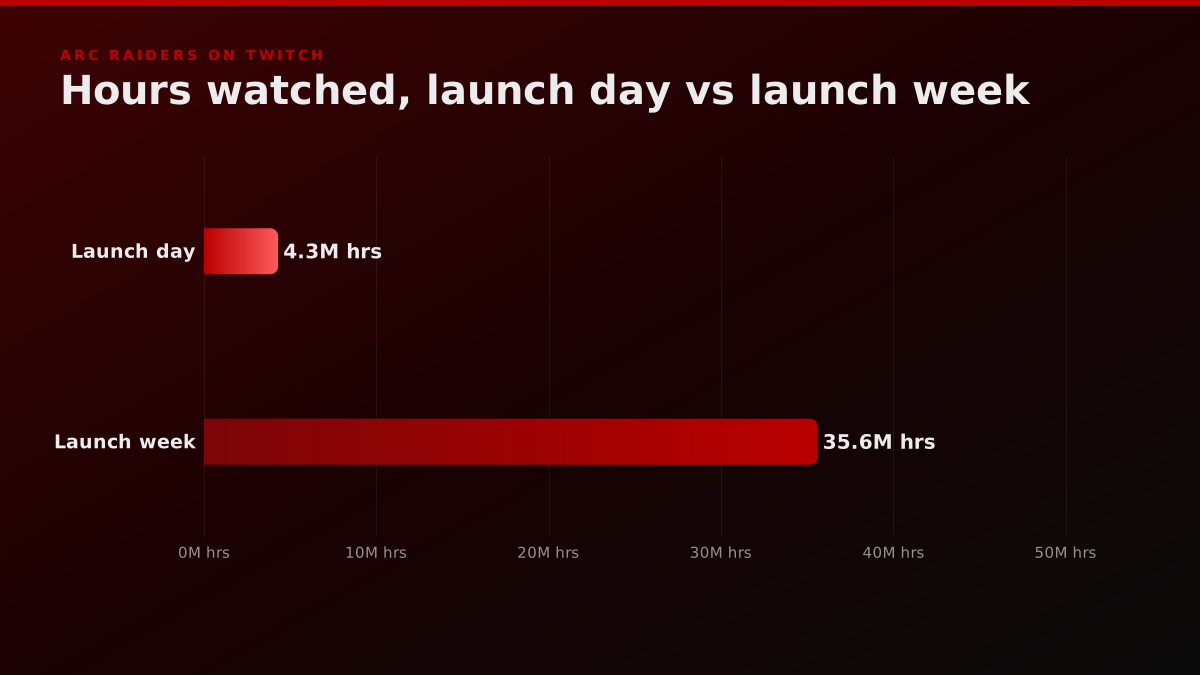
The launch also shows the volatility a clip calendar has to plan around. Total hours watched for the Shooters genre on Twitch jumped from 377.8 million to 458.9 million that November, driven largely by ARC Raiders and Escape From Tarkov (Streams Charts, Twitch stats November 2025, sampled 2026-08-04). By mid-2026, the game's all-time Twitch peak had settled at 400,495 concurrent viewers, still a fraction below the raw Steam concurrent-player peak of 481,966 reached on November 16, 2025, a reminder that Twitch viewership and Steam player counts are separate metrics that move together but never in lockstep. A launch that generates viewership at this scale is also generating dozens of clippable co-stream beats an hour, which is exactly the volume a solo scrubber cannot keep up with.
What made ARC Raiders travel past its own player base specifically was co-stream crossover, large streamers building rival in-game "factions" and interacting with each other's audiences inside the same live world, which is the fourth beat on the list below and the single hardest one for a solo clipper to catch because it requires watching multiple streams at once to recognize the moment two storylines are colliding. A managed desk running a producer rotation catches that crossover moment by design, because more than one person is watching the co-stream cluster live at the same time; a solo operator catches it only by luck, usually after a clip has already gone around Twitter without them.
What moments are worth capturing during a live launch stream?
Not every minute of a launch stream deserves a clip, and treating it that way is how a solo operator burns out inside 48 hours. Six beats repeat across almost every launch stream regardless of genre, each converts differently once re-cut, and a producer who knows the list in advance can call the moment live instead of finding it hours later in a VOD.
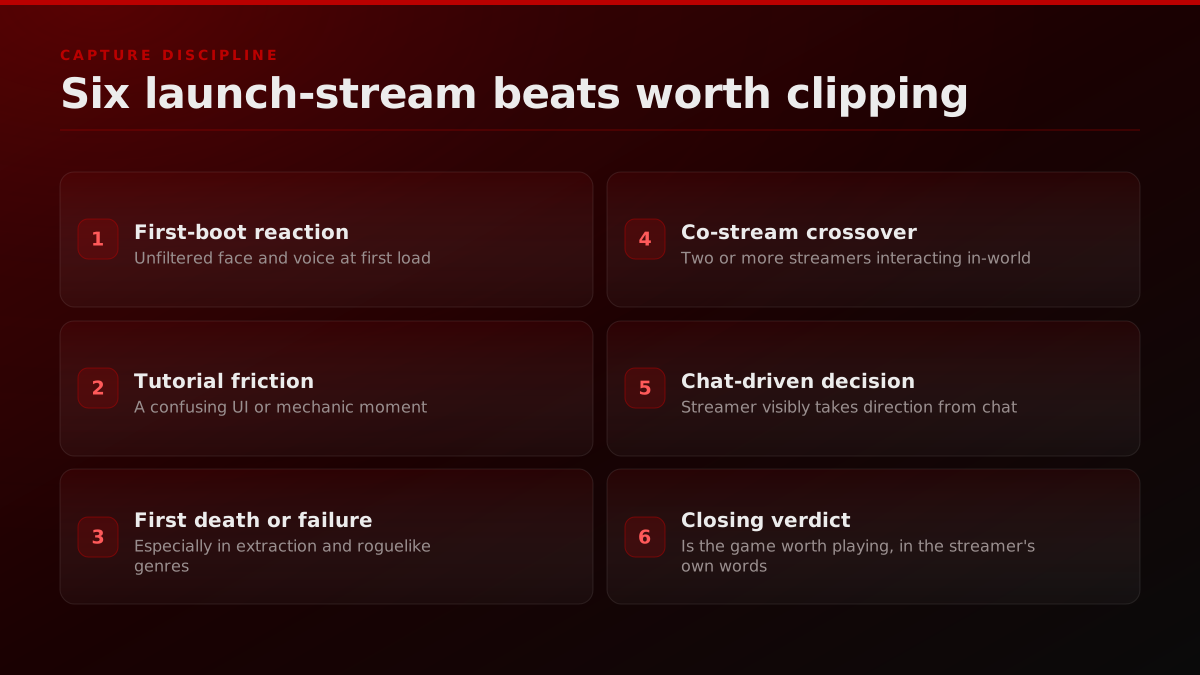
The six, in the order a launch stream typically produces them:
- The first-boot reaction, the streamer's unfiltered face and voice the moment the game loads for the first time. Short, high-emotion, works best as a 15 to 20 second vertical cut with the streamer's reaction as the focal frame.
- Tutorial friction, a confusing UI moment or a mechanic the streamer visibly struggles with. Useful for a "here's what to expect" install-intent audience, not for hype.
- The first death or failure state, especially in an extraction or roguelike genre where losing progress is part of the pitch. Pairs well with a caption that frames the stakes rather than the loss.
- Co-stream crossover moments, two or more streamers interacting inside the same game world, which is the exact dynamic that turned ARC Raiders' launch into a platform-wide event rather than a single-channel spike.
- Chat-driven decisions, a moment where the streamer visibly takes direction from chat. These travel well because the comment section becomes part of the clip's own social proof.
- The closing verdict, whatever the streamer says in the final minutes of a session about whether the game is worth playing. This is the single highest-conversion clip type for a "should I buy this" audience.
Sorting real footage into these six beats fast is a triage skill, not a talent, and it is the same skill covered in what is clip farming, the difference being a launch's beats are all genuinely load-bearing rather than manufactured for volume.
From clip to qualified install: closing the attribution gap
A launch clip only counts toward a qualified install if it survives four steps: capture, re-cut, a tracked link, and a completed action on the other end. The first two steps are production; the last two are where most in-house launch clipping campaigns quietly fail, because a clip with no tracked link in its caption or bio is a vanity view no matter how many times it gets watched.
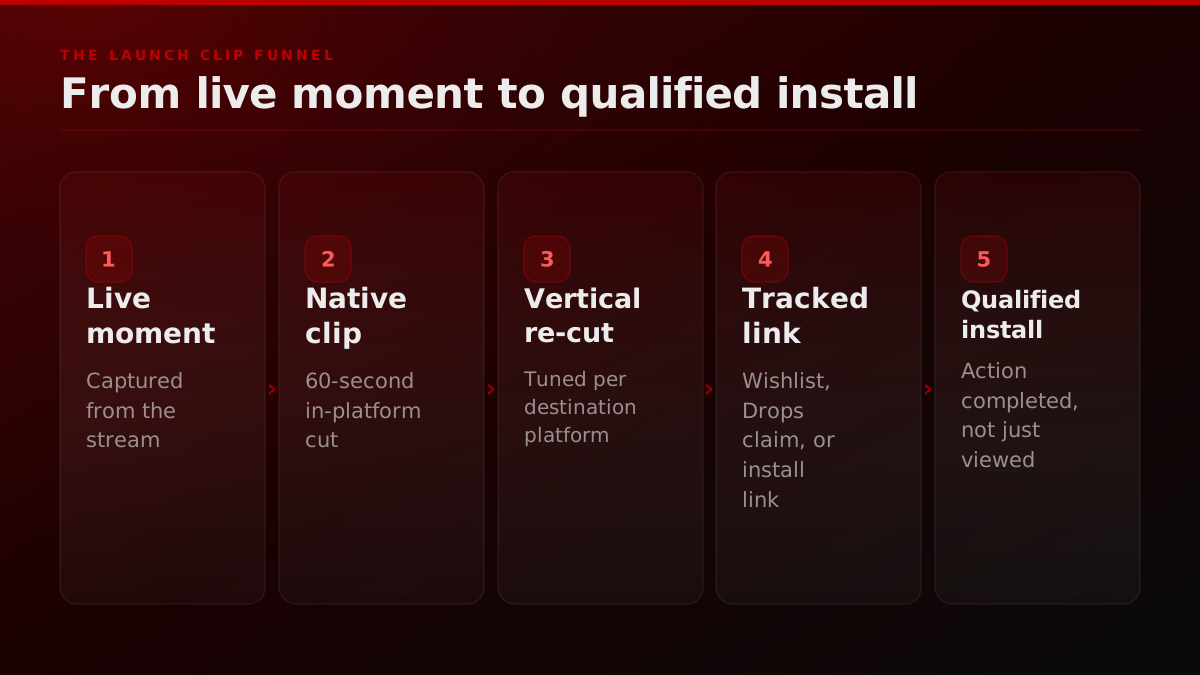
Operator noteA launch clip with no tracked link is a vanity view. Our clipping network has processed 5B+ views; only tracked ones count toward installs.
The tracked link differs by platform. On Steam, there is no native per-clip attribution, so the standard workaround is a UTM-tagged bio link into a landing page that redirects to the store page, or routing the clip's call to action through a Drops-eligible stream so the account-link event itself becomes the tracked conversion. On mobile, the tracked link is a standard attributed deep link through whatever mobile measurement partner the publisher already runs, the same discipline behind FORKOFF's own qualified-views metric: watches counted only when held to a real completion threshold, not raw impressions.
Run the funnel as a worked example. Say a launch week generates 40 clips across Twitch and Kick, and each clip averages 25,000 vertical-platform views once re-cut for TikTok, Shorts, and Reels, a round 1 million total views for the week. Held to a 75 percent completion threshold the way FORKOFF counts a qualified view, that million views might realistically produce 300,000 to 450,000 qualified views, industry completion rates on short-form vertical content typically run 30 to 45 percent depending on hook strength. Of those qualified views, only the ones that click through a tracked link and complete an action, a wishlist add, a Drops claim, an attributed install, count toward the actual install number, which is usually a low single-digit percentage of qualified views on a cold, first-touch clip. That final percentage is the number a launch clipping campaign should be reported against, not the 1 million raw views at the top of the funnel.
One launch week's clips, from raw views to a tracked install
Raw views
~1,000,000
Qualified views
300K-450K
Tracked installs
Low single-digit %
A worked example, not a measured campaign. 40 clips averaging 25,000 views round to 1M for the week; a 30 to 45 percent completion rate puts qualified views at 300K to 450K; only a tracked-link action counts toward the install number.
What does "qualified" mean on Steam versus mobile?
"Qualified" means something different depending on where the install happens. On PC, the proxy for a qualified conversion is almost always the Steam wishlist, and how well a wishlist converts to a sale varies enormously by game rather than following one steady industry average.
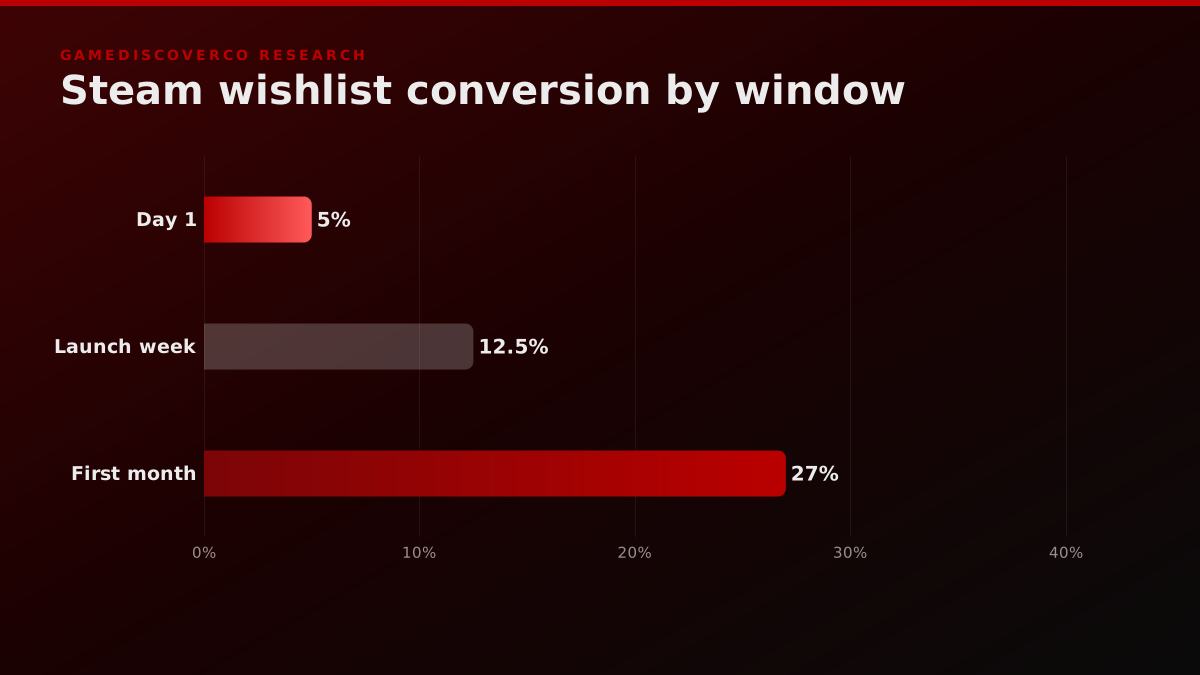
GameDiscoverCo-sourced research puts median first-week wishlist-to-sales conversion around 22 percent and first-month conversion around 27 percent for a typical title, drawn from roughly 700 Steam games released since September 2023 (GameDevReports summary of GameDiscoverCo wishlist conversion benchmarks, sampled 2026-08-04).
Wishlist conversion swings 10 to 20x by game, a flat percentage is the wrong model
GameDiscoverCo's own wishlist-to-sales research puts the spread between an underperforming launch and a strong one at 10 to 20x, not 10 to 20 percent, and the newsletter is explicit that it does not see conversion quietly degrading over time, the swings come from competition and game quality, not a shrinking base rate. A launch clipping plan built on a single flat conversion assumption, whatever percentage it uses, is the exact mistake that variance argues against.
Source: GameDiscoverCo, The State of Steam Wishlist Conversions
That spread matters directly to a clipping budget. GameDiscoverCo's own wishlist-to-sales data shows performance varying 10 to 20x between an underperforming launch and a strong one, not a tidy 10 to 20 percent, and the newsletter is explicit that it does not see conversion quietly degrading over time (GameDiscoverCo, The State of Steam Wishlist Conversions, sampled 2026-08-04). A launch clipping plan built on a single flat conversion percentage, whatever number it uses, is the exact mistake that variance argues against, a gap covered from the cost side in CPM rates for clipping. One indie studio's own public breakdown, sourced through the same Reddit marketing channels a clipping desk monitors for launch signal, shows exactly how uneven this gets in practice, spikes of 100 to 380 wishlists a day around specific streamer and Steam-featured events, against long stretches of near-zero movement between them (see the embedded thread below). On mobile, by contrast, there is no multi-week wishlist buffer, an install either fires through the tracked link inside the session or it does not, which is why a mobile launch clip campaign needs its attribution link live and tested before the first clip ships, not added after the first spike arrives.
From 0 to 10k Steam wishlists: a breakdown of what actually moved the needle for our first indie game
About two months ago I made a post here about Steam Next Fest and explained why we decided to pull our game shortly before SNF started. At that point, we were at 6,400 wishlists. I'm writing this post to show what we actively did to reach 10k wishlists, and which… Show more
As an indie studio you really have to fight for each wishlist and STEAM is your best friend.
Mobile launches change the install math entirely
A PC launch on Steam optimizes for wishlists because the platform's own algorithm rewards wishlist velocity with better placement in Popular Upcoming and New & Trending, so a clip's job is to feed that velocity even before a single copy sells. A mobile launch on the App Store or Google Play has no equivalent wishlist mechanic; the store's discovery algorithms respond to install velocity and early retention, not to a pre-commit signal, so a mobile launch clip has one job, drive the tap-through to install right now, this session, while the viewer is still watching.
That single-session requirement changes what "qualified" means on mobile. Where a Steam wishlist push can be judged weeks later against GameDiscoverCo's conversion benchmarks, a mobile clip's tracked link either converts inside the attribution window the mobile measurement partner enforces, typically hours to a few days depending on the platform and click-to-install model, or it does not count at all. Clips aimed at a mobile audience also tend to skew shorter and more front-loaded, the hook and the call to action compressed into the first three seconds, because a mobile viewer scrolling a For You feed makes the tap decision faster than a Steam browser deciding whether to click through to a store page. A launch clipping calendar covering both a PC and a mobile SKU of the same title, increasingly common for live-service and cross-platform titles, needs two distinct tracked-link sets and two distinct qualification definitions running in parallel from day one, not a single generic "install" bucket applied to both.
The vertical re-cut pipeline built for launch-week tempo
Evergreen clipping runs on a weekly or twice-weekly cadence. Launch-week clipping compresses that into same-day capture and same-day distribution for the first 72 hours, then eases to a twice-daily cadence through day 7 as the trending curve tapers. The production loop stays identical to any other clipping engagement, source capture, vertical re-cut, platform-tuned captioning, tracked-link insertion, distribution, the difference is entirely in tempo and in how many concurrent streams a producer has to be watching live at once.
Operator noteEvery launch roster we run puts a producer on live co-streams for 72 hours; a moment scrubbed for tomorrow already missed the algorithm.
Captioning and platform-tuning also compress under launch tempo. A clip destined for TikTok or Reels during a normal week gets time for a considered hook and a tested caption; a launch-week clip needs the same hook-in-the-first-second discipline applied in minutes, not hours, because the source moment is competing with dozens of other creators clipping the same stream at the same time. The moments that travel furthest during a launch are usually the ones a producer recognized and cut within the first ten minutes of it happening live, while the streamer's own chat is still reacting to it, not the ones polished for an extra hour and posted after the trending window has already moved on to whatever happened next.
The Best Way To Clip Twitch Streams and Post to TikTok
Cpaws Music walks through the practical Twitch-to-TikTok clipping workflow this guide references before the launch-specific routing and Drops layer are added on top.
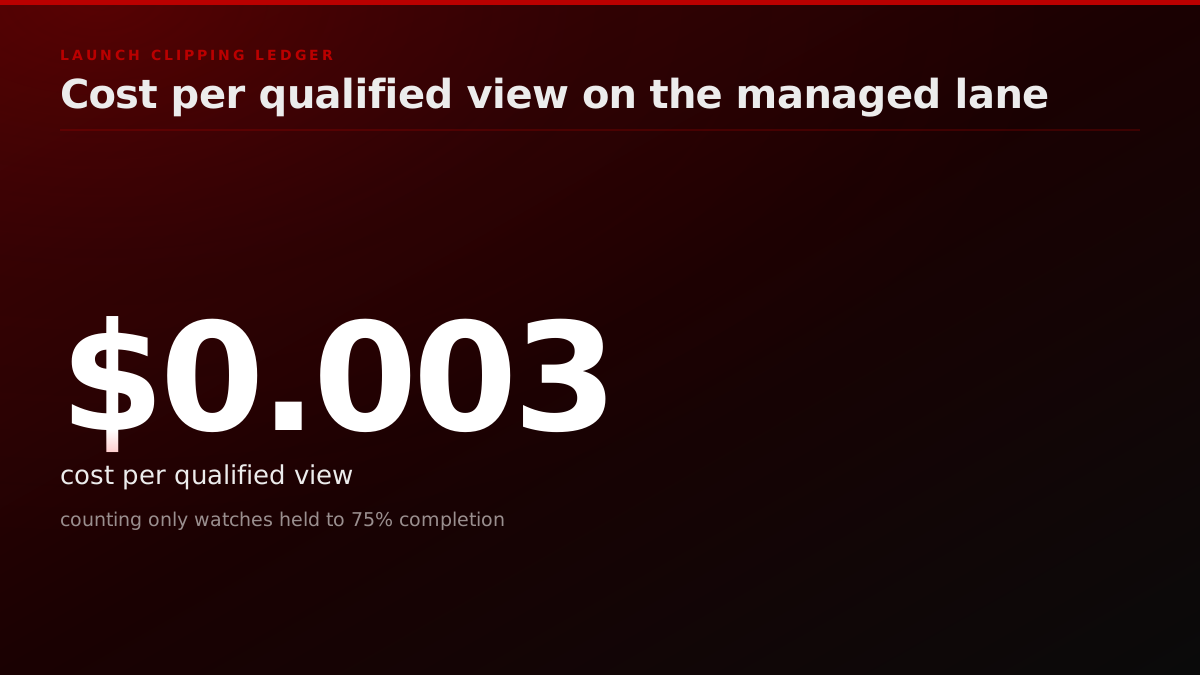
Managed desks solve the tempo problem with a producer rotation rather than trying to have one editor watch everything. One person tracks the primary launch stream and any officially sponsored Drops-eligible channels, a second tracks the organic co-stream cluster that tends to form around any launch with real concurrent-viewer volume, and a third handles the re-cut and distribution queue so capture never bottlenecks on editing. That divide-and-cover structure is the same one FORKOFF runs on every managed roster, adjusted for a launch's compressed timeline, and it settles on the same $0.003 per-qualified-view ledger as evergreen clipping work, counting only watches held to 75 percent completion, the exact in-house-vs-agency tradeoff broken down in clipping tool vs agency.
Twitch or Kick: where should launch-week clip budget go?
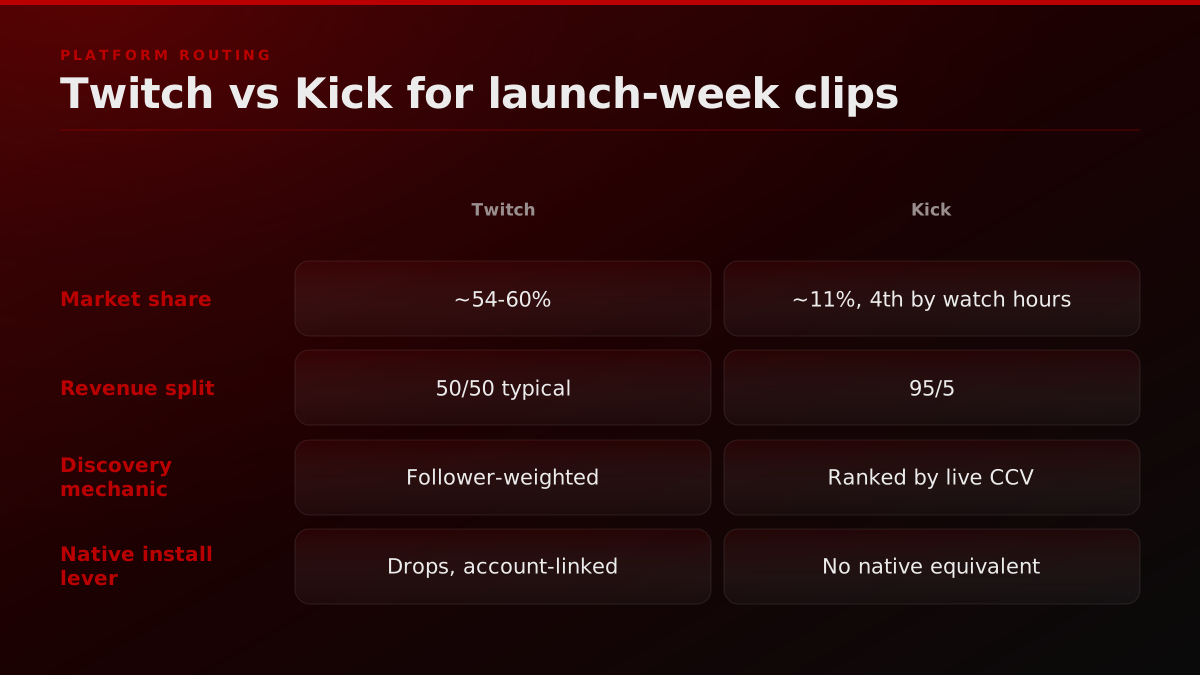
Twitch and Kick are not an either-or decision for launch week, they reward different parts of the funnel. Twitch still carries the larger absolute audience and is the only platform with a native Drops mechanic, so it owns the linked-account acquisition play and gets the larger share of clip-routing budget by volume. Kick's growing gaming presence, roughly 11 percent gaming market share and climbing as of 2026, plus its creator-favorable discovery mechanic, makes it the better fit for reach-per-dollar on mid-tier streamers who would get buried in Twitch's more crowded category page.
Twitch vs Kick, where launch-week clip budget goes
| Factor | Twitch | Kick | Routing implication |
|---|---|---|---|
| Gaming market share (2026) | ~54-60% | ~11%, growing fastest of the three | Twitch gets the volume budget |
| Creator revenue split | 50/50 typical | 95/5 | Kick creators over-index on promotion |
| Discovery mechanic | Category page, follower-weighted | Category page ranked by live CCV | A launch streamer breaks through faster on Kick |
| Native install lever | Drops, account-linked | No native Drops equivalent | Twitch owns the linked-account acquisition play |
| Best clip-routing fit | Drops-eligible partnered streamers | Mid-tier streamers below Twitch's noise floor | Run both, weight Twitch for Drops, Kick for reach-per-dollar |
Market share and revenue-split figures from Streams Charts and Kick's public creator terms, sampled 2026-08-04. Splits vary by individual partner agreement.
The practical routing rule a managed desk applies: any Drops-eligible or officially sponsored stream gets clipped and routed with Twitch as the primary destination, because that is where the account-link conversion event lives. Any organic, non-sponsored co-stream, especially a smaller Kick channel riding the launch's trending wave, gets clipped and routed for reach and social proof, with the tracked link pointing at whichever platform's store page or landing page the campaign is actually optimizing for that week. The clip's caption and posting cadence on the X/Twitter side of that distribution follows the same rules covered in the full platform comparison.
Brand safety and Drops fulfillment obligations during launch week
A launch clipping campaign inherits real operational obligations that a routine clipping engagement does not carry. Per Twitch's own Drops documentation, viewers can still claim a Drop up to 14 days after a campaign ends, so a developer's reward-fulfillment window runs well past the campaign's own end date, and Twitch strongly recommends, though does not require, testing the full claim-to-fulfillment flow on a designated test account before a campaign goes public. A clipping desk running alongside a live Drops campaign needs to know the campaign's exact rules before clipping any Drops-flagged stream, since a clip that promises a reward outside the campaign's actual terms creates a support and trust problem for the developer, not the clipper. Drop rules also cannot be edited once a campaign goes live, so any caption or on-screen text a clip adds promising a specific reward has to be checked against the campaign's locked configuration before it ships, not assumed from the original marketing brief.
The same discipline applies to which streams get clipped at all. A stream that violates a platform's own content policy, or a co-stream moment that reads as harassment or brigading rather than organic hype, does not belong in a launch clip queue no matter how many concurrent viewers it is pulling, the same brand-safety bar FORKOFF applies across every clipping campaign, launch or evergreen. ARC Raiders' own launch window produced exactly this kind of split: the same streamer-driven dynamics that made the launch the most-watched of 2025 also produced a documented stream-sniping and faction-war period on the community's own account, the kind of moment a brand-safety-conscious clipping desk routes around rather than amplifies.
Building the 7-day launch clipping calendar
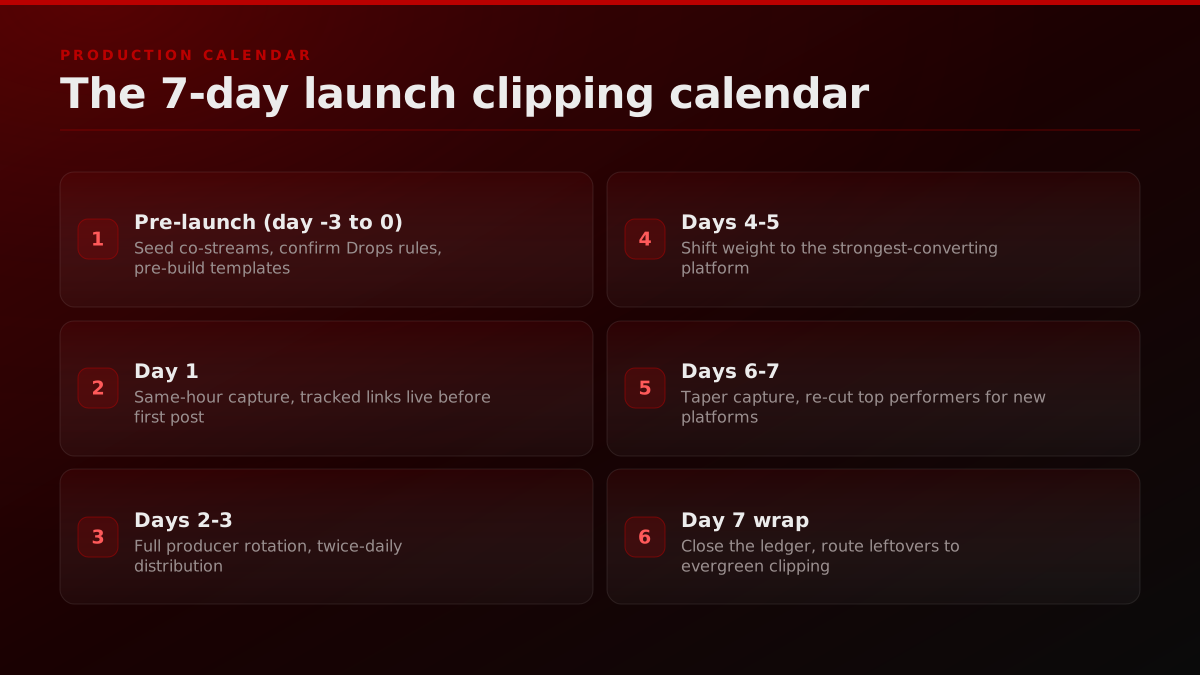
The calendar a managed desk runs during launch week compresses the usual weekly clipping cadence into a daily one, then eases off as the trending curve decays. It runs in six phases from pre-launch seeding through the day-7 wrap, each with its own capture rhythm and distribution weight.
The full six-phase breakdown:
- Pre-launch (day minus 3 to day 0), seed the co-stream cluster, confirm the Drops campaign's exact rules and test-claim flow, and pre-build the vertical re-cut templates so day one has zero setup lag.
- Day 1, same-hour capture on the primary stream and any confirmed co-streams, first-boot reaction and closing verdict clips prioritized, tracked links live and tested before the first clip posts.
- Days 2 to 3, full producer rotation live, organic co-stream cluster tracked alongside sponsored channels, twice-daily distribution across Twitch, Kick, TikTok, Shorts, and Reels.
- Days 4 to 5, shift weighting toward whichever platform is showing the strongest qualified-conversion signal so far, wishlist clicks on PC, attributed installs on mobile, Drops claims where applicable.
- Days 6 to 7, taper capture frequency as concurrent viewership starts to decay off its peak, prioritize re-cutting the highest-performing clips from days 1 to 3 for platforms that have not yet seen them.
- Day 7 wrap, close the qualified-install ledger for the window, and route any remaining un-clipped highlight footage into the evergreen clipping pipeline rather than discarding it.
When to run this yourself vs hand it to a managed launch desk
A solo developer or a two-person marketing team can run the pre-launch trickle of clips without much strain, an occasional dev-vlog cut, a trailer re-cut, a handful of streamer shoutouts, often tied to the developer's own founder-facing audience as much as the game's. The moment that changes is launch week itself, when a title with real co-stream pickup starts generating more clip-worthy moments per hour than one person can watch live, let alone cut, caption, and route across five destinations inside the same day.
That gap is the specific problem a managed clipping desk is built to close, not by working harder on the same one-person workflow, but by running the producer rotation and same-day tempo described above as a standing operation rather than a scramble. The same how-to-choose questions apply here as choosing any clipping agency: can they show a real ledger, do they cite completion-rate thresholds instead of raw views, and have they run a compressed timeline before. Whether that is the right call for a specific launch comes down to how much co-stream volume is realistically expected, which is a question worth answering before launch day, not during it.