An AI clipping tool cuts your long-form video into shorts automatically. A clipping agency runs the entire motion around it: vetting clippers, cutting, quality control, distribution, and the reach itself. The right choice is not one or the other in the abstract. Use a tool when you are solo or pre-revenue, producing under roughly two source-hours a week, and you can QA your own cuts. Use an agency when you have a launch window, need guaranteed reach rather than files, and your deal size justifies paying for qualified views. Once you are in that lane, how to choose a clipping agency is the test that separates the three pricing models.
The short version
An AI clipping tool cuts your long-form video into shorts automatically. A clipping agency runs the whole motion, vetting clippers, cutting, QA, distribution, and the reach itself. The honest answer is not one or the other, it is a function of stage and volume. Use a tool when you are solo or pre-revenue, producing under roughly two source-hours a week, and you can QA your own cuts. Use an agency when you have a launch window, need guaranteed reach rather than a folder of files, and your deal size justifies paying for qualified views instead of software. The benchmark that decides it is cost per qualified view, not the sticker price. On the FORKOFF clipping ledger, a view counts only after it clears a qualified-view gate, and the network has processed 5B+ views moving short-form across platforms. Tools count cuts. The hard part is reach.
If you are deciding between a clipping tool and a clipping agency in 2026, you have a stack of long-form content, a budget, and a question that the listicles on the first page of Google do not actually answer: which one gets your clips watched? Most comparisons rank the cutting software on features and speed, then stop. A few rank agencies, and almost none address the prior question of whether clipping agencies are legit given the view-farm problem in the category. Almost none ask the question that decides the outcome, which is reach, and almost none of them are written by anyone with a reach number to put on the table.
Here is a pattern worth naming up front. Some AI clipping tools now publish "best clipping agency" listicles, ranking the agencies in detail and then routing the reader back to the tool as the smarter, cheaper choice. It is a clever move and a useful tell. A list of agencies written by a software company is not an answer to "tool or agency," it is a sales path dressed as one. This guide takes the other side and answers the question with benchmarks instead of placement, including the cases where a tool genuinely beats hiring anyone.
The number that frames everything below is simple. The FORKOFF clipping network has processed 5B+ views moving short-form content across platforms. No clipping tool carries a reach figure like that, because a tool does not measure reach. It measures cuts. That difference, cuts versus reach, is the entire decision.
Faded | Clipur.com
@youfadedwealth
"Clippers are cooked this AI tool does auto clipping for me in 30 seconds" Opus & CapCut have been able to do this for years How about distribution? Is it getting views? Is it posting in volume? Is it engaging within a target niche? So many uninformed opinions out there
What is the real difference between a clipping tool and a clipping agency?
A clipping tool is software that ingests a long-form video and produces short vertical cuts, usually with auto-captions, a guessed hook, and a templated frame. You operate it, you review the output, and you post the results. A clipping agency is a service that owns the whole motion: it sources and vets the clippers, it cuts, it runs quality control, it distributes the clips into feeds and places them with creators, and it reports reach against a goal. The fastest way to tell them apart is to ask a single question: after the clip is cut, whose job is it to get it watched? With a tool, that job is yours. With a real agency, that job is the product. Some tools now bundle automated posting to blur that line; the FORKOFF vs Overlap comparison tests whether clip-and-post automation actually delivers reach or just schedules the upload.
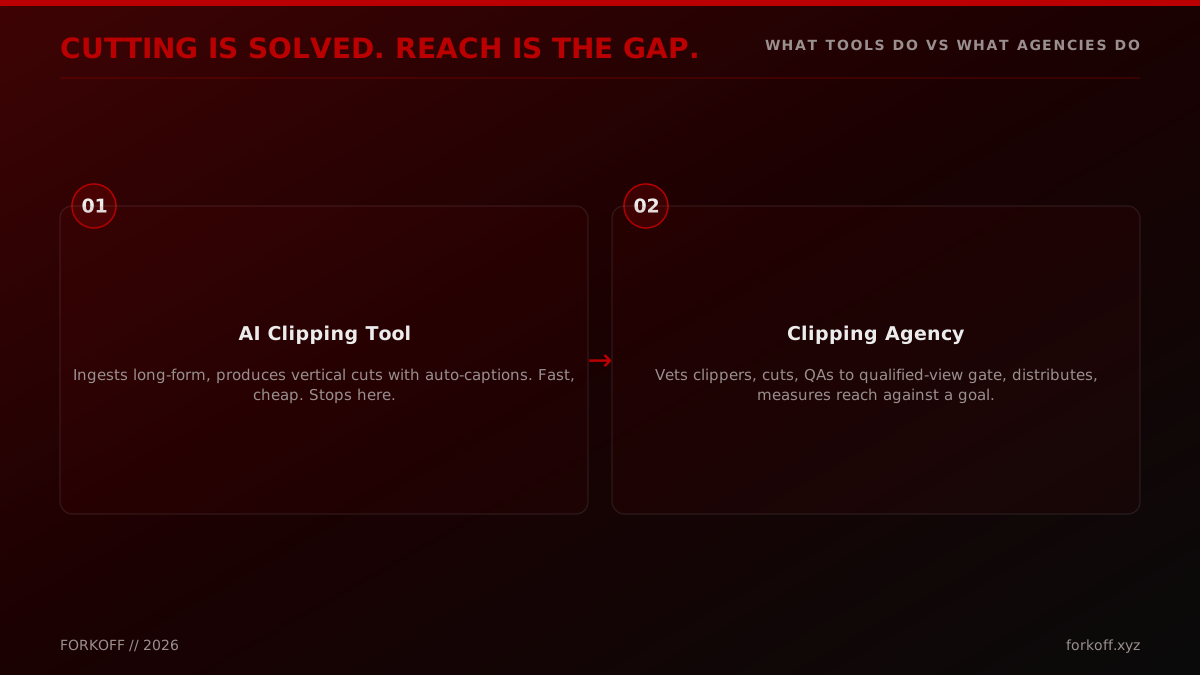
This distinction matters far more in 2026 than it did two years ago, because the cost of cutting a clip has collapsed while the difficulty of getting it seen has gone up. AI tooling, template libraries, and a generation of fluent editors mean a clean vertical cut is no longer scarce. Attention is. The money behind this has gotten serious, the IAB pegs US creator ad spend at roughly $37 billion and growing several times faster than the broader media industry, and Grand View Research sizes the creator economy in the hundreds of billions, with Goldman Sachs projecting it to nearly double to $480 billion by 2027, so the tool-versus-agency decision is now a real budget line, not a side experiment. The demand-side case for short-form video is not in dispute, Wyzowl's State of Video finds the overwhelming majority of people say a video has convinced them to buy, and HubSpot's State of Video research reports the same pull across B2B buyers. Clipping itself has crossed from fringe tactic to recognized advertiser strategy, as Digiday documented in its breakdown of the channel. The inversion, settled demand and scarce attention, is why the smart operators talk about distribution as the bottleneck, not production.
The people building the tools see the same thing from the inside. In founder communities, the open question about automated clipping is not whether it cuts well, it is whether cutting is even a defensible product or just a feature that bigger editors will absorb. That is a tell. When the builders themselves treat the cut as a commodity, the value has already moved downstream to the part the cut does not touch.
Is this a standalone SaaS with recurring revenue potential, or just a feature that will get absorbed by bigger video editing platforms?
It helps to spell out what a clipping agency actually does past the cut, because the word distribution gets used as if it means one thing when it means at least four. First, vetting: deciding which clippers and which channels get the asset, judged on delivered reach rather than a follower count. Second, quality control: holding every cut to a standard before it ships, including a qualified-view gate that filters out views that will never count. Third, seeding and placement: getting the cuts into the feeds and creator accounts that already hold the attention you are trying to rent, so the clip arrives inside an audience instead of waiting for one. Fourth, measurement: tracking qualified views and downstream signups rather than raw view counts, so you can tell which cut and which channel actually moved a buyer. A tool does the cut and stops at step zero. An agency runs all four as a loop and reallocates based on what the data says.
Operator note5B+ views processed through the FORKOFF clipping network is a reach proof point no tool carries, because a tool counts cuts, not reach.
What is an AI clipping tool actually good at?
An AI clipping tool is genuinely good at one thing, and it is a valuable thing: turning a long recording into many competent vertical cuts, fast and at a near-zero marginal cost per clip. For raw volume and speed, nothing a human-run agency does competes on price per cut. If you record a podcast every week and you need ten shorts out of each episode by tomorrow, a tool is the correct first tool to reach for, and pretending otherwise would be dishonest.
The mechanics are real. A modern clipping tool transcribes the source, scores segments for likely standalone interest, reframes to vertical with face-tracking, and burns in captions, all in minutes. At the top of the creator market, even large studios fold these tools into their pipeline as an editor-efficiency layer, using them to draft intros and B-roll while a human makes the final call. That is the healthy use: the tool drafts, a person decides. The unhealthy use is treating the draft as the finished, distribution-ready asset, because that is the step where the tool quietly stops doing the job and you have not noticed yet.
Where tools are weak is judgment and accountability. They guess which moment is the hook, they cannot tell you why a clip will or will not perform, and they have no stake in whether it does. Operators searching for a better clipper, again and again, are really searching for the judgment layer a tool does not have. That layer is not a feature you can buy, it is the part an agency staffs with people.
Why reach, not cutting, is the gap that decides the outcome
Reach is the gap because it is the hard half of the problem and the half that does not demo well. Cutting is visible, fast, and easy to sell on a feature page. Reach is unglamorous plumbing: ingestion gates, native cuts, seeding, placement, measurement. So tools sell the part that looks good in a product tour and stay quiet on the part that decides results. Operators feel this in their bones. The most common post-mortem on a clipping push is not the clips were badly cut. It is the clips were fine and nobody saw them.
More clips get made every quarter, attention does not expand to match
The volume of video being published keeps climbing year over year. That is the real story behind the attention crunch. More clips compete for the same finite minutes of buyer attention, so the file you cut is not the asset. The watched minute is the asset. A clipping tool makes producing more files cheaper, which is exactly why the bottleneck moved downstream to reach.
Source: Wistia, State of Video report
Most raw clip views never clear a quality gate
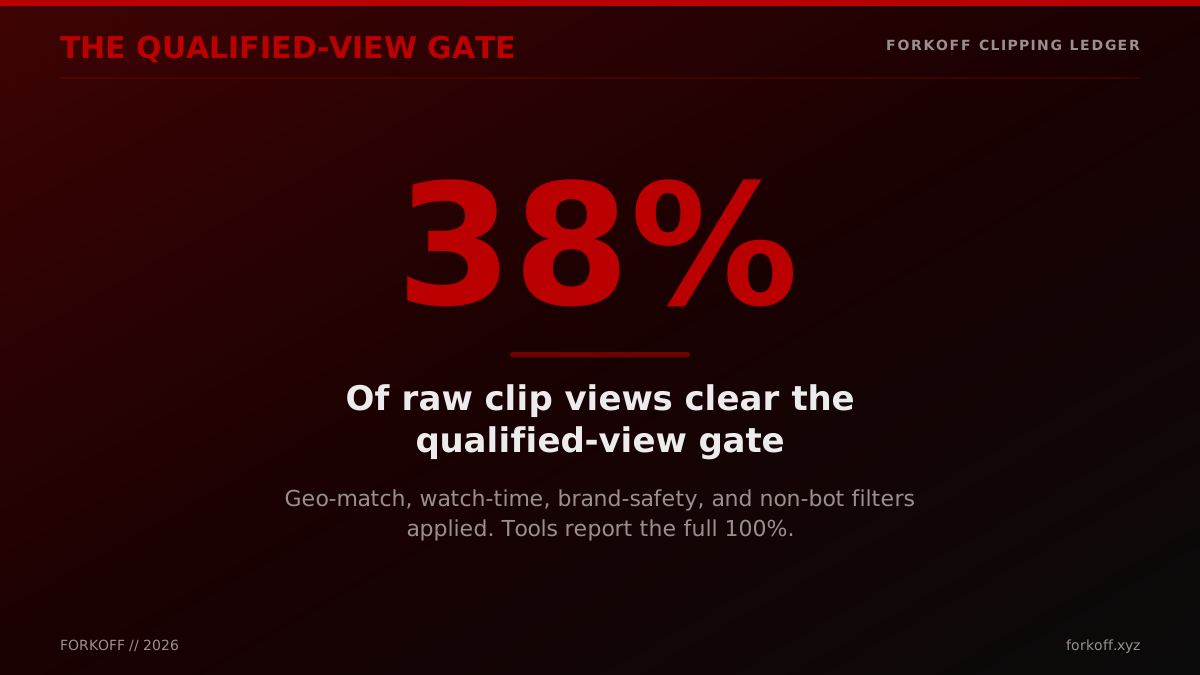
On the FORKOFF clipping ledger, a qualified view is one that clears a gate checking geo-match, watch-time, brand-safety, and non-bot signals, and the reference cohort ran 1.19M views at $0.003 per qualified view. A clipping tool reports raw cut counts and raw views, which is the easy half. The number that maps to pipeline is the qualified view, and almost no tool measures it because measuring it is the agency-grade part of the job.
Source: FORKOFF clipping ledger, qualified-views methodology
There is a hard, technical reason a cleanly-cut clip can fail. Platforms gate content before any wide audience sees it. When a clip goes live, the platform shows it to a small seed audience and watches the first few seconds: did they keep watching or swipe away, did anyone share or save? If the early signals are strong, the audience widens in waves. If they are weak, the clip is quietly capped and never recovers, no matter how good the back half is. Think with Google's video research is blunt about this: the early moments carry most of the outcome, and the winners design for the hook, not the budget. A clip with zero views did not lose an audience test. It never got to the test.
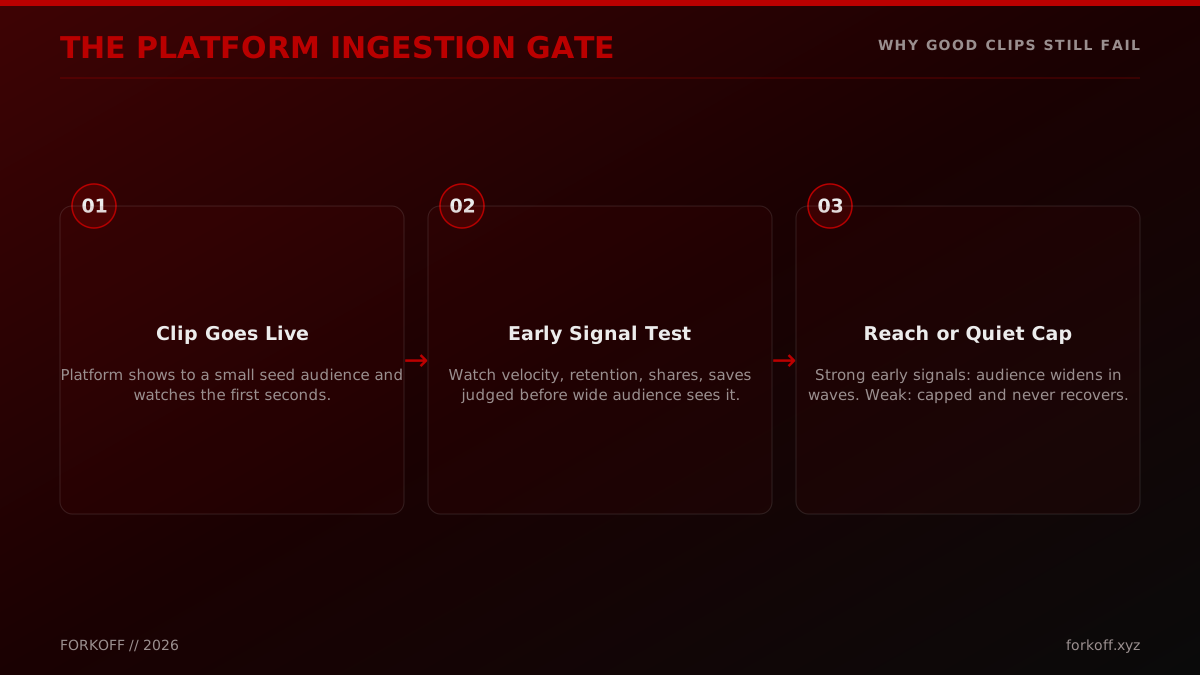
This is exactly where automated cuts tend to break down. A tool guesses the hook, applies a templated frame, and produces something competent but generic, and generic is precisely what the ingestion gate throttles. The craft that clears the gate is front-loaded attention engineering, choosing the three seconds that stop a thumb, and that is a human judgment a tool approximates but does not own. The market voice on this is loud and consistent. Operators who have run automated clipping at volume keep landing on the same conclusion: the cutting got easy, the getting-watched stayed hard.
Whenever I use it, the content reaches nobody. And I mean nobody other than friends and fam that have alerts turned on. These reels seem to really be blacklisted.
That is not a fringe complaint, it is the central frustration of anyone who has fed long-form into a tool and watched the output land flat. You bought software to solve clipping and discovered that clipping was never the binding constraint.
Reece | Clipping Agency
@rhysclipping
We did 18B+ views in 12 months. Ask me anything. How we structure campaigns, what we charge per CPM, how the clipper network actually gets paid, what kills 99% of clipping operations I'll answer in the replies.
The qualified-view data makes the gap concrete. On the FORKOFF clipping ledger, a view counts only after it clears a gate that checks geo-match, watch-time, brand-safety, and non-bot signals. A tool that reports raw view counts is reporting the wide, unfiltered top of the funnel. An agency that prices on qualified views is accountable for the narrow, real bottom. If you want the methodology behind that gate, the qualified-views methodology and the qualified views metric explainer lay it out, and the CPQV calculator lets you price your own clips against it.
The benchmark that actually decides it: cost per qualified view
The single most useful reframe is to stop comparing a tool and an agency on sticker price and start comparing them on cost per qualified view. Sticker price is a vendor-input metric, it tells you what you pay, not what you get. Cost per qualified view is an output metric, it tells you what each unit of genuine attention costs against a quality gate. A tool subscription looks cheap until you load in the operator hours and divide by the views that actually counted.
AI clipping tool vs clipping agency, the six dimensions that decide it
| Dimension | AI clipping tool | Clipping agency (distribution-first) |
|---|---|---|
| Vetting | None. You operate the software yourself. | Clippers vetted by delivered reach, CPM times quality multipliers, not follower counts. |
| Pricing model | Flat SaaS subscription. You pay for the software. | Performance-based. You pay for qualified views, not seat licenses. |
| QA | You review and fix every cut. | Managed QA against an audit-ledger gate before anything ships. |
| Reach guarantee | None. The deliverable is files, not views. | Reach is the deliverable, backed by 5B+ views processed. |
| Scale | Caps at your own operator hours. | Scales through a vetted clipper network. |
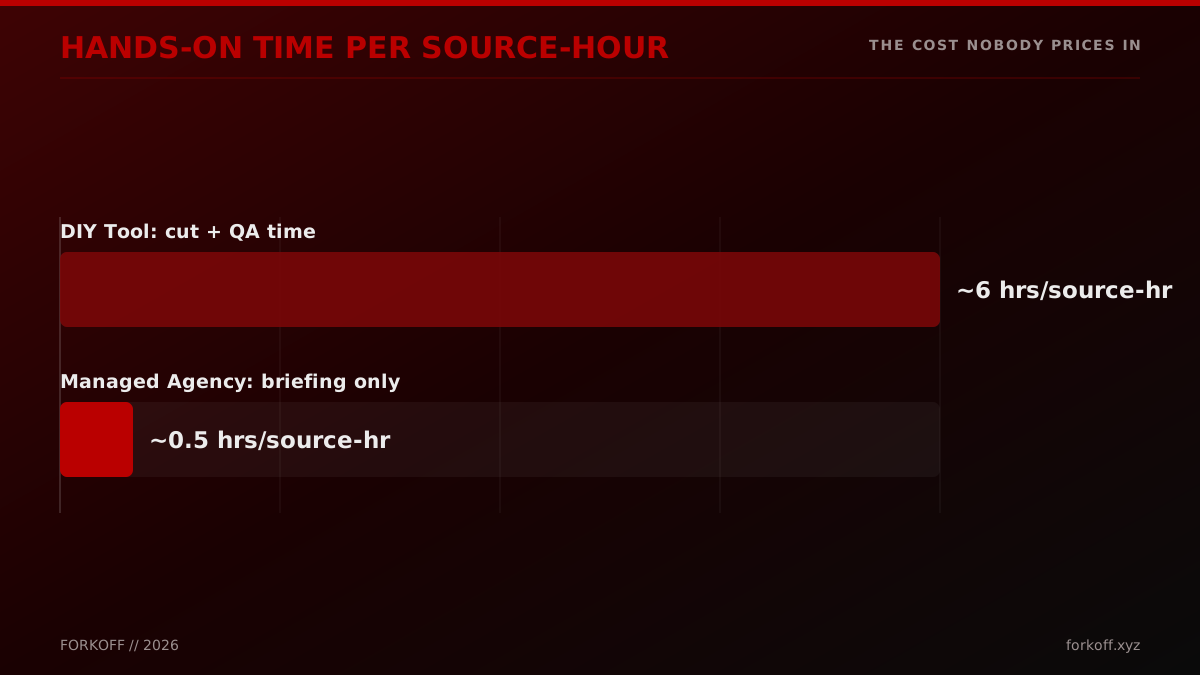
| Hands-on time | High. Roughly six hours per source-hour to cut and QA. | Low. Roughly a briefing per source-hour. |
Scoring is editorial and FORKOFF is the publisher and runs a clipping service. The verdict names the cases where a tool is the right call and an agency is the wrong one.
Walk the math. A clipping tool runs tens of dollars a month for the seat, but cutting and QA-ing a long-form source into a usable set of clips takes real operator time at a loaded rate. Once those hours are costed in, the DIY-tool lane lands higher on cost per qualified view than the managed lane as volume grows, and the two lines cross at a volume set by your own hourly rate. Below that volume the tool is genuinely cheaper and the right call. Above it, the operator hours you stopped pricing make the managed lane the unit-economic winner. The full breakdown lives in the Opus Clip versus managed clipping cost analysis and the three-lane agency versus in-house versus tool CPQV breakdown, and you can run your own numbers in the CPQV calculator.
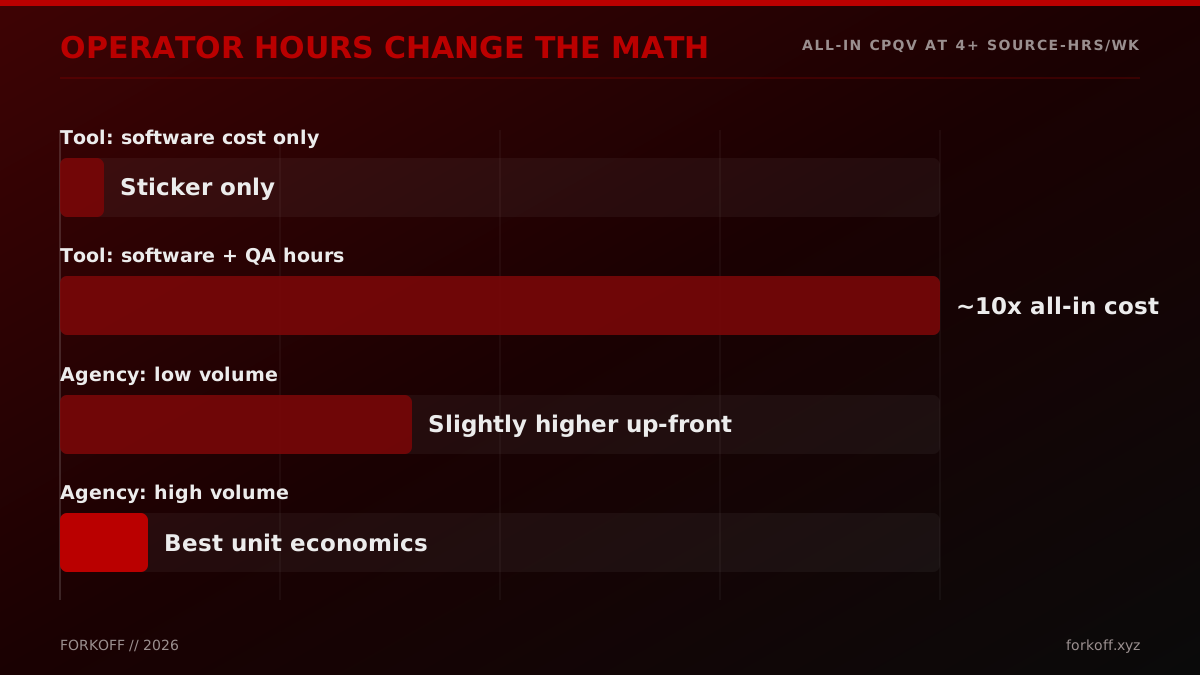
The same logic, read as a decision rather than a curve, sorts cleanly by stage and volume. Below is which lane wins for whom, and why, before you ever open a calculator.
Which lane wins, by stage and production volume (2026)
| Your situation | Sensible lane | Why |
|---|---|---|
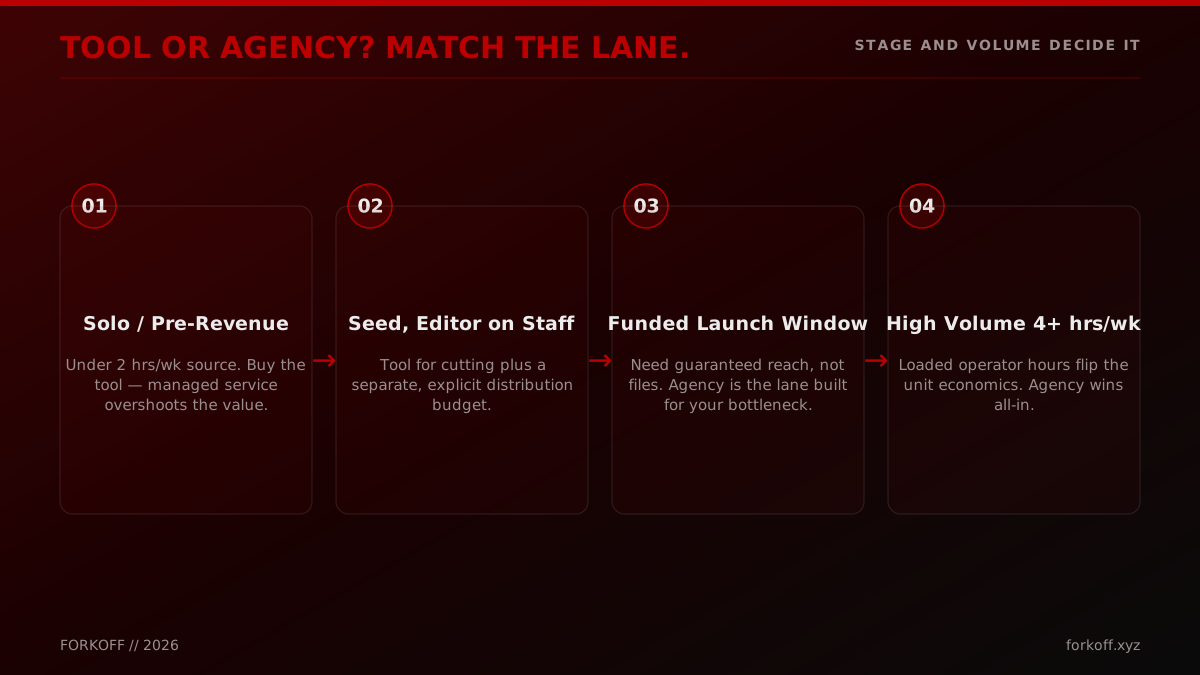
| Solo creator or pre-revenue, under 2 source-hours per week | AI clipping tool | The software cost is low and your own hours are effectively free. A managed service overshoots the value. |
| Seed-stage, occasional launches, in-house editor available | Tool plus a distribution plan | The tool cuts, but you must budget reach separately or the clips sit unwatched. |
| Funded launch window, need guaranteed reach | Clipping agency | Reach is the deliverable and the deal size justifies paying per qualified view. |
| High volume, 4+ source-hours per week, deal size over ~$5K | Clipping agency | Loaded operator hours make the tool lane more expensive all-in once you cost your own time. |
Break-even is directional, drawn from the FORKOFF clipping ledger. Verify against your own operator-hour cost and deal size before deciding.
The market keeps rediscovering this the expensive way. Operators buy the tool because the subscription is small, run it for a quarter, and then notice the line item that never appeared on the invoice: their own time, and the cost of clips that went nowhere.
Stop paying $50 a month for an AI clip tool. I built a free, open-source app to automate your shorts channel, doing the heavy lifting of clip generation entirely on your own hardware instead of a subscription.
Operator noteA FORKOFF view counts only after it clears the qualified-view gate. A tool's raw count includes every view that failed it.
How clippers get vetted: delivered reach, not follower counts
This is the dimension that separates a real agency from both a tool and a body shop, and it is invisible on a feature comparison. A clipping tool vets nobody, you are the operator. A weak agency vets clippers by follower count, which is a vanity proxy that says nothing about whether a post lands. A strong agency vets by delivered reach: CPM against real watch-time, multiplied by quality signals like audience match and retention, not the size of a follower list that may be inflated or inactive.
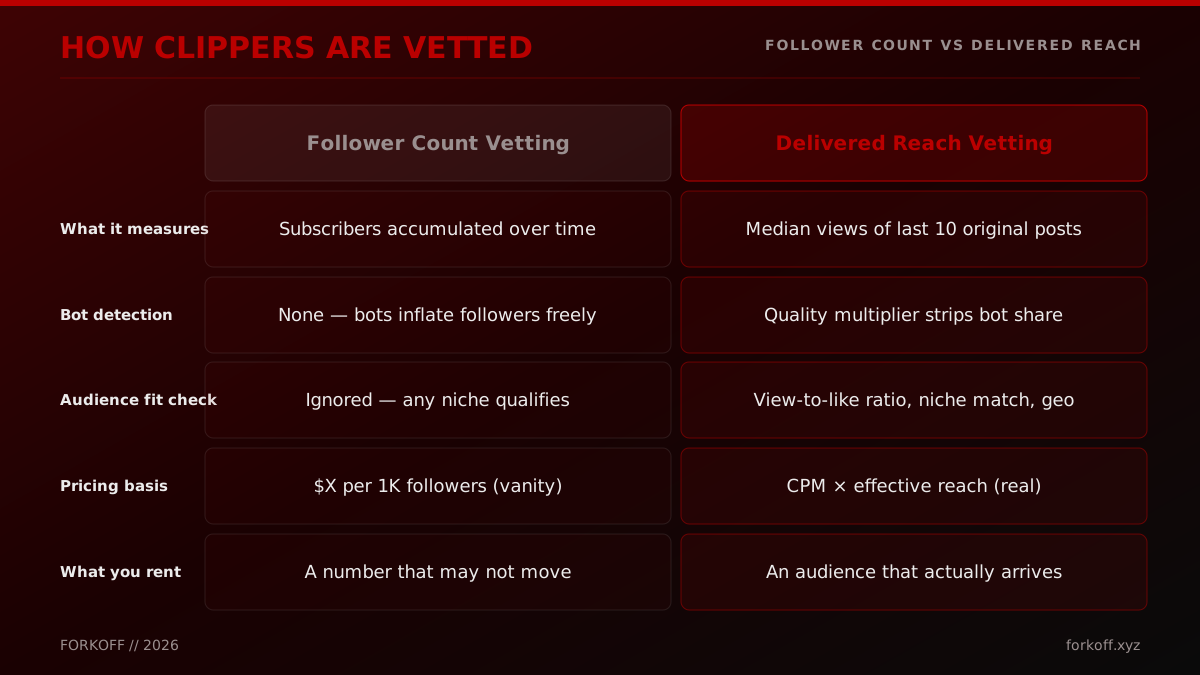
The reason follower count fails as a filter is the same reason raw views fail as a metric. Both count the wide top of the funnel and ignore the part that maps to outcomes. A clipper with 200,000 followers and a dead audience delivers less qualified reach than a clipper with 20,000 followers whose posts actually retain and convert. Vetting on delivered reach is how you rent an audience instead of renting a number, and it is structurally impossible for a tool to do, because a tool has no clippers to vet. If you want to see how that math is run on the placement side, the KOL marketing service and the KOL rate calculator show how reach gets priced, and clippers who want to be vetted into the network can read become a clipper and the clippers overview. The same discount applies to a network's headline view total, which is a capacity claim until you know which counter produced it, and verifying a clipping network's scale claim sets out the four questions that settle it.
Short-form is the dominant format, and the feeds reward native cuts
Short-form video has become the dominant consumption format across social platforms, and the feeds rank native, vertical, fast-hook clips over repurposed long-form. That is not a style preference, it is a ranking input. A clip built natively for the format clears the ingestion gate that a cropped long-form file fails. Whether you buy a tool or hire an agency, the cut has to be designed for the feed, not adapted to it.
Source: Sprout Social, social media video statistics
Pricing model: paying for software versus paying for results
A clipping tool charges a flat subscription. You pay the same whether the clips reach a million people or nobody, which means the vendor has no skin in your reach. A performance-priced agency charges against qualified views, which ties the bill to the outcome and aligns the vendor with your pipeline from the first cut. That alignment is not a marketing line, it is a structural difference in who carries the risk. With a subscription, the risk that the clips do not land is entirely yours. With outcome pricing, the vendor shares it.
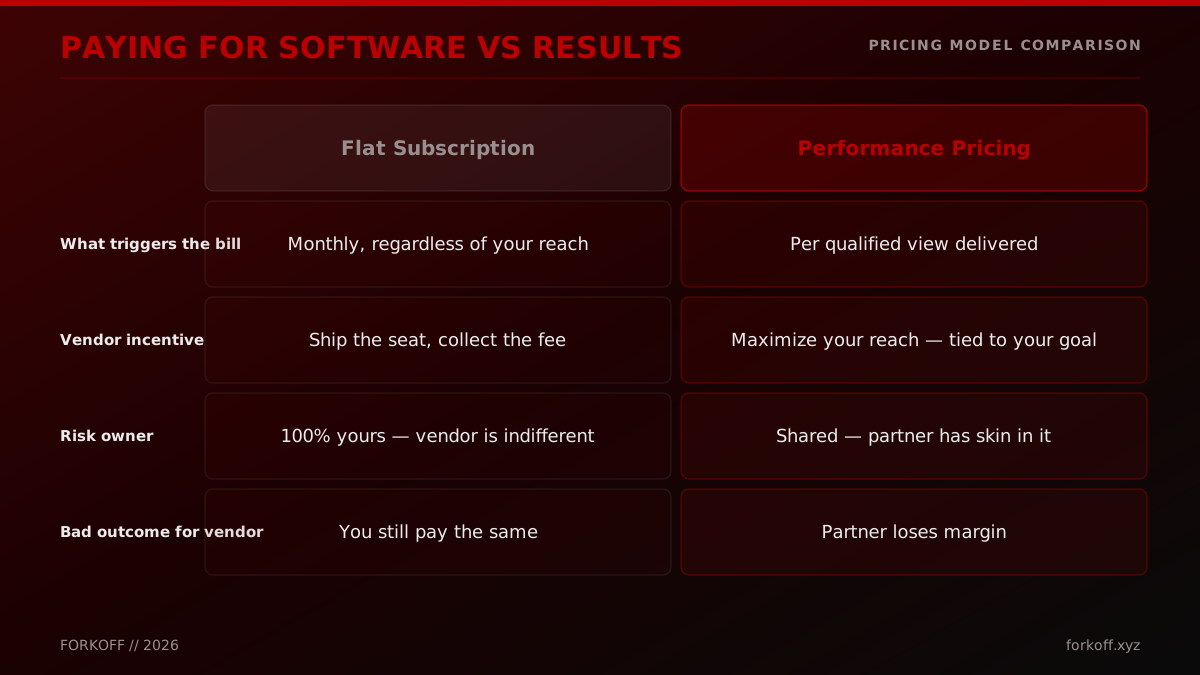
This is also the honest argument against an agency for the wrong buyer. If your volume is low and your own time is effectively free, paying per qualified view can cost more than a cheap subscription you run yourself, and you should run the subscription. Performance pricing only wins when reach is the thing you actually need and cannot reliably produce on your own. The performance clipping line item breakdown frames clipping as a measurable spend, and the managed clipping playbook shows what the outcome-priced motion looks like in practice. Operators who have run real ad spend tend to land hard on the outcome-pricing side once volume rises.
Do we do clipping? Yes. But we do so much more than that, clipping, UGC, memes, slideshows, green screens, all for one flat CPM price. Unlike other teams, we work closely with our clients to optimize week over week.
The 6-dimension comparison, scored
Here is the whole decision on one grid. Production quality is assumed table stakes at the top of each lane, a good tool cuts cleanly and a good agency cuts cleanly too. The spread is in everything downstream of the cut. FORKOFF is the publisher here and runs a clipping service, so read the scoring with that in view, and note that the verdict names plainly where a tool wins.
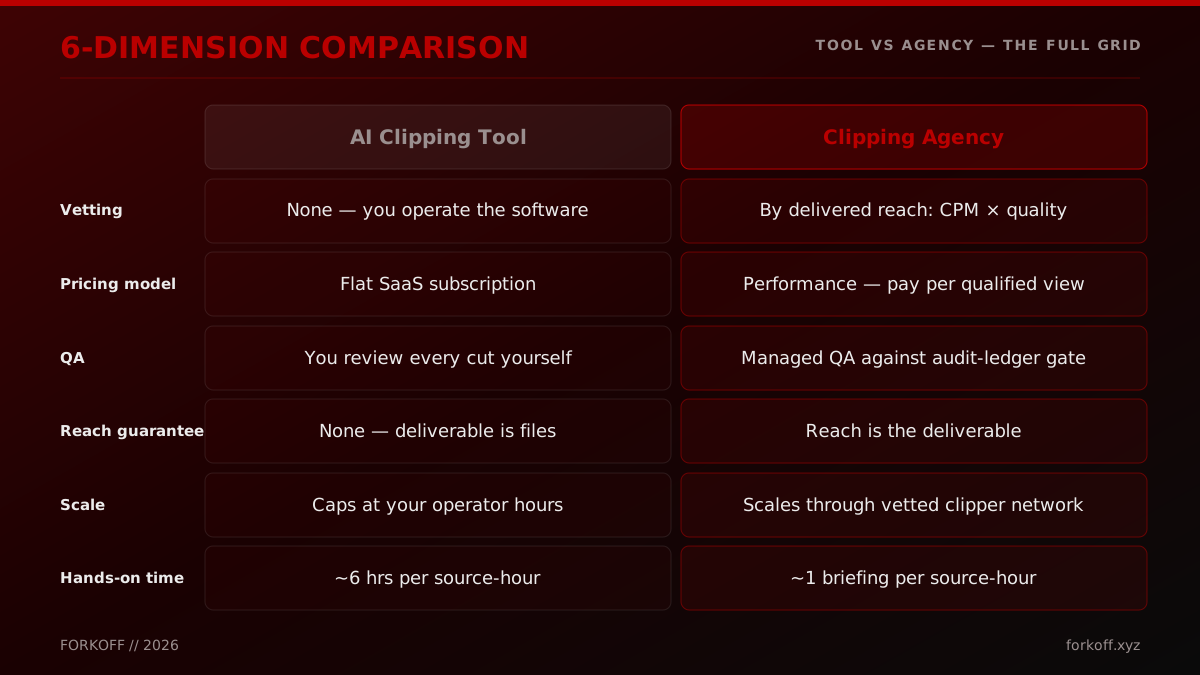
The grid makes the shape of the choice obvious. A tool wins on cost and control at low volume and stakes. An agency wins on vetting, reach guarantee, scale, and hands-on time once volume and stakes rise. The dimension that usually decides it for a funded team is hands-on time, because the six-hours-per-source-hour QA burden of the DIY lane is the cost nobody prices until they have lived it.
Anyone else spending more time reviewing AI clips than it would take to just edit manually?
What the tool-published agency listicles get wrong
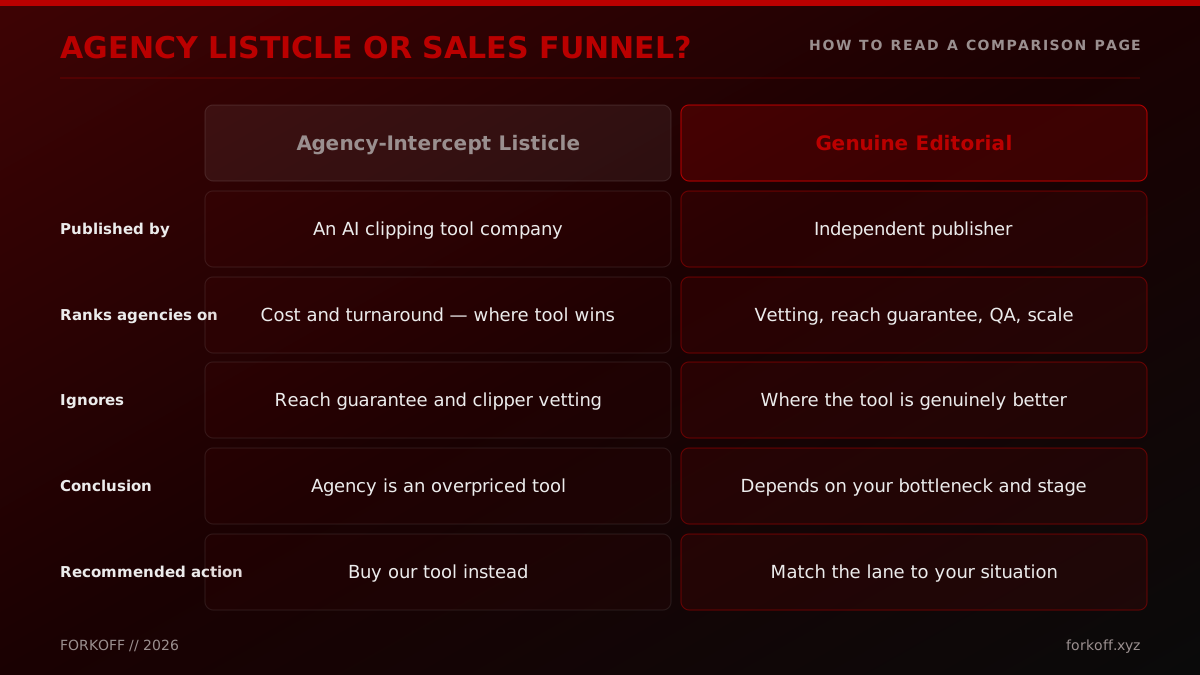
When an AI clipping tool publishes a ranked list of clipping agencies, that list is a sales funnel wearing the costume of an answer. It ranks the agencies on the attributes the tool can beat on price, cost and turnaround, stays quiet on the attributes the tool cannot match, vetting and guaranteed reach, and routes the reader back to the software as the smarter buy. The structure gives it away: the conclusion always favors the publisher's product, because the list was reverse-engineered from that conclusion.
There is nothing wrong with a company arguing for its own product. The problem is the format pretends to be neutral. A buyer reads "the 10 best clipping agencies," assumes it is editorial, and absorbs the framing that agencies are an overpriced version of a tool. That framing is true for exactly one buyer, the solo, low-volume creator who should buy the tool, and false for the funded team with a launch window, which is precisely the buyer the list is aimed at converting. The tell to watch for is simple. If a comparison ranks agencies and the recommended action is "use our tool instead," it never measured the one axis that separates the two, which is whether anyone sees the clips.
This guide inverts that move on purpose. FORKOFF runs a clipping agency and ranks itself openly, then names the cases where a tool is the right call and an agency is the wrong one. A comparison that cannot articulate when you should not buy from its author is not a comparison, it is an advertisement.
When you should NOT hire a clipping agency
Sometimes the right move is to buy the tool and run it yourself, and no agency, including this one, gets credit for saying so, but it is true. The decision is genuinely contested, Digiday has laid out the case for and against clipping as a channel, and the same honesty applies one level down to how you run it. Skip the agency when any of these hold. You are solo or pre-revenue with low volume, in which case a subscription plus your own posting habit clears the bar and a service overshoots the value. You are already a credible on-camera presence posting consistently to an audience you have built, in which case the reach problem the agency solves is one you have partly solved yourself. Your content is the kind that explains itself and lives on a pricing page or in an onboarding flow rather than fighting for cold attention in a feed. Or your total output is a handful of clips a month, below the volume where managed economics make sense.
It is worth laying the lanes side by side honestly, because the choice is rarely framed without a sales agenda. A tool is the fastest and cheapest way to turn one source into many cuts, and it goes exactly as far as your own time and your own distribution take it. An in-house clipper compounds if you need clips continuously, but you wait to hire and you wait for them to learn your voice, and one person caps out fast. An agency is the only lane priced against the outcome rather than the deliverable, which means the incentive is reach, but it is the wrong call if all you need is cuts and you already own a way to get them watched. Read it as a question about what is scarce for you right now. If cutting capacity is scarce, a tool fixes that cheaply. If watched minutes are scarce, which for most funded launches is the real answer, an agency is the lane built for it.
You run a clipping agency, but you've never been clipped? That's like a morbidly obese person trying to sell you a fitness plan. The evidence of your product is always you.
The priority problem is real on the agency side too, and it cuts against the body shops, not the distribution-first partners. To a generic agency juggling many accounts, your clips are one queue among many, and the delays that creates can blow a launch window you cannot move. The defense is the same on both sides: pick a partner whose pricing is tied to your outcome, so their incentive is your reach, not their utilization.
How I'm building a short form clipping army (full breakdown)
Grayson Creates
How a short-form clipping operation actually gets built: deploying an editor team, structuring the content system, and driving reach at scale. The operational work a tool hands back to you.
Can you run a clipping tool and an agency together?
Yes, and the teams that get the most out of both run them as a division of labor, not a choice. The tool handles first-pass cutting and high-volume internal repurposing, the kind of always-on output where speed matters more than reach. The agency owns the cuts that have to win cold attention: launches, flagship moments, the clips whose job is to reach buyers who have never heard of you. The dividing line is the stakes of the view, not the format of the file.
In practice that looks like this. You run the tool on every podcast and webinar to keep your owned channels fed, because that audience already follows you and the bar is consistency, not virality. When a launch comes, you hand the same source to the agency, which vets the clippers, engineers the hooks for the ingestion gate, distributes across feeds it does not own, and reports back on qualified views. You are not paying the agency to do what the tool does cheaply. You are paying it for the half the tool cannot do at all, which is reach you can measure and stake a launch on.
The mistake is using them in the wrong order, running the agency for routine internal clips where a tool would do, or running the tool for a launch where reach is the whole point. Match the lane to the stakes of the view and the two stop competing and start compounding.
How to brief a clipping agency so you do not waste the budget
The biggest predictor of whether agency money is well spent is the brief, not the agency. A vague brief produces clips aimed at nothing, and clips aimed at nothing are the most expensive thing in this category. Tighten the brief on a few fronts and most of the failure modes above disappear.
Start with the goal as a number, not a vibe. Not "more clips" but "30,000 qualified views from our ICP and 200 signups in the launch window." A number forces every later decision, because the team now has a target to design the hook, the length, and the platform mix against. An agency that cannot map its work to that number is telling you it does not think in that unit.
Then ask the questions that sort a distribution partner from a cut-and-deliver shop, out loud, on the first call. How do you vet the clippers, by follower count or delivered reach? How will these clips reach an audience after they are cut, in concrete channels? What do you measure and bill against, raw views or qualified views behind a gate? What happens if a batch underperforms the goal? A distribution-aware partner answers with channels, vetting criteria, and a qualified-view definition. A shop changes the subject back to turnaround and cut volume.
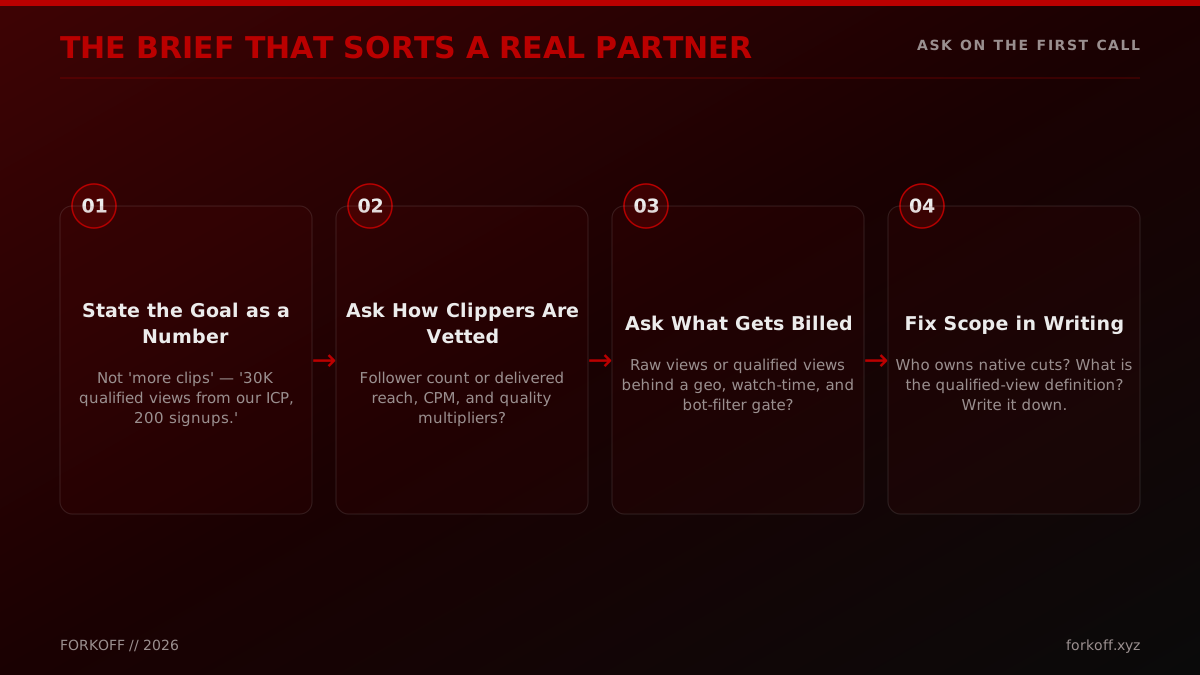
Finally, fix scope and measurement in writing. Decide who owns the platform-native versions, how reach is reported, and what the qualified-view definition actually is, geo, watch-time, brand-safety, bot filtering, so you are not billed for views that never counted. The most common budget leak in clipping is paying for raw views that look great in a dashboard and produce nothing downstream. Write the qualified-view gate into the agreement and that leak closes.
The verdict: which lane is right for you
If you are solo or pre-revenue with low volume and a tolerance for your own QA, buy a clipping tool and skip the agency. You will spend less and the tool clears the bar for what you need. If you are seed-stage with occasional launches and an editor on staff, use a tool for the cutting but budget reach as a separate, explicit line, because the tool will not solve it for you. If you have a funded launch window, need guaranteed reach rather than a folder of files, and your deal size justifies paying for qualified views, hire a distribution-first agency, that is the lane built for your bottleneck.
The reason FORKOFF runs a clipping agency rather than selling a tool is not that cutting is hard, it is that cutting is solved and reach is not. FORKOFF vets clippers by delivered reach, runs every cut through a qualified-view gate, distributes and places the clips, and prices on qualified views rather than a seat license, backed by a network that has processed 5B+ views. The honest disclosure, the one the agency-intercept listicles leave out, is the mirror image of their pitch: if all you need is cuts and you already have a way to get them watched, a tool is the cleaner, cheaper choice and you should take it. If you need the clips and the audience, that is a different kind of partner.
For the adjacent decisions around this one, the what a clipping agency does explainer covers the service in depth, the clipping tools comparison covers the software side, the best clipping agency and clipping agency versus marketplace comparisons cover the service landscape, and the FORKOFF versus Opus Clip page runs the brand-versus-tool head-to-head. The clipping service and podcast clipping pages lay out the pipeline, the clipping brands page covers the buyer side, and the product launch video, Twitter marketing, Reddit marketing, and founder funnel pages show where clipping sits inside a full reach system. Run the marketing ROI calculator and the payout estimator on the numbers, read the clipping CPQV benchmark, and when you are ready to map a reach plan, talk to us or book a call.
AI clipping tool vs clipping agency, 2026
| Question | AI clipping tool | Clipping agency |
|---|---|---|
| Who operates it | You do | The agency does |
| What you pay for | Software seat | Qualified views |
| Who is vetted | Nobody | Clippers, by delivered reach |
| What you get | Cut files | Reach against a goal |
| Best for | Solo, pre-revenue, low volume | Funded launch, guaranteed reach |
| Hands-on time | High, you QA every cut | Low, you brief and review |
A tool and an agency solve different halves of the problem. The tool solves cutting. The agency solves reach. The choice is about which half is your bottleneck.
Operator noteAll-in cost flips near 1.5 source-hours per week. Below that the tool is cheaper; above it, loaded operator hours make the agency lane win.