A CPM rate for clipping is the dollar amount paid per 1,000 views on a clipped video posted across short-form platforms. The number you see in a Whop campaign listing or a creator brief is rarely the number that lands in a clipper account. Headline CPMs in 2026 sit between $1 and $10 per 1,000 views, net CPMs after cuts and caps land between $0.50 and $4, and the effective qualified-view CPM (the only honest comparison unit) lands between $1.50 and $9 depending on the niche and the audit gate.
The 30-second CPM picture
Headline clipping CPM rates in 2026 sit between $1 and $10 per 1,000 views on Whop and similar marketplaces. Net rates after agency cuts and per-clip caps land between $0.50 and $4 per 1,000 raw views. Translate to qualified views and the effective CPM is $1.50 to $8 depending on niche. FORKOFF managed clipping bills brands $0.003 per qualified view (a $3 qualified-view CPM with no per-clip cap) and pays clippers $1.00 to $1.25 per 1,000 qualified views, with the CPM stated on the brief before they accept. The rate you should pay (or expect to be paid) depends entirely on which denominator the deal uses.
This post benchmarks every layer of the stack: headline, net, and qualified-view. The data sources are the FORKOFF Clipping Ledger (13 campaigns through Q1 and Q2 2026), Whop public campaign browse-data observed across the same window, and the Reddit and Business Insider reporting referenced inline, cross-checked against published creator-earnings benchmarks. Read this if you are a creator deciding what to charge, a brand deciding what to pay, or a clipper choosing which campaign to accept.
Clipping CPM rates by platform and deal structure (2026)
| Surface | Headline CPM (gross) | Agency cut | Net CPM (raw views) | Net CPM (qualified views) |
|---|---|---|---|---|
| Whop campaign (brand-sponsored) | $2 to $10 | 20% to 50% | $1 to $7 | $2 to $9 |
| Whop direct creator campaign | $3 to $10 | 0% to 15% | $2.50 to $9 | $3.50 to $11 |
| clipping.net campaign | $1 to $6 | 30% to 60% | $0.40 to $4 | $1.20 to $6 |
| TikTok Creativity Program (platform) | $0.50 to $1.00 | n/a | $0.50 to $1.00 | $1.50 to $2.50 |
| YouTube Shorts (platform) | $0.10 to $0.70 | n/a | $0.10 to $0.70 | $0.30 to $1.40 |
| YouTube long-form mid-roll (platform) | $2 to $8 | n/a | $2 to $8 | $3 to $10 |
| Kick streamer direct deals | $0 platform, $50 to $300 per clip | n/a | flat fee | flat fee |
| FORKOFF managed clipping (qualified view) | $3.00 per 1,000 qualified views (brand price) | n/a (clipper CPM stated on the brief) | n/a | $1.00 to $1.25 (flat, no cap) |
Net rates source: FORKOFF Clipping Ledger 2026 (13 campaigns), cross-checked against r/passive_income, r/NewTubers, and Business Insider March 2026.
agim𓍯
aGim_asf
This post is gaining traction so I did a little research on how much different clipping agencies/platforms pay per 1k views. @luminaclippers: $1–5 / 1k views (performance based) @CryptoClippers: $1–5 / 1k views @Whop: $1 / 1k (basic) → $2 (faceless UGC) → $3.5 (regular UGC) @… Show more
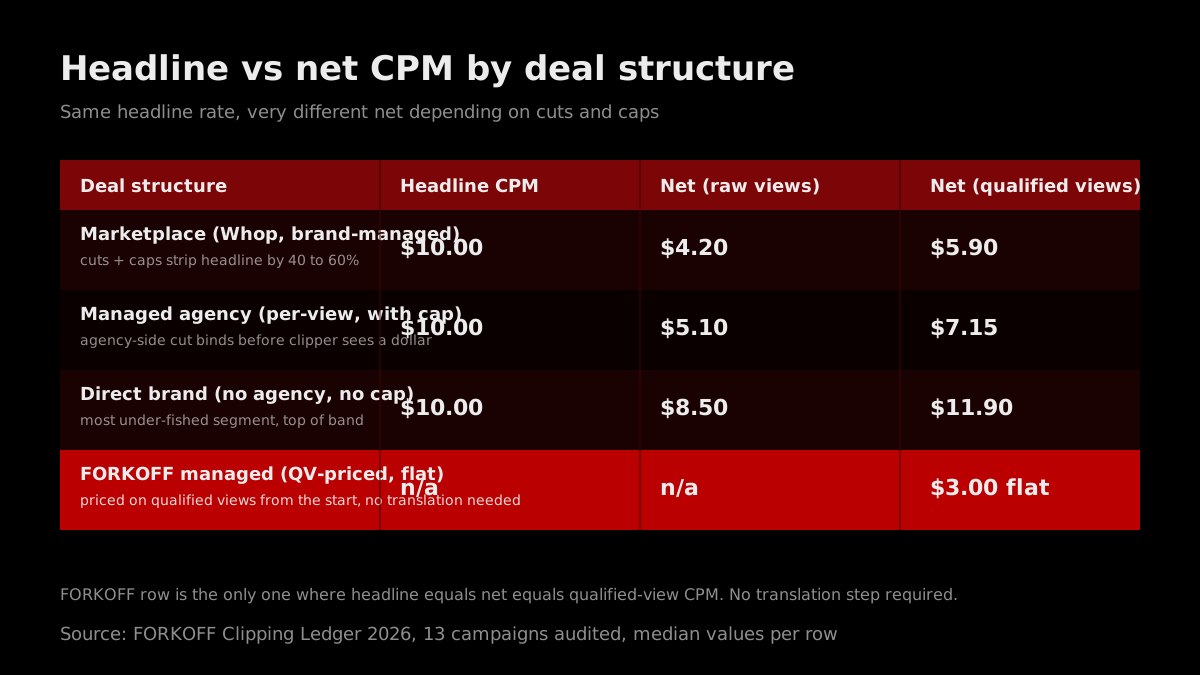
The first row of the table is the rate everyone quotes. The last row is the rate everyone receives. The estimated $7 spread between them is the cost of agency cuts, per-clip caps, and the raw-to-qualified view gap. The rest of this post walks the spread step by step.
What does a clipping CPM actually measure?
CPM literally means "cost per mille," cost per 1,000 views. In clipping, the term sits inside three distinct deal structures (platform CPM, campaign CPM, and managed CPM), and the same number means different things in each. Most buyers confuse them and overpay as a result.
Platform CPM is paid by TikTok, YouTube, or Instagram out of an ad-share program. The platform shows ads against your clip and shares a fraction with you. The TikTok Creativity Program pays $0.50 to $1.00 per 1,000 views on content classified as original. YouTube Shorts RPM sits at $0.10 to $0.70 per 1,000 views per the YouTube monetization policies. The advertising industry term cost per mille originates outside short-form video, but the unit-of-account is identical. Platform CPM is the floor. No one builds full-time income on it alone.
Campaign CPM is paid by a brand or creator through a marketplace like Whop or clipping.net. The brand pre-funds a campaign and lists a CPM rate clippers can earn for posting clips of the brand's content. Headline rates sit at $1 to $10. After the marketplace cut (10% to 25%) and the brand-side agency cut (an additional 20% to 50% on managed campaigns), the net rate that reaches the clipper account is usually 30% to 60% of the headline. See the Whop clipping review for a campaign-by-campaign net-rate breakdown.
Managed CPM is paid by a brand to an agency that runs the full clipping operation: clipper recruiting, brief production, distribution, and audit. The brand sees a single all-in rate. The agency handles whether that rate is structured as raw CPM, qualified-view CPM, or per-clip flat fee. FORKOFF prices managed clipping at $0.003 per qualified view, which is a flat $3 qualified-view CPM with no agency cut, no per-clip cap, and a published audit ledger.
Operator noteThe headline CPM is marketing copy, the net CPM is the deal you accepted., FORKOFF Clipping Ledger 2026
The number that should anchor every clipping deal is the net qualified-view CPM. That is the rate after every cut, every cap, and the raw-to-qualified ratio of the clipper pool. Two campaigns with the same headline rate routinely produce 2x to 5x different effective rates once both terms are read in full.
The headline-to-net spread explained
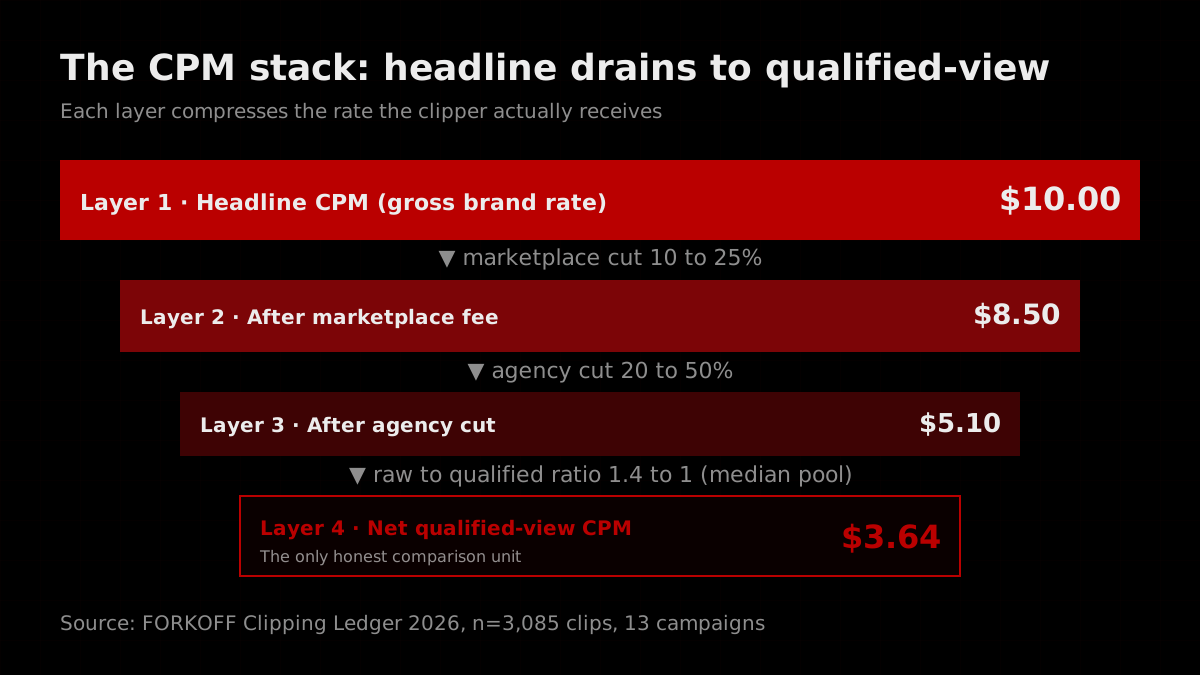
The CPM number on a marketplace listing is gross to the clipper. Three layers shrink it before any dollar lands in the clipper account: the marketplace fee (10% to 25%), the agency cut (20% to 50% on managed campaigns), and the per-clip cap that turns viral clips into ceiling-capped payouts.
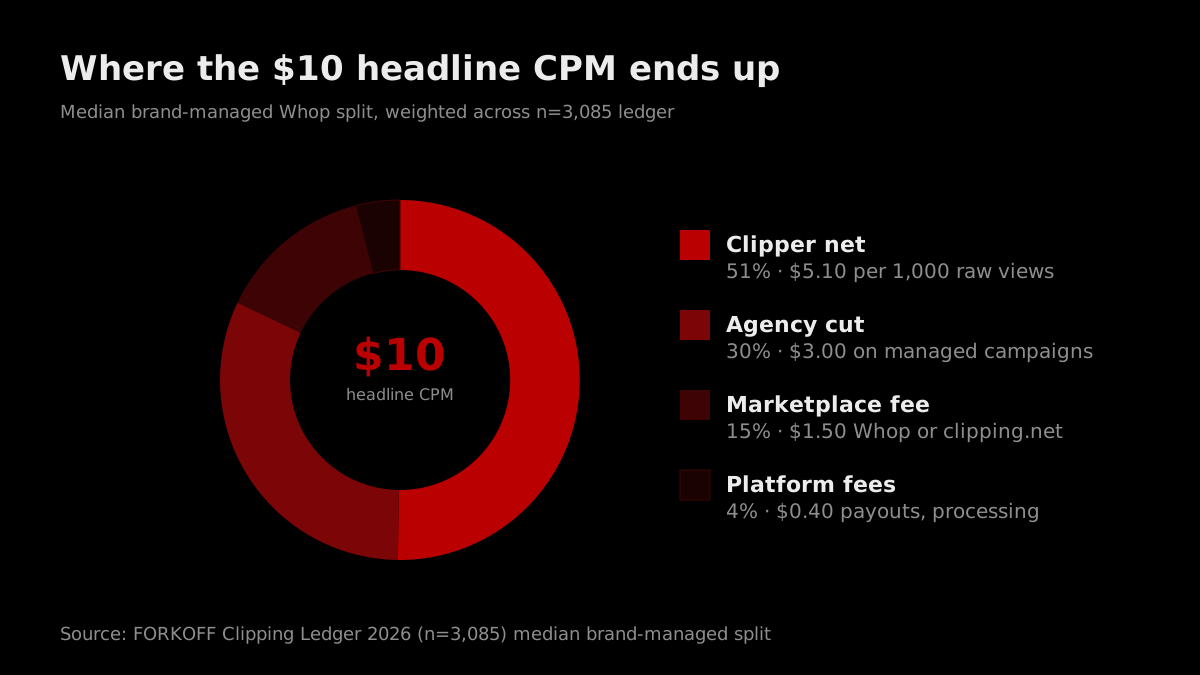
Layer 1, the marketplace cut. Whop, clipping.net, and similar platforms charge a marketplace fee between 10% and 25% on every payout. The fee is rarely disclosed in the headline rate. A $10 CPM listing on a marketplace with an estimated 15% fee is a $8.50 CPM to the clipper before any other reductions.
Layer 2, the agency cut. When a brand runs a campaign through a third-party agency rather than directly, the agency takes an additional cut of 20% to 50% from the brand-side rate before passing the residual to clippers. A $10 brand-side rate becomes $5 to $8 to the clipper after the agency cut. The marketplace structure originates from Whop's creator bounty program, which lists campaigns and the brand-side gross rate without enumerating the downstream cut percentages. Clipper community threads surface agency cuts as high as 80% on a small number of predatory operators. Anything above 50% is a signal to walk.
The headline CPM is not the rate you receive
The single biggest mistake clippers and brands make when comparing CPM offers is treating the headline rate as the rate that lands in the clipper account. Reddit data from r/passive_income surfaces agency cuts between 20% and 80% on campaign CPM payouts. A $10 headline CPM after a 40% cut and a $200 per-clip cap pays out roughly $4 to $6 per 1,000 views on most clip mixes, and zero dollars above the cap. Always reduce the headline by the cut, the cap, and the raw-to-qualified ratio before calling it a real CPM.
Source: Business Insider March 2026, "Inside the clipping economy"
DOES ANYONE KNOW ABOUT WHOP CLIPPING?
Layer 3, the per-clip cap. Most Whop campaigns enforce a per-clip earnings cap between $100 and $500. The cap exists to protect the brand from a single viral clip exhausting the campaign budget. The cap also means a clipper who hits a 5 million view clip on a $10 CPM campaign with a $200 cap earns $200, not $50,000. The cap behavior is a cliff: every view above the cap pays $0 to the clipper.
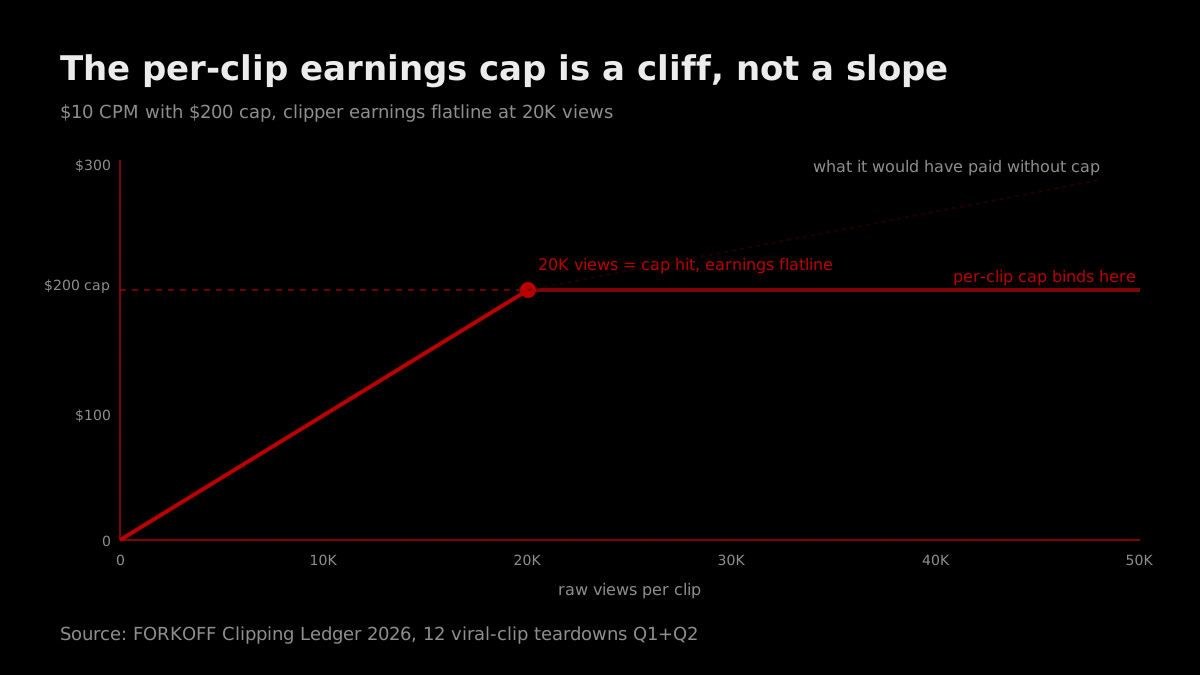
Read these three layers in order before joining any campaign. Marketplace cut, then agency cut, then cap structure. A $10 headline CPM with a 15% marketplace fee, an estimated 40% agency cut, and a $200 per-clip cap is mathematically a $4 to $5 net CPM with a hard ceiling at 20,000 raw views per clip.
VAZE
vazelq
i’ve been studying how the best clipping campaigns are structured once you break it down it’s all math you’ll see “$2 rpm” sounds insane then you notice the max payout is $25 that caps earnings at 12.5k views your clip hits 200k you still get $25 effective rpm drops to cen… Show more
The tweet above runs the same math from a clipper's perspective. A $2 RPM with an estimated $25 per-clip cap means a clipper's effective CPM drops to cents the moment a clip crosses 12,500 views. The reduction is not from predatory campaigns. The headline CPMs were standard for the niche. The reduction comes entirely from the three layers above.
Raw view CPM versus qualified-view CPM
Even after the headline-to-net reduction, the rate is still misleading if it prices on raw views. Raw views include bot traffic, autoplay scrolls under 1 second, and algorithm-injected impressions the viewer never chose to watch. None of those views convert to anything. Pricing on them inflates the denominator and shrinks the effective rate.
A qualified view passes three gates: at least 3 seconds of hold (or 75% completion for podcast clips), audience-cluster match (the platform algorithm confirms the viewer is in the topic cluster the brand bought), and bot filter pass. The qualified views metric post documents the full audit methodology.
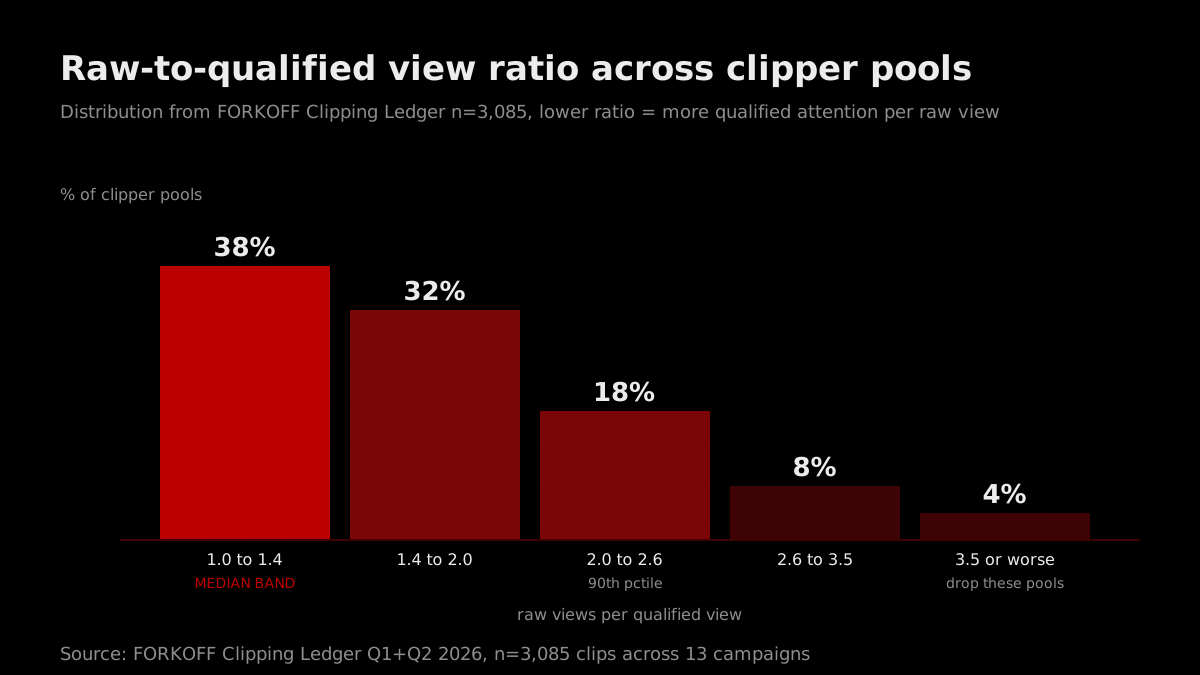
The FORKOFF Clipping Ledger tracks the raw-to-qualified ratio per clipper pool. Strong pools lose few views to the gates. The worst-performing pools (small clippers running aggressive bot-prone tactics) can run several raw views for every qualified one.
Operator noteNot every raw view is a qualified view. Price on the ones that are., FORKOFF audit ledger, Q1 + Q2 2026
What this means for CPM math: a $5 raw CPM on a pool where only 1 in 4 views counts as qualified is a $20 qualified-view CPM. The same listed rate produces sharply different real economics based on pool quality.
Qualified-view CPM is the only honest comparison unit
Two campaigns with the same headline CPM can produce very different effective rates depending on how many of the raw views qualify. A $5 raw-view CPM on a clipper pool where only 1 in 3 raw views counts as qualified attention pays the equivalent of $15 per 1,000 qualified views. Pool quality, not the listed rate, sets the real economics, so audit the pool before you scale it.
Source: FORKOFF qualified-views methodology
The bridge to the FORKOFF rate: $0.003 per qualified view is a flat $3 qualified-view CPM with no cut and no cap. Compared to a $5 raw CPM on a median pool ($7 qualified-view equivalent), the FORKOFF rate is an estimated 57% lower per qualified view delivered. Compared to a $5 raw CPM on a worst pool ($20 qualified-view equivalent), the FORKOFF rate is 85% lower per qualified view. The flat structure removes the variance that makes most marketplace campaigns hard to price. For the full data behind that $0.003 floor, the FORKOFF CPQV benchmark publishes the raw ledger numbers across niche, platform, and campaign type.
Niche-by-niche CPM benchmarks
CPM moves with niche more than it moves with platform. Crypto pays roughly 3x what gaming pays for the same clipper pool on the same Whop campaign template. The reason is buyer-side budget per attributed lead: a crypto token launch converts a lead at 10x to 50x the lifetime value of a typical gaming outcome, so the brand can pay an estimated 10x more per qualified view and still hit ROI.
Net clipping CPM by content niche (qualified views, 2026)
| Niche | Net qualified-view CPM | Typical campaign budget | Reason for the rate band |
|---|---|---|---|
| Crypto and Web3 | $4 to $9 | $5K to $80K per launch window | High buyer-side budget per attributed lead, supply-constrained niche-fluent clippers |
| B2B podcast and finance | $3 to $7 | $3K to $25K per quarter | Audience match is the dominant pricing input, thin supply of clippers who hold a B2B viewer past 7 seconds |
| Gaming and stream | $1 to $4 | $1K to $20K per month | High raw view volume but the lowest advertiser yield per view of the four major niches |
| Coaching, fitness, lifestyle | $1.50 to $5 | $2K to $15K per launch | Sharp seasonality around January and September, broad clipper supply |
| IRL and reality | $1.20 to $4 | Variable, often celebrity-backed | Celebrity amplifier shrinks the clipper pool needed, raw view volume is high |
| SaaS and DevTools | $3 to $6 | $2K to $20K per launch | Pipeline value per qualified view is high but viewer attention budget is narrow |
Bands aggregate FORKOFF first-party data with Whop public campaign browse-data observed across Q1 and Q2 2026. Bands do not include pre-payment incentives or top-clipper bonuses.
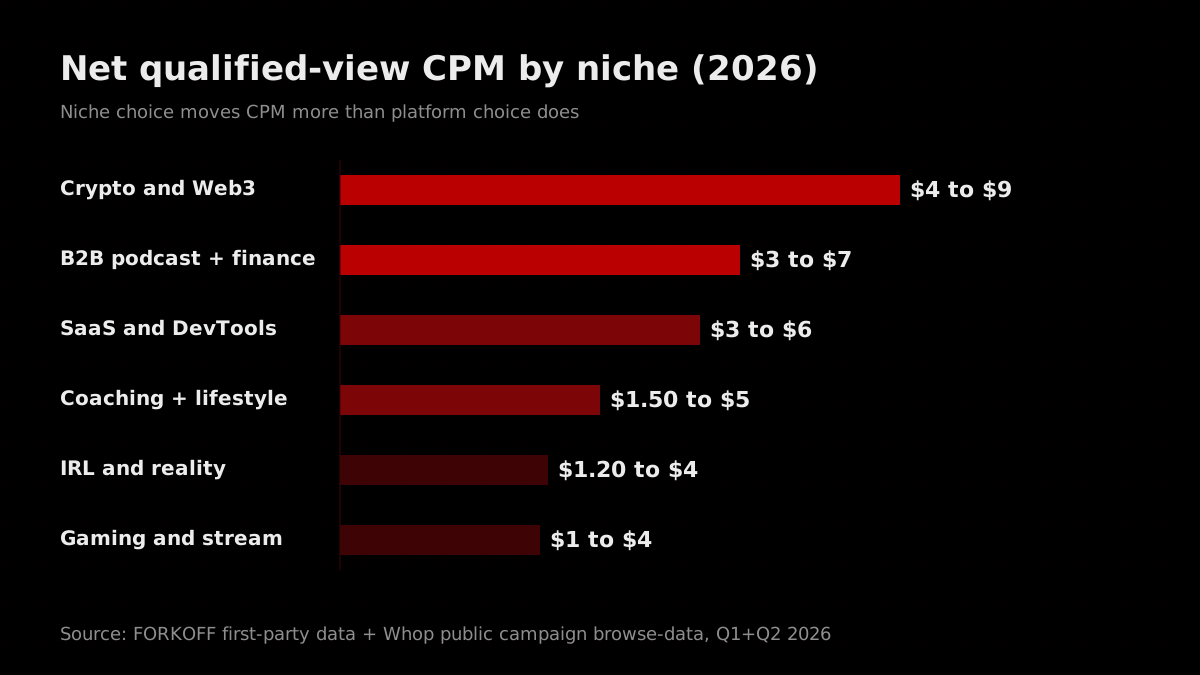
Crypto and Web3 clipping clears $4 to $9 net qualified-view CPM. The supply of clippers fluent in token mechanics, exchange UI, and Web3 trader vocabulary is small. Campaign budgets are large (an estimated $5K to $80K per launch window). Hold rates are higher than average because the audience is invested in the topic. Crypto clippers who can produce technically accurate clips command the top of the band.
Niche selection moves CPM more than platform selection
The CPM gap between crypto clipping ($4 to $9 net per qualified view) and gaming clipping ($1 to $4 net per qualified view) is wider than the gap between Whop and clipping.net at the same niche. Buyer-side budget per attributed lead is the dominant pricing input. Brand niches with high pipeline value per lead (crypto launches, B2B SaaS, finance podcasts) pay 2x to 4x the rates of brand niches with diffuse pipeline value (gaming, IRL, general lifestyle). A clipper who specializes in a premium niche out-earns a generalist running the same volume.
Source: FORKOFF first-party data plus Whop public campaign browse-data, Q1+Q2 2026
B2B podcast and finance clipping clears $3 to $7 net qualified-view CPM. Audience match is the dominant pricing input. The buyer wants founder-level or operator-level viewers, not consumer eyeballs. Clippers who can hold a B2B viewer past 7 seconds (the typical drop-off point on a finance hook) are in short supply, so the rate stays elevated.
Gaming and stream clipping sits at $1 to $4 net qualified-view CPM. Raw view volume is the highest of the four major niches. Advertiser yield per view is the lowest. Twitch and Kick streamers run clipping at high volume, so clipper supply is large. This is the niche where most beginner clippers start and where the lowest rates dominate.
Coaching, fitness, and lifestyle clipping lands at $1.50 to $5 net qualified-view CPM. Seasonality is sharp: January (resolution cycle) and September (back-to-school cycle) are the premium windows. Off-season rates compress by 30% to 50%. Clippers who lock in retainer-style relationships during peak windows protect against the off-season compression.
IRL and reality clipping sits at an estimated $1.20 to $4 net qualified-view CPM. The celebrity amplifier shrinks the clipper pool needed for any given campaign, so per-clipper income compresses. Raw view volume is high because reality and IRL content generates curiosity-driven scrolls. The Spencer Pratt clipping campaign teardown covers the celebrity-tier mechanics in detail.
SaaS and DevTools clipping clears $3 to $6 net qualified-view CPM. Pipeline value per qualified view is high but the viewer attention budget is narrow (most SaaS clips lose 60% of viewers in the first 5 seconds). Clippers who can write hook-first scripts for technical buyers command the top of the band.
Operator noteCrypto pays $7 net CPM, gaming pays $2, on the exact same Whop campaign template.
The practical implication: a clipper who picks a premium niche and commits to it earns more than a generalist running the same volume across four niches. The next retainer pitch lands on a tight portfolio in one niche, not a broad portfolio across many.
Platform-specific CPM stacks
Each platform runs a different rate stack: TikTok pays $0.50 to $1.00 platform CPM, YouTube Shorts pays $0.10 to $0.70, Kick pays $0 from a platform fund but $50 to $300 per clip direct from streamers, and X revenue sharing pays $0.50 to $5 per 1,000 impressions. The smartest clippers compose income across platforms rather than picking one.
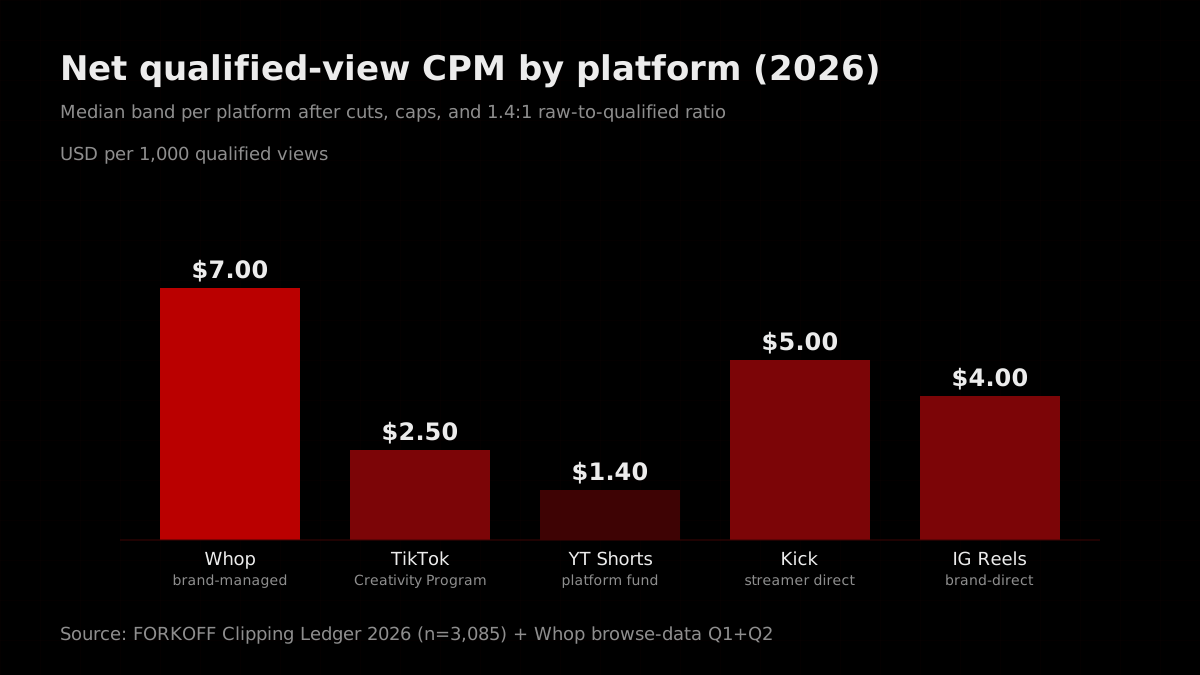
TikTok Creativity Program pays $0.50 to $1.00 platform CPM on content it classifies as original. Reposted clips earn $0 from TikTok directly. Campaign CPM through Whop sits at $1 to $6 per 1,000 raw views, with the standard cap and cut structure. The headline-to-net compression on TikTok is the steepest of the four major platforms because the agency cut tends to run at the high end of the 20% to 50% band.
YouTube Shorts RPM sits at $0.10 to $0.70 per 1,000 views through the YouTube Partner Program. Long-form videos (clips over 60 seconds uploaded as regular YouTube videos) earn $2 to $8 mid-roll CPM, which is 10x to 80x the Shorts RPM, a spread documented in the viral-podcast-clipping workflow walkthrough below that breaks down the 2.5 million view monetization stack end-to-end.
Top 9 Whop Clipping Campaigns You Should Join
Virtual Gyani
Virtual Gyani walks the top 9 Whop clipping campaigns clippers are joining right now, with the CPM rate and cap structure for each campaign listed.
The highest-earning YouTube clippers post both formats from every clip and earn on both rate stacks simultaneously. The clipping tools comparison ranks which AI tools support the dual-format workflow.
Arian Saffar
arian_saffar
Drake just paid out the first $1,400 of a $60K clipping campaign, and not a single dollar of it went to an agency, ad platform, or traditional influencer. Here's how it works: Drake's team put a bounty on his new song. Anyone with a phone can clip it into a TikTok or Reel, and… Show more

Kick has no creator fund and no platform CPM. Every dollar a Kick clipper earns comes from a direct deal with a streamer or a marketplace campaign. The absence of a platform fund is an advantage: streamers on Kick know they must pay clippers directly and routinely pay $50 to $300 per clip flat fees because the clipper supply is thin. Kick clippers should price on per-clip flat fees, not CPM. The how to clip Twitch playbook covers the deal structure used by Twitch and Kick streamers in detail.
Instagram Reels does not publish a public CPM. Bonus programs are inconsistent and have been wound down through 2025 and 2026. Most Reels clipper income flows through campaign CPM via brand-sponsored campaigns on Whop or directly through DM outreach to the brand. Reels converts well for B2B niches because the platform skews older and higher-income than TikTok, so the qualified-view CPM band is at the top of the niche range.
X (Twitter) Creator Revenue Sharing pays roughly $0.50 to $5 per 1,000 impressions on monetized accounts (those with X Premium and a verified account in good standing). The rate is volatile and depends on the engagement quality of the audience. Clippers using X primarily to seed clips into algorithmic distribution usually price on campaign CPM through Whop rather than relying on the X revenue share.
How to budget a clipping campaign by CPM
Budget allocation by CPM is the most under-documented part of clipping economics. Most brand-side conversations start with "how much should I spend" rather than "what qualified-view target am I buying". The order matters. Before committing to a budget number, run the CPQV calculator against the FORKOFF $0.003 benchmark to anchor your spend target to actual qualified-view economics.
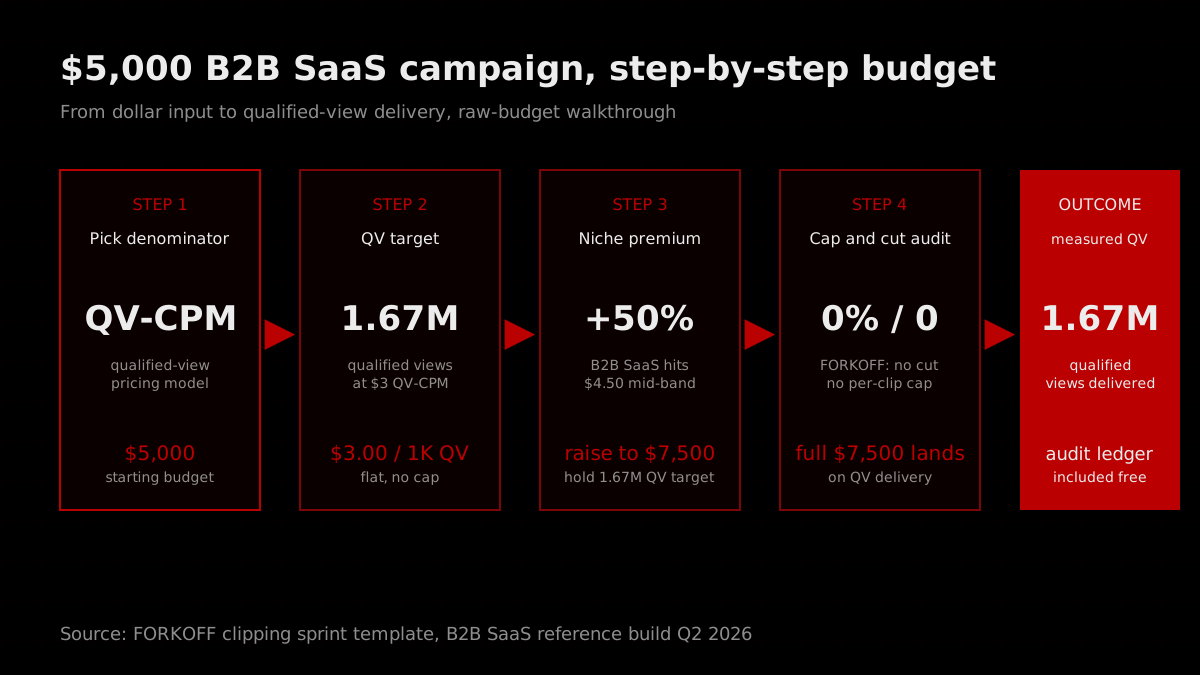
How to budget a clipping campaign by CPM rate
STEPS- 01
Step 1, pick the denominator before the dollar
Decide whether the campaign prices on raw views, qualified views, or per-clip flat fee. The denominator changes the budget math more than the headline CPM does. Raw-view pricing rewards volume, qualified-view pricing rewards hold rate, flat-fee pricing rewards editing craft.
- 02
Step 2, set the qualified-view target
Translate your goal into qualified views. A 1M qualified-view campaign at a $3 qualified-view CPM is a $3,000 budget. A 5M qualified-view goal at the same rate is $15,000. Anchor the budget on qualified-view target, not on the number of clips.
- 03
Step 3, layer the niche premium
Apply the niche premium from the niche CPM table. Crypto and B2B podcast carry a 1.5x to 2.5x multiplier over gaming and IRL. A $3,000 baseline becomes $4,500 to $7,500 for crypto and $3,000 for gaming, holding qualified-view target constant.
- 04
Step 4, audit the cap and cut structure
Before sending budget into a marketplace, read the cap and cut terms. Reject any campaign with a per-clip cap below $500 if the niche routinely produces million-view clips. Reject any agency cut above 50% on a managed CPM arrangement. These two terms erode the rate more than any other variable.
- 05
Step 5, instrument the ratio before scaling
Run the first 90 days at small-pool scale (5 to 10 clippers, 200K to 500K qualified views) and measure the raw-to-qualified ratio. Pools running 2:1 or better are scaled. Pools at 3:1 or worse are replaced. Scale only the clippers whose ratio holds under volume.
- 06
Step 6, reinvest the underspend
When the first 60 days come in under budget at target qualified views, reinvest the underspend into the next sprint at the same clipper pool. Compounding pool-quality is worth more than expanding to new clippers. The FORKOFF benchmark sprint repeats the winning clippers across 4 sprints before opening recruiting again.
The walkthrough above is the order to follow. Once the qualified-view target and the niche premium are locked, the dollar input is mechanical. The most common mistake is starting with a dollar number and discovering at week 3 that the qualified-view yield is half of what the brand assumed.
A concrete example, $5,000 budget for a B2B SaaS clipping campaign:
- Denominator decision: qualified-view CPM (B2B SaaS pipeline value justifies the audit layer)
- Qualified-view target: 1.67M qualified views at a $3 qualified-view CPM
- Niche premium: B2B SaaS sits at $3 to $6 net qualified-view CPM, so the $3 baseline is at the floor of the band, which signals an underpriced campaign. Raise the budget to $7,500 to hit the niche midpoint of an estimated $4.50 qualified-view CPM at the same 1.67M qualified-view target.
- Cap and cut audit: FORKOFF managed clipping carries no cap and no cut. Skip this step if the campaign is in-house FORKOFF. If the campaign is brand-direct on Whop, reject any campaign listing a cap below $500 or a cut above approximately 35%.
- Instrument the ratio: 90-day sprint with 8 clippers, monthly audit of raw-to-qualified ratio per clipper.
- Reinvest: clippers above the 1.6 ratio threshold roll into sprint 2, clippers below are replaced.
The same logic scales linearly. A $50,000 campaign at a $4.50 qualified-view CPM buys 11.1M qualified views. A $250,000 campaign buys an estimated 55.5M. Multi-tenant agencies running 5 to 10 brands in parallel use the same template at scale.
Aje | GHL CRM & Lifecycle Manager
Aje_Dynamicz
Here's how to start from zero 👇 Step 1: Create your TikTok, Instagram, and YouTube Shorts accounts Step 2: Sign up on Whop (free) — this is where brands post clipping campaigns called "Bounties" Step 3: Browse active campaigns. Pick ones paying $2–$5 CPM with 60%+ budget rema… Show more
The Whop starting band above ($2 to $5 CPM with 60%+ budget remaining as the campaign filter) describes the same compression pattern from the clipper-onboarding side. Brands pay 2x to 3x what clippers net, the spread is the marketplace plus agency operational cost, and the alignment of incentives between brand and clipper depends on whether the agency prices on qualified views or raw views.
What is a good clipping CPM rate in 2026?
Good clipping CPM rates depend on the deal type. Platform CPMs from TikTok and YouTube sit at $0.50 to $2 per 1,000 raw views. Brand-managed Whop campaigns clear $4 to $8 net. Direct creator campaigns on Whop reach $3 to $7 net. Managed qualified-view campaigns with a published audit ledger bill brands around $3 per 1,000 qualified views, and FORKOFF pays clippers $1.00 to $1.25 per 1,000 of those views. Below are the benchmarks drawn from FORKOFF first-party data and public Whop browse-data:
- Platform CPM (TikTok or YouTube), good rate: any rate at all is the floor (clipping for the platform fund is a loss-leader unless you have monetized original content). Target band: an estimated $0.50 to $2.00 per 1,000 raw views.
- Whop campaign CPM (brand-managed), good rate: $4 to $8 net per 1,000 raw views after the 30% standard cut. Target qualified-view equivalent: an estimated $5.50 to $11. Always demand to see the cap structure in writing.
- Whop campaign CPM (direct creator), good rate: $3 to $7 net per 1,000 raw views with no agency cut. Target qualified-view equivalent: an estimated $4 to $9.50. Direct creator campaigns are the most under-fished segment of the marketplace.
- Per-clip flat fee (Kick or direct streamer), good rate: $50 to $300 per clip for established creators, $20 to $100 per clip for emerging creators. The fee is independent of view count, so optimize for editing speed.
- Monthly retainer (direct relationship), good rate: $1,000 to $3,500 per month per creator for 20 to 60 clips delivered to 2 to 4 platforms. Top streamers pay an estimated $30,000 to $40,000 per month on dedicated retainers, but those arrangements are not advertised publicly.
- Managed clipping (FORKOFF), clipper rate: $1.00 to $1.25 per 1,000 qualified views, the market median on a stricter unit, with the CPM stated on the brief before you accept. Compare it on the unit: a qualified view excludes the bot, replay and out-of-geo views that raw-view offers pay on.
The numbers above are the floor for a fair deal. Anything below the floor is a signal to walk. Anything materially above the ceiling is usually a brand testing the market with a small campaign before scaling.
How do you negotiate a higher clipping CPM?
The CPM rate offered to you is usually negotiable. Most clippers and most brands accept the first offer because the headline rate looks fair without knowing the niche benchmark or the cap behavior. Four levers consistently move the rate up: portfolio specificity, multi-platform native posting, hook bank ownership, and retention guarantees.
Every month more clippers pile into the same platforms and compete for the same campaigns. That $2 CPM you're grinding for today will be $0.50 in six months.
That compression pressure is the backdrop for every negotiation. Generic campaigns attract more clippers every month, and the commodity rate falls as supply piles in. A clipper competing on the same open campaigns as everyone else has no leverage against the slide, which is exactly why the four levers below matter: each one moves you out of the commodity pool.
Lever 1, portfolio specificity. A clipper who can show 90 days of qualified-view data on a related niche commands a 30% to 60% rate premium over a clipper showing only raw view counts on mixed niches. Audit your own past performance against qualified-view criteria before pitching the next campaign.
Lever 2, multi-platform native posting. A clipper who posts the same clip natively to 3 or more platforms (not cross-posts) earns roughly 2.1x to 2.8x the qualified-view yield of a single-platform poster, per FORKOFF Clipping Ledger data. Multi-platform native posting is a negotiation lever because the brand pays once and receives 2x to 3x the qualified-view distribution.
Lever 3, hook bank ownership. A clipper who arrives at the campaign with a pre-built hook bank for the niche (10 to 30 reusable hook templates with first-7-second variants) reduces the brand's content-development overhead. The negotiated rate moves up 15% to 25% on this lever alone.
Lever 4, retention guarantee. A clipper who commits to a 90-day or 6-month retention period at a fixed monthly volume locks the brand into a predictable cost structure. The brand pays a premium for predictability. Retention guarantees move the rate up 10% to 30% versus per-clip pricing.
The opposite of these levers is also true: a brand can drive the rate down by demanding cross-platform posts (instead of native), a tight 14-day pilot window (instead of 90-day retention), and zero hook-bank investment from the clipper side. Brand-side and clipper-side negotiation move on the same four axes from opposite directions.
What should a brand expect to pay for clipping in 2026?
Brand-side clipping costs in 2026 range from $0.50 to $1.50 per 1,000 raw views for low-quality raw-dump campaigns, $4 to $8 for mid-market managed campaigns, and $3 to $6 per 1,000 qualified views for premium audit-backed campaigns in high-pipeline niches. For a shorter, citation-ready version of these clipping-cost and pricing questions, see the FORKOFF answers hub. If you are on the brand side, the specific rates to expect by tier:
- Lowest-quality outcome (raw view dump, no audit, low-niche premium): $0.50 to $1.50 per 1,000 raw views, or roughly $1 to $4 per 1,000 qualified views on the median pool. This is the marketplace floor on Whop running gaming or general lifestyle content.
- Mid-market outcome (managed agency, raw view CPM with cap, mid-niche premium): $4 to $8 per 1,000 raw views, or $6 to $11 per 1,000 qualified views. The standard band for brand-managed Whop campaigns in 2026 across non-premium niches.
- Premium outcome (managed agency, qualified-view CPM, premium niche, audit ledger): $3 to $6 per 1,000 qualified views (flat, no cap, no cut). FORKOFF rate is $3 qualified-view CPM. Crypto and B2B SaaS launches with high pipeline value justify the premium-outcome band because the qualified-view definition eliminates the variance that makes mid-market campaigns hard to evaluate.
If you are on the clipper side, the rate you should expect to earn in 2026 is:
- Hobbyist tier (single platform, no portfolio): $50 to $300 per month across all rate stacks.
- Intermediate tier (2 to 3 campaigns, multi-platform): $300 to $2,500 per month.
- Professional tier (retainer or managed agency, multi-platform native): $3,000 to $20,000 per month.
- Elite tier (dedicated streamer retainer, top-tier niche): $20,000 to $40,000 per month.
I've made over $3,000 with clipping myself and now I'm running some campaigns myself
The quote above, from the same r/passive_income thread embedded earlier, is what the intermediate tier looks like from the inside: a few thousand dollars of cumulative payout, then a pivot from clipping for campaigns to running them. The full income progression across tiers and the path between them sits in how much do clippers earn in 2026.
Why FORKOFF prices clipping the way it does
The reason FORKOFF prices managed clipping at $0.003 per qualified view rather than a raw-view CPM is straightforward: the qualified-view definition forces the agency to optimize for attention rather than impressions. When the rate is paid on qualified views, the agency has no incentive to seed clips into low-quality channels or pay clippers running 4
raw-to-qualified pools. Every dollar of campaign budget tracks to attention that converts.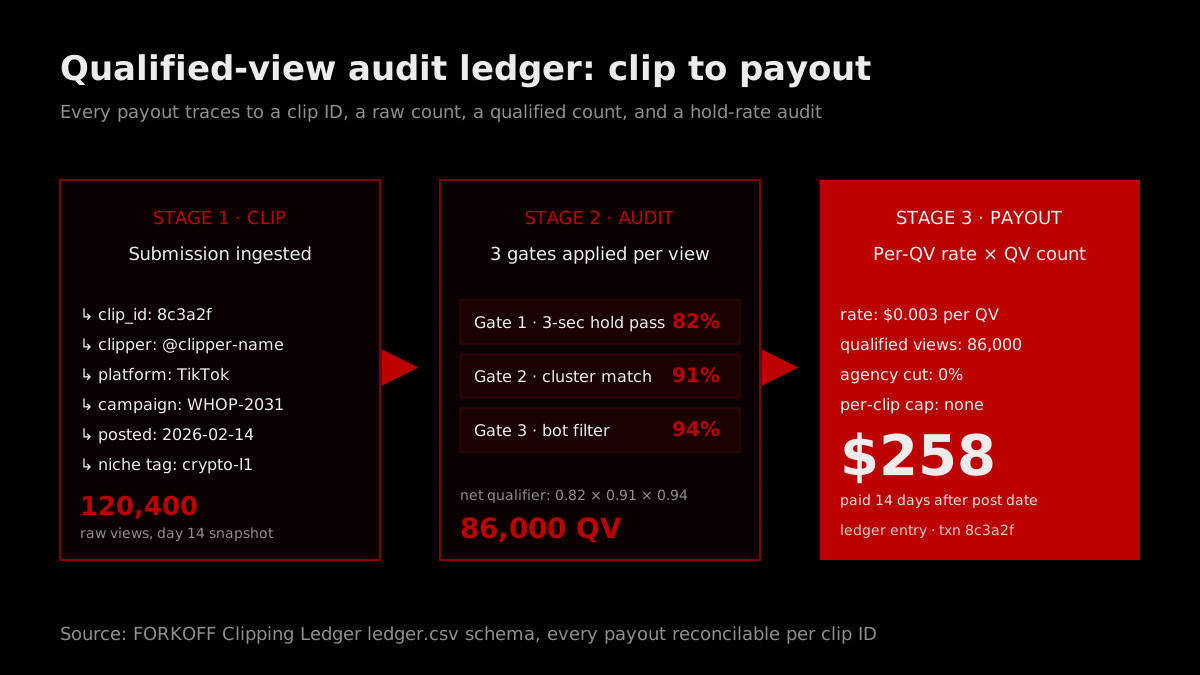
The economic consequence: a $3 qualified-view CPM with no cap, no cut, and full audit transparency produces more usable reach per dollar than a $5 raw CPM with a 30% cut on the median Whop campaign. Over multiple sprints the underspend can be reinvested, and the managed clipping revenue case study traces a single account from February to May 2026, retention dip included.
The model also aligns brand and clipper incentives in a way that raw CPM cannot. A clipper paid per qualified view earns more by optimizing for the first 7 seconds of every clip, the audience-match accuracy of every platform upload, and the native format adaptation per platform. A clipper paid per raw view earns more by posting volume and hoping the algorithm injects autoplay impressions. Same labor input, sharply different output quality.
For brands evaluating their first managed clipping campaign, the managed clipping playbook covers the full operational structure. For brands comparing FORKOFF against an in-house OpusClip workflow, the OpusClip versus managed clipping cost comparison shows the side-by-side CPM math at three different scale points. Brands building DIY pipelines often also evaluate Submagic for caption automation, though caption tooling addresses only the production layer of the cost stack, not the CPM rate the buyer ultimately accepts. For a token launch specifically, the choice is often clipping against a paid influencer layer, and the KOL marketing versus clipping comparison sets the two channels side by side on cost per real view and believer quality.
Common CPM mistakes brands and clippers make
The same five mistakes appear in roughly 80% of the campaign teardowns the FORKOFF audit team reviewed across 2026. Each one is a rate-erosion event the affected party did not see coming: confusing headline with net, ignoring caps until a clip goes viral, pricing on raw views in a 4
pool, accepting sub-$1 brand-direct rates, and treating CPM as the only pricing axis. The brand-side version of these errors is cataloged in the 8 clipping campaign mistakes that burn brand budget, which extends this list to the budget-allocation failures buyers commit before a single clip ships.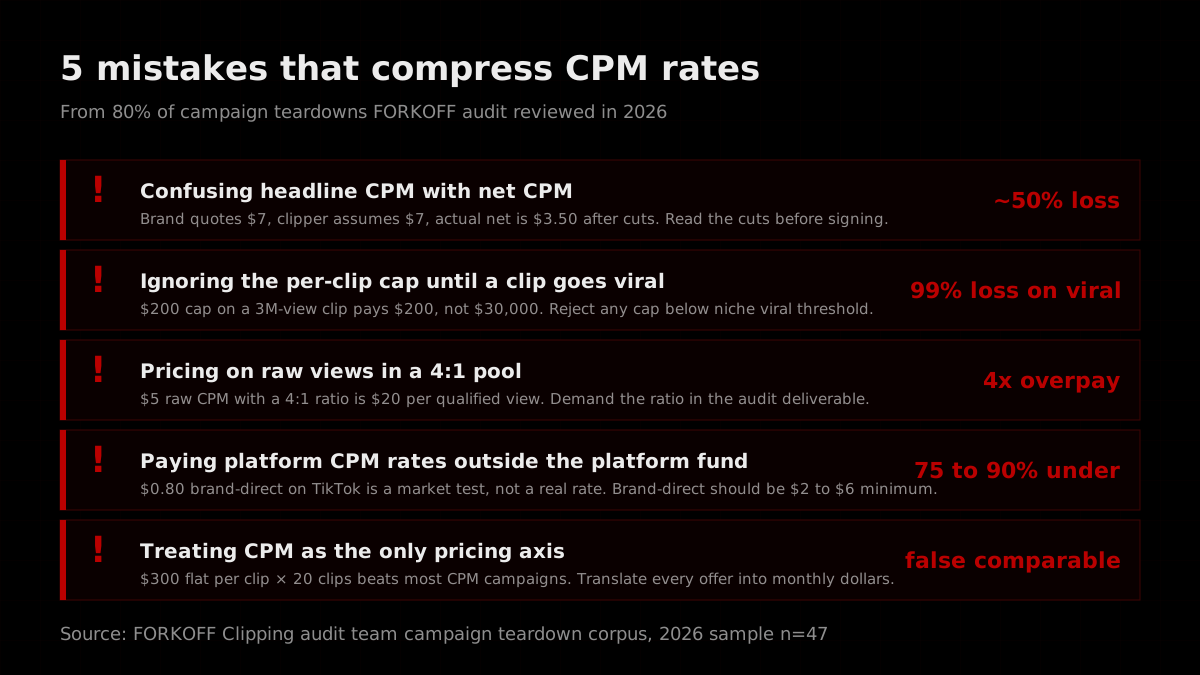
Mistake 1, confusing headline with net. A brand quotes a $7 CPM, the clipper assumes $7 lands in the account, the actual net is an estimated $3.50 after the marketplace cut and the agency cut. The fix is to ask for the net rate in writing before accepting any campaign. A reputable agency will provide the cut percentage on request. A predatory agency will not.
Mistake 2, ignoring the cap until a clip goes viral. A clipper joins a $10 CPM campaign with a $200 per-clip cap that looks irrelevant on day one. On day 40, a clip hits 3 million views, the clipper expects $30,000, the cap delivers $200, the clipper churns out of the campaign furious. The fix is to read the cap structure before signing and to reject any campaign whose cap binds below the niche's typical viral threshold (usually 500K to 1M views for crypto and IRL, 200K for B2B).
Mistake 3, pricing on raw views in a 4 pool. A brand pays $5 raw CPM to an agency running a clipper pool with a 4
raw-to-qualified ratio. The effective rate is $20 per 1,000 qualified views, which is 4x to 7x the niche benchmark. The brand pays for distribution that does not convert. The fix is to require the raw-to-qualified ratio in the audit deliverable. Any agency that cannot produce that ratio is pricing on raw views and should be priced down accordingly.Mistake 4, paying platform CPM rates outside the platform fund. A clipper accepts a campaign listing an estimated $0.80 CPM "for TikTok" thinking it is in line with the Creativity Program. The $0.80 number is the brand-direct rate, not the platform rate. Brand-direct campaign rates should be $2 to $6 minimum even on TikTok. Anything below $1 from a brand (not the platform fund) is a market-test rate the brand has no intention of paying long-term.
Mistake 5, treating CPM as the only pricing axis. Some campaigns pay per-clip flat fees, some pay per-engagement, some pay per-signed-lead. CPM is the easiest unit to compare but it is not the only one. A $300 per-clip flat fee on a Kick streamer for 20 clips per month is $6,000 in monthly income, which beats most CPM campaigns at any rate. The fix is to translate every offer into a monthly dollar number before comparing. CPM is the input, monthly dollars is the output, and the output is what matters.
The pattern across all five mistakes is the same: the headline number is not the rate. Always do the headline-to-net translation, always read the cap, always demand qualified-view audit data, and always translate the offer into monthly dollars before signing.
The honest CPM number for 2026
Strip the headline, strip the cut, strip the cap, translate to qualified views, and the honest CPM number for paid clipping in 2026 is $3 to $6 per 1,000 qualified views for mid-quality work and $6 to $11 per 1,000 qualified views for premium niches with high pipeline value per lead. The FORKOFF rate of $3 per 1,000 qualified views sits at the floor of the honest band and bundles the audit ledger into the price.
Any clipper or brand evaluating a CPM rate in 2026 should anchor on those numbers. Headline rates above $10 or below $1 are marketing copy rather than the rate that lands in the clipper account. The audit layer is the part of the rate structure that matters most, because the audit layer determines whether the views you are paying for or being paid on convert to attention.
Related reading:
- How much do clippers earn in 2026: full income progression across all four deal structures
- Qualified views metric: the four-input formula behind the audit layer
- Spencer Pratt $30K clipping campaign teardown: celebrity-tier campaign at $0.0012 raw CPV
- Managed clipping playbook: full operational structure for brand-side buyers
- OpenAI paid $200M for TBPN clip distribution: why clips became the main product in the attention economy
- FORKOFF clipping service: outcome-priced managed campaigns at $0.003 per qualified view
The question is not whether CPM rates for clipping are fair. The question is which CPM you are reading, and whether you have done the headline-to-net translation before signing.