
A clipping and distribution agency is worth it when you publish two or more long-form sources a week, sell a considered offer, and need multi-platform distribution you can attribute rather than a folder of clips you have to post yourself. It is not worth it when you release one source a week, have no offer to convert, or run a budget under $500 a month. The number that settles the argument is not the monthly price, it is cost per qualified view. Across the FORKOFF Clipping Audit 2026, the managed lane ran an estimated $0.003 CPQV floor against $0.01 to $0.20 for the DIY and marketplace lanes, and DIY clipping cost 6 to 8 hours of your own time per source-hour. This guide gives you the break-even so you can decide before a single sales call.
The hire-or-DIY decision in one paragraph
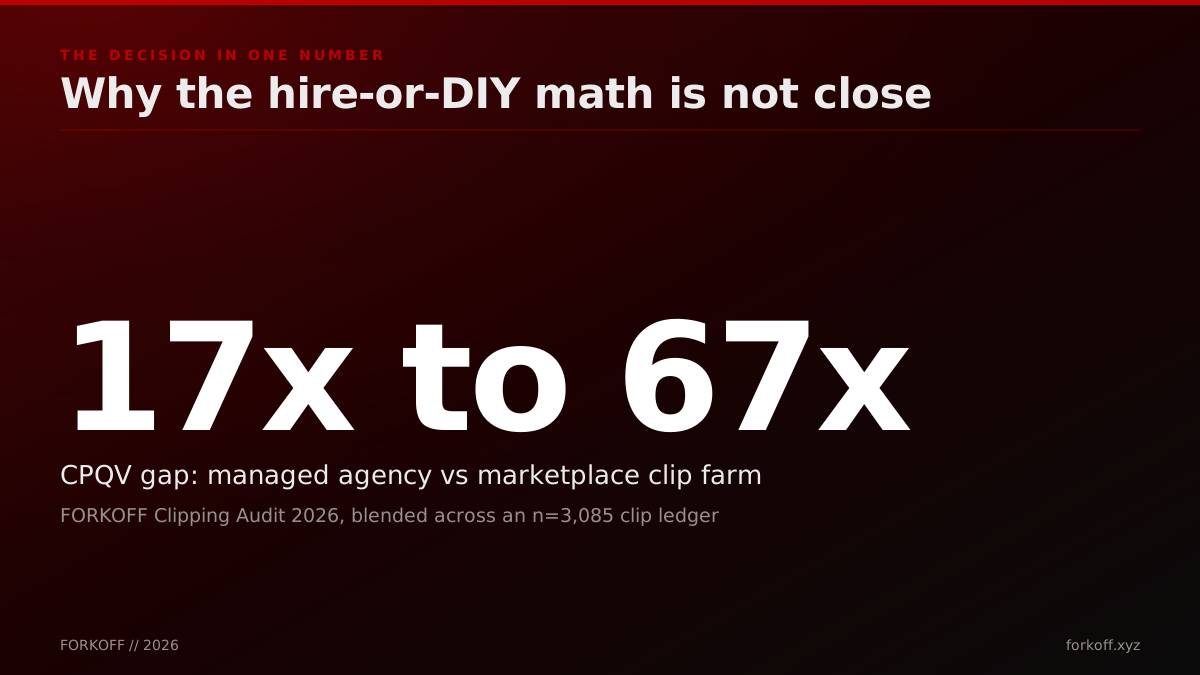
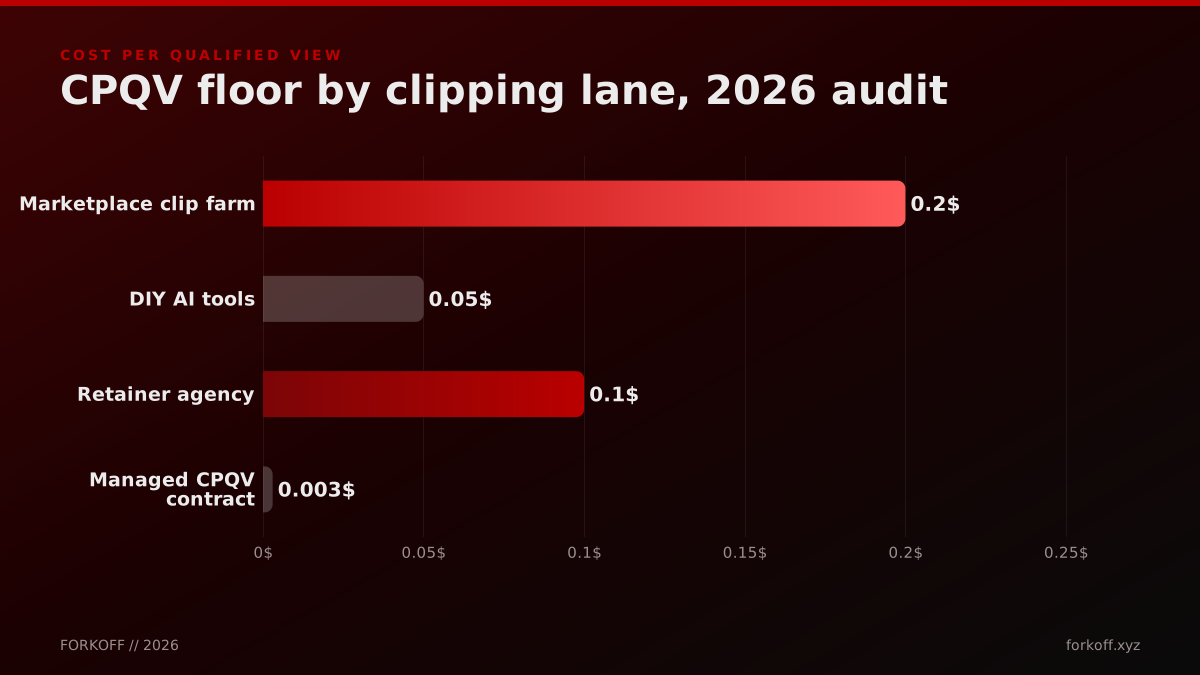
A clipping and distribution agency is worth it when you publish two or more long-form sources a week, sell a considered offer (a demo, a retainer, a token, an enterprise deal), and need multi-platform distribution you can attribute, not just a folder of clips. It is not worth it when you post one source a week, have no offer to convert, or run a budget under $500 a month. The number that decides it is not the sticker price, it is cost per qualified view (CPQV). Across the FORKOFF Clipping Audit 2026 (n=3,085 clips), the managed lane ran a $0.003 CPQV floor against $0.01 to $0.05 for DIY tools and $0.05 to $0.20 for marketplace clip farms, a 17x to 67x gap. DIY clipping also costs 6 to 8 hours per source-hour of your own time. Match your stage to the break-even before you sign anything.
The reason this decision gets made badly is that most buyers compare the wrong numbers. They line up a $29 software subscription against a $2,000 retainer and conclude the agency is a rip-off, without ever pricing their own time or asking whether either option actually gets a clip watched. A clipping and distribution agency is not a more expensive way to cut videos. It is a different product: a managed system that gets short-form clips in front of the right audience at volume, and then proves which ones drove pipeline. Whether that product is worth its price depends entirely on your stage, and this guide is built around that one variable.
The reason this question is suddenly everywhere is that short-form clips have become the default way attention moves online, and the supply of people willing to cut and post them has exploded. Short-form video is now the highest-engagement format on every major platform, a shift documented across the short-form video research Buffer keeps updated, and that pull is what turned clipping from a growth hack into an industry with agencies, marketplaces, and tools competing for the same budget. When a category grows that fast, the buyer's problem is no longer whether clipping works, it is which lane to buy it through without overpaying or exposing the brand. That is the decision this guide resolves with numbers instead of vendor claims.
What does a clipping and distribution agency actually do?
A clipping and distribution agency recruits and manages a network of short-form editors, then turns your long-form content into platform-native clips and pushes them across TikTok, Instagram Reels, YouTube Shorts, and X at volume. The managed version also runs hook testing, per-view attribution, and a brand-safety policy on top of the cutting. The core difference from a DIY tool is the distribution layer: software gives you files, an agency gets those files watched and tells you which ones mattered. Google's own AI Overview for this query splits agencies into performance networks that pay for verified views and full-service teams that run end to end.
The distinction that trips people up is between cutting and distribution, and it is the same distinction a real buyer named on Reddit. In the r/podcasting thread that ranks near the top of this exact search, a podcaster asked whether hiring a clipping and distribution agency was a good idea and answered his own framing in the process: he could clip his own content, what he actually needed was for those clips to trend on X and Instagram. That is the whole job description. If you can cut clips but cannot get them distributed, that gap is exactly what an agency sells. Our breakdown of what a clipping agency does walks the full scope.
Real buyers are actively shopping this out, not just debating it in theory. A podcaster building a narrative miniseries with no editing experience asked r/podcasting which editing agencies to use, because the sheer volume of cutting the format demanded was simply beyond a solo effort.
What podcast editing agencies do you recommend?
I'm working on an 8-episode podcast miniseries. It's not your typical long-form podcast. It's mostly narrative-driven, and I want to interject clips of myself to guide the story. Problem is, I have no editing experience. And this will require a LOT of editing. What podcast editing agencies or services would… Show more
The trade press frames it the same way. Digiday's explainer on clipping describes it as a low-lift creator strategy that advertisers are pouring into precisely because the distribution is done for them, and platforms like Whop have turned it into infrastructure that processes billions of views. The making of a clip is close to free now. The showing up, at volume, with taste, across four platforms, is the part that is scarce, and it is the part you are paying an agency to own.
Operator noteThe r/podcasting buyer said it plainly: he can clip, he needs the clips to trend. That gap is the whole hire decision.
How much does a clipping and distribution agency cost in 2026?
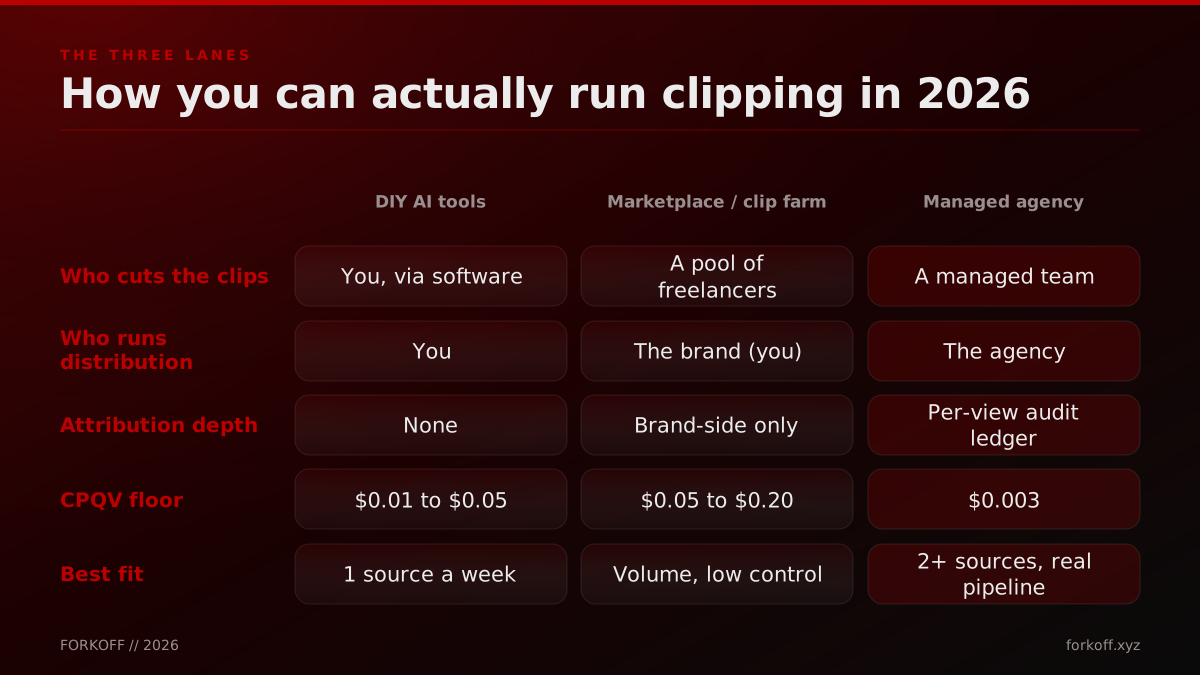
Clipping and distribution agencies price four ways, and almost none of them publish a number upfront. DIY AI tools run an estimated $20 to $99 a month, marketplace clip farms pay a bounty of $5 to $15 per clip or a rate per view, retainer agencies charge $500 to $5,000 a month for a fixed scope, and managed outcome contracts price on qualified views delivered. Because the vendor pages gate their pricing behind a sales call, the honest way to compare offers is not the monthly sticker, it is cost per qualified view. That single metric collapses four incompatible pricing models into one number you can actually rank.
How clipping and distribution agencies price in 2026
| Pricing model | Typical range | What you are buying | Attribution | Best fit |
|---|---|---|---|---|
| DIY AI tool subscription | $20 to $99 per month | Software that cuts clips, you distribute | None | One source a week, solo operator |
| Marketplace / clip farm bounty | $5 to $15 per clip, or pay per view | A pool of freelancers posting on their own accounts | Brand-side only | Raw view volume, low control |
| Retainer agency | $500 to $5,000 per month | A managed team on a fixed monthly scope | Dashboard report | Steady cadence, mid budget |
| Managed CPQV outcome contract | Priced per qualified view delivered | Source, cut, hook, distribute, attribute, compound | Per-view audit ledger | Two or more sources, real pipeline |
FORKOFF Clipping Audit 2026, blended across an n=3,085 clip ledger. Vendor sticker prices are rarely published upfront, so compare CPQV, not the monthly number.
The gap between those models is not a rounding error. In the FORKOFF Clipping Audit 2026, blended across a ledger of 3,085 clips, the managed lane ran a $0.003 CPQV floor while marketplace clip farms ran an estimated $0.05 to $0.20 after you account for rework and brand-safety risk. That is a 17x to 67x spread in favor of the managed lane, once you measure the views that actually count. The full clipping campaign cost breakdown shows the per-clip math, and our clipping agency cost page carries the current ranges by model.
Supply-side pay tells you why raw views are the wrong thing to buy. Clippers themselves earn $1 to $5 per 1,000 views, so the entire freelance layer is incentivized to chase impressions, not qualified attention. When you buy on a per-view basis from a clip farm, you are paying into that same incentive. Our data on how much clippers earn and the CPM rates for clipping show how quickly a raw-view number stops meaning anything.
The practical move is to convert every quote you receive into one comparable unit before you judge it. Take the monthly price or the per-clip bounty, estimate the qualified views it will actually deliver against your own gate, and divide. A $2,000 retainer that produces 400,000 qualified views is a $0.005 cost per qualified view. A $500-a-month tool subscription that produces 30,000 qualified views after your own posting is an estimated $0.017 CPQV once you ignore your time, and far worse once you count it. The sticker prices looked several times apart. The real cost per qualified view ran the other direction. That inversion is the entire reason the monthly number is the wrong thing to negotiate on, and it is why every serious comparison in this space is priced per outcome, not per seat.
The supply side is a view-based economy, which is exactly why raw views inflate
Clippers, the editors who post on behalf of a client, typically earn $1 to $5 per 1,000 views. Digiday reported one creator earned roughly $60,000 clipping over seven months, and one brand spent more than $12,000 on clipping campaigns. When pay is indexed to raw views, the incentive is to chase impressions, not qualified attention, which is why a buyer needs a qualified-view gate before any of that volume counts.
Source: Digiday, WTF is clipping? The low-lift creator strategy grabbing advertisers' attention, 2026
Which lanes can you actually choose from?
You have three lanes for clipping in 2026, and they are genuinely different products, not price tiers of one thing. DIY AI tools like OpusClip or Submagic cut clips and leave distribution, hook testing, and attribution entirely on your plate. Marketplace clip farms give you a pool of freelancers posting on their own accounts for volume, with brand-side attribution only and no quality owner. A managed agency runs the whole system, source through compounding, and attributes every view. Picking the wrong lane for your stage is the single most common way clipping budgets get burned.
Some operators argue the managed lane is redundant once you automate distribution, and the case deserves a fair hearing. NeilXbt makes it bluntly: a content agency charges $5,000 a month to distribute what a small automated stack does on its own, because in his framing the clips were never the product, the backend they feed is.
NeilXbt
@neil_xbt
A content agency charges $5,000/month to distribute what this three-part stack does automatically! 535,276 views in 7 days. 14,700 subscribers. $199 from YouTube AdSense. And $16,567 a month from the backend the clips are feeding. The clips are not the product.
The lane you pick should follow your volume and your offer, not your budget anxiety. Our clipping tool versus agency breakdown runs the head-to-head, and the Opus Clip versus managed clipping cost comparison shows where the DIY subscription stops being cheaper. If you are weighing a team hire instead, the clipping agency versus in-house analysis carries the loaded-cost math. The point of naming the three lanes is that most people only ever compare two, tool against retainer, and miss that the clip-farm lane exists and quietly fails on brand safety.
The clip-farm lane deserves a specific warning, because it is the one that looks cheapest and often costs the most. Paying a bounty per view to a pool of anonymous accounts optimizes for exactly the wrong thing, raw impressions, and it does so on accounts you do not control, with no disclosure discipline and no way to pull a clip that lands your brand next to content you never approved. The views arrive, the screenshot looks impressive, and then a chunk of them turn out to be low quality or bot adjacent, while the ones that were real were never gated for the audience you actually sell to. Cheap per raw view is not cheap per qualified view, and this is the lane where that gap is widest and the brand risk is highest.
Operator noteUnder two source-hours a week, a $29 tool plus your own posting beats every agency invoice on the market.
When is hiring a clipping and distribution agency worth it?
Hiring an agency is worth it when three conditions line up: you publish two or more long-form sources a week, you sell a considered offer where qualified attention beats raw views, and you need distribution you can attribute. Add a fourth if your own time is worth more than $50 an hour, because DIY clipping runs 6 to 8 hours per source-hour. When those are true, the per-source overhead of doing it yourself becomes brutal, and the managed lane's ability to turn one recording into 30 to 50 distributed clips with attribution starts paying for itself inside the first cohort.
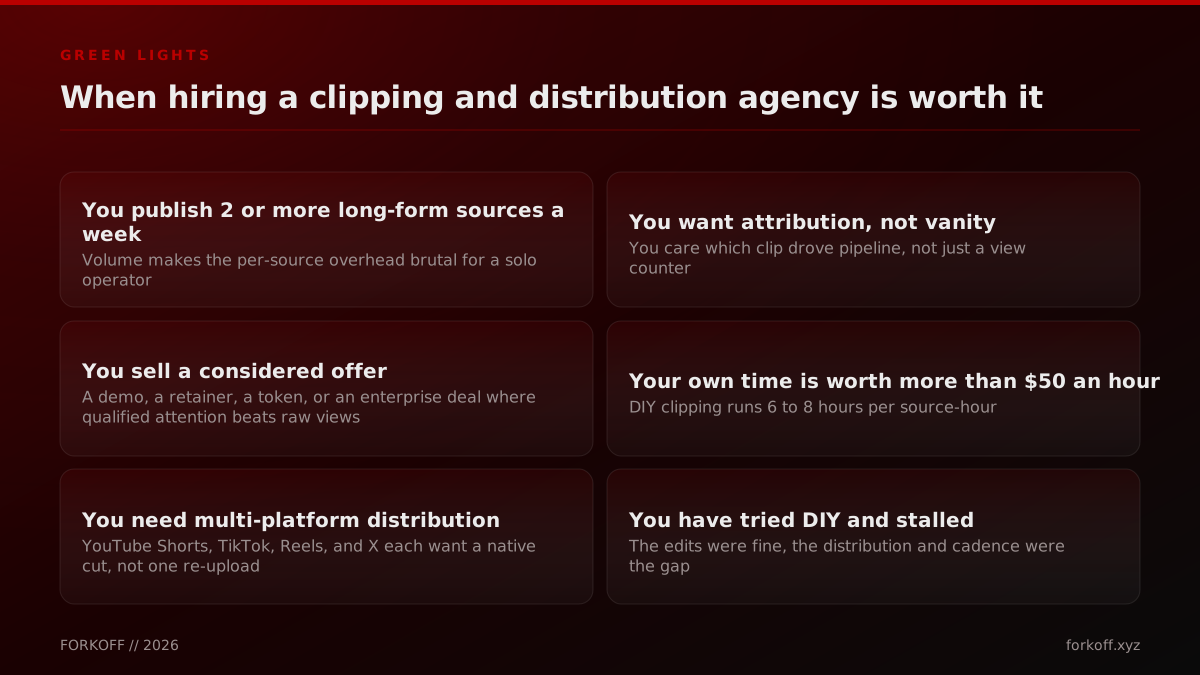
The clearest green light is that you have already tried DIY and stalled. The edits were fine, the cadence was not, and the clips never reached a stranger because a single upload from a small account never clears the distribution bar that YouTube and TikTok both describe in their own guidance. Volume and native multi-platform posting are exactly what an agency staffs. If you sell a demo, a retainer, a token launch, or an enterprise deal, the managed clipping playbook shows how qualified-view volume converts into pipeline rather than a vanity counter.
Even clippers who have lived inside the model are candid about its ceiling. Caleb Ortega, breaking down the harsh truth about clipping, describes hitting a hard wall around an estimated $4,500 a month as a solo freelance clipper, the exact ceiling a managed network is built to break past with volume and multi-platform reach.
The Harsh Truth About Clipping Nobody Tells You About
Caleb Ortega
A working clipper on the hard ceiling of the solo freelance model.
The event and brand side has reached the same conclusion from a different door. Marketing Brew reported that marketers are now engineering moments specifically to be clippable, because the distribution multiplier on a single good clip is too large to leave to chance. For a founder or a podcaster, that multiplier is the whole reason to hire out the distribution: you are not buying more edits, you are buying the reach and the cadence that a solo posting habit cannot sustain across four platforms at once.
Put real numbers on it. A founder-led podcast recording two hour-long episodes a week generates enough raw material for 60 to 100 short clips, each of which wants a native cut for four platforms and two or three hook variants to find the one that lands. That is several hundred distinct assets a month, plus the posting schedule, plus the tracking, and the engagement short-form video commands is only captured if the clips actually ship on cadence rather than in a Sunday-night batch. No solo operator sustains that for more than a few weeks, which is exactly the point where the per-source overhead flips the math in favor of a managed lane. If your content already exists and the only thing missing is the machine that distributes it consistently, you have found the green light the break-even table is built to confirm.
When should you skip the agency and stay DIY?
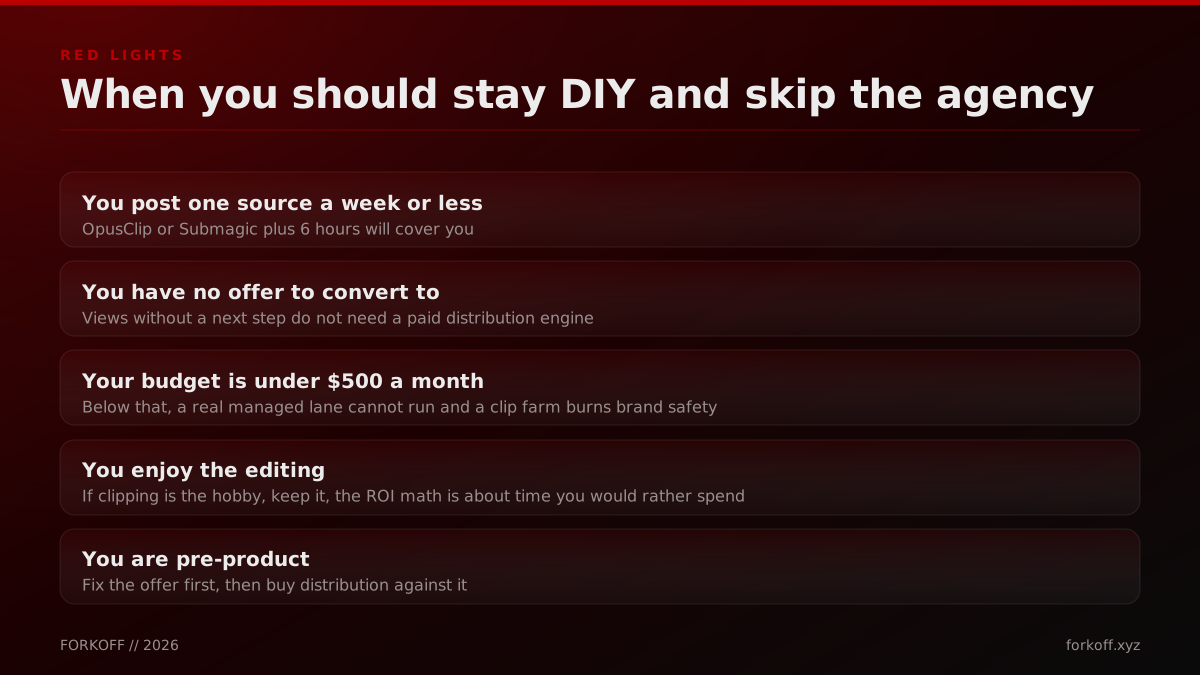
You should skip the agency when you post one source a week or less, have no offer to convert views into, run a budget under $500 a month, or are still pre-product. Below roughly two source-hours a week, a $29 tool plus your own posting plan beats every agency invoice, because your hours are effectively free at that scale and the volume is small enough to handle by hand. There is no shame in this lane. It is the correct, honest answer for most early creators, and paying a retainer before you have an offer to sell is how clipping budgets get wasted.
Not every voice in this market is bullish on agencies, and the skepticism is worth hearing before you sign anything. A clipper who has been quoted across major outlets argues that most people launching agencies right now are riding a trend rather than delivering, and that only a handful actually know what they are doing.
most people starting clipping agencies right now would make more money as clippers ... a handful of agencies actually know what they're doing
The DIY lane can genuinely replace an agency at the right stage, and the honest experiments prove it. One founder documented a 60-day test in r/SaaS replacing an external creative agency with an in-house AI production workflow, the exact kind of move that only pencils out below the break-even.
We replaced our ad creative agency with an AI production workflow for 60 days. Here is the honest breakdown.
For 60 days we systematically replaced our external ad creative agency with an internal AI-based production workflow. I want to share a structured experiment we ran at our company because I think it will be useful for other founders managing lean teams and trying to figure out where AI actually… Show more
The break-even is not a vibe, it is a table you can read against your own week. Under two source-hours, DIY wins on every deal size. Between two and four source-hours, it depends on what you sell: under $2,000, stay DIY or run a light retainer; over $2,000, the managed lane starts to pay. Past four source-hours a week and a deal size over $5,000, in-house and DIY both become the expensive option once you cost the hours honestly. The qualified views metric is what makes this table real instead of guesswork.
The source-hours break-even, DIY versus agency
| Your weekly volume | Deal size you sell | Cheaper lane | Why |
|---|---|---|---|
| Under 2 source-hours | Any | DIY tool plus your own posting | Your hours are effectively free at that scale |
| 2 to 4 source-hours | Under $2,000 | DIY or light retainer | Distribution matters, but volume is still manageable solo |
| 2 to 4 source-hours | $2,000 to $5,000 | Managed agency | Qualified attention starts paying for itself |
| 4 or more source-hours | Over $5,000 | Managed agency | Loaded operator hours make in-house the expensive lane |
A source-hour is one hour of long-form recording ingested for clipping. Loaded operator time assumed at $50 per hour.
What is the hidden cost of doing it yourself?
The hidden cost of DIY is your time, and it is larger than the tool price by an order of magnitude. Cutting, hooking, distributing, and tracking clips for one hour of source content runs 6 to 8 hours of real work, against roughly 0.4 hours of operator time on the managed lane. At an estimated $50 an hour, a single weekly source-hour done DIY costs $300 to $400 of your time every week, which dwarfs a $29 subscription and rivals a light retainer. The subscription price was never the real number. The calendar was.
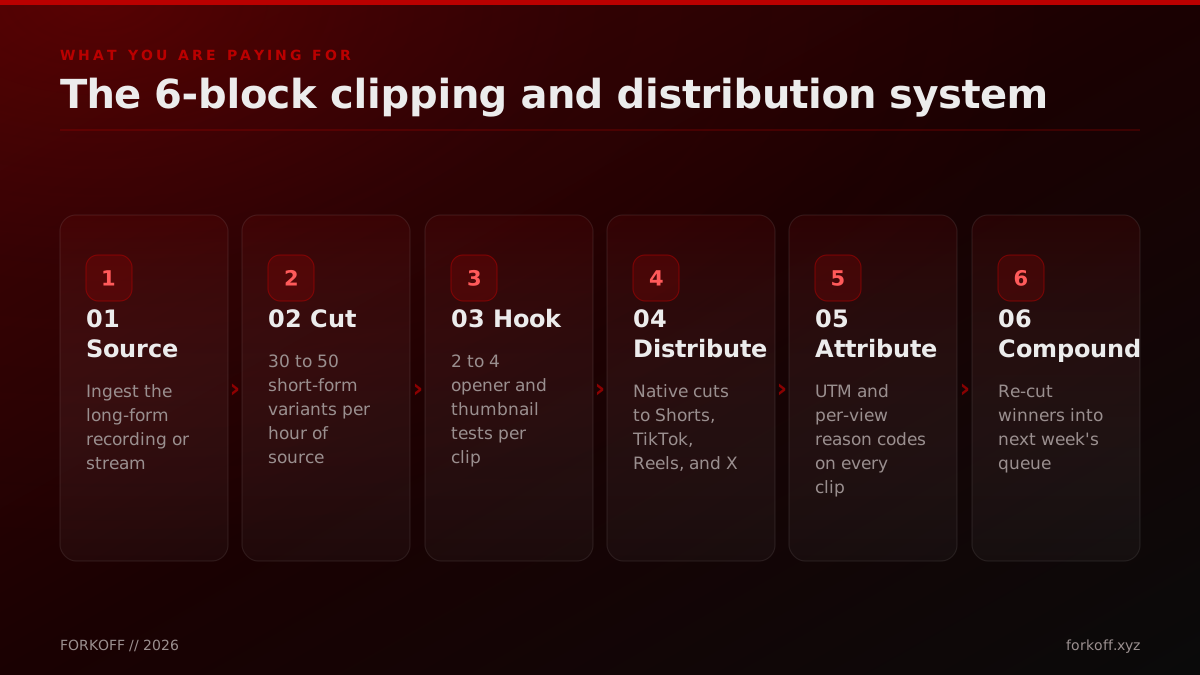
That six-block system, source, cut, hook, distribute, attribute, compound, is precisely the work a subscription leaves you holding. Software does the cut. You still own the other five blocks, and the two that decide whether a clip is seen, distribute and attribute, are the ones that eat the hours and the ones a solo operator quietly drops first. The managed clipping revenue case study shows what happens when all six run as a system instead of a hobby, and the clip economy breakdown shows the scale the top of this market operates at.
Walk the weekly calendar and the cost stops being abstract. One hour of source becomes roughly two hours of cutting and selecting the moments that carry, another two hours of writing and testing hooks, an hour of reformatting for each platform's aspect ratio and caption style, and an hour of scheduling, posting, and logging what happened. That is six to eight hours for a single source-hour, and it recurs every week the content does. Double your cadence and you have quietly taken on a part-time job that pays nothing until the distribution compounds, which for most formats is months out. The managed lane collapses that involvement to roughly 0.4 hours because the network, not you, absorbs the cutting, the posting, and the tracking, which is the difference between clipping as a system and clipping as a second job.
The tools themselves are honest about their limits when you listen closely. In a widely watched breakdown of whether an AI clipper is too good to be true, Jono Bacon lands on the truth the sales pages skip: the software can create magic, but it cannot resurrect the dead, and a weak source stays weak after the tool runs.
Is OpusClip too good to be true?
Jono Bacon
Why an AI clipping tool cannot rescue weak source content.
How do you tell a real agency from a clip farm?
You tell them apart on five tells: pricing basis, brand-safety policy, attribution, who owns quality, and view quality. A real managed agency prices on a scoped retainer or an outcome, enforces a written brand-safety policy, attributes every clip with a per-view audit ledger, owns quality on contract, and delivers qualified, gated views. A clip farm pays a bounty per view, has no enforced policy, hands you a screenshot as proof, leaves quality to you, and delivers inflated, bot-exposed impressions. If a vendor cannot show you the ledger, you are buying from the second category regardless of what the landing page says.
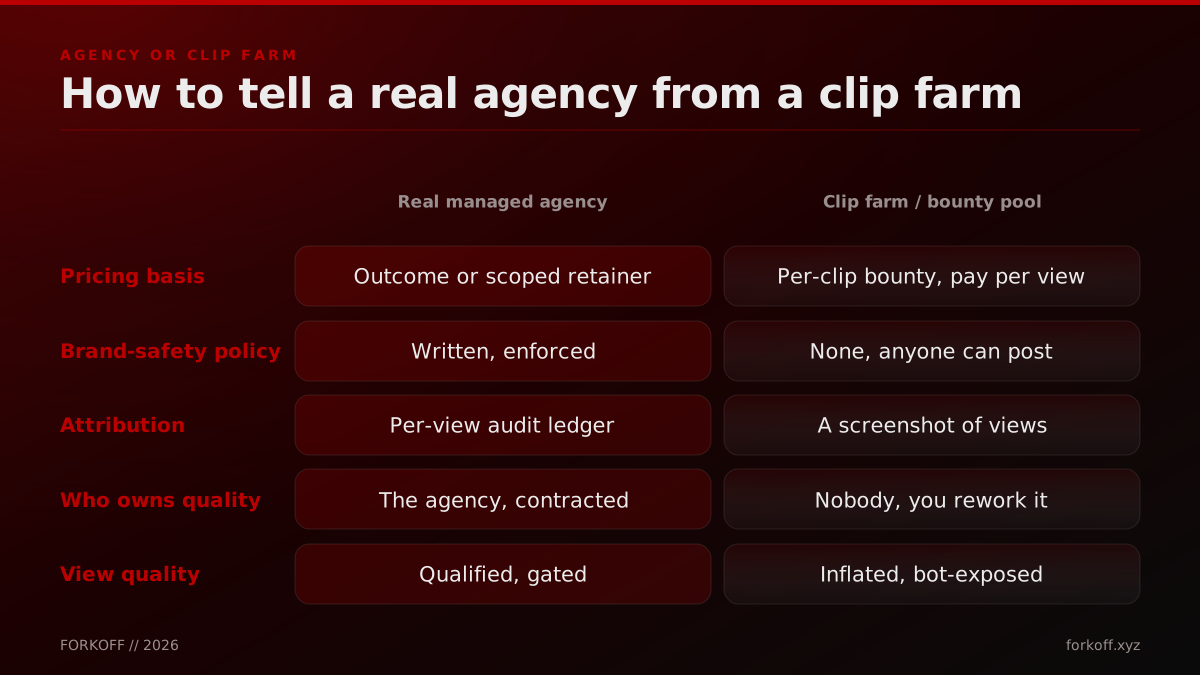
The attribution gap is exactly what practitioners keep flagging. One operator building analytics for the space put it plainly: brands lean on public view counts, creator-submitted screenshots, and agency reports to judge performance, and every one of those can be inflated, which is why a ledger you can audit beats a report you have to take on faith.
Brands rely on public view counts, creator-submitted screenshots for audience data, and agency reports to understand performance. Meanwhile, views can be inflated.
Brand safety is where the clip-farm lane quietly costs you. Anonymous accounts posting for a per-view bounty have no disclosure discipline, and the US Federal Trade Commission requires clear disclosure on brand-directed posts, so the compliance exposure lands on you. Add bot-inflated view counts and the risk of your brand next to content you never approved, and the cheap lane stops being cheap. Our breakdown of what clip farming is and the 3-layer bot detection system show how the view-quality gap actually works.
Disclosure is a live legal gray area, and a clip farm exposes you to it
The US Federal Trade Commission requires clear disclosure when a post is made on behalf of a brand. A clip farm that pays anonymous accounts per view has no enforced disclosure policy and no brand-safety layer, which pushes the compliance risk onto you. A managed agency that owns the accounts and the policy carries that risk instead. This is one of the quiet costs a sticker price never shows.
Source: US Federal Trade Commission, Disclosures 101 for Social Media Influencers
The cleanest test is to ask for a single artifact: a view export you can filter yourself. A real agency hands you a per-clip breakdown with geo, watch-time, and source account, and it survives a spot-check against the platform's own analytics. A clip farm cannot produce that, because the accounts are not theirs to audit and the views were never gated in the first place. When a vendor answers that request with a polished dashboard screenshot instead of a filterable export, you have your answer, and it is the same answer no matter how impressive the client logos on the landing page look.
Operator noteA screenshot of views is not attribution. A per-view audit ledger is. That single line separates an agency from a clip farm.
What should you measure to know it is working?
Measure cost per qualified view, not subscriber counts and not raw views. A qualified view is one that clears a gate: geo match, a watch-time threshold, a brand-safety policy, and non-bot traffic. The FORKOFF reference cohort ran 1.19M views at $0.003 per qualified view, and those views converted into 17 new paying subs over a 13-day window. A view that fails the gate never touches pipeline. If a vendor reports only a view counter, they are selling you the number that does not convert.
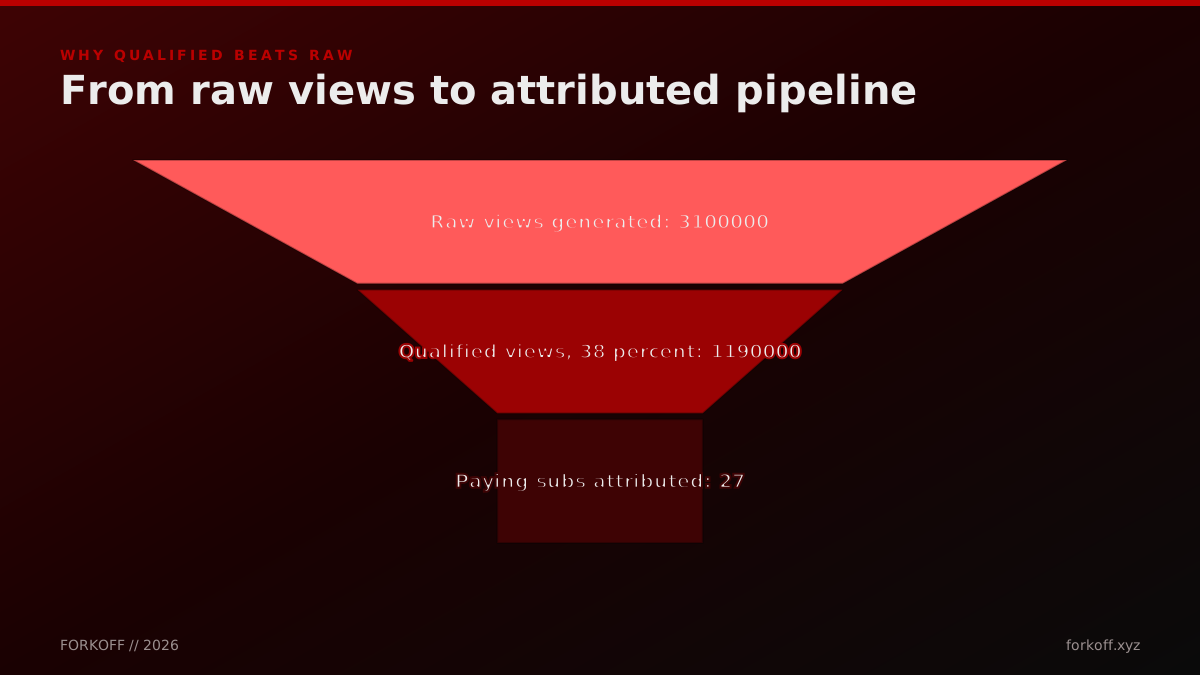
Qualified views, not raw views, are what convert to pipeline
In the FORKOFF Clipping Audit 2026, the reference cohort ran 1.19M views at $0.003 per qualified view, and those views produced 793 landing-page clicks and 17 new paying subs over 13 days. A view that fails the gate never touches pipeline, which is the entire argument for measuring CPQV over a view counter.
Source: FORKOFF Clipping Audit 2026, n=3,085 clips
Pair CPQV with two supporting signals so you are not reading one number in isolation: pipeline-attributed inbound and per-clip reply rate on the source platform. The CPQV calculator lets you run your own spend against the managed benchmark before you talk to anyone. Subscriber count told you how many people once followed you. CPQV tells you what each qualified view actually cost to earn, which is the only number a hire decision should turn on.
What does the search demand tell you about this decision?
The search demand confirms this is a decision-stage question, not a definitional one. In the US, clipping agency draws about 320 searches a month and clipping services about 210, while the broader content distribution agency term sits near 30. The exact phrase clipping and distribution agency is below the keyword planner's reporting threshold, yet it triggers a full AI Overview, a video pack, and a People Also Ask block, which means real buyers are asking it and Google has not settled on one authoritative answer. That gap is the opening this guide is written into.
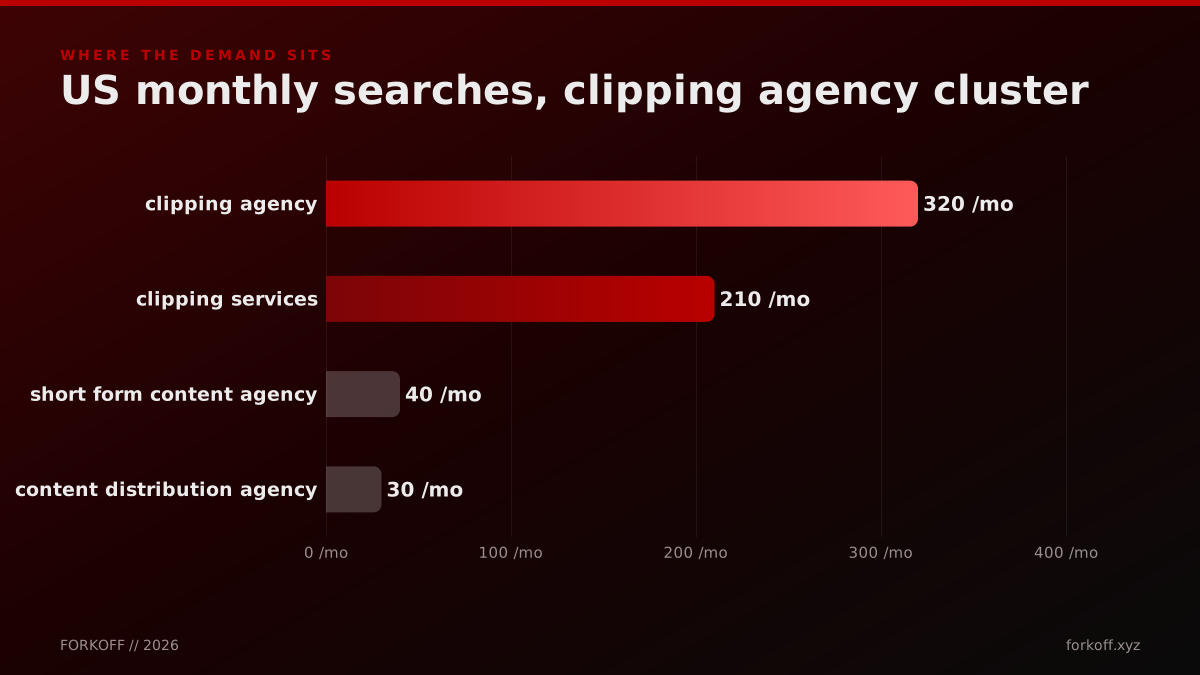
The people searching this cluster are comparing services and weighing a hire, not asking what a clip is. That is why the useful answer is a framework, not a sales page. FORKOFF already holds several of the AI Overview citation slots on this query through the best clipping agency comparison and the managed clipping service, and this decision guide is built to answer the one sub-question none of the ranking pages resolve: not which agency, but whether to hire one at all. For podcasters specifically, the podcast clipping agency pricing page and the podcast distribution service carry the format-specific version of this same math.
The comparison is also noisier than a logo wall makes it look. As one business-development operator noted, the same marquee client turns up in nearly every clipping agency's case studies, which is exactly why a decision framework beats a portfolio of borrowed names.
krombet
@krombet_ig
Polymarket was one of the first major clients in the clipping space every clipping agency that ever reached out to me had Polymarket in their case studies
The 2026 decision, in one framework
The decision reduces to a single question asked in the right order: does your situation match the break-even, and can the vendor prove qualified views? Start with volume and offer. Under two source-hours a week or with no offer to sell, stay DIY and revisit in a quarter. At two or more source-hours with a considered offer, an agency is likely worth it, so move to the second question and demand a per-view audit ledger before you sign. If a vendor prices on raw views and cannot show attribution, walk, regardless of the discount. Match your stage first, verify the ledger second, and the worth-it question answers itself.
Before you sign anything, ask five questions: How do you price, per view or per qualified view? Can I see the audit ledger? What is your brand-safety and disclosure policy? Which platforms do you distribute to natively? And what is your qualified-view pass rate? A real agency answers all five without a pause.
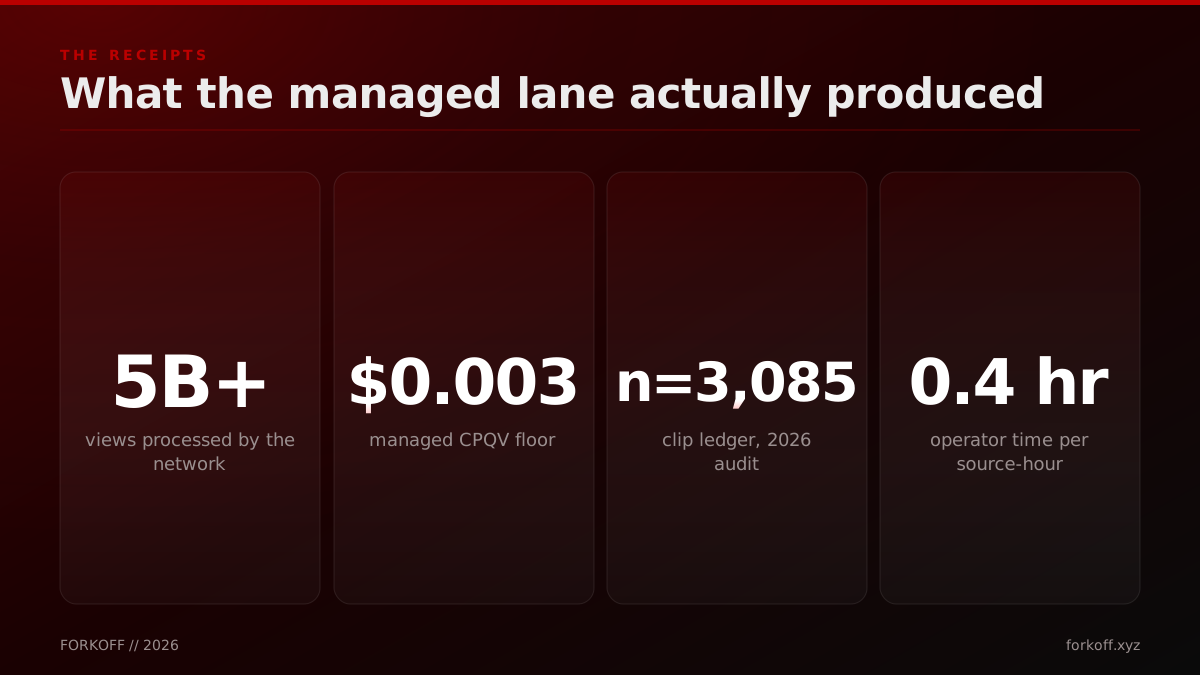
Each question is a filter, not a formality. The pricing question separates outcome alignment from a flat fee that gets paid whether or not a clip lands. The ledger question is the attribution and brand-safety test folded into one request. The disclosure-policy question is your protection against the exact compliance exposure the anonymous-account model creates. The platform question tells you whether you are buying real native multi-platform distribution or a single channel dressed up as four. And the pass-rate question surfaces whether the vendor even measures qualified views at all, because a team that cannot state its own pass rate is quietly selling you a view counter with a retainer attached. Any one of the five can end the conversation, and a vendor worth hiring will be glad you asked. If your stage matches the break-even and the answers hold up, the managed lane is the cheaper way to buy distributed, attributed reach, and FORKOFF has processed more than five billion views running exactly this system. If your stage does not match yet, keep the $29 tool and your own posting plan, and come back when the volume and the offer are real.