TL;DR: Clip farming is the earner-side practice of mass-producing short clips from a creator's content and posting them across many accounts to collect per-view payouts from a paid campaign. A creator or brand funds a campaign with a per-thousand-view rate; clip farmers submit clips and get paid for the views their clips earn. The work is real income for a few and near-minimum-wage for most, because earnings follow a steep power-law: a handful of viral clips carry the payout while the long tail earns cents. It also carries platform risk and a saturation problem, and from the brand side, paying for farmed volume usually buys raw views that never convert.
What Is Clip Farming? How Clippers Get Paid in 2026 (and Where It Breaks)
Clip farming is the earner-side practice of mass-producing short clips from a creator's content and posting them across many accounts to collect per-view payouts from a paid campaign. A creator or brand funds a campaign with a per-thousand-view rate; clip farmers submit clips and get paid for the views their clips earn. The work is real income for a few and near-minimum-wage for most, because earnings follow a steep power-law: a handful of viral clips carry the payout while the long tail earns cents. It also carries platform risk and a saturation problem, and from the brand side, paying for farmed volume usually buys raw views that never convert.
What is clip farming?
Clip farming is the practice of mass-producing short clips from someone else's long-form content and posting them across many accounts to earn per-view payouts from a paid campaign. The word farming is the important part. A clip farmer is not trying to make one perfect clip; they are planting many clips across many accounts and harvesting the few that go viral, the same way a farmer plants a field and harvests the plants that take. The model rewards volume and variance, not craft, because the payout is tied to views and most clips earn very little.
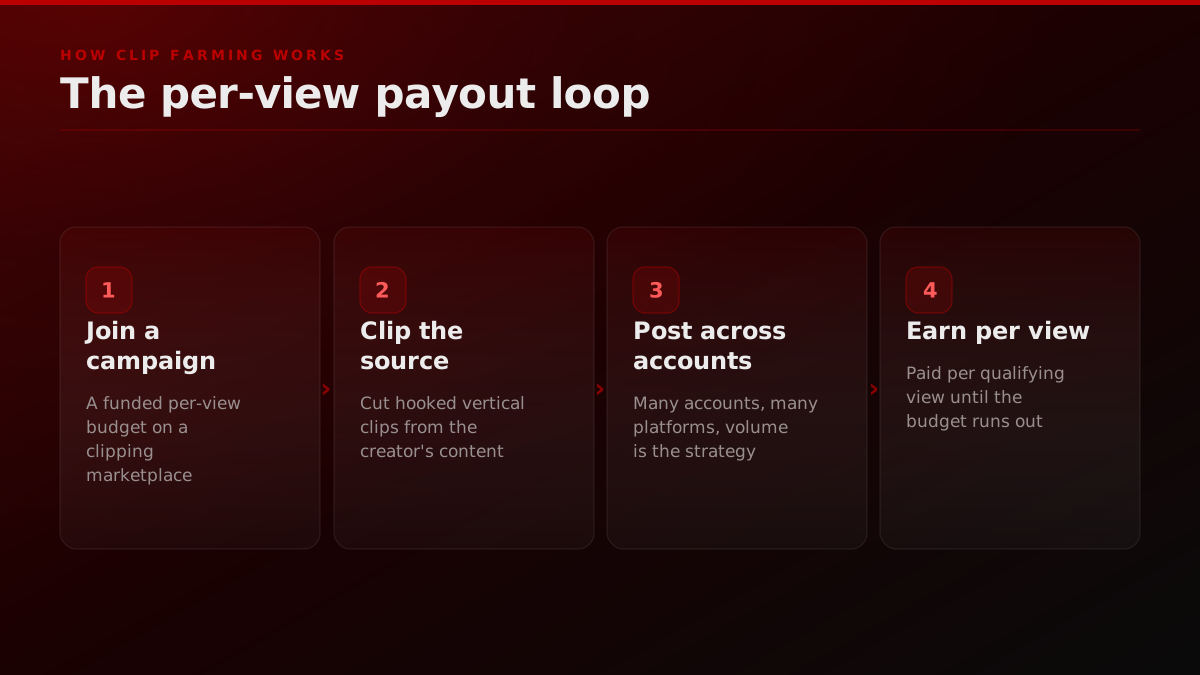
The mechanic is straightforward. A creator or brand puts up a campaign budget with a rate per thousand views. Clip farmers join the campaign, pull moments from the source content, cut them into hooked vertical clips, and post them across their own accounts. They submit the clips for tracking, and they get paid for the qualifying views their clips earn until the budget runs out. It is gig work priced per view, and like most gig work, the headline earnings and the median earnings are very different numbers. This guide walks the model from both sides, the earner trying to make money from it and the brand trying to decide whether to fund it.
Beni💗
@0x_beni_
Clipping is quickly becoming one of the easiest ways to make money online. If you’ve been wondering “What exactly is clipping and how do I start earning from it?” This tweet breaks it down 🧵👇 First of all what is Clipping? Clipping is the process of extracting short, https… Show more
How does clip farming actually work?
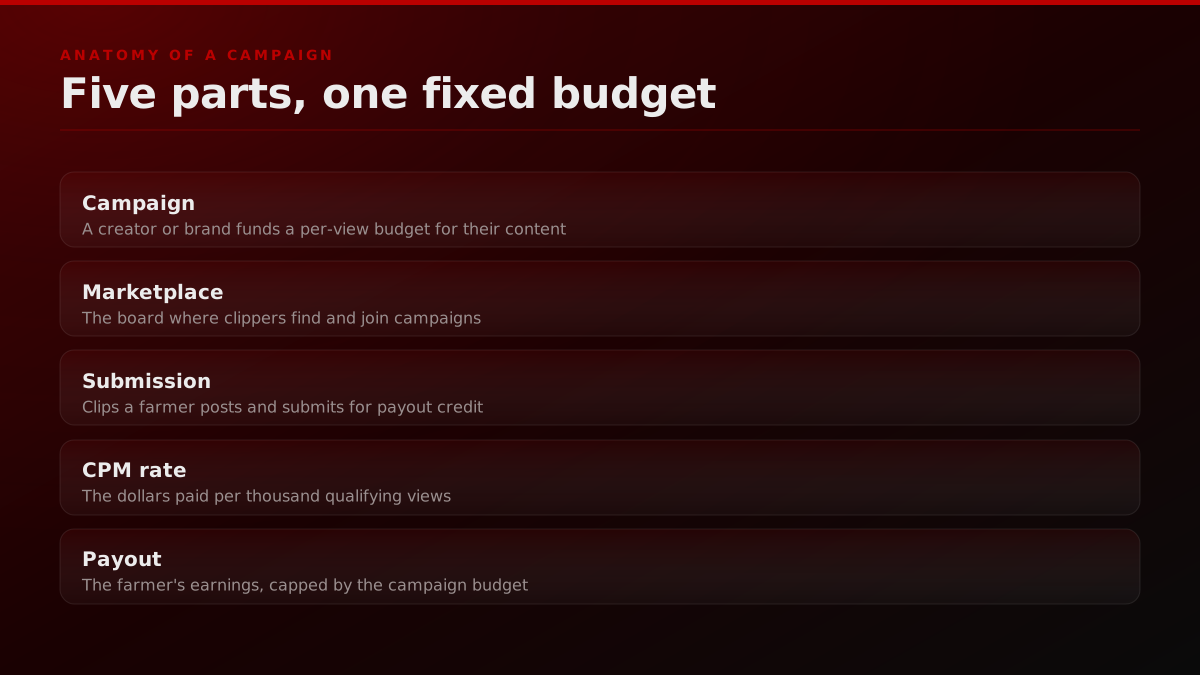
A clip-farming campaign has five parts, and understanding them explains both how the money flows and why most farmers earn little. There is the campaign itself, a fixed budget a creator or brand puts up to have their content clipped. There is the marketplace, the board where clippers discover and join campaigns. There is the submission, the clips a farmer posts and registers for payout credit. There is the CPM rate, the dollars paid per thousand qualifying views. And there is the payout, the farmer's earnings, capped hard by the campaign budget.
The anatomy of a clip-farming campaign
| Part | What it is | |
|---|---|---|
| Campaign | a creator or brand funds a per-view budget for their content | |
| Marketplace | the board where clippers find and join campaigns | |
| Submission | clips a farmer posts and submits for payout credit | |
| CPM rate | the dollars paid per thousand qualifying views | |
| Payout | the farmer's earnings | capped by the campaign budget |
The cap is the part newcomers miss. A campaign budget is fixed, but the number of clippers competing for it is not, so a campaign that looks generous on a per-view basis can pay out far less than expected once a crowd of farmers floods it with clips and the budget drains in days. The farmers whose clips went viral early collect most of it; everyone else splits the remainder or arrives after the budget is gone. This is why two clip farmers working the same hours on the same campaign can earn wildly different amounts, and why the median experience is much closer to minimum wage than to the screenshots that get shared.
I have made $675.38 from clipping
A clipper sharing real, modest earnings from clipping, the median reality behind the viral-income screenshots.
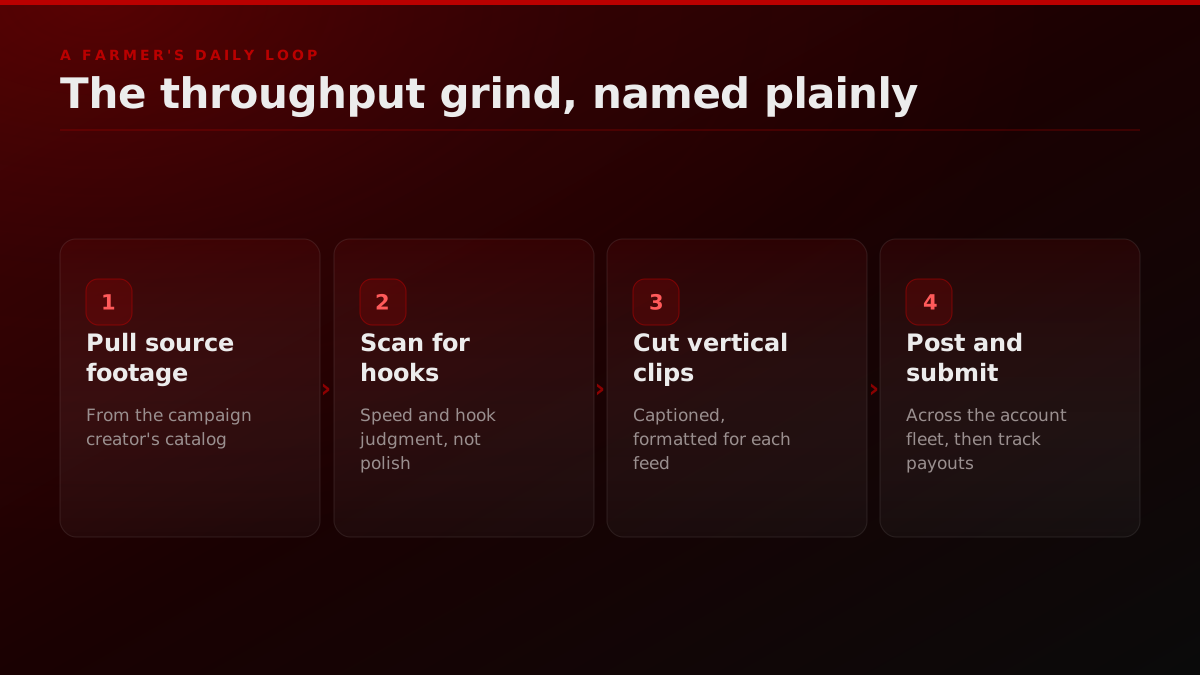
The day-to-day work is a volume operation. A clip farmer pulls source footage from a creator's catalog, scans it for moments with a hook, cuts those moments into vertical clips with captions, and posts them across a network of accounts, then submits each for tracking. The skill that matters is speed and hook judgment, not editing polish, because the goal is throughput: more clips, more accounts, more shots at a viral hit. The clipping tools comparison and the best AI video editor guides cover the tools that make this throughput possible, since a farmer's output is gated by how fast they can turn footage into posted clips.
Where does the money actually come from?
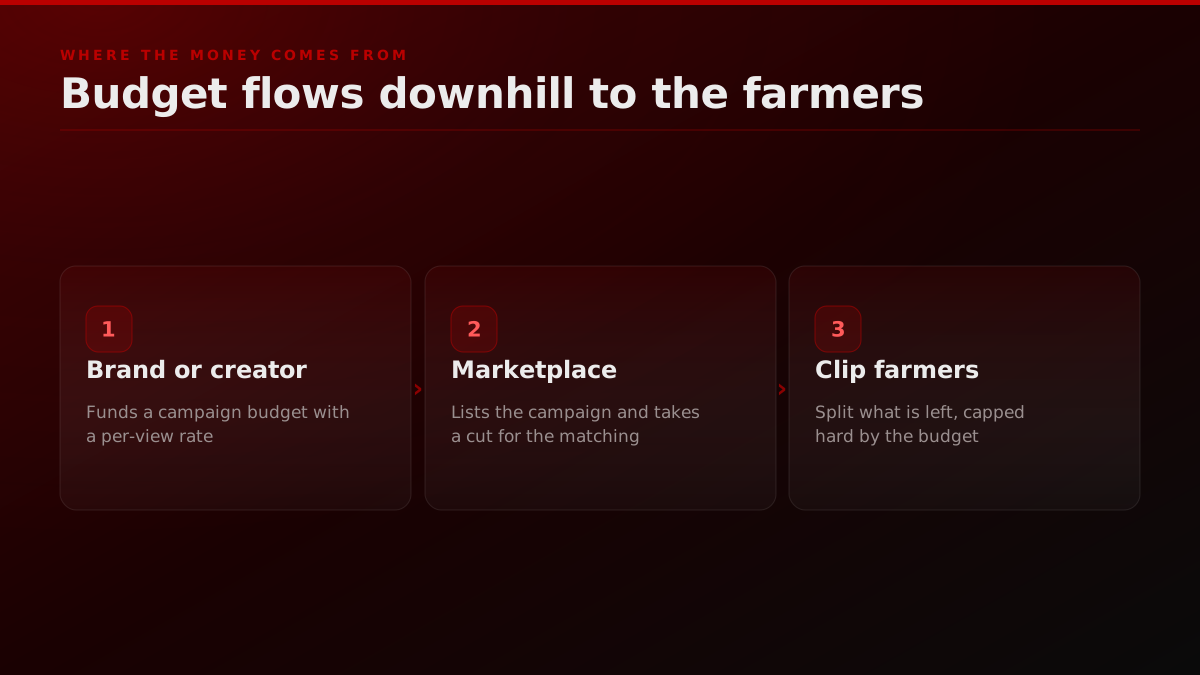
The money in clip farming starts with a brand or creator budget and flows downhill through a marketplace to the clippers, and following that flow explains the incentives at every step. A creator who wants reach, or a brand that wants distribution, funds a campaign with a budget and a per-view rate. A clipping marketplace lists that campaign and takes a cut for matching clippers to it. Clip farmers do the work and collect the per-view payout. The brand gets views, the marketplace gets a margin, and the farmers split what is left of the budget.
I made ~$900 managing a clipping campaign that did 1.48M views and paid out $2.8k to editors
A campaign manager's numbers showing how a fixed clip-farming budget splits between the manager and the editors.
This flow is why clip farming exists at all: it lets a creator convert a fixed budget into a flood of distributed clips without hiring or managing anyone. From the funder's seat it looks efficient, pay only for views, let a crowd compete to produce them. The catch, which the rest of this guide returns to, is that paying per raw view optimizes the whole system for raw views, and raw views are the easiest thing in the clip economy to produce without producing any business value. The CPM rates for clipping guide covers what those per-view rates actually look like, and the how much do clippers earn breakdown shows where the money lands once it reaches the farmers.
Why do most clip farmers earn little?
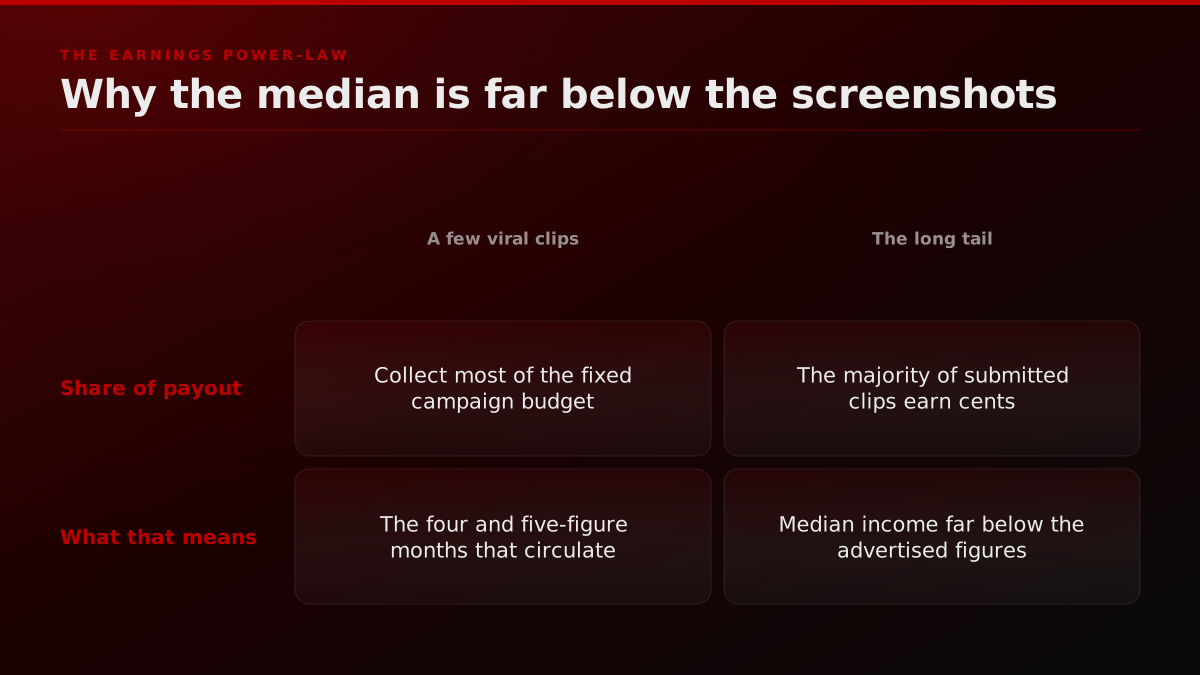
Clip-farming earnings follow a steep power-law, and that single fact explains the gap between the advertised numbers and the median reality. In any campaign, a small share of clips go viral and collect most of the budget, while the majority of submitted clips earn almost nothing. This is not a flaw in any one farmer's effort; it is the structure of short-form distribution, where a few clips carry most of the reach and the rest are noise. A farmer can do everything right, fast cuts, good hooks, high volume, and still land in the long tail of a given campaign.
Industry Context
Clip-farming earnings follow a steep power-law; a small share of viral clips collect most of the payout while the majority of submitted clips earn cents, which is why median clip-farmer income is far below the headline figures campaigns advertise.
The result is that median clip-farmer income is far below the figures campaigns advertise. The four and five-figure months that circulate as proof are real for the top performers and rare for everyone else, and they almost never account for the unpaid hours spent on clips that earned nothing. Add the saturation problem, more farmers joining every popular campaign and draining budgets faster, and the realistic expectation for a newcomer is closer to gig-economy wages than to a salary. The honest framing is the one in the how much do clippers earn guide: clip farming pays a few people well and most people a little.
What is a clip farmer's daily reality?
The day-to-day of clip farming is a throughput grind, and naming it plainly is the best antidote to the get-rich-quick framing. A working farmer spends the day pulling source footage, scanning for hook moments, cutting vertical clips, posting across a set of accounts, and submitting each clip for tracking, then doing it again. The volume is the strategy: because most clips underperform, the only reliable way to catch the viral few is to produce a lot of clips and post them widely. It is repetitive, it rewards speed over polish, and it runs on the hope that today is the day a clip hits.
How Editors Are Making $291+/Day with Clipping
Jack Cole
A creator's breakdown of clip-editor daily earnings, useful texture on the pay math and the volume the income actually requires.
The grind has a burnout curve built in. The variance that makes a good week feel like a real income also makes a bad week feel like wasted time, and because the pay is capped by campaign budgets, working harder does not linearly increase earnings once a campaign saturates. Many farmers cycle in and out of the work, drawn by the viral screenshots and worn down by the median reality. The ones who last either get fast enough and consistent enough to ride the power-law in their favor, or they graduate to steadier, briefed clipping work where the pay is lower-variance because it is tied to an outcome rather than a view-count lottery.
What platform risk does nobody advertise?
Clip farming carries platform risk that the headline earnings never mention, and it is a real variable in actual take-home rather than a footnote. Mass-posting the same or similar clips from many accounts sits in a grey area that platforms periodically act against, and clip farmers do experience view purges and account actions when a platform tightens enforcement. A view that gets purged after it counted toward a payout can claw back earnings; an account that gets actioned takes its whole posting capacity with it. The strategy that works one quarter can be throttled the next when a platform updates its rules.
Industry Context
Clip farming carries platform risk that the headline earnings never mention; mass-posting from many accounts can trigger view purges and account actions, which is a real variable in the actual take-home.
This risk compounds the earnings problem. A farmer who builds a network of accounts is building on rented land, and the platforms own the land and change the rules. Reporting on the clip economy has documented platforms tightening enforcement on coordinated clipping and purging inflated view counts, which is exactly the kind of event that turns a good month into a loss. Anyone treating clip farming as income, rather than as a casual side activity, has to price in that the rules shift and that a meaningful share of earned views can evaporate. It is a real job with real platform-dependency risk, not passive income.
What do you need to start clip farming?
The barrier to entry for clip farming is low, which is both its appeal and the reason it saturates so fast, and knowing exactly what you need keeps the expectations honest. You need three things: a way to edit clips quickly, a set of accounts to post from, and access to campaigns to clip for. The editing is the easy part now, a phone and a free or cheap editor handle vertical cuts and captions, and the best AI video editor guide covers the tools that make a farmer's throughput possible. None of this is expensive, which is exactly why so many people can start, which is exactly why budgets drain quickly.
Aje | GHL CRM & Lifecycle Manager
@Aje_Dynamicz
🚨 If you want to start clipping short videos (turning long videos into shorts), here’s a simple way to begin: Tools you can use: You can start with CapCut (mobile or desktop) which is free and easy to use. If you want AI to do most of the work, try Opus Clip or
The accounts are where it gets operationally real. Because earnings depend on volume and each post is a separate shot at an algorithm, serious farmers post the same clips across multiple accounts and platforms, which means managing a small fleet of profiles rather than a single channel. That fleet is also where the platform risk concentrates, since coordinated posting from many accounts is the pattern platforms periodically act against. The campaigns themselves come from clipping marketplaces, which list funded campaigns a farmer can join, and the choice of which campaigns to clip, which creator, which rate, which remaining budget, is most of the strategy.
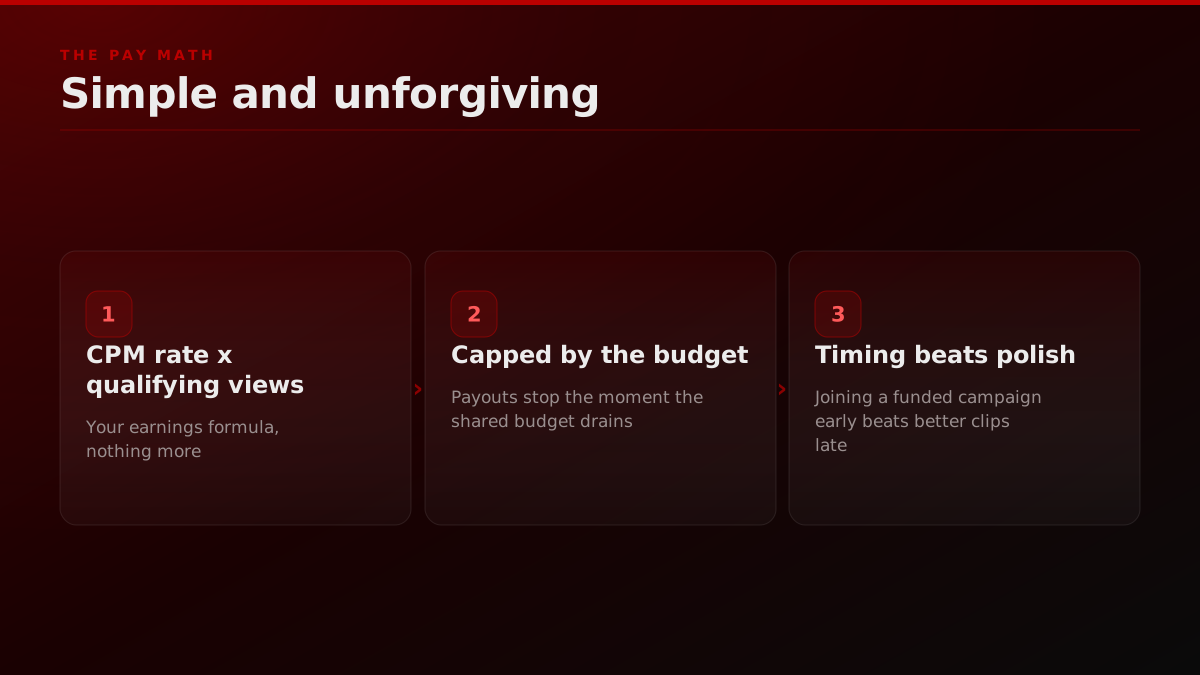
The pay math underneath it all is simple and unforgiving: your earnings are the campaign's CPM rate multiplied by your qualifying views, capped the moment the shared budget runs dry. That cap is why timing and campaign selection matter as much as clip quality. Joining a well-funded campaign early, before the crowd arrives and the budget drains, is often worth more than making marginally better clips for a campaign that is already saturated. Experienced farmers treat campaign selection as the real skill, because the same clip earns very differently depending on which budget it is competing for.
How does clip farming differ across the platforms?
Clip farmers post across the same short-form feeds as everyone else, but they read each platform through the lens of which one converts effort into payout fastest, and the platforms differ enough to matter. TikTok is usually the workhorse because its algorithm pushes fresh clips hardest to non-followers, giving a cold clip the best odds of the viral hit that carries a payout. Instagram Reels keeps clips circulating longer, which can extend a clip's earning window. YouTube Shorts ties into the largest long-form library, so a Short that performs can keep earning steadily rather than spiking and dying.
X is the outlier for farmers as it is for everyone: lower raw view volume, but clips can travel through reposts and replies in a way the dedicated short-form platforms do not reward. For a farmer paid on raw views, X is often the least efficient platform, which is itself a tell about the model, the platforms that produce the cheapest raw views are the ones farming concentrates on, and the platform that produces the most qualified discussion is the one farming tends to skip. That mismatch is a preview of the brand-side problem covered below.
The practical takeaway for an earner is that cross-posting multiplies the shots on goal, and reading results per platform tells you where your style of clip travels. A farmer who only posts to one platform is leaving payout on the table; a farmer who blindly posts everywhere without reading which platform earns wastes effort on feeds that do not reward their clips. The clipping tools comparison covers the production side of formatting natively for each platform, which is table stakes for farming at any real volume.
Is clip farming saturated?
Saturation is the structural force that pushes clip-farming earnings down over time, and it is worth understanding because it is not going away. Every popular campaign attracts more farmers, and because the budget is fixed, more farmers competing for the same budget means each one earns less. The campaigns that were generous last quarter are crowded this quarter, and the rate that looked attractive on paper pays out a fraction of what it implies once the budget drains in days instead of weeks. The low barrier to entry that makes clip farming accessible is the same force that erodes its returns.
Industry Context
From the brand side, funding a clip-farming campaign on a raw per-view rate buys volume, not qualified reach; the same budget routed through accountable distribution reaches fewer people but more of the right ones.
This is the clip-economy version of a well-known dynamic: when a way to make money online gets easy and popular, the returns compress until they reach the marginal worker's next-best option. Clip farming is heading that way, with median earnings drifting down as more people enter and platforms tighten enforcement. The farmers who continue to do well are the ones who treat it as a real operation, fast production, smart campaign selection, multi-platform posting, rather than as passive income, and even they are running to stay in place against the saturation. For most newcomers, the realistic expectation should be set by the median and the trend, not by the viral exceptions.
How do you move from clip farming to accountable clipping?
The most useful way to think about clip farming, for anyone doing it seriously, is as an entry point rather than a destination, because the skills it builds transfer to better-paid work. The hook judgment, the fast editing, the understanding of what travels on each platform, these are exactly the skills an accountable clipping operation pays for, and it pays more steadily because the work is tied to a brief and an outcome rather than a view-count lottery. A farmer who gets good at the craft has a path out of the variance: clipping for an engine or an agency where the pay is lower-variance because it is contracted against a result.
The difference in the work is the brief. Farming optimizes for whatever travels; accountable clipping optimizes for whatever travels and fits the brand, which is a harder constraint but a more durable one. The opus clip vs managed clipping comparison and the agency vs in-house vs Opus Clip breakdown show the economics from the buyer's side, which is the side that ultimately funds the steadier work a graduating farmer moves into. Understanding both sides, the volume incentive of farming and the outcome incentive of accountable clipping, is what lets a clipper choose which game they actually want to play.
For an earner weighing the two, the honest framing is that farming is the faster start and the lower ceiling, while accountable clipping is the slower start and the steadier income. Neither is wrong, but they reward different things, and a clipper who understands the difference can use farming to build the skill and then move toward the work that pays for judgment rather than just volume. That progression, from chasing views to being trusted with a brand's reach, is the real career arc inside the clip economy.
Clip farming vs building your own channel
A question worth answering before you start farming is whether the same hours would be better spent building your own channel, because the two compete for the same time and skill. Clip farming pays now, in small variable amounts, and the audience and upside accrue to the campaign rather than to you. Building your own channel pays later, often much later, but the audience compounds and belongs to you. A clip that goes viral under a farming campaign earns you a one-time payout and adds nothing to an asset you own; the same clip on your own channel earns no direct payout but adds followers, reach, and optionality that keep paying.
Neither answer is universally right, and the honest version depends on your situation. If you need cash this month and have editing speed, farming converts the skill into income faster than channel-building ever will. If you can afford to invest the time, the owned channel is the better long-term use of the same effort, because you stop renting an audience and start owning one. Many of the people who do well in the clip economy started by farming to learn the craft and then redirected the skill toward an owned channel or toward accountable clipping work, treating farming as the apprenticeship rather than the career. The point is to choose deliberately rather than to drift into farming because it pays today and discover a year later that you built nothing you keep.
Clip farming vs clipping for an engine
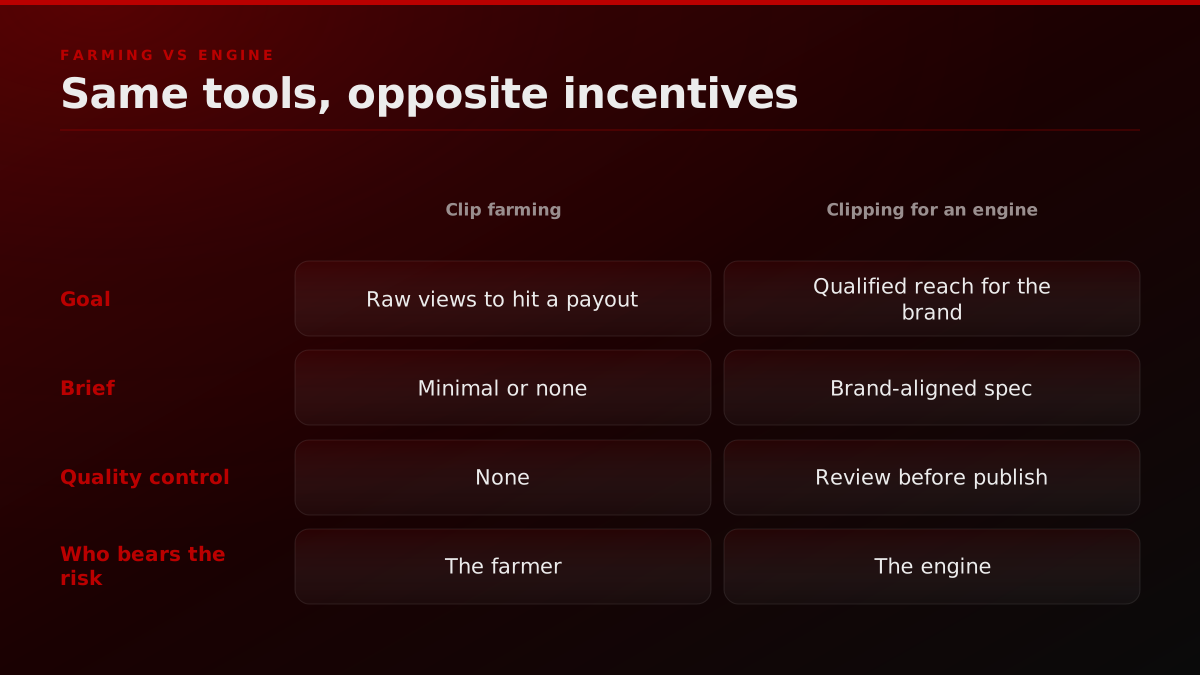
Clip farming and accountable clipping use the same tools and produce clips that look identical, and the entire difference is in the incentive. Clip farming optimizes for raw views because a per-view payout rewards volume; the farmer's job is to produce views, qualified or not. Clipping for an engine optimizes for qualified reach because the engine is accountable to a brand for an outcome; the brief, the audience match, and the review step all exist to make the views count. The fork is not about effort or skill, it is about what the system pays for.
Clip farming vs clipping for an engine
| Dimension | Clip farming | Clipping for an engine |
|---|---|---|
| Goal | raw views to hit a payout | qualified reach for the brand |
| Brief | minimal or none | brand-aligned spec |
| Quality control | none | review before publish |
| Who bears the risk | the farmer | the engine |
For an earner, the practical implication is a choice between variance and steadiness. Clip farming offers a low barrier and a shot at a big viral month, with a low median and full exposure to platform risk. Clipping for an engine or an agency offers steadier, lower-variance pay because it is tied to a brief and an outcome rather than a view-count lottery. Neither is strictly better; they suit different temperaments and situations. The what a clipping agency does guide describes the accountable side from the brand's seat, and the managed clipping playbook shows how briefed clipping is actually run.
Operator noteClip farming and accountable clipping use identical tools. The difference is incentive, per-view pay rewards volume, outcomes reward reach.
The reason the two look identical from the outside is that the artifact, a hooked vertical clip, is the same in both. What differs is everything around the artifact: whether there was a brief, whether anyone reviewed it before it published, and whether the views it earned were counted as raw or qualified. A clip farmer and an engine clipper can post the same cut of the same podcast; the farmer gets paid for the views it earns and moves on, while the engine clipper is accountable for whether those views reached the brand's audience. The clip is the visible part and the incentive is the invisible part, and the incentive is what actually determines the result.
Why does farmed volume backfire for brands?
From the brand seat, the most important thing to understand about clip farming is that funding a raw per-view campaign is, by design, paying for volume regardless of who saw it. The campaign pays the same for a bot view, an out-of-market scroll-past, and a genuine prospect, because the only metric it measures is the view. That means the whole system optimizes for the cheapest views to produce, which are exactly the views with no business value. The brand ends up with a large number and very little to show for it, then concludes that clipping does not work, when what did not work was paying for the wrong metric.
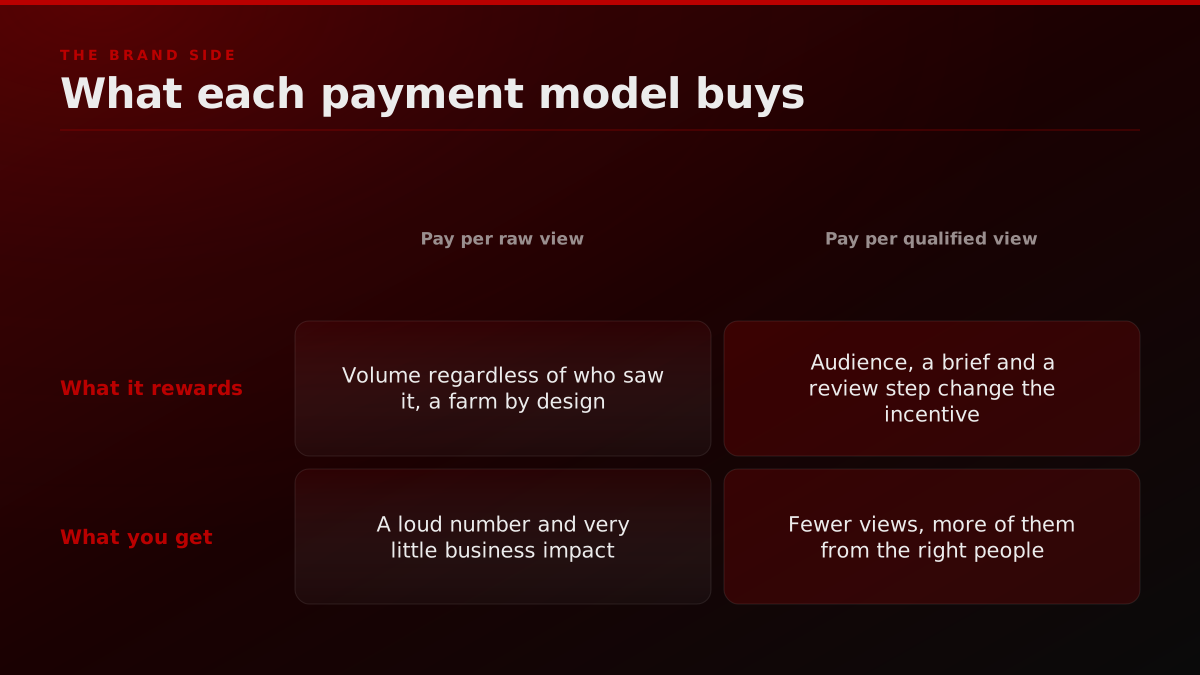
A brand that pays per raw view is funding a farm. A brand that pays per qualified view is funding an outcome. The clips look identical; the results do not.
The fix is to change the metric the campaign pays on. A brand that pays per qualified view, a view from someone in its actual target audience, and requires a brief and a review step before clips publish, changes the incentive from volume to audience. The same budget reaches fewer people but more of the right ones, and the clips that get made are on-brand rather than whatever travels fastest. This is the entire argument for accountable clipping over farming, and it is covered in depth in the qualified views metric guide and benchmarked in the clipping CPQV benchmark. The clips look the same; the results do not.
Operator noteFor a brand, a per-raw-view campaign is a farm by design; it pays for volume regardless of who saw it. Pay per qualified view instead.
There is a second, quieter cost to funding farmed volume that brands tend to discover late: it trains the wrong behavior into the people making your clips. When the payout rewards raw views, clippers optimize for whatever travels regardless of fit, which means the clips that represent your brand to the public are selected by an algorithm's taste rather than yours. A few off-brand clips with reach can shape how a market perceives you, and you have no review step to catch them because the campaign never built one. The brands that treat clipping as a serious channel put the brief and the review back in, accept fewer raw views in exchange for control and qualification, and measure the channel on pipeline rather than on the counter.
Is clip farming worth it?
Clip farming is worth it for a narrow profile and a waste of time for most, and being honest about which one you are saves a lot of grinding. It is worth it if you edit fast, have time to post at real volume, and can tolerate pay that is mostly low with occasional spikes, in which case it is a low-barrier way to earn from a transferable skill. It is not worth it if you need predictable income, cannot commit the volume, or would be better served building a single owned channel where the audience and the upside accrue to you rather than to a campaign budget.
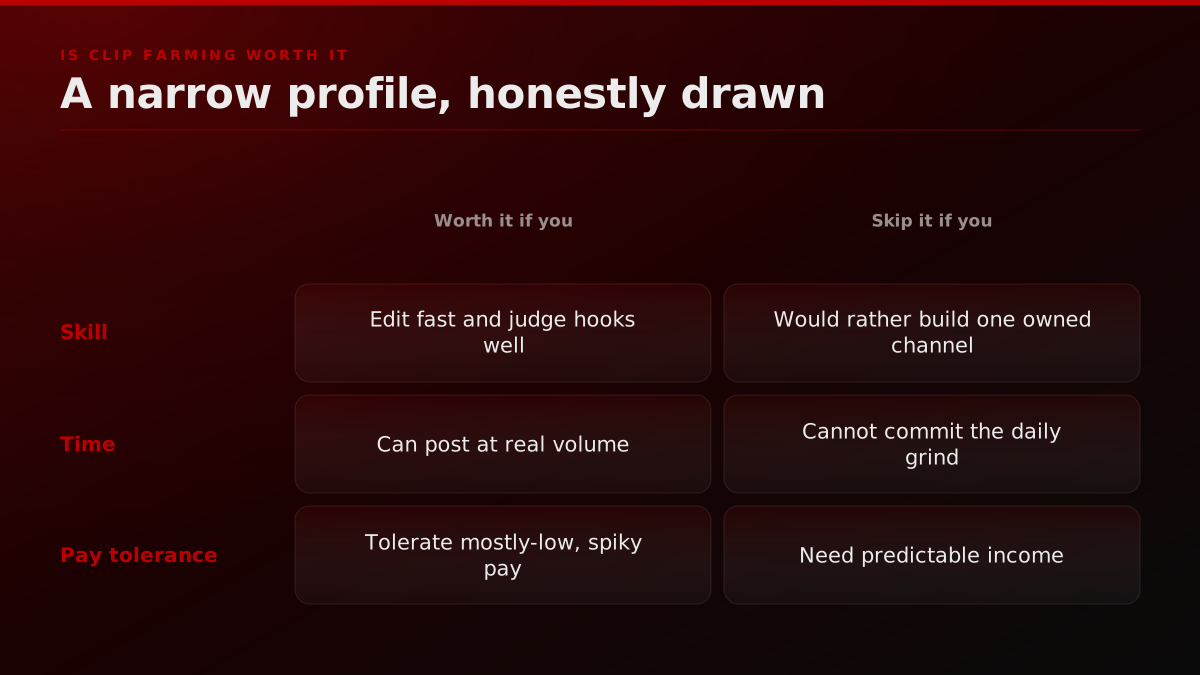
Operator noteJudge clip farming for income on median earnings, not the screenshots. The big payouts are real for a few and rare for everyone else.
The deciding question is what you actually want from the time. If you want to learn short-form editing and distribution while earning something, clip farming teaches it under real stakes. If you want a reliable return on hours worked, the variance and the saturation make it a poor fit, and briefed clipping for an engine or building your own content is usually the better use of the same skill. The best clipping software guide is the place to start on the tooling if you decide to try it, and the what is clipping explainer covers the broader model that farming sits inside.
How does FORKOFF sit on the other side of this?
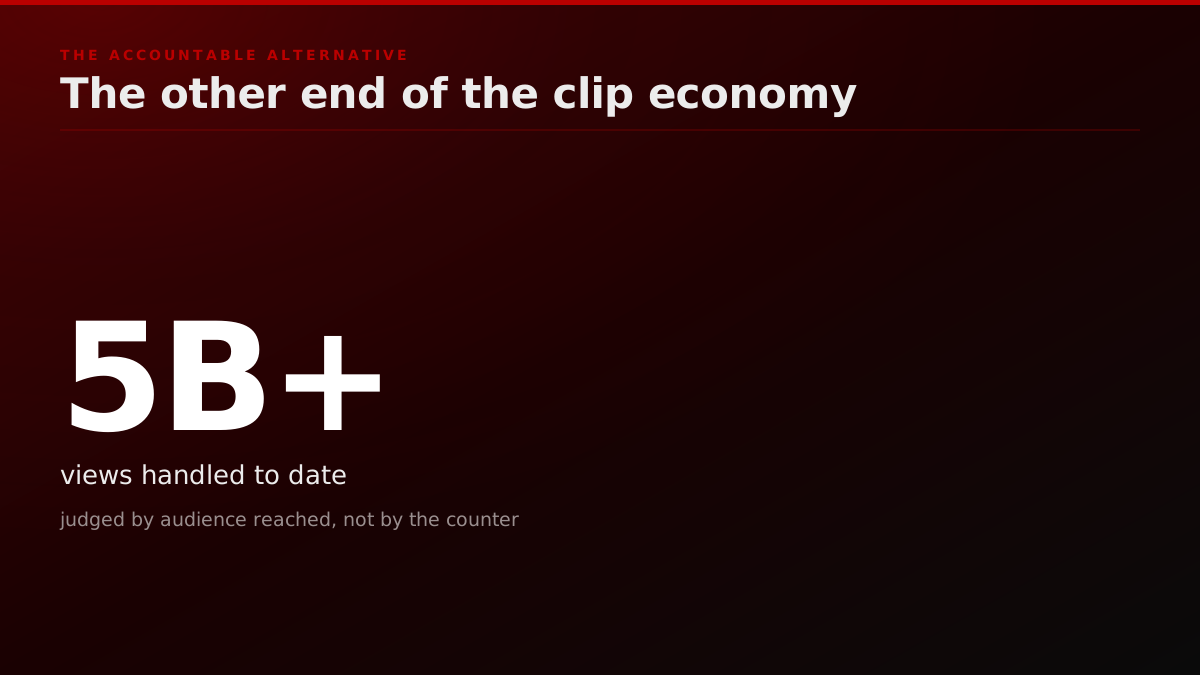
FORKOFF exists at the opposite end of the model from clip farming, and the contrast is the cleanest way to explain what accountable clipping means. Where farming pays per raw view and lets a crowd chase volume, FORKOFF runs briefed clips through audience-matched distribution and reports on qualified views, the views that reach someone who could actually become a customer. The number behind that is more than 5 billion views handled to date, and the rule behind the number is that a view only counts when it lands with a real audience, not when it merely registers on a counter.
Clip farming pays the winners and exhausts everyone else. The campaign budget is fixed; the clippers competing for it are not.
For a brand, the choice between farming and an accountable engine is the choice between a loud number and a real outcome, and the clips themselves will not tell you which you bought. The clipping service page covers how FORKOFF runs the accountable version, and the managed clipping revenue case study shows the difference in the result. Clip farming is not a scam and it is not worthless; it is simply optimized for the wrong thing if what you want is reach that converts.
Verdict: farming pays the few, accountability pays the brand
Clip farming is mass-producing clips across many accounts for per-view payouts, and the model rewards volume and variance: a few viral clips collect most of a fixed budget while the majority of farmers earn little, all under real platform risk. For an earner with the right profile it is a low-barrier shot at short-form income; for most it is a grind with a low median. For a brand, funding farmed volume buys raw views that rarely convert, and the fix is to pay for qualified views with a brief and a review step instead. If you want clipping that is accountable to an outcome rather than a view counter, talk to a strategist about an accountable managed clipping, or compare the field in our best clipping agency guide.
External references: the clipping economy and the paid-clipper market are documented across NPR, The Verge, Business Insider, and Forbes, with platform mechanics on TikTok's creator resources, YouTube's Shorts documentation, and Instagram's Reels guidance, plus creator-economy analysis at a16z.