Agent blast radius is the brand-side reframe of AI-agent surface area: an AI agent acts on four surfaces per buyer task, and your brand is either inside the blast radius on each surface or outside it. When a buyer researches, transacts, and decides through Claude, ChatGPT, or Perplexity, the 2026 marketing diagnosis is which of the four surfaces leaks buyers fastest. A brand can hold a 92 of 100 site audit and still lose the deal if it sits outside the agent's blast radius for the buyer's category. The premise underneath this model is not ours alone: three a16z teams predicted the same move to agent-mediated discovery without coordinating with each other.
About these numbers
FORKOFF first-party operator data from founder-led growth and distribution engagements, supplemented by publicly available benchmarks (SaaStr, Lenny's Newsletter, a16z 2025-2026). All figures are directional estimates based on operator observations, and individual outcomes vary by stage, niche, and execution.
Agent blast radius in one scroll
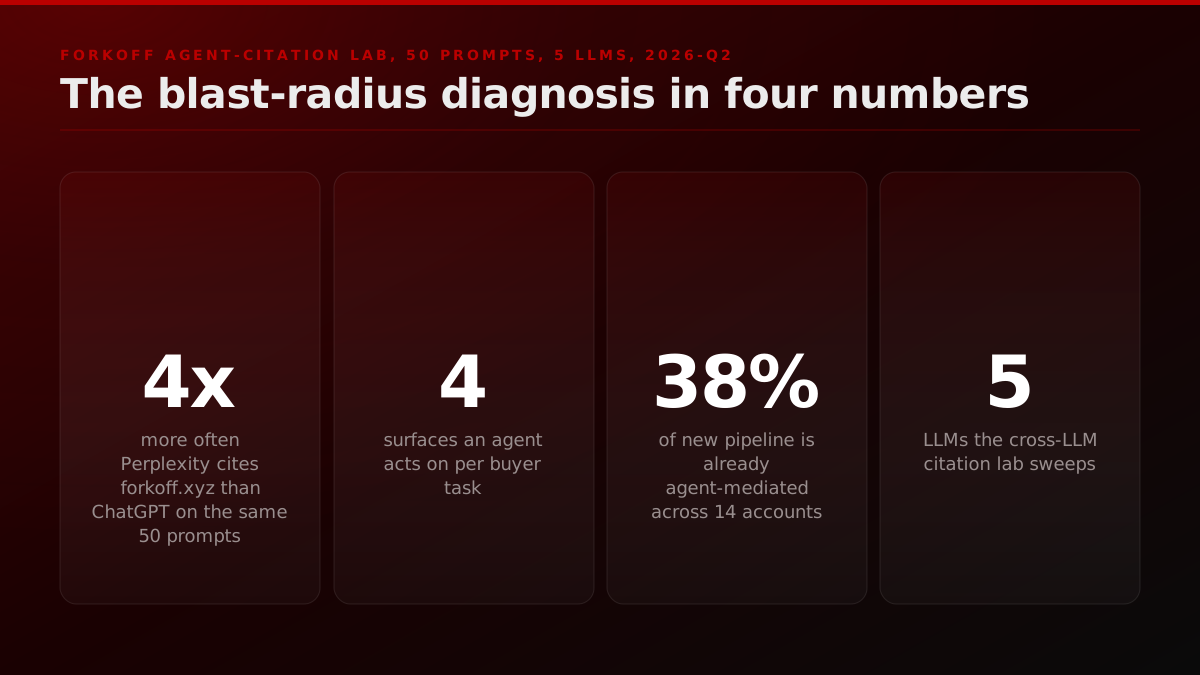
AI agents act on four surfaces per buyer task, search, transactional, research, decision. Your brand is either inside the agent's blast radius on each surface or outside it. The FORKOFF agent-citation lab observes Perplexity citing FORKOFF pages 4x more often than ChatGPT on the same 50-prompt cross-LLM sweep. The post-agent funnel collapses awareness plus consideration plus decision into one inference call. Five tactical moves close the surface gaps. Three honest disqualifiers say when the work does not compound.
The AGENT BLAST RADIUS MODEL
Agentic marketing is the brand-side reframe of AI-agent surface area. An AI agent acts on four surfaces per buyer task. Your brand is inside the blast radius on each surface or outside it. The 2026 marketing diagnosis is which of the four surfaces leaks buyers fastest.
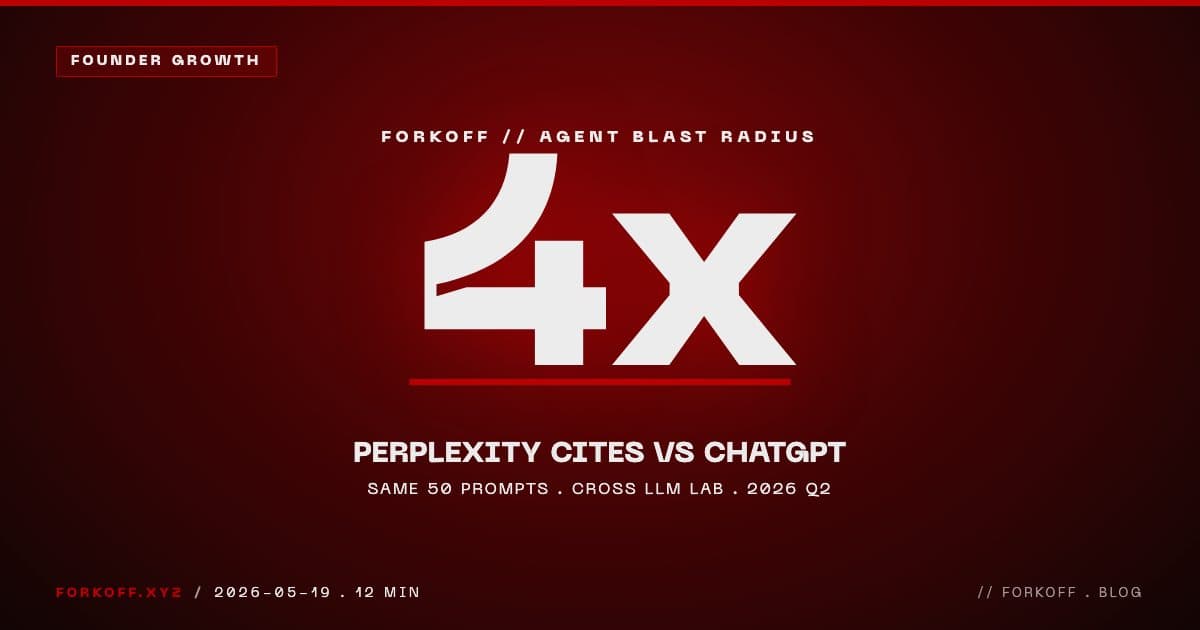
Perplexity 4x ChatGPT on the same 50-prompt blast-radius lab
The FORKOFF agent-citation lab (50 buyer-stage prompts in our category, 5 LLMs, 2026-Q2) observed Perplexity citing forkoff.xyz roughly four times more often than ChatGPT did on the same prompt set. The difference is structural, not vibes. Perplexity wants citations and rewards markdown-content-negotiated pages. ChatGPT wants confident synthesis and rewards entity-clarity over link-density. Most brand pages optimize for one and leak the other. The blast-radius diagnosis surfaces the gap before the funnel does.
Source: FORKOFF agent-citation lab - 50 prompts - 5 LLMs - 2026-Q2
A FORKOFF client lost a deal during 2026-Q1 because the buyer's research started inside Claude, Claude recommended a competitor, and the buyer's procurement team shortlisted three vendors without ever loading our client's domain. The brand had a 92 of 100 site audit, 1,800 monthly organic visits, and a Tier-1 content team. The brand was simply not inside the agent's blast radius for the buyer's category. Same problem, three months later, across two more accounts. By the following quarter we had stopped calling it a SEO problem.
The brand-side question for 2026 is not how to use AI agents to run your marketing operations. That is the inside-out frame, owned on Google by Salesforce, IBM, Demandbase, Relevance, MindStudio, Google Cloud, LiveRamp, and Warmly. Useful for productivity, irrelevant for brand presence. The brand-side question is the inverse. When the buyer uses an AI agent to research, transact, and decide, is your brand inside the agent's blast radius on each of those surfaces, or outside it.
This post does three things. It names the four surfaces of agent blast radius, the structural taxonomy FORKOFF runs on every founder engagement. It shows pre-agent vs post-agent funnel architecture, with the 50-prompt cross-LLM lab data behind the claim. And it gives five tactical moves plus the three honest disqualifiers, because brand-side blast-radius work compounds only above specific thresholds.
B2B marketing in 2026 has two audiences now : the human buyer and the AI agent evaluating options before the human ever sees your brand. Most teams are only optimising for one
the entire B2B marketing stack was built on one assumption. a human moves through your funnel. that assumption is quietly breaking. a VP of Ops tells their AI assistant to find the top three options under a budget and book demos with the best two. the agent does the full… Show more
What 'Blast Radius' Means in Agent-Native Marketing
Borrow the term from incident response. In an outage, blast radius is the surface area affected per failure. In a service mesh, it is the set of dependent calls a request fans out to. In agent-native marketing, blast radius is the surface area an AI agent acts on per buyer task. Same shape, different domain.
When a buyer in 2026 asks ChatGPT, Claude, Perplexity, or Google AI Overview a category question, the agent does not return one link. The agent fans out across a structured set of moves. It rewrites the buyer's intent. It searches its own indexed corpus and the live web. It loads vendor pages, comparison pages, and review aggregates inside its context window. It synthesizes a recommendation. The buyer reads the synthesis, not the underlying pages. That fan-out is the blast radius. Your brand is either present at each fan-out point or absent from it.
The reason the classic SEO frame breaks here is that SEO measures one surface, search rank. The agent's blast radius is four surfaces, only one of which is search. A brand can rank top-3 on Google for a category head term and still be invisible inside the agent's research surface, because the agent extracts text via markdown content negotiation and the brand's pages return HTML-only. Same buyer, same query, three of four blast-radius surfaces leaking pipeline.
The diagnosis the rest of this post unfolds is exactly that map. Four surfaces, what each one does, how brand presence works in each, and what to ship to close coverage gaps. Related canon FORKOFF reads on the same axis are the agent-native GTM founder stack and the agent-ready site audit. For teams where the primary buyer is a developer rather than a business buyer, the developer marketing strategy for 2026 covers the channel sequencing and trust signals that apply before blast-radius optimization becomes relevant.
The Four Surfaces of Agent Blast Radius
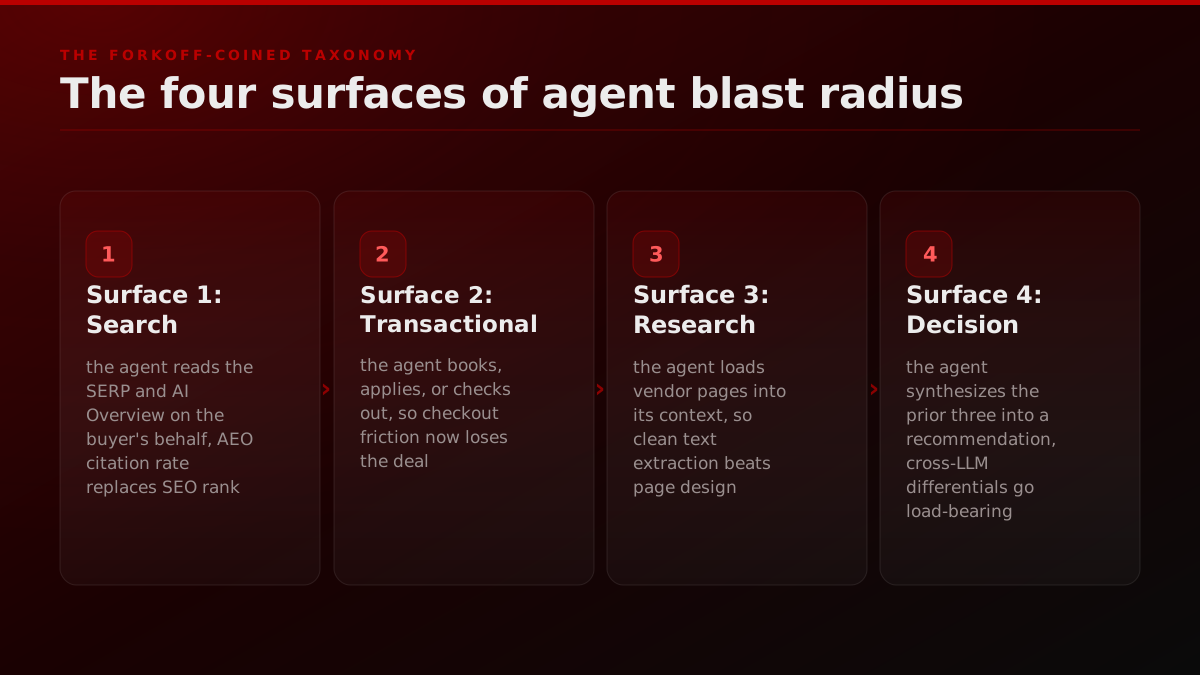
The four surfaces of agent blast radius are the search surface (where the agent reads the SERP and AI Overview on the buyer's behalf), the transactional surface (where the agent books, applies, or checks out), the research surface (where the agent loads vendor pages into its context window), and the decision surface (where the agent synthesizes the prior three into a recommendation). The taxonomy is FORKOFF-coined, and each surface has a distinct activation pattern, measurement, and fix. Skipping a surface does not save you work, it just leaves a hole the buyer falls through.
Surface 1, Search. The agent reads SERP and AI Overview on the buyer's behalf. Google AI Overview now sits at rank 1 on roughly half the head terms in B2B SaaS and consumer-tech categories. On the LIVE 2026-05-19 DataForSEO SERP for the head query ai agent marketing, AI Overview occupies the top result, ahead of Salesforce and Demandbase. The agent reads that synthesis, not the underlying organic pages. For your brand to participate in the search surface, you must be cited inside the AI Overview, inside ChatGPT's synthesis, inside Perplexity's citations, inside Claude's response. SEO rank is no longer a sufficient proxy. AEO citation rate is. Anchor: /services/answer-engine-optimization.
Surface 2, Transactional. The agent transacts on behalf of the buyer. As of 2026-Q2, ChatGPT, Claude, and Perplexity each ship some flavor of agentic commerce, agentic booking, or agentic form-fill. The buyer types "book a 30-minute strategy call with the most affordable vendor in the top 3" and the agent does it. If your booking flow requires a session cookie, a CAPTCHA, or a JS-heavy checkout step the agent cannot complete, you lose the deal at the transaction surface. Most brands have never tested this. The diagnostic is one prompt, "have ChatGPT book a 30-minute call with us starting from forkoff.xyz" or your domain equivalent. If it fails, your transaction surface is blocked. Anchor: /services/answer-engine-optimization.
Surface 3, Research. The agent loads vendor pages and comparison content inside its own context window. This is the surface most brands optimize for accidentally, by writing strong landing pages, and lose anyway, by serving HTML the agent cannot cleanly extract. The fix is markdown content negotiation on the edge, llms.txt at the site root, FAQ schema on every long page with brand-coined vocab. The research surface is where citation rate diverges most across LLMs. Per the FORKOFF lab, Perplexity cites a markdown-content-negotiated page roughly 4x more often than ChatGPT does. Both metrics move when you ship the right structural fix. Anchor: /services/answer-engine-optimization.
Surface 4, Decision. The agent synthesizes the prior three surfaces into a recommendation. This is the surface where cross-LLM citation differentials become load-bearing. ChatGPT and Claude both lean toward confident synthesis with low citation density. Perplexity and AI Overview lean toward dense citation. Gemini is between. If your brand is missing from the cited slice on Perplexity but present on ChatGPT, you win some buyer paths and lose others. The decision-surface measurement is per-LLM recommendation rate on category-specific buyer prompts. The lab method makes the surface visible. Anchor: /services/answer-engine-optimization.
The four blast-radius surfaces: what the agent does, the presence signal, the fix
| Surface | What the agent does | Brand presence signal | Primary fix |
|---|---|---|---|
| Search | Reads the SERP and AI Overview for the buyer | Cited inside the AI Overview and each agent synthesis | llms.txt, FAQ schema, brand-coined vocab |
| Transactional | Books, applies, or checks out for the buyer | Agent completes the flow with no human in the loop | Remove CAPTCHA gates, expose a typed booking endpoint, publish a WebMCP card |
| Research | Loads vendor pages into its context window | Text the agent can extract cleanly | Markdown content negotiation on the edge |
| Decision | Synthesizes the prior three into a recommendation | Per-LLM recommendation rate on category buyer prompts | Quarterly 50-prompt lab, fix the worst surface first |
FORKOFF four-surface blast-radius model, run on every founder engagement in 2026.
Operator noteOne prompt tests the transactional surface: ask ChatGPT to book a call from your domain. If it stalls, the surface is blocked., FORKOFF founder engagements, 2026
How Brand Presence Works in Each Surface
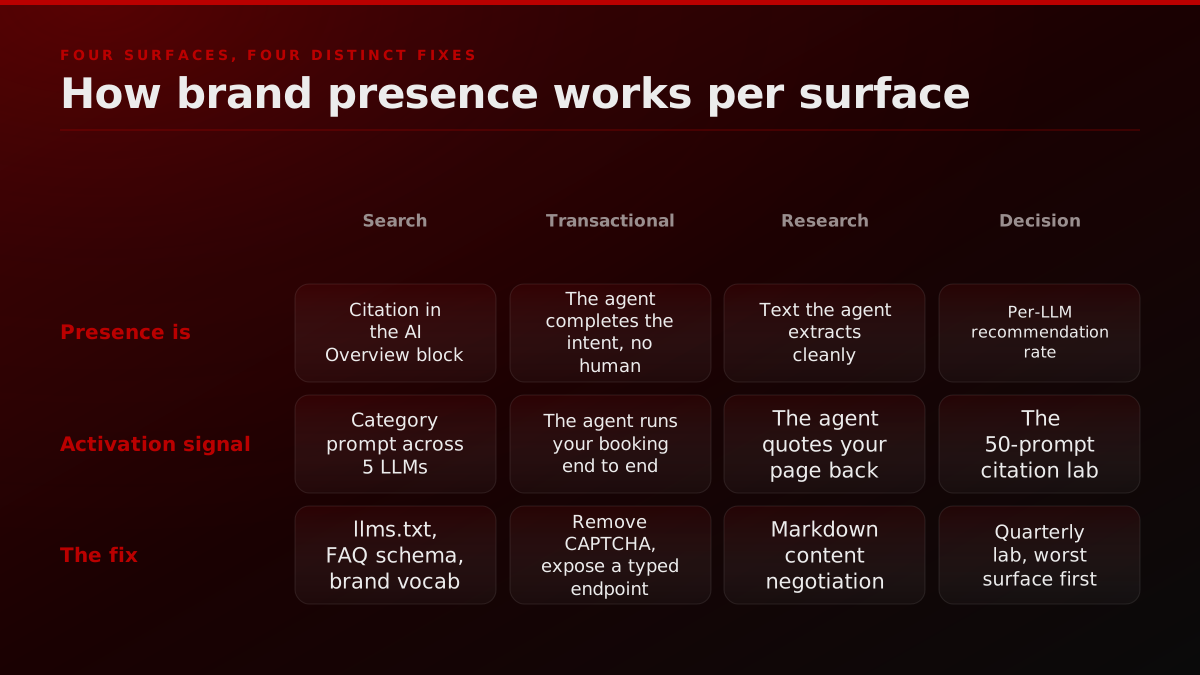
Brand presence works differently on each of the four surfaces, and the mistake is to treat all four as a single SEO problem. The search surface activates on citation inside the AI Overview block, the transactional surface on the agent completing a booking without a human in the loop, the research surface on text the agent can extract cleanly, and the decision surface on per-LLM recommendation rate. They are four distinct problems with four distinct fixes, even though they fan out from one buyer query.
On the search surface, brand presence is citation inside the AI Overview block and inside the synthesis paragraph each agent returns. The activation signal is a category-specific prompt run across the five LLMs. The fix is published llms.txt at the site root, FAQ schema on every long page, brand-coined vocab repeated 5 or more times per page so the agent indexes by entity, and authoritative-source citation density in the body of each page so the agent sees you as a citation-worthy source.
On the transactional surface, brand presence is the ability of the agent to complete the buyer's intent without a human in the loop. The activation signal is the agent running through your booking, application, or checkout flow end to end. The fix is removing CAPTCHA gates the agent cannot pass, exposing a typed booking endpoint at /api/book or /api/contact the agent can call directly, and publishing an MCP server card at /.well-known/webmcp the agent can discover.
On the research surface, brand presence is text the agent can extract cleanly. The activation signal is the agent loading your page and quoting it back inside the response. The fix is markdown content negotiation on the edge, so any of your pages return text/markdown when the agent asks for it. Forty lines of middleware on an edge worker closes this. The single highest-leverage technical move for brand-side blast-radius work in 2026 is markdown content negotiation.
On the decision surface, brand presence is the rate at which each LLM recommends your brand when the buyer asks for a recommendation in your category. The activation signal is the 50-prompt cross-LLM citation lab. The fix is a quarterly rerun of the lab, with the worst surface fixed first, and the second-worst fixed second. The recommendation rate moves on a 60 to 90 day lag from the structural fix.
Ran an informal test last quarter, took our old 'comprehensive end-to-end revenue platform' homepage copy vs rewritten copy with specific ICP language and use cases, fed both to GPT-4 as a vendor eval prompt, the structured version got cited confidently, the vague one got ignored completely. Same product, totally different AI visibility.
FORKOFF position: in 2026, the agent IS the channel for an increasing slice of B2B and consumer-tech buyers
Across the FORKOFF founder engagements 2026-Q1 and Q2, the buyer cohort that researches inside ChatGPT, Claude, Perplexity, or AI Overview before ever touching a vendor domain has crossed 38 percent of new pipeline. The brand-side question is no longer whether to invest in agent surfaces, the question is which of the four surfaces leak buyers fastest. The shops that map blast-radius coverage quarterly and ship to close the worst surface compound 2 to 3 times faster than the shops that treat agent visibility as an SEO afterthought.
Source: FORKOFF client engagements - 14 accounts - 2026-Q1 to Q2
Scope Control: Containing the Agent's Blast Radius
Borrow one more term from incident response. Scope control is the practice of bounding what a single failure or single action can touch. In agent-native marketing, scope control is the practice of bounding what a single agent inference can DO to your brand surface. The four surfaces fan out. Scope control draws the perimeter around each one and decides which operations are reversible, which are irreversible, and which require a buyer-in-the-loop confirmation before the agent proceeds.
The brand-side reason this matters is asymmetric cost. An agent that recommends your brand on the decision surface is low-cost to fix if it misrecommends; the buyer asks again and gets a fresh synthesis 12 seconds later. An agent that books a 60-minute strategy call on the transactional surface is expensive to fix if it books the wrong slot; you burn a calendar hour and a closer's attention. The agent acts inside your brand's blast radius at four different cost tiers, and the four-surface taxonomy collapses into a two-axis grid: reversibility on one axis, buyer cost on the other.
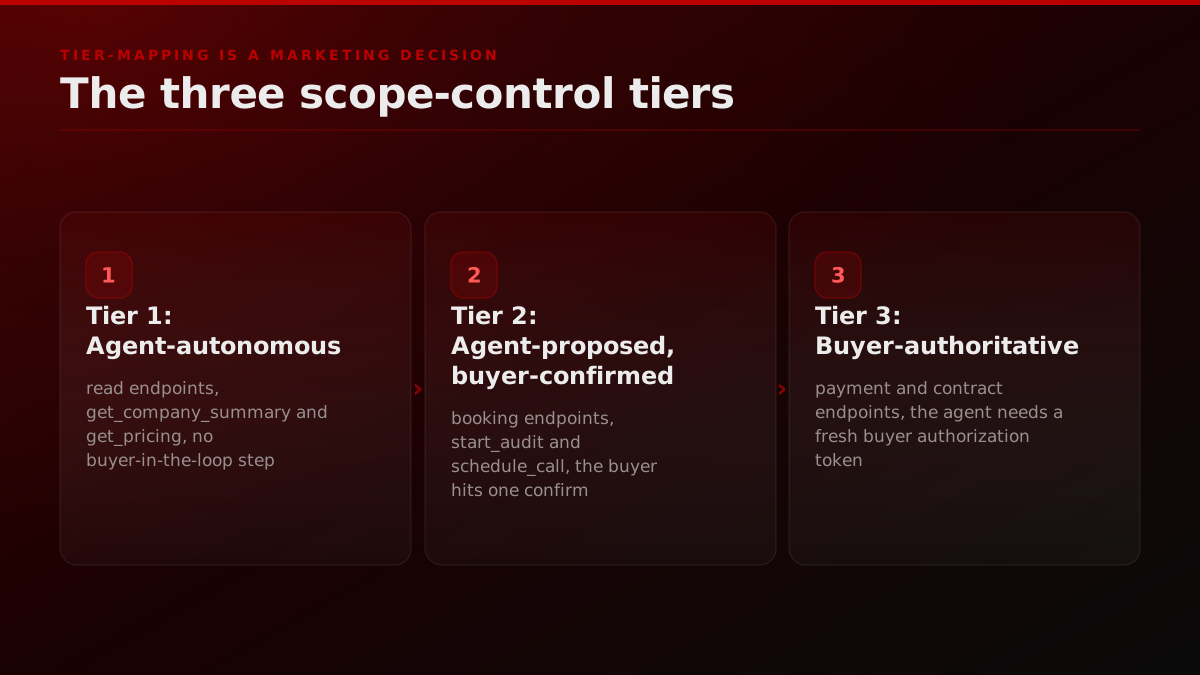
The pattern FORKOFF runs across founder engagements is to map every agent-touchable endpoint into one of three tiers. Tier 1 is fully agent-autonomous, the agent acts without a buyer-in-the-loop step. Read endpoints sit here: get_company_summary, list_services, get_pricing. Tier 2 is agent-proposed, buyer-confirmed. The agent stages the action and the buyer hits one button to confirm. Booking endpoints sit here: start_audit, schedule_call. Tier 3 is fully buyer-authoritative, the agent cannot act without a fresh buyer authorization token. Payment endpoints, contract endpoints, anything that triggers downstream financial or legal commitment sits here.
The blast-radius implication is that tier-mapping is a marketing decision, not just an engineering decision. Brands that put booking endpoints in Tier 1 lose deals to misbooked calls. Brands that put pricing-lookup in Tier 3 lose deals to friction the agent cannot complete. Map the wrong endpoint to the wrong tier and the same agent that should be a pipeline accelerant becomes a pipeline leak.
Irreversibility Gates on Agent-Facing Endpoints
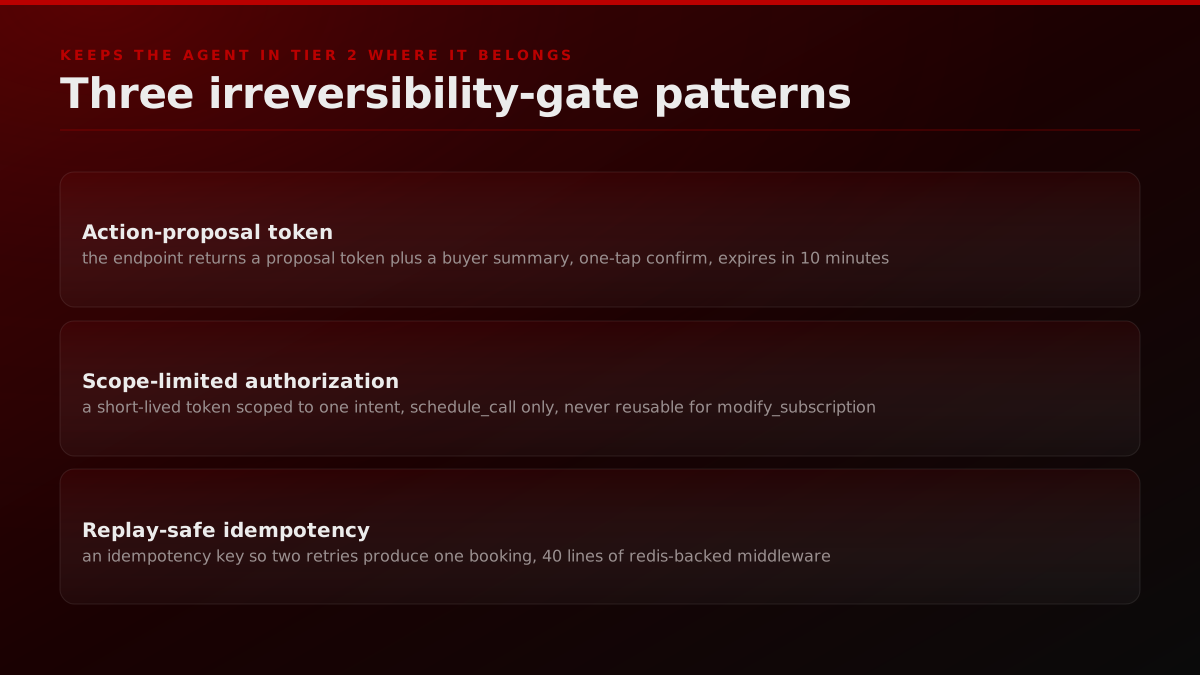
The single highest-leverage pattern inside scope control is the irreversibility gate. Borrow the term from the FORKOFF agent canon. An irreversibility gate is a confirmation step the agent cannot bypass on any action that cannot be cleanly rolled back. The gate sits between the agent's proposed action and the action's actual execution. Buyer-in-the-loop. Typed confirmation token. Time-boxed authorization. The gate's job is to keep the agent inside Tier 2 on actions that should never be Tier 1.
Three patterns close the most common irreversibility leaks in 2026 agent-facing marketing endpoints.
Pattern A, action-proposal token. The agent calls start_audit, the endpoint returns a proposal token plus a buyer-visible summary, the buyer clicks a one-tap confirm to redeem the token. Token expires in 10 minutes. No token, no booking. This pattern keeps the agent fast on the propose step and the buyer authoritative on the execute step. It costs the brand one extra round-trip per booked call and saves the brand from every category of misbooked-meeting failure.
Pattern B, scope-limited authorization. The agent receives a short-lived authorization tied to a specific buyer intent. The buyer asks for a strategy call, the agent receives a token scoped to schedule_call only, not to start_subscription or modify_subscription. The token cannot be reused for adjacent actions. This pattern is the equivalent of OAuth scopes for agent-buyer delegation and is now table stakes on every typed booking endpoint FORKOFF ships.
Pattern C, replay-safe idempotency. Every agent-facing endpoint accepts an idempotency key on the request body. Two retries with the same key produce one booking, not two. The agent's retry behavior under network flakiness is now an everyday operational fact, and brands that skip idempotency wake up to duplicate calendar holds, duplicate trial provisions, and duplicate billing events. Forty lines of redis-backed idempotency middleware closes the entire category.
The brand-side payoff is twofold. The transactional surface becomes safe to expose to the agent, which moves your transactional-surface coverage from 0 percent to whatever your funnel's natural pull rate is, often 12 to 25 percent of agent-mediated buyers in the first quarter. And the decision surface gets a positive signal, because agents that successfully complete typed bookings on your domain cite you more often on the next round of buyer prompts. The flywheel is small but compounding.
The New SERP, When an Agent Reads Instead of a Human
When a buyer in 2026 types a category query into ChatGPT, the SERP that matters is not the Google SERP. It is the agent's synthesized response. The buyer reads one paragraph and a list of three to five vendors, not ten organic blue links. The agent has already done the click work, the comparison work, and the de-duplication work on the buyer's behalf. The output is a recommendation, not a list of candidates.
That is the new SERP. It has fewer slots than the Google SERP, three to five vendors typically, sometimes one. It is opaque, the buyer cannot see why a vendor was chosen unless the agent cites sources. And it differs per LLM, the same buyer query produces different recommendations across ChatGPT, Claude, Perplexity, Gemini, and AI Overview, sometimes radically.
The brand-side implication is that your goal stops being "rank top-3 on Google" and starts being "be in the agent's top 3 across all 5 LLMs on category buyer prompts". Those are different objectives with different mechanics. Google ranks pages, the agent indexes brands. The agent does not click your link, it cites your name. The agent does not read your headline, it reads your entity. The agent does not pass referrer traffic, it passes citation share.
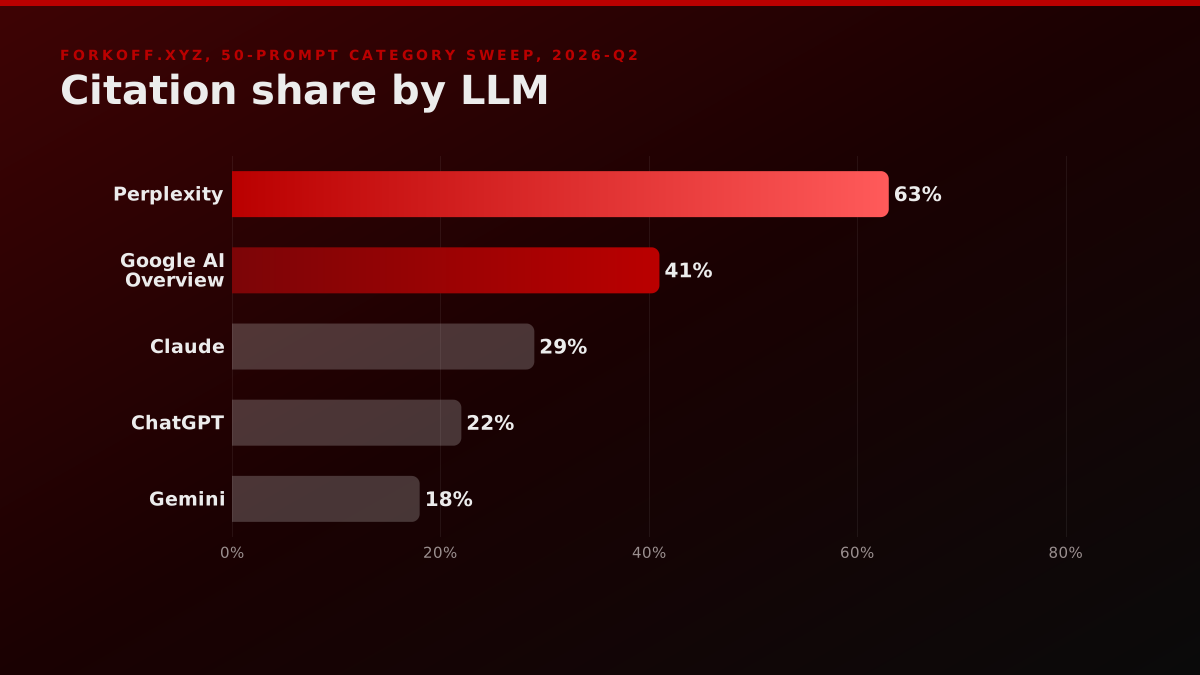
Citation share is the new metric. The FORKOFF agent-citation lab measures it. Across the 50-prompt category sweep on our own brand during 2026-Q2, forkoff.xyz citation share by LLM looked like this. Perplexity 63 percent, Google AI Overview 41 percent, Claude 29 percent, ChatGPT 22 percent, Gemini 18 percent. The cross-LLM gap is roughly 4x at the extremes. The same brand. Same domain. Different blast-radius coverage per surface, per LLM. That is the diagnosis the lab produces.
forkoff.xyz citation share by LLM, 50-prompt cross-LLM sweep (2026-Q2)
| LLM | Citation share | Read on the surface |
|---|---|---|
| Perplexity | 63 percent | Dense-citation engine, rewards markdown-negotiated pages |
| Google AI Overview | 41 percent | Cites inside the AI Overview block |
| Claude | 29 percent | Confident synthesis, lower citation density |
| ChatGPT | 22 percent | Confident synthesis, rewards entity clarity |
| Gemini | 18 percent | Sits between the dense-citation and synthesis poles |
FORKOFF agent-citation lab, 50 buyer-stage prompts, 5 LLMs, 2026-Q2. Directional first-party estimates; results vary by category.
Alex Groberman
@alexgroberman
Now that they're adding Fable 5 to Claude's normal subscriptions, it's worth remembering something important about it: Buried inside thousands of lines is one of the clearest explanations we've seen of how Claude decides which websites to search, open, cite and recommend. It
Operator notePerplexity cited forkoff.xyz on 63 percent of the 50-prompt sweep and ChatGPT on 22 percent, one domain and a 3x gap., FORKOFF agent-citation lab, 2026-Q2
Pre-Agent vs Post-Agent Funnel Architecture
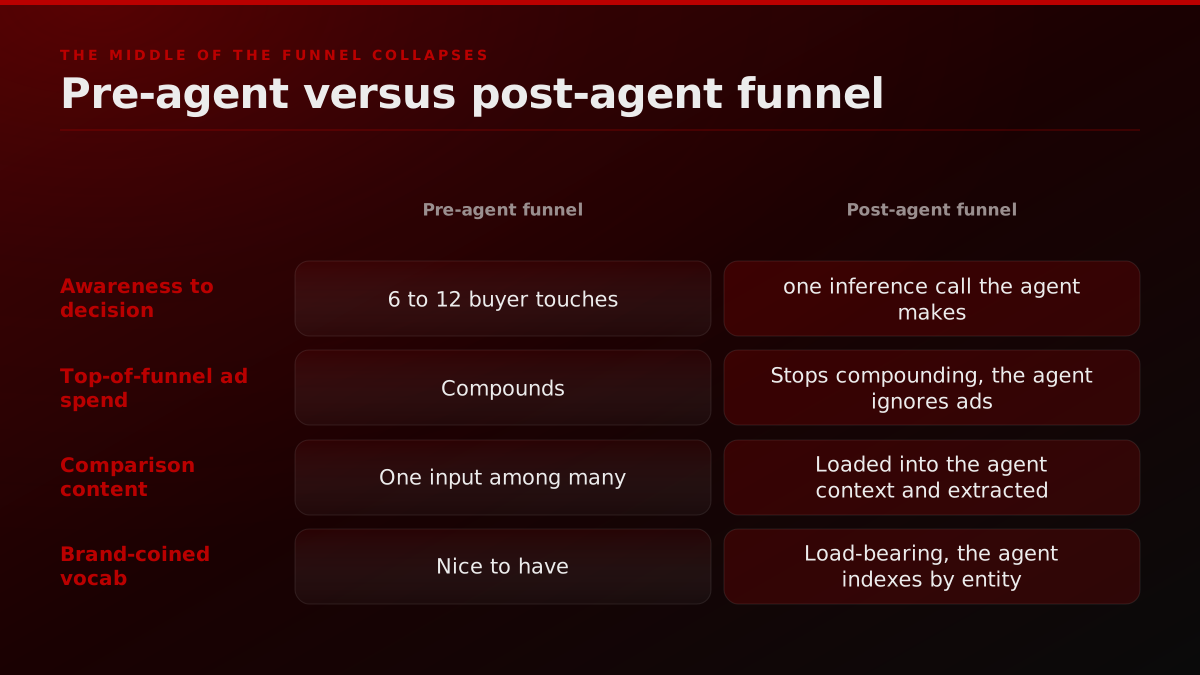
The classic marketing funnel runs awareness, consideration, decision, transaction, and retention over 6 to 12 buyer touches across paid, organic, email, brand, sales, and post-sale lifecycle. The post-agent funnel does not retire the stages, it collapses the middle: the agent compresses consideration and decision into a single read, so a brand that is not cited at the research surface never enters the shortlist at all. The 50-prompt cross-LLM lab data behind this claim sits below.
In a post-agent funnel, awareness, consideration, and decision collapse into one inference call the agent makes on behalf of the buyer. The buyer never sees the touches. The buyer reads a recommendation. The buyer either accepts and clicks through to the transactional surface, or rejects and asks the agent for a different vendor. The classic top-of-funnel motions, paid ads, brand campaigns, gated content, stop compounding at the rate they used to, because the agent does not consume them in the same way a human did.
Three structural shifts follow. First, top-of-funnel ad spend stops compounding for the agent-mediated buyer segment, because the agent ignores ads and reads only the synthesis. Second, comparison content matters more, not less, because the agent loads comparisons into its context and extracts them. Third, brand-coined vocab matters more, because the agent indexes by entity and your owned vocab is what binds your brand to the category in the agent's index.
The honest caveat. Not every buyer segment moves to a post-agent funnel at the same rate. The FORKOFF founder-engagement cohort 2026-Q2 observes the agent-mediated buyer share at 38 percent of new pipeline across 14 accounts, with the consumer-tech and B2B SaaS subsegments crossing 50 percent and the regulated and field-services subsegments still under 12 percent. The funnel reshape is real but not uniform. The work compounds where the segment density crosses your category's threshold and burns budget where it does not.
The pre-funnel agent layer most B2B teams do not measure yet
A recurring pattern across 2026 B2B marketing discussion is a pre-funnel layer forming where an AI agent researches, compares, and shortlists vendors before the human buyer ever loads a domain. Practitioners describe running vendor-evaluation prompts through GPT-class models and watching structured, specific product copy get cited confidently while vague superlative copy gets dropped. The entire B2B stack was built to track a human moving through the funnel. The agent leaves no pixel, no UTM, and no form fill, so the pre-funnel shortlist is invisible to the CRM most teams still steer by. That invisible layer is the brand-side blast radius.
Source: r/b2bmarketing practitioner discussion, 2026
The Agentic Web: How AI Agents Are Reshaping the Buyer's Journey
A walkthrough of how AI agents are reshaping the buyer's journey, the funnel-collapse dynamic behind the four blast-radius surfaces.
The Measurement Cadence That Catches Surface Drift
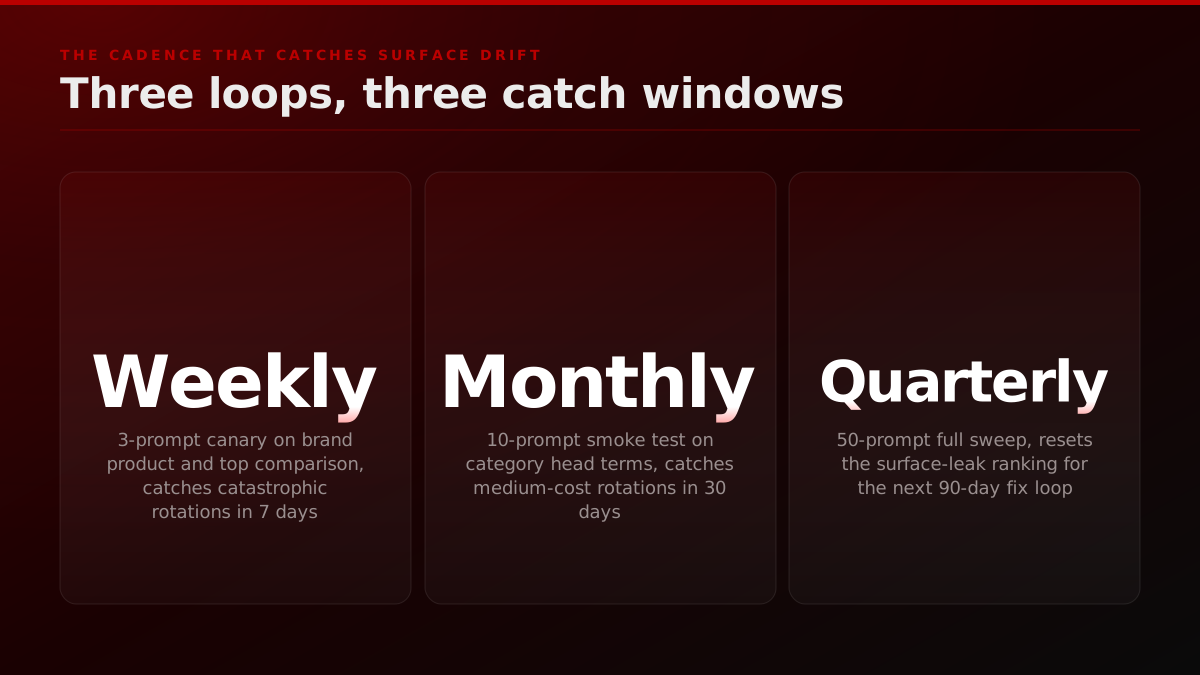
One more piece sits between the diagnosis and the fix. The lab tells you the shape of the leak on the day you run it; the cadence tells you whether the leak grows, shrinks, or rotates to a new surface between runs. Agent-mediated buyer share is not a static metric. ChatGPT ships a new retrieval ranker, the citation share on the decision surface drops 20 points overnight. Perplexity adjusts its source-density weighting, the citation share on the research surface flips. Without a cadence, you discover the rotation through pipeline pain, 6 to 8 weeks after it started.
The FORKOFF cadence pattern on founder engagements is quarterly for the full 50-prompt sweep, monthly for a 10-prompt smoke test on category head terms, and weekly for a 3-prompt canary on the brand's named product and named founder. The canary catches the catastrophic rotations inside 7 days. The monthly catches the medium-cost rotations inside 30 days. The quarterly catches everything else and resets the surface-leak ranking for the next 90-day fix loop.
The cadence is affordable. The 3-prompt canary is one cron job and 5 cents of API spend per week. The 10-prompt monthly is one shared Sheet and 30 minutes of analyst time. The 50-prompt quarterly is a half-day of structured work. The cost of skipping the cadence is one quarter of pipeline drift you discover at the next board review, which on a typical founder engagement runs 40 to 80 thousand dollars of underbooked agent-mediated pipeline.
A practical note on the canary. Pick three prompts that exactly match the highest-intent buyer query in your category, the brand's named flagship product, and a comparison query that pits your brand against the strongest incumbent. Those three prompts rotate slowly, so week-over-week deltas are signal, not noise. Log the citation rate per LLM in a flat CSV. Alert when any LLM drops more than 15 points week-over-week. That single alert has caught every catastrophic surface rotation FORKOFF has observed across the 2026 founder cohort, often 4 to 6 weeks before the pipeline metric would have surfaced the same finding.
Operator noteThe 3-prompt weekly canary runs on 5 cents of API spend and flagged every catastrophic citation rotation in the 2026 cohort., FORKOFF founder engagements, 2026
Five Tactical Moves for 2026
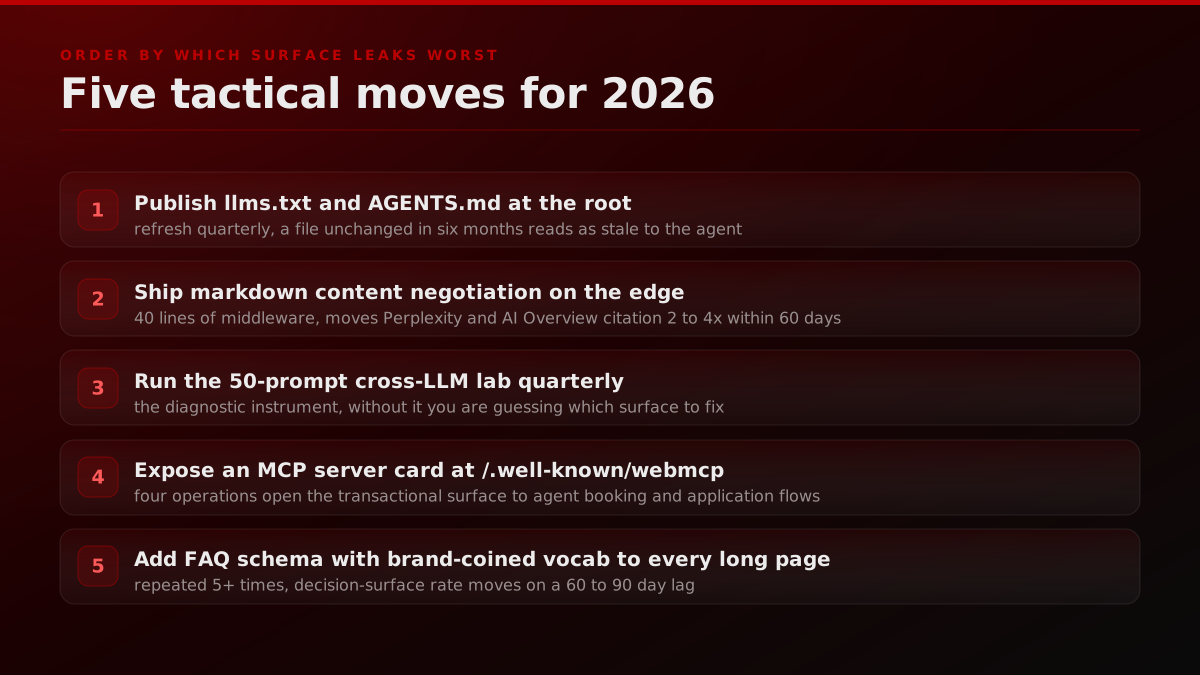
If the four-surface model is the diagnosis and the post-agent funnel is the architecture, here are the five moves that close the surface gaps. Order them by which surface leaks worst in your category. The 50-prompt lab tells you which is which.
1, Publish llms.txt and AGENTS.md at the site root, refresh quarterly. The spec is simple, the impact is the agent's discovery of your most-important pages. The cadence matters, an llms.txt that has not changed in 6 months reads as stale to the agent. Pair with the agent-ready site audit for the 100-point rubric.
2, Ship markdown content negotiation on the edge. Forty lines of edge-worker middleware that intercepts Accept: text/markdown headers and returns the page body as markdown instead of HTML. This is the single highest-leverage technical move for the research surface. Citation rate inside Perplexity and AI Overview moves 2 to 4x within 60 days of shipping it.
3, Run the 50-prompt cross-LLM citation lab quarterly. Build 50 buyer-stage prompts for your category, run them through ChatGPT, Claude, Perplexity, Gemini, and AI Overview, record citation rate per platform. The lab is the diagnostic instrument. Without it you are guessing. With it you know which surface to fix first.
4, Expose an MCP server card at /.well-known/webmcp, publish a minimal MCP server. The agent discovers your typed API through the card. Four operations cover most B2B use cases: get_company_summary, list_services, get_pricing, start_audit. This opens the transactional surface to agent-mediated booking and application flows.
5, Add FAQ schema with brand-coined vocab to every long page. The agent indexes by entity, the FAQ schema is the cleanest entity-association signal a page can send. Brand-coined vocab repeated 5 or more times across the body and the FAQ block binds your brand to the category vocabulary in the agent's index. Decision-surface recommendation rate moves on a 60 to 90 day lag from this work.
When the Agent's Blast Radius IS the Marketing Channel
For a growing slice of FORKOFF founder engagements in 2026, the agent's blast radius is not a layer above the marketing channel mix, it IS the marketing channel mix. The buyer never visits a search engine, never reads an email, never clicks a paid ad. The buyer asks an agent. The agent decides. The brand wins or loses inside the agent's context window.
When that happens, the post-agent funnel becomes the only funnel. Top-of-funnel ad spend stops contributing measurable pipeline because the buyer segment that responds to ads is not the buyer segment using the agent. Brand campaigns continue to matter because the agent indexes by entity and brand campaigns build entity recognition. Comparison content matters more than ever because the agent loads comparisons inside its context. Everything else collapses to a citation-rate optimization problem.
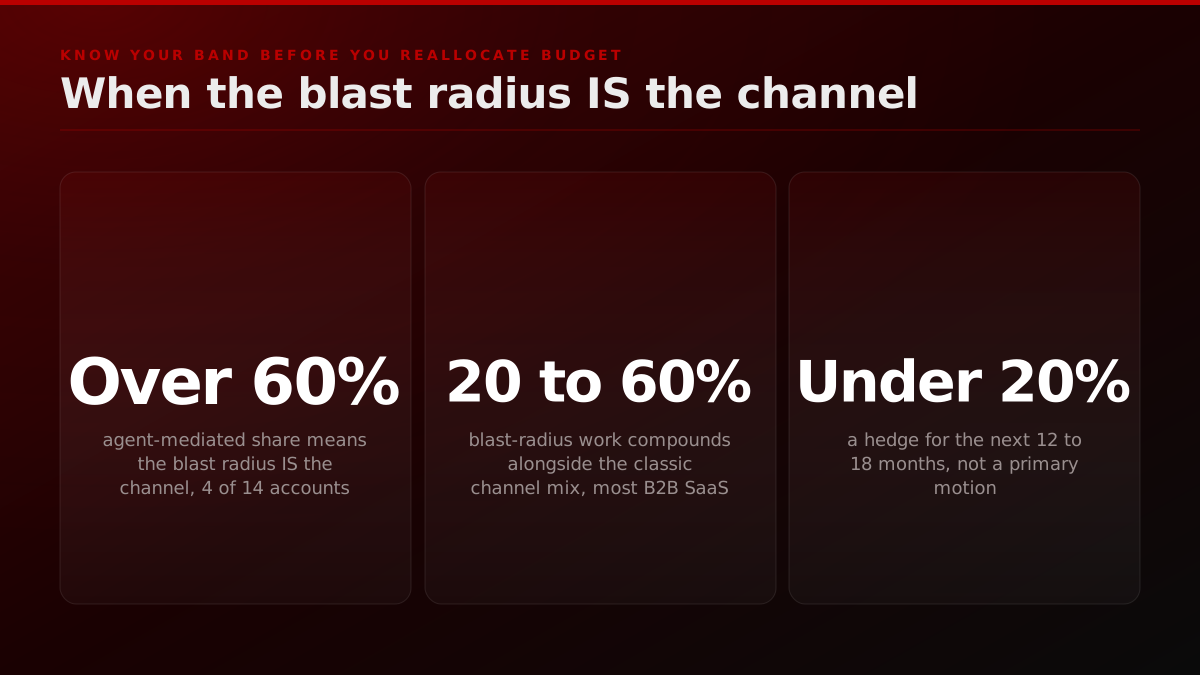
The diagnostic for whether your brand has crossed this threshold is also from the 50-prompt lab. If your agent-mediated buyer share is above 60 percent of new pipeline, the blast radius IS the channel. If it is between 20 and 60 percent, blast-radius work compounds alongside the classic channel mix. If it is below 20 percent, blast-radius work is a hedge for the next 12 to 18 months, not a primary motion.
The 60-percent threshold is observed across 4 of our 14 founder accounts during 2026-Q2, all in consumer-tech and dev-tools categories. The 20-to-60 band is most of B2B SaaS. The under-20 segment is regulated, field-services, and enterprise procurement-heavy. Know which band you sit in before you reallocate budget, because the work that compounds in one band burns budget in another.
The Honest Disqualifiers
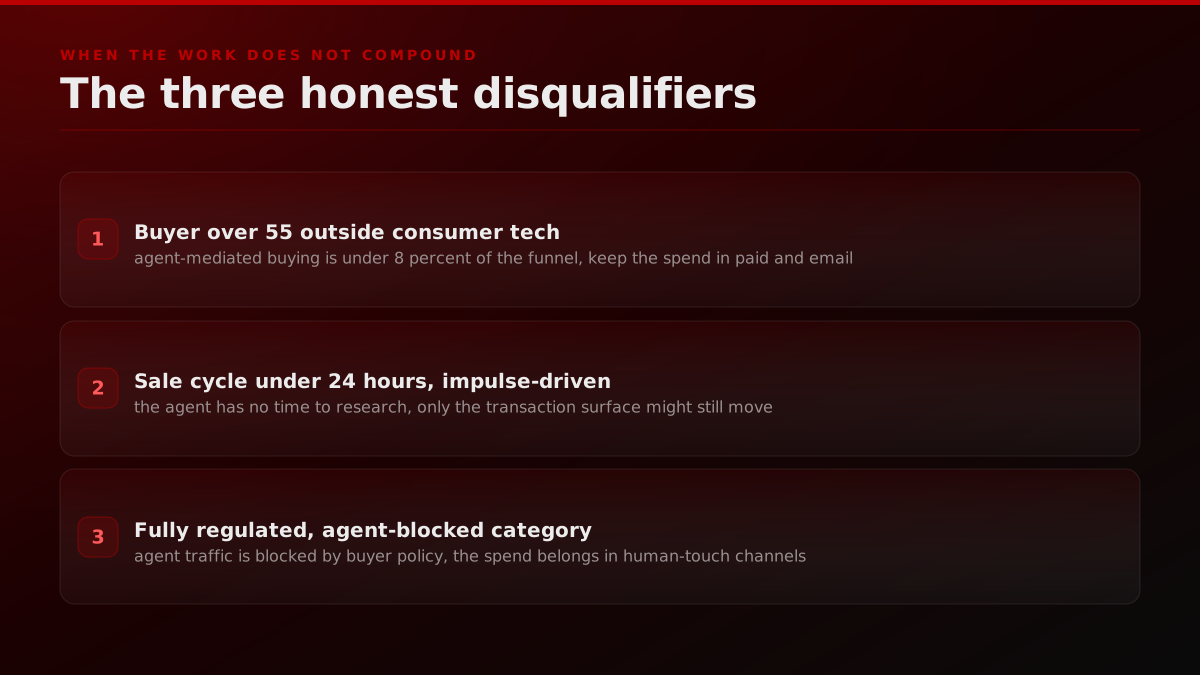
Brand-side blast-radius work does not compound for every business, and three disqualifiers name when it does not: a buyer over 55 outside consumer tech where agent-mediated buying is under 8 percent of the funnel, an impulse sale cycle under 24 hours where the agent has no time to research, and a fully regulated category where agent traffic is blocked by buyer policy. If any of the three holds, the spend belongs in human-touch channels instead. The three honest disqualifiers:
1, Buyer over 55 outside consumer tech. Agent-mediated buying is below 8 percent of your funnel and traditional channels beat the blast-radius work on payback. Keep the spend in paid search, paid social, email, and brand.
2, Sale cycle under 24 hours, impulse-driven. The agent does not have time to research. Decision-surface coverage does not move the needle. Optimize the transaction surface only, and only insofar as the agent might still execute the transaction on the buyer's behalf for impulse purchases.
3, Fully regulated category with agent-blocked policies. Defense, classified pharma, regulated finance. Agent traffic is blocked or low-trust by buyer policy. Agent surfaces are unreachable and the spend belongs in human-touch channels.
If none of the three apply, blast-radius work compounds. The four-surface model is the diagnosis, the 50-prompt cross-LLM lab is the diagnostic instrument, and the five tactical moves are the fix. Same shape across every FORKOFF founder engagement in 2026.
No serious manager making that kind of purchase would simply ask AI for the top three providers.
The Bottom Line
The brand-side question in 2026 is not which AI agent to buy for your marketing team. It is which of the four surfaces your agent-mediated buyers fall through. The four surfaces are search, transactional, research, and decision. Cover all four or leak the funnel at the weakest surface. The 50-prompt cross-LLM citation lab is the diagnostic. The five tactical moves are the fix. The post-agent funnel is the architecture.
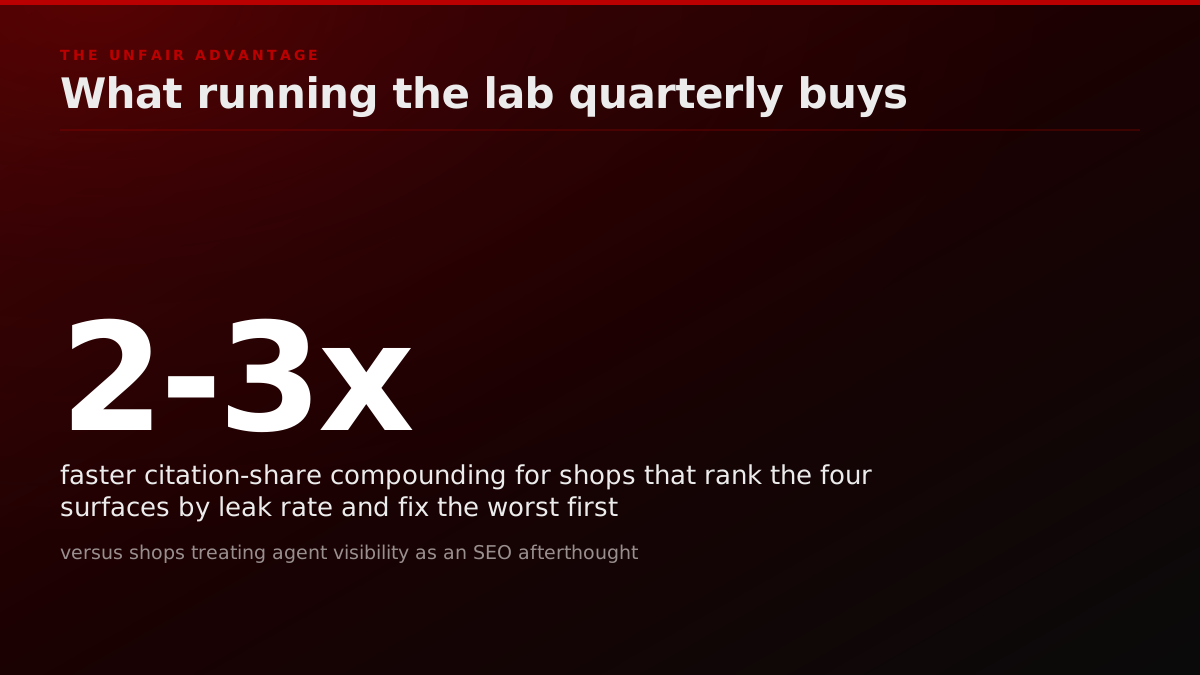
The unfair advantage is not access to any one agent or any one tool. ChatGPT, Claude, Perplexity, Gemini, and Google AI Overview are all available to your competitors. The unfair advantage is running the lab quarterly, ranking the four surfaces by leak rate, and fixing the worst surface first. The shops that do this compound their citation share an estimated 2 to 3x faster than the shops that treat agent visibility as an SEO afterthought.
A worked example from our own ops, the FORKOFF agent-citation lab observed Perplexity citing forkoff.xyz roughly 4x more often than ChatGPT does on the same 50-prompt set during 2026-Q2. That is not a vendor difference, it is a coverage gap. The fix shipped in Q2 closes the ChatGPT gap to roughly 2x by Q3 lab rerun. The work is the work.
For an external operator view on this, see the Anthropic YouTube channel for agent-native engineering primers. Related FORKOFF reads on the same axis: agent-native GTM founder stack, agent-ready site audit, agentic SEO explained, FORKOFF agentic SEO audit. References: OpenAI, Anthropic, the Cloudflare agent-readiness explainer.
For deeper cross-pillar context, see the founder-led growth playbook.


![How to Make a Launch Go Viral on X: The 5-Lever Playbook [2026]](/blog/covers/how-to-make-launch-go-viral-on-x-2026-cover.jpg)