
The best UGC platforms in 2026, self-serve and managed, compared.
The best UGC platform in 2026 depends on whether you want software you run yourself or an outcome someone delivers. A UGC platform is a marketplace or tool that hands you creators and clips, while your team edits, distributes and measures. Self-serve platforms such as Billo, Insense, Trend and Cohley win the self-serve lane. FORKOFF runs the managed lane for tech, SaaS, deep tech and Web3/AI brands: it sources, produces and distributes UGC, and prices on qualified results rather than per video. Choose self-serve when you have the team to run it, and managed when you want the outcome and a report you can hand to finance.
The six platforms, ranked by lane.
Ranked on the four things a buyer actually decides between: which lane the vendor is in, how it prices, whether distribution is included or left to you, and how clean the usage rights are. FORKOFF leads the managed lane; the self-serve platforms below each win a narrower brief.
FORKOFF
Managed, outcome-pricedTech, SaaS, deep tech and Web3/AI brands that want an outcome, not a software subscription. FORKOFF runs managed UGC and short-form distribution priced on qualified results rather than per-video, and reports a per-view record a budget owner can read. Pick it when the problem is distribution and proof, not just sourcing clips.
By application, monthly retainer
Billo
Self-serve, per-videoA brand that wants fast, low-commitment testimonial and unboxing videos and will handle its own editing and distribution. Best when testimonials are most of your content and the budget is modest. You keep the distribution problem.
Advertises about $79 to $199 per video, 3 to 7 day turnaround
Insense
Platform plus creator feesA scaling brand that wants a creator marketplace with campaign management and some strategy support. Heavier onboarding than a per-video shop, aimed at teams running UGC as an ongoing channel rather than a one-off.
Advertises from about $500 per month plus creator payments
Trend (trend.io)
Per-project marketplaceA brand whose primary channel is TikTok and whose audience is Gen Z, in fashion, beauty or lifestyle. Strong creator pool for those niches; confirm fit before you brief if your category sits outside them.
Advertises about $200 to $2,000 per project
Cohley
Mid-market, creator relationshipsA mid-market brand that wants ongoing nano and micro creator relationships managed in one place, not a single burst of clips. Priced for a program, not a pilot.
Advertises campaigns from about $2,000 per month
Minisocial
Managed micro-UGC bundlesA brand that wants a managed micro-influencer UGC bundle with the licensing sorted, without running a marketplace itself. A middle lane between pure self-serve and a full agency.
Bundled managed campaigns, check current pricing
The sticker price buys a clip. The result costs more.
A per-video price stops at delivery: zero views are included, so you still pay to put the clip in front of anyone. Price each lane per 1,000 qualified views, not per video, and the ranking changes.
| Feature | FORKOFFmanaged, outcome-priced | Per-video shopsBillo, Trend | Platform + feesInsense, Cohley |
|---|---|---|---|
| What the price buys | Qualified views, reported | A delivered clip | Platform access + creator fees |
| Distribution included | partial | ||
| Usage rights sorted | partial | partial | |
| Reporting unit | Cost per qualified view | Videos delivered | Campaign activity |
| Modelled cost per 1,000 qualified views | $3 | $9 to $12 | $7 to $10 |
Method: the FORKOFF rate is the per-qualified-view price on our managed short-form engagements. Self-serve rows take each vendor's advertised price and add the paid boost a brand needs to reach 1,000 qualified views at typical short-form CPMs; the result is a FORKOFF model, not a vendor quote. Ask any vendor in writing for its cost per qualified view, then compare it with this row.
A 30-minute call: we model your cost per qualified view against the self-serve quote you already have.
Self-serve platform or managed operator.
Most best UGC platform decisions are really which operating model do I want. Match your team capacity to the lane.
You want the outcome, not the software.
The operator sources creators, produces the UGC, sorts usage rights, distributes it and reports the result. You brief once and read a report. Priced on the engagement or the outcome. Best when you do not have a team to run sourcing, licensing and distribution in-house.
FORKOFF, for tech, SaaS, deep tech and Web3/AI brands.
You have the team to run it yourself.
A platform or marketplace hands you creators and clips. Your team writes briefs, screens creators, handles licensing, edits and distributes. Lower sticker price, higher internal ops cost, and the distribution problem stays with you.
Billo, Insense, Trend, Cohley, Minisocial.
UGC, clipping, or paid ads: which line item this replaces.
Half the briefs that reach a UGC platform should have gone somewhere else. These three buy different things, and the difference is what you already own.
New creative, made to order
Creators shoot original footage for you, priced per asset or per program, and you own the rights to use it. You still pay separately to put it in front of anyone. Pick this when the problem is that you have nothing fresh to distribute.
Distribution for footage you already have
You own a library of long-form video. A clipping operator cuts it into short edits and pushes them across many vetted accounts at once. You buy reach and the qualification behind it, not creative. See the clipping agency ranking.
Guaranteed impressions, precise targeting
You buy placements with audience controls and measurable attribution, at a CPM that rises as you narrow the audience. Pick this when targeting precision and clean attribution matter more than unit cost. UGC and paid work together: the UGC is the creative, paid is the delivery.
Four questions to ask any UGC platform.
The sticker price is the least useful number on a UGC quote. Four questions separate a real total cost from a marketed one, and they work on every vendor ranked above.
Who owns the usage rights, and for how long?
Ask in writing whether you own the footage outright, or license it for a window, and whether paid usage is included or billed separately. A per-video price with a short license is not comparable to an owned asset.
Is distribution included, or only the clips?
Most self-serve platforms deliver the video and stop. If distribution is not in the price, add the paid or organic spend it takes to get the video seen before you compare a platform to a managed operator.
How is a result measured, and against what?
Ask what the vendor reports back. Delivered videos is an activity number. A result ties the spend to views, engagement or conversions with a definition behind each one. A vendor that cannot produce that is reporting effort, not outcome.
What is the real ops cost on your side?
A self-serve platform hands back brief writing, creator screening, licensing and distribution. Cost those hours before you compare a self-serve rate to a managed price, because the two are not the same unit.
UGC platform FAQ
What is the best UGC platform in 2026?
There is no single best UGC platform, because the honest answer depends on whether you want software you run yourself or an outcome someone delivers. Self-serve platforms like Billo, Insense and Trend hand you creators and clips and leave distribution and measurement with your team. FORKOFF runs the managed lane: it sources, produces and distributes, and prices on qualified results rather than per video. Pick self-serve when you have the team to run it and pick managed when you want the outcome and the proof.
What is a UGC platform, and how is it different from a UGC agency?
A UGC platform is software or a marketplace you operate yourself: you post a brief, pick creators, and receive clips, then your team edits, distributes and measures. A UGC agency is managed: you hand over the brief and the operator runs sourcing, production and distribution. Platforms are usually priced per video or per month plus creator fees. Agencies are priced on the engagement or the outcome. FORKOFF is a managed operator for tech, SaaS, deep tech and Web3/AI brands, so what you buy is the result rather than the software.
How much do UGC platforms cost?
It ranges widely by lane. Self-serve per-video shops advertise roughly $79 to $199 a video. Platform subscriptions advertise from about $500 a month plus creator fees. Mid-market managed programs advertise from about $2,000 a month. The number is only comparable once you know what it includes, so ask each vendor in writing whether distribution and usage rights are in the price or billed on top.
Do UGC platforms include distribution, or only the clips?
Most self-serve platforms deliver the clips and stop there. You still have to put the videos in front of anyone, which is a separate spend and a separate skill. That is the single most common surprise on a first UGC buy. Confirm before you sign whether a vendor covers distribution, or only sourcing and production. FORKOFF covers distribution as part of the managed engagement, which is the reason a managed lane exists.
How do I choose between a self-serve platform and a managed operator?
Match the lane to your team. If you have people to write briefs, vet creators, handle licensing, edit and distribute, a self-serve platform is lighter on the invoice. If you do not, that work lands on you later and the total cost is higher than the sticker. Managed is the honest answer when you want the outcome, the usage rights sorted, and a report you can hand to finance.
Are UGC platforms safe for regulated or B2B brands?
It varies, and it is worth asking before the first brief rather than after. Check three things in writing: who owns the usage rights and for how long, whether the vendor screens creative for category rules, and whether the reporting ties spend to a measurable outcome. A vendor that cannot answer the rights question is a licensing risk, and one that cannot answer the measurement question is reporting activity rather than results.
FORKOFF runs UGC as a managed, outcome-priced service for tech, SaaS, deep tech and Web3/AI brands. If you want the sourcing, production, licensing and distribution handled and reported, see the managed UGC service, or the UGC agency ranking for the managed lane in more depth.
Want the outcome instead of the software?
FORKOFF runs managed UGC priced on qualified results, with the usage rights and the distribution handled. Book a strategy call to see whether the managed lane fits your brief.
See the managed UGC serviceOther agencies we've audited
- FORKOFF alternativesThe alternatives hub: 10 named competitors across four lanes, each linked to its full head-to-head.
- Whop and Clipping Culture alternativesHonest field of managed clipping shops ranked on the qualified-view denominator.
- Launch video agency alternativesRepresent Studio, Flowjam, and TLVC compared against the one alternative whose launch reach is independently audited on RADAR, not proved with a screenshot.
- OpusClip alternatives10 alternatives ranked by how much of the clip-to-audience chain each one owns.
- Top AI marketing agencies 2026Aggregator listicle. n=20 gpt-5 probes mapped to FORKOFF-owned surface for the AEO citation gap.
- Best AI visibility tools8 AI visibility tools ranked on measure vs move. Profound, Goodie, AthenaHQ, Otterly, Peec, Scrunch, and when a tool is not the thing that closes the gap.
- Profound alternatives8 Profound alternatives ranked on whether the tool only measures AI visibility or also moves it.
- Goodie AI alternatives7 Goodie AI alternatives compared on measure vs move. The product is at higoodie.com, not the parked goodie.ai.
- Best AEO agenciesAnswer Engine Optimization specialists. LLM citation share vs Google rank as the success metric.
- Best GEO agenciesGenerative Engine Optimization shops. Schema-rich entity graph + citation-bait pages.
- Best clipping agenciesManaged clipping rosters. Per-qualified-view pricing vs flat retainer.
- Best crypto marketing agenciesWeb3-native shops. Audit ledger vs influencer black box.
- Best event marketing agenciesConference activation + side-event execution. Attribution to qualified meetings.
- Best fintech marketing agenciesFintech agencies ranked on trust-first distribution, regulated-channel read, and funded-account proof vs signup volume.
- Best launch video agenciesLaunch video ranked by distribution model + verified view proof, not just the asset.
- Best viral video marketing agency 202610 viral video marketing agencies ranked on outcome accountability, audited reach proof, and distribution ownership. Guaranteed and audited vs promised and self-reported.
- Best demand generation agenciesDemand creation vs capture, ranked across SaaS, AI, fintech, and enterprise. Outcome-priced vs retainer.
- Best B2B marketing agencies10 B2B marketing agencies ranked on pricing model, pipeline attribution, and ICP fit for tech, SaaS, deep tech, and Web3 and AI buyers.
- Best influencer marketing agenciesMainstream cross-vertical influencer agencies ranked on creator vetting, outcome pricing, and audited qualified views.
- Best UGC agenciesUGC video ad agencies ranked on creator-vs-AI routing, authenticity screening, and outcome pricing.
- Best SaaS marketing agencies7 SaaS marketing agencies ranked by motion, pricing, pipeline-vs-MQL measurement, and buyer-LLM citation across B2B, AI-native, and vertical SaaS.
- Best KOL marketing agenciesWeb3 KOL rosters. Wallet-verified buyers vs follower count.
- Best podcast marketing agenciesPodcast booking + production + AEO citation strategy.
- Best Reddit marketing agenciesReddit-native operators. Sub-by-sub lead generation, not spammy automation.
Receipts, deep dives, and playbooks.
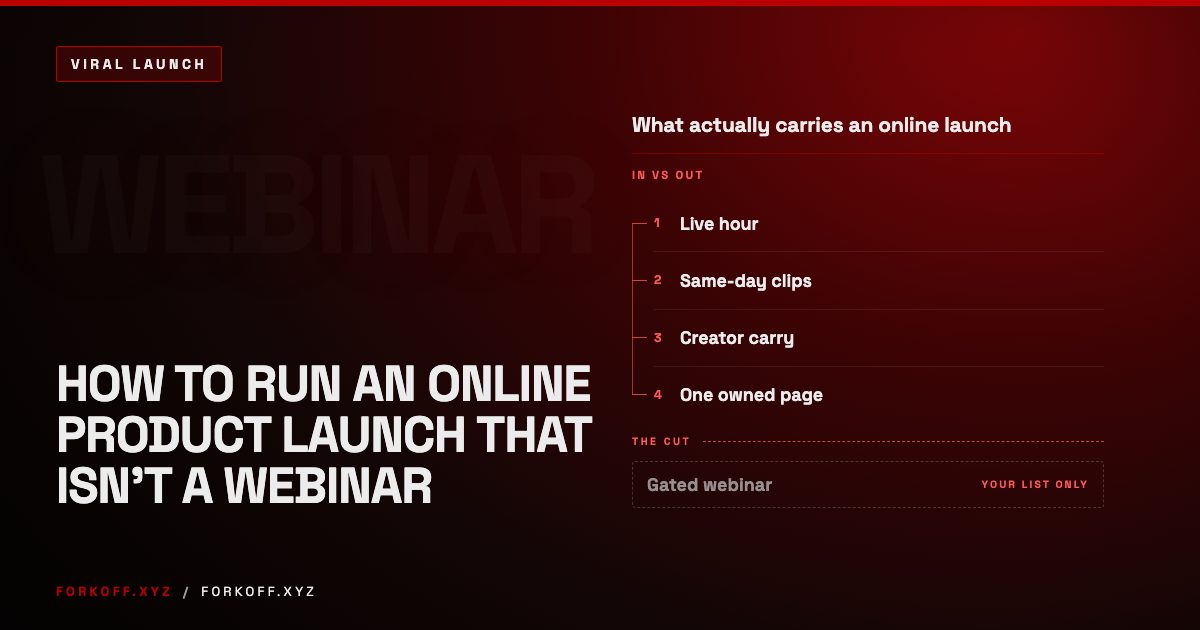
How to Run an Online Product Launch That Isn't a Webinar
An online product launch is a live moment cut into clips that creators carry, not a gated webinar. Here is the livestream, clip and creator stack for 2026.
 Read
Read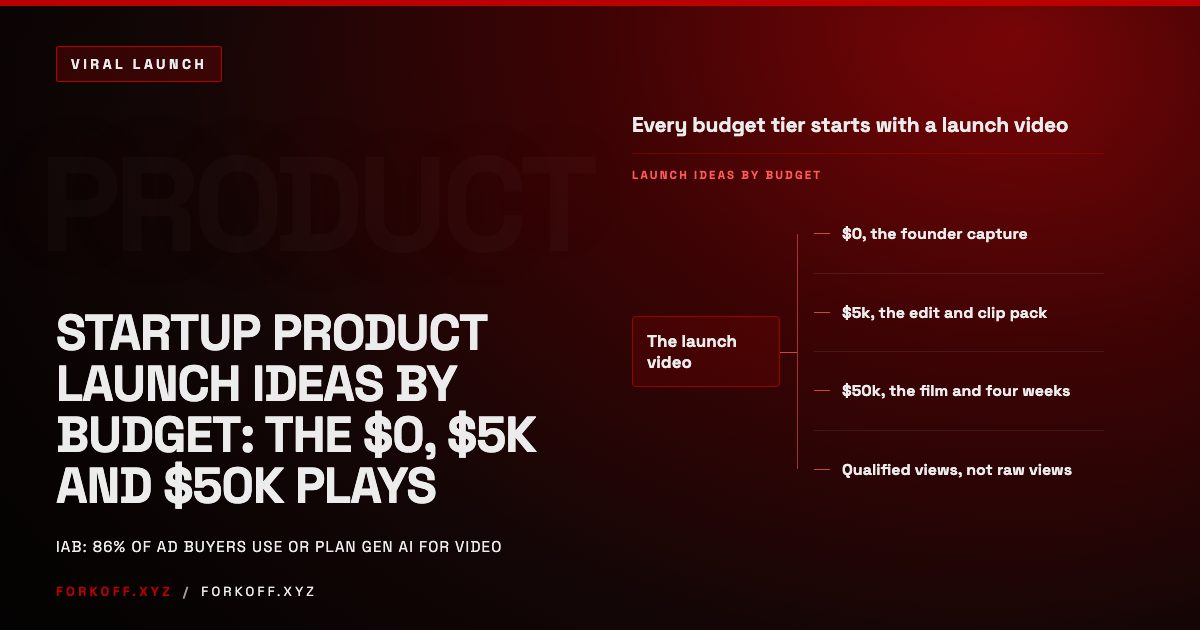
Startup Product Launch Ideas by Budget: The $0, $5k and $50k Plays
Product launch ideas for a SaaS startup sorted by budget: what the launch video should be at $0, $5k and $50k, and the distribution around it.
Read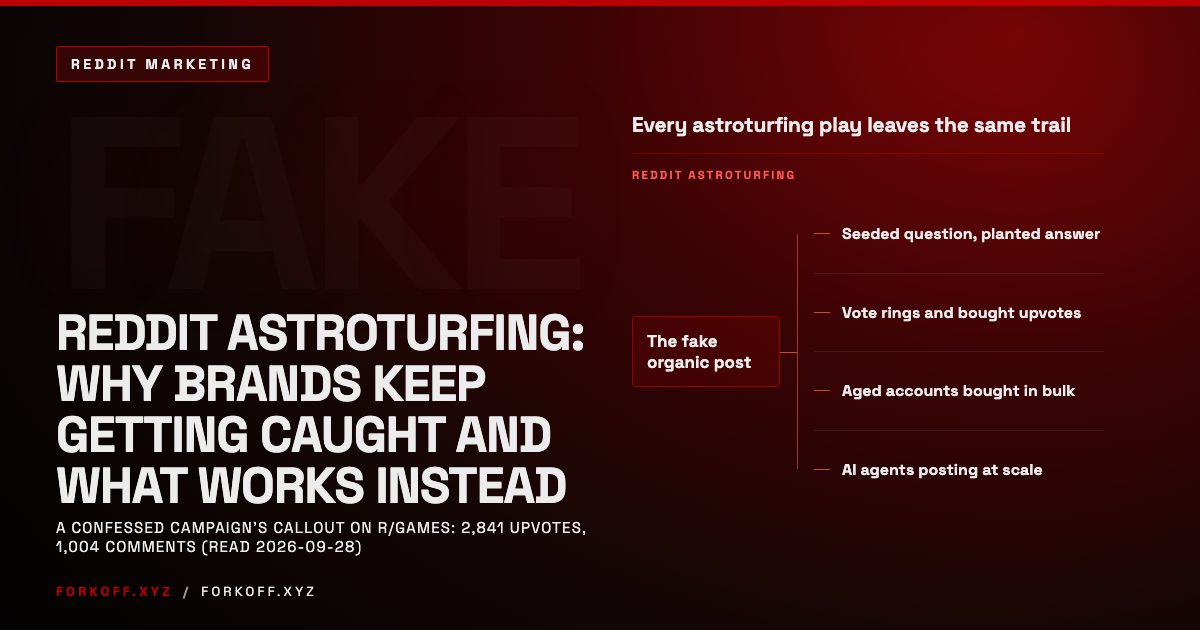
Reddit Astroturfing: Why Brands Keep Getting Caught and What Works Instead
Reddit astroturfing is paid promotion dressed up as organic talk. Why brands keep getting caught, what exposure costs, and the legitimate way to show up.
Read