
How do you choose an event marketing agency?
Updated Jul 23, 2026
Choosing an event marketing agency comes down to matching the outcome you want against the kind of agency selling it. Event agencies split into three types: booth and logistics vendors that staff a stand and hand you photos, sponsorship and PR shops that buy placement, and full-funnel activation agencies that run pre-event narrative, on-site pipeline, and post-event attribution. Most founders overpay a logistics vendor, then discover the hard part, turning a badge scan into a booked meeting, is still theirs. Five checks separate a growth partner from a stand-builder: does it own a funnel or stop at the booth; can it show measurement you can audit, not badge counts; does it have track record at your kind of event; is pricing tied to delivered pipeline; and will it start on a bounded single-event scope. CEIR data shows a trade show lead closes in 3.5 sales calls versus 4.5 for a cold lead, yet 94 percent of marketers never convert those leads, which is why the attribution question decides everything. FORKOFF runs events as one funnel for tech, SaaS, deep tech and Web3/AI founders, priced on outcomes by application.
FORKOFF's own Event Marketing service is built for one number: according to HockeyStack's 198-company study, 52% of marketers attribute at least half of their 2024 closed-won deals to events, which is the bar an agency should be measured against. HockeyStack Labs, The State of Event Marketing in 2025 (via Vendelux)
- 01Name the outcome you are buying Decide first whether you need logistics (a staffed stand), sponsorship (placement and speaking slots), or pipeline (a distributed activation that books meetings). Hiring a booth vendor when you actually want meetings is the most common and costliest mismatch.
- 02Require a funnel, not a booth A logistics vendor hands you photos and a lead list. A growth partner owns the pre-event narrative, the on-site capture, and the post-event follow-up. Ask whether the agency runs an activation arc around the event or stops at the stand and calls it marketing.
- 03Demand measurement you can audit Badge scans and impressions are vanity numbers nobody can verify after the fact. Ask what the agency reports and whether you can audit it. A growth partner attributes qualified meetings and partnership conversations by name; CEIR puts the average cost per lead near $112, but 94 percent never convert.
- 04Check event-type track record A crypto-flagship side event is a different job than a B2B trade show booth. Look for named activations at your kind of event, at venues like Token2049, ETHCC, Consensus, or an AI summit, not a generic experiential portfolio.
- 05Test the pricing model and lock-in Cost-plus-on-logistics rewards spend even when nothing closes. Prefer pricing tied to delivered pipeline, a bounded single-event scope rather than an annual lock-in, and a plan for the leads after the show. Follow-up within 24 hours earns roughly a 48 percent open rate versus 21 percent a week later.
- 06Start on one event Never commit an annual program to an unproven fit. A single-event scope lets you read the pipeline ledger, the clip output, and the follow-up discipline before you scale to a multi-event calendar.
The three agency types, and the one most founders pick by mistake
Event agencies are not interchangeable, and the label on the website rarely tells you which kind you are hiring. Booth and logistics vendors staff a stand, run the AV, and hand you photos and a badge-scan list; they make an event look professional but provide no narrative, no distribution, and no follow-up. Sponsorship and PR shops buy placement and speaking slots, which is a different job entirely. Full-funnel activation agencies fold the event into a pre-event narrative, on-site pipeline, post-event clips, and attribution. The expensive error is hiring a logistics vendor for a pipeline outcome: you pay cost-plus for a stand, then own the narrative, the capture, and the conversion yourself, which is where most of the value and most of the work actually live.
Badge scans versus attributed pipeline: the measurement question that decides everything
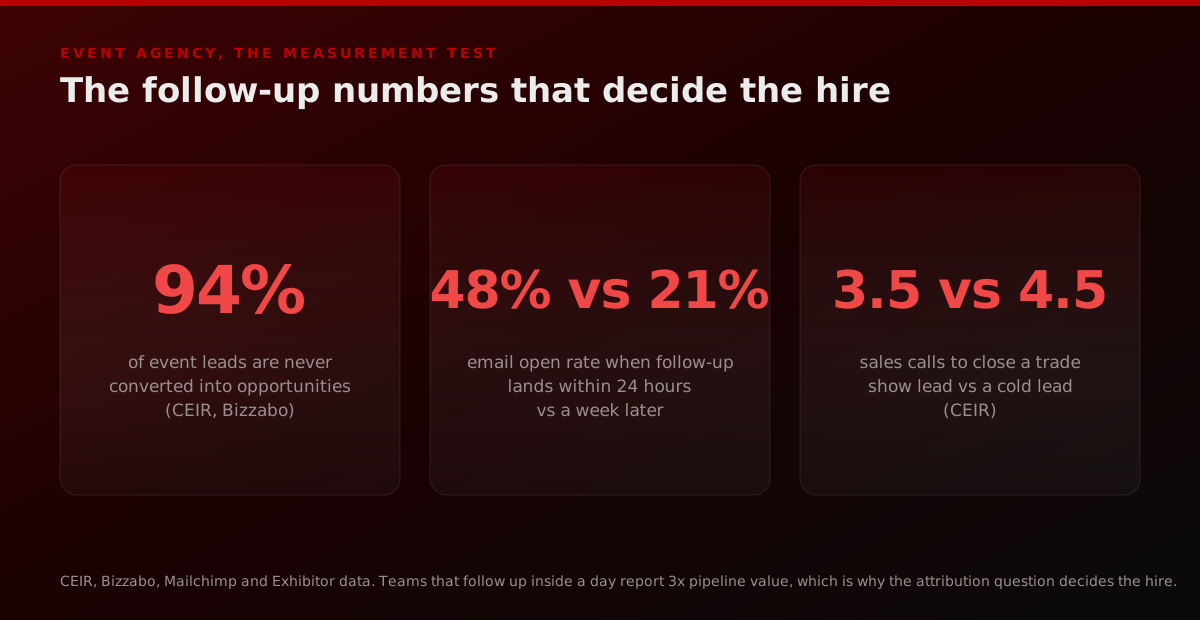
The fastest way to separate a growth partner from a stand-builder is to ask exactly what it reports and whether you can audit it. Most event vendors report badge scans, impressions, or booth traffic, numbers that include drive-by scans and say nothing about intent. A growth partner ties reporting to something checkable. CEIR data shows a trade show lead closes in 3.5 sales calls versus 4.5 for a cold lead, yet 94 percent of marketers never convert event leads into opportunities, and the single biggest variable is follow-up speed: Bizzabo reports 3x pipeline value for teams that follow up within a day. When one agency shows you a scan count and another shows you qualified meetings attributed by name, you are looking at two different definitions of the word results.
Green flags and red flags before you sign
You do not need to take a pitch on faith. A growth-capable agency owns a pre-event, on-site, and post-event motion rather than stopping at the booth, reports pipeline you can audit rather than badge scans, can name activations at your event type, prices against delivered outcomes with a bounded single-event scope, and has a structured 24-hour follow-up plan. The warning signs are the mirror image: an agency that calls a staffed stand marketing, reports only impressions, shows a generic portfolio with no relevant events, asks for an annual lock-in billed cost-plus on logistics, and has no plan for the leads after the show. Run any shortlist through the table below before a call, not after.
Event agency types compared
| Agency type | What it does | What it leaves to you | Typical pricing |
|---|---|---|---|
| Booth / logistics vendor | Staffs a stand, runs AV, hands you photos and scans | Narrative, capture, follow-up, and attribution | Cost-plus on logistics, $100 to $149/hr (Clutch) |
| Sponsorship / PR | Buys placement and speaking slots | Your own room, pipeline, and measurement | Six-figure sponsor tiers at flagships |
| Full-funnel activation | Pre-event arc, on-site pipeline, post-event clips and attribution | Little; it owns the growth motion | Project or outcome-based |
| Outcome-priced (FORKOFF) | Narrative arc, booth plus side event plus founder dinner, clip waterfall, attributed ledger | Only showing up as the founder | By application, per single event |
The costliest mistake is hiring a logistics vendor for a pipeline outcome, then owning follow-up (the hard part) yourself. FORKOFF reports qualified meetings and partnership conversations attributed by name, not badge scans.
Green flags versus red flags before you sign
| What to check | Green flag | Red flag |
|---|---|---|
| Scope | Owns pre-event, on-site, and post-event follow-up | Stops at the booth and calls it marketing |
| Measurement | Pipeline attributed by name you can audit | Reports badge scans or impressions only |
| Track record | Named activations at your event type | Generic portfolio, no relevant events |
| Pricing | Tied to delivered pipeline, bounded single-event scope | Cost-plus on logistics, long annual lock-in |
| Follow-up | Structured 24-hour post-event follow-up plan | No plan for the leads after the show |
Follow-up within 24 hours earns about a 48 percent email open rate versus 21 percent a week later (Mailchimp, Exhibitor), and Bizzabo reports 3x pipeline for teams that follow up inside a day. Run any shortlist through this table before the call.
Frequently asked questions
What are the different types of event marketing agencies?
Three main types. Booth and logistics vendors staff a stand and hand you photos and a scan list but do not distribute or measure. Sponsorship and PR shops buy placement and speaking slots. Full-funnel activation agencies run pre-event narrative, on-site pipeline, post-event clips, and attribution. Match the type to the outcome you actually want before you compare prices.
What questions should I ask before hiring an event marketing agency?
Five: does it own a funnel or stop at the booth; what does it report and can you audit it; can it name activations at your event type; is pricing tied to delivered pipeline with a bounded single-event scope; and does it have a structured post-event follow-up plan. Clean answers to all five signal a growth partner. Vague answers or badge-scan reporting signal a logistics vendor sold as more.
How do I judge whether an agency actually drives pipeline?
Look past the booth render at the measurement and the follow-up. Ask for qualified meetings attributed by name rather than badge scans, a named activation in your event lane, and a 24-hour follow-up plan. CEIR data shows 94 percent of marketers never convert event leads, so an agency that can only show booth traffic is selling logistics, not pipeline.
Should I hire a booth vendor or a full-service agency?
If you already run the narrative and follow-up and only need a stand built and staffed, a logistics vendor is enough and cheaper. If you want the event to actually book meetings, a booth vendor leaves the hardest work, the narrative, the capture, and the conversion, with you. A full-funnel or outcome-priced agency owns that motion end to end, which is why founders who want pipeline choose it.
How much should an event marketing agency cost?
Agency time runs about $100 to $149 an hour on Clutch, on top of a $10,000 to $30,000 activation for a single show, and six-figure tiers for flagship sponsorships. Outcome-priced providers scope the spend to delivered pipeline instead. See the full cost breakdown on the event marketing cost answer page.
Why do most event leads never convert?
Because the spend stops at the booth. CEIR data shows 94 percent of marketers fail to convert event leads into opportunities, and the biggest variable is follow-up speed: a reply within 24 hours earns roughly a 48 percent email open rate versus 21 percent a week later. An agency without a structured follow-up and attribution motion leaves that pipeline on the floor.
Get the specific number for your campaign.
Receipts, deep dives, and playbooks.
Affiliate Conclave 2026 (Abu Dhabi): Dates, Tickets, Tracks, and Who It Is For
Affiliate Conclave 2026 runs December 15 to 16 at Emirates Palace, Abu Dhabi, co-located with Global Trading Show. Dates, tickets, tracks, a neutral read.
 Read
Read
The Algorithm Alliance: AI and ML Builder Community and Its Next Singapore Meetup
The Algorithm Alliance is an AI and ML builder community run by VAP Group. Its editions, format, who it is for, and the next Singapore meetup, 6 October 2026.
Read
Crypto Mining Guild 2026 (Abu Dhabi): Date, Venue, and the Mining-to-AI Pivot
Crypto Mining Guild 2026 is a December 10 Global Blockchain Show side event at Space42 Arena, Abu Dhabi. Date, venue, format, and the mining-to-AI pivot.
Read