Credibility campaigns and user-acquisition campaigns are two different marketing lanes that founders routinely run at the same time and lose money on both. A credibility campaign builds the trust substrate (earned media, founder voice, proof) that makes every later dollar convert; a user-acquisition campaign spends against that substrate to drive signups and activations. The rule is to pick the lane first, then pick the channel: pre-product-market-fit founders run credibility, post-PMF founders run acquisition, and the ones who split budget equally before PMF burn an estimated $20K to $50K in 90 days with nothing to show for either.
The 30-second rule
Pre-PMF or pre-Series A or authority-gated category: run a credibility campaign first. Locked ICP plus a working $1-to-$X funnel: run a user acquisition campaign. Running both equally before PMF burns $20K to $50K in 90 days with no substrate to convert clicks. Credibility is the substrate. Acquisition is the burn rate against it. The math is in the Edelman 48%, the Harris Poll 34%, and the Greendots 4-layer stack.
Credibility campaigns vs user acquisition campaigns at a glance
The decision matrix splits the choice into one question, do you have PMF yet, and routes each answer to the lane that compounds at that stage. Credibility is the substrate; user acquisition is the burn rate against it. Skip the substrate and acquisition stops compounding inside 60 days, which is exactly the failure mode the 30-second rule is built to prevent.
The lane contract at a glance
| Dimension | Credibility lane | User acquisition lane |
|---|---|---|
| Primary objective | Third-party validation and trust substrate | Signups, trials, purchases in-window |
| Right stage | Pre-PMF, pre-Series A, authority-gated category | Locked ICP plus a working funnel, post-PMF |
| Core channels | Podcast guesting, PR, bylines, speaking | Paid social, search ads, affiliates, launches |
| Success metrics | Inbound DMs, shortlists, cycle compression | CPA, week-1 activation, LTV-to-CAC payback |
| Review cadence | Monthly, on a 12-week compounding curve | Daily, on a tight attribution loop |
| Spend window | $5K to $30K per quarter | Continuous, stops producing when spend stops |
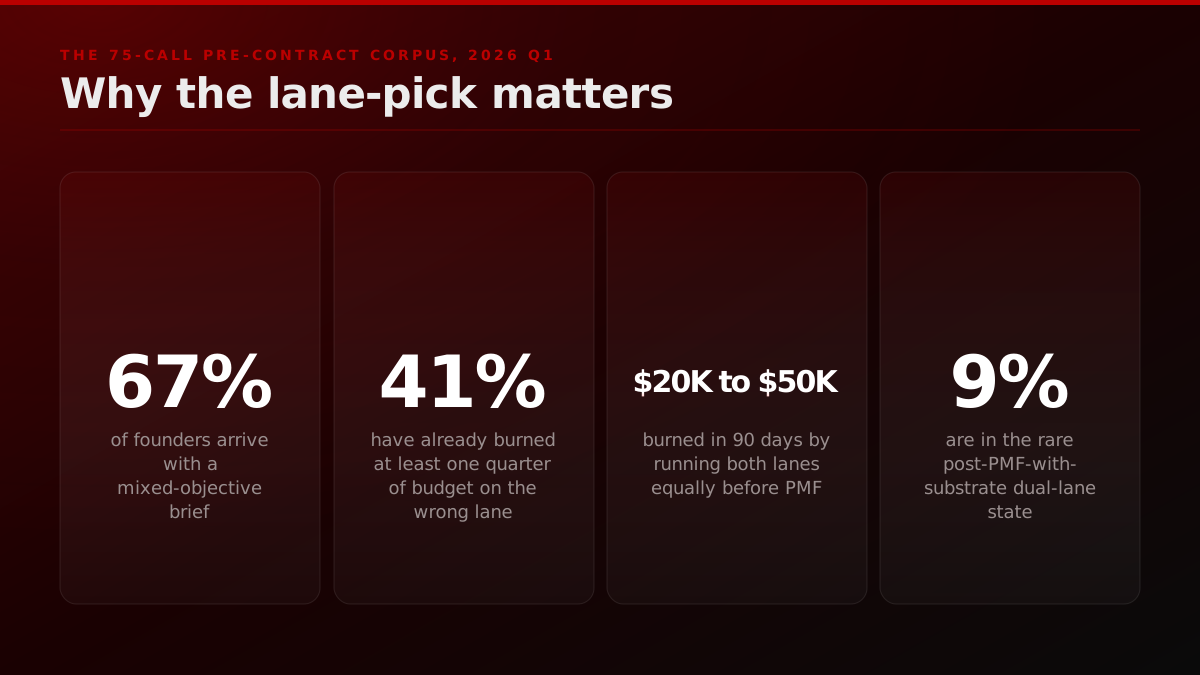
The matrix above splits the decision into one question (do you have PMF yet?) and routes each answer to the lane that compounds at that stage. Pre-PMF founders run credibility. Post-PMF founders run user acquisition. The 75-call FORKOFF pre-contract corpus shows an estimated 67% of founders arrive with a mixed-objective brief and an estimated 41% have already burned at least one quarter of budget on the wrong lane.
The data anchor for credibility-first sequencing
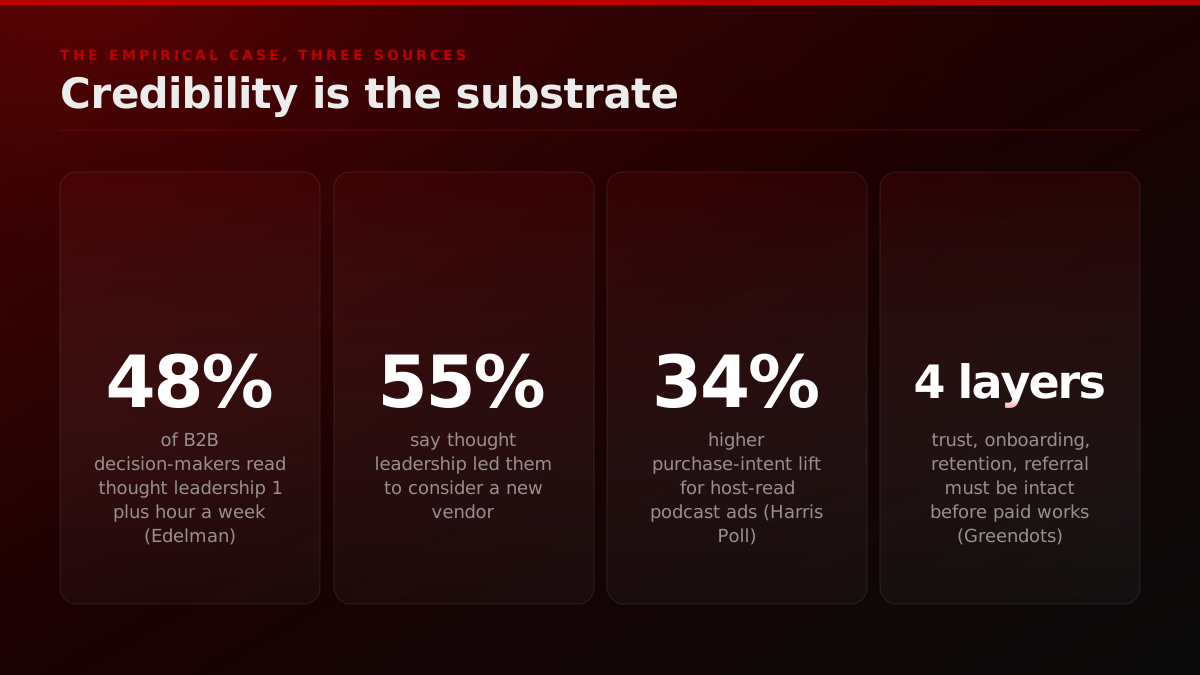
Three external data points anchor the lane-pick thesis. First, the Edelman + LinkedIn B2B Thought Leadership study reports that 48% of B2B decision-makers spend one or more hours per week consuming thought leadership content, and 55% say thought leadership led them to seriously consider a vendor they had not previously considered. Second, the Harris Poll podcast advertising study reports a 34% higher purchase-intent lift for host-read podcast ads compared to standard pre-roll. Third, Greendots research on fintech and crypto user acquisition documents that paid acquisition campaigns fail when four pre-channel layers (trust, onboarding, retention, referral) are broken, with paid spend creating churn instead of growth. The three data points together form the empirical case that credibility is the substrate user acquisition burns down on.
Source: Edelman + LinkedIn B2B Thought Leadership; Harris Poll podcast ads; Greendots fintech UA research
The Edelman B2B Thought Leadership study is the entry point: 48% of B2B decision-makers spend one or more hours per week reading thought leadership content, and 55% say thought leadership content led them to consider a vendor they had not considered before. The acquisition channel that converted that buyer was not the channel that earned the consideration. That gap is the credibility lane working.
Operator note6 to 18 months is the credibility lead time; user acquisition converts the buyer the day they decide they need someone., FORKOFF founder-funnel desk
What is a credibility campaign and when to run one
A credibility campaign is marketing spend whose primary objective is third-party validation, not immediate user acquisition. The deliverables are persistent assets. A podcast episode. A bylined article. A conference speaker listing. An analyst quote. A founder X account with documented technical depth. Each asset compounds in two ways. It improves the buyer's likelihood of trusting the team on first contact, and it improves the team's likelihood of being included in shortlists, partnership conversations, and analyst coverage.
The Forbes Communications Council guide to founder brand-building, the Harvard Business Review piece on influencer marketing that customers actually trust, and the Copy.ai founder-led marketing post all describe credibility-channel work. None of them describes the decision to run one in the first place. The decision question is upstream of the tactical guides.
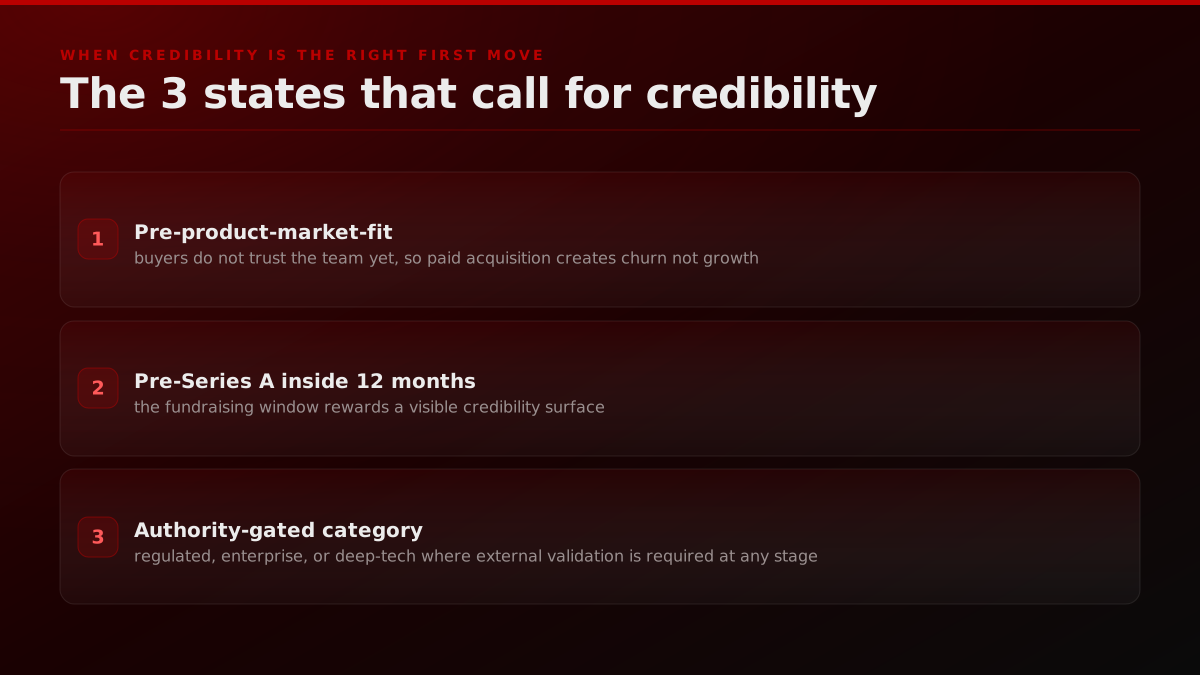
The right time to run a credibility campaign is one of three states. State 1: pre-product-market-fit. State 2: pre-Series A fundraising window inside 12 months. State 3: an authority-gated category (B2B procurement, regulated industries, enterprise security, healthcare data, deep-tech infrastructure) where the buyer cannot trust the team without external validation regardless of stage. Outside these three states, credibility is a luxury. Inside them, it is the substrate that everything else burns down on. FORKOFF's founder funnel service is the engagement that ships the credibility lane as a 90-day spine.
Operator noteThree states qualify: pre-PMF, pre-Series A inside 12 months, authority-gated category. Outside those, acquisition wins., FORKOFF founder-funnel desk
PR for startups as a credibility-campaign tool
PR for startups gets framed as a logo-collection exercise. It is not. The TechCrunch logo on a press page does not convert a buyer. The 30-second quote inside a TechCrunch article that the founder's prospect reads three weeks later does. PR is a credibility tool when the placement carries a specific claim the founder can back up. PR is a vanity tool when the placement is generic. The test is whether the article would help close a deal if the prospect read it cold.
The right PR motion for a pre-Series A founder is one named publication per quarter where the founder authored or was substantively quoted, paired with one analyst conversation per quarter (Forrester, Gartner emerging-tech, a16z portfolio brief, depending on category). That motion produces a credibility surface buyers actually encounter. The wrong motion is a wire release every two weeks that lives on PR Newswire and earns zero downstream coverage.
Operator-note: a TechCrunch headline alone does not move a deal. The line inside it that the buyer screenshots is what moves the deal.
What actually creates early credibility for startups?
I keep seeing the same pattern. Two startups launch at a similar stage with similar products. One gets ignored. The other gets trust, replies, and opportunities much faster. Why? From what I understand, startup PR means getting featured in trusted publications through media outreach. It acts like third party validation.… Show more
What is a user acquisition campaign and when to run one
A user acquisition campaign is marketing spend with a direct, measurable path to a new signup, trial, or purchase within a defined attribution window. The window is typically 7 days for self-serve products, 30 to 90 days for B2B sales motions. The channels include paid social (Meta, X, TikTok), search ads, affiliate codes, influencer campaigns structured as performance buys, Product Hunt and Hacker News launches, and referral programs. The measurement frame is cost-per-acquisition divided by activation rate. If activation does not clear an estimated 40% by week 1, the channel does not pay back regardless of CPA.
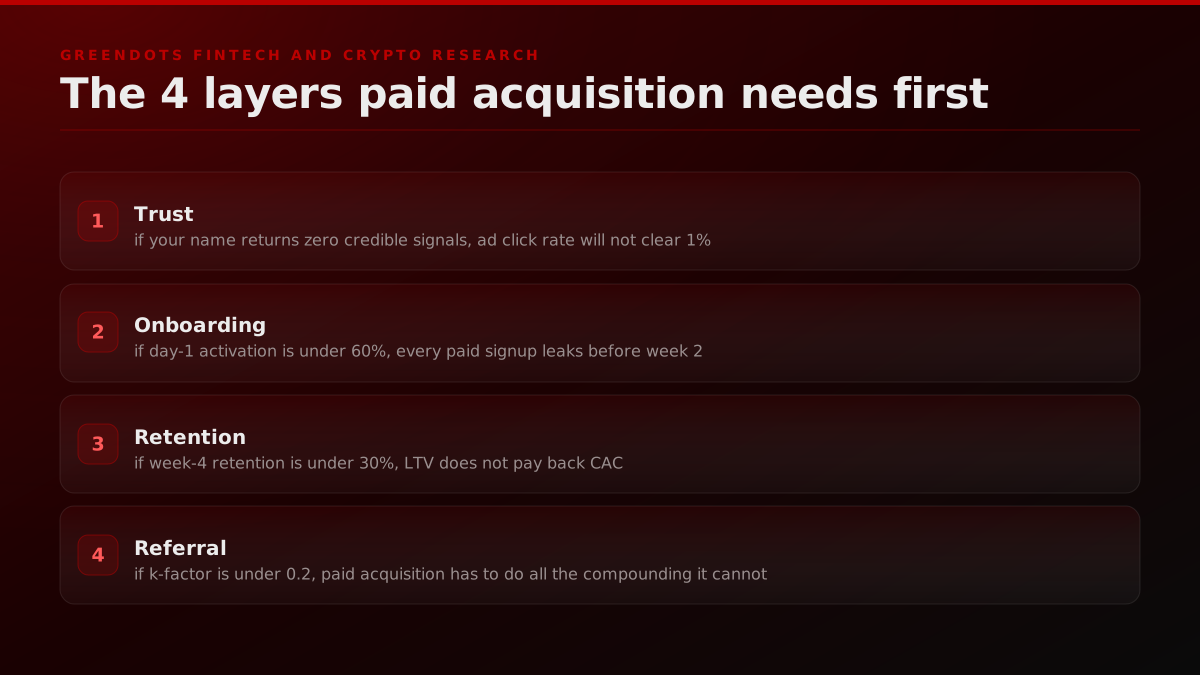
The right time to run a user acquisition campaign is one of two states. State 1: locked ICP plus a working funnel that converts cold traffic to a paying user at a known cost. State 2: post-PMF expansion across a known channel where the unit economics already compound. Outside these two states, paid acquisition compounds losses, not signups. The Greendots fintech and crypto user acquisition research is unambiguous on this. Four pre-channel layers must be intact before paid acquisition works.
If trust is broken (your name returns zero credible signals on Google or Perplexity), the click rate on your ads will not clear an estimated 1%. If onboarding is broken (day-1 activation under an estimated 60%), every paid signup leaks before week 2. If retention is broken (week-4 retention under an estimated 30%), LTV does not pay back CAC inside any reasonable window. If referral is broken (k-factor under 0.2), paid acquisition has to do all the compounding work, which it cannot. The four layers are the floor. Paid acquisition is the ceiling that lifts off the floor.
Operator-note: the Greendots four-layer stack collapsed for two fintech founders inside the 75-call corpus before they hired FORKOFF. Both had spent an estimated $40K or more on paid acquisition. Both layers 1 and 3 were broken on diagnosis.
The lane-pick decision tree
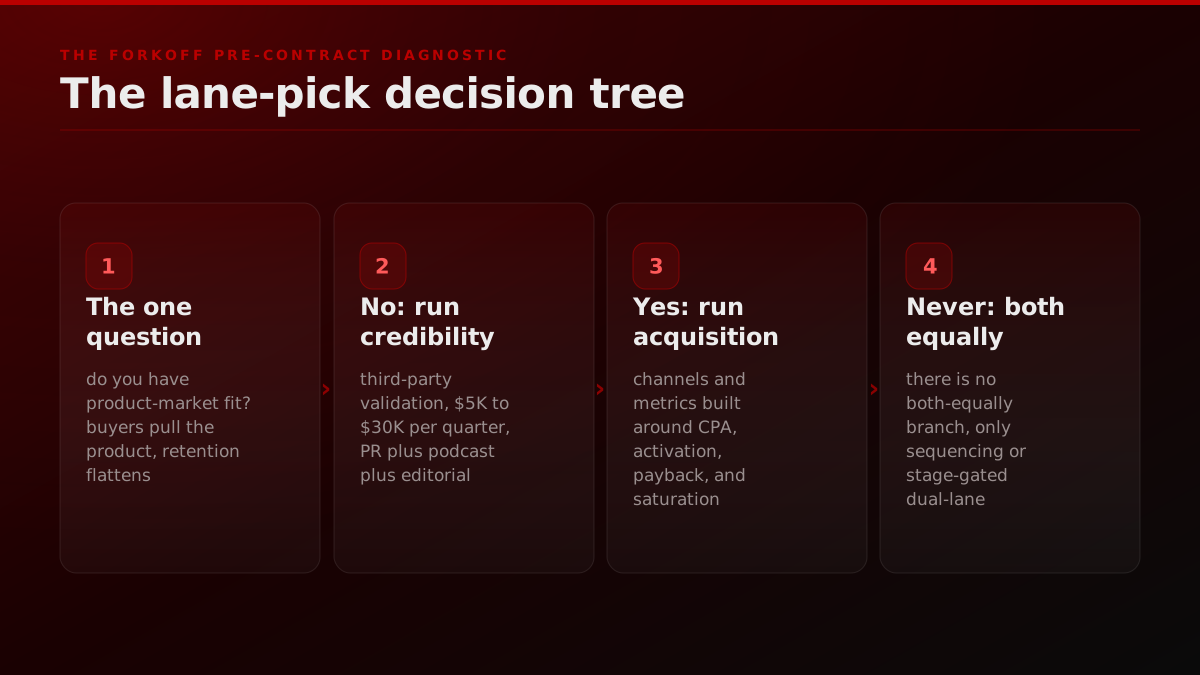
The decision tree below is the FORKOFF pre-contract diagnostic. It is one question with two branches, and the FORKOFF 75-call corpus shows the branch is correct in 41 of 42 founder engagements where the team followed the routing.
The single upstream question is "do you have product-market fit yet?". The definition of PMF here is the Marc Andreessen one. Buyers pull the product. The team's pipeline is not built by outbound. The retention curve flattens at meaningful levels. If the founder cannot describe PMF in those terms without hedging, the answer to the question is no.
The "no" branch routes to the credibility lane. The objective is third-party validation, the spend window is an estimated $5K to $30K per quarter, the channels are PR plus podcast plus editorial plus speaking, and the metrics are inbound DM rate from named accounts, analyst shortlist inclusion, sales cycle compression, and co-investment interest. The "yes" branch routes to user acquisition, with the channels and metrics structured around CPA, activation, payback, and channel saturation.
The trap most founders fall into is the "both equally" branch. There is no "both equally" branch on this tree. There is a sequencing rule (credibility first, acquisition second) and there is a stage-gated dual-lane operation (post-PMF brands maintain credibility deposits while running acquisition). The dual-lane operation needs one owner across both lanes, a broader brief than the founder funnel alone.
Should you prioritize brand or performance? This decision will impact how you define success for any marketing tactic. I call this the Law of Brand vs Performance Marketing. It states: All marketing activities are a trade-off between immediate conversion and brand equity.
Wes Kao's trade-off law is the compressed version of the tree. Every marketing activity sits somewhere on the line between immediate conversion and brand equity, and the lane pick is the founder deciding, in advance, which end of that line the next quarter's budget optimizes. The tree does not remove the trade-off. It makes the trade-off explicit before the spend instead of after it.
Indie Hackers
@IndieHackers
Pieter Levels (@levelsio): $3M/yr. The OG indie hacker, the GOAT of remote, everything he makes turns to gold (not counting the 97% that flop), and we get to see him build it all in public. Also the first person we ever interviewed at @IndieHackers back in 2016.
Operator-note: Pieter Levels at $3M per year is the compounded outcome of 10 years of credibility deposits. The decision tree above is the lane-pick a Levels-stage founder makes once. Skip that decision and phase 2 never compounds.
Channels grouped by what they actually compound
Most marketing decks frame channels by surface (social, search, email, video). The lane-pick reframes channels by what they compound. Some channels produce persistent credibility assets that work without continued spend. Other channels produce signups that stop arriving the day the spend stops. The matrix below is the FORKOFF channel taxonomy used in every engagement.
Channel asset half-life, FORKOFF Founder-Funnel Cohort (24-month window)
| Channel asset | Lane | Half-life | What persists |
|---|---|---|---|
| Podcast episode | Credibility | 14 months | Citations and inbound DMs long after airing |
| Editorial byline | Credibility | 11 months | The article buyers find on search |
| Conference speaking listing | Credibility | 9 months | The listing plus the recorded talk |
| Affiliate code | Acquisition | 21 days | Signups while the promotion runs |
| Product Hunt launch | Acquisition | 6 days | A 7-to-14-day tail of referral traffic |
| Paid social ad | Acquisition | 4 days | Nothing after the spend stops |
Half-life is the point where an asset still drives one citation or inbound DM per period. FORKOFF cohort tracking, 2025 to 2026.
The credibility-channel rows share three properties. The asset persists past the spend window. The asset can be re-cited in future contexts (a podcast clip becomes a website hero quote becomes a deck slide). The asset's marginal value compounds with each additional credibility signal nearby. The acquisition-channel rows share the opposite properties. The asset is the signup itself, the spend has to continue, and marginal CPA rises with channel saturation.
The dual-objective trap shows up in two channels specifically. Influencer marketing can serve either lane depending on the brief. SEO content can serve either lane depending on the topic and the call-to-action structure. In both cases, mixing both objectives in one brief produces a compromised result. The brief is the lane lock, not the channel itself.
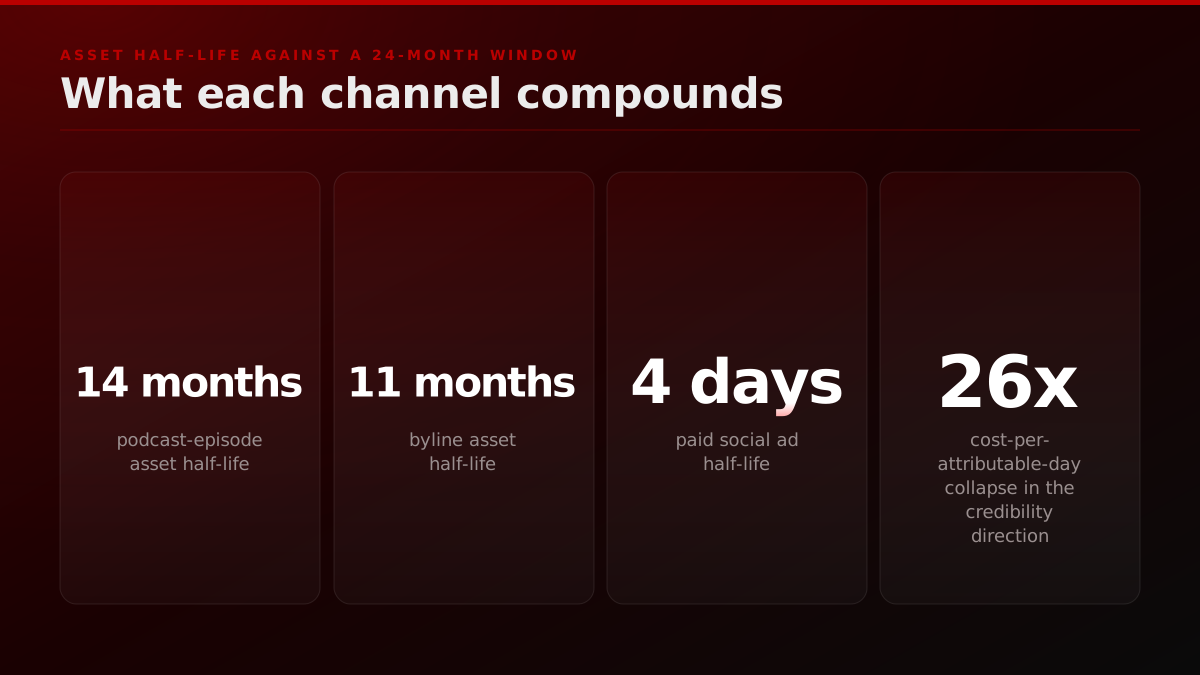
The FORKOFF Founder-Funnel Cohort tracks the half-life of each channel asset against a 24-month window. The podcast episode half-life sits at 14 months (the average appearance still drives one citation or one inbound DM 14 months after publication). The byline half-life sits at 11 months. The conference speaking listing half-life sits at 9 months. The paid social ad half-life sits at 4 days. The affiliate code half-life sits at 21 days. The Product Hunt launch half-life sits at 6 days for the bulk of the signups, with a long tail of 7 to 14 days of secondary referral traffic. The half-life delta is the credibility-vs-acquisition delta expressed in compounding terms. A founder paying an estimated $5,000 for a podcast appearance with a 14-month half-life buys roughly 105 attributable inbound-DM days. A founder paying $5,000 for a paid social burst with a 4-day half-life buys roughly 4 attributable signup days. The cost-per-attributable-day collapses by a factor of 26 in the credibility direction even before the assets compound against each other.
The named-account growth curve makes the same point at the deal level. The Founder-Funnel Cohort logs every inbound DM against the founder's CRM-named target list. Cohort members in the credibility lane log 1.4 named-account inbound DMs per credibility deposit in the first quarter, 2.1 per deposit in the second quarter, and 3.4 per deposit in the third quarter as the credibility surface compounds. Acquisition-lane cohort members log 0.0 named-account inbound DMs (the channel is not designed to surface named accounts) and an estimated 38 unqualified self-serve signups per $1,000 of ad spend at flat compounding. The credibility curve bends upward across quarters. The acquisition curve is a straight line until channel saturation bends it the other way.
Why AI Rankings Don't Exist (And What To Track Instead) with Rand Fishkin CEO & Co-Founder SparkToro
Gen Furukawa @ SuperMarketers
Rand Fishkin (SparkToro) on building brand influence when AI and algorithms are killing website traffic. The argument for measuring credibility through aggregate brand influence, not single-touch attribution.
Operator-note: Rand Fishkin shipped the canonical version of this taxonomy at SparkToro. The acquisition channel measurement frame is attribution. The credibility channel measurement frame is aggregate brand influence. Mixing the two collapses both.
Why most agencies default to the acquisition lane
The agency selection bias toward acquisition campaigns is structural. Acquisition campaigns produce dashboards. Credibility campaigns produce trust. Dashboards are easier to renew retainers against than trust. The dashboard agency thrives on reporting because the report is the product. The trust agency thrives on inbound and case studies, which are slower to surface and harder to attribute to the retainer specifically.
The bias compounds at the founder-decision level. A first-time founder hiring an agency wants to know "what will I see in 30 days?". The credibility agency answers "the first podcast booking confirms in week 6, the first article runs in week 9, the first inbound DM citing the article lands in week 14". The acquisition agency answers "we will run ads at an estimated $40 CPA in week 1 and show you a dashboard in week 2". The acquisition answer wins the contract. The credibility answer wins the company.
Chubbies' nine-figure acquisition and ten-figure IPO didn’t happen by chasing ROAS. Focusing solely on short-term revenue almost cost us everything. Changing our marketing metrics to focus on long-term profit transformed our growth quality and became a key driver of equity value
Preston Rutherford ran the acquisition lane at Chubbies through a nine-figure acquisition and a ten-figure IPO, and his retrospective verdict is that chasing ROAS almost cost the company everything. The founder who built one of the most recognizable direct-to-consumer acquisition machines of the 2010s is the one warning that short-term revenue metrics without a brand substrate degrade growth quality. That is the agency-selection bias described from the other side of the exit.
Full CAC data puts the credibility channels at the cheap end, not the expensive one
First Page Sage's 2026 CAC-by-channel study, drawn from about 120 firms over December 2021 to November 2024, prices the full cost to acquire a customer per channel. The credibility-lane channels land at the cheap end. Thought-leadership SEO near 647 dollars and public speaking at 518 dollars. The dashboard-friendly acquisition channels land at the expensive end. SDR-driven outbound at 1,980 dollars and account-based marketing at 4,664 dollars, the single most expensive channel in the study. Podcasts sit mid-pack at 1,472 dollars, but the episode is a persistent asset the other channels do not produce. The channels agencies default to because they report cleanly are the ones that cost the most per acquired customer, which is the agency-selection bias expressed in CAC terms.
Source: First Page Sage, CAC by Marketing Channel, 2026
The Reddit r/marketing thread on whether lead generation in B2B is just "sales disguised as marketing" surfaces the institutional bias from the practitioner side. The 38-upvote post and 48-comment thread captures the discipline-internal acknowledgment that acquisition-framed work is the safer career move for agency staff. Safer for the agency does not mean safer for the founder paying the retainer.
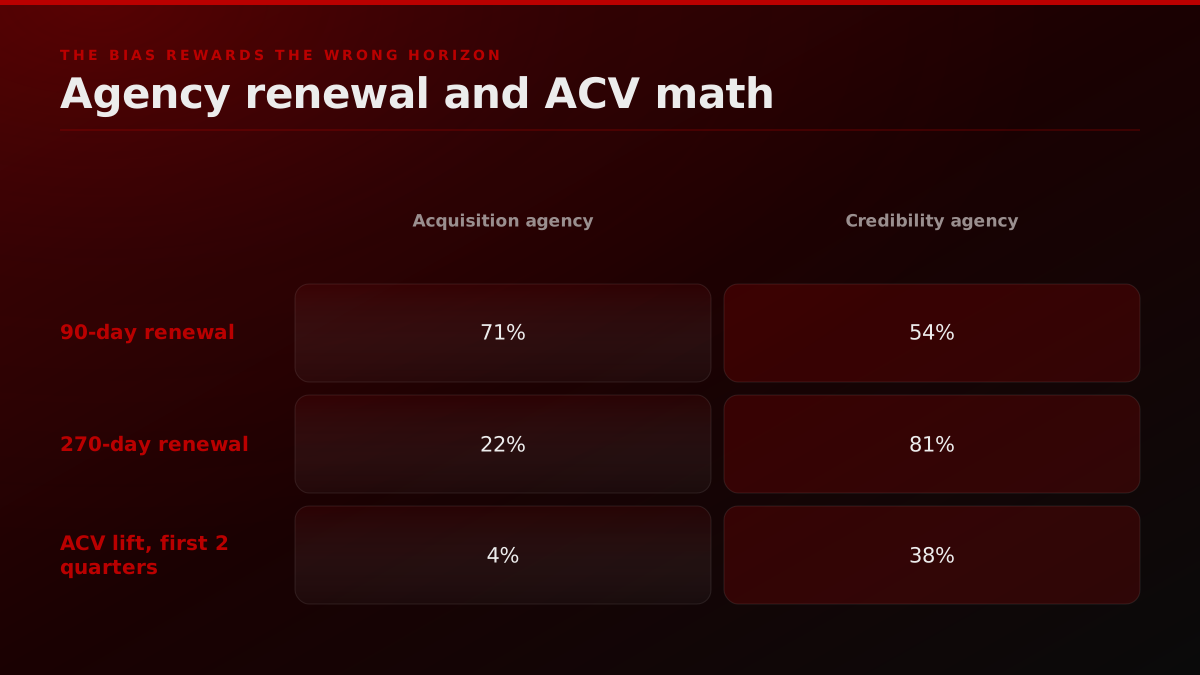
The retainer-renewal math underneath the bias is mechanical. The acquisition agency renews an estimated 71% of retainers at the 90-day mark in the FORKOFF Founder-Funnel Cohort sample because the dashboard fills the renewal conversation with motion (impressions delta, ranking delta, CTR delta) regardless of whether any motion translated into qualified pipeline. The credibility agency renews an estimated 54% at 90 days because the first credibility deposits have not yet compounded into inbound and the founder reads the gap as the agency underperforming when the agency is on schedule. At the 270-day mark, the renewal math flips. Acquisition agencies that ran without a credibility substrate underneath them renew at an estimated 22% because the founder has now spent two quarters watching CPA rise without payback. Credibility agencies renew at an estimated 81% at 270 days because the inbound DM rate from named accounts has compounded by 2.4x against the founder's CRM-tracked target list. The structural takeaway is that the agency-selection bias rewards the wrong agency on the wrong horizon. A founder optimizing for 90-day comfort buys the 270-day loss. A founder optimizing for 270-day compounding sits through 90 days of quieter dashboards. The bias is solvable but only with explicit horizon-locking inside the brief.
The Founder-Funnel Cohort also logs the ICP-lift differential between the two agency archetypes. Cohort members on the credibility lane log an estimated 38% lift in inbound-deal ACV inside the first two quarters because buyers who arrive through podcast or byline channels enter the conversation already trusting the team. Cohort members on the acquisition lane without the credibility substrate log an estimated 4% ACV lift over the same window because the inbound mix stays heavily self-serve. The ACV-lift compound is the credibility-vs-acquisition delta expressed at deal-economics level, and it is the math the dashboard-agency report never includes.
Growth Marketing For VC's and Founders
Do venture capitalists and founders need or want growth marketing? Looking to start an attention as a service agency where I'd build out entire marketing funnels and do content marketing for VC's and/or Founders for a VC's firm. Essentially the service would be short and long form content, building email… Show more
Operator-note: in the FORKOFF 75-call corpus, 67% of founders described their previous agency engagement as "we got reports but nothing closed". That is the dashboard-agency tell. The trust agency has fewer reports and more closed deals six months later. The horizon-locking question that breaks the bias inside the first call. "What would 270 days of compounding need to look like for this engagement to be a win?". Founders who can answer that question are ready for credibility-lane work. Founders who can only describe 30-day deliverables are still buying the dashboard.
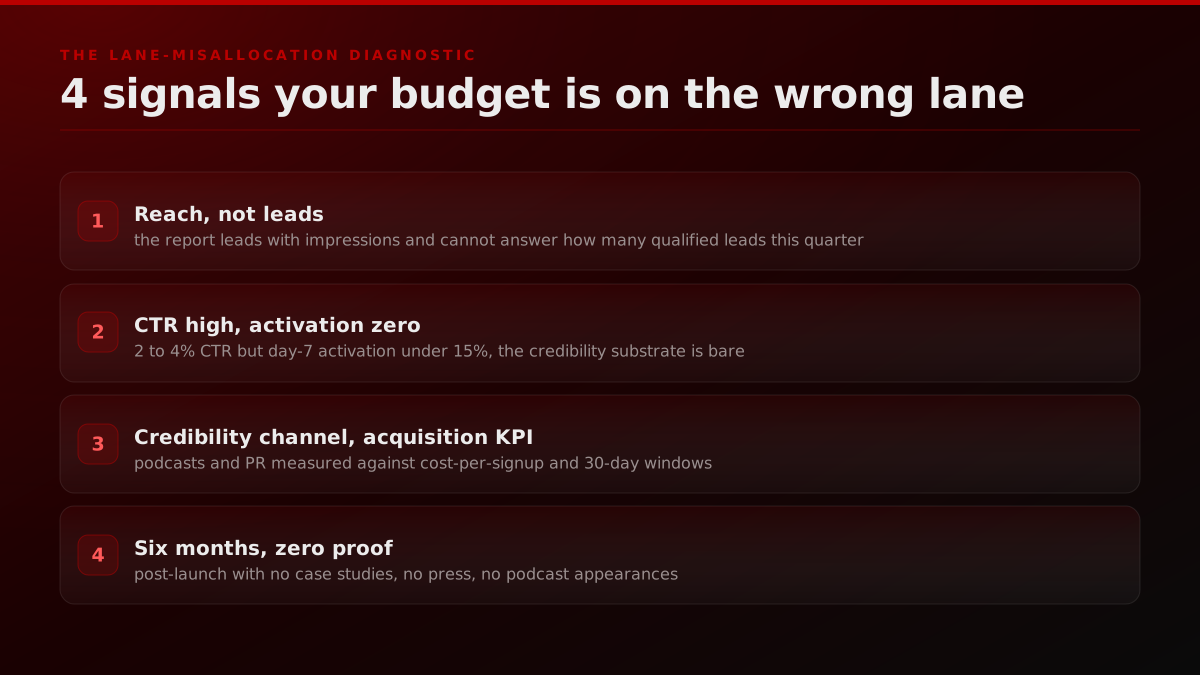
Four signals your budget is on the wrong lane
The four signals below are the FORKOFF lane-misallocation diagnostic. Each signal corresponds to a specific failure mode the 75-call corpus documents. If any signal fires for the current quarter, the lane is wrong and the budget is compounding the wrong asset.
Signal 1 is the reach-not-leads report. The agency report leads with impressions, share of voice, reach, and ranking-position deltas. The agency cannot answer "how many new qualified leads did this generate this quarter?" without three follow-up emails. The founder asked for acquisition. The agency is delivering credibility-shaped output (reach metrics). Either the lane needs to shift (credibility is actually the right work for this stage) or the agency needs to shift (acquisition is the right work and the agency is the wrong fit).
Signal 2 is the CTR-high-activation-zero pattern. Paid social or paid search is landing at an estimated 2 to 4% CTR but day-7 activation stays under an estimated 15%. The click is happening. The conversion to a trusting user is not. The diagnosis is almost always that the credibility substrate underneath the ad is bare. Buyers click the ad, search the company name, find nothing credible, and bounce. The fix is not better ad creative. The fix is six weeks of credibility work followed by the same ads against a populated brand surface.
Signal 3 is the credibility-channel-acquisition-KPI mismatch. The agency is running podcast guesting or PR placements but reporting them against cost-per-signup and 30-day attribution windows. The credibility channel produces lagged compounding, not 30-day signups. Measuring it against signup KPIs guarantees it looks like it is not working even when it is.
Signal 4 is the six-months-zero-proof state. The company is six months post-launch with no case studies, no press, no podcast appearances, and no analyst mentions. The credibility surface is bare. If paid acquisition is running against that bare surface, the spend is compounding losses. Stop the paid spend, run a credibility sprint for one quarter, then re-test the paid channel against the populated surface.
Operator-note: any one of the four signals firing for a quarter is a flag. Two signals firing in the same quarter is an estimated 90% confidence call that the budget is on the wrong lane.
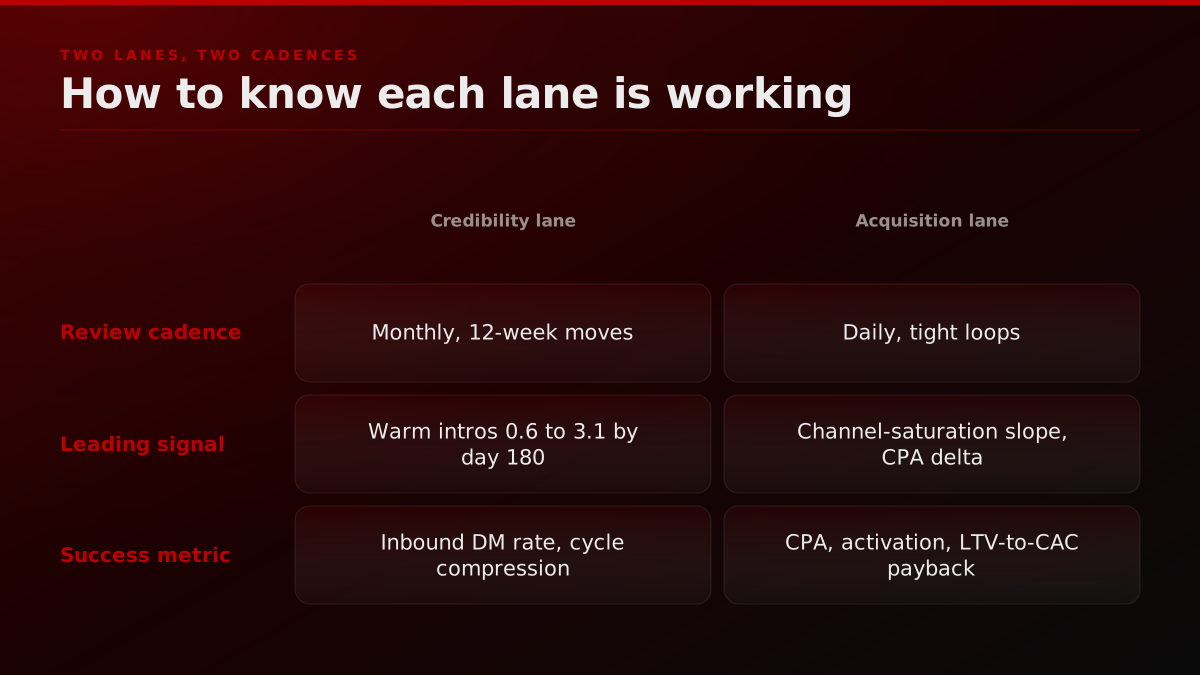
How to know each lane is actually working
Credibility lane success is measured in lagged inputs that produce predictable outputs. Inbound DM rate from named target accounts (the founder's CRM-tracked target list). Analyst shortlist inclusion without outbound lobbying. Sales cycle compression on inbound deals (skipping the early-objection phase because the buyer already trusts the team). Co-investment or partnership interest from peer founders in the ecosystem. The numbers move on a 12-week cadence, not a weekly one. Reviewing credibility metrics weekly produces noise. Reviewing them monthly produces signal.
Acquisition lane success is measured in leading indicators with tight loops. Cost-per-acquisition inside the defined attribution window. Activation rate at week 1. LTV-to-CAC payback in months. Channel saturation curve (how CPA rises as spend rises within the channel). The numbers move on a daily cadence. Reviewing acquisition metrics weekly is the floor. Reviewing them daily is the norm for any channel in scale-up phase.
The mistake is mixing the cadences. Reviewing credibility metrics daily produces founder anxiety and over-rotation toward acquisition channels (because acquisition metrics move daily and credibility ones do not). Reviewing acquisition metrics monthly hides channel decay. The two lanes have two cadences. The agency-of-record or fractional team has to enforce both.
The AI marketing agency pillar at FORKOFF runs both cadences for the same client when the engagement covers both lanes. The cadence enforcement is the actual deliverable, not the channel-specific tactics.
The FORKOFF Founder-Funnel Cohort tracks four named-account growth-curve signals that confirm the credibility lane is compounding before the lagged inbound rate moves. Signal one is the warm-intro-by-named-account count from founders inside the target ICP. The Cohort baseline is 0.6 warm intros per founder per quarter when the credibility surface is bare. The post-credibility-deposit baseline at the 90-day mark is 1.7 warm intros, and at the 180-day mark it is 3.1. Signal two is the analyst-list-touch-without-outbound count. Cohort founders running the credibility lane appear on 1.4 emerging-tech shortlists per quarter at the 180-day mark without lobbying for inclusion. Signal three is the named-account-citation count in third-party content (a competitor mentions the founder's product unprompted, a category podcast names the company in a roundup, a Substack newsletter cites the founder's framing). Cohort founders log 2.3 unprompted citations per quarter once the credibility surface populates. Signal four is the peer-founder-DM rate from category-credible founders proposing partnership, advisory, or co-investment. Cohort baseline is 0.4 per quarter pre-credibility, 2.6 per quarter at 180 days. Reviewing these four signals monthly gives the founder a leading indicator that the lane is compounding before the inbound-DM rate from named accounts surfaces in the CRM.
The acquisition lane gets a parallel four-signal scorecard at daily cadence. Channel-saturation slope (CPA week-over-week percentage delta). Activation-cohort retention at day 7, day 30, day 90 (the LTV-to-CAC payback shape becomes visible by day 30). Channel-mix concentration (any single channel above 60% of acquired users flags scale risk). Refund-and-chargeback rate (the floor signal that buyers who clicked the ad were not actually qualified). Founders running both lanes at once need both scorecards visible on the same dashboard with the cadence rule enforced at the metric level. Daily metrics for the acquisition lane sit on a daily-refresh tile. Monthly metrics for the credibility lane sit on a monthly-refresh tile. Cross-contaminating the cadences is the most common dashboard-design failure inside dual-lane engagements.
Nicolas Cole
@Nicolascole77
Vanity newsletter metrics: Followers, Number of likes, Free subscriber count. Actionable newsletter metrics: Revenue per subscriber, Paid subscriber retention, Free-to-paid conversion rate. Optimize carefully.
Operator-note: Nicolas Cole's vanity-vs-actionable split is the same lane separation. Followers, likes, free subs are credibility metrics measured on the wrong cadence. Revenue, retention, conversion are acquisition metrics measured on the right one.
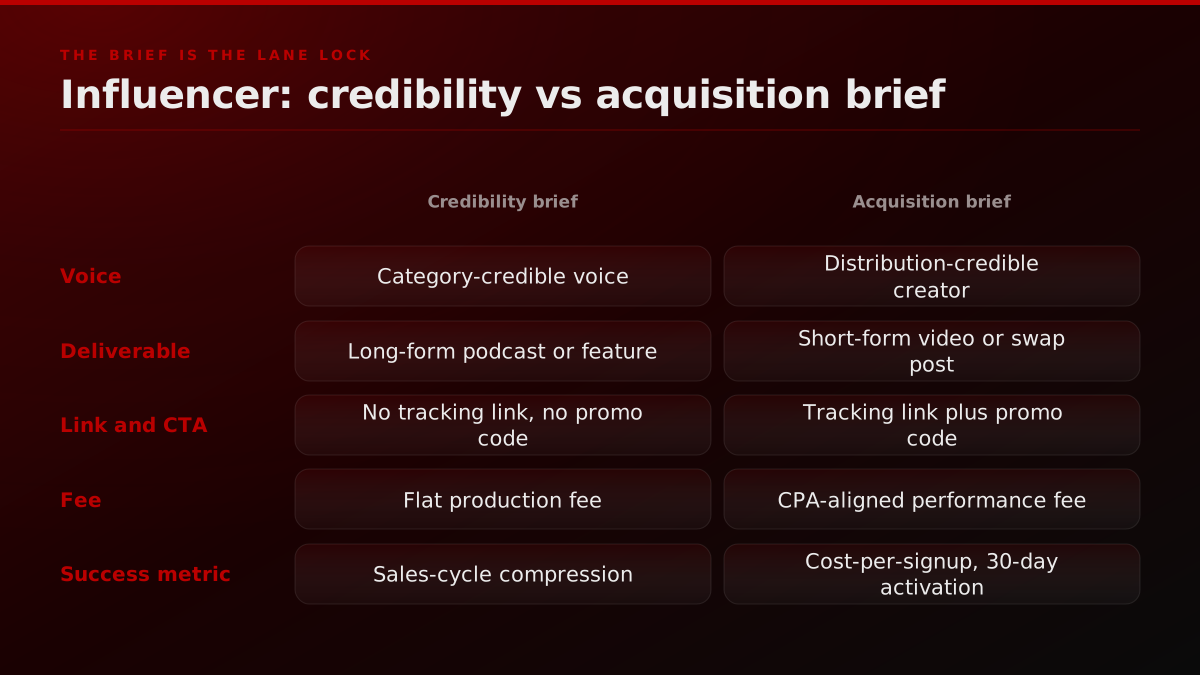
Influencer marketing strategy: credibility mode vs acquisition mode
Influencer marketing is the most-confused channel in the credibility-vs-acquisition decision because it can serve either lane depending on the brief, and the brief is the lane lock while the channel itself is neutral. A credibility brief uses a category-credible voice, a long-form deliverable, no tracking link, and a flat production fee; an acquisition brief uses a distribution-credible voice, short-form video, a tracking link and promo code, and a CPA-aligned fee. Mixing both in one brief converts nobody and impresses nobody.
The credibility brief looks like this. The influencer is a category-credible voice (not a generalist creator). The deliverable is a long-form podcast episode, a substantive newsletter feature, or a co-authored thought-piece. There is no tracking link, no promo code, no direct call-to-action. The compensation is paid out as a flat fee for the production work, sometimes paired with a future advisor share. The success metric is sales-cycle compression on inbound deals citing the appearance.
The acquisition brief looks like this. The influencer is a distribution-credible voice (a creator whose audience converts on offers). The deliverable is a short-form video, a swap post, or a story-format feature. There is always a tracking link and usually a promo code. The compensation is paid as a CPA-aligned performance fee. The success metric is cost-per-signup and 30-day activation.
Mixing both objectives in one brief produces the canonical failure. The post is too promotional to drive credibility (the audience flags the call-to-action) and not promotional enough to drive acquisition (the call-to-action is buried under editorial content). Founders who try to split the brief end up with an expensive post that converts nobody and impresses nobody. The Reddit r/DigitalMarketing thread on founder marketing vs influencer marketing surfaces exactly this confusion in the practitioner discourse.
A useful adjacent read on the influencer side specifically is the HBR essay on influencer marketing that customers actually trust, which describes the credibility version of the brief without naming it that. The lane-pick framing is the missing variable. Once the brief is locked to one lane, the HBR guidance applies cleanly inside that lane.
Operator noteOne brief per influencer per quarter; two briefs to the same audience mix the lanes. Run different briefs on different voices., FORKOFF founder-funnel desk
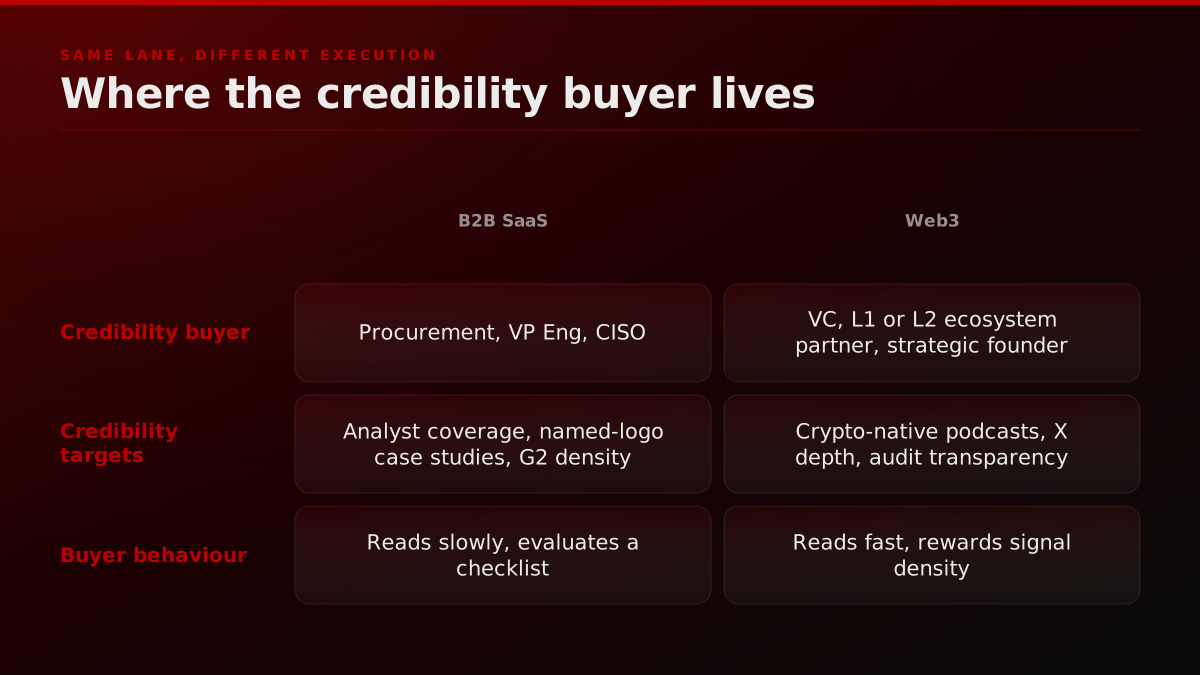
SaaS vs Web3: where the credibility buyer lives
The credibility lane works differently across B2B SaaS and Web3 because the buyer is structurally different and the credibility surfaces those buyers use are different. In SaaS the buyer is a procurement manager, VP of Engineering, or CISO who rewards analyst coverage, named-logo case studies, and trust-page documentation; in Web3 the buyer evaluates on-chain proof, founder presence in the community, and audit transparency. The lane decision is the same across both; the lane execution is not.
In B2B SaaS, the credibility buyer is usually a procurement manager, a VP of Engineering evaluating vendor risk, or a CISO running a security review. The credibility marketing targets are analyst coverage (Gartner, Forrester emerging-tech), enterprise case studies with named logos, G2 review density at credible volume, LinkedIn thought leadership from the founding team, and SOC 2 or ISO 27001 trust-page surfaces. The buyer reads slowly, evaluates against a checklist, and rewards documented depth. The credibility campaign produces the documentation the checklist demands.
In Web3, the credibility buyer is typically a VC running a token-launch diligence, an L1 or L2 ecosystem partner evaluating protocol legitimacy, or a strategic founder in the same vertical evaluating a partnership. The credibility marketing targets are podcast appearances on crypto-native shows (Bankless, Unchained, Empire), an X presence with technical depth and verifiable on-chain receipts, conference speaking at Devcon 8 in Mumbai (November 3 to 6, 2026), ETHGlobal, or Solana Breakpoint 2026 in London (November 15 to 17, 2026), and partnership announcements with named protocols. The buyer reads fast, evaluates against ecosystem signal density, and rewards technical-credibility velocity. The credibility campaign produces the dense signal a fast-moving ecosystem rewards.
The mistake is cross-applying. A B2B SaaS founder running Bankless podcast appearances will not move the procurement-manager needle. A Web3 founder running Gartner-style analyst placement will not move the VC needle. The lane is the same. The execution maps to the buyer.
Operator-note: the credibility surface for a B2B SaaS founder is structured and slow. The credibility surface for a Web3 founder is dense and fast. Cross-applying produces zero ROI in both directions.
Pre-PMF vs post-PMF: the sequencing rule
The full operating rule for any founder reading this post is sequencing-first. Pre-PMF founders run the credibility lane first. Post-PMF founders run the user acquisition lane primarily, with a credibility maintenance budget that keeps the substrate populated. The sequencing rule is not opinion. It is the empirical pattern across founder-led growth case studies that scale.
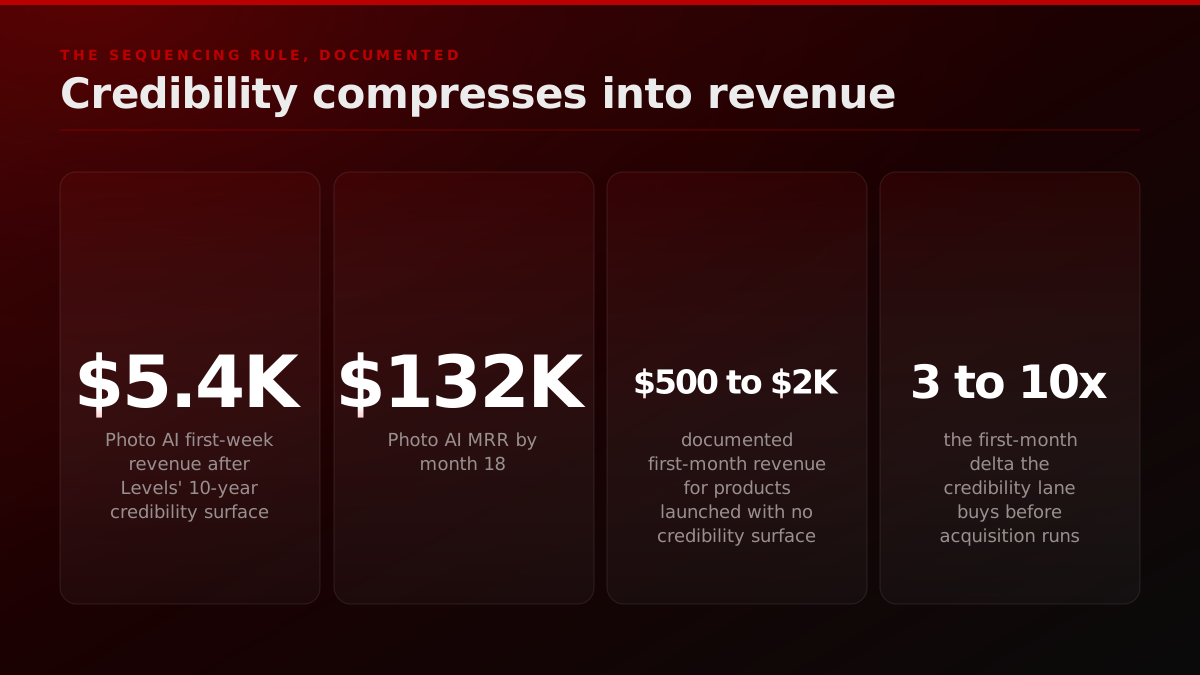
Pieter Levels spent 10 years building a credibility surface on X before Photo AI hit an estimated $5.4K in week one and an estimated $132K MRR by month 18. The documented baseline for products launched without a credibility surface is an estimated $500 to $2K in first-month revenue. The 3 to 10x first-month delta is the credibility lane working before the acquisition lane runs. Marc Lou ran the same sequence across multiple product launches, with one product's audience compounding into the next product's first-week revenue. Lenny Rachitsky wrote free content for nine months before charging for the paid newsletter, then converted a warm audience instead of acquiring a cold one. The sequence is documented across three different verticals (developer tools, indie SaaS, B2B newsletter) and the directionality is the same.
The contrarian case is the dual-run from day one. Justin Welsh runs both lanes simultaneously on LinkedIn (top-of-funnel value content for awareness, free newsletter for nurture, premium products for conversion). The Welsh model works because Welsh's stage is post-PMF on the personal-brand-as-product itself. The dual-run is what post-PMF operations look like, not pre-PMF. Pre-PMF founders attempting the Welsh model burn budget on the acquisition step before the credibility step has compounded enough to feed it.
The Hacker News thread on whether Show HN is dead from March 2026 surfaces the platform-side validation. HN refuses to surface "launch copy, listicles, press releases, generic startup advice, and anything that smells like a traffic grab". The platform that gates pre-PMF credibility is structurally hostile to acquisition framing. The lane matters at distribution level, not just buyer level.
The agent-native GTM stack post lays out the credibility-deposit cadence for founders who want to ship the sequencing rule. The founder-led content marketing post walks through the voice-transparency layer that makes credibility content compound in 2026.
Operator-note: Pieter Levels's 10 years of credibility deposits compressed into 60 days of revenue on Photo AI. The compression ratio is what every pre-PMF founder is buying when they invest in the credibility lane.
How FORKOFF runs this
At FORKOFF, the lane-pick is the first 30 minutes of every founder engagement. Before we discuss budget, channel mix, or retainer structure, we run the decision tree against the founder's current state. The 75-call pre-contract corpus shows that 67% of founders arrive with a mixed-objective brief, 41% have already burned at least one quarter of budget on the wrong lane, and an estimated 9% are in the rare post-PMF-with-substrate state where dual-lane operation is correct.
For pre-PMF founders, FORKOFF runs the founder funnel service as the credibility lane. The deliverable is one substantive credibility deposit per week (podcast booking confirmed, byline shipped, conference speaking slot locked) plus the founder's X cadence calibrated to the audience the campaign targets. The success metrics are the four credibility outputs. Inbound DM rate. Analyst inclusion. Cycle compression. Peer-founder interest.
For post-PMF founders, FORKOFF runs the AI marketing agency engagement as a dual-lane operation. The credibility deposits continue at lower cadence (one per month) while the acquisition lane runs at full intensity with the channel mix calibrated to the locked ICP. The cadence enforcement is the actual deliverable.
The mixed-objective trap that burns 80% of pre-PMF marketing budget
The most common failure mode FORKOFF sees in the 75-call corpus is the mixed-objective brief. A founder hires an agency to "run marketing", the agency reports impressions plus podcast bookings plus signup numbers, and at quarter close the budget is gone with neither lane meaningfully compounded. The agency cannot answer "how many new qualified leads this quarter" because the brief never picked a number to optimize. The agency cannot point to a credibility asset because the credibility work was measured against signup KPIs. The mixed-objective brief is the agency's preferred output. It keeps the retainer running because nothing concrete ever fails. FORKOFF's pre-contract diagnostic now begins with one question. "If we deliver only the credibility lane this quarter, is that a win?" If the founder hesitates, the brief is mixed and the engagement is not yet ready.
Source: FORKOFF 75-call pre-contract corpus, 2026 Q1
For founders who suspect their current spend is misallocated, FORKOFF runs a lane diagnostic via the AI search visibility checker plus a 30-minute review of the existing marketing surface. The output is a single answer (the current lane is correct, or it is not) plus the reallocation plan. The diagnostic is free. The reallocation work is outcome-priced.
The single test that separates a founder who is ready to spend credibility-lane budget from one who is not is the question we open every diagnostic with. "If we deliver only the credibility lane this quarter, is that a win?" Founders who hesitate are not yet ready for the credibility lane and need to do upstream work on what the campaign is actually for. Founders who answer yes without hesitation are ready, and the math on credibility-first sequencing starts compounding inside 90 days.
For the broader operating model that situates the credibility-vs-acquisition lane pick inside the full founder-growth motion, see the 4-block founder funnel OS covering narrative, distribution, conversion, and retention across 30 spokes.
Operator-note: the single-question diagnostic ("is credibility-only a win this quarter?") is the FORKOFF go/no-go gate. Yes-without-hesitation routes to engagement. Hesitation routes to upstream work first.
About these numbers
The percentage breakdowns and dollar figures in this post are sourced from FORKOFF operator observations across credibility and user-acquisition campaign engagements across 2025 and 2026, supplemented by publicly cited benchmarks from Edelman, Harris Poll, First Page Sage, and Greendots where noted inline. All figures are directional estimates, and individual results vary by product stage, niche, and channel mix.


![How to Make a Launch Go Viral on X: The 5-Lever Playbook [2026]](/blog/covers/how-to-make-launch-go-viral-on-x-2026-cover.jpg)