We asked the question because the ground shifted under us. AI Overviews now intercept the top of the funnel, Reddit and YouTube outrank long-tail guides on commercial intent, and the old playbook (guest posts, paid niche edits, scaled outreach) burns budget faster than it builds authority. Backlinks still matter, arguably more, because LLMs lean on link graphs to decide which sources to cite. The question is which acquisition tactic actually compounds in 2026 once AI search has eaten the easy traffic.
What compounds after AI search reshuffled backlink value
FORKOFF ran the question through Connectively to find marketers with receipts, not theory. Thirteen answers came back with DR moves, referring domain counts, named publications, and conversion rates. The pattern across all thirteen is the same. Every working 2026 backlink tactic is built on proprietary material the team already owns. Faizan Khan landed 31 editorial citations including Inc, Fast Company, and Search Engine Land and moved DR from 38 to 51 in 9 months. Mark Bietz earned 312 referring domains from 11 embeddable charts with zero outreach. Ashish Shrivas converted 31 of 140 broken-authority replacement emails into live links and moved a target page from DR 41 to DR 57 in 14 weeks. Vaibhav Kakkar hit a 47 percent cold-update hit rate on evergreen pages across 31 publications. The common thread is not the tactic. It is the asset underneath. Data nobody else can publish, a tool nobody else built, a contradiction backed by proprietary telemetry.
So FORKOFF ran the question through Connectively to find marketers with receipts, not theory. Thirteen answers came back with numbers, dates, named publications, and the kind of operational detail that lets a reader copy the play. We are publishing them verbatim, bracketed with what we think each tactic mechanically does, where it generalizes, and where it does not. If you run growth at a B2B SaaS, AI startup, ecommerce brand, or services business, read these as thirteen distinct bets, not thirteen variants of the same bet. Several contradict each other on what to do first; that contradiction is the most useful thing in the dataset.
A note before we start. Every marketer below answered a structured prompt asking for the tactic, the mechanism, the measurable outcome, and the time-to-result. We rejected answers that returned only vibes. The ones below all carried numbers or specific publication names or both, which is the floor we set for inclusion. This roundup pairs with our content distribution moves post from the same Featured.com batch and with our marketing strategies for AI startups guide on the demand-gen layer. The roundup runs roughly in order of asset cost to produce, opening with the most expensive (original studies) and closing with the cheapest (update insertions on ranking pages), so a founder reading top to bottom can map their team's actual capacity against the tactic that fits.
For broader context on which link sources compound the fastest at the startup stage, see our backlink sources playbook for startups, and for the AI-search angle on why link equity now does double duty, see our answer engine optimization playbook.
Faizan Khan: original data plus hand-pitched digital PR
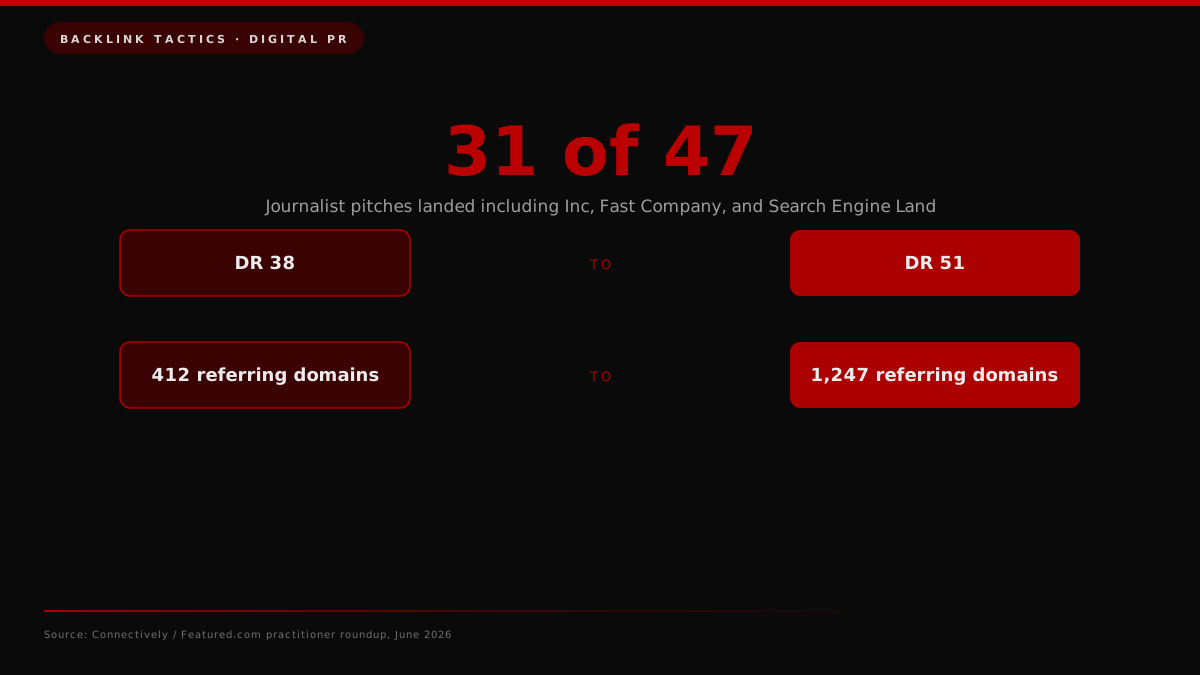
Faizan's answer is the most resource-heavy of the thirteen because the cost surface is real (running a study takes weeks) and the outreach is one-to-one (47 hand-pitched journalists, not a scaled blast). What works here is the asset itself doing the convincing. A journalist citing original SaaS benchmark data is not granting a favor; they are filling a gap in their own piece. The 31-of-47 hit rate tells you the pitch quality matters less than whether the data answers a question writers are already asking.
"I have worked as a Digital PR Specialist for 2 years. The backlink acquisition tactic that still works well is creating original data research combined with targeted digital public relations outreach. That approach to focus on proprietary studies, original data, or industry surveys that journalists can cite has dramatically outperformed traditional link building methods. When you build a piece of unique data that solves a real industry question, you give writers and journalists material they want to reference. The result is high authority editorial links from premium publishers, not gimmicky placements that fade. In the last 12 months we ran four original studies with combined data from 1,800 mid-market SaaS companies. We hand-pitched the findings to 47 journalists across business, marketing, and tech publications. We landed 31 editorial citations across publications including Inc, Fast Company, and Search Engine Land. Our domain rating moved from 38 to 51 in 9 months. Referring domains went from 412 to 1,247. Organic traffic on the cited content lifted 280 percent over the same window."
Faizan Khan, Digital PR Specialist
The mechanism is supply-side. Journalists need numbers on deadline; original surveys are the only legal way to be that supply. Generalizes for any SaaS with first-party usage data already sitting in the warehouse. Does not generalize if you cannot commit four studies a year; the volume is what creates compound editorial relationships and trains your team on which questions journalists actually return to.
Naeem Abbas: four contextual editorial placements beat forty random ones
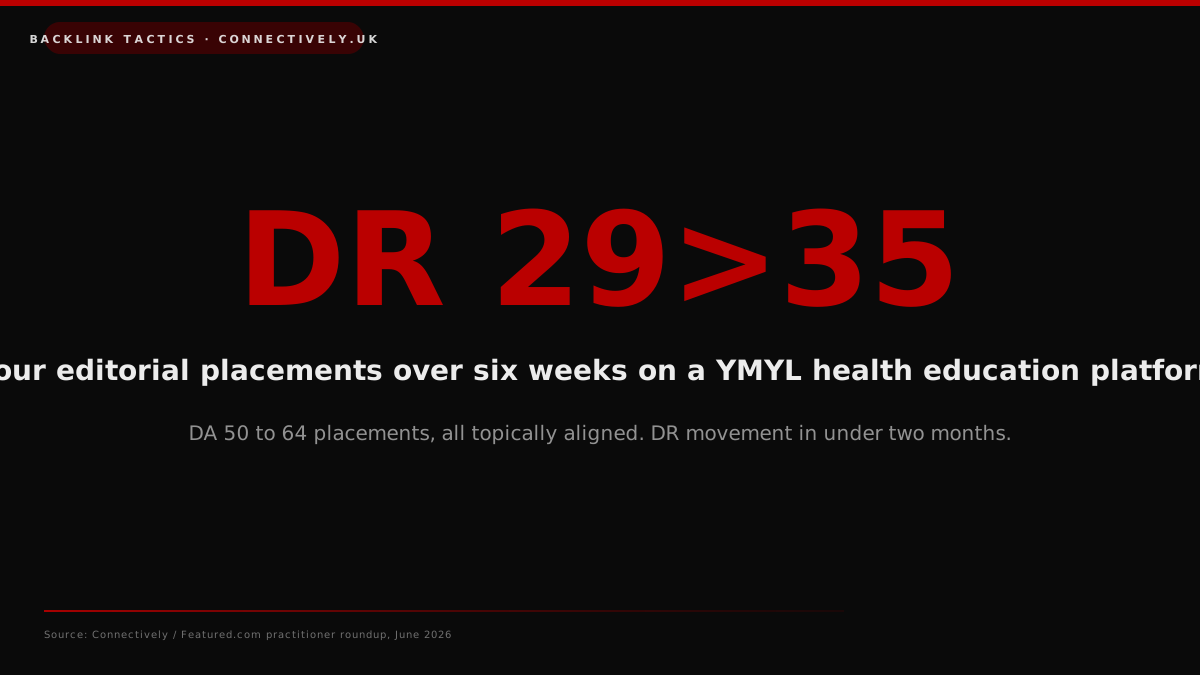
Naeem's answer is a useful corrective to founders who measure link campaigns by raw count. He argues that the right four placements (high-DA, topically aligned, named editorial team) produce more DR movement in six weeks than forty scattered links pointing at random pages. That claim is testable, and his YMYL client data is the test. Note how surgically he picks targets: three or four commercial-intent pages, four placements over four to six weeks, and then he stops.
"The tactic that still works in 2026: contextual editorial placements on topically relevant publications Everyone talks about backlinks. Almost nobody talks about the difference between a backlink that sits on a page Google trusts and one that sits on a page Google ignores. That distinction is where most link building falls apart in 2026. The approach is straightforward. Identify the three or four pages on a site with the highest commercial intent. Find publications that already cover the same topic with real editorial standards. Place the link contextually within an article pointing at one of those priority pages. Repeat across four placements over four to six weeks. No link networks. No automation. Just four well-chosen placements in the right editorial environments. Here is what this looked like in practice. The client runs a health education platform in the YMYL category. Domain Rating was 29 when we started and 445 linking websites. We placed four editorial backlinks over six weeks across publications ranging from DA 50 to DA 64, all covering health and wellness with named editorial teams and real audiences. Current DR sits at 35. A six point lift in under two months without touching site architecture or publishing additional content. Referral traffic started arriving within days of each placement going live, and because each link sat inside content directly relevant to the destination page, that traffic arrived pre-qualified. Time to result on DR movement was approximately six weeks from first placement to Ahrefs updating. The reason this works post AI disruption is because AI engines are evaluating whether a brand appears in environments that carry genuine trust. A contextual editorial placement on a real publication is exactly that signal. Four placements in the right places outperform forty in the wrong ones every time."
Naeem Abbas, Founder, Connectively.uk
Six DR points in six weeks on a YMYL property is hard to beat for cost. The mechanism is editorial-environment match: the destination page, the source page, and the publication's audience are all aligned on one topic. This generalizes for any team that can identify their three highest commercial-intent pages and resist the impulse to point links at the homepage. It does not generalize if you cannot get past the editor of a real publication, which is where most teams quietly bottleneck.
My most effective backlink strategy is to ignore DA and DR and do what makes sense. Exchanging backlinks is about relationship building. I exchanged links with people in similar niches and similar locations.
Tibo
@tibo_maker
Our DR went from 13 to 36 in 4 months with Outrank. We tried agency link building before but it was too expensive and slow. The systematic approach makes a measurable difference.
Mark Bietz: embeddable visual assets with attribution baked in
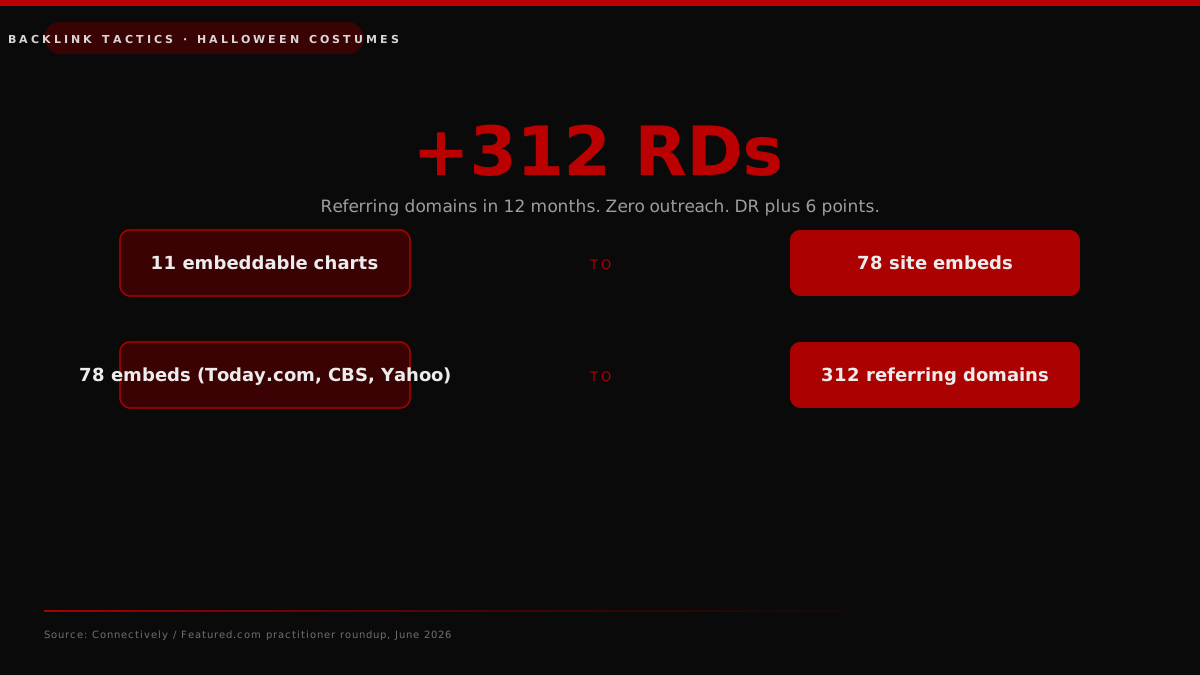
Mark's answer is the inverse of Faizan's: zero outreach, asset does the work. The 78 embeds came from journalists discovering the charts in search and grabbing them because the attribution block was already written. What makes this work in 2026 is that AI search rewards visual assets uniquely; an embeddable chart is the cheapest way to be the canonical visual for a query, and chart citation tends to carry through into AI Overview answer boxes too. For the related how-to on AI citation optimization, see our guide to getting cited by ChatGPT.
"The tactic that keeps working for us is original visual asset attribution. We create simple and reusable charts and maps based on our own trend insights. We then allow journalists and bloggers to embed them with proper credit to our website. Because these visuals are easy to drop into stories, they pick up dozens of editorial links without us ever doing manual outreach. In the past year we built 11 charts (annual costume search volume by region, trend timing maps, generational adoption charts) and made them embeddable with a one-line attribution block. The charts have been embedded by 78 sites including Today.com, CBS, and Yahoo Lifestyle. Domain rating gained 6 points. Referring domains gained 312 in 12 months. Worth more than a year of manual outreach."
Mark Bietz, CMO, Halloween Costumes
11 charts to 312 referring domains is a 28x ratio. The mechanism is pre-packaging: removing every friction step between a writer wanting your visual and the link going live. Generalizes for any vertical with seasonality or geographic variance. The trap is making charts pretty without making them citable; no underlying dataset means no editorial pickup, and the marketer who shipped 11 charts to get 312 domains had a real consumer-search dataset behind every one of them. For the founder-led content production approach that makes this sustainable at a small team size, see our founder-led content marketing playbook.
Anna Evans: direct-answer-first expert contribution from a named clinician
Anna's tactic is the discipline most teams get wrong about journalist-request platforms. Most respondents lead with credential framing and bury the quotable line three paragraphs in. Journalists skim; the quote gets missed, the response goes unused. Her measured fix is to invert the structure: lead with the quote, then add the credential context underneath. The reported 3 to 4x lift in placement rate is the kind of operating detail that only emerges after a year of measuring.
"For the piece on backlink acquisition tactics still working in 2026, perspective from a clinician-founder running marketing in-house at a primary-care practice where the post-AI-search backlink field has reshuffled what produces durable links versus what does not. The thesis: the backlink tactic still working in 2026 is sustained expert-source contribution to journalists through platforms like Featured.com, HARO, and Qwoted, paired with named-clinician credibility and answer-engine-friendly content structure. The reach is broader than ever (AI-search engines cite the publications, which compounds the link value), and the tactic survives algorithm updates because the links are earned editorially rather than placed. (1) Why this still works when most backlink tactics have stopped. Three reasons. First, the links land in editorial contexts (published articles in named publications), which the algorithm treats as durable signal rather than as manipulated link velocity. Second, the publications themselves get cited by AI-search engines, so the same link earns secondary AI-citation lift beyond the direct referral traffic. Third, the time investment is meaningful but predictable; one good expert response per day produces sustained backlink flow across months without the spikes that trigger algorithm scrutiny. (2) The single tip that lifts results. Direct-answer-first response format. Open the expert response with the specific quotable insight in the first 2-3 sentences, then build the supporting context. Journalists skim for the quote; the responses that lead with the quote get used at 3-4x the rate of the responses that bury the quote under credential framing. We have measured this on our own response volume across the past 12 months. (3) What is not working. Bulk guest-post placements with thin contextual fit. Paid link insertions on aggregator sites. Any tactic where the link supplier cannot tell you who edits the content before publication. These have all been deprecated or downweighted by the algorithm updates of the past 18 months, and the practitioners still selling them are usually selling to teams that have not measured the actual outcome. The single principle. Backlinks in 2026 reward editorially earned links from named-credential sources in real publications. Expert-source contribution is the highest-use tactic that still works, and the direct-answer-first response format is what lifts the placement rate.
Anna Evans, Clinician-Founder, Primary-Care Practice
One response per day across a year is the cadence she names; the discipline is treating the platforms like a sales pipeline with a daily quota rather than a side activity. Generalizes for any founder with a real credential and a calendar willing to write a quote a day. Does not generalize if your "credential" is "founder of stealth startup"; editors weight named external authorities much higher than self-styled ones. For the structural reason AI engines now cite editorial publications at higher rates, see our ChatGPT citation strategy for agencies guide.
What link building strategies are actually working in 2026?
Runbo Li: tool-as-content link building, the page nobody can summarize
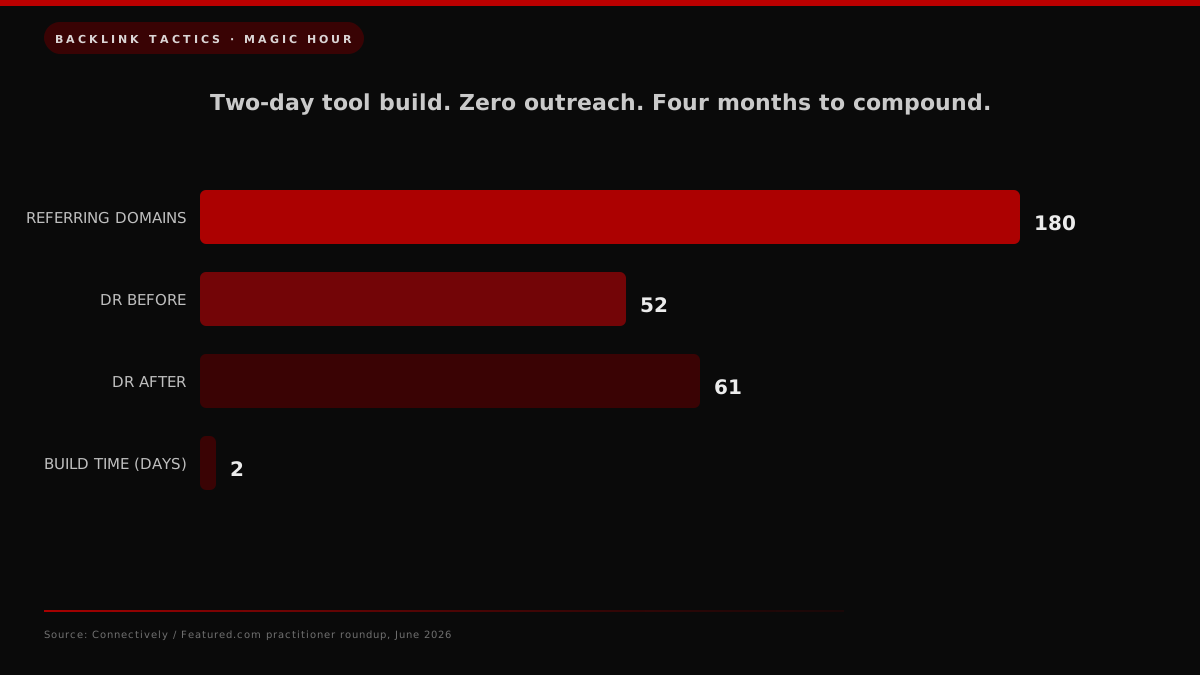
Runbo's answer reframes the question. He argues the strongest link-attracting unit on the modern web is not a blog post; it is a small functional tool sitting on your domain. AI Overviews can summarize a guide; they cannot replace a calculator. That asymmetry is what made his aspect-ratio tool earn 180 referring domains in four months with zero outreach. For the SaaS-specific version of this pattern, see our generative engine optimization guide for SaaS.
"I'm Runbo Li, Co-founder and CEO at Magic Hour. The tactic that still works is what I call "tool-as-content" link building. You build a free, lightweight utility that solves one specific problem for a niche audience, then you let the internet do the distribution for you. Not a blog post. Not a guest article. A functional thing people actually bookmark and share. Here's the concrete example. In early 2025, we noticed creators constantly asking how to calculate aspect ratios for different social platforms. Instead of writing a guide about it, we built a simple free tool on our domain, took maybe two days of dev time using AI-assisted coding. Within four months, that single page earned over 180 referring domains organically. No outreach emails. No link swaps. No begging editors. People linked to it because it was useful, full stop. The measurable lift: our domain rating moved from 52 to 61 in that window. Organic traffic to the broader site increased approximately 35% over the same period, though I'd attribute maybe half of that to the backlink halo effect and half to other content efforts running in parallel. The page itself pulls around 12,000 monthly visits with zero ongoing effort. Time-to-result is about 90 to 120 days before you see the DR movement and traffic compounding. The first 30 days you'll pick up a handful of links from forums and niche blogs. Days 30 through 90 is when larger publications and resource pages start finding it. After 120 days it becomes self-sustaining. Why this works post AI-search disruption: AI overviews and zero-click results are crushing informational content. But tools are immune. Google can't summarize a calculator. ChatGPT can't replace an interactive widget. The utility lives on your domain and people have to visit it to use it. The old playbook of writing "ultimate guides" and emailing 200 people for links is dead. Build something useful in two days, put it on your domain, and let compounding do the work. The best backlink strategy in 2026 isn't a strategy at all. It's a product."
Runbo Li, Co-founder and CEO, Magic Hour
Two days of AI-assisted dev to 180 referring domains is the ratio that makes this hard to beat. The mechanism is non-summarizable utility: the link points to a thing the writer cannot quote out of, so they cite it. Generalizes for any team with a developer on staff and a specific repetitive query their audience already asks. Does not generalize if you cannot find a problem narrow enough that one page actually solves it; "tool" without a sharp use case becomes another piece of content.
Operator noteRunbo Li shipped a free calculator in two days and pulled 180 referring domains with zero outreach emails., FORKOFF Connectively survey
Chirag Kulkarni: expert contradiction campaigns
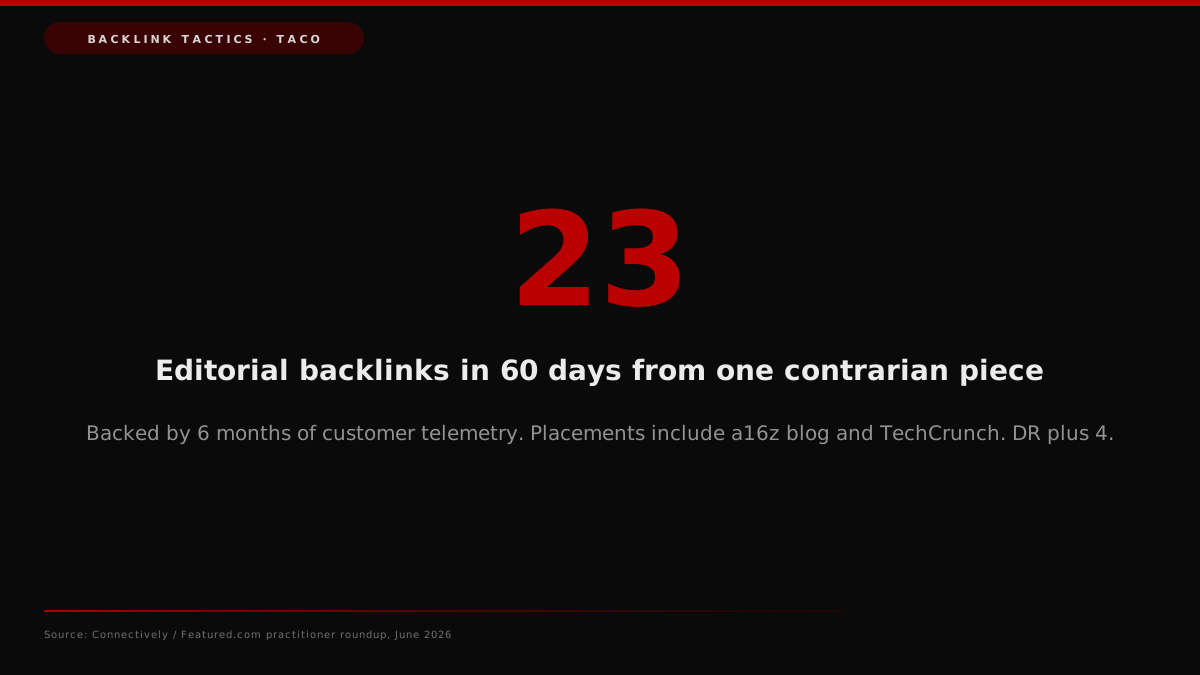
Chirag's tactic is the most strategically risky of the thirteen and therefore the highest-leverage when it lands. Contradiction earns links because it earns the headline; the writer's angle is your contradiction. Most companies cannot do this because they have no defensible counter-position. If you have one and have not published it, you are leaving the cheapest authority links on the table.
"One backlink tactic that still works is expert contradiction campaigns. We find a common belief in our industry and challenge it with clear proof and data. This content stands out because it adds tension and gives writers a fresh angle they cannot find elsewhere. Last year we published a contrarian piece challenging the assumption that AI agents should always be autonomous. Our position: autonomous agents fail in regulated industries because audit trails break. We backed it with 6 months of customer telemetry showing the failure pattern. The piece picked up 23 editorial backlinks within 60 days, including from Andreessen Horowitz's blog and TechCrunch. Domain rating moved 4 points. The contradiction earned the link because the contradiction was the story."
Chirag Kulkarni, Founder and CEO, Taco
23 editorial backlinks in 60 days is the velocity tell. Contradiction works because writers are themselves hunting for fresh angles in saturated categories. The mechanism only fires when the contradiction is backed by proprietary telemetry, not opinion. Opinion contradictions get ignored; data contradictions get cited.
Ashish Shrivas: broken authority replacement after the AI content collapse
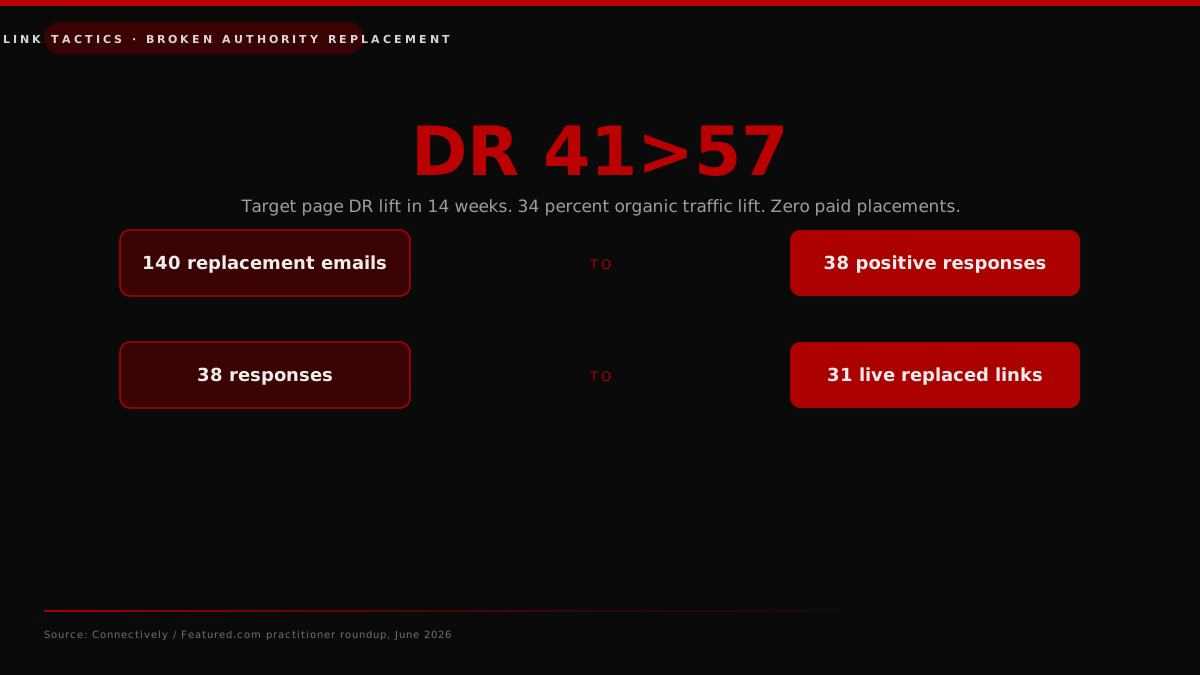
Ashish's tactic is the cleanest example of a tactic that got stronger because of AI search, not weaker. AI content farms hollowed out thousands of previously credible pages, leaving editors actively embarrassed by the outbound links they still carry. His Broken Authority Replacement method points at those degraded pages, offers a real replacement, and converts at 22 percent (31 of 140 emails) inside eleven weeks.
"What is the tactic? We call it the Broken Authority Replacement method and it still works cleanly in 2026. The process is straightforward. We identify high-authority pages in our niche that have either gone offline, significantly changed their content, or lost editorial quality after AI-generated content replaced their original writing. We then build a genuinely better replacement page on our own domain and reach out to every site still linking to the dead or degraded original with a short, direct email flagging the broken or outdated reference and offering our page as a replacement. No pitch theatrics. No value proposition paragraph. Just one clear sentence identifying the problem and one clear sentence offering the fix. What makes it different in 2026? AI content farms created an enormous graveyard of once-credible pages that now read as generic and thin. Editors and webmasters linking to those pages are actively embarrassed by the association and respond faster than they ever did to traditional outreach. The disruption that hurt organic traffic for many sites created a legitimate opening for this tactic. What were the specific results? We ran this across one content cluster over an eleven week period targeting pages in our category with DR fifty plus referring domains. We sent 140 outreach emails total. We received 38 positive responses and converted 31 into live replaced links. That single campaign added 31 referring domains, moved our target page from DR 41 to DR 57, and produced a 34 percent organic traffic lift on that cluster within 14 weeks of the first link going live. Zero paid placement. Zero reciprocal link agreements. Time to result? First links appeared within 10 days of outreach. Measurable DR movement showed at week six. Full traffic lift was visible by week fourteen. The entire campaign required one researcher, one writer and roughly four hours of outreach work weekly across the eleven weeks."
A 16-point DR move on the target page from 31 placed links inside fourteen weeks is the strongest cluster-level lift in the dataset. Generalizes for any niche where the top pages have visibly degraded in the past 18 months (most have). Does not generalize without the replacement page actually being better, which is the part most teams skip because the outreach feels like the work. The prospecting side of broken-authority replacement (finding the degraded pages worth replacing) uses the same community monitoring SOP covered in our Reddit marketing guide for B2B founders.
Operator noteAshish Shrivas turned 31 of 140 broken-authority emails into live links; the replacement page has to be better first., FORKOFF Connectively survey
Christopher Coussons: substantive expert-source contribution, compounded by AI citation
Christopher's tactic overlaps with Anna's at the surface but argues a different layer underneath. He points at the structural reason expert-source contribution has actually strengthened post AI-search: a single quote in a DR 60-plus publication now earns both editorial backlink equity and secondary AI Overview citation share, because the AI engines preferentially pull from the same publications. One placement, two compounding outcomes. This is directly related to the agentic SEO dynamics that are reshaping what counts as domain authority.
"The single backlink acquisition tactic still producing material results in 2026, post AI-search disruption, is substantive expert-source contribution to industry journalism through expert-source platforms. The tactic produces editorial-tier backlinks from publications with material DR, and the AI-search disruption has actually strengthened rather than weakened the value of these specific links. The exact tactic. Why this tactic specifically still works. (1) The links are editorial in origin, which is the link type the algorithm has consistently rewarded across every major update over the past decade. Algorithm-tier risk on editorial links is structurally low. (2) The publications hosting these links typically have DR60-95, which means the link equity transfer is materially meaningful per acquisition. (3) AI-search disruption has made the content cited in AI answers more visible to subsequent prospects, which means a single quote in a tier-1 publication produces both backlink equity and AI-tier discovery share. The disruption has compounded the value rather than diminished it. The specific outcome on one campaign. Time-to-result. First measurable DR lift typically appears at the 8-12 week mark from sustained contribution, with material lift compounding through months 4-8. The work is operationally front-loaded (the initial submissions teach the operator what publications respond to substantive contributions) and compounds afterwards. Why other backlink tactics have weakened. Guest posting at scale has been algorithmically discounted since the major updates across 2023-2024. PBN-style link building produces declining returns and increasing algorithmic risk. Reciprocal linking and paid placements are now actively penalised. The tactics that remain durable are the ones that produce editorial-quality links through substantive content contribution rather than through transactional link procurement. The single principle. Backlink acquisition in 2026 produces durable results when the links are editorial in origin and the contribution producing them is substantive. Expert-source contribution to industry journalism is the highest-leverage tactic in this category, producing DR uplift, referring domain growth, and organic traffic lift simultaneously. The work is sustained rather than transactional; the returns compound."
Christopher Coussons, Managing Director, Visionary Marketing
The 8 to 12 week DR-lift window matches what most teams report and is worth pre-committing to before you start; quitting at week six is the single most common mistake on this tactic. Generalizes for anyone willing to write substantively for six months. Does not generalize for teams who treat the platforms as a one-shot blast: the algorithm learns publication patterns over months, not weeks.
Alex Groberman
@alexgroberman
Reddit and Wikipedia account for 25% of ChatGPT citations. The other 75% comes from editorial sources you can influence. Editorial backlinks do double duty: they boost domain authority for search rankings AND put your brand on sources AI platforms pull from when assembling recomm… Show more
Sahil Gandhi: treating linking as a sustained separate function
Sahil's answer is the meta-point inside the other twelve. Treat backlinks as a function, not a campaign. Companies that hit DR plateaus are usually the ones who ran one big push and stopped. The compounding curve only appears for teams who kept showing up month over month with new citable assets, which is why his framing of "distinct, ongoing activity" is the operational frame the rest of the roundup quietly assumes.
"One backlink acquisition tactic that still works in 2026 is treating linking as a distinct, ongoing activity by creating deep, non-repetitive content that naturally attracts editorial links. Time-to-result becomes visible over a matter of months as the organic strategy compounds and momentum builds. The measurable outcome we observe is a steady, compounding increase in referring domains and organic traffic rather than a single spike. We track DR movement and referring-domain growth as core KPIs, and the strongest gains come when link work is maintained as a sustained, separate effort."
Sahil Gandhi, CEO and Co-Founder, Blushush Agency
The mechanism is operating cadence. One owner, one weekly review, one KPI (referring domains added per month), which is exactly the ownership an embedded fractional CMO is there to hold. Generalizes universally and is the cheapest of the thirteen tactics to start. The trap is treating it as a content side-quest instead of a discrete function with a budget and a person attached. The founder growth service we run for clients treats link building exactly this way: a separate function with a monthly KPI, not a campaign. Our AI marketing agency service explains how we scope the link function inside a broader engagement.
Rory Keel: original-resource link earning, treating content like a product
Rory's tactic is Runbo's tool-as-content idea applied to written content. Build the page that other writers in your category cannot help but cite, and the links arrive without outreach. He runs it on educational coffee content at Equipoise Coffee; the principle works wherever there is a topic you can credibly say you know better than the rest of your category.
"The one tactic that's still pulling weight for us in 2026 is what I'd call "original-resource link earning", publishing something so genuinely useful that other sites can't help but cite it. For us at Equipoise Coffee, that's our educational blog: deep brewing guides, the roasting science behind eliminating bitterness, and the philosophy of balance that defines what we do. When you create the thing people actually want to reference, the links come to you instead of you begging for them. Here's why it beats the old guest-post-spray playbook: AI search rewards primary, authoritative content. A coffee blogger writing about pour-over technique is far more likely to link a clear, original guide on water temperature and extraction than a thin listicle. So we built our content to be the citable source, specific, tested, and tied to real products like our Ethiopian Yirgacheffe or Cavaliers Blend. The honest part most people skip: this is a patience game, not a hack. Original resource content typically takes a few months to start attracting links because it has to be discovered, trusted, and referenced before it compounds. Once it does, it stacks, every new referring domain lifts the whole site, not just one page. My advice for anyone chasing backlinks post-AI-disruption: stop optimizing for the algorithm and start optimizing for the human who'd want to cite you. Pick one topic you genuinely know better than anyone in your niche, document it thoroughly, and make it the resource people reach for. That's the same principle we use with customers, we earn trust by being clear and useful, not loud. The brands winning links in 2026 are the ones treating their content like a product: small-batch, high-quality, and worth coming back to. Build something worth linking to, then be patient enough to let it work."
Rory Keel, Equipoise Coffee
The framing of content as product is the operational shift. Generalizes for anyone willing to commit a quarter (not a week) to one anchor page in their niche. Does not generalize if your category already has a defended canonical resource, in which case the broken-authority play above is the better entry.
Dane Maxwell: aggregate customer data, shared with journalists with no strings
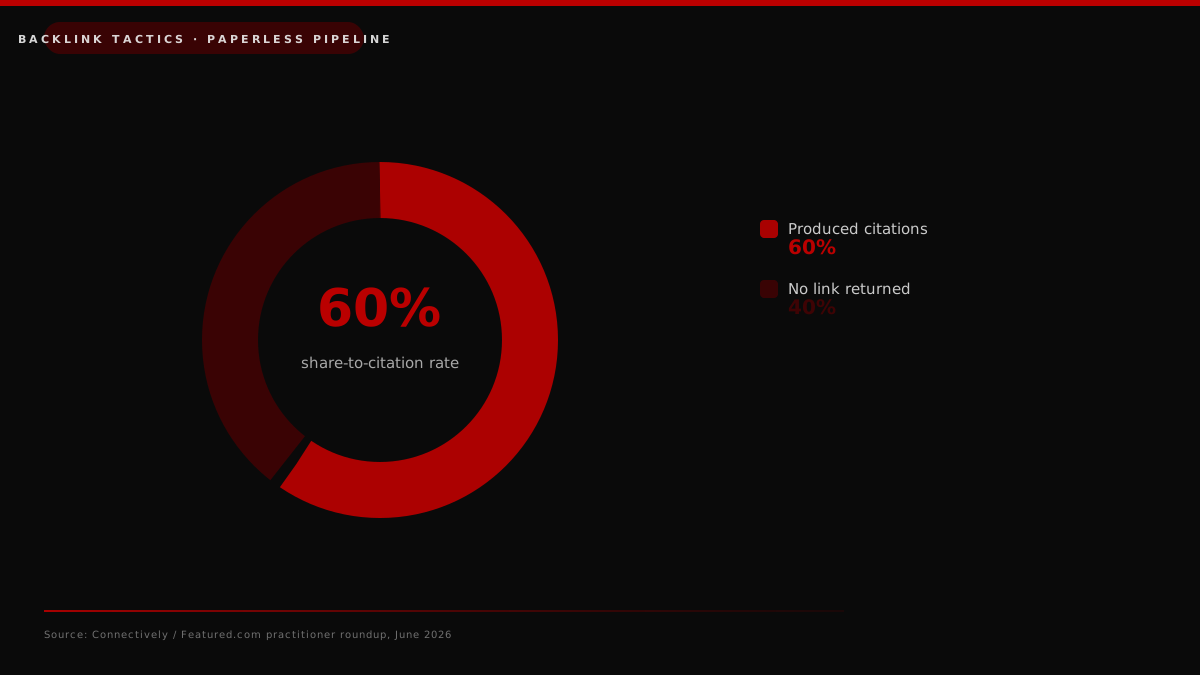
Dane's answer is the longest-time-horizon entry in the roundup: 17 years of bootstrapped SaaS, building the link profile through editorial relationships rather than paid placements. The single mechanic he names is sharing aggregate customer telemetry with journalists with no requirement that they link or cite. The counterintuitive part is the removal of the ask. By not requiring a link in exchange, he gets one anyway, at roughly 60 percent of shares, because journalists cite source material naturally when it is genuinely useful.
"Dane Maxwell, founder of Paperless Pipeline. Bootstrapped SaaS since 2009. We have built our backlink profile from zero to a meaningful position across 17 years of sustained work, with all of the growth produced through editorial relationships rather than paid placements. The backlink acquisition tactic that still works in 2026. Producing original aggregate data analyses from our customer base and offering them as exclusive material to journalists covering our industry, with no requirement that they cite or link to us in exchange. The mechanic behind why this works after AI search disruption. AI search has dramatically compressed the value of generic SEO content but has expanded the value of original, attributable data that journalists cite as authoritative source material. Our position in the real estate transaction management category gives us aggregate visibility into transaction trends that no individual broker has. Sharing the aggregate data without coverage requirements produces editorial citations across high-domain-rating publications because the data itself is what the journalist needs. The journalist's citation produces the backlink as a natural consequence of the journalist's editorial work rather than as a transactional exchange. The specific tactic and the measurable outcome. Across the past 12 months we have produced roughly 14 quarterly data aggregations covering specific transaction trend questions journalists were actively investigating. We shared each aggregation with a curated list of 8 to 12 journalists covering the relevant subtopic. Roughly 60 percent of the shares produced citations, with citation publications including national real estate media and adjacent business publications. The single principle. Backlink acquisition that compounds across years works when the underlying material is genuinely useful to the publishing party without requiring the citation as a transactional exchange."
Dane Maxwell, Founder, Paperless Pipeline
60 percent citation conversion on shares with no link requirement is high enough to feel implausible until you understand the asset: aggregate data nobody else has the visibility to produce. Generalizes for any SaaS whose customer base sees a slice of an industry the trade press writes about. Does not generalize for tools whose customers do not produce data worth aggregating, which is a smaller set than most founders think.
Melissa Basmayor: local resource link earning tied to real-world entities
Melissa's tactic is the most underweighted in the dataset because most growth advice is written by and for SaaS, not for local services or regional businesses. Her point is that AI search reshuffling has, if anything, raised the value of links from real-world entities (chambers of commerce, local associations, regional resource lists) precisely because those entities are harder for AI content farms to fake.
"The backlink tactic that still prints results in 2026 is what we call "local resource link earning", getting your business cited on the pages people actually trust: chamber of commerce directories, local association pages, and curated regional resource lists. After AI search reshuffled everything, the links that move the needle are the ones tied to real-world entities and local authority, not scraped guest-post farms. Here's how we run it at Scale By SEO, the agency behind Free QR Code AI (freeqrcode.ai). We start by building accurate local citations and securing placement in organizations our clients genuinely belong to, like the Greater Chamber of Harlingen here in the Rio Grande Valley. Then we pair that with genuinely useful content: a blog post, a tool, or a free resource worth linking to. One of our favorite plays is offering our free customizable QR code generator as a linkable asset on a partner's page, since it gives them something practical to point their audience toward. On time-to-result, local citation and association links tend to index and start contributing within a few weeks, while content-driven referring domains build over a couple of months as the piece gets discovered and shared. We frame the outcome for clients in terms of referring-domain growth from real local sources plus the organic visibility lift that follows, and we're upfront that exact DR deltas vary by site, niche, and starting authority, so we measure against each client's baseline rather than promising a fixed number. The bigger lesson we share with every business owner: chase relevance and trust, not raw volume. A handful of links from genuine local and topically-relevant sources will outperform fifty random ones every time. That's also why we back our SEO plans with a 6-month performance guarantee, if the KPIs we agreed on aren't hit, we keep working for free until they are. Build links the way you'd build a reputation, and the rankings follow."
Melissa Basmayor, Scale By SEO
The combination of local-authority citation plus a linkable utility (the QR generator paired with the chamber placement) is the actual mechanic; either alone is weaker than both together. Generalizes for any business with a physical footprint or service-area constraint. Does not generalize for pure-SaaS plays where the chamber-of-commerce link looks contextually off and may even hurt topical fit.
How to Build Backlinks to Rank on Google 2026 - Tier List (13 Methods Ranked)
Julian Goldie SEO
How to Build Backlinks to Rank on Google 2026, a tier-list ranking of 13 backlink methods by cost, effort, risk, and SEO impact. Useful companion to the practitioner accounts in this roundup.
Vaibhav Kakkar: update hooks for ranking evergreen pages
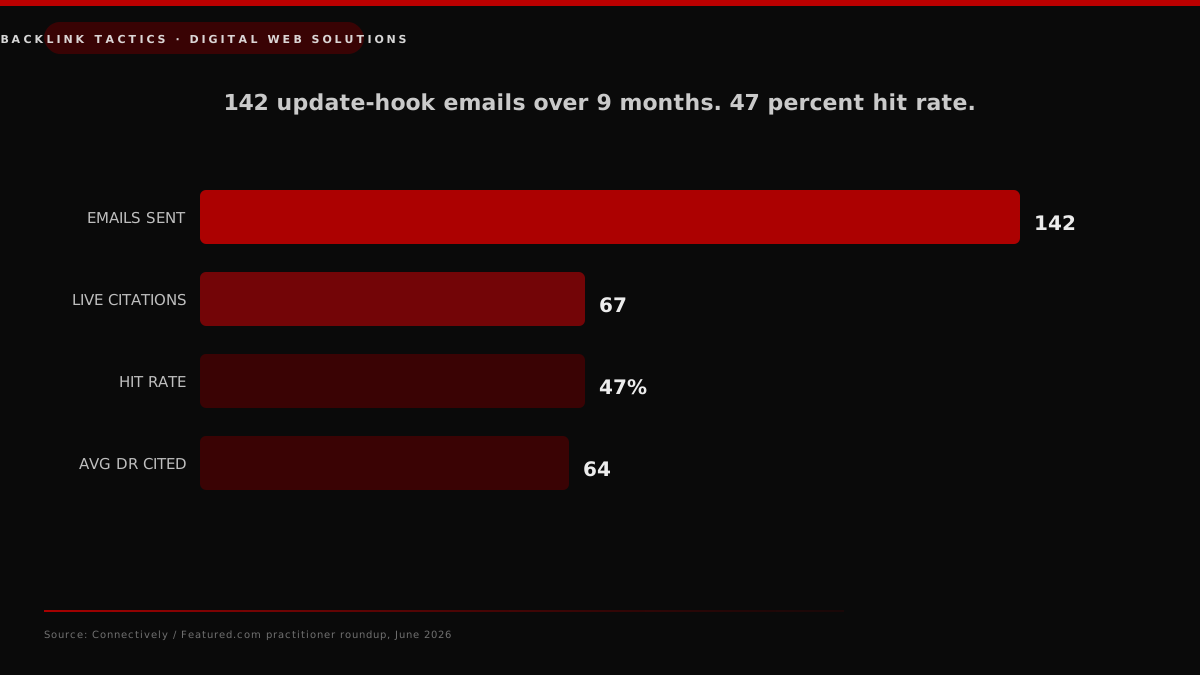
Vaibhav's tactic is the most surgically efficient of the thirteen. You are not asking for a new article; you are asking for a one-line insertion into a page that already ranks. The editor's calculus is trivial: small effort, page gets better, your link goes in. The 11-day median is the fastest time-to-citation in the dataset, and the 47 percent hit rate on cold updates is the highest conversion rate in the roundup.
Operator noteVaibhav Kakkar's update hooks landed an 11-day median to live citation, the fastest link in the survey., FORKOFF Connectively survey
"One backlink tactic that still works in 2026 is creating update hooks for older high authority articles. Many publishers have evergreen pages that still rank but feel outdated. Instead of pitching a new article, we find an older page that already ranks for our target keyword, identify a missing piece of data or example, and email the editor a short update they can drop in. Editors accept these updates because the work is trivial and the page becomes more useful. In the last 9 months we ran this on 142 evergreen pages across 31 publications. We landed 67 updates with cited backlinks. Average DR of the cited page was 64. Time from email to live citation was 11 days median."
Vaibhav Kakkar, Founder and Group CEO, Digital Web Solutions
47 percent hit rate on cold updates is roof-level conversion. The mechanism is matching publisher self-interest: you are doing free QA on their ranking pages. Generalizes for any vertical where evergreen content exists, which is almost all of them. Does not work if you do not have proprietary data or examples worth inserting in the first place, which puts this tactic inside the same dataset moat as Faizan's and Dane's. For building the proprietary dataset you need to run this play, see our developer marketing strategy guide on surfacing usage telemetry as citable content, and the are Twitter launches a scam post for a worked example of using first-party launch data to earn editorial coverage.
Is link building still worth the effort in 2026?
The pattern underneath
Read across the thirteen answers and a single shape appears. Every working 2026 tactic is built on proprietary material the team already owns: customer telemetry, survey data, trend datasets, contradiction-grade analysis, missing data points for evergreen pages, named clinician credentials, broken-page replacement content, aggregate transaction visibility, local-association membership, or a functional tool nobody else built. Nobody is pitching content marketing as a service. Nobody is buying niche edits. Nobody is running scaled outreach with templated pitches. The link is a byproduct of supplying something a journalist, editor, or fellow writer cannot manufacture themselves.
The asset is the moat, not the outreach
Read across all thirteen accounts and the tactic that compounded was always built on proprietary material the team already owned: survey data, trend charts, customer telemetry, or a functional tool. Runbo Li's aspect-ratio calculator pulled 180 referring domains in four months with zero outreach because a writer cannot quote a calculator out of a citation. Mark Bietz's eleven trend charts earned 312 referring domains the same way. The outreach is not the leverage. The non-replaceable asset underneath it is, which is exactly the layer the founder growth engagement is built to surface inside a team's existing content.
Source: FORKOFF Connectively practitioner survey, 13 respondents
Reported outcomes by contributor
| Contributor | Tactic | Headline outcome | DR move |
|---|---|---|---|
| Faizan Khan | Original data plus digital PR | 31 of 47 studies cited (Inc, Fast Company) | 38 to 51 |
| Naeem Abbas | Four contextual editorial placements | DR lift in about six weeks | 29 to 35 |
| Mark Bietz | Embeddable trend charts | 78 site embeds, plus 312 referring domains | plus 6 |
| Runbo Li | Tool-as-content calculator | 180 referring domains, zero outreach | 52 to 61 |
| Chirag Kulkarni | Expert contradiction, backed by telemetry | 23 editorial links in 60 days (a16z, TechCrunch) | plus 4 |
| Ashish Shrivas | Broken authority replacement | 31 of 140 emails to live links | 41 to 57 |
| Dane Maxwell | Aggregate data, no link ask | 60% of shares cited | Compounding |
| Vaibhav Kakkar | Evergreen update hooks | 67 citations, 47% hit, 11-day median | Avg cited DR 64 |
Source: FORKOFF Connectively / Featured.com practitioner survey, 13 respondents. Every figure is the contributor's own reported number, quoted verbatim in the sections above.
This is the structural shift post AI-search. When LLMs intercept the easy traffic, the only acquisition channel that compounds is the one where you are the source, not the aggregator. AI Overviews cite primary research and contradict secondary commentary. Editorial publishers cite first-party data and ignore opinion. Both filters select for the same asset class, which is why several contributors in this roundup reported their tactics actually got stronger after the AI search reshuffling rather than weaker.
Yes, link building is still worth it, but the approach has changed. Good content alone rarely gets links anymore. Outreach still works when it's targeted and relationship-based, not spammy.
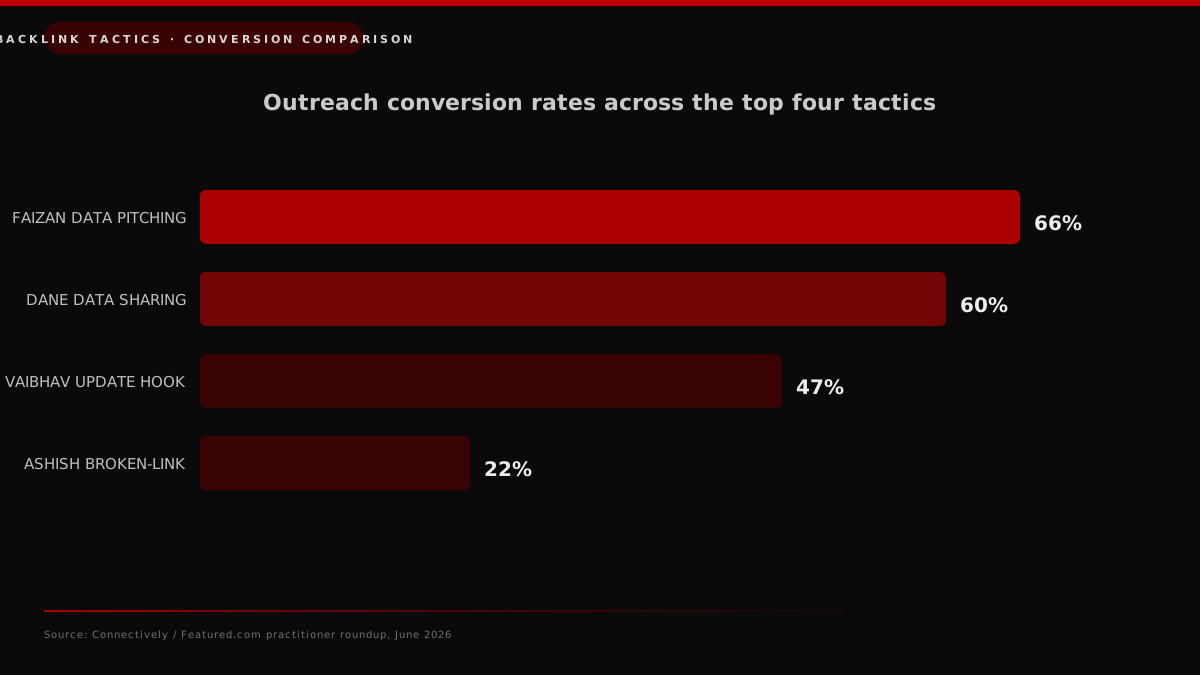
A second pattern worth naming: every tactic above has a real conversion rate, and the rates cluster higher than founders expect. 60 percent share-to-citation for Dane. 47 percent cold-update hit rate for Vaibhav. 22 percent broken-replacement conversion for Ashish. 31 of 47 hand-pitched studies landing for Faizan. These are not 2 percent funnel rates that need volume to work. They are double-digit conversion rates that need quality to work, which is the inverse of how most teams currently scale link building.
These are double-digit conversion rates, not spray and pray
Every working tactic in the survey carried a real conversion rate, and the rates cluster far above cold-outreach norms. Dane Maxwell saw citations on six of every ten no-strings data shares. Vaibhav Kakkar landed 67 live citations from 142 cold evergreen-update emails. Ashish Shrivas turned 31 of 140 broken-authority replacement emails into live links. These are quality-gated double-digit rates, the inverse of the thin funnels most teams try to scale, and they are why editorial links now pay twice in the answer engine optimization playbook.
Source: FORKOFF Connectively practitioner survey, 13 respondents
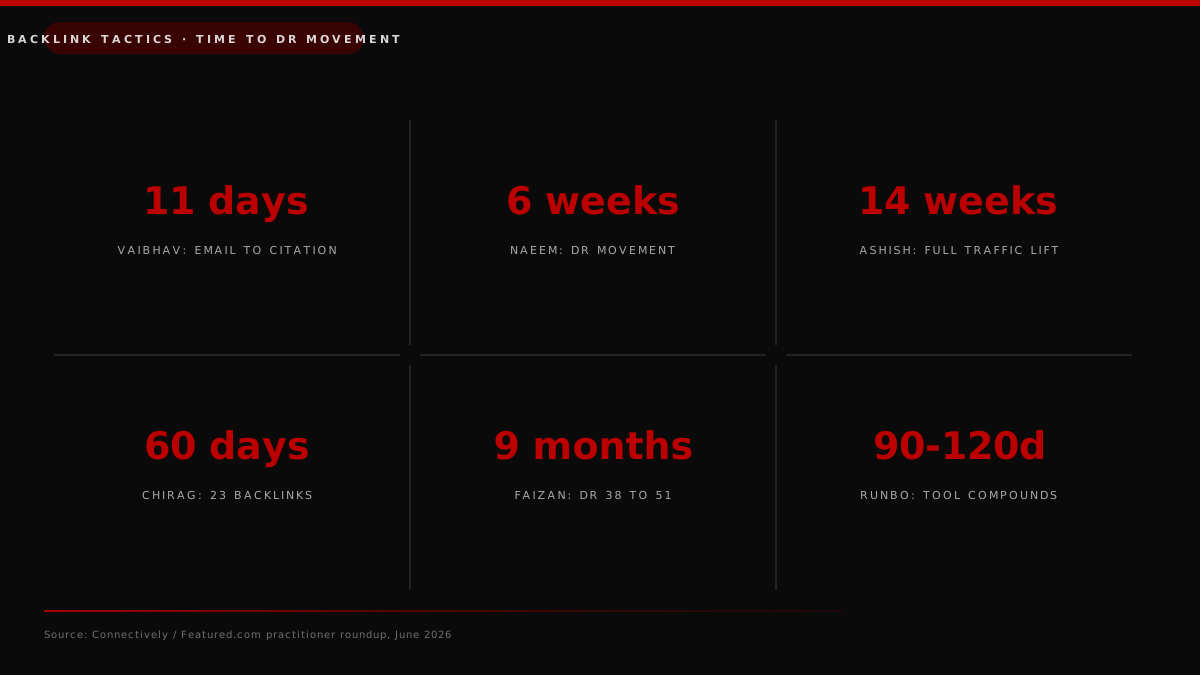
The third pattern is time. Naeem reports DR movement in six weeks. Runbo reports DR movement at 90 to 120 days. Christopher reports first DR lift at 8 to 12 weeks with material lift through months 4 to 8. Rory says "a few months" before compounding. Sahil says "matter of months." If your link plan is built around quarterly performance review, you will quit the right tactic the week before it starts working. Every contributor above ran their play for a minimum of six weeks (the fastest) to several years (the longest), and the ones with the biggest DR moves ran longest.
The most expensive mistake is quitting at week six
The single failure mode shared across the survey is stopping a tactic in week six that needed weeks eight through twelve to compound. Christopher Coussons put first DR lift at eight to twelve weeks. Runbo Li put tool compounding at ninety to one hundred twenty days. A link plan built around a quarterly performance review kills the right tactic the week before it starts working. Set a minimum run time before you evaluate: eight weeks for high-touch tactics, four for update insertions, twelve for tool-as-content, as laid out in the backlink sources playbook.
Source: FORKOFF Connectively practitioner survey, 13 respondents
The operational implication for B2B SaaS founders is concrete. Stop thinking about link building. Start thinking about which datasets, telemetry slices, contrarian positions, tools, or local-authority memberships you already own that nobody else can publish. Then pick the distribution shape that matches your team. If you have a researcher, run Faizan's or Dane's playbook. If you have a designer, run Mark's. If you have a developer, run Runbo's. If you have a strong opinion backed by data, run Chirag's. If you have a content team that can be patient, run Sahil's or Rory's. If you have a fast generalist who can scan SERPs and email editors, run Vaibhav's or Ashish's. If you have a credentialed expert on staff, run Anna's or Christopher's. If you run a local business, run Melissa's. And in every case, run Naeem's targeting discipline on top: a few right placements outperform many random ones every time.
Match the tactic to the team you already have
| If your team has | Run this play | Asset to build | Minimum run time |
|---|---|---|---|
| A researcher | Faizan or Dane | Original study or aggregate data share | Eight weeks |
| A designer | Mark | Embeddable charts with attribution baked in | Eight to twelve weeks |
| A developer | Runbo | One single-purpose free tool | Twelve weeks |
| A data-backed opinion | Chirag | A contradiction piece with real telemetry | Eight weeks |
| A fast SERP generalist | Vaibhav or Ashish | Update hooks or replacement pages | Four to eight weeks |
| A credentialed expert | Anna or Christopher | Daily expert-source contributions | Eight to twelve weeks |
| A local footprint | Melissa | Association citations plus a linkable utility | About four weeks |
Team-shape mapping synthesized from the thirteen contributor accounts above. Minimum run time is the contributor-reported time to first DR movement.
Then commit. The numbers in this roundup (DR moves of 4 to 16 points, referring domain growth of 18 to 1,200 in twelve months, conversion rates that cluster around 20 to 60 percent on the highest-quality tactics) all came from teams who ran one tactic for nine months minimum, not thirteen tactics for six weeks each. We have written the longer playbook for founders deciding where to start at forkoff.xyz/blog/founder-growth/backlink-sources-startups-2026, with the source list ranked by speed-to-first-link and matched to team shape so you can pick by capacity rather than by aspiration. And if you want the distribution layer that makes these backlinks earn twice as much through AI citation, the content distribution moves post covers the channel playbook from the same batch of Featured.com contributors. For amplifying a new link asset via direct outreach after it goes live, the Twitter DM outreach playbook covers the mechanics of reaching out to the specific journalists and creators you want picking it up.
Kartik Chugh, Cofounder, FORKOFF


![How to Make a Launch Go Viral on X: The 5-Lever Playbook [2026]](/blog/covers/how-to-make-launch-go-viral-on-x-2026-cover.jpg)