A launch video that lands and one that disappears often come from the same team, the same budget, and the same week of work. The difference is usually the format. A founder picks "a launch trailer" because that is the word everyone uses, ships a 90-second hero film on a day the moment needed a 20-second product demo, and then blames the edit. The film was fine. The type was wrong. Choosing the launch video format is the first real decision of the whole launch, and almost nobody makes it on purpose.
The short version
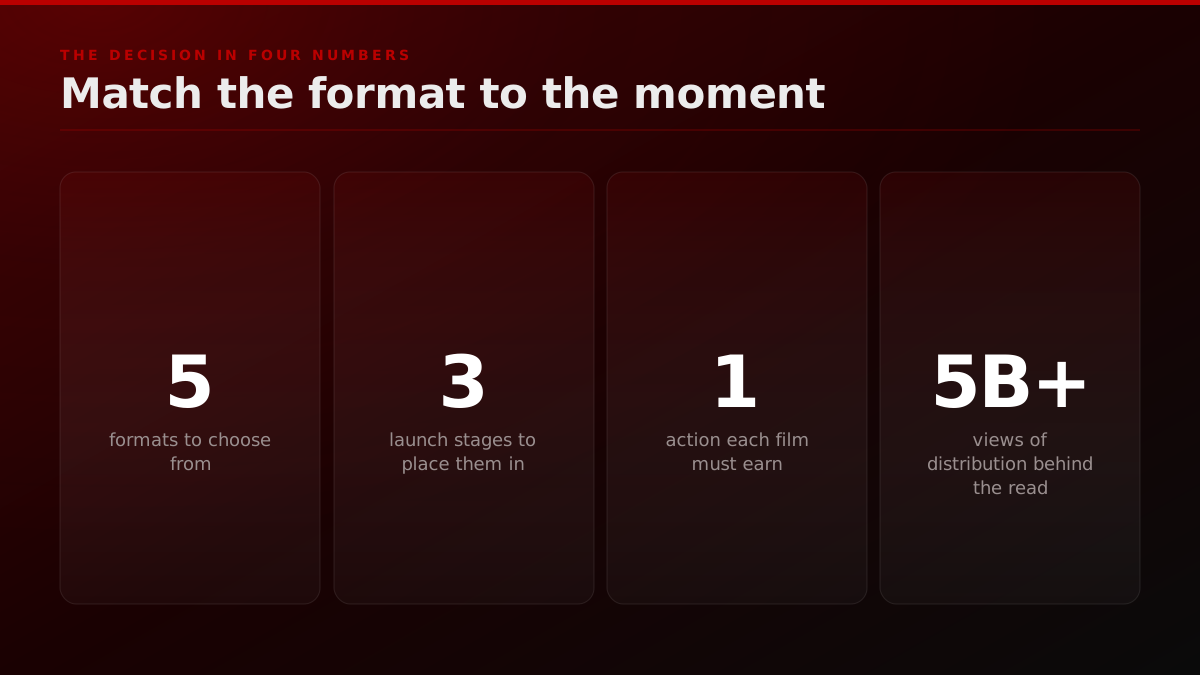
There are five launch video types that actually matter: the teaser, the trailer or hero film, the sizzle reel, the product demo, and the founder-native cut. Most launches pick the wrong one, because founders import the word "teaser" or "trailer" from the movie business without importing the job it does. The format is not a taste decision, it is a function of the launch STAGE (pre-launch, launch day, post-launch) and the conversion GOAL (awareness, waitlist, activation, retention, fundraising). A teaser buys attention before you have a product to show. A trailer is the launch-day hero that has to land one action. A sizzle reel compresses proof and momentum, which is why it works best after launch and in a deck. A demo shows the product doing the one thing. A founder-native cut trades polish for trust. This guide defines each format, matches it to the stage and the goal, tells you how long each runs, how to brief it, and what it costs. The distribution view behind it is the FORKOFF clipping network, which has processed 5B+ views, and the pattern from that vantage point is simple: the format decides how many clips you get, so it is a distribution decision, not just a creative one.
This is a how-to for the decision that comes before the shoot: which launch video type to make. By the end you will know the five formats that matter, what each one is for, which launch stage and goal each serves, how long each should run, how to brief each, and what each costs. It is the format companion to the 2026 launch video playbook, which covers strategy, cost, and distribution across the whole launch. This piece zooms in on the one choice that decides what your film can even do.
Start from the vantage point that makes the pattern obvious. The FORKOFF product launch video service is built on top of a clipping network that has processed 5B+ views, and from there the format decision is not academic. It decides how many clips fall out of the film, how it travels, and whether it earns the action you needed. When you have watched five billion views move through a system, you stop asking "is the video good" and start asking "is it the right type for this moment," because the right type on a modest budget beats the wrong type on a large one, every time.
seth
@sethsetse
the launch video is the product
There is a reason the format gets picked badly. The three words founders reach for most, teaser, trailer, and sizzle reel, are borrowed from the movie business, where they mean specific things about a film release. A product launch keeps the words and quietly changes the job each one does. Import the Hollywood definition instead of the product job and you brief the wrong video, which is how a founder ends up with a gorgeous teaser on the exact day they needed to show the product working. This guide fixes that by defining each format around the job it does in a launch.
What are the main types of launch video?
There are five launch video types that do almost all the work: the teaser, the trailer or hero film, the sizzle reel, the product demo, and the founder-native cut. A teaser buys attention before you have a product to show. A trailer is the launch-day hero that has to land one action. A sizzle reel compresses proof and momentum, which is why it lives in decks and post-launch recaps. A demo shows the product doing the one thing that matters. A founder-native cut trades production polish for trust and reach on the feed. Most launches use two or three of these across the window, not one, and the mistake is treating them as interchangeable when each serves a different stage and a different goal. The generic roundups of product launch video examples and impactful launch video tips show what each format looks like but skip the one decision that matters, which is which format your stage and goal call for.
The reason the choice matters is that the format is really a distribution decision wearing a creative costume. A teaser and a founder-native cut are built to be posted, re-posted, and clipped, so they feed a launch that runs for weeks. A single hero trailer with no plan for cuts is one file that peaks on launch day and goes quiet. This is the exact imbalance the research on how teams spend their video time keeps finding: teams pour effort into the artifact and starve the reach.
Teams over-invest in the file and under-invest in moving it
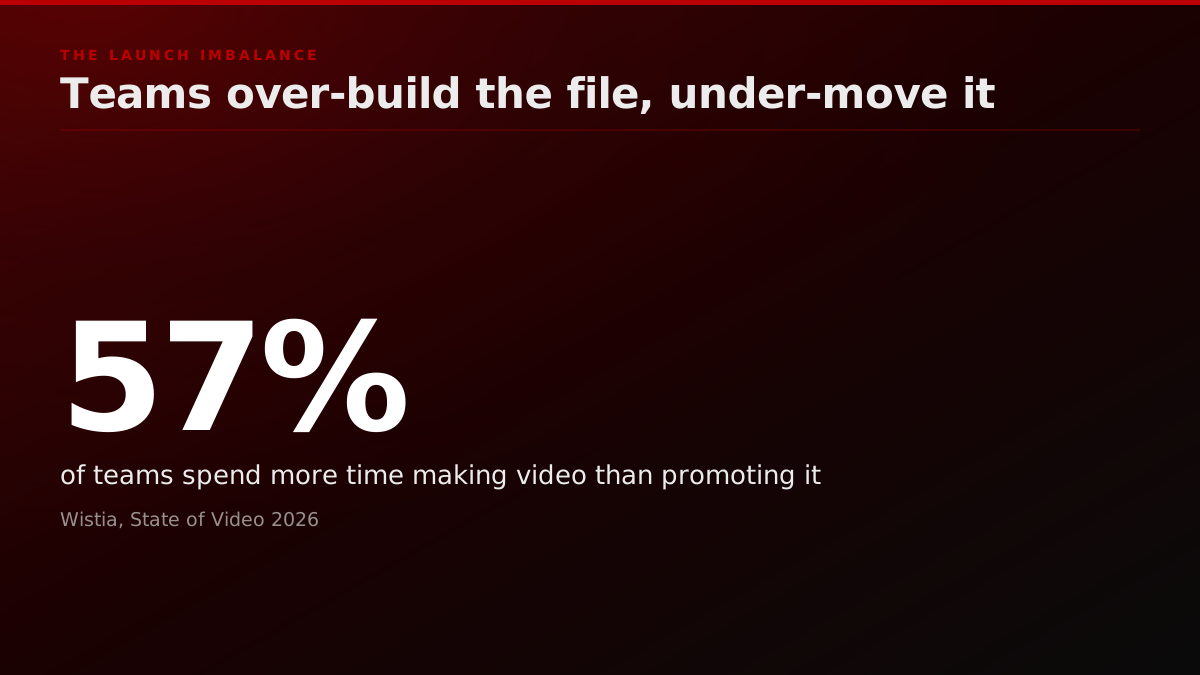
Wistia's 2026 State of Video, built on a survey of more than 900 professionals plus an analysis of over 13 million videos and 79 million hours of viewing, found that 57% of teams spend more time creating videos than promoting them. Only 20% spend more time promoting. That imbalance is why format choice matters more than founders think: a teaser and a sizzle reel are built to be posted and re-posted, while a single hero trailer with no plan for clips ends up as one beautiful file nobody sees. Pick the format that gives distribution something to work with, not just something to admire.
Source: Wistia, State of Video Report 2026
You can watch founders study this in the open. Someone sits down, watches hundreds of launch videos, and tries to reverse-engineer what separates the ones that work.
I analyzed 500+ SaaS launch videos, here's what actually works in 2025
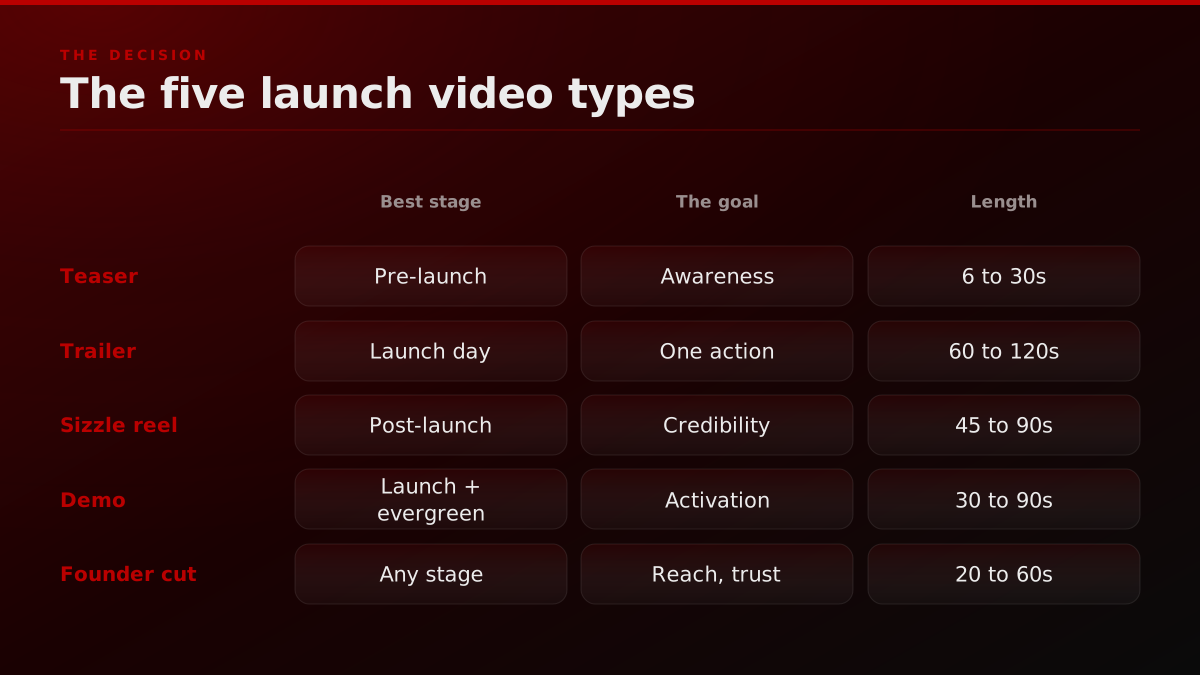
Here is the whole decision as a table you can copy. Each row is a format, matched to the stage where it works and the goal it serves, with the length range that holds attention in 2026. Everything after this is a deeper walk through each format, with the trap that makes each one go wrong.
The five launch video types, matched to stage and goal
| Format | Best launch stage | The goal it serves | Typical length |
|---|---|---|---|
| Teaser | Pre-launch | Awareness, curiosity, waitlist | 6 to 30 seconds |
| Trailer / hero film | Launch day | One action, the headline moment | 60 to 120 seconds |
| Sizzle reel | Post-launch, decks, sales | Momentum, proof, credibility | 45 to 90 seconds |
| Product demo | Launch day and evergreen | Activation, show the one thing | 30 to 90 seconds |
| Founder-native cut | Any stage, feed-first | Trust, reach, distribution | 20 to 60 seconds |
One product usually needs two or three of these across a launch, not one. The lengths are the ranges that hold attention in 2026, not hard limits. Match the row to your stage and goal before you brief a single frame.
What is a teaser, and when do you use one?
A teaser is a short launch video, usually 6 to 30 seconds, that hints at what is coming without showing the product, and ends on a date or a waitlist. Its only job is to buy attention before you have anything to convert on, so you can cash that attention in on launch day. A teaser works in pre-launch, when the goal is awareness or a waitlist, and it works because scarcity and curiosity are the two things you have before the product is ready. The one rule that defines the format: a teaser reveals almost nothing. The moment it shows the whole product, it stops being a teaser and becomes a short, weak trailer that gave away the reveal for free.
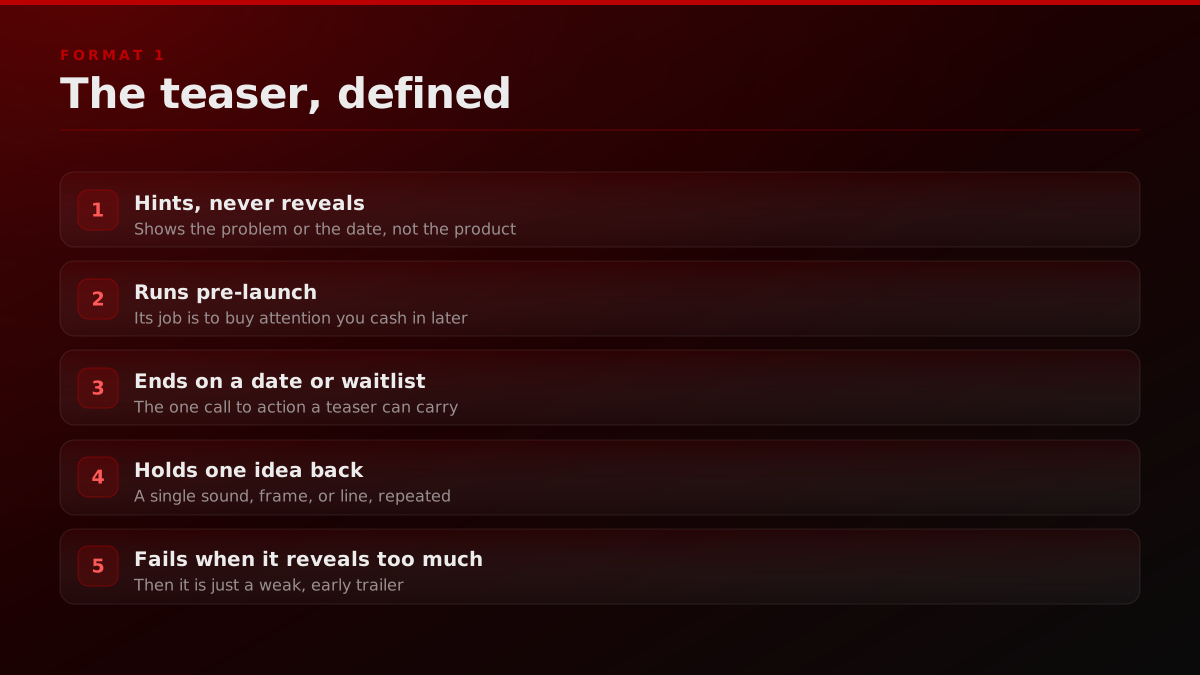
The most common teaser mistake is confusing "short" with "teaser." A 15-second cut that shows the full product and asks for a signup is not a teaser, it is a rushed trailer, and it will underperform both. A real teaser holds one idea back on purpose: the problem without the fix, the category without the product, the date without the reveal. That restraint is the whole point, and it is why a teaser is briefed differently from every other format. You are choosing what NOT to show, which is a harder call than choosing what to include. The best teasers pick one held-back idea and repeat it: a single sound, a single frame, a single line that means nothing until launch day and then means everything. That is why a teaser rewards a campaign, not a one-off. You can run three or four variations of the same held-back idea across pre-launch and let the feed tell you which hook the audience leans into, then carry that winner into the trailer.
Operator noteTeasers reused as launch-day films underperformed. The moment needs the product, not another hint., FORKOFF distribution network, operator observation
Teasers also fail when they are reused. A founder makes a teaser for pre-launch, it does its job, and then the same clip gets posted again on launch day because it exists and looks good. On launch day the moment needs the product, the proof, and the action, and a teaser gives none of those. If you build a teaser, budget for the trailer or demo that has to replace it when the window opens. The launch week video sequencing guide lays out that hand-off across the whole week, so the teaser sets up the launch-day film instead of competing with it.
What is a launch trailer or hero film?
A launch trailer, sometimes called the hero film, is the launch-day centerpiece: a 60 to 120 second video that shows the product, makes the case, and ends on one clear action. Unlike a teaser, it reveals everything that matters, and unlike a sizzle reel, it sells one product doing one job rather than compressing a highlight reel. It is the film the whole launch points at, and its goal is conversion at the headline moment: start the trial, join the allowlist, push the pull request, book the call. A trailer earns that action by opening on the claim, showing the product do the one thing, and proving the result before it asks.
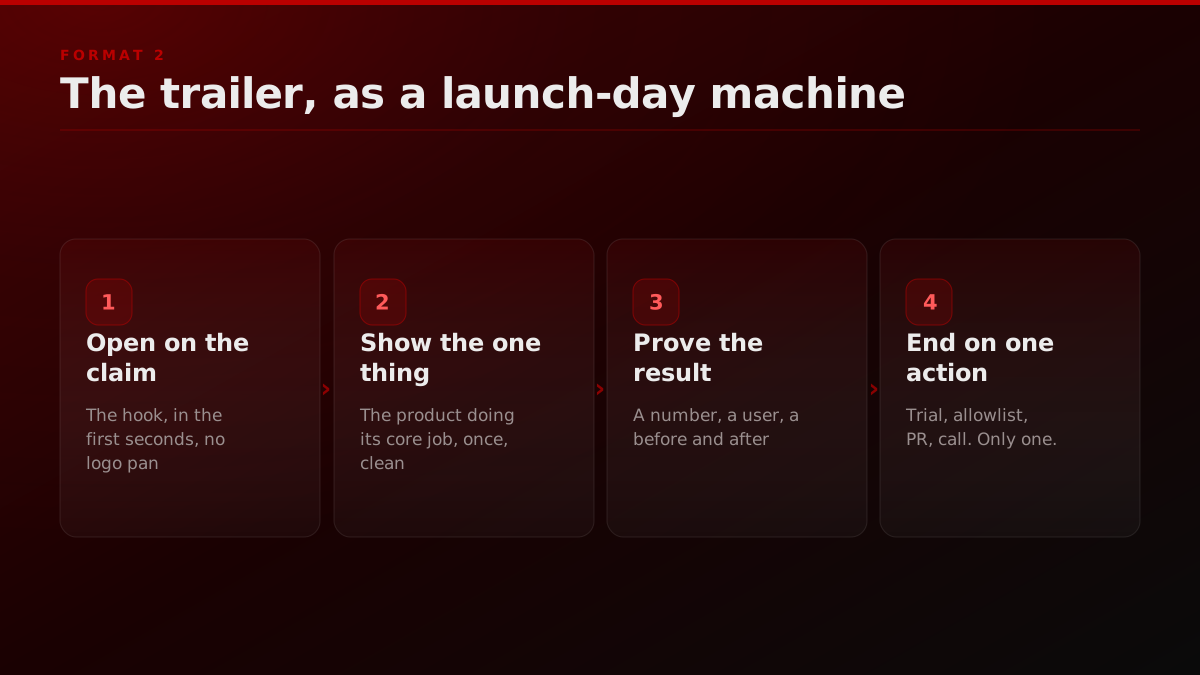
The trailer fails in one predictable way: it opens on a logo animation and a slow brand pan instead of the claim. Platforms decide reach on the first seconds of retention, so a trailer that spends its opening on a logo has already lost the audience the rest of the film was made for. A launch trailer is not a brand film. It has a job, a clock, and one action to earn, and every second before the hook is a second of reach you are giving away. The anatomy of a 1M-view launch video breaks down where that opening sits inside the distribution machine, and why the first second is the whole audition.
I love when Apple includes some easter eggs in their product launch videos.
Because the trailer is the film that carries the launch, it is also the one worth briefing hardest. What separates a trailer that lands on the first cut from one that gets rewritten repeatedly is not the team, it is what you decide before the shoot. The launch video creative brief covers that document in full, but for the trailer specifically the inputs that decide it are the action you want a viewer to take, the claim the opening seconds have to land, and the evidence the middle has to put on screen. The trailer is where a fuzzy brief costs you the most, because it is the most expensive film to re-edit and the one racing the launch-day clock.
What is a sizzle reel, and how is it different from a trailer?
A sizzle reel is a fast, high-energy cut of highlights, press, real numbers, and reactions, edited to feel like a wave of momentum, usually 45 to 90 seconds. It differs from a trailer in both job and timing. A trailer sells one product and drives one action on launch day. A sizzle reel compresses proof to build credibility, which makes it strongest after launch, inside a fundraising or sales deck, or as a recap that says "look how this is going." It is the format that answers "why should I believe the hype," and it only works once you have real wins to compress. A sizzle reel with no proof is just a montage set to music.
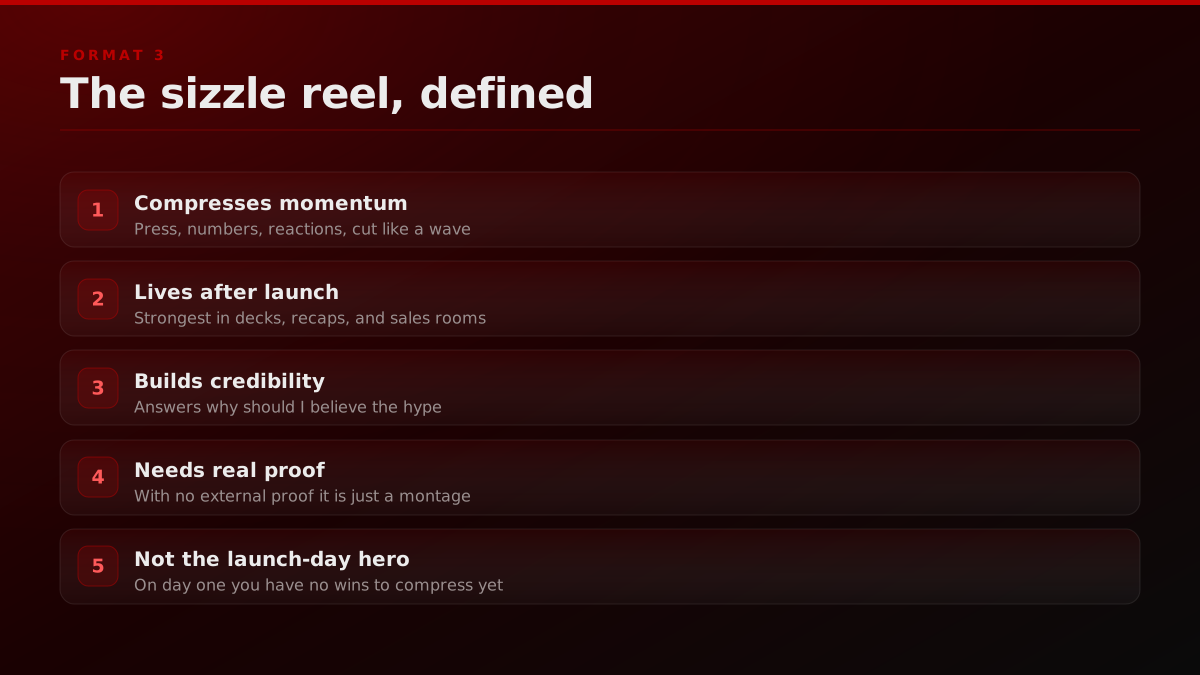
This is the format most often briefed at the wrong moment. Founders love the energy of a sizzle reel and ask for one as the launch-day hero, but on launch day you usually do not have the press hits, the user reactions, or the numbers a sizzle reel is built around, so it comes out hollow. The film industry version proves the point: a studio sizzle reel is a pitch tool, cut to sell a project internally, not the trailer the public sees. Keep the sizzle for after you have momentum to compress, and let the trailer carry the day itself.
Operator noteSizzle reels earned their keep after launch and inside decks, rarely as the launch-day hero., FORKOFF distribution network, operator observation
The other trap is confusing a sizzle reel with a supercut of your own features. A feature supercut says "here is everything we do," which overwhelms and proves nothing. A sizzle reel says "here is the evidence this is working," which is a different edit built from press, numbers, and real users, not a UI tour. If your sizzle reel has no external proof in it, it is a feature reel wearing a sizzle reel's pacing, and viewers can tell.
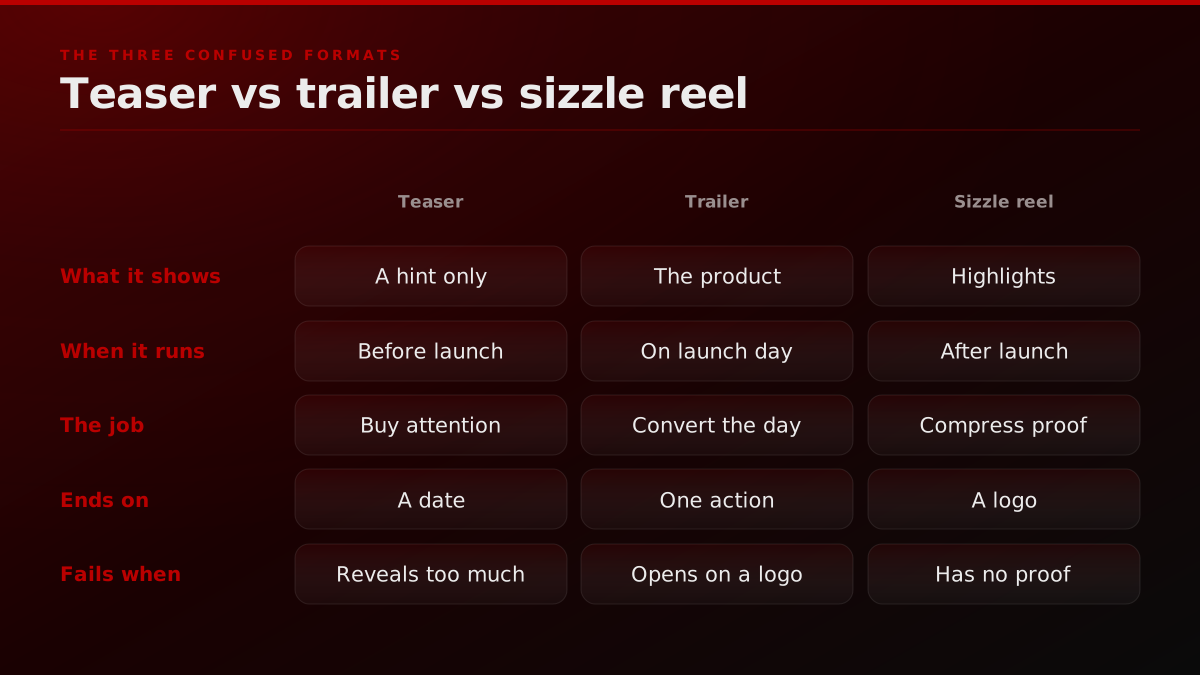
Teaser vs trailer vs sizzle reel, the three most-confused formats
| Question | Teaser | Trailer | Sizzle reel |
|---|---|---|---|
| What it shows | A hint, not the product | The product and the one action | Highlights and proof, fast |
| When it runs | Before launch | On launch day | After launch, in decks |
| The job | Buy attention early | Convert the launch moment | Compress momentum |
| Ends on | A date or a waitlist | One clear call to action | A reel of wins, a logo |
| Fails when | It reveals too much | It opens on a logo pan | It has no real proof |
The film industry uses these words for movies. A product launch borrows the words but changes the job. Import the format, not the Hollywood definition, or you will brief the wrong video.
What is a product demo, and why does it convert software launches?
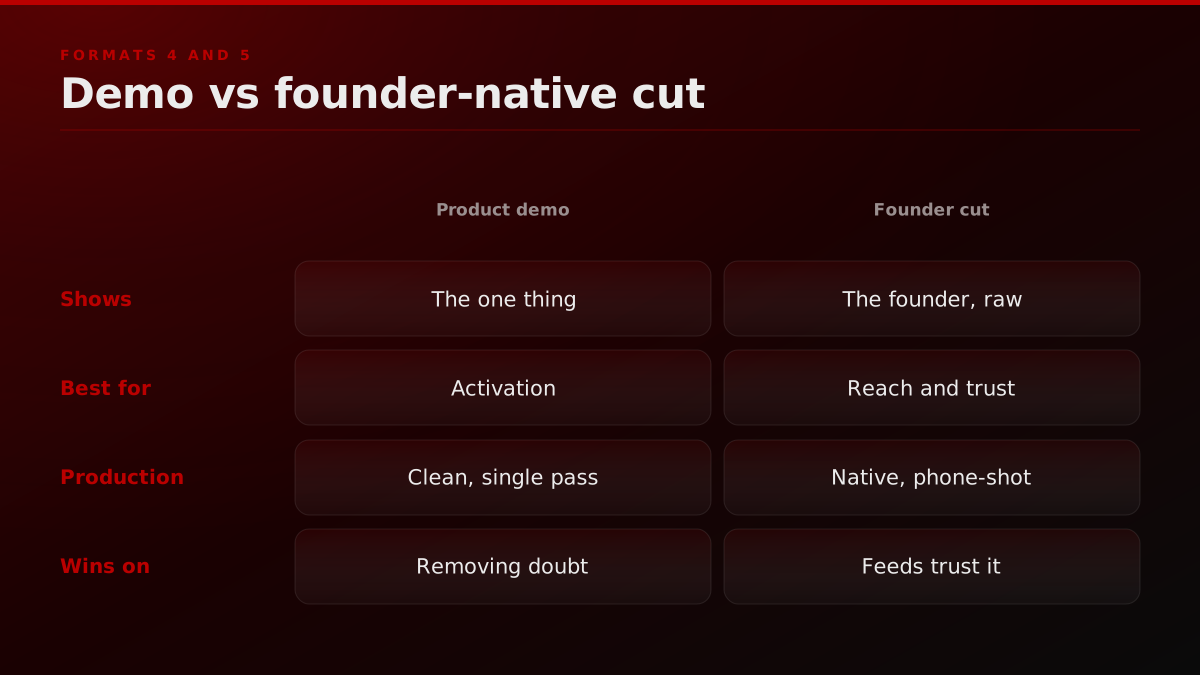
A product demo is a 30 to 90 second launch video that shows the product doing the one thing that matters, in a real interface, so a viewer can picture themselves using it. For software launches it is often the highest-converting format, because the action you want, start a trial, activate, push a PR, is the thing the demo just showed. Unlike a trailer, a demo does not need cinematic production or a narrative arc. It needs one clean pass through the core job with no feature tour, no menu spelunking, and no ten-step setup. The demo is where activation is won, because it removes the "will this work for me" doubt that a hero film only gestures at.
The demo is also the format founders dread and default to badly, which is why it is worth briefing with care. A team explaining SaaS demo styles opens on exactly this point of confusion.
SaaS Demo Video Styles (Explained)
Motion Swell
A video team walking through SaaS demo video styles. Their opening line names the exact problem this guide solves: the recurring point of confusion is choosing the right style to show the product.
There is a real craft choice inside the demo: a polished vector animation of the interface, or a raw screen recording of the real thing. The animated version looks premium and controls every pixel, but it can read as a mockup and lose trust. The screen recording looks real and builds trust, but it is harder to make clean. The right answer depends on your goal, and the SaaS demo video styles walkthrough above breaks down the trade honestly. A rule of thumb that holds up: if trust is the bottleneck, record the real product, because a viewer who suspects a mockup discounts everything after it. If clarity is the bottleneck, an animated pass lets you zoom, slow down, and label the one moment that matters. Most launches are trust-bound, not clarity-bound, so when in doubt, show the real thing. Our own read from distribution is blunt.
Operator noteThe launches our network cut the most clips from led with a demo beat, not a hero montage., FORKOFF distribution network, operator observation
What is a founder-native launch cut?
A founder-native cut is a launch video shot to look like the founder made it rather than an agency: talking to camera, a raw screen walk-through, a phone video, captioned for a silent feed. It trades production polish for trust and reach, and it is a real format, not a fallback, because feeds reward native, human-looking video over anything that reads as an ad. Its goal is distribution and credibility, so it fits any stage where reach matters more than a cinematic headline. On X, LinkedIn, and TikTok, a founder-native cut often travels further than the expensive hero film, because the algorithm and the audience both trust it more.
The evidence for treating this as a first-class format keeps showing up in the data and in the feed.
Operator noteIn our July 2026 scan of launch posts on X, founder-native cuts out-traveled polished hero films., FORKOFF first-party X data, July 2026
The founder-native cut is also the cheapest launch video to make and the easiest to make many of, which matters because a launch is a stream, not a single post. One founder-native series across a launch week can out-reach a single hero film that cost fifty times as much, and it feeds the clipping engine with raw, authentic moments that clip well. This is why the format sits at the center of a founder funnel and a Twitter marketing motion: the founder's face and voice are the distribution advantage, and a native cut is how you put them to work. It pairs naturally with influencer marketing too, because a native founder clip gives a creator something real to react to.
How do you choose the launch video format by stage?
Match the format to where you are in the launch. Pre-launch, when you have attention to build but nothing to convert on yet, runs a teaser. Launch day, when the goal is the headline moment and one action, runs a trailer plus a product demo, the trailer to carry the story and the demo to remove doubt. Post-launch, when you have momentum, press, and numbers, runs a sizzle reel and a steady stream of founder-native cuts and clips. One product moves through three or four formats across the window, and the founders who treat the launch as a sequence of formats, not a single video, get far more out of the same production budget.
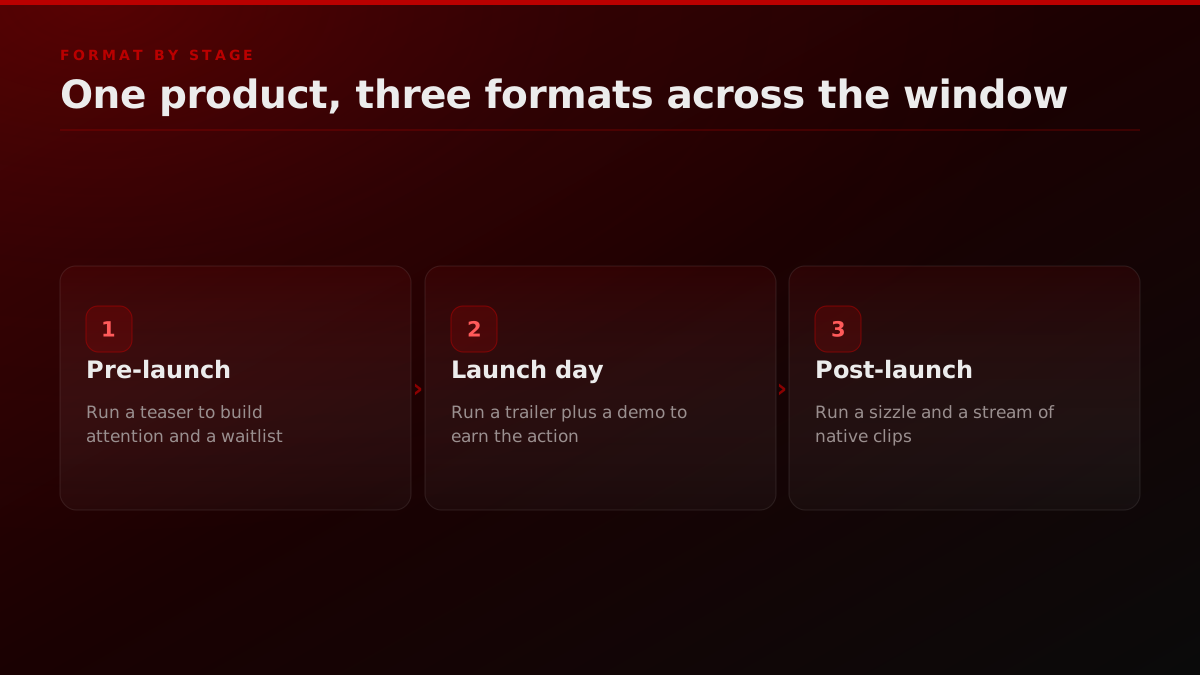
The stage view is also why the "which video should I make" question has no single answer. It is really three or four decisions spread across the launch timeline, and each one has a clear best format. This is the same logic behind launch week video sequencing, which places each format on the calendar so the teaser sets up the trailer, the trailer earns the action, and the sizzle and clips extend the tail. Skip the sequence and you are back to the default trap: one hero film that peaks on launch day and leaves the rest of the window empty.
Kailash
@kail_designs
Heard product launch videos and 2d animations are in demand. Here's a launch video which we did for a YC Company.
How do you choose the launch video format by goal?
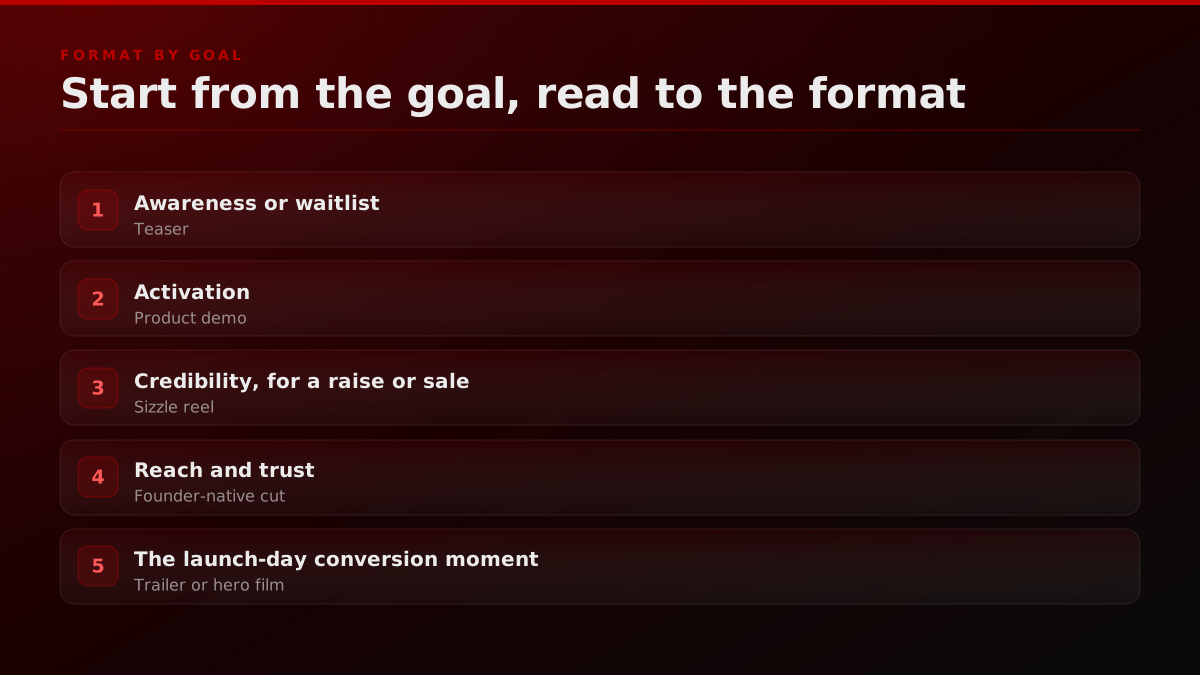
Start from the single action you want a viewer to take, then read backward to the format that earns it. If the goal is awareness or a waitlist, a teaser is the tool, because it builds curiosity you cash in later. If the goal is activation, a product demo is the tool, because it shows the exact thing you want the viewer to do. If the goal is credibility, for a raise or a sale, a sizzle reel compresses the proof. If the goal is reach and trust, a founder-native cut travels furthest. And if the goal is the launch-day conversion moment, the trailer carries it. Choosing the format you find most impressive, instead of the one that serves the goal, is the most common and most expensive mistake in the whole decision.
This is where the settled demand for video actually helps you, because it means the format, not the medium, is the variable you control. Generic guides to the best video types for a launch campaign rank formats without your context, which is why the goal-first read matters more than any ranking.
Demand for video is settled, so the format choice is the edge
Wyzowl's 2026 research reports 91% of businesses now use video as a marketing tool, 85% of people say a video has convinced them to buy, and 84% want more video from brands. When every launch has a video and production is cheap, the film itself is not the differentiator. The choice of which format to make, and matching it to the moment, is. Two founders can spend the same money and get opposite results because one shipped a teaser when the moment called for a demo, and the other matched the format to the stage and the goal.
Source: Wyzowl, 2026 Video Marketing Statistics
The goal-first read also tells you when NOT to make a launch video at all. If the one action does not hold up on paper, no format saves it, and the budget is better spent on distribution or on the product. A good format decision is honest about that, which is why the launch video readiness checklist is worth running before you commit to any format, and why the how to get 100k views on a launch video breakdown matters more than the film once the format is chosen.
How long should each launch video format be?
Length follows format. A teaser runs 6 to 30 seconds, a trailer or hero film 60 to 120 seconds, a sizzle reel 45 to 90 seconds, a product demo 30 to 90 seconds, and a founder-native cut 20 to 60 seconds. These are the ranges that hold attention on a feed in 2026, not hard limits, and the real constraint underneath all of them is retention. Platforms decide reach on the first seconds and keep rewarding a video only as long as people keep watching, a pattern the research on video length and retention has tracked for years, so a shorter cut that holds beats a longer one that drops, whatever the format. When in doubt, cut it shorter and let the clips carry the rest.
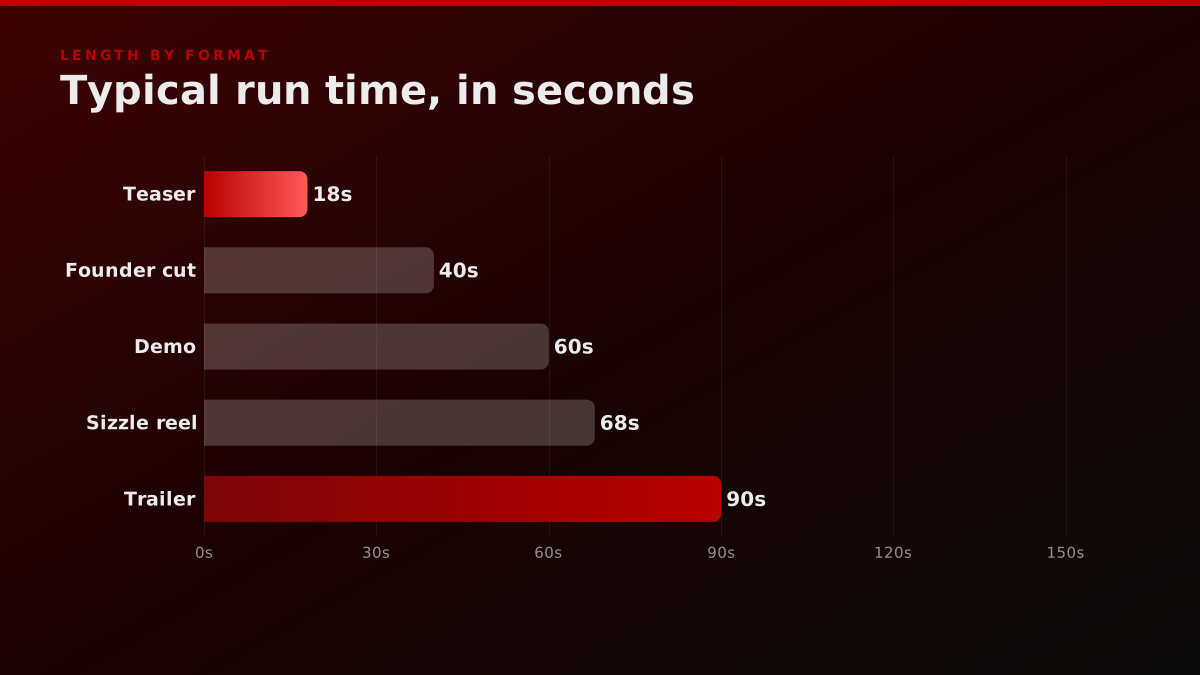
The length ranges also interact with distribution, which is the reason to plan them from the format down. A 90-second trailer that has to be clipped for X, Shorts, TikTok, Reels, and LinkedIn needs modular moments that stand alone at 15 to 30 seconds, so the hero and its clips are one edit, not two projects. A teaser is already clip-length. A founder-native cut is native to the feed by design. If you build the length to the format and the format to the distribution, you get a week of posts out of one shoot instead of one file you have to retrofit.
How do you brief each launch video format?
Brief each format around the one job it does. For a teaser, hand the team the single idea you are holding back and the date or waitlist it ends on, and nothing else. For a trailer, hand them the one action, the hook thesis, and the three proof beats, because those decide whether it converts. For a sizzle reel, hand them your real wins: the press, the numbers, the user reactions, in priority order, because the format is only as strong as the proof you feed it. For a demo, hand them the one thing to show and the exact click path, so the pass is clean. For a founder-native cut, hand them the point and get out of the way, because polish is not the goal.
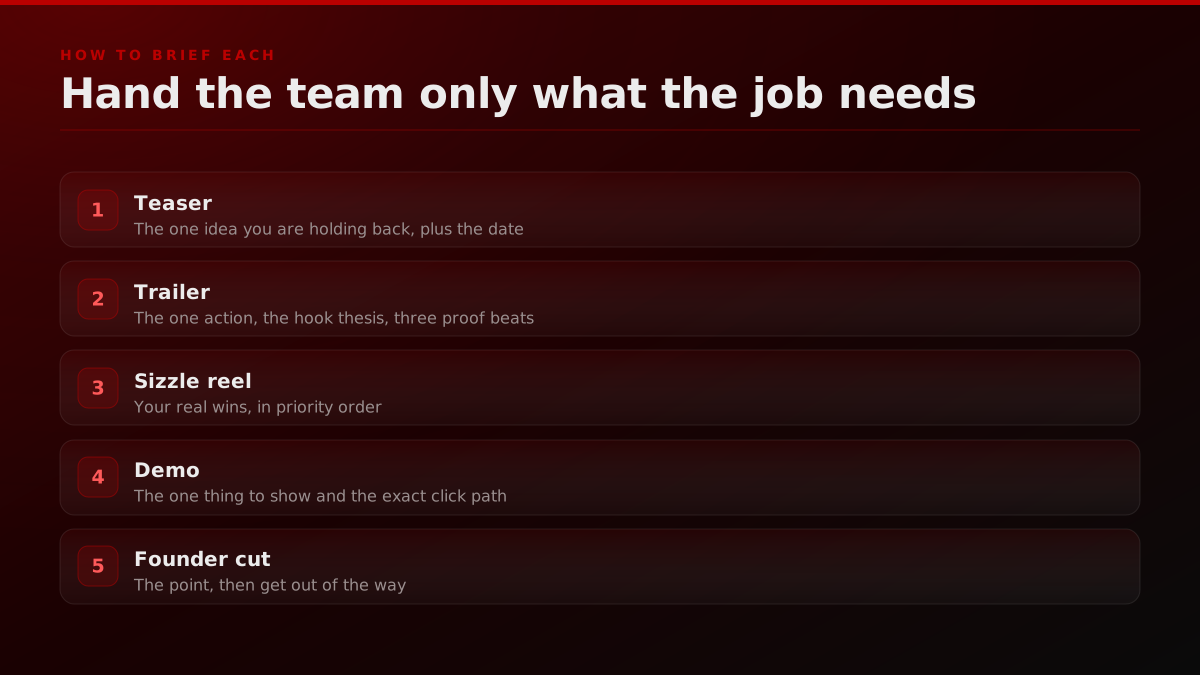
The brief is where the format decision becomes real, and it is the cheapest place to fix a wrong call. If you brief a trailer's proof beats into a teaser, you will get a confused film that reveals too much and converts nothing. If you brief a sizzle reel with no proof, you will get a montage. The launch video creative brief guide covers the full document, but the format-specific version is simpler: name the job, hand the team only the inputs that job needs, and cut the rest. Every input that belongs to a different format is a place the film drifts.
The Steve Jobs launch video for Apple Store from 2001 is a great rewatch: make tech super approachable.
What does each launch video format cost?
Cost tracks production complexity, not importance. A founder-native cut can cost nothing but your time. A teaser and a demo are mid-range, because they are short and single-purpose. A trailer or hero film is the most expensive, because it carries narrative, and a sizzle reel varies with how much footage it has to compile. But the format decision should not be driven by cost alone, because the cheapest format is often the most effective one for the goal, and the most expensive one is often briefed for the wrong moment. The real cost of a launch video is not the shoot, it is the reach you fail to get when the format cannot be clipped. Even the best roundups of launch video examples and ideas price the shoot and skip the reach, which is the number that actually decides the outcome.
This is where founders get the math backward. They spend the whole budget on one expensive trailer, ship it, and have nothing left, and no plan, for the distribution that decides whether anyone watches. A better split spends less on the hero film and reserves budget and attention for the cuts, the founder-native series, and the seeding that carry the launch for weeks. A useful discipline is to cap the hero film at a fixed share of the total launch budget, then force the rest to distribution and to the cheaper formats that feed it. When the trailer is one line item among five instead of the whole budget, the format decision gets healthier automatically, because you can no longer pretend one expensive film is the launch. You can pressure-test whether your planned reach is real with the CPQV calculator before you commit, and the what a launch video costs breakdown maps the production-versus-distribution split in detail. The best launch video agencies rundown is a useful next read if you are deciding whether to buy the film or make it.
what actually separates a €5,000 launch video from a screen recording with text on it
Which launch video format goes viral?
The honest answer is that no format goes viral on its own, because virality is a distribution outcome, not a production one. A teaser, a trailer, a sizzle reel, a demo, and a founder-native cut have all crossed a million views, and all of them have died at seven views too. You can see that gap directly in RADAR, where launches with very different formats separate on reach because distribution, not the format, decided the number. The format decides what the film can do and how easily it clips, but the reach comes from the seeding, the timing, the creators, and the wave you ride, not from the type you picked. Founders looking for the "viral format" are asking the wrong question. The right question is which format serves the goal, built so distribution has something to work with.
I feel so lonely after first launch. ChatGPT said the ad video was pure GOLD. (7 views)
The reason this matters is that a polished film with no distribution plan is the most common expensive failure in a launch. A model can call your ad video "pure gold" and it can still land seven views, because gold with no distribution is invisible. The distribution gap is the real story of why launch videos fail, and the startup launch video distribution gap piece takes it apart. For a token or crypto launch, where the goals and the formats shift toward allowlist and community, the token launch video guide covers the format calls specific to a TGE, mainnet, or airdrop.
Production got cheap, which moved the decision to format and distribution
In 2026 a founder can generate a cinematic launch film from a prompt or a template, and operators openly ship polished launch videos for near-zero budget. That collapses the old advantage of a big production budget and moves the real decisions upstream: which format the moment needs, and how the film will be clipped and distributed after. When anyone can make the file, the advantage is in choosing the right type and building it to travel, not in spending more on the shoot.
Source: Wyzowl, 2026 Video Marketing Statistics
The verdict: match the format to the stage and the goal
The launch video that works is almost never the one with the biggest budget. It is the one where the format matched the moment. A teaser for pre-launch attention, a trailer for the launch-day action, a sizzle reel for post-launch credibility, a demo for activation, a founder-native cut for reach and trust. Pick the type by reading from your stage and your goal, not from the word you borrowed from the movie business or the format you find most cinematic. Get that first decision right and a modest film does its job. Get it wrong and no budget, team, or edit saves a beautiful video pointed at the wrong moment.
None of this makes production unimportant. A launch still needs a cut that is watchable, honest, and native to the feed it will live in, and a sloppy edit can waste a sharp format call. The point is narrower and more useful: the format is the decision that comes first, it is the one only you can make from your own stage and goal, and it is the one that decides what every other choice is even working toward. Choose the type on purpose, then brief it, produce it, and distribute it as one system.
So treat the format as the real first move of the launch. If you want a team that picks the format with you, produces the teaser, trailer, demo, and sizzle your window actually needs, and runs the distribution so the film gets watched, that is exactly what the product launch video service does, backed by a clipping network that has moved 5B+ views. You can book a strategy call to map your format plan before you spend a dollar on the shoot.