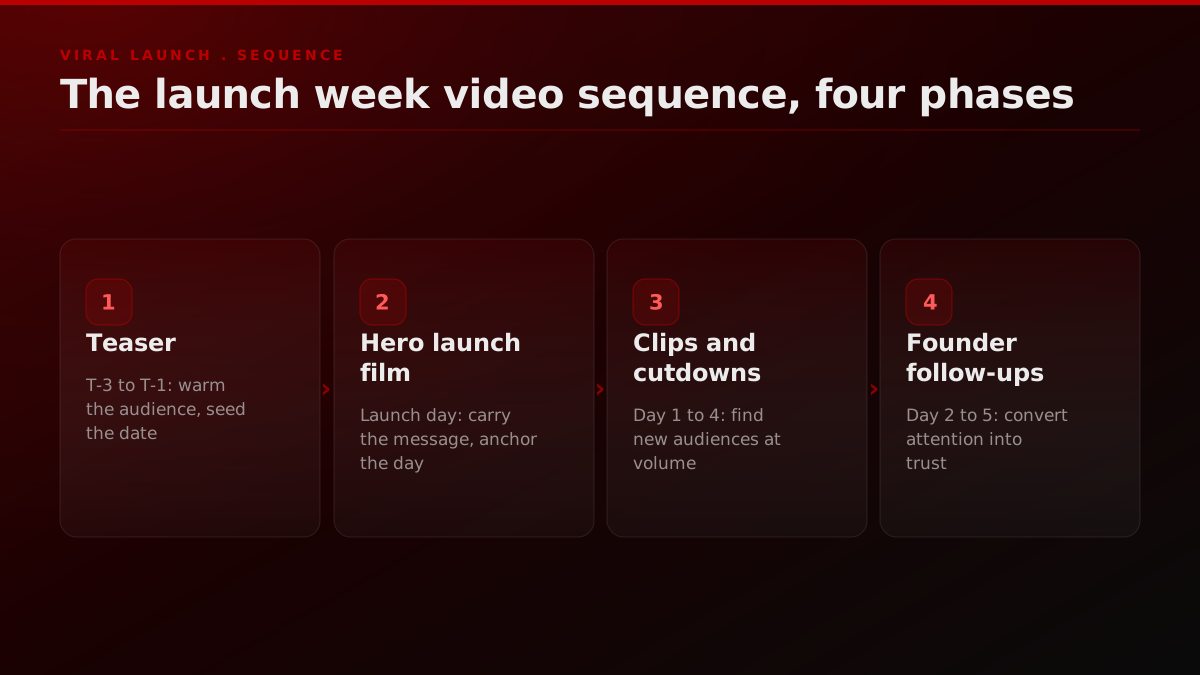
A launch week is a video sequence, not a single upload. The launches that break out do not drop one hero film on launch day and hope. They run a set of videos across the whole week, each with a specific job, a specific day, and a specific surface: a teaser in the days before launch to warm the audience, a hero launch film on launch day to carry the message, clips and cutdowns from launch day through the following days to find new audiences at volume, and founder-native follow-ups in the back half of the week to convert attention into trust. Launch week video sequencing is the plan for that arc, which asset goes live when, in what order, and where. This guide maps the sequence day by day, so you stop shipping one video and start running a week.
Launch Week Video Sequencing in One Minute
A launch is a week, not a day, and the video is a sequence, not a single upload. The launches that break out run four phases of video across the week: a teaser in the days before launch to warm the audience, a hero launch film on launch day to carry the message, clips and cutdowns from launch day through the following days to find new audiences at volume, and founder-native follow-ups in the back half of the week to convert attention into trust. Each asset has a job, a day, and a surface. Map the sequence before you make a single frame, produce it before launch week starts, and measure each phase by qualified views rather than raw counts. The founders who plan the calendar out-perform the founders with a more expensive single film, because they built a path to an audience across seven days instead of one.
Most launch advice, and most launch budgets, still treat the video as a single deliverable. A founder books a launch date, commissions one polished film, publishes it on launch day, and then watches it flatline within forty-eight hours. The instinct is to blame the film and commission a better one next time. The real problem is that a single asset can only be seen once, by the people already watching, on the day it goes live. A sequence gives the same message a dozen chances across a week. The rest of this guide is about building that sequence on purpose.
What Is Launch Week Video Sequencing?
Launch week video sequencing is the practice of planning your launch video as a timed set of assets across an entire launch week rather than one upload on launch day. It answers three questions at once: which video, on which day, on which surface. A sequenced launch has a teaser that warms the audience before launch, a hero film that anchors launch day, a stream of clips that carries the days after, and founder-native follow-ups that convert the attention. Each asset is produced before the week begins and released on a calendar, so the launch behaves like a campaign with momentum instead of a single moment that spikes and dies.
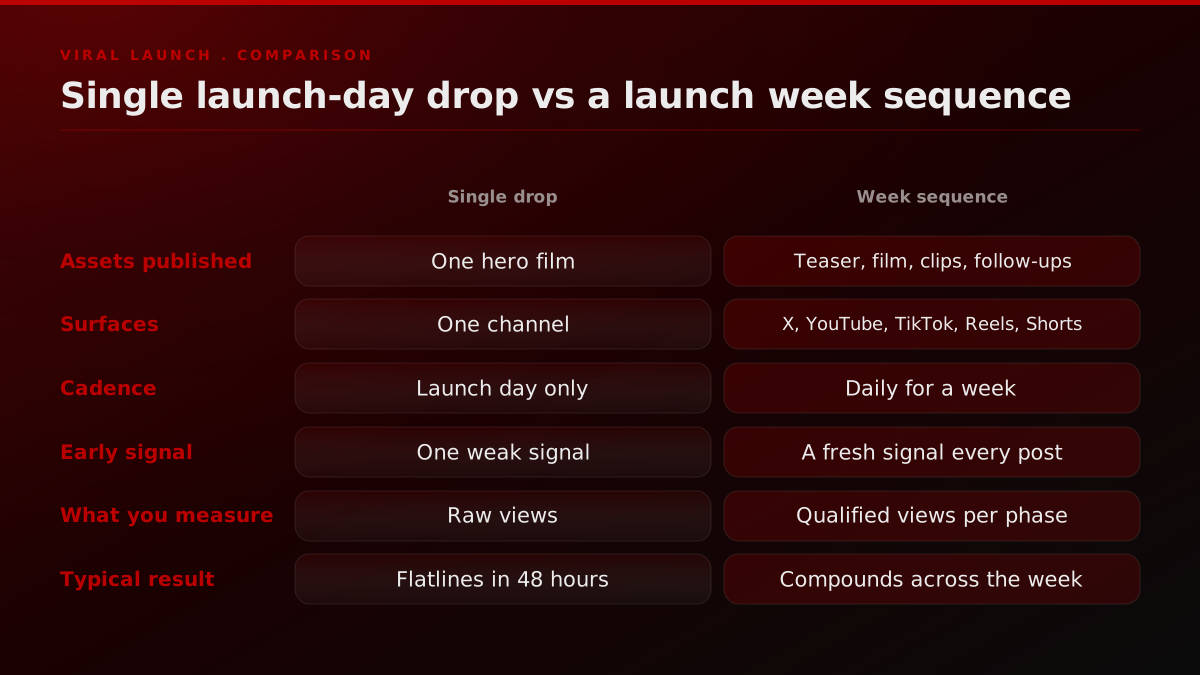
The distinction matters because feeds and answer engines reward frequency and recency, not one perfect post. When you publish once, a platform shows the video to a small slice of your existing followers, reads the weak early signal, and stops distributing it. When you publish a coordinated sequence, each new post is a fresh signal and a fresh chance to reach someone new, and the launch compounds across the week. This is the same mechanic behind the launch video playbook that anchors this whole cluster: the video is the seed, the sequence is how you plant it in many places at once.
Harshil Tomar
@Hartdrawss
There is a $100K+/mo opportunity right now for founders who already have a shipped app and no idea how to grow it. App Store and Play Store algorithms in 2026 reward a very specific launch sequence. almost nobody is running it correctly. most founders launch like this:
The founders who study distribution keep arriving at the same word. As Harshil Tomar put it, the app stores in 2026 reward a very specific launch sequence, and almost nobody runs it correctly. The order is the edge. A launch is not a switch you flip on one morning. It is an ordered rollout where the teaser sets up the film, the film sets up the clips, and the clips set up the follow-ups. Skip the order and you are left with a single upload, no matter how good the one video is.
Why Does a Single Launch-Day Video Underperform?
A single launch-day video underperforms because it gets exactly one early signal, from your existing followers, on one surface, on one day. Recommendation systems test new content on a small audience and expand reach only when the early numbers justify it, a mechanic YouTube describes in its guidance on how recommendations work and TikTok explains for its For You feed. A single upload from a small account rarely clears that bar, so the video dies before it reaches a stranger. It did not fail on merit. It failed because the distribution mechanic was triggered once and never again.
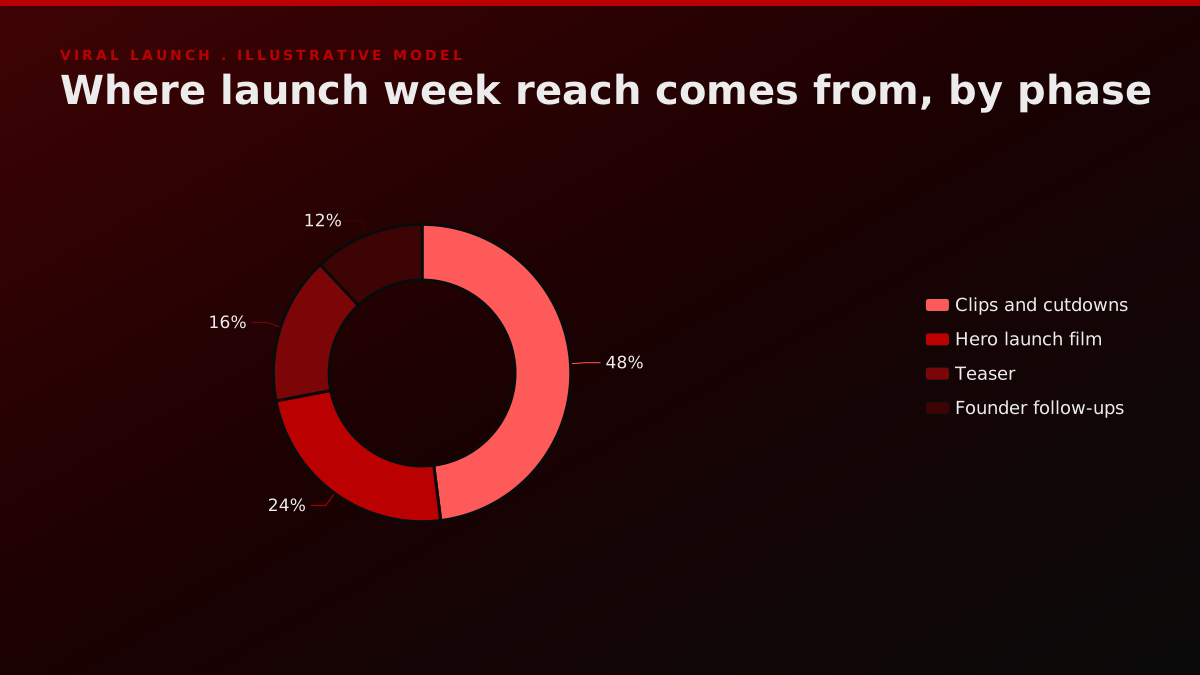
The illustrative split above holds across the real launches we run: the clips, spread across the week, generate most of the reach, while the hero film seeds the message and the teaser and follow-ups fill in around it. A launch that ships only the hero film is spending everything on the smallest slice of the reach. That is the deeper point behind the startup launch video distribution gap: the video is rarely the problem, the missing sequence is. One upload is a distribution gap wearing the costume of a content problem.
Mike Rundle
@flyosity
Startup founders will spend $1M on a launch video instead of building a product that can be marketed like this
The budget mistake is the same mistake in a different disguise. As Mike Rundle noted, founders will spend a fortune on one launch video instead of building something that markets itself across many posts. A million-dollar film that goes live once still reaches the same few hundred people the free one would have. The money that would have bought a more expensive single asset buys far more reach when it funds a teaser, twenty clips, and a founder follow-up instead. The cost of a launch video is the part of the budget easiest to justify and least likely to move the number, precisely because it funds the one asset the sequence needs least.
What Does a Launch Week Video Sequence Look Like Day by Day?
A launch week video sequence runs four phases across roughly eight days. In the three days before launch, you post a teaser to warm the audience and seed the date. On launch day, you post the hero film on your owned channels and the launch surface. From launch day through the next four days, you post clips and cutdowns continuously across short-form platforms. From two to five days after launch, you post founder-native follow-ups that recap, answer, and convert. Each asset has a fixed day and a fixed surface, and the whole calendar is produced before the week starts so nothing has to be made under pressure.
The launch week video sequence, by day, asset, surface, and job
| Day | Video asset | Primary surface | Job |
|---|---|---|---|
| T minus 3 to 1 | Teaser | X, LinkedIn, Stories | Warm the audience, seed the date |
| Launch day | Hero launch film | X, YouTube, Product Hunt | Carry the message, anchor the day |
| Launch day to plus 4 | Clips and cutdowns | TikTok, Reels, Shorts, X | Find new audiences at volume |
| Plus 2 to plus 5 | Founder-native follow-ups | X, LinkedIn | Convert attention into trust |
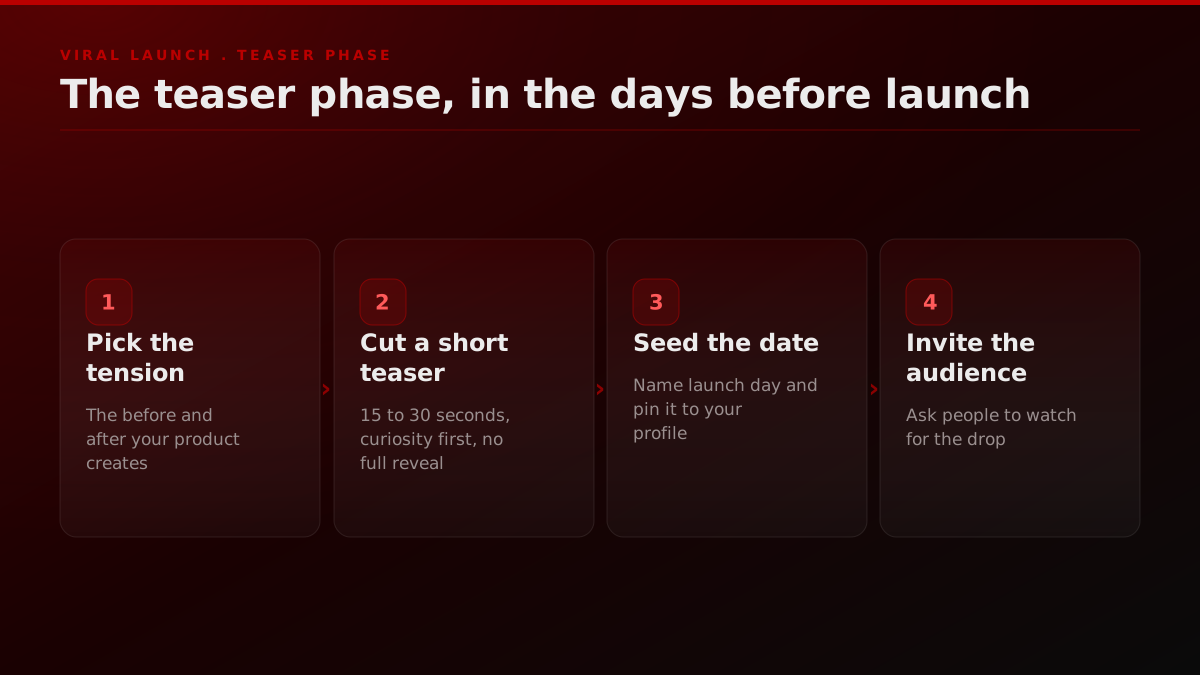
Read the calendar and the logic is clear. The teaser exists so launch day lands on a primed feed instead of a cold one. The hero film exists to carry the full message on the day attention is highest. The clips exist to break the follower ceiling and keep the launch alive for days. The follow-ups exist to convert the attention the earlier phases earned. None of these can be improvised mid-week, which is why the launch video readiness checklist puts production before launch week, not during it. A sequence you build on launch day is a sequence you do not have.
Go-To-Market Launch Plan For A New SaaS Product
TK Kader
TK Kader framing a SaaS launch as a go-to-market plan across time, not a single moment. The launch is a schedule.
This is why practitioners frame a launch as a plan rather than a moment. In his walkthrough of a go-to-market launch plan for a new product, TK Kader treats the launch as a schedule of coordinated touches across time, not a single asset. The Baremetrics seven-day launch sequence does the same for the announcement layer, mapping what goes out on each of seven days. The insight transfers directly to video: the launch is a week-long calendar, and the video sequence is the visual spine of it.
What Should You Post in the Teaser Phase Before Launch?
In the days before launch, post a short teaser that creates curiosity and seeds the date without giving away the full reveal. A teaser is not the hero film cut shorter. It is a distinct asset with one job: to warm the audience so launch day lands on a primed feed instead of a cold one. The best teasers show a tension or a transformation, name the date, and invite people to watch for the launch, all in fifteen to thirty seconds. Post it two to three days out on X and LinkedIn, where anticipation travels, and pin it so the launch-day audience arrives already interested.
Elijah Muraoka
@elijahmuraoka_
POV: building a startup in public We appreciate your support and can’t wait to help y’all grow on X Launching in a few days Sign up now for early access and benefits (link below)
You can watch this phase happen in public constantly. When a founder building in public posts that the launch is a few days out and opens early-access sign-ups before anything ships, that is the teaser phase from the top of the funnel: seeding the date and capturing intent before the reveal. The mechanic is the same whether it comes from an investor, a founder, or a brand account. Anticipation is a warm-up, and a launch that skips the warm-up asks a cold audience to care on day one.
WHAT CONTENT TO POST BEFORE LAUNCH DAY | PRE-LAUNCH CONTENT | LAUNCH MARKETING STRATEGY
The Brand Hustler
A whole video, over 100k views, on what content to post before launch day. Proof that the teaser phase is its own discipline.
The teaser phase is a discipline of its own, not an afterthought. An entire video with more than a hundred thousand views is devoted to what content to post before launch day, which tells you the demand for pre-launch structure is real. The principle that anchors it is that attention is won or lost in the first few seconds, so a teaser has to earn the watch immediately. Treat the teaser as the trailer that sells the moment, and the hero film as the feature that delivers it, and the two will reinforce each other instead of competing.
What Is the Hero Launch Film, and When Does It Go Live?
The hero launch film is the fuller video that carries your complete launch message, and it goes live on launch day, on your owned channels and the launch surface, at the moment attention is highest. This is the asset most founders think of as "the launch video," and it matters, but its job is narrower than they assume: it anchors the day and gives the sequence a center of gravity. It does not have to do the reaching, because the clips will do that. It has to state the message clearly, look credible, and give the audience one thing to remember. Sixty to ninety seconds is usually enough.
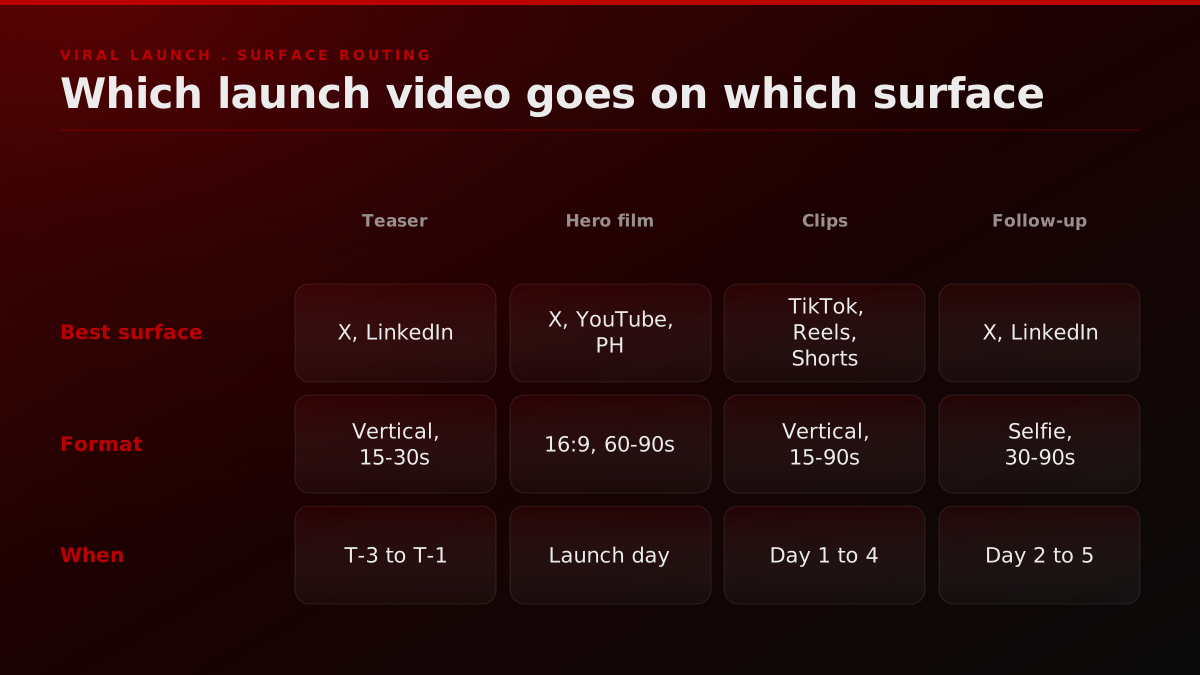
Where the hero film goes is as deliberate as when. Post it on X and LinkedIn as native video, on YouTube as the durable home the clips point back to, and on the launch surface itself, whether that is Product Hunt or your own site. Product Hunt in particular rewards a clear hero video at the top of the listing, and the Product Hunt launch guidance treats the video as a core asset of the day. The anatomy of a launch video that crosses a million views breaks down what belongs inside the film itself, from the one-second hook to the payoff, so the hero film earns the attention the rest of the sequence sends to it.
A launch video is not one asset you drop on launch day. It is a week of assets, each with a different job, and the calendar is the real deliverable.
The mistake to avoid here is loading the entire launch onto this one asset. The hero film is one entry on the calendar, not the calendar. When founders pour the whole budget and all their hope into the film, they end up with a beautiful video that still goes live once and stops. The film is the anchor. The sequence is the ship.
How Do Clips and Cutdowns Carry the Days After Launch?
Clips and cutdowns carry the launch from launch day through the following four days by turning the hero film and other footage into many short, native posts that each get their own shot at a new audience. This is where most of the launch-week reach actually comes from. A single recording can produce fifteen to forty clips, each built around a one-second hook and cut to the format of the platform it lands on. Because each clip is a fresh post on a fresh surface, each one gets its own test against the recommendation engine, which is how a launch escapes the ceiling of your existing followers.
Operator noteThe clips almost always out-reach the hero film across the week. Let the hero seed the message and the clips carry it, not the reverse.
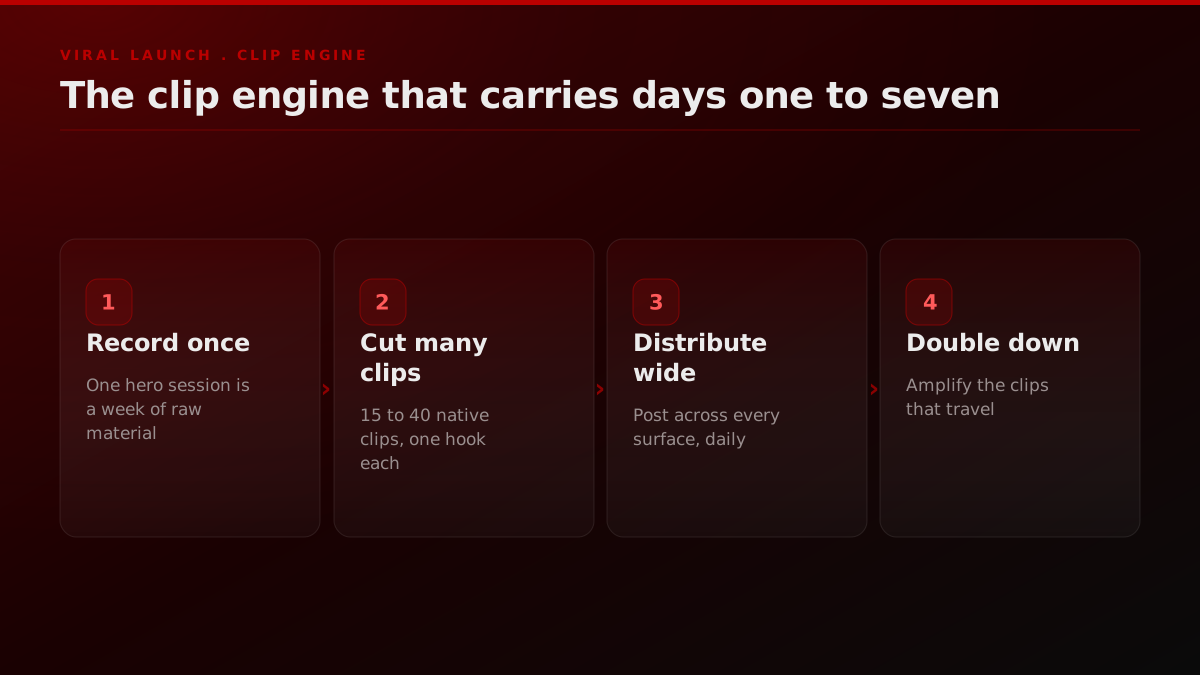
The operating model is record once, cut many, distribute wide, and double down on what travels. It is the same engine described in the managed clipping playbook: treat clips as the unit of distribution, post at volume across every relevant surface, and hold the whole thing to a real metric. Clips should be posted daily, not dumped in one afternoon, because cadence beats intensity. Ten clips over ten days out-reach ten clips in one morning, since each day of posting is a new signal and a new chance to catch what the feed is rewarding. The companion mechanics for the reach side specifically live in the guide on how to get 100k views on a launch video.
There is a real caution to honor here, because clip volume can be gamed. As NPR documented in its reporting on the clipping economy, a flood of low-effort clips can rack up views that mean nothing to the person who made the original content. That is why the clip phase is measured on qualified views, not raw counts. The goal is not to manufacture a big number across the week. It is to reach the specific people who might become customers, repeatedly, which is a distribution job done well rather than a volume job done cheaply.
The reason clips carry so much of the week is that short-form video is now the default way people discover a company at all, a shift visible in the rise of short-form content and in Pew Research data on how much of the day people spend inside social feeds. Attention has pooled in short vertical video, so a launch that does not cut clips is choosing to sit out the surface where most of the reachable audience actually is. The clips are not a nice-to-have bolted onto the hero film. For most launches they are the majority of the launch, which is why the sequence schedules them across days rather than treating them as an afterthought once the film is already out and the founder has moved on.
What Are Founder-Native Follow-Ups, and Why Do They Close the Week?
Founder-native follow-ups are the videos a founder records in their own voice in the back half of the launch week: a recap of how launch day went, a behind-the-scenes note, or a direct answer to the top question the launch surfaced. They close the week because they convert the attention the hero film and clips earned into trust. By day two or three, a chunk of new people have discovered the product through the sequence. A founder talking plainly to the camera, without production polish, is what turns that curiosity into belief. These posts are cheap to make and disproportionately effective, which is exactly why most launches skip them.
Operator noteThe back half of the week is where launches quietly win. A founder recap two days after launch converts the attention the hero film earned.
The follow-up phase is where the story lands. A founder who recaps a launch honestly, including what was hard and what worked, gives the audience a reason to care beyond the product. The market voice on this is consistent: the recap of a founder going from zero to real revenue, told in their own words, is the video that spreads because it is human, not because it is polished. This is the same trust mechanic behind a durable founder-led growth engine, where the founder is the distribution channel and their voice is the asset. Pair the follow-ups with owned-channel activity on Twitter and X so the message stays alive across surfaces through the end of the week.
What makes a good launch video that actually converts?
What makes a good launch video that actually converts? Is it high quality production? Clear message? Asking lots of friends to repost? Strong hooks?
Founders feel the pull toward the single asset even here. In an r/startups thread asking what makes a good launch video that actually converts, the question is framed entirely around one video: is it production, is it the message, is it the hook. The answer the sequence gives is that no single video converts a launch. The teaser earns attention, the film anchors it, the clips scale it, and the founder follow-up converts it. Conversion is a property of the sequence, not of one asset, which is why a founder optimizing a single video is optimizing the wrong unit.
Which Video Goes on Which Surface?
Match each asset to the surface whose format rewards it, and cut it native to that surface rather than reposting one horizontal file everywhere. Teasers and founder follow-ups fit X and LinkedIn, where founders and buyers gather and where anticipation and story travel. On the LinkedIn side of that pair, the reach has to be earned rather than bought, which is the subject of going viral on LinkedIn without engagement pods. The hero film fits X, YouTube, and the launch surface such as Product Hunt, where a clear video anchors the listing. Clips are cut vertical and native to TikTok, Reels, Shorts, and X, where short-form discovery lives. The same message wears a different edit on each surface, because a feed punishes a repost that looks like it belongs somewhere else.
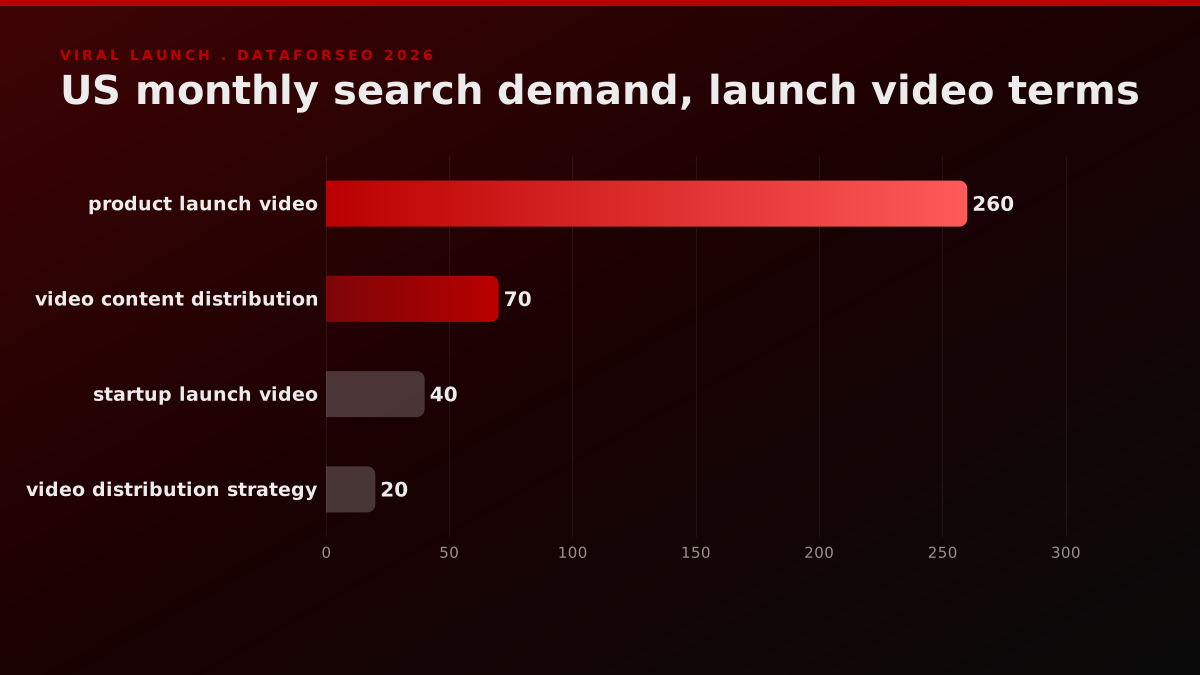
Launch video demand, US monthly searches (DataForSEO, 2026-07-12)
| Query | Searches per month | CPC | Competition |
|---|---|---|---|
| product launch video | 260 | $25.69 | Medium |
| startup launch video | 40 | $22.89 | Medium |
| launch video timeline | Low volume | n/a | Unclaimed |
| launch week video sequencing | Low volume | n/a | Unclaimed |
The search demand shows where buyers are already looking. The head term "product launch video" draws around 260 US searches a month at a high 25 dollar cost per click, a buyer-heavy profile, while "startup launch video" sits near 40 a month at a similar cost, per DataForSEO in July 2026. The sequencing and timing queries themselves show little recorded volume, which is the tell that this is unclaimed territory: founders search for how to make the video, and only later, once it flops, do they search for how to time and distribute it. Even Google's own video marketing guidance frames video as an audience and distribution problem rather than a pure production one. The surface plan is how you meet that demand where it actually is.
Industry Context
Production has been commoditized by cheap tools and AI, so a polished hero film is table stakes rather than an edge. The scarce work moved to sequencing and distribution: deciding which asset posts on which day, on which surface, doing which job. That is why the budget belongs in the sequence, not in one expensive film that goes live once and stops.
Surface routing is also where a launch quietly compounds into other channels. A hero film on YouTube becomes a durable page that ranks and gets cited. Clips on X and TikTok feed discovery. A founder follow-up on LinkedIn reaches the buying committee. Handled well, a single launch week seeds four surfaces at once, which is why the routing plan belongs in the sequence from the start rather than being improvised per post.
How Long Before Launch Should You Start?
Start producing the sequence at least two to three weeks before launch week begins. The recording session, the hero edit, the teaser cut, and the first batch of clips all need to exist before day one, because you cannot produce a week of coordinated video while the launch is already running. This is the single most common launch failure: a founder books the date, then discovers three days out that a good video takes weeks to make, and ends up shipping one rushed asset instead of a planned sequence. Lead time is not a nicety. It is the difference between a sequence and a scramble.
Let's say the product is launching tomorrow, now the agency needs 3 weeks, freelancers are ghosting, and there is no in-house production team. How do you actually get video ads out fast?
Let's say the product is launching tomorrow, now the agency needs 3 weeks, freelancers are ghosting, and there is no in-house production team. How do you actually get video ads out fast?
The trap is vivid in the wild. In an r/EntrepreneurRideAlong thread, a founder describes the product launching tomorrow while the agency needs three weeks and the freelancers are ghosting, asking how to get video out fast. There is no good answer at that point, because the window to sequence has already closed. The fix is upstream: lock the launch date, then work backward to schedule the recording, the edits, and the clip batches so everything is ready before the teaser goes live. A launch calendar is built in reverse, from launch day back to the first recording.
Operator noteProduce the whole sequence before launch week starts. The failure we see most: booking launch day, then starting the video three days out.
Working backward also protects quality. When the whole sequence is produced ahead of the week, launch week itself becomes an execution exercise: post the teaser, post the film, post the clips, post the follow-ups, on schedule, while you focus on responding to the audience the sequence brings in. When production is happening live, every post is a fire drill and the founder is editing instead of engaging. The teams that look calm during launch week are the teams that did the work three weeks earlier.
How Do You Measure a Launch Week Video Sequence?
Measure the sequence by qualified views per phase, not by the raw view count of the hero film. A qualified view is one that came from someone who might actually buy, which is the only number that separates a launch that builds pipeline from a launch that builds a screenshot. It is also the split RADAR reads across real launches, separating the reach a launch earned from the reach it bought. Track the teaser on whether it grew anticipation and saved audience, the hero film on whether it stated the message and held attention, the clips on qualified reach and which ones traveled, and the follow-ups on replies, profile visits, and conversions. Each phase has its own success metric because each phase has its own job.
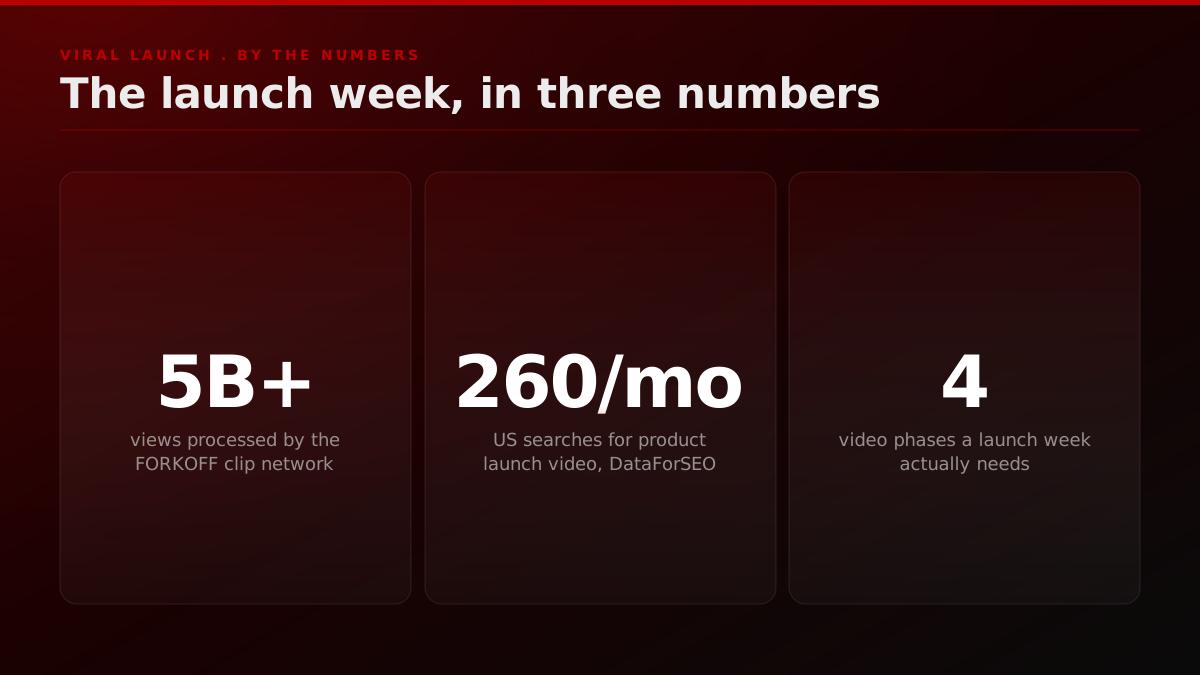
The numbers give the approach weight. There is real, buyer-heavy search demand for launch video help, the clip length that travels is well understood at fifteen to ninety seconds, and at the accountable end of the market the FORKOFF clip network has processed more than 5 billion views, each judged against whether it reached an audience rather than just a counter. That last number is the point of measuring by qualified views: volume alone is easy to buy, but volume aimed at the right audience across a whole week and measured honestly is the hard part, and it is the part that decides whether a launch turns into customers. The argument for the qualified views metric is exactly this.
Industry Context
Vanity views remain the dominant failure mode of launch content. A launch-week sequence can rack up a large number that contains zero potential customers, which is why qualified views, not raw counts, are the unit a founder should hold each phase against. The sequence exists to reach the right audience repeatedly, not to manufacture one big number.
The reason measurement matters more for a sequence than for a single video is that a sequence gives you a feedback loop. By the second day of clips, you can see which cuts travel and reallocate toward them. By the follow-up phase, you know which message resonated and can lead with it. A single upload gives you one data point and no way to act on it. A sequence gives you a week of signal, which is another reason the calendar beats the one big swing.
It helps to define the leading indicators before launch week rather than after. Decide, in advance, what a good teaser looks like in numbers, what the hero film needs to hold, and what a clip has to do to earn more budget, so you are reading the week against a plan instead of reacting to whatever the counter says. Even Bill Gross's well-known TED analysis of why startups succeed lands on timing and traction over the idea itself, and traction during a launch is simply the sum of the qualified reach each phase produced. When you know the targets going in, launch week becomes a set of decisions you can actually make, rather than a scoreboard you watch go up or down with no way to influence it.
What Are the Most Common Launch Week Sequencing Mistakes?
The most common launch week sequencing mistakes all share one root: treating the launch as a single asset instead of a sequence. The recurring failures are shipping no teaser so launch day lands cold, posting on one platform instead of routing each asset to its surface, relying on one video instead of a set, going live on launch day only with nothing before or after, skipping founder follow-ups so the attention never converts, and measuring raw views instead of qualified ones. If three or more of these describe your last launch, the problem was never the video. It was the missing sequence around it.
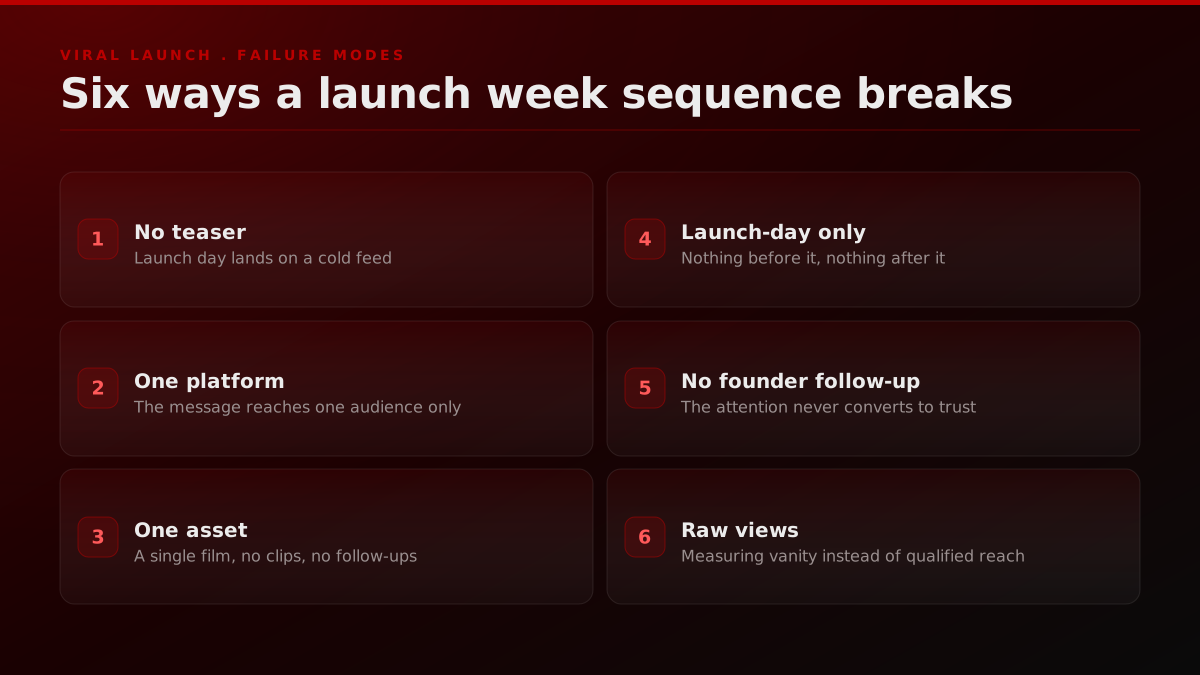
Most founders spend the whole budget on the hero film and none on the six other videos the week actually needs. Flip that and the launch works.
The mistakes cluster because they come from one decision, or rather one decision never made: nobody owned the sequence. The hero film got made because making it was somebody's clear job. The teaser, the clips, and the follow-ups never happened because the calendar was everybody's vague hope. A launch without an owner for the video sequence defaults to a single upload every time, which is why the first fix is to assign the calendar to a person, whether that is a founder, a hire, or a partner. This is the same lens behind the comparison of clipping approaches and the honest read on what the best launch video agencies actually do: the differentiator is not who makes the prettiest film, it is who owns the whole week.
How FORKOFF Runs Launch Week Video Sequencing
FORKOFF runs a launch week as one planned video sequence rather than a single deliverable. We start from the launch date and work backward to build the calendar: the teaser, the hero film, the clip batches, and the founder follow-ups, all produced before the week begins. During launch week, the clip engine posts native cuts across every surface at a daily cadence while the founder focuses on the audience the sequence brings in. Everything is reported on qualified views by phase, so the launch is accountable across all seven days rather than judged on one upload. The model is built for the week, not the moment.
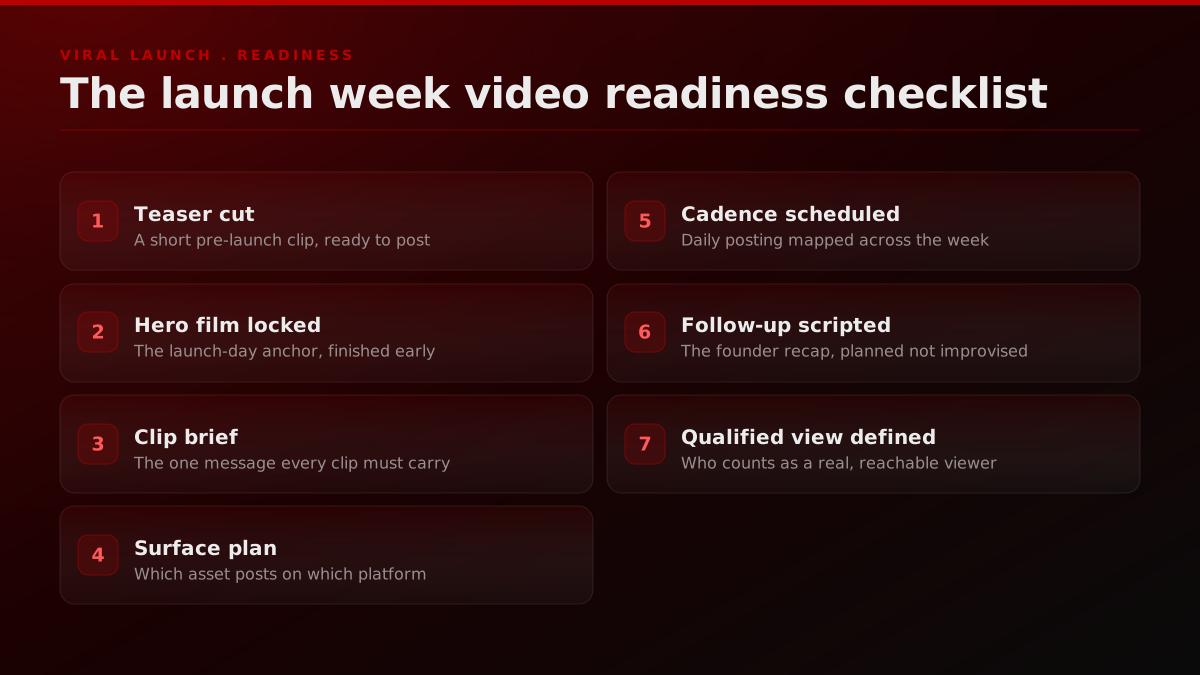
The readiness checklist above is the same one we run before any launch, and notice that none of the items is a bigger camera. They are all about the sequence: is the teaser cut, is the hero film locked, is there a clip brief, is the surface plan set, is the cadence scheduled, is the follow-up scripted, is a qualified view defined. A founder who can check every box will out-perform a founder with a more expensive single film and none of them, because the first built a path to an audience across a week and the second built one asset with nowhere to go. If your launch also has a podcast or event component, the same sequencing logic extends through our podcast clipping and distribution and founder funnel motions, so the week compounds across surfaces.
Handing the sequence to a team whose only job is the launch week is the difference between a calm, compounding launch and a scramble that peaks and dies on day one. Whether you run it yourself off the checklist above or hand it to an engine built for the week, the move is the same: stop shipping one video and start running a sequence.
The Verdict on Launch Week Video Sequencing
A launch is a week, and the video is a sequence, not a single upload. The launches that break out run a teaser to warm the audience, a hero film to anchor launch day, clips to carry the days after, and founder follow-ups to convert the attention, each on its own day and surface, all produced before the week begins and measured by qualified views. The founders who plan that calendar out-perform the founders with a more expensive single film, because they built a path to an audience across seven days while the others built one asset that goes live once and stops.
Industry Context
The 2026 shift is that a launch is a campaign that runs for a week or more, not a single announcement. The same is true of the launch moment itself, where an online product launch that is not a webinar runs one live hour as a distributed campaign rather than a one-off event. Feeds and answer engines discover a company through many small posts over days, so one upload on launch day gets one shot while a sequence gets dozens. The teams that win treat the calendar as the deliverable and the single video as one entry on it.
Production has been commoditized, sequencing has not, and the teams that understand that order win their launches. The others keep polishing a single hero film the market sees once and drawing the wrong conclusion from the silence. The next launch does not need a better video. It needs a sequence, and the calendar is how you build one. If you want the week run as an accountable video sequence, our product launch video service and the managed clipping engine that carries days one through seven are the place to start, alongside the launch video playbook if you want the full cluster first.