A teaser video is a short pre-launch cut that withholds the product on purpose, ends on a date or a place to sign up, and exists to turn people who already know about you into people who are waiting for you. That last clause is the one every guide leaves out, and it is the one that decides whether the format works for you at all. A teaser harvests an audience. It does not create one. Point a beautiful teaser at a feed where nobody is listening and you have made a short film for an empty room.
The short version
A teaser video is a short pre-launch cut that withholds the product on purpose to convert interest into commitment. The part almost every guide skips is that a teaser harvests an audience, it does not create one. We searched Reddit for the exact phrase "teaser video" across the past year and read the top 100 matching posts: zero came from a startup, SaaS, B2B or marketing community, and 34 came from r/kpop alone. A chronological sample of 20 recent posts on X using the same phrase returned zero software launches. Every place the word lives natively, K-pop, anime, games, motorsport, pro sport, is a place where a fanbase already exists. Founders with no audience ask a different question in different words: how do I build hype before launch. So the first decision is not how to shoot a teaser, it is whether you have anyone to tease. This guide gives you the five-question precondition test, what to do in the six weeks before if you fail it, what belongs in the cut once you pass, how long it should run against real completion data, the metric that actually judges a teaser, and the decay curve that punishes teasers run too early. The distribution read behind it is the FORKOFF clipping network, which has processed 5B+ views.
What follows covers one format at one moment: the tease, in the weeks before you ship. By the end you will know whether you have earned one, what to do with those weeks if you have not, what belongs inside the cut, how short it needs to be against real completion data, where to post it, how to judge it, and when to skip it outright. Two companion pieces sit around this one. The 2026 launch video playbook zooms out to the whole launch, and the teaser, trailer and sizzle format comparison places a tease beside the four other cuts you might make instead. This piece goes the other direction, down into the format itself, toward a question neither of those asks and no result on page one asks either: who is on the other end.
What a teaser video actually is, and the one job it does
A teaser is defined by subtraction. Every other launch format is defined by what it contains: a trailer contains the claim and the proof, a demo contains the product doing the one thing, a sizzle reel contains the wins. A teaser is defined by what it leaves out. It withholds the reveal on purpose, and the withholding is not a stylistic flourish, it is the entire mechanism. The gap between what a viewer just saw and what they were not allowed to see is the thing that makes them wait.
That gives a teaser exactly one capability and one deficiency. The capability is holding power: it can take a person who is mildly aware of you and move them into a committed, waiting state, because an open loop is uncomfortable and people resolve discomfort by following, subscribing, or setting a reminder. The deficiency is that it has no explanatory power at all. It cannot tell a stranger what you do, because telling them what you do is the exact thing it refuses to do. A teaser is therefore useless as a first touch and excellent as a second one.
Hold those two properties together and the precondition falls out on its own. If a teaser can only deepen awareness and cannot create it, then it requires awareness to already exist. That is not a preference or a best practice, it is a structural property of the format. And it is the property that the entire published corpus on this topic skips.
Who is actually watching a teaser video: the evidence
We went looking for where this format lives in the wild rather than where marketing pages say it lives. Using the relevance-filtered Reddit search that sits behind our own Reddit marketing work, we pulled the top 100 posts from the past year containing the exact phrase "teaser video" and classified each by the community it came from.
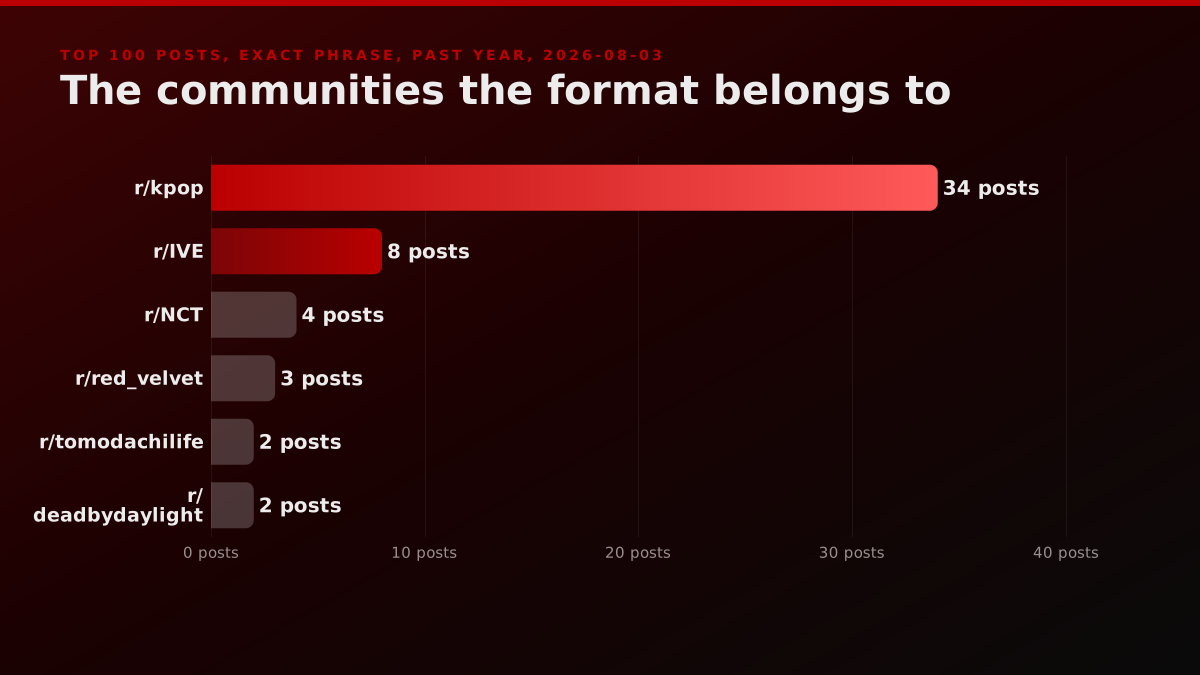
Zero came from a startup, SaaS, B2B or marketing community. Not one. The single largest source was r/kpop with 34 of the 100, followed by r/IVE with 8 and r/NCT with 4. The remainder scattered across games, anime, Chinese and Korean drama fandoms, motorsport, professional wrestling, MMA, film, and a long tail of individual band and artist communities.
Two notes on how to read that, because a number pulled from a live ranking moves. The counts above were measured on 2026-08-03 and the ranking shifts week to week, so treat the fandom split as a shape rather than a fixed figure. The zero is the durable part: we ran the same pull through two different matchers, an exact-phrase search and a looser relevance-filtered one, and the business-community count came back zero on both. The fandom leader moved between the two runs. The absence did not.
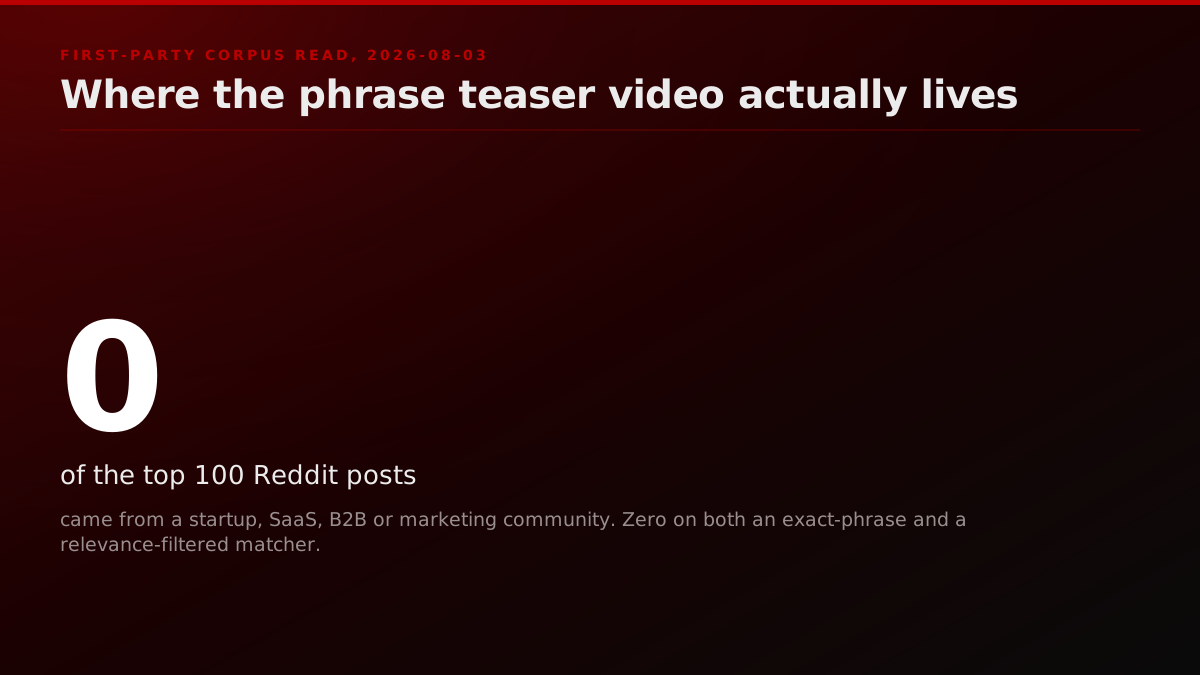
A null result is usually a broken instrument, so we ran a control on the same tool in the same window. The query "build hype before launch" returned 15 posts, and 9 of those came straight from business communities: r/SaaS, r/SaaSMarketing, r/GrowthHacking, r/micro_saas, r/TheFounders, r/AppBusiness, r/microsaas. The instrument finds founders perfectly well. Founders simply do not use the word teaser.
Then we checked whether the pattern held on a second platform with a different population, because one source agreeing with itself proves nothing. We pulled a chronological sample of the 20 most recent English-language, non-reply posts on X using the same exact phrase on 3 August 2026. The breakdown: four K-pop and music accounts, four Chinese drama and celebrity fandom accounts, two anime accounts, two video game communities, two automotive accounts teasing new models, two sports accounts, one novelist teasing a book series, and the balance unrelated. Software or startup product launches: zero.
Operator noteIn our own read, teaser is fandom vocabulary. Zero of 100 Reddit posts using the exact phrase came from a business community., FORKOFF first-party Reddit and X language scan, August 2026
Two independent platforms, two different populations, the same answer. The word teaser belongs to K-pop comebacks, anime premieres, game updates, car reveals and fight announcements. Look at what every one of those has in common and the mechanism is obvious: each of them has a fanbase that was assembled long before the teaser dropped. The teaser is not doing the work of gathering those people. It is cashing in a position that months or years of prior work established.
Meanwhile the founder version of the same question shows up constantly, phrased entirely differently.
How to build hype for a startup launch? i dont have an existing audience
been 11 months into building something, but now i can say i am close to the launch day. have been trying to figure out how hype actually gets built before a startup goes live.. this is my first project and have no idea where to start honestly..
Notice what is absent there. Eleven months of work, days from shipping, and the thing being puzzled over is not which format to shoot. It is where anticipation comes from when you begin at nothing. That founder worked out three possible routes unaided: assemble a crowd yourself across months, orchestrate one by hand through people you personally know, or pay someone whose crowd already exists. All three describe a crowd problem. Not one describes a video problem. They reasoned their way to this article's thesis purely by watching other people ship, and never once reached for the word teaser.
The demand-creation and demand-harvesting split
The useful frame is to sort every pre-launch activity into one of two boxes. Demand creation is slow, unglamorous and compounding: posting consistently, being useful in public, showing the build, answering questions in communities where your buyers already are, appearing on other people's audiences. Demand harvesting is fast, satisfying and finite: the waitlist page, the teaser, the launch post, the countdown. Harvesting converts what creation accumulated. It cannot exceed it.
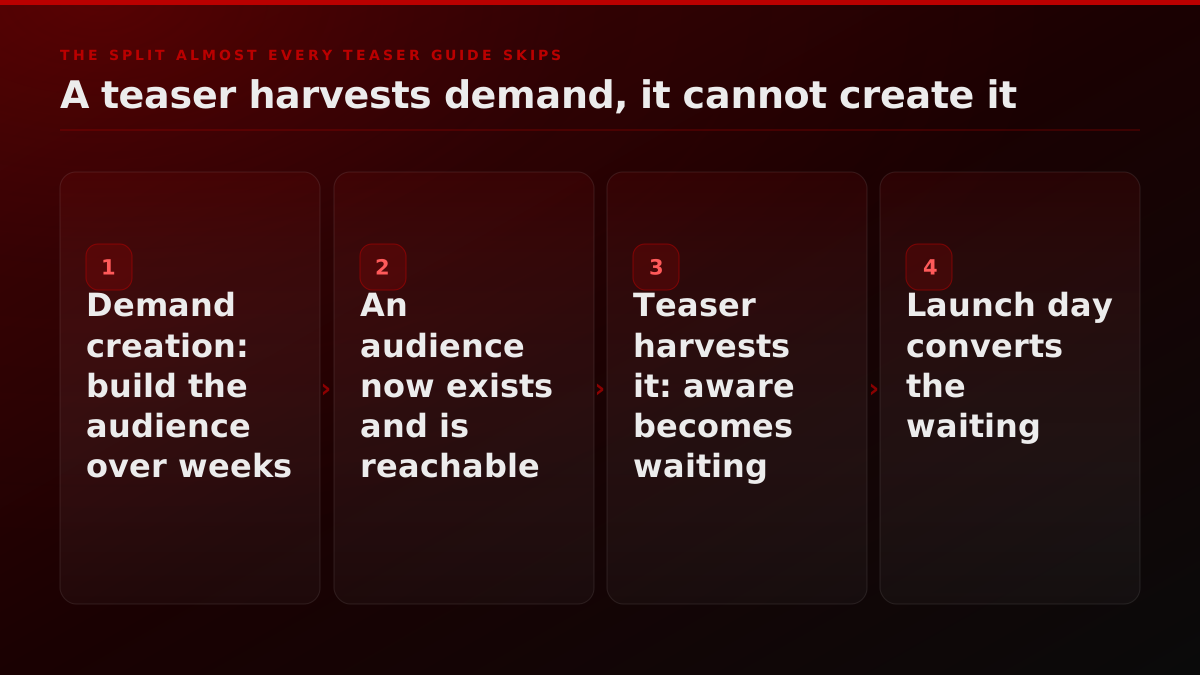
Founders pour themselves into the harvesting box because harvesting is legible. It concludes. It resembles marketing as most people picture marketing. Creation concludes nothing, resembles nothing, and shows no result for weeks on end. So somebody commissions a tease, nobody assembles a crowd, and a carefully made cut arrives in a room containing no one. Our 2026 playbook catches this same imbalance further downstream, in how budgets get split. What you are reading catches it one step earlier, at the crowd itself.
The teams that get this right invert the order deliberately, and they will tell you it took months.
CreatorX
@CreatorXGang
You'll never see @Solgodsnfts asking people to buy or marketing. What did SolGods do in the last 10 months? Most projects launch first and figure things out later. We did the opposite. We built @thegangmeta from 20 people to 2,000+ members before ever launching an NFT.
Most projects launch first and figure things out later. We did the opposite. We built @thegangmeta from 20 people to 2,000+ members before ever launching an NFT.
That is what the precondition looks like from the inside. Not a shoot day. A slow accumulation of people, finished before the launch asset was ever discussed.
What is the teaser precondition test?
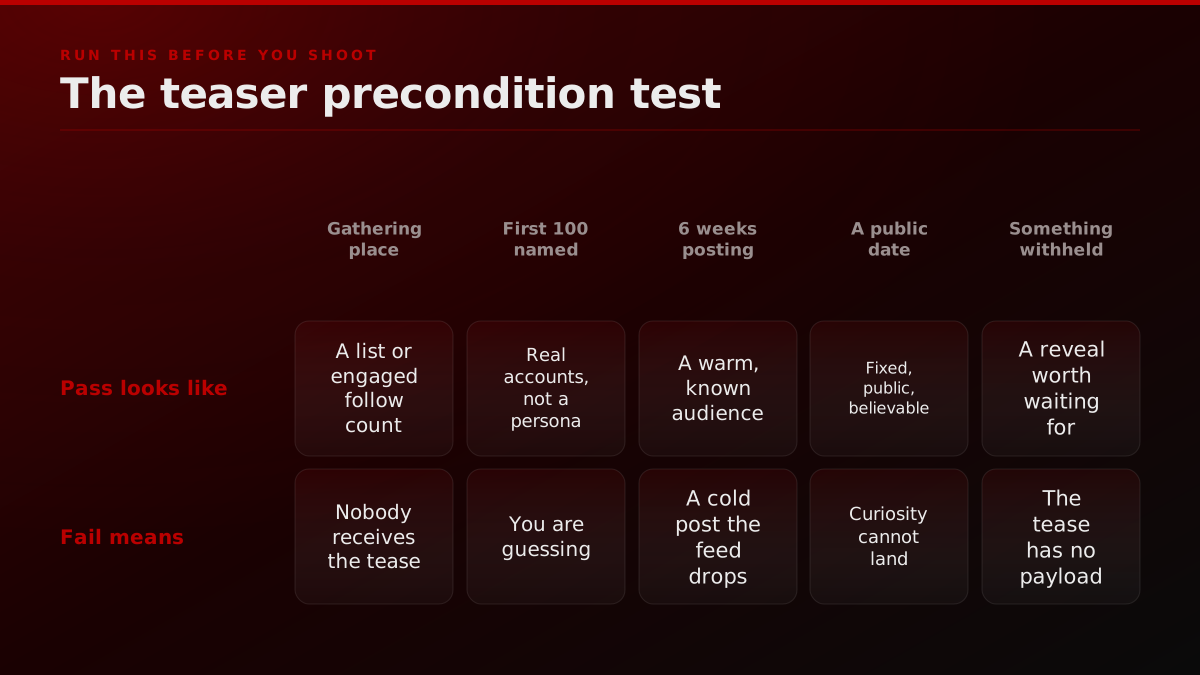
The teaser precondition test is five yes-or-no questions you answer before you brief anything, and they are deliberately blunt because the format is unforgiving of a maybe. Each one checks a different piece of the machinery a tease needs in order to function: a place where people already gather, a hundred receivers you can actually name, an account warm enough to be distributed, a fixed date for the curiosity to resolve against, and one thing genuinely worth withholding. Answer all five honestly and the decision makes itself.
The teaser precondition test, five questions before you shoot
| Question | Pass looks like | Fail means |
|---|---|---|
| Is there a place people already gather? | A list, group, or engaged follow count | Nobody receives the tease |
| Can you name the first 100 viewers? | Real accounts, not a target persona | You are guessing at an audience |
| Have you posted consistently for 6 weeks? | A warm account with a known audience | The feed will not carry a cold post |
| Is there a date to tease toward? | A fixed, public, believable date | Curiosity has nowhere to land |
| Is there one thing worth withholding? | A genuine reveal people would wait for | The tease has no payload |
Score five out of five and a teaser earns its place in the window. Score three or fewer and the same effort spent building the audience will return more, because a teaser cannot manufacture the people it needs.
The second question is the one that catches most people. "Can you name the first 100 viewers" does not mean describe your target persona. It means point at a list, a group chat, a Discord, a newsletter, a set of accounts that follow you and read what you post. A persona is a hypothesis. A hundred named accounts is a distribution channel. If your answer is a persona, you are not ready to tease, you are ready to start building.
Question three is about your account, not your audience, and founders skip it because it sounds like a technicality. It is not. Posting into a feed from a profile that has been silent for four months means every ranking signal about you is stale at precisely the moment you can least afford a weak opening. Six weeks of steady posting beforehand is not warm-up theatre. It changes who gets shown the tease in the first place, which changes everything downstream of that. Our teardown of a 1M-view launch walks through what happens in those opening minutes.
The fifth question is the quiet killer. A great many things called teasers have no payload: there is no genuine reveal, no held-back idea, nothing a person would actually wait to see. Those cuts are moody b-roll with a logo at the end. They are not withholding anything, because there was nothing there to withhold. Ask what the reveal is before you ask what the video looks like.
What to do in the six weeks before, if you failed the test
Failing the test is the common case and it is not a problem, it is a schedule. The work that a teaser needs is work you can do without a camera, and it is cheaper than the shoot you were about to book.
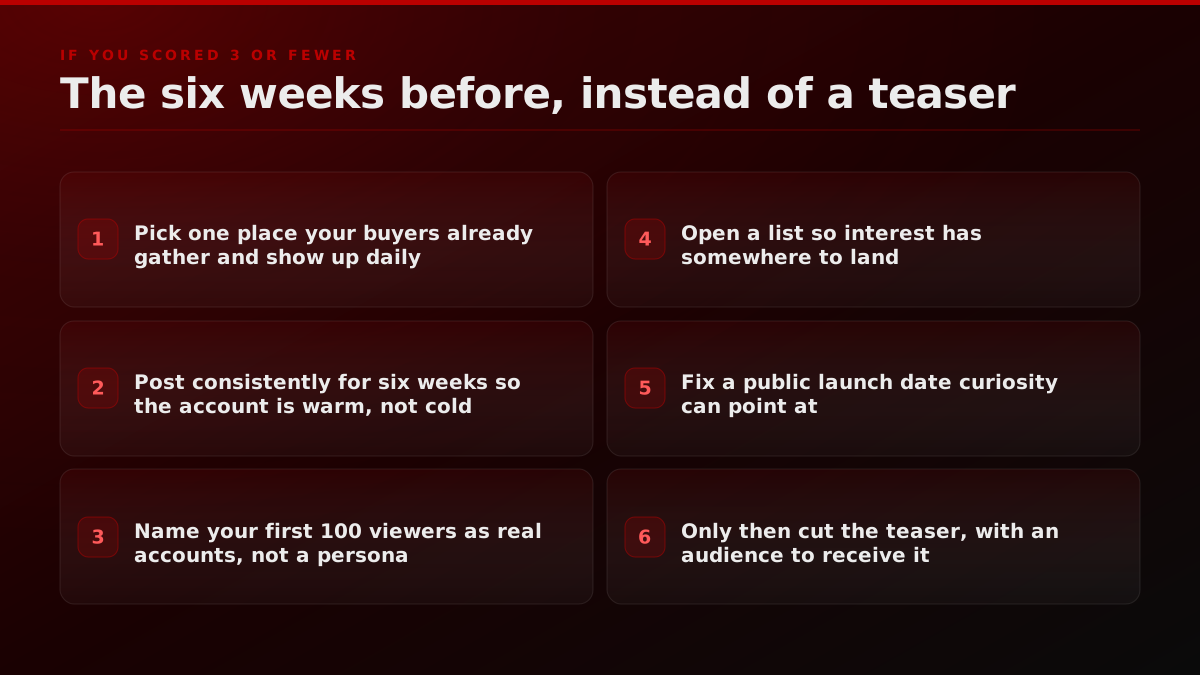
Start by choosing one place to gather people and make it a real destination rather than a form. A waitlist page with an email field is a collection point, not a relationship, and the difference shows up later. Give people a reason to be on the list that pays out before launch: a weekly note on what you are learning, early numbers, the thing you got wrong. The founder case study further down this guide fails precisely here, and the founder says so themselves.
Then post consistently for six weeks on the one platform where your buyers actually are, and be useful rather than promotional. This is the founder funnel motion and the Twitter marketing motion doing their ordinary work: the founder's own face and voice are the cheapest distribution asset a pre-launch company owns, and using them is free. Build in public, show the parts that are hard, answer questions in the communities where your buyers already gather.
Third, borrow assembled crowds instead of only growing your own. A guest slot on somebody's show, a creator placement, a genuinely helpful answer inside a large community, a partner's newsletter: each one puts you in front of people who already gather somewhere, months sooner than you could gather them yourself. That is the entire premise of KOL marketing as a category. Renting a few minutes of trust somebody else spent years earning usually beats the calendar year it would take to earn the same trust from scratch. Sanity-check what a placement ought to cost with the KOL rate calculator before you agree to anything.
Fourth, and this is the step people skip, pick and publish the date. Curiosity needs somewhere to land. Without a date, a tease is an open loop with no closing beat, and open loops that never close teach an audience to stop paying attention. The launch readiness checklist covers the rest of what has to be true before you commit to a window, and the big bang versus rolling launch breakdown covers whether you want a single dated moment at all.
Do those four things and you will have passed the test in about six weeks, at which point the teaser becomes worth making. Skip them and the teaser is the most expensive way to discover you had no audience.
What actually goes in a teaser video, and what should you withhold?
Once you pass the test, construction gets simple, because a teaser is built backwards from a single decision: what are you not going to show. Everything downstream of that choice, the runtime, the sound design, the order of the shots, the last frame, is either protecting the absence or wasting the seconds. A cut assembled without naming the absence first is a short advertisement that borrowed the word teaser, and it will behave like one. Name the withheld variable in a sentence and the brief writes itself.
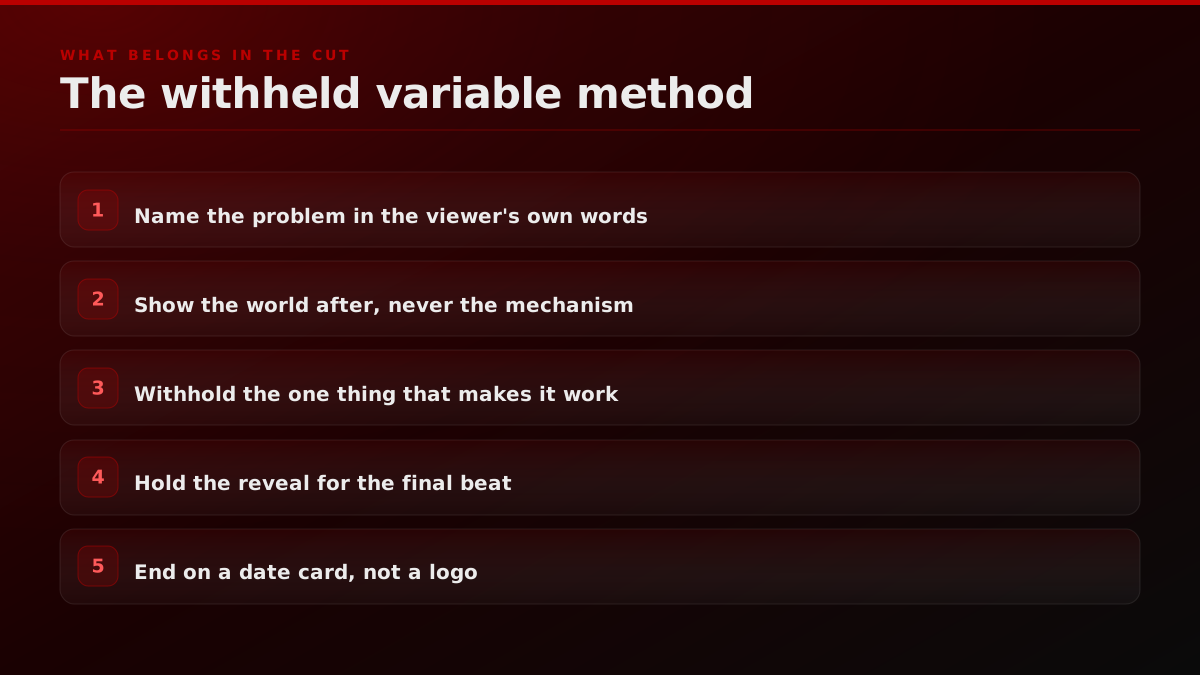
Name the withheld variable first, in one sentence, before anything else. It is usually one of four things. You show the result without the mechanism, so people see the outcome and cannot work out how. You show the category without the product, so people know what world this lives in and not what the thing is. You show the sensory signature without the object, a sound, a colour, a movement, which is the approach the car and console reveals use. Or you show the problem without the fix, which is the strongest option for software because it self-selects an audience that has the problem.
Then build every second around the absence of that variable. This is where most attempts collapse. A fifteen-second cut that shows the whole product, states the value proposition and asks for a signup is not a teaser. It is a compressed trailer, and it performs worse than either a real teaser or a real trailer, because it gave away the reveal for free and had no room to make the case. If your cut would still make sense with the withheld variable put back in, you never removed anything.
Operator noteWe brief a teaser by naming the one variable being withheld. If nobody can name it, there is no teaser, only a short ad., FORKOFF distribution network, operator observation
The second construction rule favours repetition over variety. A campaign outperforms a one-off, reliably. Take your single absence and circle it three or four times across those weeks, approaching from a fresh angle each time, then read which framing your people lean toward. Carry that winner forward so the day itself resolves the precise loop you opened. Our sequencing guide covers that choreography in full, and botching it is exactly how two cuts that should compound end up cannibalising each other.
One warning on craft, because the incumbent guides push a house style and it is half wrong. The most prescriptive of them, how to create a teaser video, spells the grammar out: heavy bass drops and risers, a change of visual angle every one to two seconds, dark lighting and obscured angles to hide the subject. The others are softer and less consistent than the reputation suggests. The keys to creating an effective video teaser does ask for suspense and a signature sound, but it wants bright lighting and smooth transitions, and 17 best product teaser video examples is a gallery of consumer hardware reveals whose closing advice is to show the product plainly. What unites the corpus is not one grammar, it is that all of it concerns the file. And the dramatic version of that grammar was built for consumer hardware and entertainment, where the audience has already opted into being excited. Ported onto a B2B software launch it reads as an ad, and feeds discount anything that reads as an ad. The cinematic launch video versus raw demo comparison walks through where the cinematic grammar earns its keep and where it costs you trust.
How long should a teaser video be, and why is completion the constraint?
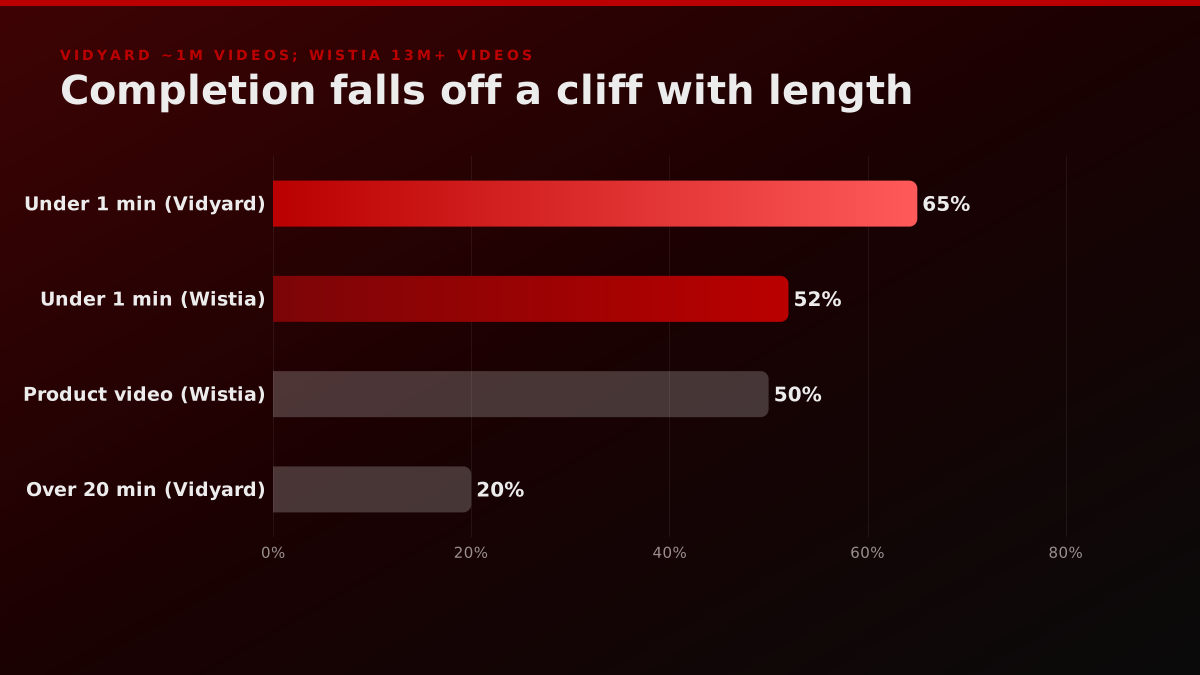
Short, and shorter than you think: well under a minute, frequently under twenty seconds. The reason is not fashion, it is where the payload sits. Vidyard's benchmark analysis of 943,305 business videos reports 65% of viewers reaching the end when a video runs under a minute, against 20% once it passes twenty minutes. That gap decides more for a teaser than for any neighbouring format, because a teaser keeps its entire payload in the closing seconds rather than spreading it across the runtime.
Short videos finish, and finishing is what a teaser needs
Vidyard analysed nearly 1 million business videos for its benchmark report and found that when a video runs under one minute, 65% of viewers stay engaged all the way to the end, while videos over 20 minutes hold only 20% through to the finish. That completion gap matters more for a teaser than for any other launch format, because a teaser carries its entire payload in the last beat. A trailer that loses you at 70% has still made its case. A teaser that loses you before the date card has delivered nothing at all, since the withheld reveal and the reason to come back both live at the end.
Source: Vidyard, Video in Business Benchmark Report
Look closely at why finishing carries that weight, because the mechanism is structural rather than a matter of taste. Most cuts spread their argument evenly, so leaving one two thirds of the way through still leaves you holding the claim and a fair share of the evidence. A tease loads everything into its closing seconds, because the closing seconds hold the date and the place to sign up. Leave one with a few seconds still to run and you have absorbed a mood and received no instruction whatsoever. You cannot act, because nobody got around to telling you how. A tease is therefore not chasing watch time as a general good. It is chasing one specific event, which is arrival at the end.
That reframes the length question. The right length is the longest cut where most people still reach the final card, which in practice means well under a minute and often under twenty seconds. The awareness data agrees from the other direction.
Under a minute is where awareness content actually performs
Wistia analysed over 13 million videos for its 2026 State of Video work and maps length directly to goal: for raising brand awareness and engaging on social, the recommended length is under one minute, and videos under a minute average a 52% engagement rate, meaning viewers typically watch half the runtime. Product videos in that band sit at 50%. For a teaser this is the permission slip to cut hard. The format is not short because short is fashionable, it is short because the awareness job it does is the one job where the data says under a minute is the correct length rather than a compromise.
Source: Wistia, optimal video length analysis
So the working rule is blunt: trim until the closing card is reachable, then trim once more. If you are agonising over a shot you love, the honest accounting is that the shot costs you completions, and completions are the only currency this format deals in. Our guide to short-form for startups covers the feed mechanics sitting underneath that arithmetic.
Where a teaser goes, and the second precondition
A teaser needs a surface where the audience you built can actually receive it, and that surface is almost never a company page nobody follows. Post it where you did the six weeks of work, because that is where the warm audience and the warm account both live. A teaser on a cold brand account and the same teaser on a founder account with an engaged following are not the same video in any way that matters.
The platform choice also changes the cut. On a muted autoplay feed, a teaser that carries its withheld variable in the audio has no withheld variable at all, it has silence and some visuals, so anything that matters has to be on screen. In a newsletter or a community, the teaser arrives with context already attached, which means it can be quieter and stranger, because the reader knows who sent it. On a video platform where people arrived on purpose, it can breathe slightly longer. Wistia's optimal video length analysis of more than 13 million videos maps runtime to the job you are hiring the video for, and awareness on social is the one band where the shortest cut is the correct choice rather than a compromise.
The one surface where a teaser reliably dies is a paid campaign aimed at strangers, and it dies for the same structural reason as everything else here. Paid against strangers is a first touch. A tease is a second touch. Money spent amplifying a cut whose whole mechanism presumes prior familiarity is money spent broadcasting a message that only makes sense to people who already recognise you. Put that same money into whatever creates the recognition, then let the tease collect it afterwards. Our breakdown of where startup video spend leaks traces why this particular line item goes unfunded so consistently.
Make a YouTube Teaser Video FAST / TimeBolt
TimeBolt - Keep It Real
The video ranking first for the exact term teaser video is an editing tutorial about cutting one faster. That is the shape of the whole result page: tools for making the file, and almost nothing about who receives it.
That result rewards a moment's attention, because it describes everything published under this term. The page ranking first for "teaser video" is a tutorial on editing one faster. Below it sit template-driven makers, browser editors, a stock library and a design portfolio. Nearly the entire published corpus concerns producing the file. Almost none of it concerns who receives the file, which is the single variable deciding whether making it was worth the afternoon.
How do you measure a teaser video, and why are views the wrong number?
A teaser is a commitment instrument, so judge it on commitment. The question is never how many people saw the cut, it is how many people changed state because of it, moving from vaguely aware of you to actively waiting for you. That state change shows up in list adds, in replies asking when it ships, in saves, and in reminders set for the date. None of it shows up in a view counter, which is why the counter is the wrong instrument rather than merely an imprecise one.
What founders measure on a teaser, and what actually judges it
| What gets reported | What it tells you | Better signal |
|---|---|---|
| View count | How wide the seed went | Saves and shares per view |
| Likes | Passive approval | Replies asking when it ships |
| Follower growth | Reach, not intent | List adds from the video |
| Impressions | Delivery volume | Calendar reminders set |
| Watch time | Whether the cut holds | Return visits on launch day |
A teaser is a commitment instrument, not a reach instrument. The trailer and the demo are judged on reach and action. Judge a teaser on how many people moved from aware to waiting, because that is the only thing it can actually do.
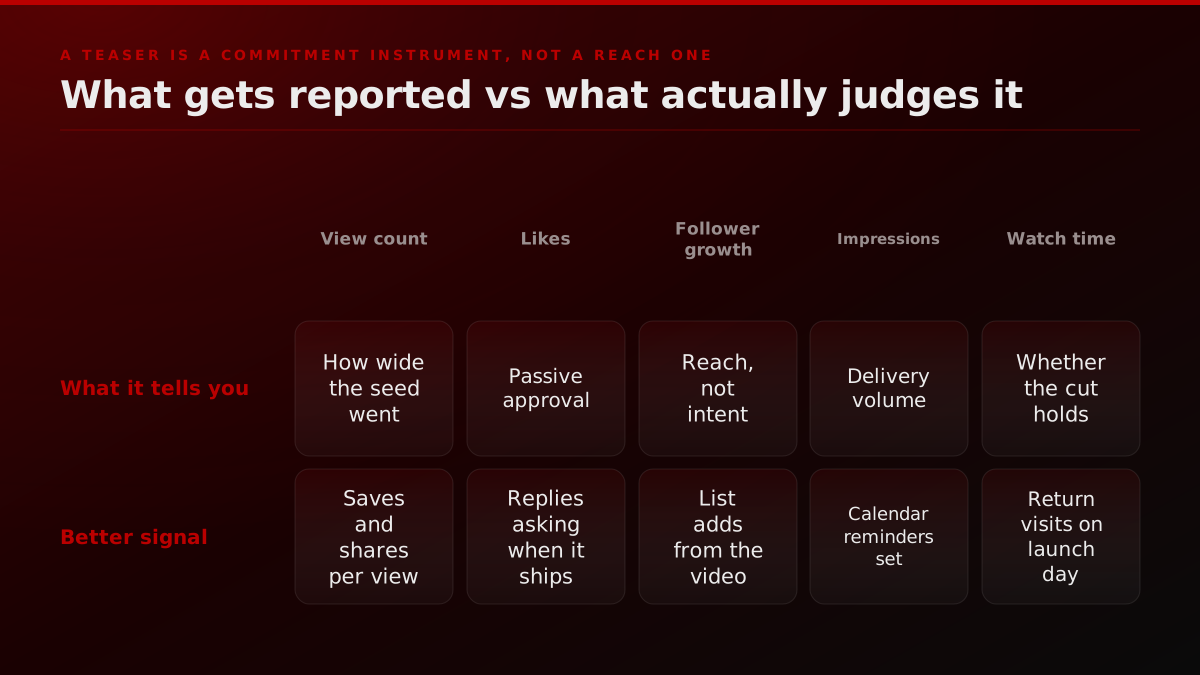
The metric that matters most is list adds attributable to the video, because that is the state change the format exists to cause: aware becomes waiting. After that, look at replies asking when it ships, which is the highest-quality signal a teaser can generate and is almost never reported. Then saves, which on most feeds means someone intends to come back. Then, on launch day, the number that closes the loop: how many people who saw the teaser actually showed up.
Operator noteA teaser that adds nobody to a list is a failed teaser even at a million views. Commitment is the only output it has., FORKOFF distribution network, operator observation
Views are not useless. They simply answer a question you were not asking. A counter reports how far the thing travelled, and our qualified view auditor exists because that counter quietly folds together people who might buy, people who never would, and traffic that was never human. A tease seen by a million indifferent strangers that moved nobody into a waiting state has failed. A tease seen by four thousand of exactly the right people that moved three hundred of them has succeeded completely. On a dashboard those two results appear inverted, and the dashboard is simply wrong about which one you wanted.
The decay problem: why teasers run too early lose
Anticipation is perishable, and the decay is steeper than founders expect. A teaser campaign that starts a quarter out does not accumulate a quarter of anticipation. It accumulates some, then leaks it, and arrives at launch day with a list of people who no longer remember signing up.
Someone published the whole thing with the numbers attached.
Built a waitlist before launch. 2,400 signups. 89 became customers. Here's what I'd change.
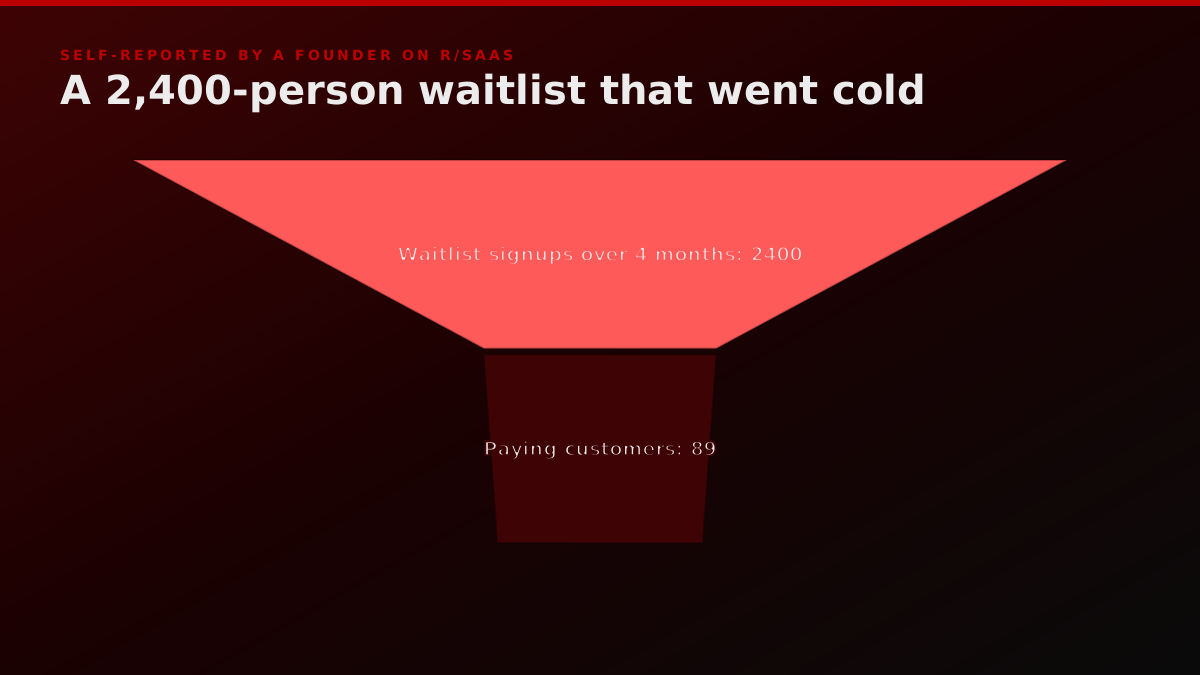
Their self-reported funnel: 2,400 waitlist signups collected over four months, 2,400 launch emails sent, 34% opened, 23% clicked through, 312 started a trial, 89 converted to paid, a 3.7% waitlist-to-paid rate, against roughly 120 hours of their own time. And their own first line of diagnosis was not about the product or the price.
List went cold. 4 months of waiting killed momentum. By launch, people had forgotten why they signed up.
Look at what the published benchmarks for this stage actually measure. GetLaunchList's waitlist benchmark tool reports median landing-page-to-waitlist conversion around 3.4% for SaaS and a median email verification rate in the 55 to 58% range. Both describe how efficiently you collect people. Neither describes whether the people you collected still care by the time you ship, which is the exact failure the founder above ran into. Measurement at this stage stops at the signup, and a tease gets judged on the same truncated basis.
The rest of their diagnosis is just as useful, and every line of it is a teaser-campaign lesson rather than a waitlist lesson. There was no engagement during the waiting period, only coming-soon updates. A free list with no friction attracted curious people rather than buyers. The launch was announced with a single email. Their own corrective was to shorten the waitlist window to four to six weeks, put genuinely valuable content in the gap, segment by engagement, and announce over a sequence rather than a single send.
Operator noteThe teasers that worked for our clients ran inside four weeks of the date. The ones that ran for a quarter arrived at launch day cold., FORKOFF distribution network, operator observation
Treat that as a specification and it writes itself. Four to six weeks, never four months. Substance in the waiting period, not teasing on repeat, since teasing with nothing in between is precisely how a list cools. Enough friction at signup that the people on it genuinely want the thing. And an announcement that arrives as a sequence instead of one email carrying all the weight. Our three-ring model sets out how those layers should overlap.
When should you not make a teaser at all?
More often than the format's reputation suggests, and the platform that hosts more product launches than anywhere else says so in its own documentation rather than leaving anyone to infer it. Product Hunt's preparing-for-launch guide reports that only a slim majority of the products reaching Product of the Day since 2021 carried a video at all, states plainly that a video is not always necessary, and puts a stronger correlation on something that costs nothing to produce.
Nearly half of Product Hunt winners had no video at all
Product Hunt says in its own launch guide that about 53% of products which reached Product of the Day since 2021 include a video, and that videos "can help depending on what your product is, but aren't always necessary." Read the other side of that number. Close to half of the products that won the day did it with no video whatsoever. The same guide reports that 70% of products reaching Product of the Day, Week or Month had a first comment written by the maker, which is a higher correlation than the video has. If you are choosing between shooting a teaser and showing up in your own comments, the platform's own data points at the comments.
Source: Product Hunt, Preparing for Launch guide
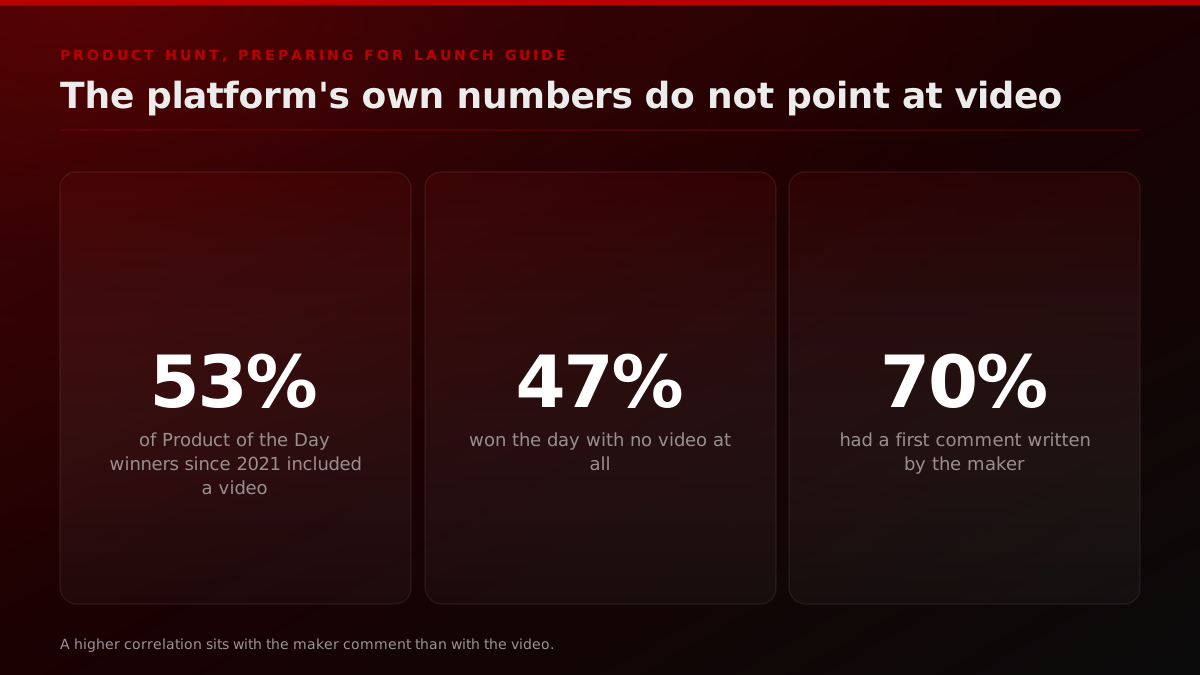
That number deserves to be read in both directions, because the marketing reading is the less interesting one. Yes, a slim majority of Product of the Day winners had a video. But close to half won the day with no video at all, and the guide is explicit that a video is not always necessary. Meanwhile the maker's first comment, which costs nothing and takes fifteen minutes, correlates harder than the video does. If your pre-launch hours are finite, and they are, the platform's own data suggests the comment and the community work outrank the asset.
So skip the teaser when any of these are true. You failed the precondition test and have not yet done the six weeks, in which case a teaser is a way to spend money discovering that. There is nothing genuinely worth withholding, in which case you have a short ad and should just make the demo. Your product is a category people already understand and the fastest path is showing it working, which is most B2B software. Your window is too short for a campaign, since a single teaser posted three days out does almost nothing that a good launch post would not do better. Or your budget only covers one film, in which case make the launch-day one, because a teaser with no trailer behind it opens a loop you cannot close.
For a token launch the calculus shifts, because allowlist and community mechanics change what a pre-launch asset is doing and there is usually a real assembled audience to tease. The token launch video guide covers those calls separately.
What does the teaser have to hand off?
If you do make one, the teaser is not the deliverable. It is the first half of a pair, and it is only finished when the launch-day asset closes the loop it opened. Commission the two cuts as one job with two delivery dates, because a tease whose payoff never lands, or lands answering some other question, teaches the people it collected that your open loops are not worth holding onto. That lesson is expensive and it carries into the next launch.
Three requirements govern that handover. Whatever you publish on the day must settle the exact absence you created, not some cousin of it, so an outcome teased without its mechanism has to arrive showing the mechanism. The tease then gets retired rather than recycled, since re-posting it once the moment demands substance is the commonest sequencing error there is. And everyone it collected deserves a direct message that morning rather than the hope they happen across a public post, because that list, not the cut, is what those weeks actually produced.
Write both cuts into a single brief, at the same sitting, before either gets made. Our creative brief guide covers what that document needs to contain. If you are still weighing whether to make these yourself or hire someone, the agency scorecard rates who actually does this well.
Feyi
@gvofeyii
Founder: I need a launch video for TRIAD Me: Do you have a script? Founder: I leave it to you, go crazy Me: ⬇️
That exchange is where most of this goes wrong, and it goes wrong before a single frame exists. The founder asks for a launch video. Nobody asks who is going to watch it. By the time that question surfaces, the money is spent and the window is open.
The verdict: build the audience, then tease it
The teaser is a genuinely good format and it is the wrong first move for most of the people reading about it. It is borrowed from K-pop, from games, from car reveals and film releases, and in all of those places it works because somebody spent years assembling the fanbase that the tease then converts. Our own read of the language says that plainly: across 100 Reddit posts and 20 posts on X using the exact phrase, not one came from a software launch, while the same tools found founders asking the underlying question constantly in completely different words.
So answer those five questions honestly. Clear them all and your marching orders are short: keep it brief enough that people arrive at the closing card, construct it around a single named absence, schedule it four to six weeks out with something nourishing in between, publish it where the people you warmed up already congregate, grade it on who committed rather than who scrolled past, and write it into one brief alongside whatever closes the loop later. Miss a few and hand those weeks to the crowd instead. That is not a runner-up prize. It is the better return on identical hours, and this format will still be sitting there once you have something to point it at.
None of that is an argument against the format. It is an argument about sequence. A tease is the quick, enjoyable, highly visible piece of work, and it only ever cashes out on top of something slow that somebody built first. Our own read comes from the receiving end rather than the making end: the FORKOFF clipping network has processed 5B+ views, and in everything we have watched move, the cut itself was rarely what separated the launches that landed from the ones that vanished. Who was already listening did that. If you want people who measure that before recommending a single frame, that is the job the product launch video service is built around, and you can book a strategy call to map your pre-launch weeks first.