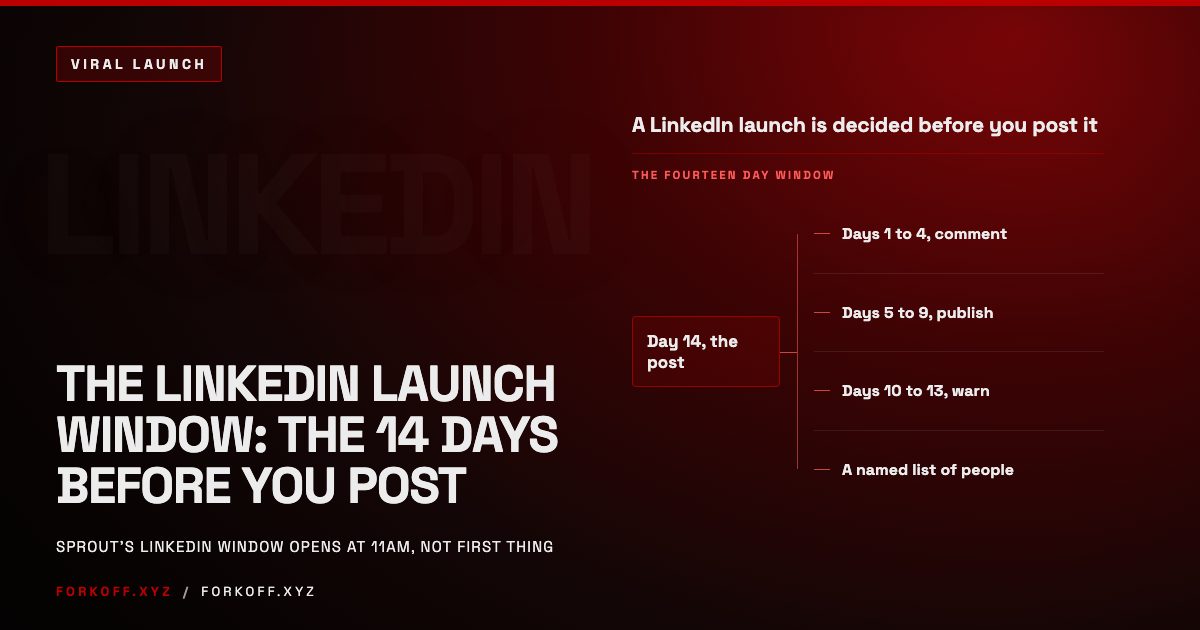
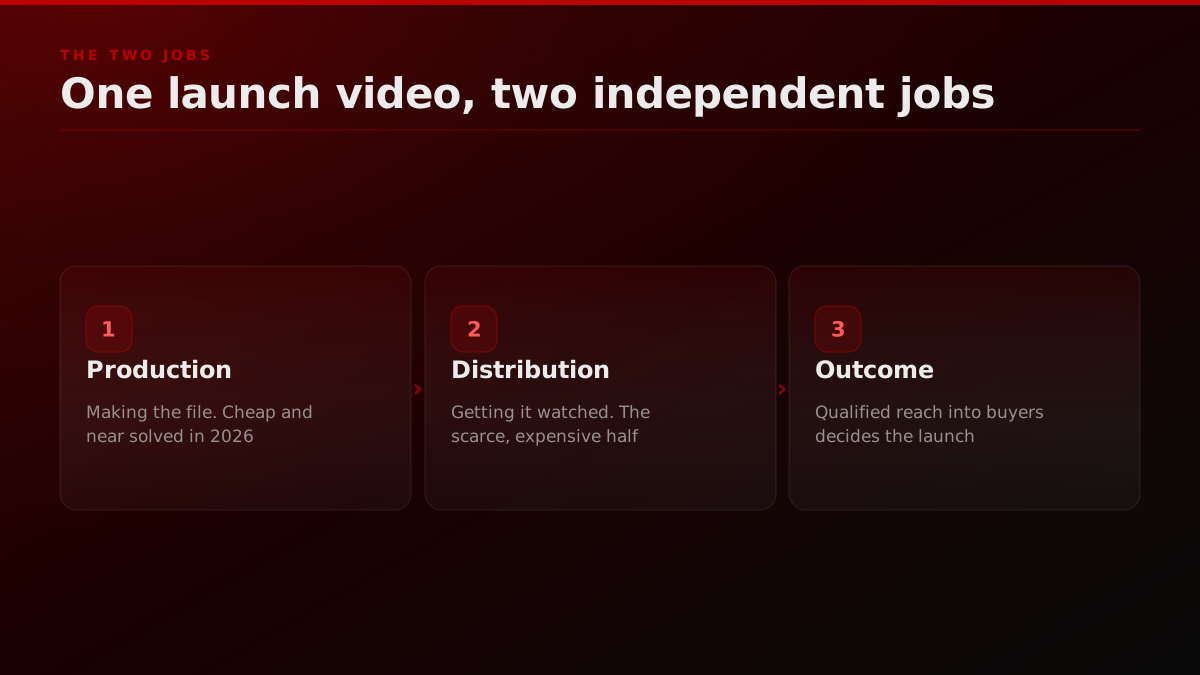
Cinematic launch video or raw demo is the question every founder asks before an AI launch, and it is the wrong question. The honest answer is that both can win and both can flop, because the format is not what launches the product. A launch video is two jobs wearing one name: production, the file you make, and distribution, getting it watched by someone who could buy. Production is now cheap and close to solved. Distribution is the scarce, expensive, outcome-defining half. This piece settles cinematic vs raw, then shows you the half that actually decides it. If the launch is going out on LinkedIn, that half starts two weeks early, and the LinkedIn launch window is the timeline for it.
The short version
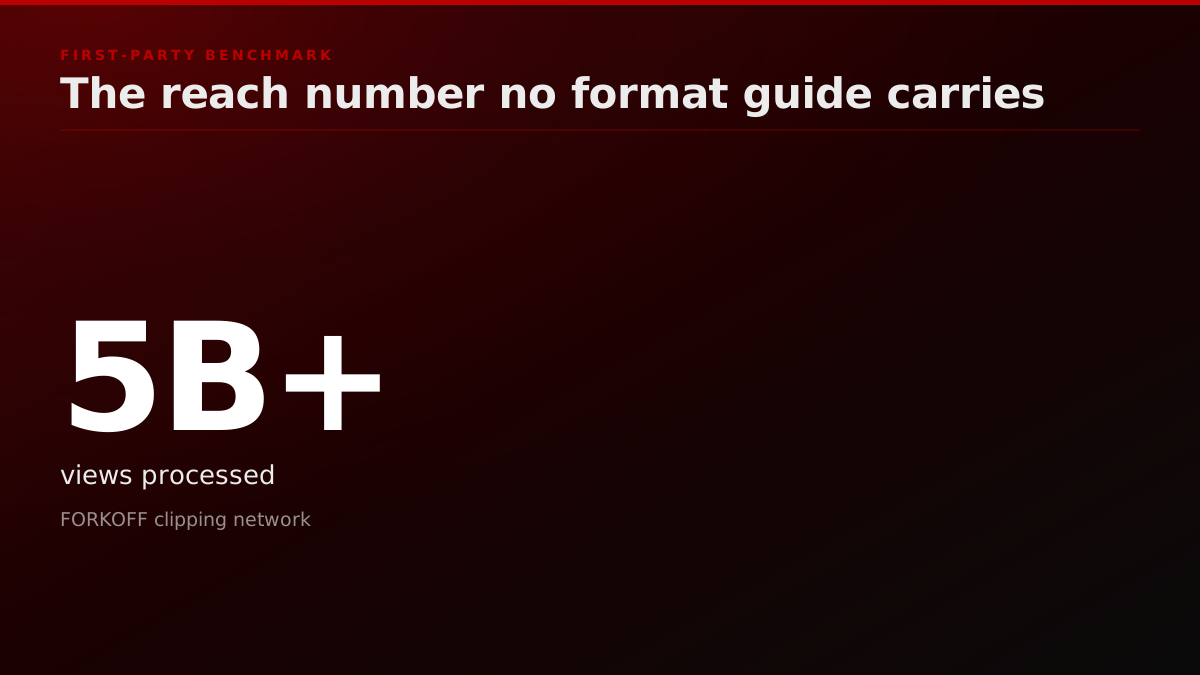
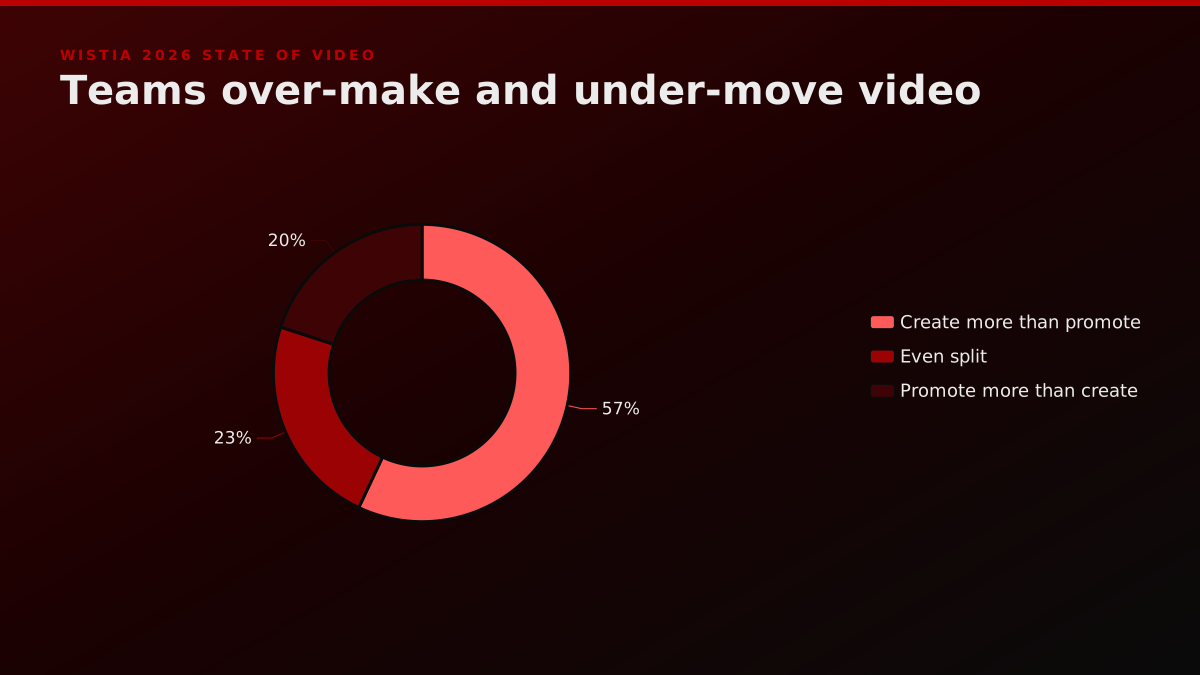
For most AI products, a raw demo that clearly shows the thing working beats a cinematic film that over-promises, because polish is a shareability lever, not a conversion lever, once you clear a basic clarity floor. The choice everyone frames as cinematic vs raw is the wrong frame. A launch video is two jobs wearing one name: production, which AI and templates made cheap and near solved, and distribution, which is the scarce half that decides whether anyone watches. Wistia's 2026 State of Video found 57% of teams spend more time creating video than promoting it and only 20% the reverse, which is the launch mistake in one statistic. Cinematic earns its cost only when the product is reliably demonstrable, a funded distribution plan exists, and the moment justifies a hero asset. Otherwise a clear demo plus real reach wins. The reach benchmark under this piece is the FORKOFF clipping network, which has processed 5B+ views, and the metric is cost per qualified view, not raw views.
If you searched for whether to shoot a cinematic launch video or just post a raw demo, you probably found a stack of pages arguing demo versus explainer, animation versus live action, agency versus DIY. Useful, but every one of them answers the small half of the question. None of them tells you the part that decides whether your AI launch lands: how the video reaches a person who could buy, at a moment they are paying attention. That omission is not an accident. The pages ranking for these terms are written by production shops and AI video tools, and the asset is the only half they sell.
This is the read on both halves. It defines cinematic and raw honestly, compares them on the dimensions that actually differ, explains why production stopped being the hard part (the tooling question underneath that is which half of the video a generator can actually make), and then makes the case that distribution is what launches an AI product regardless of which format you choose. The number that frames all of it is a reach number, not a production one. The FORKOFF clipping network has processed 5B+ views moving short-form content across platforms, and we price launch reach on cost per qualified view. No format guide carries a figure like that, because format vendors measure turnaround, not reach.
The two-job problem hiding inside cinematic vs raw
The cinematic-versus-raw debate assumes the video is the launch. It is not. The video is the asset, and the asset is the cheap half. Here is the whole job in one frame: production is making the file, and distribution is getting the file in front of the right audience while they are paying attention. You can nail either half and lose, because the two are independent. A cinematic film with no distribution earns zero views. A raw demo with real distribution can carry a launch.
Founders miss this because the entire market they research is selling the asset. Search the terms and you get agencies quoting production, tool pages generating production, and comparison guides ranking production styles. Nobody on the page is paid to talk about reach, so reach quietly disappears from the decision. The result is a launch budget that is almost entirely a production budget, aimed at the half that stopped being scarce.
Cinematic vs raw is a production question, and production is the half that stopped mattering most. When founders argue format, they are arguing about how to spend the small, solved half of the budget while the scarce half goes unplanned. That is the mistake this piece exists to correct. Pick the format that fits your product and your moment, then spend the real effort on reach. Everything below is in service of that one reframe, and the 2026 launch video playbook works the full economics if you want the deeper version.
Cinematic vs raw, the decision in one table
| Factor | Cinematic | Raw demo |
|---|---|---|
| Cost | 5,000 euros-plus | Near zero |
| Over-promise risk | High for AI | Low |
| Best lever | Shareability | Clarity |
| What still decides it | Distribution | Distribution |
The right column and the left column share the same last row on purpose. Distribution decides both.
What is a cinematic launch video?
A cinematic launch video is a produced hero film: scripted, shot or animated to a high craft standard, scored, and edited to impress at a launch moment. Think of the flagship films behind a major model drop or a funding announcement, the ones with motion design, a narrative arc, and a soundtrack. In 2026 a proper cinematic launch video from an agency commonly starts at roughly 5,000 euros and runs to about $25,000 or $50,000-plus for a brand-grade launch film, often over a three-to-six-week build. Those are directional bands from public agency pricing, not a fixed rate card, and you can see the full spread in what a launch video costs.
The craft is real, and it is now a teachable template. A motion designer breaking down a real AI product launch film, frame by frame, shows the same scene structure, motion rules, and pacing logic appearing again and again. That is the tell: cinematic production has become a repeatable pattern, which is exactly why it stopped being the edge. When the look can be reproduced on a schedule, the look is a commodity, not a moat. The format types, teaser, trailer, and sizzle are each a well-documented recipe now, and recipes do not win launches on their own.
Cinematic still buys real things. It buys a big-screen moment for a conference stage, a hero asset a press outlet can embed, and a shareable object that looks credible in a quote-tweet. What it does not buy, on its own, is reach. A film is a payload, and a payload with no delivery system sits on a hard drive. Hold that distinction, because it is the whole argument.
Bohdan Motion
@bohdanmotion
Breakdown of ElevenLabs' launch video for Flows Agent. Full workflow explained in just 48 seconds without feeling overwhelming. Here is the 5-stage structure and why it converts.
What is a raw demo, and when does it beat a film?
A raw demo is the opposite end of the spectrum: a founder-shot screen recording, a live walkthrough, a native vertical clip that shows the product doing the thing with minimal production. No score, no color grade, no narrative arc. For an AI product the raw demo is often the most honest artifact you can post, because it shows the real current output rather than a rendered promise of it. When the thing on screen is genuinely novel, the novelty carries the clip and the production value is beside the point.
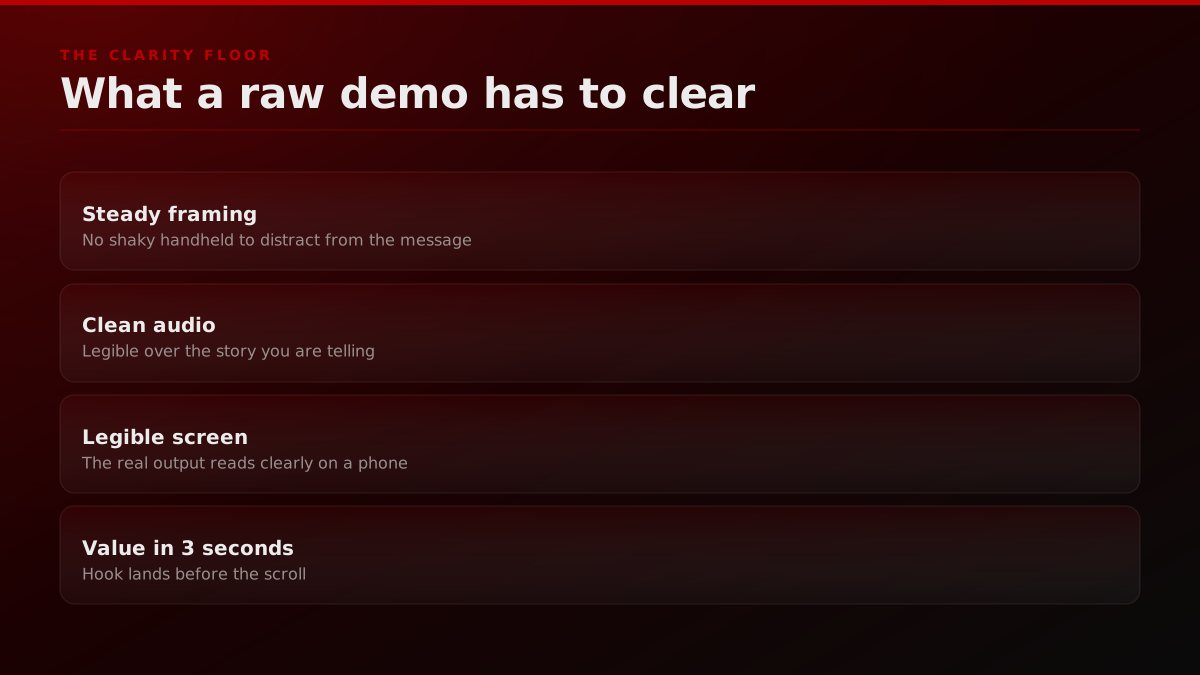
Raw does not mean careless. There is a clarity floor a raw demo has to clear: steady framing, clean audio, a legible screen, and a first three seconds that show value. Below that floor, roughness competes with your message. As a founder put it in the r/Startup_Ideas debate, a shaky self-shot video can hurt a strong story because people spend cognitive energy processing the roughness instead of the message. The fix for that is clarity, not cinema. You are not buying a film, you are removing friction between the product and the viewer, and that costs almost nothing.
a shaky self-shot video can actually hurt a strong story because people spend cognitive energy processing the roughness instead of the message. it's not about impressing anyone, but mainly about removing friction between the story and the viewer.
The clarity floor is cheap to clear in 2026. A steady screen capture, a decent microphone, and one clean take put you above it. Everything past that point is the diminishing-returns zone, where each extra dollar of polish buys a little more shareability and no more conversion. Knowing where that floor sits is most of the budgeting decision, and the launch video readiness checklist is a fast way to confirm you have cleared it before you spend a cent on production upgrades.
Cinematic vs raw, the honest comparison
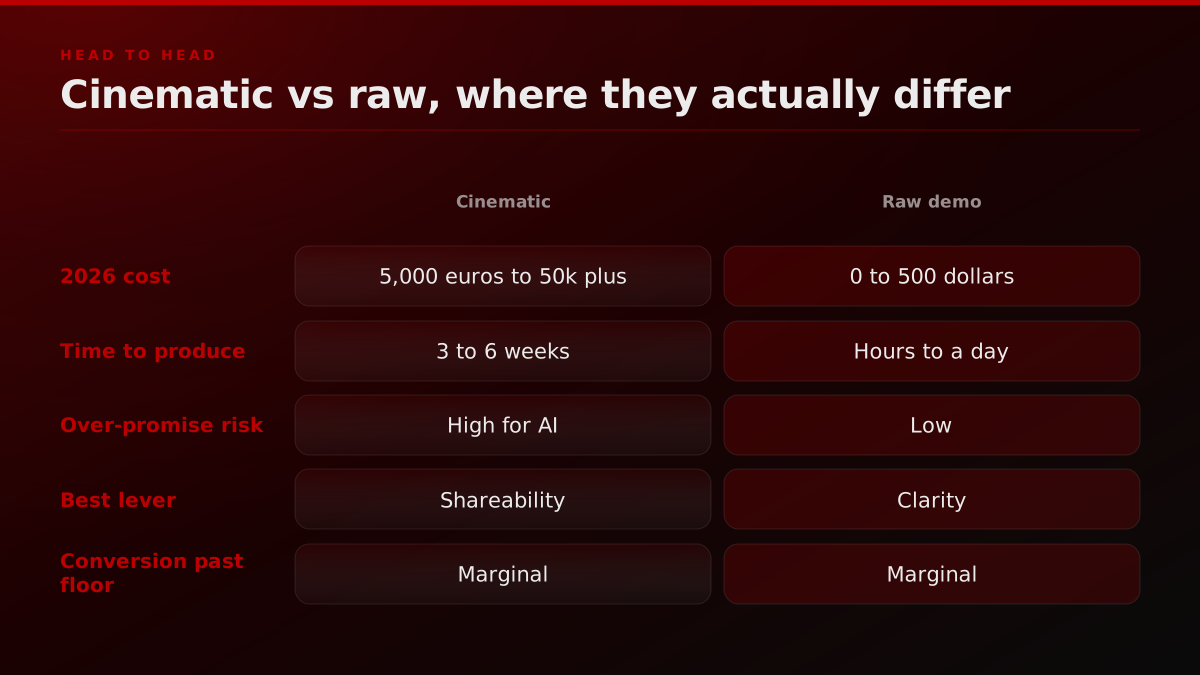
Put the two side by side on the dimensions that actually differ, and the pattern is clear. Cinematic costs orders of magnitude more, takes weeks instead of hours, and carries a real over-promise risk for an AI product because a polished film can imply a capability the model has not reached yet. Raw costs almost nothing, ships in a day, and shows the true output. Where cinematic genuinely helps is shareability: a cleaner cut travels further before anyone hears the story. Where raw helps is belief: it reads as real.
Cinematic launch video vs raw demo, the honest comparison
| Dimension | Cinematic launch video | Raw demo |
|---|---|---|
| Typical 2026 cost | 5,000 euros to $50,000-plus | $0 to $500 |
| Time to produce | 3 to 6 weeks | Hours to a day |
| Over-promise risk for an AI product | High, sets an expectation the model may miss | Low, shows the real current output |
| Where it helps most | Shareability, how far a clip travels | Clarity, believing it is real |
| Conversion past a clarity floor | Marginal | Marginal, so spend the margin on reach |
Cost bands are directional 2026 estimates from public agency pricing pages and founder reports. Confirm with any vendor before you budget.
The crucial row is the last one. Past a clarity floor, both formats convert at roughly the same rate, because the buyer is deciding on the product and the story, not on the resolution. That means the marginal dollar past the clarity floor is better spent on reach than on polish. Spend to clear the floor, then stop spending on the film and start spending on distribution. The comparison guides on the first page of results will happily debate resolution and animation style for two thousand words and never mention that neither one moves conversion once the floor is cleared.
There is a second reason the honest comparison favors raw for AI specifically. A raw demo is fast, so you can make ten of them. A cinematic film is slow, so you make one. Platforms reward variety and volume in the launch window far more than they reward a single expensive asset, which means the raw workflow is not just cheaper, it is structurally better matched to how distribution actually works. The best product launch videos that crossed big numbers were almost never a single hero film doing all the work.
Why did production stop being the hard part?
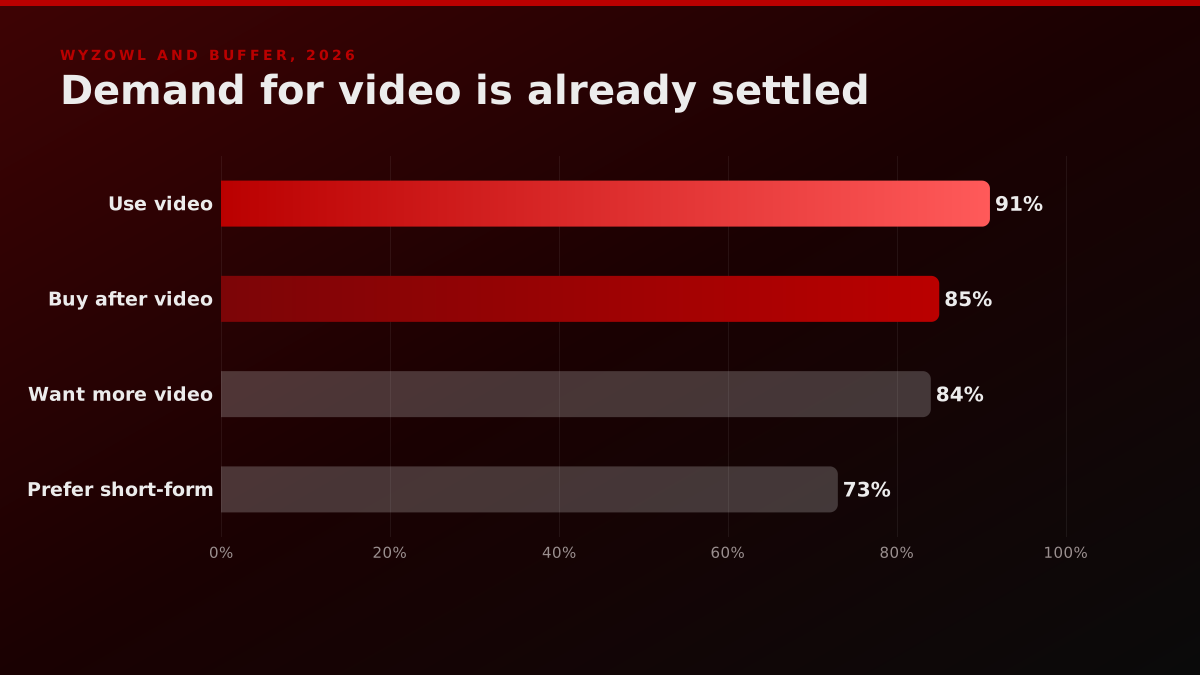
The demand side of video is settled, and that is precisely why the supply side stopped being the edge. Wyzowl's 2026 research reports that 91% of businesses now use video as a marketing tool, 85% of people say a video has convinced them to buy, and 84% want to see more video from brands. When demand is this established and the tools to make video are this cheap, the asset is not where the scarcity lives. Corroborating roundups from Sprout Social and DemandSage land in the same range, so this is not one vendor's number, it is the consensus.
The cost data says the same thing in dollars. HubSpot's State of Video data shows that almost 40% of companies spent under $5,000 producing video last year, while production budgets are flattening and promotion budgets are rising, with 48% of companies planning to increase their video promotion spend (HubSpot). The market is quietly repricing the two halves: the file is getting cheaper, the reach is getting more expensive. A budget that pours into a cinematic film and leaves distribution unfunded is fighting the exact trend the market is voting for. The broader HubSpot marketing statistics set tells the same story across channels: attention, not production, is the constraint.
AI is the accelerant under all of this. Generation tools produce a passable explainer from a prompt, screen recorders ship a clean demo in one take, and the whole production tier that used to cost thousands now costs a subscription. That is wonderful for founders and terrible for the idea that a better-looking video wins. When everyone can make the file, the file is not the differentiator. The differentiator is whoever gets their file watched by the right people first.
Demand for video is settled, which is why reach is the variable
Wyzowl's 2026 research reports 91% of businesses now use video as a marketing tool, 85% of people say a video has convinced them to buy, and 84% want to see more video from brands. When the demand case is this settled and the supply of video is this cheap, the thing left to compete on is whether your video reaches the right person at the right moment. The asset is not the edge. The reach is. That is true whether the asset is cinematic or raw.
Source: Wyzowl, 2026 Video Marketing Statistics
The distribution half is what launches an AI product
Here is the statistic that should end the format argument. Wistia's 2026 State of Video, built on more than 900 professionals surveyed and over 13 million videos analyzed, found that 57% of teams spend more time creating videos than promoting them, and only 20% spend more time promoting (Wistia). That imbalance is the launch mistake, and it is format-agnostic: a team that over-invests in a cinematic film and a team that over-polishes a raw demo make the same error if neither funds reach.
Distribution is hard because platforms decide reach at ingestion. They rank and throttle content on early signals, watch velocity and retention in the first seconds, before any meaningful audience sees it. A launch video with zero views did not lose an audience test, it never reached the test. That is why production quality is not the binding constraint: the gate is a distribution gate, and it opens for the videos that earn early watch signal, not the ones that cost the most to make. Founder field reports collected in the Y Combinator library repeat the pattern, seed audiences and coordinated early engagement move a launch far more than production budget does.
Teams spend more time making video than moving it
Wistia's 2026 State of Video, built on a survey of more than 900 professionals and an analysis of over 13 million videos and 79 million hours of viewing data, found that 57% of teams spend more time creating videos than promoting them. Only 20% spend more time promoting, and 23% split the two evenly. That single split is the launch mistake the whole cinematic-vs-raw debate misses: most of the effort, and the money that follows it, pools on the asset and starves the reach.
Source: Wistia, State of Video Report 2026
The distribution gap most launches miss is exactly this: the video is handled, the reposting is not, and the reposting is the half that decides the day. Short-form makes this worse and better at once. Buffer's research finds 85% of marketers rate short-form the most effective format and 73% of consumers prefer it to learn about a product, which means the winning asset is a fast native clip, not a slow hero film. The format the audience is asking for is the cheap one, and the scarce resource is getting it in front of them.
A flawless cinematic film can still earn zero views
Platforms rank and throttle content at ingestion, before any meaningful audience sees it, on early signals like watch velocity and retention in the first seconds. A cinematic launch video with zero views did not lose an audience test, it never reached the test. This is why production quality is not the binding constraint in 2026, and why a budget that is all cinematic production and no distribution is a bet against the exact system that decides reach.
Source: Platform distribution mechanics, founder field reports
The AI-product trap: cinematic over-promises what the model cannot do yet
There is one place where the format choice genuinely matters for conversion, and it is specific to AI products. A cinematic launch video is an aspirational artifact: it shows the product at its best, edited, retimed, and sometimes staged. For a mature product that is fine. For an AI product that is still improving, it is a trap. The film sets an expectation, the buyer arrives expecting the trailer, and the beta they meet is slower, rougher, and less magical. That gap becomes churn at first use, and churn at first use is the most expensive kind, because you paid to acquire the user and lost them before they saw value.
A raw demo defuses the trap because it shows the real current output. The buyer who signs up after a raw demo arrives calibrated. This is why so many AI launches that actually retain users lead with an unedited screen recording of the thing working, not a hero film of what it will someday be. For an AI product, honesty of the demo is a retention lever, and cinematic polish can quietly work against it. The r/SaaS founder whose live demo failed on the investor call and got funded anyway is the pattern in miniature: the raw, broken moment did not sink them, because the team and the real thing carried the room.
We built our product, failed our VC demo, but got funded anyway all in 5 months
early-stage investors rarely bet on your idea or product; instead, they bet on the founders. We botched that meeting, but to be fair our team was extremely strong.
What the founders actually say
The people launching AI products have already worked this out in public, and their conclusion is not cinematic or raw, it is clarity plus reach. In the r/Startup_Ideas thread that ranks for this exact query, the debate resolves toward story and clarity over production value, with the sharpest line cutting straight through the polish argument.
Better has diminishing returns. A customer has never said 'wow, we want to buy from you and your story in your video resonates so strongly with me, but it's not shot in 4K, has too much camera shake or the framing of the shots aren't perfect, so I'm taking my business elsewhere'.
cinematic product launch videos from a URL, what do founders here do for launch video?
The same thread surfaces the one real advantage cinematic holds, and it is a distribution advantage, not a conversion one: visual quality affects how far a clip travels before anyone hears the story. That reframes the entire spend. You are not buying conversion with production budget, you are buying a small shareability boost, and you should weigh that against simply spending the same money on distribution directly. Nine times out of ten, buying reach directly beats buying a marginally more shareable film.
the visual quality affects how far it gets shared before people even hear the story.
The other artifact founders keep sharing is the structural breakdown: the demo video has a hidden template, a repeatable five-stage or ten-scene arc that any competent editor can reproduce. That is the supply side commoditizing in real time. When the structure is a public recipe, the edge is not in executing the recipe better, it is in getting the finished clip watched. Motion designers teaching the template for free is the clearest possible signal that the template stopped being scarce.
Jerry
@Jerrythe2d
Hidden structure behind a product demo video.
When is a cinematic launch video actually worth it?
Cinematic earns its cost under three conditions, and all three have to be true at once. First, the product is visually demonstrable and reliable enough that a polished film will not over-promise. Second, you have a funded distribution plan to get the film watched, so the production spend is not stranded. Third, the moment justifies a hero asset: a funding announcement, a flagship feature, a category-defining launch, or a major event where a film will be seen on a big screen and reposted.
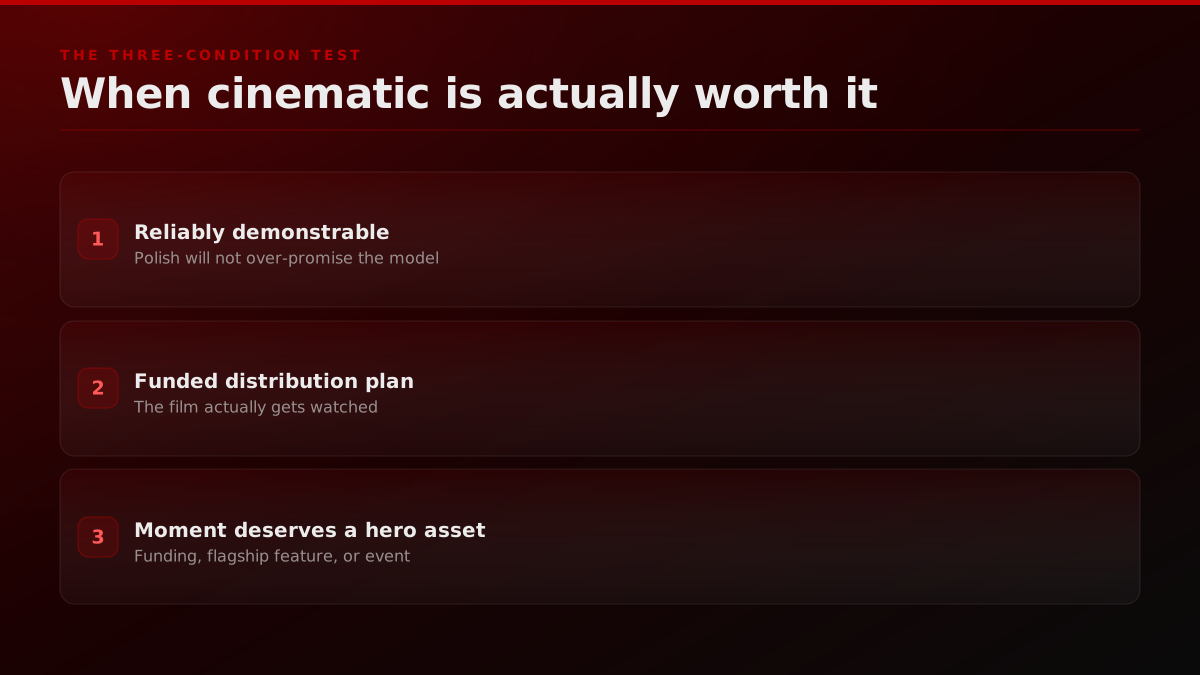
Miss any one of those and a raw demo plus real distribution spend wins. If the product is unreliable, cinematic over-promises. If there is no distribution plan, the film earns no views. If the moment is ordinary, the hero asset is overkill. The default for most AI launches, most of the time, is a clear raw demo and a funded reach plan, with cinematic reserved for the rare moment that clears all three bars. When the moment does clear them, sequence the film into a launch week rather than firing it once, because launch week video sequencing is how a hero asset earns its cost across days instead of minutes.
A useful test: if you cannot name where the film will be watched and by whom before you commission it, you are buying a payload with no delivery system, and you should redirect that budget to reach. Distribution first, film second, every time the three conditions are not all green.
How do you measure whether it worked, cinematic or raw?
The reason the format debate never resolves is that both sides measure the wrong thing: raw view counts. A million views from the wrong audience or from bots launched nothing. The metric that tells you whether the launch worked is cost per qualified view, or CPQV: the cost to reach one real, in-audience human who actually watched. A qualified view passes an audit for genuine attention and audience fit, which raw counts hide. You can pressure-test your own projected reach with the qualified view auditor before you commit a budget to either format.
At FORKOFF we price launch distribution on CPQV against a clipping network that has processed 5B+ views, because CPQV is the only number that survives the launch. It makes the format question quantitative: if your cinematic film and your raw demo reach the same qualified audience, the raw demo won on cost. If the cinematic film measurably widens qualified reach through shares, it earned its premium. Either way, you are deciding on reach into people who could buy, not on production value. Run the numbers yourself in the CPQV calculator, then audit the raw counts against the qualified ones the way a launch video views audit does, and the format question turns from a taste argument into arithmetic. Views are only the first checkpoint, our product launch metrics guide covers what to track after the views, through Day 30.
Operator noteCPQV is the only launch metric we price against. Raw view counts hide bot reach and wrong-audience reach.
How we would run this launch
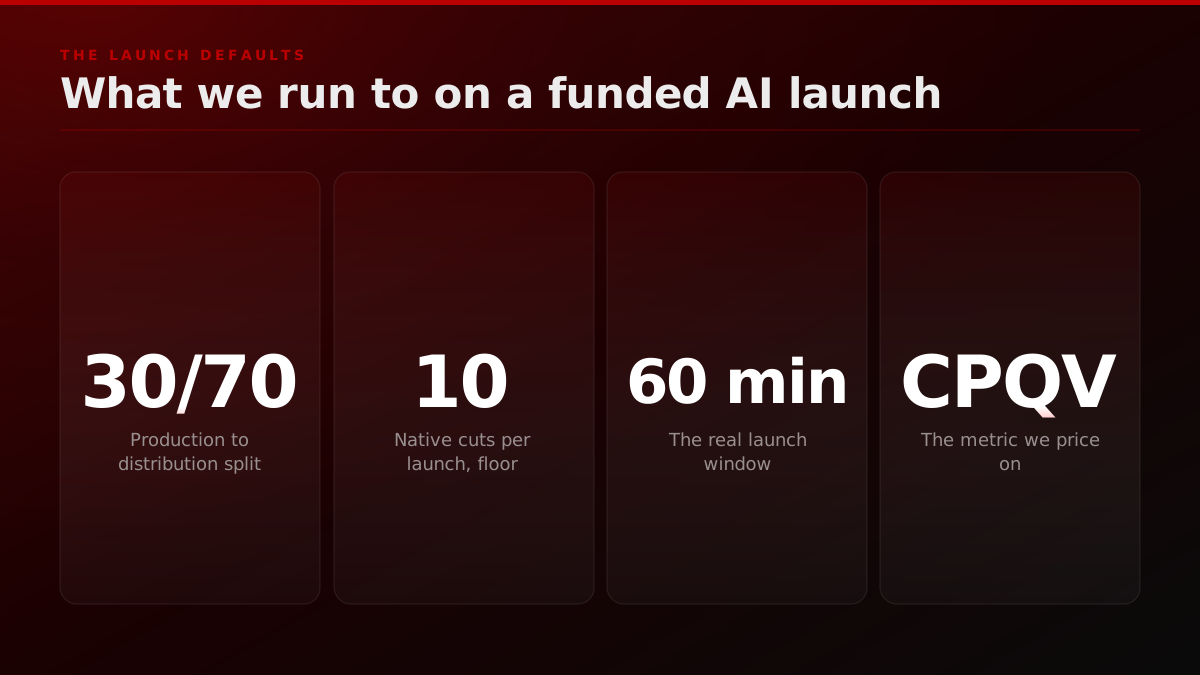
At FORKOFF we start from the reach plan and let it dictate the film, not the reverse. The default brief for a funded AI launch is a 30/70 split, roughly a third of the budget on production and two thirds on distribution, because that is where the market is already voting with its promotion budgets. We shoot native, design the vertical cut first, and treat a hero film as one derivative of a shoot built for the feed, not the other way around.
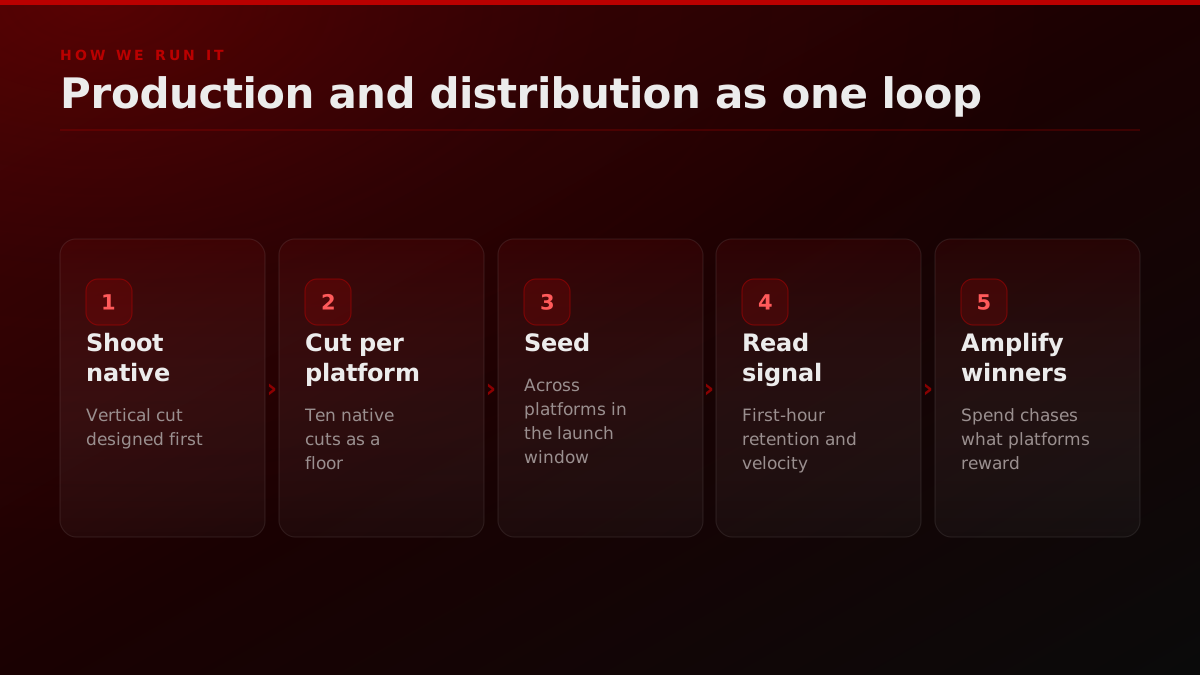
Then we run production and distribution as one loop during the launch window: ten native cuts as a working floor, seeded across platforms, early signal read in the first hour, and spend poured into the cuts the platform is already rewarding. The film, cinematic or raw, is the smallest part of that loop, and it ships alongside the written announcement that carries it into an inbox and a Product Hunt page, not just a feed. If you want to see the service that runs it, it is the product launch video service, backed by the clipping network and the same KOL and creator placement muscle that gets the cut inside an audience that already exists. You can read the full economics in the 2026 launch video playbook and what a launch video costs. Our real launch bylines and earned placements are on the FORKOFF press page.
Operator note60 minutes is the real launch window. We staff replies and creator briefs for that hour, not for the week.
Should you skip the launch video entirely?
No, but the reason is narrower than most guides claim. You should not skip video because the demand data is one-sided: 85% of people say a video has convinced them to buy and 73% would rather learn about a product from a short clip than from text, per the Wyzowl and Buffer research above. Skipping video means opting out of the format the audience has already voted for. The mistake is not skipping the film, it is treating the film as optional while treating a hundred hours of production as mandatory.
What you can skip, most of the time, is the cinematic tier. A single clear screen recording that clears the clarity floor gives you the video the demand data rewards, at close to zero cost and in a day. Then the budget you did not spend on a three-week hero film becomes distribution budget, which is the half that was starved. For an AI product where the output itself is the hook, this is almost always the better trade: one honest clip, ten native cuts of it, and real spend behind the reach. The founders who report the best launch-day traction are rarely the ones who spent the most on the asset, they are the ones who planned the reposting before they shot a frame.
The one case where skipping video genuinely costs you is a launch moment with press or a stage attached, where the absence of any shareable object leaves reporters and reposters with nothing to embed. Even then the answer is a clear demo cut for the feed, not necessarily a cinematic film. Reach for cinematic only when the moment, the reliability, and the distribution plan all line up, which is the three-condition test above.
A useful way to hold the whole decision: the video is not the product and it is not the launch, it is the ammunition. A cinematic film is expensive, high-caliber ammunition, and a raw demo is cheap, plentiful ammunition. Neither one hits anything without a delivery system, and the delivery system is distribution. For most AI launches you want a lot of cheap rounds aimed precisely, not one expensive round fired at nobody. That framing keeps founders from over-investing in the caliber of the asset and under-investing in the aim, which is the single most common way a well-funded launch still lands quietly.
Does a raw demo hurt you with investors or press?
This is the fear that pushes founders toward cinematic, and the evidence does not support it. Investors and reporters are pattern-matching on the product and the team, not the production value of your clip. The r/SaaS founder whose onboarding flow crashed live in front of the investment team, mid-demo, got the term sheet anyway, because the read in the room was the strength of the team and the realness of the thing, not the smoothness of the tape. A raw demo that shows a genuinely novel capability is more persuasive to a technical evaluator than a glossy film that hides the product behind motion graphics.
Press is the same. A reporter covering an AI launch wants to see the thing work, quickly, in a format they can embed. A cinematic sizzle reel often reads as marketing and gets discounted, while a crisp thirty-second demo of a real, surprising output gets shared because it is evidence, not advertising. The distribution advantage cinematic holds, that it travels a little further per share, is real but small, and it does not offset the credibility discount a polished film can carry with a skeptical, technical audience.
The exception, again, is the staged moment. If your launch has a keynote, a conference screen, or a flagship announcement where the film itself is the event, cinematic earns its keep because the venue rewards production value and the audience expects a show. Outside that specific context, a raw demo that clears the clarity floor is not a liability with investors or press, it is often the stronger artifact. Match the format to the room, and let the product carry the weight the edit cannot.
The blunt answer
For most AI products, ship a clear raw demo and put the real money into distribution. Reserve cinematic for the launch moment that clears all three bars: a reliable product, a funded reach plan, and a moment big enough to deserve a hero film. The format was never the decision. The decision is how many qualified humans watch the thing, and that is bought with distribution, not with production value.
If you want the deeper mechanics, the anatomy of a 1M-view launch video, the distribution gap most launches miss, how the format types compare, how to get to 100k views, and the agency versus production studio choice all sit under the same thesis: production is the cheap half, distribution is the launch.
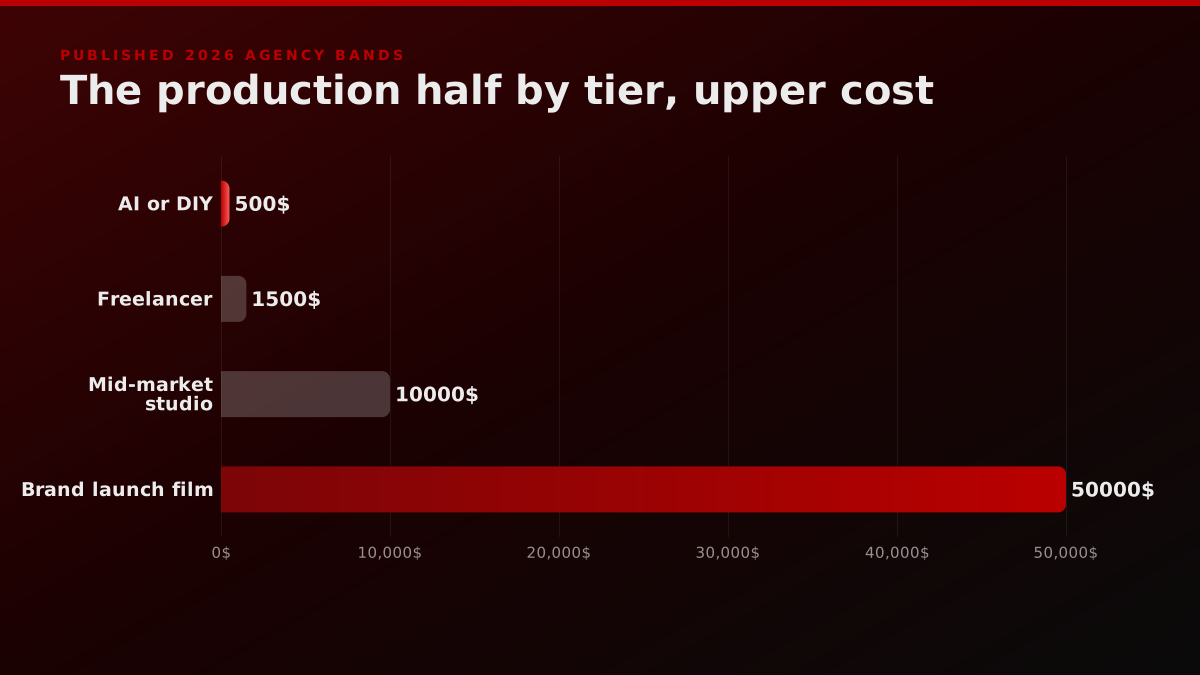
The production half, by tier (published 2026 agency ranges)
| Tier | Typical 2026 price | What it buys |
|---|---|---|
| AI-generated or DIY | $0 to $500 | An AI tool or a founder-shot screen recording |
| Freelancer | $500 to $1,500 | One editor, a simple cut or explainer |
| Mid-market studio | $1,500 to $10,000 | A clean product or explainer, full production |
| Brand or launch film | $25,000 to $50,000-plus | A studio launch film, often a three-month build |
Every figure is a published vendor band, not a FORKOFF number. Ranges from public agency pricing pages, 2026.
What actually decides the launch
| Question | Production answer | Distribution answer |
|---|---|---|
| Is it scarce in 2026? | No, AI and freelancers made it cheap | Yes, attention is the bottleneck |
| What decides ROI? | Marginal past a clarity floor | Almost everything |
| Who sells it to you? | Every production shop on page one | Almost nobody |
The comparison guides answer the left two columns and stop. This piece is about the right column.
Short and native is what the audience itself asks for
Wyzowl's 2026 research finds 71% of people say videos between 30 seconds and 2 minutes are the most effective length, and 63% would most like to learn about a product through a short video, against 12% for text. Buffer's research roundup adds that 85% of marketers rate short-form the most effective format and 73% of consumers prefer it to learn. For an AI product that means a raw, native, vertical demo is not a compromise, it is often the format the audience prefers.
Source: Wyzowl 2026 Video Marketing Statistics; Buffer short-form research
Operator note10 native cuts per launch is our working floor. One hero film cannot be read ten ways by the platform.
How to Make a Product Demo Video
Wondershare DemoCreator
A walkthrough of making a product demo video, the raw end of the spectrum a founder weighs against the cinematic agency route. The making is the cheap, solved part.