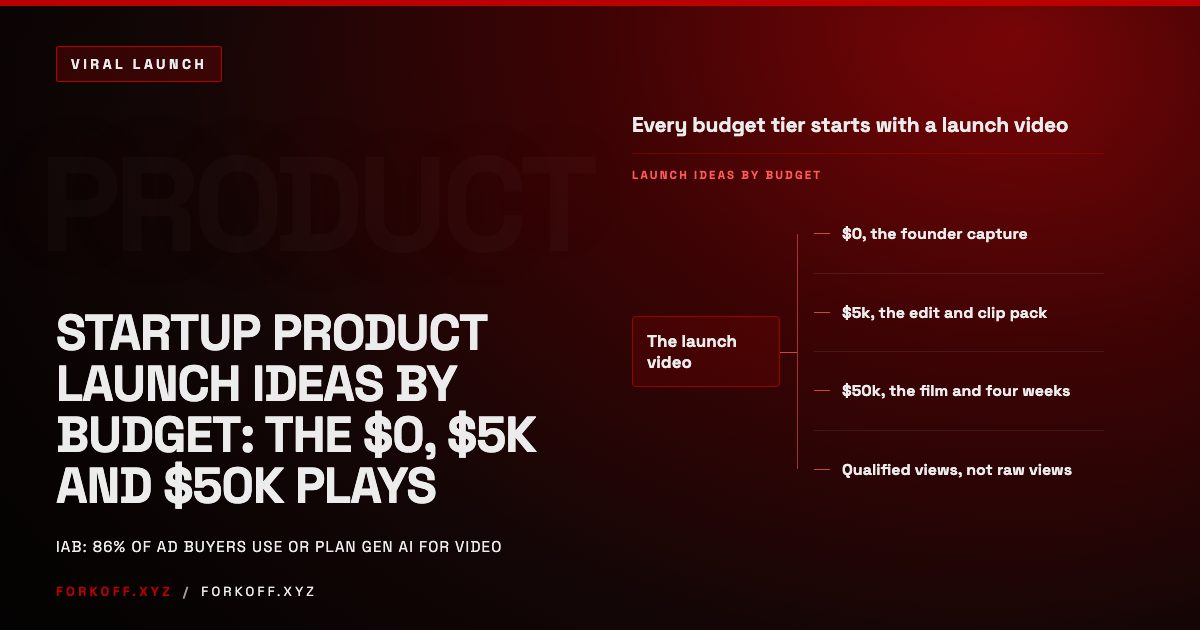
A launch film that gets rewritten five times and one that lands on the first cut usually come from the same video team. The difference is almost never talent. It is the brief. A vague brief tells a good team to guess at your taste, and every guess that misses becomes a revision round you pay for in time you do not have during a launch. A sharp brief hands the team a target, and a target is the one thing that makes a first cut land close to done. If you have not yet decided what kind of launch video your budget supports, start with product launch ideas by budget and come back to the brief once the tier is set.
The short version
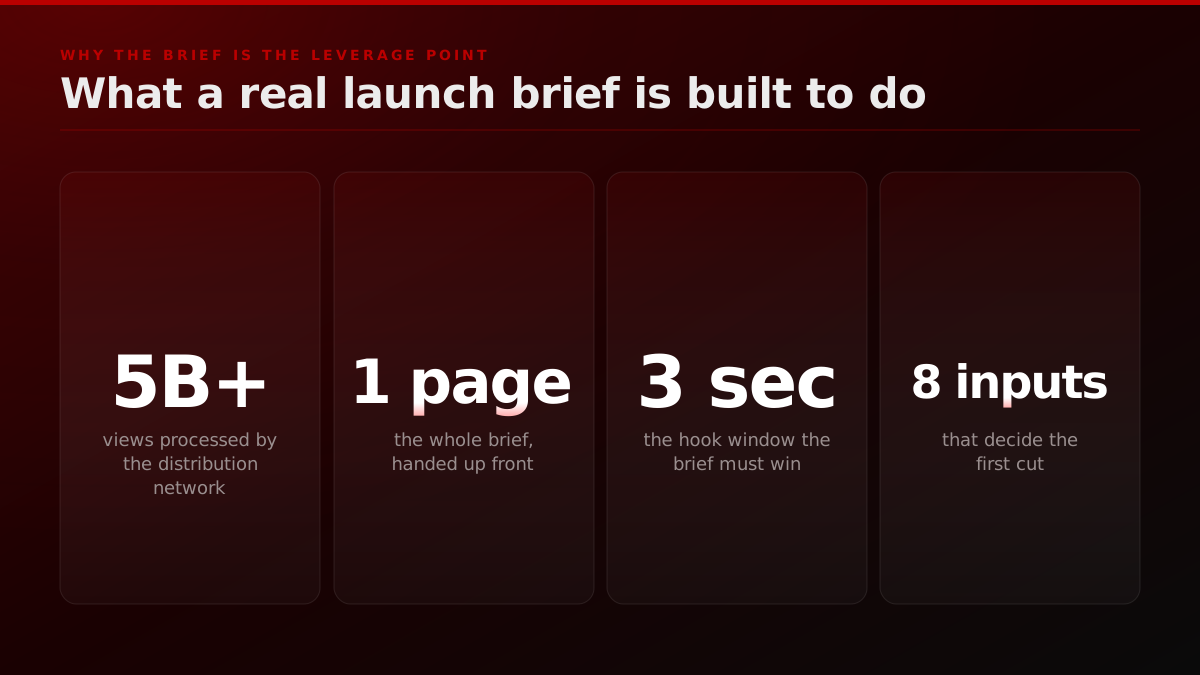
Most launch films get rewritten four or five times because the brief was vague, not because the video team was bad. A launch video creative brief is the one-page document you hand the team before a single frame is cut, and it carries eight inputs: the positioning one-liner, the audience plus the one action the video must drive, the hook thesis, the three proof beats, the must-say and never-say list, visual references, the distribution plan the edit must serve, and the approval rubric. Get those eight right and the first cut lands close to done, because the team is building to a target instead of guessing at your taste. Production is cheap and close to solved in 2026, so the brief is the scarce input that actually decides the outcome. This guide walks every input, hands you a copy-able one-page template, and shows how to run the brief so revisions collapse from five rounds to one. The distribution view behind it is the FORKOFF clipping network, which has processed 5B+ views.
This is a how-to for the document itself, not a pep talk about communication. By the end you will have the eight inputs a launch video brief must carry, a copy-able one-page template you can fill in today, and a way to run the brief so revisions collapse from five rounds to one. It is the practical companion to the 2026 launch video playbook, which covers strategy, cost, and distribution across the whole launch. This piece zooms all the way in on the one artifact that decides whether the first cut is any good.
Start with the number that frames the whole problem. The FORKOFF product launch video service is built on top of a clipping network that has processed 5B+ views, and from that vantage point the pattern is not subtle: the launch films that traveled were not the most expensive ones, they were the most clearly briefed ones. When you have watched five billion views move through a system, you stop believing the polish is the product. You start seeing that the brief is where the launch is won or lost, long before anyone opens an editor.
There is a reason this document, not the film, is where I would spend a founder's first hour. Production is now the cheap and repeatable part of a launch, and cheap repeatable things stop being where advantage lives. What does not commoditize is the set of choices only you can make about your own product, your own launch, and your own buyer. The brief is where those choices get written down, and a written choice is one the team can build to. An unwritten one is a guess waiting to become a revision round.
What is a launch video creative brief, and why does it decide the first cut?
A launch video creative brief is the one-page document you hand your video team before production starts. It translates your intent into a target the team can build to, so the first cut arrives close to done instead of arriving as the team's best guess at what you meant. It is not a script and it is not a shot list. It is the set of decisions only you can make, written down: what the product is, who the video is for, the single action it must drive, the claim the opening must land, the proof the middle must show, the lines to keep and kill, the references that show what good looks like, the channels the edit must serve, and the bar you will judge the cut against. Get those decisions on paper and the first cut lands. Leave them in your head and the team fills the gaps for you, which is what a revision round actually is.
The reason this matters more for a launch than for any other video is the stakes and the clock. A launch video has one job at one moment, and you cannot re-shoot during the window. The generic video brief templates and creative brief guides that dominate the search results are built for evergreen brand content where a fifth revision is annoying but survivable. A launch does not give you a fifth revision. The brief is how you compress the whole decision surface into the days before the shoot, so the film is pointed at the launch from the first frame.
Why do launch video revisions spiral, and how does a brief stop it?
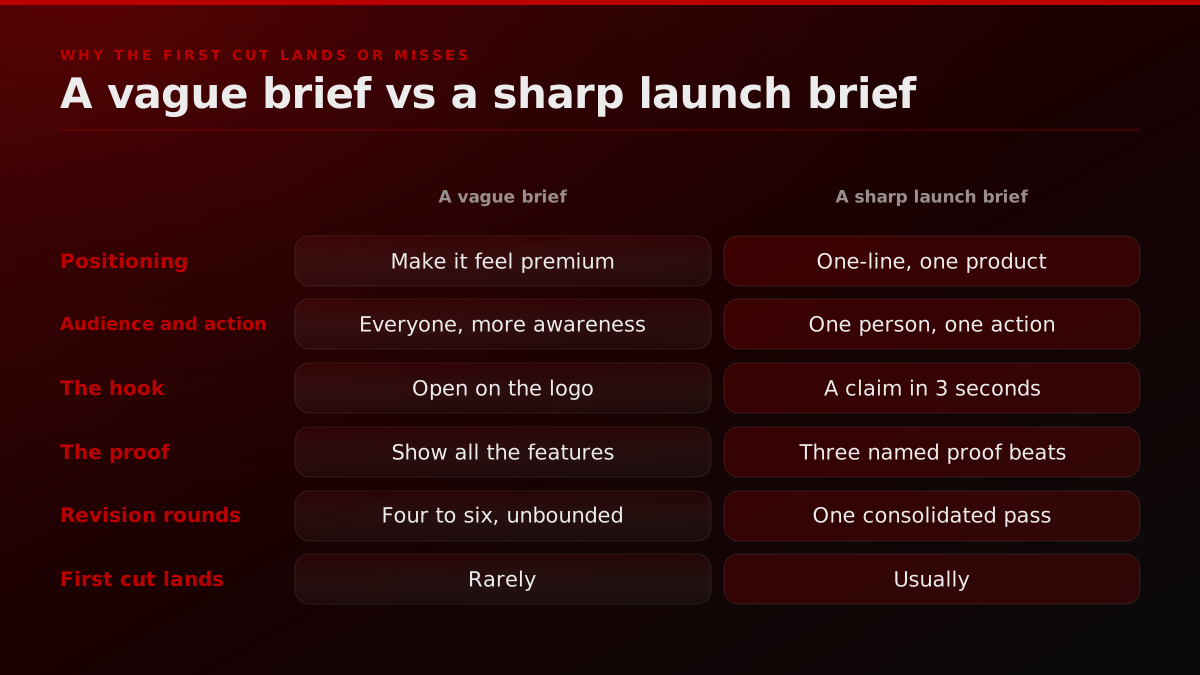
Revisions spiral because a vague brief quietly delegates your decisions to the team, and then you react to each decision one at a time. You say "make it feel premium," the team picks a direction, you watch the cut, and only then do you discover what you actually wanted, by seeing what you did not. That is not the team failing. That is the brief failing, and you are now paying to discover the brief one revision at a time. A real brief front-loads those discoveries. It forces you to make the calls before the shoot, when changing your mind costs a sentence instead of a re-edit.
Teams pour effort into the film and almost none into moving it
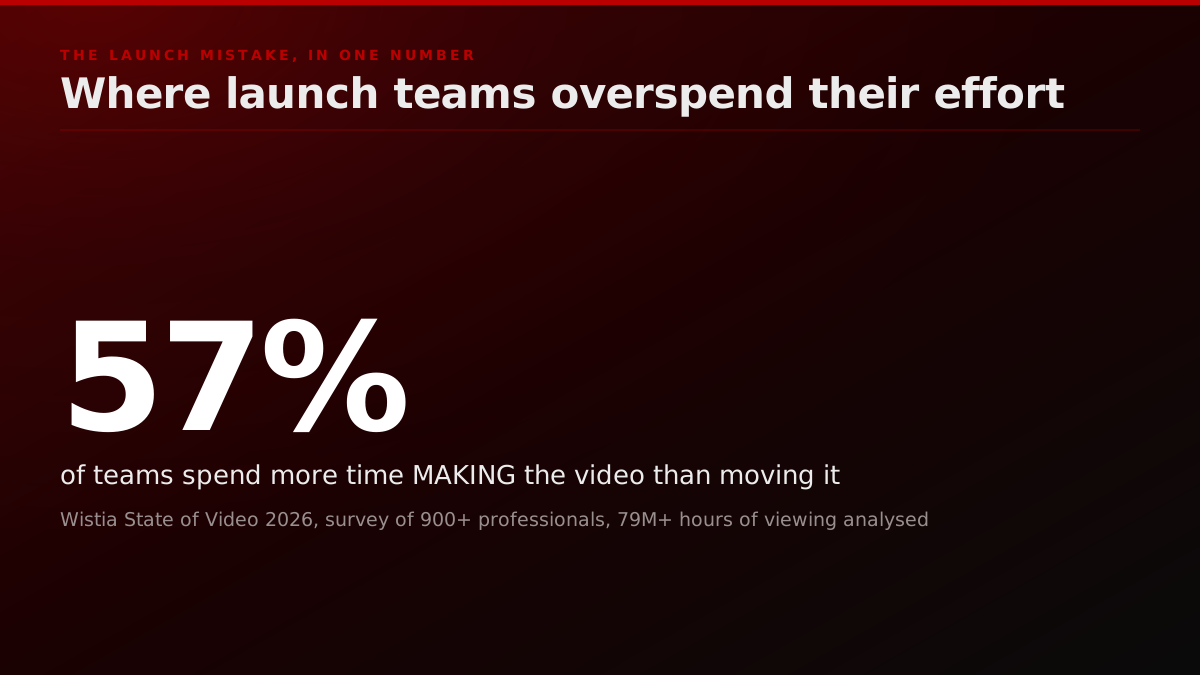
Wistia's 2026 State of Video, built on a survey of more than 900 professionals plus an analysis of over 13 million videos and 79 million hours of viewing data, found that 57% of teams spend more time creating videos than promoting them. Only 20% spend more time promoting, and 23% split the two evenly. A brief that never mentions distribution is how a team ends up in that 57%. If the document does not tell the editor the video has to be clipped, the editor optimizes for one beautiful hero cut and nothing to post after launch day.
Source: Wistia, State of Video Report 2026
The clock makes this worse than it sounds, because the same effort that goes into the fifth revision is effort that never went into distribution. Teams already over-invest in the file and under-invest in the reach, and a revision spiral pushes that imbalance further: every extra round is a day the launch cut is not being seeded, clipped, or amplified. This is the exact pattern the launch video distribution gap piece takes apart. The brief is the cheapest lever you have against it, because a decision made on paper before the shoot removes a revision round that would otherwise eat a launch day.
You can see the demand for a real answer in the open. Founders ask, in plain words, how to write a creative brief for a video project, and the internet answers with generic templates that were never scoped to a launch.
How to write a creative brief for video project?
What are the eight inputs a launch video brief must carry?
A launch video brief carries exactly eight inputs, and each one removes a specific kind of guess. The positioning one-liner removes the guess about what the product even is. The audience and the one action remove the guess about who the film is for and what it should make them do. The hook thesis removes the guess about how to open. The three proof beats remove the guess about what the middle proves. The must-say and never-say list removes the guess about language and claims. The visual references remove the guess about what good looks like. The distribution plan removes the guess about how the film will be cut and posted. The approval rubric removes the guess about how you will judge the result. Miss any one and the team fills that gap with taste, which is fine until their taste and yours disagree, at which point you are back in a revision round.
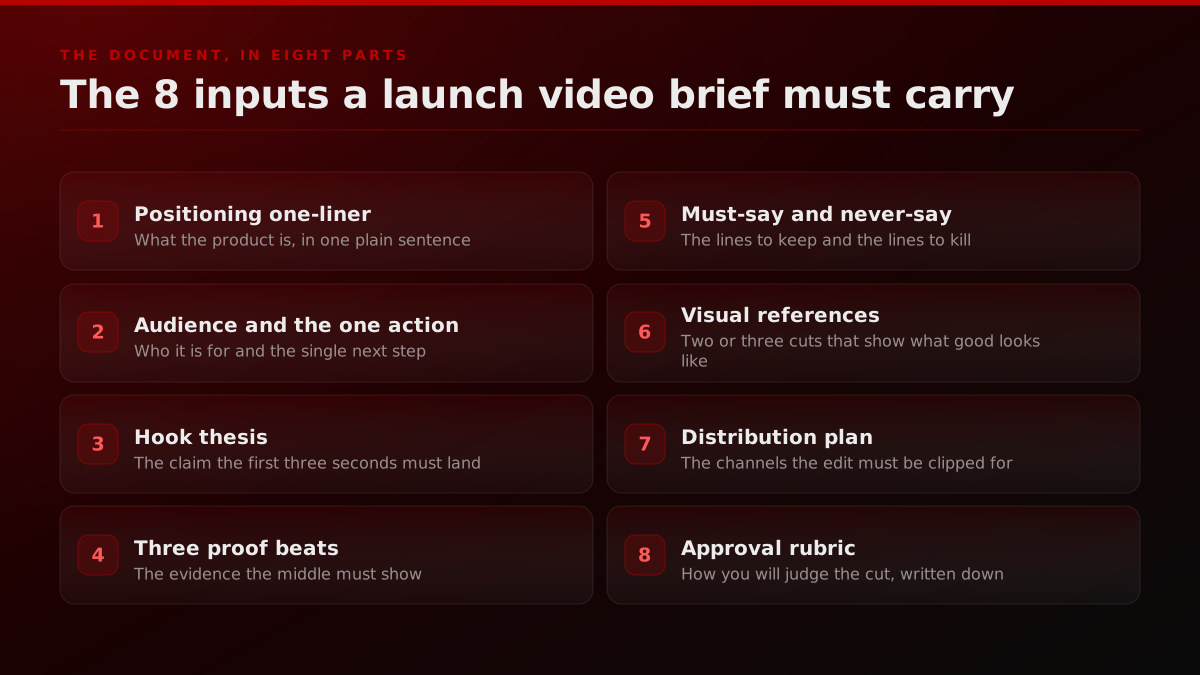
Here is the whole document laid out as a table you can copy into a doc and fill in today. Everything after this section is a deeper walk through each row, with the traps that make each one go wrong.
The one-page launch video creative brief, section by section
| Section | What to write | A worked example |
|---|---|---|
| Positioning one-liner | Product and category, one sentence | Email that lands in the inbox, not spam |
| Audience and the one action | Who it is for, the single next step | Engineers shipping. Action, start a trial |
| Hook thesis | The claim the first three seconds land | Your welcome emails go to spam, unseen |
| Three proof beats | The evidence the middle shows, in order | Pain on screen, one demo, one real number |
| Must-say list | Lines and claims that must appear | Name in first 10s, the CTA, one metric |
| Never-say list | Claims and words to kill | No best in class, no roadmap as shipped |
| Visual references | Two or three cuts of what good is | Two films you would sit next to |
| Approval rubric | How you judge the cut, written down | Hook in 3s, one action, 3 beats, clippable |
One page, eight sections. The example column is illustrative, swap in your own product. If a section is blank when you send the brief, expect the team to fill it with a guess, and expect to pay for that guess in revision rounds.
Input 1: how do you write the positioning one-liner?
Write the positioning one-liner as one plain sentence that names the product and its category, in language a stranger would use, with no adjectives you cannot defend. The test is whether the video team can read it once and know what they are selling. "Transactional email that actually lands in the inbox" passes. "The future of developer communication infrastructure" fails, because the team now has to guess what that means and will guess wrong. The positioning line is the spine of the film. If it is fuzzy, every downstream decision inherits the fuzz, and you will feel it in a cut that is beautiful and says nothing.
If it takes a visitor more than 30 seconds to understand your product, you've already lost a lot of them.
The reason to spend real effort here is that clarity is the whole job of a launch film, and clarity starts with you being clear first. If a visitor needs thirty seconds to understand your product on your own site, a launch video built on a fuzzy one-liner will lose them faster, because video gives them even less time to work it out. Write the line, read it to someone outside the company, and if they cannot repeat back what the product does, the brief is not ready to send. This is also the line that feeds every other surface in your launch, from the founder funnel to the landing page, so it is worth getting right once.
One more discipline on the one-liner: write it in the buyer's words, not the pitch deck's. The language a founder uses with investors is built to sound big, and big language reads as vague on camera. The language a founder uses with a customer is built to be understood, and understood is exactly what a launch film needs in its opening seconds. If your one-liner would survive being said out loud to a real user across a table, it will survive the edit. If it only works on a slide, it will not.
Input 2: what is the one action the video must drive?
Name the single action you want a viewer to take, and name only one. Not "raise awareness," which is not an action a person can take, but the literal next step: start a free trial, join the waitlist, push a pull request, list a first item, join the allowlist. The one action is the most important line in the brief, because it is the thing the entire film is engineered to earn. A video with two actions has none, because the viewer will do neither when you ask for both. Pick the one that matters most for this launch and let the rest go.
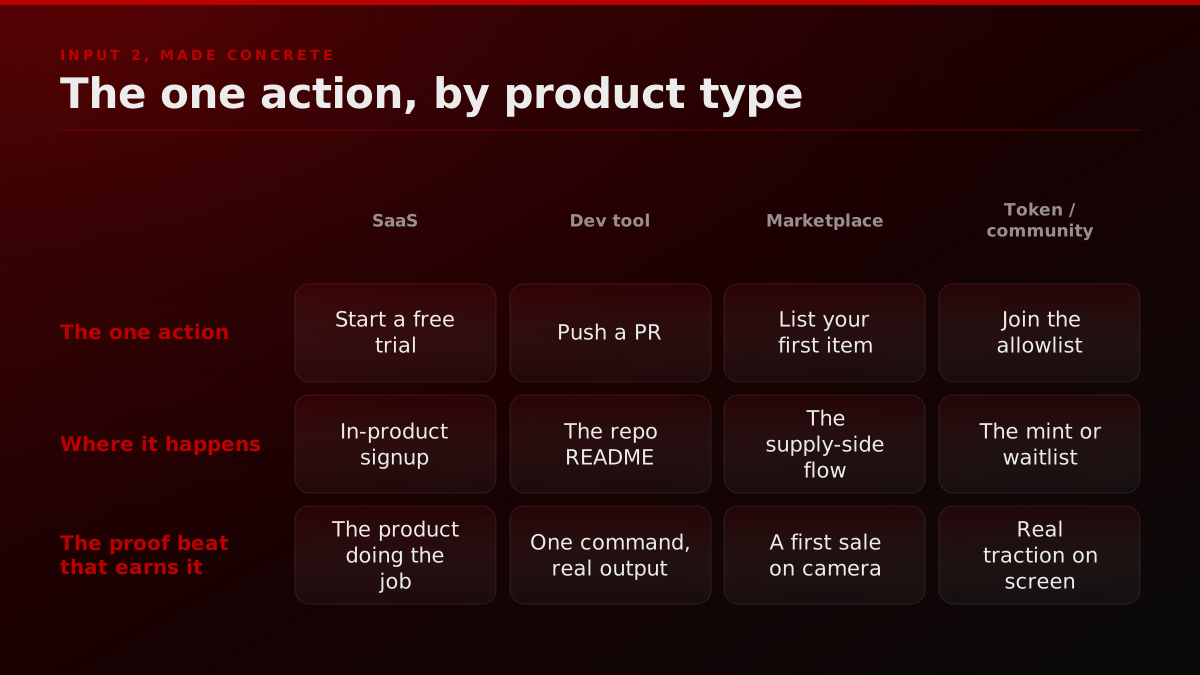
The reason this input decides so much is that it changes the edit, not just the end card. If the action is "start a trial," the proof beats have to show the product doing the job so the trial feels safe. If the action is "join the allowlist," the proof beats have to show real traction so scarcity feels earned. Our own read of launch posts backs this up.
Operator noteIn our own July 2026 scan of launch posts on X, the ones that traveled named one action. The ones that listed features stalled., FORKOFF first-party X data, July 2026
Choosing the one action is also where you decide which channel carries the launch, which is why it connects straight to your Twitter marketing, Reddit marketing, and influencer marketing plans. The action, the channel, and the audience are one decision wearing three hats, and the brief is where you make it once instead of three times.
Input 3: what is the hook thesis, and how do you write one?
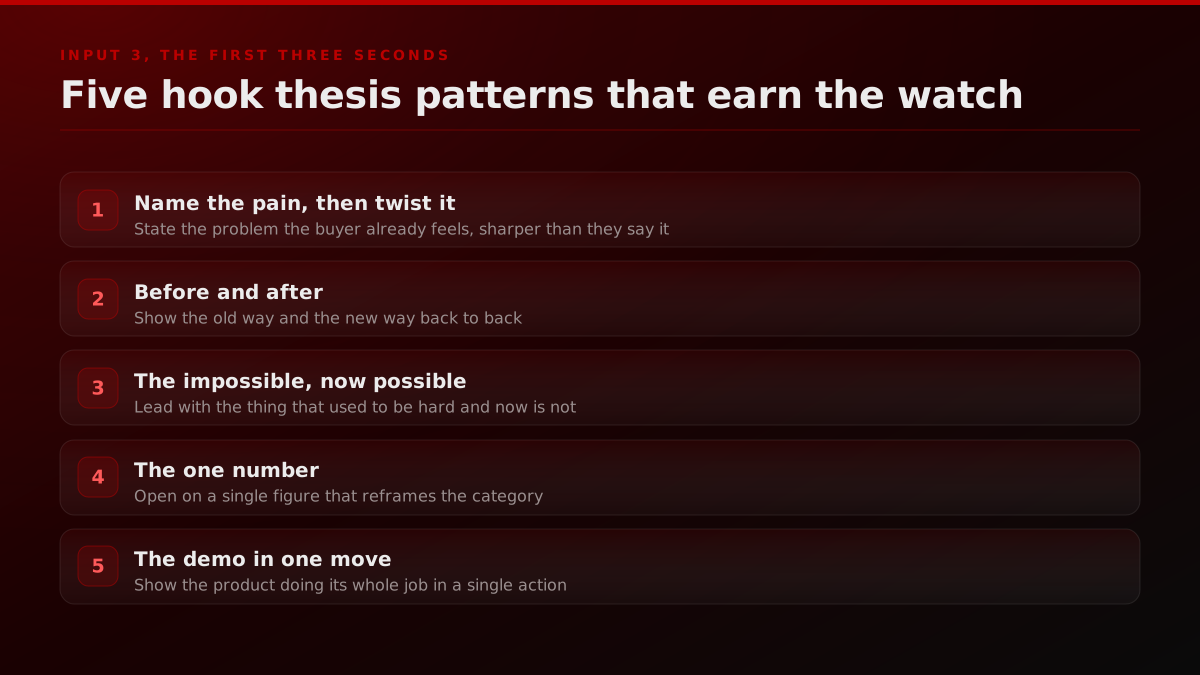
The hook thesis is the claim the first three seconds of the film must land, written as a sentence before anyone opens an editor. Platforms decide reach on the first seconds of retention, so the opening is not a warm-up, it is the whole audition. Do not brief "an attention-grabbing intro," which tells the team nothing. Brief the actual claim: "your welcome emails are going to spam and you cannot see it." Now the editor knows exactly what the first frames have to do, and can build ten ways to land that one claim instead of guessing at ten different openings.
The hook thesis is also where the reference format lives. The launch video meme of the moment is a real input, not a distraction, because riding a format the feed already rewards buys you retention you would otherwise have to earn from scratch.
Garry Tan
@garrytan
Jarvis-core is the new most powerful launch video meme
Pick a hook pattern, write it as a claim, and if you want the deeper mechanics of what makes an opening travel, the how to go viral on X for 1M views guide breaks down the first-second problem in detail, and the anatomy of a 1M-view launch video shows where that opening sits inside the whole distribution machine. The brief's job is smaller and sharper: state the one claim the opening must land, so the team is solving a defined problem instead of an open one.
Input 4: what are the three proof beats?
The three proof beats are the evidence the middle of the film must show, in order, to make the one action feel earned. Beat one shows the problem is real, so the viewer sees themselves in it. Beat two shows the product does the one core thing, in a single clean demo, not a feature tour. Beat three shows the result is believable, with a number, a named user, or a before-and-after that holds up. Three is the number because a launch film has no time for more and no credibility with fewer. Name all three in the brief, in order, so the middle of the film is a proof sequence you designed instead of a montage the editor assembled.
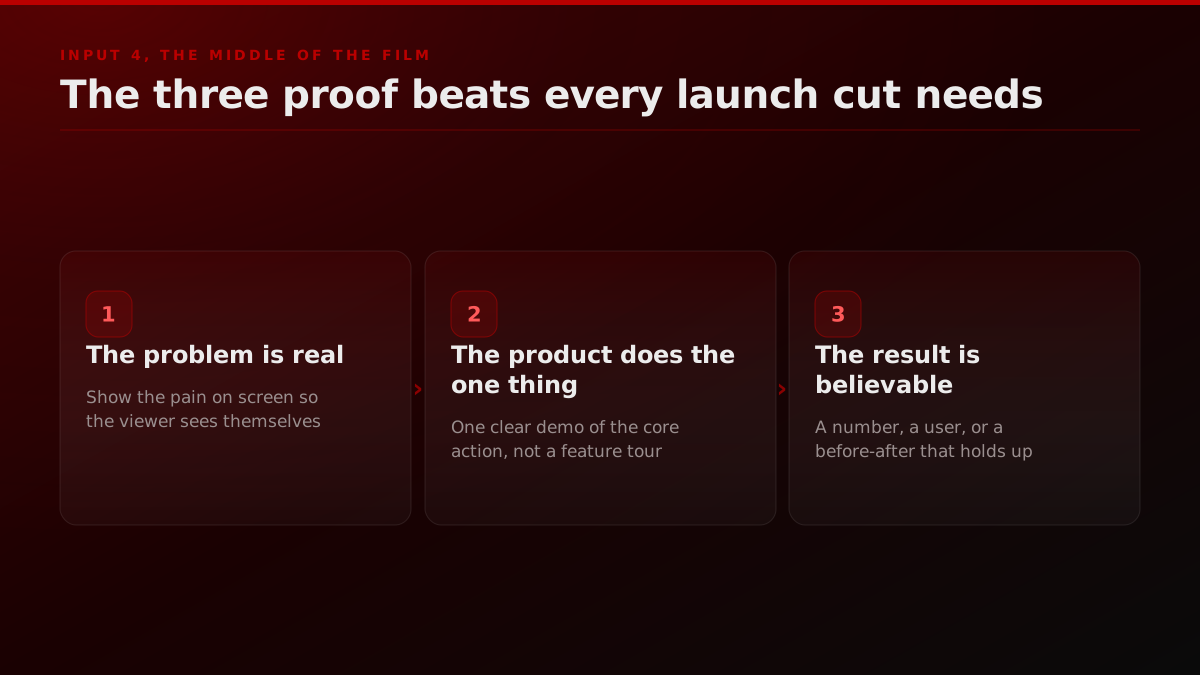
The reason to name the beats yourself is that if you do not, the team will pick the proof that is easiest to shoot, which is rarely the proof that earns the action. This is the single input that most predicts whether a launch film can be cut into a week of content instead of one hero video. The order matters as much as the content. Problem before product before result is the sequence a skeptical viewer needs, because it earns the demo before it shows it and earns the claim before it makes it. Hand the team the beats out of order, or lead with the result, and the film asks for belief it has not built yet, which is the fastest way to lose a viewer who was ready to be convinced.
Operator noteThe launch films our network could cut the most clips from all arrived with the three proof beats already named in the brief., FORKOFF distribution network, operator observation
Production being cheap makes this input more important, not less, because a cheap film with three sharp proof beats beats an expensive film with a vague middle every time.
Production got cheap, which moved the bottleneck to the brief
In 2026 a founder can make a professional launch film with code, a template, or a single prompt, and the market has noticed: operators openly talk about shipping cinematic launch videos for near zero budget. That is good news and a trap. When anyone can produce the file, the quality of the output collapses back onto the quality of the input. A cheap film built to a sharp brief beats an expensive film built to a vague one, every time, because the vague one is really five expensive films stacked on top of each other in revision rounds.
Source: Founder field reports on low-cost launch video production, 2026
Input 5: what goes on the must-say and never-say list?
The must-say list is the set of lines and claims that have to appear in the film, and the never-say list is the set that must not. Must-say usually holds the product name in the first ten seconds, the exact call to action, and the one metric you want remembered. Never-say holds the words that trigger a rewrite or an unhonorable claim: "best in class," "number one," "revolutionary," and any roadmap feature described as if it already ships. This list is short and it saves you the most painful revision round of all, the one where legal or a cofounder catches a claim in the final cut and the whole thing has to be re-edited.
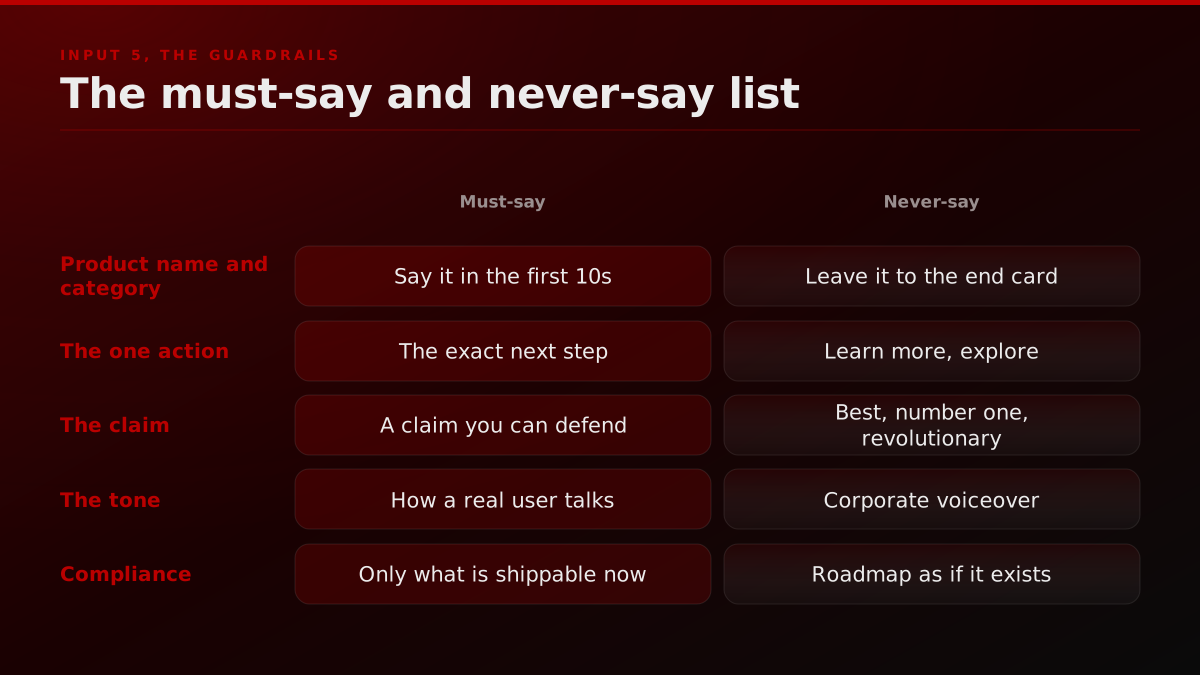
The never-say list is also a brand-safety tool, which matters more than it looks during a launch when the film is about to be amplified widely. A claim you cannot defend does not just risk a rewrite, it risks the launch narrative turning against you the moment the video travels.
Operator noteThe briefs that said make it feel premium produced one hero cut and nothing to clip. The specific ones produced a week of posts., FORKOFF distribution network, operator observation
Keep the list to the handful of lines that actually matter. A never-say list with forty entries is a straitjacket the team will ignore. A list with five is a guardrail they will respect.
Input 6: which visual references belong in the brief?
Include two or three real cuts that show what good looks like for this film, with a one-line note on why each one is in the brief. References do more work than any adjective, because "premium" and "energetic" and "clean" mean different things to you and the team, while a linked film means exactly one thing. The big-tool brief templates are fine as a starting skeleton, whether you pull from a creative brief guide, a video brief template, or a video creative brief board, but none of them tells you which references to include, because only you know what good looks like for this launch. The note matters as much as the link: "this one for the pacing," "this one for the tone of the voiceover," "this one for how the demo is shot." Without the note, the team copies the wrong thing about the right reference.
How to Write a Powerful CREATIVE BRIEF (GUIDE)
HubSpot Marketing
A six-minute walkthrough of how to write a powerful creative brief. Useful as background on brief anatomy, then adapt it to the launch-specific eight inputs in this guide.
The deeper point is that a brief is a collaboration, and references are how two people agree on taste without a hundred rounds of notes.
The conductor and director spend days collaborating with the symphony and the actors and crew. That example is them literally prompting, via a creative brief, the artist or agency.
Do not over-reference. Two or three anchors give the team a direction. Ten references give them a collage with no center, and a launch film that tries to be all of them lands as none of them. If you are evaluating outside teams to make the film, the best launch video agencies rundown is a useful next read, and a good team will ask you for references on the first call, because they know the brief is not done without them.
Input 7: how does the distribution plan change the edit?
The distribution plan tells the team, up front, which channels the hero cut has to be clipped for, so the edit is built for clips on day one instead of retrofitted after. A launch film that has to yield native cuts for X, Shorts, TikTok, Reels, and LinkedIn is a different edit from one built as a single hero video: it needs modular moments that stand alone, framing that survives a vertical and a square crop, and captions that read with the sound off. Brief this as a production constraint, not a nice-to-have, and the team builds it in. Leave it out and you get one beautiful film that cannot be cut, which is the most expensive mistake in the whole launch.
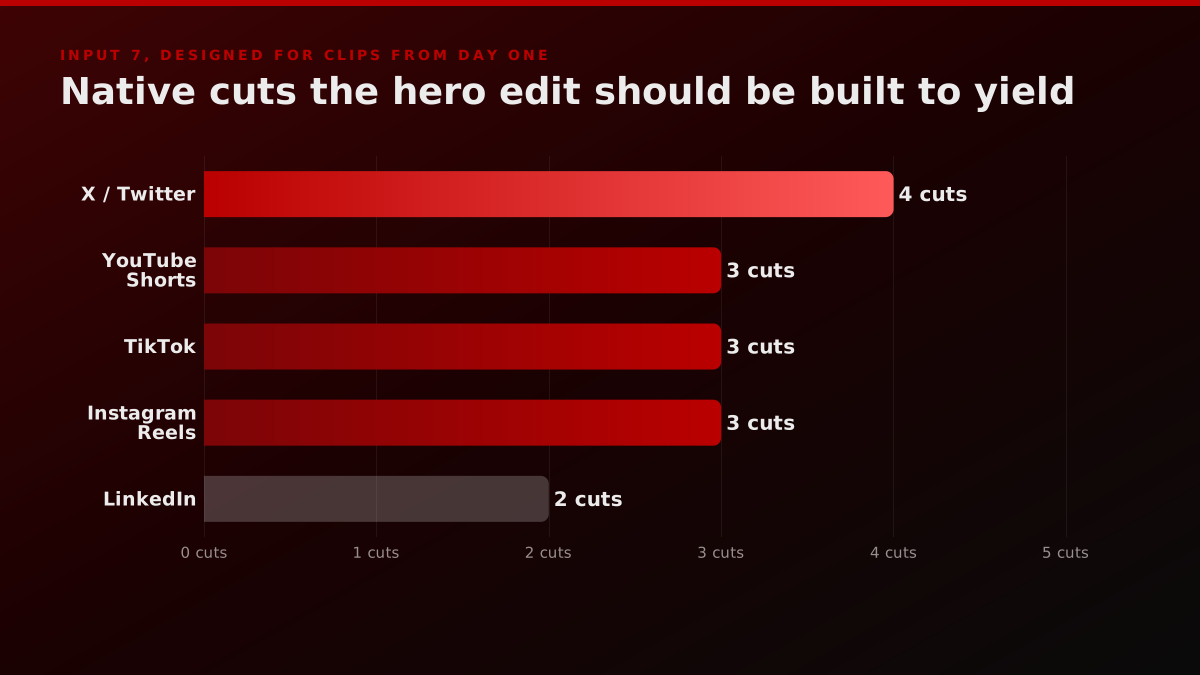
This is the input that connects the brief to the reason launches actually work, which is reach, not the file. That reach is what RADAR measures across real launches, reading whether each one earned its views or bought them. The team should know from the brief that the hero cut is raw material for a week of clipping, and you can pressure-test whether your planned reach is real with the CPQV calculator before you commit budget. If you want a concrete target to write into the plan, the how to get 100k views on a launch video breakdown sets a realistic bar for what the cuts should do.
It also changes who you should hire. A pure production shop can make a gorgeous hero film and will happily stop there, because clips were never in their scope. A team that owns distribution reads the same brief and builds the hero as a source file for a week of posts, with the modular moments and the crops already planned. Same eight inputs, a very different edit, and the difference lives entirely in whether the brief asked for it. If you are weighing which kind of team to hire, that one line in the brief tells you what to look for on the first call.
Peter Yang
@petergyang
"I've spent $30K on a launch video, now you can make one with code." Here's my new episode with @liu8in and @JakeFromHeyGen, where they shared their 5-step playbook for using HyperFrames to make professional launch videos in Codex and Claude Code.
Video demand is settled, and the video marketing statistics have said so for years, so the file itself is not the edge anymore. Distribution is, and the brief is where you make the edit serve the distribution.
Demand for video is settled, so the input is the edge
Wyzowl's 2026 research reports 91% of businesses now use video as a marketing tool, 85% of people say a video has convinced them to buy, and 84% want more video from brands. When the format is this settled and the supply of video is this cheap, the film is not the thing that separates a launch that works from one that does not. What you asked for is. The brief is the last real point of leverage, because it is the one part of the process that is still scarce and specific to you.
Source: Wyzowl, 2026 Video Marketing Statistics
Input 8: what is the approval rubric, and why write it before the cut?
The approval rubric is the written set of checks you will judge the cut against, and you write it before you see anything, on purpose. It converts review from an act of taste into an act of checking, which is the single most powerful thing a brief does to kill revision rounds. When the rubric ships inside the brief, everyone reviewing the cut, you, the cofounder, the marketer, scores it against the same seven checks instead of each bringing a fresh opinion. When there is no rubric, every reviewer invents their own bar in the moment, and the film gets pulled in three directions at once.
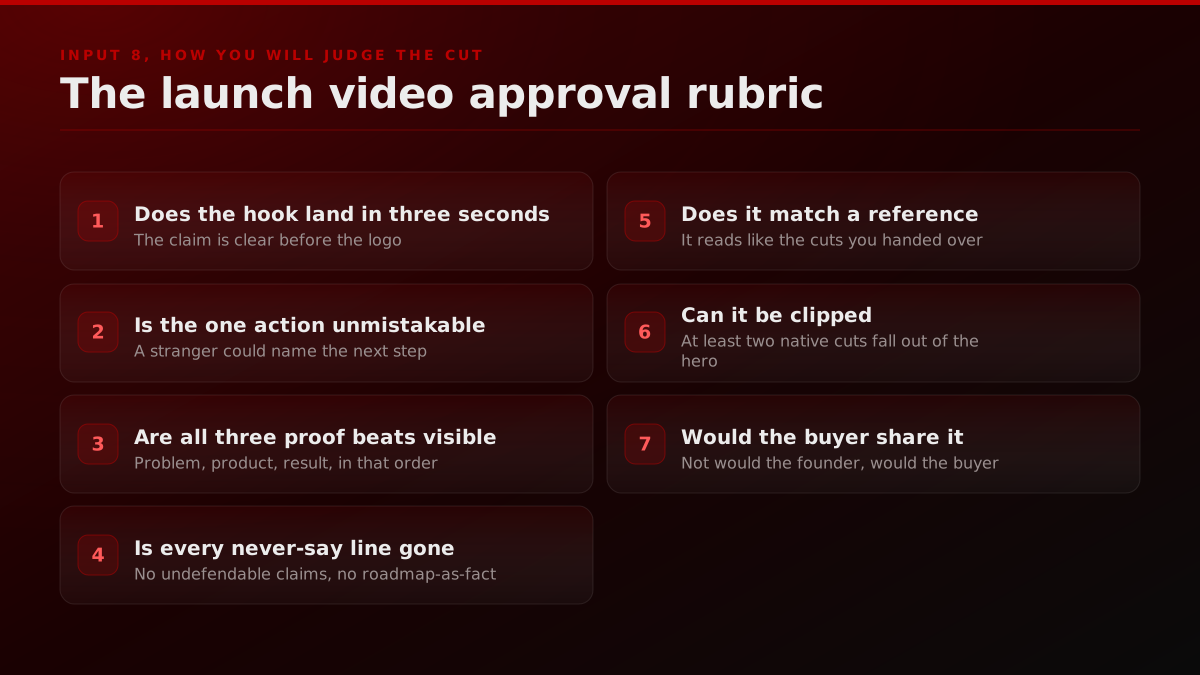
Write the rubric as pass-or-fail checks, not as vibes. "The hook lands in three seconds" is a check. "It feels exciting" is a fight waiting to happen.
Operator noteWhen the approval rubric ships inside the brief, review becomes a checklist. When it does not, every reviewer invents a fresh opinion., FORKOFF distribution network, operator observation
Here is the rubric as a scorecard you can drop into the brief and use in the review call. Score each row, and if a row fails, the note is specific and the fix is bounded, which is how one revision pass replaces five.
The approval rubric, what a pass and a fail actually look like
| Rubric check | A pass looks like | A fail looks like |
|---|---|---|
| The hook lands in three seconds | Core claim is clear before the logo | Opens on a logo animation and slow pan |
| The one action is unmistakable | A stranger names the step in one watch | End card says learn more, three links |
| All three proof beats are visible | Problem, product, result, in order | A feature tour with no clear demo |
| Every never-say line is gone | No undefendable claims, no roadmap-as-fact | Voiceover calls it the number one platform |
| It matches a reference | Reads like the films you handed over | Looks nothing like what you approved |
| It can be clipped | Two native cuts fall out of the hero | One long hero cut, nothing short |
| The buyer would share it | A target user sends it to a peer | Only the founder and team like it |
Score the cut against these seven checks, not against a fresh gut reaction. A rubric turns review into a checklist. Its absence turns every review into a new opinion, which is where revision rounds come from.
What does the copy-able launch video creative brief template look like?
The template is the eight inputs on one page, with a blank next to each, and it is short on purpose so you actually fill it in. Copy the block below into a doc, replace the prompts with your launch, and you have a brief a team can build to. The whole thing should fit on a single screen. If it runs to three pages, it has turned into a shot list, and a shot list is the team's job, not yours. The video creative brief template downloads and the creative brief for video production guides floating around are longer and prettier, and that is exactly their weakness: length invites detail that belongs to the team, and every line you write about how to shoot it is a line you did not spend deciding what it must say.
LAUNCH VIDEO CREATIVE BRIEF

Product: [name]
Launch date + window: [date, and the days that matter]

1. POSITIONING ONE-LINER
   [What the product is + its category, one plain sentence]

2. AUDIENCE + THE ONE ACTION
   Audience: [the one person this is for]
   The one action: [the single next step, e.g. start a free trial]

3. HOOK THESIS
   [The claim the first 3 seconds must land, as a sentence]

4. THREE PROOF BEATS
   Beat 1 (problem is real): [ ]
   Beat 2 (product does the one thing): [ ]
   Beat 3 (result is believable): [ ]

5. MUST-SAY / NEVER-SAY
   Must-say: [product name in first 10s, exact CTA, one metric]
   Never-say: [undefendable claims, roadmap-as-fact, banned words]

6. VISUAL REFERENCES
   [Link 1 + why] [Link 2 + why] [Link 3 + why]

7. DISTRIBUTION PLAN
   Channels the hero must be clipped for: [X, Shorts, TikTok, Reels, LinkedIn]
   Native cuts expected per channel: [numbers]

8. APPROVAL RUBRIC
   [ ] Hook lands in 3s
   [ ] One action is unmistakable
   [ ] All three proof beats visible
   [ ] Every never-say line is gone
   [ ] Matches a reference
   [ ] At least two clips fall out of the hero
   [ ] A target buyer would share it
The template works because it is a forcing function. Every blank is a decision you have to make before the shoot, which is exactly the point. Founders reach for tools to skip that thinking, and the tools keep getting better, but the thinking is the part that does not transfer.
turns out you can vibe code a launch video, and the result is kind of insane
How do you run the brief so revisions collapse to one round?
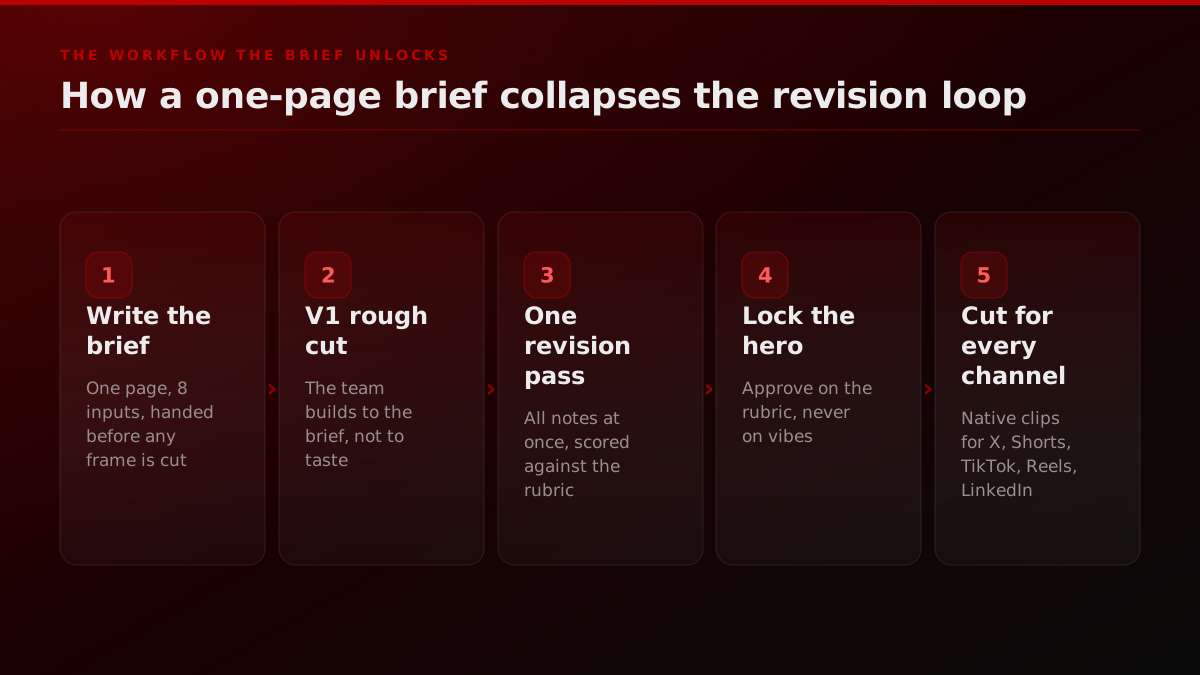
Run it in four moves: send the brief before any production starts, ask for one rough cut built to the brief, run a single consolidated revision pass scored against the rubric, then lock the hero and cut it down for every channel. The discipline is in the second and third moves. You get one rough cut, not a polished final, so notes are cheap to act on. Then you gather every note from every reviewer into one batch, score them against the rubric, and send them once. No dribble of notes over five days, no new opinion in the third review. One brief, one rough cut, one revision pass, one lock.
The move that saves the most time is refusing to review the cut against anything except the brief. If a note is not tied to a rubric check or a must-say line, it does not go in the pass. That one rule is what stops a launch film from being redesigned in the review call, and it only works because the rubric was written into the brief before anyone had feelings about the cut.
It helps to timebox the whole loop against the launch date, working backward. The brief is due before the shoot, the rough cut a set number of days before launch, the single revision pass on a fixed day, and the lock with enough runway left to produce the channel cut-downs. A launch film with no internal deadlines drifts, and drift is where a second and third revision round sneak back in, not because anyone asked for them but because there was time left to keep fiddling. A deadline is the quiet half of the discipline the rubric provides.
There is a version of this where the answer is not to make the launch video at all, and a good brief surfaces that fast too. If the one action and the proof beats do not hold up on paper, the film will not save them, and the money is better spent elsewhere.
Instead of spending $60k on a launch video, we decided to create something free and iconic for the SF community.
If you want a structured pre-flight before you even write the brief, the launch video readiness checklist covers whether you are ready to shoot at all, and the what a launch video costs breakdown sets the budget the brief will spend.
What brief mistakes quietly bring revision hell back?
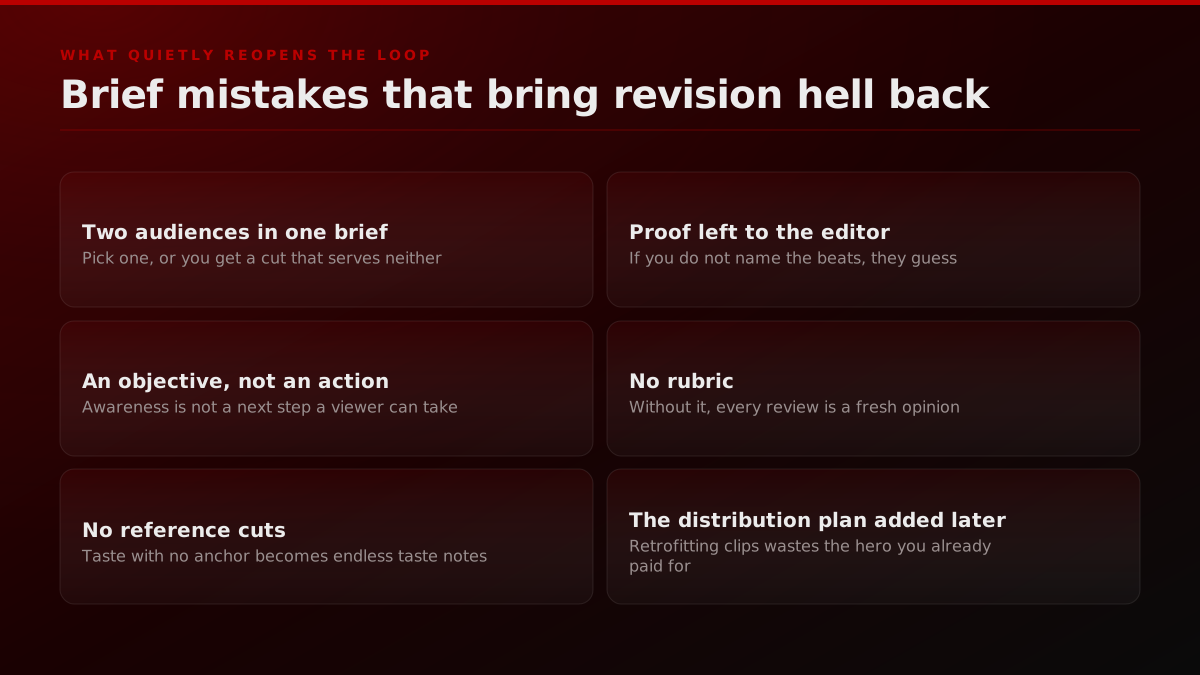
The mistakes are all the same shape: a decision you were supposed to make gets handed back to the team, and the team's guess reopens the loop. Two audiences in one brief produces a cut that serves neither. An objective instead of an action gives the film nothing to earn. No reference cuts turns taste into an endless negotiation. Proof left to the editor means the middle is whatever was easiest to shoot. No rubric means every review is a fresh opinion. And a distribution plan bolted on after the edit wastes the hero you already paid for. Each one feels small when you skip it and expensive when it comes back as a revision round.
The through-line is specificity. Every mistake above is a place where the brief was general when it needed to be specific, and the team, doing their job, filled the general with their best guess. The fix is never a longer brief. It is a sharper one: one audience, one action, three named beats, a written rubric, and a distribution plan that was there from the first draft. A one-page brief that makes every hard call beats a five-page brief that describes a mood.
The verdict: the brief is the product
The launch film everyone remembers looks like a production win, and it is really a brief win wearing a production costume. Today anyone can make the file, so the file is not where the launch is decided anymore. It is decided in the eight inputs you hand the team before a frame is cut: the one-liner, the audience and the one action, the hook thesis, the three proof beats, the must-say and never-say list, the references, the distribution plan, and the approval rubric. Write those well and a good team lands the first cut close to done. Write them vaguely and no amount of talent or budget saves you from the revision spiral.
None of this makes the film unimportant. A launch still needs a cut that is watchable, honest, and native to the feed it will live in, and a sloppy edit can waste a sharp brief. The point is narrower and more useful than production not mattering: production is now the part you can buy, template, or generate, and the brief is the part you cannot outsource, because it is made of decisions only you hold. Spend your scarce hours accordingly.
So treat the brief as the deliverable it actually is. It is the one artifact in the whole launch that only you can make, the one that stays scarce when production goes to zero, and the one that decides whether the film drives the action or just looks good doing nothing. If you want a team that writes the brief with you and runs the film and the distribution as one system, that is exactly what the product launch video service does, and you can book a strategy call to draft the eight inputs before you spend a dollar on the shoot.